


Craig Scott
I'm going to speak to a topic which I hope that you'll stay tuned to because, ultimately, it will affect all of us. And not only that, but to a degree, God wants it to affect all of us. So I hope that you'll stay tuned as I give it. I'd like to start with a question to each and every one of us, and it is simply this. How important is it for you and me to personally develop, cultivate, and exercise the fruit of God's Spirit called joy?
How important is that? How easy is that to do? And or how easy is it not to do simply in our own personal human framework? The answer comes from Scripture. It comes from the Word of God. And the Word of God tells us that joy is an essential part of the Christian experience, the Christian existence. In fact, to a great degree, to a great degree, it is everything spiritually speaking. It is a mark of the witness in you that you believe that God sent His Son to this earth, that God carried through on His promise that He would reconnect us to His throne, to be a part of His family, to remain in that family, no matter what comes in our way in this life.
I'd like to read a quote by a gentleman named Andrew Murray. Andrew Murray was a early 20th century South African writer who described it in this, dare I say, riveting manner. Joy is not a luxury or a mere necessity in the Christian life. It is the sign that we are really living in God's wonderful love and that that love satisfies us, no matter our personal earthly circumstances. That's pretty plain, isn't it?
Plain and simple. I'd like to share something with you. Just bring it right down to common denominator. Joy is a witness to ourselves, within ourselves, to others that are here, to those that are in our neighborhoods, to those that are at work, to those that we will come into contact with in a given moment in an emergency. It is that. And it is most importantly, and I want to share this with you, and I want you to think about this, joy is also a witness to God that we get it.
We get Him. We understand what He has revealed and brought into our lives and that we really believe it, that we are in touch with the Almighty. That's how important joy is. Joy is not always going to be happy, happy, happy. I'm a joy bunny. Watch me bounce. Life is good. That's not what joy is. Joy is so deep, so encompassing, that I dare say that I won't have the time to express it all this afternoon.
Again, to bring this home to us, I'd like to quote a gentleman who lived about 140 years ago. His name was Philip Brooks. He was a 19th century Boston preacher, and he put it this way, the religion that makes a man look sick certainly will not cure the world. A religion, a way of life that is supposedly being practiced by an individual as a witness of the Almighty, as a witness of the kingdom of God to come and one that is residing that individual, if it looks sick on the outside and is betrayed or betrayed by our words or our actions or our despair, that's not going to cure the world.
I have a question for you. Have you taken your joy temperature recently? I want you to think about that for a moment. Have you taken your joy temperature? You know how your mom used to put a thermometer? I don't know what they do today.
Maybe it's on a smartphone and just, I don't know. But anyway, when I was young, long ago and far away, you know, your mom used to stick the thermometer up there. Take your temperature. It was normally 98.6. It was normal. I found that my normal as I get older keeps on going down, but I'm glad I'm at least heating up the tube a little bit, okay? Maybe you've noticed that and I've noticed that, but have you taken your joy temperature recently? Now, I had this opportunity to give this message afar from here about a month ago, but you know what?
It is just as relevant today for me to go back to these notes and to share these thoughts with others and to ask myself again, as I was studying through my notes again this morning, what is my joy temperature after I'm sharing this with all of you and will be sharing this with congregations around the world as they may tune into it or listen to it?
What is my joy temperature? So, are you with me? We're all in this together. What is our joy temperature? It's important. And so, you might have said, oh, Weber, I knew that you were going to bring that up, and I have.
So, I'm going to ask you. Because at the end of the day, the reason why I brought it up is simply this. God desires for us to choose joy, to choose joy, because happiness is not enough. Humanly, we are motivated and stimulated by outside things coming to us. And that's our stimulation. When things are going well, when the grass is green, when the streams are full, when the roads are running, even the freeway is coming back and forth to San Diego today.
That can make one happy, but that does not give them joy. Joy is incredibly deep, recognizing that even in the darkness of life, that God will answer at the right way, at the right time, and never be late. I want you to think about that for a moment. Joy is knowing that God will answer at the right time and in the right way and never, never be late.
Some people spell late D-E-A-T-H. And that's not how God counts. He counts beyond that, and He counts beyond that for both you and for me. So let's move forward. Today, the title of my message is simply this, for you that are looking for a title. Keep us all staying course. Joy, ignited by grace. Joy, ignited by grace. Why am I even giving this message to you as Christians? To remind us to choose joy. To choose joy.
And when you make that choice, it is not an easy choice, but it is a God-given choice, a God-given hope that we will, and by His Spirit, He will guide and give us the strength to be able to accomplish that. Why choose joy? Because, again, remember, happiness is not enough. Happiness will take you to the grave.
Joy moves beyond the grave and brings us into contact with God. Before we go any further, I want to give you a working definition of joy so we can all move together in this message. Joy is sustained spiritual contentment in all circumstances. Joy is sustained inward spiritual contentment in all circumstances. Again, joy is sustained inward spiritual contentment in all circumstances. Allow me to take it a step beyond and then add something to this. When you go to the dictionary and you look up the word contentment, contentment says this, ease of mind. Ease of mind. But I'm going to share something with you right out of the starting blocks here. Christian contentment and what God is desiring of us is more than simply ease of mind. Ease of mind is a U-turn back to just despair, ultimately. Spiritual contentment is not just simply ease of mind, but it is the ease of our hearts surrendered to God's will and believing in His grace, believing in His favor, believing in His intervention, and to remember again that God is not late. He will be with us at the right time and at the right way to serve ultimately His purposes. And such joy lies beyond the borders of happiness brought by good think externally happening to us. The essence of joy is based upon an abiding knowledge within our spirits that our life has purpose, that our life has meaning, and that calling is granted by a grace-filled loving God. I remember as a young boy, probably about 1961-62, listening to the World Tomorrow Telecast, and there was a man on there that said, your life has a purpose. And he quoted Winston Churchill. For those of you that will remember Winston Churchill, where Winston Churchill said, there is a purpose that is being worked out here below. And we've got to believe that, brethren, even as we see what's happening in the culture around us and the nation that we're a part of and the world that is coming loosened at its seams. America being loosened at its seams, because more and more they have kicked God out of the pedestal underneath the foundation. And when you do that, it can cause despair.
We say, I know that. I know about joy, all that I need to. We'll stay on board here. If some of us know about joy, let me ask you a question. This is the interactive part. How many of you, this is not a hard question, okay? I talked school, this is not going to be difficult. How many of you know that joy is a fruit of God's? You have gone to Galatians 5, and you have memorized the fruits of it. How many of you know that joy is a fruit of God's Spirit? Can I see a show of hands? This is not a gotcha birthday. I can't say this in Spanish. You can raise your hand. Trust me. She doesn't trust me. Oh boy, okay. I'm just joking with Bertha. Joy is the fruit of God's Holy Spirit. We all know that, don't we? Love, joy, peace, long suffering, kindness, blah, blah, blah. How many of you have a deep—don't raise your hands on this, please—how many of us, though, have a deep, residing joy going into this weekend? And even as you hear this message—and that's why I'm giving it, because we can know all about joy and be looking for joy in all the wrong places, just like the old song. And so I want to break it down more as far as what joy is and to go deeper. I'd like to use an analogy from a book by a gentleman named Jerry Bridges entitled, The Pursuit of Holiness. It's a short quote, and I'll try to keep your attention while I read it. A farmer plows his field, sows the seed, and fertilizes and cultivates, all the while knowing that in the final analysis he is utterly dependent on forces outside of himself. He knows he cannot cause the seed to germinate, nor can he produce the rain and the sunshine for growing and harvesting the crop. For a successful harvest, he is dependent on these things from God. Yet the farmer knows that unless he diligently pursues his responsibilities to plow, to plant, to fertilize, and cultivate, he cannot expect a harvest at the end of the season.
In a sense, he is in a partnership with God, and he will reap its benefits only when he has fulfilled his own responsibilities. The farmer cannot do—hear me now, please—the farmer cannot do what God must do and can only do, and God will not do what the farmer should do. Interesting. I'm going to build upon this a little bit later and come back to the farmer example in the scriptures. Let's go a step further and understand how precious the spiritual commodity of joy is and our responsibility to seek it and to preserve it. We'll find it's not simply for only people that are shiny and bubbly. I remember when I was a kid in another church growing up, and my mother was my Bible school teacher, and Susan will know this one, that she taught this—diddy, maybe you learned it—in Sunday school. I've got the joy, joy, joy, joy down in my heart. I won't go any further. Maybe you know that one. Yeah, yeah, Laurie, I can tell we're—yeah, good Baptist. Okay, just not anymore. Is that, you know, you know, I got the joy, joy, joy, joy down in my heart, down in my heart, down in, and you know, you're bouncing, and it's a happy little thing like this and that. That's nice, but joy is a smile that goes much deeper than what's on our face. It's a smile that's on our heart when it's very dark, when like there's like nowhere to go. Does God know that I am even here? And yet, you keep that smile. You keep that inner warmth. You keep that inner knowing. You base and you go back to when God revealed Himself to you in the beginning. It's not only in Genesis 1.1, but in our own lives, in the beginning, when God began to deal with us and open our eyes, open our minds, open our hearts, and give Himself to us through His Holy Spirit and the indwelling thereof. Let's go to 1 Thessalonians 5.18. 1 Thessalonians 5.18, and take a look here at a comment by Peter, not by Paul, pardon me. 1 Thessalonians 5.18. Here's what it says.
I'll start with verse 16. Rejoice always. Are you thinking what I'm thinking? Rejoice always.
Pray without ceasing. And that's a part of having joy always. In everything, give thanks for this is the will of God in Christ Jesus for you. And do not quench the Spirit. So we take a look at this. Joy is to be ours, developing, cultivating, growing. Not every other day, not every other human challenge, but always. And notice, if we want to jot down a couple words, in a sense, a command, and it is an expectation, but it will only come through growth. Again, let's go to Philippians 4 and verse 4 for a moment. Philippians 4 and verse 4.
It says, Rejoice in the Lord always. And again, I will say, Rejoice. See, the word rejoice comes off of the word joy, and rejoicing is basically what you might say is like joy on steroids. But notice what it says, to rejoice in the Lord always. And again, I will say rejoice. And let your gentleness be known to all men. The Lord is at hand. And be anxious for nothing but in everything by prayer and supplication and thanksgiving. Let your request be made known to God. And notice, and the peace of God, which surpasses all understanding. In other words, better than what's in on the facts on the ground in your life, will guard your hearts and mind through Christ Jesus. Tell you say, you know, that's easy to say, but hard to do. But let's remember these words are being written by a man who's in jail. When Paul is writing this, he is a prisoner of Rome. And yet he's telling you and me to look beyond the jailhouse. And one of the reasons why I'm trying to just share this with you as a friend today is simply this. I'm trying to use God's word and God's encouragement to help some of us break out of the jailhouse of despair and gloom that can even affect members of the body of Christ. And that's very, very important to do. And so we look at this. What can get in the way? What can block God's joy in us? Let's just go down a few factors. Number one, I'm going to give you just a few. Here are some of the stumbling blocks. You know, you think you're on the road to joy and there's a stumble. You go, there's another stumble. It's not something that just happens overnight. It's not just something that happens by wishful thinking. It is something that happens by the practice of steady believing. But we will come up with things that halt our belief if we allow it to stumble over matters that will damage our belief. Somehow thinking that God's gone somewhere, that he's gone blind, or he can't hear us. And to recognize that once God begins working in us, it says he's going to complete it till the day. One thing that, number one, one thing is the stumbling block is sin in our lives. Sin in our lives. And that can thwart our joy and in being able to serve God. Sin can do that. Join me if you would in Psalm 32. In Psalm 32. In picking up the thought.
In, let's see, let's get to Psalm 32. And I'll tell you where we're going to start. In Psalm 32. In picking up the thought in verse 1.
Join me if you would in Psalm 51. In Psalm 51. In picking up the thought if we could. In verse 50.
Create in me a clean heart, O God, and renew a steadfast spirit within me. And do not cast me away from your presence, and do not take your Holy Spirit from me. Now, notice verse 12. Restore, restore to me the joy of your salvation, and uphold me by your generous spirit.
And then I will teach transgressors your ways, and sinners shall be converted to you. What shall we teach them? What is David talking about? What is our Christian existence about? You know, I want to share something with you as members of the Church of God community. I know that there are those that are listening, and will be listening in months, years to come, on this message. What David is talking about here is more than what you know, but it's who and what you are, and who you surrender yourself to, and who you believe in. We have people that can show up to church every seventh day on Saturday, not on Sunday or some day of their choice. We have people that, at this point, have registered for the Feast of Tabernacles 2023. We have people in the Church of God community that, if they swallowed a piece of shrimp, and they shouldn't, shrimp has never passed their lips. Good for them. But that is ultimately not the essence of what God is talking to us about, of restoring the joy of our salvation. Because it's not what you know, it's what you do. And we can have people come in here, and on the exterior appear happy. But they're in despair in their heart. They are sinking down in the quicksand of dissolution. They are stymied by life's circumstances, rather than recognizing that God's calling, God the Father's calling into their life, individually, to open up their mind and their heart, and to reveal things that, as firstfruits, as we come off of Pentecost, and yet we can become paralyzed by life's conditions. And yes, humanly we can, can't we? I realize, looking at this audience, knowing many of you, and most of you, more than most people know about you, being your pastor, is to recognize that life can just bog us down and petrify our movement, and we can't not move. And here David is saying, God Almighty, bring me up, bring me out, allow me to experience you again. Are you with me? Experience you again, and understand your grace, understand your favor, understand your selection. Why me? Because God's love has touched us, and that to move forward. And not only that, then, but notice to restore to me the joy of your salvation and uphold me by your generous spirit. Why? That I might teach others, that I might be a witness. We witness to God as we go to Him in prayer and ask for that break of the stranglehold that's on us that is stymieing our joy, and to recognize Him that God knows that. God smiles. God is like that Father at the porch with the prodigal son, saying, I'm here, I'm ready to hug you, you just let me know. But then it turns around that I might teach others the joy that we have as we move through challenges, emergencies, just sometimes the doldrum of day to day life can be a witness to others and give them life, to give them breath. But just like being on an airplane before you help others, like with the oxygen bag that comes down, they always say what? You help yourself first before you help others. Joy is incredible. Joy is incredible. Other things that can do it, and I'm not going to go at length on these, is we can have misplaced confidence. We can have misplaced confidence. And you know it's very interesting in Philippians 3 and verse 1, Jeremy, if you would there, please. Philippians 3 verse 1. Notice what it says here in Philippians 3 verse 1. Finally, my brethren, rejoice. What's rejoicing? Joy. Growing, developing, almost like on steroids. Rejoice in the Lord. For me to write the same things to you is not tedious, but for you it is safe. To rejoice in the Lord. Not to rejoice in today's politicians.
Not to lower our sights. There are people that we can respect. There are people that we can emulate to a degree, but if there's going to be true joy, it's got to be focused on God the Father and Jesus Christ. Everything else is going to fall short of that period. You know it's interesting that it says to recognize in all of this that not to have if you notice this in verse 3, for we are in the circumcision who worship God in the Spirit. Rejoice in Christ Jesus and notice and have no confidence in the flesh. As the Psalms would say, don't put your trust in the sons of men. And I think that's as we look at the the world scene, as we look at our national scene, as we look at the divisions that are occurring in our country, as you look at the leaders that are human, is that where our confidence should be?
Oh, okay, yeah, okay, thank you, yeah, thank you, okay, good. To recognize then that our confidence has got to be in Christ and it's got to be in God the Father. Another thing that can be a stumbling block is the discipline of God. God at times is going to move us down paths that are going to help us to grow and sometimes doesn't intervene all at once. Sometimes it'll be a matter of correction. If you'll join me in Hebrews 12 and verse 11. In Hebrews 12 and verse 11, it says, now no chastening seems to be joyful for the present but painful. Nevertheless, after it yields the peaceful, peaceful fruit of righteousness to those who have been trained by it. When God disciplines us as a loving Father, it's towards a purpose. And sometimes we can take it oh so personally and not recognize that it's for our good and no correction, no discipline for the moment is fun. If you think it's fun, I'll look up on Google and find you a psychiatrist, okay? Or maybe me as a pastor. No, it's not fun. But it's needed.
God is still shaping and grooming us and developing us. It never gets over. I see some of you, my dear friends, that I've known for years. I see my wife out here, my dearest friend. And we've been in this way of life for 60 years.
And God is still disciplining us. Discipline just comes from the word disciple, teaching, molding, training. And I have a feeling that there's more ahead. I know he's not done with me. But I also recognize by reading the scripture that I need to believe and know and have the joy of God in me to recognize that he's moving me along this life pilgrimage from one point to another. And there will be times when, perhaps humanly, I will not understand, but he'll ask me to step up and to play a part in this story that travels from the time of the Garden of Eden to the return of Jesus Christ. It's a grand story. It's a great story. Sometimes we will not always understand it.
Walt Whitman would say, oh me, oh my, what's life all about? What's going on down here? Of the faithless trains of the foolish, of the cities that abound with where are they going? And he finishes with this. He simply says that the powerful story goes on and that I might add a verse. That's what you and I are doing. God, I want you to just think about it for a moment.
God has a story that has spread since the time of Genesis, the story of Exodus, the story of pilgrimage, the story of sacrifice, the story of the rebirth and the opportunity to be born from above through Jesus Christ and has come down to us all these thousands of years. And it's still moving, but we've been caught up in the stream now. You and I, 2023, June 17th. And I want you to think about this. This is how incredibly wonderful God is. He has asked you and me to add a verse to this story. And it's not always going to be easy. That's why we always have to begin with the end in mind. I always remember back in the early 1960s, hearing about, keep your eye on the big picture. Stay focused. That's what we need to do. And not be swallowed up in our own despair, but to recognize, like David, that God helped restore to me the joy of your salvation. I want to share a thought with you in 2 Corinthians 12.
And I'd like to begin the thought in verse 7. This is sometimes the point of where we have to come to in the Christian journey. And lest I should be exalted above measure by the abundance of the revelations of thorn in the flesh was given to me. A messenger of Satan buffeted me, lest I be exalted above measure. Oh, sounds like discipline, doesn't it? Sounds like molding. Concerning this thing, I plead it with the Lord three times that it might depart from me. And, you know, I've heard every, the commentaries are full of what this might have been. We do not know. We do know that it challenged and it troubled the Apostle Paul. We recognize that he prayed about it three different times. But we also recognize here that it came for a purpose. And he said to me, and this is what I want to do, this is where joy is. Let's get right down. Are you ready? We're going to get right down into it. Because joy is not happiness. It's not about good things happening in the here and now. We're going for the long stretch. And he said to me, my grace is sufficient for you. For my strength is made perfect in weakness. Therefore, most gladly, I will rather boast in my infirmities that the power of Christ may rest upon me. Therefore, I take pleasure in infirmities, in reproaches, in needs, in persecutions, in distresses, for Christ's sake. For when I am weak, then I am strong.
He came to a point of contentment. Now, he didn't necessarily want all of these things. No human being does.
But he stood in Christ and with Christ, that a purpose was being worked out below. Join me if you would. And again, let me share a thought with you. And notice where all this brought him to. He could have said, I don't have this. Are you with me? Countdown. I don't have this. I don't have that. This is happening. That's happening. And list and list and list. Have you ever done that before? I always know that Susan's mother always had this thing that when you're facing challenges, pros and cons. You ever done that? Your folks teach you that? So you list all of the cons and you list all of the pros, right? Because that kind of helped. The picture is worth a thousand words. So you have the pros and you have the cons. Now, humanly, I'm looking at this, and there's a lot of cons. A lot of cons going in Paul's life. But the one thing on the pro side outweighed everything else. Everything. And he said to me, my grace, my favor, my interruption, my calling into your life, to recognize that not in this life alone, but you are passing through.
And thus, in that grace, knowing God's favor, knowing that Jesus Christ died for us, knowing that he was resurrected, knowing that he ascended to the throne of God and is at his right hand, knowing that he is also our high priest, and he takes our prayers at the doors. And as that high priest takes him to his father, as we come to that, our father and say in his name, our savior, our personal Lord, our high priest. That's grace.
And it's not that we will not sin. It's not that we will not falter. It's not that we won't despair.
But to recognize that Jesus Christ is at the right hand and saying, Father, I've been down there. I've been one of them. I get it. It says here in verse 9, My grace is sufficient for you, and my strength is made perfect in weakness. Paul was rejoicing. Hebrews 12 and verse 1.
What is joy about?
We're gonna find out here in a moment.
Hebrews 12 and verse 1. Therefore, we also, since we are surrounded by so great a cloud of witness, let us lay aside notice every weight and the sin which so easily ensnares us, and let us run with endurance, the race that is set before us. Now notice verse 2. Looking unto Jesus, the author and finisher of our faith, who for the joy that was set before him. Notice that was set before him. He was not only thinking of what had happened behind him, not only what was happening in the moment as he was nailed through his wrist and through his feet to a piece of wood in front of everybody.
But it says here, for the joy that notice was, and this is important about joy, that was set before him. Set before him endured the cross, despising the shame, and is sat down at the right hand of God.
Susie and I were having a conversation last night. I know I'll be in trouble for bringing this up, but that's all right. I'm up here. But we're talking about how so often we get caught in, again, past, present, and future in our lives.
And we bring, we are a part of everything that we have met, and we bring it along. I understand that.
But maybe today you remain a prisoner of your past, and it has a stranglehold on you.
And it's doing a number on God's joy in you, because you're stuck, perhaps, by what somebody else did to you. A parent, a mate, a co-worker, whatever. You've got to let it go.
We're in the present, and we can be with the communication today, and with everything coming at us. There's not a lot of good news out there. Am I the only one that's noticed this? And all of these, there's so much communication today that we know what somebody's doing on the backside of a hill over in Nepal. And it all comes to us, and we're supposed to wrestle with that in our little minds. If you read the Los Angeles Times, it's bad news. If you read some conservative newspaper somewhere, it's bad news. I'm sorry. This is God's daily newspaper to us, and this is the good news. This is the good news. This tells us that we can and need to live in the moment, today, in the present. Right now, as you're listening to this message, right now, we have this conversation. All we have is the moment. We can't go back and change the past. Have you ever tried that? You can't go back and necessarily change the past. Yes, it's with us, but that you need to deal with the moment. Yesterday is gone, today is here, the future has not yet arrived. We're just saying the future has not arrived. So, to recognize, then, what we need to do, and to recognize that Jesus Christ would ask us to do that, I'd like to just share a thought with you in Romans 828.
In Romans 828, let's notice what's going on here.
Why was the Apostle Paul able to say that God's grace, with everything he was going through, was sufficient? Verse 27, now, he who searches the hearts knows what the mind of the Spirit is, because he makes intercession for the saints according to the will of God. And we know, notice, we know, do we, that all things work together for good to those who love God, to those who are the called according to his purpose? How often have we gone through this verse, and we have this simplistic view of it? It says, doesn't say that all things are good, but all things will work out for good. We all know that. We've probably said that to a dear friend or somebody that was going through something. But that's like a bumper sticker. Why is it that all things are going to work out together for good? Because then you have to keep on reading. Notice what it says. For whom, speaking of God, that is God the Father, for whom he for new, he also predestined to be conformed, notice, to the image of his Son, that he might be noticed the firstborn among many brethren. That means there's more coming. Moreover, speaking of the Father, whom he predestined, these he also called, whom he called, those he also justified. How did he justify it? Through the sacrifice of his Son. And the righteousness of Jesus is then imputed to us. And whom he justified, these he also glorified. We're special.
God so loved the world that he gave his only Son. That whosoever believeth on him should not perish but be saved. This is one of the best explanations of what God's favor, God's grace, is. All things ultimately work together for good.
And then beyond that, then it says, speaking of Jesus, what then shall separate us from the love of God? I want to share a story with you. It comes out of a book. It's entitled, I have to kind of look at it. How can it be all right when everything is so wrong? How can everything be all right when everything is so wrong? And it's by a gentleman. I've got this in dark ink. I'm sorry. By a Lewis B. Schmade. Allow me just to read it. Take about a minute. The way grace works. Grace does not make everything right. Grace's trick is to show us that it is right for us to live. That it is truly good. Wonderful, even, for us to be breathing and feeling at the same time that everything is evil, is clustering around us, is also holy wretched. Grace is not a ticket to Fantasy Island. Fantasy Island is dreamy fiction. Grace is not a potion to charm life to our liking. Charms our magic. Grace does not cure all cancers, transform all kids into winners, or send us all soaring into the high skies of sex and success. Grace is, rather, an amazing power to look earthly reality full in the face, see its sad and tragic edges, feel its cruel cuts, join in the primeval chorus against its unoutrageous unfairness, and yet, and yet, feel in your deepest being that it is good and right for you to be alive on God's good earth. Grace is power. I say to see life very clearly. Admit that it's sometimes all wrong and still know that somehow in the center of your life, it's all right. There is one reason why we call it amazing grace. Grace is the one word for all that God is for us. In the form of Jesus Christ. In John 3. John 3.
Let's take note.
First John. Pardon me. First John. Pardon me. In First John 3. If I can share any verse with you that you can kind of put into the pocket of your heart and take home with you today, this might be it. Behold. That means stop.
God's saying something big here through the Apostle John. Behold. What manner of love the Father has bestowed upon us. In the Greek and in the background, when you get into the Greek language, it means this love that is being spoken about is not from around here. It's not from down here below. It is beyond extraordinary. It comes from beyond time and space and has entered into the human realm and is working in our hearts. Behold, what manner of love the Father has bestowed on us that we should be called the children of God. And therefore, the world does not know us because it did not know Him.
Beloved, now we are children of God. And it has not yet been revealed what we shall be, but we know that when He is revealed, we shall be like Him. For notice, we shall see Him as He is. And everyone who has this hope, and not only hope, but this, do I dare insert joy, this confidence, this manner of being, no matter what comes our way, purifies Himself just as He is pure. About 150 years ago, famous author Robert Louis Stevenson simply wrote this. About quiet minds.
Quiet minds cannot be perplexed or frightened, but go on in fortune or misfortune at their own private pace, like a clock during a thunderstorm. Think of your clock.
This must be in the prayer because I wasn't planning to do this. Okay.
It can be thunder rattling outside, or there can be thunder in our heart and lightning strikes, and yet, back and forth, never losing movement towards God's throne, never underestimating God's love for us as His children. You know, in Romans 5, and I won't turn it there, but Paul was kind of answering, how do you define love? How can we know that God loves us and that we have been touched and granted the grace of God? And, of course, then he goes into that incredible explanation of what love is through the sacrifice of Jesus Christ, love personified by what He did. I'd like to just share something with you. I'm going to read one verse, and then we'll conclude. The bottom line is this, if you want to jot this down and think about it. Joy is the fruit of grace under pressure. Joy is the fruit of grace under pressure. I want to show you something. This is the PowerPoint. You won't want to miss it.
God will at times allow the squeeze to be placed upon us so that once again that He can know that as a first fruit of God, that a first fruit will always put first things first and know that there is nothing at all in this world that can separate us from the love of Christ and from the love of the Father. Nothing! Nothing! Join me in conclusion by going to John 16. This was given on the last night, spoken on the last night of Jesus' earthly life, John 16.
And let's pick up the thought, if we could, in verse 22, John 16, 22.
As we conclude, let's focus and realize these are the words of our Savior for our encouragement. Therefore, you now have sorrow, but I will see you again and your heart will rejoice, and your joy, no one, no one at all, will take it from you.
Joy comes from God, not man, and it's His to give, and only you can allow others, even yourself, to take it away. Don't! And in that day you will ask Me nothing, and most assuredly I say to you, whatever you ask the Father in My name, He will give you. Until now you have asked nothing in My name. Ask and you will receive notice. Ask and you will receive a notice, and you shall receive.
What's your name? Does it rhyme with David? Restore to Me. Restore to Me the joy of your salvation. I want to be a vessel in your hands, not only by what I know upstairs, but what is in my heart in which you reside. This heart that you've allowed to become your temple, that your presence, your essence, is in Me by your grace, by your favor. Not that I deserve it, but you've given it as a gift. Restore to Me the joy of your salvation. And not only that, not only for me, but that I might be able to share that joy with someone else and point them to the Giver, the gift giver of joy, God the Father and Jesus Christ.
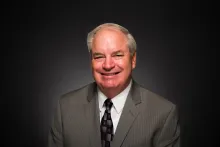
Robin Webber was born in Chicago, Illinois, in 1951, but has lived most of his life in California. He has been a part of the Church of God community since 1963. He attended Ambassador College in Pasadena from 1969-1973. He majored in theology and history.
Mr. Webber's interest remains in the study of history, socio-economics and literature. Over the years, he has offered his services to museums as a docent to share his enthusiasm and passions regarding these areas of expertise.
When time permits, he loves to go mountain biking on nearby ranch land and meet his wife as she hikes toward him.
