
Roy Holladay
This transcript was generated by AI and may contain errors. It is provided to assist those who may not be able to listen to the message.
And just about one month from now, the fall, feast, and holy days are going to be upon us. Trumpets this year is on Monday, October 3rd, I believe, and Atonements on Wednesday, October 12th, and the Feast of Tabernacles, an eighth day is from Monday, October 17th through Monday, October 24th. It's Monday to Monday this year. Of course, all those fall holy days portray vitally important steps in God's plan of salvation, not only for us but for all mankind. And they especially portray God's plan of salvation for the rest of the world, who have not yet been called to fall feast, especially. And you look around the world, and if you watch the news, many of those people of the world are now hurting.
And many need to be healed of the hurt that they've gone through, because Satan is the God of this world. So a lot of people of the world need spiritual healing. When Christ returns, as portrayed by the Day of Trumpets, what is he going to be to the people of the world? Let's turn to Jeremiah 31 to answer that question. What will Christ be to the world when he returns? Jeremiah 31, verse 1.
He says, I will be the God of all the families of Israel, and they shall be my people. He's not going to exclude anybody. He will be the God of all the families of Israel. What will God do for all the families of Israel? Let's go back one page to Jeremiah 30, verse 17. Jeremiah 30, verse 17. He says, I will restore health to you, and I'll heal you of your wounds, says the Eternal. I will heal you of your wounds.
What kind of healing and what kind of wounds is this primarily talking about? It is primarily talking about the healing of spiritual wounds. It is primarily talking about spiritual healing, about mental and emotional healing. They've gone through a very traumatic period of time. That is the first thing people will need to understand to begin that process of spiritual healing.
Let's go back to chapter 31 again. Jeremiah 31, verse 3. The Lord has appeared of old to me, saying, Yes, I have loved you with an everlasting love. Therefore, with loving kindness, I have drawn you. The first thing they're going to need to come to know is that regardless of their emotional scars and wounds and hurts, they'll have to come to know that God has loved them with an everlasting love.
That is the first step towards spiritual healing, to realize God is loving God loves them, regardless of where they are in their life and what they've been through, how they're hurting. What about all of us? Do any of God's people today need spiritual healing? Maybe as a result of things that happened in the past, or maybe as a result of things that happened in the present? Many of us need spiritual healing at times.
We need to be healed of guilt sometimes. We need to be healed of low self-esteem. We need to be healed of abuse sometimes, if I've been through abuse and have to be healed of that, that's caused great emotional wounds. Some people need to be healed of resentment, or anger, or maybe even bitterness.
But here's the bottom line question. If we, as the people of God, cannot receive spiritual healing for ourselves, at least to a degree, how can we help the people of the world receive spiritual healing when Christ returns? Because they're going to need that. They're going to need it. They're going to be in a very traumatic period of time. Of course, we are all now preparing to be a part of the Bride of Christ, so we can rule with Christ when He returns, and so we can at least in part help bring spiritual healing to the people of the world.
What will that take when it comes to each and every one of us? That's what I'd like to cover today in this sermon. This is also my specific purpose statement, or in this case, my specific purpose question.
What will it take to bring spiritual healing, both to ourselves and to the people of the world, when Christ returns? The title of my sermon here this morning is, How to Bring Spiritual Healing. How to Bring Spiritual Healing. The first thing I want to look at and cover is the value each and every one of us have to God. Look at our value that we have to God.
That's the first thing we need to realize, how valuable we are to God. Those of us who need and who must seek to find spiritual healing are the very people God needs at this time. That's the kind of people God needs. Who could better help bring spiritual healing to the people of the world than those who have had to struggle to find spiritual healing for themselves, who have had to go through that process and that struggle. Who better can help the people of the world when Christ returns?
Let's go to 1 Corinthians 1 Corinthians 1, verse 18. 1 Corinthians 1, verse 18, where Paul writes, verse 19, For it is written, I will destroy the wisdom of the wise and bring to nothing the understanding of the prudent. Where is the wise? Where is the scribe? Where is the pewter of this age? Has not God made foolish the wisdom of this world? For since in the wisdom of God the world through wisdom did not know God, it pleased God through foolishness of the message preached to save those who believe.
To save those who believe God and who believe in the power of God. Verse 22, For the Jews request a sign, and the Greeks seek after wisdom. For we preach Christ crucified, to the Jews they stomach block, and to the Greeks foolishness. But to those who are called, both Jews and Greeks, Christ the power of God and the wisdom of God. The power and wisdom of God and how to bring spiritual healing in this case.
Verse 25, Because the foolishness of God is wiser than men, and the weakness of God is stronger than men, then God tells us here who he needs and who he wants as a part of his firstfruits. He tells us who those people are that he needs at this time to help bring spiritual healing to the people of the world after Christ returns. Verse 26, For you see your calling, brethren.
Not many wise according to the flesh, not many mighty, not many noble or calm. I'm going to paraphrase the next few verses, but God has chosen the foolish of the world. The way the world would look at it. To put to shame the wise, God has chosen the weak people of the world. To put to shame those who think they're mighty and great, powerful physicians who think they're above everybody else.
And he's chosen the base of the world as my margin says really means the insignificant or the lowly of the world, as the world would look at it. Those people of the law would look on being insignificant and rather lowly, not have high positions of power or control. He has chosen. And those who are despised by some, he has chosen. And those who are really nobodies right now, as far as the world would say. To bring to nothing those who think they are something or they are somebody.
Why? Verse 29. The no flesh should glory in his presence. But of him you are in Christ Jesus, who became for us wisdom from God and righteousness and sanctification and redemption. So it may be written, he who glorifies or he who glories, I should say, let him glory in the eternal.
Why did God choose the foolish, the weak, the insignificant, the lowly? And you might say the nobodies of this world. Why has God chosen all of us at this particular time?
He chose us because those are the very kinds of people God wants right now. Those are the kinds of people God needs. Those are the kinds of people he is going to need to help bring and restore. Those in this world will have gone through tremendous traumatic experiences. Why has he chosen us at this time, those kinds of people at this time? Because it will take those kinds of people to help bring spiritual healing to the rest of the world when Christ returns. Those who have gone through very adverse circumstances and come out of that. Those people will understand what it will take.
And they're going to understand what it feels like. How it feels to have to go through those things. They're going to relate to those people who are going to be traumatized by what's going to happen in the years ahead before Christ returns. And they are the very people who have great value to God. Because they have valuable experiences, valuable things they've gone through, valuable lessons they have learned. Regardless of our hurt, the first thing we all need to realize is our great value to God.
Second overall question, what will it take to bring spiritual healing for ourselves? You know, all times need that. See, ultimately, in the ultimate sense, what is life really all about? It's going to sound repetitive, but it needs to be repeated because it's so important. In fact, there's nothing more important, especially when it comes to the bride making yourself ready. See, what is life really all about? Bottom line is, it's really all about relationships. Why do so many people today, both in and out of the church, need spiritual healing? Because they have been hurt mentally or emotionally by someone they had a relationship with.
I think we've all experienced that at times. And whether we realize it or not, there are times when we all need spiritual healing. But back to our original question, what will it take to bring spiritual healing for ourselves? I want to begin with one overall principle and then apply that principle to four steps that can bring spiritual healing for ourselves. What is the overall principle that we first need to apply? After Christ instituted the New Testament Passover with His disciples, they left that upper room and began walking through the streets of Jerusalem toward the Mount of Olives. And as they were walking, Christ spoke to them of many things.
We often go over those of Passover. They're recorded in John chapters 15 and 16, along with his prayer in verse 17. Many things are recorded there in verses 15 and 16 that He talked to them about as they were walking through the streets of Jerusalem. They left that upper room toward the Mount of Olives. We won't turn there, but I just want to point out one overall principle that Christ taught them as they were walking to the Mount of Olives on that night of the Passover. It's recorded in John 16, verse 24, where Christ said, Ask and you will receive.
Ask and you will receive. The obvious qualifier being, Ask according to God's will and you will receive. According to God's will, you will receive it.
It is God's will that we receive spiritual healing.
That is God's will. Why? Because if we don't receive spiritual healing, we're going to be stuck where we are, and our spiritual growth is going to be thwarted.
You can't receive spiritual healing. Sometimes you never can get past that point to grow spiritually. So God wants to give all those who need it. He wants to give them spiritual healing. The first overall principle is to ask.
Ask God to help bring you spiritual healing so you can continue to grow spiritually.
When we do that, what's the very important thing we're going to be admitting?
We're going to be admitting we need God's help, that we can't do it of and by ourselves. Sometimes you go through things that you really need God's help. Ask and you'll receive. Now, once we ask God for his help, what four steps can we then take to bring spiritual healing for ourselves? What four things can we ask God for that can bring us spiritual healing? Number one, and I thought I've thought about this a lot. I thought this is probably the first thing we need to ask for when you get hurt by something. Ask God to remove your anger. Because when someone hurts us, our first emotional response is going to be anger.
We can become angry. Now, there are many warnings throughout the Bible against harboring anger, and a wholesalmer could be given on that. But why are there so many warnings?
Because anger is one of the strongest of all emotions.
And undoubtedly, it can become the most destructive of all emotions.
What does God's word say in regards to anger? I just want a few scriptures, but let's turn to Ephesians 4. Ephesians 4, verse 26, where Paul wrote this. Be angry and do not sin. There's a lot in that verse. Be angry and do not sin. Do not let the sun go down on your wrath. So it shows us here that it's a natural response, and it's natural for our initial response to someone hurting us or hurting someone we love, to be anger. That's natural. God gets angry, but God controls his anger and doesn't harbor his anger, fortunately.
And that's what this verse is really telling us. It's telling us it's not a sin to initially be angry about something. That's kind of the way we're built. Or to have anger toward someone who causes hurt and harm initially. It only becomes a sin if we hold on to that anger and let it eat away at us. At some point, you've got to let go of it and give it to God. Which is why it then adds, do not let the sun go down on your wrath. Now, it's okay to have anger, but don't harbor it overnight, even. Don't even harbor it overnight, if you can't. Recognize the danger of even harboring anger overnight. And what is the danger of harboring anger? Going on here in Ephesians 4, verse 26, be angry and do not send you out the sun go down on your wrath. Verse 27, nor give place to the devil. For some margins have it, don't give opportunity to the devil. If you harbor anger and hold on to it, you're opening up a door for Satan to get to you, to cause bitterness to come into your heart. And that can destroy us. So don't give an opportunity to Satan to seek to destroy us through harboring anger. Instead, immediately, has God to remove your anger. Let's go to Colossians chapter 3, verse 8. Colossians 3, verse 8, but now you yourselves are to put off all of these things. And this is going to look at verse 8 only here, but it says, anger, wrath, malice, blast me filthy language out of your mouth. But the first two things Paul mentions here that we should immediately seek to put off are anger and wrath, followed by malice or ill will toward the person who may have heard us.
What does some of the Proverbs say about anger? I'm just going to look at a couple of them.
Let's go back to Proverbs chapter 16. Proverbs chapter 16, verse 32.
He who is slow to anger is better than the mighty, and he who rules his spirit, who he rules his emotions and his feelings, is better than he who takes a city.
So here God tells us that he who rules his or her own emotions is stronger than a conquering army that overthrows a city. What does this tell us when it comes to ruling our emotions or ruling over anger? It tells us it takes a lot of strength. It takes a lot of strength, more than maybe a whole army to overthrow a walled city. It takes more strength than most of us could muster on our own, which is why we need to ask God to move our anger. It takes the power of God to do it sometimes. Let's go on another Proverbs, Proverbs 19 verse 11.
The discretion of a man makes him slow to anger. Think about it. He better be slow. He's going to be slow to anger. And his glory is to overlook a transgression against you that maybe hurts you.
Or hurts someone you love. It's best to try to check anger before it even begins, and to instead try to overlook whatever offense occurred. What can help us in doing that? What can help us is to realize this. It's something so important to realize. Anger will only hurt us. It won't hurt the person toward whom we are angry. They're going to keep on going their own way. But it hurts us.
The other person will continue going on if nothing ever happens. Nothing is wrong in most cases.
So ask God to remove your anger. And if we do that, continually, whenever someone hurts us or offends us, we will eventually get to the point where we will be slow to anger and to where we can overlook a transgression. We can overlook it. We realize it's only going to hurt us. And that will be to our glory and to the glory of God if we can do that.
What is the second thing we can ask God for that can help bring spiritual healing?
Ask God for his compassion, for his empathy, and for understanding. Let's go to James chapter 1 verse 19.
James 1 verse 19. Or James, I should say. James writes, So then, my beloved brethren, let every man be swift to hear, slow to speak, and slow to wrath. Be swift to hear, slow to speak, slow to wrath. Now, after God removes our anger, then we need to seek understanding. Be swift to hear. Be swift to try to understand the situation.
Try to understand ourselves. Try to understand our own emotions, our own human nature, our own human tendencies that we have. And, of course, most of all, try to understand the person or persons who hurt us. Try to understand their perspective. Why are they that way? What's in their background that made them that way? What have they gone through? Why are they the way they are?
On the other side of the coin, this verse especially applies to those who may unintentionally hurt others at times. Someone comes to us who feels hurt by something we may have said or done. We should then be swift to hear. Don't push them off. Try to understand why they feel the way they do. What is it I did that might have offended you? We should listen intently on why we might have hurt them. And then we should be slow to speak. We shouldn't try to defend ourselves or shift the blame to somebody else. We should take responsibility for our own actions and take ownership of our own problems. You know what we all have? We all have problems that we have to work on time to time. None of us are perfect. We're all striving for perfection, but none of us are perfect yet. Then after we have been swift to hear and slow to speak, we must be slow to wrath. We must not become angry by what someone else tells us as they're only trying to help us. But for us, when we become angry and then ask God to remove that anger, understanding the other individual or individuals will help us to have compassion and empathy.
Let's go to 1 Peter chapter 3. 1 Peter chapter 3 verse 7. This is always an interesting scripture to read, but it needs to be understood. Husbands likewise dwell with them with your wives, as talking about, with understanding, giving honor to the wife, and then it says, as it needs to be understood, as to the weaker vessel, and as being heirs together of the grace of life that your prayers may not be hindered. So I have to ask this question then when you read this verse, in what way might a wife be the weaker vessel? She's certainly not necessarily weaker spiritually.
In some cases, the wife might be stronger spiritually than her husband.
She's not necessarily weaker in knowledge or weaker in her relationship with God. Sometimes she might have more knowledge and understand she might be studying more than her husband, and she might have a better relationship with God than her husband does. She actually helps be stronger in those ways at times. In what way then might she be the weaker vessel?
A wife is going to tend to be more tender-hearted, tend to be more sensitive. A wife will tend to have stronger feelings.
She is thus more vulnerable to being hurt, because that's the way God made it.
And he's then a reason to balance off the husband.
That is why husbands need to dwell with their wives with understanding, which then can lead to compassion.
First Peter 3 verse 8, Finally, all of you be of one mind, having compassion for one another.
Love his brothers, be tender-hearted, be courteous, not returning evil for evil or reviling for reviling, but on the contrary, return blessing, knowing that you were called to this, that you may inherit a blessing.
Verse 10, For he who would love life and see good days, let him refrain his tongue from evil and his lips from speaking deceit, and let him turn away from evil and do good. Let him see good.
Let him seek peace and pursue peace, for the eyes of the Eternal are on the righteous, and his ears are open to their prayers, but the faith of the Lord is against those who do evil.
And who is he who will harm you? Who could harm you? Who can hurt you? If you become followers of what is good? Someone wants to hurt you, but you only pursue good for that person? How can that hurt you then? It's going to be a shield for you. Who can harm us or hurt us if we ask God to remove our anger and then ask God for his compassion, empathy, and understanding towards that person?
What then is the third thing we can ask God for that can help bring us spiritual healing?
This is the big one. Ask God to give us forgiveness.
To help us to forgive whoever may have hurt us.
How important is that? And to what degree do we need to forgive those who may have hurt us?
You know, Apostle Peter asked Christ that very question, and he thought he had an answer that would be pleasing to Christ. He thought, wow, I'm going to give him a really good answer.
He asked the question, and he answered his own question. He thought Christ would really be pleased by his answer. But instead, it brought an astonishing response from Christ.
That Peter must have seemed unbelievable at the time. He said, well, how could Christ have responded this way? Peter thought he was being extremely generous. Turn to Matthew 18.
Matthew 18, verse 21. Here's the question. Then Peter came to him. He came to Christ and said, Lord, how often shall my brother sin against me, and I forgive him?
And then he seeks to answer his own question, what he thinks is an extremely generous answer.
Up to seven times? I've got to do a little research background on this to understand what he's saying.
But Peter at the time thought this was an extremely generous answer to his own question.
And that answer had merit in regards to Jewish understanding at that time.
Rabbinic teaching at the time taught a man must forgive his brother three times, but not a fourth time. Now, where did they get that idea?
The biblical reason for that came from the opening chapters of the book of Amos. I'm not going to turn there, but I'll give you the... You can go back there and look at chapters one and two of Amos later. But the biblical reason for that came from the opening chapters of the book of Amos, where there is a series of condemnations on various nations, for three transgressions and for four, it says. You can read that name as chapter one, verses three, six, nine, eleven, and thirteen. And you can read that again in Amos chapter two, verses one, four, and six. From this it was deduced by the rabbis that God's forgiveness extends to three offenses and that God visits the sinning nation with punishment at the fourth transgression. That's where they understood that. With this rabbanic teaching in mind, Peter thought he thought he was being extremely generous. He multiplies three times the forgiveness times two. He doubles it and then adds one more for good measure and then suggests it would be more than enough to forget someone seven times. He thought that would be extremely generous and be more than double what the rabbis taught at that time. And I probably, I think most of you would have agreed with Peter.
If you forget somebody seven times, that should be more than enough.
But I'm sure Peter was astounded and little taken back by Christ's answer. Verse 22, Jesus said to him, I do not say to you up to seven times, but up to 70 times seven.
In other words, Christ here is telling Peter there should be no limit on how many times we forgive someone. No limit. Why would he say that?
Why would Christ say, there should be no limit on how many times you forgive someone?
No matter how bad they may have hurt you or how many times they may have hurt us. Why?
Why must there be no limit to our forgiveness of others?
Let's turn to Colossians 3.
Colossians chapter 3 verses 12 and 13.
Colossians 3 verse 12, Therefore, as elect of God, holy and beloved, put on tender mercies, put on kindness, humility, meekness, long suffering, bearing with one another, forgiving one another.
And if anyone has a complaint against another, even as Christ forgave you, so you must do. So you also must do. Even as Christ forgave you, so you also must do.
The question then is, how much has Christ forgiven us? How many times has Christ forgiven us?
How many times have we stumbled over something over and over again and repented and asked God to forgive us? And how many times has he forgiven us? Is there any way we could ever pay the debt for what we've done?
We have been forgiven a debt that is far beyond our ability to ever pay.
Our sins cause the death of the very Son of God. How do we pay that debt?
And whose life was the Son of God, whose life was worth more than the sum of all human lives since the time of Adam? And yet God, through Christ's sacrifices, forgiven us and He's canceled our debt. We don't owe a debt. He's canceled it. Even though we struggle the same thing sometimes, and we slip again and again and again, but nevertheless, if we have an attitude of repentance, we ask God for great forgiveness. He gives it to us. There is no limit to God's forgiveness of us if we repent, no matter how many times we may have to ask God for that forgiveness. And we must all seek to become like God. Therefore, there also should be no limit to our forgiveness. As Christ said, I do not say to you up to seven times, but up to 70 times seven. But you stop and think about that degree of forgiveness is beyond our ability.
We must ask God to give us that degree of forgiveness.
And we do it for our sake, so we can be striving to be like God, and so we can receive spiritual healing. That's a big step in spiritual healing. If you can learn to forgive somebody like God forgives us, you can get past it and you can start to begin to heal spiritually. But you've got to get through that step. You've got to be willing to forgive as God forgives.
And once we work through forgiveness, and it is a work, it's not easy, it's going to take time and effort and prayer. But once we've worked through forgiveness and gotten to the point where we can truly forgive to where we have put the hurt behind us, then we can have peace. And then once we have peace, we can receive spiritual healing.
Move on to the fourth thing we can ask God for in order to bring spiritual healing to ourselves.
What is the fourth thing we can ask for that can complete the process of spiritual healing?
I want to tell you who the answer is. This particular point came from Evelyn. I was talking to Evelyn about it, and I asked her, what would you say? She gave me this point.
So the answer I'm now going to give you came from Evelyn.
And she knows because over the years she has had to work through this process several times herself.
The fourth thing we need to ask for is ask God to help you love that person as God loves that person. Ask you to help you love that person as God loves that person, to have God's love toward that person.
As we've covered in my previous two sermons, there is nothing greater, nothing more powerful than the love of God. As Paul wrote in 1 Corinthians 13, God's love bears all things, believes all things, hopes all things, endures all things. God's love, the very love of God, never fails. And if we can love even those who may have hurt us as God loves them, then we will be able to bear all things, believe all things, hope all things, endure all things, and our love will then never fail. Because God's love never fails, so our love will never fail if we have that kind of love. So what four things can we ask for that can bring us spiritual healing? Number one, ask God to remove your anchor. Number two, ask God for his compassion, for his empathy, and his understanding. Ask God to give us his forgiveness, to enable us to forgive others as he has forgiven us, and ask God to help us love others as God loves them. Ask God to give us his love.
One final question real quickly. What will it take to bring spiritual healing to the people of the world?
It's going to take people who understand, take people who have worked through the process themselves to receive spiritual healing. They know the process, they know how it takes.
They understand what the other person has been through. We'll take those who have been deeply hurt to help those who have been deeply hurt. That's the kind of people we'll take. So it's very valuable to go through what we go through. It makes us very valuable to God. To conclude, let's go back to where we began. Let's go back to Jeremiah 31. This time let's go down to Jeremiah 31 verse 7.
Thus says eternal, sing with gladness for Jacob, and shout among the chief of the nations. Proclaim, give praise, and say, O eternal, save your people!
Save the remnant of Israel who had to go into captivity and who been deeply hurt by those who took them captive.
Because they've been very hurt by their captors. And all these people will now desperately need spiritual healing.
O Lord, save your people, the remnant of Israel. Verse 8, behold, he says, I'll bring them from the north country. All these people have been hurt and their emotions have been damaged. And they wonder what in the world's next to be scarred and wounded. I will bring them from the north country, gather them from the ends of the earth. Among them, the blind and the lame, the woman with child, and the one who labors with child together. A great throng is going to turn there. And they're going to come with weeping. With supplications, I will lead them. And I'll cause them to walk by the rivers of waters, in a straight way in which they shall not stumble anymore or be hurt anymore. For I am a father to Israel, and he from Israel is my firstborn.
Hear the word of the eternal O nations, and declare it in the isles of far off, and say, He who scattered Israel will gather him, and keep him as a shepherd does his flock.
For the eternal has redeemed Jacob, and ransomed him from the hand of one stronger than he.
Therefore they shall come and sing in the height of Zion, streaming to the goodness of the eternal. For wheat and new wine and oil, for the young of the flock and the herd, and their souls will then be like a well watered garden.
And they shall sorrow no more at all, because we will be there to welcome them, and to reach out to help them receive the spiritual healing we ourselves received.
And that is how we will bring spiritual healing to the people of the world.
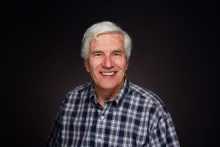
Steve Shafer was born and raised in Seattle. He graduated from Queen Anne High School in 1959 and later graduated from Ambassador College, Big Sandy, Texas in 1967, receiving a degree in Theology. He has been an ordained Elder of the Church of God for 34 years and has pastored congregations in Michigan and Washington State. He and his wife Evelyn have been married for over 48 years and have three children and ten grandchildren.
