
Mario Seiglie
This transcript was generated by AI and may contain errors. It is provided to assist those who may not be able to listen to the message.
Well, good afternoon to everyone. I've had a number of people over the years ask me how United began, what really took place, how much planning was there. There are some who think that United had all of this planned out months in advance before we got started, which is not true. And so what I thought it might be helpful, what I have up here is a presentation that was made to the, let's say, to the ministry, the ministerial candidate program, and was also made as far as the regional conferences that are taking place. This is something that's being shown in all the regional conferences around the nation for the ministry. But basically what it does, it shows you how we began and gives you a little bit of what some of our governing documents have to say.
So if we can get this thing to move.
Well, let me, here we go. When United was in the process of forming, one of the things that people started asking is, why did we need documents like a constitution of by-law? Why didn't we need to incorporate? People were concerned that we were going to get away from the Bible, that the Bible was the only tool that we needed. And here I've got some pictures, obviously, of Scripture. The Bible says to the law and to the testimony, if they do not speak according to this word, it's because there is no light in them. The fact that we were able to come up with a by-law's constitution, rules of association, other documents that we use to help us govern ourselves does not mean that we have done away with the Bible. The Bible is still the very foundation and source of all of our beliefs, and I think we're all aware of that. The Bible is our ultimate source of understanding and our ultimate governing document, and everything that we do has to be based upon that. As 2 Timothy 3, 16 says here, the Word of God is God-breathed. And so, basically, we all look at the fact that the Bible is the foundation. But yet, in order to function in society, I think most of you realize you have to incorporate in order to be able to have tax deductions, to be able to have everything work well.
That doesn't help. I'm not quite sure what all that is. Here we go. The marvel of modern technology. But what we find is that to function as a corporation in society, have legal protection, and to be able to do a work, you have to incorporate. Now, what most people don't realize, because you never were a part of it, is that Mr. Herbert Armstrong filed articles of incorporation back in 1946 and again in 1948. I have a copy here for anyone who might like to take a look at it. It's the Articles of Incorporation of the Radio Church of God, back in 1946. You can get a copy of 1948. I just thought I would copy one of them off, as well as fundamentals of beliefs of the Radio Church of God. Mr. Herbert Armstrong had written down originally 16 fundamental beliefs, and later on he added several more to that, brought it up to around 20-21 fundamentals of belief. When United started, in our original documents that we were considering, we went back to what Herbert Armstrong wrote, lifted it out, and stuck it in our documents.
The fundamental beliefs of the United Church of God are basically the same thing he had, with a tweaking of two or three of them. But it's basically what he came up with at that time. Mr. Armstrong, by the time most of us came along, had already incorporated, already had Constitution and bylaws. In fact, yet, twice, he reorganized the Church, once from the Radio Church of God to the Worldwide Church of God. Secondarily, with the attack by the State of California, you might remember in the late 70s, early 80s, Mr. Armstrong incorporated as a corporate soul. And as a corporate soul, he basically was the main stockholder and operator of the Corporation. That was fine, as long as he was alive, but when he died and Mr. Koch took over, we know that presented a few problems. When we began in the United Church of God, we committed to a high level of cooperation. We agreed that we wanted to share responsibility.
I thought I'd put a cartoon up here. It might help to demonstrate what we're talking about.
Hagar here talks about every successful leader delegates. So he's learning to delegate authority. Now they won't give it back, he says.
But the thing that we need to realize is that sharing of responsibility does not do away with authority. The fact that we have various areas of responsibility does not do away with the authority that God has set in his church, and there still is that authority.
Here's a picture of Mr. Herbert Armstrong. We find that the United Church of God incorporated in May of 1995, after an extraordinary conference in Indianapolis, Indiana. This was not intended to be a new entity, but a continuation of the New Testament church and the work that Mr. Herbert Armstrong had started. I think one thing was clear in our minds back in 1995. We knew we were going to have to incorporate as a different corporation because the worldwide Church of God was still functioning. But we felt that we were going to continue to do the work that Mr. Armstrong had started, and that we were going to be a continuation of the New Testament church and its teachings.
This is a picture of the jeans classroom and church. You might remember where Mr. Armstrong first began and started holding some lectures, a picture of the United Church of God where we were first getting started in Cincinnati and Victor Cubick speaking. So, basically, what we have here is a period of time we're going to be discussing today from 1927 down to the year 2007. Now, let me give you a timeline of events that took place in the church and how United began to form. Let's look at a few of the key dates here. November 1994, the regional pastors conference was held in Pasadena, and there was much unrest going on at that time in the church and among the regional pastors. Now, I was a regional pastor at that time in the Worldwide Church of God. There were 14 of us. We met in Pasadena, and we talked about and have talked about since then the big elephant in the room. Mr. DeCotch Jr., Mr. DeCotch Sr., none of them would come and attend our meetings, although they had called the meetings, and they were supposed to be conducting these meetings for the regional pastors. They had other men come in and give lectures, and everything was miked. There were little mikes on all the seats where we were sitting so that they could listen to what we were saying. So, nothing really came up in our meetings of substance about what was going on. The real meetings took place after the meetings.
In December the 17th, Mr. DeCotch visited Atlanta. He said he was going to deal with Earl Williams. Now, for those of you who are not familiar with it, Earl Williams had begun teaching the new teachings of the church.
He had gotten way out ahead of what Pasadena was trying to do. He was beginning to teach his congregation that you don't have to keep the commandments, you don't have to keep the law, you don't have to keep the Sabbath. He was teaching all of these things. Well, when we were there in November, we had a delegation go up and talk to Mr. DeCotch. Mr. DeCotch said, in fact, he pulled a sermon out of his desk.
This was a sermon you might remember that he had been going around giving on rumors where he said, look, I'm going to go to Atlanta and I'm going to give this sermon. And he dealt with 14 or 15 different rumors that were going around, such as the worldwide church of God was going to do away with the Sabbath, going to do away with the Holy Days, that different ones were eating unclean foods, that they were going to start keeping Christmas, and different ones were keeping Christmas and Easter, and so on.
So he said, I'm going to give this sermon. Well, when he went to Atlanta, he had two sermons. He had that sermon, and he had the new sermon that he gave in Big Sandy, if you remember, that was taped and sent out. Mr. DeCotch didn't sleep much that night because he kept trying to decide which one of these to give. Now, to me, that showed the duplicity of what was going on because he was willing to give either one of them. He was willing to preach what we'd always taught, or he was willing to teach the new.
And so it showed that he was just simply doing this in order to keep people in the church. Well, he decided to give the new sermon. So the first time that he gave that was December the 17th, 1994. Now, when he gave that, my wife and I were in Louisville, Kentucky, visiting with my mother.
My twin sister came over, said that there was she heard a big newsletter coming out to the ministry. I called the local pastor up, and what had happened, they had sent a transcript out of this. And so he brought me a copy over. My wife and I read about eight pages of this, and we said it's over. And we knew by that time that the worldwide church of God, as far as doing a work, was finished. So we cut our vacation short.
We were going to stay there several more days. We packed up. We went back home. And that Sabbath, I gave a sermon on why we need to keep the Ten Commandments, which was later used to get rid of me. But it was a sermon that I felt needed to be given, because nothing had come out officially yet on this. But Mr. Dukat, you might remember, spoke in Big Sandy on December the 24th.
Video was sent out to all the churches. Many objections are objected to statements made during this sermon. Many of you may not realize, if you watched that sermon, that a lot of people were sitting there in the audience, nodding their head in agreement. Well, the problem was the audience was not the audience who sat there during the sermon. It was an audience that had attended the graduation service a year before. They just put a different audience there. And the reason we know that is because we knew people who had been there, who the only time they'd ever been in Big Sandy was that particular Sabbath, and they were shown on the film.
So, again, it was not really an honorable way of doing things. January to March 1995, a few ministers were terminated. Others resigned during this period, and pressure was growing during for the field ministry. Now, in January of that year, there was a ministerial conference in Atlanta. Mr. Tkach Jr. got up and gave the first presentation, and then Mike Fazell got up and gave his presentation. My wife leaned over to me and said, I'm going home. She went back to the room, changed her flight plans, and flew back to Fort Myers that day.
Now, I had to stay there because I was making a presentation. Fred Keller's and I were doing seminars on stress in the ministry at that time. At that time. And believe me, there was a lot of stress going on.
But the last day of the meeting, it was a three-day conference, there were three of us there as regional pastors, Ray Wooten, Fred Keller's and I. I'm not sure what was said to the others, but I think basically the same thing. I was pulled aside and told that I was going to be terminated as a regional pastor, that they needed somebody who could support the new teachings. And I was not supporting the new teachings. They gave me a copy of the verdict magazine, told me to go home and study it. So that's where that was left. Also, somewhere around the first week or two of March, I was fired. I was one of those ministers it refers to here who was terminated during this period of time. April the second conference call of all regional pastors. Now, I was not on this call because I was no longer a regional pastor. But I heard about it. The delegates were appointed to make an appeal to the administration. We did not want to just go out and rebel against the administration. We wanted to go talk to them and see if we could talk some sense, if they would listen, if they would have a conference, so that we could discuss what had been going on, the new changes. The idea was if they were right, show us. If we were right, then they needed to stop teaching what they were teaching.
So on April the third, a memo from Doug Horchek to Denny Luker, Bob Dick, Jim Frank, suggests the approach to be taken in discussion. Denny Luker lived there in Southern California, and he was able to arrange a meeting for April the fifth to go talk to them. We were trying to be peacemakers. There were two requests made by the regional pastors to the home office at that time. We asked that they would call for a general conference to discuss the doctrinal issues. We said, look, if you're right, let's sit down and let's discuss this, and let's get it out in the open, and you prove your point, and we'll defend our position, and we'll see who's right. Well, they turned that down, obviously, would not accept that.
And then if this were not acceptable, we asked for permission to separate peacefully and go our way with no recrimination. We said, look, if you won't do this, then just let us go peacefully. Those who want to go with us, let us go peacefully. Don't this fellowship, don't hammer us, don't do any of that. Well, of course, they weren't willing to agree to that either.
So on April the fourth, three documents were prepared in advance of the meeting. In other words, for this meeting that was coming on April the fifth, there were three documents that were prepared. There was a letter signed by nine regional pastors, and I had signed that, expressing deep concern over the doctrinal direction of the church. Then we asked within our region for different pastors and elders to sign it. In 177 elders had signed this letter. We gave it to them. There are 177 elders who are very concerned about the drift, the direction that this is headed. We also came with a letter announcing an agreement for peaceful separation. In other words, if they would agree to a peaceful separation, we would all agree to this letter and send it out. But they were not willing to do that. A second letter announcing rejection of the separation.
Well, they rejected it, but they weren't willing to obviously take our letter. So on April the fifth, meeting with Jodekotch, Jr., Greg Albrecht, and Richard Rice, requesting to separate peacefully, and this was rejected. They would not have anything to do with it. They accused any lucre of being Judas, of betraying them, going against them, and had a few other words that they used. It wasn't until this time, April the sixth through the 22nd, that we began to plan a meeting in Indianapolis. Plans for a meeting of all interested ministers developed. Information was sent to the ministry for a conference to be held in Indianapolis. Now, why did we do it in Indianapolis? Because that was centrally located. Most ministers in the church could get there, or bulk of them could get there by driving within an easy days drive.
So what happened? 14 ministers and their wives gathered in Indianapolis from April the 23rd through April the 30th, 1995, to discuss the future of the church, to try to get organized. Norm and I were a part of this group. The names of those who were present at this meeting, Victor and Beverly Cubick, Guy and Jennifer Swenson, Burke and Susie McNair, Jem and Judy Servideo, Lyle Marge Welty, Bob and Diane Dick, David and Robin Hume, Ray and Peggy Wootton, Richard and Mary Pinelli, Bill and Elaine Jacobs, Jem and Sharon Franks, Roy and Norma Holiday, Denny, Leanne, Lucre and Doug, and Tanya Horchek.
Most of these were regional pastors who were meeting there. We met in a little room, not much bigger than this room back here. I mean, we were really crammed in there off to the side. And we got in there, we opened the meeting with prayer, and we said, what do we do? We had no idea what to do. Well, we realized that we were going to have to try to incorporate in some way, and it just so happened that a minister up in Northern California, Wayne Dunlap, had already incorporated a church in California under the title United Church of God. And so we asked him, since he was already incorporated, if he would be willing to give us his name, and he was willing to do so. And we changed the name, though, to the United Church of God and International Association. So what this meeting was for, it was a pre-conference meeting in Indianapolis on how to move forward. It was to be introduced to the full ministry. And I would have to say that among this group, even though we were meeting there and trying to get organized, there was not a total agreement on what to do.
Mr. Ray Wooten had different ideas about how to organize. He wanted to organize where the authority was in the local congregation. The local congregations would be in charge. The home office would simply be something that would send literature out, have no authority whatsoever. So, you know, that was his idea. And he eventually left the church because of that.
What we found is that 155 people showed up the opening night in Indianapolis. We had Sabbath services at the holiday end. We couldn't get a room there. We had no idea how many people were going to show up. I think at the Sabbath service, we probably had 200-something there. And so we went over to a little restaurant that had a little side room that you could use you for a banquet room that would seat about 50 or 60. Well, it was very obvious quickly that that was going to fill up. Thankfully, they had sliding doors. So we took over the whole restaurant and we had 155 people show up. And we agreed that we should have some type of a transitional period that would take place. So, on April 23rd, we had the pre-conference meeting in Indianapolis, just to give you a timeline here, the 14 men and wives. April 30th, the general conference began in Indianapolis with 155 elders.
May 2nd, 1995, conference concluded with the transitional board of nine men being selected.
So when we came out of those meetings, and let me just comment a little bit about those meetings that took place, there were many times that we, as we said in those meetings, I'm talking about the 14 couples, we would say, what should we do? And we had no idea. So we would take a break for an hour and we'd all go back to our rooms and pray. Then we would come back, start talking, and all the ones the answer would come. There were many times that every day that we went back to the room, we spent as much time in our room praying almost as we did out there discussing, because we realized we needed God's direction and we needed God's help with this. Just to give you one example, we were talking about what should the name of the church be? And we came up with the United Church of God, but different ones wanted to say the United Churches of God are the United Churches of God, an international association. And it was my wife who actually finally made the the final suggestion that we don't want to be just churches of God out there individually, off on her own. We want to be the Church of God, an international association. So we came up with that. So everyone was talking. We were giving our input. The men who were selected for the transitional board who were going to put together the bylaws, constitution, our governing documents, was myself, Roy Holiday, Doug Horchek, Dennis Luker, Jim Franks, David Hume, Victor Kubik, Ray Wooten, Burke McNair, and Bob Dick. May through November 1995, the governing documents of the church were prepared. We met every other month as a transitional board, and we started out with trying to put together all of these documents. We asked for input from all of the ministry, we had the regional directors meet with us in these planning meetings, and we put these documents together. In December 1995, a conference in Cincinnati, the documents were approved by 95 plus percent of all of those who were attending. I forget the exact number, but by this time there were well over 200 ministers who were with United. Presently, we have 450 elders plus in the church, give or take on that. What was our key motivation for holding the meetings in Indianapolis?
As many of us said, if this had been planned out weeks and months in advance, we sure did a bad job of knowing how to get started because we had no idea when we were in these meetings.
Primary issue that drove these actions was doctrine.
We were not rebelling against the governmental structure. We were not willing to accept or teach what we believed that was heresy. Our ideas about government were affected, but this was not the motivation, the chief motivation. Now, I might mention we left the worldwide church of God.
Put it this way, most of us were booted out. Not because we disagreed with the style of government, but we were concerned about the abuses of that government because what we found, as the Bible says, when the righteous rule, the people rejoice. But when the unrighteous rule, you got problems. And that's exactly what happened. When we organized in a way that we said one man was no longer going to be able to change doctrine and control all the assets of the corporation, that that should not be what took place. We did not start with one man proclaiming himself as God's anointed. Most church of God groups began with someone thinking God has called them, selected them to be in charge, and so they go out and organize and get people to support them. We did not start that way. We started with 14. We looked around the room and we said, nobody here is God's anointed. So therefore, we didn't want to put one man in charge.
We had a general transition plan that was adopted in May. We went something like this. We established a general conference of elders.
Its purpose, or it is proposed at the general conference of elders, this is what we came out of these meetings with, that accomplished these tasks through an annual meeting. Elect the directors to the board, review the annual financial audit, ratify all bylaws, ratify the doctrinal changes. Transitional board of directors would have, at that time, nine elected members. That board of directors, or as they are called today, the Council of Elders, will hold regular meetings, serve three-year staggered terms, be the transitional board, but that transitional board expired on January 1, 1996, approve all long-term contracts, approve the operational managers of the Church, approve the yearly budget, establish doctrinal study groups, propose bylaws and changes, elect the chairman of the board.
So that's what was proposed that the board do. The chairman of the board, his duties, we came up with at that time, would be to direct the day-by-day operations of the corporation. Now, you see here the title president was added later. Somewhere around July, I think it was, we had a document brought to us. It was a contract that had to be signed, and it had to be signed by the president of the organization. Well, we didn't have a president, so we gave the honorary title to David Hume as chairman also. But basically, it was just a matter of being able to sign documents. The reason why, at that point, he was called the president. He would nominate operation managers and bring them forward to the council. They would serve a three-year term, or he would serve a three-year term. And we had three operations, we had ministerial services, media and publishing, and the business office.
On May the 2nd, 1995, Jim Franks was assigned to seek legal counsel concerning our governing documents. He sought the assistance of George Crow. Now, Jim was living in Houston. George Crow was an attorney in Houston. George Crow had already incorporated the Church of God Texas, and he already had put together bylaws. We actually took his bylaws, and we used those and took them and modified them, and used them as a working document from which we were going to work. Now, the regional pastors attended again these meetings. On May the 7th, Jim Franks is asked to write the first draft of our documents. May 1995, many suggestions received regarding the structure, the content of the documents. It was also suggested that we separate the bylaws and Constitution because we were going to make them one document, and we agreed to that.
August 28th, first draft of the documents were reviewed in Denver.
Now, what we did, we came up with a draft. We sent it to all the ministry. We asked them to give their input, and everyone who gave an input on each section, all that was put together in a notebook behind that section, so that we had everybody's comments. We had a notebook about this thick, and we sat down and went over that notebook. We read every comment that was made on how something should be worded, and we either accepted or rejected it. So, in October 1995, another draft prepared in Kansas City to send to the ministry and to the membership.
December 1995, the bylaws and Constitution were adopted in Cincinnati.
Now, there was a philosophy that came out of Indianapolis that was behind these documents. The need for a council of elders, why did we come up with it? Where did we come up with the idea of a council of elders? Well, Mr. Herbert Armstrong had a council of elders. They didn't have any authority. They had the authority to choose a successor from among themselves if he died in an accident and no one had been appointed, but, you know, he went ahead and appointed his own successor. But we felt that there was a need of a council of elders with the ability to intervene and prevent the administration from hijacking the church. There was a need for a council to develop policies and guidelines for the administration to follow. And we felt that there needed to be a central administration that managed the day-to-day activities of the church for the effective preaching of the gospel and caring for the church. That's the third point here. Now, I'm reading all of this because we make a CD copy of this and it goes out. They can't see the board, but they can hear what I say. So, now covering the documents, you find a united way our documents are written, they're written that there has to be a high level of cooperation between everyone. You have the Constitution that was adopted on the 12th December 1995. You have the bylaws that was adopted at the same time. And then you had the Rules of Association that were adopted in 1999. That was a two to three year project. That was a long project to finally get everyone, all the international areas, to agree to those Rules of Association.
The General Conference of Elders of the United Church of God adopted these three documents between 1995 and 1999. So, the structure is originally proposed. This puts it in graph form so you can see what we've been discussing here. You would have a General Conference of Elders. They would select the Council of Elders. You have a Council of Elders. They select the President and approve the Managers. The President selects or proposes Operation Managers. We have an Operation Manager for Ministerial Services, Operation Manager over Finances, and an Operation Manager over the Media Development. Now, just one point. The Treasurer and the Operation Manager can be different. They don't have to be the same person, but for an organization of our size, they are the same person right now because we haven't seen a need to separate them. Now, let's notice some of the roles from our documents. The General Conference of Elders. What does the General Conference of Elders do? They shall conduct itself in accordance to the Scripture, this Constitution, the duly adopted Corporation or corporate bylaws, the rules of association of UCG, and applicable law. And shall with prayer fastenings head aside from among them a Council of Elders consisting of 12 elders. So, the transitional board was 9, now it was expanded to 12. The reason it was expanded to 12 was so that we could add three international representatives. Three of these have to represent the international areas. And so, we establish that. They improve all changes in Church doctrine. It takes three quarters of the ministry to approve a change in doctrine.
To get three quarters of the ministry to agree to a change in doctrine is not going to be an easy thing to do. They approve amendments to documents, approve the annual budget, strategic plan, and operation plan. Approve any other relationships with other religious organization.
Now, over the years, there have been two religious organizations that we have established relationships with. One was the Remnant Church of God in Ghana. The second one was the Church of God Christian Fellowship here in the United States.
Okay, so the General Conference of Elders selects the Council of Elders, approves relationships with other organizations, approves any doctrinal changes, and approves budget, operation plan, and strategic plan. Now, one of the strengths, I believe, of United is our doctrinal process. We have a doctrinal process where we have a doctrinal committee on the Council. We have a doctrinal subcommittee. If someone says that they feel that we are doctrinally incorrect, they submit their write-up to the subcommittee. Subcommittee studies it, and they either answer the individual, or if they feel it's valid, they pass it on to the doctrinal committee. The doctrinal committee reviews it, and if they feel that it's a substance, it comes to the full Council. Then the full Council reviews it. Now, we're talking here about originally a maybe six-state man, a doctrinal committee made up of four or five on the Council, and then the whole Council made up of 12 members. And if the Council says that they feel that it is truly a doctrinal change, it can then go or does go to the General Conference of Elders. And then three-quarters of them have to approve it. So, you see, there is a process set up, and no one's going to run in on his own and change doctrine in the Church. It is not going to happen that way.
Now, notice the Council of Elders. The Council of Elders is entrusted with the responsibility and authority to establish policy, to enable management to implement that policy, to provide direction and oversight to ensure the proper management of the day-to-day affairs of the Corporation, United Church of God and the International Association. It shall propose for approval by the General Conference the annual strategic plan, annual operation plan, and the annual balanced budget for the Church. The budget must always be balanced, and we cannot spend over what is there, the money is available. And if the monies don't come in, then we have to cut, and we have to cut back. May borrow money and enter into an indebtedness on behalf of the Corporation, selects and removes all officers, agents, and employees, and prescribes duty for them to direct and control by policy the affairs and activities of the Corporation. So, in essence, what you find is that the Council of Elders sits in the seat basically of greatest authority. However, they can be appointed by and are appointed by the General Conference so they can be removed. But the Council of Elders is the one who basically has the governing authority. So, the Council of Elders selects the President, the officers, and approves managers, develops policy for daily operations, approves all indebtedness, submits the budget, the operation plan, and strategic plan.
Now, the role of the President. He serves at the pleasure of the Council and may be removed with or without cause by a two-thirds ballot of the Council. I think over the years I've held every position in United you can hold. A church pastor, regional pastor, feast coordinator, council member, chairman of the council, president, and maybe one or two others. But I've served in all of those capacities so I know exactly what everyone has to do in those particular responsibilities.
Shall be the chief executive officer of the corporation as a responsibility for the general and active daily operation of the corporation represents corporation and legal and business matters for which the chairman does not have responsibility causes to be developed including but not limited. Well, that's not real clear here. Of, I think here, not limited whatever the congregation financial information legal and human resources appropriate to the function of the corporation is responsible to nominate and recommend for council approval such offices and individuals to fill those offices in the business of the corporation. So you find he's the chief executive officer, serves at the pleasure of the council, daily activities of the corporation. In other words, he's over the home office, makes sure that everything is running smoothly there, nominates managers for the council's approval.
Now the rules of association, the last document that was approved, was the rules of association.
This was developed primarily to address the international areas. What united is set up, the international areas can be organized according to national councils. How do those national councils relate to the home office? Because they are autonomous, so there has to be a working relationship set up.
Establishes the national councils in areas outside of the United States, requires the acceptance of fundamental beliefs of all of our governing documents, and establishes policies for the structure of the international areas.
Let me just give you some excerpts from the rules of association. The council of elders selects the GCE. The council of elders selected by the GCE acts as a board of directors for the establishment of policies, provides direction oversight, and enables and ensures the proper management of the day-to-day affairs of the United Church of God. The Articles of Incorporation, Constitution, and Bylaws, the governing documents of UCG. These rules of association and the policies of the GCE are the general conference of elders establishing and defining the local congregation and their members wherever they're located, and the national council and their lines of responsibilities and operation. So notice here the emphasis is on establishment of policy, enables and ensures the proper management of the day-to-day affairs of the United Church of God. Again, excerpts from the Rules of Association. These rules are designed to guide the activities of the United Church of God throughout the world. If any rule promulgated herein is in conflict with the laws of any sovereign state, then except as enjoined in the scripture, a member of the association is expected to give preference to the law of the sovereign state. Sometimes the laws in Germany or Italy or Australia dictate the certain things we may have in our governing documents. They will not accept them, so they have to establish their governing documents in accordance. All of them accept the Constitution. They establish their own bylaws. Notice Rule 1.150. In order to be and remain a part of the United Church of God, all local congregations, that's talking about us, national councils and the local congregations served by said national councils, agree to adhere to the following standard. 2. Each agrees to accept and uphold the fundamental beliefs of UCGIA as stated in the Constitution.
Abide by the decisions of the General Conference of Elders and Council of Elders with respect to goals and purposes of UCGIA. Abide by the decisions of the General Conference of Elders and the Council of Elders with respect to matters of governance, provided these do not conflict with the local or national laws, work within the constitutional structure of UCG, if desiring to bring about changes or improvement in doctrine, goals, purposes, or matters of governance.
So this is what every local congregation agrees to.
I don't know if you know or knew that you agreed to those.
I don't know how many of you have these explained to you.
Let me see a show of hands. How many of you have ever seen that before? Okay, we've got about four back through here. So not too many.
A local congregation, definition of a local congregation of the United Church of God, wherever located, is pastored by an elder who has credentials from and is recognized by the United Church of God and International Association. The pastor shepherds the local congregation and may be assisted by elders, deacons, deaconesses, and church members. In addition to this structure, advisory councils...
Now what happened here?
I keep pushing buttons. I better wait and see what shows up.
Okay, let's see if we can move back to the previous one. Well, it doesn't look like it's going to, so let me... Here we are.
I better keep my hand off the keyboard.
Since in addition to this structure, advisory councils, which term can include advisory committee or local advisory board or directors, may be formed within each congregation for the administration of local church programs through a cooperative effort between the pastor and the congregation. Where there is no national council, local congregations are administered either by the home office, a management team, or a neighboring national council is indicated in chapter one. So we have areas internationally, they do not have a national council, and they are administered from the home office. Any country can voluntarily put themselves under the jurisdiction of the home office if they would like to. Most have not. The ministerial transfers. I don't want to get bogged down here, let me just refer to this. It just shows that all elders of the United Church of God are subject to being transferred. Since united has started, Norm and I have moved four times in 12 years. So, you know, you are subject to being transferred. And, you know, basically, it goes on to show that outside of the United States, that if a minister needs to be transferred, that the national councils need to work this out between them, and has to receive the approval of both national councils, and be run by the Council of Elders in cooperation with the home office.
Another rural conflict resolution.
Conflict resolution is important for the well-being of each member of the association. Council of Elders has developed policies for resolving conflict among church membership and ministry. And I might mention, how many of you were aware that there is a policy concerning if you have a problem with the ministry of where you can appeal? Could I see your hands again? Same four or five, I think.
But there is a policy, and being a part, or having been a part of the ethics committee of the Council, I've gone out once or twice on some of those to sit down and bring both parties together to discuss them. But sometimes there could be a conflict between national entities, and so that's something that has to be determined, and the Council of Elders might be involved.
And again, defining where the home office, position of the home office and management team.
Home office staff and management team are charged with both serving and providing administrative oversight of the U.S. congregations. They will assist and cooperate with the National Councils, or their equivalents, when requested and wherever possible. And so, you find that this is listed. Now, all of these documents are available.
Any of you who would like to see the Bylaws Constitution, Rules of Association, can go to our website and read them or download them. So, National Councils have an administration where they administer the area they're over, such as New Zealand, Australia, Germany, France, Italy, Philippines, all of these areas.
They take care of the congregations. They're responsible for that in their local areas. They handle all of their financial matters in all of those areas, and they're responsible for the ministry. Right now, as you may know, we have a shortage of ministers. In the next 10 years, we expect at least 18 church pastors to retire. And that's not counting health problems or other difficulties. So, we need in the next 10 years to at least replace 18 church pastors. In Canada, the average age of the church pastors is around 70. So, you know, they're getting it up there. They don't have a plethora of prospects, so they're looking to the United States for help with that. And so, you know, there is a shortage. You'll find the interrelationship between all of these entities looks something like this. You have the General Conference of Elders, which is made up of all elders in the church, no matter where they live. You have the Council of Elders, who are selected by the General Conference. You have the Home Office Administration that administers the work. And you have National Councils. All of these entities have to work together. And we have to cooperate in order to be able to function. To be successful, we must be willing to cooperate and to yield to each other. So, the emphasis is on cooperate and yield to each other. If you'll remember from Philippians 2, verses 5-8, that this mind being you, which was also in Christ Jesus, who being in the form of God did not consider it robbery to be equal with God, but made himself of no reputation taking the form of a bond servant and coming in the likeness of man and being found in appearance as a man. So, we find humility and having a servant attitude being humble is what God is looking for. And this is the only way, truly, our structure can function at its optimum level. Christ's servant leadership must be a way of life with us. So, you know, we have to practice that on the local level and all levels of the organization. So, brethren, I hope this has helped you give you a better understanding of how we started, what some of our governing documents are. And again, these documents are not meant to replace the Bible. I thought I had eliminated those. I had actually updated this, and I see I got the old version back, but that's the way it goes sometimes. So, that's all for this. We will be coming back, and I have another slideshow and presentation that ties in with this that I will give you for the second half. So, Carter, if we could have another song.
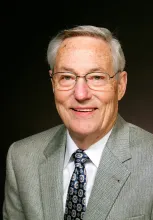
At the time of his retirement in 2016, Roy Holladay was serving the Operation Manager for Ministerial and Member Services of the United Church of God. Mr. and Mrs. Holladay have served in Pittsburgh, Akron, Toledo, Wheeling, Charleston, Uniontown, San Antonio, Austin, Corpus Christi, Uvalde, the Rio Grand Valley, Richmond, Norfolk, Arlington, Hinsdale, Chicago North, St. Petersburg, New Port Richey, Fort Myers, Miami, West Palm Beach, Big Sandy, Texarkana, Chattanooga and Rome congregations.
Roy Holladay was instrumental in the founding of the United Church of God, serving on the transitional board and later on the Council of Elders for nine years (acting as chairman for four-plus years). Mr. Holladay was the United Church of God president for three years (May 2002-July 2005). Over the years he was an instructor at Ambassador Bible College and was a festival coordinator for nine years.
