
Jorge de Campos
This transcript was generated by AI and may contain errors. It is provided to assist those who may not be able to listen to the message.
I remember when our children were small. We would always ask, who is done it? You know, something would go wrong. And we would ask, who is done it? Nobody is done it. Then afterwards, we used to call it, Mr. Nobody is done it. Mr. Nobody is done it. So that was a thing that we used to say in the family. But there is an interesting psalm here that I just want to first read verse 4 of Psalm 15. Then we'll read the beginning of it. But first, I just want to read verse 4 of Psalm 15. That brings an interesting principle about what we say. Psalm 15 verse 4. And it's the latter part of it that says, of Psalm 15 verse 4 that says, He who swears to his own hurt and does not change. He who swears to his own hurt and does not change. That basically means, you tell the truth to your own hurt and you won't change the truth. You speak the truth even if it hurts you. That is a characteristic, let's call it, a character of God. That is of being truthful even though it hurts. It's part of God's character. He's having that characteristic that says, I'm going to say the truth even though I'm not going to come out in good light because of it. But I'm going to speak the truth. And that is actually talking about Psalm 15. If you read in context, it says in verse 1, Lord, who may abide in your tabernacle? Psalm 15 verse 1. Lord, who may abide in your tabernacle? And it gives various characteristics of who will dwell in the kingdom of God, basically. Who's going to be in the kingdom of God? And one of those characteristics is somebody that is going to tell the truth even if it hurts him or her. And it ties in with what we heard in the sermon. People appear righteous, but they're not righteous. They have their own concept of righteousness. And there is that deception of not speaking the truth, of not representing the truth to their own hurt. And it is a problem in society. I mean, now that we're going through elections, it is sad what we see all the time. It's sad that we see this all the time of people telling stories rather than speaking the truth. And they train the story one way or another that it looks completely wrong. But there is a little bit of untruth somewhere in there. And then you have to go and analyze this thing to actually determine where is the truth. And in a sense, it's actually not worth it. I mean, we hear of ministers of government and even presidents. They say, I never did that. Every time they did, I never did that. And then later on, it comes out in Watergate or wherever it is afterwards that they did that. And society accepts them as they find. As they find. They commit adultery. Oh, I never had sex with that woman. In the meantime, later on, you hear about it. But now you can talk about it and everybody respects you. And it's sad.
Now, like we heard in the sermon, people can go wrong and people can repent. And that's a different story. God does give us space to repent. God does give us space to repent. But we've got to be speaking the truth. Christ had an issue with that as well. Look at Matthew 23. He talks about the Pharisees as hypocrites. Matthew 23. Matthew 23, verse 27.
Matthew 23, verse 27. He says, Wilt you scrubs and Pharisees hypocrites? For you are like whitewashed tombs, which indeed appear beautiful outwardly. You know, there's these people, you know, they dress nicely or their houses outside look nicely or whatever these things look nice from the outside. But inside, it's a different story. But inside, you're full of dead man's bones and all uncleanness. You know, it's just, in South Africa, we use a term called achamos. It's a term that means nothing to you, but it sounds good. But it means it's a mess. It's a mess inside. It's a mess. And that it's a chamos, you know, and our lives, sure, sometimes can be not so clean. But we can repent and we can acknowledge and be truthful about it and change. Because like we heard in the sermon, we all know man is righteous. No, no one, no man is righteous. But there was a man that went, like we heard in the sermon, and he says, no, it's me. It's me, I'm my fault, I'm nobody. He admitted it. And that is an attitude that we all need to have of admitting rather than say, oh, I am not like that man. Look at me, I'm okay. We all have problems. We all have difficulties. But the point is, we need to adhere to high moral stance. Once we see that we've done wrong, we need to change and we need to come clean. We need to have those moral stance. I mean, you see that in religion. People spend time in going to church. I mean, they look so religious. Every Sunday they go to church, for instance. They go with their fathers, and they worship in church. They put money in the offering basket. They appear religious like, they appear so good. They talk so nice. Their words are just so sweet. Everything looks so perfect. But are they making a true commitment to change their lives and to live according to the way that God wants them to live? Are they really making a commitment to change their lifestyle and to be different people in their inner parts, in their thoughts, in the way they react, right in the things that are very much inside them? And that is part of character that we need to develop. And today I want to talk about character, because are we weak in our commitment to God and in the character that we have and develop, or are we strong in the character that we are developing? And likewise, not only are we, but are we educating our children to also be strong in that character? Because it is part of us educating our children, or from our point, our great children, you know, making sure that we always give an example and give education to them as we go along, so that they understand what is true character and what God wants us to have as true character. So that's what I want to talk about, is how to have the true character today, true godly character, true God, holy, righteous character. What kind of character is God looking for? Do we have an example of a being, of a person that exhibited true godly character?
Yes, we do. And turn with me to Hebrews chapter 1 verse 3. Hebrews chapter 1 verse 3. And that obviously is Christ. But look at it. Hebrews chapter 1 verse 3, talking about Christ, but getting into context, saying that how God has spoken through His Son.
And then in verse 3, says, who being the brightness of His glory, and express image of His person. It was God the Father has spoken to us through the Son, who is the brightness of the Father's glory, and express image of His person. And Christ upholds all things by the by the word of His power, etc, etc. The word express image. Do you know what is that word in Greek? What is the Greek word that was translated for express image?
If you have a confidence, go home and check. The word in Greek is character. The Greek word is character. But that's interesting that it says that He is the expressed character, is the character of God the Father. He's got God the Father's character. And that is very interesting. And the word when you read the different commentaries, it says, it means it's the exact representation, or it's like in modern terms, it's a photocopy, or the facts. It's a photocopy. It's a stamp, one or the other.
It's a photocopy. It's the same sort of character. In other words, the Son radiates. You know, as He is the brightness of His glory, He radiates God's own glory and expresses the very character of God the Father. Jesus Christ had the very character of God the Father. So, what is this character?
What is this character Christ had? And how can we define it? Now, Mr. Armstrong put it in probably the simplest and most concise way that I've ever seen describing what true Godly, holy, righteous character is. He put it in in a book called, that he wrote many years ago, called Missing Dimension in Sex. And the way he put it in, he says, is the following quote, it is a controlled ability in a separate independent entity to come to a right knowledge of the true from the false, the right from the wrong, and by free choice to choose the right and true, and further to use the self-discipline to will and to actually do the right, and how to define the right by the law of God.
Now, let's break that down into simple little practical steps. So that's what I'm going to do now. I'm going to break it down into four key points. First, it says, right at the beginning, in producing that statement, is the control ability in a separate independent entity. In other words, it's the controlled capability that an individual, which is a separate independent entity, it's an individual, it's a person, it's you, it's me, it's my my son, my daughter, my grandson, it's an independent being. It's the controlled ability in the independent being to come to a right knowledge.
So the first point that I want to go into is the right knowledge of the true and false. Then, by free choice to choose, in other words, the capability number two is the free choice to choose. Have the liberty to choose. Everybody, every human being has the liberty to choose. So first is to have the right knowledge. Second is the ability to freely choose. Thirdly, you know, it says, choose the right and choose the right and true and further. Third, to use the self-discipline to will and to actually do the right. So the third point is to be a doer, to be a doer.
It's to have the self-control, the self-discipline, yeah, that's probably a better word, self-discipline, self-control, to actually do what is right. And the fourth, it's how to define the right and the wrong, it's by the law of God. So let's look at that story of the first point, which is the right knowledge. Who tells us the right knowledge? It's God. It's God tells us the right knowledge of what is right and what is not right. It's not the world, it's not our peers, it's not society, it's not the politicians, it's God.
God tells us the right knowledge. And if you think about it right from the beginning, the time of Adam and Eve, God told Adam and Eve the right knowledge.
First point is, you have the right knowledge and God gives us a conscience to actually kind of hold. It's like a sponge that holds that right knowledge. And then when we go wrong, that cautious pricks us. And that's why we're going to train the cautious, you know, with the right knowledge. We've got to educate the conscious because the conscious can be listrained. They've got to train it with the right knowledge. But the right knowledge is of God. And then the second point is the free choice to choose. If you lived during the days of who starts from you would remember, turn and turn again, you'd go back to the beginning, as you used to say, and to the two trees. Let's go back to the two trees, and then you sit there and say, oh, there we go again, the two trees. There we go again. I'm sure you remember that, those of you that were there. And this is the tree of life and the tree of knowledge of good and evil. And what did Adam and Eve have to do? They had the liberty to choose. They had the freedom of choice. God teaches the right, and then it says, but there it is you choose. And that's character that you have to choose.
And that's what the law says as well. Look in Deuteronomy 30 verse 15. Deuteronomy 30 verse 15. See, I've said before you today, life and good, death and evil. There's a choice. On one side is life and good. On the other side is death and evil. Giving you choice. And then it says, in that I command you today to love the Lord. I'm telling you, I'm giving you an instruction. Go for the right. I'm giving you a law. I'm pleading with you. Choose that. But because this is for your good, but I'm giving you the choice. It's your choice.
God gives us the right, gives the instruction of what is right, and he pleads with us, please do the right. But he says, there's the other one too. Now choose. And he sits back and lead us up to us. It's our decision.
He says, in that I command you today to love the Lord your God and to walk in his ways, the right, and to keep his commandments and his statutes and his judgments. Why? So you may live. I'm giving you life. You may live so that and multiply and have children and healthy children be blessed. And the Lord your God will bless you in the land which you're going to possess. But there's a side of choice. And if your heart, it's deep in your heart, it's the motivation of the heart. It's it really, it's your thinking, but it's got to come from the heart. Because in the end, your thinking is going to be led by the motivation of your heart. But if your heart turns away, so you're not here. And you're drawn away and worship after other gods and other ideas and other concepts. I'm telling you today that you're going to die. If you're going to go that way, it's going to be quits. That's the element to be quits. God, cheers, goodbye. So you shall not prolong your days in the land which you cross over the Jordan to go and possess. In verse 19, I call heaven and earth as a witness today against you, that I have set before you life and death, blessing and cursing. Therefore choose life that you and your descendants may live. Choose! God gives us an opportunity of choice. Do we obey God or not?
Do we obey God or not? This is the choice.
And we all have that choice. And I recommend people, time and time again, particularly people that have young people, to spend a lot of time studying the Book of Prophets. And particularly if they've got younger children, I recommend them always to spend a lot of time in the first few chapters of Prophets because it's got excellent wisdom for training young children and adolescent children right there through Prophets. And you can have so many youth bubble studies and so many education, so much education, particularly with young people in that. But the whole Book of Prophets is full of wisdom, starting with what? The fear of God is beginning with wisdom. You know, it's the fear of God that triggers this in the air. If you have a deep utter respect and fear of God, you're going to be watching that you do the right things. You have that deep respect for Him. And therefore, you're going to make that choice.
Now, we know that we all have said and we know that we all have done wrong as we heard in the sermon. The point is, even though we have done wrong, we've got a Savior Christ that washes ourselves and forgives us and that we can acknowledge, be sincere and truthful, and we come clean and He will get us right. So, as we also are approaching trumpets, He has an opportunity to say, how are we coming clean? Because we've got to be ready as a bride. We've got to be ready. And we've got to be ready. We've got to be analyzing ourselves coming ready because we want to be ready as a bride. And so, we need to analyze ourselves and look at ourselves introspectively and come clean and use the opportunity to choose right. And if we have chosen wrong, God forgives. He's merciful. Of course, justice is first. We've got to strike for the justice, but there's mercy. The weighty matters of the law is justice and mercy. Justice first. We've got to put justice first. And then, when we strive for justice and we ask for forgiveness, there's mercy. But justice is first. You can't put mercy in front because then you're just putting mercy without injustice. And that's no good. And then the next is faith, because you need to have the absolute faith that indeed is going to forgive you and that you're going to go the right way and those are the weighty matters of the law. And that's so beautiful, how God puts it all. So, that's the commitment we've made to baptism, isn't it? The commitment we've made in baptism is we're going to go the right way and yes, when we go wrong, we've got a high priest and that's the leading of the tournament. It's the high priest. The biggest meaning of the tournament is a high priest to wash us continuously because he's come out of it and he's our high priest and he's cleansing us day to day as we need to be cleansed. So, that's the commitment we've made at baptism to put God first. That's what it is. Turn with me to Matthew 10. Matthew 10, verse 34 to 39.
Do not think that I've come to bring peace on earth. I do not come to bring peace but a sword. For I've come to set a man against his father and a daughter against a mother and a daughter-in-law against a mother-in-law. Why? Because as people repent and as people come right and if they are the pioneers in living the new way, which is not new but it's God's way, which is the way that they should be, the ones that are still living the wrong way will oppose them. Why? Because once you walk in the light you expose the ones in darkness and therefore they're going to hate you. So, if you are going to set the lead to be living the right way, the others are going to hate you. And he says, and the man's enemies will be those of his own households. Why? Because when you try to do right, those others, they are in darkness of doing something wrong. They don't like when you do right because it exposes them and therefore they're going to put pressure against you. And he says, your loves his father or mother more than me is not worth with me. In other words, if you therefore, because you don't want to hurt them, you say, therefore I'm not going to follow God's way. Therefore, I'm going to please them to have peace with mother and father or whatever it is, to have peace at home. I'm going to do them. Then you're breaking God's law because you need to live God's way. So, you need to put the priority of God first. That's what he says. You love his father or mother more than me is not worth with me. In other words, we've got to love the light the right way. God's way so much that we are prepared to put others second, even if they are our close relatives, because we want to do first what is right. He says, and you love son or daughter more than me is not worth with me. And he does not take his cross and follow after me is not worth with me. In other words, to stand up for the right is at times difficult, particularly when relatives close to us are not. It can get very difficult for you to stand up when you have opposition from those that you dearly love. But he says, he finds his life will lose it. So if you try to find life with your relatives that are in the dock and says, okay, okay, I'll stay in this life and I'll keep this life, you're going to lose the eternal life because you've got to go for the eternal life first. They will also repent one day when God calls them in their time, but it's not their time yet. And he loses his life. In other words, our things of today, he loses them because he's looking for the world tomorrow. This is, for my sake, we'll find it. And so that is what we have. We've got to have that free choice to choose, to choose the right, even if it's difficult, even if it's really difficult. We've got to choose the right. So character has got these four points. First is to have the right knowledge and the second is to have the free choice to choose. Thirdly, we have to do the right. We have to do the right, consistently. We've got to struggle. Maybe it seems even in our minds we've got to struggle, but we're going to do the right. Turn with me, please, to Romans 7, the seventh chapter of Romans.
Romans 7 verse 12 first. It says, therefore the law is holy and the commandment is holy and just and good. We have a struggle against, or a law, which is holy, which is just and good. Look at it in verse 14. It says, for we know that the law is spiritual.
Well, that's the different way of saying the law is eternal, because if it is spiritual, it's eternal. In other words, physical will die. It's the physical things that die, but if it's spiritual, it can't die. It's eternal. The law is eternal. It's spiritual, but I'm calling, sold and the sin. For what I'm doing, I don't understand. For what I will do, I will to do, what I will to do, what I desire to do, what from my intent of my heart, from my motivation in the heart, I trip, I fail. I'm not up to that standard. But what I dislike, what I don't want to do, I end up doing it. I'm not saying that he's living in sin, but he's saying that he's struggling with wrong thoughts, wrong attitudes, things that he's struggling. If I then do what I will not to do, I agree that the law is good. For now, it is no longer I to do it, but sin that dwells in me.
And he says, For I know that in me there is in my flesh nothing good dwells. For to will is present in me, the desire to do things present in me, but how to perform what is good I do not find. In other words, I found that I'm human, I'm frail, I'm struggling, I'm not perfect, but I'm trying. The motivation in my heart is I'm trying. And that is what's important. The motivation in the heart. And then he concludes this, he says, you know, in verse 24, I'm a rich man that I am. Who will deliver me from this body of death? And he says, Thank God Christ will. So the point is we are struggling with this carnal flesh. Looking at another example, one chapter ahead, maybe the next page or even on the same page of your Bible, Romans 8, 7, 11. Romans 8, 7, 11. It says, because the carnal mind is enmity against God, it is not subject to the Lord God, nor indeed can be. So the carnal mind is not subject to Lord God. So then those who are in a flesh cannot please God. So we cannot be in the flesh. Our mind must not be on fleshly things. It must be on the right things. So we've got to be to us. We've got to be to us by working with our minds, by doing the right things. It says, but now you're not in the flesh, but in the spirit, if you need the spirit of God dwells in you, if we have God's spirit, our mind, our thoughts, our thinking are in God's ways. Now, if anyone does not have the spirit of God, you know what's the spirit of Christ, same spirit, he is not his. If we don't have God's spirit, the spirit of Christ, we're not Christians. That's what it is. We're not Christians. We're not true Christians. For us to belong to God, we must have God's spirit dwelling in us. And God's spirit will only dwell in us if our motivation is right and we want to live and do and practice the right things. We have to do the right things. Continuously be doing, and it's a war. It's a continuous war because it's not just our human nature, but it's society around us. I was explaining a little early on about those people in the village in Malacca. They have a society pulling them with all these things. And then thirdly, we've got Satan. Satan is stirring these things up. I mean, look at all the events around us today. I mean, it's just clear you can see there's a spirit. It's coordinated. Yeah, coordinated by Satan. It's a spirit and things are going one way. The nation is losing the pride of its power because 10 or 20 or 30 years ago, they were not there doing what they're doing today. I think the nation would have done things that would have frightened other people not to do, continue doing. And today, we just don't have the power. But we don't know what to do. And that's why it says it'll come to a point where the power, the hand of God's people, will be utterly destroyed. And then time is fulfilled. It's coming, and it's frightening when you think about that. Why? Because the nation was given some blessings, and they did not obey. Because they did not obey, those blessings are being removed.
And when that happens, there'll be a time like never before, like Christ says, and then the end will come. But before that, we're going to preach the gospel. So we have to have, we have a breather to preach the gospel as a witness. I mean, we're preaching the gospel. We're going out to good news. We're going out, and other people are responding. Few. Why? Because Satan has wrapped people and their minds in such things that he can't get out of it. And therefore, if we were doing this work 30 years ago, there'll be many people coming in. Many people, as we experienced many years ago, we did, and many people coming in. But now, the world, the minds are just wrapped in a certain societal thing that people just become secular, and they don't hear it. And unfortunately, sad things are going to have to happen. Very sad things. We're going to be very thankful to society so that people learn and repent, because God loves the world, and He will not allow the world to be destroyed. Christ will come in time to save the world. Otherwise, the world would be destroyed. It will be the end of the world. But thank God, He's the savior. He will save the world. Otherwise, it would be the end of the world. And so, we have to be doing. We, as Christians, we are the ones that have to be the pioneers of that age to come, and we have to do it today, under these difficult situations. If we prove ourselves to do that, then we'll be accounted worthy to be the bride of Christ at the Day of Trumpets. And as a bride of Christ, then we can be helped Christ in establishing a happy world tomorrow, to be the ruling government, and to help Christ in setting up a government that will give peace to all His other nations. Imagine the task it will be to go to some of the people of the minds they have today, and go and work with them. Imagine some of the people you're hearing the news with these minds that are just so corrupt, and you're going to have to go and change them. It's going to be a challenge. It's not going to be easy. And you and I are being trained for that. We have to be doers. So, to have character, we have to have the right knowledge. We have the choice, the freedom of choice. And yes, when we do the wrong thing, there'll be pain. And that's why there's pain in the world, because people have freedom of choice. And out of that, we have to choose the right, and we have to be doers. Now, what defines the right? It's the law of God. It's God's law. God's law which starts from one thing, the fear of God, through godly fear. Turn with me to Proverbs chapter 9, verse 10. Proverbs chapter 9, verse 10.
Proverbs chapter 9, verse 10. The fear of the Lord is the beginning of wisdom, and the knowledge of the Holy One is understanding. Brethren, the fear of God is the beginning of wisdom. The true respect, true, complete respect for God. It's not a fear of, you know, being hit every time you do the wrong, but it's an absolute respect that keeps you right. And then, it's the beginning of wisdom.
That is the thing we need to teach the children. I know when I first came to the church, when I was young, I was coming to the church. I literally would shake when people start showing me things in the Bible. I had such a fear and a respect. And I thank God for giving me that, giving me that. Because if it had not been that, I would not be, huh? It's that fear of God. It's not from me. It's God that gave me that. Nobody special. But that's the thing we need to pray for one another and for the little children that God gives them.
And we do our part in teaching the children to have a true fear of God. Because that keeps us in like the compass in the right direction. It's so important. And that's what we're going to be teaching, teaching them while they're young. Like Deuteronomy says to young people, teach them when they stand up, when you walk, and when they go to bed, teach them. And we need to do that for our little ones.
And then, as we do that, we develop character. And now that we know those four key points of character, the right knowledge, the free choice, doers, and the law of God, how do we develop the character? How do we have the opportunities to develop character? Well, Romans chapter 5 tells us how. Romans chapter 5 tells us how. Romans 5 verse 3 to 5. If we read the latter part of verse 2, says, rejoicing help of the glory of God. And it says, and not only that, verse 3, Romans 5 verse 3, not only that, but we also glory in tribulations.
Why? Why? Because they are the tests to help us to develop that godly character. They are the opportunities to develop that godly character. How do we have people to say the other right knowledge, the other choice, and do? Unless you have the choice, the opportunity to exercise that choice, you never develop it. And how do you have the opportunity to exercise that choice?
By trials, by afflictions, by difficulties. It says, we also glory in tribulations, knowing that tribulations, you know, there was trials, difficulties, tests, tests. You go to school, and what do you have at the end of the school year, or the end of the term, whatever it is, or the end of the week? You have a test. Why do you do a test? To check what you've learned, to check whether you, and if you haven't done, identified areas of improvement, so you can actually get better.
That's what it is. That's what you got to test. At the end of the week, at the end of the year, you've got a test. A final year, a test. Why? To prove whether you pass or not, and whether you need to repeat. Because maybe you haven't learned that yet. That's why we have those tests. Knowing that the tests produces perseverance. Those tests produces perseverance. Perseverance means you stick to it, and you just keep going. You stick to it. Stick, like character means you make those choices and stick to it. And when you stick to it, what you produce next?
That perseverance produces, produces what? Produces approved character. As it says in the margin, in my Bible says, approved character, in a margin. It's proved, it's tested. So trials or tests are there to test our character. And therefore, as it says in Romans 5 verse 3 and 4, it says these tribulations, these difficulties, these tests, give us an opportunity to persevere and to have our character approved, our character tested. Now, once our character is tested, we have hope. Because now we know, okay, we are doing the right thing, we are making the right choices, we are doing the right thing, we're persevering, we can stand in front of Christ at the judgment seat with hope, not because we're great, because we know in our heart that we've done the best and we have the hope.
That hope is kind of not guaranteed, but it's kind of strengthened, reinforced. Why? Because we've always done our part, we've done the right choices, our character is being tested, and therefore we, that develops hope. And that hope does not disappoint, because the love of God has been poured in our hearts by the Holy Spirit who has been given to us.
And so it says that we have freedom, hope, faith, and love. The greatest is love, which is God's law, which is how to practice. But God's law needs to be exercised, because how? By choice. And as we make the right choices and we develop that character, we then develop that hope based in the way of love. What do we need to have? That's the way. Now, how do they live for the developed character? By little tests. Every little test adds up. You know, every little test, you know, like you go to school, what do you do? You have a little test, you have a little test, you have a little test, and maybe you have an end of term test, or you have an end of the year test, but you have these tests. And all along, you're building up. All along, you're building up. Now, as we develop character in these tests, what's happening? We are the building character, or we are breaking character. If we do not conform to that test, then we fail, we're breaking character. And then if we fail again, we break character. And if we fail again, we break character. And if we fail again, we break character. And next thing, we either wake up right at the bottom and says, where have I been? And then we repent and start building up character all the way, or you stay here and you fail, or you stay here and you fail. And I call that the sticking point, you know. It's like you drive a car and there's a little bit of oil on the road, and it just sticks, you know. You're kind of, you slip. You're getting nowhere. If we have a sticking point, we can't grow, because we're not overcoming. And we won't grow until we overcome that sticking point. That sticking point stays there, and we stick, and we stick, and we stick, and we stick, and we stick, and we stick. And then we look back five years down the road, and I'm still struggling with the same thing. And I say, where are you? And we got it. Get out of that sticking point and overcome. And so, how do we develop character? Through thoughts. And how? By making the right choices, and overcoming, and winning. And that, you get stronger. Now, once you've overcome that, you know what? The next one's gonna be tougher. The next one's gonna be tougher, because now you're gonna, you know, you finish six years of math, whatever it makes. You've got seven years, it's tougher. And then you finish seven years of math, what is it? Eight years, it's tougher.
And here it is, until you reach the point that for you is the final exam. And for somebody else, might not be. For somebody else, might be higher. For somebody else, might be lower, depending according to their talents and abilities. And God works with different people in different ways. So, character is what we really are. Character is what we are. And we have to analyze every thought to see how we're doing. Turn with me, please, to Hebrews chapter 4 verse 12. Hebrews chapter 4 verse 12. For the Word of God is living and powerful and sharper than any two-edged sword, piercing even to the vision of soul and spirit and of joints and marrow, and is a discerner of the thoughts and intents of the heart. The Word of God, God's Word, the Bible, gets right down to split the atoms. Put it this way, right down to the core. Splits the protons from the neutrons and that's it. The electrons and all that gets right down to the nitty-gritty and separates it. But at the thought level, at the thought and the motivation level, and so it really goes down to that deep level. And so we need a Bible study. That's what it is. We need Bible study. We need daily Bible study. Because through Bible study and prayer, obviously, and meditation, so we study the Bible, pray about what we studied, and meditate about what we learned and how we can apply. That is helping our mind to get right. And to get right. Then we can see where are those sticking points that we need to get right. And then go ahead and make progress. So we've got to do Bible study. Now when we do that, then we can continue.
As we can see in Hebrews 5 verse 12, a little bit further down the road, in Hebrews 5 verse 12. And it says, For thou by this time ye ought to be teachers. In other words, you're talking to people, you are being in the church for a long time, and you should be doing better. But you've had a number of sticking points, and you're not doing as much as well as you should. You need someone to teach you, again, the basics. And you've come to need the milk and not sell food. Why? Because you've been going down the slab instead of up. You're going down, down, down, breaking down character. Now you're at the rock bottom. You should be up here. You've come to the rock bottom. For everyone who protects of milk is unskilled in the world of righteousness, for he's a babe. So if you're still down at the bottom, you're not being skilled at the top things, that you should be working, because you're developing through practicing the right, practicing and doing according to God's character, developing and therefore really practicing the need of Christianity, which is overcoming and discerning right from wrong and therefore going on the right way, making the right decisions of character and growing. That's the meat of Christianity, is making the right decisions and growing. And that's why it comes to the news. But solid food, the meat belongs to those who are mature. You know, it was a full age. That is, those by reason of use, by reason of use, use through trials of character, developing character by practicing and readers of use have their senses exercised. They have exercised the capability, they have exercised day after day overcoming to discern good and evil. To discern, they've exercised to discern the right choices and they've practiced the right choices and they've been developing godly, holy, godly righteous character. So we must use this opportunities that we have through the different trials in our lives that we have to develop character. And then we need to be overcoming right to the end. Christ says, He that overcomes till the end, He will be with me. We can read that when He gives the story to the different churches and gives the churches says, He that overcomes till the end. I'll give him a crown. And so right in Revelation 2, continuously says, you've got overcome till the end. He that is an overcoming. So God has given us His standard. His standard is the law of love. It's the commandments of God. We need to study them. We need to study the Bible. He's given to us. We need to teach that to our children. Daily, we have opportunities to choose. We have trials. We have opportunities to choose the right and we have opportunities to build character. We have to be building it rather than breaking it down. We've made a commitment at baptism to do just that. To fight daily, to develop that in our minds, to fight human nature, the world, and Satan. God gives us the power to help us through the Holy Spirit so that we can put a practice to love of God. So, in conclusion, character is to tell the truth when it hurts us. Character is to be inside the same as we are outside. Character is what when you do, but nobody's looking. And God is looking all the time. So, character is a deep respect of God. And brethren, let's put character development at the top of our list of things to develop. We need to fear God. We need to learn what's right. We need to develop the power to do what's right, to fight the enemy. And the question is, how are we doing? Are we standing right with God?
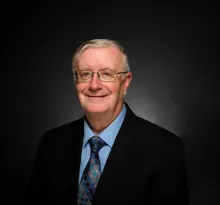
Jorge and his wife Kathy serve the Dallas (TX) and Lawton (OK) congregations. Jorge was born in Portuguese East Africa, now Mozambique, and also lived and served the Church in South Africa. He is also responsible for God’s Work in the Portuguese language, and has been visiting Portugal, Brazil and Angola at least once a year. Kathy was born in Pennsylvania and also served for a number of years in South Africa. They are the proud parents of five children, with 12 grandchildren and live in Allen, north of Dallas (TX).
