

Jorge de Campos
This sermon was given at the Montego Bay, Jamaica 2020 Feast site.
This transcript was generated by AI and may contain errors. It is provided to assist those who may not be able to listen to the message.
I want to start today by offering a humble and sincere apology, because during the Bible study, I stated that the millennium is not the kingdom of God, and by no means did I mean to say that Christ will not be ruling in the world tomorrow, and the kingdom of God will not be established in the world tomorrow. I apologize for that possible understanding. Obviously, we are Yah, and the vision that we are Yah is that this is what the feast represents, God's kingdom ruling on earth. But what was I trying, therefore, to represent? Could we have the slides, please? And what I was trying to represent, we've got to think about it in the context, what I said, what I was saying, is that there will be two types of beings living on earth when Christ establishes kingdom is ruled on earth. And one type of human, of beings, it will be us, God willing, that we will be resurrected or changed or transformed into spirit beings that are not flesh and blood, and that will therefore inherit the kingdom of God.
However, the physical human beings, our children, there will be living under that government of God. They will still be flesh and blood. And therefore, they will have not yet inherited the kingdom of God. Therefore, they will marry.
They will have children. Our children and grandchildren will marry, will have children, will learn the truth. In fact, the truth will be pervasive. Basically, everybody will know the truth. And they will have the potential to develop godly, holy, righteous character.
So that they will then be begotten when they receive God's Holy Spirit through conversion, to be begotten sons of God, to ultimately, ultimately, the ultimate goal, is that they will also inherit the kingdom of God. And so what I was trying to say, and maybe I said it incorrectly, and I might, some may misunderstood it incorrectly, for which I apologize. I have to be more careful how I express things. But my intent is to show that our children and grandchildren will have a lovely opportunity in peace, as we heard in the sermon, in a peaceful world, in a world where there will be no lie and falsehood, to grow and mature, so that they will be able to likewise inherit the kingdom of God. And that is indeed one of the most miraculous changes of all that will happen. What is that? Is the change from human nature to divine nature? You and I today are going through this process. We are going through this process of conversion.
But the whole humanity in the wonderful world tomorrow in the millennium, the physical human beings, will also be going through the same process that you and I are going through today. So that ultimately they may inherit the kingdom of God as well.
So conversion is a process, brethren, and it can be seen as a virtuous circle.
Now that's a play, in a sense, of a vicious circle. You have heard of the vicious circle, which is your inner circle, and it just goes worse and worse and worse. A virtuous circle is the opposite. A virtuous circle is a chain of events in which one good, desirable occurrence leads to another good, desirable occurrence, which then first promotes the first good, desirable occurrence, and so on, resulting in a complex chain of events which reinforce themselves through a feedback loop.
Conversion is a growing process that you and I are going through, where we are learning to be, for instance, we are in the sermonette, to be peacemakers. But you know what? We still offend people, not deliberately, not intentionally, maybe sometimes in good intent, but we make mistakes. Just like I made a mistake, the way I worded it, we all make mistakes, but we need to repent, we need to mourn, we need to change, we need to be malleable, we need to be flexible, to grow, to become peacemakers. That's what it is all about.
And the Christian growth that you and I are going through is a series of these type of virtuous circles, growing on one on another, and therefore we through it become better people. That's really what we're going through.
So today, I want to spend a little bit more time about, or talking about, this Christian growth process. I finally enjoyed a split sermon we had a few days ago by Anthony Core, and I apologize if I did not state your name correctly, when he talked about learning how to ride a bicycle. You think about it. It's a virtuous circle.
Obviously, it's not a linear thing that it says, well, you do this, this, this. Sometimes you trust dad or mom or whoever is helping you, and then you go back, you go forwards, you stumble, you learn again, you struggle, and you give a few more pedals, and then you go back, and then you've got it, oh yeah, you're still holding me, I didn't fall, whatever. And it is that virtuous circle, learning how to ride a bicycle. That's what it is. It's a positive reinforcement, learning through it, and learning through it, and learning through it, and becoming better.
To us, Christian growth is the same thing. I like to give it a slightly different example. Think about it. You're learning a new Christian growth, and every year you go through Passover, and the days of a living bread, and Pentecost, trumpets, atonement, feast, the last great day or the eighth day, and you've done like your first year. Think about it. You're on the ground floor, and you've learned certain things, you see the view, you know. Now you go on to the second year. It's like you go to the second floor. You're one floor higher. You still see the same area, but you have a slightly deeper, greater, more profound perspective as you go through that year. And then you go to a third year. Now you go to the third floor. Now you have a slightly better view. And every year, as you go on up and up, think of it on this building. Now you're in the church for 12 years. It is as if you're viewing the same truth, but with greater depth and understanding. And every year, you're supposed to be climbing this step in this building. But you and I know, just like riding a bicycle, sometimes you stumble. So sometimes you go from the seventh floor, and it's a bad year, you actually go down to the third, and then you're going to climb again. That's our Christian life, brethren. That's what you and I go through. And it will be none different in the world tomorrow for our children and grandchildren. They will be going through the same process. So let's look at one dimension of that process. I will then expound on how it's multi-dimensional. But we'll look at just one, and we'll look at this circle from one specific example.
And I drew this analogy by saying the beginning is the deep, profound respect for God, the fear of God. The fear of God. And you and I know, and turn with me to Proverbs 1, verse 7. Proverbs 1, verse 7. And I apologize, but you're going to do a lot of physical exercise today with your fingers by going at different scriptures in your Bible. But there's nothing wrong with that. So let's look at Proverbs, chapter 1, verse 7.
And some of you may know it off by heart. I like to read it because it's always more meaningful to read it. And it says, The fear of the Lord is the beginning of knowledge.
Think about it. It's like the starter motor. You know, when you put the key in your car, and you got that ignition, you got that starter motor. And throughout this process, the fear of God, the respect for God, has to always be there. To keep spurning us up to motivating us to just say, I have to respect God, and I want to respect God. I glorify Him. I love God. And you all do. But that is so critical to keep us in the right path.
Now, look at, still in Proverbs, Proverbs 9. Look at Proverbs 9, verse 9 and 10. Proverbs 9, verse 9 and 10. Give instruction to a wise man, and he will be wiser.
Teach a just man, and he will increase in learning. You know, you try and give instruction to a fool, and he will hate you. No, don't teach me. Don't, you know, you know, you know, this is human nature. We're talking about the change from human nature to divine nature. So I'm bringing just another example. Verse 10. The fear of the eternal is the beginning of wisdom.
So it's not just knowledge, but it's wisdom. It's the correct and right application of knowledge which is stirred by God's deep respect. Deep respect for God. Let's look at also at Proverbs, chapter 8, verse 13. Proverbs, chapter 8, verse 13. It says, the fear of the Lord is to hate evil. Pride and arrogance and the evil way and the perverse mouth. So respect for God. You don't want to do what's wrong. You want to be humble. Oh, it's so important. Do you know why we've got problems in the church?
Because we are not humble. It takes character to say, I was wrong. And unfortunately, many have caused the vision in the church because of lack of humility. And lack of humility was the source of Satan's rebellion. I will ascend to the throne of the Most High. I will be like the Most High. You know that. Why? Because he did not have the fear of God, the respect of God. Now, do you know, do you remember, it was mentioned in the sermonette today, the Beatitudes in the Sermon on the Mount.
Let's turn it then. The Beatitudes in the Sermon on the Mount, Matthew 5. Matthew 5. I usually equate the Sermon on the Mount to Christ's added value. Let's put it this way. Further profound explanation of the Ten Commandments. So he's magnifying the law, expounding it deeper through the Sermon on the Mount. He's magnifying it. But he starts it with the beautiful attitudes, with the beautiful attitudes. And do you know what is the first one? Humility. The first one, he says in verse 3, blessed are the poor in spirit. Blessed are the humble. Now, I want you to look at these Beatitudes like, I'm going to give you another analogy.
Now, have you ever tried to build a little tower with maybe Legos or with cards and you put one Lego on top of the other and you balance and you put another one on top of the other and you balance and you put it on, and you've got to kind of keep them exactly correctly balanced. And any of you as children did that on your dining room table.
I used to do that. My mom and dad used to get mad with me because I would maybe take a glass and then put another glass and then put another upside down and put another... Why would I do that, George? Now, think about the Beatitudes as that little pillar of little Legos that you're putting one on top of another and the bottom one is humility. The next one is mourn.
And for many years I thought, Oh, well, I've got to dress in black and have a little black thingy on. No, mourn is... When I say, when I do something wrong, I mourn. Mourning means repenting. When you and I mourn for the sins of the world, you pray that there will be repentance in the world. When you and I mourn for what you and I have done wrong, it's because you and I are repenting, our desire to change, and we mourn for what we've done. And the next one is meek.
And what is meek? It's being teachable. It's being malleable. It's being like malleable clay in the potter's hand. If you ever watched a potter making some vase with clay, when that clay becomes brittle, and malleable, you can't mold the vase. You've got to throw that clay away and start with a new batch. Now think about, you are humble. You have now repented because you are humble.
You now want to be teachable, pliable, malleable. To do what? To do God's will. To do God's righteousness. And you know what's the next beatitude? Hunger and thirst for righteousness. Now, a lot of people, and I'm not going to go there, but just make a note in Romans 10 verse 1 to 3.
A lot of people seek their own self-righteousness. Self-righteousness. If it is self-righteous, that means you have it. And if you have it, you can't be hungry for it because you have it already. So it's talking about your God's righteousness. You and I need to seek. We need to hunger and thirst. As if you fasting one day of atonement for a whole week. Well, I'm exaggerating, okay? I apologize. But what I'm saying is we really have to hunger and thirst for God's righteousness. Not our self-righteousness. So you can see you've got to be humble.
You've got to repent, desire to change. You've got to be pliable to say, okay, I'm going to listen to God's instructions. And therefore, you seek God's instructions. You can see it's a pillar, one on top of the other. And the next one is that you realize you've got to be merciful. Because you're a long way from being righteous, and I'm a long way from being righteous. And when other people do things wrong, I say, that's okay. I've been there.
And if you and I are not merciful, as Christ says, in the Lord's Prayer, as they call it, which is the model prayer, forgive our trespasses and forgive them that trespass against us. We've got to be merciful. Otherwise, how will God be merciful to us?
And then we realize this has got to be genuine. This has got to be sincere without wax. You know, it's like that pot of clay when they paint it, they put a bit of wax to hide the cracks. No, it's got to be sincere. It's not a broken pot. It's a genuine, clean pot, sincere. That's why it says, pure in art. And if you have all those characteristics now, you're going to strive to be a peacemaker.
You're going to be, at most, not to offend others. With whatever thing, could be with things like this, or whatever it is, you're going to say things in a gentle, loving, kind way that you're not going to offend others.
Do you know, if you are now visualizing this as a pillar of dominoes, or a legos, or whatever, well, legos is kind of, you plug one end into another, it's kind of, no, dominoes is better because you've got to balance them. Now you take the bottom one out. What happens to the others? They all crumble. Christ is teaching us that we have to remain humble all the time. We have to remain humble all the time.
That is, I'm kind of going through this thing about the knowledge, getting the knowledge of God, the knowledge of Christ. This grows, you know, this fear, and you learn a bit, and then you grow from one ear to another, and you grow more, and you grow more. It is a growth process. But let's look at the next bubble that I have, Yah. It's faith. Faith in God, that is our rewarder. You know where we get that from? Hebrews chapter 1. You know, let's go there. Hebrews chapter 1. Hebrews chapter 1. And we read first in verse 1.
I beg your pardon, Hebrews chapter 11. Sorry. I meant chapter 11, our 5th chapter. I don't know why I said 1. Anyway, Hebrews chapter 11, verse 1. Now faith is the substance of things hoped for. The evidence of things not seen. Faith is the substance, is the reality of things that we hope for, that we hope for the kingdom of God. We hope to be in a family of God. Faith is the substance that will be there if we don't mess it up. It's up to us. It's the evidence of things not seen. Faith is the evidence of what you and I don't see. You and I don't see God. But you and I are faith that exists. To you, that is evidence that exists. Fact. And then in verse 6 says, without faith, it is impossible to please God. Without faith, it is impossible to please God. For he who comes to God must believe that God is. And you know, demons believe that God is. Of course, they see him because they are spirit beings. But they don't know by him. See, there's a difference there. So, Faith says that because we must believe that God is. And there is a rewarder of those who diligently seek him. Now, put this statement in a negative connotation. Obviously, this is in a positive connotation. God is the rewarder of those that seek him. In a negative connotation is, God is the what of those that don't seek him? Obviously, he's the Punisher. Therefore, what he's talking about, yeah, is that God is our judge.
But it's talking in a positive context of Hebrews 11. And therefore, as a judge, he's the rewarder. So, Yahweh have faith is very important.
So, Yahweh see this virtuous circle. You know, you need a fear of God. You know, you trust. Like that riding a bicycle, you trust in your dad. And then sometimes it falters a bit. And you go back, and then you've got to... Can you see how this ongoing, growing circle is part of our Christian development?
That's why we read in Romans 3.28. Romans 3.28. Turn with me there, please. Romans 3.28 says, Therefore we conclude that a man is justified. In other words, is made just, is made right by faith, apart from the deeds of the law. I'd like to give the example of you driving downtown, and you get a fine because maybe you drove through a red traffic light, or you drove at a certain speed, and you get a speeding fine, or whatever it is, you get a fine. Now, they come to you and say, Where's the money? Where's the healt? That's Dutch for money. Where's the healt? Where's the money? Right? And you know what you tell them? Oh, I don't need to pay because now I'm driving through green lights.
You see, the deeds of the law don't pay for the penalty of breaking the law. You see, the penalty of breaking the law, God's law, is death. So how can you pay? By dying! And I tell you, once you're dead, you're dead. You can't resurrect yourself. But Christ died for us freely. By His faith, the faith of Christ, He died for us and redeemed us, brought us back to life. That's what it says. Every man, woman, and child that dies will be brought to life. Because it says, by the first Adam we'll all die, and by the second Adam we'll all be made alive. All!
No exception. All. All will resurrect, not at the same time. There's different resurrections, as you and I will know. And we'll hear more about that tomorrow in the messages. But...
You and I are brought back to life because Christ paid for our lives. Does that now give you a green ticket to continue breaking the law? Of course not. That's why, in the same book, Romans, in the previous chapter, chapter 2, verse 13, Paul says to the Romans, For not the years of the law are just in the sight of God, but the doers of the law will be justified. Brethren, it's not a contradiction.
It's not a contradiction between Romans 2.13 and Romans 3, verse 28. I like to give an example when I counsel people for baptism. I'll give a simple example. Imagine... You, the person that's being baptized, or that's requesting for baptism, and that's at the beginning of the baptism counseling. That's the very first... one of the very first things I talked to them, because I bring this analogy time and time again throughout the baptism counseling.
And I said, imagine that you are in jail because maybe you were driving under the influence of alcohol, and you were caught. And in some countries, that is a very serious penalty. I don't know, you're in Jamaica. But in some countries, it's a very serious penalty. And if you have a multiple reoccurrence, aint none. It's very serious. And the judge, you went to court, and the judge decreed, whatever penalty it is, you can't pay, you're going to stay there for life.
In some countries, maybe you have a death penalty, in other countries, maybe you don't. But let's say you're going to stay there for life. And you're sitting there, you know that you've done it. You know that you're guilty, and you know that you're going to die in jail. Then one day, the guard opens the door, and comes to the door there, and talks to you, and says, let's say the name of the prisoner is George.
Me. Okay? I'm in jail. And he says, George, you can go out! You're free! What? Why? I mean, the judge condemned me to... This is not it. How come? You see, there's this friend of yours called Stanley. He's going to stay in jail for you. Stanley, are you sure? Yeah, I love you! I love you, my brother! I'm going to stay there for you!
I say, wow! Are you sure? Yeah! I'll die! I'll stay there until I die, so that you, George, are scot-free. Now, let me ask you a question. Was I liberated or freed from jail freely? Of course! I did nothing! I was freed from jail freely. Let me ask another question. My penalty, for instance, was driving under the influence. Because I'm now justified, made right, can I go and again drive under the influence? Oh, but I'm justified freely, not by the deeds of the law.
You see, that's what the people in this world do. You see, these two are not contradictory. They are not that I am freed. I am even more accountable to make sure that I don't go and visit Stanley and Janet and he says, what are you doing here?
Well, I've been thrown back here. He says, what have I done there? Sometimes I'm vain. That's what Christ has done for us. That's why, once he's done for us, we mustn't go back and do the same thing. You see, so, faith, you see, we can see how these things work together. You know, knowledge and wisdom and faith and knowing that God is a rewarder, but he freezes, liberates us freely, but he's still a judge.
So we're going to be judged according to our works. So we've got to be very careful. In the Old Testament, there was stone to death. How much more in the New Testament, when you are denying our very own Savior, Lord and King? So let's move on to the next one, because really now you say, well, I'm justified freely. I better make a change. I really better make a change. And you and I know the sermon of Peter on the Day of Pentecost that he said, repent.
You know, in Acts 2.38, repent and be baptized. When the Israelites realized, what have we done? They now believed, they understood, they killed the Messiah. What have we done? And Peter in the sermon said, repent, change. You and I need to repent. As we read in Proverbs 28 verse 23. Let's turn there. Proverbs 28 verse 23. Proverbs 28 verse 23. It says, bigger part, Proverbs 28.13. It's written there, 13. It's written here, 13. And I'm saying 23. I'm getting old. I apologize. 28.13. It says, But whoever confesses and forsakes them, we've got to be willing to admit.
And that's why we can't be proud. We've got to admit. We've got to confess to God. We've got to confess to God. Or confess to those that we have hurt or offended. And forsake means we go a different way. We go a different way. If you do that, you'll have mercy.
Do I need mercy? I need plenty of it. Do we all need mercy? We all need plenty of it. The problem, brethren, that's another thing I do during baptism counseling. I say, okay, you've got to repent. Okay, what are you going to repent of? Well, don't itemize. I'm not asking you to itemize.
But I'm asking. And usually people say, I've got to repent of what I have done. And I say, good. What else? What else? Well, I've got to repent of what I've done. What else do you and I have to repent of? I make sure I cover that in baptism counseling.
Do you know what else you've got to repent of? Look at Jeremiah 17 verse 9 and 10. Jeremiah 17 verse 9. And you have other scriptures. For instance, a man thinks in his way that that is why he's right. Jeremiah 17 verse 9 says, The heart is deceitful above all things and desperately wicked. Who can know it? Oh, yeah! Tom Deaconair is heart is, but not mine. You know, I'm genuine. I'm sincere. Brethren, you and I have to acknowledge, to see, to repent. Put your name there. Put your name there. I have to acknowledge, repent there.
George is deceitful and desperately wicked. I know you're saying yes. I appreciate that. But look at, put your name there as well. Put your name as well. Not just mine. You know, we are. And that's what we gotta recognize. I, the Lord, search the heart. I test the mind, even to give every man according to his ways, according to the fruit of his doings. Brethren, you and I have to repent not only of what we have done, but you and I have to repent of what we are.
We are to repent of what we are. And that's the difficult part. And that is the difficult part. Oh, it's easy to say, oh yeah, yeah. I stole an apple when I was 15 years old. But now I'm 30. That's okay.
I've repented here. But what I am, that I'm causing offenses, that I'm hurting others. But you know what prevents you and I from doing that? Lack of humility, pride, arrogance. It's hard. It's that, you remember that deck of dominoes? It's that bottom one. That's why Christ started the Sermon on a Mount with the very first teaching is, be humble! Look at Psalm 19.
Psalm 19, verse 12 and 13. Psalm 19. This is an amazing Psalm. Kind of imprinted somewhere where you don't forget. Psalm 19, verse 12 and 13. Who can understand these errors? Oh yeah. You see, that's the thing. The heart is desperately wicked. We don't get it. We don't see it. Cleans me from secret faults. Oh, my wife knows my faults, but I don't. That's the thing. Or if you're a lady, your husband can see certain things, but you can't. Your close friends can see things, but you can't.
Are you or are we humble enough to come to God on our knees and say, Father, show me my secret faults that I don't see it because my heart is desperately wicked? Verse 13. Keep back your servant also from presumptuous sins. What is presumptuous? Proud! Arrogant! I am the big shot. Brethren, this is big. And you know what? We have to go through it. And don't we, year on year, we kind of see ourselves a little bit more? Do you know what I pray? I pray, God, show me my faults, but please, in mercy. Not all at the same time. Just a little bit this year, maybe a little bit more next year. Just a little bit. But otherwise, if it's all at the same time, it's too hard and I might just be discouraged. So, when you do pray for that, please make sure that you ask God, please do so in loving kindness and mercy. And God will be. And He'll show us slowly. But what am I saying here? It takes time. This is the change from human nature to divine nature. It takes time. And you know what? Our grandchildren and great-grandchildren in the world tomorrow will have to go through it as well. They will have to repent, and they will have to change, and they will have to see that they have in them human nature. Granted, Satan is not there to deceive and adversary and creating more problems and things like that. But, in the world tomorrow, our great-great-great-great-great-great-grandchildren will still have to overcome this deceitful heart that is in them, and it will take time. Oh, yes, they know the Lord. They'll know the Lord. They know the truth, but they still have to overcome. The instructions overcome are still applicable to our great-great-great-great-great-grandchildren. And obviously, we will be praying for them, and they are encouraging them. They will be in an encouraging environment, not in a negative environment like you and I are in, but they still have to overcome. Now, once you are going through this, in a year or whatever, and you go through this, what do you do? You make a commitment. You make a saying, well, I'm going to change. I am committed to God that I'm going to change. In our bigger circle of virtuous Christian growth, that is baptism. That's when we make the commitment.
That's when we sign individually our agreement, individually, between us, me, yourself, and God. You sign the contract through the baptism ceremony, where you say, yes, I accept Jesus Christ as my Lord and King and Master and High Priest and soon-coming King. I'll accept Him, and I commit. And the Bible says, be careful when you make a vow. Be careful when you make a vow, because you are making a vow before God. I usually tell people when they go through baptism and counseling, it says, now you're making a vow, and there's only two chances now. You either go to the lake of fire, or you have eternal life. It's your choice. Are you sure that you're committing and you know that you're prepared to make that commitment now? Are you ready?
So, that is the act as we cover in Romans 6, and you've covered that many times, Romans 6, the baptism, and you get to new man. I'm going to skip that scripture. You all know that we've got to overcome those lusts, and that's the symbol of baptism. You all know that very well. I'm sure your pastor, your local minister, sermons, you've had that, that you've got to change that old man. And baptism in that water means that old man dies and comes back as a new man. And that's why we make sure that there's not a little vow sticking out when you baptize, because your whole old man must die. Now granted, regrettably, unfortunately, sometimes, spiritually speaking, that old man kind of creeps his head up and we've got to get back in the water. You know? It happens to all of us. We're human beings. But that's what I'm talking about, this circle that we are learning, and we go from year to year, and we go from the first floor to the second floor to the third floor. Nothing new. It's the same stuff. But you have now a deeper perspective, a better view from as you have more years of understanding it. You now see, for instance, the same chair, but you see more details on the chair. You see, you're just understanding deeper the same truths. There's no new truth. It's the same truth. It's just that you have a deeper and more profound understanding of it.
So that's what Romans 6 then. We also have scriptures like that you are bought by crushed blood. Let's look at that 1 Peter 1, 1 Peter 1, verse 18 and 19. 1 Peter 1, verse 18 and 19. It says, knowing that you are not redeemed with corruptible things like Euros or American dollars or whatever, or gold or silver or megabucks. You were redeemed with the precious blood of Christ as a lamb without blemish and without spot.
That is the price. Now, what are we going to do? We also had a sermon. Let's see it. Choose life. Remember? We had a sermon that says, we now got to do what we know we got to do. Have you heard that? Let's look at Hebrews 5, verse 14. This is a very powerful scripture. Hebrews 5, verse 14. It says, but solid food belongs to those who are of full age.
That is, those who by reason of use have their senses exercised to discern both good and evil. What is the solid food?
Well, the solid food is those that are mature, those that are...it's like red wine. You know, it's mature. That's good, mature, and what it is, how it is, by reason of use. You and I become mature by reason of use. Why? Because it takes years to develop maturity. It takes years to do what? To discern good and bad. And years and years and years by, as it says, in YAH, having your senses exercised to discern both good and evil. Year after year, as you discern your good and evil, as you have that exercised, you become mature. That is the solid food, brethren. The solid food is knowing, is having the wisdom to do the right thing, even though it's difficult and you don't want to do it. That's godly, holy, righteous character. That's what we've got to develop. That is solid food. And brethren, there's another very important scripture here that I want you to look at. It's also in Hebrews, but it's Hebrews chapter 10, verse 14. Hebrews chapter 10, verse 14, it says, For by one offering, He has perfected forever. By one offering, Christ has done everything that is needed for us. So when you and I, through the exercise of other years, we make a mistake and we go down the step instead of going up. And sometimes, which one of you has not had maybe a time in your life or a few years in your life, could be years, where you just went down the dumps. And for years, you were and felt like at the bottom. And then something, and you started climbing up again. It happens. You know, you go up on this virtual circle and sometimes you just go down until you get to a point and it says, I wake up! I wake up, George! Get out! Do not slumber, do not sleep! We had the sermon's message as it is. It says, I wake up! And then we, you know, we start climbing up again.
Christ, by one sacrifice, made it all possible. There's no need to be sacrificing his life again and again. He's done it. But look at it. For those who are being sanctified, that is present continues. That means you and I are being made separate, made different, made saints. We're not yet saints, but we're in that process. And we're working on it. And we're working on it. But that Christ sacrifice covered it all.
That's why it says a little later in verse 19. And it says, therefore brethren, having boldness to enter the holiest, that is the Holy of Holies, that's God's very throne by the blood of Christ, by a new and living way. You see, in the Old Testament, the high priest could only go there once a year on the day of atonement. And only the high priest of the earth cleansed himself and done that, and he could go and sprinkle that only once a year on the day of atonement.
You and I can go there any moment. You don't have to wait for Passover. You don't have to wait for it. You can go any moment you repent. And by one sacrifice, Christ has made it possible by a new living way to go to God's throne and ask for mercy and forgiveness. At any moment, on the conditions that you have trusting God that is rewarded, that you believe in Him, and you are repenting. Genuinely changing. What a blessing there is, brethren. What a blessing there is. It says, yeah. And having a high priest over the house of God let us draw near with a true heart in full assurance of faith, having our hearts sprinkled from an evil conscience.
Do you know what? If you're still feeling guilty about something, we need to repent of that because our hearts will be sprinkled clean over evil conscience. That's the new and living way. But it obviously means, like that prisoner that left jail, you're not going to continue doing the wrong stuff. And so, as you do that, you realize you can't do it by yourself. You need God's Holy Spirit. And that's why, at baptism, we have to lay on our hands the prayer, and we ask the promise of the Father, the Holy Spirit that proceeds from the Father, through Christ, that Christ baptizes us with the Holy Spirit, that we receive it through Christ, but it proceeds from the Father.
That's why the Father is our Father, because it's the Spirit of God of the Father, which is the same Spirit, which is the Spirit of Jesus Christ, that we receive so that we can be one, like they are one. And so back, we have again, Acts 2.38. We know that. It says, repent and be baptized, and you shall...
It doesn't say you might. You shall receive the Holy Spirit, under conditions that you have indeed repented. And God knows the heart. So... and then we have Scriptures like, you remember, John 14 verse 17, where the disciples were with Christ after the foot washing, and Christ said, you know, I'll send you the comforter. And it says, God's Holy Spirit is with you, but it will be in you. That is so important to understand. Our children have God's Spirit with them, but not in them yet.
And so they understand the truth, because God's Spirit is working with them and opening their minds. But it will be in them, when they are begotten of the Spirit. Greek word, genau, when they are begotten. Greek 10-80, when we are begotten. 1 Peter, 1 Peter chapter 1 verse 23. I want you to look at these two Scriptures that I'm going to go and show to you. So powerful. So powerful. 1 Peter chapter 1 verse 23. It says, having been begotten, genau, genau, in Greek, having been genau, begotten. Again. What do you mean you've been begotten again?
When were you and I begotten the first time? When your dad and your mom, or rather your dad, begot you in your mother's womb. With a corruptible seed. Corruptible means a seed that after a few days or hours or whatever it is, it dies. But it is a living seed for a little while.
You know what I'm talking about. That's the first time you've begotten. When you are begotten again, you are now begotten with a seed which comes from the father.
An incorruptible seed, a seed that is incorruptible, which is non-added and God's Holy Spirit, which begets you as a child of God. Not yet born as a spirit being, but begotten.
So reading there, it says, not of corruptible seed, but of incorruptible. You and I are begotten again of incorruptible seed. That's the seed that proceeds from the father. The first time you and I were begotten was from the seed from your physical dad. But the second time you and I are begotten, we are begotten by the incorruptible seed that proceeds from our Heavenly Father.
Through the Word of God, because it was a promise given to us, which lives in the Bites forever. Because it was a promise of the Father. Now, then the other scripture, I want you to look at this 1 John chapter 3 verse 9. 1 John chapter 3 verse 9. 1 John chapter 3 verse 9. Look at it. Whoever has been begotten of God, in other words, Gennal, begotten, received the seed from the Father. Begotten is not yet born as a spirit being, but has been begotten, does not sin. Because we have God's Holy Spirit. Think about it. You have God's DNA.
With your physical DNA, it's like when you are first begotten, you have a little bit of your mom's DNA, a little bit of your dad's DNA. You have a little bit of your DNA with God's DNA, and you are now a new being, but still in a mother's womb, which is the church. Until a period of growing, maturing, in a mother's womb, which physically the example is in our mouths, spiritually is however long God has decided that is appropriate for you, until you die, or until Christ comes back, whichever comes first. So continue reading here in 1 John 3 verse 9. It says, Whoever has been begotten of God does not sin. Why? Because his God's mind is striving. In other words, you don't live in a way of sin. That does not mean occasionally you don't slip, but you don't want to slip. You don't live in a practice of sin. For his seed, it was God, the father's seed. Now, if you look at that in Greek, the word seed there is sperma, or whatever that means. But the Greek word is sperma. It's God's incorruptible seed. Wow! And then he has a remains in him, and he cannot sin because he has been begotten of God. Because you've got God's spiritual DNA, for example, in a modern day example. And therefore, you have this make-up, this DNA of God with your DNA, and now you're working over coming to become a better being. So, and if you go back to verses 1 through 3 of the same chapter, it says, Beyond what manner of love the Father has bestowed on us that we should be called the children of God? Yes, we are. You know, if you are, for instance, a man that is a military man, say for instance, and you beget a child in your wife's womb, and then you're sent to war to Iraq or whatever, and you're there for a year. Do you know what? The baby will still be born without you, dad, being there because you've done your part. So you are, that baby is therefore a child of yours. As a father, the begettle part is the begettle that leads to the birth. So it says, therefore, we should be called children of God. Therefore, the world does not know us because it does not know him. Beloved, now we are the children of God. Why? Because we, you and I, have been begotting. You and I have been begotten by our Heavenly Father with the spiritual holy seed, God's Holy Spirit. And it has not yet been revealed what we shall be. Yes. We have not yet been born again as spirit beings. And that will be the same thing for our children and grandchildren in the world tomorrow. We know that when he's revealed, that means when Christ comes, we shall be like Christ. For we shall see him as he is. We shall be like God. Why? Because we'll be spirit beings and we'll be able to see God and Christ in their full glory. And therefore, if you have this hope, you're going to try hard to stay clean. You're going to work hard. This is so important to keep that in mind.
And then we get to the Lost Bible in this virtuous circle. And you and I know that God gives his Holy Spirit to those that obey him. That means you and I have to practice. You have to do it. It's like that prisoner that got out of jail. Now he's got to live the right way.
You know, Christ said, if you want to enter into life, what does it say? If you want to enter into life, keep the commandments. Matthew 19-17.
You know, in the book of Revelation, right at the end, when it's talking about troubles and the beast power and all those things that are happening, it says, blessed are the patience, the patience, he asked the patience of the saints, those that keep the commandments and the faith of Jesus Christ.
Now we get to the point. Did you know we're in this circle? But we get to the key. The key that you and I need to have, and the key is to practice. Be a disciple. That's the key. And you know, as you go on in the church, that does not mean, brethren, that you are perfect. None of us is. But we are trying, and we're doing our best to keep trying. And therefore, we are going up year by year and seeing and understanding a little bit better and realizing we need to have more faith and we realize we need to change and sometimes we go a little bit back and, oh, we need a little bit more knowledge, or, oh, yeah, I need to realize that we need to change. We need to recommit or whatever it is, and you keep going through this cycle. And in fact, this recommitment is like every year at Passover, you recommit that. And you go through this area, and you realize, well, I've got to examine myself, I've got to change, I've got to become better. I've got to go through this time and time again. That's the key. You got to do it. Or else you go back. If you don't do it, what happens? You go from the 18th floor to the 17th floor to the 16th floor to whatever. And some people go so far down, they even forget that the Holy Days exist. You see, the key is we've got to do it. And we've got to do it. And we're going to remain faithful till the end. Those that will be of Christ are called, are chosen, and are faithful till the end. Brethren, it will be none different to our great-great-great-great-grandchildren in the world tomorrow. They'll have to go through the same circle of growth. And that's what Peter says, that we need to grow in grace and knowledge. That is the most amazing scripture. I want you to think about that and read the context. You know, read the context as homework of 2 Peter. I'm just going to glancely highlight it to you. In 2 Peter, you know, we need to grow, it starts by saying, you need to grow in grace and peace. And we heard it in the sermon, it to be multiplied and multiplied to you in the knowledge. You see, grace and knowledge right at the beginning of 2 Peter, around the first chapter, is saying, hey, you need to grow in this. And then it says, and then God's divine power, which is the Holy Spirit, will be given to you. It will give you all the tools, all the capabilities that pertain to godliness, to be like God. And then, it says, through those, it says, being given as exceeding great and precious promises that you may be partakers of the divine nature. With God's Holy Spirit, you then are partakers of divine nature. And then it gives you different examples of things that you need to do, of being patient, of the coming, you know, different dimensions. You grow and you go and you say, you've got to have love, you've got to have these things. And it says, and then at the end of that section it says, therefore, brethren, be even more diligent to make sure you call an election, for if you do, you do. I, me. It's up to me. It's up to us. God will never leave or forsake you. It's up to us. You will never stumble.
But in other words, you'll never leave God's church. And it starts with humility. This is God's life insurance policy. This is God's eternal life insurance policy. Read the section. Study. Meditate it. And then it says, for so, if you do this, you will have an entrance. You'll go in. An entrance will be supplied to you abundantly into the everlasting kingdom of our Lord and Savior Jesus Christ. Our children in the world tomorrow have not yet inherited that. They have to go through this process, like you and I have to. And then they will enter into the kingdom of God, into the everlasting kingdom of our Lord and Savior Jesus Christ. In other words, they will then inherit the kingdom of God when they have overcome. This promise is not only for us, but for our children in the world tomorrow. This is the great conversion of humanity in the millennium, which is a miracle, brethren. This is a miracle. This conversion is a virtuous, virtuous circle. You know, it can go up and down, but you and I have to remain faithful till the end. And you know what? It's up to me. It's up to you to remain faithful till the end. That's why it says, choose life and live eternally.
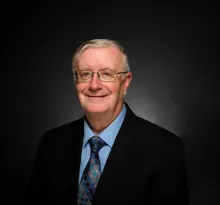
Jorge and his wife Kathy serve the Dallas (TX) and Lawton (OK) congregations. Jorge was born in Portuguese East Africa, now Mozambique, and also lived and served the Church in South Africa. He is also responsible for God’s Work in the Portuguese language, and has been visiting Portugal, Brazil and Angola at least once a year. Kathy was born in Pennsylvania and also served for a number of years in South Africa. They are the proud parents of five children, with 12 grandchildren and live in Allen, north of Dallas (TX).
