


Robin S Webber
This transcript was generated by AI and may contain errors. It is provided to assist those who may not be able to listen to the message.
And again, I want to welcome all of those that are with us that are listening today from afar, or maybe listening to this message in the future. This message is a compilation of a lot of things that have been happening in my life and counseling with others right now, especially with the challenging times that are all around us in different veins, and remembering some of the promises of God that are loud and clear.
And so, some of those thoughts are going to come together towards this message, because you are me, and I'm just one of you. We're God's people. We're human beings. We're down here. We've been on this pilgrimage for quite a while, many of us, and some are joining us, which is a joy. But I want to share a few things with you, and again, for any of you that have been in our congregation here for years, or known me over the 45 or 47 years since I've spoken, and or have, for the last 25 or few years, written for our publications, I like to be loud, where God is loud, and I like to be quiet, where God is quiet.
Loud, where God is loud, and quiet, where God is quiet, and to recognize that sometimes it's nice to move through Scripture, but to recognize the most important thing for us is to understand when God is loud, we can understand it, and to take that to the bank. To take that to the bank with us as we give our life to God the Father and Jesus Christ, and trust that they will be there when we need them the most. And beyond that, beyond our human moments for some of those that are listening, that they will be there when we are resurrected. So I have a question for you.
It's in my title. I'll just give you my title up front so you know where I'm going. How loud and how clear is your God? How loud and how clear is your God? Both of those are going to be extant in explanation as we go through this message. How loud and how clear is your God? I'd like to pick on the word for a moment loud and be able to define it for you, especially from the original Greek text of which the Scriptures are written in.
Loud is the original Greek word is magus. Magus. Maga. Big. Great. Magus, which means it speaks to intensity. It speaks to intensity. Big. Large. As we might say in black and white and in bold. And it's intense. It permeates. It penetrates if we will allow it to penetrate our lives and especially our hearts.
In saying that, loud is not only by volume. It's not only by myself raising my voice, but it's also intensity of clarity. Clear. No, things can be loud, but they might be mumble, jumble, and being loud is not enough. It's got to be clear. It's got to be direct. Sometimes loud can be quieter. It's intense, but it's also rhythmatic. It comes again and again and again. And or the way that is placed in Scripture. The way that it's placed in Scripture. And we ask the loudness sometimes is who is speaking, why they're speaking, what they're speaking, how they're speaking.
So all of these kind of go into this as far as hearing loud and clear. Your God. Now, I'm still going to underline Your God for a moment because that may be a question mark. Your God. And I recognize that. God warns us about a hearing problem. If you would join me over in Matthew 13, and this is spoken by Jesus to those in his day in Matthew 13. And let's pick up the thought if we could in verse 15.
Matthew 13, 15. The subject here in the context, and it's always important to remember the context before we borrow from it. The context is that the parables that Jesus gave were not always understood by the masses, but were given directly to the disciples. Now, notice what it says here.
Therefore, speaking of the audience around, I speak to them in parables because seeing, they do not see, and hearing, they do not hear, nor do they understand. And in them the prophecy of Isaiah is fulfilled, which says, hearing you will hear and shall not understand, and seeing you will see and you won't perceive.
For the hearts of this people have grown dull. Their ears are hard of hearing, and their eyes they have closed. Now, let's understand that Jesus is speaking to a covenant people. Not people of the new covenant, but of Israel and over the old covenant. People that God down through the ages had desired to have a relationship with. And their eyes they have closed, lest they should see with their eyes and hear with their ears. We remember what it says in the Proverbs that God has given both the seeing eye and the hearing ear, but it's gone deaf.
Lest they should understand what with their hearts and turn, so that I should heal them. So we take a look at this, and then this is again repeated 30 years later if you'll join me in Hebrews 11. In Hebrews 11, and picking up the thought if we could, in Hebrews 5, pardon me, Hebrews 5 and verse 11, pardon me.
This wasn't just a one-time thing with people. It can be generational. It can come down through the ages to those that Christ has directly spoken to. And we pick that thought up again in verse 11. It says this. Actually, I'm going to go up a little bit further. It's speaking about the priesthood of Melchizedek, called by God as high priest, according to the order of Melchizedek. Verse 11, in whom we have much to say and hard to explain since notice, speaking not to the world, but to those that are in the body of Christ have become dull of hearing.
For though by this time you ought to be teachers, you need someone to teach you again the first principles of the oracles of God, and you have come to need milk and not solid food. For everyone who partakes only of milk is unskilled in the word of righteousness, for he is a babe. But solid food belongs to those who are full of full age. That is, those who by reason of use have their senses exercised to discern both good and evil.
Again, interesting. Just a thought. It's amazing how often God talks about ears and talks about hearing in the scripture. Join me if you put over in Revelation 3 to kind of lay a foundation here. In actually, Revelation 3 and verse 20, notice what I see here. Behold, I stand at the door and knock. If anyone hears my voice and opens the door, I will come in to him and dine with them and he with me.
Have you ever missed a knock at the door? Sometimes people are a little light on the knuckles, if you say. Can't quite hear it. But sometimes it's like this. We're about to break my knuckles. And you answer it. You look out, at least in this day and age, you look out the window.
If it looks spooky, Susan calls me and I get to open the door. Who's ever out there? It says here, notice, behold I. And this is in red print. This is Jesus speaking. I stand at the door. He's always there. And knocking. But do we hear the knock? Do we discern it? Do we not only have that knock knowing who is out there, penetrate our lives? I'm going to use that word a few times in this message. Penetrate. Penetrate. Come through to us. And then he says, if anyone hears my voice, hears. And he says, if anyone, so it's not an assurity, it is upon the heart and the mind of the one that is hearing the knock. If anyone, notice, hears my voice and opens the door, I will come to him and dine with him and he with me. Again, let's go back to Matthew 4. Gospel of Matthew 4. Let's pick up the thought in verse 9. Oh, maybe that's not what I want to hear. One second, please. That is not... I thought that was what I wanted, but it's not. But we can go back to Revelation. Let's go to Revelation 2. Just notice what's happening here in Revelation 2, verse 17, when it comes to hearing. How many times it's mentioned? You know, a lot of us think of... when we think of the book of Revelation, we immediately think, oh, that's the book about prophecy. That's the book about... takes Daniel and takes Ezekiel and forward moves it to the New Testament. But notice the number of times it mentions hearing. In verse 17, he who has an ear, let him hear what the Spirit says to the churches. That's plural. That's to the saints for all times. Again, verse 29, he who has an ear, let him hear what the Spirit says to the churches. Chapter 3, verse 6, again says, he that has an ear, let him hear what the Spirit says to the churches. Verse 13, he who has an ear, let him hear what the Spirit says to the churches. Again, we look at this on and on, and it's mentioned more in the book of Revelation. He who has an ear, so very, very important. So that the book of Revelation is not only about prophecy, but it's a book of wisdom. And the wisdom is to have our ears open to what God is sharing with us in His Holy Word. Now, there's a problem with having an ear to hear God. And I would say, again, more than ever, with all the... everything coming at us today. Everything coming at us today in our lives. We're basically... we were back in Ohio recently, the Promised Land. At least Susan thinks it's a Promised Land. That's where she's from. And we saw a lot of farms out there. Not only in Amish country, but kind of where Susan's from is like Amish country without buggies. But you go back a couple of generations. What were our grandfathers and great-grandmothers listening to in their generation? Probably what they heard, especially if they're out in the country, they heard the sound of a bird.
They might have heard the sound of a horse neighing in the corral. They might have heard a Holstein or Jersey cow mooing out in the back forty. But they didn't have all the intrusions that we have today coming at us morning, noon, and night.
Part of it very informative. Part of it very needed. But you know and I know that it is distracting, it is addicting, and more is coming at us humanly than we can possibly ascertain. That's why we need to make sure that the Word of God, the voice of God, His Spirit guiding and prompting us and or reading the Word of God comes first and foremost. That is so important. I am not anti-technology, but I am very aware of where the technology is going today, distracting us, and sometimes, yes, leading us away from the very clear and dynamic promises and Word of God that are before us. Join me if you would in 2 Timothy 1. Oh, excuse me, 2 Timothy 4. In 2 Timothy 4, that's where I wanted to go. Notice, and this is one of the reasons why I'm speaking to you about this today. I charge you therefore before God and the Lord Jesus Christ, who will judge the living and the dead at His appearing and His kingdom. That's loud and clear. Preach the Word. Be ready and season and out of season. Convinced, rebuke, exhort with all long-suffering and teaching. Now, notice verse 3. For the time will come when they will not endure sound doctrine. But according to their own desires will heap up for themselves teachers.
Teacher may not just be a man.
Adipodia may be coming from somewhere else—radio, television, other people—with their ideas, with their thoughts. For the time will come when they will not endure sound doctrine. But according to their own desires, because they have—notice these people—they have itching ears, and they will heap up for themselves teachers. And they will turn their ears away from the truth and be turned aside into fables. But again, it says here, but you be watchful in all things. Be watchful in all things. Endure afflictions and do the work, speaking to Timothy, of an evangelist.
Over my lifetime as a Christian, I'm a simple person. And perhaps because of background growing up in this way of life, now for 60 years, and hearing things that at times seem palpable, but we came to understand they're not palpable. So I've been very dedicated over the years to be loud where God is loud, and to be quiet where God is quiet, and to recognize sometimes just God gives us the loud and to hold on to those promises. And as we were taught many, many years ago to keep your eyes and your heart on the big picture, and that's very, very important. God is not concerned about scratching our itchy ears. So please don't ask me to come out and anoint you for itchy ears. Not going to work. But He is concerned about transforming us into the image of His Son, Jesus Christ. Join me if you would in Romans 12. Romans 12. In Pilgrim, and in Pilgrim, and in Pilgrim, Composite verse 1, this goes beyond ears. I beseech you therefore, brethren, I beseech every one of you in the United Church of God, San Diego, I beseech every one of you that are hearing the words of this message today, by the mercies of God, that you present your bodies a living sacrifice, holy and acceptable to God, which is your reasonable service. Why is it reasonable? Because of what God and Jesus Christ have already done for us, and our personal living sacrifices down there compared to what our great God and our Savior has done. And do not be conformed to this world, but be transformed by the renewing of your mind, that you may prove what is that good and acceptable and perfect will of God.
One of the reasons in this verse has been coming back to me more and more, 2 Peter, join me. And we're going to be reading a lot of Scripture today, so just be ready for it in 2 Peter. And I've been thinking about it more and more, and have gone to Peter. Again, having been an elder for nearly 50 years, getting up there and passed over 45 years, and kind of thinking about not taking in sale, but putting up the sale, about what's really important for the people of God moving forward. Notice what Peter says here in verse 10.
And many of you are veterans. Many of you have been around for years. And yes, I think it's all right, as long as I'm in this tent, to stir you up by reminding you, to reminding you, to hold on to those things where God is loud. Consider those things that may be quiet, and you can spend some time over in that pond, or over in that pasture. But always remember, God will give us clearly exactly what we need to move forward towards the kingdom of God. Let's understand the privilege that you and I have to be able to hear the Word of God and understand it. And let's never take that for granted. I remember first hearing this verse being read in church 60 years ago. But you know what? It's good for all the ages of the saints. In 1 Corinthians 2, look what it says in verse 9. But as it is written, and here Paul is quoting Isaiah, I has not seen, nor has ear heard, nor has entered into the heart of man the things which God has prepared for those who love Him. But God has revealed them to us through His Spirit, for the Spirit searches all things, yes, the deep things of God. For what does a man know the things of a man except the Spirit of man that which is in him? But even so, no one knows the things of God except the Spirit of God that has been granted us. Now we have not received the Spirit of this world, but the Spirit who is from God, that He might know the things that have been freely given to us. I has not seen, ear has not been heard. The most important hearing aid, if I can make a comment, is simply this. The most important hearing aid that we have—this is not a hearing aid, by the way. This is so you can hear me on my right ear. The most important hearing aid that God has given you is your heart. Is your heart. You know, in one sense, all of us as human beings don't want to wear hearing aids. But especially men, all of us probably sooner or later will. I've already been invited by somebody I know really well to maybe get a hearing aid. Her name will not be revealed.
But you know what? It's not that you come to a point of recognizing it's not that it's the other person's fault. Could you please speak up? Some of you ladies are laughing out there. Can you please speak up? Or it's not the fan. You're going deaf! And that's a hard thing to admit because there's pride, isn't there, in that? Not me. It happens to everybody else. Pride goes before a fall. I'm not ready for next week to get a hearing aid, but it's on my to-do, my bucket list. About number 25 on the bucket nope. It's on my list. But that's how we are. We're laughing about it because it's just very human. We're all going through this wonderful phenomena of growing young as we grow older. Now, we have to be admitting it. And I would like to, while I'm giving this message, is to ask you to admit that we need to open up our heart more, hear the knock of Jesus Christ on the door of our heart, and we need a sinner, and we need to focus on the big picture more than ever with everything that's going on. And I'm going to lay out some of the promises of God for all of us to understand what is going on. One thing I want to share, first of all, is simply this. Even as we open up our hearts to God, we're not going to understand in this lifetime, in that moment, everything that God is allowing to happen in our life. I realize a lot is happening in each and every one of your lives. A lot happened in the life of Job. A lot lost his children, lost his property. Everything was going on with Job. And in Job 42, if you'll join me there for a second, in Job 42, at the conclusion. And I've said this to you before, having been out of Pasadena, that somebody once asked Mr. Herbert Armstrong, was Job ever converted? That same person probably should have been concerned about their conversion. That's a whole other thing. But Mr. Armstrong thought about it, and he said, yeah, but it took 42 chapters. And you find it here, where Job's words say this in chapter 4.21, I know that you can do everything and that no purpose of yours can be withheld from you.
That's very loud, brethren. That's extremely loud, no matter what you're going through, that you're in God's hands, and that no purpose of yours can be withheld from you. When God's put his touch, and he's embraced us with his spiritual arms, he's not going to let go. You asked, who is this who hides counsel without knowledge? Therefore I've uttered what I did not understand. Things too wonderful for me, which I did not know. Listen, please, and let me speak. You said, I will question you, and you shall answer me. I have heard of you by the hearing of the ear, but now my eye sees you, and therefore I abhor myself in repent and dust and ashes. At the end of Job, while he continued to surrender his life to God, he recognized that God wasn't going to tell him everything at once. And this is where the Jewish community for over 2,500 years has come to this realization that, at times, are you ready with me? Hardest thing to do in the world as a human being. Leave some things to God. He has his purposes, and I'm saying this very delicately and very sincerely and very carefully as a fellow human being. Especially when people are going through suffering. Perhaps they're experiencing death. Perhaps they're experiencing the breakup of a relationship. Perhaps the loss of a child. God, in his sovereignty, has his purposes beyond the moment. And in that moment, we have a decision to make. Are you with me? Whether to trust or to doubt. You might want to jot that down. Those are going to be two important words as we go forward. As we live this life as disciples of Jesus Christ and children of the Father, that will always come before us on our speed dial in front of us as we move through this life. Will we trust in God or will we doubt? Will we trust or will we doubt? Join me if you would in Acts 1, verse 6. Something very important. Acts 1 and verse 6. Hear the disciples. Jesus has come. He's lived. He's died. He's resurrected. And then notice what happens in verse 6 as they're out there on the Mount of Olives with him. Therefore, when they had come together, they asked Him, saying, Lord, will you at this time restore the kingdom to Israel? Will you at this time? I mean, after all, we kind of got it. You did have to die. You weren't going to be the conquering hero before your death. You did die. We understand now that you're the Lamb of God. But will you restore it now? A month or so later, will you restore it now? And then notice what he says, verse 7. And he said, It is not for you, for the saints of God, to know the times and the seasons. God through Scripture, God through prophecy, gives us a lot of lead-ups. He gives us a lot of detail of where things are going. But we do not know.
As I say that, I say that as a human being, that you look down through church history that Paul himself thought that the kingdom of God was going to come in its time. In Corinthians, he says, We which are alive, we which are alive, it was present. It was present. We recognize that other people down through the ages, in about 1000 AD, after a thousand years, it was thought there was a great religious fervor that Christ might come back during medieval history, that there would be the return.
We recognize again in 1844, with the great disappointment. And the great disappointment was simply this, William Miller, everybody getting their white robes, going up into the hills of New York, and awaiting. They had figured out God, even though you say that no man knows the day or the hour, we're ready to be beamed up. To bring it forward, many of us, many, many years ago, thought that there would be a reckoning and there would be a time, now long past, that Jesus was due to come, in all sincerity, in all faith.
And you know that, and I know that. Myself today, as a pastor down the years, is not to, I will disappoint you by accident and by being human, but my purpose is to look at those things that are loud, speak out those things that are loud, and the promises of God loud. And yes, Jesus Christ is going to be coming back. Amen. You don't have to say amen. God the Father, ultimately, is going to come down and be our God, and we will be His people.
Absolutely. But no man knows the day or the hour. But what we do know, what God gives us to do, is to have the responsibility of belief in Him. Not sure when that's going to happen. You know, it's interesting when you think, you know, Job, in that all those trials that he was having, I've gone through this chapter, even though the chapter hadn't been written yet, but it was the chapter in his life.
Okay, okay, okay. When does the good stuff finally happen, and when does it come? No man knows the day or the hour. Think about this for a moment. A Brahm was given a promise in Genesis 12, 1 through 3, that said the entire earth would ultimately be blessed through the seed that comes from His loins, and it would be a blessing to all the families of the earth.
He lived about 1900 B.C. It'd be another 1900 years till Jesus of Nazareth was born in Bethlehem. Moses was given instruction from God in Deuteronomy 18 verse 15 that, there will be one that likened unto Me that will be raised up. It was a prophecy about Messiah.
That same Jesus of Nazareth was born 1500 years after that. David was given a promise by God that from His seed, from His loins, generationally down, that there would be one that would inherit the throne of God. That was a thousand years later that that would be done. Interesting. So you see where the disciples come in that they're right there, and Christ says, yeah, I'm coming back, but no man knows the day or the hour. Reminds you of the story I've told you many, many times that about the little boy that had that talk with God, and the little boy said, God, what's a million dollars like to you?
And God said, my son, million dollars is like a penny. Boys thinking through, says, this is getting good. Little carnal kid. He says, well, God, what is a thousand years like to you? And God looked at the boy and answered, and he says, well, a thousand years is like a second. Well, he is putting everything together, and then he finally said, God, can I have one of your pennies? God looked at the little boy and said, yeah, but it'll take a second.
It wasn't going to be then. It wasn't going to be there. That's a little story about that all of us need to wait on the Lord for His perfect timing. The disciples themselves, excuse me, join me if you would in Hebrews 11. In Hebrews 11.
And let's pick up the thought if we could in verse 13. These all died in faith, not having received the promises. And there are promises that are more real than the sun and the moon above us. But having seen them afar off, we're assured of them. They were deep in their heart. They were embedded. They were loud. They were clear. But having seen them afar off, we're sure of them, embraced them, and confessed that they were strangers and pilgrims on the earth. For those who say such things declare plainly that they seek a homeland. And if they had truly called to mind the country from which they had come out, they would have had opportunity to return.
But now they desire a better, that is, a heavenly country. Therefore God is not ashamed to be called their God, for He has prepared a city for them. God's promises to Abram, to Isaac, to Jacob, to Joseph, to all the people of God, those patriarchs that had to wander, that had to get up, to get out, to get going, had to put in stake, pull out stake, put it back in again, as they traveled, in a sense, with two things.
A tent, an altar to God that would not be sacrificed to any other God. A tent and an altar. And they embraced it. I want to kind of bring you in. I'm going to be loud and clear for a moment here. Okay? Are you with me? Where we are today in 2023, are you like our pilgrim forefathers? Are you desirous then of believing in the promises, having received them, having heard them from God, and that you're assured of them? I am assured of them. I am convicted. And that is why, even in my imperfect way, in your imperfect way, we are striving to be a living sacrifice for God. Will we do that?
And in that sense, notice that to not only embrace them, but to confess them. We confess them by the way we express ourselves, by the way that we live, the way we are apart from our human nature with God's Spirit. Can we confess them? Can we profess them and wait on God? My question is simply this. If you go back to the title of my message, it's this. How loud and clear is your God? Now, I'm talking to a religious audience out here and people that I believe very much desire to follow Jesus Christ and walk towards the Father.
But we have that other God. It's called self. It's that four-letter word that describes human nature. And that can be a pretty big God. Small g. And even when we know what we know, even when God has revealed to us his ways and has granted us a full understanding of his Son, our idol of self can rear itself up and dominate. And do I dare say be louder and easier to understand than the ways of God and his promises?
You're saying, wow, Weber, this is heavy. Are you having a bad day? No, I'm having a human experience as a child of God. And I recognize that just like Paul, there are two battles within me, just as much as there's two battles within you. But as Paul winds up and says, thank you for the Lord Jesus Christ at the end of Revelation. What I'd like to share with you—I'm going to pass out my notes later because we're not going to nearly cover this— I'm just going to talk about some very loud understandings and promises and realities that God puts in Scripture.
Now, if you want to jot these down, I'll send out my notes later. Number one, the first loud statement of God in the Scriptures in Genesis 1 through 4. In the beginning God. In the beginning God. That's where it begins. Later on, that's where John picks it up in John 1, 1 through 4 about the Word. The Word was God. The Word is God, etc., etc. In the beginning God. It's very interesting that the Hebrew alphabet, the letter for the Hebrew alphabet, if you look at it, this is the PowerPoint for a moment.
If you blink, you'll miss it. Okay? The Hebrew is this way. It's open. It doesn't start like—the people that are watching this one day, years from now, they'll say, is Weber ever going to do a regular PowerPoint? No, this is more fun. This is like eighth grade Bible but years ago.
See, we think of the letter like this, like a C, but it has a beginning and it's pointing out that way. The way that the Hebrews—Hebra alphabet has it, it's open. You know why it's open? Who can help me?
Because it's about God. And God is. He doesn't have a beginning. But then He enters into the creation. He sees where the earth is at, and He says the first great statement. He says, let there be light. Wow! Let there be light in this dark form. And that's exactly what He did with you and me when He began to work with us as His children. The Father who calls us, and He entered our life, and He gave us the light of Jesus Christ.
That's loud. That's clear. The one that we worship, the one that shapes our worldview, our personal view, our life view, our future reckonings, is the one that says in the beginning, uncreated and yet incredibly familial and personable to you and to me. Entering a realm in which He creates time and space and begins to deposit His promises and His great truths. Isaiah 46, Jeremy, if you would there for a moment. This is loud. This is very loud in the Scripture. This does not take any Greek or any Hebrew to get. This is what we can bank and stake our lives on. Remember this, verse 8, and show yourself men. Recall the mind, O you transgressors. Remember the former things of old, for I am God. There's none other. I am God. And there is none like me. There's only—are you with me? What's He saying here? There's only one of me. I'm God. Declaring the end from the beginning and from ancient things that are not yet done, saying, My counsel shall stand and I will do all my pleasure. Nobody's going to hold back what I plan to do. And I take great pleasure in what the outcome is going to be. Calling a bird of prey from the east, the man who executes my counsel from afar country. Indeed, I have spoken it. I have spoken it. So are we listening? He speaks and is recorded in Scripture. I have spoken. Not the person on internet, not the person on TikTok, not the person on X, formerly known as Twitter, which I've never had the opportunity—because you know how I am with buttons and technology. No, this is God talking. I have spoken it. I will also bring it to pass. I have purposed it. I will also do it.
He says here at the end, I will bring my righteousness near it shall not be far off. My salvation shall not linger, and I will place salvation in Zion. For Israel is my glory, extended to the Israel of God today, that have accepted Jesus Christ as their Savior and have responded to the call of God the Father. I—you know, God can use I, can't He? But I have a question as I'm looking at this, recognizing that we look at other voices and hear other voices that interfere with God's voices, something I am working on—and I'll just be very frank, Susie's my best friend and monitors me— I've been trying to get I out of my conversation. Not my I here, but I. And me. Me, me, me, me. The tune of self.
Only God gets the glory. And yet how often in our conversations, even as Christians do, we get into the quicksand of self. And it just sucks us down. And rather than giving glory to God, we're giving glory to ourselves. That's a part of the everlasting gospel. It does not say we're going to read it in a moment to give glory to self, but to give glory to God. That what He's doing here in Isaiah 46, and which He is going to bring to completion, is far bigger than this guy from Southern California. Maybe I'm just talking to myself up here. Maybe I am. But, you know, that's my role as a minister, is to remind you. I'm your pastor.
And we love the brethren. And we know that God loves each and every one of you. That's so much that He gave His Son. And it is only to God the Father and to Jesus Christ that glory should be given. We will come, and we will go. Ministers, pastors, we will come, we will go. We can talk about God, but we have to give Him the glory. Another important, loud promise. John 3, 16. God so loved the world. This isn't made up. This is reality. God so loved the world that He gave His only begotten Son. That whosoever should believe on Him should not perish but be saved.
His Son did not come into the world to condemn the world, but by the world that it might be saved. When you're going down, you know, and we all have moments depressed, or things are honest, or does anybody love me, or where do I go next? I've been on this pilgrimage. I've got my tent. I've got my altar. I've been, but, John 3, 16. Loud and clear, and do I dare say, let it penetrate our lives as if we needed it because we do.
Another loud and clear promise of God, or words of God, is Matthew 3, 17. Messiah had come. He was being baptized in the Jordan by His cousin, John the Baptist. Not that He needed to be forgiven of sin, but to set us an example, and also by the washings of showing the high priests were always washed, weren't they? So there's all this typology going in, and the dove that represents the Spirit, and it's recorded for us, so that we can hear it 2,000 years later. Not the guy over in Macedonia, Alexander the Great. Not later on, Julius Caesar out of Rome. Not the pharaohs of old. This is it! My beloved Son. Now, I do want to turn to this, John 7, 37, about that beloved Son, in John 7, 37.
The Gospel thereof.
It says this, On the last day, that great day of the Feast, on the seventh day of the Feast of Tabernacles, at the culmination of the water festival where they really did it up big time, and we're circling around the temple complex. It expands and expands. And it is in that timing by the one that created time, the I AM, now Jesus of Nazareth. And in that moment, at the culmination of the water festival, it says, On that last day, the great day of the Feast, Jesus stood and cried out, saying, If any one thirst, let him come to me, and drink. And he who believes in me, as the Scripture has said, out of his heart, will flow rivers of living water.
Loud. Notice what it says. It says here that he cried out. There was no misunderstanding. A lot of the religious people back then, the shamans and the magi and the sorcerers and the wise men, they would do abracadabra, kawilakazam. That's my new kawilakazam.
No. Jesus, at that moment, the water festival, which is the big ending of the Feast of Dabbernacles, the crowd is there. The voice goes up. He cries out. It is heard. It's not done in a corner. And it comes to you and me today, two thousand years later, if we are thirsty. Susan and I were talking about this this morning about, you know, do we know thirst in this country? Do we know thirst in Southern California? The Colorado is still running.
So, sometimes we don't relate to this because we're not out in the desert, like with our friends, her and Caleb and Joshua and Moses.
Some of our people in our congregation, in our circuit, in our fellowship worldwide, in the body of Christ worldwide, they are thirsty. They are in drought, in human drought, in their life right now. Everything's out of them, of what's facing them. And it's at this moment today, for them and for you and for me, if you are thirsty, you continue coming to me.
Surrender yourself. Come to me in faith. Know that you are not alone. I am your God, and I will take care of you. John 11. Join me if you go over there a second. John 11. And let's pick up the thought in verse 37.
Actually, let's go down to verse 38. Then Jesus again, groaning in himself, came to the tomb. It was a cave and a stone lay in against it. And Jesus said, Take away the stone. Martha, the sister of him who is dead, said to him, Lord, by this time there is a stench in the Old King James English. It says, He stinketh, for he has been dead four days. No hope. Not three days. The Jews had a thought that the spirit lingered over the body for three days. But now this is four days. Jesus is the master of timing. Hope, as it were, has run out humanly. Then they took away the stone from the place where the dead man was lying. And Jesus noticed lifted up his voice. What's that mean to you and me? Just lift it. No. Yeah, he probably, his neck went back, but I would suggest he was very loud. Because he wanted others to hear as a testimony of his faith and connection with the Father. Father, I thank you that you have heard me, and I know that you always hear me. But because of the people who are standing by, I said this, that they may believe that you sent me. Now notice again, verse 43, And now when he had said these things, he cried notice with a loud voice. Lazarus, come forth.
Can we today in 2023 feel connected with these verses? This is the loud portion of the Scripture that what Jesus did in front of that sepulchre with a loud voice, he's going to do in the future. Join me if you would. Actually, there's one other thing I want to share with you here. Luke 23 46.
Luke 23 46.
Okay, let's see where we are here. Yeah. Jesus is on the cross, and notice what happens. And when Jesus had cried out, notice with a loud voice, he said, Father, into your hands, I commit my spirit. And having said this, he breathed his last. He was quoting out of Psalm 31 and verse 5.
Later on in John 19 30, it says that he would say it is finished. But this is important.
Jesus, because of Roman brutality, they wanted him to die like a dog. Pax Romana could only be enhanced throughout the Mediterranean basin of antiquity by Roman brutality. You didn't thwart Rome. So they beat him up. They crucified him, each and every limb of his. And at the end, notice what he says, I commit my spirit. That's our example. As we rely on the words of Jesus Christ, Jesus Christ relied on the word and the love and the compact that he and his father had made. They did what Abram and Isaac were asked not to do. They did that in full typology running over.
As we go through life, no matter what comes our way, and over moving towards five decades of dealing with people here in Southern California, we have gone through a lot of situations. We've gone through our own personal situations. Can you, reading this, how loud this is, can you be committed to God the Father and Jesus Christ no matter what comes your way?
And hand it over to him. Christianity is not about philosophy. It's not about theology. It's dealing with life 101. I want to go to 1 Thessalonians 4. We're going to go five minutes here. 1 Thessalonians 4.
The Greeks didn't understand the resurrection, so Paul had to—they didn't have that in their eschatology, their religion. So Paul was explaining the resurrection to them and enhanced even from the Jews of what they'd had in the book of Job. He says, I don't want you to be ignorant, brethren, concerning those things who have fallen asleep, lest you sorrow as others who have no hope. We've had recent deaths here. We will continue. Even in our beloved family congregations here, we will experience death. We will perchance other than if Jesus Christ comes back in our time, we will experience death. Here's what I want you to know about those that have fallen asleep. We say to you by the word of the Lord that we who are alive and remain unto the coming of the Lord will by no means precede those who are asleep. Now notice, for the Lord himself will descend from heaven with what? A shout. A shout. That's loud. That's clear. That is penetrating. In the Greek, that can be both a war cry. That can also be, in that sense, just like Lazarus. And yet, there's going to be multiple Lazarus and Lazarene. That's the ladies, okay? Lazarita. And it's going to come with a shout. There's going to be a boom. And it's going to go, My people, my saints, my patriarchs down through the ages, come forth. There's going to be a big earthquake down here. And they will come forth. Rather than wandering with itching ears elsewhere, you stay with the very loud promises and the good news of the Gospel. And we take you to one more, Revelation 14.6. Revelation 14.6.
Notice what it says here.
This is towards the time of the end. And think of ourselves in this sense, you and myself. And I heard a voice, verse 2, from heaven, like the voice of many waters and like the voice of loud thunder. And I heard the sound of harpists playing their harps. They sang as it were a new song before the throne, before the four living creatures and the elders.
And no one could learn that song except the 144,000, those that were set apart by God at that time. There are the ones who were not defiled with women, for they are virgins. This is speaking of a spiritual sense. They are the ones who follow the Lamb wherever He goes. These were redeemed from among men, being first fruits to God and to the Lamb. And in their mouth was found, notice, said, for they are all without fault before the throne of God. Then, notice verse 6. I saw another angel flying in the midst of heaven, having the everlasting gospel to preach to those who dwell on the earth, to every nation, tribe, and tongue, and people.
God is going to move it all around this world at the end to give witness that He is coming, that He's pushed the doorbell. He's going to penetrate time and space, and He's coming down to begin to establish the kingdom of God on this earth. Saying, notice verse 7, with a loud voice.
And this voice is not only for the future, but for you and me. If you want to hear God loudly, go home and break down verse 7. Fear God. Number one, fear God. Revere Him. Respect Him. Adore Him. Glorify Him. As it goes, and give glory to Him. Number two, to glorify Him. For only He at this time and His Christ are holy holy.
We're just striving to be holy. He gets the glory. And then notice what it says here, for the hour of judgment has come. Number four, and worship Him who made heaven and earth, the sea and the springs. The everlasting gospel. I want to share one last thing while it's on my mind. I'm going to rest my knee and just talk to you like a family and bring my voice down.
I just get excited about talking about God's word. I'm sorry. There's a lot going on in the world right now. I've had conversations over the last couple of weeks. What's going to happen? We've got war between the Slavic cousins up there in Ukraine, between the Russians and the Ukrainians. We have the situation that's happening now in the Middle East, and we don't necessarily know where that is going.
We recognize that we are no longer in a unipolar world after the demise of the Soviet Union, where we were the one great superpower. We now basically are at a parity with the Chinese. They're putting vessels in the Indian Ocean. Everybody's nearby. Everybody's coming down. Even our own people can become unnerved. Don't become unnerved. A lot's going to happen, but this is not the end. I've told you, in being San Diegans yourself, when I came into this way of life, at 11 in the Cuban Missile Crisis is going on, it gave me great courage to move forward, even as a young lad, when I was coming to this way of life.
Jesus said that he was going to come back. That humanity as a whole, that humanity that was still alive, would be saved. That this would not be the end. Most of us here grew up during the Cold War, grew up with the nuclear scares, got to get underneath the desk in case there was a nuclear attack.
You remember how that went? Thinking that was going to save us. That was really smart. And if no nuclear attack, it would work with earthquakes, but now they say don't get underneath the desk because of earthquakes, because the rift can fall there. What do you do? Just follow the teacher's orders. He said that the time Jesus said in Matthew that the time would come that unless he intervened, there would be no flesh saved alive. Do you hear me? But he did say for the elect's sake.
Are you listening? Is that loud? Do we ultimately want to be the solution beyond that? But for the elect's sake, those days shall be shortened and that happened.
Brethren, let's be loud where God is loud.
Let's be quiet where God is quiet. Muse in between. That's okay. I'm only speaking for myself. I like to stand on the rock and be firm. So who is your God? And how clear and how loud is that voice coming over? I hope a little bit clearer after this message.
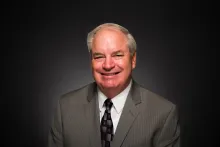
Robin Webber was born in Chicago, Illinois, in 1951, but has lived most of his life in California. He has been a part of the Church of God community since 1963. He attended Ambassador College in Pasadena from 1969-1973. He majored in theology and history.
Mr. Webber's interest remains in the study of history, socio-economics and literature. Over the years, he has offered his services to museums as a docent to share his enthusiasm and passions regarding these areas of expertise.
When time permits, he loves to go mountain biking on nearby ranch land and meet his wife as she hikes toward him.
