

Robin S Webber
This transcript was generated by AI and may contain errors. It is provided to assist those who may not be able to listen to the message.
I'd like to begin by just giving you my title, so you might want to write it down. That way you'll know what I'm speaking about right from the beginning, or at least we'll build upon it as we go along. And that is simply this. The title of the message is, Lend Me Your Ear, Comma, and Give Me Your Heart. Lend me your ear and give me your heart. Today I'd like to mesh together a little bit of Shakespeare with God's earnest request for each and every one of us.
It's out of Julius Caesar that the words of Shakespeare come, Friends, Romans, Countrymen, Lend me your ears. And at the same time, when you read the Scriptures and come to understand them, that God has always wanted our heart, first and foremost. To anchor us in Scripture, I'd like you to join me, if you would, please. Let's go to the New Testament. Let's all open up our Bibles today on this God's Holy Sabbath day to be able to hear the Word of God. In Hebrews 2, join me, if you would, please, as a congregation.
And let's look at what this message will be anchored around. In Hebrews 2, and beginning in verse 1, Therefore we must give the more earnest heed to the things which we have heard, lest, yes, lest we drift away. For if the words spoken through angels prove steadfast, and every transgression and disobedience received a just reward, how shall we escape if we neglect so great salvation, which at the first began to be spoken by the Lord, and was confirmed to us by those, notice, who heard him?
The emphasis, then, in this set of verses is that we need to give earnest heed to that which we have heard. And that which was heard from the beginning literally transformed lives and changed lives. And that's what we want to build upon today. Now, this concept of listening and hearing was very much on the mind of the author of the book of Hebrews. Join me again just a few verses over in Hebrews 5 and verse 11, and let's notice what it says here in Hebrews 5 and verse 11.
The author of the book of Hebrews just is really wanting to pour it on and pour it out. And he says, of whom we have much to say, and, yes, hard to explain, notice, since you have become dull of hearing. For though by this time you ought to be teachers, you need someone to teach you, again, the very first principles of the oracles of God, and you have come to need milk and not solid food. So this disturbing element comes up that the author of Hebrews is very concerned about, that he can't go any further in his teachings because of a situation.
Because people have become dull of hearing. I'd like to focus on that word for a moment, dull. We've all probably used that at one time or another, kind of fun to say, because you kind of, you know, dull, just like that. And so we've often seen a movie, or we've talked to somebody, and or you've heard a message that I've given, and you said, boy, was that dull? It's a word that's in our jargon. But allow me to share some synonyms with the word of dull.
You might want to jot some of these down if you want to, to kind of build up to a point. Dull can mean to be blunt, to blunt, to blunt, to deaden, to numb, to muffle, to tone down. You can just kind of make things come to a grinding halt and to a stop. The lights have been turned off up here in the brain, here in the heart, and nobody's home.
Why so important today, brethren of United Church of God Los Angeles, and who ever may hear this message in the future, why is it so important to give earnest heed to the Word of God? Allow me to bring us all into this. Whether having experienced this way of life for 10 or 20 and or for some 50 years of life, and for some that are now, shall we say, in the second or third generation that have come through the 20th and into the 21st century, we recognize that we have put a lot of mileage in church.
We've heard a lot of messages. We've heard sermonettes. We've heard sermons. We've heard sermons sometimes that have gone too long. I remember as a boy hearing sermons that sometimes went two or three hours. So we've heard a lot of messages, and we've heard a lot about God. Today, on top of that, we have a situation in our age where, with the information flow, with the distractions that are in today's society, where it's really, really hard to concentrate.
You know, a man's best friend used to be his dog, and the place where he could have solitude was in a gasoline station by a fuel tank. Have you ever been by a fuel tank recently? You just want to have a few minutes with nobody talking to you, and they've got the messages now coming out of the fuel tank just yacking at you, just on and on and on. I'm going to share a carnal moment with you. I want to take the gas pump and go, ah!
You didn't hear that at all. But there is nonstop talk and information coming our way that just is saturating our life in a way that has never occurred before. Also, as I said, many of us have been in this way of life for years. Many of you grew up in this way of life. Susan and I came in when we were 11, 12 years of age. Others of you came in at different ages. Others of you came in as young people. Now you've been experiencing this way for 20 or 30 years. Some of you grew up, as we were listening to Mr. Velasquez today, you grew up keeping the Sabbath.
Big deal! It's wonderful. Okay, what's next? Or we came with the understanding that the Kingdom of God is coming back. Okay, got that. What's... Okay, what else do you have to say today? It's a little bit like electricity. You know, if you go back to 1879 when Thomas Edison developed, along with his staff at Menlo Park, developed electricity. Can you imagine how that changed the world? And how exciting that was with the flick of a switch that there was light?
And behold, let there be light. It was the second wave of that verse. Now you and I today, we just know, switch on, switch off. It gets dark at five o'clock right now. Well, we're not going to stay in the dark. We're going to switch. Big deal. And we don't think about it because here's the one thing that can happen and maybe consider this. Familiarity not only breeds contempt, but it can also breed complacence. And that's kind of what I want to touch on today to light a match in your hearts.
And that's why this message is entitled, Lend me your ear and give me your heart. Because, dear brethren, here in Los Angeles and those that are listening, we can, yes indeed, we can become complacent with the great truths of God. We can become complacent by coming to services and simply putting in time. And that's a great question I have to ask you today. And that's kind of what I'm building upon. I think that's what God has inspired me, as well as some other ministers that have been hearing recently, is to strike a match, a holy match, and light up the hearts of God's people.
And to remind them of what an incredible blessing we have to be able to hear the Word of God. Not only hear in services, and I'll expound upon that later, but just to be able to hear the Word of God. We know the message that was spoken of about Laodicea, which was the last church to be spoken to, but that message was read by, remember, all of the churches, all of the churches read all of the letters, because there was something in there for everybody, but it said with Laodicea, I would rather you be hot or cold, one way or the other.
Get in or get out. But you're lukewarm. You're complacent. And I want to address today the danger of being in a climate of indifference. You know, God has given us an incredible birthright at this time. We talk about being first fruits. We often think, then going back to the Old Testament, of the firstborn. We sometimes, I'm sure all of us have heard messages at one time or another, and we have the story of Jacob and Esau and the aspect that Esau, Esau, what is with that guy? How could he sell his birthright, give it away with just some Campbell Soup, with just some porridge?
Where is he coming from? What's he about? But we also have been given a birthright. We have been given an incredible blessing. And just as much as, ah, he became complacent about what God had given him. And brethren, as your pastor, as your pastor, and as a spiritual leader in Southern California, I do not want any one of you to become complacent with the truths of God.
They are so exciting. They are so wonderful. They are so breathtaking. They are worth everything. They are worth every bit of your life that you give to them, and every leaning of the ear that you attend to in hearing the Word of God, because Jesus Christ gave his life for you, that your ears might be open to the wonderful things of God. Join me if you would in Romans 12. Not Romans 12, Romans 1. I want to show you something here. Remember hearing this many years ago? There's nothing new underneath the sun, but in plagiarism is always the kindest thought of flattery. But in Romans 12 and verse 1, Paul's great treatise on salvation.
In Romans 1, and many of us are familiar with Paul kind of taking the Gentile community apart and what had happened to them, but notice what it says in Romans 1.21. Because although they knew God, they did not glorify him as God. They knew God! They knew him! But they did not give him glory as God. Neither were thankful, but became futile in their hearts, their thoughts, and their foolish hearts were darkened. The first part, the first step, and I want you to think about this, friends, the first step of moving away from God is not being grateful, of not being thankful, for your ears that have been opened up to the glorious gospel of Jesus Christ and the kingdom of God.
One of the reasons why this message to you is so very important, and I remember hearing this many, many years ago as a lad, growing up across your royal in Pasadena, simply this, why is your hearing so important when you are here? It is simply this, because you are indeed responsible for what you hear. You're responsible for what you just heard that Mr. Velasquez gave in that very fine message of 1, 2, 3, 4. And then you are responsible for putting that into action.
Beyond that, there's something else more important. I'm going to link two verses that are very important to bring our ears and our hearts together, because what I want to share with you is simply this. I know we've all done this before, where you know, you kind of, you know, you don't hear something, so you kind of take your finger like this and, you know, don't mean to gross you out, but, you know, oh, there's wax. No, we're talking about more than wax, because the greatest auditory nerve that is in our human system is not a bunch of the three bones up here in your ear.
The auditory nerve that I'm talking about is your heart. We're not talking about your ears being full of wax, but hearts that become hardened over time, not even necessarily on purpose, it's human, but we can become complacent with what we know. I remember growing up in Orange County before I came to Pasadena, and every time a family member came out, you know, we'd go to Disneyland.
It was a lot cheaper back then. It was about $12 to get in. Of course, I know there's inflation, but we used to go to Disneyland. And I'm sure you've had the same experience with some of your children or grandchildren or friends that, you know, after a while you can only ride the Matterhorn so often.
You can only take the sub underneath that doesn't really go underneath the water so often. And you can only get to smile at Mickey Mouse so often. And after a while you said, I've been there, done that, right?
We've all done that. Been there, done that. But then you take a child. You take a little one, and they get into that beautiful setting. They see the costumes. They hear the music. They see the happy smiles. I've never seen anybody in Disneyland that works for Disneyland Frown. Maybe that's why they call it the happiest place on Earth. And all of a sudden, through that little child, you begin to relive your experiences again, and you realize how special that place is.
Even though you yourself have become complacent about it. Last week, Susan and I were in another congregation. I will not mention which congregation. But gave a message. And as a pastor here in Southern California, I see more eyes. Because, you know, I tend to not look at my notes.
I look at eyes because you are my notes. I look at hearts. I look at faces. And I come and I go. I pour my heart out, trying to express the Gospel of Jesus Christ and the Kingdom of God, trying to motivate the people. And sometimes it's just like this. It's just... Okay, time's up. You said it. Look at the clock. Time to go. And there was one woman that came up afterwards.
I mean, you couldn't hold her down. She's like a tiger from India. You almost wanted her to rope her down because of her enthusiasm. She's grabbing people. She was so triggered. That's a 21st century word. She was so triggered and excited. You know why? Because she had been away from our church community for many, many years. Do you remember back in... Are you with me? Do you remember back in 1995 when many of us went to the feast site in Tucson? How many were in Tucson in 1995? Where were the rest of you?
In the Baptist Church? Okay. In 1995. That is when the United Church of God held its first feast in Tucson. And for many, many years in the Church of God, we had not discussed the Kingdom of God. We had not discussed the trumpets on the Feast of Trumpets. We had not spoken about tabernacles during the Feast of Tabernacles.
Why are we here then? And the joy and the swell of wind that lifted our hearts and our enthusiasm when once again we heard... Once again we heard that Jesus Christ is coming back to this earth to save humanity from itself. His kingdom is going to come down to this earth. He's going to establish his capital in Jerusalem. And we are going to be those teachers. We are going to be those people under Jesus Christ teaching the nations. Spiritually, that auditorium... ...rocked in people's hearts.
People had not heard that for so long. Sometimes we can hear that every day. Or we can hear that every sermon. We can take it for granted. We can keep our Bibles closed. We can keep our ears closed. We can keep our hearts closed. A Bible that is not open is a Bible that might as well be lost. A Bible that is not open at church is a Bible that you might as well have left at home.
We'll talk about that towards the end of this message. Why is listening and hearing so important to God's people? Romans 10, join me if you would there for a moment. Let's anchor ourselves in some very basic Scriptures. Romans 10 and verse 14. This knows what it says here.
How beautiful are the feet of God's messengers. Whether it be a Ted Budge, whether it be a Bill Grinnell, whether it be a Bob Brown, whether it be a John Garner today, whether it be a Frank Fish going over the tepache bees with a vow, whether it be Ward, whether it be Dr. Lewis, whether it be John Velasquez, whether all the different people that I send out. God says, how beautiful! Are the feet of those who preach the gospel of peace.
Verse 16, But they have not obeyed the gospel for Isaiah says, Lord, who has believed our report? So then now notice verse 17. This is the quencher. This is the one you want to send her. So then faith comes by hearing. Faith is the word of the Lord. And then faith comes by hearing. And then faith comes by hearing. And that faith is what God allotted to Abraham. By faith, Abraham. So then faith comes by hearing and hearing by the word of God.
Our ability to keep our ears open, to focus, to not only get the wax out of our ears, but the concrete, the sediment that has built up over the years, which is, brethren, very, very natural. Very, very natural. I took one of our granddaughters out on a dirt road the other day in Riverside. First time that she'd driven a car. She did pretty well for a five-year-old. No, just joking. Grandpa teaches all of her girls to drive. I'm the only one that tries to stay fairly steady, fairly calm.
You can do that on a country road in Riverside. Oh my, you would have thought that she was at the Le Mans. You would have thought she was so excited the first time. There's going to be a day and an age 10, 15 years from now when she's 21. No, just joking. There's going to be...
Okay, one hand Annie, just kind of going down. But she was so excited. We're going to talk about you remembering how excited you were when you first heard the Word of God in the course of this message. But we see that having faith, and it is not by our works, but it is by ultimately our faith that we are counted and receive the righteousness of God. So hearing... are you with me? Hearing is incredibly linked with faith. Join me then in Hebrews 11 and verse 6. Come with me. Let's join.
In Hebrews 11, where it says this, why is it so important? Because without faith, it is impossible to please Him. For He who comes to God must believe that He is and that He is rewarder of those who notice... notice... diligently... diligently... seek Him. Not in a haphazard... Southern California... mellow... laid back... Remember, I grew up in Newport Beach, so I understand all this... laid back manner... no, it says diligently... diligently. So I want to go back again and say simply this...
Remember that your heart... your heart... is the greatest auditory nerve that God is concerned about. I want to consider for a moment the systematic echo of Scripture when it comes to the importance to hear. Let's just take a moment of consideration. We're not going to turn to them. These are verses when we put them all together. The jigsaw puzzle will come together rather rapidly. And what we're going to recognize that when these are stated, we're going to find that this is not a question mark.
The importance of your hearing and being diligent and seeking... it is not a question mark, but it is throughout the Bible. With that echo that comes to us, it is an exclamation point. Consider for a moment... just jot this down... Daniel... Daniel... Chapter 6, verse 4. Hear, O Israel, the Lord your God, the Lord is one. The Hebrew word there is Shema. Shema. Shema, O Israel, the Lord your God, the Lord is one.
Very interesting that where that starts with in declaring the greatness of God, it starts with hearing. But in the Hebrew sense, when you use the word Shema, Shema was not only something that you took in, but it is something that you returned. Hearing and obeying were one concept, just like a coin.
Just like a coin. Shema. One side was here, and then it was expected that there would be obedience. So that when in the Israelite community, the Jewish community, later, when you say Shema, was taken, that if you hear the word of God, that you will obey. Luke 8, verse 8, something that will be very familiar. Jesus Christ speaking. He who has ears to hear, He who has ears to hear, let him hear. Now when Jesus said, to him that hath ears to hear, let him hear.
Remember, Jesus was a Jew. So when He said, He that hath ears let him hear, the concept of Shema was one and the same. The invitation was not only to drink in, but to respond by obedience. When you go to the book of Revelation, Revelation 2 and Revelation 3, when you have those seven messages given to the churches in Asia Minor, it's very interesting that every one of those messages ends with this final statement.
He who has an ear let him hear what the Spirit says to the churches. Now, looking at you, dear friends, you're here today because you did hear. You did hear. You did respond. You did obey in a culture that is apart from God, as Mr. Velasquez mentioned. And for that, you are to be commended. Please understand. If my voice tends to go up, it's just that I get excited about God's Word. Always have, always will. You stick your finger into the Bible, it's like electricity.
My concern for you out of love is that you remain hearing, that you remain vigilant, that you remain diligent. Twenty-two years ago, a body of people stopped hearing. They were not diligent. They lost something in the transmission. They forgot what they had first heard. They were listening to somebody else rather than listening to the Holy Word of God by those that preached that Holy Word of God to the holy people of God. Join me, if you would, in Matthew 13. In Matthew 13. Let's pick up the thought in verse 11. In Matthew 13, verse 11. Jesus speaking, He answered and said to them, Because it has been given to you to know the mysteries of the kingdom of heaven, but to them it has not been given.
When you use the word mystery there, for those of you that are new to the word, we're not talking about cloak and dagger. We're not talking about Sherlock Holmes. The word comes from a stereo in the Greek, and that basically means something that is revealed in a manner of time and a way and rolled out to those that are selected, chosen. And that there's an initiation as God's Spirit begins to work with them, for as many as are led by the Spirit of God, the same are the sons of God.
And He said, It's been given to you to know the mysteries of the kingdom of heaven, but to them it has not been given. Speaking of those that right now are not being called. For whoever has to him, more will be given, and he will have abundantly, but whoever does not have, even when he has, will be taken away from him. Therefore I speak to them in parables, because seeing they do not see, and notice, and hearing, they do not hear.
Neither do they understand. And then he goes back and quotes out of Isaiah. Hearing you will hear, and shall not understand, and seeing you will see, and not perceive. For the hearts of this people have again, notice there's that four-letter word, fff, have become dull. Their ears are hard of hearing, and their eyes have been closed. Unless they should see with their eyes, and hear with their ears, unless they should understand with their hearts, and turn, so that I should heal them. But notice what it says, but blessed are your eyes, for they see.
And, brethren, notice something. This is speaking to you. And blessed, notice, where it says, are your ears, for they hear. For surely I say to you, that many prophets and righteousness desire to see what you see, and did not see it, and to hear what you hear, and did not hear it. And therefore hear the parable of the sower. When anyone hears the word of the kingdom, and does not understand it, then the wicked one comes and snatches away what was sown in his heart. And this is who receives seed, by the wayside. So he goes through the first category. But he who has received the seed on stony places, this is he who hears the word.
Hears, hears, or he hears the word, and immediately receives it with joy. Just like that lady. You should have seen her last week. I mean, she was like a loose tiger. She's grabbing people. Did you hear that? Isn't this wonderful? Isn't this fantastic? Oh! I just wish I could bother her up and take her home with Susie and me.
Susie and I were so excited that there was somebody that just precious truths. And sometimes, brethren, it's not until it's taken away from you. Taken away from you. And the gift of hearing.
I've told you before about one of our granddaughters, Izzy, who has a hearing problem. And when her mother took her in and she was being tested for hearing, and then was given hearing aids, you'd have to see Izzy's face. I mean, she looks like she stepped out of Naples.
A total Neapolitan. Susie and I always feel like the way we look, we're kidnapping her, because when she's in line with us, it's like where she's from. She looks like she's just stepped out of Naples, Italy, Southern Italian. And she has this grin. She has this face. She has the biggest, widest face. And when she put on those hearing aids, two things happened. A big smile and a tear came down her eye. She began to hear things that she had never heard before.
To hear the song of a bird. To be able to, and you fill in the blank. And that's how you and I were before God began working with our minds. We were on the outside, and God began by His Spirit to begin to work with us and to open our hearts and open our eyes and open our ears to the precious things of God.
And it says, And yet He has no root in Himself, but endures only for a while, for when tribulation or persecution arises because of the word, immediately He stumbles. And now He who receives seed among the thorns is He who hears the word in the cares of the world, and the deceitfulness of riches choke the world, choke the word, and He becomes unfruitful.
And brethren, what can happen here is that, not out of malice, please understand, not out of malice, but just the human condition. You know it. I know it. We can become settled. We can become complacent. We can, yes, Robin Weber can become dull to the hearing of God's Spirit.
But He, verse 23, who receives seed on the good ground, is He who hears the word and understands it. Because you can't understand it if you don't hear it. If you don't hear it, you won't appreciate it. And if you don't appreciate it, forget the understanding. And if you don't have the understanding, Shema breaks down because then you can't obey. And produces some 100-fold, some 60-fold.
Again, back to the book of Hebrews.
Hebrews has a lot to tell us. In Hebrews 3, let's notice what it says here in verse 7. Therefore, in Hebrews 3 and verse 7, Therefore, as the Holy Spirit says, Today, if notice, you will hear His voice. And I pray that today the Holy Spirit will guide you to hear His voice through me. To wake up. To appreciate the preciousness of our birthright. Not because of who we are, but because of what God has done.
And to appreciate His word. Do not harden your hearts. Remember, the heart is the auditory nerve. Don't harden your hearts, as in the rebelling in the days of trial in the wilderness, where your Father tested me, tried me, and saw my work for forty years. And therefore, I was angry with that generation, and said, They always go astray in their heart. Not in their ears, not in their eyes. It starts with what? The heart. Out of the abundance of the heart. The mouth. Speaketh.
And I'm going to add in the ears here. And they have not known my ways.
And therefore, they will not enter into my rest.
Join me if you would in 1 Corinthians 2.
Brethren, I believe sincerely that each and every one of you are here today because of the miracle of God. And I'm here as your servant, and God's servant, to remind you of that, as we go right to Scripture and open our Bibles and open our hearts to really recognize what we have here. In 1 Corinthians 2 and verse 9, But as it is written, I has not seen neither ear has heard, nor has entered into the heart of man the things which God has prepared for those who love Him. But God has revealed them to us through His Spirit, for the Spirit searches all things, yes, the deep things of God. Again, focus on, I has not seen neither has ear heard.
You know, sometimes when we come to church for 20 or 30 years, we've heard about this, we've heard about that, we've heard about this, we've heard about that, and somebody says, you know, it's time for some new truth. I have a question for you. Just think about it for me. Is there such a thing as new truth?
I just want you to think about that for a moment. Is there any...
You think that through... I always thought that truth is truth.
I'm just watching your faces. It's fun.
Truth is truth. Jesus said, I am the way and I am the truth. John 17, 17 says, your word is truth. I have a question for you.
How tired and how bored do we get with recognizing that in the beginning God, not in the beginning an ape, not in the beginning an orangutan. This just comes to mind because we just took our granddaughters down to the Safari Park the other day. And a great tour guide, but it was all about evolution.
And I kept on saying to myself in my mind, a monkey is not my uncle.
In the beginning God.
What happens when we have the truth that when you read about Adam and Eve and you know that they blew it, and yet even as they're being ushered out the garden, God says to the serpent, which is the prophecy, the first prophecy, that yeah, they're going out, you're going down.
And by the way, later on your seed is going to meet Eve's seed and you are going to bruise the heel, but the seed of Eve is going to crush your head. We begin to understand that God is always at work, that God has a work of redemption, a work of restoration, a work of bringing us back to that Eden which by man's choice was lost. How often do we get tired or bored or in a dull mood as we sit in our chairs and hear about the wonderful works of God that He's bringing His kingdom back to this earth?
I've told you the story, so I won't go on it for 10 minutes, of what that meant to me as an 11-year-old boy during the Cuban Missile Crisis when all the stores, all the food went out of the stores, San Diego was locked down because if any place is going to be bombed in the United States, San Diego is probably one of the top three because of the military institutions. And yet, because even as a young boy of 11 and 12, I was listening distinctly and earnestly to the minister, I recognized that this was not the end.
A lot of people out in the world didn't know that. And even right now, let's just substitute North Korea for Cuba. The end is not here. We read the Bible and at the end we recognize that the kingdom of God, not Disneyland, that's the alternative kingdom. That's the happy place. The kingdom of God is the holy place. And we come to begin to recognize that humanity is not destined for destruction, but destined for God's destiny for them, to literally be in the family of God. Is there such a thing as new truth? Let me share something. I go back to Pasadena days and we were Bible study one time across the Arroyo and Mr.
Armstrong got up. He must have been about 90 years of age, maybe 91 at that time, still going, makes Helge look like a kid. And Mr. Armstrong got up on Friday night Bible study. I always remember it. And he said, you know, brethren, I am so excited. I am so excited.
I have learned more this past year than I have ever learned before. In my mind I thought, oh, new truth, those two words, new truth. I thought maybe he discovered a third tree rather than the two trees, for those of you that knew Mr. Armstrong. And he says, and I want to share that with you tonight. Did he go to Revelation 20? No. He went right back to Genesis 2 and Genesis 3. Because he continued to appreciate the great truth of God, that even though man by his choice, it all went back.
Adam and Eve heard God, but they did not shimah. They did not obey. And from that it all started. It's all in the beginning. You know, at the end of Mr. Armstrong's life, and many of you knew him, I see Norma here and others, and Mrs. Helge. Mr. Armstrong went for 30, 40, 50, 60 years of ministry. But at the very end of his life, it crystallized. He wasn't trying to pick out this, trying to pick this, pick, pick, pick, pick, pick.
He went to the basics. How often did we hear him say, brethren, stick to the trunk of the tree? Don't get into the branches. Stick to the trunk. My way of saying to simply this, the main thing should always be the main thing. But in our human condition, can we talk? In our human condition, we have itching ears. We want to be like the people on the Areopagus. Some of you were just there during the feast. The Athenians, with all of their facts and all their knowledge, and said, oh, we'll hear this, Dreamer.
It says all they ever wanted to know was to know one new thing. Brethren, when we come to a service of God, how appreciative are we that we look at this Bible as one revelation?
Not two stories, but one Father above and one Christ and their spirit, which is revealed from Genesis to Revelation.
When we hear the Word of God, the only way that I, as a human being, can express the Word of God to you is because other human beings have given their life. Whether it be the apostles of old, or whether it be the translators of the Scriptures back in the 16th century, that men were beaten, they were strangled, and they were burnt at the stake. That you and I might be able to hear the Word of God in our own tongue.
How incredible is that? How much does that perk up your hearing? How much does that strengthen your auditory nerve to recognize the response that we should have to God? I want to share a couple verses. I'm going to give you something. People always say, well, give us something to do. Well, thank you for that. I'm going to give you a lot to do in about some homework here in a moment. But here's what I want to share with you here. I'm going to find you here for a moment.
I want to share some examples of people that heard the Word of God. These are our examples. These are our heroes that we need to look at for a moment. Nehemiah 8. Join me if you would there for a second. Nehemiah 8. Back in the Old Testament. In Nehemiah 8. Notice what it says here. And again, these people had not heard the Word of God for a long time, and they're now back in Jerusalem. Now, all the people gathered together as one man in the open square that was in front of the Watergate. We're not talking about Washington, D.C. There was a Watergate. And they told Ezra the scribe to bring the book of the law of Moses, which the Lord had commanded Israel. So Ezra the priest brought the law before the assembly of men and women and all who could hear with understanding on the first day of the seventh month. And then he read it from the open square that was in the front of the Watergate. And notice, you think our services are a little long, from morning until midday before the men and the women and those who could understand. And the ears, the ears of all the people were attentive to the book of the law. So Ezra the scribe stood on a platform of wood, which they had made for their purpose. And it goes on with all these names. Now notice verse 5. Here we center. And Ezra, notice, he opened the book in the sight of all the people. For he was standing above the people, and when he opened it, notice, all of the people stood up. And Ezra blessed the Lord, the great God. And then all the people answered.
That assembly, that was before Ezra and Nehemiah, before they stood up. Their ears stood up. Their hearts stood up. And they stood up for the great respect of God's word being spoken to them, being shared with them. In Acts 17 and verse 11, join me if you would there for a moment. Acts 17 verse 11.
Speaking of the Bereans, these were more fair-minded than those in Thessalonica, in that they noticed received, like your ears receiving, not just sound that bounces off the follicles in your ear, but receiving the Word, the truth, the holiness of God, in that they received the Word with all readiness and searched the Scriptures daily to find out whether these things were so. And therefore many of them believed, and also not a few of the Greeks. Many of them believe faith comes by hearing and hearing by the Word of God. And as John Velasquez mentioned in his message, that the best sermon that is ever preached is that which is witnessed. And when all of us begin to understand the impact of the majesty of what occurs here by opening the Word of God, that becomes contagious. Have you ever been in a room where somebody yawns? Everybody starts yawning. Somebody itches. Everybody looks like a monkey. People start going to sleep. Of course, they're just nodding in agreement. But, you know, people go to sleep. People go to sleep. When people are leaning forward, when people are leaning forward, when they're watching the speaker, when they're giving their heart, when they're giving their soul, when they are expectant. See, if you expect nothing, you can expect nothing. But if you are expectant when you come to church, you are going to look for that expectancy. And you're going to look for that blessing when you come because your ears are open, because your heart is already open. There's a wonderful last thought is this, and I'll just share it with you. Acts 10, jot this down 33-34. It's the story of Cornelius. Here is a devout man, but perhaps some of his servants did not know it. And when Peter came, when Peter came to his house in Joffrey, he said, Come on in! We want to hear from you, the man of God. And we are all here now and ready to hear, ready to receive.
What God has shared with you to give us. Luke 8, which is again Luke's account of the parable of the sower, but I want to share a verse with you. Join me if you would, please. Luke 8 and verse 15. And notice his accent on the parable of the sowers. But the ones that fell on the good ground are those who, having heard the word, with a noble and a good heart, keep it, and they bear fruit with patience.
I see folks here today in our Los Angeles congregation. They've been blessed by the miracle of God, whose eyes have been opened, their ears have been opened, and your heart has been opened. But we've got to keep them open. It's natural as we move through generations that we can become blase, we can become complacent, and the truth of God can lose its spark. I don't want that for any one of you. God does not want that for any one of you. What I'd like to share with you in conclusion, so that you can have a noble and a good heart, and ears and hearts that are open for service, I'm just going to give you a few points here. This can change your church experience. It's going to go very quickly. They're very short. There's only 100 of them. No, there's only 50. I just wanted to do 100 to make you feel good. No, there's just a few.
Brethren, the main thing about the main thing is that it always has to be the main thing. And some of these are very basic. But we are in God's army, and we are still in basic training. So allow me to give you a few points here to understand. So much emphasis, especially in the Old Testament, was about preparation as we come up to the Sabbath day. Six days shall you labor, but the seventh is the Sabbath of God. Moses was told in Exodus 19 to prepare the people to meet God.
Just as much as we don't want to bump into the Sabbath, and you've heard sermons like that, neither do we want to bump into God's voice during the service time. So please understand that is where I am coming from to share some thoughts to prepare you as a people to understand what we're getting into. Number one, we want to understand something like this. Point number one is this. During the week, pray for the speakers. Even if you don't know them, God knows who they are. Pray for the speakers. Pray for yourself. And pray for the audience. Pray for the speakers. If you start on Saturday morning, most speakers have already been working on it for a whole week. So all you get to do is put on the salt and pepper. Why don't you deal with the main meal? Pray for the speakers. And pray for the audience. Having taught junior high and high school for 16 years, I remember at times classes would be up. For you that are teachers, who's a teacher out here? Can I see a show or be taught? You know how it is. You just know the class comes in. Some days they're perky, and sometimes they're alive. And the rest of the time they've drug everything. And all of life comes into a 30 by 40 room. And it affects everybody. Pray for the speakers. Pray for yourself. And pray for the audience. That iron can certainly sharpen iron, and that'll be very important.
Then, after that, then, then, ask God to help you. And the audience, focus.
To focus. That's very hard in this day and age, with the world, the way, the technology. Some parts of technology are wonderful, but others have created a lack of focus in our minds. Church is not the time, folks, to multi-focus. I'm sorry. Church is not the time to multi-focus. I know that's really a word. It's not the time to multi-focus. When we come to church, on God's Holy Sabbath day, Lev. 23, verse 1 says, it is a holy convocation. It is a mo'ad. That's a fancy Hebrew word that it is a commanded assembly. And as John reminds us in 1 John 1, verse 3, our fellowship, our fellowship, is not merely with one another. It's not over there in that hall. That's a byproduct. It's here. Our fellowship is with God the Father and with Jesus Christ. We have come to where He has placed His name. It is a holy assembly. It is a convocation. It's not just to come and have itching ears and or some new thing. I find, having been in this way of life longer than most of you, every day I wake up startled, that there's more of God's basic truth. Not new truth, but truth that I need to dig into, dig deeper, that Susan shares with me, that I share with her. I'm just like a babe. Remember Peter, senior citizen, been in this way of life for probably when he was writing Peter, about 30, 35 years he says, we need to be like newborn babes. You say, oh, Mr. Weber, come on. Listen, I'm a veteran. I've heard every sermon. I know every fundamental belief of this church. I know this and I know that. If you say that, you know nothing about yourself. Because I will use the example of Herbert Armstrong, that at age 90, 91, when he got up like a kid, tickled pink. It was so fun being in the auditorium with him and knowing him. He was tickled pink. He was just up there, big smile. I remember it. I have learned more this year than ever before in my life. I thought, God, third tree! No, back to the two. Because that's where it was. Brethren, that's where it continues to be, as whether or not you'll respond to the invitation of God and partake of that tree of life. Another point, then, once you pray for yourself, you pray for the congregation, then get up to meet your prayers. Do your part to make them happen. And then God does his part. The one thing that made the church and the book of Acts so vibrant and dynamic is they had the spirit of expectation. If we are not expecting, expect nothing. Be expecting in church. I was so excited last week. I didn't have to speak last week. And I got to just be out there with the audience. I love to be in the audience. I love to hear a wonderful message. I love to have God speak to me through the minister. It was so much fun. It's so much fun. I'm going to do it next week again in San Diego. To be a student. To learn about the course of life.
Next point, make sure you get a good night's rest. Make sure you get a good night's rest so you're ready for services the next day. Next point, come to services early. We don't want to bump into the Sabbath and we don't want to bump into services. And we don't want to bump into the messages of God for you that day. You know, there's a time that you have to prepare. You have to move into things. You've got to settle your heart. You've got to settle your soul. You've got to settle your mind. You've got to then be prepared to open up your ears and to receive. Don't be late. God's already here. He's created this assembly. He wants us to join Him. Next point, next point, be in your seat on time. Church year starts at 2.30. Not when you think it should start. Because if you come in late, or if you come in when you want to, it's like walking into a movie. The story's already begun. That's honoring God. That's preparing our ears to be ready to hear and to receive. Another point, take notes. Take notes. I didn't say take voluminous notes. One thing I remember from Dr. Hay, I'd always watched Dr. Hay. We were in church with Dr. Hay early on when we were very young. I remember Dr. Hay sitting on the front row, for those of you who knew that Herman Hay. And what Dr. Hay often did, he wouldn't take notes on every word. He wasn't doing shorthand out there. But every so often, he'd heard something that he'd never heard before. And he would take a note. That's one way of taking notes. The other way of taking notes is it keeps you involved in the message. I'm not talking about shorthand, but the major points.
Stay engaged. Next point. Stay engaged. Give the speaker, give God your full attention. You want a message that is stirring? You want a message that is going to help you? See, as a speaker, sometimes we're speaking. Public execution and public speaking have something in common. A lot of people don't want to be at either one. Public speaking means that there becomes a synergy, there becomes an energy between the audience and yourself. And in all of this, it does not just fall on the brethren. We have got to prepare. We've got to be ready. We've got to be involved in the message that we're giving. We've got to make sure that it's God's message. We have to make sure that, yes, the salt and the pepper are on that meatloaf once again. Or maybe the recipe is a little bit different with the chicken. Because it's always going to be chicken. It's always going to be no pig. It's always going to be chicken. It's always going to be beef. But you know how you ladies, how you can kind of disguise it and make it all happen, and then people go away happy. The basics are the basics. The truth is the truth.
But we also have a responsibility. When I speak, and this is me, this is what I've done for 40 years. Again, I don't look at my notes a lot. Others do, and I know why they're doing it. You are my notes. You are my notes. Your eyes. Your ears. At attention. Being expectant. Desires of receiving. That auditory nerve between the ear and your heart in full gear and moving. That is what stimulates the speaker. God will provide the rest. But what becomes, it's a symbiotic relationship between the audience and the speaker. No, I'm not up here to perform. That's not my job. That's not my responsibility. I'm here to be the servant of God. I'm here to share with you what I feel God has inspired me to give you.
Because He loves you and I love you, sincerely. But we have this relationship, one with another. Which is very important. And the more you give, trust me, as you give yourself to God, and you give yourself to the speaker, recognizing that we are here not just to put in time, but we are here to worship. Watch what will happen as Mr. Budge and Mr. Brown and Mr. Garnett and all the rest of them come up. And you engage them. Another major point. Open your Bible. Open your Bible in church. To be in church, and the man of God is pouring out his heart, and is imploring you to open up the Scripture and the words of life. Your words are life. Oh, how love I thy law. And you're there.
You're the people of God. Remember what happened in the days of Nehemiah and Ezra? That when the Word of God was spoken, they stood up. Now, turning to it is not half bad, because remember, they had to stand almost from morning to late afternoon in those services. Honor God. Honor the men that wrote the Bible.
Honor the men and the women that gave their lives in Germany and in France and in England, that you and I could even read the Bible in English or French and or in German. When I open this Bible, I open myself up to receiving God's blessing. When I open up this Bible, I honor God. When I open up this Bible, I am saying, God, not only the doors of our church are open, not only our Bibles are open, but my heart is open. In this time of my life, in the autumn of my years, in the autumn of Susan's years, you're still good to us. You're still teaching us.
Maybe we will have that same experience that we have learned more this year than we've ever learned before. Praise God. And thank you. Open up your Bibles. A Bible that is not open is a Bible that might as well be lost. A Bible that is not open is a Bible that might as well have remained at home. Almost done. Listen with a believing heart. Listen with a believing heart. Not dull. Not stagnant. Not been there, done that. Not, oh, I've heard the best of them.
You give your all, whether it's to me as a pastor of almost 40 years, or you give it to a young man. I've got to share a story with you. There's a guy, I don't think any of you are in the... other than Susan, I'm in the old San Marino congregation. I was a young guy, he was 22 or 23 the first time I gave a sermonette. And there was a gentleman there. He was on the front row, he only had one leg, he was a diabetic. And his name was Stanley Miranda. And Mr. Miranda, he come up, I'm of age 22 or 23, are you with me? And he says, Mr. Weber, hello there. I thought my dad was Mr. He says, Mr. Weber, that was the very best sermonette that I have ever heard. I have a feeling that Stanley probably told that to other young men as well. You'd have to know Stanley. But that was so encouraging to me. Encouragement that there was somebody out there listening, somebody that was pushing for me. Affirming, building me up. Not to flatter, Stanley, not too much. Not to flatter. But that was his gift. His gift was as much as the two people that were in the temple when they held the baby Jesus. Just a blessing. And you can be that blessing if you will put these points into being in your life. To listen with a believing heart. And we don't want to miss that clay-like moment because God the Father is still the potter and we are the clay. And that Job-like moment will come no matter how long we've been in the church. As it says in the 42nd, not the first, but the 42nd chapter of Job, I have heard of you by the hearing of the ears.
But now mine eye sees it.
It took Job 42 chapters to get there. Sometimes it takes us 42 Sabbaths to get there on something that God is trying to show us. But we remain open. What was the title of this message? That I pray to God above has impacted our Los Angeles congregation and any and all that will hear it. It is simply this. Lend me your ear. Not somebody else's ear. Your ear. My ear.
And also, when it's all said and done, give me, give me your heart.
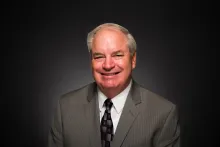
Robin Webber was born in Chicago, Illinois, in 1951, but has lived most of his life in California. He has been a part of the Church of God community since 1963. He attended Ambassador College in Pasadena from 1969-1973. He majored in theology and history.
Mr. Webber's interest remains in the study of history, socio-economics and literature. Over the years, he has offered his services to museums as a docent to share his enthusiasm and passions regarding these areas of expertise.
When time permits, he loves to go mountain biking on nearby ranch land and meet his wife as she hikes toward him.
