

Gary Petty
This transcript was generated by AI and may contain errors. It is provided to assist those who may not be able to listen to the message.
Well, thank you again, Mr. Blakey. Well, happy Sabbath once again to everyone. A week from Monday, we're going to be celebrating the return of Jesus the Christ to this earth, and that's represented by the Holy Day, the Feast of Trumpets. We may take for granted, our generation, you and I, may take for granted that the King of the earth will be Jesus Christ, and it's actually Jesus the Christ. Christ is a title. I'm amazed at how many people—we use that term, you know, Jesus Christ so often—many people think that Christ is His last name.
Actually, Christ is the title. It's not His last name. But we take for granted that the King of the earth will be Jesus Christ Himself. But in the Old Testament, you may recall my previous sermon, we went through the 12 minor prophets, and we saw how they all looked forward to the kingdom of God. And today we're going to take a look shortly at Jeremiah and Isaiah and see how they looked forward to the kingdom of God. But it was not actually known who that King was until the ministry of Jesus the Christ revealed God's plan and His role in it. And that actually completes the gospel message. Because if you don't know who the King is, you don't have all the puzzle pieces together to understand the kingdom of God and what He has planned. It's been said there are four aspects to any kingdom. The first one is the King and those who are in rulership positions along with the King. And we know in the kingdom of God, of course, that will be Jesus the Christ Himself, will be King of kings and Lord of lords. And there will be many positions under Him, one of which will be a resurrected King David, who will be King of Israel. But the ultimate King will be Jesus the Christ. And then another aspect of a kingdom is it has to have laws. It has to have rules, standards, and values in the kingdom of God. That will be God's law, His ethical law, not land laws like you find back in Mosaic times. God's laws will be ethical laws based on one principle, loving God and loving your neighbor as yourself. And from that principle, all laws will emanate throughout the earth. Another thing you have to have when you have a kingdom is geography. You have to have land or a space that can find that kingdom however big it may be. You know, we're all watching or listening to or we've seen the news about the death of Queen Elizabeth. She ruled over a kingdom that had a specific geography, and that geography has gotten smaller and smaller and smaller as it developed from a world-ruling kingdom to a much weaker nation with a commonwealth or a group of nations with similar interests or values. And so that geography changed dramatically, particularly through my lifetime. So it has to have geography. And then the fourth quality of a kingdom, or it has to have citizens. If it doesn't have citizens, then you really aren't ruling over anything. You're kidding yourself. You know, John Maxwell has said that if you think you're leading and no one is following, you're only taking a walk. So a kingdom has to have citizens, people who are part of that kingdom to be ruled and to grow and to change and benefit from the government of that kingdom. So with that as a background, let's go to the book of Acts, Acts chapter 28, verse 30. And what I want to do here is start with Acts 28, read the scripture, make a few comments, and then go to the beginning of Acts chapter 2, verse 32. And what we're going to see is that it was the job of the early New Testament Church to put together those puzzle pieces. Yes, the prophets talked about the kingdom of God, but what they said about the kingdom of God was very limited, and it never gave specifics on who the king would be. Oftentimes the prophecies gave the impression that it would just simply be a messiah, which was a strong ruler who would come with maybe like Superman, maybe semi-divine with great strength and power and restore Israel to its greatness.
Sometimes, as we'll see, we'll remind ourselves one of the minor prophets, the only one mentioned is King David. So if you didn't know any better, you'd think, wow, Israel's going to be restored, and David's going to be resurrected from the dead, and he's going to be the king, and he is. But there's going to be someone over David. There's going to actually be a king of the earth above the king of Israel. So let's go to begin Acts chapter 28. I mentioned that a minute ago, beginning in verse 30, if you're there already. That's wonderful. I'll give you another a minute or so to turn to that. Okay, your minute's up. Acts chapter 28 and verse 30. Then Paul dwelled two whole years in his own rented house and received all who came to him. Now, I don't want you to think this is like the holiday in express. He's under house arrest, so it sounds nice, but I don't want you to think that he can just come and go with how he pleased. He is under house arrest. Verse 31. Preaching the kingdom of God and teaching the things which concern the Lord, that means God, Jesus the Christ, that's a title, with all confidence, no one forbidding him. So Paul knew that his job was to put the puzzle pieces together to help people who understood and read Isaiah and Jeremiah and the minor prophets to help them to understand that, yes, we now know specifically who the Messiah is going to be. He has a name, and he's going to be more than just a superman. He's going to be more than just a powerful king and ruler who restores Israel. He is the Son of the living God. He's divine, and he's also the Messiah.
So we see this statement here says, and teaching the things which concern the Lord Jesus Christ. So Lord, that means that Jesus is God, and Christ again is the Greek word for anointed, or one who's chosen is what it means. It's a transliteration from the Hebrew word. The Greek word Christ is equivalent to the Hebrew word for Messiah. Again, it's a transliteration. Paul was compelled to preach the complete gospel that goes far beyond the knowledge of, yes, there's going to be a future kingdom on earth, and here are some of its attributes, and here are some of the good things that are going to happen. It was actually the mission of the New Testament Church of God to fulfill the proclaiming of the gospel and making sure that people understood that knowing there's a coming Messiah is good, but it's not enough, because that coming Messiah has a name. Messiah is just his title. His name is Jesus. That's the message they were proclaiming. Let's go to Acts chapter 2 and verse 32. Acts chapter 2 and verse 32, part of Peter's sermon, 31 A.D. Acts chapter 2 and verse 32. We started out with the final words of the book of Acts. Now we're going all the way back to the beginning of it.
Peter says, this Jesus, I want you to notice the specific name that he gives, God raised up, of whom we are all witnesses, therefore being exalted to the right hand of God and having received from the Father the promise of the Holy Spirit, he poured out this which you now see and hear. So he's saying the Spirit that day in the day of Pentecost came, it emanated from the Father, obviously, came to Jesus Christ and through Jesus Christ the Holy Spirit came down on those who were there on that day of Pentecost.
Verse 34, for David did not ascend to the heavens, but he says himself, quote, the Lord said to my Lord, sit at my right hand until I make your enemies your footstool. So even David, looking into the future, could see that there's God the Father, that there's God the Son, they're both Lord, they're both God, and this is what Peter is confirming here in his sermon, this bit of the sermon that we're reading. Verse 36, therefore, let all the house of Israel know assuredly that God has made this Jesus, so talking about specifically the individual known in the scriptures, Jesus of Nazareth, in the Gospels as Jesus, whom you crucified.
God has made him both Lord, meaning God, and Christ, a Messiah, the Messiah, that everyone in the Old Testament was looking forward to. Now when they heard this, they were cut to the heart and said to Peter and the rest of the apostles, men and brethren, what shall we do? Then Peter said to them, repent, and let every one of you be baptized in the name of Jesus Christ for the remission of sins, and you shall receive the gift of the Holy Spirit.
So the Old Testament prophets spoke about the coming kingdom of God, but they often made some rather vague references to the Messiah, sometimes him being divine, sometimes him not being divine, portraying him just as a king, as a leader, and usually portrayed him as a powerful, conquering king. And what Peter is doing in this sermon is he's clarifying that Yeshua, or Jesus, was both divine, being the Son of God, and also he was the Messiah, the anointed one, the chosen one, whom the ancient prophets spoke about.
As the apostle John wrote in 1 John verses 1 through 4, John wrote, in the beginning was the word. Of course, he's referring to, he says later on directly, that the word is Jesus Christ. In the beginning was the word. The word was with God, and the word was God. So that's why Peter could say here in Acts 2 that he is Lord. That's why Paul could say in Acts 1, we read just a few minutes ago, then he said concerning the Lord Jesus Christ with all confidence.
So that's why they could say that, because they acknowledged and recognized that there's more than just being a Messiah in this individual named Jesus, that he is also God, that he is also Lord. So today I would like to review the kingdom that the ancient prophets spoke about, and see and affirm in our minds that what they spoke about was beautifully inspired, was visionary, but it wasn't complete. It was the role of the Church of God, the early New Testament Church specifically, to put the puzzle pieces together and to differentiate between the anointed one, the Messiah, that they all looked forward to, and Jesus also as Lord and God.
And one reason that this is so important is it's why many Jews didn't believe in Jesus then and now. They didn't have a problem with Jesus potentially being a Messiah, but when you said that Jesus is God, that was heresy to them. That was the straw that broke the camel's back. But it's the truth that he is both Lord and the Messiah and Christ, and that is why this message was so important.
So let's go to Jeremiah chapter 23. We're going to begin there, and we're going to get a complete understanding of who the Messiah is because of the scriptures we just read from the book of Acts, because the Messiah is Jesus, the Christ, the Son of God, the anointed, the chosen one. Jeremiah chapter 23 beginning in verse 1.
Jeremiah chapter 23 in verse 1. Woe to the shepherds who destroy and scatter the sheep of my pasture. This is God condemning the religious leaders through Jeremiah, the religious leaders of that day. I'm sure he has some choice words about a lot of religious leaders today as well. Verse 2. Therefore, thus says the Lord God of Israel, against the shepherds who feed my people, you have scattered my flock, driven them away and not attended to them.
Behold, I will attend to you for the evil of your doing. God says you're going to get your reward for scattering my flock. In my lifetime, I've known individuals who divided families and divided the church of God, and they're going to get their reward. They're going to get their sure reward for what they've done to God's people. Verse 3. But I will gather the remnant of my flock out of all the countries where I have driven them and bring them back to their folds, and they shall be fruitful and increase. This is talking about the descendants of Israel, of course, in context here in Jeremiah. Verse 4. I will set up shepherds over them who will feed them. Unlike the other shepherds who destroyed and scattered the flock, God is going to appoint shepherds who will feed his people. And they, that is, people of Israel, shall fear no more, nor be dismayed, nor shall they be lacking, says the Lord. Verse 5. Behold, the days are coming, says the Lord, that I will raise to David a branch of righteousness. A king shall reign and prosper, and execute judgment and righteousness in the earth. In his days Judah will be saved, and Israel shall dwell safely. Now this is his name, by which he shall be called the Lord our righteousness. And that is Yahweh, saids, canoe, is the Hebrew. The Jewish Talmud considered Yahweh, saids, canoe, to be the name of the Messiah who would rule over them. Now in this verse, just an interesting side note here, it says, verse 4, I will set up shepherds over them who will feed them. Who could those possibly be? Who could those shepherds in the future possibly be? Well, Revelation chapter 1 and verse 5 says this, from Jesus Christ, the faithful witness, the firstborn of the dead, the ruler over the kings of the earth, to him who loved us and washed us from our sins in his own blood, and has made us kings and priests to his God and Father to him, be glory and dominion forever and ever. These are the positions and rules that you and I right now are being trained for, are being prepared for. We are the shepherds. We will be the spiritual shepherds who will teach and love and care for these peoples who were brought back from the four corners of the earth and need to know and be taught about God, his way of life, who and what God is, and that will be one of the rules that we will be fulfilling at that time. Now, regarding this phrase, what he shall be called, the Lord our righteousness. Now, it's interesting that Paul wrote in 1 Corinthians chapter 1 and verse 30 this. I just want you to listen to this and I want you to compare it with what the prophet said about he shall be called the Lord our righteousness. Here's what Paul writes, 1 Corinthians chapter 1 and verse 30. But of him you are in Christ Jesus who became for us wisdom from God and righteousness and sanctification and redemption. In other words, Jesus Christ is our righteousness.
So he certainly fulfills what Jeremiah was saying here. But you wouldn't know that until or unless you were able to put the puzzle pieces together and understand what Paul is teaching, understand what Peter is saying on that day of Pentecost in 31 A.D. Let's go to another chapter in Jeremiah chapter 30. If you'll turn there with me, Jeremiah chapter 30 and we'll drop down to verse 7. Jeremiah writes, Alas, for the day is great, so that none is like it. And it is a time of Jacob's trouble. The time of what we refer to here in the 21st century is the great tribulation, the time of great distress on the world that will also influence the people of Jacob. But he shall be saved out of it. Verse 8, For it shall come to pass. There's that transitional statement again. It shall come to pass in that day, says the Lord of Hosts. I will break his yoke from your neck and will burst your bonds. Foreigners shall no more enslave them. No longer will the Persian Empire come into the peoples of Israel and say, We're ruling now. No longer will the Roman Empire come into the people of Israel and say, We're ruling you now. No longer will the British or any other peoples come into the nation of Israel or the peoples of Israel and Palestine, as happened so much throughout history before 1948, and say, We're in charge here. That won't happen anymore. Foreigners shall no more enslave them. But they shall serve the Lord their God and David their king, whom I will raise up for them. Therefore do not fear. O my servant, Jacob, says the Lord, do not be dismayed, O Israel, for behold, I will save you from afar.
And your seed from the land of their captivity. Jacob shall return and have rest and be quiet. And no one shall make him afraid. For I am with you, says the Lord, to save you. Though I make a full end of all nations where I have scattered you, all of their governments will come and collapse and come to an end. Yet I will not make a complete end of you, but I will correct you in justice and will not let you go altogether unpunished. So they will have to go through the great tribulation and suffer some pretty horrendous things. But God is going to spare them and save them beyond the terrible times that are ahead. This is a beautiful prophecy. David will be resurrected from the dead, but it's incomplete. If you didn't know any better, you'd think that David alone is going to rule over Israel, because there's a puzzle piece that's missing. And that puzzle piece that was missing was that Jesus is both Lord and Christ. That was the puzzle piece that was altogether missing. That king is Christ Jesus, whom Paul himself felt compelled to proclaim in the Gospel as part of the Gospel that we read earlier in Acts chapter 28 and verse 31. Okay, a few short scriptures from Isaiah. If you'll turn to Isaiah chapter 52 and verse 7, if you would please.
Isaiah chapter 52 verse 7. How beautiful upon the mountains are the feet of Him who brings good news, who proclaims peace, who brings glad tidings. What's this good news? What are these glad tidings? They're the Gospel. Just another way of saying, talking about the ministry of Jesus Christ and the Gospel. The glad tidings of good things. Who proclaim salvation? Who proclaimed salvation during His earthly ministry? Jesus Christ proclaimed salvation. Who says to Zion, your God reigns, your watchmen shall lift up their voices. With their voices they shall sing together, for they shall see eye to eye when the Lord brings back Zion. On verse 9, break forth into joy, sing together, you waste places of Jerusalem, for the Lord has comforted His people and He has redeemed Jerusalem. This is an inspiring prophecy, but Isaiah doesn't tell us who He is, who brings this good news, who He is, who ultimately brings peace to the earth. All right, chapter 53. Go to the next chapter, Isaiah 53 and verse 6, scripture that we often read around the time of the Passover because it's another prophecy about Jesus Christ and His life, particularly the end of His life and the things that He suffered. Isaiah 53 and verse 6, all we like sheep have gone astray. We have turned everyone to His own way, and the Lord has laid on Him the iniquity of us all. He was oppressed and He was afflicted, yet He opened not His mouth. If you go to Mark chapter 14, verse 61, you'll see after He was arrested, He's taken to the high priest, and the high priest is chiding Him and grilling Him, and before He gives an answer, the Gospel of Mark says that He would remain silent. He opened not His mouth. Continuing, He was led as a lamb to the slaughter. He is the Lamb of God, and as the sheep before its shearers is silent, and He opened not His mouth. If you go to Matthew chapter 27 and verse 14, you'll see that when Pilate asked Him questions, it says that He opened not His mouth. He remained silent. Pilate even got to the point and said, don't you realize that they want you dead and I can help you? Speak to me! Talk to me! Anything!
And for the most part, Jesus remained silent. We gave very, very short answers when He did speak to Pilate. Verse 8, He was taken from prison and from judgment, and who will declare His generation? For He was cut off from the land of the living, for the transgressions of my people He was stricken. And they made His grave with the wicked, but with the rich at His death. Joseph of Arimathea gave up his own tomb. But at the rich at His death, because He had done no violence, nor was there any deceit found in His mouth. Verse 10, Yet it pleased the Lord to bruise Him, His put Him to grief. When you make His soul an offering for sin, He shall see His seed, He shall prolong His days, and the pleasure of the Lord shall prosper in His hand. He shall see the labor of His soul and be satisfied. Thy knowledge, my righteous servant, shall justify many, and He shall bear their iniquities. Therefore I will divide Him apportion with the great, and He shall divide the spoil with the strong, because He has poured out His soul unto death. And He was numbered with the transgressors, and He bore the sin of many, and made intercession for the transgressors. Brethren, yet another very beautiful prophecy of Isaiah. But you know what? This too has limited understanding, a very beautiful prophecy. So who is the one identified by this prophet? How can anyone have his soul be an offering for sin? How can anyone bear the iniquity of all? How can anyone justify many? Lots of things that aren't said here, but the puzzle pieces were all put together because of the ministry, the life and death, and resurrection of Jesus the Christ.
Let's go to chapter 61 now, Isaiah chapter 61. If you'll turn there with me.
Of course, the individual spoken of here that we just read is of Jesus Christ, whom Paul felt compelled to proclaim along with the gospel message that we read earlier in the book of Acts. Isaiah chapter 61 verse 1.
The prophet writes, the Spirit of the Lord is upon me. Who's me? Not talking about Isaiah, but if someone were not paying attention, they might get that impression. The Spirit of the Lord is upon me because the Lord has anointed me to preach good tidings. That's the gospel message. Good tidings to the poor. He has sent me to heal the brokenhearted, to proclaim liberty to the captives, and the opening of the prison to those who were bound to proclaim the acceptable year of the Lord, to say that the kingdom of God is now at hand. For those hearing his message, it's now within reach because Jesus, the Messiah, was there to preach a message of salvation to his generation. That began the acceptable year of the Lord.
Now in a synagogue in Nazareth, Luke chapter 4 and verse 17, Jesus himself said he fulfilled what we just read. The Scriptures say that he walked into the synagogue and he opened the books in the way synagogue services were. Many of them gave an opportunity for someone to read a Scripture, a voluntary opportunity for someone to do that. So that was a synagogue practice. Now Paul had to put an end to that because, unfortunately, there were people with very big mouths who were dominating services and his services were getting out of hand. So he put a stop to that and said, we need order and structure in our services. But Jesus took advantage of that and he got up and he read the part of Isaiah that we just read. This was fulfilled at his first coming, this part of the prophecy. The rest of Isaiah's prophecy will not be fulfilled by Jesus until his second return, but they had no way of knowing that. Let's see what else Jesus Christ will do. Let's continue here in chapter 61. And the day of vengeance of our God, to comfort all who mourn, to console those who mourn in Zion, to give them beauty for ashes and the oil of joy for mourning, the garment of praise for the spirit of heaviness, that they may be called trees of righteousness, the planting of the Lord that he may be glorified. But before all that happens, in the day of vengeance of our God, that's punishment. That's Jesus, the Messiah, coming to earth to punish evil and to deal with the wickedness of the nations and those who rebel against the government of God. Again, this prophecy doesn't say who the anointed preacher and healer would be, but if you read the Gospels and you see Jesus Christ in 31 A.D., he came the first time on earth as a humble Savior. So he talked about salvation. He was an encouraging preacher. His message lifted up the hearts of the brokenhearted. He was a healer. He healed the poor. He encouraged the poor, telling them, hang in there, have hope. There's a kingdom that's coming that you're going to be part of, and it's going to be far better than the poverty and all the terrible things that you're suffering right now in this world. He gave them an encouraging message of hope. But the second time that he returns, he's returning the punished evil with vengeance. Before he can restore peace and do all of these wonderful things, these verses talk about beauty for ashes, oil of joy, garment of praise, and all of those things have to be preceded by a time of vengeance.
All right, let's go to Hosea chapter 3 and verse 4. Hosea chapter 3 and verse 4.
This is another one of those prophecies that need the puzzle pieces filled in, because if you just read the prophecy by itself, you wouldn't have a complete understanding. Hosea chapter 3 and verse 4. For the children of Israel shall abide many days without king or prince, without sacrifice or sacred pillar, without ephod or terrafim afterward. That's that transitional phrase. The children of Israel shall return and seek the Lord their God and David their king. They shall fear the Lord and his goodness in the latter days. So again, if you didn't know any better, this is a beautiful prophecy about the world tomorrow with a resurrected David as king of Israel. But without the puzzle pieces, you wouldn't know who is the Lord their God that they're seeking. It's the one who came to earth and was known as Jesus, Lord Jesus the Christ. That is who they are seeking when it says, seek the Lord their God. But without understanding the ministry of Jesus and his life, you would have no way to put the puzzle pieces together. No way at all. Joel chapter 3 and verse 17. Let's take a look at Joel chapter 3 and verse 17. I believe I read this scripture a couple of weeks ago, but it's worth reading again. It doesn't talk about a time of wonderful peace and prosperity. It talks about this vengeance that Isaiah referred to as part of the second coming of Jesus Christ. Joel chapter 3 and verse 12. Let the nations be wakened and come up to the valley of Jehoshaphat. For there I will sit to judge all the surrounding nations. Put in the sickle, for the harvest is ripe. Come, go down, for the wine press is full. The vats overflow, for their wickedness is great. Multitudes, multitudes in the valley of decision. So many people, so many armies, that you cannot count them. These are nations that are assembled to war against the coming return of Jesus Christ. But it's really not much of a battle, as Zacharias says. Their eyes will liquefy in their sockets and their tongues will liquefy in their mouths. You're not fighting very vigorously when that happens against the coming Christ, are you? For the day of the Lord is near in the valley of decision. The sun and moon will grow dark and the stars will diminish their brightness. The Lord also will roar from Zion and utter his voice from Jerusalem. The heavens and earth will shake, but the Lord will be a shelter for his people and the strength of the children of Israel. So this is a stark and rather a fearful prophecy. But Joel himself doesn't identify who the Lord here is, who Yahweh here is, doesn't identify it as Jesus Christ. Let's go to Revelation chapter 14 and verse 12 and see how Revelation, how John, through his vision in Revelation chapter 14 and 12, was able to weave this together.
Revelation chapter 14 and verse 12. Here is the patience of the saints. Here are those who keep the commandments of God and the faith of Jesus. So in context, it's talking about Jesus Christ and those of his who are faithful to him. Verse 13, then I heard a voice from heaven saying to me, right, blessed are the dead who die in the Lord from now on. Yes, says the Spirit, that they may rest from their labors and their works follow them. Blessed are them. They're dying. In death and virtually the entire generation that I knew when I first started attending the church 50 years ago, let's say we're my age or younger, but virtually everyone that I knew have died.
God is sheltering his people. Sometimes I'm asked about the place of safety. The ultimate place of safety is death because you suffer no pain, no anxiety, no terror. You go into a deep, comforting sleep and you wait for all the slop to happen and then the next thing you know you hear a trumpet blast and you're being risen from the earth and literally changed in the twinkling of an eye from a mere physical person with aches and pains and doubts and anxieties unto a spiritual child of the living God. So death is the ultimate shelter for his people. That's what it's saying here in these verses. Then I looked and behold a white cloud and on the cloud sat one like the son of man Jesus Christ was identified as both the son of God and the son of man having on his head a golden crown and in his hand a sharp sickle. Now we're going to see verbiage. It's very similar to what we read in Joel chapter 3. Another angel came out of the temple crying with a loud voice to him who sat on the cloud thrust in your sickle and reap for the time has come for you to reap for the harvest of the earth is right. It's time to lance that boil. It's time to deal with the boatloads of wickedness that exist on the earth. Verse 16. So he who sat on the cloud thrust in his sickle on the earth and the earth was reaped. Then another angel came out of the temple which is in heaven and also having a sharp sickle and another angel came out from the altar who had power over fire and he cried with a loud voice to him who had the sharp sickle saying thrust in your sharp sickle and gather the clusters of the vine of the earth for her grapes are fully ripe. Verse 19. So the angel thrust his sickle into the earth and gathered the wine of the earth and threw it into the great wine press of the wrath of God and the wine press was trampled outside the city and blood came out of the wine press up to the horse's bridles for 1,600 for long. Just a little bit less than 200 miles of flowing river of blood. So these nations foolishly gather in the valley of Megiddo and think they're going to stop this alien from coming and taking over the earth and putting an end to their ruling of the nations of this world and they defy God and decide to try to have a battle with him. Here's what the Believer's Study Bible says, during the bloody holocaust of Armageddon the blood of the slain and wounded flows in such profusion that the horses are splashed with the crimson life even to their bridles. A furlong is one eighth of a mile which means the sight of the carnage extends for approximately 200 miles of flowing blood.
Pretty stark, pretty grim. But tying in with Joel chapter 3, and if we didn't have this understanding given to us by the Apostle John, what Joel said would be incomplete because we couldn't put those puzzle pieces together. There's an obvious connection here with the events of the day of the Lord mentioned in Joel and here in the book of Revelation. Thanks to the writing from the Apostle John, we know the one judging the surrounding nations is Jesus Christ himself, and it is he who is a shelter for his people.
All right, Zechariah chapter 14 verse 16, another scripture that we read last time I spoke, one of the minor prophets, Zechariah chapter 14 verse 16. And I am sure, I'll bet you the mortgage in my home that you'll hear this scripture at least once during the Feast of Tabernacles. Zechariah chapter 14 verse 16, and it shall come to pass that everyone who is left of all the nations which came against Jerusalem shall go up from year to year to worship the king, the Lord of hosts, and to keep the Feast of Tabernacles. And it shall be that whichever the families of earth do not come up to Jerusalem to worship the king, the Lord of hosts, this is Jesus Christ himself, or the one whom we know of, as who walked on earth as Jesus Christ. On them there shall be no rain, and if the family of Egypt, if the Gentile people say, no, I'm sorry, that was nailed to the cross. I'm not going to go there because it's been done away. That's what my preacher told me. And if the family of Egypt do not come up and enter in, they shall have no rain, and they shall receive the plague with which the Lord strikes the nations. Remember that plague that I talked about? Like maybe your eyes liquefying in their sockets and your tongue liquefying in its mouth? In your mouth? That's not the kind of plague that anyone would want to experience. The plague which the Lord strikes the nations who do not come up to keep the Feast of Tabernacles. Well, this is an often read prophecy, but Zachariah doesn't tell us who this king is. He doesn't tell us who this Lord is.
Now let's go to Revelation chapter 15. Revelation chapter 15.
John was inspired to write Revelation chapter 15 beginning in verse 1. Then I saw another sign in heaven, great and marvelous seven angels having seven last plagues, for in them the wrath of God is complete. We've been talking about vengeance. Remember going back to the Old Testament prophet Isaiah, the second part of his prophecy that Jesus stopped before it said that it would be a time of vengeance?
In them the wrath of God is complete, and I saw something like a sea of glass mingled with fire.
And those who have the victory over the beast, over his image, and over his mark, and over the number of his name standing on the sea of glass having harps of God. They sing the song of Moses, the servant of God, and the song of the Lamb saying, great and marvelous are your works, Lord God Almighty. Just and true are your ways, O King of the Saints. Who shall not fear you, O Lord, and glorify your name? For you alone are holy, for all nations shall come and worship before you.
Again, no nation will dare say, I'm sorry, that feast of tabernacles has been done away. We're not coming, we're not traveling to Jerusalem, we're going to keep something really biblical like we're going to keep Halloween instead. God won't put up with that. It says, for your judgments have been manifested. Jesus, the Messiah, will be the one who will be worshiped when all nations come and worship the King. All nations will observe the festivals that God has ordained. They won't be observing festivals or feast celebrations ordained by popes or church councils or church committees over the last 2,000 years. They'll be celebrating the holy days that God instituted going all the way back to Leviticus 23, where he says, these are my feasts and gives instructions on how to count them. So, brethren, the Feast of Trumpets is coming up a week from Monday. And when the feast arrives this year, I want to encourage you to appreciate that it does not merely celebrate the return of the Messiah. That's what the Old Testament prophets look towards. It doesn't merely celebrate the arrival of God's anointed one. It does not merely celebrate the return of a king or the establishment of a king or the establishment even of a kingdom.
No, brethren, the Feast of Trumpets celebrates the anticipated return of Jesus, the anointed Messiah, and the Son of God to finally arrive and rule the earth in righteousness and in peace.
Let us all long for that day and let us celebrate it during this upcoming Feast of Trumpets. I wish all of you a wonderful Sabbath day.
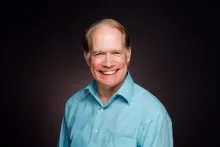
Greg Thomas is the former Pastor of the Cleveland, Ohio congregation. He retired as pastor in January 2025 and still attends there. Ordained in 1981, he has served in the ministry for 44-years. As a certified leadership consultant, Greg is the founder and president of weLEAD, Inc. Chartered in 2001, weLEAD is a 501(3)(c) non-profit organization and a major respected resource for free leadership development information reaching a worldwide audience. Greg also founded Leadership Excellence, Ltd in 2009 offering leadership training and coaching. He has an undergraduate degree from Ambassador College, and a master’s degree in leadership from Bellevue University. Greg has served on various Boards during his career. He is the author of two leadership development books, and is a certified life coach, and business coach.
Greg and his wife, B.J., live in Litchfield, Ohio. They first met in church as teenagers and were married in 1974. They enjoy spending time with family— especially their eight grandchildren.
