

Don Ward
This transcript was generated by AI and may contain errors. It is provided to assist those who may not be able to listen to the message.
In Houston, Texas today, they are gathered thousands in Reliance Stadium, where the Houston Texans play to observe a day of prayer and fasting for our nation and our people. Texas Governor Rick Perry declared this day as a day of prayer and fasting several weeks ago.
He's come under heavy fire for this proclamation from several special interest groups from American Civil Liberties Union to Anti-Defamation League to gay rights people. However, it doesn't seem to have deterred him from his commitment. All kinds of secular voices have been raised against what he's doing. And, of course, the media is trying to make him look as bad as possible while hypocritically trying to portray themselves as presenting both sides of the debate.
What about us in our prayer life, in communication with our Heavenly Father and with our Creator, our Nourisher, and our Sustainer, and our Savior, Jesus Christ? There's a hymn that was written, roughly 1845. This hymn appeared in the New York Observer on September 13, 1845. It was accompanied by the following article written by Thomas Salmon. Salmon writes, During my residence at Coles Hill, Wartwisher, England, I became acquainted with W.
W. Walford. W. W. Walford is the one who wrote this, I guess you would say, this hymn. The blind preacher, a man of obscure birth and connections and no education, but of strong mind and most retentive memory. In the pulpit, he never failed to select a lesson well adapted to the subject, giving chapter and verse with unerring precision, scarcely ever misplacing the word in his repetition of the Psalms, every part of the New Testament, the prophecies, and some of the histories, so as to have the reputation of knowing the Bible by heart.
He actually sat in the chimney corner, employing his mind and composing a sermon or two for his delivery each week, and his hands in cutting, shaping, and polishing bones for shoe horns and other little useful implements. At intervals, he attempted poetry. On one occasion, paying him a visit, he repeated two or three pieces which he had composed. And having no friend at home to commit them to paper, he had laid them up in the storehouse within, that is, in his memory.
How would this do, asked he, as he repeated the following lines, with a complacent smile, touched with some lines of fear, lest he subject himself to criticism? I rapidly copied the lines with my pencil as he uttered them and sent them for insertion in the observer, if you should think them worthy of preservation. So, once again, this appeared in the New York Observer on September 13, 1845. Sweet hour prayer, sweet hour prayer, that calls me from a world of care, and bids me at my father's throne, makes all my wants and wishes known.
In seasons of distress and grief, my soul has often found relief, and oft escaped the tempter's snare, by thy return, sweet hour prayer. Sweet hour prayer, sweet hour prayer, thy wings shall my petition bear, to him whose truth and faithfulness engage the waiting soul to bless. And since he bids me seek his face, believe his word, and trust his grace, I'll cast on him my every care, and wait for thee, sweet hour prayer. Sweet hour prayer, sweet hour prayer, may I, thy consolation, share, till from Mount Pisgah's lofty height I view my home and take my flight.
This robe of flesh I'll drop and rise, to seize the everlasting prize, and shout while passing through the air, farewell, farewell, sweet hour prayer. This old hymn has got me through a many a tough night, as I sort of sing it to myself, and I have sung it many times to myself, beginning of the night, in the middle of the night, and in times of stress and need. So we ask ourselves today how spiritually minded is each one of us.
Each and every one of us, at this instant, needs to ask, how spiritually minded am I? The Apostle Paul writes in Romans 8.6, and also Romans 8.7, but this is 8.6. For to be carnally minded is death, but to be spiritually minded is life and peace. And you know verse 7, for the carnal mind is enmity toward the law of God, not subject to it, neither indeed can be. So how spiritually minded are we? To be carnally minded is death, but to be spiritually minded is life and peace.
So which mind is ruling over each one of us? Also remember that Paul writes in Romans 8.13, For if we live after the flesh, we shall die. But if we, through the Spirit, mortify the flesh, we shall live. So do you and I have power and influence with God? We need to ask ourselves, are my prayers being answered, or have I basically given up on my prayer life? And if your prayers and my prayers are not being answered, why aren't they being answered?
To stop praying is equal to saying that you've given up on God and He's given up on you. Whereas God says that He will never leave us, that He will never forsake us. So what about your prayer life? What about my prayer life?
To ask about your prayer life is the same as asking about your communication with God. How do you expect to have a relationship with God, or with any being, for that matter, if you don't communicate with them?
The main way that we share ourselves with another person is through communication with him or her. Communication includes many aspects of our being, both spoken and unspoken. And most of all, it includes our frame of mind, attitude, and content of our hearts. Furthermore, it includes time spent with that person or that being that you seek to build a relationship with.
If you would turn to Revelation 6, verses 9 through 11 here, we'll see here, it is evident that God tests the depth of our concern, the intensity of our desire, the sincerity of our motive. Yes, oftentimes we're apt to say, how long, O Lord, how long? Yet, notice this in Revelation 6, verse 9, And when he had opened the fifth seal, I saw under the altar the souls of them that were slain for the word of God, and for the testimony which they held.
And they cried with a loud voice, saying, How long, O Lord, holy and true, do you not judge and avenge our blood on them that dwell on the earth? And white robes were given unto every one of them, and it was said unto them that they should rest yet for a little season, until their fellow servants and their brethren, that should be killed as they were, should be fulfilled. Sometimes we get into that same frame of mind, how long, O Lord, how long?
And sometimes it is a long, long time. Of course, here we see in vision this fifth seal of those who have died and martyred them, crying out, as it were, in a vision, a figure of speech, as it were, how long, O Lord? So how does God view prayer? Let's turn now to Hebrews 13, verse 15, and while we're turning there, I want to repeat this once again. It is evident that God tests the depth of our concern. Do we really mean it when we pray? The intensity of our desire, and the sincerity of our motive. Is it with unfeigned love for the brethren and for God? In Hebrews 13, verse 15, we see how God views prayer.
Hebrews 13, verse 15, By him therefore let us offer the sacrifice of praise to God. So communication with God, he views it as a sacrifice, and it is equated with incense, wafting up before the throne of God. By him therefore let us offer the sacrifice of praise to God continually, that is, the fruit of our lips, giving thanks to his name. But to do good and to communicate, forget not, for with such sacrifices, God is well pleased.
So God views prayer as a sacrifice. Now quickly to Revelation 8, Revelation chapter 8, and we'll see the role that prayer plays even during the time that the trumpet plagues are unleashed upon the earth. It seems that the prayers of the saints come into play with regard to those trumpet plagues, because God then directly begins to intervene with the sixth seal, and then with the seventh seal during the day of the Lord.
In Revelation 8, verse 1, and when he had opened the seventh seal, there was silence in heaven, about the space of half an hour. And I saw the seven angels which stood before God, and them were given seven trumpets. And another angel came and stood at the altar, having a golden censer. And there was given unto him much incense, that he should offer it with the prayers of all saints, upon the golden altar, which was before the throne, and the smoke of the incense, which came with the prayers of the saints, and sent it up before God out of the angel's hand.
So prayer is a very precious thing to God. That kind of communication. Prayer involves devotion, trust, respect, and a sense of dependence on God, as we are dependent upon him. For every breath that we take. There are various Hebrew and Greek words that are used in the Bible, Old Testament, New Testament, for prayer. They convey such ideas as to ask, to earnestly ask, to earnestly beseech, not just to ask like you might ask for directions, but you really, really desire it. To petition, to entreat, to supplicate, to plead, to beseech, to beg, implore, to seek, inquire of, as well as to praise and to thank God.
People labor in prayers. This is one spiritual responsibility that we can all volunteer for. There is no age, any station in life, or no special requirement. All of us can volunteer to be what I call prayer warriors. We have had prayer warriors in the Big Sandy area for many, many decades.
And many of them continue in prayer to this very instant. And some of you are among those prayer warriors. Go to Luke now, please. Luke 2 and verse 36. Luke 2 and verse 36.
And there was one Anna of prophetess. The story of Anna the prophetess is one of the most inspiring stories in the whole Bible. A few lines are given to her. But such great import and such a lesson for each one of us. There was Anna a prophetess, Luke 2 36, the daughter of Fanuel of the tribe of Asher. She was of a great age and had lived with an husband seven years from her virginity. And she was a widow of about 84 years, which departed not from the temple, but served God with fastings and prayers night and day.
So the governor of Texas calls for fasting and prayer one day, one day out of a year, maybe one day out of a decade. And he is highly criticized throughout the nation.
Whether or not he has political motives, I don't know. He says he doesn't.
But whether he has political motives or not, prayer and fasting for God's intervention to help this nation at this critical, crucial time in history, I don't see how it can be wrong. We can always say, well, these people are not true Christians.
And they haven't been called at this time. But I would rather that people be praying and fasting for this nation than to be out at where everybody is. You know, they're in one of three or four places. They're at Walmart or McDonald's, or the hospital, or the ballgame, and them that ain't there are on their way. And that's why so many people are out on the streets.
Anna the prophetess. Now in Matthew 6, you see if we volunteer for that service, we lay up for ourselves treasure in heaven. How much treasure in heaven did Anna lay up in all of those decades in the temple daily, praying and fasting? Of course, a lot of that was directed toward praying for the nation because the context here is seeing the Messiah and what that meant to the nation. And for that matter, the world, who knows how much she really understood of the plan of God. I would venture to say she didn't remotely understand what you understand as far as head knowledge today, an intellectual assent to the truth. But she had something far greater, and that was she had internalized the truth to the depth of her being. Matthew 6, 19, lay not up for yourselves treasures upon earth.
I read today where one guy, supposedly, I'd never seen his name as far as I knew. I didn't know he was in the top ten, but he said he was the wealthiest man on earth. He lost four billion dollars this week in one day. It's probably as much as I make all year, but I mean it's four billion dollars in one day. And you know about the financial ups and downs of this nation in recent times. And overnight, S&P, Standard & Poor's, downgraded the U.S. credit rating from AAA to AA+. First time in the history of the nation. And what are the implications? We don't know for sure. Of course, the currency where the great trading takes place that most of us are not even aware of, and some people who are into investments to some degree, on the world market each day, do you know how much money is traded in the currency market? Four trillion dollars. Moves back and forth electronically in the major places are New York, Washington, London, Frankfurt, Hong Kong, Singapore, the great currency and Tokyo, the great currency markets of the world. Lay up not for yourselves treasures upon earth where moth and rust death corrupt and thieves break through and steal, but lay up for yourselves treasures in heaven where neither moth nor rust death corrupt and where thieves do not break through nor steal. In Bible study and prayer, we need to be led by God's Spirit. Otherwise, it can be dry and boring. And how can you be led by God's Spirit in prayer and study? You have to start somewhere, and you start praying. A good way to do that is to get your Bible. I like to get the Bible, get to Psalms, get on your knees, and you begin to read a few verses and you begin to meditate or pray about it. And ask God to lead you, to guide you, that His Spirit would lead and guide. And as that happens, things begin to come to your mind. And you begin to pursue other places. It reminds you of other places in the Bible. And you begin to be led by the Spirit of God. And it leads you to another passage. And it brings life and joy because you hear the voice of God. You don't necessarily, of course, you don't hear it audibly. But things come to your mind. Remember what it says in John 16. That Christ said that He would send the Holy Spirit, and the Holy Spirit would show you things to come. And it enables the mind and brings another thing it says about the Holy Spirit. It brings things to mind, to your remembrance. And yeah, even though these words were written for a long time ago, they are living. Christ said in John 6, 63, the words I speak, they are spirit and they are life. They are like eternal. They are for all ages. They are for all times. So in praying and in studying, we need to be led by the Holy Spirit so that God can speak His words to us.
Years ago, a lady asked me, where do you get your sermons? And I responded, well, I start thinking, meditating, and praying about something, and open the pages of the Bible. And as the word and spirit move, I'm led to write my notes. But I don't have a great grand outline in mind before I sit down to do it. It basically comes by doing. And if you really want to be led by God's spirit in prayer and in study, and if you're giving sermonets, sermons, whatever it is, you start and you ask God for His direction, and He begins to lead and guide. Often times, you know, you're led to Scriptures that you're not considered, and you get there and you read them, and it brings something else to mind, and it just flows from there. One of the most powerful set of exhortations in the Scriptures are found in 1 Thessalonians 5. Let's go there. 1 Thessalonians 5 and verse 16.
1 Thessalonians 5 and verse 16.
These are short commands, but they are filled with great import. 1 Thessalonians 5 and verse 16.
Paul writes this in another place about the whole armor of God.
You know, one time my mother told me, she said, Son, I go with a prayer on my lips all day every day, and much of the time I'm praying for you.
You know, there are a lot of people, a lot of grandmothers and grandfathers and mothers and fathers and great-grandmothers and great-grandfathers that spend a lot of time praying for the family and for others. She prayed without ceasing.
The average person talks to themselves 70% of their downtime. And so instead of carrying on a conversation with you, carry on a conversation with God. Might be more interesting.
In everything give thanks, for this is the will of God and Jesus Christ concerning you, quench not the Spirit. Let the Spirit guide you. Despise not prophesying. Prove all things. Whole fast that which is good abstain from all appearance of evil. And the very God of peace sanctify you, set you apart wholly. And I pray, God, your whole spirit and soul and body be preserved blameless in the coming of our Lord Jesus Christ. Faithful is He that called you who also will do it. Brethren, pray for us. Throughout, especially, Paul's epistles, the call to prayer is a powerful call. So how often should we pray? Well, we just read here, pray without ceasing. In the Old Testament, you'll find examples of people praying. They basically had a pattern. Morning, noon and night, will I praise you? Will I approach unto you? And we see those examples in the Old Testament. Let's look at one in Daniel 6. In Daniel 6.
You know the story of Daniel 6 where they had made the decree that no prayer should be made, but except to the Persian gods, the gods of the Medes and the Persians. And, of course, this thing was contrived by Daniel's enemies, trying to trap him and to get the ruler to demote him, put him in prison, or even kill him. Of course, he wound up in the lion's den because of this. In Daniel 6, it pleased Darius to set over the kingdom 120 princes, which should be over the whole kingdom, and over these three presidents of whom Daniel was first. So he was second in command under the emperor, Darius, that the princes might give accounts unto them, and the kings should have no damage. Then this Daniel was preferred among the presidents and princes because an excellent spirit was in him, and the king thought to set him over the whole realm. Then the presidents and princes sought to find occasion against Daniel concerning the kingdom, but they could find an occasion and fall for as much as he was faithful, neither was there any error or fault found in him. Then said these men, we can't find any occasion against this Daniel, except we can find it against him concerning the law of his God. Then they contrived this thing about prayer. Verse 7, all the presidents of the kingdom, the governors, the princes, the counselors, the captains, consulted together to establish a royal statute and to make a firm decree that whosoever should ask petition of any God or man for thirty days, save of you, O king, he shall be cast in the dead of lions. And the king established the decree. Verse 10, and when Daniel knew this, the writing was signed, he went into his house and his window being opened in the chamber toward Jerusalem, and why did they pray toward Jerusalem?
Because that's where the temple was, and above the mercy seat, God had placed his glory, his presence. And that's why they tried to face Jerusalem, because that was where God had placed his presence, what the Jews called the Shekinah, or Shekinah, glory. He kneeled upon his knees three times a day and prayed and gave thanks before his God as he did a four-time. So it did not deter Daniel at all. So we know that the Bible speaks of the day beginning, just after sunset, the new day. So three times a day, morning, noon, and night, will I make my petition known as another place talks about?
Now let's go to Ephesians 6, the whole armor of God, in one of the critical parts of that armor. And especially at this time, we need the whole armor of God as never before. And Daniel, in Ephesians 6, Ephesians 6, we read about this armor, but I'm going to take up on it in verse 18. Praying always with all prayer and supplication in the Spirit and watching thereunto with all perseverance and supplication for all saints. And for me, that utterance may be given unto me, that I may open my mouth boldly to make known the mystery of the gospel. For I am an ambassador in bonds, that therein I may speak boldly as I ought to speak. So part of the armor of God is this praying without ceasing, praying with all prayer and supplication in the Spirit and watching. And notice the word perseverance. You don't give up. Perseverance and supplication for all saints. Jesus himself would oftentimes resort to a quiet place to make prayer. So in the New Testament, we see people praying at different times and different ways. But we can go with a prayer on our lips all the time. And as I've already mentioned, the average person talks to themselves 70% of their downtime. And instead of talking to self, we could be talking to God. After the tabernacle was constructed, prayers were directed. Well, after the tabernacle was constructed in the wilderness, of course. And I don't know if they tried to face the tabernacle at that time, but I know, as we've already mentioned, after the temple was built, they tried to face Jerusalem when they prayed because that's where God had placed His presence.
Let's notice in Psalm 27 and verse 4. In Psalm 27 and verse 4. One of the things that you find in the Psalms continually is to seek God's sanctuary. And the reason why, once again, why this emphasis is on the sanctuary is because that's where God had placed His presence. Today, God dwells in us. He doesn't dwell in buildings made by hands, but there is the duality of this in that God has placed His presence in each one of us. We don't face ourselves, per se, but in those times, they faced toward Jerusalem because of that. And they talked about the dwelling in the sanctuary. I remember very clearly the first scripture I ever quoted publicly. I was probably six years old or whatever, and after Sunday school, we'd come back into the main auditorium, and the teacher would ask for a volunteer to recite the memory scripture of the day. And so I stood up and recited the memory scripture. I was glad when they said unto me, Let us go into the house of the Lord. And in that time, under the Old Covenant, as we've already noted, that was where God had placed His presence. In Psalm 27, beginning in verse 4, To behold the beauty of the Lord, and to inquire in his temple. For in the time of trouble he shall hide me in his pavilion. In the secret of his tabernacle shall he hide me. He shall set me upon a rock. And now shall mine head be lifted up above mine enemies round about me. Therefore will I offer in his tabernacle sacrifices of joy. I sing, yes, I will sing praises unto the Lord. Hear, O Lord, when I cry with my voice, Have mercy upon me and answer me. And in several times in the Psalms you'll find seeking the sanctuary of the tabernacle. Now let's go to Matthew 21 and Matthew 21 and verse 12. Matthew 21 and verse 12.
Jesus went into the temple of God, that restoration temple, the second temple. Jesus went into the temple of God and cast out all of them that sold and bought in the temple, overthrew the tables of the money changers and the seats of them that sold doves. And said unto them, It is written, My house shall be called a house of prayer, but you have made it a den of thieves.
A house of prayer, that's where God dwells. And the blind and the lame came to him in the temple and he healed them. And when the chief priests and scribes saw the wonderful things he did and the children crying in the temple and saying, Hosanna to the son of David, they were very displeased. And said unto him, Hear you what these say? And Jesus said unto them, Yes, have you never read out of the mouth of babes and sucklings you of perfected praise? And he left them and went out of the city into Bethany and he lodged there. Now in the morning as he returned into the city, he hungered. And when he saw a fig tree in the way, he came to it and found nothing thereon but leaves only and said unto it, Let no fruit grow on it henceforward forever and presently the fig tree withered away. And when the disciples saw it, they marveled, saying, How soon is a fig tree withered away? Jesus answered and said unto them, Verily I say unto you, If you have faith and doubt not. So that is one of the great keys to prayer. And I wonder at times, is that what's lacking with us in some cases with regard to answered prayer? We pray for healing in so many different ways and so many different people. And sometimes it's really difficult to know to what extent or whatever that God has answered a prayer. I believe he does hear and answer our prayers.
But you have to believe. I mean, if you ask in doubt, we'll read that in just a moment. It's not going to happen unless it's by time and chance where God is not involved. You just get better or whatever it is. If you have faith and doubt not, you shall not only do this, which is done to the fig tree, but also if you shall say unto this mountain, Be you removed and be you cast in the sea, it shall be done. In all things, whatsoever you shall ask in prayer, believing, you shall receive. I can ask myself, you can ask yourself, do you really believe? Do I really believe these words? Of course, there are many other factors, some of which we will talk about, that are involved in all of this.
In the dispensations, and that's the period of testing and trial leading up to the church age in the New Covenant, men and women approached God through sacrifices that were a figure of which was to come. But now, through Christ's sacrifice, we can live in the Holy of Holies. In fact, in the last sermon I gave here, we read these two passages of Scriptures that we're about to turn to now, but I wonder if we really understand the import of them. Let's go to Hebrews 10, verse 12.
Under the terms of the Old Covenant, only the high priest could enter into the Holy of Holies one time a year on the Day of Atonement. He went in and out three times.
But today, we can live in the Holy of Holies.
Hebrews 10, 12. But this man, after he had offered one sacrifice for sins forever, sat down on the right hand of God, from henceforth expecting till his enemies be made his footstool. For by one offering he had perfected forever those that are sanctified. Verse 19, "...having therefore, brethren, boldest to enter in the holiest by the blood of Jesus." So we don't just go into the holiest of a temple made by hands. We go into the holiest of all in the presence of God before the throne of God in spirit and in prayer, communicating with God. "...boldest to enter into the holiest by the blood of Jesus, by a new and living way which he had consecrated for us through his veil." That is to say, his flesh. That middle wall of partition was literally broken down even in that physical temple. Paul talks about this in Ephesians 2, especially, showing that all peoples now have access to God through Christ. "...and having in high priests over the house of God, let us draw near with a true heart in full assurance of faith, having our hearts sprinkled from an evil conscience, and our bodies washed with pure water." Now back in Hebrews 4, these verses ring so loud and clear to me. Verse 14, 4-14, "...seeing then that we have a great high priest that is passing the heavens, Jesus, the Son of God..." The last sermon I gave here two weeks ago, we spoke about God intervening for us and Him being our intercessor. "...let us hold fast our profession. For we have not in high priests, which cannot be touched with the feelings of our infirmities, but was in all points, tempted, tested, tried as we are, yet without sin. Let us therefore come boldly under the throne of grace, that we may find mercy and find grace and help in time of need." No one can keep you from praying. You can be in the deepest, darkest dungeon. You can be in the most miserable condition that you want to name. But no man, no person, no thing can keep you from praying.
In order for our prayers to be answered, we must be reconciled to God and one another. And we must be single-minded. We must pray in faith. And we must accept God's will and not ask amiss. Now, what I've just said here, let's see if this squares with the Scriptures. Matthew 5. Matthew 5. Reconcile to one another. You know for sure that the Bible says that God hears not sinners. That's Isaiah 59 verses 1 and 2. You have to be reconciled to God. Of course, one of the greatest prayers in the whole Bible is that of the publican, where it says, The publican not so much as lifting up his head says, Have mercy on me, the sinner. Then it says, This man went down to his house, justified, where the Pharisee who praised himself did not. In Matthew chapter 5 and verse 21, Matthew 5.21, You have heard that it was said, By them of old you shall not kill, and whosoever shall kill shall be in danger of the judgment. But I say unto you that whosoever is angry with his brother.
Angry with his brother without a cause shall be in danger of the judgment. Whosoever shall say to his brother Rechah, shall be in danger of the counsel. That's the Sanhedrin, the 70. But whosoever shall say, You fool, shall be in danger of Gehenna fire. Therefore, in view of this, what did I say? I'd say on the two greatest necessities, qualifications for answered prayers, reconcile to God and reconcile to your neighbor. Therefore, if you bring your gift to the altar, and there remember that your brother has ought against you, leave there the gift before the altar, and go your way. First, be reconciled to your brother, and then come and offer your gift. You know what it says? We've already read from Hebrews 13, verses 15 and 16, that prayer is viewed as a sacrifice. So if we come to pray and we realize this thing is hanging out there, hanging out there, it's going to hinder your faith, and it's also going to hinder your prayers being answered. Therefore, if you bring your gift to the altar, and you remember that your brother has ought against you, leave there your gift at the altar, go your way. First, be reconciled to your brother, and then come and offer your gift. Quickly now to Ephesians 4, Ephesians 4, verse 25. What we're about to read here is one of the reasons why many marriages go wrong. One of the things that we have tried to do in our marriage is what it says right here. It says, don't let the sun go down on your wrath. If you let the sun go down on your wrath, it will hinder your prayers, and it will give place to the devil, and it also gives place to the mind and vain imaginations, where you begin to make mountains out of mole hills, and it just mushrooms from there. In Ephesians 4, verse 24, In that you put on the new man which after God is created in righteousness and true holiness, we're for putting away lying, speak every man truth with his neighbor, for we are members one of another. We've talked about that two or three times in recent months. Members one of another. How? We're joined together by the same spirit. We're members one of another. We're members of the body of Christ.
Be you angry and sin lot, let not the sun go down upon your wrath.
If you do, you will give place to the devil. Don't let the sun go down on your wrath, neither give place to the devil. One of the worst things that people can do is the old silent treatment.
I'm not going to talk to you. I'm going to pout now for about a week. Make it three or four weeks. I'm going to pout for a while. I'm going to really punish you. I'm not going to talk to you. Well, what you do is you aservate the situation. You make it more difficult.
Whereas God is not looking for a heart of stone, he's looking for a humble, contrite, soft heart. One that can easily be entreated. And if we really love one another, especially is this true in marriage, we really will love one another. You know, stay up all night if you have to.
Don't let the sun go down on your wrath. Because if you do, your prayers will be hindered. Let's notice now, 1 Peter, see if he says anything about prayers being hindered. In 1 Peter 3, verse 7. 1 Peter 3, verse 7. We were to begin to really advertise these verses and whole meetings about these verses. You would have the greatest uproar in the whole world, or among the worst. 1 Peter 3, verse 7.
Husbands are supposed to treat their wives in such a way, giving honor to them, that their prayers not be hindered. Of course, the wife has responsibility, too. The term weaker vessel, one of the greatest movements, of course, that has brought the nation to the place that it is, is radical feminism. And radical feminism tries to do away with any distinction, really, between the sexes, except just for the biological equipment that might be there. And some even deny that.
Finally, be you all of one mind, having compassion one of another. Love as brethren. Be pitiful. Be courteous. Not rendering evil for evil, railing for railing, but contrary wise, blessing, knowing that you are there unto call, that you should inherit a blessing. For he that will love life, see good days, let him refrain his tongue from evil, and his lips that they speak no guile, let him as too evil do good, let him seek peace and ensue it. For the eyes of the Lord are over the righteous, and his ears are open unto their prayers. So you have to be reconciled to God. But the face of the Lord is against them that do evil. So reconcile to God and reconcile to your neighbor two of the great requirements for the prayers to be answered. And you have to be single-minded. We've already mentioned that once, but let's go back to James now. James chapter 1, back a few pages, James chapter 1 verse 5.
And James chapter 1 verse 5.
If any of you lack wisdom, let him ask of God that gives to all men liberally, upbraids not, and it shall be given him. One of the things that I try to pray nearly every day has to do with the gifts of the Spirit, in which I ask God, Please give me the gifts of the Spirit that are necessary for me to fulfill whatever you call me to do. And of course, wisdom is one of the great things that all of us need. We need wisdom. So he's talking here, if you lack wisdom, let him ask of God, who gives to all men liberally and upbraids not. Then there is a condition, But let him ask in faith nothing wavering, for he that wavers is like a wave of the sea, driven with a wind and toss. Let not that man think that he shall receive anything of the Lord. A double-minded man is unstable in all his ways. So once again, it comes back to that believing, to faith, that God will perform. So we have to ask in faith, believing that God will hear and answer our prayers. Let's look at Mark 11. Mark 11.
Now this question of faith and how we can increase faith, I think sometimes we make it a lot more complex than it is. You remember what Paul writes in Romans 10-17? He says, faith comes by hearing and hearing by the words of God, the words I speak, their life, and the more we are saturated in mind and spirit and stored in our heart, the very words of life of God, the more faith we're going to have.
In Mark 11, verse 21, In Peter, calling to remember, said unto him, Master, behold, the fig tree which you cursed is withered away. And Jesus answered and said unto them, Have faith in God. For verily I say unto you that whosoever shall see unto this mountain, of course this is Mark's account of what we've read similar in Matthew, Be you removed and be cast into the sea, and shall not doubt in his heart, but shall believe that those things which he says shall come to pass, he shall have whatsoever he says. Therefore I say unto you, What things soever you desire, when you pray, believe that you receive them, and you shall have them. And when you stand praying, forgive if you have ought against any, that your Father also which is in heaven may forgive you your trespasses. But if you will not forgive, neither will your Father which is in heaven, forgive you your trespasses. And of course that goes back to the reconciled to your neighbor.
In Matthew 26, back a few pages, the example of Jesus. Of course in all of this, these affirmative statements that Jesus says, that if you pray believing that it will be done, there is also always the condition if it is God's will. Do you remember what I talked about, the intercession that we read Romans 8, 26, 27, 27, 28, that the Spirit makes intercession for us according to the will of the Father. Oftentimes we don't know what we should ask for, but the Spirit makes intercession to the Father according to the will of God.
So we also have that intercession of our high priest going on continually as well. In Matthew 26 and verse 36, we have here the example of Jesus Christ in deep prayer, the night that he was betrayed and later the mock trial and so on. In Matthew 26 and verse 36, Then came Jesus with him unto a place called Gethsemane, and said unto the disciples, Sit here while I go and pray yonder. And he took with him Peter and the two sons of Zebedee, James and John, began to be sorrowful and very heavy. Then said he unto them, My soul is exceeding sorrowful, even unto death.
Wait here for me, watch with me. And he went a little farther and fell on his face and prayed, saying, O my father, if it be possible, let this cup pass from me. Nevertheless, not as I will, but as you willed.
Of course, that's one of the great conditions, and God knows what is best for us. He is a master potter. We are the clay. Upon baptism, we said we were going to enter into a covenant of sacrifice with you. We're going to surrender, submit and serve you. And whatever you do with us, we know that in the end it is for our good, because he always has our best interests at heart. He is a rewarder of those who diligently seek him. Sometimes, and who knows, it may not be in this life, but at the resurrection, as you heard in the sermon at it.
Verse 40, And he came unto the disciples and found them asleep, and said unto Peter, What could you not watch with me for one hour? Watch and pray that you enter not into temptation. The Spirit indeed is willing, but the flesh is weak.
Now to James, another condition here in James.
The epistle of James makes this great distinction between those who have intellectual assent to the truth versus those who really believe the truth. In James 4, verse 3, You ask and receive not, because you ask amiss, that you may consume it upon your lust. You adulterers and adulterers, knowing not, know ye not, that the fellowship of the world is enmity with God. Whosoever therefore will be a friend to the world is the enemy of God. So once again, we have to ask according to the will of God. Prayer teaches us to rely on God. For in Him we move, breathe, and have our being, as Paul told to those Athenians there on Mars Hill, the great philosophers of the day, the overly religious ones of his day. In Him we move and breathe and have our being. So now we come to the nitty-gritty as they say, once again, the third time. Do you believe, and do I believe, that our prayers can make a difference in our life and in the life of others? Well, God changed His course of action based on intercessory prayer. You know that there are examples in the Old Testament where He did. Moses interceded for Israel, and God did not destroy them.
King Hezekiah turned his face to the wall after being told he was going to die. And he repented, and God added 15 years to his life.
Job prayed for his three friends after God had taught him some marvelous lessons. He prayed for his three friends. Job was healed, and all things were restored to him.
There are so many examples in the Bible where prayer made a difference. Peter was in prison. The people gathered together in one house, and they began to pray. And then there was a knock upon the door, and one went to the door. And she thought she was seeing a vision, but it was Peter. See, she probably wasn't all that filled with faith. Yeah, we're praying for him. We don't really expect him to come, but when he comes, maybe it's a ghost. But it was real. Prayer had a part in God releasing Peter from prison. You remember the story of Paul and Silas, how they were in prison, and they began to sing and praise God.
And suddenly, great miracles happened. They were freed from that prison. And we could go on and on with the examples that you find in the Bible of how prayer makes a difference. God wants us to call on him in the day of trouble. Let's read this from Psalm 50. Psalm 50, verse 7. If you're not familiar with Psalm 50 in its entirety, I suggest that you spend a lot of time there. In Psalm 50, verse 7, Here, O my people, and I will speak O Israel. Psalm 50, verse 7. Here, O my people, and I will speak O Israel, I will testify against you. I am God, even your God. I will not reprove you for your sacrifices or burnt offerings to have been continually before me. I will take no bullock out of your house, nor he goats out of your foals. For every beast of the forest is mine, and the cattle upon a thousand hills. I know all the fowls of the mountains, and the wild beasts of the field are mine. If I were hungry, I would not tell you. For the world is mine in the fullest era. Will I eat the flesh of bulls, or drink the blood of goats?
No, that's not what he wants. Then he goes to verse 14. This is what he wants. Offer unto God thanksgiving.
Communicate with God. Pay your vows unto the Most High. Call upon me in the day of trouble. See, James says, you have not because you ask not. Call upon me in the day of trouble. Yes, God knows what we need before we ask. But are we going to recognize him as the one who is the giver of every good and perfect gift? You know, James says, every good and perfect gift comes down from the Father of lights, with whom is no verableness, neither shadow of turning. Call upon me in the day of trouble. I will deliver you, and you shall glorify me. Yes, God wants us to call upon him. We cannot be guilty of—I don't know how quite to describe it—guilty of the idea that the people in the Old Testament, New Testament, or wherever you want to find them, are so much more holy or closer to God than we are.
I want us to turn to James 5.
As you're turning to James 5, verse 17, just briefly rehearse the story of Elijah. You know about Elijah. Great prophet, great man of God had the showdown with the priest of Baal on Mount Carmel. And then after it was over, he fled for his life because he heard that Jezebel was seeking to kill him. And he went out in a lonely place and was like going to starve to death unless God had provided for him. It was, oh, woe is me. I'm the only person left on the face of the earth. And now it looks like God's now going to take care of me. Human nature has not changed since the day that human beings were created to the present time. You can be just as, quote, holy. You can be just as obedient, have just as much influence, and on and on we would go with just as much as any other person who's ever lived. It's up to us. Let us know to James 5, 17. Elijah was a man subject to like passions as we are.
He prayed earnestly that it might not reign, and it reigned not on the earth by the space of three years and a half. He prayed again, and the heavens gave reign, and the earth brought forth her fruit. We can do. We need to pray. Obviously, we need to pray for rain. We need to pray that this weather cycle be broken. So today I'm exhorting all of us to begin engaging in intercessory prayer every day for one another, for our brethren locally and around the world. Pray for the furtherance of the preaching of the Gospel. Doors will be open. We're beginning to open doors. God is beginning to open doors for us.
The Gospel can be taken to the world. Pray for the Church to finish its mission, for us to be renewed in faith and zeal, for us to offer up intercessory prayer for all people, for every just cause that you can think of, as Paul admonishes us in 1 Timothy 2, and for us to really rekindle the flame in the fire that is within us by the laying on of hands. We can do so much more than we ever thought that we could do. How should we pray? Earnestly, fervently, persistently, and wrestle with God in prayer. You remember the story of Jacob, that he wrestled with this one, who obviously was the one who became Jesus Christ. They wrestled all night. At the break of day, this one said, let me go. Jacob says, no, I will not let you go until you bless me. And Jacob's name was changed from supplanter to Israel, prince or ruler with God. So we can wrestle with God, we can come before the throne of God boldly, we can intercede, we can do all kinds of things. So let's all commit ourselves to sweet hour prayer, and go with a prayer on our lips and in our hearts, praying always with all prayer and supplication in the spirit, watching thereunto with all perseverance and supplication for all saints.
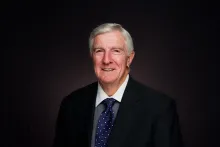
Before his retirement in 2021, Dr. Donald Ward pastored churches in Texas and Louisiana, and taught at Ambassador Bible College in Cincinnati, Ohio. He has also served as chairman of the Council of Elders of the United Church of God. He holds a BS degree; a BA in theology; a MS degree; a doctor’s degree in education from East Texas State University; and has completed 18 hours of graduate theology from SMU.
