

Don Ward
This transcript was generated by AI and may contain errors. It is provided to assist those who may not be able to listen to the message.
How spiritually minded are you? Each and every one of us, at this very instant, needs to ask, how spiritually minded am I? The Apostle Paul writes in Romans 8 and verse 6, For to be carnally minded is death, but to be spiritually minded is life and peace. So which one are we going to choose? Life or death? To be carnally minded is death, but to be spiritually minded is life and peace. So how spiritually minded are we? And is the spiritual mind ruling over the carnal mind? Remember, Paul writes in Romans 8-13, For if we live after the flesh, we shall die, but if we through the Spirit do mortify the deeds of the flesh, we shall live. So let's ask ourselves, how much influence and power do I have with God? We need to ask ourselves, are our prayers being answered? And if not, why aren't they being answered?
And I hope we'd ask ourselves this in the individual and collective sense, individually and collectively. Is there such a thing as collective prayer in the Bible? To stop praying is equal to saying that you have given up on God, and He has given up on you, whereas God says He'll never leave us, He'll never forsake us. God says you'll never walk alone, as you heard in the special music. So what about your prayer life? What about my prayer life? To ask about your prayer life is the same as asking about your communication with God. How do you expect to have a relationship? How do I expect to have a relationship with God if I don't communicate with Him? How do I expect to have a relationship with anyone if I don't communicate with them? The main way that we share ourselves with another person is through our communication with Him or her, and by spending time with them. Now, communication includes many aspects of our being, both spoken and unspoken. And most of all, it includes our frame of mind, our attitude, the content of our hearts. And furthermore, it includes time spent with a being that you're seeking to build a relationship with, as I've already mentioned. Let's note how God views prayer and communication with Him. Turn please to Hebrews 13. Hebrews 13 beginning in verse 13. Hebrews 13. 13. Hebrews 13 and verse 13. Let us go forth, therefore, unto Him without the camp, bearing His reproach, speaking of Jesus Christ, who was crucified outside the camp. For here we have no continuing city, but we seek one to come, that new Jerusalem, that city that Abraham looked for, that hath foundations, whose builder and maker is God, described in Revelation 21. We have no continuing city, but we seek one to come. By Him, therefore, let us offer the sacrifice of praise to God continually. That is, the fruit of our lips, giving thanks to His name, but to do good and to communicate, forget not, for with sacrifices God is well pleased. With such sacrifices God is well pleased. Let's also note what the Apostle Paul writes in Ephesians 6 and verse 18. One of the aspects of the armor of God you're familiar with, Ephesians 6 describing the armor of God and Paul exhorting us to put on the whole armor of God. But one of the aspects at the very end, sometimes we don't spend that much time with, but we will today, in Ephesians 6 and verse 18, praying always with all prayer and supplication in the Spirit. Is that interesting? If you considered supplication in the Spirit and watching there and to with all perseverance. In other words, you don't give up with all perseverance and supplication for all saints. And then Paul says, and for me, that he might open his mouth boldly and proclaim the gospel. So in Bible study and prayer, we need to be led by the Holy Spirit. Otherwise, it can be dry. It can be boring. But when the Holy Spirit leads you to a passage, it brings life and joy because you hear the voice of God and sense his Spirit. S-E-N-S-E sense his Spirit while you are reading it. And you'll know that these words were written for you even though they were written, in some cases, thousands of years ago.
In praying, we need to also be led by the Holy Spirit so that we can ask God's words from a sincere and pure heart and bring God's will, ask him to bring his will upon the earth. If you're just learning to pray, and learning to pray, you say, well, all we have to do is just say, our Father who art in heaven. Well, some people don't even know to do that. The model prayer begins with our Father who art in heaven, and then it goes from there.
One of the things that I would encourage you to do is to get your Bible, open your Bible. I like Psalm 119. Open to Psalm 119. Get on your knees and you could ask God after some words. Make these words, my words, my prayer unto you. You read a little, you pray a little, you read a little, you pray a little, and you get more into the spiritual aspect and content of it. Jesus said, the words I speak, they are spirit and they are life. Of course, if you can't get on your knees, obviously you can sit in a chair or whatever posture that you need to assume. In biblical times, they prayed on their knees with their hands outstretched and looking up because that was the place where God was, and they faced Jerusalem because that's where the temple was, and where God placed His presence. Maybe a little more about that later. Years ago, a lady asked me, well, where do you get your sermons? And I responded, I start thinking, meditating, and praying about something, and I open the pages of the Bible, and as the Word of God and the Spirit of God moves, I am led to write my notes. I don't have an outline when I start. I have a general topic that I want to pursue, and then as you finally get those first few words down, which are usually the most difficult, then you're led through it by God's Spirit, of one Scripture leading to another Scripture, and this thought to that thought. It's like a spiritual kind of exercise, along with, of course, you've got to use your mind. Yes, you have to do some research, and generally I sit with a computer, and I have online Bible. Of course, you can look on the Internet and find anything under the sun, which you have to compare with the Bible. So, as I said, I don't have an exact outline or exact course in mind. Oftentimes, I'm led to Scriptures that I had not considered until I get there, and then I remember that, and then it also says that one of the works of the Holy Spirit in John 16 is that the Holy Spirit will bring things to remembrance. Oh, well, this ties in with this and associate it with that. And, of course, in order to do this, you have to have a storehouse of Scriptures in your mental memory bank. And, of course, I've been encouraging all of us, and we gave out the Scripture cards to really enrich our mental memory bank with the Word of God. One of the most powerful set of exhortations in the Scriptures are found in 1 Thessalonians 5, beginning verse 16. Let's go there. 1 Thessalonians 5 and verse 16. 1 Thessalonians 5 verse 16.
Rejoice evermore. The world in which we live is ripped like a command. A declarity. Rejoice evermore. Pray without ceasing. How in the world are you going to do that? In everything, give thanks for this is the will of God in Christ Jesus concerning you. Quench not the Spirit. Despise not prophesying. Prove all things. Hold fast that which is good. Abstain from all appearance of evil. And the very God of peace sanctify you. Set you apart wholly. And I pray, God, your whole spirit and soul and body be preserved blameless into the coming of our Lord Jesus Christ. So I especially want to focus on this verse 17. Pray without ceasing. So how often should you pray? In the Old Testament, we find the example of Daniel praying three times a day. Let's go to Daniel chapter 6. Daniel chapter 6. This is where the ruler of the land had made a decree that if anyone prays to anything other than the king there, they'd be put in the lions den. Daniel 6 verse 1, it pleased Arias to set over the kingdom 120 princes, which would be over the kingdom and over these three presidents of whom Daniel was the first. So Daniel was second in command under Darius in the whole kingdom. Of course, he had interpreted that dream and had received high accolades from Nebuchadnezzar's probably grandson, but now Darius is a Persian. And just as he was with the Babylonians, he had risen to this high office in the land.
Then this Daniel verse 3 was preferred above the presidents and princes because an excellent spirit was in him, and the king thought to set him over the whole realm. And then the presidents and princes sought to find occasion against Daniel concerning the kingdom, but they could not find occasion or fault for so much as he was faithful. Neither was there any error or fault found in him. Then said these men, we shall not find any occasion against this Daniel, except we find it against him concerning the law of his God. Then these presidents and princes assembled together to the king, and thus said, King Darius lived forever. So they used flattery and deceit, and they decided to establish a royal statute to make a decree, verse 7, that you could not ask a petition of any God or man for 30 days, and if you did, you'd be thrown into the lion's den. And it pleased Darius. He went along with it. And so Daniel heard about it, verse 10. Now, when Daniel knew that the writing was signed, he went into his house and his windows being opened in his chamber toward Jerusalem. Why toward Jerusalem? That's where God, where the temple was. God's presence had filled the Holy of Holies. He kneeled upon his knees three times a day and prayed and gave thanks before God as he did a four-time. And then, as a result of that, he was thrown into the lion's den. And you know that an angel came and shut the mouth of the lions, and Daniel was saved from that. Let's note further in Psalm 55, verse 17. Psalm 55, verse 17 was a little bit different in the Old Testament with regard to times of prayer, but I'm sure even then did Daniel not pray in between morning, noon, and night. Actually, as we'll see here, that it's evening, morning, and noon. That's the order of prayer. Why was it evening, morning, noon? Because the new day started in the evening in Psalm 55, verse 17. Evening and morning and at noon will I pray and cry aloud, and he shall hear my voice. So in biblical times, starting the day with prayer, you did it in the evening. Then you did it in the morning and at noon. In Acts chapter 10, verse 9, we see the apostle Peter. You know, Peter was the apostle to the circumcision, and he was more attuned to Jewish custom and Jewish law than apparently the other apostles were. Remember that Paul had to withstand him on one occasion because when he came down from Jerusalem, he would not eat with the Gentiles, and Paul had to rebuke him. Here we see in Acts 10 and verse 9, on the morrow as he went up on their journey and drew nigh unto the city, Peter went up onto the housetop to pray about the sixth hour. That's noontime. So Peter apparently had a place set aside, and he would resort to there three times a day. Jesus himself would at times resort to a quiet place to pray. Let's notice Matthew 14, verse 23. Matthew 14 and verse 23. Matthew 14, verse 23.
Matthew 14, 23. And when he had sent the multitudes away, he went up into a mountain, a park, to pray. And when the evening was come, he was there alone. But the ship now was in the midst and the sea tossed with waves. The disciples went in the ship, going to the other side, and Jesus was walking. And then you know the story of how Jesus came walking to them on water. Now let's go to Luke 9 and verse 28. Luke 9 verse 28. So we see here that Jesus would resort to, at times, a quiet place where in solitude he could pour out his heart before God. In Luke 9 and verse 28. And it came to pass about eight days after these sayings. He took Peter and John and James and went up into a mountain to pray. So here we have a group going together. There are four people, Jesus and these three. And as he prayed, the fashion of his countenance was altered and his raiment was white and glistening. And behold, there talked with him two men, which were Moses and Elijah. So here is what is called in theological terms, a transfiguration, where the disciples were given a vision, a glimpse of Jesus Christ in his glory. So sometimes Jesus would take others with him to pray and sometimes he went alone. So in the New Testament, we see examples of people praying at certain times and in solitary places. But there's also the exhortation that I've read from I Thessalonians 5, to pray without ceasing. And also what Paul wrote in Ephesians 6.18 is to pray always so we can go with a prayer on our lips nearly all of the time, a prayer on our lips and in our hearts. The average person talks to himself 70% of his waking time. So generally, when you're not engaged in conversation with somebody else or you're really concentrating on the task before you, you're carrying on a conversation with yourself. How exciting can that be? And then, but then that empty time could be filled with talking to God or even rehearsing. For example, you want to know the outline to the book of James. Well, chapter one deals with this. Chapter two, chapter three, chapter four. I mean, there are ways that you can exercise your mind and pray in the Spirit, as it were, and be spiritually minded, spiritually oriented. It's, you know, it's sometimes you say, well, I've prayed all day, so I get on my knees or I go to bed at night. Well, I'm going to repeat the same thing, but you can repeat the same thing. Generally, you can think of something else. After the tabernacle and later the temple were constructed, prayers were directed toward Jerusalem and or the temple, as we've already mentioned, because God had placed his presence in the temple. Let's go to Psalm 27. In the Psalms, you'll find a great deal about the temple and directing things toward the temple and wanting to dwell in the temple or dwell in God's sanctuary. And that physical temple, of course, was a figure for the spiritual temple that was to come. And the ultimate dwelling place of God's people in the New Jerusalem. In Psalm 27, and by the way, it says about the New Jerusalem, it says, and there is no temple there because God and the Lamb are in it. In Psalm 27, verse 4, one thing have I desired of the Lord that will I seek after, that I may dwell in the house of the Lord all the days of my life. You know, Psalm 23, that we're saying, and it closes with dwelling in the house of the Lord forever.
That I may dwell in the house of the Lord all the days of my life, to behold the beauty of the Lord, and to inquire in His temple. For in the time of trouble, He shall hide me in His pavilion. In the secret of His tabernacle shall He hide me, and shall set me upon a rock. And now shall mine head be lifted up above mine enemies round about me. Therefore will I offer in His tabernacle sacrifices of joy. I will sing, yes, I will sing praises unto the Eternal. Hear, O Lord, when I cry with my voice, have mercy upon me, and answer me, when you said, Seek you my face, my heart said unto you, Your face, Lord, will I seek.
In Matthew 21, let's go there, Matthew 21, verse 12, we see the words of Jesus here concerning the temple and what it was to be in Matthew 21, verse 12.
Matthew 21, verse 12, Jesus went in the temple of God, and cast out all of them that sold, and bought in the temple, and overthrew the tables of the money changers, and the seats of them that sold doves, and said unto them, It is written, My house shall be called the house of prayer, but you have made it a den of thieves. So, as we've already noted, that because of God's presence being that temple, they would face Jerusalem and the temple when they prayed. The mercy seat in the Holy of Holies represented God's throne on earth, and God's presence, the Shekinah glory, was over the mercy seat. And it was so bright, as you know, in the Holy of Holies, when the temple was reared up in the wilderness, you can read about this last few verses of Exodus 40, it was so bright that Moses was like a glow when he went in. The glory of God, or the presence of God, came upon him. So, the earthly temple, and later the tabernacle, was a reflection of the temple of God in heaven, because that tabernacle in that temple was made after the pattern of the heavenly. Notice Exodus 25 verse 8. In Exodus 25, this takes place not long after God had thundered the Ten Commandments from Mount Sinai, and then Moses went up into the mountain alone and communed with God, received the statues and the judgments. And Moses was instructed during that time that he would go to the people, he would take up an offering, and they would build a tabernacle for God to dwell in. Next, Exodus 25 verse 8.
Next, Exodus 25 verse 8, let them make me a sanctuary that I may dwell among them. According to all that I show you after the pattern of the tabernacle, and the pattern of all the instruments thereof, even so shall you make it. And in verse 40, Exodus 25 verse 40, and look that you make them after their pattern which was showed you in the mount. So Moses had revealed to him a pattern that reflected the heavenlies to build this tabernacle. Now we go to Hebrews chapter 8 and verse 5. In Hebrews 8 verse 5, we'll see basically a quote from this area. Remember, the Hebrews compares and contrasts the elements of the Old Covenant with the elements of the New Covenant, and it points toward the time in which Jerusalem would be destroyed, the Levitical priesthood would be done away with, and that the New Covenant would be ushered in and take precedence over the Old Covenant. In Hebrews 10 verse 5, by faith Enoch, that's Hebrews 11, Hebrews 10 and verse 5, wherefore when he comes into the world he says, sacrifice you would not but a body you have prepared me. I'm reading from chapter 9. I'll get to 8 in a minute. In Hebrews 8 and verse 5, in Hebrews 8 verse 5, who serve under the example and shadow of heavenly things, as Moses was admonished of God when he was about to make the tabernacle for he says he that you make all things according to the pattern show to you in the mouth. So they tried to pattern this to reflect what was in the temple in the heavens. How do we know this? Go to Revelation 11. Revelation 11 and verse 19. In Revelation 11 and verse 19, and the temple of God was opened in heaven, and there was seen in his temple the ark of his testament. And there were lightnings and voices and thunderings and an earthquake and great hail. This was on the heels of verse 15 where the seventh angel sounds, the trumpet of God sounds, and the resurrection takes place. And we celebrate that on the Feast of Trumpets.
Through Christ's sacrifice now, we can live in the holy of holies and come boldly before the throne in the heavens. Notice in Hebrews 9 now, Hebrews 9 beginning in verse 1.
Hebrews 9 verse 1. Very important to understand.
Then verily the first covenant had ordinances of divine service and a worldly sanctuary. And we just read about that worldly sanctuary. Moses was given a pattern. It was supposed to reflect that which was in heaven. We saw that there was a temple in heaven when Solomon's temple was built and later the Restoration Temple during the days of Joshua and Zerubbabel. Those two temples were also to basically reflect what was in the tabernacle. However, the Restoration Temple did not have the mercy seat and the Ark of the Covenant.
And the glory of God did not fill that Restoration Temple. So the first covenant had also ordinances divine service and a worldly sanctuary. And there was a tabernacle made. The first wherein was the candlestick, the table, the showbread, which is called the sanctuary. So that's the holy place. And after the second veil, the tabernacle, which is called the holiest of all, or we call it the holy of holies, which had the golden center, the Ark of the Covenant overlaid roundabout with gold. Wherein was a gold pot that had manna and errand rod that budded, and the tables or tablets of the Covenant. And over it the caravans of glory shadowing the mercy seat, of which we cannot now particularly speak. That's where God pleased His presence. Now, when these things were thus ordained, the priests went always into the first tabernacle, accomplishing the service of God. But into the second went the high priest alone once every year on the day of atonement, not without blood, which he offered for himself and for the errors of the people. The Holy Spirit thus signifying that the way into the holiest of all was not yet made manifest. While as the first tabernacle was standing, and that included the two temples, which was a figure for the time then present, in which were offered both gifts and sacrifices that could not make Him that did the surface perfect as pertaining to the conscience, the knowing within yourself. Of course, the knowing within yourself comes about with the law of God being written on your inward parts through the Holy Spirit, which stood only in meats and drinks and different washings and carnal ordinances imposed on them until the time of the Reformation. But Christ, being come and high priest of good things to come by a greater and more perfect tabernacle, not made with hands, that is to say, not of this building. So God today doesn't dwell in buildings made by hands, but He dwells in His church, the members of His body, those who have His Spirit, they are the temple of God, neither by the blood of goats and calves, but by His own blood. He entered in once into the holy place, having obtained eternal redemption for us. He bought us back from sin and death. And through that sacrifice, through Christ's sacrifice, we can now live in the Holy of Holies, and we can come boldly before the throne of God and call upon Him and offer up spiritual sacrifices at any time, at any place on earth. Continuing in chapter 10, verse 15.
Chapter 10, verse 15.
Whereof the Holy Spirit also is a witness to us, for after that He said before, this is the covenant that I will make with them after those days, says the Lord. I will put my laws in their hearts, and in their minds will I write them, and their sins and iniquities will I remember no more. Now where remission of these is, there is no more offering for sin. So having therefore, brethren, boldness to enter into the holiest by the blood of Jesus, so we can live in the Holy of Holies, we can come boldly before the throne of God, we can pray in the Spirit, enter into the Holies by the blood of Jesus by a new and living way which He had consecrated for us through the veil, that is to say His flesh. And when Jesus Christ died, the veil of the temple was rent, the physical veil signifying that the way was made into the holiest of all and also Jesus Christ, the veil of His flesh, He was bruised, beaten, and broken for us. His blood was shed that we might enter in.
Having therefore, brethren, boldest to enter into the holiest by the blood of Jesus by a new and living way which He had consecrated for us through the veil, that is to say His flesh, and having a high priest over the house of God, let us draw near with a true heart in full assurance of faith, having our hearts sprinkled from an evil conscience, and our bodies washed with pure water.
Now we go to Hebrews 4 and verse 14. The awesomeness of what we're talking about here today might seem commonplace to many of us, but I don't think we really fully understand or grasp the significance of it.
You know, in the last days when Jesus Christ was here on the earth just before His ascension after His crucifixion and resurrection, He gave the commission, as we talk about, and He says, You shall lay hands upon the sick, and the sick shall be made well. You should touch serpents and not be bitten or not be affected by it. And the very says, These signs and these miracles shall surely follow you. And somewhere along the way, it seems by the end of the first century A.D., that basically these signs and these miracles just sort of disappeared. Of course, we have had through the years people who claim to be faith healers and all that. But where is the spiritual power and the things that Christ promised that we would be able to do? And we even have this access to God through Christ and entering into the holiest of all and coming before the very throne of God in the heavens. Not facing toward Jerusalem, necessarily. Remember Christ with his encounter, the woman at the well, in which they talked about where is the place of worship. The Samaritans worshipped on Mount Gerizim in Samaria, where they had built a temple that somewhat rivaled that one in Jerusalem. Jesus said, Neither in this mountain that one in Samaria or any other mountain shall you worship me, and those that worship me will worship me in spirit and in truth. So we read here in Hebrews 4.14, seeing then that we have a great high priest that has passed into the heavens, Jesus the son of God, let us hold fast our profession. For we have not an high priest which cannot be touched with the feelings of our infirmities, but was in all points tempted, tested, tried as we are, yet without sin. Let us therefore come boldly under the throne of grace, and we've talked about from Hebrews 9 and 10 how we now can do that, that we may obtain mercy and find grace to help in time of need. Today we can come boldly before the throne of God and call upon Him, and offer up spiritual sacrifices anytime, any place. No one can keep us from us. No one can keep us from praying. You know, you could be placed in the deepest, darkest dungeon or on the brightest mountain top, wherever you are, whether you are bond or free, regardless of your socioeconomic condition or your political persuasion, persuasion, no matter. You can call upon God, the deepest, darkest dungeon and top of the brightest mountain.
So what are the greatest requirements for our prayers to be answered? First, we have to be reconciled to God and one another.
Probably that reconciled to one another is where we need a lot of work. I think we missed the point with regard to fellowship and the members of the body of Christ, that we're all members one of another, and that we are supposed to be joined together by that common spirit.
We must be single-minded. We must pray in faith. We must accept God's will, and we must not ask amiss. So let's briefly pursue these requirements. Daniel 9 verse 4. Daniel, of course, was taken to Babylon during Nebuchadnezzar, one of his raids on the city of Jerusalem. The practice of the conquerors of that day, and to some degree it still is, that when you want to conquer a nation, you go in and you capture, first of all, the intelligentsia, the youngest, the brightest, and they may be some older, the best educated, the leaders. You capture them first and you take them away. And so Daniel and his three friends, Shadrach, Meshach, Abednego, Ezekiel, also, he wrote his prophecy from that area, that area of Babylon, modern-day Iraq. You know, Daniel, in essence, went to graduate school in Babylon, and he came out at the top of the class. Yeah, it is possible to learn, quote, unquote, the wisdom of this world, and yet remain faithful to God. Daniel did, and apparently his three friends did.
In Daniel chapter 9, he'd been reading Jeremiah, and he wanted to understand Jeremiah and that prophecy, which is the 70-weeks prophecy. So how did he go about it? Verse 4, And I prayed unto the Lord my God, and made my confession, and said, O Lord, the great and dreadful God, keeping the covenant and mercy to them that love him, and to them that keep his commandments. We have sinned. So here's reconciliation with God. You want to have influence and power with God. We have sinned, have committed iniquity, have done wickedly, have rebelled, even by departing from your precepts, from your judgments. Neither have we hearkened unto your servants the prophets, which spoke in your name to our kings, our princes, our fathers, and to all the people of the land. So Daniel confesses the sins of the people, makes reconciliation with God, and God then begins to answer Daniel's prayer, and he shows how the 70-weeks prophecy is to be fulfilled.
Notice Isaiah 59, this first step, remember, reconciliation with God. We want to have power. We want to have influence with God. We want to come back to the point. Will we ever come back to that point where these signs shall surely follow them, where we do have the same love, care, and concern for one another, where we don't just show up on the Sabbath to go through the routine that we are accustomed to, but there is an actual bond, an actual connection between us, each one of us, and with our head, Jesus Christ, and our Father in heaven. In Isaiah 59, verse 1, Behold, the Lord's hand is not shortened, that it cannot save. Neither is his ear heavy, that it cannot hear. But your iniquities have separated between you and your God, and your sins have hid his face from you, that he will not hear. So, obviously, the first step then is to be reconciled to God, and then to be reconciled to one another, as it says in Ephesians 4, verse 26, I believe it is, don't let the sun go down on your wrath, so that the devil give place to the devil, so your prayers will be hindered. And if you come to offer your gift, go be reconciled to your brother, then come offer your gift. Our prayers today are one of the main spiritual sacrifices that we offer up. We must be single-minded. Go to James chapter 1. Single-minded, when we come before the throne of God, we can come boldly, but we need to come single-minded. And that's what James writes here, James 1, verse 5. James 1, verse 5. If any of you lack wisdom, let him ask of God, that gives all men liberally, and upbraids not, and shall be given him. But let him ask in faith nothing wavering. Of course, one of the greatest requirements for prayer to be answered is faith. One place in the Gospels that talks about Jesus Christ did not many miracles there because of unbelief. Let him ask in faith nothing wavering, for he that wavers like a wave of the sea, driven with the wind and tossed, for let not that man think that he shall receive anything of the Lord. A double-minded man is unstable in all his ways. So we have to come single-mindedly. We must ask in faith. Let's go to Mark 11, verse 21. Ask in faith, as I've already mentioned, believing that God will hear and answer our prayers. You know, at times I've come to the point where I prayed for the same thing so many times, it's like I'm saying behind what I'm saying one way, well, you know, I've prayed for this many times and always not going to answer it, but I'm going to pray it again.
And in faith, something happens inside of you, and it just dies, and we should never let that happen. In Mark 11 and verse 21, And Peter calling to remember, it said unto him, Master, behold, a fig tree which you cursed is withered away. You know, they passed by and didn't have any fruit, and Jesus Christ cursed it, came back, I guess, the next day or soon thereafter, and the tree was dead. And Jesus answered, said unto them, Have faith in God. For verily I say unto you that whosoever shall say unto this mountain, be removed, and you be cast into the sea, and shall not doubt in his heart, but shall believe that those things which he says shall come to pass, he shall have whatsoever he says. Therefore I say unto you, what things whosoever you desire, when you pray, believe that you receive them, and you shall receive them.
And when you stand praying, forgive, if you have not, if you have ought against any, that your Father also which is in heaven may forgive you your trespasses. So that goes back to being reconciled to God and to one another. We must ask that God's will be done, just as Christ did after he prayed fervently, that the cup of death would pass from him. He went before God three times. He prayed so fervently as he sweated drops of blood, resisting sin unto blood through the whole ordeal, beginning with a prayer in Gethsemane, the betrayal, the crucifixion. Three times he went, but then said, nevertheless, thy will be done.
And we have to ask God in order to receive. Says in James 4, you have not because you ask not, and you ask amiss that you might consume it on your own lust. You know, prayer teaches us to rely on God. Go to John 15. In John 15, prayer is here we'll see that you can't do anything if you're not connected to the vine. And prayer is one of the main ways whereby we can be connected to God through his spirit and communication with him. In John 15 verse 1, I am the true vine and my father is a husbandman. Every branch in me that bears not fruit, he takes away, and every branch that bears fruit, he purges it that it may bring forth more fruit. Now you are clean through the word which I've spoken unto you. Abide in me and I in you, as the branch cannot bear fruit of itself, except it abide in the vine. No more can you, except you, abide in me. I am the vine, you are the branches. He that binds in me and I in him, the same brings forth much fruit, for without me you can do nothing. So it is through prayer and through that communication and fellowship with God that we can strengthen this connection, this communication line, as it were, with God.
Now we come down to the nitty-gritty as they say, that you believe that your prayers can make a difference in your life here today and the life of others. You know, we talk about the prayer requests, how we have people in our very midst who have serious illnesses. There are people throughout the church, and also, of course, we see a lost and dying world, as we say.
Will God change his mind because of prayer? Let's go to Numbers 14. Numbers 14. The Israelites left Egypt with a high hand, crossed the Red Sea, having the Red Sea parted before them. They came to Sinai, received the Ten Commandments on the day of Pentecost, and they were marching toward the Promised Land. Sometime in the late summer, Moses and Aaron sent out spies to spy out the land. Twelve men, among them were Joshua and Caleb. They went into the land we call the Palestine, then the land to the large degree of the Philistines. And they saw the giants there, and their chariots, and their implements of warfare. They came back with an evil report saying, we cannot defeat them. In essence, we better turn back, or we've had it. They stirred up such a furor that they were ready to kill Joshua and Caleb, but mainly Moses. And we pick it up in Numbers 14.
Numbers 14 verse 11. And the Lord said unto Moses, How long will this people provoke me, and how long will it be before they believe me, for all the signs which I've shown among them? I will smite them with the pestilence, disinherit them, and will make of you a greater nation in my ear than they. Remember, Moses was the meekest man on the face of the earth. That didn't appeal to his vanity at all. And Moses said unto the Eternal, Then the Egyptians shall hear it, for you brought up this people in your might from among them. They will tell it to the inhabitants of the land, to other nations. Verse 15, Now if you shall kill all the people as one man, when the nations which have heard of your fame of you will speak, saying that he delivered them there, but it wasn't able to bring them into the promised land. Verse 17, And now I beseech you, Let the power of my Lord be great according as you have spoken, saying, The Lord is long suffering of great mercy, forgiving iniquity and transgression, and by no means clearing the guilty, visiting the iniquity of the fathers upon the children of the third and fourth generation. Pardon I beseech you the iniquity of this people, according of the greatness of your mercy, and as you have forgiven this people from Egypt even until now. And the Eternal said, I have pardoned according to your word. God changed his mind at that time. He didn't change his plan or his great will and plan for humankind. We see a similar kind of thing with Hezekiah in 2 Kings 20 verse 7.
First few verses talk about this. First, 2 Kings chapter 20. 2 Kings 20 verse 1. Second Kings 20 verse 1. In those days was Hezekiah sick unto death, and the prophet Isaiah the son of Amos came to him and said unto him, Thus saith the Lord, Set your house in order, for you are going to die. And then Hezekiah turned his face to God, and he prayed. Verse 5. Turn again and tell Hezekiah to capture my people. Thus says the Lord, the God of David, Your father, I have heard your prayer. I have seen your tears. Behold, I will heal you. On the third day you shall go up into the house of the Lord, and I will add in your days fifteen years, and I will deliver you in this city out of the hand of the king of Assyria. Then verse 7 Isaiah tells him to do a physical thing of making a poultice out of figs. God changed his mind about that, and he spared Hezekiah because of Hezekiah's prayer. Does prayer change things? Now, a couple of examples of God's immediate intervention because of prayer. In Genesis 20 and verse 17. Genesis 20. This is there about where Abraham and Sarah contrived to and deceived the king of Bimalek because he was afraid to take Sarah to be his wife. And so Abraham said that Sarah was his sister. In Genesis 20 and verse 17.
So Abraham prayed unto God, and God healed Abimelech and his wife and his maidservant, and they bear children. For the Lord had fast closed up all the wombs of the house of Abimelech because of Sarah, Abraham's wife. There's the example of Job in Job 40. After he prayed that he was healed, and he had all things restored unto him and more than he had lost.
You know, God wants us to call upon him in the day of trouble. Let's notice that in Psalm 50. In Psalm 50 and verse 12, If I were hungry, I would not tell you, For the world is mine, and the fullness thereof. Will I eat the flesh of bulls, or drink the blood of goats? Offer unto God thanksgiving. Of course, that's prayer, the fruit of your lips with such sacrifices. God is well pleased, as we read in Hebrews chapter 13 verses 15 and 16. Offer unto God thanksgiving. Pay your vows unto the Most High. Call upon me in the day of trouble. I will deliver you, and you shall glorify me. So God wants us to call upon him. Today, I am exhorting all of us to begin engaging in intercessory prayer every day for our brethren who are sick among us, and for the conditions that we see round about us to sigh and cry, to offer up intercessory prayer for all peoples and for every just cause that you can think of. Is this in keeping with the Bible? Notice 2 Timothy.
Sorry, 1 Timothy. 1 Timothy chapter 2. 1 Timothy chapter 2 verse 1.
What does God say? Through the Apostle Paul. 1 Timothy 2.1, I exhort therefore that first of all, I exhort therefore, first of all, supplications, prayers, intercessions, and giving of thanks be made for all men. You know, the Bible even says, pray for your enemies.
For kings and for all that are in authority, that we may lead a quiet and peaceable life in all goodness or godliness and honesty, for this is good and acceptable in the sight of God our Savior, who will have all men to be saved and to come into the knowledge of the truth. For there is one God and one mediator between God and men, the man Christ Jesus, who gave himself as a ransom. 2. God's promises to those who mourn and pray for those who are afflicted are recorded in the Bible. Let's go to Matthew 5. On some occasions, I have mentioned that Mrs. Grasmick, Judy Grasmick, would appreciate a visit. I don't know how many have visited. I know of one.
You know, when you go visit someone in the situation that she's in, and you see the sadness in the eyes, and you see the lines in the face, and you see what has happened in just a few weeks from the last time that I was there, that I saw her. And you can't help, unless your heart is colder than ice and harder than diamond and stone, to somehow enter into the sufferings with them.
In Matthew 5, verse 4, "...blessed are they that mourn, for they shall be comforted." You know, all of us are going to face some very tough times. I think one of the greatest blessings of all is, you know, how God chooses to let us die. And I know time and chance happens to everyone. And my aunt, Aunt Edice, she had a lot of health problems through the years. Lawn Mower turned over on her one time riding lawnmower. She was cutting the yard in a ditch bank, and it just mangled her leg. I don't guess they had the automatic turn off, the seat then, and many other problems. But one afternoon, she went and she laid down. She didn't wake up. You know, that's a great blessing. Others suffer unbelievable agony, sometimes for years and years. "...Blessed are they that mourn, for they shall be comforted." They that share the suffering of others will also share in the comforting of the Holy Spirit. Let's notice now 1 Corinthians 12 and verse 21. 1 Corinthians 12 and verse 21.
Paul, using the analogy here of the human body to illustrate the necessity of each member of the body, we break into thought in verse 21. "...Thy cannot say into the hand, I have no need of you, nor can the head to the feet I have no need of you. Know much more those members of the body which seem to be more feeble or necessary. And those members of the body which we think to be less honorable, upon these we bestow more abundant honor, and our uncommonly parts have more abundant calmliness. For our calmly parts have no need, but God had tempered the body together, having given more abundant honor to that part which lacked. That there should be no schism in the body, but the members should have the same care, one for another. This is a point where the Church of God, basically in any age, has not achieved.
They should have the same care, one for another, whether one member suffer, all the members suffer with it, or one member be honored, all the members rejoice with it. Now you are the body of Christ and members in particular. And as such, if you go now to Romans chapter 12, Romans chapter 12 and verse 5, we see here once again how the way that the Holy Spirit inspires Paul to write this, Romans 12 verse 5, So we being many are one body in Christ, and every one members one of another. Therefore, when one member suffers, we all suffer. Just like in the analogy, if I hurt my thumb and get a little boo-boo on it, or worse, break it, my whole body is affected. When one member suffers, we all suffer. Now we go to James 1 verse 27. James 1 verse 27. See, these are the things where the rubber meets the road, as they say, the nitty-gritty of where we come down to the measure of whether we are in the Spirit or not. In James 1 verse 27, Pure religion and undefiled before God and the Father is this, to visit the fatherless and widows in their affliction, and to keep himself unspotted from the world. So once again, when we see people in their affliction, we share in their sufferings, and it lightens the burdens of those who are afflicted. Let's go to 2 Corinthians chapter 1, and show this from the Scriptures. 2 Corinthians chapter 1.
And let me say that again. When we visit and see people in their affliction, we share in their sufferings, and it lightens the burdens of those who are afflicted. You know, we live in such a satanically oriented world that today, you know, as we go home, we'll come there to the intersection of 288 and the Beltway, and there will be people with signs saying that they're homeless, destitute, hungry, and need of food.
At the same time, they're puffing on a cigarette. Cigarettes are quite expensive today, and your heart goes out, and you want to help them, but at the same time, you don't know. But we do have those among us. You know, Paul writes, if any man care not for his own, he's worse than an infidel and has denied the faith.
And you can say, oh, it's just speaking in physical terms. No, I think it's speaking in all terms. In 2 Corinthians 1, verse 3, Blessed be God, even the Father of our Lord Jesus Christ, the Father of mercies, and the God of all comfort, who comforts us all in our tribulation, that we may be able to comfort them, which are in any trouble by the comfort, wherewith we ourselves are comforted of God.
As for as the sufferings of Christ abound in us, so our consolation also abounds by Christ. And whether we be afflicted, it is for your consolation and salvation, which is effectual in the enduring of the same sufferings, which we also suffer, or whether we be comforted, it is for your consolation and salvation. And our hope of you is steadfast, knowing that as you are partakers of the sufferings, so shall you also be of the consolation. So when you enter into the sufferings with others, bless are they who mourn, for they shall be comforted. There is something about that, that buoys the other person who is being afflicted, and it buoys you, but at the same time, it sobers you to the point to where you realize, you know, you can go away and feel much better about everything, except you are very sad for the sufferings that people have to go through, and you consider, well, how blessed am I?
The Church has been so organizationally bound that it cannot see the forest for the trees, and when we speak of unity, we speak of all the organizations getting together to form a super organization. What about thinking about being bound to one another, that we enter into the sufferings for one another? As I mentioned last week, we tend to think of the work being out there somewhere, whereas the work is right here, and within the body of Christ, and you and me, and each one of us.
Yes, we are to preach the gospel, but if a man care not for his own, he is worse than an infidel and denied the faith. And when the Bible speaks of unity, it speaks of the members of the body of Christ being joined together through the Spirit of God. There are members of one another, as we've read from Romans 12.5. So how should we pray? We must pray earnestly, fervently, and persistently.
And just as Jacob wrestled with God, and would not let the one who became Jesus Christ go until he blessed him. Jacob's name was changed to Israel from supplanter, which Jacob means, Israel, which means Prince with God. Sweet hour prayer, sweet hour prayer, that calls me from a world of care, that bids me at my father's throne, make all my wants and wishes known. In seasons of distress and grief, my soul has often found relief, and oft escaped the tempter's snare, by thy return, sweet hour prayer.
Sweet hour prayer, sweet hour prayer, thy wings shall my petition bear, to him whose truth and faithfulness engage the waiting soul to bless. And since he bids me seek his face, believe his word, and trust his grace, I'll cast on him my every care, and wait for thee, sweet hour prayer. Sweet hour prayer, sweet hour prayer, may I, thy consolation, share, till from Mount Pisgah's lofty height I view my home and take my flight.
In my immortal body I'll rise to seize the everlasting prize, and shout while passing through the air, farewell, farewell, sweet hour prayer. These moving words were written by William Wofford, a blind, illiterate lay preacher from Warwickershire, England in 1844. How the inspiring hymn came to be known around the world. A man named Thomas Salmond, who was a Bible student studying in England, he came upon William Wofford one time. During his residence at Cold Shield Warwickshire, England, I became acquainted with William Wofford, the blind preacher of man's obscure birth with no connections and no education, but of strong mind and most retentive memory.
In the pulpit, he never failed to select a lesson well adapted to his subject, giving chapter and verse an unerring precision and scarcely ever misplacing a word in his repetition of the Psalms, every part of the New Testament, the prophecies, some of the histories, so as to have the reputation of knowing the whole Bible by heart. He actually sat in the chimney corner, employing his mind and composing a sermon or two for Sabbath delivery, and his hands in cutting, shaping, polishing bones for shoe horns and other little useful instruments.
At intervals, he attempted poetry. On one occasion, paying himself a visit, he repeated two or three pieces which he had composed, and having no friend at home to commit these to paper, he had laid them in the storehouse that is in his memory within.
How would this do, he asked, as he repeated the following lines? Sweet hour prayer that I just read. With a complacent smile touched with some light lines of fear, lest he himself be criticized, I rapidly copied the lines with my pencil as he uttered them and sent them for insertion in the observer, that is, the New York observer. So on September 13, 1845, this article, accompanied with a prayer appeared in the New York observer, then a man named Bradbury said it to the wonderful music that is known around the world.
Yes, sweet hour prayer. So, brethren, let's meet the challenge. Let's all commit ourselves to sweet hour prayer, and go with a prayer on our lips and in our hearts, praying always with all prayer and supplications in the spirit, watching thereunto with all perseverance and supplication for all saints.
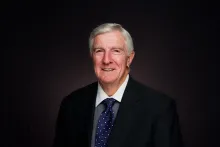
Before his retirement in 2021, Dr. Donald Ward pastored churches in Texas and Louisiana, and taught at Ambassador Bible College in Cincinnati, Ohio. He has also served as chairman of the Council of Elders of the United Church of God. He holds a BS degree; a BA in theology; a MS degree; a doctor’s degree in education from East Texas State University; and has completed 18 hours of graduate theology from SMU.
