

Don Ward
This transcript was generated by AI and may contain errors. It is provided to assist those who may not be able to listen to the message.
Various Hebrew and Greek words are used for prayer. They can face such ideas as to ask, make requests, petition, entreat, supplicate, plead, beseech, beg, implore, favor, seek, inquire of, as well as to praise and to thank God. Prayer involves devotion and a sense of dependence on God. So what steps can we take to be more effective in our prayer life? Jesus had a lot to say about prayer. Perhaps the longest passage of Scriptures be found in Matthew 6. So let's turn there to Matthew 6. With regard to Jesus instructing the disciples concerning doing alms, it involves His instructions on prayer and fasting. We're going to focus on the first part, which is prayer, which goes through several verses here. In Matthew 6 and verse 1, Take heed that you do not your alms before men to be seen of them, otherwise you have no reward of your Father who is in heaven. Therefore, when you do your alms, do not sound a trumpet before you, as the hypocrites do in the synagogues and in the streets. Perhaps you remember the account there. I believe it's in Luke 16 where the Pharisee and the publican went up in the temple to pray, and the Pharisee listed all the good things that he does. He gives tithes everything that he has. He fasts twice in the week. I don't think it was a complete fast, but he went on extolling himself. And then the publican, not so much as lifting up his eyes in heaven, prayed, Father, have mercy on me, a sinner. So it says here, as the hypocrites do, sounding a trumpet before them, barely I say unto you, they have their reward. But when you do alms, let not your left hand know what the right hand does, that your alms may be in secret, and your Father which sees in secret himself shall reward you openly.
And when you pray, you shall not be, as the hypocrites are, lay love to pray standing in the synagogues and in the corners of the streets, that they may be seen of men. Barely I say unto you, they have their reward. So prayer is a very personal thing, and prayer generally is done in private. During the days of the colleges, we had prayer closets in the dormitories, and those prayer closets were often filled evening after evening as students went in there and prayed to God. But you, when you pray, enter into your closet, and when you have shut the door, pray to your Father, which is in secret, and your Father which sees in secret shall reward you openly.
But when you pray, use not vain repetitions as the heathen do, for they think that they shall be heard for their much speaking. And so we are familiar with rosaries that some use. This says, don't use vain repetitions. Talk to God in a very personal way. Be not therefore like unto them, for your Father knows what things you have need of before you ask Him. But as we shall see, He does expect us to ask Him.
Even though He knows our needs before we ask, He expects, and we'll bring this out a lot more clearly as time goes on here today, that He expects us to ask Him. So after this manner, therefore, pray you. So here's what is called the model prayer. Our Father, which art in heaven, to recognize our Father who is in heaven, hallowed be your name. So this praise and thanksgiving up front, with regard to what God has done for us, your kingdom come, your will be done in earth as it is in heaven, give us this day our daily bread, and forgive us our debts as we forgive our debtors.
So each one of the elements here, of course, we can enlarge upon greatly. And one of the things, ways to be more effective in prayer, and I like Psalm 119. You open the book, Psalm 119, get on your knees, and you read this and say, make this my prayer. I like Psalm 119 because of the many verbal requests and commands that are in Psalm 119. It was used also in the Sherman Ed here today, Psalm 119. So we continue here in verse 12, and forgive us our debts as we forgive our debtors, and lead us not into temptation, but deliver us from evil.
For yours is the kingdom and the power and the glory forever. Amen. For if you forgive me and their trespasses, your heavenly Father will also forgive you. And of course, you could preach sermons on that of the importance of forgiveness. It says very clearly, if you won't forgive your brothers and sisters, God will not forgive you. So if you want to be effective in prayer, therefore you must have a forgiving heart and must not hold grudges. But if you forgive not men, their trespasses, neither will your Father forgive you your trespasses.
Then he begins to talk about fasting. So the first step here as we see our Father in heaven, hallowed be your name. So the first step is to recognize God and praise His name. The recognition of God includes the fact that you understand His office, that you reverence Him, you respect Him, you look to Him.
So let's notice a famous prayer in the Bible. We go to Daniel chapter 9. Daniel chapter 9. Remember where Daniel was at this time? He was one of the young ones that had been taken captive into Babylon. One of the things that many of the rulers did in that day was to take the young people that showed the most promise, talent, to their kingdom, oftentimes to their capital, and to educate them in their ways, hoping that they would add to the intellectual pool of the kingdom itself.
So Daniel was taken, along with three others that are mentioned in the book of Daniel, Shadrach, Meshach, and Abednego, and they went, in essence, to graduate school in Babylon and yet remain faithful all the way. So here is Daniel, Daniel chapter 9 and verse 1.
That he would accomplish 70 years, and you can read about the 70 years. I'm not going to turn there. You might want to note Jeremiah 25 verse 12, where Jeremiah speaks of this 70 years, and also in Jeremiah 29 and verse 10. That's where Jeremiah literally talks about what was to pass upon Israel, or Judah at that time, 70 years in the desolations of Jerusalem. And I set my face under the eternal God to seek by prayer and supplications with fasting and sackcloth and ashes.
So he humbled himself as much as you can physically humble yourself. He didn't cut himself. He didn't beat himself. But the biblical instructions for how to humble oneself, prayer, supplications, fasting, sackcloth, and ashes. And I prayed under the eternal my God and made my confession and said, O Lord, the great and dreadful God, keeping the covenant and mercy to them that love him, and to them that keep his commandments.
So up front, similar to, Hallowed be your name, he recognized God and gave various characteristics of God. Then, the reconciliation of confessing sins. We have sinned and have committed lawlessness and have done wickedly and have rebelled even by departing from your precepts and from your judgments. Neither have we hearkened. And he goes on telling, confessing the sins of the nation. So the first step here is to recognize God, his qualities, his characteristics, to praise him.
The Hebrew word for father is ab. It's two letters, a-v. Ababab, a baby, when it begins to talk. You go through what's called cooing first, and it's sort of like ababababab, this cooing sound which eventually becomes da da da da, and eventually ma ma ma, maybe. And so you look at Romans 8 16. This phrase here in Romans 8 verse 16, the spirit itself bears witness with our spirit that we are the children of God. Then we look at verse 15, for we have not received the spirit of bondage again to fear, but we have received the spirit of adoption whereby we cry abba, father.
And abba, there is a Hebrew derivative of av, and there's no closer kind of relationship than this av, av, av, av, av, the recognition of God the Father. By addressing the Father, we recognize that God is a giver of all good and perfect gifts. Let's look at James 1 17, James 1 17, and James 1 17 and 18. Every good gift and every perfect gift is from above and comes down from the Father of lights with whom is no variableness neither shadow of turning.
Of his own will beget he us with a word of truth that we should be a kind of firstfruits of his creation. Now words may occasionally be directed to Christ as in Acts 7, and if we go there and we start in verse 54, in this case Stephen has given an inspired sermon really recounts the history of Israel and talks about what Israel has done to the prophets that God sent them and how that they have been stiff-necked and did not really hear and heed what the prophets said. And so you look at verse 54, Acts 7 54, when they heard these things they were cut to the heart, I mean to the very quick as they say, because Stephen really told it like it was and they gnashed on him with their teeth.
They're ready to tear him literally apart. But he, being full of the Holy Spirit, looked up steadfastly into heaven and saw the glory of God and Jesus standing on the right hand of God. So Stephen has given this vision as they gnash and rush upon him, but being full of the Holy Spirit he looked steadfastly into heaven and saw the glory of God and Jesus standing on the right hand of God and said, Behold, I see the heavens open and the Son of Man standing on the right hand of God.
Then they cried out with a loud voice and stopped their ears and ran upon him with one accord and cast him out of the city and stoned him and the witnesses laid down their clothes at a young man's feet whose name was Saul. As we know Saul's, there's also Paul, his name changed to Paul, and they stoned Stephen, calling upon God and saying, Lord Jesus, receive my spirit. And he kneeled down and cried with a loud voice, Lord lay not this sin to their charge, and when he had said this, he fell asleep, he died. So occasionally you might address a prayer to Jesus as we shall see that Christ is our high priest and thus our intercessor before the throne of God.
Look at Hebrews 7.25. In Hebrews 7.25, Jesus Christ has many offices. He is King, he's prophet, he's a priest, he is a mediator of the New Covenant, he is our intercessor, and this is one of the most encouraging scriptures in the whole Bible. Many times I've mentioned this scripture. Before closing your eyes at night and going to bed, going to sleep, that you claim this promise.
In Hebrews 7 and verse 25, Wherefore he is able also to save them to the uttermost that come unto God by him, seeing he ever lives to make intercession for them. For such an high priest became us who is holy, harmless, undefiled, separate from sinners and made higher than the heaven. So at times I would say in prayers, you know, I hope Jesus intercedes from me tonight, my high priest, and we know that at times we don't really know what to pray for, but he knows the will of the Father.
We might as well turn there and read that now. I'll have it later, but I'm going to turn to Romans chapter 7, I mean 8, Romans chapter 8, and we'll note that, and this is one of the most encouraging things in the Bible, that Jesus Christ, our mediator, our advocate, also is there, the Holy Spirit, pleading our case. He is as our intercessor before the throne of God.
In Romans 8 verse 26, likewise the Spirit also helps our infirmities. For we know not what we should pray for if we ought, but the Spirit itself makes intercession for us with groanings that cannot be uttered, and he that searches the heart knows what is the mind of the Spirit. The mind of the Spirit, the Spirit, is under the direction of either God the Father or Jesus Christ because it makes intercession for the saints according to the will of God.
Now, in 1 John 2, we'll see this one, the paracletos, the one alongside, is identified. Let's turn to 1 John chapter 2. Some people get that, read what I just read there, and get the notion because the pronouns are in the Old King James. I assume they are in the New King James as well. He does not make the Holy Spirit a person. The Holy Spirit is under the direction of God the Father and Jesus Christ. And we'll note this here. In 1 John 2 verse 1, my little children, these things I write unto you that you sin not, and if any man sin, we have an advocate.
That word advocate there is the one is paracletos, translated comforter in the Gospel of John. For example, in John 16 verse 7 and 8, Jesus Christ the righteous. We have an advocate with the Father, Jesus Christ the righteous. He is our intercessor, and He is the propituation for our sins, not for ours only, but also for the sins of the whole world.
And here by we know that we know Him if we keep His commandments. He that says, I know Him and keeps not His commandments is a liar, then the truth is not in Him.
So we see that we have an intercessor and advocate with the Father. Now let's turn to the Gospel of John, John chapter 16 and verse 23. And here we are instructed to pray in the name of Jesus Christ. When you pray in the name of, and when you use the name in the biblical sense, it means everything, His authority, His power, of what He represents. And virtually every prayer that you ever hear in the Church of God closes with in the name of Jesus Christ. Or is said sometimes in different ways, but by the power and authority of Jesus Christ in the name of our elder brother. There are various appellations there that we use in closing our prayers. In the Gospel of John chapter 16 verse 23, And in that day you shall ask me nothing, barely, barely I say unto you whatsoever you ask the Father, in my name He will give you. Hitherto if you ask nothing in my name, ask and you shall receive that your joy may be full. So why do we pray in the name of Jesus Christ? This is a very vital component in understanding prayer because it is through His blood, His life essence, that we may come boldly before the throne of God and commune with God in the Holy of Holies, before the very throne of God. So look at Hebrews chapter 4 and we'll note two places here in Hebrews that affirms what I've just said there. Why do we pray in His name? Because it is through His blood that we can come boldly before the throne of God.
We start in Hebrews 4 and verse 12. For the Word of God is quick. That means it's living. A better translation would be living. The Word of God is alive. Remember John 6.63? The words I speak, they are spirit and they are life. For the Word of God is alive and powerful and sharper than any two-edged sword, piercing to the dividing of the center of soul and spirit and of the joints and the marrow.
And when you have inspired preaching and teaching, like Stephen did on that day in which he was stoned, it goes to the very quick. And it is dividing asunder of soul and spirit of the joints and marrow and the discerner of the thoughts and intents of the heart. Neither is there any creature or creation that is not manifest in his sight. But all things are naked and open under the eyes of him with whom we have to do, seeing that we have a great high priest that is passed into the heavens, Jesus the Son of God.
Let us hold fast our profession. For we have not an high priest which cannot be touched with the feelings of our infirmities, but was in all points tempted as we are, yet without sin. Let us therefore come boldly under the throne of grace, and we may obtain mercy and grace to them to help in time of need. Now, it's a little more clear and a little more added to it if we go to chapter 10 and verse 19 with regard to this. Once again, the question was, why do we pray in the name of Jesus Christ?
We'll look at chapter 10 and verse 19. Having therefore, brethren, boldness to enter into the holiest by the blood of Jesus. You see, I just read we can come boldly before the throne of God. Under the terms of the Old Covenant, the high priest could only go in the Holy of Holies, which was a physical manifestation of what is in the heavens. It was to be made, that is, the temple, and what was therein was to be made after the pattern of the heavens. The high priest could only go in there once a year, and God had placed his presence above the mercy seat.
And so here, having therefore, brethren, boldness to enter into the holiest by the blood of Jesus. By a new and living way, which he had consecrated for us through the veil, that is to say, his flesh. There was a veil at the temple that separated what was called the holiest place to the holiest of all.
And when Jesus Christ died, that veil in the temple was rent. And so you've got like a double meaning here, but it's mainly talking about through the blood and the flesh of Jesus Christ made it possible for us to enter into the holiest place. In fact, we can live in the holy of holies. Having therefore, brethren, boldest to enter into the holiest by the blood of Christ by a new and living way, which he had consecrated for us through the veil, that is to say, his flesh.
And having an high priest over the house of God, let us draw near with a true heart and full assurance of faith. Having our hearts sprinkled from an evil conscience and our bodies washed with pure water, the washing of the water by the Word. And so we see very clearly that we can live in the holy of holies. Verse 22, 23, I mean, let us hold fast profession of our faith without wavering, for he is faithful who has promised. So how does God view prayer? We are commanded in the Scriptures to offer up spiritual sacrifices. So let's go to 1 Peter 2 and read that.
The offering of spiritual sacrifices in 1 Peter 2. We'll read about that in 1 Peter 2. Verse 3, 1 Peter 2, 3, If so be you have tasted that the Lord is gracious to whom coming as unto a living stone, disallowed indeed of men, but chosen of God and precious. We also, as living stones, speaking figuratively, are built up as spiritual house and holy priesthood to offer up spiritual sacrifices. Each one of us is to offer up spiritual sacrifices acceptable to God by Jesus Christ. Now you look at Hebrews chapter 10 and we'll see those spiritual sacrifices that we can offer is prayer.
In Hebrews 13 verse 12, Wherefore Jesus also that he might sanctify the people, set them apart with his own blood, suffered without the gate. Let us therefore come boldly unto him without the camp, bearing his reproach. For here we have no continuing city, but we seek one to come. By him therefore let us offer the sacrifice of praise to God continually, that is the fruit of our lips, giving thanks to his name.
So prayer is counted as a great sacrifice, but to do good and to communicate, for get not, for with such sacrifice is God as well pleased. Prayer can turn things around. Evidently, God's prayers go up and weft up before the nostrils of God. Look at Revelation 8 and it's as if he stores these prayers. In this case, it sounds like that and pours them out.
And they do make a difference. Revelation 8 verse 1, And when he had opened the seventh seal, there was silence in heaven about the space of half an hour. And I saw the seven angels which stood before God, and to them were given seven trumpets. Another angel came and stood at the altar, having a golden censer.
So here we are with these prayers, a golden censer. And there was given unto him much incense, that he should offer it with the prayers of all the saints upon the golden altar which was before the throne. And the smoke of the incense, which came up with the prayers of the saints, ascended up before God out of the angel's hand. And the angel took the censer and filled it with the fire of the altar and cast it into the earth.
And there were voices and thunderings and lightnings and earthquakes. And then the seventh angel sounded. I mean, the first angel sounded with the first trumpet play. So it sounded like the prayers of God, the prayers to God, the prayers that the saints offered to God are then poured out, and it makes a tremendous difference.
Look at Psalm 50 in verse 12. So we're talking about spiritual sacrifices that we can offer up. To do good and communicate, forget not, for with such sacrifices, God is well pleased. In Psalm 50 in verse 12, Psalm 50 verse 12, If I were hungry, I would not tell you, for the world is mine and the fullness thereof. Of course, recognize that God owns everything, and when you tithe, that is a recognition of God's ownership, that He allows us to use it, to enjoy it.
He says, the world is mine and the fullness thereof. Will I eat the flesh of bulls or drink the blood of goats? Offer unto God thanksgiving. That's the sacrifice He wants from us. He doesn't want the blood of bulls and goats. He doesn't want the life of animals. He wants offer unto God thanksgiving, and pay your vows unto the Most High, and call upon Me in the day of trouble. I will deliver you, and you shall glorify Me. Some people labor in prayers.
This is one spiritual responsibility. You might call it an office, that you can volunteer for, and so doing you can lay up treasure in heaven. Everybody can become a prayer warrior, I call them, and we have had many prayer warriors in the course of history. Let's look at Luke chapter 2 and verse 36. We've had a lot of tremendous prayer warriors in this congregation through the years, and we continue to have such into this very day.
Luke 2 and verse 36. And there was Anna of prophetess, the daughter of the new will. Of the tribe of Asher, she was of great age and had lived with her husband seven years from her virginity. She was a widow of almost eighty-four years, which departed not from the temple, but served God with fastings and prayers night and day. You know, everybody has that opportunity.
Nobody can stop you from praying, no matter where you are, from the darkest dungeon to the brightest light. All can do this. And she, coming in that instant, gave thanks likewise unto the Eternal and spoke of him to all that look for redemption in Jerusalem. Look also at Luke 11. Let me make sure that's what I want. No, I want Matthew 6. Matthew 6. Matthew 6 and verse 9. In Matthew 6 and verse 9, we read the first part of what?
Verse 19. Matthew 6 and verse 19. We read up to 15 earlier when we started. So this is Matthew 6 and verse 19. Lay not up for yourself treasures upon earth, where moth and rust doth corrupt, and thieves break through and steal. But lay up for yourself treasures in heaven, where neither moth nor rust doth corrupt, and where thieves do not break through and steal. For where your treasure is there your heart will be also. The light of the eye, the light of the body, is the eye. If therefore the light is single, the whole body shall be full of light. But if your eye be evil, the whole body shall be full of darkness.
If therefore the light that is in you be darkness, how great is that darkness? No man can serve two masters, for either he will hate the one and love the other, or else he will hold to the one and despise the other. You cannot serve God and Mammon. Therefore, I send, if you take no thought for your life, what you shall eat or drink, nor yet for your body what you shall do, is not the life more than the body than Ramon.
See, you can lay up treasure for yourself in heaven. Maybe some of the prayers that you pray will be among those that are poured out, that we read about in Revelation chapter 8. We must ask God to supply our needs, as in the model prayer. As it says in the model prayer, he knows what we have need of before we ask. But look at this. Look at James chapter 4. James chapter 4.
He expects us to ask, even though he knows what we have need of. In James chapter 4, in verse 1, From whence come wars and fightings among you, come they not hence even of your lust that war in your members. You lust and have not, you kill and desire to have, and cannot obtain, you fight and war, yet you have not because you ask not.
You ask and receive not because you ask amiss that you may consume it upon your lust. God expects us to ask, and he expects us to ask according to his will. Now we look at Luke chapter 11 and verse 9. We see more about this part about asking.
The asking has to do with beseeching, and we'll talk more about beseeching and the kind of energy that needs to go into prayer. In Luke chapter 11, and we'll start in verse 9. In Luke 11 and verse 9. Luke 11 and verse 9. And I say unto you, Ask, and it shall be given you, seek, and you shall find, knock, and it shall be opened to you. For everyone that asks receives, and he that seeks finds, and to him that knocks, it shall be opened. And you may say, well, I've asked many times for X, Y, or Z, and God did not answer. I have knocked many times. He did not open. And I have sought, and I didn't find.
But once again, it comes into, like the Isaiah 64 and verse 8. We are the clay, you are the potter, mow me, make me, shape me after your way. God knows what he's doing in refining each one of us. And he always, if we really believe this, he always has our best interest at heart. Verse 11, if a son shall ask bread of any of you that is a father, will he give him a stone? Or if he asks a fish, will he, for a fish, give him a serpent? Or if he asks for an egg, will he offer him a scorpion? If you then, being evil, know how to give good gifts unto your children, how much more shall your heavenly Father give the Holy Spirit to them that ask him? God gives his Spirit to those who ask him. He gives his Spirit to those who obey him. That's Acts 5.29. So we are told here to ask God for the things that we need. We've already read, James 1.17 and 18, that every good and perfect gift comes down from the Father of lights with whom there is no variable, and neither is shadow of turning. So early in our prayer, we seek reconciliation with God, as Daniel did. We read Daniel the first six verses or so, where he confessed the sin and began to seek reconciliation. Now let's go to Matthew 5 and verse 22, another requirement for praying in answered prayer is bound here in these verses, and perhaps this is one of our greatest difficulties. Exercising judgment, mercy, and faith. The theme of this conference that we just had was judgment, mercy, and faith.
And we talked about following up on that theme next year, because this is a package. Seems like we focus a little more on judgment, mercy, maybe this time, but it's a whole package. And for prayer to be effective, we need to be reconciled with the Father and Jesus Christ, and we need to be reconciled with one another. This is what we're about to read here. And how do you do that? See, the weightier matters of the law. This is Matthew 23, 23, which we probably all can quote, where Jesus took the scribes and Pharisees to ask, and he said, You pay tithe of men and it's in coming, and have left the other undone, that is, the weightier matters of the law, judgment, mercy, and faith.
These ought you to have done judgment, mercy, and faith, and not to leave the others undone, not to say you shouldn't do the other, but hear the weightier matters.
There is weight to, and there is priority to, what you must do.
And so, how do we reconcile with God?
Just the way the publican did. Lord have mercy on me as sinner. A judgment is made.
What is it made from? The law. See, the law defines what sin is.
For sin is the transgression of the law. That's 1 John 3.4 that we know so well.
1 John 3.4. Sin is the transgression of the law. So, we go before God and say, I have sinned.
That's the judgment. We ask for forgiveness. 1 John 1 says, if we confess our sins, he's faithful and just to forgive us of all unrighteousness.
Then he says, go walk in faith. Judgment, mercy, and faith in action.
And the same process is to be done with regard to our brothers and sisters. Let's speak it up in verse 20, Matthew 5.
For I say unto you that except your righteousness shall exceed the righteousness of the scribes and Pharisees, you shall in no case enter into the kingdom of heaven.
You have heard that it was said by them of old, you shall not kill, and whosoever shall kill shall be in danger of the judgment. But I say unto you that whosoever is angry with his brother without a cause shall be in danger of the judgment. And whosoever shall say to his brother Reichel, or Raka, shall be in danger of the counsel. But whosoever shall say you fool shall be in danger of Gethinathir. See, we're all made in the image of God. And God expects us to have respect to love and care for each other and to be our brother's keeper.
And somehow we think that we can be our brother's keeper by telling somebody else what we really should be telling that person. Therefore, if you bring any gift to the altar and there remember that your brother has ought against you, leave therefore your gift before the altar, go your way, first be reconciled to your brother, then come and offer your gift. What is what are we just talked about with regard to one of the greatest spiritual sacrifices? That is prayer. And so this shows us that we need to be reconciled to what we've just said to God and Jesus Christ, each member of the body of Christ.
Amen.
How often should we pray?
You know, in the Old Testament, if you turn to Daniel again, Daniel chapter 6, in the Old Testament it seems that there were three periods of the day, probably tied in with some of the sacrifices that were given at the temple in which people would go pray.
See, Daniel is in captivity now, and of course the temple has been destroyed by Nebuchadnezzar.
He's in a foreign land, and he has, through God blessing him and God's grace, he has risen to great prominence in the kingdom. And of course there were those who were jealous of him, and continually tried to think of ways whereby they could get him, trap him, and so they concocted this decree in which you can only pray to the gods of the Babylonians.
So we pick it up in verse 4.
Then the presidents and princes sought to find occasion against Daniel concerning the kingdom, but they could not find occasion or fault for as much as he was faithful, neither was there any error of fault found in him. Then said these men, we shall not find any occasion against this Daniel, except we find it against him concerning the law of his God. So we ought to do something that the law of our land says do this, whereas the law of God says do the other. And so they concocted this thing. Then these presidents and princes assembled together to the king and said, thus unto him, King Darius, live forever.
All the presidents of the kingdom, the governors, the princes, the counselors, and the captains, have consulted together to establish a royal statue and to make a firm decree that whosoever shall ask a petition of any god or man for thirty days, save of you, O king, he shall be cast in the den of lions. So that's how Daniel winds up in the lion's den that you hear so much about. Now king established the decree and signed the writing that it not be changed according to the law of the Medes and the Persians, which alters not. Wherefore, king Darius signed the writing and the decree. Now when Daniel knew that the writing was signed, he went into the house and his windows being opened in his chamber toward Jerusalem. Why Jerusalem? Because that's where God had placed his presence in the temple. He kneeled upon his knees three times a day and prayed and gave thanks before his God as he did a four-time. So there was this example that Daniel set of praying to God three times a day. Now in the New Testament, we're going to look at some exhortations in the New Testament regarding this. Studies show, and I don't know exactly how they do these studies, that we talk in our downtime where we're not actually engaged with somebody else or some exact thing that we're doing, that in our like vacant time, we talk to ourselves about 70% of the time. Even when we're doing things with somebody else, oftentimes we're talking to ourselves. And you know the old saying, an idle mind is the devil's workshop.
So how often should we be praying? And can we fill that downtime where we're talking to ourselves with talking to God? Let's look at 1 Thessalonians chapter 5. In 1 Thessalonians, there are several little short admonitions here, starting in verse 16. Rejoice evermore. Now, that is one of the most difficult ones. Rejoice evermore. It's like the James 1 where it says, count it all joy when you fall into different trials. Very difficult to do. Rejoice evermore. Pray without ceasing.
And everything, give thanks for this is the will of God in Christ Jesus concerning you.
Quench not the Spirit. Despise not prophesy. Prove all things. Hold fast that which is good. Abstain from all appearance of evil. And the very God of peace sanctify you wholly, and I pray God your whole spirit, your whole spirit and soul and body be preserved blameless unto the coming of our Lord Jesus Christ. Faithful is He that called you who also will do it. Brethren, pray for us. Now, in Ephesians, back a few pages, 1 and verse 18, Paul has just listed the elements of the armor of God, exhorts us to put on the whole armor of God.
And notice how he brings this to a close. In Ephesians 6 and verse 16, well, really a 118.
We can start there in 17. Take the helmet of salvation. You know what the helmet of salvation is, don't you? It's 1 Thessalonians 5.8, which is hope. That big, I call it the big picture of the kingdom of God, of your destiny, of where you're going as a glorious, radiant spirit being in the kingdom of God. Take the helmet of salvation, which is hope, 1 Thessalonians 5.8, and the sword of the spirit. That's the word of God. And verse 18, praying always with all prayer and supplication in the spirit and watching thereunto with all perseverance and supplication for all saints and for me that utterance may be given unto me, that I may open my mouth boldly to make known the mystery of the gospel.
Now, I remember one time in talking with my mother, who was not in the church, but one of the most dedicated people I've ever seen with regard to what she understood. And as I've said, oftentimes she told me, son, if I could find a Baptist church that went to church on the Sabbath, I would go there on Saturday. But one of the things that she said, she says, I pray I go always with a prayer on my heart.
And so it seems to be what Paul is telling us in 1 Thessalonians 5.17, pray without ceasing.
Ephesians 6.18, praying always with all prayer and supplication.
So we can go with a prayer on our heart and talking to God. One of the things that I've found about that and need to make adjustments in some cases with it, it's like you go with a prayer on your heart and in your mind all day and you say, okay, I haven't been on my knees today, prayer. And you say, what else am I going to say? I've said this all day long. But yet there's something about getting on your knees and humbling yourself. And I know that at certain stages in life, you cannot get on your knees. You cannot get on your knees. God knows that.
And so it is not so much the position of prayer as it is the heart. Now, in the Old Testament, it was on your knees with your hands lifted up to God. And we mentioned the publican who not so much is lifting up his head to heaven, prayed, have mercy on me as sinner.
Another aspect of prayer is, and this is one of the most important, is you have to ask in faith.
Look at James chapter 1. Even with Jesus Christ in one place that says that he did know mighty miracles in that particular place because of their unbelief.
You have to believe that God will hear and answer prayer.
So in James 1, we look at verse 5 first, But if any of you lack wisdom, let him ask of God, that gives to all men liberally and upbraids not, and it shall be given him. But let him ask in faith, nothing wavering, for he that wavers is like a wave in the sea, driven with the wind and toss, for let not that man think that he shall receive anything of the Lord.
A double-minded man is unstable in all his ways.
So that element of faith you believe, seek God's will and pray that his will be done.
And if you know it is God's will, then you don't have to be double-minded when you pray. You can be completely and totally single-minded. Search the Scriptures. Find out what God's will is. If you don't know for sure what his will is, you can cover several possibilities and say, it seems from what I know that this is best, but if it's not, then your will be done, just as Jesus Christ prayed in the Garden of Gethsemane. If it be possible, let this cup pass from me. But if not, nevertheless, your will be done.
And as we've already mentioned, we can ask our mediator, our intercessor, to pray on our behalf just because God doesn't answer prayer in the way that we think doesn't mean that necessarily that we lack faith. And some people say, well, if I had the faith, all of our prayers would be answered. We don't know the perfect will of God all the time, so sometimes he doesn't answer in the way that we want him to, but the attitude needs to be that of Shadrach, Meshach, and Abednego. So let's look at that in Daniel chapter 3.
In Daniel chapter 3, Nebuchadnezzar had made this great statue of himself and had commanded that when certain music was played that he would bow down and worship that statue. But Shadrach, Meshach, and Abednego refused to.
So we pick it up in Daniel chapter 3.
Verse 14, Nebuchadnezzar spoke and said unto them, Is it true, O Shadrach, Meshach, and Abednego, do not you serve my gods, nor worship the golden image which I have set up?
Now, if you be ready that at what time you hear the sound of the coronet, fleet harp, sack, butt, sultry, decimer, and all kinds of music, you fall down and worship the image which I have made.
Okay, if you do that well. But if you worship not, you shall be cast that same hour into the midst of a burning fiery furnace. And who is that God that shall deliver you out of my hands?
And Shadrach, Meshach, and Abednego answered and said unto the king, O Nebuchadnezzar, we're not careful to answer you about this. If it be our God whom we serve is able to deliver us from the burning fiery furnace, and he will deliver us out of your hand, O king. But if not, see, whether God answers or doesn't answer, we know he can. If it is his will and his time, place, and so on, we could go for you, he will. If it be so, our God whom we serve is able to deliver us from the burning fiery furnace, and he will deliver us.
Verse 18, But if not, be it known unto you, O king, that we will not serve your gods, nor worship the golden image which you have set up. Then you know the story. They were cast into the fiery furnace, and they were not hurt. Said, Turn up the heat, and turn up the heat, and turn up the heat. And it didn't burn them. Another thing that we must do is pray with great fervor fervently. Now this verse, sometimes I think maybe escapes us. We look at James chapter 4.
James chapter 4.
Let's see, is that the one I want? I think I want five. Let's try James 5.
James 5.
You know what, James 5?
This is about anointing and calling for the elders of the church. In James 5, 15, in the prayer of faith, we just talked about that, shall save the sick, and the Lord shall raise him up. And if he have committed sin, they shall be forgiven him. Confess your faults one to another, and pray for one another, that you may be healed. That's a long topic there that I used to teach General Pizzos for years at the college. You don't go around necessarily telling people your sins, but to tell people what you're in need of with regard to prayer.
The last sentence here is what I want to really focus on.
The effectual fervent prayer of a righteous man avails much.
The effectual fervent prayer. And note this, Elijah was a man subject to like passion, as we are. And he prayed earnestly that it might not rain, and it rained not on the earth by the space of three years and a half. Then he prayed again, and the heaven gave rain, and the earth brought forth her fruit. So this word fervent here is in the Greek zelos, or zelos, which means heat or hot. And then the word effectual is energeo, it means with great energy. So we are to pray with hot energy.
It is evident that God tests the depth of our concern, of our desire, the sincerity of our motive. So we must humble ourselves and submit ourselves to God from the heart.
Another factor that we must remember is perseverance. Don't give up.
Answer may be delayed because of God's timetable, and for that matter, he may never answer exactly what we prayed for. Not because of inability or unwillingness on God's part, or necessarily a lack of faith on your part. So let's notice that. I think this is very important. In Luke 18, with regard to perseverance, in Luke 18 and verse 1, and he, Jesus, spoke of parable unto them to this end, to teach this lesson that man ought always to pray and not faint. To always pray and not faint. Perseverance. Don't give up. Saying, there was a city, a judge, which feared not God, neither regarded man.
Yet because this widow troubled me, I will avenge her, lest by her continual coming she weary me. And the Lord said, Hear what the unjust judge says, and shall not God avenge his own elect, which cry day and night unto him, though he bear long with them.
I tell you that he will avenge them speedily. Nevertheless, when the Son of man comes, shall he find faith on the earth. So we notice that verse again, verse 1. He spoke of parable unto them to this lesson, or to this end, that man ought always to pray and not faint.
Don't give up. Talk to God openly, as Moses did. Remember that situation where the spies came back, spying out the land? Oh, there's giants over there, and they got chariots. We don't have a chance.
And they were ready to stone Joshua and Caleb and Moses, and go back to Egypt. And Moses interceded.
And he said, and God was even, right, had it up to here, as they say, he was ready to start all over, and Moses interceded, and said, Well, if you do this, you'll know that the surrounding nations will say their God was not able to deliver them and bring them into the land.
And because of Moses' intercession, he did back off of that and said, Okay, I'm not going to do that, but they will wander for 40 years in the wilderness, and those will not go into the promised land. So we can appeal to God's very name. Moses said, For your name's sake, for your mercy's sake.
And then we have the question at times, Well, who should I pray for? Should I pray for everybody?
Let's look at 1 Timothy and see what the Bible says with regard to, Who do you pray for? I mean, we are living in some very difficult times.
There are people who are ripping the very fabric of our society apart, and there are people who are going their own way, and licentiousness and sin bounds on every front. 1 Timothy 2.1, I exhort, therefore, that first of all, supplications, prayers, intercessions, and giving of thanks be made for all men. For kings and for all that are in authority, that we may lead a quiet and peaceful life in all godliness and honesty, for this is good and acceptable in the sight of God our Savior, who will have all men to be saved and to come unto the knowledge of the truth. For there is one God and one mediator between God and men, the man Christ Jesus, who gave himself a ransom for all to be testified in due time, whereunto I am ordained a preacher and apostle, I speak the truth in Christ and lie not a teacher of the nations, Gentiles, in faith and verity. I will therefore that men pray everywhere, lifting up holy hands without wrath and doubting.
Out of concern, those who sigh and cry for the peoples of the land, for the whole world, ask God for wisdom for the gifts of the Spirit. Pray for protection from the devil, as Jesus did in the model of prayer. Lead us not into temptation, deliver us from the evil one.
Pray for guidance in decision-making. The prophets often inquired of God. Christ prayed all night for guidance in choosing the twelve apostles. We need to seek strength from God in facing trials, as Jesus did in the Garden of Eden, not the Garden of Gethsemane. He was facing a cruel death at the stake, and we've already mentioned that, and yet he prayed, you will be done. He knew that it was going to take great strength to go through that ordeal the way that he did. So, brethren, if we will heed these keys, we can pray with far more understanding.
We can understand how important our prayers are before God. It can make a difference between life and death. You know, Hezekiah was told by the prophet Isaiah, who had been instructed by God, go tell Hezekiah, put your house in order, you're going to die. Hezekiah turned his face to the wall and prayed to God. And before Isaiah left the place, God said, go back and tell Hezekiah that I've added 15 years to his life. So, prayer is one of the most important things we do.
Now we close with, once again, the admonition in Hebrews 13. Let's go back there and read that again starting in verse 15. Hebrews 13 verse 15.
Hebrews 13 verse 15. By Him therefore let us offer the sacrifice of praise to God continually, that is, the fruit of our lips giving thanks to His name. But to do good and communicate, forget not, for with such sacrifices, God is well pleased.
Brother, I hope we have an increased intensity and vigor in our prayer life.
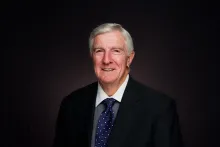
Before his retirement in 2021, Dr. Donald Ward pastored churches in Texas and Louisiana, and taught at Ambassador Bible College in Cincinnati, Ohio. He has also served as chairman of the Council of Elders of the United Church of God. He holds a BS degree; a BA in theology; a MS degree; a doctor’s degree in education from East Texas State University; and has completed 18 hours of graduate theology from SMU.
