

How Spiritually Tough Are You?
Given on
Given in
Downloads
Downloads
To download a file, right-click (or long press) a link above and choose Save As.
The hardest times ever experienced by mankind are ahead of us. The Great Tribulation is how Jesus described the worst time of global suffering—ever. It will drag humanity to the very brink of extinction. These extremely hard times will be especially challenging for Christians. How prepared are you to meet these times? This sermon discusses how we can make the proper spiritual preparations.
Transcript
This transcript was generated by AI and may contain errors. It is provided to assist those who may not be able to listen to the message.
Okay, moving on to our sermon today. Brethren, if we are the generation that is alive at the time of the return of Jesus Christ, you and I are in for some tremendously difficult experiences to come. Jesus Christ referred to a time called the Great Tribulation, the worst time of global suffering ever in the history of mankind. It's going to drag mankind to the very brink of extinction. We've read prophecies in the past. You've read, you've studied prophecy. You see in the book of Revelation where things get so bad, where God tells the angels to hold back from doing some of the things that they might have done, because if they do the various things that they were going to do, it might be very difficult for people on planet earth to even get a breath of fresh air to be able to breathe. So these extremely hard times are going to be challenging for those of us in the church. Very challenging for those of us in the church.
We have the Olivet Prophecy in Matthew 24, Mark 13, and Luke 21, and in those prophecies there is a discussion that is given to you and I. Let's take a look at some of those as we begin our discussion for the sermon today. Let's go to Luke 21. Luke 21, verse 12. Read lettering in my Bible. But before all these things, they will lay hands on you. So we're not talking about some sort of thing that's just a mind game. It says they will lay their hands on you and persecute you. Talking about God's true church. Delivering you up to the synagogues and prisons. You'll be brought before kings and rulers for my namesake. So obviously some very desperate times there. Matthew 24. We'll go through these rather quickly. Matthew 24, verse 9. Again referring to God's church. Matthew 24, verse 9. Then they will deliver you, talking about God's true church, up to tribulation and kill you. And you'll be hated by all nations for my namesake. Now I've discussed, and you have discussed as individuals among yourselves, what we're seeing in terms of anger and hatred today in our society. I've made mention that that anger at some point in time will be turned against God's true church, God's true people. And we see here the result of some of that. Mark 13. The last of the three that we want to look at of the Olivet prophecies. Mark 13. Just getting a little bit of a flavor here for what's coming down the road. Prophesied for Christians. Real Christians. Mark 13. And you'll be hated by all for my namesake, but he who endures to the end shall be saved. He who endures to the end shall be saved. Brethren, what is it take for you and I to endure to the end? What are some of the qualities that you and I need to have? Well, certainly, as I made mention a couple of weeks ago, one of the qualities that each of us has to have is the quality of being spiritually tough. So the question I asked myself as I was preparing this, I've always tried to give the sermon to myself first before I give it to you. We're all in the same boat. How tough is Randy De Los Andros, spiritually speaking?
What can Randy De Los Andros do to help himself to be even more—if I'm not spiritually tough, what do I do to become spiritually tough? If I'm going to be alive when Christ returns—and of course this is all true for all of you as well—how are you and I going to face the various things we've just talked about? How do you and I become spiritually tough?
Some might be thinking, yeah, but we've got the place of safety that's going to save us in all of this.
November of last year, Ethan gave a wonderful sermon on the place of safety.
I reviewed that just yesterday, just a remarkably good message. If you've not listened to it, I really hope that you will.
I wanted to listen to that message because it impacts on something I'll be talking about today and also next week. I'll be here again next week, and next week we're going to go back to Isaiah. We just see Isaiah chapter 15 and 16. In Isaiah chapter 16, it talks about Petra.
Now, my sermon will not try to cover everything that Ethan did. There's no need for that.
But brethren, as Ethan pointed out very clearly, there is a place of safety.
But none of us in this room have reservations there.
We may not be there. You may be there, maybe not. Who knows? We may be alive at that point. Maybe we'll be resting in the grave, waiting for the resurrection. I know when I first came into the church, late by some of your standards, I remember when I was 18 years old attending church for the first time, and this was 1970, and people were thinking, boy, 1972, and we're going to a place of safety, we'll all be rescued. Let's not worry about things.
I think to large measure, people thought that everyone was going. Well, that's simply not the case.
As we've already read in these three verses that we've seen, these examples in the Olivet prophecy.
But let's go to Daniel 7.
Daniel 7.
Daniel 7, verse 25.
There's a time coming when there's going to be a religious world power.
Notice what he wants to do, and will do. Daniel 7.25.
He shall speak papa's words against the Most High.
He shall persecute the saints of the Most High, and shall intend to change times and the law.
Then the saints shall be given into his hand for a time, times, and half a time.
God's going to allow this, that some of God's people will be given into his hands for that last three and a half years before the return of Christ.
Otherwise, what you and I would call the Great Tribulation.
Revelation 13.
Let's go there. I'm hitting these quickly because I don't want to stay here, but there's something else I want to cover. Hopefully it will be very profitable for you.
Revelation 13. We're just kind of giving a sense of what's going to happen at the end of the age.
We talked about a great spiritual leader at the end of the age. Here's talking about a great beast power, a political power. Notice here in Revelation 13, verse 7.
It was granted him to make war with the saints and to overcome them.
Make war and overcome them. And authority was given to him over every tribe, tongue, and nation.
So, brethren, this is nothing new to any of you. You are an astute group of Bible students. You know these scriptures. You know these prophecies. But I think it's important for us to take a look at this and say, now, what are we going to do about it in our own lives individually? What is Randy going to do about it? What are you going to do about it? How prepared spiritually are you for these coming times? How prepared spiritually am I for these coming times? What can we do if we don't feel we're prepared? Is there something we can do? You know, I don't think it's appropriate for me to talk about bad times coming without giving some solutions. And solutions from the scriptures. Solutions from the Word of God.
So, how tough are you? Let's have a definition of terms to begin with. Now, to begin with, when we're talking about being tough, we're not talking about people who are able to do the Iron Man contest, where you run so far, you swim so far, you bike so far, and if you were the first one to go through the finish line, you're the Iron Man, or the Iron Woman. We're not talking about—that's a physical thing. We're not talking about somebody who's got a tremendous amount of personal charisma, personality, very bright.
We're not talking about somebody who's bold in terms of their speech. All those things, you can have people in the world who can do the Iron Man, who are charismatic, who are bold of speech. What we're looking at is some spiritual qualities here that you and I need to make sure we are inculcating into our lives. When I was looking up the word tough in our dictionary, they had four different definitions—brief definitions— and I thought they made a lot of sense.
But they only make sense if you put the word spiritually in front of them, which I'm about to do. Tough being defined to be spiritually demonstrating an uncompromising attitude or approach. Somebody tough in the faith has to be uncompromising with the faith, with the truth. To be tough means to be spiritually strong enough to withstand adverse or rough conditions.
We're going to see if we're alive at that time, we're going to see some really adverse and rough conditions. We need to be spiritually strong enough to withstand that. A third definition, be spiritually able to endure hardship and pain.
And lastly, to be spiritually durable.
Now, I'm not centering the sermon on those issues. I've got three points here today. There probably could be many, many more points. These are three, I feel, cardinal, essential points that you and I need to make sure we are growing in if we are to be spiritually tough. I don't believe we can be spiritually tough without these three points. We can add other points, but I think we desperately need to make sure we've got these three points as a part of our spiritual lives. Point number one.
Spiritually tough Christians have an unquestioned love of the truth.
Spiritually tough Christians have an unquestioned love of the truth. Now, I want that to kind of percolate in your mind a little bit. A love of the truth. We're not talking about simply acknowledging the Sabbath or the Holy Days. That's important to do, but we're going to be beyond that in a deeper sense than that. We're not talking about just an academic understanding of the truth. And again, there's nothing wrong with that, but we want to go deeper than that.
And we're not talking about just, well, we've got really better arguments for keeping the Sabbath and the Holy Days than they've got for keeping Sunday and Christmas and Easter. Those arguments are great. But we're not talking about the love of the truth. A deep, profound love of the truth. Now, where do I get that point? Do I just pull that out of thin air, or do I pull it from Scripture?
Let's take a look at 2 Thessalonians. 2 Thessalonians 2. Let's begin here in verse 1. 2 Thessalonians 2. Now, brethren, concerning the coming of our Lord Jesus Christ and our gathering together to Him, we ask you. So here we've got an important time stamp. We're talking about the very end of the age when Christ returns. Not to be soon shaken in mind or troubled, neither by spirit nor by word nor by letter, as if from us, as though the day of Christ had come.
And now here in verse 3, Let no one deceive you by any means, for that day will not come, unless a falling away comes first. A falling away from what? A falling away from God's church? A falling away from the truth. For that day will not come unless a falling away comes first, and the man of sin is revealed, the son of perdition, who opposes and exalts himself above all that is called God or at his worship, so he sits as God in the temple, showing himself that he is God. He's going to be doing signs and wonders. Let's take a drop down to verse 9. The coming of the law, this one, is according to the working of Satan, with all power, signs, and lying wonders.
Notice it's according to the working of Satan. That's who's empowering this individual, the antichrist. With signs. What is the difference between a sign and a wonder? Signs are something that has significance. As people see what he's doing, they're going to say, that's significant. As he's doing the lying wonders, a wonder is something that evokes awe. Power, signs, wonders. Verse 10, and with all unrighteous deception among those who perish, because they did not receive the love of the truth.
That's why he can succeed. Because people do not have the love of the truth. The love of the truth. Brethren, we need to ask ourselves, do we have the love of the truth? How would we know if we've got the love of the truth? If we don't have it the way we should, how can we build the love of the truth?
Let's go back to Daniel 7. Daniel 7. Talking about the great religious power at the end of the age. Daniel 7, verse 8. And of course, we went through this when we studied the book of Daniel. Daniel 7.8. I was considering the horns, and there was another horn, a little one coming up from among them, before whom three of the first horns were plucked up by the roots. The vandals, the haryoli, the Ostrogoths, those barbarian tribes. And there in this horn were eyes like the eyes of a man, and a mouth speaking pompous words.
We drop down to verse 20. And the ten horns that were its head, and the other horn which came up, before which three fell, namely that horn which had eyes and a mouth which spoke pompous words, whose appearance was greater than his fellows. I was watching, and the same horn was making war against the saints, and prevailing against them.
Brethren, please allow yourself to drink in of what those words are saying. Hard times are coming for those who live at the return of Jesus Christ. Very hard times. We have to have a love of the truth if we are to survive these hard times. Verse 22, until the ancient days came, and a judgment was made in favor of the saints of the Most High, and a time came for the saints to possess the kingdom. So yes, we will eventually be delivered from these awful, awful times.
We will eventually be delivered. And we look forward to that deliverance. But again, brethren, how do you and I make sure we've got that special love of the truth? During the times I'm speaking of here, the times we've just been looking at in these prophecies, loving the truth is a matter of life and death. It doesn't get any more important than that. Loving the truth will be a matter of life and death. Life for those who love the truth, and death for those who don't. The reality is that loving the truth right now, learning to love the truth right now, will stand you and I in good stead in the future.
So I built the case. Now I'm going to answer that one question. How do you and I build an unquestioned love of the truth? Well, what is the truth? John 17, 17. Your word is truth. How do we build that unquestioned love of the truth of God's word? Brethren, the truth comes from closeness to God and diligently studying His word to learn His values, to understand His thinking, which is going to protect and save us. Now, there are some pointers here I want to give.
Letter A. How do we build this unquestioned love of the truth? Letter A. We go where God's truth is fully appreciated, taught, and loved. We go where God's truth is fully appreciated, taught, and loved. Where is that? That's right here in church services. Now, I feel a need to qualify this statement. Obviously, there are times in people's lives where they don't have good transportation, they can't make it to church. There are times when people are ill, they can't make it to church. And today, we've got COVID, and there are a number of our people who simply feel they can't come to church because of the COVID.
And that's understandable. I'm not talking about those issues. There's going to come a time when COVID has come and gone. Once it's come and gone, and if you've got good transportation, and you've got good health, we need to be here. If we're not here, we're not learning the love of the truth through the sermonettes, through the Bible studies we have, through the sermonettes and sermons, through our fellowship and our conversations. We just simply can't find ourselves walking away or being sporadic in our attendance in church. Let's take a look at 1 Timothy 3.
1 Timothy 3. This was a scripture we used a couple years ago, or maybe last year, I forget now, which we used it for our young adults seminar. 1 Timothy 3 and verse 15. 1 Timothy 3.15.
But if I am delayed, I rise so that you may know how you ought to conduct yourself in the house of God, in church, which is the church of the living God, the pillar and ground of what? The pillar and ground of the truth. If you want an unquestioned love of the truth, we come to where the truth is fully appreciated, where it is taught, where it is loved. Let her be. We build an unquestioned love of the truth by studying the life and teachings of Jesus Christ. Let's look at John chapter 14.
John chapter 14 and verse 6. John 14 verse 6. Jesus said to him, I am the way, I am the truth, and the life. No one comes to the Father except through me. Well, we want to go to the Father. We want to be in that resurrection, the first resurrection. We want to make sure we are part of the bride of Christ who has made herself ready.
And so we must be studying the life and teachings of Jesus Christ. You know, out as ambassador at college, it was one of my favorite classes. We called it a first year Bible. I think later on it became known as the life and teachings class. But I thoroughly enjoyed just going through the Gospels. Harmony of the Gospels. Really enjoyed that. It was interesting. I gave this sermon a couple of weeks ago over in Beloit. And after services, one of the ladies came up to me and said, You know, Mr.
De La Sandro, I study a lot of different things in the Scriptures. But one thing I continually go back to, I make it a part, a central part of my study, is I go through the Gospels from end to end continually. From Matthew, Mark, Luke, John. Study a few other things, then go back to Matthew, Mark, Luke, John. Always focusing in on the life and teachings of Jesus Christ. How he lived his life. How he thought. How he answered questions. His outlooks. His perspectives.
We want to have an unquestioned love of the truth. Look at the one who had that. Follow his example. Let her see. Building an unquestioned love of the truth. We need to be, let her see, fully equipped with the armor of God. Fully equipped with the armor of God.
Let's go to Ephesians 6. Now, this section of Scripture can be several sermons all to themselves. I'm just going to touch base on this here. Ephesians 6, verse 14. Ephesians 6, 14. Stand therefore, having girded your waste with truth. Having put on the breastplate of righteousness. Of course, there's all these various things to put on and to have. But the waste girded with truth. You know, to the people in Paul's day, they knew what a Roman soldier looked like. They knew what a Roman soldier, how he dressed. How that a Roman soldier would have that, his waist, that waistband where he could hang his sword and tuck in other things so he would be able to do battle properly.
And of course, that belt also would protect him to some degree. So he must have that. And letter D. If we're going to have an unquestioned love of the truth, letter D, we must daily walk in the truth. It's not good enough just to know what it is. You know, in the Scriptures, especially according to the Jewish way of thinking, disciples are not just somebody who learned. Disciples are people who learned and did.
We need to learn and do. Think and do. Did you have that when you were a young kid in school? Your think and do book? I had those. I don't know how much I thought and did, but at least I had the book. Let's go to 3 John.
3 John, verse 4. I have no greater joy than to hear that my children walk in truth. My children walk in truth. Let's take that last point, letter D. Let's expand out on that a little bit. Let's drill down. How do we walk in the truth? Well, one of the things we want to do as we're walking the truth is appreciate the truth. We can ask ourselves, do we fully appreciate the truth? Notice what it said in Psalm 119.
Here's an example of somebody who had a love of the truth. Psalm 119.
And verse 97.
Psalm 119, verse 97. Oh, how I love your law. It is my meditation all the day. He had a love, an unquestioned love of the truth. It was his meditation all the day. He had an appreciation of the truth's beauty. An appreciation of the design and the function. An appreciation of the import. An appreciation of the meaning. The relevance. He thought on all the mechanics of the truth.
He loved the truth. And you know, Breton, when you love the truth, that puts some real starch in your legs when it comes to being persecuted. When you've seen miracles from God, and you've seen the way God is, and you've been meditating on all the mechanics of what God does, people aren't going to be able to come up to you and say, there's no God. You know there's a God. You've seen God at work. You've felt the miracles. You've experienced answered prayer. No one in the world is going to be able to go to you and say, well, give it up.
Give up the Sabbath. Give up the Holy Days. Turn these people in. They're not your blood relatives. No, not when you've been fasting with one another, praying for one another, and one another's homes, talking about the truth of God, appreciating this truth, the weekly Sabbath, the Holy Days, the gospel of the kingdom. We talk about those things as very much a part of the fabric of who we are. So we want to appreciate the truth as we're walking in it.
And then also, we want to not only appreciate, but as I said a moment ago, we want to apply the truth in real-life circumstances. We know its value because we've lived it. We know the value because we've lived it. Psalm 119, same song, go down a few verses to verse 105. Psalm 119, 105, your word, which is truth, is a lamp to my feet and a light to my path. A light to my path. Yes, because we see the value. So brethren, an unquestioned love of the truth means having a deep and profound knowledge of the Scriptures, coupled with applying Scriptures and Scriptural principles in every facet of our lives.
The result will be a real-life appreciation of the beauty of God's true way of life. So point number one, spiritually tough Christians have an unquestioned love of the truth. Point number two, spiritually tough Christians have battle-tested and hardened faith. Spiritually tough Christians have battle-tested and hardened faith. Now, why do I put it in terms like that? Well, Paul talked about us having battles with Satan all the time, battling the world, battling human nature. And we want to have battle-tested and hardened faith. Now, that question comes up quite a bit.
How can I know what kind of faith I have? Well, brethren, all of us can grow to have deeper and deeper faith. Some have deep faith already, but your faith can always be deepened. And if you don't feel your faith is as strong as it should be, if you really balk at stepping out and walking in faith and not by sight, there are things, again, we can do. It's not just, I shouldn't just be saying, well, we need to have faith. Well, what do we do about it?
How do you and I grow in faith so that you and I can have this battle-tested, battle-hardened faith? We've got a number of areas here for us to consider. Of course, Christ said, in Luke 18, I'm not going to turn there, but in Luke 18, verse 8, Christ said, when the Son of Man comes, will He really find the faith on the earth? What's faith?
Definition of terms. In its simplest form, faith is believing God will do what He says He's going to do. Believing God will do what He says He will do. I'd like to read from Hebrews 11, verse 1. And in this particular case, I'm going to do something I don't typically do in the New Testament, but I'm going to read from the New International Version. I think it really captures the essence of Hebrews 11.1. Let's turn there. Hebrews 11.1, again, I'll be reading in the New International Version. And I quote, Now faith is being sure of what we hope for, and certain of what we do not see.
Faith is being sure of what we hope for, and certain of what we do not see. You know, I think it was last Sabbath or last week when I sent out the announcements, I gave you that link to the God of Wonders video. I don't know how many of you have watched that, but I know that when I watch that, I am always impressed with the power and the majesty and the glory of our God.
When I feel like I'm in rough times, I've got my back against the wall, I'm cornered, I feel powerless, that I think about the great being who created those stars that that documentary shows. How the great God has been able to take those monarch butterflies in their itsy bitsy teeny little brains and how they travel across continents.
The hummingbird that engineers say should not fly, but that body structure and those little wings, that thing should not fly, and yet it flies so well. Mimics at times what a helicopter can do. This God of Wonders, who we don't see, is able to empower us, so we can step out in faith knowing that being is behind us. Let's take a look at a biblical definition of faith over here in Romans chapter 4.
Romans chapter 4 is much like what I said earlier, but here we've got the biblical back up for it. Speaking about Abraham, Romans chapter 4 here, verse 20.
He did not waver at the promise of God through unbelief, but was strengthened in faith, this is Romans 4, 20, but strengthened in faith, giving glory to God, and being fully convinced that what He had promised, what God had promised, He was also able to perform. What God had promised, He was also able to perform. He was strengthened in the faith. You and I can be strengthened in the faith, but we've got to be able to step out in faith. We've got to be able to have the courage to walk by faith and not by sight. Romans chapter 1, verse 17. Romans chapter 1 and verse 17, For in it the righteousness of God is revealed from faith to faith, as it is written, that just shall live by faith. If you and I want to have a battle-tested, battle-hardened faith, we've got to live our faith. Brick by brick, day by day, step by step, doesn't come all at once. It's something that, you know, we can't be like those foolish virgins who, you know, they wake up out of their sleep and say, hey, I need something. Give it to me right now. It's not going to work that way.
If we feel we lack that kind of faith, it's going to take us through these difficult times. We need to be building that faith right now. Brick by brick, step by step. Let's turn to Hebrews chapter 11. We'll take a look at an example. I turn to this often, but I think it's good for us to think about our brothers and sisters in the faith and what they did. Hebrews chapter 11, verses 32-38. Here are people who are our brothers and sisters, flesh and blood. And remember, God is no respecter of persons. What God was able to do through them, He can do through us. If they were able to do all these things, so can we if we walk in faith, if we rely upon the great God. Hebrews chapter 11, verse 32.
Women received their dead, raised to life again. Others were tortured, not accepting deliverance. But they might obtain a better resurrection. Still others had trials of mockings, and scourging jest of chains and imprisonment. They were stoned, they were sawn in two, they were tempted, they were slain to the sword. They wandered about in sheepskins and goatskins, being destitute, afflicted, tormented, of whom the world was not worthy. They wandered in deserts, in mountains, in denons, in the caves of the earth.
Brethren, how do you and I get this kind of faith? We're sold on the idea we need to have it. You know, we gave some pointers on having this unquestioned love of the truth. How do we grow in faith? Let me offer some suggestions. Letter A. Letter A, ask for faith. Ask for it. Brethren, living faith emerges as a result of a mature relationship with God. And we need to go to God and ask for Him to help us to have that mature relationship. Now, again, once I gave this point in Beloit, after services, one lady came up to me and said, Hey, Mr.
De Luke 11, verse 9. Luke 11. Luke 11, verse 9. So I say to you, ask, and only give unto you. Seek, and you will find. Knock, and I shall be opened unto you. Of course, this is predicated on the fact that you are living the way of life God wants you and I to live. Right? We can't be living like the world and say, Father, I want these tremendous spiritual gifts. It doesn't work that way, does it?
But if we are trying with all of our hearts to obey God, we're weak, we're fallible, we fall, but that's what the sacrifice of Christ is all about. And yet, in our hearts and minds, we're really striving to be what God wants us to be. And then we pray these prayers. Ask, and it will be given to you. Seek, and you shall find. Knock, and it shall be opened to you. For everyone who asks receives, and he who seeks finds, and to him who knocks, it will be opened.
Brethren, even here, there is an aspect of stepping out in faith. We ask God for it, and we're going to step out saying, Father, I know from what you're saying in your word, you're going to give it to me. Don't know how that's going to come about, but you said here, you'll give it to me. If I'm striving to live by every word of yours, then you're going to help me.
Verse 11, if a son asks for bread from any father among you, will you give him a stone? Or if he asks for a fish, will he give him a serpent instead of a fish? Or if he asks for an egg, will he give him a scorpion? If you, then, being evil know how to give good gifts to your children, how much more will your heavenly Father give the Holy Spirit to those who ask him?
Or how much more, by principle, will he give you faith to those who ask? So how do we develop this battle-tested faith? First of all, we ask God for it. We step out on faith to ask God for faith. You had faith, that's why you were accepted Christ as your Savior. It's not like as though you're faithless. And some of you have great, great faith. But if you don't feel your faith is great, then ask for even more faith.
Let her be. Maintain a vibrant prayer life. If we want faith, maintain a vibrant prayer life. Let's go to Psalm 55. Psalm 55. Verse 16. Psalm 55 verse 16. Ask for me, I will call upon God, and the Lord shall save me. Evening and morning and at noon I will pray and cry aloud.
Here's an example of somebody who prayed three times a day. He made prayer a labor, a work. Evening and morning and noon I will pray and cry aloud. And he shall hear my voice. He shall hear my voice. Let's combine this with a scripture over here in Deuteronomy chapter 4. Deuteronomy chapter 4 and verse 29. As we're asking for faith, as we're maintaining a vibrant prayer life, notice what it says here in Deuteronomy chapter 4 and verse 29. But from there you will seek the Lord your God, and you will find him if you seek him with all your heart and all your soul.
We've got to really want it. God knows our hearts if we really want it. Let her see in developing this battle-tested faith. Let her see. Diligently study God's Word. God's Word is truth. We've got principle building on principle here. Diligently study God's Word. Let's go back to the book of Romans, this time Romans chapter 10. Romans chapter 10 and verse 17. Romans 10, 17. So then faith comes by hearing and hearing by the Word of God.
Faith comes by hearing and hearing the Word of God. How does that work? What are the mechanics involved here? First, you learn what God promises. You find that as you're studying the Word of God, you're diligently studying, you see the various promises that God makes.
Promises you can claim. Promises God wants you to claim. And then second, you can see inspiring stories in the Scriptures that assure us of God's help in so many different areas of our lives. As we're here in Romans, let's go over to Romans chapter 15. Romans chapter 15 and verse 4.
Romans 15 and verse 4. If whatever things were written before were written for our learning, that we, through the patience and comfort of the Scriptures, might have hope. Let me be so bold. That we, through the patience and comfort of the Scriptures, might have faith. Faith and hope. That's the power of the Word of God. And lastly, letter D, how are we going to have this very bold faith, battle-tested and hardened faith? Letter D, obey God. Obey God. Let's go to Galatians chapter 2. Galatians chapter 2 and verse 20.
Notice what the Apostle Paul says. Galatians 2.20. Where it says, I have been crucified with Christ. He's given up the way he wants to live, the way he wants to think. He says, I have been crucified. I've put the old man to death. I have been crucified with Christ. It is no longer I who live. So here we've got a man who's going to be submissive and yielded to the great God. It is no longer I who live, but Christ lives in me, in a life which I now live in a flesh.
I live by faith. I live by faith in the Son of God, who loved me and gave himself for me. A necessary step to grow in faith is to do what God says, to obey God, to heed His commands. Heart-felt obedience is a statement, brethren. Heart-felt obedience is an expression of our faith. And obedience is made possible by our faith in God's Holy Spirit of power that will work in us and through us.
Now, as I made mention, this faith doesn't come about with a snap of one's fingers. It takes a great deal of time and effort. This is why, brethren, not too long ago, we had a sermon about redeeming the time, how we are to wisely take full advantage of every God-given opportunity with a sense of urgency because the days are evil. We don't want to find ourselves being like the foolish virgins.
We don't want to find ourselves being like the Laodiceans. So, point number two. Spiritually tough Christians have a battle-tested and hardened faith. Lastly, number three. Point number three. Spiritually tough Christians are inspired to action by God's vision of the kingdom. Spiritually tough Christians are inspired to action by God's vision of the kingdom.
Brethren, all of us need a—if we were to get through hard times, we've got to be able to see past those hard times to what lies beyond. We need a vision. And it's so simple. People think sometimes the job of the ministry is hard. Well, in one sense it is, but in another sense it's simple. My job, the job of our elders, is to understand the Word of God. And when you've got questions, we pull an answer from the Scriptures.
That's our job. So, do I have to come up with some sort of bright idea here in terms of a vision statement? Or does God already give us a vision statement? We don't need to come up with something on our own. What vision does God have for us?
Can we take ownership and buy into the vision God has given to us? Certainly we can. What keeps us going? What gets us up in the morning when times are tough? What motivates and energizes us to tackle the tough issues in our life? Let's go to a Scripture that I think sometimes we give— we don't give enough credit to this Scripture.
We read part of it and we kind of stop after our first few words. Let's go to Luke 12. And you'll understand what I mean when we get to it. Luke 12. But there is a wealth of insight in this particular Scripture.
Luke 12 and verse 32. Luke 12, 32. Do not fear little flock. So often, brethren, we stop right there. We talk about how God's church is never going to be a church full of millions of people in this age— or in any age prior to cut-rice coming. It's not going to have big buildings and all that sort of thing. It's not going to be a wealthy church. We see it's a little flock. And so many times we stop right there. But let's not stop right there. Because what follows is some of the most comforting and powerful words ever voiced. Verse 32. Do not fear little flock.
For it is your Father's good pleasure to give you the kingdom. Now, that's a vision statement we need to keep clearly in our minds. Clearly in our minds. The kingdom of God is nothing less. It is the centerpiece of the Scriptures.
It should be the centerpiece of our vision for the future. Especially as we go through hard times and we need to look past those hard times and to the good times beyond. Let's look at 2 Corinthians 6.
2 Corinthians 6. 2 Corinthians 6.
Verse 18. 2 Corinthians 6, 18. I will be a Father to you, and you shall be my sons and daughters, says the Lord Almighty. Boy, look at the beauty of that statement, the truth of that statement, the things we can just let percolate and resonate in our hearts and minds, calling to be a part of God's family with a God-level of existence. In your notes, you might write down Daniel 2, verse 44, where Daniel talks about how this kingdom shall never be destroyed. It shall stand forever. We will be a part of God's family, doing the work of God forever.
As we've said so many times in the past, after the last great day, we've run out of holy days, we don't know what God has in mind in the future. But we know God well enough to realize we're not going to be sitting around playing canasta all day long. We're going to be out there doing something. God is a God who works. He loves work. He loves stretching us, engaging us, giving us opportunity to grow and develop, even as spirit beings.
I know when I start thinking about these sorts of things, it just really gets to my heart and mind as to, wow, I can't wait to be a part of all that. Where God calls together the family, we discuss various things. I'm looking forward to that. Isaiah, let's go to Isaiah, chapter 35. Isaiah, chapter 35. Because here we've got a beautiful scripture. We tend to look at this as physical in nature, and it certainly is, but I think this is one of those things that's dual. Isaiah, chapter 35, starting here in verse 1.
The wilderness and the waste that shall be glad for them in the desert shall rejoice and blossom as the rose. Yes, true physically, but also, brethren, true spiritually. People will truly blossom where their lives spiritually will as dry as a desert. Spiritually speaking, they will be refreshed and blossom. Verse 2, it shall blossom abundantly and rejoice even with joy and singing. The glory of Lebanon shall be given to it, the excellence of Carmel and Sharon. They shall see the glory of the Lord, the excellency of our God. Yes, we will see that in the physical workings of planet Earth, but also in the spiritual endeavors that mankind will get into.
Dropping down to verse 5. The eyes of the blind shall be opened. Physically, yes, but also spiritually. The ears of the deaf shall be unstopped. Again, physical and spiritual, both true. The lame shall leap like a deer. People who didn't know how to walk with God will learn how to walk with God. The tongue of the dumb shall sing. The water shall burst forth in the wilderness and streams in the desert. The Irish grouch shall become a pool and thirsty in dry springs of water. The inhabitants of Jackals, where each lay shall be grasped with reeds and rushes. In other words, we see tremendous growth and beauty here.
So, brethren, we've talked about having an unquestioned love of the truth. We've talked about having a battle-tested faith, battle-hardened faith. Now we're talking about having vision. Having vision. I don't know if we've thought of it quite this way, brethren. Perhaps you have. Probably surely some of you have. But have you ever thought, you know, God has His holy days? And God's holy days are a vision statement for us.
And we know that the holy days encompass all of mankind. We understand those things. That this is nothing new to any of us. But have we thought about God's annual festivals as they represent a prophecy for you? And we're thinking about a vision statement for each of us individually. Think on it. You've got the Passover where your sins have been forgiven. They've been blotted out. You've been reconciled to God. You have been given access to the great God. It's a personal prophecy for you.
You've been given access to the great God. Yes, the whole world will be given that opportunity. But you, it's true for you as an individual. Unleavened bread, where we have been taught to get rid of sin, to repent, to bring in God's righteousness. Essence showing God's direction in your life as an individual, as a beloved son or daughter of God. God giving you specifically direction. Pentecost, yes, the coming of God's law, the coming of God's Holy Spirit, showing the gift that God has given to you, a way of life, His power to live that way of life. It's a vision statement for you as a son or a daughter of God.
Trumpets, yes, talking about Jesus Christ returning to save the world from itself. Saints are resurrected. But this is where you, as an individual, are given rulership. You are given your reward. It's a vision statement for you as an individual.
Atonement, yes, Satan is bound. But also, you see God's justice. You see God's justice in that day. Tabernacles, the establishment of God's glorious kingdom on earth in the millennium, but also pictures your very special future as an individual. And of course, the last great day for those in this...
If there's any day other than the Passover that is more emotionally touching, it may be the last great day. Because all of us have family or friends, business associations, associates that we love with all of our hearts. And they don't know the truth, and it's not their fault. But they will have an opportunity. They will have an opportunity.
And these are people you love. I'm really looking forward to seeing my dad. My dad was quite a character, but he was not religious at all. My brother, he was not an atheist, but he was not religious at all. I didn't come from a family where we were five generations into the Church of God. I've got a lot of family members. I'm looking forward to them being resurrected and my being able to work with them.
And perhaps you're being able to work with them, depending on how God wants to work with them. But if God wants to have a De Los Andros tribe, I'm very happy to be part of that process.
So, brethren, in conclusion, we may be going through the hardest times ever experienced by mankind. If we are alive at the return of Jesus Christ, those three and a half years prior to His return, going through the Great Tribulation, yes, there is a place of safety, and some of us will be there. But some of us won't be. And it won't be just because some of us don't have faith or love.
We take a look at the Scripture as we see how many of God's beautiful, spiritually sound, solid people God allowed to go through all sorts of things. The Apostle Paul is an example, we see in Hebrews 11, are examples. For whatever God's reasons are, you or I, you and I may be able, or may be called upon to go through these awful, awful times in the world.
And we'll be better served if we're spiritually tough, if we have an unquestioned love of the truth, if we have a battle tested in heart and faith, and if we are inspired to action by God's vision of the Kingdom.
Thank you.
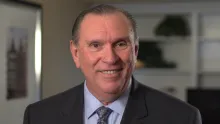
Randy D’Alessandro served as pastor for the United Church of God congregations in Chicago, Illinois, and Beloit, Wisconsin, from 2016-2021. Randy previously served in Raleigh, North Carolina (1984-1989); Cookeville, Tennessee (1989-1993); Parkersburg, West Virginia (1993-1997); Ann Arbor and Detroit, Michigan (1997-2016).
Randy first heard of the church when he was 15 years old and wanted to attend services immediately but was not allowed to by his parents. He quit the high school football and basketball teams in order to properly keep the Sabbath. From the time that Randy first learned of the Holy Days, he kept them at home until he was accepted to Ambassador College in Pasadena, California in 1970.
Randy and his wife, Mary, graduated from Ambassador College with BA degrees in Theology. Randy was ordained an elder in September 1979.
playlist
