
What Are You Sowing and What Will You Reap?
Given on
Downloads
Downloads
To download a file, right-click (or long press) a link above and choose Save As.
We've all heard that you reap what you sow, but what are we sowing in our lives today, and what will we reap?
This sermon was given at the Wisconsin Dells, Wisconsin 2009 Feast site.
Transcript
This transcript was generated by AI and may contain errors. It is provided to assist those who may not be able to listen to the message.
Well, hello, everybody! Special thanks to our team, Corey. That was very lovely. It's hard to believe this is the seventh day of the Feast of Tabernacles. Every year, you come here on opening evening, and you think you've got all this time to enjoy one another and all the wonderful messages, and before you know it, it's time to go home. We've had so many wonderful feast messages when I was taking part in the teleconference before the feast. I gave the folks back in Detroit and Ann Arbor a little bit of a summary of some of the sermons that would be given here at the feast and letting all the brethren know we're becoming here to Wisconsin Dells. So far as I was concerned, it was going to be a very feasty feast. No weak links in the chain, and that's certainly been true. Certainly, we've enjoyed all the activities, the physical activities here. I've actually had an opportunity a couple occasions to sneak out and play some golf. And I found that my wife is very supporting of this. Some of you might wonder how that can be. Sometimes, you know, family always wants to stay together, but I found, fellows, that the way to address that issue is called equal funds. Equal funds! For every dollar I spend on a golf course, Mary gets, you know, her share. Make sure she's got the car, pile of money, credit cards at the waiting. And being the guy that I am, I even leave her the car keys.
Well, brethren, here we are at a seventh day at the Feast of Tabernacles. And this seventh day has a meaning all to itself. There's something that's going to take place at the end of the millennium that is a very intriguing event. I want to talk about that, but before I actually get into the main part of my message today, I want to set up the sermon. So allow me to cover a few scriptures we've already looked at during the course of the Feast so far. I'm not going to have you turn to these.
Just listen to this. I would like to kind of set up the situation. During the course of the Feast, we've heard about the richness and the fullness of the blessings of the millennium.
We've read Isaiah chapter 9, where it talks, For unto us a child is born, unto us a son is given, And the government will be upon his shoulder, His name will be called Wonderful Counselor, Mighty God, Everlasting Father, Prince of Peace, Of the increase of his government of peace, There will be no end. Upon the throne of David and over all of his kingdom, To order and establish it with judgment and justice, From that time forward, even forever, The zeal of the Lord of Hosts will perform this.
And as you and I have looked at that particular scripture, We've thought about what's happening in our day-to-day, The various world rulers around this planet, And how they selfishly mostly take care of themselves, And they're not so concerned about their people. We're so very happy to realize that in the world tomorrow, Leadership will be proper, godly, nurturing, loving leadership. We've also read scriptures such as Micah. I think we've read Micah a number of times this feast. Micah chapter 4, it says, And they shall beat their swords into plowshirs, Their spears into pruning hooks. Nation shall not lift up sword against nation, Neither shall they learn war anymore.
No more war. No more gang violence. No more domestic violence. No violence of any nature. We look forward to that kind of a world, A loving, nurturing environment, Where our young people, where our wives, Could walk in the evening, in the cool of the evening, If they wish, and nothing would hurt them.
We've read Amos chapter 9, where it talks about, Behold, the days are coming, says the Lord, When the plowman shall overtake the reaper, The treasure of grapes him who sows seed, The mountain shall drip with sweet wine, And the hill shall flow to it. We thought about the physical abundance, The Garden of Eden, that this world will become. The tremendous Garden of Eden. Now, I don't know if you're aware, but I was watching, I don't know if it was a History Channel or one of those channels, And they were talking about the Sahara Desert.
Now, here we are in the Midwest. And I thought it was interesting that underneath the Sahara Desert, Which is about the size of the continental United States, Underneath the Sahara Desert, it's too far to go under to get it, But underneath the Sahara, is a body of fresh water, About the volume of the Great Lakes. This whole world will be changed, you know, at the end of the age, As God is raising valleys and lowering mountains, And islands are being shifted.
God will be changing the topography of the world, So that in the world tomorrow, we can have better weather patterns. We enjoy that thought. We've read Isaiah chapter 11, For the earth shall be full of the knowledge of the Lord, As the waters cover the sea. Think about that for a moment. You know, I'm sure that there'll be a great deal of homeschooling in the world tomorrow, But even if we look at it from our perspective, Where most of us don't do that or haven't done that, Every elementary school being taught a curriculum of God, Every middle school, every high school, every university, Every library, you go to, everything that you hear on the radio or see on TV, Any kind of media that we use, we'll be God's own.
We'll have a proper purpose. Let me look at Ezekiel chapter 11, and I don't know that we've read that, this feast. Then I will give them one heart, And I'll put a new spirit within them, And take the stony heart out of their flesh, And give them a heart of flesh, That they may walk in my statutes, And keep my judgments, and do them, And they shall be my people, and I shall be their God. At the end of the millennium, which the seventh day of the feast represents, Is a tragedy. A tragedy. Something that you and I, I'm sure as we've read this and times gone by, We've scratched our heads and wondered, How in the world can this be?
Let's turn there for a moment, Revelation chapter 20. Revelation chapter 20. It's going down to verse 7. Revelation 20 verse 7. Now when a thousand years have expired, Satan will be released from his prison, And will go out to deceive the nations which are in the four corners of the earth, Gog and Magog, to gather them together to battle, Whose number is as the sand of the sea.
And they went up on the breadth of the earth, And surrounded the camp of the saints, And the beloved city, and fire came down from God out of heaven, And devoured them. After one thousand years, where warfare and all those sorts of things Were only to be found in the history books, God's rule, your rule, your loving kindness, One thousand years have come and gone, In that environment, Satan is let loose. And it says here, verse 8, He goes to the four corners of the earth. Gog and Magog probably are just a symbolic in nature.
We're talking about peoples from all over the world. We're not talking about dozens or hundreds or even thousands. We're talking about as a number of sands of the sea. We're talking a great many people Who had an environment that you and I can hardly imagine. And they will be formed into an army. They'll go down to the environs of Jerusalem for conquest. Why? What happened to those people? What lesson is there to learn for you and I today? Well, maybe that's a little too far off. Maybe that seems a little too, even though we see it in the Bible, We know what's going to happen.
Maybe it seems almost theoretical. We have a hard time relating to that. Well, let me give you something we might be able to relate to a little bit easier. Just prior to Trumpets back home in Detroit and Ann Arbor, I gave a two-part sermon where I tried as best as I was able to go through the various prophecies Leading up to the return of Jesus Christ in chronological order.
As best, you know, we see through a glass darkly. Don't know that I had it all accurate or all tried to do it as best as I possibly could. Took two Sabbaths. Forty-three individual scriptures leading to the return of Jesus Christ. And one of the things that I thought was so interesting is this discussion about war in heaven and Satan being cast to the earth a second time after that second war in heaven. Some have wondered, has that already taken place? Rather, my feeling is when that does take place, this world will become unhinged. Unhinged! We also realize as we take a look at those prophecies one by one, that Satan will make war on the saints.
There's a prophecy that talks about the power of the people of God being shattered. As Satan tries to and does persecute the church of God, it talks about how many, in Matthew 24, I won't turn here, but many will be offended. Now we're talking about us. We're talking about the possibility of me or you. Many will be offended and betray others of us. And because of that, the love of many, and again, talking about us, the love of many will grow cold. As a result of that, there will be a falling away.
As a result of that, Jesus Christ Himself said, When I come, will I find faith on the earth? Now, both what I read in Revelation 20, what I'm moving to in Matthew 24, there's a commonality to both scenarios. As I set up the sermon today, I want to also put something else on the stage here in my notes.
We're taking a look at these tremendous tragedies, one at the end of the millennium, one at the end of this age that you and I live in. But I also want to relate the fact that God's plan is pictured by three great harvests. God's seven biblical festivals are contained within the three major harvest seasons of the Holy Land, the barley harvest, the later spring wheat harvest, and a great and gathering late summer and fall harvest. These three festivals symbolically portray humanity's salvation in successive stages. Each stage involves greater numbers than its predecessor. God's word likens him, likens God, to a farmer who patiently tends his crop. I would like you now to turn to James, Chapter 5.
James, Chapter 5. James, Chapter 5, and Verse 7.
Therefore be patient, brethren, until the coming of the Lord. See how the farmer waits for the precious fruit of the earth. Brethren, that precious fruit of the earth, by analogy, is you, waiting for the precious fruit of the earth, waiting patiently for it until it receives the early and the latter rain. Well, here we are at God's feast, the time of the latter rain, of that last in-gathering. Brethren, the questions for us today, how could people who lived during that last part of the millennium, how could they, who knew so much and had so many advantages, turn their back on God, God's people, and God's way?
How can maybe you or I, and nobody in this room gets a free pass on this, how could perhaps me or you, any of us in this room, turn our back on God, or the brethren, or Jesus Christ, or the way of life that we love so, at least we think we love so? How can that be the case?
If you're taking notes, I want to give you something to write across the top of your paper. It's a question. It's a question I was asking myself as I was preparing my message. It's a question I need to ask myself all the time between now and the return of Jesus Christ. I believe it's a question you need to ask yourself. The question is this.
What are you sowing, and what will you reap? What are you sowing, and what will you reap? Again, as Paul said, let him who thinks he stands take heed lest he fall. I know I'm not immune to what we just talked about. I don't believe you are either. Now, so much for the sobriety of the sermon. I'm hoping from this point on that we're going to be encouraging, hopefully uplifting, educational, as to what you and I can do to make sure we're sowing the right thing so we can reap the right thing.
Well, I'd like you to turn out of Hebrews 11, the faith chapter. Isn't it interesting that as we are here at the feast, there are so many people who talk about this Old Testament feast of tabernacles and how we shouldn't be here. It's Old Testament, it's Old Covenant, and yet, here we have in Hebrews 11, in the New Testament, in New Covenant writing, here we have a chapter of the Hall of Fame of Faith, and how many New Testament characters are in this chapter.
The Bible talks about how the gospel was preached to Abraham. Brethren, we are here now... the Bible is not at war with itself. It's not Old Testament versus New Testament. It's not law versus grace. It's not God versus Jesus Christ. Here we have, in Hebrews 11, a discussion of our brothers and sisters, our family, and the faith. Hebrews 11, verse 1, Faith is the substance of things hoped for, the evidence of things not seen. For by it the elders obtained a good testimony.
By faith we understand that the worlds were framed by the word of God, so that the things which are seen were not made by the things which aren't visible. We live in a different dimension. We are God's kids. We're God's children. We enjoyed watching our teenagers come up here and sing today. You know, I enjoyed watching the little ones come up.
Was it yesterday? You know, they come up, they're all in... the little guys got their little suit and ties on. And I thought they were a tremendously well-behaved group yesterday. You know, normally you've got one little guy who starts a little fist fighting with another little guy. You know, you've got one guy with a shirt tail tucked, you know, pulled out. And, you know, he's looking for things to do up there.
You have some little girl normally who halfway through wants to lift up her dress. You know, the group up here was, you know, credit to you as the parents. Very well-behaved. But doesn't our heart melt in us when we think about what God does with our kids and how beautiful they are?
That's exactly how God thinks about you. You're his kids. He loves you. He's given you an opportunity to live in a different dimension than those people outside of these doors. Not that we're any better. We're different in the sense that God has made us different. Not because of our abilities, our business acumen, our IQs, our social standing. It's because of our standing in Jesus Christ. Now, turn over to the same chapter down to verse 32.
Let's take a look at our family. In contrast, we have here, starting in verse 32 of Hebrews 11, with what we see in Revelation 20 and what I alluded to in Matthew 24. Hebrews 11, 32. And what more shall I say for the time would fail me to tell of Gideon and Barak and Samson and Jepthon, also of David and Samuel, the prophets?
I mean, these are guys who face long odds in God the Father and Jesus Christ. Are you facing some long odds in your life? I'm betting in this room we've got a lot of people going through any number of different kinds of trials, any number of different types and varieties of pain. The odds may look really long where you're at right now in your life. But notice, these people beat that not because of themselves, but because of the God that stood behind them to work with them and for them and end them. Verse 33, Who through faith subdued kingdoms, worked righteousness, obtained promises, stopped the mouth of lions, quenched the violence of fire, escaped the edge of the sword, out of weakness were made strong, became valiant in battle, turned to flight the armies of the aliens.
And yes, as we've heard previously, I think Mr. Welch and his very fine message yesterday, women received their dead, raised to life again. Others were tortured, not accepting deliverance that they might obtain a better resurrection. Nowhere is it written that you and I get a free pass and we walk into the kingdom of God without being martyred.
We talk about maybe a place of safety. We talk about God protecting His own and He will do that. But each and every one of us as individuals may face what Jesus Christ faced, may face what the apostles, with the exception of John, faced. Sometimes we're delivered through death, not from death. We're delivered through it. God might allow us to die. Maybe that's something that is needful for those who see us, in our example. Verse 36, Still others had mockings and scourgings, yes, of chains and imprisonment.
They were stoned, they were sawn in two, they were attempted, they were slain with the sword, they wandered about in sheepskins and goatskins, being destitute, afflicted and tormented. Now, when you read here that they were wandering about, this is talking about a trial of some standing here. It's not a matter they faced something and ten minutes later it came and went. This may have been weeks, months and years with all of this wandering.
People, our brothers and sisters, living in faith, being a no matter what happens, they were going to follow God. You and I want to be a no matter what Christian. I want that, you want that. And yet you and I look at the prophecies about the end of the age and we see that some will not be that.
I don't want that for you and I don't want that for me. I want to be like these folks. And there's this, there's something you and I can do about all that, so we will be like these folks. And hopefully that's what I'll cover with you today.
Verse 38, of whom the world was not worthy, they wandered in deserts and in mountains and dens and caves of the earth. All of these, having obtained a good testimony through faith, did not receive the promise. God, having provided something better for us, they should not be made perfect apart from us. Yes, brother, what are you and I sewing and what are you and I going to reap? I've only got two lessons that I would like to give to you today. These are lessons from the harvest.
Lesson number one. And forgive me, my organization I am about as subtle, my organization is a Mack truck. So I will give it to you hopefully very clearly so that you can get this. I know that's what I need. Lesson learned number one. We reap the same in kind as we sow. We reap the same in kind as we sow. Let's take a look back here in Genesis, way back to Genesis chapter one. Genesis chapter one, in verse 11.
Genesis one, eleven. I'm going to read a couple of scriptures here, then I want to comment after I've read them both. One here in the Old Testament, one in the New Testament. Genesis one, eleven. Then God said, Let the earth bring forth the grass, the herb that yields seed, and the fruit tree that yields her fruit according to its kind. Whose seed is in itself on the earth, and it was sowed. Verse twelve. And the earth brought forth grass, the herb that yields seed according to its kind. And a tree that yields fruit whose seed is in itself according to its kind. And God saw that it was good. A law of the harvest. We've got a number of farmers here. You understand that. Many of us have, many of you have got gardens. You understand this. Let's go to Galatians.
Chapter six.
Galatians chapter six.
And verse seven. After we've read this, and I want to comment a little bit. Galatians six, seven. Do not be deceived. God is not mocked. For whatever a man sows, that he will also reap. For he who sows to the flesh will of the flesh reap corruption. But he who sows to the spirit, will the spirit reap everlasting life?
So as everything reproduces after its kind, nobody will sow that which is wrong and reap that which is right, vice versa. So as everything reproduces after its kind, we will not sow discord with God and reap unity with God. We will not sow sin and reap righteousness. We will not sow hypocrisy and reach holiness of life. What was the problem or one of the great problems for those people in Revelation chapter 20? What is one of the great problems that we may face that we take as we took a look at or at least alluded to in Matthew chapter 24? It's a matter of our foundation.
What are we sowing? What are we laying? What is our foundation? Perhaps the people there in Revelation chapter 20 were so involved with the around that they didn't really appreciate the above. Can that be true for you and I? Can we be so involved with the around that we don't appreciate the above or give due diligence to the above? Prophecy shows that will be the case. But it doesn't need to be the case for anybody in this room.
It just doesn't. We can be just like the folks in Hebrews chapter 11. And I take great encouragement with that. Again, it's not because of who you and I are oven by ourselves. It's because of our great father and our great elder brother who are going to be there for us every step of the way. Every step of the way. So what do we want to sow? I made mention that we reap the same in kind as we sow. How do we make sure that we're not like those folks in Revelation 20, those people I related to in Matthew 24? What do we sow? And here's what it is. We sow complete dedication to God the Father and Jesus Christ. Brethren, if you and I do this, if you and I sow complete dedication to God and to Jesus Christ, we're not going to have to worry about being like those in Revelation 20 at the end of the millennium or those I've alluded to in Matthew 24.
Let's take a look at a very interesting section of Scripture here in Matthew chapter 7. Matthew chapter 7. Matthew chapter 7. I think this was right earlier in the feast. You know, it's always tough when you've got the last sermon of the feast. You sit there day after day waiting for everybody to read your Scriptures. And of course, I don't know how many of these I've done where I've spoken on the seventh day of the feast. A number, I don't know if it's a half a dozen or more, I think the Home Office has said that, you know, we're going to keep on giving that assignment to Delisandro until he gets it right.
So maybe you can write in later on and let him know how I did. But here in Matthew chapter 7 verse 24.
Interesting, isn't it? Foundation was everything. You know, when you look at verses 25 and 27, what do you see? In both verses, the rain came, the flood rose, the winds blew. It was all a matter of preparation. It was all a matter of what we were sowing, and then what was later going to be reaped. It was all a matter of the foundation. You know, as we take a look at this section of Matthew, we see it's talking about trials and tribulations. We heard about that in the sermonette earlier. And other times during the feast. You know, Mark Walsh's very good sermon yesterday, both Mark and Sean, just excellent messages yesterday. About, you know, properly looking at the Word of God and things of God and the truth of God, as Mr. Cordelew was talking about, and not having fear, as Mr. Walsh was talking about. But, you know, here we have a discussion about trials and tribulation. The Bible talks about how through many trials and through much tribulation, we will enter the kingdom of God. You know, there's another word we can use for these trials that you and I go through. It's the word pain.
There are a great many people in this room who are going through all kinds of different varieties of pain.
Some of you have the obvious, the physical pain that gnaws on you every waking moment until you go to bed, and then you probably don't get a decent night's sleep because of the physical pain that just wears and hammers and grinds on you all the time. That's one kind of pain. But there are other people here who've got other different types of pain. There are mental pain, there's emotional pain. I'm sure there are people here that have relationships that are on the rocks, that are about to go onto the rocks, and you understand that, and you realize that. Friendships, or maybe family relationships that aren't what you would like them to be in, as opposed to things getting better, they seem to be getting worse. And it really troubles you. It's a pain to you. You wish it were different. You wish it wasn't so. Then there are those of us in this room who may feel spiritual pain. We come to this Feast of Tabernacles and we think, you know, I'm just not what I should be. I should be so far down the road from where I am, I'm almost ashamed.
God's not ashamed you're here. God's happy each and every one of us has come here. God wants us to be here with all of our pain, with all of our suffering.
But the question we need to ask ourselves, and I ask this to the folks back home, are you and I wasting our pain? Are we wasting our pain?
I've got to ask myself on a regular basis, why do I go through the same thing over and over? The same painful thing over and over in my life, do you do that? Am I alone in that? Or am I the only one who wastes my pain from time to time? God gives us these trials, He gives us these lessons to mold us, to shape us, to form us to be what we need to be. Like these trials we see here in Matthew chapter 7. He wants us to make sure we've got the right foundation, so through the course of life He gives us this pain to drive us closer and back to Him, to have that relationship with our Father. And He is there for each and every one of us. Now we're going to go back here to Matthew 7 verse 24. Here is a key here, Matthew 7 verse 24. Therefore whoever hears these sayings of Mine and does them, and does them. This is why Mr. Cordellou's message was so important yesterday. We can come to Sabbath services, we can come to the feast, we can write out our checks, we can do so many things mechanically. But it's got to be of the heart. It has to be of the heart. Now Satan wants your heart and mind.
But if we do what it says in the Scriptures, he can't have it. He can't have it. Because we give our heart and our mind and everything we've got to the great God. But we need to do this work. We need to obey from the heart. From the heart. That's key.
Why is it that so many of us enjoy reading the Psalms of David?
You read the Psalms of David, you see a man who's wholehearted. A man who at times shows tremendous love for God. Other times he's angry with God. Sometimes he doesn't understand God. Sometimes he wonders what's going on. And God loves every minute of that because God realizes a man who's got a heart like that is a man that God can work with. A man who's wholehearted. A man, as we heard earlier, I think by Mr. Black, is a man who would repent and follow God. He may not understand now, but God would help him to understand later and then he would make the changes. Excuse me. Excuse me. We need to follow David in that way and not be feeling sorry or guilty if we don't understand. Let God know we don't understand. Let him know we just... Why is this happening? Let me know. And then when he does let us know, deal properly with the pain and not waste the pain.
Now, how can you and I have the heart of a David? I'm going to give you some things here that it's nothing new. It's nothing new, but I want to give you some things that you and I can do to make sure we have that heart, to make sure we're laying the proper foundation, to make sure we're sowing the right thing so that we can reap the blessings that God wants from us. Let's start over here by going to Luke 4.
One of the things God wants us to do is study His Word. Boy, there's nothing new there, is there? You know, I don't know about you. I don't find myself having difficulties with all the little things. Some of the big, big things. It's those Ten Commandments. You know? I'm not to the place where I have to worry about a lot of the little things yet because I'm still working on some of the big things. Making sure I'm following God's law spiritually. Making sure I'm living by the golden rule spiritually. And so that means I need to keep on with the basics. Notice something here in Luke 4, verse 1. Then Jesus being filled with the Holy Spirit returned from the Jordan, was led by the Spirit into the wilderness. And being tempted for forty days by the devil. And in those days, He ate nothing. After when He had eaten, they had ended, He was hungry.
You know, back in my early years, I used to think that, you know, Jesus Christ, before He started His ministry, went out to the wilderness. And Satan began to kind of put upon Him. And yet, I take a look at this and I said He was led up. Verse 1. Christ was led by the Spirit into the wilderness. He went looking for Satan. He was proactive.
We need to be proactive. Not that we're going to be having to look for Satan. Satan will find us. Don't worry about that. We understand that. But we do want to be proactive with what Jesus Christ did here. And I've also thought back in the early days when I was just coming into the church, you know, there was a few times here in these next few verses through verse 13, that Satan would try to attack Jesus Christ. And yet, that's not what took place. It says here, verse 2, being tempted for 40 days. It was a nonstop, unending, you know, just a wearisome trial for the 40 days. 24 hours a day, 40 days. Just as all of us, fed trials, where Satan just won't leave us alone. Just won't leave us alone. But notice what Jesus Christ did here. The devil said in verse 3, If you are the Son of God, command these stones to become bread. But Jesus answered and said, saying, It is written, man shall not live by bread alone, but by every word that proceeds from God. Jesus Christ used the Bible as a tool, as a tool to defeat Satan. If you and I want to sow the proper thing, if we want to lay and have that proper foundation laid. And right now, many of us might think that our foundation is kind of honeycombed.
Where we've gone days, maybe too many days without prayer, too many days without study, too long without fasting. And we feel that our whole foundation is honeycombed with all those things we didn't do.
Well, God gives us a tremendous blessing. He says, You start right now. You start right now, and you get into that word, and I'll be there for you. I've got your back. Brethren, think about what we've got in our laps here. Think about what we've got right here. This is not some book of psychology that's fashionable for the moment. This is not psychobabble. What we have here when we study the Word of God is the inspired counsel of God Almighty. This is counsel unlike anything else in the universe. And because God loves you so much, God has given you His Spirit. Either in you, or as we saw with our teenagers, those who may not be baptized yet, God is working with them.
He's given us His own Spirit to understand this inspired counsel. What we have here on our, and I've got in front of me, you've got in your laps, is a set of principles that will lead to life. And God will allow us to understand this and to apply this. You know, let's take a look at John 6 for a moment. John 6.
We so often read John 6 and verse 44. No one can come to me unless the Father who sent me draws him, and I'll raise him at the last day. But let's take a look at verse 45, which I get so much encouragement, and I hope you do as well. John 6, 45, For it is written in the prophets, and they shall all be taught by God. You have been taught by God. You will continue to be taught by God. Now, yes, I understand that at home we've got local services. If you're like me, you've probably got so many boxes of old literature in a garage or an attic or in a basement. I don't know how many correspondence courses I've got at home. You know, I've got the 58 lesson course, I've got the 24 lesson course, I've got a dozen... You know, every time I turn around there's another correspondence course I've got. All over the place. All the boxes, all the old Tomorrow's World, some of the brown plain truths. Some of those little skinny booklets Mr. Armstrong wrote, the white ones with the double black stripe. We've probably got some of those, don't we? We've got so much, and yet, when you and I sit down, we've got God there with us to teach us.
We've got God there with us to teach us. And He's been teaching you. And He will continue to teach you. Satan would love to destroy you, he would love you to get you away from your studies. Don't allow that to happen. Rededicate yourself. We've had a tremendous feast of tabernacles here in Wisconsin, Delz. Rededicate. Let this be a kickoff. If you're not satisfied, if you're feeling that spiritual pain, let this be a kickoff for you.
Let's now turn to Daniel 6, because there's something else we want to look at in terms of our spiritual basics. And that's prayer. Again, this is nothing...we're not hitting new stuff here. This is old stuff. But it's good stuff. Daniel 6.
Who was Daniel? The book of Ezekiel...I'm not going to turn here, but the book of Ezekiel in chapter 14 says on a number of occasions in that one chapter that Noah, Daniel, and Job were the three most righteous men who ever lived. Now, if we set aside, of course, Jesus Christ, God in the flesh. Noah, Daniel, and Job. Here's a guy who knew how to properly sow. Here's a guy who knew how to have a right foundation. Here's a guy that would never be found at the end of the millennium like those we read about in Revelation 24, where Satan pops out and they follow Satan. This guy is not going to be the one like we see in Matthew 24, where he's going to turn like a Judas Iscariot, like a spiritual Benedict Arnold. He's not going to turn away from God, away from the brethren, away from the truth. Here's a man who was grounded. Here's a man who was spiritually centered.
Daniel 6, verse 1. It pleased Arias to set over the kingdom 120 satraps to be over the whole kingdom, and over these three governors whom Daniel was one, that the satraps might have a count, may give a count to them, so that the king would suffer no loss. Then, as Daniel distinguished himself above all the governors and satraps, because an excellent spirit was in him.
God is no respecter of persons. That excellent spirit is in you, or with you. For those who are here, who may not be baptized, may be our younger people. You know, God called me when I was 15 years old. Didn't call any of my family members. I came in on my own. This is my 42nd feast. My first two feasts I had to keep by myself at home. My parents wouldn't let me come to church. So I know God works with our young people, and our young people don't that as well. And God has been working with you. You've got that excellent spirit. You can be just like those folks we read about in Hebrews, chapter 11.
We just do what Daniel did right here. Because there was, verse 3, an excellent spirit in him. And the king gave thought to sending him over the whole realm, verse 4. So the governors and the satrap sought to find some charge against Daniel concerning the kingdom, but they could find no charge or fault, because he was faultless. Nor was there any error or fault found in him. Then these men said, we shall not find any charge against this Danielness. We find it against him concerning the law of his God. So the governors and satraps throng before the king and said, Thus, King Darius, live forever. These guys are really going to start piling it deep here. And all the governors of the kingdom, the administrators, the satraps, the counselors, the advisors, have consulted together to establish a royal statute, and to make a firm decree that whoever petitions any god or man for thirty days except you, O king, shall be cast into the den of lions. Now, King established the decree and signed the writing so that it cannot be changed, according to the law of the Medes, and the persons which do not alter. Therefore, King Darius signed the written decree. Now, when Daniel knew that the writing was signed, take note of this, when Daniel knew that the writing was signed, he cowered in fear. He gave up God and the brethren and the faith, no, when Daniel knew that the writing was signed, he went home and in his upper room with his windows open, you know, kind of like, you don't want to spy on me here, I'll make it easy for you. I'm going to open my windows, you want to look in on me, you go ahead, you give it your best shot.
His upper room with the windows open toward Jerusalem, he knelt down on his knees three times that day, and prayed and gave thanks before his God, as was he who had been in the city of Jerusalem. He thanked before his God, as was his custom since his early days.
As was his custom since his early days. Can you and I do this? You and I can do this! The question is, are you and I doing this?
This is something that we can do. You know, again, for those who are here from Detroit and Ann Arbor, forgive me, I'm using some things I just recently gave you in sermons, but... and I don't have all the material here, but in the recent sermon I was talking about God, our great designer and creator, and how our God is the one who designed our earth to spin. I forget how many miles per second, but if it spins too quickly or too slowly, we either burn up or chill out, freeze up. It has to spin just properly. And not only with the spin, it's got to have the right tilt to it. That tilt gives us our seasons. And the sun, the earth and our moon, as it's going around a circuit around the sun, every circuit, I forget, with just a fraction of a second on schedule every time, within a fraction of a second, our whole solar system moving in the Milky Way galaxy, the Milky Way galaxy in the universe.
When Daniel opened his windows to get on his knees and talk to God, that is the God he was talking to.
That is the God you and I can talk to. We don't have to worry about getting an audience with the President or the audience with Congress or the audience with some, whoever, a human flesh and blood human being. We can have an audience, any time we want to, with the Great God.
Maybe you're feeling like you're standing at the foot of your Mount Everest. This is real for Daniel. He was facing a life and death situation. And he went before God, that God of the universe, and he prayed. We can do that. You and I, we can do that.
Let's turn now to something else, and again, this is something that I was kind of chucking to myself. Second Chronicles, Chapter 20, where we saw that before. Most of the scriptures I want to give you today, most of the guys didn't read. Good old Mark Walsh yesterday. He was just about down with us there. I said, oh Mark, please!
But he turned to Second Chronicles, Chapter 20. I'm going to turn there, too.
Mark's message, like Shawn's, were just tremendous messages yesterday. They've all been so very good. But there's something here. There's a, you know, in addition to what Mr. Walsh talked about yesterday here in Second Chronicles, Chapter 20. I see a formula here. A formula you and I can wrap our hearts and our minds and our beings around. We can do this. Yes, it's talking about fasting. Let's take a look at this here. Second Chronicles, Chapter 20, Verse 1. It happened after this that the people of Moab with the people of Ammon, in other words, with them besides the Ammonites, came to battle against Jehoshaphat. Then some came and told Jehoshaphat, saying, A great multitude is coming against you from beyond the sea. From Syria, and they're in Hazan, Tamar, which is in Gedi. A tremendous army. A huge force.
Again, I ask you, what are you facing right now in your life? What kind of pain are you facing right now in your life? What stands in front of you right now that you think is your Mount Everest?
You've got a problem, don't we all?
Here's part of the equation. Jehoshaphat realized, letter A, forgive me for my Mac truck type organization, letter A, he realized he had a problem. You and I realized we've got a problem. Maybe we've got many problems. But let's see what happens here. Let's take a look at this whole equation. Verse 3, And Jehoshaphat feared and set himself to seek the Lord, and proclaimed a fast road all Judah. So Judah gathered together to ask help from the Lord, and from all the cities of Judah they came to seek the Lord.
We can do this. We can come before God and fast. We can ask to have that heart in us, as was in David, as was in Daniel, and all the others that we saw there in Hebrews 11. So, letter A, Jehoshaphat realized he had a problem. Trapped on to verse 12, O our God, will you not judge them, if we have no power against this great multitude that is coming against us? Nor do we know what to do, but our eyes are upon you. Letter B, with our equation, is we realize that whatever you and I are facing, it's bigger than us. Our problem is bigger than us. We can't handle it on our own. Jehoshaphat realized that. We drop down to verse 15. He said, Listen, all of you Judah, and all you inhabitants of Jerusalem, and you King Jehoshaphat, thus says the Lord to you, do not be afraid or dismayed, because of this great multitude, for the battle is not yours, but God's.
The battle is not yours, but God's. Tomorrow, go down against them, and they will come up by the ascent of Ziz, and you'll find them at the end of the brook, before the wilderness of Jehuro. And you will not need to fight in this battle. Position yourself, stand still, and see the salvation of the Lord who is with you, O Judah and Jerusalem. Do not fear or be dismayed. Tomorrow, go out against them, for the Lord is with you.
Letter C, in our equation. We know that God is bigger than our problem.
In letter D, we know that God is on our side of the equation. God is on our side of the equation.
Verse 20. So they arose early in the morning, early in the morning, and they went out to the wilderness of Tychoa. And as they went out to your house, that stood and said, Hear me, O Judah, and that have it to Jerusalem. Believe in the Lord your God, and you shall be established. Believe his prophets, and you shall prosper. Have the faith that you and I see in Hebrews 11. In that other dimension that you and I live in, that spiritual dimension that God gives us. Verse 21.
So when Judah came to a place overlooking the wilderness, they looked toward the multitude, and they were dead bodies falling on the earth. No one had escaped. Letter E on that equation. I'll just review it here briefly. Letter A. We know that we've got a problem. Letter B. We realize that our problem is bigger than we are. Letter C. We realize that God is bigger than our problem. Letter D. We realize that God's on our side of the problem.
And then lastly, Letter E. And this is where I know I personally sometimes fall short. But Letter E. Make your problem God's problem to solve. Make your problem God's problem to solve. And I... Again, am I the only person who's been there? Am I the only person who's done that? I think not. I think not. Before we move on to the second and last lesson for today, let's look at 2 Timothy chapter 4. Again, I think Mr. Black may have quoted us on opening night. 2 Timothy chapter 4. Here's a man who went through so many difficulties, but a man that was well grounded.
A man that was well centered. A man who would not ever have been one, like we see in Revelation 20 or Matthew 24. Who would turn on God the Father or the brethren. Not after his conversion. Of course, we know that Paul did a great deal that prior. We'll talk about that in a moment. But notice what Paul says at the end of his life.
2 Timothy chapter 4 verse 7. I have fought the good fight. I have finished the race. I have kept the faith. Finally there is later for me the crown of righteousness, which the Lord, the righteous judge, will give to me on that day. And not to me only, but also to all who have loved his appearing.
We talked about here in lesson number one, we reap the same in kind as we sow. We reap the same in kind as we sow. I said that we need to be sowing complete dedication to God and to Jesus Christ. To help us do that, I talked about our spiritual disciplines. Studying, praying, fasting, meditating. What we will reap is very much like what we see right here in 2 Timothy 4 verses 7 and 8.
We will reap that crown of life. If we sow life, we will reap life. Lesson number two. Last lesson I have for you today. Lesson number two. We can't do anything about last year's harvest. But we can about this year's harvest. We can't do anything about last year's harvest. But we can about this year's harvest. When I think and meditate on what happened there at the end of the millennium with those folks in Revelation chapter 20. When I think about perhaps those, maybe in our midst here, and I'm hoping not anybody here. But the people I've alluded to there at Matthew 24. Maybe one of the things in addition to not having a proper foundation.
Maybe people then as well as now, at the end of the millennium as well as now, at the end of this age. Will be too much into self. Too much into self. We are a very selfish society. We've come out of that society. And if we're not careful, it hangs with us. It stays with us. And so what I think we need to do here, what I'm saying we should sow here, is to put our whole heart into doing God's work. Put your whole heart into doing God's work. For you and I to be bigger than ourselves.
Let's take a look at Philippians. Paul says something very interesting here in Philippians chapter 3. You know, I'm sure there are plenty of folks here who wish that we were further down the road spiritually than we are right now. You know, years ago, I graduated from Ambassador College in 1974. I was not hired by the church then. To be frank, I guess I was pulling a little bit of a Jonah. When I was going through Ambassador College, we had a number of men who came there on sabbatical there in the early 70s.
And they discussed with us students what it was like to be in the ministry. And I thought, boy, I don't ever want to be in the ministry. And so I went back home to Detroit back in 1974. And for 10 years, I served in a local area just as you do.
After five years, I was ordained as a local church elder. But even then, when I was being ordained as a local church elder, not in the employment of the church, I said, Hey, look, I told the individual who was ordained, he said, I don't ever want to be full-time. He said, don't worry about that. We don't want you.
Kind of humbling, but it, of course, is showing a little bit of the, maybe some of my feelings. I don't ever want to leave Detroit. Like, as though it's the kingdom of God there or something, but...
I forget where I was talking about.
Oh, the idea that, you know, you put your whole heart into things. You know, I decided I wanted to put my whole heart into serving God's people. And eventually, I was hired by the church, and it's been, you know, a very good experience for me.
But look at what Paul says here in Philippians chapter 3 and verse 13.
Back in those early days, when I was, I don't think I was ordained at this point, I was just one of the guys in Spokesman's Club. And a member there in the Detroit area came up to me and said, you know, Randy, I've been in the church 19 years. I should be further down the road than I am. But where I feel right now is that I've taken one year and lived it, then gone back to the beginning and lived it a second time. And it's 19 times one year over.
I'm thinking, brethren, there are more in this room, myself included, who are like that. Maybe not in every aspect of life. Maybe in some aspects of our life. You know, we're multifaceted individuals. In some aspects of our life, we are out there. But in other aspects, our growth is stunted. Or maybe we don't. We just keep on repeating the same things. We don't prosper with our pain. But here the Apostle Paul said, you know, I'm going to move forward. I'm going to move forward. And he sets such a tremendous example. Let's go back to 1 Timothy. 1 Timothy chapter 1.
Notice what he says. And here's a guy who had all sorts of skeletons in his closet.
You think you've got issues? This man had issues. 1 Timothy chapter 1 verse 12.
And I thank Christ Jesus, our Lord, who has enabled me because he counted me faithful, putting me into the ministry. Now God has counted you faithful, putting you into the church. Although I was formerly a blasphemer, a persecutor, an insolent man, but I obtained mercy because I did it ignorantly in unbelief. Isn't that also true for us? In our ignorance, the things we have done, and we have got our great Savior to remedy that, that provision has been made. That's the beauty of these holy days. They interlock one acts with another. The beauty of the fact that we have a Savior and all that that means to us. We drop down to verse 15. This is a faithful say and worthy of all acceptance that Jesus Christ came into the world to save sinners of whom I am chief. Now again, here's the guy who stood there in Acts chapter 8 when they were stoning Stephen. Now again, this is before his conversion. I appreciate that. Here was a man that says in Acts chapter 8 where he went about trying to destroy the church, going from house to house, dragging men and women off to prison. And think on this for a moment. After he was converted and he began to go to the various churches, some of those family members probably still had relatives in jail, but probably still be there maybe the rest of their life that Paul put there.
Sometimes I don't know that we appreciate fully the difficulty some of our brothers and sisters have gone through in the past. Accepting somebody like Paul, but they eventually did. I'm sure it was hard. In Acts chapter 9 it says, Paul was breathing out murderous threats against the Lord's disciples. In Acts chapter 26 it says, many times I went from one synagogue to another to have the Christians punished and I forced them to blaspheme. He tortured people like you and I, forcing blasphemy. This was on his conscience. When he says he was the chief among sinners, he wasn't saying that for effect. He knew that was the case. In Acts 22 he says, I persecuted the followers of this way to their death, arresting both men and women and throwing them into prison. In Acts 26 it says, I too was convinced that I ought to do all that was possible to oppose the name of Jesus of Nazareth. Now again, I appreciate this was done prior to his conversion, but also this is the same guy in Romans chapter 7 said, you know, things I want to do, I'm not doing those things. Things I don't want to do, those are the things I'm doing. And that was 25 years after his conversion. An apostle. So the thought is, and we go back now to 1 Timothy, not move, go back to 1 Timothy chapter 1. We can't do anything about past harvests. Where we've been, what has happened is done. It's history. We can't do anything about that. But thankfully, we've got a God that's so merciful and so kind. A God who gives us his Bible, his Word, who answers our prayers, who's there for us as we fast. Who is there in so many ways to intervene in our lives. What is your pain? What is your Mount Everest? God will be there for you. Notice what it says here in 1 Timothy chapter 1 and verse 14. 1 Timothy 1.14.
Grace that was exceedingly abundant. Is that something you need? Boy, it's something I need. It's something I'm glad that God has there for me. That tremendous grace. Let's go to Hebrews chapter 9. Hebrews chapter 9 is a scripture we turn to all the time on Passover. Hebrews chapter 9 and verse 14.
How much more shall the blood of Christ, who through the eternal Spirit offered himself without spot to God, cleanse your conscience from dead works to serve the living God?
Let's embrace this, this feast. Maybe your past is not what you want it to be. With all that we've heard this feast, all the tremendous, each and every sermonette, sermon, split sermon, the music, the orchestra, everything has worked so beautifully to give us a tremendous start if you feel you need that. And don't we all in many ways? Isn't there some part in all of our lives where we need a fresh start, where we just have maybe some little compartment of our life? Have not been what we should be? And notice what it says here in verse 14, to cleanse our conscience from those dead works. Let the guilt stay here.
Let the guilt stay here. And let's you and I move forward. And whatever problem area we've got, and let's do like Jehoshaphat, let's make the problem God's problem. Now there's things we've got to do. There are things we must do. God won't do our studying for us, or our praying for us, or our fasting for us. We have to walk the walk. God makes us do that. But He will walk right beside us. And as we have that conscience cleansed, look, then we can serve the living God. To think about those around us that need that service. Let's not be like those in Revelation 20 or those in Matthew 24 that maybe just was consumed with the self. We've got a work to do. There's a hunger out there. And you and I want to address that. We want to address that.
Brethren, is it possible for you and I to fully appreciate all that God has done for us in our life? And not feel compelled to help somebody else. I know you well enough to know that you feel compelled. You are a generous group of people. You show that in your offerings, your faithful in your tithes. You come to these services. You want to be there for God. You want to be there for your fellow man. Let's turn to John 4. I just have a few more scriptures before we conclude here. The other guy is all finished early. I want to do the same.
I was told earlier on in my ministry that the worst way for anybody to die would be preach to death.
So we don't want to take you over time. And I've got a little tiny clock up here. I'm trying to get my Bible to get it just right to see.
John 4, verse 34. Notice what Jesus Christ says in my Bible. This is mostly in red. John 4, verse 34. Jesus said, My food is to do the will of him who sent me, and to finish his work. To finish his work. We've got a tremendous work to do. There is a tremendous hunger in the world that needs to be satisfied. And you have got the power to do something about that. Let's take a look at, I guess, my next to last scripture for the day over here in Romans. Romans, chapter 1. Back home in Ann Arbor in Detroit, we're going through a Bible study we just started with Romans. Romans is an interesting book. You go to some of the scholars, and they say some very interesting things about it. Some things that are very, I think, feel accurate. One man said, If Galatians is the Magna Carta of Christian freedom. I like the way that was put, talking about grace. If Galatians is the Magna Carta of Christian freedom, then Romans is the Constitution of Christianity. Romans is a book that fleshes out what the Gospel is all about. It gives us the details of salvation. Here Paul had not been to these people, but he knew something about Rome. Living in the Roman Empire, he realized that as a people, they were into power. And of course, Paul, wanting to be all things to all people, spoke to that issue. And what has been called one of the most concise and profound statements of Christianity ever written, we have here in Romans chapter 1, verses 16 and 17. Perhaps the very purpose statement of this book. Notice what Paul says here in Romans chapter 1, verse 16. For I am not ashamed of the Gospel of Christ, for it is the power of God to salvation. For everyone who believes, for the Jew first and also for the Greek. For in it the righteousness of God is revealed from faith to faith, as it is written, The just shall live by faith. The just shall live by faith. There are people who would like to quote this book and pick fights about our theology. You know, that we are an old covenant group of people. And yet here, in a book that so many people would say, this is the Constitution of Christianity, here we've got as a purpose statement at the very end of verse 17, The just shall live by faith, a quote from Habakkuk in the Old Testament. The Bible is not at war with itself. But notice something earlier on in verse 16, where Paul says, I am not ashamed of the Gospel of Christ, it is the power of God. Yes, brethren, you and I do things that are different. We don't eat just anything, we don't just do anything with our money. We don't just do anything on Saturdays, we don't just do anything in the fall. We are different, but you and I need not be ashamed of what we are. God has called us to a tremendous way of life.
To power. You know, the word here for power is dynamis. Dynamis. From that word, we get dynamite and dynamo. Now, dynamite itself was not invented by Nobel until 1867. So obviously, the Apostle Paul didn't have that in mind. But when you and I think about dynamite and power, you and I can think about analogies here, can't we? The tremendous use of the power of God. It can pull down strongholds, it can level things so that God can begin building. You've got that power at your disposal. You've got God's Holy Spirit in you or with you. As I may mention on a number of occasions here, we have a tremendous work to do, and there's a hunger out there. You know, for those of you who've been here to the Dells on a number of occasions, you'll probably remember I went through a couple of these next examples. Bear with me. Forgive me if you've heard this in the past.
Back before I became a minister full-time, I was in sales for a part of those days. I remember back in the early 80s, I don't know if it was 82 or 83, in sales that there was a TV, made-for-TV movie called The Day After. I remember it was about the end of the world, nuclear explosion in Kansas and what would happen to all the folks and so forth. I remember going to my sales office that day, and I was sitting down, and the office was relatively small. Just a few people there. And my boss, his name was J.C.s, he said, He said, Hey Randy, you're a Holy Joe. What did you think about that movie last night? I said, well J.C., you really want to know what's going to happen at the end of the age? What's going to happen at the end of the, you know, because he had some knowledge about Jesus Christ. We had talked about a few things. He said, yeah, tell me about things. I said, well, what specifically would you like to know? And he asked the question. And then other people began to ask questions. You know, we had a person there that was Jewish. He was Eastern Orthodox. We had several Catholics. Had a couple guys coming from the warehouse so stoned, they probably didn't know what they were.
But we talked, we talked for two hours and 20 minutes. Two hours and 20 minutes. There is a hunger. At the end of that, you know, the receptionist had worked the phone, so that it would just play recordings about, we're busy and we'll call you back. But at the end of that, the receptionist said, Randy, why doesn't my priest say those things? Why doesn't he teach us those things? I said, well, Denise, why doesn't he?
There is a tremendous hunger all around us. You work with people who have a tremendous hunger. And you and I want to make sure that we're sowing the right thing, so that we reap the right thing. We want to think about something larger than ourselves. We've got a tremendous work to do. And God has given us so many blessings to be able to do that work. Lesson number two. We can't do anything about last year's harvest, but we can about this year's. I talked about how we need to sow, putting our whole hearts into doing God's work. If that is what we sow, we will reap a glorious future. Brethren, what are we sowing? What will we reap? We talked about reap, we reap in the same kind as we sow. We talked about we can't do anything about last year's harvest, but we can this year's. Let's look at the final scripture for today, over here in Matthew chapter 25. Final scripture for this feast. Tomorrow is the last great day. Matthew 25. This is what a lie waits for you and me. Because we're not going to be like those folks in Revelation 20 that were the Judas Iscarias. We're not going to be like those folks in Matthew 24. You and I are going to use this feast as a feast that reaffirms things, reinforces things, or rededicates things in our life. We're going to walk away from this feast, different people. The people of God. And because of that, Matthew 25, verse 21. His Lord said,
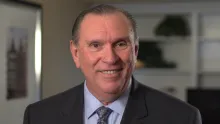
Randy D’Alessandro served as pastor for the United Church of God congregations in Chicago, Illinois, and Beloit, Wisconsin, from 2016-2021. Randy previously served in Raleigh, North Carolina (1984-1989); Cookeville, Tennessee (1989-1993); Parkersburg, West Virginia (1993-1997); Ann Arbor and Detroit, Michigan (1997-2016).
Randy first heard of the church when he was 15 years old and wanted to attend services immediately but was not allowed to by his parents. He quit the high school football and basketball teams in order to properly keep the Sabbath. From the time that Randy first learned of the Holy Days, he kept them at home until he was accepted to Ambassador College in Pasadena, California in 1970.
Randy and his wife, Mary, graduated from Ambassador College with BA degrees in Theology. Randy was ordained an elder in September 1979.
playlist
Related Sermons
