

C Mitchell Knapp
This sermon was given at the Branson, Missouri 2017 Feast site.
This transcript was generated by AI and may contain errors. It is provided to assist those who may not be able to listen to the message.
Oh, that was beautiful. Very much appreciated. I saw the choir practicing and the musicians, the non-singing musicians practicing. It takes a lot of work to do such quality work. We just, we all thank you very much for all the hard work and your expertise and your service and the sacrifice of your time during the feast. Thank you very, very much. Sometimes you want to just start thanking everybody because everybody has had a part in it. It's been a lovely feast, and I did see a comedian, Steve Martin. He said, I'd like to thank you all very much, you know, and he says, thank you, thank you, thank you, thank you, thank you, thank you, thank you, thank you, thank you, thank you, thank you, thank you, thank you. It went to the whole crowd, every single person. So I'm going to forego that, not when you'd be silly.
But it is true, you know, every single person contributes to, we added to it, and everything that we do at the feast. This is the eighth day. We call it the last great day. Both our descriptions doesn't really have an actual name except just eighth. The meaning of the word, it's hard to extrapolate a spiritual meaning out of eighth, but you can a little bit, you know, it's after the seven, the completion of that part of the plan and everything else. That's true, I think. Meaning of the word, I think this is Septuagint, translates the meaning in a certain place. I looked it up, but they say it's a closing day. So the meaning of, and that is a meaning, it's a day to kind of close things down. Probably don't have to have a whole day just for that. And of course, we discern this prophetic meaning in the future through the prophecies of the millennium in the Old Testament, and then what follows it. And of course, the New Testament explains in Revelation and other places. But there will be a second resurrection. It will be the physical life. And we find that there will be a white throne judgment. There will be a period of time. You can't just, you could. If God were like that and not fair and just, He could raise everybody up just for the purpose of telling him to go to hell. You know? Sorry, you didn't make it. You know, the old jokes about they pull the lever and you drop. These false doctrines are so awful. God's not going to do that. He's going to give everybody a fair chance, which we just heard earlier. Which is one of the greatest things. This is one of the greatest doctrines that God has given to us in terms of just combating the pagan ideas of such a God, a torturing God. Everybody will have a chance.
So we see that in many other scriptures in the Old Testament. We come to the New Testament in Revelation. We find there will be a white throne judgment. And Revelation 20, of course, we find that there are several things that go in a row. That's already been referenced a couple of times, so I won't go there. You're familiar with it, I think. For one thing, the millennium is a thousand years. That's why I call it the millennium. There's a millennium of years, 1000 in it.
And it can't be before that. Christ comes and that starts. And then right after that, there is some disturbance, I'd say. But then the second resurrection can't be before. So this time of judgment is after the resurrection. And then there's a certain amount of time for judgment and a third resurrection. And some people worry about the timing. Now, just exactly why is this? And how about the third resurrection, especially? And it's just not to worry about. There's only one way. If you put it out on a timeline, it stops here and that starts several times, and you put it all together. It makes sense. And so even if you didn't go through and applaud through all the scriptures, you can know. You have a general idea of what the plan of God is, the timing. Details are given in Old and New Testaments. And Christ makes comments in Matthew 10, 11, and 12 that Sodom and Gomorrah will come up in there in ancient city, and they were really rotten. Their society was horrible. Tyre and Sidon weren't as bad in some ways, but worse than others.
That's in chapter 11, chapter 12. Nineveh is mentioned, ancient city. They were extremely cruel as a society, as well as all kinds of other sins. The queen of Sheba from her nation. In other words, we have people all through history that are going to come up in that. And I was thinking of trying today to go through and explain or study into it and examine what all we will have to do and what vast differences there are. And we have to produce a whole world of unity out of people that are so vastly different, life is to them different things. You know, there are ancient Babylonians, and there are ancient South Americans, and more modern. We have a nation which prides itself on being diverse. We're becoming more that way. God sent families into the earth. Of course, we call them foreigners, but God calls them families. And we have some diversity here, but that is going to be such a diverse place. And I determined that there wasn't time to tackle all that today. It's worthy of our thinking about the fantastic array of differences. And God will bring everyone together. We will help, but I sure don't have it. He'll have to tell us. I don't know what to do. I wouldn't know what to do.
How long would this time of judgment be for people to have a chance to know and understand and grow and learn, have the same experience we've had, learn to know the true God? Well, there's one scripture in Isaiah 65. It talks about 100 years, but when you examine that, it doesn't say exactly what about the 100 years. You can read it a couple of different ways at least. And the last time I heard a doctrinal statement on this by an authoritative source, United has. We have white papers, and we have positions, and so on, and explained actually well, very well. But the last time I heard the doctrine officially changed was in 1971. It was the feast in Squaw Valley, and Mr. Armstrong, we didn't have a doctoral committee. He just told us what the doctrines were. He was the teacher. I mean, he just gave him a lot of truth, and he referenced it, you know. And he said, you know, we've been saying that's 100 years long, and he says Isaiah 65, it doesn't really say that. I think we better just say it's going to be, it's going to take just about as long as God needs to get the job done. And then he went right on and didn't explain it. So it's, now, it can be read a couple of ways, and it's not worth going into, because, well, at least I can't nail it down for you. But it's going to be a period of time which will sift the hearts of men, and we'll judge those billions and billions who have lived. We end up reading about the third resurrection to judgment, or the resurrection specifically to punishment, and it talks about the lake of fire in Revelation 20. And then it goes on in chapter 21 and 22 and fills out the whole meaning of the idea of the eighth day, the eighth day being after the seven.
And there's just not, there are just some astounding, fabulous prophecies, but it doesn't give a lot of detail. And so it doesn't really behoove us to spend all of our time trying to figure out the prophecies, especially that far out. God will give us the joyous explanations of what all that is when the time comes. I do want to note, by way of commentary on Revelation, which is written later, go back to Daniel 12 and verse 3, because it predicts in Daniel 12, not yet, God predicted in the prophecy that He gave to Daniel, and described this in one item, and that has to do with us. And they that be wise shall shine like the brightness of the firmament. And then there's another comment there. We are going to have glory, and that has, there's a lot to say about glory. There's a lot about that in terms that we can't really nail down and specifically understand in Revelation 21 and 22, the last two chapters of the Bible. But there's a really important comment here in the second part of verse 3, Daniel 12. They that be wise shall shine like the brightness of the firmament. We're going to be God's jewels, Malachi records that, and will shine brightly. You know, I always thought about jewels being valuable and ourselves being really valuable to God, and that was the meaning of that, and wasn't too clear on it. And then, it dawned on me a couple years ago, I was studying it, and this has to do with light. When you read through there, it has, it names all the different rocks, the different colors of light, and when you look at the whole context there, the jewels aren't just valuable, but they are, they emanate light as each one of us emanates some light out of our face, our personality, our character, our concern for others, that comes out. And so, that's just a type of what we will do. We'll shine like the stars. Every one of those stars has a different frequency, we're told. The light comes out, this is even true of electrical lines I just heard the other day, I just learned from somebody talking about it, and we have all these billions and billions and more of stars. That's representative of each one of us having our own beauty and power and light to emanate the different colors and hues, the beauty and the strength of character that it represents. But, and that gave a lot more understanding to me, but look here on the second part of the verse, it says, and they that turn many to righteousness as the stars shall shine, as stars forever and ever. There is an explanation here, or a disclaimer as it were, so they are going to shine like the stars. Who is that? And then what it says is, those who have been involved in the work of God, they have been working, they have been changing, the work of God being our own conversion and our help to other people in the same process, the spiritual work of God. So, at that point, then, we'll have a lot of questions answered, of course, and we've used the term, think the old correspondence course many years ago, use the term stepping into eternity, the eighth day, as a symbol of that. So I wanted just to review that because of, because that's, you know, the meaning of the prophecies. I'd like to ask today, not just the meaning of the prophecies, but with that background, what's the meaning of the eighth day to us that is for us at this point? And the subtitle is, Hang on to what you got. Because we wouldn't want to fall away now, for sure, after all this endurance.
And that's a principle that's stated. We'll come to that in just a minute. We've had a feast that has just been great. It's a spiritual treasure. It has been. It's a true feast. There's been a wide range of valuable topics, topics that have been edifying. I have learned a lot. I learned something from every single message. And in some cases, a lot. I've been inspired and brought up. I've been alarmed and warned, stirred, soothed, encouraged.
And I'm going to be reviewing my notes very thoroughly. I've already started the first day.
And into the second.
We've had so much good teaching that comes from God, not from us, for somebody that dreamed it up, but God Himself. So what do we do with these gifts, this feast? This is always the question, I think, anyway, that comes to mind. In the first sermon, Dr. Ward asked the question, am I one of the elect? We should ask ourselves, am I one? And develop that a little bit.
We're going to say yes. Each one of us, I am a part of. I am one of the elect. One of us selected out. I know about it. I might be not baptized yet. Maybe a child still farther along the way. But that doesn't matter. I'm still one of those selected out to come here to the Feast of Tabernacles and here. And so the answer is yes. But the next question then becomes, will I still be one of God's elect? And then you set a time. Next year, at the end of my life, when Christ returns, how are we going to keep that? So I'd like to go through a few scriptures that give us some really good reasons and good help in keeping this fresh, keeping the vision just before our eyes. First thing, when you get up in the morning, thank you, God. Thank you, Father, for another day of life and the opportunities that will come here. Or maybe trials. Help me through it. And thank you for being here every day, starting the day out that way. Could we go to Philippians 3 verse 12?
Philippians 3 and verse 12. I read over this for years. I guess I could say that about a lot of scriptures. You learn more and more as you go through things, but read it over and over. In the middle of the subject here, just breaking in, he says, well, he's talking about attaining to the resurrection. Not as though I'd already attained verse 12 of chapter 3.
Philippians, I haven't achieved yet. Either we're already perfect. I'm not perfect yet. But I follow after, that is, I follow hard after, I push through. If that I may apprehend, that for which I am also apprehensive of Christ Jesus. So he's telling us that he does, and therefore saying, follow my example and do like Jacob did when he was wrestling.
Don't give up and stick with it until you get what you have been given and secure it. That's the reason I think that Jacob's example is there. So we can think about that and follow it. Now, this is about all I got out of this verse for years and years, even decades. But I reread it some time ago, some years ago, and notice the second part of it. Look at this. And apprehend, that word means to seize, to take, to obtain, to possess, to lay hold, and own.
It's really a very strong Greek word. I don't believe I can pronounce it for you right now, but he says, so I follow after, that is, I follow and continue to seek, that I may seize and take. And then he describes it as, it's eternal life, but he describes it as, that which also I am apprehended of Christ Jesus. This says that Christ has laid hold on us, has seized us, grabbed us, bought and paid for, we learn, and taken us as a possession.
He owns us. God the Father and Jesus Christ in different ways through Christ sacrificed, bought and paid for us. We're slaves, we find out. And I find that way comforting. How does it feel to know that you have been grabbed and taken and named and you're owned? So your success is God's success. He wants us and he plans and has referred. It's his will. He's going to do this. He knows how to do it and he's going to make it happen.
It's not up to us. I am ever so thankful of that. So that's the first point. We're owned by God and we are possessed and he has laid hold on us to do something with us after creating us in the first place. And so we come to this. The first thing you have to do if you're going to endure to the end and use what all we've been given here at the feast and everything up to this now, but with this extra inspiration, the first thing is we've got to see the vision and the greatness of the magnitude of what God is planning to give to us.
And we have an example of one man that did that and what he did when this happened. When he realized this wasn't just like we would say, oh, this kind of nice church down there. I kind of like what he says on the radio or, you know, we saw the TV and it's really... we kind of like this church. It wasn't that. At a certain point, you came to say, hey, this isn't just a nice church. This is God's church. And you have that same blessing from God the Father that he gave to Peter.
Christ told him, you didn't learn this from flesh and blood. You know, the Father gave you a special blessing, the calling. And that's why you understand this, he told Peter. This happened in the Old Testament in 1 Samuel chapter 7 is the story. And this is where David thought, well, I need to build a temple for God. So he talked to the prophet and Nathan says, go for it. Great idea. The Lord bless you in your work. And that night he had a vision. He came back the next day, apparently, and said, I misspoke there, Mr.
King, and told David, I'm sure I don't mean to be flippant. It wasn't... I shouldn't say it that way. He informed him that God said, I need a temple. I never asked for a house for you to build me. I... And then God took the opportunity to tell David at that point, he was going to build David a house by which he met a royal line, eventually ending in Christ and ruling the whole world.
And so he does this and talks about it throughout the chapter. Very inspiring, very, very powerful. But chapter seven and... Just a minute here. I just read this earlier, and I think I turned to the wrong... The wrong Samuel. It is 2 Samuel, sorry. Chapter seven.
I didn't quite... I was going to send you to verse 18, and 1 Samuel 7 only has 17 verses. I knew something was wrong. So 2 Samuel 7 verses 18 through 25, we won't read the whole thing, but he talks, he tells him, verse 16, it'll be something that's going to be established forever.
And David didn't have in mind forever. He didn't know he was going to be the king of a dynasty forever until then. And so when this sunk in, David told him, according to all these words that the vision God had given him, and David didn't go to his knees and pray. You think, well, he'd go pray about it. No, no, no. Verse 18. Then went King David in, and apparently at the temple, and sat before the Lord. He was stunned when he realized, this is forever. Did you have a time when you began to realize, oh, man, God is offering me to be in his family forever, eternal life. We usually learn those things by stages. There are several aspects. But David, when he got that aspect of it, he prayed, who am I, oh Lord? What is my house? Did you have brought me this far? Have you ever said something bad happened? Oh, why me? That's very common.
But have you ever thought about this good thing that's happened to us that is bigger than you can even think of, and say, why me? How astounding. I could be called to the firstfruits of the family of God, but it's true. You go back and review your proofs. You know who God is, what his laws are. God has given you understanding to see that. And you say, it's going to happen. It really is. And your faith goes a little bit because you believe God. This is going to happen. And so it goes. I won't read the rest of that. It's a very inspiring section. You can draw much inspiration from that about our own calling. He was just stunned like you and I. And then I'll refer to Psalm 87, which we had in the Bible study Saturday night that Dr. Ward gave on Zion.
And what this does, and I won't read this, just refer to it, but he offers, and he quotes, he talks about the church, the church of God, and he offers to it, to Zion, the highest stature, the elite standing, the leadership, being at the center of the universe forever in glory with God.
A fabulous new body and a fabulous new mind with no limits. We won't have to have limits because we'll be thinking right. We won't come up with a wild hair and go off on our idea that contradicts anything. It just won't be in us like with God. He can't deny himself. He could never lie. That's not what he is, and that's what we will be. And so we won't have any limits.
We'll be able to create and grow and help others. And who knows the projects that he has in mind for us? Ephesians 3.20 also talks about that. Ephesians chapter 3 and verse 20 comments on this aspect of just being so big you can hardly imagine it. This is right at the end. This is one of the prayers for the brethren. He's writing, this is what I pray for you. Good guide for all of us. Verse 20 now, "...unto him..." He's closing the prayer. "...who is able to do exceedingly abundantly above all that we ask or think, according to the power that works in us, unto him be glory in the church by Christ Jesus throughout all ages, world without end, world without limits. Amen." But I read that too fast for years also. Notice what this says.
"...exceedingly above..." Verse 20 starting over again. "...not unto him who is able to do exceedingly abundantly above all that we ask or think." We can't even think that far. There are a few scriptures that indicate this. We have vast potential to think, God said in Genesis, you know, that we're going to have to split them off to split them up in different languages, divide them because they'll make progress too fast for the plan. So he did that. And he said, they will be able, these humans, these children of ours, they're so brilliant with such a world of resources, they will be able to figure out how to do anything they think. He foresaw all the technology and everything that we even can do. But what he's talking about here is beyond that.
This is a new realm of things that we can't even think and imagine. We can imagine a lot. We can think a lot. We can be very inspired. Maybe the ultimate inspiration is just realizing this is so far greater than we can even think, which Paul says here in Ephesians 3.20. I want to go to, if you would, just 2 John 2.8 real quickly to notice that this is 2 John verse 8. This concept that I mentioned about not losing. What you have is mentioned by John, also by Peter, and Paul, and others. Verse 8 he says, I'll start with verse 7. 2 John, For many deceivers are entered into the world who confess not that Jesus Christ comes in the flesh. And that doesn't mean that he came. He's talking about he comes into our flesh, something of God, very powerful. The Holy Spirit is his power. The Holy Spirit is his attitude, his spirit and attitude, but something of God. You have the Holy Spirit, you have God in you.
And that changes you. It changes your actions over time, especially, and it's supposed to be this way, where you go and feed on his word every day. And then you talk to him and you have this running dialogue through life relating to what he has taught you in the Bible that day and all along, and how you're processing it, and what help you need in doing it, and the successes you have, the understanding. That spirit essence, some theologians say, you can't have, those are obviously, you can't have spirit and essence, because spirit isn't physical. It contradicts the Bible. There is a spiritual body, Paul writes. And so we know it's a metaphor or analogy, but it is real, and that spirit changes and works over time if you feed it. If you feed that side of things, you'll continue to grow. So these people were denying that you could be converted, that Christ could actually do his work, that God could engender and grow and have born children, real children of his, like him with his same essence. They just denied that. And I think, actually, a lot of people that think they will deny it these days. But anyway, then verse 8, look to yourselves that we lose not those things which we have already accomplished, so that we receive a full reward. So you have borne the burden. You have struggled. You have sacrificed. You've worked. You've studied. You've pursued after purifying yourself, like he says, actually, over here, I won't read it, but he says, anybody that is following after or seeks to be like God purifies himself. There's a lot of work going on. You're not just floating down the stream with all the other dead fish. You're swimming upstream against the flow, and you're working, and you've been doing this for some time now, some of us, a long, long time, others of us, not so long. That's beside the point. He said, whatever it is, you don't, you want to look to yourselves and watch out so you don't lose those things which have already been accomplished, but that we receive a full reward. And it's interesting. I did a study there came with 12 or 15 scriptures where other writers in the New Testament say the same thing. Don't lose what you already have. You could slide back. You could start losing. Just don't let it happen. And if it does, and truth be told, it does happen. We do that. So resolve not to let that happen again and keep going forward. We are told here. Now, I'd like to make some comments. A couple of things before that. I'd like to do a lot of things, but we don't have time for those things. It's not my place or my assignment, so stick with what I'm supposed to do here.
Just checking my notes. Just skipping some things there. I'd like to go to Luke 6, verses 6-10, if you would. This has to do with this same subject, but from a different angle. Luke 6. I'd like to ask you, who is this man? Remember the Butch Cassidy and the Sinense Kid, that movie? Maybe you saw that.
They kept looking back. Pinkerton, I think. Who are those guys?
Following them, and so on. I have the same question in a different context. Who is this fellow? Who does he stand for? Luke 6 and verse 6. He came to pass on another Sabbath that he entered, that is, Christ entered into the synagogue and taught. And there was a man whose right hand was paralyzed. The commentary probably wasn't the hand. He said, stretch forth. So it's probably the whole arm. So he had one arm that was inoperable. And he had probably been made fun of all of his life. Children are cruel, so are adults, and left out and looked down on. A lot of the Jews felt that if you had something wrong with you, you got sick, you had an injury, or anything like that, bad having, you were bad, and God was punishing you. And how cool and how wrong is that? At any rate, a man whose right hand, and we assume the whole arm, was paralyzed and drawn up, and describes and Pharisees watched him whether he would heal on the Sabbath day, so they were going to accuse him of doing wrong. But he knew their thoughts, and he said to the man with the paralyzed hand, now think about this fellow. We want to think, now who is this representing? Who's he talking about? He's standing there, minding his own business, we presume. He's standing over there, or sitting on wherever his chair was, and all of a sudden this powerful voice, and this voice of conviction gives him a command. And he said, rise up, so he was sitting down, stand up, and stand forth in the midst. You, there, now, that was the idea of it. So here's Christ, and he calls him, he tells him, you stand here in the middle there in the synagogue, stand there in the middle of the church. And Jesus said to them, I will ask you just one thing, is it lawful on the Sabbath days to do good or to do evil, to save life or destroy it?
And they, of course, answered, and were extremely filled with wrath and so on, it says. But he looked around upon all of them, and they didn't answer, of course, and then he told the man to do the exact thing he couldn't do. Stretch forth your hand.
And this man did it. First of all, it's unusual for people to obey Christ, but secondly, he did what he could not do, Christ having empowered him. Does this remind you of anybody? Like you or me?
This is a picture of someone just going along through life, and Christ opening your eyes and saying, you come here, and then you're commanded to do something you can't do. Be converted. Grow in faith. Become perfect. Several assignments, and you know, maybe you remember when you were a kid, or maybe your kid said this, you get an assignment, do that, or pick that up, or whatever, and I can't, Daddy! I can't! You know, sometimes you need to say, well, here's how you do it, and other times you just need to help him or her, because they can't. But a lot of times we say, I can't for a long time. I'll give you an example. We were told we have to bring every thought into captivity. Now, I've thought about a lot of assignments. I thought I could see myself overcoming. I could probably do with God's help. I can do that. Until just a few years ago, I thought, man, God's just going to have to be merciful. Every thought is just no possibility. I can't, Daddy.
But I guess I grew and matured and said, you know, I can sure fight, and I can get fairly close anyway, maybe. Every thought, not a single thought of selfishness or vanity or lust or covetousness for anybody who sees anything that doesn't belong to you. But I said jealousy and vanity. Those things. The downside of human nature. But that's what the pavement of gold stands for. That's our path and our way that we will walk, that God does walk. And it's perfect and pure. That's what we're after. God says, yes, you can do it. Keep trying. He knows how to convert us.
And we do have to ask Him to help us with those things that we just fall short on. That's our continual prayer. But every time you do repent and thank God for His righteousness and His perfectness, perfection. And the truth of His law and the goodness and that you love it and you want it and you want His way, your faith grows just a little bit. Your strength grows just a little bit.
Keep on struggling because that's how faith grows by steps and sections. It's like the bricks in the house I mentioned. So I wanted to mention that because most people read that about the guy with a withered hand. Some commentaries say, I had a couple of commentaries every day, say, well, this went in the bent woman, you know, and the guy that had the edema or the dropsy, and God healed him. And we don't know why. There's kind of extra miracles that Luke and I think Matthew and Mark did. One of them are all three. But they're just kind of extra. They don't have any special meaning.
Oh, God did something without a purpose? No, no, no, no. It's very deep in meaning. Every single one of those miracles, way deeper than we comprehend. But it stands for you and I. And what He says is, this is so important, you have to do, and I have to do, what we cannot do. And we are required to be successful and accomplish it. And there are no exceptions. We just have to. That's all. So I'd like to comment on another thing. I've been organizing this. I just say, okay, it's going to go there. I'm going to... about the fear of the Lord, which it tells us we're supposed to have the fear of the Lord. Old Testament, New Testament. And that, of course, several people have noted, many times, that doesn't just mean terror. It means a deep respect. There's more to it, though. There's a whole progression here. And it goes from Genesis to Revelation, as far as comments on that and explaining it. The fear of the Lord, you could write just... you could write the love of the Lord. And you'd be right. It wouldn't be a correct translation, but it would be a correct statement. The fear of the Lord starts out with terror. And our example, as far as how God does things here, is that ancient Israel at Sinai, they saw what looked like very close to a volcano. And it was terrifying. The noise and the light and the earthquake. And if you recall, they were astounded. I don't know if they started before, he said, all 10 commandments. But certainly by the end, they were running across the valley. And I thought there's much humor in the Bible a lot. But you can just see all these people. They're running away from the mountain. They said, now don't you dare come near. And then he throws the light show and the sound show and they just don't worry. But later, that's a very important teaching too, but not related here. But they were terrified by God. When you first hear about God, there's a true God and he has laws. And he's going to judge you on them. We all know we're guilty. And so human beings feel guilty. And they fear sometimes absolute terror, depending on their religious upbringing and so on, and guilt. And that changes when God opens your mind, flips on the lights and you see, you think I could be forgiven?
You know, one man had lived a life of crime and he found out about this. He said, oh, never. You know, some people, yes, not me. Do you think, you know, there's a ray of hope. Do you think I could be forgiven? Would God forgive me? How many have thought those thoughts? Don't bother to raise your hand. Surely we've always thought, all of us thought that. Could God really forgive me? Well, yes. And he intends to. He knows how to do this. That turns, that little sliver of hope turns into light as it grows. Pretty soon, it's hope mixed with relief. He really means it. I can be healed spiritually and forgiven. And that turns to joy by stages, not all at once. And then, what was originally fear, the emotions, there is a deep appreciation and a deep respect, which grows into love and such a devotion that you can never be torn away. And eventually, it goes into extreme love. Everybody has TV shows about extreme stuff. This is such love for God in His way, because you understand it. You've gone through it. God has strengthened your mind, and the doubt flees. It's gone, because you know. And in the end, there's no fear left.
You know, it says, the fearful won't even be in the kingdom. Sounds kind of harsh, doesn't it? No, because those who are converted, the fear has been replaced. There's always the, I would really not like to fall into God's hands by disobeying. You know, that needs to stay there in place. But all these other emotions, emotions that grow, and finally have absolute devotion, such as nothing can tear you away. And that's what God has to have for His kingdom. So you say, oh, I want the kingdom, but I just can't believe it. Forever perfect, every thought?
Well, who are you to go doubting God? He has said, this is what He will do.
And some little pips speak like me, are you sure you can do that? God's wringing His hands. Oh, I don't know if I, he's really, really a tough nut. This is going to be hard with, no, God is God. And if He says He's going to convert you, He will convert you. There's just no question left, except, you know, the list in Romans 8, nothing shall separate us from love of Christ, height, nor depth, nor trial, nor this or that. The other thing, volcanoes, or hurricanes, or temptations, nothing, you know. There is one thing that's left off that list that Paul didn't put on there, because there's one thing that could torpedo our spiritual lives, and that is, he didn't say yourself. He has given us the right to choose wrong, otherwise we wouldn't have the right to choose right. I think we heard that once already. We're the only ones who can stop this process, and that's only with a bad attitude, and throwing away your faith and your confidence that you had at the first, etc., etc., etc., and several scriptures flood into mind. Um, no, just check the... Oh, good, we're on time. The people in my congregations will just be shocked.
Stupid jokes on the Sabbath. Um, feast, 1959, or else 58 or 57, I can't remember, it was one of those three. I was 10, 11, or 12. It was the last day it was the same sermon, afternoon sermon. I remember very, very clearly that sermon, some of you know the name, he gave this powerful sermon on, will you be back next year? It was about falling away from the faith, because there were very few churches. People didn't even, most of them didn't attend regularly. It was increasing, but... and sometimes people wouldn't come back to the feast, because they had fallen away. No churches, no support all year. And I don't remember his points. I probably have his notes in some old box, moldy box, probably. But I remember that powerful sermon, and I was shocked. I just emotionally grabbed. He said, can you believe? Why would somebody leave God's blessing when they have his promise?
And I was sitting there a long time for conversion, but I was just thinking, yes, why? How horrible! And I knew a couple of people, families that had left. And he was doing what Dr. Ward was doing this morning, and what I'm doing right now. He was trying to stir people to refocus, use the feast as a pivotal point, and go on much stronger from now. And I'm going to do that. I have done that. I've determined this is going to be different. And I've done that before, and made some progress. I've got to make more than ever before. I suppose you might be there. For one thing, my time is running out. I'm not a spring chicken anymore. I never had any guarantees, of course. But it's really coming in on me. I've got to change a lot of things. Every thought, man, that's an assignment. So I remember this, and that set the pattern for the last great day for me, for the rest of my life, until now. You know, the lesson, the personal meaning for the last great day, is, am I going to be there to see the end of it all? How it turns out what all that means?
And that's what it... the Jews had it right. It's a closing day. To close us down and summarize and get us focused. We've had a huge feast of wonderful good things. I just appreciated it. And I know you have. Several of the speakers and a lot of people I've talked to. Same thing. This has been so good, obviously inspired by God. So his question wasn't really, you're going to be here next week, I mean next year, because you might go out to another fiside. Or, you know, his question was, are you going to be in the faith when the next last great day rolls around?
Somewhere after that, a later era, but it was about the same subject, one man who was a speaker, rather an engaging speaker, very lively and interesting and articulate, and he was waxing elephant one day. And that's the old joke, but he was giving a good sermon, very inspiring to me and to others. And he was roaring about it. He was saying this and that and quoting scriptures and inspiring us. It truly was inspiring. I shouldn't have told a dumb joke. But somebody afterwards told him, and then he told us in the next sermon, he said, we need this high time for us to wake up, and we need to zion awake and get busy and quit being so laia-to-see-and-like and relaxed and so on. And he went on, this fellow says, you know, you got a little bit excited up there. You don't have to get so excited. We get the point, you know. And so I'm asking the question now, and I'll tell you what his answer was. Shouldn't we just back up a little bit and make it easier on people and not try to make you uncomfortable and make ourselves uncomfortable? And shouldn't we just back it off and not be so intense, you know, about growing and overcoming and receiving the kingdom and not being left out? Shouldn't we just relax a little bit? And he said, no, we shouldn't do that. And he got even more excited. That was the next week. He says, somebody needs to get a little excited around here. Have you noticed the world lately? It's going to hell on a handbasket. Hmm, I said that word twice in this sermon. But shouldn't we get excited? Shouldn't we really be excited and go home with the resolve that this is each feast, each holy day, should be this way? God designed it. But should we not do that? I say we should definitely, absolutely. And I believe from the people I've talked to in this crowd over the last few days, I believe there are a lot of you who are thinking the same thing I am. And that is, I've got to change. And I've got to double my efforts. Because this isn't good enough. There are some things I have got to change. That's how we should use this feast. Turn it into our own action that will grow us. It'll grow God's kingdom. It'll grow His church. It'll serve others. Nothing but good can come from that. Have you, are you aware that there are two prayers and Ephesians about how Paul prayed for his churches, chapter 1 and chapter 3.
And I just actually referenced the chapter 3 a while ago for that one verse. But Ephesians 1, I'd like to read some verses from Ephesians 1, verse 16.
Cease not, this is his prayer, Wherefore I also, after I heard of your faith in the Lord Jesus and love unto all the saints that got around, there was a strong church, cease not to give thanks for you and making mention of you in my prayers, that the God of our Lord Jesus Christ, the Father of glory, may give unto you the Spirit of wisdom and revelation in the knowledge of him. Okay, that's his prayer. It's our prayer. We should pray for each other this way. The ministers pray for you this way and for each other and for ourselves. But we pray that we'll have the Spirit of wisdom and revelation in the knowledge of God. That's what we want, the spiritual things. The eyes of your understanding being enlightened. Paul was asking for understanding for his congregations, and this went in Ephesus specifically, that you may know what is the hope of his calling. Well, that's what we've been talking. What a great hope it is that we have and how we should press forward toward it. And what the riches of the glory of this inheritance in the saints is.
Again, this is what our theme has been. And what is the exceeding greatness of his power toward us?
That is, he can do this. It's not up to you.
You stretch out your hand without power. It's withered. You become perfect, overcome, learn God's wisdom. No, no, not by yourself, not by myself, with God. What is the exceeding greatness of his power toward us? Coming into us who believe according to the working of his mighty power, which he wrought in Christ when he raised him from the dead and set him as his own right hand in the heavenly places. It should be just in the heavenlies. It's not translatable. That word means in the heavenly realm. Far above all principality and power and might and dominion and every name that is named, not only in this age, but also that which is to come. So he's drawing us up there into his kingdom, far above anything else in the universe, forever. And to understand the magnitude of that, David was just stunned. And we should be periodically just amazed about how great it is. Okay, in chapter 3 then, he gives another prayer. The first one he said, here's why I'm praying. Verse 13, he just starts writing his prayer. Wherefore I desire that you faint not at my tribulations for you, which is your glory. For this cause I bow my knees to the father of our Lord Jesus Christ, of whom the whole family heaven and earth is named, that he would grant you according to the riches of his glory. Same theme. To be strengthened with might by a spirit in the inner man. That's what we need. That's what we're going to have to have this next year. Because men's souls will be sifted this next year. As we just heard, maybe three or four times, I'm not sure, that he would grant you according to the riches of his glory to be strengthened with might. That's what I want. Spiritual strength. I don't have enough. Maybe you're in the same category as me.
By his spirit in the inner man, that Christ may dwell in your hearts by faith, that you being rooted and grounded in love may be able to comprehend with all saints what is the breadth and the length and the depth and the height and the majestic largeness, the hugeness of this calling. And to know the love of Christ which passes knowledge that you might be filled with all the fullness of God. These themes, we just had this over and over and over through the feast, in this feast of ideas and feast of godliness. Now unto him who is able to do exceedingly abundantly above all that we ask or even can think according to the power that works in us, unto him be glory in the church by Christ Jesus throughout all ages, world without end. That is a blessing. That is a blessing from God. It is to his people. So I have just pronounced a blessing on you by reading the pen of Paul, which I wanted to do. Let's say this. I can think of three things. You can think of 50 things I've got to do this next year, but there are three really basic things that we are going to need if any of us actually does use what we have learned here. We're going to have to have these three things this year. Number one, we will have to feed on the Word of God virtually every day. If you skip a day every once in a while and don't get your Bible study, then you should be slapped. But you won't just die. You know, you can skip your Bible study and God won't slap you down. He doesn't give what we deserve. You should be corrected if you skip a Bible study one day of your Bible study. I know there are unusual emergencies, but they don't happen that often. Study every day, brethren. This is our food. This is what we need. And in addition to that daily habit, we will have to pray and discuss our life with God as we go along. You're right. Every day we have the examples of three times a day, evening, morning, and noon. You might not have a schedule, but you need to study every day. And I need to study and pray both of those every single day. That's a desperate need.
You might say, eat and drink every day. That analogy. Number three, we are going to have to have something of a motivational attitude, something that inspires us to make this a pivotal feast and really change. If we don't have that zeal, we're not going to do it. We're going to settle right back in. And you have the post-feast slump, about a month or two in. It should be the post-feast bump or boost. It should bump us up, and we should be living on a higher level closer to God for the rest of the year. It should. I confess I've not done that all the time, but I should. And I am determined to do that. And actually, I know several of you are also. This has got to be different. This is what God gives us to do. I'd like to draw your attention to... Well, let's see. I don't know if I explained that. The third point is, we're going to have to have the zeal to do it, and we won't have that unless we get it from God. So if you would note in Psalm... Somebody get that.
Okay, no, I was joking. I don't have to say sorry. I was going to turn to the Scripture of those some here. Psalm 134. Now, this is the last of the festival Psalter, you know, the Psalms of Degrees, which was placed into the Psalms. 120 through 134. I'd like to look at the very last one. This takes you all the way from getting ready to go to the feast, to going to the feast, to the lessons of the first day, to the lessons we learn about the church and the way it's built and the authority of God in it, and it goes on to family things and just the whole thing. Atonement and trumpets have their own Psalms. You come to 134, and this is for, they say, they being the Jews who have kept this all this time, commentaries and so on. This is for the last day of the feast, that is the last great day, in the evening as people are going home. Psalm 134.
Behold, bless you the Lord, all you servants of the Lord, who by night stand in the house of the Lord. Well, we don't stand, we get up and run off. So who's standing? It's talking about the Levites and the priests. Commentaries say this, I don't know this, I haven't studied that deeply, but several commentaries just say that the tradition is they stood up and as the families came out of the temple, or maybe it was the temple grounds, the family by family, a priest would bless that family and sometimes each individual, including the babies, and give them a blessing as they left for home after the feast. Lift up your hands in the sanctuary and we bless the Lord. We've done it before and after every service. The Lord who made heaven and earth bless you out of Zion.
That's what He has given us here, brethren. It's just this huge, unbelievable blessing, but we have to believe it and have faith in Him. So I would like to read to you something from number six.
Of course, you know that that's the Aaronic benediction, and this is a specific blessing they were to give. I think they also had other blessings, but this is six verse 22.
One of the things, one of the blessings that was given by the priest, the Lord spoke unto Moses, saying, speak to Aaron and unto his sons, saying, in this way you shall bless the children of Israel, saying unto them. So that's what we say to all those who are suppliants and worshipers of God on this day. All of us here are blessing. The Lord bless you and keep you, guard you.
The Lord make His face to shine upon you and be gracious unto you. The Lord lift up His countenance upon you. The Lord give you good things like His little children and give you peace.
What a blessing! That's from God to us, brethren. And then He says, and they, the priests, shall put My name upon the children of Israel, the church of God. Read, and I will bless them in the coming year and period. They will put My name upon the church of God, and I will bless them. And that's what God has done. It's the church of God. And we are the ones receiving the blessing. How fabulous is that? Well, I liked Mr. Canacol's comment. What to say and how to say it. How do you end the sermon on the last great day? I would say this. Go home with joy, not dread, not tiredness. I know you're tired, so get some sleep already. Go home with joy and with enthusiasm. We have been called to lead. We have been called to succeed. And so I say, and a very amazing thing in itself, I say, speaking for Jesus Christ, the head of the church and the father of all, I say, God richly bless you this year, dear brethren.
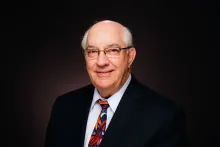
Mitchell Knapp is a graduate of Ambassador College with a BA in Theology. He has served congregations in California and several Midwestern states over the last 50 years and currently serves as the pastor of churches in Omaha, Nebraska, and Des Moines, Iowa. He and his wife, Linda, reside in Omaha, Nebraska.
