
David Schreiber
We're in the midst of one of the most challenging times of year for Christians. The worldly holidays of Halloween and El Dia De Los Muertos, along with the 'Christian' holidays of All Saints Day and All Souls Day, all take place in a three-day period which closes out the month of October, and opens the month of November. What is the relationship between these holidays? What are the origins, and how did two different cultures of people, thousands of miles apart with no real connection, come to the same basic concept? What does religious syncretism have to do with it? How does God feel about these things? Is the concept of "If You Can't Beat 'Em, Join 'Em?" a concept that God desires?
This transcript was generated by AI and may contain errors. It is provided to assist those who may not be able to listen to the message.
Well, thank you to the youth choir. Appreciate very much the song and the meaning. I may have butchered the guys, it was Pepper Chaplin. Pepper Chaplin. I said Peter Chaplin. Sorry, Pepper. Pepper's actually a really nice guy. I got to tell you when I was going through and chasing down permissions for the feast, we had a hard time getting permissions on one of our pieces. I thought, well, his e-mail is right here. So I emailed him, he responded, and we went back and forth for a while. He's really nice guy actually, but gave us permission to be able to do one of the songs at the feast which was very much appreciated. Anyway, thank you guys for that very, very much. This is new. Is this a sign or a timer? I didn't put this up here. Just something I can ignore. What? Okay, moving on. I hope you all again had a wonderful feast. I hope it was spiritually enriching. I look forward to connecting tonight at the potluck and at the social to hear a bit more about it as we go. As was alluded to already, this time of year, we come home from the feast. We're settled back in at least mostly into our normal routines, headed back off to school or to work or whatever it might be. Here in Oregon at least, weather begins to become a little more fully late fall, early winter, this last week especially, boy, it rained this week. The days start shortening rapidly. You might have noticed that after the time change, we're going to be looking at the end of daylight savings time. Our days become significantly shorter. Darkness will be before 5 p.m. and it'll be on its march towards early fours by the end of the year, which by the way is unfathomable to some of the folks from Africa. Theirs doesn't change much. It's like 20 minutes maybe max between one part of the year and the other. It's all pretty similar. So when you tell them, hey, nine o'clock, it starts getting dark. It's just like, what? No. Yeah, and then four o'clock on the other part of the year. What? No. So they always are a little bit surprised by that.
But it's not just physical darkness and it's not just shortening days. Unfortunately, it's a time of spiritual darkness as well. As we come out of the feast, we come into kind of the final march of the world's holidays as we come to the end of the year, as we go through Halloween, which mind you, Home Depot took absolutely no time throwing out all the Christmas stuff the day of Halloween. The whole entire section was all Christmas stuff already. Halloween hadn't even tooken place, taken place yet. Ignore that. Hadn't even taken place yet. And here we are getting prepared for Christmas. So we're in this time of spiritual darkness. Some of you may or may not be aware that today is the second day of a celebration in Latin America called Dia de los Muertos. Some of you are probably familiar with the day. It's known as the Day of the Dead. And it's a Latin American holiday that keeps two days in remembrance of deceased ancestors. So it's a two-day festival, begins on November 1st and then ends on November 2nd. The first day, which was yesterday, November 1st was specifically designed for the spirits of deceased children in the family, to be able to remember the spirits of deceased children. The second day is the spirits of adult relatives. And then, yep, it's afternoon. Starting at noon on the second day, it shifts from family to all who have ever lived that you remember.
As the festival concludes, then you're looking at all of these spirits of all who had ever died.
You know, in celebration of that day, families build what's called an offrenda. They build an offrenda, which is an altar to the spirits of the dead. It's an offrenda. It's a set of tables that are set out and they put offerings on this table to their dead relatives.
If Tio so and so enjoyed Coors Light, you put a can of Coors Light out there on the offrenda.
He appreciated certain types of food or drinks or flowers or things like that.
They light candles on that altar to be able to light the way back home for their relatives, to guide them across the thinning veil between the two worlds at that time, because it's believed that the spirits of the dead and the spirits of the living can interact during this time when this veil is thin.
This past Thursday, we saw the celebration of Halloween here in the United States. Halloween has always been a popular holiday in the US. It's one that, over the past decade, has seen a rising popularity, especially last five to ten years or so. But it is now the third most popular holiday in the United States after Christmas and after Thanksgiving. It actually is beaten out Easter and is the third most popular holiday now in the United States. It's celebrated in 37 different countries around the world to varying degrees, but admittedly none like we do it here in the US. You're not gonna necessarily see all these giant inflatable things in other parts of the world when they go through and do Halloween. Modern celebration of Halloween has been significantly commercialized. Costumes, candy being the primary focus of our modern celebration of this particular day here in the United States at least. But the occult components of this holiday contained in its most basic traditions, despite some's best effort to remove them, still remain integral to this holiday.
You know, one of the interesting things about the first set of split sermons in the month is that we have all of our teens and all of our younger people here. And I got to thinking back as I was coming into this week, it's hard to believe it's been seven years that I've been pastoring in this area. I've never spoken on the origins of Halloween, ever, in seven years. Which means that for a number of our young people, I was trying to think back to a message that I've heard recently on it. Perhaps there was and I missed it, we're gone a lot. But it's interesting to explore and it's interesting to look at because your young people are confronted with these things. They see these things, they hear these things. And being able to understand where these things come from and why we do not do these things is important.
Halloween is a holiday about death.
It's a holiday about death.
It's a holiday about the spirit world, ghosts, ghouls, witches, monsters. Trick or treating, bobbing for apples, the color scheme of orange and black. They all have their roots in a pagan festival that was kept millennia ago.
So the question is, how did the people of Mexico, of Latin America and some of the first settlers to the United States, thousands of miles apart, no real connection to one another, coming from two different parts of Europe, two different religions, how did those two cultures develop two different festivals with similar timing and similar meaning?
How is it that they both settled on the same time of year in which the veil between the living and the dead was thinnest?
How did they get there?
Well, enter the Roman Catholic Church. Enter the Roman Catholic Church. In the third and fourth centuries AD, feasts began to crop up throughout the Christian world, dedicated to and commemorating the Christian martyrs, saints, so to speak, as the church would consider them to be. And they tended to take place in the spring of the year, around Easter and around Pentecost. And so in the third and fourth centuries AD, the church, and I use that very loosely in parentheses at this point. Hopefully you recognize that by the third and fourth century, what the Christian church was looking at was very different than what it was that God had intended and what he had instructed the early church. But in 735 AD, allegedly on November 1st, so 735 AD, November 1st, Pope Gregory III, who was confronted with an expanding Roman empire, getting out and getting into the wilds of the world, so to speak, they began to encounter tribes that they collectively referred to as barbarians, okay? And we think of barbarians and we think of Conan and we think of other things like that. But these were barbarians, these were individuals that were uncivilized. That was the idea behind this, they were uncivilized, they were not Roman, so to speak. That included the Gauls, that included the Visigoths, that included the Ostrogoths, Germanic tribes, the Huns, etc. But they encountered these individuals and they ran into a slight challenge. How do you get all of these individuals that are out here keeping all of these just unbelievable different festivals all under one religious roof? Because the Pax Romana had done something amazing for Europe. It had united the peoples under a Roman empire and under a government. But if you can unite them under a government and a religion, you've got them. You've got them.
And so what he did was he dedicated a chapel in St. Peter's Basilica. And he dedicated to all saints, to all of the saints, all who had died as martyrs. And his goal was to house the relics of the martyrs and apostles in that particular chapel. But as part of that dedication, because it was November 1st, he assigned November 1st to become something that would be known as All Saints Day. All Saints Day.
Now his purpose, his overall goal, was to dedicate a day to commemorate all of the saints who had ever lived and to remind people of their eventual goal, which was ascension as these martyrs had ascended into heaven. That was his goal, to remind even those barbarians that they too had been called to be part of this process, to ascend into heaven. November 1st was not chosen by accident.
November 1st was not chosen by accident. November 1st, in the British Isles, was the date that a group of individuals known as the Celts had been keeping as a festival for centuries. Centuries before this dedication of this chapel in St. Peter's Basilica, the Celts had been keeping a festival. That festival was known as Sawin. Now it's spelled Samhain, you may be more familiar with that, S-A-M-H-A-I-N, but it's pronounced Sawin. During Sawin, the Celts believed that the veil and the fabric, so to speak, between the world of the living and the world of the dead, dissipated. That it actually became so thin that the dead could cross over into the world of the living. That the spirits of the dead could come across that veil. Normally they were not allowed to, but during this time they believed that they could. And as a result, a number of traditions took place. People built altars to their ancestors to invite them home and to guide them home while this veil was thinner. So they could find their way back to their family. They might decorate that altar and that table, so to speak, with candles, with flowers, with offerings to the dead. Sounds familiar. Aspects of this exist today in cultures and celebrations. The Celtic people at the time would wear masks and costumes because they wanted to disguise themselves to look like these harmful spirits. The idea was if these harmful spirits saw another harmful spirit, they weren't gonna mess with them. And so if they dressed as grotesquely as they could and wore costumes to disguise that they were really people, well then they would be safe. And so those harmful spirits would leave them alone. They lit bonfires at the tops of the hill to mimic the sun. To mimic the sun, stave off the darkness of winter. Because as this day took place, November 1st, ultimately for Saw Inn, the harvest season was coming to an end and they were coming into a time when the days began to shorten and it was as though the world was dying. It was between this time of life and death, they argued, that the veil was so thin that these spirits could cross over. Because the spirit world was so close, it was believed divination would be more accurate. That it was during this time that apples and nuts were used in divination rituals. Bobbing for apples became a way to divine who would get married first. I don't think people really do much bobbing for apples anymore as part of their Halloween celebrations. But early on in the United States, that was an aspect that was present in the early 1900s. People visited mediums and they visited spiritists to consult the spirits of the dead for a vision of their future.
This is all taking place, Scotland, Ireland, and Britain, in this time leading up to 735 AD. The Roman Catholic Church, when they came into this area, found this festival so ingrained in Celtic culture, and as with many of the pagan rituals of these lands, instead of eradicating the festival, they opted instead to co-opt it. And so what took place was something known as religious syncretism. It was a blending of Christianity, again in quotes, because by this point Christianity resembled Christianity in name only, and paganism to become a Christianized holiday. They blended this together to try to make it Christianized so that it could be acceptable to the church. So soon after Pope Gregory III's dedication, again 735 AD, the church in the British Isles, along with its Gallic converts, were keeping All Saints Day on the timing of Samhain. So All Saints was the Roman Catholic equivalent that replaced Samhain, or Samhain, depending on your pronunciation and your spelling. And what ultimately happened then was that it continued to be kept on November 1st. Rome allowed some of the traditions to remain, they allowed some of those things in order to bring people in to the church. Number of years later Pope Gregory IV cemented it. He ordered the day to be kept empire-wide, so no longer was it an option. It was ordered to be kept as All Saints Day. And then ultimately in the 10th century, the next day, the 2nd of November, became All Souls Day. All Souls Day was when prayers were offered up for the souls of family members and other loved ones who were awaiting in purgatory. So that made a three-day festival of Halloween, or All Hallows Even, which is where Halloween comes from, Hallows Even. Halloween, All Hallows Day, or All Saints Day, and then ultimately All Souls Day. And so the Protestant church continued the tradition in Northern Europe after they separated from the Catholic church. They took it with them into Northern Europe, keeping All Hallows Eve, All Hallows Day, and All Souls Day. The Catholic church continued to teach the same in Southern Europe and the remnants of the Roman Empire. And when the Spaniards came to Latin America, they combined those days with two monthly festivals or month-long festivals on the Aztec calendar that commemorated the dead. They brought that in and made it November 1st and November 2nd, which became what we now know today as El Dia de los Muertos. All of these things came from one spot, one location in history. They came from a pagan festival kept by Celts back in the thousands AD and before. I came across this article this week. I wanted to share it with you today. It was posted on the Associated Press, and it illustrates the attitude that much of the Christian world has taken towards this particular set of holidays, but not just Halloween, not just Dia de los Muertos, because religious syncretism is a problem in many different facets in many different ways.
Okay, it is why Christmas is a problem. It is why Easter is a problem. It is why a number of these other things are problems. It's because you're blending truth, or in this case some truth, with error. You're blending these things in such a way. I came across this article. I want to share it with you today. Just bits and pieces. I'm not going to read the whole thing. The title of the headline says, Spiritual, Not Spooky. After Halloween, Christians Observe All Saints' Day.
I've got to admit, I'm sharing this with you partly because I was very surprised at the journalist's candor. I was very surprised that the journalist was able to say what she said and the way that she did. It's written by Vanessa Guerra, and it was written yesterday, November 1, 2024. So this is yesterday's newspaper, so to speak. It says, it's the time of year, tradition says, when the veil between the worlds of the living and the dead is lifted. That traditional belief has morphed over the centuries into the spooky and secular celebration of Halloween. But one day later, Christians in many countries around the world are celebrating All Saints' Day on Friday, a somber and spiritual day in the church's liturgical calendar that shares pagan roots with Halloween. Again, the journalist's candor is impressive. She pulled no punches. It absolutely does share pagan roots with Halloween. The word Halloween derives from All Hallows' Eve, which means the Eve of All Saints' Day, a holiday that has also been known as All Hallows. It honors martyrs and saints, those who were hallowed or deemed holy, a tradition begun by the Roman Catholic Church in the early medieval period. Scholars believe that the spectral aspects of Halloween emerged primarily from Samhain, an ancient Celtic festival that occurred during the harvest season, says Morgan Shipley, a professor of religious studies at Michigan State University in East Lansing. It was a time when people were transitioning from harvest and bounty and the fullness of summer to the desolation of winter, he said. And it was said that in this time, the veil between the physical, material human world and the spiritual world essentially dissipates away. Some of the spirits or spectral beings were viewed as demonic in nature, and bonfires became a way to ward them away or were used in divination by druid priests and priestesses when the veil between the material and spiritual world broke down. As Christianity spread, many pagan rituals were adapted to the new faith to be more attractive to converts. This period of reflecting on the dead continues through November 2, which is All Souls' Day. It says in Central Europe, the Slavic and Baltic populations had their own rituals in which the living communed with the dead between October 31 and November 1. Says believers and nonbelievers alike in many traditional Roman Catholic societies observed the day. And then it gets into kind of some of the ways that people observe it around the world, visiting cemeteries, setting up these various altars in their homes, et cetera. At the very, very end of the article, though, I won't continue going through all those specifics, it says in recent years, as the holiday approaches, there are discussions about Halloween and its compatibility with Christian beliefs in the afterlife. Poles, people from Poland, began to celebrate Halloween after the fall of communism in 1989, but some worry, so they're newer to the ballgame, so to speak, but some worry that the foreign cultural import could eventually dilute the tradition of All Saints' Day. Some Catholics worry that it might be sinful due to allusions to devils and ghosts. That's kind of refreshing to hear because it seems like all of them here have kind of just accepted it by and large. Pushing back, some church groups have begun holding alternative events for All Saints' Day. So again, not spiritual, not spooky, says the article. The attitude that much of the Christian world has taken toward these things over the years has been an attitude of if you can't beat them, join them. If you can't beat them, join them.
And that ultimately is the title today of this second split sermon, but with a question mark. If you can't beat them, join them, I guess would be the way that it would be said. Because is that what God desires of his people? Is that what God desires of his people? Is that what God desires of his creation? To take a day that is dedicated to everything that he hates and repurpose it and tag his name on it and say it's fine now. It's okay now. It's not that big of a deal. After all, much of the world looks at the modernized version of Halloween or even All Saints and All Souls Day and they conclude what's the big deal? It's about the candy. It's about the kids. It's about family. It's about, you know, costumes and fun. All those pagan trappings, all those things that were originally part of this particular holiday going far enough back to its inception, I don't matter. We don't keep it like that anymore. We don't keep it like that anymore. So, you know, what's the big deal? Some have actually, even as the article mentioned, have begun shifting their focus more towards All Saints and All Souls Day and one would argue potentially that while we're focusing less on the pagan trappings and more on the Christian side of this particular holiday, does that matter? Or is that just lipstick on a pig? Let's turn over to the book of Deuteronomy.
Let's turn over to the book of Deuteronomy. I bring this up today because we need to understand how God sees these things. You know, we look at the world with human eyes. We rationalize. We justify. We look at it and we say, you know, it's not that big of a deal. What's the big deal? Yeah, so they're putting out some food for a relative. No, they're putting out an offering to a spirit that is deceased in their mind, in the hopes of guiding them across a barrier into their home. That is what is taking place. That is what is believed in the origins of this particular thing. Deuteronomy, what we see in Deuteronomy is Moses providing a retelling of the law.
Moses goes through. He gives them a reminder before they're about to cross over the Jordan, before they're about to enter into the Promised Land that was promised to them through Abraham. God takes the time in this particular section through Moses to remind them of what it was they were going to experience when they entered the Promised Land and ultimately what they needed to do in response to God's blessing, what their requirements were, so to speak.
Deuteronomy 12 and verse 29. Deuteronomy 12 and verse 29. Deuteronomy 12 and verse 29 says, when the Lord your God cuts off from before you the nations which you go to dispossess. God says when that land is no longer theirs, when I have cut them off and it becomes yours, and you displace them and you dwell in their land, take heed to yourself that you are not ensnared to follow them. That you're not ensnared to follow them after they destroyed from before you. And not only that, he says, do not inquire after their gods, saying, how did these nations serve their gods?
I will do likewise. Verse 31. You shall not worship the Lord your God in that way. For every abomination to the Lord which he hates they have done to their gods. For they burn even their sons and daughters in the fire to their gods. He says, whatever I command you, be careful to observe it. You shall not add to nor shall you take away from it. God tells the people of Israel, don't even ask how they keep their religious practices to their gods. Don't even inquire about it.
Don't even become involved. Don't even become interested in any way, shape, or form as to how they do this. He says, don't ask what they're doing to worship them. Who or what were these gods? Who or what were these gods? Turn over to Leviticus 17. Leviticus 17 and verse 7, because we get an answer to that question. You take a look at the gods of Ammon and Moab.
You take a look at the gods of the Philistines, the gods of the Babylonians, the Assyrians, the Greek, the Roman pantheons. What were these beings, these idols that were receiving worship? Leviticus 17, we'll pick it up in verse 7 and if you want to you can begin turning to Psalm 106 as well.
Leviticus 17 and verse 7 says, they shall no more offer their sacrifices to demons, after whom they have played the harlot. This shall be a statute forever for them throughout your generations. They shall no longer offer their sacrifices to demons. Psalm 106, Psalm 106, just a couple of locations where it discusses these things. Psalm 106 and verse 34. Psalm 106 and verse 34. Psalm 106 verse 34, we'll go ahead and read through verse 38. Speaking here of Israel, speaking of what Israel did as they came into the nation, says they did not destroy the peoples, concerning whom the Lord had commanded them, but they mingled with the Gentiles.
They learned their works, they served their idols which became a snare to them. They even sacrificed their sons and their daughters to what? To demons. That's what it says right here. The gods of the people of Ammon and Moab, Philistine, Babylon, Assyria, Greek, Roman, were demons who received worship, who received sacrifice, who received individuals who came to them as idols. These idols, these gods, lowercase G, were powerless when they were compared with God himself with Jesus Christ, but people passed their children through the fire.
They performed sacred prostitution as part of worship. They consulted these demons for guidance in their lives. God was clear with Israel. Deuteronomy, he was clear. They were not to be like the nations around them with regards to worship, with regards to their religious practices, but not only that, he said, don't be like them with your customs as well.
Leviticus 19. Let's go ahead and look at Leviticus 19. Leviticus 19 is a big section of thou shalt not, and it kind of jumps around a little bit so it doesn't necessarily follow a perfect train of thought. It's almost as though there's times where he's like, oh, and, don't do this either. But Leviticus 19, in this particular book of Leviticus, we see a set of instructions to Israel that instructs him in the way of God.
Leviticus includes holiness principles, it includes instructions for the priesthood, it includes instructions on sacrifice and legal judgments and statutes and laws, all for the nation of Israel. Leviticus 19, verse 26, we'll go ahead and pick it up in verse 26 of Leviticus 19. We see God again provide Moses with instructions of how things, of ultimately the things, so to speak, that Israel are to stay away from. Things they were not to partake in, things they were not to be a part of in the nations that surrounded them, and ultimately how Israel was to be different, how they were to be different.
Verse 26 says, you shall not eat anything with the blood. In other words, you should bleed your animals properly when you kill them. God told them, bleed your animals properly. Nor shall you practice divination or sooth-saying.
Fortune telling, tarot readings, psychic visits, etc., etc., etc. That's sooth-saying, that's the term for it. It says, you shall not shave around the sides of your head, nor shall you disfigure the edges of your beard, to look like the priesthood of some of these tribes, to be like them. In certain ways, they would identify themselves in these ways. You shall not make any cuttings in your flesh for the dead. Nor shall you tattoo any marks on you. It says, I am the Lord. These were pagan mourning practices, cutting oneself, wailing and cutting oneself.
We see that described when Elijah goes up against the prophets of Baal, how they're just wailing and cutting themselves, trying to get their God's attention. Ultimately he goes on to say that you shall not tattoo any marks on you. You shall not make marks in your flesh or on you for the dead. That's again, mourning practices of the pagans. It says, do not prostitute your daughter to cause her to be a harlot, lest the land fall into harlotry. Don't take her to the temple. Don't allow her to participate in these things. Don't allow her to fall into those things as part of this sacred prostitution that took place.
He says, lest the land become full of wickedness. You shall keep my Sabbaths and revere my sanctuary. I am the Lord. He says, give no regard, verse 31, to mediums or to familiar spirits. He says, do not seek after them to be defiled by them. He says, I am the Lord your God. You know, Israel, God's own special people, they were not to practice divination or suthe saying. They were not to consult mediums or familiar spirits. They were not to engage in pagan mourning practices.
They were not to consult divination. They were not to consult the spirits of the dead. They were to stay away from these things, to be separate, to be holy, to be different. You know, it's interesting to consider, based on what we know of the movements of the people after the Assyrian conquering of the northern ten tribes, those people who would become what we know as the Celts, we know they migrated through Europe and settled in the United Kingdom. In fact, it's believed that the tribe of Dan, the tribe of Dan is the ones that primarily settled into Ireland.
We know that Afrium settled portions of England, and certainly there was some crossover from England and Ireland and Scotland, of course. Some have theorized that a portion of Benjamin actually can be found in Scotland, Ireland and England as well. There are legends, there are stories, there are traditions that suggest Jeremiah the prophet traveled to the Celtic lands taking Jacob's stone with him. There are stories about this, the stone of destiny, the stone of scone, which is still the stone that resides underneath the throne in Edinburgh Castle.
They bring it out for coronations for the kings and queens of England. It's also suggested, as the tradition goes and the story goes, that Jeremiah brought two of King Zedekiah's daughters with him as they escaped the fall of Judah to preserve the line of David. So again, that's how the stories go, those are the traditions, those are the various legends that are associated with it.
But what that means, if that is all in fact true, if that is all in fact true, then what that means is it is very likely that the Celts that the Romans encountered in their conquest of Britain back in early 40s, kind of mid 40s AD, Julius Caesar, 50s sorry, went after Britain and was not terribly successful. He was repelled on that one. They came back later and went ahead and ultimately conquered that part of the world. But those individuals that he encountered on that first conquest who were following religious teachings of the Druids at the time were formerly Israelites.
They'd known the law of God, they'd known his ways. They had fallen far from their original calling. They'd gone up on every high hill, they'd gone up under every green tree, as we see Jeremiah describe, committing adultery against their God. Centuries and centuries of paganism had morphed them into something very, very different. By the time Rome found the Celts, the Celts did not resemble the Israelites much at all, at least not in the way that God described them to live their lives. Julius Caesar said the following, 54 AD, he said, the Druids are in charge of all religious matters.
Listen to this, it's interesting. All religious matters, superintending public and private sacrifices and explaining superstitions. A large crowd of young men who flock to them for schooling hold the Druids in great respect, for they have opinions to give on almost all disputes involving tribes or individuals. And if any crime is committed, any murder done, or if there is contention about a will or the boundaries of some property, they are the people who investigate the matter and establish rewards and punishments. Any individual or community that refuses to abide by their decision is excluded from the sacrifices which is held to be the most serious punishment possible.
Those thus excommunicated are viewed as impious criminals, they are deserted by their friends, and no one will visit them or talk to them to avoid the risk of contagion from them. They are deprived of all rights in court and they forfeit all claim to honors. There is one arch-Druid of supreme power. On his death, he is succeeded either by someone outstanding among his fellows, or if there are several of equal caliber, the decision is reached by a vote of all of the Druids, and the election is sometimes managed by force.
At a fixed time of year, they assemble at a holy place in the territory of the Carnutes, which is thought to be the center of Gaul. Everyone with a grievance attends and obeys the decisions and judgments which the Druids give. The general view is that this religion originated in Britain and was imported into Gaul, which means that any keen student of Druidism now goes to Britain for information. That's kind of interesting. It sounds very similar to something we might recognize overall as a structure that had become counterfeited, had become corrupted, had become pagan and perverted. His next paragraph explains just how.
The whole Gallic nation is virtually a prey to superstition. This makes the serious invalids or those engaged in battle or dangerous exploits sacrifice men instead of animals. They even vowed to immolate themselves using the Druids as their ministers for this purpose. They feel the spirit of the gods, lowercase G, cannot be appeased until a man's life is given for a life.
Public sacrifices of the same sort are common. Their practice is to make images of enormous size with the limbs woven from willow branches. Living human beings are then fitted into these and when they are set on fire, the men are engulfed in the flames and perish. The general feeling is that the immortal gods are better pleased with the sacrifice of those caught in theft, robbery, or some other crime, but if a supply of such criminals is lacking, then they resort to the sacrifice of completely innocent victims. That is what centuries and millennia of paganism brings to a people.
They become like their neighbors. They become like the nations God told them to not become. And it's out of this spiritual environment that so in comes in. They believe ultimately that the fabric of the world and the dead, the world of the dead and the world of the living are thinning and enabling communion at that time and so the spirits of the dead then can cross over.
Which is impossible. It's impossible. The spirits of the dead cannot cross over because the dead know nothing. Ecclesiastes 9 and verse 5, other passages help give us a biblical understanding of what comes after death. We understand, we recognize there's no consciousness after death. It's likened to sleep that that individual will be resurrected again, awoken so to speak in their own order to eternal life, to physical life, or ultimately to the second death. There is no immortal soul. There is no soul to provide a spirit of the dead to cross over. It doesn't exist. Our spirit is not separated from our body to kind of drift through time and space until you finish your unfinished business as the movies and things seem to depict today.
It wasn't until the Greeks and the Greeks, the Greeks and the works of Plato that the concept of an immortal soul was even considered, even described and detailed and fleshed out. But the Greeks weren't the first people who had an idea of these things. The people of Babylon had teachings about the soul and the afterlife. They didn't describe it in such a way. The Epic of Gilgamesh, which is believed to be one of the oldest human works of literature that exists approximately 4,000 years ago, described some of these beliefs. In Babylonian tradition, the dead continued to exist. They lived on, so to speak. They were grayed out and enfeebled. So they were grayed out. They didn't have full color. They were kind of grayed out in like a weaker version of themselves. In fact, it said that they mostly ate dust. They mostly wandered around eating dust. That was what they ate to subside.
Unless the family provided charity for them. If the family put out food and offered them food, well then they could be sustained in a much better way. And so in Babylonian culture, it was important to take care of your dead ancestors and your descendants. They believed in the existence of a dark, cavernous world below this one. They felt that the dead were housed in that location. The more powerful and extraordinary beings could become gods. Again, lowercase g, and those individuals had supernatural powers, were capable of cursing others or blessing them. Not much changed between the Babylonians and the Greeks. So not much changed between the Babylonians and the Greeks. The Greeks believed in an underworld that was made up of four planes of existence. And depending on how you lived your life, depending on how you died, depending on whether you had a pure heart or whether you were wicked, you would go to one of those four planes when you died. They taught that that soul was dependent on the remembrance of their family. That the only way to ensure that that person continued to exist was to keep their memory alive. That if they were not remembered, they would cease to exist. And as a result, families worshipped their dead. They worshipped their dead. They provided offerings on grave sites and altars to express gratitude or seek favor from their ancestors. And that continued on into the Roman world. There would be openings in the homes of Roman homes with the faces of all of their ancestors on it, a little altar that was set up there in those locations. Unfortunately, Christianity was impacted by these things. They were impacted by philosophy, impacted by Gnostic thought. And so what we see in the late first century is John begin to attack these things. John 3 and verse 13. John 3 and verse 13. You would turn over there real quick. What we see is the beginnings of arguments made near the end of what we have in available for written scripture. John 3 and verse 13. Trying to counteract some of these things. As we go into the teen study today, we're going to talk a little bit about some of these things that John had to counteract. Because a lot of these things were based on nature of God. They were changes and shifts to what that nature was. John 3 and verse 13, John wrote the following. John said, no one, no one has ascended to heaven, but he who came down from heaven, that is the son of man who is in heaven. So no man has ascended to heaven, except for the man who came from heaven, Jesus Christ. It was understood at this time in the early church that we die, we sleep, and we ultimately awaken at the resurrection. Now we have the spirit of man in us. Mr. Armstrong talked a lot about the spirit of man back in the day. He spoke quite a bit about the spirit of man. And it's that spirit of man that we have that differentiates us from the animals.
You know, we're made from the same stuff, so to speak, as the physical creation. We have the same matter, so to speak. We have the same elements. We have the same component parts. We're made of carbohydrates, fats, proteins. We have the same amino acids. We have the same chemicals that make up our DNA. Now we have our DNA in different numbers of chromosomes, different arrangements for different, you know, species and things. But it's the spirit of man that makes us different. It's the spirit of man that makes us different. Job 32 and verse 8 speaks of this, and I'll just reference it. Job 32 and verse 8 speaks of how this spirit, this breath of God, so to speak, that is in man, not in the animals, but in man, gives us understanding. It gives us a mind to be able to think. It gives us the ability to interface with the spirit of God to become complete as God intended for us to be. Ecclesiastes 12 and verse 7 states that when we die, the dust returns to the earth as it was. You know, the material component decays just like the animals decay. But it says the spirit returns to God who gave it. So we go into the dust when we die, but the spirit returns to God who gave it. That is not an immortal soul. That is the spirit of man that God has given us, the breath of God, so to speak, that gave us life. Now included in that spirit of man, at least from what we can gather in scripture, are memories and experiences, things that we had here on this earth. One of the best analogies that I've heard, and I like this description, it's like when we die, our file gets saved. It's like we're up to this point, we die, our file gets saved. There is nothing else being written to that file, however.
The file gets saved, it gets uploaded to the cloud, so to speak. I was trying to modernize it a little bit. And then upon the resurrection, it is downloaded and it is installed into a new spirit body. Gives us the opportunity to ultimately go through the process and use what we've learned in this life and employ those things to serve the people in the millennium. Again, the time that we've just looked at. But there's not continuing conscience. There's not a continuing set of observations as we're sitting in heaven looking down on our family. It sounds like an absolute torture to just sit and watch the world go by for eternity in that way. John wrote, no man has ascended to heaven. John meant that. Peter stated to the crowd that was gathered on Pentecost that David is dead. His tomb is with them. He did not ascend into the heavens, Peter says. So we take a look at these things. We do not have an immortal soul. We do not have an immortal soul. And yet, despite this, when you see the instructions that God gave Israel, I fully believe that people in ancient times, and even today, have communed with and do commune with spirits.
100% believe that to be true. I believe mediums have and do consult with spirits. We see examples in Scripture of this. We see it in Scripture. I believe people have been granted power by spirits to be able to do things that they should not be capable of doing. I've seen it. I can assure you it takes place. I believe people have ultimately appeared and perceived like what they think to be ghosts or phantasms, so to speak. And there's scriptural evidence of apparitions appearing to people in the New Testament in that sense, with the disciples actually believing Christ was a ghost on like two separate occasions. The Greek word phantasma. But brethren, it's important for us to consider, and young people, it's important for us to consider. These apparitions, these spirits which we're being communed with, these individuals that were being consulted, are not the spirits of the dead. They are not the deceased individuals of people's families. They are not the immortal soul that is stuck on this plane to haunt the place that they have died. They are of the spirit world. But they are not ghosts in the traditional sense that we would consider them. Let's turn over to 1 Timothy 4. 1 Timothy 4. There is a battle that is going on for our minds. There is a battle that is taking place for our minds. That battle is spiritual. It is not against flesh and blood. It is against principalities. It's against powers. It's against rulers of the darkness of this age. It's against the spiritual hosts of wickedness. The spirit world is real. There are angels. There are demons. God and Christ are spirit. Satan is spirit. There is a battle going on for our minds. And this battle has been raging in this world and in that world, in that spirit world, since Satan's rebellion. 1 Timothy 4, you want to take a look at 1 Timothy 4 and verse 1, says, now the spirit expressly says that in the latter times some will depart from the faith, giving heed to deceiving spirits and to doctrines of demons, to deception which took place as a result of these spirit beings. The demons, evil spirits, as a part of that battle have a goal to deceive the people to depart from God. And he goes on to describe some examples of these deceiving ideas that come from these spirits and demons. It talks about lies and hypocrisy. It talks about having a conscience seared with a hot iron. Talks about forbidden to marry. It talks about commanding them to abstain from foods.
This is why we see in 1 John 4 we're to test the spirits. In this case and in this context, it's speaking more towards the teachings of those that we listen to, the teachings of those that we hear to prove the truth and to prove the veracity of those things, that they're not individuals not influenced by deceiving spirits as a part of their teaching. This is not theory. This isn't just words on paper. The spirit world is very real. There is a war taking place. And that battle is for your mind. That battle is for your faith. That battle is for your calling. That battle is for your destiny. And as a result, brethren, we have to be on guard against one of the most insidious challenges in this battle. And that's compromise. That is compromise. The mindset of it's not that big of a deal. Who cares?
It's just candy. It's just costumes. It's just a candle that I'm setting out for a loved one. Nah, it's fine. It's so fine. The kids love it. The kids love it. Why does it really matter all that much? And it's not just Halloween. It's not just Day of the Dead. It's a lot of different things that deal with religious syncretism. When we have the idea of, well, it's not that big of a deal. Who cares? Whether the days have been changed to reflect the dead saints instead of dead relatives and ancestor worship, or whether you somehow try to tame Halloween and its traditions by having the costume party at church instead of out on the street somewhere, syncretism is syncretism. Deception is deception. And the blending of faith and error is still error. Blending of faith and error is still error. The spirits of the dead that are so integral to the celebration of Samhain, which have led to the development of what we know today as Halloween, what we know today as el día de los Muertos, they are not the spirits of the departed. They are not the spirits of our ancestors, so to speak. We do not have an immortal soul. Our dead loved ones are deceased. They are asleep. They are awaiting the resurrection. They are buried and awaiting that time. There is no consciousness. There's no thought. There's no continued action. They are asleep until God at the time of the resurrection in their time awakens them.
Which means that the spirits that mediums consulted with, the spirits that provided diviners with the power to be able to tell the future, spirits that were visible, perhaps as apparitions during ancient times, haunting and frightening the people, were demons. They were part of that evil spirit world that exists. Many of these customs, many of these things that take place in the world around us, are a result of deception. And what's really hard with deception, this is the hardest thing about deception, you're deceived. That's the hardest part about deception, is that if you've been deceived, you're deceived. And you probably don't realize you're deceived. That's the whole point of deception. And what that does is that leads you to doing what you do with the deepest levels of sincerity, until your eyes are opened otherwise. And so, brethren, we do need to take care in how we address these things, particularly with those that don't yet understand the truth of Scripture. But brethren, once our eyes have been opened, we need to see things for what they really are and we need to see things as God sees them. Halloween, Dia de los Muertos, All Saints Day, All Souls Day, all of these days are built on a faulty premise. All of these days are built on a faulty premise, built on a faulty, cracked foundation. They're built on a foundation that man has an immortal soul. That somehow, when we die, that immortal soul crosses over to a place where it waits until a thinning of the fabric between that world and ours, when it can cross back over, which was represented by the Day of Samhain. Brethren, it's simply not what the Bible teaches. Now, this time of year is one of both physical darkness as well as spiritual darkness, as people shift their full attention to either purposefully or inadvertently to Satan and his demons. I want to turn over to 1 John for a final Scripture here today, 1 John 1 and verse 5. How do we deal with these times of darkness? How do we deal with these challenges that we see? How do we go through this process of navigating a world in which this darkness is present? 1 John 1, we're going to go ahead and pick it up in verse 5 because there is a solution. There is a formula to this, so to speak, 1 John 1 and verse 5. It says, this is the message which we've heard from him and declared to you that God is light and that in him is no darkness at all. If we say that we have fellowship with him and we walk in darkness, we lie and we do not practice the truth. But if we walk in the light as he is in the light, we have fellowship with one another and the blood of Jesus Christ, his Son cleanses us from all sin. We see God is light. In him is no darkness at all. So brethren, as we come through these difficult and dark days here of the next few months as we come into winter and all of these other holidays that take place, let's continue in that light. Let's continue to keep that darkness and the darkness of the world and its God, lowercase G, at bay.
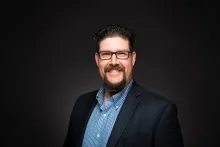
Ben is an elder serving as Pastor for the Salem, Eugene, Roseburg, Oregon congregations of the United Church of God. He is an avid outdoorsman, and loves hunting, fishing and being in God's creation.
