


David Schreiber
This transcript was generated by AI and may contain errors. It is provided to assist those who may not be able to listen to the message.
Music Rather than I think it's significant that right on the heels of observing the fall holy days, you'll find that the world is going to be celebrating an ancient pagan custom. And I don't think that it's an accident that it occurs that way. What I'm talking about is the observance of Halloween. Many of us are aware that that's coming up here very quickly. Let me ask you, what do goblins, witches, and ghosts have to do with the feast of all Hallo Eve?
And what do mask and gaudy decorations have to do with that time of the year? Most people never stop to ask themselves why they keep this day. They just do it. Kids have fun on this day. It seems exciting. Trick or treating, you know, all of these type of activities.
Why do children dress up like ghosts? Witches, the devil, made off this year, and you go around tricking and treating. Why do so many actually keep Halloween? What useful purpose does such a celebration have? And what purpose does it serve? Is it just merely a very harmless celebration to amuse our children? Well, I think most of us realize that the ancient pre-Christian druids in Britain, the pagan Romans, Greeks, and even the Babylonians, among others, kept a Halloween feast. Halloween long endodates or comes before Christianity. It was only later on introduced into the Christian world after the death of the apostles. It's interesting to note, I clipped an article out of the Dallas Morning newspaper once, that Halloween is second only to Christmas in consumer dollars spent, simply meaning that there are billions of dollars spent during that period of time. About 1.8 billion, I'm sure it's a little more by now, are spent on candy. 1.5 billion on costumes, and 2.5 billion on decoration cards and other aspects of this day. So, it is a holiday where there's anywhere between 5 to 10 billion dollars presently being spent on it. I think it's been a while since we've covered this topic, and I really wondered if I should try covering it today, the first Sabbath back from the feast. Looking at my schedule and speaking, I thought, well, it's today or never until next year, so I thought I'd go ahead and take a shot at it. Brother, what should our attitude be toward Halloween and its observance? How should we handle these days? How should our children handle them? What do you do at school? How do you talk to your teachers about these particular days? Where did Halloween originate? Why is it observed today? I've given all of you a handout on this, and a number of the things that I'll be mentioning to you actually are on that handout. I thought it would be good to give it to you simply so that you could have it. You could take it home with you, and you could have all of this information. I want you to notice one of the first quotes on the handout is, quote, The earliest Halloween celebrations in Britain were held by the Druids in honor of Sam Hain, the Lord of the Dead. This festival fell on November the 1st, and you'll see that's taken from Halloween through 20 centuries. As the Book of Days says, it's clearly a relic of pagan times. It's a time that was observed then. Further, it was a Druid belief that on the eve of this festival, Sammon, the Lord of the Dead, called together the wicked spirits that within the past 12 months had been condemned to inhabit the body of animals.
Now, I might just ask the question, who was the God or Lord of the Dead among the heathen nations?
Now, I'm not talking about Christian nations, but let's talk about the heathen nations. The Druids, the Babylonians, the Romans, the Greeks, and all of these people.
Well, the Greeks had a God that they called Hades.
Now, we're all familiar with the word Hades because Hades is a Greek word referring to the grave. But Hades was a Greek God. His name meant the unseen. When you put people six feet under the ground, they're unseen. They're buried. And so they would throw people in the grave. They were in the unseen region. The Lord of the Underworld was Hades, or the abode of the dead. The Greek word Hades was used to translate several Hebrews words in the Bible. The pit, stillness, death, darkness, and most commonly the Hebrew word sheol. Now, many of you will remember that sheol is the Hebrew word for grave. And sheol, quoting from Harper's Bible dictionary, was a place that was number one pictured as a being, or number two pictured as a place where the dead abode. And so you find that both of these words were actually used in one sense to describe among the pagans the false god who was in charge of the dead.
In the pagan religion, who was the Lord of the dead? Who led mankind into death?
Was it God? Was Jesus Christ and God the Father the Lord of the Druids? Or the Lord of the Greeks? Or the Lord of the Babylonians?
Now, I think you'll find that the Lord that is referred to was simply Satan the devil. Let's go over to the book of Hebrews, Hebrews chapter 2 and verse 14. Hebrews chapter 2.
And I want you to notice here in verse 14, Inasmuch then as the children have been partaker of flesh and blood, He Himself, referring to Christ, likewise, shared in the same that through death He might destroy him who had the power of death, that is, the devil. Now, I want you to notice Satan the devil is described as one who has the power of death.
Now, many times people misunderstand what the word destroy means here.
In the Greek, the word destroy means to render inactive, to nullify. Let me just quote from the Bible knowledge commentary on this verse for the word destroy. It says the author did not mean that Satan cease to exist or to be active. Rather, the word used for destroy indicated the annulment of his power over those whom Christ redeemed. In other words, once you are converted, you are a Christian, you have God's Spirit, and you've been forgiven your sins, if you remain faithful to the end, Satan has no power over you. God will resurrect you, and God, as we know, will resurrect every human being who's ever lived and give them a chance at salvation. So, in speaking of the devil as wielding the power of death, the writer means that Satan uses the fear of death to enslave them to his will. Often, people make wrong moral choices out of their intense desire for self-preservation. The readers were reminded that they no longer were subject to that slavery and that they could face death with the same confidence that their captain, or Jesus Christ, did. Now, in John 8.44, let's go back. We read this on the Day of Atonement, but in John 8.44, we read this about Satan the devil. It says, You are of your Father the devil. Christ was talking to the Jewish leaders of his day, and it says the desires are the lust of your Father as you want to do. He was a murderer from the beginning. So Satan the devil is one who has led people into death. He was a murderer from the beginning. He does not stand in the truth because there is no truth in him. And when he speaks a lie, he speaks of his own resources, for he is a liar, and he is the father of it. So what we find, Satan the devil is a liar. He leads man astray. He's led man off in a wrong direction, and he's led man to believe in customs and traditions that are totally opposite of what the Bible says. As Romans 6.23 tells us, the wages of sin is death. So Satan the devil is one who has tried to influence mankind in a way to lead man to death, to disobey God. Satan certainly isn't leading the nations in obedience to God, to follow God, his laws, his commandments, but in the opposite direction. And when we learn the lesson of the Day of Atonement, we find that that's one reason why he has to be locked up for a thousand years. Not free to deceive mankind because he has led man astray. He has deceived mankind. In Romans chapter 14 and verse 9, we find here who truly has the power over life and death. In verse 9 it says, "...to this end Christ died and rose and lived again, that he might be the Lord both of the dead and the living." So you find that Jesus Christ is the God of the dead because he promises to resurrect everyone and of the living. Now, what you find, there was a belief among the pagans that one night of the year the souls of all of the dead returned to their original homes, and they were to be entertained by food. Now, if food and shelter were not provided, these spirits, it was believed, would cast spells on people, cause havoc towards those who failed to follow their request.
Consequently, we have today what's called trick or treating. You provide a treat. If you don't, we will play a trick on you. So where does that come from? Well, it comes, again, from paganism. I mean, it was something that they literally believed would happen.
So Halloween, when you get back to the very origin of it, is a day that is associated with Satan, the devil, and demons, with evil spirits. As Alexander McGregor quotes here, it was the night for the universal walking about of all sorts of spirits, fairies, and ghosts, all of whom had liberty on that night. So on that night, they were given the freedom or the liberty to go around, to haunt, to influence, play tricks. Now, what do fairies, spirits, and ghosts have to do with worshiping God? You're worshiping Jesus Christ.
Actually, the pagans literally on this night sacrificed to their gods and to the spirits of the dead. And they would sometimes offer up their own children on these days. There was a reason why November was chosen for this particular event. The Celts and the Northern people considered the beginning of November their new year. These were the people who were living up in Britain, up in France, up in the Scandinavian areas. They considered November the new year. This was a time when the leaves were falling. There was a general seasonal decay taking place everywhere, and they thought this was a fitting time to commemorate the dead. Everything was dying at this time. And so, therefore, to commemorate the dead, and then, boom, you have new life taking place. So, since the Northern nations at that time began their days in the evenings, the eve leading up to November 1st was the beginning of the festival. According to the Roman calendar, it was the evening of October the 31st, hence, Halloween, meaning the evening of all Hallows. Now, is there anywhere in the Bible that you can think of the word Hallo being used? How about our Father, which art in heaven? Hallowed be your name. Well, here was an evening that was to be hallowed, called Hallo-Eve. Now, I want you to notice this day was observed everywhere. It wasn't just observed in the Northern latitudes, but it's actually been observed around the world. Halloween was kept through the ancient pagan world, and its traditions, the thoughts behind it, have been carried down to our day-to-day. Notice from Folklore by James Napier, There was a prevailing belief among all nations that at the death the souls of good men were taken possession of by good spirits and carried off to paradise. So this is the concept, when you die, you go to heaven. In other words, people go off to paradise. But the souls of the wicked men were left to wander in space between the earth and the moon, or consigned to the unseen world. These wandering spirits were in the habit of haunting the living. But there were means by which the ghost might be exercised. In other words, cast out.
Now, why is it that around this time of the year you see movies, you see all kinds of programs where they talk about ghosts, haunted houses, your witches, and all of this. Well, notice to exercise these ghosts, that is, to free yourself from their supposed evil sway. You would have to set out food and provide shelter for them during the night. If they were satisfied with your offering, it was believed they would leave in peace. If not, they were believed to cast a spell on you. So, why did people on October 31st put food out? They would set their table, they would put food out, because they didn't want these evil spirits casting a spell on them. Now, notice another quote from folklore and folk stories of Wales. In Wales, it was firmly believed that on all Halloween, the spirits of a departed person was to be seen at midnight on every crossroads and every style. And then, even in Cambodia, we don't normally think Cambodia, the Far East, being involved in what we would think of as some of these types of traditions. But in Cambodia, people used to chant, Oh, all of you, our ancestors, who are departed, dying to come and eat what we have prepared for you and to bless your prosperity and to make it happy. So, again, they were doing the same thing. So, what you find, this sort of Halloween tradition and festival, was strenuously observed by the non-Christian world. Pagans would pray to their false gods, actually demons, and witches to keep them from molesting them because they thought that they would be molested. Notice the Mayatex of Mexico. Mayatex of Mexico believed that the souls of the dead came back on the twelfth month of the year, which corresponds to our November. According to their calendar would be our November. On this day, of all souls, the houses were decked out to welcome the spirits. They weren't trying to prevent the spirits. They were welcoming the spirits. Jars and food and drink were set on the table in the principal room. And the family went out with torches to meet the ghosts and invite them to enter. Then, returning to the house, they knelt around the table with their eyes bent to the ground and prayed the souls to accept the offerings. And this is from Adonis by Frazier. This, then, is how the pagans, the heathen world, celebrated their Halloween or their All Souls Day. Although some aspects of Halloween vary from country to country, the overall pattern and purpose remains the same. Somehow, somebody's playing tricks and treats on you. You've got to appease them. And supposedly, it's witches, goblins, fairies, demons, you know, all of these type of things.
Now, let me ask you a cardinal question here. What is this day based on?
When I say, what is the day based on, I mean, what particular doctrine are teaching? Do you find rises to the forefront to observe this day? Is it not the belief in the immortality of the soul that when the dead die that their souls float out there somewhere? Supposedly, the souls of the wicked wander the earth while the souls of good men were taken to paradise. Remember the sermons I gave you on Gnosticism and how Gnosticism, where the Gnostics believe that when you died, that you were to go back to heaven and there were eight stages that you were supposed to go through to be able to get back to heaven. And that, you know, that's what everybody was striving to do. And that there was this nether world, this world somewhere between the earth and the moon. And that's what this is talking about, where all of these evil spirits were and where the souls would go, especially of those who were wicked.
In Genesis chapter 2, let's go back to Genesis 2 and verse 7. I think it's good, as we cover a topic like this, to go back and remind ourselves of some of the very basic things. One of the topics and one of the doctrines that's taught in so-called Christianity today is the immortality of the soul. And yet, the Bible nowhere says that you have an immortal soul. In fact, we find here, you'll notice in verse 7, Genesis chapter 2 and verse 7, the Lord God formed man of the dust to the ground and breathed into his nostrils the breath of life, and man became a living being.
Now, the King James Version says, he became a living soul. You and I are a soul. The word soul in the Bible simply refers to a living, breathing individual or creature. Verse 19, notice, out of the ground the Lord God formed every beast of the field, every bird of the air, and brought them to Adam to see what he would call them.
And whatever Adam called, every living creature, King James Version again says, every living soul, that was its name. Now, in both places, verse 7, verse 19, the Hebrew word nefesh is used. The word nefesh is a word that is translated soul throughout the whole Old Testament. And it is a word that simply means a living, breathing being or creature.
And that's why the New King James Version translates it correctly as living being, not soul. Let's go back to Genesis 8, excuse me, Ezekiel 18, Ezekiel the 18th chapter, beginning in verse 4. And you'll notice here, God says, Behold, all souls are mine, the souls of the Father, as well as the soul of the Son, is mine. The soul who sins shall die. Again, the word nefesh. Souls can die.
Souls are not immortal. You are a soul or a living, breathing creature. Verse 20, same thing, the soul who sins shall die. The Son shall not bear the guilt of the Father, nor the Father bear the guilt of the Son. We die for our own sins. The wages of sin is death, the Bible very clearly states. Now, in the book of Ecclesiastes, Ecclesiastes chapter 9 and verse 5, I want you to notice the Bible is very clear that when you die, you're dead. For the living know that they will die. We all know that if time goes on long enough, we will die, right? I mean, there's nobody here has lived forever.
Nobody is going to live forever in the flesh. We're human. We die. But notice the dead know nothing. When the dead die, they're dead. For they have no more reward, for the memory of them is forgotten. When we die, we return to the ground and the Spirit in man returns to God who gave it. Turn back to chapter 3 and verse 21 here in the book of Ecclesiastes. Chapter 3 verse 21, and you'll find this, it says, Who knows the Spirit of the Son of Man who goes upwards and the Spirit of the animal which goes down to the earth?
You'll find that man does not have an immortal soul, but there is a Spirit in man. What is it that gives us an intellect? That gives us the ability to think, a personality, to be able to remember? It's not just the chemical brain we have, electrical brain. The brain is put together, it's got electrical, chemical components to it. Animals have that, and yet they do not have the brilliance of human beings. They're not able to create and design, remember, think as we do, but you find that there is a Spirit in man.
And that Spirit, when it unites with the brain, you find it produces a mind. When you die, the Spirit returns to God. It's not an immortal soul, it is a Spirit essence. And so, you find the idea of an immortal soul that when you die, that you have an immortal soul.
This is why the so-called Christianity believes that when you die, you either go to heaven or hell, or purgatory, depending on your religion. Or if you follow the Catholic tradition, Olympus and Fontium, and Olympus Potrum, they have all of these different categories of hell that people go to. Well, you find that the Bible is very clear when you die, you're dead, and you await the resurrection. Let's notice what God commanded back in the book of Deuteronomy chapter 18 and verse 9. Deuteronomy 18 and verse 9.
God tells us very plainly that we're not to look to the heathen nations, to the Gentiles, to those who did not have his true religion, and copy them and try to practice what they practiced or what they taught. In verse 9, Deuteronomy 18, when you come into the land which the Lord your God is giving you, you shall not lean to you, or excuse me, shall not learn to follow the abominations of those nations. There shall not be found among you anyone who makes his son or his daughter pass through the fire, or one who practices witchcraft, or a soothsayer, or one who interprets omens and sorcerers, or one who conjures spells, or a medium, or a spiritist, or one who calls up the dead. For all those things are an abomination. That means they're detestable to God, to the Lord. Because of these abominations, the Lord your God drives them out from before you. You shall be blameless before the Lord your God. So we're not to follow the abomination of the nations around us, God says. Okay, then how did Halloween become associated with the Christian Church? If it's something that originated in paganism, and all you have to do, anyone who has doubt about it, all I would say, get on your computer, go online, type in the word Halloween, origin of Halloween, or type in, as I did this morning, I typed in, how did Halloween become a part of Christian Church? And boom, dozens of websites that give you information dealing with the topic. I mean, it's amazing the amount of information that is out there. But how did Halloween become associated with Christian Church? How did the present Christian world, or professing Christian world, come to accept and keep such a day? Well, in 607 AD, the Roman Emperor Procus, now he was the emperor of the Byzantine Empire, defeated the barbarians who were in control of Rome. The pantheon in Rome was a pagan edifice which had been rested from the barbarians and was given to Pope Boniface IV. So, you know, when he came in, he took over Rome, he took over the pantheon, and he dedicated it and gave it to the Pope at that time, Boniface IV. Originally, Emperor Hadrian had built the pantheon around 100 AD. He had dedicated the pantheon to the goddess Sybil and to the other Roman deities. The temple became the central place of worship in Rome, where the pagans honored and commemorated their god. Now, when this edifice fell into the hands of the Catholic Church, what were they going to do with it? You know, here it was. It was a temple dedicated to the worship of pagan gods. What were they going to do with it? The pagans had dedicated it to Sybil and to all of their gods, but the Roman bishops came up with a brilliant idea. Instead of dedicating it to Sybil, guess who they were dedicated to? The Virgin Mary. So they dedicated it to Mary and to all of the saints at that time.
Thus, this pagan building became holy in their eyes. No more did the Roman pagans use the edifice to pray to their dead. See, they would go there and pray to the dead. It was now the professing Christians who used the pantheon to pray to their dead. Everybody's praying to the dead, but, you know, the so-called Christians were doing it to their dead. The pagans had done it to their dead. This rededication of the pagan temple to Mary and others occurred in 610 AD. It was now converted as a Christian shrine. An annual festival was used to commemorate it. The day that was chosen was May 13th. Now, May 13th is not November 1st, but we'll get to that in a moment. This May 13th commemoration was a commemoration of dead saints.
It was known by the name of All Saints Day. So, May 13th was the All Saints Day. It continued to be held in May for over two centuries until 834 AD, and that year the name and the date were changed. So, 834. Notice the time of the first celebration of November, it was called All Hallow Eve. From where we get the name Halloween, All Hallow, meaning All Holy. And, In is a contraction of evening. So, Halloween simply means Holy Evening. Now, I ask you, is there anything holy about that particular day? Thus, in 1834, the church in the Middle Ages began to celebrate the 1st of November for the first time. And, it became known as the Halloween, or also All Saints Day. Both were applied to it. This was the very same day that the Druids in Britain kept. The Norsemen in Scandinavia observed the pagan Germans were keeping. It was All Souls Eve in commemoration of Samhain, who was the Lord of the Dead and his demons.
Now, my question again, is there anything holy about this evening? Is there anything holy about all of the activities on this evening? Who has the right to make a day holy?
Well, first of all, in order to make something holy, you have to be holy. Let's go back to 1 Peter 1 and verse 15. 1 Peter 1 and verse 15 in the Bible. 1 Peter 1 and verse 15. 1 Peter 1 and verse 15.
1 Peter 1 and verse 15.
1 Peter 1 and verse 15.
Chapter 3 verse 2.
1 Peter 1 and verse 15.
1 Peter 1 and verse 15.
1 Peter 1 and verse 15.
Now, let me quote to you what the Catholic Church has to say about these days.
You see, most Protestants never stop to think about anything about Halloween. It's just a day for the kids to get out, pull some pranks, go around, get candy. But notice what the Catholics say, and this is quoting from a website titled ChurchYear.net. It says, The Feast of All Saints is a Holy Day of the Church.
I want you to notice. They call it a Holy Day, honoring all saints, known and unknown. While we have information about many saints and we honor them on specific days, every day of the year is a day that's in honor of a Catholic saint. So, they had to have a day to honor all of the other saints. There are many unknown or unsung saints who may have been forgotten or never been specifically honored. On all saints' day, we celebrate the saints of the Lord and ask for their prayers in their intercessions. Now, notice. They are asking dead saints to pray for them. Now, the Bible says, when you die, you're dead. You have no memory. You go to the grave. It says, The whole concept of all saints' day is tied in with the concept of the communion of saints. This is a belief that all God's people on heaven, on earth, and in the state of purification called purgatory in the West are consecrated in a communion.
In other words, Catholic and Orthodox Christians believe that the saints of God are just as much alive as you and I are. And they are constantly interceding on our behalf. Remember, our connection with the saints in heaven is one grounded in a tight-knit communion. The saints are not divine or omniscient or nipparent. However, because of our common communion with and through Jesus Christ, our prayers are joined with the heavenly community of Christians. So, on this day, they believe that when they pray, that they can go and they can pray to these saints and that these saints will hear them and answer their prayers. It says here, Saint Cyril of Jerusalem testified of this belief when he said, we mentioned those who have fallen asleep, first the patriarchs, then the prophets, then the apostles, then the martyrs, that through their prayers and supplication, God would receive our petition. The Catholic Catechism concisely describes this communion among believers by which we are connected to Christ and to one another. Being more closely united to Christ, those who dwell in heaven fix the whole church more firmly in holiness, they do not cease to intercede with the Father for us. So, by their fraternal concern is our weakness greatly helped.
So, what this is saying is that the saints in heaven right now supposedly are praying for you.
This is what the Catholics teach, occurs on Halloween, which they call All Saints Day, and they believe that this day is holy. So, again, showing that what we're talking about here certainly is something you can take from their own writings. Now, why did the church change the day to November 1st and thus coincide with the pagan festival of All Souls Day? There is a reason for that. It was a general practice in the restored Roman Empire that now professed to believe in Christianity to convert the pagans to Christianity within the empire as quickly and as fast and as large a mass as possible. Sometimes the changing of dates and festivals made that possible. Ever since the time of Constantine, if you'll remember, Christianity became a state religion of the Roman Empire. The Roman emperors realized that it was very useful to have one religion. Do away with all of these various religions. So, since they had settled on what they thought was Christianity, the one thing they wanted to do when they conquered a nation was to convert everybody in that nation. And so, they would do it en masse. It became a stringent state policy to force all non-Christians to accept the state religion. Now, let me just illustrate by the conversion of the Germans how this scheme was carried out. When the German Frankish King Charlemagne invaded and conquered Eastern Germany, he compelled the conquered German king, with kind, to be baptized and to accept Christianity. Having no choice, in other words, you either accept Christianity or you're dead. So, he had no choice. He accepted Christianity. And all of his subjects accepted Christianity. Now, what the Catholic Church would do at that time, they would baptize all of these pagans en masse. They would have tens of thousands of them out there, and they would bring them by the priest, and they'd throw water on them, and then, you know, they would baptize them. What they called baptizing or sprinkling.
And they would convert them en masse. Now, the problem was, were they converted? Well, first of all, what they were being taught was not true Christianity. But even if it were, that is not how you go about baptizing people. Should people be baptized en masse?
In Acts 2.38, I'll just remind you of a few scriptures. Acts 2.38 says, Repent and be baptized in the name of Jesus Christ for the remission of sins, and you shall receive the gift of the Holy Spirit. So, repentance is a personal matter, and it's based upon repentance of sin, which is the transgression of God's law, 1 John 3.4, acceptance of Christ. Now, Luke 4.26 says that if you want to become a disciple of Christ, you've got to be willing to forsake all and follow Him. Well, you find these pagans who were being, quote-unquote, baptized en masse were not really doing that. But let's go over and read 2 Corinthians 6. 2 Corinthians 6, verse 14, Where we're told to not become unequally yoked together with unbelievers.
It says, For what fellowship has righteousness with lawlessness, and what communion has light with darkness? What accord has Christ with Belial? Or what part has a believer with an unbeliever? And what agreement has the temple of God with idols? For you are the temple of a living God.
Therefore, verse 17, God says, Come out from among them, and be separate. So God tells us to come out from among this world and its ways and its customs. We are not to conform to this world or to its traditions and customs. Now, with time, the German emperor, who now professed Christianity, and all the others within his nation, had a profound effect upon the Catholic Church. These barbaric people, these uncultured people, these pagan people, brought their pagan customs right along with them. Now, what was the Catholic Church going to do? They could have excommunicated all of them, but that would have been self-defeating. That would have reduced their numbers. So they didn't want to do that. They could have killed them, but that would have accomplished the same thing. So how do you keep these people in the church and get them away from their pagan customs? Well, what you do is rename them. And so, the Catholic Church was observing an All Saints Day on May 13th. The pagans were observing it on the evening, what we call the 31st, in November the 1st. So therefore, just move your All Saints Day on the 13th over to November the 1st, and call it by the same name, and then get the pagans to worship Christian saints and not pagan saints. And this is exactly what they did. Throughout history, you find the Christians adopted pagan customs like the Saturnalia. Rename them. They called it the birthday of Christ instead of the birthday of the Son. God. It became the birthday of the Son of God. And so, they just simply renamed them and got the pagans to observe those particular days. Notice, quoting from Pope Innocent, The heathen dedicated this month to the infernal gods. In the beginning of this month, the idolaters walked about the city with lighted candles, and as some of the Holy Fathers could not extirpate such a custom, they ordained that Christians should carry back candles in honor of the Virgin Mary. So they didn't go away with the tradition. They just said, Well, do it for Mary, and don't do it for the pagans.
If a pagan practice or festival could not be forbidden, the Catholic Church says, Let's tame it. Let's just call it by a different name, and we'll tame it. And thus, they were able to transfer devotion from their former gods to the Christian gods.
This is why you find, even in South America, Mexico, when the missionaries came over in the 14th, 15th, 16th centuries, that they found customs being observed that went right along with the Christian traditions, because these people had done the same thing.
Thus, at the first promulgation of Christianity to the Gentile nations, they could not be persuaded to relinquish many of their superstitions, and rather than have them forego those, they incorporated them into the new faith. And so, basically, that's what has happened over the years. That's how May 13th got over to November 1st in the Catholic Church and their observance. Now, what does God say about observing pagan customs and worshiping Him by any old way we want to? Well, let's notice in Deuteronomy 12, in verse 29. Deuteronomy 12, verse 29.
We read this, When the Lord your God cuts all from before you the nations which you go in to dispossess, and you displace them and dwell in their land, take heed of yourself that you do not ensnare to follow them after they are destroyed from before you, that you do not inquire after their gods, saying, Well, how did these nations serve their gods? I will do likewise. You shall not worship the Lord your God in that way, for every abomination to the Lord which He hates have they done to their God.
Verse 32, Whatever I command you, be careful to observe it. You shall not add to it, nor shall you take away from it, and not to add or take away.
Now, we read earlier in Leviticus 18, 1-5, that we are not to do what the other nations do.
What about Matthew 15, verse 9?
Matthew chapter 15, verse 9, Think of scripture that many have memorized.
Christ told the Jews of his day, in vain, They worship me, teaching as doctrine the commandments of men. You cannot worship God according to man-made traditions, or customs, or doctrines.
Jeremiah chapter 10, verse 1, God very plainly tells us not to learn the way of the heathens. Chapter 10, verse 1, Hear the word which the Lord speaks to you, O house of Israel. Thus says, The Lord, do not learn the way of the Gentiles, nor be dismayed at the signs of heaven, for the Gentiles are dismayed at them, for the customs of the people are futile. For one cuts a tree from the forest, the work of the hands of the workmen, they decorate with silver and gold. And so God says that we are not to worship him in that way. I want you to notice one last quote here. This is taken from the dictionary of folklore. In many Catholic countries, the belief that the dead returned on this day was so strong that food is left on the tables and people will decorate the graves of the dead on that day. And those same customs are carried on today. Now what should be our approach today? What should we, as a Christian, do? What should our children do? Well, we should not participate in this day. We should not be giving candy to children and come by, nor should we be practicing tricks or treats, nor should we be dressing up as ghosts and goblins and demons and witches. This is not God's world. These customs are not of God and they're not biblical. What about our children in school? Because in many cases in school, even though they profess, they don't teach religion, when it comes to Christmas, Easter, Halloween, and all of these, you know, the schools are decorated and your artwork and all of this goes on.
Well, what I would recommend, and this is something that Norm and I did, we had five sons go through public schools. We probably put our sons in 20-25 different schools over the years because of being transferred so often. There were times that we had five sons in five schools, you know, they were just in different schools all over the place, and you have to go and talk to the teachers. Now, we would normally do this before the Feast of Tabernacles. We'd go and explain that our children were going to be taking off, that we keep what many call Jewish customs.
You know, I would hasten to add, though, what the Bible teaches, the Feast of Tabernacles, and so on. And it's always a good time when you're explaining that to go ahead and explain, as a consequence of keeping these days, we do not keep Halloween, our Christmas, our Easter. And then you can begin to tell them what you expect. You know, you can talk to the teachers that your children not have to participate in artwork associated with Halloween or Christmas, that they can just simply draw fall scenes. You know, they can draw scenes of snow falling, you know, not Christmas scenes. Nothing that would be associated with a holiday. If there's a party, it would be, you know, you can ask the teacher. You give the teacher certain options. Would you rather my child stay home on that day? Would you rather they go to the office on that day? Would you rather they go to school half a day? Now come by and pick them up. You know, this way the teacher thinks they're making the decision. Either one might be okay with you. We found going to the library was not always the best, because especially when there were Halloween, let's say, partying and parading around, you know, your children are there and they see it, and you know, others trying to give them candy, and all of this. So we would normally maybe send them to school half a day and take them home after that. But if you work with the teachers, normally you'll find you will not have a problem. Only once did we ever run into a problem with that, and that was in a private school.
I have one last quote I've given to you on this paper, and I will not read through this quote because it's quite extensive. It was taken from the St. Petersburg Times, an article written by Dan Karlinsky, The Origins of Halloween's Frightenly Complex. And he goes through and he shows that there are three chapters, the three times, periods of times concerning Halloween, chapter one going back thousands of years ago to the Celts, the Druids, where they had a festival worshiping the Lord of the Dead, Sanhain. Then chapter two entered the Romans, and they had a harvest festival in honor of Pimora, the goddess of fruit trees. Then came the Christians.
They tried to squash the pagan customs, but it said they let the pagans keep their customs, but turned the festivals into Christian holidays. So even he admits that that took place. And then they held a festival for all the minor saints called All Saints' Days, or Halle Days. And then he explains some of the customs. Where do bonfires come from? I thought it was significant that bonfires come from bonfires, where they would offer up their children in sacrifices to these gods, or they would offer up animals. Trick or treating? Well, he goes on to show how that these were things connected with demons and evil spirits and spells being cast. He said, because there were very few Catholics in this country, this was not a very popular custom to start with. It wasn't until the Irish potato famine of 1840s, if you read anything about that, it almost wiped out Ireland. And millions of Irish came to this country, and they brought their Catholic traditions with them. And with that came Halloween. And so it began to take a tollhold here. Halloween was also called Mischief Night. It was also called Skunk Cabbage Night. And kids would collect foul-smelling plants and throw them on people's porches. It was the Irish who brought the jack-o'-lanterns to the U.S. In Ireland, it was in honor of Jack, who was not allowed to go to heaven, and he was refused admission to heaven or hell. So he had to wonder. And supposedly, he wandered around with a lantern. Now, in this case, it was a turnip that was hollowed out, and the devil gave him a cold put in it. And so that was his lantern. So in Britain and in Europe, they would hollow out beets, gourds, rutabagas. It was in this country with the pumpkin that later on the jack-o'-lantern became the pumpkins. And then, you know, pumpkins, apples, nuts, bobbing, all of this became associated with this day. Last paragraph says, Thanks to the druids, witches and such were so strongly associated with the holiday that in Scotland, Halloween was called witches' night. In the Middle Ages in Europe, the zealous burned cats on Halloween because cats were believed to be witches in disguise. So, if I could summarize, it would be simply this. These days are counterfeits. They hide the meaning of the plan of God. You and I have just observed God's annual festivals, which portray and picture for us the plan of salvation. These are counterfeits, that as people observe them and keep them, they do not understand the true meaning of God's plan. They teach false values, not the true values. They teach observance of days that God never commanded. And I think all of us realize that if there is a God, he has the right to tell us how to worship him. And it's also people deciding for themselves what's right or wrong and how they would worship God. So, let's remember that God very clearly has given us the days that he wants us to observe. And you and I are here. We're just back from observing the annual holy days of God. Let's be thankful, brethren, that we understand the meaning of these days and what they picture in the fact of how God is ultimately going to offer salvation to all mankind.
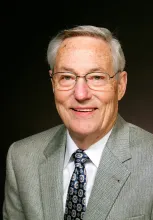
At the time of his retirement in 2016, Roy Holladay was serving the Operation Manager for Ministerial and Member Services of the United Church of God. Mr. and Mrs. Holladay have served in Pittsburgh, Akron, Toledo, Wheeling, Charleston, Uniontown, San Antonio, Austin, Corpus Christi, Uvalde, the Rio Grand Valley, Richmond, Norfolk, Arlington, Hinsdale, Chicago North, St. Petersburg, New Port Richey, Fort Myers, Miami, West Palm Beach, Big Sandy, Texarkana, Chattanooga and Rome congregations.
Roy Holladay was instrumental in the founding of the United Church of God, serving on the transitional board and later on the Council of Elders for nine years (acting as chairman for four-plus years). Mr. Holladay was the United Church of God president for three years (May 2002-July 2005). Over the years he was an instructor at Ambassador Bible College and was a festival coordinator for nine years.
