

Roy Holladay
This transcript was generated by AI and may contain errors. It is provided to assist those who may not be able to listen to the message.
I'd like to relate to you a story, or read a story here, that I had passed on to me. It has to do with a man, well, we'll see as we go through it, and his wife. He says, after 21 years of marriage, my wife wanted me to take another woman out to dinner into a movie. She said, I love you, but I know this other woman loves you, and would love to spend some time with you. I wonder how many of you women would be that generous. That night, I called to invite her out to dinner into a movie. Well, let me back up here. I skipped a paragraph. It would help to have this paragraph. It says, the other woman that my wife wanted me to visit was my mother, who had been a widow for 19 years, but the demands of my work and my three children had made it possible to visit her only occasionally. The night I called to invite her to go out for dinner in a movie. What's wrong? Are you well? she asked. That's typical. My mother's type of woman who suspects that a late-night call or a surprise invitation is a sign of bad news. I thought it would be pleasant to spend some time with you. I responded, just the two of us. She thought about it for a moment and said, I'd like that very much. This Friday after work, as I drove over to pick her up, I was a bit nervous. When I arrived at her house, I noticed that she, too, seemed to be nervous about our date. She waited in the door with her coat on. She had curled her hair and she was wearing the dress she had worn to celebrate her last wedding anniversary. She had a smile from a face that was as radiant as an angel. I told my friends that I was going out with my son, and they were impressed. She said she got into the car. They can't wait to hear about our meeting. We went to a restaurant that, although it was not eloquent, was very nice and cozy. My mother took my arm as if she were the first lady. After we sat down, I had to read the menu. Her eyes could only read large print. Halfway through the entrees, I lifted my eyes and saw a mom sitting there, staring at me. A nostalgic smile was on her lips. It was I who used to have to read the menu to you when you were small, she said. Then it's time to relax and let me return the favor, I responded. During the dinner, we had an agreeable conversation, nothing extraordinary but catching up on recent events of each one's life. We talked so much that we missed the movie. As we arrived at her home later, she said, I'll go out with you again, but only if you let me invite you. So I agreed. How was your dinner date? asked my wife when I got home. Very nice, much more than I could have imagined. I answered. A few days later, my mother died of a massive heart attack. It happened so suddenly I didn't have a chance to do anything for her. Sometime later, I received an envelope with a copy of a restaurant receipt from the same place where my mother and I had died. An attached note said, I paid the bill in advance. I wasn't sure I'd be there, but nevertheless, I paid for two plates. One for you, the other for your wife. You will never know how much that night meant to me. I love you, son. At that moment, I understood the importance of saying, in time, I love you, and to give our loved ones the time that they deserve. Nothing in life is more important than your family. Give them the time they deserve, because these things cannot be put off until some other time, because you never know what the future holds.
How many of you still have your mother's living? Could I see your hands?
How many of you do not have your mother's living? I think there's probably a 60-40 split there. Let me ask you a question for those of you who do not have your mother alive.
If you had your mother living, what would you say to her? If you could talk to her again, what would you say? How would you treat her? What would be your outlook toward your mother?
I think many times we don't realize how important our mothers, our dads, are to us until they're no longer around. And when they're not around, then we miss them. If your mom is dead, what would you give to look into her eyes again? Hold her hand. Hug her. Touch her hair. Talk with her. Ask her advice or opinion. Talk about the past. Talk about the family. Talk about how she and your dad dated. All of these things. Many things that we would love to have recorded. We'd love to have in a book somewhere. We'd love to be able to have. And time goes by and they're gone. And we say, well, just never had that opportunity. God will give us the opportunity in the future, in the resurrection. So we know that there will be a resurrection. There will be a time when we will have an opportunity to see them again. But if your mom is still living, and it doesn't matter what your age is. If you're five years of age, teenager, a young adult, an older person, you know, someone as old as Dave Mink, you know, whoever it might be. We all need to be able to express to our parents if they're alive your love, your appreciation, your affection for them. Because one day they will not be here. One day they'll be gone. If your mom has deceased, you've experienced a void. There's an emptiness. There's a holliness in your life that nobody else can fill. You know, there's just nobody else can take her place. Let's go over here to Matthew chapter 19. Matthew 19 and verse 16.
Matthew chapter 19. And we'll pick up the story here in verse 16.
Now says, Behold, one came and said to him, Good Teacher, what good thing shall I do that I may have eternal life? So he said to him, Why do you call me good? No one is good, but one that is God. But if you want to enter into life, keep the commandments. And he said to him, Well, which ones? And Jesus said, You shall not murder. You shall not commit adultery. You shall not steal. You shall not bear false witness. Honor your father and your mother. And you shall love your neighbor as yourself. If you and I want to have eternal life, we are told that we must honor our mother and our father. Isn't that one of the Ten Commandments? We might emphasize, while keeping the Sabbath, not having any other God before the true God, not worshiping idols and so on. But we maybe don't stop to think too often about what the Bible says. A part of what we must do if we want to have eternal life is to pay the proper honor and respect. I'd like you to notice some outstanding examples, some in the scriptures, some not in the scriptures, of children who honored their parents. In John 19 verse 25, we have an outstanding example. John chapter 19 and verse 25.
Jesus Christ was hanging on the stake. He'd been crucified. He'd been scourged. He'd been beaten, sped upon, ridiculed, and he's just about to die. In fact, in verse 28, he said, I thirst. And verse 29 or 30, he said it was finished and he died. But let's notice here in verse 25. Now there stood by the cross of Jesus, his mother, his mother's sister Mary, the wife of Clopas, Mary Magdalene. When Jesus therefore saw his mother and the disciple whom he loved, that's John, standing by, he said to his mother, woman, behold your son. And he said to the disciple, behold your mother. And from that hour that disciple took her to his own home. Now here's Christ, about to die, beaten within an inch of his life, having big spikes driven through his wrist and through his ankles, hanging there, having not eaten, thirsty. And his last thought, his last command, so to speak, was to look down at his mother and say, John, take care of her. Now he knew that John was a disciple who had a great deal of capacity for love, and he asked him to look after his mother. Now I don't know if you and I would have that type of presence of mind or forethought to be able to do that. Back here in Luke, chapter 2, Luke, the second chapter, I want you to notice in verse 51. Luke, chapter 2, verse 51.
Reading here again about Jesus Christ.
He says, He went down with them and came to Nazareth and was subject to them. Word subject, as a margin indicates, means obedient to them.
Now here's Christ who just confounded some of the scholars in Jerusalem, and He comes down and He submits to His human parents. He obeys them. And it goes on to say, But His mother kept all these things in her heart, and Jesus increased in wisdom and stature and in favor with God and men.
Well, He increased with favor and wisdom with God and men. He had to obey God, and certainly His obedience to His parents was something that was an honor to God.
I'd like to read you a story or an account about a man very high in the British government. His name was Richard Burden. B-U-R-D-O-N.
He was a British War secretary and Lord High Chancellor. He wrote a letter to his mother every day for 48 years. Beginning in 1877, when his father died, and continuing into 1925, when his mother passed on at the age of 100 years and 6 weeks, he never missed writing a letter to her a single day.
I can't say that, and I doubt that any of us in here could say that. Another situation involved Lord Northcliff. Survived by seven sons and three daughters, Mrs. Harmsworth, dying at 86, survived her most famous son, Lord Northcliff, by almost three years.
Lord Northcliff's attitude towards his mother was one of thoughtful affection, said the British weekly, in commenting upon the rare devotion of the celebrated publisher to his mother, he saw or telegraphed Mrs. Harmsworth every day. I remember that during one of the fiercest moments in the war, he broke off a very important conference to telephone his secretary in the country to ask what kind of a day it was, and upon hearing that it was warm and sunny, gave instructions in his impervious way that his mother should at once be taken out for a drive.
So they took her out for a drive. She's wonderful, he exclaimed as he banged down the telephone receiver. I heard a beautiful story about Mrs. Harmsworth when her son was at the height of his fame. He visited her in Ireland. Almost the first time she said to him, or almost the first thing she said to him was, I want you to go to the little church here and thank God for your success. And it says he went. He did what she asked. Another individual, a minister, actually, on Mother's Day paid tribute to his mother. My mother practices what I preach.
Well, that hopefully is true of all of us. Many of you will remember Marian Anderson, the great contralto. A story about Marian Anderson, the famous African-American contralto. A few years ago, she was interviewed by a reporter who asked Mrs. Anderson to name the greatest moment in her life. I knew she had many big moments to choose from. There was a private concert she gave at the White House for the Roosevelts and the King and Queen of England. There was a night she received the $10,000 Bach Award as the person who had done most for her hometown, Philadelphia. But she told the reporter, the greatest moment in my life was the day that I went home and told my mother she wouldn't have to take in washing anymore. See, his mother, or her mother, I should say, had skimped, saved, worked, washed, you know, did all of these type of things to help her daughter and the other children. Now, she was able to afford to take care of them, and she didn't have to do those things anymore. When we honor our parents, and we're talking about mothers in this case, it reflects back on God and on creation. Now, what do I mean by that? Well, let's go back to Genesis chapter 1. Genesis 1, verse 26. We find here in Genesis 1 God recreating the earth, making it habitable for animals, for us as human beings to live on. And in verse 26, God said, Let us make man in our image, according to our likeness, let him have dominion over the fish of the sea, over the birds of the air, over the cattle, over all the earth, over every creeping thing that creeps on the earth. So God created man in his own image, and the image of God he created him, male and female, he created them. And God blessed them, and God said to them, Be fruitful and multiply, fill the earth, subdue it, have dominion over the fish of the sea, over the birds of the air, over everything that moves on the earth. So God created the human race in his image.
God created the human race when there was no human race. He created Adam out of the dirt of the ground, shaped him, informed him, and breathed into his nostrils, the Bible says, the breath of air, and man became a living creature, a living soul. Chapter 2, verse 19 states that same thing happened with Eve, that God created her out of a rift. Now, you'll find that God gave them life. They did not exist prior to that time. The human race did not exist until God created it. And, brethren, there was a time in the past when you did not exist and I did not exist.
Our parents gave us life. God gave the whole human race life. The life ultimately goes back to God. He's the one who started the life process, set them in motion, where we could recreate, we could reproduce. And then, you will find that just as God gave life to human beings. So, one day, a sperm cell from the male, united with an egg within the woman, and there was a new creation, a new life that began. And nine months later, that life was a baby that was born. And we have a lot of big babies around here, who have grown up. And we were all babies at one time. And we've grown up.
We did not exist until our parents begat us, and then we had to be born of our mother. Well, today, we find that God Himself is referred to as a father. God refers to the women, or to the church, as our mother. And so, we find that there is a birth that is going to take place in the future, into God's very family. And so, God has typed that. But what we have to realize, that it all began with God, by Him giving us life. Let's go back here to Jeremiah 31, in verse 20.
Jeremiah chapter 31, in verse 20. And you'll notice, that in the Bible, in a number of places, that God uses language that relates to the family. It says, Is he for him, my dear son? Is he a pleasant child? For though I spoke against him, I earnestly remember him still. Therefore, my heart yearns for him. I will surely have mercy on him, says the Lord. And here you'll find that God describes earlier how He had to send Israel into captivity, because of their sins. And yet, in spite of that, when God looked at Ephraim, Manasseh, the other tribes of Israel, what was his attitude? He's my dear son, he refers to him.
And he was a pleasant child. And he had to speak against him. Well, our children haven't always obeyed us, have they? They disappoint us. They do things that are wrong.
But they're still our children. We still have unconditional love for them. In Isaiah 66, beginning back here in verse 5, Isaiah 66 and verse 5, notice, talking about Zion. Zion can be applied duly. It refers to the church. It also refers physically to Israel or to Judah. It says, Hear the word of the Lord, you who trembled at his word, your brethren who hated you, who cast you out for my name's sake. It said, Let the Lord be glorified, that we may see your joy, but they shall be ashamed. The sound of noise from the city, the sound from the temple, or voice from the temple, the voice of the Lord, who fully repays his enemy.
Before she was in labor, she gave birth. Before her pain came, she delivered a male child. Who's heard such a thing? Who has seen such a thing? Shall the earth be made to give birth in one day?
Or shall a nation be born once? For as soon as Zion was in labor, she gave birth to her children. Now this can be dual spiritually of spiritual Israel and the resurrection, but also of Israel coming back out of captivity. It says, Shall I bring to the time of birth and not cause delivery? It says, The Lord shall I who calls delivery shut up the womb? It says, Your God, rejoice with Jerusalem. Be glad for her. Verse 12, For thus says the Lord, Behold, I will extend peace to her like a river, and the glory of the Gentiles, like a flowing stream.
Then you shall feed on her sides shall you be carried, and be dangled on her knees. It says, As one whom his mother comforts, so will I comfort you. So here God uses the analogy, not of being a father, but being a mother, and taking his children and comforting them, just like a mother would take a child, and maybe who's fallen bruised itself and holds it on its knee, and hugs it, and gives it a kiss, and comforts it, so will I comfort you, and you shall be comforted in Jerusalem.
So we find that throughout the scriptures God uses language of the family to illustrate what he's talking about. In 2 Corinthians 6, 17-18, we find in the New Testament that God refers to us as his children. 2 Corinthians 6, verse 18, I will be a father to you, and you shall be my sons and daughters, says the Lord Almighty. So God is very concerned about us, and that we truly are his family, his children. So you'll find in the scriptures that God places a great deal of emphasis on the family, and especially upon honoring our mothers and our fathers.
In Mark 7, we have a clear example of this beginning in verse 6. Mark chapter 7, in verse 6, Christ, again, had been challenged by the religious leaders of his day, and they were getting on him because his disciples were eating without washing their hands, ceremonially, and he answered and said to them, Well, did Isaiah prophesy of you, hypocrites, as it's written, those people honor me with their lips, but their heart is far from me, and in vain they worship me, teaching as doctrines the commandments of men. For laying aside the commandments of God, you hold the traditions of men, the washing of pitchers and cups, and many other such things.
And then he goes on to say to them, All too well you reject the commandment of God that you may keep your tradition. Now, notice the example he selects to show how they set aside the commandments of God. For Moses said, verse 10, Honor your father and your mother, and he who curses father or mother, let him be put to death. The word honor here means to place value on. If you had something that was valuable, what if you had a vase, a piece of china, crystal that was worth ten thousand dollars? You wouldn't just have it out on your night table or on the table in the living room.
You'd have it behind glass somewhere where nobody could hit it, break it, and destroy it. It means to place value on, to revere, or to fear, or to venerate.
And then it goes on to say, And he who curses father or mother, let him be put to death. The word curse here means to speak evil of us, to revile, to abuse, or to curse.
And then he goes on to say in verse 11, But I say, excuse me, he says, But you say, in other words, here's what the scriptures say, Honor your father and mother, and don't curse them. But you say, If a man says to his father or mother, whatever profit you may have received from me is Corbin that is a gift to God. So here are their parents, needy parents in this case, and instead of taking care of their parents and supplying their need, they turn around and give the money to God and say, Well, it's a gift to God, so therefore I don't have anything to give to my parents. He says, Then you no longer let him do anything for his father or his mother. Making the word of God of no effect to your traditions, which you have handed down, in many such things you do. Why do we honor our mothers?
Why should we honor our mothers, our parents? Well, they gave us life, just as God has given us life. They've nursed us, they fed us, they've diapered us, they've taught us, they've looked after us, they've loved us with unfailing love, unconditional love. Now, children can respond in a multitude of ways to help honor parents. If you still have parents alive, listen to some of the things that you can do to show honor to your parents. You can respect them, you can esteem them, you can have concern for them. Their welfare, their health, you have affection, you have love for them. Consideration, appreciation, you can nurture them, and sometimes you may have to forgive them. There are times as we get older that we're not always the most pleasant to be around.
There might be occasions when we have to seek forgiveness. It involves positive acts. In other words, honoring your parents involves positive acts to help them, to bring them joy, to improve their lives. When you look at the word honor, the center of honor is not obedience. That's not the key element in the definition of the word. It is a command directed primarily at all age groups, but especially to us as adults to protect our parents from being driven from their homes, from being abused, taking advantage of, and to love them. The word includes the meaning to be heavy. You've heard the song, he's my brother, he ain't heavy. Well, it's talking about, in this case, being heavy. What does it mean? Well, it's a Hebrew-ism that means to give weight to. You give weight to their opinion. You honor what they say or do. Parents should be treated seriously and not just sort of sloughed off to the side. You do honor them.
Now, we realize that sometimes parents aren't always honorable. You know, that can be a problem. How would you, as a parent, and if all of us, all of us here, probably, our parents, or many of us, say our parents and have children, how do you make yourself honorable as parents, and especially if you have younger children? Well, you love your children. You know, there's several things that you can do. You love them. You have unconditional love for them. You direct them. Buck of Proverbs talks about training up in a child in the way that he should go, and when he's old, he won't depart. You give guidance to them. You honor them. You give them the right way. Your parents have the responsibility, again, of passing on to the next generation. Right values, right principles, right teachings, moral principles, manners. You do all kinds of things. You teach them to be honest, loyal, trustworthy. You can go on and on and on with characteristics. And then there is the nurturing process, where you nurture them, you love them, you guide them, you help them with their needs and with their gifts.
Now, what if you grew up and you had a parent who you might think is not worthy of honor?
What do you do with that parent? There can be ongoing hurt as a result of how you were raised or reared, pain in the relationship. You may look back and think that your relationship was harmful. There can be a history of child abuse, sexual abuse, emotional, physical abuse. Honor is a wide-ranging verb. It's sort of open-ended. It's a verb that can go off in a different direction. The commandment in the Bible to honor our parents is not based on whether they deserve it or not. Where do you read in the Ten Commandments, honor your father and your mother if they deserve it? It doesn't say that. It just says, honor your father and your mother. In fact, in Deuteronomy 5.16, we are commanded to do that. Honor your father and your mother as the Lord, your God, commanded you. So it is a command from God. So if you find yourself in this situation, and sad today, we find too many that do. You can still try to honor your parents by being involved in positive actions towards them, to help them, to improve their life. You can still have proper fear and respect for them, for their memory. You don't have to always be running them down before other people, criticizing them, running them down. So honoring may involve forgiveness. Also, maybe if you grew up and you were old love, and you were old respect, and you were old, you know, the nurturing and all of this from your parents, and didn't get it. You may have to go to God and say, Father, I desperately have missed out on something. Please forgive my parents. They didn't know. They didn't treat us in the right way.
But help me to be able to have the proper love for them. You see, one thing that all of us can do is, you know, most parents, even though they may not have been the best parents, still have tried to incult certain values. And the way to pay honor and respect to your parents is to live and reflect the right values that they tried to teach you. If they taught you to be respectful, good manners, have certain values that were proper values, then we should live by those. And by the way we live, we pass on to the next generation, those same principles. In Ephesians 6 and verse 2, let's notice. Ephesians chapter 6 and verse 2 says, to honor your father and your mother, which is the first commandment with promise.
It says that it may be well with you, that you may live long on the earth. Generally, if you obey your parents, you are going to live longer. How many times have you seen a child who doesn't want to obey his parents? And he runs out in the street, or he does things that he knows that his parents say that he shouldn't, and he puts his life in jeopardy. Well, this is talking about obedience will lead you to living a longer life. But also, proper relationship between children and their parents, children and their grandparents, are going to do what for society? What's going to improve society a great deal? If every young person alive today obeyed his parents and honored his parents and his grandparents, and went out of his way to actively try to do that, what a change would that make in society? What a tremendous impact would that have? Also, if you want to inherit anything from your parents, it might be good to be a good example, a good child. Now, in saying that, you know, I don't want to say that in one sense because we don't obey to get, do we? We obey we're trying to give. So you don't honor your parents thinking, well, you know, if I do this for my old man or my, you know, for my mom, guess what? One day I'll get something. Now, it doesn't work that way. That's not the reason why you should be doing what you do. In Exodus 21 verse 15, Exodus 21 in verse 15, we find God's perspective on mistreating parents. He who strikes his father or his mother shall surely be put to death. And we've all heard of children maybe abusing, beating up parents, stealing from them, taking their livelihood and not treating their parents. God says you strike your father or mother, you should die. And, you know, that's very serious offense. Leviticus 19 in verse 3, Leviticus 19 in verse 3, every one of you shall revere his mother and father and keep my Sabbaths. I am the Lord your God. The word revere meaning to fear. We're to fear our mother and our father. This is one of the few places in the Bible where it puts mother before father. Normally it's father and mother, but here it mentions mother and father. And then to keep God's Sabbath. So, we are to have a proper, healthy respect and honor for our parents. In Proverbs chapter 6, notice Proverbs the 6th chapter, beginning in verse 20. "'My son, keep your father's commandments, and do not forsake the law of your mother.'" So, you see, father may give you commandments to tell you what to do, but your mother also gives you instructions on what you should or should not do. Now, notice it says, bind them continually. Notice the words here. Bind them continually upon your heart. That means put them in here so that they become a part of you. Tie them around your neck.
Well, these are all instructions so that we would not forget what we've been told by our mother, by our father. When you roam, they will lead you. There'll be guideposts, there'll be directions, there'll be beacons to direct you. When you sleep, they will keep you, and when you awake, they will speak with you. For the Lamb, or the commandment is a lamp, the law is a light, and reproofs of instruction are a way of life.
So, you'll find that you and I are to be directed and guided by the instructions, the commandments, and it becomes a way of life sometimes to be corrected and directed. Part of the job of parents are to direct their children. Correct them, teach them, show them the right way. What does it mean to be a mother? All of you who are mothers, you know what it means to be a mother. I have another write-up here, title, What does it mean to be a mother? I thought I might read this to you because it has some interesting points. Somebody said it takes about six weeks to get back to normal after you've had a baby. Somebody doesn't know that once you're a mother, normal is history.
Nothing's normal after that. Somebody said you learn how to be a mother by instinct. Somebody never took a three-year-old shopping.
Somebody said being a mother is boring. Well, somebody never rode in a car driven by a teenager with a driver's permit. The Army used to come back with light knuckles.
I will not do this anymore. You've got to go with them. Somebody said good mothers never raise their voices. Somebody never came out the back door just in time to see their child hit a golf ball through the neighbor's kitchen window. Somebody said you don't need an education to be a mother. Somebody never helped their fourth grader with his math. Somebody said you can't love the fifth child as much as you loved the first. Somebody doesn't have five children.
Somebody said a mother can find all the answers to her child-ring questions in the books.
Somebody never had a child stuck means up his nose or in his ear.
We've had to get a few of those out.
Somebody said the hardest part of being a mother is labor and delivery.
Somebody never watched her baby get on a bus for the first day of kindergarten or on a plane headed for military boot camp or leaving home.
The only time I ever saw my dad cry was when he put me on the train down here in Chattanooga to go to college. My dad was an individual and never showed emotion, never showed feeling.
He borrowed $100 so I could go to college. If you can imagine, going cross-country, I borrowed $100. When I got to ambassador, I had $5. I bought non-ball and that was it.
Nothing new on my bill. But we were standing out there. He talked to a porter. He said, My boy, you make sure that he gets on, that everything is on there. He was luggage. I was sitting by the window and as the train began to drive off, I could see my dad beginning to tear up.
I guess I was the first one to leave home. And I would like to have been back when the girls left. But he certainly did at that time. And I think mothers, a hundred times more, when it comes to emotions and feelings and going through those types of things. Somebody said a mother can do her job with her eyes closed and one hand tied behind her back. Somebody never organized seven giggling brownies to sell cookies.
Somebody said a mother can stop worrying after her child gets married. Somebody doesn't know that marriage adds a new son or daughter-in-law to a mother's heart string. Somebody said a mother's job is done when her last child leaves home. Somebody never had grandchildren.
Somebody said your mother knows you love her, so you don't have to tell her. Somebody isn't a mother.
And I think that one is probably the most poignant.
That if we have a mother, we need to tell them constantly that we love her.
If you're married, how often does your wife want you to tell her that you love her?
Once a year?
Once a month? Once a week? Once a day? How about several times a day? I think most wives would love for their husbands to say, I love you more than once a day. You get away from this week or month or type of thing. The same thing is true of our mothers. Again, I ask you, if you could say to your mother, if you could see her again, or speak to her, what would you say to your mother? Would you tell her how much you love her? Would you tell her more than you did before?
Would you communicate more? Would you communicate more? Would you like these two individuals in Britain to write, or call, and communicate a lot more? Would you share your life with her a lot more and share what your family is doing?
Children leave home and cling to their mate, and the Bible says, a man is to leave father and mother and be joined to his wife and two should become one flesh. But that doesn't mean you cut off all communication. Or you cut off all love.
Any questions that you might have that begin with, I wish, or asking advice, do anything of this nature. If you say, well, I wish I had my mother here so I could ask her advice. I wish I had my mother so I could ask her opinion. I wish I could, I wish, I wish, I wish. All of those type of questions are questions that if you had your mom again, you would wish you could ask.
But if your mom is alive, you have that opportunity. You can ask those questions. You can talk to her. You can express your emotions and your feelings. Let's notice in Proverbs 23 verse 22, Proverbs 23 verse 22, the Bible is very clear when it says, Listen to your father who begat you, and do not despise your mother when she is old.
Sure, when you get old, things change.
The mind goes, the body slips. You know, the faculties don't operate the same way. But yet, you still are to show that love and that honor.
I found a poem titled, Give It Now. Let me just read this.
It says, If you have a smile for mother, give it now.
If you have a kindly word, speak it now.
She'll not need it when her life slips away. Give the smile while she is living.
If you wait, it will be too late. If you have a flower for mother, pluck it now. Place it gently on her bosom. Plant a kiss upon her brow. Show your love now. The time will come when it's too late.
So, if we can do it now, now's the time to do it. Now's the time that we need to show that love. In 2 Timothy 1, verse 5, we have an example here of two outstanding women, two outstanding mothers, and they influenced the impact that they had upon their children, at least on one of them.
Back up to verse 3. 2 Timothy 1.3. I thank God whom I served with pure conscience, as my forefathers did, as without ceasing I remember you in my prayers night and day, greatly desiring to see you, being mindful of your tears, that I may be filled with joy.
When I call to remembrance the genuine faith that is in you, which dwelt first in your grandmother, Loyce, and your mother, Eunice, I am persuaded in you also.
Timothy was born in a mixed marriage. His father was Greek, his mother was Jewish, his grandmother was Jewish. His father did not teach him the Bible. His mother taught him the Bible. Notice chapter 3 verse 15.
Chapter 3 verse 15. That from childhood you have known the holy scriptures, which are able to make you wise to salvation through faith, which is in Christ Jesus. From a child, Timothy had known those things. His mother, his grandmother, had taught him. They had a profound influence on him and on his life.
And so you'll find that many times we find the same thing in God's church today, where the families are divided. And yet, you can still have a tremendous influence and impact upon your children. And we need to make sure that we honor our wives also.
Where do children learn how to honor their mother?
Don't they see it in the example of the father? Don't they see your example in how you live and how you treat your wife?
Your wife, if you have children, is a mother. And the two of you set the example in the home.
It is by the example that Dad sets that children are going to grow up and learn how they should respect their mother. Because a man should show love, show appreciation, show deep respect for his wife. He should seek her advice, her opinion. He should demand obedience from the children for her.
Cars' Billie Sunday once said, now the quote, try praising your wife, even if it frightens her at first.
So, you know, she, what are you up to? What did you do?
We should set the right example before our wives. I found another quote. I didn't know where to put it, so I just stuck it in here. It doesn't really apply to anything, but it was so good I thought I'd put it in here.
It says, a sign in a wallpaper and paint store illustrates the value of wives. There, the value of wives.
Quote, husbands choosing colors must have a note from their wife.
And that is true.
How often have you come home with something and we're not going to use that color, are we?
Or, as some time, you're not going to wear that, are you? No, no, I just thought I'd try it out.
See what it looked like. All right.
I'd like to end the sermon today with a description that if you want to be a mother or a father, it is a job description of a parent.
And the position that you're applying for is mom, mommy, mama, mom, or dad, daddy, dad, papa, you know, whatever.
Let me read the job description because this is what, if you become a parent, you're going to have to put up with.
Job description. Long-term team players needed for challenging permanent work in an often chaotic environment. Candidates must possess excellent communication organizational skills and be willing to work veritable hours, which will include evening and weekends and frequent 24-hour shifts on call.
Some overnight travel required, including trips to primitive camping sites, on rainy weekends and endless sports tournaments in faraway cities.
We've all been there. I think I've done hundreds of those. Travel expense not reimbursed. Extensive courier duties also required.
Responsibilities. That's just the job requirements. Now the responsibilities.
The rest of your life must be willing to be hated, at least temporarily, until someone gets $5. Must be willing to bite tongue repeatedly.
Also must possess the physical stamina of a packed mule. Be able to go from 0 to 60 in 3 seconds flat, in case this time the screen comes from the backyards or not someone just crying woof. Must be willing to face stimulating technical challenges, such as small gadget repairs, mysterious sluggish toilets, and stuck zippers.
Must screen phone calls, maintain calendars, coordinate production of multiple homework projects. Must have the ability to plan organized social gatherings for clients of all ages and mental outlooks. Must be willing to be indispensable one minute and embarrassment the next. Why is it that sometimes children don't want to be seen with their parents? Must handle assembly and product safety testing of half a million cheap plastic toys and battery-operated devices. Must always hope for the best but be prepared for the worst. Must assume final complete accountability for the quality of the end product.
Responsibility also includes floor maintenance and janitorial work throughout the facility.
Possibility for advancement and promotion.
None. No advancement. Your job is to remain in the same position for years without complaining, constantly retraining and updating your skills so that those in your charge can ultimately surpass you. They can do a better job than you did. Previous experience. None required, unfortunately.
On-the-job training offered on a continually exhausting basis.
You know what should be a requirement that everyone who becomes a parent goes to college and has at least four years and gets a master's degree on being a parent. How to rear children. How to have happy marriage. So you don't see those type of classes in most classes or in most colleges. We used to have those type of things at Ambassador College where you could go and receive some training. Wages and compensation.
Get this. You pay them. Offering frequent raises and bonuses. A balloon payment is due when they turn 18 because of the assumption that college will help them become financially independent.
When you die, you give them what's left over.
The oddest thing about this reverse salary scheme is that you actually enjoy it and wish you could only do more. Benefits. While no health or dental insurance, no pension, no tuition reimbursement, no paid holidays, no stock options are offered. The job supplies limitless opportunities for personal growth and unconditional love. Free hugs and kisses for life if you play your cards right. Footnotes. There is no retirement, ever.
It goes on forever.
Well, brethren, tomorrow is Mother's Day. And I certainly hope that all of us will take to heart what God says and honor and show respect to our mothers more than one day out of the year. Remember, there are lessons that God gives us on the physical level that help us to learn spiritual lessons. And I think basically God gives us the family, puts a structure within the family where there's a father, there's a mother, there's siblings that we have, so that we learn a lesson. Because if on the physical level we can learn to honor our father and mother, what does that teach us when God calls us to His church? That we have a head start in knowing what it means to honor our father as God, to honor our mother, to respect those within God's church. And the fact that we have an elder brother, also Jesus Christ. So we learn to honor, learn to reverence God, fear Him. And so the physical helps us to learn the spiritual. So, brethren, our parents, especially our mother, helped us to come into the world. As the old saying is, she can help us go out. No, that's not the old saying. She helped us into the world. She gave birth. She loved us. And it never ceased to amaze me. We could have children. My wife was in the last month of pregnancy, and she used to be as big as a wheelbarrow out. She didn't carry them back here on the side. They were all out front. And she was in pain, and didn't feel comfortable in all of this. Never going to have another child, don't you dare, anywhere near me. And she never said that. But the baby could be born and laid up on her stomach.
All that totally forgotten. The cord hasn't even been cut. Here's a little baby, squalling, and hasn't been cleaned up. And you give the baby to the mother, and she begins to suckle that baby. And for nine months, this child has been growing within her. And there's a bond that has been established. The child has heard her heart beat. The child has felt her warmth, her love, and taking care and nourishing that baby. And then the baby is born. And where does it go? It goes right up next to her heart. It hears that heart beating, her breasts, her nourishment. And there is a bond that takes place. And, brethren, the same type of thing should be with us and God. That there should be a bond established. That we've been called by God. We become a part of His church, of His work. So let's thank God for the blessings we have. Thank God for our mothers. And make sure that we pay the proper respect and honor that God tells us to.
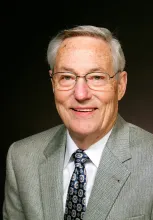
At the time of his retirement in 2016, Roy Holladay was serving the Operation Manager for Ministerial and Member Services of the United Church of God. Mr. and Mrs. Holladay have served in Pittsburgh, Akron, Toledo, Wheeling, Charleston, Uniontown, San Antonio, Austin, Corpus Christi, Uvalde, the Rio Grand Valley, Richmond, Norfolk, Arlington, Hinsdale, Chicago North, St. Petersburg, New Port Richey, Fort Myers, Miami, West Palm Beach, Big Sandy, Texarkana, Chattanooga and Rome congregations.
Roy Holladay was instrumental in the founding of the United Church of God, serving on the transitional board and later on the Council of Elders for nine years (acting as chairman for four-plus years). Mr. Holladay was the United Church of God president for three years (May 2002-July 2005). Over the years he was an instructor at Ambassador Bible College and was a festival coordinator for nine years.
