
Robin S Webber
This transcript was generated by AI and may contain errors. It is provided to assist those who may not be able to listen to the message.
I think we'll all settle back into our chairs. Certainly happy to have all of you here today. In our second seminar discussing the gospel of the kingdom of God, when Jesus Christ came to this earth in His first coming, that was the heart and core of the message that He brought to this world, the gospel of the kingdom of God. Now, earlier today, just a few minutes ago, we had Mr. McGuire giving his presentation.
In his presentation, he was talking about the time being fulfilled. And as he was discussing the material he was going through, he was bringing us an historical understanding as to what Christ meant. When 2,000 years ago, he said, the time is fulfilled, the time has now come. We today, we think about time. We move so quickly, we do so many things, we're into electronics.
We don't tend to think along the same lines. But as Mr. McGuire correctly pointed out, there were a number of things that came to a focal point at the time Jesus Christ was on earth that allowed Him to proclaim the message that He did, the gospel of the kingdom of God. And as Mr. McGuire pointed out, he turned earlier today to Isaiah 46. I'm not going to turn back to that. You've got that in your notes. For those of you who are taking notes, in Isaiah 46, it talks about how God said His purpose would be established. His purpose would be established, and He would accomplish all His good pleasure. Now, we live in an age that has plenty of bad news. In this nation, we are concerned about our national debt. We see what's happening over in Europe with their national debts. We've seen recently that a number of nations of Europe, basically in the European Union, all but Germany have had their credit rating lowered, including France, most recently. It's very scary as you watch Wall Street. You see Wall Street going up and down. You see what's happening in Iran, the possibility of them having a nuclear weapon. There's a lot of scary things. And, of course, all of us in this room are students of the Bible. And because we are students of the Bible, we understand Bible prophecy. We understand between now, in a relative time of peace and safety, and a time when Christ comes back at His second coming, there's going to be a lot of things happening, a lot of very scary things happening that the book of Revelation and the book of Daniel talk about. But in the midst of all that, as we think about the things that must take place prior to the return of Jesus Christ, all the various prophecies that show some very dire consequences for mankind, and that Christ must return to save mankind from Himself. But in the midst of all that, we have a tremendous amount of good news. The Gospel is the good news that Jesus Christ bought, the message that He brought. Jesus Christ, when He was speaking to His church, He called Him a little flock in the book of Luke.
And He said, do not fear, little flock, for it's your Father's good pleasure, good pleasure, to give you the kingdom. Another translation has that same verse saying, it's the Father's great happiness to give us the kingdom. You put those together, it's the Father's good pleasure and great happiness to give us the kingdom. So when we take a look at the kingdom of God, there is a future aspect to it, and the future aspect is plenty of good news. And we want that good news. Mr. McGuire today talked about what the Bible means when Christ said that time is fulfilled. It is my purpose today to talk about and ask the question, how is the kingdom of God at hand? Christ said that the kingdom of God is at hand. He said that 2,000 years ago. Now again, as students of the Bible, when people come up to us and they want to ask us what the Bible means, what did Christ mean when he said that 2,000 years ago? We want to have a good response. You might be talking to somebody at work, you might be talking to somebody, a next-door neighbor, maybe a family member. Any number of situations you could run into where people might ask of you a reason of the hope that's in you, they might ask you, what did Christ mean? And we certainly hope that people would have those kinds of conversations. We want to have those kinds of conversations. But before we get to a full answer of that question, let's begin to develop a little bit of a basis here for discussion. Let's begin by going over to Hebrews 1.
Hebrews 1.
Let's notice, I want to go through a little history as well. Hebrews 1.
Verse 1 and verse 2.
So we begin to see a transition.
The prophets knew something about a coming kingdom. Their understanding is not the same kind of understanding that we would have today. We would have a great deal more understanding than many people back in Old Testament times. But we see a transition. Jesus Christ began to speak about certain things. Luke 16.
Luke 16 and verse 16.
In my Bible, my New King James, this is a red letter showing the very words of Jesus Christ. Luke 16 and verse 16. The law and the prophets were until John.
Now, what did Christ mean by that? The law and the prophets signify the Old Testament era.
And the Old Testament era was until John. And that's talking about John the Baptist.
So once John the Baptist came, John the Baptist, from the terms of biblical perspective, with John the Baptist we start what we call the New Testament, or New Covenant era of the church, of history. The law and the prophets were until John. Since that time, since John the Baptist, since that time, the kingdom of God has been preached, and everyone is pressing into it.
So here we see where Jesus Christ now begins to talk about this vital message, the message of the kingdom of God.
We go back to the book of Matthew, Matthew chapter 3.
Matthew chapter 3 and verse 1.
In those days, John the Baptist came preaching in the wilderness of Judea, saying, Repent, for the kingdom of heaven is at hand.
Now here we see this whole idea of repentance. Now we will talk in future seminars about what repentance entails.
There is a lack of understanding, I believe, in the world about what repentance means. It's not penance. It's not just thinking, well, I'm sorry. It's a matter of doing something. It's a matter of changing a direction in life. It's a matter of mending the way you've been living and going a different way altogether.
So the message that John the Baptist came, he preached that message of repentance. And notice he said, For the kingdom of heaven is at hand.
Now the kingdom of heaven and the kingdom of God are the same thing. Matthew uses the kingdom of heaven. That's something that you see is very unique to his writings.
But we're talking about the same issue, the same doctrine.
For the kingdom of heaven is at hand. For this is he who was spoken of by the prophet Isaiah, saying, The voice of one cry in the wilderness, prepare the way of the Lord, and make his path straight. So here we see John the Baptist's message. He was preparing the way for Christ's first coming.
Now the church today, the Church of God, the church that we see that Jesus Christ founded, and Jesus Christ did found a New Testament church. That was one of the things he came to do. He came to do so many things. But one of the things he came to do was to establish a New Testament church, a New Testament ministry.
And there is a work for this New Testament church to do. And that work is to prepare a way for Christ's second coming. We need to make sure that we understand that as well. But here we're looking more at the first coming of Jesus Christ. We go over just a chapter to chapter 4.
Matthew chapter 4.
Again, we're kind of looking at this from a historical perspective. We're building a base to discuss things today. Matthew chapter 4 and verse 12. Now when Jesus had heard that John had been put in prison, again we're talking John the Baptist, He departed to Galilee, and leaving Nazareth, He came and dwelt in Capernaum, which is by the sea, in the regions of Zebulun and Aftali.
So here we see, again, Jesus Christ realizing, okay, John, the servant who did so much good. John had many disciples. He preached long, he preached hard. We know how his life ended in martyrdom, but he did a tremendous work for God. Jesus Christ now is going to have to resume that work, because he is the Christ.
Chapter 4 here, same chapter, verse 17. From that time, Jesus began to preach and to say, and for the kingdom of heaven is at hand. Jesus Christ, it was like a, you've seen in the Olympics, you've seen relay races. You see where one man or one woman will hand off a baton to the next. You know, they will be running full speed, then they run, try to synchronize their time, and then they hand off the baton, and then one who gets the baton takes off to continue the race.
Much of the same thing happened. Jesus Christ preached a certain gospel, a certain message. Jesus Christ is going to take that, and he's going to amplify that message in a way that only Jesus Christ could. So Jesus Christ took that message, and he also began to talk about repentance, for the time of the kingdom of heaven is at hand. Now again, we want to answer the question, what does Christ mean? What did John mean? Two thousand years ago, when they say the kingdom of heaven is at hand, or the kingdom of God is at hand.
How do you explain that to everybody, or to your own mind's satisfaction? I do want to go back to one scripture that was quoted earlier today, over here in Mark chapter 1. Let's go back there for a frame of reference. Mark chapter 1. If somebody comes up to you and they want to know about the gospel of the kingdom of God, they know you are perhaps a church-going person. And they say, well, you know, you're a church-goer.
I would like to know more about Jesus Christ and what he taught. Here in Mark chapter 1, you see a very unique and a very interesting synopsis in just a couple of verses. There's a wealth of information here in Mark chapter 1, verse 14 and verse 15. Now, after John was put in prison, so here we've got a timing element. When the gospel, the Jesus Christ, came, the Christ began to preach this message of His.
John was in prison. It says there in verse 14, Jesus came to Galilee. So we see the location where Jesus Christ began His teachings. And notice, preaching the gospel of the kingdom of God. So we've got a time element. We've got a location. We've got the heart and core of what He said. And notice, verse 15 is a summary of what He said. The time is fulfilled. Ms. McGuire talked about that earlier today.
And the kingdom of God is at hand. Again, we're going to answer, what does that mean? The kingdom of God is at hand. And notice, repent, repent, and believe the gospel. Now, in verse 15, we see the word time here. We see the word fulfilled. We see the word at hand, or the phrase at hand. All of these indicate an immediacy. All of these indicate a sense of urgency. Now, it's not a sense of urgency in terms of history.
This was said 2,000 years ago. But it is a sense of urgency for each and every one of us as individuals. When the gospel message comes to you, and God has opened up your heart and mind to receive that gospel message, then God expects each and every one of us to have a sense of urgency. What are we going to do with what we've heard? For the last 2,000 years, various ones have heard this message. You've got one parable in the Bible that talks about seed being scattered in different types of ground.
In 3 of the 4 different places, the seed was not able to grow. It is your hope, it is my hope, that as the seed is put down in your heart and mind, it will grow and it will thrive. And we each need to have a sense of urgency. What are we going to do with what God has given us? Let's turn now to Colossians 1.
Let's begin now to understand. We've gone through a little bit of history. Brian McGuire gave us a great deal of history, covered that subject very nicely. We give a little bit more to introduce this material. But the question we were asking, what does Christ mean the kingdom of God is at hand?
Well, let's take a look at something that helps now to begin with. Answer that question for us. Colossians 1.13 He has delivered us from the power of darkness and conveyed us into the kingdom of the Son of His love. So here we have a two-fold answer to that question. When Christ said the kingdom is at hand, there are two ways we can look at this. And we see that right here in verse 13.
Part 1. He has delivered us from the power of darkness. So when Christ was talking about the kingdom of God is at hand, He meant that because of His own sacrifice, because of Christ's sacrifice, we would be delivered from Satan and the power of Satan. We would be delivered because we've got a sacrifice, because we've got a Savior, because our sins can be forgiven, because we will now have an advocate up in heaven that will go before the Father on our behalf when we sin. Mr. Gwar quoted Hebrews 4 earlier today about how we have an intercessor, how we have a high priest that will go before God when we sin, because we are human, we will sin. So part of the answer is the fact that we see here in the first part of verse 13. The kingdom is at hand because Christ came, He came 2,000 years ago, and He gave His life that we might escape the snare of the devil through the forgiveness of our sins. And secondly, the second part of verse 13, and conveyed us into the kingdom of the Son of His love.
Now, you may look around the world today and say, Wait a minute, Mr. Delisandro, we're not living in the kingdom of God. I hate to tell you. I flipped on the news today, I've been reading my news magazines, I've been reading a newspaper, and I daresay we are not living in the millennium. And that, of course, is true. So how does Christ say, what does the Bible mean here, where it's talking about being conveyed into the kingdom of the Son of His love? What that is talking about is that God is now offering to you and to me, to those who will listen, to those who comprehend, to those who God is opening up their hearts and minds, He's offering us the ability now to be enrolled now in that kingdom. No, the kingdom is not here yet, but we can be enrolled. Much like if you want to take a college class, you will enroll. You will put your name down because you want to take that, you know, maybe it's July, and the class doesn't begin until the end of August, beginning of September. But you're going to enroll in that college class. But we are in the process, we can be now in the process of enrolling ourselves, I shouldn't say ourselves, God enrolls us, when we take specific action, we'll get to that in just a couple of minutes. But we can be enrolled in that life right now, and as a result of that, you and I can participate in some of the benefits of that kingdom right now, today. And that's good news. Jesus Christ came with the gospel of the good news of the wonderful world tomorrow, and that is good news. As you and I apply the Bible in our lives, as we apply the eternal truths that we see in God's words and scriptures, we can be blessed, truly blessed. If we go back to the book just prior to Colossians here in Philippians, chapter 3, notice what Paul said about our citizenship. You know, all of us, I think all of us in this room are citizens of the... well, we maybe have some of the dual citizenship in the room, but we've got most of us are citizens of this country. But we also have a citizenship that takes even precedent over that. As much as we love America or Canada, we love all sorts of things, but we have a prior claim to citizenship. Notice here in Philippians, chapter 3, verse 20. For our citizenship is in heaven. Paul here is talking to Christians. Our first call to loyalty is to the kingdom of God. For our citizenship is in heaven, from which we also eagerly wait for the Savior, the Lord Jesus Christ. Talking about the Second Coming of Christ. Who will transform our lowly body, that it may be conformed to His glorious body, according to the working by which He is able, even as it do all things to Himself. So we see that God's kingdom, the kingdom of God, yes, it's going to come in the future, but as we are enrolled now, Paul here says to the church in Philippi, that we are citizens, and as citizens, we have benefits.
We spoke about earlier, Mr. McGuire talked earlier about in Hebrews 4, how we can go before God and pray, how Jesus Christ is our advocate, Jesus Christ intercedes for us. We can have our prayers answered. We can understand the Word of God more because God gives us His Holy Spirit. These are all benefits that many people in the world don't have and don't even want. But you're a student of the Bible, and you understand these things, and you are deeply appreciative of these things.
We talk about the message of hope, the ability for us to receive these privileges, the privilege of understanding the Word of God, the privilege of having communication with God Himself. Prior to coming up here to speak, I made sure that I had my cell phone turned off. Last thing you want is a cell phone call when you're up in front of a group of people speaking. Cell phones have their limitations. I was speaking to one gentleman just the other day, and I think I was able to receive about every fourth word he was saying. I was in sort of a dead zone. But you know, the greatest communication tool we have, we are so blessed, the greatest communication tool we have is prayer. We can talk to the great God at the speed of thought, the speed of prayer, and nothing blocks that. 24-7-365. That's a tremendous privilege. It should give us a great deal of hope in a very dark time. Let's take a look at another scripture that gives us hope. Resurrection Chapter, 1 Corinthians, Chapter 15. Let's take a look at that. 1 Corinthians, Chapter 15.
I received word just last evening that a long-time member of the church over in the Detroit area, Mary Peller, died. She had been a part of the church I've known, Mrs. Peller, since the mid-1970s. She was 93 years old. Her health was failing. But to any who knew her realized that she was such a wonderful woman, and had given herself and of her home, she and her husband, Mike, for so many years. Of course, Mike preceded her in death. But they are awaiting now the fulfillment of these scriptures. Again, there are those in the world who think you die, and that's it. We have the privilege, we have the blessing, of knowing something different. That if we are in Christ, that we will be resurrected to be in that kingdom. 1 Corinthians, Chapter 15, Verse 15. Verse 50, excuse me. 1 Corinthians 15, Verse 50. Now this I say, brethren, that flesh and blood cannot inherit the kingdom of God. Now there's another aspect of understanding. We're not going to be physical beings in that kingdom. Flesh and blood cannot inherit it. It must be of the Spirit. Nor does corruption inherit in corruption. Behold, I tell you a mystery. Now it's a mystery to the world, but it is not a mystery to Christians. Because God has given us the privilege of understanding the mystery. So therefore, to us, it's no longer a mystery. Behold, I tell you a mystery. We shall not all sleep, but we all shall be changed.
In a moment, in a twinkling of an eye at the last trumpet. For the trumpet will sound in a deadly rays incorruptible, and we shall be changed. Notice here in verse 51 where it talks about, we shall not all sleep. Over the years, it has been my privilege to do a number of funerals for a good many people over the years. Family members as well as members of the church and members of the community. People I never even knew, but maybe a church member might have known and asked me to do a funeral. And certainly, as I discuss the state of the dead, the Apostle Paul here talks about sleep. Jesus Christ, when he was talking about a friend Lazarus who had died, said our friend Lazarus is asleep. And so that again gives us a great deal of information about the state of the dead.
Every one of us in this room at times have gotten into a deep sleep. And in the course of that deep sleep, we have not had the awareness of the passing of time. We fall asleep. It might be 10 o'clock in the evening or 11 o'clock in the evening. We wake up the next morning at 6 o'clock in the morning. It just seems like hardly any time has gone by, especially if we had a deep, restful sleep. The same thing is true for those who have died. A day can go by, a year can go by, a millennium can go by. They're not going to know that passing of time. But there's coming of time, we see here in a moment, verse 52, in the twinkling that I, instantaneously, at the last trumpet. For the trumpet will sound, the dead will be raised incorruptible, and we shall be changed. Verse 53, for this corruptible must put on incorruption, and this mortal must put on immortality. So here we see, in the resurrection chapter, an invitation, an invitation to the kingdom of God, an invitation to life eternal. I don't know about you, but I'm looking forward to shedding this body of mine. As one who spent a little bit of time recently in the hospital, the number of you have done the same, or maybe you're not feeling so well right now, we realize with the passing of time that these bodies are frail, and we have our aches, and we've got our pains, and we look forward to a better time. The Gospel offers that invitation. The Gospel offers that invitation now as an opportunity for us to realize we need to be in training. We need to be in training as we do something with what God has given us, to whom much is given, much is required. Let's go to Revelation and take a look at your future job in this kingdom of God. Revelation 1. Your future responsibility. Revelation 1, verse 5. And from Jesus Christ, the faithful witness, the firstborn from the dead, the ruler over the kings of the earth, to him who loved us and washed us from our sins in his own blood, again, the kingdom of God is at hand along these lines. And now notice verse 6. And is made as kings and priests to his God and Father, to him be glory and dominion forever and ever. Amen. You were designed, you are destined to be a king and a priest. To put maybe in more language we appreciate or understand, we have been destined, we are destined, to rule and to teach. Some will rule over more than others. Some will teach more than others. But we all will be ruling over something and teaching.
That's good news. That's a part of what we'll be doing in the kingdom of God.
Now, there is a popular idea in the world that right now God is calling everybody.
And if that's true, if God right now is calling everybody, and if you're taking score, keeping score, you know, I enjoy sports. I enjoy looking at watching football games and other things like that. But if you're keeping score, God's way behind. God's way behind. Is it a tug of war right now between God and Satan? Or, if you look into the Scriptures very carefully, do we see that God has his own, you know, Mr. McGuire was talking about a time table, a time plan. Is God calling everybody right now? Or is God only calling some people right now? God will call everybody at some point, but is he calling everybody right now? Let's take a look at that question because it directly involves itself with this understanding of the kingdom. Let's go to 2 Timothy chapter 1. And certainly we want to not believe what we've heard from others. We want to believe what the Bible says. 2 Timothy chapter 1 verse 8, Paul says, Therefore do not be ashamed of the testimony of our Lord, nor of me his prisoner. You know, Paul was in jail. But share with me in his sufferings for the gospel according to the power of God. Now notice verse 9. Who has saved us and called us with a holy calling. A holy. The word holy means being set apart. God is right now setting apart certain ones to give understanding to. Because you are in this room, because you are studying your Bible, there's a very good chance that God has opened up your mind to understand this.
Who has saved us and called us with a holy calling. Not according to our works. Let's be clear on that point. We're talking about the very grace of God. Not according to our works, but according to His own purpose. And grace, which was given to us in Christ Jesus before time began. So here we want to take from this, there are many things here, but one of the things we want to take from this is that we are called with a holy calling.
I won't turn there, but in Acts 2, verse 39, Mr. McGuire referred to this earlier, Acts 2, verse 39, For the promise is to you and to all who are far off, as many as the Lord our God will call. A far off. Paul was talking, Peter was actually there talking about how God would be calling people all through the ages. Not just the New Testament times, but every era of time. People God would be working with. And again, God is probably working with you. That's why you're attending this seminar today. Over here in the book of John, John chapter 6, notice God has a timing plan. In my Bible, this is mostly red letter, mostly the words of Jesus Christ Himself.
John chapter 6, verse 65, God the Father practices family planning. God the Father says, I am going to call some now. I'm not going to call some at another time, until another time. No one can come to me unless it has been granted to Him by my Father. And right now, some have not been given that granting. We can look around the world and see that's the case. We've got billions of people on this world who do not even believe in Jesus Christ. Do not even believe. So many have come and gone, have died, and have never known about Jesus Christ. Do those folks just automatically go to a never-burning hellfire? Or does God have another idea in mind for them? And we'll cover some of these items in future seminars. But here in John, we've looked at John chapter 6. Let's go to John chapter 12.
Now, lest people get the wrong impression from what I'm saying, notice John chapter 12 verse 32. Again, all red letter, all the words of Jesus Christ. And I, if I am lifted up from the earth, of course He was lifted up onto a staros, onto a cross, who's also lifted up in terms of the resurrection, if I am lifted up from the earth, will draw all people to Myself.
Yes, God does have a plan for each and every individual. Even those people who never understood or even heard of Jesus Christ. And the Bible says there's only one name by which we can be saved. That name is Jesus Christ.
So what do we do with all those people who never heard that name? Maybe they lived when Jesus Christ lived, and they lived over here in North America. They could not have heard the name of Jesus Christ back then. So what's going to happen? Well, again, that's a, maybe what's your appetite for a future discussion. Or maybe there can be some more study that you'll look into that. We've got literature that would cover that. The United Church of God does. Now, there's an interesting scripture here along the same lines of Matthew chapter 13.
You know, there are so many things in the scriptures that people think they understand. Or maybe they've been told certain things. But what does the Bible say? And again, we must always come back to what the Bible says. Here in Matthew chapter 13, Christ is asked, why do you speak to them in parables? Now, when I was growing up, and as I was making my trek through the religions, various types of religions, a common thought as to why Christ spoke in parables was because, well, Christ was, you know, kind of, he used teaching techniques where he could get to the masses.
He was talking mostly to agricultural folks. He was talking mostly to people who didn't have much money, much education. And so he wanted to use a teaching tool that can really get the point home to the masses.
That was very typical in the churches I had attended over the years. But is that why Christ spoke in parables? Matthew 13, verse 10. And the disciples came to him and said to him, why do you speak to them in parables? Okay, now, we've got the, who's going to be asking, answering the question Jesus Christ, and who he's talking to. He's talking to the disciples. Verse 11, he answered and said to them, because it has been given to you, it's been given to you disciples to know the mysteries of the kingdom of heaven, or the kingdom of God. But to them it has not been given. So many people in the world don't understand.
For whoever has to him, more will be given, and he will have abundance. But whoever does not have, even what he has will be taken away from him. Therefore I speak to them in parables, because seeing they do not see, and hearing they do not hear, nor do they understand. And then the prophecy of Isaiah is fulfilled, which says, hearing you will hear and shall not understand, seeing you will see and not perceive, for the hearts of this people have grown dull.
Their ears are hard of hearing, their eyes have been closed, lest they should see, lest they should see with their eyes, and hear with their ears, lest they should come and understand with their hearts, and turn so they could heal them. So I bring out that scripture just to show that God has a timetable. He's working with people. He's not working with everybody the same way. But for those of us in this room, not that God is just playing favorites, everyone will have an opportunity. It's just a matter of timing. But right now, those of us in this room have a very special privilege, they have a very special opportunity.
And again, the question for each and every one of us is, what are we going to do with that? What have we been doing with that? Only you can answer that, only I can answer that in our own hearts and minds. John 6, verse 44, No one can come to me unless the Father who sent me draws him, and I'll raise him up at the last day.
So here again we see this idea of being called specifically by God. Is God right now calling you? Do you have the privilege right now of understanding the Word of God? If so, Jesus Christ says, you are blessed. Because at this point in time, most in this world, billions of people, don't even know Jesus Christ's name. And yet, you have your heart and mind opened. You are being drawn right now. That's why you're here right now at a seminar. To understand. Now there's another intriguing statement that is brought out here in Matthew, chapter 22. Let's go over there for a moment.
Matthew, chapter 22. Again, here's a statement by Jesus Christ. What does he mean by this? How does this relate to you? Matthew, chapter 22, verse 14. For many are called, but few are chosen. Many are called, but few. Again, this idea of few. Few are chosen. Let's begin to understand that as well. Second Corinthians, chapter 6. The kingdom of God is at hand because Jesus Christ has come, because He has shed His blood for us. Because we have the opportunity now to be enrolled in that kingdom.
But not everybody has that understanding. A select few right now God is working with, dealing with. He is working probably right now with you. He is drawing you. You have been called. Are you going to choose to go the way you have been called? Second Corinthians, chapter 6, verse 1. We then, as co-workers together with Him, also plead with you not to receive the grace of God in vain.
Don't receive the grace of God in vain. Again, what are we doing with what we have been given? The priceless privilege of knowing some of the truth of God. Verse 2. For He says, In an acceptable time I have heard you, and in the day of salvation I have helped you. For those who are now being called by God, now is the acceptable time for you. We don't need to worry about other people. We need to think about how God is dealing with us.
We need to respond as individuals to what God is doing in our hearts and our minds. Now, if God is calling us, if God is drawing us, now is a time for us. Now is a time of salvation for us. Maybe not everybody's time, but your time, my time. Isaiah begins to say what we should do with that time.
Or he makes a certain very important point. Isaiah 55. Isaiah 55, verse 6. Where it says, Seek the Lord while He may be found. Call upon Him while He is near. And this is a gauntlet that's thrown down to all of us. For all of us to seek the Lord while He may be found. If He is drawing you, if He is calling you, if you're understanding the Bible like you never have before, God is indeed calling you.
And we need to then respond. If He is calling out to us, we need to call back to Him. We need to ask Him for more of His Holy Spirit to understand.
More of His Holy Spirit so we can do what John the Baptist talked about and Jesus Christ talked about. Which is, repent. To change our lives. To become into conformity with the way Jesus Christ would have us to live. The book of Romans, as we begin to wind down the message here for this afternoon, over here in Romans chapter 10, we see some scriptures help us to tie this all together.
Romans chapter 10, verse 6. Romans 10, verse 6. But the righteousness of faith speaks in this way. Do not say in your heart, who will ascend into heaven? That is, to bring Christ down from above. Or, verse 7, who will descend into the abyss? That is, to bring Christ up from the dead.
But what does it say? The Word is near you in your mouth and in your heart. That is, the Word of faith which we preach. That if you confess with your mouth the Lord Jesus and believe in your heart that God has raised Him from the dead, you will be saved. For with a heart one believes unto righteousness, and with a mouth confession is made unto salvation.
Now, what is Paul getting at here? Paul is making a number of points. One point is that we don't need to go anywhere to find Christ. If he is calling us, if he is drawing us, if he is opening our hearts and minds, then we can respond. We can respond right where we are at. We don't have to take some pilgrimage someplace.
We can respond right where we are at. It says, access to Him is given to us because He is opening our hearts and our minds. And if our hearts and minds are changing the way God wants them to change, in a way God wants them to change, then what comes out of our mouth, which originates in our heart, will follow the law of God, will follow the teachings of Jesus Christ, the Ten Commandments, the Golden Rule, the Sermon on the Mount, because we've been listening to God and we want to go the way God would have us to go.
Again, this is something that God does for us. He helps open our hearts and minds. He helps us to see and understand the Scriptures. He will give us the power we need to go and live the life He is asking us to live. But again, many are called, a few chosen. It doesn't come our way automatically. We have to make a choice. We have to make a choice to allow God to do something in our hearts and minds.
We have to make a choice. And it's a difficult choice. It's a hard choice. Being a Christian is not easy. We've got to fight against the whole world. We've got to fight against Satan the devil. We've got to fight against their own inner nature. That's not easy. It's very, very difficult. We've got to choose to do that. We've got to choose to do that every day, every minute of every day.
And some, when they see how difficult that is, they say, No, I'm not going to make that choice. I'm not going to make that choice. Well, no one, you know, God is a God who believes in free moral agency. He's not going to force His will on anybody.
But why are we having these Kingdom of God seminars? We're not here to develop membership for United Church of God. We're not here to get money from anybody. But here in this chapter of Romans, chapter 10, let's look at verse 14 and 15. How then shall they call on Him whom they have not believed? How shall they believe in Him whom they have not heard?
How shall they hear without a preacher? And how shall they preach unless they are sent? As it is written, how beautiful are the feet of those who preach the gospel of peace, who bring glad tidings of good things. The reason United Church of God is sponsoring these seminars is because we do understand the Word of God. And we want to share this with whoever wants to listen. We want to impart the truth as God has shown us His truth.
And we offer that to you free of charge as it was given to us. We have on our website, as you're aware, those of you who've gone there, a great many pieces of literature. Today we've been going through this one right here, the Gospel of the Kingdom of God. It would be good for us to be very conversant with what's in this booklet, because this is a booklet that offers so much hope in a world that's so dark. The Good News of the Kingdom of God is one of the chapters.
The Promise of a Coming Kingdom is another chapter. The Gospel of Jesus Christ, salvation in the Kingdom. And the last chapter here in this booklet, how you can enter the Kingdom of God. Life-giving information. People in the world around wish they could understand. You can. God is opening up your hearts and minds. He's calling you. He's directing you. Now, again, we appreciate the fact that this is not done because of our great intellect.
This is being done through the grace of God. As a matter of fact, since we're here in the Book of Romans, we've only got a couple more scriptures to go through here. Let's look at Romans 6 and in verse 23. We never want to forget this verse. Romans 6, 23. For the wages of sin is death, but the gift of God. We do not believe in pulling ourselves up by our own bootstraps.
The gift of God is eternal life. Eternal life in Christ Jesus our Lord in the Kingdom of God. In the Kingdom of God. Final scriptures over here in Revelation chapter 1. Revelation chapter 1 and verse 3. Blessed is he who reads and those who hear the words of this prophecy, and keep those things which are written in it, for the time is near. The Gospel of the Kingdom of God, the Kingdom is at hand.
Jesus has died for each and every one of us. We can now be enrolled in the Kingdom he preached about. Now, events that are prophesied in the Book of Daniel, the Book of Revelation, the Major and the Minor Prophets, these things are going to be coming upon us in fairly short order. It's a very dark times in the world. And yet, you and I can have tremendous hope as Christians in this message of the Gospel of the Kingdom of God. Hopefully this has answered a great many of your questions regarding this particular subject.
In the next seminar, we're going to cover more in detail about God's calling. We're going to talk more in detail about how we can be enrolled and participate in the Kingdom of God, what repentance is all about. We can wait until that time, which I believe will be in May. Until that time, we look forward to sharing some more refreshments with you over at the tables.
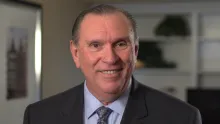
Randy D’Alessandro served as pastor for the United Church of God congregations in Chicago, Illinois, and Beloit, Wisconsin, from 2016-2021. Randy previously served in Raleigh, North Carolina (1984-1989); Cookeville, Tennessee (1989-1993); Parkersburg, West Virginia (1993-1997); Ann Arbor and Detroit, Michigan (1997-2016).
Randy first heard of the church when he was 15 years old and wanted to attend services immediately but was not allowed to by his parents. He quit the high school football and basketball teams in order to properly keep the Sabbath. From the time that Randy first learned of the Holy Days, he kept them at home until he was accepted to Ambassador College in Pasadena, California in 1970.
Randy and his wife, Mary, graduated from Ambassador College with BA degrees in Theology. Randy was ordained an elder in September 1979.
