
Jorge de Campos
This transcript was generated by AI and may contain errors. It is provided to assist those who may not be able to listen to the message.
Do we really comprehend the meaning of the Day of Atonement?
Obviously, we understand it is the day that symbolizes when Satan will be imprisoned. It's also a day that we fast, that we afflict our souls. And do we comprehend what is Christ's role, which is symbolized by this day as well? Is it just to put Satan away?
Are these three disjoint, or do they make sense when we put them together into one great all-encompassing meaning? Now, we know all God's early days are revolved around Christ's role, because that's what Christ is doing in the plan of salvation. And so Christ has a big role to play in the meaning of this day.
Now, in English, we have a word for the Day of Atonement, which obviously is Day of Atonement, right? But in Portuguese, the word they use is expiation. And if I was to talk to you today is a Day of Expiation, you'd probably look at me cross-eyed. But actually, in the dictionary, Atonement and Expiation are symbolic, are anonymous. Basically, expiation is the meaning is to make repair to be one, or to be at one, because of guilt, or sin, or wrongdoing. So indeed, the translation into English of Atonement is very accurate, and it's very meaningful.
Now, some people also get confused and say, well, you know, it's kind of like the Passover, and they get confused between the two. But they're very different. And they should not be any confusion. So it is critically important for us to understand Christ's role, which is symbolized by the Day of Atonement. Now, you and I know on Passover, a Passover lamb is offered, and it's clearly Christ's sacrifice and during the Passover ceremony, we have the foot washing, symbolizing humility and service.
We got the bread, symbolizing suffering for our healing, and we got the wine, symbolizing Christ's death, giving his blood for us. And we know that he was pierced on the side, and his blood poured out, leading to his death. So the blood being poured out is what gave his life for us, and we understand that very clearly related with the Passover. We probably recall when we were counseled for baptism that we read Acts 2.38, and when Peter on the Day of Pentecost tells them about who Christ is and what he did, and then they realized, what have we done?
And then he said, Repent and be baptized for the remission of your sins. So we know that the giving of Christ's blood, which caused his death, is for the remission of our sins, for our sins to be forgiven. Also, if we turn, and I'll turn with me briefly, to Romans chapter 5. Romans chapter 5, and we're going to start reading in verse 8.
Romans 5 verse 8. But God demonstrates his unloved towards us, in that while we were still sinners, Christ died for us. And much more having now been justified by his blood, and that relates to the Passover. Another word for justified is made right with God. Another word for that is reconciled with God. We have been justified. We have been reconciled with God by his blood. We shall be saved. And yeah, we see something that is very important, because it says you shall, future, be saved. You see, so at the Passover, we have the Passover lamb points to Christ, but on atonement, we have two goats.
And one is killed, and the other one is maintained alive. Now, as we read Leviticus 16, which we're going to read a few sections in a moment, and as it was made reference to in the sermonette, we realize that when we focus on the ceremony of Leviticus 16, the main focus is the role of the high priest, related to the sacrifices and around the goat that died.
But there is one important point that is often overlooked, or we don't pay a lot of attention to, is that it says the high priest is then to bring the blood inside the veil. Now, that is different than when Christ died and the blood was poured and he died.
Now, the high priest is to take that symbolic blood of the goat that died, which represented the sacrificial lamb, which was Christ, is now to take that blood inside the veil. And he has to do certain things with that blood inside the veil. It is important to understand these two, because he is now talking about Christ's atoning work as the high priest when the blood is brought into the Holy of Holies. And we'll go into that and we'll see that both in Leviticus and in Hebrews.
So, what is the meaning of the Day of Atonement? Yes, it is the day that Satan will be imprisoned. But only after the high priest, and that's the high priest on Leviticus 16 was picturing Christ as the high priest after the Lord of Melchizedek, only after the high priest, which is Christ, makes an end of attention. Of atoning.
We'll read that in Leviticus 1620. So, it's only after Christ makes an end of atoning when he brings the blood into the Holy of Holies.
And then, after that, then, Satan is imprisoned so that he is no longer able to deceive the world. And then mankind, then, will be united with God through Christ's work. And so, yes, the Day of Atonement is the day when Satan will be imprisoned. Yes, the Day of Atonement is the day that we afflict our souls. For us to be at one. And, ultimately, all of mankind to be at one with God. When you and I are a little weaker, a little hungrier, a little frailer, a little thirstier, you realize that you need food. But, spiritually speaking, we need God, spiritual food. And that brings us and makes us get closer to God to be at one. And so, yes, those two are true. But the third point that I really want to focus on today is, do we really get the symbolism of Jesus Christ's role as our I-priest after He went to heaven? In other words, after His resurrection. Now, we were reading in Romans 5, verse 9, and it said, We shall be saved from wrath through Him. But now, as we read, verse 10 says, For if when we were enemies, we were reconciled to God, it was we made right with God, we were justified with God, through the death of His Son, much more. Having been reconciled, we were reconciled. We shall be saved by His life. Now, this is an important statement. We shall be saved by His life. Christ is fulfilling an important role now that He is alive, as being our high priest in heaven, defending us and advocating for us. And so, Passover, in a sense, points to Christ's work that He's done for us to reconcile us and redeem our lives through His death. A Talmud points to His work that He's doing now that is in heaven, because He's alive with His blood. And we'll go into a little bit more detail about that. His blood, which symbolically is taken to God's throne. And so, my purpose today, brethren, is to remind you of Christ's role as high priest, as He prepares you and I to rule in the world tomorrow. So that today we can be at one with Him, and ultimately the whole of mankind. And so, I want to underline the paper, a bigger part of the role, the responsibility of the high priest. In the context of the Day of Atonement. Why? So that we, with Christ, and without Satan's influence being around, can help Christ in the world tomorrow to rule with Him. So we are being prepared now, and Christ's role, Christ's job that He's doing now, saving us, is one of helping us to be at one with God.
So let's look at, very briefly, at Leviticus 16. Leviticus 16, and I'm not going to read every single verse, but in verse 1 and 2, as it was read in the sermonette, we can see that they were supposed to take a goat, and He was supposed to take a goat, and we can see that in verse 3. A bigger part of the bull, a bigger part of the bull. A bigger part, and I apologize, he was supposed to take a little bullock, a bull as a sin offering, and a ram as a ban offering for himself. So the high priest was supposed to take a bull for himself. We can see that in verse 3 and also in verse 6. Aaron shall offer the bull as a sin offering, which is for himself. Basically, what it is, is Aaron as the high priest is going through a, let's call it a process to cleanse himself so he can actually represent the true high priest, which is Christ, can symbolically represent the true high priest. So the physical high priest has to, quote-unquote, sanctify himself. We see that also in verse 11. He says, Aaron shall bring the bull of the sin offering, which is for himself, and make atonement for himself and for his family and his house, and shall kill the bull as a sin offering, which is for himself. And so that first section of the whole ceremony, he's going to first, quote-unquote, purify himself, sanctify himself. This is because he symbolically now, from now onwards, he is going to act as a high priest, but representing Jesus Christ, Christ's role after he is resurrected. And that's why we have the symbolism of the two goats, because we can see in verse 5 that they are to bring two goats, and then in verse 7 and 8, you can see it was to cast lots to see which goat would represent Christ, and which goat would represent the scapegoat, the Hebrew word is azazel, which is a Hebrew word that means a demon, which actually represents Satan. So we had one goat that represents Christ, and another goat that represents Satan. The goat that represented Christ was to be killed, and then he was to take that blood into the Holy of Holies. But in addition to that, you can see in verse 12, Leviticus 16 verse 12, he says, and then he also shall take the censer full of burning calls of fire from the altar before the Lord with his hands full of sweet incense beaten fine.
Sweet incense beaten fine is the prayer of the saints. You read that in Revelation 5 verse 8, is the prayers of the saints. And so, instead of now as looking at Aaron as a high priest, let's look at Christ as the high priest of Melchizedek. Christ has now been resurrected, and he is now taking the prayers of the saints to the Father, beaten fine. In other words, it's good to pray in detail. And so, some of the prayers of the saints may be related to hey, I've seen the game.
I've done this. Please forgive me. And then Christ, the high priest, as our defense advocate, he takes them to God. God hears our prayers and hears our petition in front of that heavenly court. And then we read in verse 14, and he says, then he shall take the blood of the bull. And you also see that he is in verse 15, that he will do that with the blood of the goat, which is for the people.
And then in verse 15, says, he takes that blood inside a veil, which basically represents the high priest taking the blood of the goat that symbolized Christ and taking symbolically Christ's blood to the throne. And this is different than the blood that was poured out at death. And so now in atonement, we have the blood being taken to the throne immediately after the prayers of the saints.
Let's just look very briefly at 1 John chapter 1 verse 7. First John, and keep a finger there on Leviticus, but in 1 John 1 verse 7, we can see that you and I should be walking in the light now after we are baptized. It says, we walk in the light, as God is in the light and we have fellowship with one another. And the blood of Jesus Christ, his Son cleanses us from all sin, cleanses us now. So we're walking in the light, but cleanses us from all sin.
You have been baptized, so Yah is looking at a situation. You've been baptized, and therefore now you're walking in the light, and the blood of Christ is now cleansing your sin. Why? Because Christ is in the Holy of Holies, symbolically taking first your prayers, asking for forgiveness, and then taking his blood and sprinkling his blood, forgiving you any sin that you may have done since baptism.
And you may say, oh well, you're not supposed to sin after baptism. Well, it says, yeah, in verse 8, it says, if we say we have no sin, which is talking to Christians, we deceive ourselves and the truth is not in us. If we confess our sins, that prayer, symbolized by the incense, beaten small, detailed prayers to God asking for our forgiveness, he is faithful and just to forgive us and to cleanse us from all unrighteousness. And this is after baptism. And if we say we have not sinned, we make him a liar and his word is not in us.
So how does he cleanse us from all unrighteousness? Because he's taking his blood, symbolically, to the Holy of Holies and saying, and I'll put my name, but you can put your name. Well, George done it again, but he has his prayer asking for forgiveness and his commitment is really going to try to overcome now and he's going to really do better.
And he has my sprinkling, my blood, and this is after baptism and he's cleansed. You see, let's go back to Leviticus 16. And in verse 15 and 16 of Leviticus 16 says, Then he shall kill the goat of the sin offering, which is for the people, that bring its blood inside the veil, and do with that blood as he did with the blood of the bull, and sprinkle it on the mercy seat and before the mercy seat. So he's sprinkling this symbolically, the blood of the goat. That's now I'm talking about Christ, not the physical high priest. The physical high priest will do it on the tabernacle of meeting.
But Christ symbolically is now taking his blood and his blood besides being poured and dying for us. His blood now is cleansing us. He is atoning us in this period between baptism and the resurrection. He's atoning us. He's cleansing us.
And continue it and sprinkle it on the mercy seat and before the mercy seat. So he shall make atonement for the holy place.
Well, it's interesting the word place is in italics. And if we look at and if we think of what we heard in the sermon, that we now are the temple of God. And so he's making atonement for us. We are God's people. He's making atonement for us because of the uncleanliness of the children of Israel and because of their transgressions and all their sins. And so he shall do for the tabernacle of meeting. And so he goes on. So basically it shows Christ is cleansing us after baptism. Granted, yes, we should be walking in the light. Yes, we should do no sin. But we do do. We do fail. And when at that moment you and I pray and ask God for forgiveness, Christ takes that prayer, which is incensed, beaten small, to the Father. And at the same time, he cleanses us. But understand that it's not just that, because Satan is out there, Revelation 12, verse 9, the accuser of the brethren, at that same court case, and saying, look at what he or she's done. And then Christ presents our prayers of repentance, and then Christ cleanses us. Christ is fulfilling a role today of atoning us, an ongoing reconciliation process, cleansing us, until he has completed the cleansing process. You see, so it's like a two-step stage. First is the Passover, which obviously has got unleavened bread and Pentecost receiving the Holy Spirit, which ties into our baptism. And second is the sprinkling of Christ's blood, symbolized by the Day of Atonement, which is applicable after baptism when we sin, which we shouldn't sin. But we are human beings, we fail, and God has provided that for us. Even Paul, at the end of Romans chapter 7, says, there is a law in my members. That's from verse 15 through verse 25 of Romans 7. There's a law in my members of sin. Who will deliver me from this? And he says, thank God for Christ. You see, God works with us on the condition that we believe in Him. And believe, brethren, believe always means obey. If you believe what somebody tells you to do, you're going to do what they tell you to do. So believe means obey. So, provided we believe and we repent, and that is sealed with a commitment called baptism, in which we make a commitment, we make a vow that we are going to change. And then we receive, through the laying on of hands, the Helper, God's Holy Spirit, to help us to overcome. But it's an ongoing process. It's an ongoing process. You and I at baptism are not immediately there. Baptism is step one. Now, you and I have to walk step by step and go through this atoning process. Ongoing atoning process. Ongoing further reconciliation process. Further getting ourselves right and redeeming ourselves as we go along with the help of God's Holy Spirit and Christ's blood, so that we can ultimately be counted worthy to be with Christ at His coming.
That's why it says in 1 John chapter 2 verse 1 that Christ is our advocate, is advocating for us.
So we can tie this, therefore, now with Isaiah 58, because Isaiah 58 now brings in our responsibility in this process. Yes, God, through Christ, has put all this in place for us. What is your role and my role? Obviously, your role and my role is to repent, is to actually obey God. And now if we go to Isaiah 58, and it's actually, in a sense, talking to God's people. Think about it. I mean, quite often we say, Isaiah 58, cry aloud, spay not, we've got to preach the gospel, but it's actually, say, tell my people! Which, spiritually speaking, it's you and I, the Church of God. So it's cry aloud, tell my people their transgressions and their sins. In other words, we need to repent. And then it goes on and it says, yes, they seek me daily, and they fast. But they fast the wrong way. And it goes on explaining how the wrong way is, people fast, and after the fast, well, we break the fast, we'll keep going the way we did before. But we should keep with us the deep, profound lessons that we learn through the physical fast to say you and I cannot continue being the same. And that's why then it says, in verse 6 of Isaiah 58, because before verse 6, saying, this is the fast that I don't want. You know, people fast like a strike. They go on a fast to strike. No, that's not what God wants. Verse 6, he says, the fast that God wants is to loosen the bonds of wickedness, to stop sinning, to undo heavy burdens. Quite often we put every burden on other fellow Christians to let the oppressed go free. And that you break every yoke. This is the fast that God wants. That we, after we finished fasting, because as we fast, we become more and more like God is, we become more and more at one with God, because we feel and know and understand we need God. But now, when the fast is finished, oh well, we go back to the old way. No, we gotta loosen the bonds of wickedness. We gotta undo the heavy burdens. We gotta let the oppressed go free. There's gotta be a change how we treat other fellow brethren and other people. We have to change, brethren. That's why it says in verse 1, cry aloud and spare not, tell my people their transgressions. It's actually talking to us. And that's why you and I have to examine ourselves, and we fast, when we fast, surely examine ourselves and look at ourselves and say, how can I change and become better? More at one with God. More like God. And that goes hand in hand with the high priest's role of atoning us, because when we realize that we pray, we bring that prayer, beaten small, to the throne and ask for forgiveness. And Christ's blood symbolically is taken up and sprinkled for us and forgives us. And this, brethren, is after we are baptized.
So, our high priest is interceding for you and I every day after baptism, obviously today, and tomorrow, until we are changed to spirit beings. Now, let's go back to Leviticus 16. Leviticus 16, verse 17. Now, look at this, verse 17. There shall be no man in the tabernacle of meeting. When he goes out to make atonement in the holy place, there is to be no man where the high priest goes, which is Jesus Christ. There is no man in heaven. That's what it means. Nobody is in heaven at that moment. Until he comes out and he makes that atonement, right? And so, until he comes out, that he says, yeah, when does he come out? That he's second coming. When Christ comes out, comes back to earth, that's when he comes out. By the way, that's at that time that until he comes out, that's his second coming and that is the year, probably, of Jubilee. And you know, the trumpet of Jubilee is blown on the day of atonement as well. So, there's a lot of meanings put inside one or the other. But yeah, we can see that the day of atonement demonstrates Christ's responsibility as our high priest of the new covenant before his return to earth. He helps us daily to overcome, to change. And therefore, this is very applicable to you and I. Now, this is detailed in a slightly different angle in the book of Hebrews. So, let's now look at the book of Hebrews and I will start in chapter 2. In chapter 2 verse 16. Hebrews chapter 2 verse 16. We see, therefore, in all things he had to be made like his brethren, that he might be a merciful and faithful high priest in things pertaining to God to make propitiation for the sons of the people. Christ, in all things, had to be a human being to go through it like you and I, go through so he can help us. And verse 17 and now verse 18.
He says, for in him he himself has suffered being tempted, he is able to aid those who are tempted. You see, so Christ did not make himself to be an angel and go to the angelic domain, as it says in verse 16, but he came to the human domain to be like a human being so he could be a high priest for us. So he took the human form to help man. So and then we read in chapter 4 of Hebrews 4 verse 14 and 15. It says, seeing then that we have a great high priest who has passed through the heavens, Jesus, the Son of God, let us hold our confession, for we do not have a high priest that cannot sympathize with our weaknesses, but was in all points tempted as we are, yet without sin. You see, so he has compassion for you and I. And so when he takes your prayers and my prayers, beaten small, he has compassion for us and he says to the Father, forgive him or forgive her, and Yah is sprinkling my blood symbolically to forgive us. And then in verse 16, he says, let us therefore come boldly to the throne of grace, that we may obtain mercy and find grace to help in time of need. And when we come to him in time of need, humbly, repentant, moldable, he will help us. And that's why we fast today to be moldable, to be humble, to be repentant. And then God takes note when we change. In Hebrews chapter 5, verse 5 through 8, we read, and so also Christ did not glorify himself to become my priest, but he was, but it was he who said to him, he the Father who said to him, you are my son, today I've begotten you. And he also says in another place, that's the Father, says you are a priest forever according to the order of Melchizedek. So Christ is our high priest according to the order of Melchizedek, who in the days of his flesh, when he had suffered up prayers and supplications with them and cries and tears, so Christ went through it, then he cried. He had tears when he struggled against temptation, but he did not sin. He was able, the Father was able to save him from death, and he was hurt, Christ was hurt, because of his godly fear. And you and I need to have godly fear and respect for God, so that we change and we repent. Versailles, though he was a son yet, he learned obedience. He learned obedience. That means we got obey as well, under stress and difficulties, by the things which he suffered. And so he learned to be obedient. Well, he was always obedient, but obedient under suffering. He learned that as well. Let's look at chapter 8, verse 1 and 2. Now this is the main thing of the things we are saying. We have such a high priest, who is seated at the right hand of the throne of majesty in the heavens, minister of the sanctuary, and of the true tabernacle, which the Lord erected, and not man. So that physical tabernacle was just a symbol or a model of the godly tabernacle in heaven. And so it was enacted by the high priest something which was basically what Christ is doing in heaven.
And then verse 5, the tabernacle and that, who served the copy and shadow of the heavenly things, as Moses was divinely instructed when he was about to make the tabernacle, for he said, see that you make all things according to the pattern shown you on a mountain. So God showed him a pattern, and he had to build everything exactly according to that pattern, because it was a shadow of what is in heaven. And that enacting of the physical high priest after he plans himself to be able to represent Christ, that is very symbolic of what Christ is doing with us today. Let's read in verse 6, Hebrews chapter 8. But now he has obtained a more excellent ministry, inasmuch as he is also the mediator, that's Christ, of a better covenant, which was established on better promises, which is eternal life, better promises. And so the symbols of the old covenant were important as lessons, and you and I need physical lessons to learn spiritual lessons. And that is a great advantage of the new covenant, because we have a spiritual high priest. And so, brethren, the meaning of atonement then is carefully, carefully connected with the role of the high priest, which is Christ. And he is interceding for you and for me, for us, before God in his heavenly throne, to repair any wrongdoing, in other words, to forgive us anything that we may have done in the meantime, in other words, to make us at one, to make us one united, reconciled, with God. You see, so our defense advocate takes every single accusation that Satan throws at you, and he is going to remove that accusation. But ultimately, after he comes back and he's finished cleansing the temple, which is you and I, so that you and I are ready to be spirit beings, so that we are at one to be spirit beings, after he's finished that, then he comes to earth and then puts Satan away, so that in a millennium there's no deceiver.
You see, so God wants a clean relationship with you and I for us to be united with him. The high priest, that's Christ, wants to have a special affinity. He wants you and I to have a special affinity with God. But you and I have to do our part. Affleting our souls helps us to fully examine ourselves and to completely repent to be at one with God. And so we have both roles working together. And brethren, in the end, it's a matter of life and death. Because it says, if you don't do this on the day of atonement, you will be out, out! Now, you know Christ's lost prayer. After the foot washing and Passover, the lost prayer that he described, that he did with his apostles, that is written down in great detail in John 17. But at the end of that lost prayer in John 17, starting in verse 20, and I would equate this like his lost will. Lost will in the testament. Like before you die, what is your lost will? So just before he died, this was his lost will that he prayed for you and I. And it's John 17 verse 20. I do not pray for these alone, but also pray for those who will believe in me through their word. In other words, you and I that believe in Christ because of the word of the apostles. That they may be one. That means you all, us all, may be one. As you, Father, are in me and I knew that they may be one in us. God wants us to be one. God wants us to be at one. That's why there is this whole process of atonement. That's what Christ is doing for us now. That the world may believe that you and sent me. And the glory which you gave me, I have given them that they may be one just as we are one. I in them, you in me, that they may be made perfect in one. Christ wants us to be united. Christ wants us to be one. And that's why he goes through a process of at-one-ment atonement.
God's goal through Christ and with the help of his power, God's Holy Spirit, is for us to have the mind of Christ. To think like Christ does. But we've got to do it voluntarily and we've got to do our part. He wants us to have that same faith, that same trust, the same values, the same love as God has. He wants us to be one. That's why we're reading Philippians 2 verse 5, let this mind be in you, which was in Christ Jesus. That's what Christ wants in us. And we know that this atonement ceremony by the physical high priest was only done once a year, once a year on the day of atonement.
And look at Hebrews chapter 9. Hebrews chapter 9.
We read verse 6.
Now, when these things had been thus prepared, the priests always went into the first part of the tabernacle performing their services, but into the second part, the high priest went alone once a year, not without blood, which he offered for himself and for the people, sins committed in England. So you'd bring the blood of the goat as well. And the Holy Spirit indicating this, that the way into the holiest of all was not yet made manifest while the first tabernacle was still standing. This was symbolic for us for the present time in which both gifts and sacrifices are offered, which cannot make him who performed service perfect in regard to conscience. So those offerings in the Old Covenant could not make people perfect regarding conscience.
But now jump to verse 11. Verse 11. But Christ came as a high priest of good things to come with the great and more perfect tabernacle not made with hands that is not of this creation. There was a tabernacle that's in heaven, God's throne, and not of the blood of goats and calves, but of his own blood. He entered the most high place, once for all having obtained mercy, having obtained eternal redemption. For if the blood of bulls and goats and ashes of an aphor sprinkling the unclean sanctifies for the purifying of the flesh, how much more shall the blood of Christ, who through the eternal spirit offered himself without spot to God, cleanse our conscience from dead works to serve the living God. And so that is very important. That is very important. That's why he is our high priest. And he goes to the Holy of Holies and he cleanses us. You see, that ceremonial law was only a shadow of something much better. We read that in Hebrews chapter 10 verse 1. For the law having a shadow of good things, that ceremonial law was just a shadow. But God wants us now to come to him anytime. You and I don't have to come to him only through the high priest on the day of Atonement. We can come to him any day, every time. That's what it says here in verse 14 of chapter 10. Chapter 10 verse 14. For by one offering he has perfected forever those who are being sanctified. He has only done one offering. It's the same blood, but he is perfecting us forever who are being present continuous, being sanctified. And that's what we need to do, brethren. It's a new living way. And so he says, have boldness. Don't be afraid. Have boldness. Brethren, there's a very important meaning of the day of Atonement. Yes, Satan will be put away at the end of all this. But a really important role is Christ's role that he's doing now to atone you and I. And you and I need to be repentant as we afflict our bodies and really come to true repentance so that we can be one with him. Remember, remember, at the end of Hebrews chapter 13 in verse 5, Hebrews chapter 13 verse 5, he says, I will never leave you or forsake you. God will never leave you or forsake you unless you walk away from it. And so we need to use this day of Atonement as we afflict our souls to meditate. Where can we loosen the bonds of wickedness? Where can we undo any specific heavy burdens? And how can we let the oppressed go free? You and I are being trained today to humbly rule the world tomorrow with Christ's help.
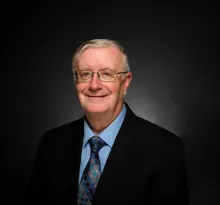
Jorge and his wife Kathy serve the Dallas (TX) and Lawton (OK) congregations. Jorge was born in Portuguese East Africa, now Mozambique, and also lived and served the Church in South Africa. He is also responsible for God’s Work in the Portuguese language, and has been visiting Portugal, Brazil and Angola at least once a year. Kathy was born in Pennsylvania and also served for a number of years in South Africa. They are the proud parents of five children, with 12 grandchildren and live in Allen, north of Dallas (TX).
