
Jorge de Campos
This transcript was generated by AI and may contain errors. It is provided to assist those who may not be able to listen to the message.
Brethren, what is the central picture of the Day of Atonement? Is it a day of sadness? Sure, we afflict our souls. But you know, brethren, it's a day of great joy. It really is. Of in that joy and satisfaction. You know, it's like we heard in the sermonette, that a warden that drinks in through God's Holy Spirit, that the one of the fruits of God's Holy Spirit, besides love, is joy. It's an inner joy and satisfaction. And there are reasons for us to be joyous during this day of Atonement, amongst the affliction of our souls. There are reasons to be joyous. Now, in the Passover, a land is sacrificed. During the Atonement, we have the story of two goats and one representing Christ. And people get a little bit confused, saying, how come is it like a repetition of our soul, which obviously it is not, but some people may get a little bit confused. Also, there's two goats. Why two? Why not just one? What are the meanings and the symbolisms behind this? And how is it that we can be joyous through this?
So today, my purpose, brethren, is to look at that symbolism and to review our understanding based on the scriptures and then extract four practical lessons. Obviously, there are many lessons that you and I can extract, but we're just going to focus on four today. Now, the Passover is a land, the Passover land, that represents Christ. Christ sacrifices for us and the giving of his life, the shedding of his blood for our sins. That is the Passover. And that opens up the possibility after the Passover for us to have the plan of salvation open for you and I. And therefore then, we have the Holy Days symbolized by God's power. That's by God's Holy Day plan. We've got a booklet that covers that in detail. I'm going to read a few sections out of this booklet today, but it's a good book for you to actually study during the season as well and to get a deeper understanding of the meaning of God's plan of salvation.
So, part of God's plan of salvation, towards the end, we have the Day of Atonement. And if you turn with me to Leviticus 23, where it describes all the Holy Days, if you turn with me to Leviticus 23, Leviticus 23 describes all the Holy Days. And by the way, brethren, just mentioning right here at the beginning of Leviticus 23, it says, for instance in verse 4, these are the feasts of the Lord.
Now, it does not say these are the feasts of the Jews.
They're not only Jewish Holy Days. Yes, they're Jewish. They're Israelites. They're American. They belong to every nation because they're gods. They're gods, Holy Days. And so, towards the end of the explanation of these Holy Days, it gets down to verse 26, where it describes the Day of Atonement. So, we're looking at Leviticus 23, verse 26.
And then it reads, And then it reads, The Lord spoke to Moses, saying, Also the tenth day of his seventh month, and today is the tenth day of the seventh month in God's caliber, shall be the day of Atonement.
It shall be a holy convocation for you. In other words, a time for us to get and gather together, and that's what we're doing out today. You shall inflict your souls, and that's what you and I are doing by fasting, both with food and drink, and water and drink. And so, you shall inflict your souls and offer an offering made by fire to the Lord. And even though we don't do physical offerings by fire because they point to Christ, and the ones that are supposed to do are the new bites, and furthermore, there's no temple. In the world tomorrow, that will be done, which we still point to Christ. We don't do that today, but we still gave an offering today. Anyway, we gave an offering, and that's what we do. And also in verse 28, you shall do no work on that same day. And brethren, we don't work. We don't work today, for it is a day of atonement to make an atonement for you before the Lord your God. In other words, to make us at one with God. For any person who is not afflicted in solving, there was any person that does not fast about the liquid and food on that same day, shall be cut off from these people. And if any person who does not, who does any work on that same day, that person I will destroy from among these people. Which means they will not have eternal life if they destroy.
They will not have eternal life. You shall do no matter of work. It shall be a statute forever throughout the generations in all the dwellers. You shall be a Sabbath of solemn rest, and you shall afflict your souls. And it says that for the third time, on the ninth day and evening. You know, it was from the night of day at sunset, at evening. That's how you count a day. Till the evening, tonight at sunset, from evening to evening, you shall celebrate the Sabbath. And in fact, this is the scripture that clearly indicates that the Sabbath is up to kept from sunset to sunset. And it's actually talking about the Day of Atonement. So the Day of Atonement is one of God's pieces. We know that. But it describes the ceremony of the Day of Atonement in Leviticus 16. So I'm going to ask you to just turn to Leviticus 16 and maybe put a marker there or a piece of paper, because we're going to be in and out of Leviticus 16 a few times. So it'll make it easier for you to come back to it later on. Now, Leviticus 16 is clearly about the Day of Atonement, because in Leviticus 16, towards the end of Leviticus 16, after it explains the ceremony, it says in verse 29, it says, For this shall be shall be a statute forever for you in the seventh month on the tenth day of the month. So it's on the Day of Atonement. You shall afflict your souls and do no work, and whether a native of your own country or a stranger who dwells among you. So it clearly is talking young about the Day of Atonement. So let's look a little bit more about the ceremony. Now, this ceremony is composed of different animal sacrifices, and I want to focus basically on three. There's a bull, and there's two goats. There's also other animals that are offered for burnt offering, which are done at the end, etc. So there's different meanings with all of them, but I want to focus the meaning on the sin offerings, not on the burnt offerings. The burnt offerings, which is the ram and the burnt offerings, I'm not concentrating on that, but I'm concentrating on the meaning of the bull and the two goats. So the first one is the bull, which we can read in Leviticus 16, and we start in verse 6. And it says, An Aaron shall offer the bull as a sin offering, which is for himself. So here we have a high priest.
Think about it. He's a high priest. He's a high priest. He's the priest above all the other priests, divided by all the other divides. He's a high priest. And he's the only one that is supposed to enact the ceremony, and only done once a year. But because he's a physical human being, because remember, as a high priest, he's going to represent Jesus Christ in the ceremony of the ghost. He's going to represent Jesus Christ as a high priest in the ceremony of the ghost. And so, before he can represent Jesus Christ as a high priest, he's going to offer offering for himself.
In other words, to purify himself so that he can symbolically represent Jesus Christ. And so, we read here in verse 6, An Aaron shall offer the bull as a sin offering, which is for himself. And he shall make a tournament for himself and for his family and for his house. So, it basically is to give him rights so that he can represent Jesus Christ in this ceremony.
So, he has the first lesson, for example. First practical lesson I want to take from this whole day of the tournament ceremony. And you're going to see just now, he's a very joyous occasion as well. And the first one is that we are also a holy priesthood. You can read that in 1 Peter 2. We are a holy priesthood. We are a special people, a special generation. So, symbolically, we also take responsibilities like that. Okay? And just like he has to purify himself, we have to purify ourselves too. And how do you and I purify ourselves? By examining ourselves through prayer and fasting. That's what you and I are doing. We are praying and we are fasting during this day. We have special extra time for prayer. You'll have extra time to pray this afternoon. And therefore, you'll be able to be a lot closer to God. And therefore, as you and I closer to God, we have more of his spirit and we have that peaceful joy that comes into us.
So, we don't fast to demand anything from God. It's important that we understand that. We don't fast, like people in the world do, like they do a hunger strike. You've heard of hunger strikes. People go on a hunger strike because we want this. And therefore, we go on a hunger strike. I mean, you even remember if you read in Acts, there were those, what is it, 40 men that said, we promise we'll not eat and drink until we kill Paul. Remember right at the end of the book of Acts, and they said, well, we'll go on a hunger strike unless he's killed, you know. So, brethren, we don't fast to make demands from God, but rather we fast to get closer to God.
Now, as we get closer to God, we start putting more of his ways into practice. We please him, and then we can pray and ask for whatever we need. And he, in his mercy and time and gentleness, and in his wisdom, according to his will, you'll get wrong to us.
But we are fasting to get closer to God so that then our prayers can be heard, and our requests and our petitions can be heard. But it's not the other way around. Our petition, we fasten so that we make demands. No, we're fasting to get close to God so that our petitions can be heard, and close to him. That is clearly explained in Isaiah 58. As Mr. Gray, he went through Isaiah 58. He read verse 2. So, I'm going to read now from verse 3. Isaiah 58.
Isaiah 58, starting in verse 3. And it says, why have we fasted like say? You see, people of the world, they fast. And then they say, why have we fasted? Because it's been in vain.
Why have we fasted? And you, God, have not heard. Because they went fasting to make demands. To make demands from God of things, of requests. Now, when we do fast, we can ask things from God. But that's not the reason of fasting. That is important to understand. Why have we afflicted our souls? And you have taken on notice. Why have we fasted? Why have we afflicted our souls?
So, Yah is a clear proof that afflicting our souls is fasting. Why have we afflicted our souls? And you take on notice. And then God answers. God now says, in fact, in the day of your fast, you find pleasure. And exploit all your labors. In other words, you are fasting for selfish advantages. Indeed, you fast for strife and debate. To make demands, to strife, you know. And to strike with the fist of wickedness. In the words of the heavy hand, of criticism. That's what people in the world fast. And then God says, you will not fast as you do this day.
In other words, you can't fast to force God to do anything. You will not fast to make your voice, as you do this day, to make your voice heard on eye. In other words, like a hunter's strike. It is a fast that I have chosen. It was a day for a man to afflict his soul. It is to bow down his head like a bull rush. It was the fast that God wants from us. It is for us to humble ourselves. It is for us to examine ourselves and change ourselves. And to spread out sackcloth and ashes.
So that's what God wants. And then look at it. He says, the fast that he wants, look at it in verse 6, is to loose the bonds of wickedness, to undo the heavy burdens, to let your press go free, and that you may break every up. So what God wants is the outcome of when we fast, that we have certain fruits, that we change our way of life, our approach, that we're more generous, that we share our bread with the people that have needs, and basically just being a more serving Christian. That's what God wants us to fast. Then look at it in verse 8, and he asks the joyous part, then your light shall break for a flat morning, your healing shall spring forth speedily, that is the joyous part. You will then be well, and things will go well, your righteousness shall go before you, the glory of eternal shall be in your rear guard, then you shall call, and eternal will answer, and you shall cry, and he will say, yah rah amm. Then we ask God, and God says, yah rah amm, what you want. And that is beautiful, that is joyful. When we, you and I, can come to God, and do our requests, and know, and have the trust and confidence that you will hear us, and that he will answer us. He needs wisdom according to his greater wisdom, provided, obviously, we're asking for it to be useful. That is the reason why we fast to humble ourselves, and then God will pay attention. Isn't that peaceful? Doesn't that give you a peace of mind, and an even joy, which is unspeakable, which has got a lot of meaning? So, going back now to Leviticus chapter 16. Leviticus chapter 16. And going back to verse 6, we see that he offered the bull for himself, to make a tongue, and for himself, and for his house. It was to get himself right with God, to get himself at one with God. And that's what you and I are doing, to get ourselves at one with God. Look at also in verses 11 through 14. And Aaron shall bring the bull of the sin offering, which is for himself, and make a tongue for himself, and for his house.
So he is making himself right, and his family right, and shall kill the bull as a sin offering, which is for himself. That's what you and I need to do, a sacrifice at the day of atonement, which is for us to humble ourselves before God, so that you and I can be at one with God.
And then he says, then he shall take the sensor, full of burning coals of fire from the altar before the Lord, with his hands, full of sweet incense, beaten fine, and bring it inside the veil. Now, it's interesting to maybe have a picture, and maybe if you can look at some pictures of layout of the temple, because basically what they had, they had a section where it was like the holy place, in which they had the incense burning, the altar where they were burning incense, and they had a kind of stick and things like that. And then he was to take, he says, all these hands, full, like two hands full, he was to take incense from that incense altar, that little altar of incense, he was to take that through the veil. That means through the other room, into the other room, which was called the Holy of Holies, wherein you could only go once a year. It's like, remember, when Christ died, the veil tore in the temple, so we have access through that veil to the Holy of Holies, and we read a little bit more about that in Hebrews a little later. So you went there with incense.
Now, what is incense?
Turn with me to Revelation chapter 5, Revelation chapter 5 verse 8. Revelation chapter 5 verse 8.
And we're going to read the whole verse, but take note of the last sentence in that verse, and it's talking about the lamb, and that, and when he had taken the scroll, the four living creatures and the 24 elders fell down before the lamb, each having a heart, and golden balls full of incense, which are the prayers of the saints. So what is incense? The incense is the prayers of the saints. So now, Yah is Aaron going into the Holy of Holies, which is God's throne, symbolically, going into the Holy of Holies, which is God's throne, with the prayers of the saints.
It's like you and I, in the Day of Atonement, we want to get close to God through fasting and pray.
And we take our prayers, beaten small, like incense is beaten small, that means really into little details, specific details about people's illnesses, about specific problems that people have in very detail, and particularly important, focus on others first before focusing ourselves in our prayers, and we bring them to God. And that's what Aaron is doing, sabbalah, like healing saints, into the throne through the veil of vials. And let's go back to Leviticus 16, please. Leviticus 16. And we finish reading verse 12, so it says, bring it inside the veil, verse 13, and it shall put the incense on the fire before the Lord. So the incense is those before that the cloud of incense may cover the mercy seat that is on the testimony less than it does. So there, with the orchids, that mercy seat, you throw out that incense and might like a cloud covering that. And that's what our prayers go to God's throne, and are very pleasing to God. And those prayers that we have access to, because of Christ's sacrifice, God is hearing, the Father is hearing. That's what's happening. And, and it says, may cover the mercy seat in the testimony, lest he die. Yes, we have to go and atone ourselves before God, lest we die. We've got to do that, like we heard. If we don't keep the day of the tournament, we die. Verse 14, and it shall take some of the blood of the bull. Now, remember, the blood of the bull is for itself. So that blood, it sacrifices for itself, and sprinkle it with with his finger on the mercy seat on the east side. And before the mercy seat, he shall sprinkle some of the blood with his finger five times. No, seven times. Complete. Complete.
We, in other words, it's going to be a complete atonement for the high priest. So he's going to be completely atoned. You see, our sins separate us from God, and once we are forgiven by Jesus Christ's blood, we can now go before the mercy seat. And we can go before the mercy seat without prayers and our requests. Now, the beauty about it is that when we go before that mercy seat without prayers, who actually goes without this is the high priest, which means he's Christ. So Christ is going before the Father with your prayers and my prayers. Why? Obviously asking for our needs, but you know another reason why.
Do you know who's the accuser of the brethren? The sultan. The sultan is the accuser of the brethren. So he is also going to the Father and says, Look at what George has done yesterday or whatever. Look at it, whatever.
And now you're repented and you go on your knees and with your prayers, you say, God, I repent. I use the wrong words or whatever it is. I don't mean it.
And then Christ goes there with your prayers. With your prayers. So Satan is accusing and your defense attorney, which is Christ, is taking your prayers and saying to the Father, Look, he's repented and my blood, seven times sprinkled over, is cleaning it. And so Satan is put aside.
Isn't that an opportunity to be joyous?
Because we have a loving, caring defense attorney, which is Christ himself.
That is such a joyful location. He is completely interceding for us with his blood completely, seven times, completely. With our prayers, which are beaten small, like that incense beaten small in detail. And he's paid for our penalties. So then after he's atoned himself and he can act as Christ, then he's got the symbolism of the two gods. So let's look at the symbolism of the two gods, which is immediately after that starting. Let's read about the two gods first. And we read first in verse seven through nine of Leviticus 16. He says, he shall take two gods and present him before the Lord at the door of the tabernacle of meeting. Then Aaron shall cast out laws for the two gods, one for the Lord and the other one for us as hell. Two gods. One, two. One is for the Lord and the other one is for us as hell. Now in Hebrew, the word is as a self, not scapegoat. Now in the, in our book with Yah, in the section about the day of the Talmud, I'm going to read what it says, Yah, which is very interesting. It says, the priest chose by lot the scapegoat or as a self as the word appears in original Hebrew. Now many scholars identify as a self as the name of a demon inhabiting the wilderness. And it was a sanctum, representing sanctum. The as a self goat represents sanctum, who bears the responsibility for the sins of humanity, as we'll see. The sins will be put on his head, as we see in the while longer. Because of the deception, he has foisted on mankind. So he's accountable ultimately for the deception. The high priest laid hands on this goat and confessed over it the weakness, rebellion and sins of the people. Why did he do that? As present ruler of the world, the devil bears responsibility for his perversity in beguiling and coercing humanity to sin. The standing of the sin-laden goat signified a complete removal of sins of the people and handing them over, as it were, to the evil spirit to whom they belonged. A scapegoat in modern usage is someone unfairly held responsible for the mistakes of others. The word scapegoat, the way we use it in modern language, means somebody that is held responsible for the mistakes of others.
However, this meaning cannot properly be applied to Satan.
Rather than unfairly bearing the blind for sin, Satan will be held justly accountable for his own deliberate actions by which he has led humanity into sin for thousands of years.
That's another reason to rejoice. That's another reason to rejoice. So rather than what we have, we have two goats. One represents Christ and one represents Satan. Now, the interesting thing is, no man can determine which goat is which goat.
That's going to be done by laws. Isn't that interesting?
Isn't that interesting? Doesn't Satan appear as a land outside? Look in 2 Corinthians 11. 2 Corinthians 11.
2 Corinthians 11, verse 12-15. I want to thank you not to have given me a glass of water, because my mind just gave me the instruction to my hand to get a glass of water. It's just how subconscious it was. It's just so bad you didn't put it there. Thank you. Verse 12. But what I do, I'll also continue to do, that I may cut off the opportunity for those who desire an opportunity to be regarded just as we are in the things of which they boast.
In other words, he's saying, what I do is a minister of God. And I'm going to continue being a minister of God. Okay? Because I'm going to show off the other people that claim that they are ministers of God, that they're not. They're both to be true ministers. They're both to bring to pastors. And you know, Gretel, there's so many churches out there and people today, even speaking about Gospels, you will turn on TV and you start seeing more things today than you would have seen 10 or 20 years ago. Because Satan now is realizing that he has to deceive further into the very things that we are preaching. And so he's getting smarter. But then he continues, verse 13, for such are false prophets, deceitful workers, transforming themselves into the apostles of Christ. These were not sent by God. These were not appointed by God as God's ministers, as Christ's ministers. They were self-appointed. They self-ordained.
They get themselves onto their own pillars. And he says these are false apostles. And no wonder for Satan himself transforms himself into an angel of light. In other words, Satan appears as if he's a nice little lamb and people cannot distinguish between the true lamb, which is Christ, and Satan. Because he appears to say, to say, that's why he's too close. They appear the same. And the high priest, the physical human beings, cannot discern one from the other. Just shows how good Satan is in the deception in this world, that people in this world cannot see the right from wrong. Just shows how deceitful he is.
People cannot see the right from wrong. Verse 15, Therefore it is no great thing if his ministers also transform themselves into ministers of righteousness, whose end will be according to the words. Brethren, mankind cannot distinguish between right and wrong. God has to tell us what is right and what is wrong.
That goes right back to the Garden of Eden, to the two trees.
That God, in one tree, the tree of life, had to tell us what's right and wrong.
And the tree of death is when we think we can decide what's right and wrong.
And it goes right back to the very same legacy principle. And so we have Yah, Satan, being represented as the God, as the self, which is indistinguishable. And so Yah is the second lesson that God has to reveal, has to open our minds to the truth.
And people in the world cannot understand. People can do a lot of bottle study, can be very nice, but unless God opens their minds, they will not click, their mind will not say, aha, and then they see, and then they start really putting to practice true Christianity. They can't see it. So that's the second practical lesson. The second practical lesson from this ceremony is that God has to reveal to us the truth.
God has to reveal to us the truth.
Now, we get to the third big practical lesson of Leviticus 16.
And that is the role of what the high priest is not going to do. What the high priest is now going to do with the goat.
And that's very important because that's the role of Jesus Christ. Because understand, the high priest has purified himself with the bull to be able to represent Christ. And now he's gonna fulfill a role, which is Christ's role, what Christ is doing today. And so, let's look at that starting in verse 15. Leviticus 16, 15.
Then you shall kill the goat of the sin offering, which is for the people.
So this goat is not for himself, it is for the people. The high priest now representing Christ will kill, in this case, the goat, which is for the people.
In other words, Christ gave his own life for the people.
And then Christ, as the high priest, now can go into heaven and bring its blood inside of it.
So Christ is the high priest, and this is the focus, the important focus of the day of tournament, is the role of the high priest. Because the high priest is Christ, and now he takes the blood, which is his own blood, his own sacrifice, inside of veil for us, for mankind, for the people.
And so the high priest will do with that blood, as he did with the blood of the bull. In other words, he will take it and sprinkle it on the mercy seat, and before the mercy seat, which obviously means seven times, because he'll do the same thing as he did with the other one.
So Christ is now atoning for us every day. That is the role of the high priest.
The first part was the bull, was it for himself, so that he could represent Christ.
Now, Yah is Christ's role, being described, and Christ is mediating for us, is intervening for us. He's daily in heaven, day and night before the Father. When Satan is accusing us, Jesus Christ goes there with our prayers and the fan-mings. Look, continue. Verse 16, And he shall make atonement for the holy place, because of the uncleanliness of the children of Israel, and because of their transgressions for all their sins. So it's not only for the children of Israel, of course it's for all mankind, for all of us. And so he shall do for the tabernacle of meeting, which remains among them in the midst of their uncleanliness. There shall be no man in the tabernacle of meeting when he goes in. There's no man in heaven, but Christ, the high priest, attending for us, to make atonement in the holy place until he comes out. Until Christ comes out, his second return will be no man in heaven. Because when he comes out, he's going to come out, it's going to be the second return, and it's going to be the resurrection, symbolized by the day of trumpets, and the change of us, the spirit beings. So you can see that there'll be no man there. That he may make atonement for himself and for his asshole, and for all the assembly of Israel.
So he'll only come out once he's done all these sins. He's done the section, which is related to the book. That's the high priest, the physical high priest. And until he's done, the one for the goat, which is represented for all the people. And he shall go out to the altar that is before the Lord and make atonement for it. And he shall take some of the blood of the goat and some of the blood of the goat and put it on the horns of the altar all around. So he's gonna make atonement for all of mankind now, because he's going beyond. And obviously brethren, there's a lot of detail, meaning, that we will learn more even in the world tomorrow. I think when Christ comes back and he'll explain to us, we just see now through a gross doggling. But the important thing, yeah, the really important thing, is that Christ is our high priest and is interceding for us.
And that is the joyous part of the stay atonement. And that is this period between Pentecost and trumpets until he comes out, when he's interceding for us. That is the period of intercession, of a period as a defense attorney, where we have to wait patiently till Christ's coming. Like a baby that has been begotten has to wait in the mother's womb until it can be born.
So there's a waiting period. And that's what has happened. We are begotten of the Holy Spirit, that represents Pentecost. We've got to wait till Christ's coming, the second resurrection. And that waiting period, what is Christ doing? He's in heaven as our mediator, as our high priest, intervening for you and I. And when there's accusations from Satan, is there the fairness? And so we are now in this waiting period.
We'll continue then in and look at the next section, because this shows, yeah, let's continue this in verse 18. We finished reading verse 18, or I think we read at least part of verse 18. It says, initial carve the altar and make a tournament for it, and shall take the blood of the bull and blood of the goat and put it on the altar all around. Then he shall sprinkle some of the blood on it with his fingers safe seven times, completely cleansed, consecrated for the cleanness of the children of Israel. So once he's finished all this, once he's finished all this, he's done all this cleansing, and he's come out. Verse 20, when he has made an end, an end of the turning for the high place, the tabernacle meeting and altar. So when Christ is finished, making an end of the turning house, which basically means we have been resurrected.
We've been resurrected. It's a town for us. We now spirit beings. He says, then he says he shall bring the life goat. He shall bring the life goat. So that's the other part of the meeting of the day of the tournament, which is now taking the life goat. And then he says, and Aaron shall lay both his hands on the head of the life goat, which is the Azazal goat, which is Satan, confess over it all the iniquities of the children of Israel and all the transgressions concerning their sins. In other words, he's accountable, he's responsible for the sins because he instigated them through deception, putting that accountability on the head of the goat, which is Satan, and shall send the goat away into the wilderness, into that solitary place by the hand of a suitable man.
Obviously, the suitable man is an angel. And the goat shall bear on itself, verse 22, all iniquities to an uninhabited land. And he, that's the angel, that suitable man, shall release the goat in the wilderness. Now, we can read the parallel verse in the book of Revelation, chapter 20, verse 1 through 3. Chapter 20, verse 1 through 3. Chapter 20.
And he says, Then I saw an angel coming down from heaven, having the key of to the bottom of spit, and a great shine in his hand. And he laid all of the dragon, that's the goat, that's the zal goat, that serpent of old, who is the devil, and Satan. And was he the accuser, another word for the devil, he was the accuser, and Satan. And bounding, Satan is the adversary, he's our wondrous, accusing us against us, and bounding for a thousand years. And shall cast him into the bottom of the spit, and shut him up, and set the seal on him, so that he should receive the nations no more till the end of a thousand years. And after these, you must be released for a little while, and then you'll be banished forever. So we can see the meaning of the light goat.
Now, bread, we have a high priest. That high priest is Christ, and that high priest is prepared to help us. That, to me, is the big lesson out of the Day of Att explains this in a little bit more detail. So let's look at a few sections of Hebrews. First in Hebrews chapter 4, verse 14 and 13. Hebrews chapter 4 verse 14 and 15. Seeing that we have a great high priest, who has passed through the heavens, Jesus the Son of God, let us all fast our confession. For we do not have a high priest who cannot sympathize with our weaknesses, but was in all points tempted as we are without, yet without sin. Let us come boldly to the throne of grace, where we may obtain mercy and find grace to help in time of need.
You know, bread, we have Christ with us.
We can rely on him. He knows our difficulties. He's been a physical being. He learned by being a physical being how difficult he is, and he can go before the Father and says, look, so and so Peter or whether and says, I can understand his problem, and he's repentant or she's repented. Help him, help them, forgive, and I am applying my blood, and what will the Father do? He will be opposite, listen to Christ. So, brethren, we have a wonderful high priest. The analogy of this is described in great detail in Hebrews, for instance, sections chapter 8 and chapter 9. I'm not going to go through those sections in any great detail, but I just want to point to you a few things, Jad, in Hebrews chapter 9, for instance, to show you how it is exactly what we're referring to. And if you look at Hebrews chapter 9, starting verse 1, and he says, then indeed even the first covenant had ordinances of divine service and the earthly sanctuary. It was that where they did that Leviticus 16 offering for the tabernacle was prepared. The first part of which was the lampstand, the table and the show grid, which is a sanctuary. That's where they had also the altar there, which is the altar with the incense. And behind the veil, the second veil, the part of the tabernacle which is called the Holy Stable, which had the golden sensor and the arc of the covenant, of the light all sides of gold.
And Aaron's rod and fadah and the tables of the cup. So you can see the heavenly things and the physical things are representations of things in heaven. And then if you look a little bit further, in verse 11, in verse 11 of chapter 9, he says, but Christ came as high priest of the good things to come. So Christ was a high priest. So Aaron often claims himself with the bull offering. He was representing Christ symbolically of what Christ is now doing for us.
Christ came as high priest of the good things to come with the great and more perfect tabernacle not made with ends. That is not just creation. That's the tabernacle in heaven, which the one in creation was just the image of it. Not of the blood of goats and cows, but of his own blood. He entered the most holy place once for all, having obtained eternal redemption.
For if the blood of goats, of fools and goats, and the ashes of a hut, springing unclean sanctifies for the purifying of the flesh, how much more shall the blood of Christ who through the eternal Spirit offering himself without spot to God cleanse your conscience from dead workers to serve the living God? How much more Christ's blood will clean our conscience? And brethren, if there is any feeling of guilt, of conscious guilt, if we are truly repentant, we can really be joyous that this guy represents the cleansing of our conscience. And brethren, you don't have to wait for today. You don't have to wait for our salvation. In any moment, as a true Christian of God's Holy Spirit, when you repent, you can come to your knees. You may fast, if you want to, with your prayers to God, and Christ will take your prayers as that, beaten down in sex, and you will atone you at that moment, and you clean your conscience at that moment. And for this reason, verse 15, is the mediator of this new covenant, by means of death, for the redemption of the transgressions under the first covenant, that those are called to receive the promise of eternal inheritance. So brethren, we can really be grateful to God for what he's doing for us through Christ. So we have an opportunity to thank God. Look at the Tia, for instance, in verse 23 of the same chapter. Therefore it was necessary that the copies of the things in heaven should be purified with these by the heavenly things themselves, with better sacrifices than these. But the heavenly things themselves, with better sacrifices, so the physical was a copy. And Christ has not entered the holy places made with hands, which are copies of the true, but into heaven itself, now to appear in the presence of God for us. Not that he should offer himself often, as the high priest entered the most holy place every year, that's at the day of atonement, with the blood of another. He then would have to suffer often, since the foundation of the world. But now, once at the end of the ages, that's Christ, now at the end of the world, has appeared, at his first coming, to put away sin, but sacrifice of himself.
So brethren, what a great joyous occasion we have, an opportunity we have, yeah.
So what is the summary of the study of atonement? Yes, Satan is going to be banished.
Satan is going to be put away. So there is a warning in that, because if we don't repent, we'll also be banished. But more important, he said first, and he asked the four lessons that we went through, first, we have to examine ourselves, so that we have more of a mind of Christ.
We have to put on a mind of Christ all the time, fully trusting, like Christ did, trust the Father, that it would be resurrected, and we have to have that trust, we have to have that faith, because without faith, it is impossible to please God. So we have to examine ourselves, get closer to God. Then, you and I have to change our ways, change our ways by separating the right from the wrong, and learning to distinguish the right from the wrong, and we need God's help to distinguish that, because it was needed God's help, for instance, as an example, to separate between the two gods.
We need God's help to distinguish the ones, and we have a great high priest. We have a great high priest. Now let's look how Paul gently highlights these four points at the end of Hebrews, after he talks about faith in chapter 12, because we need to have faith, and without faith, we come to please God.
And he highlights these four points. The first one is in verse 1 and 2 of Hebrews 12. This is, therefore, we also, since we're also surrounded by so great a cloud of witnesses, let's lay aside every weight and the sin which so easily ensnares us, and let's run with endurance the race that is set before us, looking unto Jesus, the author and finisher of our faith, who for the joy that was set before him endured the cross, despising the shame, and is sat down at the right hand of the throne of God.
You see, so we need to examine ourselves so that we lay aside every weight and the sin that so easily ensnares us. We need to examine ourselves and lay aside that sin. We need to change our ways. Look then also in verse 12 and 13. Verse 12 and 13 of Hebrews 12. Therefore strengthen the hands which hang down and the people meet us and make straight paths for your feet so that what is laying may not be dislocated but rather be healed.
In other words, as we straight our ways, we straighten our ways, we strengthen our hands, we go the right way, and we do things right. So, here are some examples of how he's doing that. And then in verse, later on, in verse 22 through 24, he says, but you have come to Mount Zion. Mount Zion represents the Church of God. To the city of the living God, the heavenly Jerusalem, to a innumerable company of angels, to the General Assembly and the Church of the begotten of the firstborn, you know, it was the Church of the Witches Christ Church, he's the head of, who are registered in heaven to God, the judge of all, to the spirits of just man, made perfect.
To Jesus, the mediator of the new covenant, and to the blood of sprinkling that speaks better things than that available. So, brethren, we come to the Church of God. We now have the opportunity to come to the throne of God in our prayers through Christ, the mediator. He's a mediator. He can go in there for us, and he can take our prayers to the Father. And so, we have a mediator, which is Christ. We have a high priest, which is Christ. And then, in verse 25, he says, see you do not refuse him who speaks.
For if they did not escape or refuse him who spoke on earth, much more shall we not escape, which we turn away from him who speaks from heaven. So, just like Satan will be banished or be punished, we all need to make sure that we don't refuse this.
We accept this gift, and we walk in faith. We walk in faith. And then, in concluding in the chapter, in verse 28 and 29, he says, Therefore, since we are receiving a kingdom which cannot be shaken, let us have grace. Let us be gracious.
Let us be grateful. Let us be happy. Let us bear the fruits of the Holy Spirit by which we may serve God exemitably with reverence and God with fear. And so, brethren, we have a great opportunity to rejoice. On the day of the town, yes, you and I are afflicting ourselves, but we also have an opportunity to rejoice. To rejoice because Christ is intervening for you and I. I know we all need it.
We need it badly, and we can be grateful that He's intervening for us. And we also rejoice because He symbolizes that one day Satan, the greatest siever and our accuser, who put away. So we have today a day, even though we are afflicting ourselves, a day to be happy. So let's celebrate the kingdom of God as we approach the feast.
Let's go there and celebrate the kingdom of God that it says, since we are receiving a kingdom which cannot be shaken, let's celebrate that kingdom as we now approach the feast. We know that Satan will be banned. Jesus Christ will continue mediating for mankind. He is our priest. He is our soon-coming king. May you all have a lovely feast and see you after the feast.
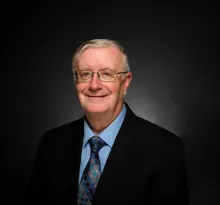
Jorge and his wife Kathy serve the Dallas (TX) and Lawton (OK) congregations. Jorge was born in Portuguese East Africa, now Mozambique, and also lived and served the Church in South Africa. He is also responsible for God’s Work in the Portuguese language, and has been visiting Portugal, Brazil and Angola at least once a year. Kathy was born in Pennsylvania and also served for a number of years in South Africa. They are the proud parents of five children, with 12 grandchildren and live in Allen, north of Dallas (TX).
