



Jorge de Campos
This transcript was generated by AI and may contain errors. It is provided to assist those who may not be able to listen to the message.
Brethren, do we meditate on God's work? Well, of course we do. Do we pray for God's work? Of course we do. Now, I want to turn to a scripture in Psalms 77, the 77th Psalm. We're just going to read a few verses there, but first we'll read verse 12. Psalm 77 verse 12. Psalm 77 verse 12. I will also meditate on all your work. Do we meditate on all of God's work? And talk of your deeds. Now, I want to thank Mr. Whitlock for the sermonette. Very appropriate, because he mentioned a few things that I want to touch in today, and I really appreciate that. But the question is, what do you and I meditate when we meditate about God's work?
Now, for some, probably we'll be. You'll meditate that we've got to preach the gospel. Yes, correct. That's right.
You will probably meditate on God's creation. The beauty of animals, of flowers, like these flowers, it's a beautiful show of spring flowers. And you look at each one and the diversity and the colors. It's beautiful. I'm glad that all the flowers are not just carnations, and I'm glad that they're not all just red carnations. You know, diversity. There's nothing wrong with red carnations, by the way, but it's just the beauty of different ones put together. So we meditate on God's creation. We look at the sky, a particular night, and the stars, and we meditate on God's creation. We meditate on God's law. It does say, think about meditate about God's law, and now we can apply it. And as we heard the sermon, we look at God's law and how we need to change and put sin away.
But some of us ask, you know, I pray and I meditate about God's work, but there's nothing I can do for God's work because I'm just a housewife changing diapers, and there's hardly anything else I can do.
Brethren, training future sons and daughters of God is the most important activity of God's work that you and I can do. But not only that, it's preparing ourselves to be sons and daughters of God. That is part of God's work. And so God's work as it's Yah in our symbol, preacher gospel, but there is another component, prepare a people.
One of the most important tasks of God's work, do you know what it is?
It's creating that God is doing, creating, making sons and daughters of God in His kingdom. All the other things are ancillary around that. And therefore, if you continue reading in Psalm 77 now, in verse 13, your way of God is in the sanctuary. Who is so great a God as our God? He's done great works, and what is His greatest work of them all? I would venture to say He's creating sons and daughters of God.
Not creating a bee or a lion or beautiful flowers. Yes, that is beautiful work, but the pinnacle, the most awesome work of God's ultimate work is creating sons and daughters of God. All the other things are there towards that one most precious goal. Look at verse 14. You are the God who does wonders. You have declared your strength among the nations. Oh yes, the biggest wonder is you and I being changed from carnal human beings, as Mr. Whitlock mentioned in the sermonette, we'll never finish in this age, in this life, changing ourselves to perfection. Yes, we aim to do that. We strive to do that. We're working doing that, but we'll never complete it perfectly because God will then make that extra. You know, it's 99% perspiration, as Thomas Edison said, and yes, we got to do 99% every single effort of it, but there is 1% you and I cannot do it, that God will do it for us. 1% inspiration. 1% his work to complete the creation of perfect sons and daughters of God in his kingdom. Verse 15. You have of your arm redeemed your people, the sons of Jacob and Joseph.
Selah. Selah means meditate on it, ponder on it, think about it. Don't just read over it. Oh well, whatever Selah means. Selah means, take note, pause, and think about it. Yes, indeed, God redeemed the Israelites out of Egypt. But brethren, that was just a precursor of redeeming you and I and mankind and the sick world in which you and I live towards a happy world and for us to be in the kingdom of God. It says you have with your arm done that. It's not my work. It's not your work. It's not our work. It's God's work. Our redemption has been in the kingdom of God. It's a miracle. Like I said, you know, a person that thinks that he's rich, you know, nobody's really rich compared to God, not even Vulgates compared to God is nothing.
But for him and other people, for us, anybody that thinks that he reached, thinks that he's big to make him the kingdom is like hitting a camel through the eye of a needle.
And to mankind, that's impossible. And that's why it says you have with your own arm redeemed your people. That is God's work. Do you and I meditate on God's work, the pinnacle of God's work, which is the creation of the sons and daughters of God, bringing them to glory as we read in Hebrews? That is the most important part, I believe, of God's work through Jesus Christ. Through Jesus Christ, it means that he delegated the execution of this work to Christ. It is God's work. He's the boss. He's the highest. He's the supreme authority. Where he has delegated that execution, he put Christ as, quote unquote, the chief executive officer to execute this. And that's why it says through Christ.
Now let's look at a complete different scripture, and you may wonder, am I deviating from the subject? But you'll see, I'll bring the two together. But I want to kind of stop this line of thought for a moment and take a different line of thought. And that is the last verse of the second epistle of Peter, chapter 3. So, second Peter, chapter 3, verse 18. The last verse of Peter's he personally, you know, Peter was a guy that always had an answer. Oh, well, well, you know, he was, you know, when he was walking with Christ, he was always, which we call the smart aleck. And I will do it. Yeah, I'll walk on water. And yeah, he did walk on water for a while. But then he didn't. So he concludes second Peter, three verse 18 saying, grow in the grace and knowledge of our Lord and Savior, Jesus Christ. To him, to Christ, be the glory, both now and forever. Amen. Why this admonition? Well, bringing the two together, God's great work is through Christ. Christ is our standard. Christ is who we look up to as our example. You and I don't compare ourselves with one another. We compare ourselves to Christ.
Christ is the standard.
He is our possible lamb and our high priest.
And it is important for us to put the two together to really understand what Christ is doing for us.
And so, do we meditate on God's work through Christ? Christ, do we meditate on God's work through the chief cornerstone of his work?
And do we really grasp and we really get it? Do we really comprehend what Jesus Christ has done?
So that we can grow to that standard. It was the knowledge of Christ, the knowledge of who he is. So we can grow to that standard and that standard, that knowledge of who he is, what we really need to grow is in becoming like him as we heard in the sermon. And that means we got to grow in his nature. And the nature of God, and the nature of Christ, is basically a nature of outgoing love and concern, of kindness, of goodness, of gentleness, of patience, of perseverance, of humility, of love. And another word for all that is grace. God is gracious to you and I. God is merciful. And because of his mercy, because of his kindness, because he's so loving and compassionate, I will complete and you will completely, I hope, respect him and honor him and glorify him. In other words, you have deep, profound fear of God because fear is not terror. Fear of God is not terror. Fear of God is respect and admiration for him, for his grace. And that's why Peter says, yeah, grow in the grace and knowledge of our Lord and Jesus Christ. And Peter is saying, listen, you know, we are coming to the time of the end. You read 2 Peter chapter 3 and he says, everything's gonna blow up. Everything. And you and I live now at this time around us, very sobering times. You look at what's happening in Ukraine, you look at what's happening with the nations, with the leaders, they're just not wise, they're absolute foolish. All these LGBT stuff and all that whatever, you see all this, which is an abomination before God according to God's Word.
And then he says, Peter says, therefore, because you see these things, it's prophecy being fulfilled. He says in verse 11, what manner of persons you ought to be in holy conduct and Godliness. You see, the purpose of prophecy is not for you to walk around and say, I know who the 144,000 are.
The purpose of prophecy is not to say, I know which day, year, whatever Christ is coming. The purpose of prophecy is for you and I to change, to motivate us, to the sense of urgency that we got to grow in the grace and knowledge of Jesus Christ.
So many people come to me with each year's about verse, about prophecy, and that about prophecy, the other about prophecy, and that is all veneer. Because the real stuff is our week becoming like Christ, our Passover Lamb and our I Priest. And that, for us to become like Christ, is the work of God in us. And that is, prepare a people. Are we preparing a people? Are we meditating in what we need to become and change? And the Days of Unleavened Bread help us to do that. For seven days, as we are doing this sermon, it completely as a process all our lives to be working in changing ourselves to become more like God, because that is doing the work of God in our lives. And as we do that, we'll become an example to others, and others will ask you what is the reason of the hope in you, and then you can you have an open door to say other things. Brethren, the wall did not know who Christ was when he was preaching around. You read Phoresis in Matthew. People say, who would you say I am? And Christ asked the apostles, who would you say I am? And he said, so some say you are John the Baptist, some say you are Elijah, whatever, whatever. And then Christ said, but who do you say I am? And you know, I use the word, yeah, and a little bit of jest, the smart aleck, quote unquote, Peter says, yeah, you Christ the Lord. I didn't mean that respectful, please forgive me. But you know, he was the one always kind of giving the first answer, then standing up and he's a beloved apostle, like Paul is another beloved apostle. But he had a lot of lessons to learn because like I said, I'll never deny you. And Christ said, well, tonight before the cockroes twice, you'll deny me three times. So he had some lessons to learn. But he said, you are the Messiah, you are the Christ, the Son of the Living God. And Christ said, thanks to God, because it's God that told you, through his Spirit, told you that. So people did not understand Jesus. Look at what he says in John chapter seven. Even his brothers and sisters, John chapter seven was at the Feast of Tabernacles on his last year of his ministry. His last Feast of Tabernacles. So it was AD 30 because he died to Passover AD 31. So it was there. And his own brothers and sisters did not know who he was. Chapter seven verse five. John it says, for even his brothers did not believe in him, that he was the Son of God. That he was the Messiah.
And then, but he did go to the Feast, as you can see, he didn't go there openly initially, but but he was at the Feast. He went to the Feast privately because it wasn't the time yet for him to be killed. He still had another six months of preaching, according to the prophecy. And and the point here is even the rulers did not know he was. You read the section of the religious leaders there. But from verse 25 onwards, verse 28 and 29, and he says to them, he says to them, because they asked him, well, who is he? And they thought, well, they don't know what he was. And he told them who he was, and then he wanted to, they wanted to kill him. So he identified himself. Look at verse 28 and 29. He says, you both know me, and you know where I am from. And I have not come to myself, but he who sent me is true. Whom do you not know? Who who sent me? The Father sent Christ. Christ was the Word. He became flesh. The Father sent him. And he says, he, the Father that sent me, you don't even know who he is. But Christ said, I know him. For I came from him. I was next to him. And he sent me. So he identified himself, and they hated him. Because they sought to kill him. And then he hid away. So the question I have is, do we really grasp who Christ is? Because that will help us to understand our job to grow in the grace and knowledge of our Lord Jesus Christ, which is, think about it, the meaning and purpose of the days of 11 bread. Now let's take another scripture, kind of again, focus in another section that initially again you may say, well, how does that connect? But I'll bring you the connection in a moment. It's Romans chapter 10 verse 4. Romans chapter 10 verse 4.
People don't get the meaning of the scripture. For Christ is the end of the law. Ah ha! The Christianity out there, quote unquote, between the verses, says, you see, it's the end of the law. We don't have to keep God's law.
How blind they are. How blind they are. They just don't get it.
So what was Christ talking about? You know, the end is a Greek word called telos, telos, the end of all the things that relate to it, the objective, the finality. Christ is the end purpose, the end finality of the law.
Christ is the end line, the goal of the law. So the law, it is, let's put it this way, designed to define the type of nature that you and I need to have, which is love. And those 10 points of God's law are defining, like, directions of how to apply love, God's true love. Don't kill your brother. Don't steal from him. Don't lie. All those are principles of love. And therefore, if we do that, we will become God's nature, which is exemplified to us as Christ. Christ is our standard of the full, complete application of God's law, because God's law purpose is to point to a fulfillment in a physical way, which Christ did. And therefore, Christ is the end, is the purpose, is the goal that we go in. When we apply God's law, we are to become like Christ. So Christ is the end of the law for righteousness, for us to become righteous, like he is, for us to become like God is, God's nature, which is love, which is grace, which is kindness, which is compassionate. Therefore, we are to grow in the grace and knowledge of our Lord and Savior Jesus Christ. Does that make sense? Are all these things connected? And we are to meditate on God's work and by meditating, that's how when we do leaven, we take out the leaven and we're going through this and we say, why am I going through this exercise of vacuumless? And don't forget to empty your vacuum cleaner, by the way, and vacuum this and all that stuff. And then, why am I doing this? Because I'm going through this physical labor of teaching my mind that I have to go through a spiritual mental labor of cleaning myself continuously every day of my life, eliminate sin of my life permanently, as much as I can, like we said, 99% perspiration. And then God will do the rest. That's why he says, grow in the grace and knowledge of our Lord Jesus Christ. We've got to understand who He was, what's His nature, so that we can grow in that nature and understanding who He was, understanding therefore what is the end, the final outcome of the law. That's what we need to work with. So Jesus Christ is our goal, who we are to be like. He is the purpose of the law. The purpose of the law is there to point to us so that we can become imitate Christ. So the law is actually there to help us to be like Him. In fact, that's the whole purpose of the Bible, to teach us to be like Him. Points Christ, points us to Christ, so you and I can imitate Him. And also, God's Holy Days, because God's Holy Days demonstrates how God is achieving this goal through Jesus Christ.
And let them pray a first possible, Christ dying for us and suffering for us. Two important different things, brethren. Two important different things. A lot of people say, well, Passover is Christ's death, therefore we should keep it off the Christ's dies. They forget the Passover also as bread, which represents suffering.
Not just the death, the wine, the blood, also the suffering for our healing, emotionally, physically.
And Christ suffered that all night. So we are taking the bread as well.
But we need to recognize how God is doing it. First, Christ has to suffer and die. That's why Passover is not a Holy Day. It's a festival, but it's not a Holy Day. Then immediately after Passover, the seven Holy Days begin. And the first one is the first day of 11 bread. And the second one is the last day of 11 bread. Those are God's Holy Days during that festival period. So not all feast days are Holy Days. I know quite often we throw words around and it says, well, feast days and Holy Days are the same thing. It's similar, but it's not exactly the same thing. Now, we've got to put sin away completely. But then we realize we can't do it by ourselves. So God gives us the helper, the power, God's Holy Spirit, the essence, the meaning of Pentecost. The symbolism of Pentecost is that then we are accepted by God as too low to be God as too low with leaven. Pentecost is the only offering with leaven. No other offering is allowed to have leaven, right? You go and look at offerings. No offering is allowed to have leaven. Symbolically, no offering is allowed to have sin. It must be blameless. It must be spotless. But the only offering that is allowed with leaven is the two loaves of bread on Pentecost, which represents you and I having access to God's throne and you and I still have leaven.
So Pentecost does not mean the resurrection. Pentecost means as physical human beings, spiritually speaking, having access to God's very own throne as we read in Hebrews 10 in a new and living way and having that access through the high priest, which is Christ. And so we have access today, even though you and I have leaven, quote-unquote, spiritually speaking. We're not completely de-leavened, spiritually speaking, even though we try 99% perspiration, there's still a tiny bit. And if you think you have none, beware, because you think you're rich and good and maybe you're not. We've got to be careful. So Pentecost symbolizes us having access to God's throne and then we have to be faithful till the end, which is symbolized by trumpets and Christ's coming and the resurrection and all the events that follow with that until finally Satan is deposed 10 days later on the day of Atonement, and therefore the kingdom of God is established on earth for the millennium. And finally, then there will be the eighth day, which symbolizes the second resurrection. That brethren, the holy days, show us how God is achieving this end result, but it stops with the Passover. Christ opening the doors for us by paying for us, making us possible, having us redeemed. And then we got to do our part. So we got to recognize who Christ is.
How great the sacrifice is done and what he is doing. Two things. What is done and what he's doing. You see, Paul in Philippians says we need to have the same mind as Christ had. Philippians chapter two verse five. Philippians chapter two verse five. Why? Because we need to understand in first place who Christ was before he became a human being, before he was turned flesh.
You see, in two verse five says, let this mind be in you, which was also in Christ Jesus, because he humbled himself. And not only that, he says, because in verse six, he was in the form of God, he was of the Godkind, he was next to the father of the same kind of being, Godkind, like you and I are humankind. They were the two of the Godkind, and they agreed, and Christ submissive to the father, and a father is always greater than I, Christ said. So everything was delegated to Christ. What they decided was a plan. And this plan was to create sons and daughters of God. For this plan to be executed, they needed other beings to help them, so they created angels. Furthermore, they needed a physical environment, so they created the heavens and the earth. Then some of those angels got to know about the plan and rebelled, destroyed everything. Then God had to refashion it in a period of six days, and then he rested on the seventh, and he created Adam and Eve, as you know. And then, yeah we are, and we read that Christ was slain from the foundation of the world. In other words, Satan didn't come there and spoil the plan. They knew very well that you and I would sin sooner or later. Satan, yes, kind of accelerated by motivating and encouraging you to fall down the cliff or to sin a little faster. But it was not a surprise to God, because Christ had been slain from the foundation of the world before the beginning of time. So Christ was the God-being under the Father that was delegated all authority to execute and create the angels, execute and create the heavens and the earth. And when the angels rebelled, he then Christ was the one that refashioned the earth, and Christ was the one that came and dealt with the Israelites. And Christ is the one that comes and deals with us in our redemption. We got to understand how high and how important Christ is. And when we understand that, we then understand what he has done. That's why he says in Philippians chapter 2 verse 5, let this mind be new. Which quite often you and I can say, oh well, it's always me that has to apologize, always me that has to do this, always me. So what? What did Christ do wrong?
Zero. Zilch. And he came and he died for you and I while we were yet sinners.
That is who Christ is. And then we read here in continued reading in verse 6, being in the form of God did not consider robbery to be equal with God. It was not identity theft to say that Christ was God, equal with God. No, that's what it says. That was not robbery. Oh yeah, they wanted to kill him because they said, well, you're making yourself like God. That's blasphemy, but it was not robbery. And verse 7, it says, but he made himself of no reputation. In other words, he came, let's call it in civilian clothes. Nobody knew that he was God. He came just as little Tom Deacon Harry out there. Nobody knew who he was. And he told, don't tell anybody who I am. So they would kill him. Why? So that he could save us. If they knew who he was, they would have not killed him. Oh yeah, the demons wanted to say who he was. And Christ said, shut up. Don't say who I am. Why? Because he says, yeah, he made himself of no reputation, came in the form of a human being. And then he humbled himself further, says in verse 8, becoming obedient to the point of death, even the death of the cross. Therefore, verse 9, therefore, therefore, God also highly exalted him and given him the name, which is above every nine, that in the name of Jesus, every knee should bow of those in heaven and on earth. In other words, even angels will have to bow to Christ and of those on earth, human beings, and every tongue should confess that Christ is the Lord. And I know this is written in Greek, so, but if this was written in Hebrew, it probably would very well have said that Christ is Yahweh. Because Yahweh means eternal, and both the Father and Christ are both eternal, to the glory of God the Father. Now, I want you to consider what we've just read.
It says that to Jesus, every knee should bow, and every tongue should confess. Do you know that that is a quote from the Old Testament?
And that is quoted from Isaiah 45 verse 23. So, let's look at Isaiah 45 verse 23. Isaiah 45 verse 23. Isaiah 45 verse 23.
I have sworn by myself the waters gone out of my mouth in righteousness, and shall not return to me. Every knee shall bow, and every tongue shall take an oath. Who is me? By reading Philippians chapter 2 verse 11, that is Christ. And when you read the context of Isaiah 45, in fact of the section of Isaiah, they were worshiping idols, demons. And Christ is saying, I am the one that created you. I am the God. Obviously, the Father created everything through Christ. So, it is through Christ, but Christ is the one that created the God being that created everything. And then you read, for instance, in verse 21, towards the latter part. If not I, the Lord, and there is no other God besides me. There is no other being that created, that did everything but besides me, because the Father did everything through me. And just God and a Savior. Christ is our Savior. There is none besides me. Look to me and be saved all the ends of the earth, for I am God and there is no other. This whole section, when you read it in that context, it opens your mind to a full understanding of who Christ is and His nature. And He is in the image of the Father. His nature is like the Father's nature. The two are one. Just like your husband and a wife are to be one. Just like we are all. You read in John 17. You read it at Passover, John 17. That I pray that you may be one like we are one. Brethren, we all are to be one. That means we all to be united, to be of one mind. That's why it says in Philippians 2 verse 5, let this mind be in you. In other words, be one with this mind as well. Jesus Christ created us. And not only did He create us, but He's redeemed. He bought us with His blood. He's our Savior. And this is a responsibility that the Father gave Him. Jesus Christ has executed us, as I mentioned earlier on, as in an analogy like an owner or a board delegates to the Chief Executive Officer to do something. And the Chief Executive Officer is Christ, and the Chief Executive Officer is working at the pleasure of the Father. In other words, doing the will of the Father. Look at Matthew 28. Look at Matthew 28 verse 18. It's also a scripture that you probably have read many times, but I just want to emphasize this one verse. Matthew 28, that's the last chapter of Matthew, like the third last verse or so. Matthew 28 verse 18. And Jesus said, All authority has been given to Me in heaven and on earth. If it has been given to Him, who has it given to Him by? Obviously by the Father. All authority has been delegated to Christ. And this was not just Yah. It was delegated to Him right from the beginning to say, you go out and you Christ execute this plan. That's why Christ at the end, you read in the book of Revelation, He says, you will then, once He's completed, mission accomplished, you will hand the kingdom to the Father and say, Dad, the job you've given Me is being done. That's what He is. All authority has been given to Him and He will do it. You'll not fail. That's His job. He created all things. God created all things through Christ. You read that in Hebrews chapter 1 verse 2 and 3. And He has the power to do all things. And also in Hebrews chapter 1 verse 8 and 9, the Father Himself calls Christ God.
The Father Himself in Hebrews chapter 1 verse 8 and 9 calls Christ God. He says, God, your God has anointed you.
Therefore, can you see what it means when it says, grow in the grace and knowledge of our Lord Jesus Christ? You and I have to understand to grasp who Christ is, the knowledge of who He is, the power, the authority. And what He's done for us, He's died for us, He suffered the most excruciating pain. For instance, if you have time, watch that film called The Passion of Christ. And it's quite gory. Look, there's a lot of details there that are not correct, but it shows how much Christ suffered for you and I. For you and I. And we then ask and say to God, why is there suffering in the world? God, you don't understand suffering. He knows what suffering is. But we have to understand how evil our sins are, because our sins bring suffering to the world. Look at what's happening in Ukraine. It's sin! Sin, blighted, raw, that's bringing extreme suffering to people. And brethren, we sigh and cry for what's happening there, because the same is going to happen. Yeah, just a question of time. And only for God's grace and mercy. If we are counted worthy to escape, will we escape. But some of us in God's church will have to go through it. That's what we read in Revelation. So we sigh and cry, because that's coming.
Now, nobody really desires the Day of the Lord. But we look, because that's very bitter. It's like that little book that you ate and was bitter in the stomach, because when you and I go through it, it was bitter. It was beautiful, it was very sweet. Like looking for the kingdom, yes, it's sweet, but when we gotta go through it, before is bitter. So, brethren, the point is, God knows what suffering is. And therefore, we need to understand that ultimate goal of God, which is the gospel, the good news of the kingdom of God, and the good news that it will only be possible to reach that happiness and joy through Christ, because of his life, what he's done, and what he's doing. Not just what he's done, but what he's doing. So that's why we're reading Romans chapter 1 verse 16. Romans chapter 1 verse 16.
For I am not ashamed of the gospel of Christ.
Are we ashamed of the gospel of Christ? The gospel of Christ is the good news, not only of the coming kingdom of God, but it is only possible through him. Are we meditating on the work of God through Christ, which is us becoming like God and changing? And this is what the Days of Unleavened Bread helps us, hopefully, to visualize a bit better. You see, we are told in Matthew 6, 33, Seek of the kingdom and his righteousness. The kingdom is what? His righteousness is how? See, there's two things, but there's only one goal.
The ultimate goal is to be in the family of God as ruling children of God, governing the world, the kingdom of God. That's the ultimate. But his righteousness is how? That's through Christ, but us becoming like Christ.
As seeing that the end of the law is Christ is what we've got to become. That's the purpose of the law. And why do we need to understand the gospel of Christ? Well, keep reading verse 16. For I'm not ashamed of the gospel of Christ, for it is the power of God to salvation. And that is God's work through Christ. It's how God is using his power through Christ and sending us his Holy Spirit, the helper for us to have eternal life so we can be like him.
So we can be like him. You read, for instance, 1 Corinthians 11. This is a very interesting chapter. I don't have time to go into it, but the whole of 1 Corinthians, if you start in 1 Corinthians right at the beginning, it says, why are there divisions amongst you? Some are saying, Paul, some are saying others, some are saying that, some are saying I'm of Christ. There are divisions amongst yourselves. And all along, all the way through Corinthians, there is problem upon problem upon problem or issue upon issue upon issue.
But what are the issues? The issues cause division. Whatever the issue is there in the church, it's just causing division. Why are there divisions amongst you? Because you don't see who Christ is. And that's why then he's coming to the conclusion in 1 Corinthians 11 and in verse 1 he says, imitate me as I imitate Christ. As we heard in the sermon, we've got to become like Christ. We've got to put in something else. And how? Through God's Holy Spirit, through God's help that Christ sends to us the promise of the Father.
That's what we've got to do. We've got to imitate Christ. And he says, I praise you not because there are divisions amongst yourselves. There are divisions. And he says the main thing is you've got to look that Christ is in charge and you've got to submit to Christ. And then he goes into another issue about the example of hair because the hair shows submission.
Long hair. And that's why he says in verse 14, doesn't nature itself tell you that for a man to have long hair, it isn't a sonar to him. Why? Because a man is supposed to be the head of the household. Now, it doesn't mean that he's a dictator. The head of a household needs to be like Christ.
You read that in Ephesians 5. And what does Christ do? He's a loving being that he gave his life for us. You and I as husbands, we need to give our lives for our wives. Do we do it right? No! We're miles away from doing it right. But if we are trying, then the wife voluntarily will want to submit to the husband because she'll say, he's such a good husband, I love him.
And I want to do what he does, what he wants me to do. And that's exactly how we need to respect God, fear God. That's the same sort of authority. And then he goes on, he says in verse 19, he says, For there are factions and there must be other visions, there must be factions because it exists, there are other visions. But he's really talking about, we need to understand who Christ is, the authority.
We need to understand. And if we understand the authority that is from God and through Christ, we will resolve all these issues. The problem is we can't often think, well, people must do what I say. Or we have shown enough compassion, therefore I don't need to show any more compassion.
I have seen man saying that as recently as yesterday. And I said, I pray for this man. Brethren, we never need to stop compassion by saying, well, we've already shown enough compassion. That is ridiculous. That is being a hard man. And brethren, and then that's why it says, if you understand who Christ is, then you're not going to take the possible in an unworthy manner. You know, it all ties in on Corinthians 11. And then he says, and then what are you going to do is you're going to look for God's gifts. And they say, oh, well, I've got knowledge, I've got prophecy, and that, he says, that's all junk. Because then in 1 Corinthians 13, he says, all those gifts are useless because the biggest one is love. Because God's nature, that what are we going to grow in the grace and knowledge of our Lord and Savior Jesus Christ is love. He's not going to concern, oh, well, George is getting Protestant. No, I'm not. We've got to obey God's law. We've got to do our part. But if we don't understand what Christ has done for us, we must in the mark. We're not growing in the grace and knowledge of our Lord and Savior Jesus Christ. So we've got to recognize what he has done and what he's doing. What do you mean, what he's doing? Look at Romans chapter 5. Romans chapter 5.
In Romans chapter 5, verse 8 through 10, it says, We shall future be saved by his life. Whoa, how we saved by his life. How? How is it that you and I are saved by his life? Well, then you need to read Hebrews because Hebrews says he is our high priest. Look at Hebrews chapter 9. Hebrews chapter 9.
Hebrews chapter 9, verse 11 and 12.
But Christ came as a high priest of the good things to come with the great and more precious tabernacle not made with hands, that is not of his creation, not of the blood of goats and calves, but of his own blood he entered the most holy place, once for all having obtained redemption. But now what we know is that he now, and we read that for instance when we read about the Day of Atonement in Leviticus 16 and the offerings, that he then, after the blood is killed, then they bring the blood and they sprinkle the altar seven times. Christ living now as we go to God's throne and we say, God, here I am, George again, and I messed up again. And again I said something I shouldn't have said. And that sprinkling of the blood cleanses us because he is living, he is the high priest living, he is our defense advocate, and he says to the Father, forgive George. And therefore you and I have access to the Holy of Holies through a new and living way as we read in Hebrews chapter 10. Because his life is now helping us to become sons and daughters of God and cleansing us as we go through our lives and we still mess up. Thank God, not only for what he did, but what he's doing now as our high priest. And that's why we read in Hebrews chapter 10. And let's look at there, Hebrews chapter 10, in verse 14. For by one offering he has perfected forever those who are being sanctified. That one offering is done it, complete. And we are being sanctified through that sprinkling. Therefore, verse 19, brethren, having boldness to enter the Holy of Holies by the blood of Jesus by a new and living way, which he consecrated for us through the veil that is his hand. And there's much to say about that, which we should talk about that during the Day of Atonement. But the point is, we need to recognize the significance of who Christ is, what he's done and what he's doing, because he is our lamb, our pastor of the lamb, and he is our high priest, cleansing us throughout our lives. Look at Hebrews chapter 12 as it comes to the towards the end of the section. He says, Therefore, we also, since we are surrounded by so great a clown of witnesses, people that have been faithful, even though they were sauna, sander and other things, let us lay aside every weight and the sin which so easily ensnares us. And let us run with endurance the race that is set before us, looking unto Jesus, the author and finisher of our faith, who for the joy that was set before him, what was the joy set before him? That we are going to be in the kingdom with him. That's the joy. He endured the suffering of the cross, despising the shame, and now, obviously, sitting down at the right hand of the throne of God. You and I need to look at the goal, which is Christ. He is our example. He is our standard. And so let me ask you a final question. Is Jesus Christ part of your life? Of your life? Was part of my life? Is it part of our life?
But let me ask you a different way. Or is Jesus Christ our life?
Not just part, our life, our whole life. Full sacrifice. Make Jesus Christ your goal. As we go through the days of leavened bread and leavening, think about that. Meditate on God's work, because God's work is you and I changing to become perfect, to be like he is. Use the Spasalva to grow in the grace and knowledge of our Lord and Savior. Ask God to show you what you must change this year, and then work on it. God knows what he would like you to change this year. Yeah, you and I can't do everything in one year. It takes years. But therefore meditate on God's work in us. That is the spiritual meaning of the days of leavened bread. May God bless you with a spiritually uplifting Spasalva. May God also grant you noticeable spiritual growth. Have a lovely feast!
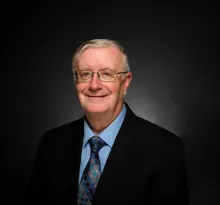
Jorge and his wife Kathy serve the Dallas (TX) and Lawton (OK) congregations. Jorge was born in Portuguese East Africa, now Mozambique, and also lived and served the Church in South Africa. He is also responsible for God’s Work in the Portuguese language, and has been visiting Portugal, Brazil and Angola at least once a year. Kathy was born in Pennsylvania and also served for a number of years in South Africa. They are the proud parents of five children, with 12 grandchildren and live in Allen, north of Dallas (TX).
