
Jesus Christ Teaches Us How to Pray
Part 1
Given on
Given in
Downloads
Downloads
To download a file, right-click (or long press) a link above and choose Save As.
This sermon, part one of a series, gives food for thought on Jesus instructions on how to pray.
Transcript
This transcript was generated by AI and may contain errors. It is provided to assist those who may not be able to listen to the message.
Right on a couple of weeks ago, I spoke to you about the subject of redeeming the time.
Redeeming the time. I commented, I summarized, that to redeem the time is to wisely take full advantage of every God-given opportunity with a sense of urgency. To wisely take full advantage of every God-given opportunity with a sense of urgency. And certainly, brethren, we need to have that sense of urgency. As I've talked with any number of you, you are concerned about what's happening within our nation. You are concerned about the presidential election that's coming up in just a few days. You're concerned about the direction of our country. You're concerned about what's happening with COVID. You're concerned about, are you getting proper knowledge? Are you getting truth? Are you getting fable? What are we getting when it comes to the COVID virus? And there are so many other things, brethren, that are taking place within our lives that we need to have a sense of urgency in our lives. Now, I'm fortunate, in the sense that I've got something here in front of me that I don't know that I've had since I've been here. I've been here a little over four years.
I've got three sabbaths in a row to give you a full sermon. And I was thinking, what am I going to do with that time? What do we need to talk about? What do I need to do to address you in those three sermons where I can maybe have a series of something that I feel is very, very important? Well, I'm not going to do it. I don't think I'm going to do it in three weeks, maybe three weeks, but certainly today and next week. Two-part series. I want to speak to you about a subject that's vital for us in redeeming our time properly. A subject that's vital, foundational to our calling and how effective we're going to be in that calling. The subject I want to talk to you about this week and next week is the subject of prayer. The subject of prayer. Now, when I was giving you the sermon about redeeming time, let's take that and let's merge that with the subject for today and next week. Redeeming the time when it comes to prayer. We want to redeem the time when it comes to prayer because God has called us to do a tremendous work and we need to be a praying people if we're going to do that work effectively. We want to redeem the time regarding prayer because times are uncertain, times are short. We don't know how much time we have. You and I don't know personally how much time we have as individuals. Just read this morning as I was looking at the Fox News website, Sean Connery died in his sleep, 90 years old. James Bond. You never know. Any one of us can have an underlying condition we're not even aware of and we could die in our sleep or whatever. So time is short.
We want to make sure we're making the most of our prayerful relationship with God. We want to redeem our prayer time in a sense that it has eternal consequences. We don't want to be resurrected and have God the Father and Jesus Christ look at you or look at me and say, who are you? I don't know you. You never spent much time on TV. You spent time with your various hobbies. But did you really ever talk much to me? Did you pour your heart out? Did we cry together? Did we laugh together? Did we discuss and did it great detail your life? And certainly we want to redeem a time in terms of the days are evil. The days are evil. All the insanity that we're seeing today in public, the hatred, the animosity, the violence, that will be turned against us. And we need to be prepared. We need to be people of prayer who are prepared. We don't want to let ourselves be controlled by our circumstances. We've got to get to work. I've only got so much time. I've got to get up and I've got to fix my breakfast and maybe fix a sack lunch or something. Get out the door. I'll pray when I get home. Well, fine. If you pray when you get home, fine. But we've got to make it a point that the circumstances in our lives don't control our lives. That we live above the circumstances. That we make sure that God is our first appointment in terms of quality time, not just giving Him any old time, sleepy time at the end of the day. Let's take a look at some Scriptures as I narrow down where I want to go with all this. Let's go to Luke chapter 3. Luke chapter 3.
Luke chapter 3 and verse 21. When all the people were baptized, they came to pass it.
Jesus also was baptized, and while He prayed, the heaven was opened, and the Holy Spirit descended in bodily form like a dove upon Him, and a voice came from heaven which said, You are my beloved Son, in whom I am well pleased. What was He doing? Now obviously Christ was always a man of prayer. As a little boy, Jesus Christ was a young lad of prayer that was very much a part of who He was. Verse 23. Jesus Himself began His ministry at about the age of 30. He was a person of prayer long before the age of 30, but notice prayer is very central to His ministry, the beginning of His ministry. Let's take a look at Luke chapter 6. We go forward a couple of chapters. Luke chapter 6.
Verses 12 and 13. Luke chapter 6 verse 12. Now it came to pass in those days that He went out to the mountain to pray and continued all night in prayer to God. All night. All night. And when it was day, He called His disciples to Himself, and from them He chose twelve whom He also named apostles. So Jesus Christ, in starting His ministry, is a man of prayer. Jesus Christ, as He is establishing a New Testament, New Covenant Church, is a man of prayer. Prayed all night. There are a number of disciples He had to review with the Father. Let's go and review those fathers. Let's take this name. Let's take that name.
Let's take our time. Let's think about what is needed for this ministry. Matthew chapter 17. Matthew chapter 17, starting in verse 19.
The disciples of Jesus Christ could not cast out a demon. They came to Christ with the demon. Then the disciples came to Jesus privately and said, Why could we not cast it out? So Jesus said to them, Because of your unbelief, for assuredly I say to you that if you have faith as a mustard seed, you will say to this mountain, Move from here to there, and it will move, and nothing will be impossible. However, this kind of faith does not go out except by prayer and fasting, and also by getting rid of that demon. It takes a lot of prayer. In other words, Jesus Christ, in battling the spiritual dark forces, had to be a man of tremendous prayer, as I think both Mr. Bradford and I brought out in our prayers for our young ones today. Beautiful little babies were blessed today, last week.
And yet, I'm sure I speak for every parent and grandparent, and I'm sure that they're blessed today. I'm sure I speak for every parent and grandparent. We wish those little babies didn't have to come into such a dark world. But we did, and we're learning, and yet we realize that we need to be people of prayer because we're fighting against these horrible dark forces, and they're only getting it worse as time goes along. Matthew chapter 26. Matthew chapter 26, starting here in verse 36.
Matthew 26, verse 36. Then Jesus came with them to a place called Gethsemane, and said to His disciples, Sit here while I go and pray before this tremendous trial of Jesus Christ that He endured for us, our Passover. Before this tremendous trial, He wanted to make sure He was in tune with God, at one with God. Verse 37. He took with Him Peter, and the two sons of Zebedee, and He began to be sorrowful and to be deeply distressed.
So when He's sorrowful and deeply distressed, what does He do? He turns to prayer. So then He said to them, My soul is exceedingly sorrowful, even to death. Stay here and watch with Me.
So He went a little further and fell on His face and prayed, saying, O my Father, if it is possible, let this cup pass from Me, nevertheless not as I will, but as You will. Then He came to His disciples and found them sleepy and said to Peter, Could You not watch with Me one hour? Watch and pray, lest You enter into temptation. The Spirit indeed is willing, but the flesh is weak. And again, a second time He went away and prayed, saying, O my Father, if this cup cannot pass away from Me, unless I drink it, Your will be done.
He came and found them asleep again, for their eyes were heavy. Brethren, we don't want those heavy eyes. We want to make sure, spiritually speaking, we're not like those virgins who didn't have the oil. So He left them, went away, and prayed the third time, saying the same words. Jesus Christ was a man who prayed without ceasing. If you want to put in your notes, that's 1 Thessalonians 5, 17, to pray without ceasing. He prayed in the morning.
You know, Mark, I'm going to just cite these next few. Mark 1, verse 35, says, in the morning he was risen a long while before daylight. He prayed in the morning. He prayed during the day when he was many times healing people. We saw, when I read it to Feasts, Mark, chapter 7, with the deaf mute. He prayed there with that deaf mute during the day. He wanted that deaf mute who he was about to heal and realized where that healing was coming from. Prayer was essential to that healing. After feeding the 5,000, Jesus Christ went out that evening and again prayed. Prayer was such an essential portion of his life and certainly with ours as well. So the question, brethren, for us today is, how would you describe your prayer life? How would you describe your prayer life? Is your prayer life vibrant? Is your prayer life an essential part of your life? One man wrote, What a man is on his knees before God, that he is and nothing more. What a man is on his knees before God, that he is and nothing more. If we're not praying, what are we? If we're not praying, what are we doing with the calling God has given to us? There's a story about a lumberjack who came to a camp.
He wanted to work. He had his trusty axe with him. The foreman said, Let's see how good you are with that axe. Anybody can carry an axe. You look strong. You look healthy. Chop down this tree. Nice, big, thick tree. He chopped that thing down very, very quickly.
He was hired. His foreman said, Go over to that section over there. I want you to start knocking those trees down. He went over and started with his axe. He was felling tree after tree. But then after a while, he slowed down. He slowed down to such a degree that even those who were wimps compared to him physically were chopping down more trees than he. Why was that? Because that lumberjack never took the time to sharpen his axe. We need to make sure we're sharp, razor sharp, with the tools that God gives us so that we can do the work that God has called us to do.
So we're narrowing down the subject. We're talking about prayer. But I want to talk very specifically, brethren, about one prayer in particular. And you know it very, very well.
Let's go to Matthew 6.
We're going to take a look today and next week at what is known as the Lord's Prayer.
It could be known as the disciples' prayer. It could be known as the model prayer.
Christ was asked, teach us to pray. And Christ gave a model prayer here. Not that you and I are just to recite this word for word, and that's all we do. There is a lot of meat in this prayer. A tremendous amount of meat.
Now today I'm going to go through half of this prayer. Next Sabbath, the second half.
What I'm going to do is go through and discuss some food for thought for you on each of these phrases that we see here.
Now the phrases, the thoughts that I'm going to give to you are thoughts that I've thought in times past, thoughts that I've heard from other people as I've talked to a member and minister alike and as they've gone through the prayer. And here's what I'm thinking about when I'm looking at those specific words.
Brethren, please don't think that what I'm giving you today is something that you are honor bound to do. Your prayer with your father is very unique. It's an intimate discussion you have with your very own dad, spiritually speaking. If any of the things that I bring up today are helpful to you, then great. But certainly talk to one another. We want to be experts in our discussions with our great God. We want to be close to our father. Prayer is very, very personal. I'm just hoping today as I go through what we have here that it will maybe give you some food for thought. So in terms of a theme, I've got a question here for you. You want to write this across the top of your paper. How can using the Lord's Prayer help us achieve a vibrant prayer life? How can using the Lord's Prayer help us achieve a vibrant prayer life? Now I'm still narrowing down the question we want to discuss today, but I'm still going to give you some preliminary thoughts. Let's read this prayer to begin with. Matthew 6, verse 9. In this manner, therefore, pray, our Father in heaven, hallowed be your name, your kingdom come, your will be done on earth as it is in heaven. Give us this day our daily bread, and forgive us our debts as we forgive our debtors. And lead us not into temptation, but deliver us from the evil one. For yours is the kingdom, and the power, and the glory forever. Amen. Some preliminary thoughts, brethren. Looking at this prayer in general terms, as I was studying this fairly intently this last week, and in times gone by—this is not the first time I've given this sermon—but as I was refreshing myself with this material, it's striking when you look at the whole of this prayer how it follows the pattern of the Ten Commandments. Have you thought about that?
In Mark 12—I'm not going to turn there—but in Mark 12, verses 29 through 31, Christ has asked, what are the great laws? What is the greatest law? The response is to love God and to love man. In this prayer, we see that. Let's take a look at that. I'm not going to spend a lot of time on this. It's just something for us to meditate on, to think about. Verse 9, in this manner therefore pray, Our Father in heaven, hallowed be Your name.
So we start the prayer off with a worshipful discussion with our Father. We start with worship. Of course, the whole prayer is a matter of worship. But then we come to the very end. Verse 13, For Yours is the kingdom, and the power, and the glory forever. So we begin and we end with adoration, love, worship toward our great God. But in the middle, notice, three items related to the worship of God. Verse 9, hallowed be Your name. Verse 10, Your kingdom come. Verse 10, Your will be done on earth as it is in heaven. So here we're saying love for the great God. Then we continue through the prayer. We see three items related to the needs of man. Verse 11, Give us this day our daily bread. Verse 12, Give us our debts as we forgive our debtors. And verse 13, Do not lead us into temptation, but deliver us from the evil one. So we see three items related to mankind. Loving God, loving man. How to work properly with God and man. One more preliminary thought before I get into the nuts and bolts of the prayer here. As we drill down into the beauty of this prayer, the beauty of the model prayer, and I want to keep on saying that, there is beauty in the fruits and the results of us using this. Christ was asked, how do we pray?
How do we be effective in prayer? Christ gives us the formula here for effective prayer.
Now it's only effective if it's backed up by disciples like you and I who are living the right life, who are fallible, we've got our weaknesses and so forth. But if our hearts are in the right spot, if we're trying to follow God to the best of our ability, then God is going to bless us as we use these segments of this prayer. Think on it for a minute. It says, hallowed be your name. What do you think about when you're praying to God like that? Hallowed God's name. What does that do for us? What is one of the great benefits of that? One of the great benefits is that it magnifies God in our sight. Isn't that something that's wonderful to have God be magnified in your mind and mine? What are the problems you're facing today? You might think those problems you're facing today are great problems, and yet our God is greater. Our God is much greater than whatever problem you or I might have. And it's good for us to remember that as we magnify His name by hallowing His name. When we pray, your kingdom come, what does that do for us? We're thinking about life from God's perspective. Right now, where many people are uneasy, who's going to win the presidency? It's going to be Donald Trump. It's going to be Mr. Biden. Who's going to be in the Senate? Who's going to control the Senate or the House? Who's going to control everything? What are they going to do with the Supreme Court? Now, I'm Ewan, and I've got my concerns about those things, but overall, I've got to remember, your kingdom come. I'm in the business of working toward God's kingdom coming. God's kingdom coming. I want to make sure I'm keeping the big picture in mind. If I'm only allowing myself to be fretting about what's happening in a national election, I'm not keeping the big picture in mind. When it says, your will be done. Your will be done. We want God's guidance. We pray for that for our young children here today. God's guidance. God's guidance for their parents, for grandparents, for us as a congregation. There's a reason why we have that blessing of children in front of the whole group. We have it in front of the whole group because the whole group needs to set a proper example. How many children have left God's church over the years because they saw a wrong example by members of the congregation? We don't want that. So we want to pray your will be done. When it says, in this manner, therefore pray. God gives us the example how to do it. How to properly do it. Things to be thinking about. Things to keep in our mind as we're praying before God. When it says, forgive us our debts as we forgive our debtors. What does it mean for us to realize that as we are doing that?
And I don't know how you pray, but I know when I pray, when I ask God for forgiveness, I always put in, well I shouldn't say always, but most of the time put in, Father, I know you will not forgive me unless I'm a repentant person. I know you won't forgive me unless I'm repenting of whatever it was I was doing. Father, give me that strength to repent. Give me the strength to see what I'm doing to myself and to those around me if I continue that way of thinking or perhaps that way of acting. I need a change. I need to repent.
You need to give me the power to help. And as I do that, then I will be cleansed as you forgive me. So, there are other thoughts I can give there, but let's continue on.
Now, let's drill down to the deepest part. Let's take this prayer apart bit by bit.
It starts off with these first two words I want to emphasize. Our Father. Our Father.
Here you've got just two words, and you've got two very dynamic concepts. Our and Father.
Now, certainly, He's my Father. He's your Father. But He's also our Father. When Christ has here for us, what He's inspired for us is our Father. Let's take a look at Hebrews chapter 11. Hebrews chapter 11.
You know, our prayer to God needs to be a prayer where we're worshiping God. We're not only worshiping God, but in our prayer life we want to be edified. In our prayer life we want to be stirred to action. In our prayer life we want to be inspired. We want all of those at the same time, so many times. And there are many times in my life when I look at Hebrews chapter—maybe I'm feeling weak, maybe I'm feeling powerless, maybe I feel life's not being fair to me. Take a look over in those kinds of prayers over Hebrews chapter 11, starting here in verse 32.
And what more can I say for the time would fail me to tell of Gideon and Barak and Samson and Jephthah and also David and Samuel and the prophets, who through faith subdued kingdoms, warped righteousness, obtained promises, stopped the mouth of lions, quenched the violence of fire, escaped the edge of the sword, out of weakness were made strong, became valiant in battle, turned to flight the armies of the aliens. Women received their dead, raised to life again. Others were tortured, not accepting deliverance that they might obtain a better resurrection. Still others had trials of mockings, and scourgings, yes, and of chains and imprisonment.
They were stoned, they were sawn in two, they were tempted, they were slain with the sword.
They wandered about in sheepsons and goatsons, being destitute, afflicted, tormented, of whom the world was not worthy. They wandered in deserts, in the mountains, in dens, in caves of the earth. These are our brothers and sisters. When we pray our Father, we're including them.
So our family, in this book that I hold and you have in your lap, this book is a discussion about our family. And when I'm thinking of that, when I'm feeling weak, or I am weak, and not being what I know I should be, I look at this and say, Delosandro, God has set for you a very high bar. This is the standard our family lives by. What are you doing? What are you thinking? Where are you going? Should you call yourself my son? Should you call yourself the brother of Jesus? Are you living like this? God's no respecter of persons.
The power He gave these people, He will give us. The power He gave those people, He will give us. What did they do? Let's go back to the beginning of chapter 11. Verse 1, Now faith is the substance of things hoped for, the evidence of things not seen. For by the elders obtained a good testimony. By faith we understand that the worlds were framed by the Word of God, so that the things which you are seeing were not made by things which are visible. So as I'm praying to God, I'm thinking to myself, I need to be in a different frame of mind, a different focus, a different dimension. God helped me to have this thinking in my mind. Helped me to be praying along these lines, looking for the spiritual dimension in things, not being so caught up in what's happening in my life right now physically.
Verse 4, By faith Abel offered to God a more excellent sacrifice. As I am praying, I ask God, how are my sacrifices, Father? Are my sacrifices excellent? Father, help my sacrifices to be excellent. Verse 5, By faith Enoch was taken away so that he should not see death.
It was now found because God had taken him, for before he was taken he had this testimony that he pleased God. Father, am I pleasing you? Am I living up to the family high bar, the family expectations? Why were they able to do this? Verse 13. Verse 13, All these died in faith, not having received the promises, but having seen them afar off, and were assured of them, and embraced them, and confessed that they were strangers and pilgrims on the earth. At times of weakness I go to my Father and I say, Father, I need to have that mindset.
I need assurance. Help me to see the Scriptures that assure me. I need to embrace what I'm seeing here. Help me to embrace it, not just read it and let it go in through one eyeball and out the other. Help me to really embrace it and confess and realize I'm a stranger and pilgrim on this earth. So yes, when we start our prayer, we start off by the word our. He's our Father. There's a family tradition to live up to, a family name to live up to.
And we can ask ourselves, how well are we doing that?
Second word, the second dynamic concept here is Father. Our Father. Immediately we're talking about a tremendous family relationship that is here. I'm not just praying to God and I'm thinking about all the creation around me. Looking out where I pray, I can look out a nice big window. I look out that window and I see the grass, I see trees, I see flowers, I see the creative work. I enjoy going to the beach when I can. I enjoy looking at the beauty of that and thinking, my Father designed and created that. He designed, but he's my dad. Now what can I create? Well, I can create dirt. I can create something where I need to take a shower, but our Father created the entirety of this universe. He's our dad.
And I know, and I've worked with people over the years, that that concept is very difficult for some. For some of you, you never even thought of something like that. You've had good fathers, fathers who loved you and cared for you and nurtured you. Be thankful you've had fathers like that, because I've known people who had a real problem with God being a spiritual father, because their father was abusive. That father did things to them that we can't speak of in public. No, but our Father has a Father's heart. Our Father has a Father's love. Our Father has a Father's strength. Our Father has a Father's concern.
He's our Father in all the beauty of what that represents, and that we are His kids.
We are His kids. Let's look at Romans chapter 8. I'll be reading this in the New International Version. I can see this is going to take three sermons. Bear with me. Romans chapter 8, verses 15 and 16 in the NIV. Romans 8, verses 15 and 16. For you did not receive a spirit that makes you a slave again to fear, but you received the spirit of sonship, the spirit of sonship. And by Him we cry, Abba, Father! The Spirit Himself testifies with our spirit that we are God's children. And you know Abba. You've heard of sermonettes on this. You've heard it in Bible studies and sermons. Exegetical Dictionary of New Testament says this, and Aramaic was originally a nursery word, part of the speech of children with the meaning of daddy. A nursery word with the meaning of daddy. He's our Father. Our loving, powerful Father. What can that give us? As we are there on our knees, or however you pray, some people I know pray like to pray as they're walking. Some people I know like because they've got arthritic knees like to pray sitting. Doesn't matter. As long as you are reverential in your mind toward God, He wants to have you talking with Him. Realizing we've got this Father-Child relationship helps us to understand the richness of the love God has for us. The richness of His love for us. And the future He has for us. Let's go to Galatians 4, verses 6 and 7. And because you are sons, God has sent forth the spirit of His Son into your hearts, crying out, Abba, Father, Daddy! Therefore you are no longer a slave, but a son. And if you are a son, then an heir of God through Christ. Think of our beautiful future we have in the family of God with our Father at the helm. So we start this prayer off with the words, Our Father. Two dynamic concepts. We are a member of a family with a very high bar, a rich tradition in the worship of our great God. We're part of a family that looks to the kingdom of God. We're part of a family that forsakes everything else for that kingdom.
We're part of a family that has an intimate, loving relationship with our Father. Let's continue on. Matthew 6, verse 9. Our Father in heaven. Our Father in heaven. Very important there. Let's take a look over here at Revelation chapter 4. Today people are so excited. They're worried about what's going to happen with the presidential election. Do we want our prayers going to Washington, D.C.? Well, we pray for the leaders, don't we? But we're not concerned about our prayers going to Washington or the Kremlin or the Senate or the House of Representatives or the Supreme Court. Our prayers go to our Father in heaven. In heaven. Again, at times in my life when I felt I'm nothing, I'm weak, I'm less than nothing, I've got great odds against me, I realize that if I'm living the way God wants me to live and I'm praying to my Father, your Father, in heaven, where are my petitions going to? Where are those petitions being heard? Revelation chapter 4, verse 1. After these things I looked and behold, a door standing open in heaven. And the first voice which I heard was like a trumpet speaking with me, saying, Come here and I will show you things which must take place after this. Verse 2. Immediately I was in the Spirit and behold, a throne set in heaven, and one sat on the throne. Here's where our prayers are going.
And he who sat there was like a jasper in a sardius stone, an appearance. And there was a rainbow around the throne, an appearance like an emerald. Now we know from Revelation chapter 1 there's a picture of what God looks like, what Christ looks like, what the family looks like. It gives us some sort of an idea. But what we're seeing here, people have written about the words I'm about to read, they've got all sorts of things that they say.
But what I get out of this is where God's throne is, it's a place of holiness, it's a place of power, it's a place of love, it's a place of beauty and excellence. And my prayers, the feeble little me, my prayers are going to that location for that awesome being to listen to, for Him to address. Around the throne, verse 4, were 24 thrones. On the thrones I saw 24 elders sitting clothed in white robes. They had crowns of gold on their head. You've got the sea of glass being mentioned here. Verse 9, whenever the living creatures give glory and honor and thanks to Him who sits on the throne, who lives forever and ever, the 24 elders fall down before Him who sits on the throne and worship Him, who lives forever and ever and casts the crowns before the throne saying, You are worthy, O Lord, to receive glory and honor and power, for You created all things and by Your will they exist and were created.
This is where our prayers go, our Father in heaven. Verse 5 talks about the lightnings and the thunderings. You know, when God gave His law, there were tremendous lightnings and thunderings. The mountain quaked. So here we're seeing a throne where there's power, there's might, there's beauty, there's excellence.
We see a throne here where the great God of love sits and listens. You almost want to quote Hebrews, why should God listen to us? We're but worms and yet God does listen to us with His great love, with His great love. One last thought. Matthew 6, verse 9, hallowed be Your name. As we're praying, we want to make sure that we're hallowing God's name. Now, as you and I, it's not just a matter, you know, we've got Exodus 12, verse 7, let me read that for you.
Exodus 12, 7, the Third Commandment. You shall not take the name of the Lord your God in vain, for the Lord will not hold Him guiltless, who takes His name in vain. So we certainly don't want to take God's name in vain. But there's more to it, brethren, than what the word's coming out of our mouth. It includes all of that. Yes, we don't want to take God's name in vain, but every aspect of how we live our lives reflect we're a child of God, how we live reflects on that name.
We're a brother or a sister of Jesus Christ. How we live reflects on Jesus Christ. So we have to make sure that every aspect of our life is hallowing that name. Hallowing that name. To hallow God's name means to have deep respect, to honor, to venerate, to stand in awe. And of course, as you go through Scriptures, again, you've heard Bible studies and sermons about the various names of God. I wrote down just a few here. Just a very few. Jehovah, God's special name, God's covenant name, Jehovah Roy, R-O-H-I, the Lord my Shepherd.
When you feel a need of somebody leading you, guiding you, you want that Shepherd there. You want to venerate and hallow and worship that name properly. You want to go before the God who is my Shepherd. You've got Jehovah Nissi, N-I-S-S-I, the Lord my Banner. When we do battle with Satan, we want to make sure that we are having him going in front of us. Just like when the days of Jehoshaphat, when there was an army of maybe a million troops that came up to Jerusalem.
He and the whole nation, even the animals fasted. What happened? Did the army go out those front gates toward the enemy? No. What happened? The first thing they sent out was the people who were singers to praise God's name. And the battle was won. The battle was won. He was Jehovah Nissi. He was the banner. He was the standard that rallied the people of God. You've got Jehovah Jira, G-I-R-E-H.
The Lord will provide. I think we've all been praying for God to provide us with health, for God to provide us. I know I've been doing that on a daily basis. God, protect your people.
Stay the hand. For those who you are allowing to have a trial, be with them as they have this trial. Provide what they need in the course of this trial.
Because you provide, Father. You provide for us when we can't provide for us. We don't even know what to provide for. You provide for us. Please do that for all of your people. And, Father, we don't want to see any human being suffering. If you can take away that whole plague from the whole of the earth, the sooner your kingdom can come, the better. Because we know there's a lot of suffering between now and the time Jesus comes out of Second Coming. But we don't want to see suffering because we're people who are loving people. And we hate to see that.
Jehovah Rophai, R-O-P-H-E, R-O-P-H-E, the Lord that heals, the Lord that heals.
How many times, I'm sure every elder would say this, every elder. You know, we just read a tremendous example. They didn't say to share it with the congregation. I don't know why, but there was one lady who had stage four cancer. And they were talking about how bad off she was and all these horrible situations. And, you know, she ended up, she was a very active, is a very active woman in a wheelchair and blah, blah, blah, blah, blah, blah. God's people have been praying. She's been praying. People have been praying and fasting. And now, we just got word this last week.
She took a seven and a half mile hike. She's out of that wheelchair.
I think at the feast she took like a nine mile hike. All the numbers that were, you know, really, very bad numbers, all those numbers are coming down. Never forget our God heals.
Never forget that. Now, there are times when God says, well, like he said to Paul, Paul was a man of faith. He was a man who obeyed God. Nothing wrong with that. But there are times when God says, well, my grace is sufficient for you. I want to let you go through what you're going through because every day you're going to get on your knees and you're going to pray your heart out just to get through that day. And, you know, there's something good in that. There's something good in that. Yeah, I can heal you right away and you'll go beyond your way, but maybe you'll draw closer to me with this thorn in the flesh I've given to you. So, anywho, so brethren, I'm on page six of eleven pages, so we're obviously not going to go any further today. I will make this probably a three weaker, but we want to redeem the time. And part of the best use of our time, especially in the times we're living in, brethren, is the use of prayer in a proper and effective way for our spiritual health, for our brothers and sisters' health, and for the work God has called us to do.
Let us be about our Father's business. Let us be people of prayer.
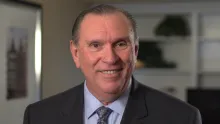
Randy D’Alessandro served as pastor for the United Church of God congregations in Chicago, Illinois, and Beloit, Wisconsin, from 2016-2021. Randy previously served in Raleigh, North Carolina (1984-1989); Cookeville, Tennessee (1989-1993); Parkersburg, West Virginia (1993-1997); Ann Arbor and Detroit, Michigan (1997-2016).
Randy first heard of the church when he was 15 years old and wanted to attend services immediately but was not allowed to by his parents. He quit the high school football and basketball teams in order to properly keep the Sabbath. From the time that Randy first learned of the Holy Days, he kept them at home until he was accepted to Ambassador College in Pasadena, California in 1970.
Randy and his wife, Mary, graduated from Ambassador College with BA degrees in Theology. Randy was ordained an elder in September 1979.
playlist
