

Jorge de Campos
This transcript was generated by AI and may contain errors. It is provided to assist those who may not be able to listen to the message.
Brethren, a few weeks ago I spoke to you about redeeming the time, how we are to wisely take full advantage of every God-given opportunity with a sense of urgency because the days are evil.
We are living in troubled, troubled times. You know, just this morning we heard on the news that the, you know, we've got a new president according to the way the votes have been tabulated. That means that half of our country is excited. That means the other half of our country is very depressed, very discouraged. In that regard, you might want to read the article that Mr. Kubik has in the E-News. Interesting article he writes talking about the early Christian Church. You know, you talk about times of political upheaval. Talk about times when you had a rule that people didn't care for. And I'm not trying to, in one sense, reflect upon this past election. But the New Testament Church was begun in some very difficult political times.
Going right down to the time when the Apostle Peter had to write that we need to respect the authority that is before us. And at that time when he was writing that, you had Nero, who was severely persecuting Christians. So again, we need to have a sense of urgency. I'm feeling very much that we are living in the end times. I'm thinking that it's very possible that our generation, this generation, you and I, are going to be alive when Jesus Christ returns. And we do need to be redeeming the time. We need to make sure that we're ready. You know, after I'm done with this particular series, as we're going through the Lord's Prayer or the Model Prayer, I want to ask a question. And the question I want to ask here in a few weeks is, just how tough are we spiritually? I'm going to ask myself that question. How tough am I? How am I going to do when things really get hard? I mean really hard. It's hard to find food. It's hard to find the number of things that make life livable, where the anger of the nation is turned against us, where we maybe won't be able to meet like we meet here. How tough am I? How tough are you? How prepared are we for what's coming down the road? It's a question I want to ask and hopefully answer to some degree from the Scriptures after we're done with this particular series. But last week, in part one of the series, we talked about the Model Prayer, the Lord's Prayer. Some people call it the disciples' prayer. And as we went through the material last week, we took a look at prayer's role in redeeming the time. We took a look at Jesus Christ as an example, as a man of prayer. We touched on the fact that we need to be like that lumberjack who, or not like the lumberjack, who was very good with his axe, but kept on chopping and chopping and chopping, but he never sharpened the blade. And after a while, he was not a very good lumberjack. Couldn't really chop down many trees. His axe was dull. Of course, we were asking the question then, how dull is our prayer life? We talked about a few preliminary thoughts about prayer. Then we went through Matthew 6, verse 9. Let's go there now. Matthew 6.
We didn't get very far last week. We had a full docket of activities with the blessing of children. Very wonderful opportunity.
Here in Matthew 6, we covered verse 9. In this manner, and I might add, brethren, as I stop there for a second, when I'm saying that, you know, I'm giving hopefully some food for thought regarding our prayer life, I'm not saying that every time we get on our knees to pray, we need to go to this point and go all through this. There are times we're going to take just one section of this prayer. There are times we want to just do nothing but praise God. There's going to be times we want to do nothing but thank God. There's many times we want to go before God, and we've got some real trials we're facing, and we need strength. And that's going to be the totality of our prayer. But what we have here in Matthew 6, starting here in verse 9, is teaching by Jesus Christ as to the kinds of things that we need to be thinking about in our overall prayer life. So He says, in this manner, after this model, therefore pray, our Father in heaven, hallowed be your name. So last week, that's as far as we got. That's as far as we got last week. Today, I don't know how far we're going to get, but we've got verses 10 through 13. You're a kingdom come, you will be done on earth as it is in heaven. Give us this day our daily bread, and forgive us our debts as we forgive our debtors. Do not lead us into temptation. That's an interesting phrase. Do not lead us into temptation, but deliver us from the evil one for yours are the kingdom and the power and the glory forever. Amen. So, brethren, we do want to take a look at these other sections of Scripture, but before we get there, let's take a look, put a marker here in chapter 6. Let's go to Jeremiah. Jeremiah chapter 9. You know, we go through our share of trials. I can list my trials, you can list your trials. We've all had them. We'll have worse as time goes along. But certainly, we don't want to be in a situation like the one person was where Christ said to them, but I know you did all these wonderful things, but I never knew you.
I never knew and relate that to the subject of prayer. You know, we never had conversations. You never poured your heart out. You never cried real tears. You never laughed and joked, and we never talked about, you know, your daily life. You came to me once in a while, but that was it. Now, we want to know the great God. That should be one of the great goals we have. And of course, prayer is one of the tools to do just that. Jeremiah chapter 9 verse 23. Jeremiah 9, 23. Thus says the Lord, Let not the wise man glory in his wisdom, let not the mighty man glory in his might, nor let the rich man glory in his riches. Let not glory in ourselves. Let not glory in the gifts that God and the talents God has given to us. But let him who glories glory in this, that he understands and knows me. Brother, that's where we want to be. How tough are we? How well do we know God? That he understands and knows me, that I am the Lord, exercising loving kindness, judgment, and righteousness in the earth. For in these I delight, says the Lord. We want to be so in tune with our Maker that he is our Father, but he is our greatest Friend. And that we at all times are asking ourselves as we go through life, what does the Father think about this? What does Jesus Christ think about this? What does the Scripture say about this? Galatians chapter 6 and verse 10.
Galatians chapter 6 and verse 10.
Galatians 6 and 10. Therefore, as we have opportunity, let us do good to all, especially to those who are of the household of faith. Now, why do I read that Scripture? We just went through a number of prayer requests. We are family, and when our family calls upon us and they're asking for prayers, generally speaking, at those times our family is in great need. And they want to rely upon the fact that they're talking to their brothers and sisters in the Lord who have a close relationship with God. They're relying on the fact that you and I, as we get on our knees and we pray, that God is going to hear our prayers and answer our prayers. We don't want to disappoint them. We don't want to let them down. We want to make sure that we are using the principles that Jesus Christ gave us in that model prayer so that our prayers are effective and that we are, as we have that opportunity, as we are redeeming the time to do well. So let's go now to Matthew 6. I'll just quote it for you, Matthew 6, verse 10.
Thoughts about your kingdom come as we're praying. Your kingdom come. Notice that after we're talking about God our Father, who is in heaven, that place of power, we're hallowing His name, respecting, honoring, worshiping Him. What's the first order of business, if you want to put it that way? The first thing God wants us to be in our minds is His kingdom. That was the priority in the life of Jesus Christ. And you and I can ask ourselves, and if we don't have that as our first priority, why don't we? Is that something we need to be praying about? Is something else the first priority in our life? Let's go to Mark chapter 1. Mark chapter 1. Jesus Christ was mission-driven. He was mission-driven. He had a mission, and He came to this earth to fulfill that mission. It was a powerful mission. It is our mission as well. Mark chapter 1, verse 14. Now, after John was put in prison, Jesus came to Galilee. So here we've got a time element. John the Baptist being put in prison. We've got a location. Jesus Christ came to Galilee, and we see what He's preaching. Preaching the gospel of the kingdom of God. Preaching a gospel about government. Real government. Helpful government. God's government. And, of course, within that discussion is a discussion about salvation. Preaching the gospel, the good news of the kingdom of God, and saying the time is fulfilled, the kingdom of God is at hand, repent, and believe in the gospel. Believe in the gospel. We've got to have faith. Understand what that gospel is all about. Your kingdom come. You know, Mr. Armstrong always talked about the people who were the strongest that he knew of into faith, or people who had their heart in the work, who were praying daily for God to open up the hearts and minds of people. You know, we read there, I think it's in Corinth. I believe it is in Corinth. You know, Paul's going through various difficult times, but God said, you know, Paul, I've got many people in this city.
Brethren, we live in one of the great cities of the world. We live in the Chicago area, one of the great cities. Do we really think this is it? Do we really think this is all God's going to do in this city and suburbs of Chicago, Illinois? I don't think so. We've got work to do. We've got to roll up our sleeves, roll up the sleeves of our mind as it says, I think Peter is saying that. So here we see Jesus Christ being mission driven. We go to John 17.
John 17.
Starting here in verse 1. John 17. Verse 1. Jesus spoke these words, lifted his eyes up to heaven and said, Father, the hour has come. Glorify your Son that your Son may also glorify you.
Notice Jesus Christ talking about his mission, which is our mission, too, to do our part in the worship of the great God and getting out his message of introducing those people to introduce people to the gospel that God wants us to introduce the gospel to. Verse 2. As you have given him authority over all flesh, that he should give eternal life to as many as you have given him. And this is eternal life that they may know you, the only true God in Jesus Christ whom you have sent. I have glorified you on the earth. I have finished the work which you have given me to do.
I finished my mission.
There was a lot you asked me to do. I gave them your word. I established the church. I ordained those people, brought those people forward that needed to take the work on after I'm gone physically. I finished the work which you have given me to do. Brethren, in our prayers before God, we need to be asking ourselves, are we finishing the work that God personally has given to us? You know, if God has given us the opportunity, and again, redeeming the time for us to draw close to Him, we shouldn't mess around with this. You never know how much time you or I have.
You know, Mary and I from time to time watch some of these medical shows. And you just never know. Maybe you or I, maybe there's an aneurysm in our brain. Maybe there's only so long we've got to live. We don't know. And so we better redeem the time. We better be making sure that we are doing the work that God has called us to do in terms of our relationship with Him, and also in terms of our mission, corporately, and supporting the church. Now, as we're praying, your kingdom come, there are implications for that as well. Let's look at some of these implications. Let's go to, first of all, over to the book of Ezekiel, chapter 9.
Ezekiel chapter 9, in verse 4, Ezekiel 9, 4, And the Lord said to him, Go through the midst of the city, through the midst of Jerusalem, and put a mark on the foreheads of the men, who sigh and cry over all the abominations that are done within it. Here, brethren, we're looking at a frame of mind, and we want to ask God in our prayers, and we're praying, Your kingdom come. Father, give me the frame of mind where I see the sins of this society. I mean, really see them and really hate them to the point where I want to do something about it. I'm going to increase my prayers. I'm going to fast more frequently. I'm going to do what I need to do to whatever I can do to be a part of your work even more. I can give up this, give up that. I've only got so much discretionary time, and I want to take some of that time I was using for other things that aren't that essential, and I want to spend more time in Your Word and more time in study. I want to make sure that I'm sighing and crying, that I really hate what I'm seeing in society. We should have that profound hatred of the sin that we see. Not the people, but the sin we see in society.
Micah chapter 4.
Micah chapter 4. Micah chapter 4 here, starting in verse 1.
Now it shall come to pass in the latter days that the mountain of the Lord's house shall be established on the top of the mountains and shall be exalted above the hills, and people shall flow to it. Another ramification, another implication of praying, Your will be done, is for us to see the vision of the future. It's so easy to be discouraged in this life. It's so easy to be discouraged. And we've got our share of people in the Chicago church who really enjoy politics. And we've got some people who enjoy the Democratic side of politics. We've got some people who enjoy the Republican side of politics. Now, in full disclosure, I'm a product of a blue-collar upbringing. My father was a mechanic. My mother was a stay-at-home mom. My brother was a meat cutter. My dad never graduated from high school. And to the day my mother and father died, they were dyed and a wooled Democrats. I wasn't thinking that way.
So we had a number of very interesting conversations about politics as I was growing up. Now, my dad died in 1977, so the Democratic Party back in those days was much different than it is today. But you know something? When I see this, you know, people, who's going to be in control of the Senate? Who's going to be in control of the House of Representatives?
We can think about those things. You know, I think we'd have to be numb not to. But you know who's in control of the Senate and the House of Representatives? God almighty. And even though if I wanted to let myself get involved in the political way of thinking and be upset and, well, they stole the election and this and that and the other, that's not where I need to be coming from. I need to be saying, Father, your kingdom come. Your kingdom come. And what, you know, if you want the best guy to win, fine. If you want the worst guy to win, fine. That's your call, God. And we'll let God make his call. But notice the call we've got here. This is something as we're praying, your kingdom come. I'm so glad, brethren, that we can look into the future and see so much better days ahead. So much in the way of better days when Jesus Christ is going to rule or people will respect that.
People will flow to the mountain of the Lord. Verse 2, many nations shall come and say, come and let us go to the mountain of the Lord, to the house of the God of Jacob. He will teach us his ways. Don't you long for something like that. When those days are going to come, people longing for the ways of God to be taught. We shall walk in his paths, for out of Zion shall the law shall go forth in the word of the Lord from Jerusalem. He shall judge between many peoples and rebuke strong nations afar off. They shall beat their sores into plowshares, their spears into pruning hooks. Nations shall not lift up sword against nation. Neither shall they learn war anymore. But everyone's going to be under their own vine and fig tree. No one shall make them afraid, for the mouth of the Lord of hosts has spoken. God, your kingdom come. God, you help me to fully appreciate the vision for the future. Help me to remember I am a stranger and pilgrim on the earth. Help me to remember my citizenship, and I love my country, and you love our country. But our citizenship is in heaven. Let's look at the book of Daniel. Daniel chapter 2.
Daniel chapter 2 and verse 44.
Daniel 2, 44. And in the days of these kings, the God of heaven will set up a kingdom which will never be destroyed, and the kingdom shall not be left to other people.
No, the kingdom is going to be given to the glorified saints, you, who have proven that you know how to redeem the time. You have proven that you are spiritually tough. Whatever that means. And you're going to be resurrected when Jesus Christ comes to collect the saints. The kingdom not shall be left to other people. It shall break in pieces and consume all these kingdoms, and it shall stand forever.
As we're in Daniel, let's look at Daniel chapter 7. Daniel chapter 7, verses 13 and 14.
Daniel 7, verse 13. I was watching the night visions, behold, one like the Son of man coming in the clouds of heaven. And he came to the ancient of days, and they brought him near before him. Then him was given a dominion and glory and a kingdom that all peoples, nations, and languages should serve him. His dominion is an everlasting dominion which shall not pass away, and his kingdom the one which shall not be destroyed. Brethren, as we're praying before God, your kingdom come. Let these scriptures encourage you.
Let these scriptures inspire you, and stir you, so that you are doing what Christ did. So that you and I are mission-driven, that we want to complete the work God has called us individually and corporately to do.
As I mentioned a few moments ago, it's not surprising that Jesus Christ taught us the first order of business. After we've discussed our great God as presence, his hallowing his name, he talks about the kingdom coming. First order of business. And again, in our prayers, we need to ask God, is that our first order of business? Let's move on in the model prayer to the next phrase.
This is Matthew 6, in verse 10, your will be done on earth as it is in heaven. Your will be done on earth as it is in heaven. Here we need to ask God, as we're praying, that we need to realize that God has the rule in our lives. It's so easy to allow Satan, to allow us, to allow society, to have too much sway, to be overcome by life's circumstances. No. We want God's will to be done. We need to recognize that we need God's will.
We need to pray that God would give us the grace, the insight, the understanding, to know what that will is in every area of our lives. We don't want to be like Lucifer. Let's go back there again. Isaiah chapter 14. I'm not going to spend a lot of time here because I gave a whole sermon on this, but Isaiah chapter 14. And maybe there's a reason why this is so close to the beginning of this prayer.
God's saying, you know, we need to be praying. His will be done. Because look what happened to Lucifer. Isaiah 14 verse 13. For you have said in your heart, Isaiah 14 13, you have said in your heart, I will ascend to heaven. Egotist. I will exalt my throne above the stars of God.
I will also set an amount of the congregation on the farthest sides of the north. I will ascend above the heights of the clouds. I will be like the most God. Now there's a being who didn't care about the will of God being done. And the reason I gave that sermon a few weeks ago is because this is the heart and core of Satan's mind and thinking. And if this is the heart and core of his mind and thinking, he's going to broadcast that to us. This is, you know, deception 101. Get us to thinking along these lines. When we are, you know, we are more concerned about ourself and our will being done.
Let's go to Matthew 6. Matthew 6 and verse 33. Matthew 6, 33. Red lettering in my new King James here. Matthew 6, 33. But seek first the kingdom of God and his righteousness, and all these things shall be added to you. This is always God's will. This is always where God wants us to be coming from, to seek first his righteousness, to seek first his kingdom. Brother, when you and I are asking God in our prayers to understand his will, we're not asking God to change his will. We're not asking God to bless our will.
We're asking for God to help us to understand his will. His will. Now, to understand his will, we have to search the scriptures. We have to have our nose in the book. We need to be committed to finding out what God's will is. And really search the scriptures of the Bereans and search the scriptures daily. Find out what's so regarding his will. Let's go to Psalm 119.
Psalm 119, verses 18 through 20. Psalm 119, verse 18.
A part of our prayer, as we're asking you to understand the will of God, your will be done on earth as it is in heaven. Psalm 119, verse 18, Open my eyes that I may see wondrous things from your law.
Father, open my eyes to see your will. Brethren, what are you going through in your life right now? What is God's will? You're probably going through some kind of a challenge. What is God's will as you face that particular challenge in your life right now?
Verse 19, I'm a stranger in the earth. Do not hide your commandments from me. Help me to really understand. Pull back the curtain, Father. My soul breaks with longing for your judgments at all times. Now, here's a person that was dedicated to finding God's will. He longed for it. He thirsted for it. He was going to seek it.
So the first thing we need to do as we're praying, your will be done, we need to find out what God's will is. We need some definition there. Then we need to do something else regarding God's will. Let's look at Romans, chapter 12, well-known scripture. Romans, chapter 12, verses 1 and 2. Romans, chapter 12, verses 1 and 2.
I beseech you therefore, brethren, by the mercies of God that you present your bodies, a living sacrifice, holy, acceptable God, which is your reasonable service.
Do not be conformed to this world, but be transformed by the renewing of your mind that you may prove what is the good and acceptable and perfect will of God.
Notice what we're asked to do here in verse 1. We've got a hunger and thirst for knowing God's will. We have got to buy into what is God's will. Not just passively accept that we need to buy into it. We can't be conformed to what the world would want us to think or what our neighbor wants us to think. But we have to prove from the scriptures what is that good and acceptable and perfect will of God. But it's not just enough to know the will of God. We've got to do it. Once we find it, we've got to buy into it, and we've got to do it, and do it with our whole heart.
God can bless us as we do that. Let's go to Colossians chapter 1.
Colossians chapter 1, verses 9 and 10. Colossians 1, verse 9 and 10.
Verse 9, For this reason we also sense the day we heard it, do not cease to pray for you. Was Paul a man of prayer? Was Paul a powerful Christian? Was he a tremendous example? Notice he didn't cease to pray for his brothers and sisters. They were counting on him. That was part of his ministry. But you know, brethren, we've got a ministry as well, don't we?
We are to love our neighbor as ourselves. We pray for ourselves and our needs. We're going to talk about that later in a sample prayer. But we want to be praying for one another as well. Do not cease to pray for you and to ask that you may be filled with the knowledge of his will, to be filled with that knowledge. It means being filled out to completeness. Be filled with that knowledge of his will in all wisdom and spiritual understanding. In other words, a deep understanding. So we want to know God's will. Why? Verse 10. That you may walk worthy of the Lord, a worthy walk, fully pleasing him, being fruitful in every good work and increasing in the knowledge of God. So as we find that will, we're doing that will, we walk worthy in that will, and we're pleasing the great God. So yes, brethren, as we pray, there's a lot to think about when we're thinking about your will be done. Next on the list, in the sample prayer, Matthew 6, verse 11, give us this day our daily bread. Give us this day our daily bread. Interesting as God designed this prayer, how we put the pieces of the puzzle together. We can only truly effectively pray for ourselves once we have the proper perspective as we're worshiping God, we're honoring God, we're looking toward the things he honors and things he's looking for, things he views as high priority, the kingdom of God. Once we have done those things, then we can start talking about, well, here's what I need, God. You're my Father. I love you. I honor you. I want to obey you. I want to be like you. I appreciate and stand in awe of who you are and your tremendous power. I'm looking forward to your kingdom and your will being done. But, Father, I've got needs, and I need my daily bread. My daily bread. So, here we have a spiritual orientation. He's not asking for the whole loaf. He's not asking for the whole bakery. He's asking for a slice. Give me the slice I need today. You know, we as human beings, we want to have everything right now. We want to know all of God's will about everything at all times. Did Abraham? Did Moses? Did Paul? No. In some ways, it's almost like the military. We're on a need-to-know basis. You know, here is what you need to know right now. Here is a slice of daily bread. Now, some people want a bigger slice than others. But God's going to give you what you need, but we have to have the proper orientation. After we've affirmed the priority of God's kingdom in our life, asking for understanding what His will is and doing His will, then we can ask. Let's take a look at James. A couple of scriptures in James here. James 4 to begin with.
James 4.
James 4, verse 1, Where do wars and fights come from among you? Do they not come from your desires or pleasure that war in your members you lost and do not have, you murder and covet and cannot obtain, you fight in war, yet you do not have because you do not ask. There's nothing wrong with asking. God expects us to ask. He wants us to ask. He wants us to ask with the proper motivations. He wants us to have the proper mindset, how we frame all of that, which we've talked about as we've gone through the beginning portions of the model prayer. But there's nothing wrong with asking. James chapter 1, verse 17. James 1, 17. Every good gift and every perfect gift is from above and comes down from the Father of lights with whom there is no variation or shadow of turning. Every good gift, every perfect gift comes from God. Not bad to ask. Ask properly. Philippians chapter 4. Philippians chapter 4 and verse 19. And when we ask, and we're asking properly, and we're following the principles set forth in this model prayer, we're setting ourselves up for success the way God would want us to be successful. Philippians chapter 4 and verse 19. And my God shall supply all your need according to his riches in glory by Christ Jesus. He shall supply all your need. Now we can have a lot of wants. Probably three times a week I say to Mary, I want to go back to Hawaii. I'm sure in February I'll be saying that more often. Well, that's not a need. I don't need to go to Hawaii. I mean, I'd love to live there, but there's no brethren there. You know, there's only I think four or five people throughout the whole island chain that are in a church. So I don't want to move there and to scholarship myself. But so there are things God says, well, you know, De But my needs, I need to be close to God. I need to understand the scriptures. I need to make sure I'm loving you as a Christian and as your pastor. There are things I need to be doing, and God will help me with those needs because those are right needs to be thinking about and to be asking for. Now there's something about that phrase. Give us this day our daily bread.
What is bread? In scriptures, bread is symbolic of our trust and dependence on God. Father, give me the trust I need to depend upon you this day. I'm going through some harracious times, they're horrendous times, and I don't see the light at the end of the tunnel. Times are very bleak, they're very dark, but I'm going to trust in you. I'm going to search for your will, I'm going to do it when I find it, and I'm going to trust that you will deliver me in a way that you want to deliver me. Maybe not the way I want to be delivered, but you're going to deliver me the way you feel is best for me at this point in my life. I'm going to depend upon you daily bread, representing trust and dependence, our absolute dependence on God for everything. Our conviction, as we're praying that part of the prayer, our conviction that God will be there for us to give us that day our daily bread, that He will reach out to us and help us in our time of need.
Daily bread also symbolizes our contentment with the bread God's given us.
Are we content with the daily bread God has given us?
You know, discontent is a big thing in our society, and if we're not careful, discontent can be a big thing with us. Give us this day our daily bread. You know, the people, the children of Israel, weren't so happy about the manna all the time. They weren't content with that all the time, but we need to be content with our daily bread. I'm going to read you Matthew 6 and verse 11. This is from the Good News Translation, where it says, give us today the food we need. Give us today the food we need. Our daily bread, the food we need. I would like you to turn to Proverbs chapter 30.
Proverbs chapter 30.
Proverbs chapter 30 and verse 8, where it says, remove false head and lies far from me. Give me neither poverty nor riches. But now notice, feed me with the food allotted to me. Feed me with the food allotted to me. Give me this day my daily bread. The food we need, the food allotted to us. And certainly, brethren, before I leave this particular point and move on, let's take a look at a scripture we read every year at Passover time. Let's go to John chapter 6.
John chapter 6.
And in verse 51, the ultimate bread is Jesus Christ. John chapter 6.
John chapter 6. I am the living bread which came down from heaven. If anyone eats of this bread, he will live forever. And the bread that I shall give is my flesh, which I shall give for the life of the world. Yes, we desire a slice of that to think more and more every day like Jesus the Christ, the living bread.
Moving on. Last thing we'll be covering today.
Matthew chapter 6 and verse 12 says, and forgive us our debts as we forgive our debtors.
Forgive us our debts as we forgive our debtors. Jesus Christ is telling us something by including us in the prayer, in the model prayer.
He's telling us, yes, we need to request personal forgiveness. That's something that's very much on our minds. We appreciate the Passover. We appreciate the sacrifice of Jesus Christ. He is our personal Savior. We appreciate that. But he's also telling us something else. We need to have a forgiving spirit. A forgiving spirit. Christ so strongly felt about—let's turn over there to Matthew chapter 6. Matthew chapter 6, we see in verse 12 here, and forgive us our debts as we forgive our debtors. The prayer goes on. It ends. There's the amen there in verse 13. But look at verse 14. For if you forgive men their trespasses, your heavenly Father will also forgive you. But if you do not forgive men their trespasses, neither will your Father forgive your trespasses.
So after the model prayer, Christ wants to add a postscript in one sense. He wants to say, now I want to make sure you get this, that forgiveness is important. It's extremely important. If you want forgiveness, you've got to have a forgiving spirit. And notice the way it's written up there in verse 12. And forgive us our debts as we forgive our debtors. Basically, the story there in verse 12, forgive us our sins as we forgive others' sins against us. But if we can't forgive them, then we're in jeopardy ourselves. We're in jeopardy ourselves. And, brethren, over the course of my time in the church, that's been one of the great reasons why people leave the church. They get offended. They get hurt. Somebody hurt them. They said something. They did something. And people can't forgive. They can't move past it. And it just grates on them. And they mull it over in their mind. And before long, they're turning bitter. They're getting hard to live with. Then after a while, they simply walk away. I don't need that church. I don't want to even see that person. That's why this whole section, forgive us our debts as we forgive our debtors, is so very important. Very important.
Extremely important. Well, I can't cover the rest on that particular topic with the time I've got left. So I'm going to stop here and we will cover everything and finish everything next week, I promise you.
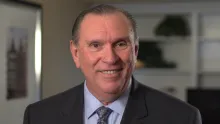
Randy D’Alessandro served as pastor for the United Church of God congregations in Chicago, Illinois, and Beloit, Wisconsin, from 2016-2021. Randy previously served in Raleigh, North Carolina (1984-1989); Cookeville, Tennessee (1989-1993); Parkersburg, West Virginia (1993-1997); Ann Arbor and Detroit, Michigan (1997-2016).
Randy first heard of the church when he was 15 years old and wanted to attend services immediately but was not allowed to by his parents. He quit the high school football and basketball teams in order to properly keep the Sabbath. From the time that Randy first learned of the Holy Days, he kept them at home until he was accepted to Ambassador College in Pasadena, California in 1970.
Randy and his wife, Mary, graduated from Ambassador College with BA degrees in Theology. Randy was ordained an elder in September 1979.
