
Roy Holladay
This transcript was generated by AI and may contain errors. It is provided to assist those who may not be able to listen to the message.
The Bible is full of prayers. From the book of Genesis through the book of Revelation, there are multitudes of prayers mentioned. We realize that the Bible is written in such a way that it's written for our admonition, our encouragement, and so that we would learn.
If you ever ask yourself, maybe you didn't realize there were so many prayers recorded in the Bible, but I would say there's a great deal of the Bible is recorded prayers of the servants of God praying. I could just list a few names like Abraham, Abijah, Asa, the Centurion, Cornelius, Daniel, David, Elijah, Elisha, Ezra, Habakkuk, Hezekiah, Isaac, Jabez, Jacob, Jehoshaphat, Jeremiah, Jesus, Joshua, Manassas, Moses, Nehemiah, Paul, Peter, Samson, Samuel, Solomon. You could go on and on and on.
I haven't certainly listed all of them, but these are some of the main ones of the servants of God. Let's notice in the book of Deuteronomy chapter 18, in verse 15, what Moses wrote. In verse 15, the Lord your God will raise up for you a prophet like me from your midst, from your brethren. Him shall you hear. So this prophet from the New Testament we know is Jesus Christ. And Moses said, he'll be like me.
You're supposed to hear him. You're supposed to listen to him. You're supposed to listen to what he says. In verse 18, I will raise up for them a prophet like you from among their brethren, and will put my words in his mouth, and he shall speak to them all that I command him.
So we see that Jesus Christ did not come with his own message. He didn't come with his own words. What the Father commanded him, that's what he spoke. What he heard, that's what he spoke. Also, we find that not only did he speak, but he was a perfect example for us. And he was also a prophet like Moses. Now Moses, there are many similarities. Moses was over his own house as Christ is over the house of God.
Moses helped as a mediator with the Old Covenant, Christ with the New Covenant. God used Moses to lead them out of Egypt. Christ leads us out of this world and society. Many ways, and it's not the purpose of this sermon to enumerate all of the ways that Moses was a type of Christ, but we have examples of prayers to God and of his relationship with his Maker. Moses, you will find in some of the prayers that he uttered to God, is directly a type of what Jesus Christ was like when he was on the earth.
Also, you'll discover that David, in many ways, was also a type of Jesus Christ. David, in his prayer life, is an example that I believe that shows the heart and the approach that the future Messiah would have when he came to this earth, that he displayed the heart of God and his approach. David is also called a man after God's own heart, and so therefore, much of what he said was an example of that. Now, David and Moses were humans. They sinned. So not everything they said, everything they did, everything they uttered, even in a prayer would be a type of what Jesus Christ uttered.
Every prayer is not that type. Yet, they show a connection with God, a relationship with God, a communication with God that we should all be striving for. There is nothing more important in our life than to have a right, proper communication and relationship with God. If you can think of anything more important than that, let me know.
But we've been put on this earth to have a connection with God to be able to communicate with Him. A lot of David's prayers, you'll find, give us an insight into the thinking of Jesus Christ and how He approached His Father. His literal Father, our Father, our God. I think you'll find with David—in fact, I have a book I was reading through in preparation for this sermon. It goes through every psalm. Almost every psalm, it concentrated on how this psalm was a psalm that dealt with future actions that Christ was going to do and how it was a type of some of the thoughts and the prayers of Christ.
Not every verse and every chapter, but it is amazing how many chapters in the book of Psalm actually show Christ. There are many notable prayers in the Bible, and I'd like to be able to cover those in the future. But today, we're going to take a look at Jesus Christ. He's our Savior. He's our High Priest. He's our example. We have four books in the Bible, what are called the Gospels. These books list Christ.
They list His example. They show how He prayed, and they give us the example. Christ is the perfect example when He was here on the earth. They show how you and I can have a connection with God and have a proper prayer life. He's our supreme example on how to pray.
We want to take a look at His example today. Today will be one sermon out of maybe one or two more that I will give. Going through the Bible, literally there are dozens and dozens of prayers in the Bible that you can analyze and think of. They reveal, especially the prayers of the servants of God, the innermost thoughts that the servants of God had.
They reveal the trials, tests, problems, difficulties that people had. They were going through how they approached God, how they asked for God's help. They give us an inclination of how we should approach God. They help us in our relationship with our Creator. We want to look and start by looking at Jesus Christ and His example.
In Luke 2, verse 39, we see Jesus Christ as a young child. This is right after He had been born. They had gone up to Jerusalem. He had been circumcised on the eighth day. In verse 40, it says, the child grew and became strong in spirit, filled with wisdom, and the grace of God was upon him. And then in verse 51, we see Jesus Christ as a young child. He had been baptized in spirit, filled with wisdom, and the grace of God was upon him. And then in verse 51, this is where they had gone up to the feast. Christ has stayed back at this point. He is age 12 now. He had stayed back. He talked with the scholars of His day.
They were tremendously impressed with His wisdom and knowledge. As verse 47 says, they were astonished at His understanding. And you go on and you read here in verse 51, Then He went down with them and came to Nazareth, and was subject to them. And His mother kept all these things in her heart. And Jesus increased in wisdom and stature and in favor with God and men. How did He grow in wisdom? How do you grow in wisdom? How do you grow in stature and favor especially with God? How does that happen? Jesus Christ grew up. He matured. He was a young child, became a teenager, then He became an adult. But it goes much beyond that. Jesus Christ had a relationship with His Father that you and I need to emulate, that you and I need to copy. It is our example to show us how to relate to our Father. Over in chapter 11 beginning in verse 1, Christ had a request made of Him by His disciples.
Verse 1 came to pass as He was praying in a certain place when He sees that His disciples said to Him, Lord, teach us to pray as John also taught His disciples. How many times have You gone to God and said, Father, help me to pray? I don't know exactly how to pray.
I need Your help. Or perhaps there have been times that You've gone to God and You've said, I don't feel like praying today. Have you ever said that? Or you feel down or you just don't feel, quote-unquote, I'm not in the mood to pray? And you get down on your knees and you say, help me to pray. I need Your help. I know I need to pray. Oh, here His disciples came to Him. They saw Him praying all the time. And as we'll see in some of the examples of Christ, they would go hunting for Him. Where is He now? And they go looking for Him. They would know that He was off somewhere praying, and they would find Him, and then they would ask Him questions. Well, here they found Him praying, and they asked Him to tell them how to go about praying. See, prayer is our conversation and contact with Him.
This is God's contact, His Word, and His Spirit with us. God shows us how to live, how to conduct our lives in every facet in His Word. It is through His Spirit that we come to understand that. People can read the Bible. They don't understand it. But you and I read it. We understand it. We comprehend it because of the Spirit of God. But this is our conversation. God reaches out to us through the Scriptures, through His Spirit, and we pray to God to be able to communicate with Him. And Jesus Christ is the perfect example.
We find that revealed in the Bible. So in verse 2, He said, When you pray, say, Our Father in Heaven. Now, I want you to notice that this prayer can be broken down into two sets of three. Our Father in Heaven, hallowed be your name. Now, the word hallowed here means holy. And so He's talking that God's name should be hallowed. You will find, quite often in David's prayers to God in the Old Testament, that David spent quite a bit of his prayers extolling God, praising God, thanking God. He will talk about how great God's understanding, great God's wisdom is, all of the blessings, God's intervention. And it's not always just at the beginning of the prayer, but somewhere you'll find He'll normally add that and think God for His intervention. So David certainly did that. Now, when it says here hallowed be your name, this can be taken in two ways. This is something that all of us should do. When you pray, you should put the emphasis on God. You should thank Him for the blessings He's given to you. Thank Him for being a part of His church, His work, having His Spirit, for everything that He does for you. But it's also, in a sense, looking to the future, because in the future the whole world is going to come to the place of hallowing God's name and realizing that He is the true God. Then it goes on to say, your kingdom come. And that's obvious about the future. Why should we pray for God's kingdom to come?
All you have to do is look at the world around you in society, over close to 7 billion people on earth today, and you see the suffering and the misery and the wars and the pains. The millions of people go to bed every night hungry or starving. We realize that God's kingdom needs to come to put an end to this.
So it's not just parroting the words, thy kingdom come. Maybe you read a story in the paper. You see something on television. You see a tragedy that has taken place. And when you get down to pray, you bring that up to God. Look at what is going on in this world. We certainly need you on this earth. We need your kingdom. We need you to rule, to put an end to this type of situation.
And then you will be done on earth as is in heaven. So we pray that God's will be done. That's the third thing. That it be done on this earth as it is in heaven. Well, that's not true today, is it? It's done in our lives. Hopefully it's done in the church. But it's not done completely on earth as it is in heaven. God rules in heaven. He's in charge.
And so there's going to come a time in the future when God will do that. When His kingdom is set up. Then notice three things that we can ask God to get more personal in nature. Give us day by day our daily bread. So we ask God to provide us food. I think that means we ask God for our needs. Food, clothing, shelter. What good is it to have a hamburger to eat when you're out in the middle of a field and don't have any place to sleep and you're naked? You need food. You need clothes. You need shelter. And you need something to eat. So we ask God, and it's not wrong, it's not being selfish, to ask God to give us our provisions, our needs.
The problem is we tend to be a little selfish in that approach. Give me this, give me that, give me something else. So we have more of a give me. But it's not wrong to let God know what our needs are. Then He goes on to say, and forgive us our sins.
So that's another need that we have, is it not? That our sins be forgiven. We don't want those sins held over our head. The wages of sin is dead. We want God to forgive our sins, to remove that from us. And so He said we're to do that. But also, for we also forgive everyone who's indebted to us.
So we clearly find out that part of this, and this is a model prayer, this isn't just Christ's Prayer, but it's a model, an example for us on how to pray, that forgive everyone who's indebted to us. That if we're not willing to forgive others, God will not forgive us, as we see elsewhere in the Scriptures. Then do not lead us into temptation, but deliver us from the evil one. So we need God's protection and safety. We need protection from the evil around us in this world, from Satan the devil. He is a tremendously powerful spirit being who's out there to destroy, divide God's church, to whatever way He can to lead us off in different directions.
Now that's the end of the prayer here, but over in Matthew 6, in verse 13, it adds, But yours is the kingdom and the power and the glory forever. Amen. And then verse 14 and 15 in Matthew 6 says, What that means is that we don't hold grudges. We don't hold bitterness. We don't hold hatred against another individual. We're willing to overlook and being willing to forgive. So I thought it was important to start off because the disciples asked, teachers to pray. And so here's Christ's major teaching on how to pray. Now, it doesn't mean that every prayer you pray, you've got to say, okay, one, two, three, four, five, six. I've got to make sure I get all six of these points in, because there are going to be times when you pray and you go to God and you can go back and read David's prayers in the psalm. When David was going through a severe trial, he goes, how long, O Lord? And he talks to God and he tells God what the problem is and he's seeking God's help. And he ends, I know you'll be with me, you'll help me. And that's it. Not wrong to pray in that manner. But as a rule, when we're praying throughout the day, we should include these factors.
We should always be thankful. We should ask for God's help and guidance. In chapter 11, let's go back to the book of Matthew. Chapter 11 in verse 25. Chapter 11 in verse 25. Here we have an example of Jesus Christ. It says, at that time Jesus answered and said, I thank you, Father. So we find that Jesus Christ on many occasions thanked his Father, Lord of heaven and earth, that you have hidden these things from the wise and the prudent, but have revealed them to be. Even so, Father, for so it seemed good in your sight. So Christ clearly is showing here that not everybody is called in its age. God is not offering salvation to everyone, but that God is offering salvation to those who would receive it, and not the great and the mighty, and that it's been hidden from some and revealed to others. So our prayer should be like Christ here thanking God constantly for all the blessings that he gives us. We need to get our minds off of ourselves and on the greatness of God. And one of the things that will do that is simply talking to God, thanking him for every good gift that God gives to us. Scripture says God is the giver of every good and perfect gift, and it comes from him. So we thank God. Now, over in Chapter 14 of the book of Matthew, again, we're focusing here on Christ's example and prayer, what he said, the example he said before his disciples. Chapter 14, verse 22, immediately Jesus made his disciples get into the boat. If you remember, he had just fed a crowd of 5,000, and he told his disciples to go across this lake.
And as it says here, go before him to the other side, and he sent the multitude away. And when he had sent the multitude away, he went up into the mountain by himself to pray. Now, when evening came, he was alone there. So apparently, he had prayed for an extended period of time.
And you find that Christ many times went into a solitary place to pray. Why was Christ close to God? Why was he able to perform miracles and signs and wonders and do many mighty works? Because he had that closeness and that relationship with God. Just stop and think about it. He was God in the flesh. He walked this earth. It would have been easy for him to say, I can do it. I'm God. I can perform this. But he never did that. When it came to the message, he said, I don't speak my own words, what I heard, what I've been commanded. I speak that. When it came to relying upon himself, he didn't do it. He relied upon the Father. The Father was the source of his power, the source of his strength, the source of everything. It came from God.
So he went out into a solitude place. Have you ever noticed when you pray outside? I don't know how often you get to pray outside, but when you pray outside, that it's different than when you pray inside. When you're in the bedroom, you close the door. What do you see? See the bed, see the spread, see the wall, see the curtains, see the dresser.
And it's not wrong to open your eyes, have a list, look at it, and you'll pray. When you go outside and you lift your eyes up and you pray, what do you see? You see the heavens. You see the trees. You see the creation. You see God's hand. You see what God has done. In your bedroom, you see what man has done.
And there's a difference. You just get a different feel. And so often, as we go through these examples, you will see that Jesus Christ went out and prayed to His Father outside and made that connection. Let's notice the example that Luke cites for us. Luke's record of Christ and praying. In Luke 3 and verse 21, this is where Jesus was baptized. It doesn't say much, but it says, When all the people were baptized, it came to pass that Jesus also was baptized. And while He prayed, the heavens were opened and the Holy Spirit descended upon Him. And God said, This is my beloved Son, and you I am well pleased.
So we have the example here again that Jesus Christ was baptized. He prayed to God. And that God gave Him encouragement at this time. He was launching into His ministry. He was choosing His disciples. He was about to be tempted by the devil. And so He needed God's strength. In chapter 5 and verse 15, Jesus Christ had just cleansed a leper. He had healed him. In verse 15, it says, However, the report went around concerning Him all the more. And great multitudes came together to hear and to be healed by Him of their infirmities. And so He Himself often withdrew into the wilderness and prayed. Now, why did Jesus Christ do that?
Well, Jesus Christ went out because He needed His batteries recharged. You might remember the example of Christ when this woman came up and touched the Him of His garment. And Christ said, Who touched Me? And it says He felt virtue or He felt power go out of Him. Jesus Christ, in healing the sick, casting out demons, doing many wonderful works, began to have the Spirit that the power that He had began to dissipate.
He had to recharge. He had to have more of that Spirit. And so how do you and I get the Spirit of God? Well, it comes through our relationship with God, our closeness to God, our praying to God, our studying His Word. And so Jesus Christ would go out and have many long sessions with God, and He would pray, and God would recharge Him.
Same is true of all of us. My wife and I have commented about this, and I've talked to a number of ministers over the years. You give two sermons on the Sabbath. You drive, you counsel, you anoint for sick, and you come home at night. You just feel drained, and you need to be recharged. And the same is true of all of us.
When you're serving other people, you're helping individuals, you're praying for people, you're giving of yourself to others. You give out of God's Spirit. God's Spirit flows out of you in good works, in service, in obedience. And we all need to have that recharged. Well, Jesus Christ was the same way. This is exactly what He did.
Notice over here in chapter 6 and verse 12. Chapter 6 and verse 12. Here we have an example of Jesus Christ making one of the most important decisions He was going to make while on this earth. Verse 12 came to pass in those days that He went out to the mountain to pray. And He continued all night in prayer to God. The lesson we learned, or if you're going to have an important decision, you need to pray more than 5 or 10 minutes about it. You need to ask God to guide you, to lead you.
You need to spend much time in prayer. And in this case, Christ was going to select the 12 apostles. Let's read it. Verse 13, when it was day, He called His disciples to Himself. So notice, it wasn't just the 12. There were a number of disciples who had been following Jesus Christ. Out of that group, He was going to select 12 of them. And from them, from the disciples, He chose 12, whom He also named apostles.
Simon, whom He also named Peter, Andrew, his brother James, and John, Philip, and Bartholomew. Matthew and Thomas, James, the son of Alphaeus. And Simon called them Zalot. Judas, the son of James. And Judas Iscariot, who became a traitor. Now, why was this an important decision? Well, number one, they were going to be the foundation on which the New Testament church was going to be built. Ephesians 2 says it's built on the foundation of the apostles and the prophets, Christ being the chief cornerstone.
They were going to take the gospel out, and they were going to be the ones on which the church of God would be started. Secondarily, they are also going to be rulers in the world tomorrow, are they not? Each one of these disciples will be over one of the twelve tribes. So Christ knew the future. He knew that in the world tomorrow, they would rule over those particular tribes. And then in the New Jerusalem, who doesn't state this, but speculation, if you want to put it that way, there are twelve gates into the New Jerusalem. Each one of them is named after one of the tribes of Israel. And you find that the apostles will have those responsibilities.
There are twelve foundations there. And so these positions were extremely important, not only for the then, but for the future, and perhaps for all eternity. So Christ was very careful when he prayed about this. So when you and I are faced with a major decision that we have to make, it should be something that we spend a lot of time with God in prayer.
Now, in Luke 9, verse 18, Luke chapter 9 and verse 18, says, It happened as he was alone praying that his disciples join him, and he asked them, saying, Who do the crowds say that I am? So again, when he prayed, his disciples knew he was praying. And it's very difficult for a person to pray without somebody knowing you're praying. In your house, especially if you have children, you say, Well, I'm going to go pray. I tell my wife I'm going to go pray. Because if the phone rings, somebody needs to answer it. And so she'll answer it. And it's not wrong for people to know you're praying. You just don't pray your private prayers in front of them. You pray to others. Or you pray to God, I should say. And so he didn't make a public display, but the disciples were well aware that he was praying. I might just mention something that he'd probably be embarrassed for me to mention it, but I'll mention it anyway. I've been in a number of meetings with Dennis Luker and the management staff at the home office. And I've been on teleconferences as well as in person. And Mr. Luker always starts every meeting with prayer. And not only just prayer, but everyone in that meeting kneels down and everyone prays, one after another. And if I'm on the phone, they ask me to pray. And I pray over the phone. And we all pray for God's guidance, God's direction, because we understand that unless God is guiding us, unless God is the one to give us wisdom, direction, everything we're going to do is going to fall flat.
So we need God's help. And so that's something that he has started there at the home office. And I think it's a very good thing because during these times we need God's help, God's strength. Now let's go over to Mark 1, verse 35.
And we have another example of Jesus Christ, of what he did. Mark 1, verse 35.
Now in the morning, having risen a long while before daylight. You ever do that? Can't sleep? Get up a long time before daylight? Doesn't say whether you couldn't sleep or just got up a long way before daylight. But he went out and departed to a solitary place again, and he prayed. And Simon and those who were with him searched for him. Where did he get off to this time? So they're out there looking for him. And when they found him, they said to him, Everyone's looking for you. And then he goes on to reply to them.
He had the power of God with him because he was close to God. He got spiritual strength, spiritual help. Our problem is too often there is a vast gulf between us and God. There's a chasm. There's the Grand Canyon. And what we need to do is to narrow that canyon down, narrow that divide down, to make sure it's sort of like a magnet. The further apart they are, there's no attraction. But the closer they get, the stronger the pool begins to be. And all at once, they come together. And that's exactly the way we should be with God. The Bible says, You draw close to God, and He'll draw close to you. So if we want to be close to God, walk with God, God's guidance, direction, inspiration, help, we've got to be praying. We've got to be close to God. And I'm emphasizing prayer, but Bible study goes right along with that, the prayer and the Bible study. We need the power to preach. We need the power to do a work. We need the power to accomplish whatever it is that God gives us. God has a purpose for every one of us here. We're not sitting here isolated. God has something that He works out every one of our lives, and that He's using us. And that power, that inspiration, that guidance comes from God. We need power to be able to do it. Now, I won't turn there, but you might remember back in Matthew 19, beginning in verse 13, I read this a couple weeks ago, the blessing of little children. But the disciples told the people, get away. They thought Christ was too busy to pick up the children, bless them, lay His hands on them, and pray over them. Well, the disciples were wrong, and Christ taught them a lesson as a result of this. And He used this as an example also, and I think it's a wonderful example about prayer. There should never be a time that we're too busy to pray. We've got to pray. And I have found over the years that it's easy to be involved in the work of God and say, I'm doing the work of God. And so therefore, I've got to do this, I've got to go here, and whatever, that's no excuse. You have to pray. And that's true of all of us. We may not have a ton of time in the morning, but you can get up and pray five minutes. And you can take time during the day to walk or pray silently. Be instant in prayer. And when the time is available to pray, we never become too busy. And Jesus Christ was not too busy in this case.
I believe that the greatest prayer recorded in the Bible is in the four Gospels. You might be thinking about where would that prayer be. Let's go back to John 17, John 17th chapter, because here is a whole chapter that records a prayer of Jesus Christ. It gives us an insight into His thinking. It gives us understanding of where He was coming from, His motivation. This chapter can be divided into three sections, as most of your Bibles probably have three different headings here. Jesus Christ prayed for Himself to start with. He prayed for His disciples because He knew what they were going to face, and that He prayed for us.
Let's read this chapter, because this chapter is an excellent look into the heart of God, into the heart of Jesus Christ. He knows He's about to die. He realizes that the end is near as far as being in the flesh. And so how does He pray? Well, in chapter 17, verse 1, Jesus spoke these words, lifted up His eyes to heaven, and said, Father, the hour has come, glorify Your Son, that Your Son also may glorify You, as You've given Him authority over all flesh that He should give eternal life to as many as You have given Him. So Christ acknowledged that it is the Father who will glorify us, and He was asking that God would give Him glory again, like He had with Him before He came to the earth. And He also acknowledged that it was up to God to call, that God had given Him those who were being called for eternal life now, in this age, at this time. This is eternal life, that they may know You, the only true God in Jesus Christ, whom You have sent. I've glorified You on the earth. I've finished the work which You've given me to do. Down through the ages, God has given His Church a work to do, a responsibility to carry out. And at the end age, this gospel shall be preached into all the world for a witness into all nations, then the end shall come. So we still have the responsibility of preaching the gospel to the world. And so Christ said, I've finished the work. There will come a day when you and I should be able to say, I've finished what God gave me to do. I've accomplished what He gave me to do. So He said, now, O Father, glorify me together with Yourself, with the glory which I had with You before the world was. So He was asking to be born again into the family of God, to have that glory, that power to be a spirit being. And He wasn't asking this selfishly. Why did He want to be glorified, to have the ability and the power to serve us? He was going to be our High Priest. He was going to intervene on our behalf. So He was going to be there to help us. Now, beginning in verse 6 through 19, Jesus Christ looked into the future, and He knew what His disciples were going to be faced with. He knew some of the trials, some of the tests, some of the problems and difficulties they were going to go through. So in verse 6, He said, I have manifested Your name to the men whom You have given me out of the world.
They were Yours, You gave them to me, and they have kept Your Word. The same thing can be said today, but He's specifically talking about these disciples that He was working with. Now, they have known that all things which You have given me are from You, and I have given to them the words which You have given me.
So notice, Christ did not speak His own words. I have given them the words that You gave to me. You and I cannot speak our own words, our own message. Too often, it's easy for someone who wants to preach or be a teacher to stand up and give his own ideas, his own philosophies. No, we have to preach the words that have been given to us. And where are they given? Right here.
We have to preach the Word, the Scriptures. Now, you might expound upon it, but you've got to preach the Word of God. And so this is what Jesus Christ said. They've received them and have known surely that I came forth from You, and they have believed that You sent me. So again, Christ always gave credit to the Father.
Anything that we do, anything that is accomplished, doesn't matter what it is spiritually, the credit goes back to God. It's never our credit. It's God's credit for what He's done. So He said in verse 9, I pray for them. I did not pray for the world, but for those whom You have given me, for they are Yours.
It wasn't time for the world to be converted yet, so He was praying for His disciples, those that God had called. And all mine are Yours, and Yours are mine, and I am glorified in them. Now, I am no longer in the world. Christ knew He was about to depart. He was going to die, be resurrected, return to God. But these are in the world.
And I come to You, Holy Father, keep through Your name those whom You have given me, that they may be one, as we are. So He prayed for that unity, that harmony, that oneness, and that truly is a sign of God's people. While I was with them in the world, I kept them in Your name.
In other words, by Your authority, I kept them. Those whom You gave me, I have kept, and none of them is lost except the Son of Perdition, or destruction that the Scripture might be fulfilled. The Bible had prophesied that Christ would be betrayed by one of His disciples.
But now I come to You, and these things I speak in the world, that they may have my joy fulfilled in themselves. Now I have given them Your Word, and the world has hated them.
So Christ showed that people won't always jump up and down over what we believe.
The world would hate them, He said. I've given them Your Word. Again, He said, It's not my word, I've given them Your Word. The world hates them, because they're not of the world, just as I am not of the world. So Christ knew that they would be faced with persecution. As far as we know, every one of the apostles was martyred except John.
And so many of the early New Testament Christians were martyred. They were chased. They were scattered all over the place.
Going on in verse 15, I do not pray that you should take them out of the world, but that you should keep them from the evil one.
Now sometimes we might think it would be nice to be baptized and zap. We're out of the world. We don't have to worry about it anymore. It doesn't happen that way. We're still in the world.
In verse 16, they are not of the world, just as I am not of the world. Sanctify them. Set them apart. Your truth, Your Word, is truth.
And as You sent me into the world, I have also sent them into the world. And for their sakes, I sanctify myself. I set myself apart. That they also may be sanctified by the truth.
So all of us, likewise, have been set apart, sanctified by the truth of God.
We've been set apart to be an example to this world, to do the work that God has called us to do.
Now, going on in verse 20, Jesus prays for us, for you, for me, for all of His disciples down through the ages. I did not pray for these alone, but also for those who will believe in Me through their Word.
And many of us are sitting here today because somebody prayed for us.
Somebody sent their tithes and offerings in. They were interested in doing a work.
And we heard it. God opened our minds and called us.
And then in verse 21, it says that they all may be one, as you, Father, and Me.
I and you, that they also may be one in us, that the world may believe that you sent Me.
And the glory which you gave Me, I've given them, that they may be one as we are one.
So you find that He prayed for that unity and that harmony.
I'm in them, you and me, that they may be made perfect and one, and that the world may know that you have sent Me and have loved them as you have loved Me.
The very fact that we're here, we have God's Spirit, shows that God loves us just like He loved His only begotten Son at this point.
That's what Christ says, that you have loved them as you have loved Me.
And, Father, I desire that they also whom you gave Me may be with Me, for I am, that they may behold My glory, which you have given Me, for you loved Me before the foundation of the world.
O righteous Father, the world has not known you, but I've known you and have known that you sent Me.
So He knew where He came from. He knew that the Father was with Him.
I have declared to them your name, and will declare it, that the love which you have loved Me may be in them, and I in them.
And then you find when He had spoken these words, He went out with His disciples.
So here is what I consider the greatest prayer recorded in the Bible. Christ, the Messiah, our Savior, our High Priest today.
A prayer where He's praying to God, and you'll find He knew what was coming.
And He prays about that a little later, but in this particular prayer, His focus is outward on His disciples, His church, His people, who are going to be called.
Now, in Matthew chapter 26, we find another prayer of Jesus Christ beginning in verse 36.
Matthew 26 and verse 36.
Jesus came with them to a place called Gethsemane.
Okay, the Passover had been kept.
John 17, that's past. He comes to Gethsemane, and He says to the disciples, Sit here while I go and pray over there.
And He took with Him Peter and the two sons of Zebedee, and He began to be sorrowful and deeply distressed.
Why? Well, He knew what was about to happen.
And He said, My soul is exceedingly sorrowful, even to death.
Stay here and watch with Me.
He went a little further, fell on His face, and He prayed, saying.
Now, let's notice His prayer.
O My Father, if it's possible, let this cup pass from Me.
Nevertheless, not as I will, but as You will.
So always when we pray, we ask that God's will be done.
Now, is it wrong for us to express how we would like to see things go?
And the answer is no, because that's exactly what Christ did.
He knew He was going to have to die. I mean, that was a given.
But did He have to be beaten and scourged? Did He have to be crucified? Could He have just been banged, shot, so to speak, and been over with?
So He asked the Father that if it's possible to remove this.
And God gave Him the answers. We'll see.
Then He came to the disciples and found them sleeping and said to Peter, What could you not watch with Me one hour? So He prayed for an hour.
Watch and pray that you enter not into temptation.
So this is another reason to pray. Watch and pray that you don't enter into temptation.
That we can be tempted when we're not close to God.
The Spirit indeed is willing, but the flesh is weak.
And again, a second time He went away and prayed, saying...
Now, notice this is a little different. Oh, My Father, if this cup cannot pass, not let it pass, but if it cannot pass away from Me, unless I drink it, Your will be done.
And then He came and found them asleep again, and He went and prayed, in verse 44, the same words, a third time.
So three hours He's asking for strength. He asks for help. He asks for power. He pleads with God. If there's another way, can it be done?
And the answer is no, you've got to go through this.
And so Christ then knew what was coming, and He went out to meet the mob.
He didn't hide. He didn't say, well, the mob's coming. Now's the time for us to get out of here.
Somebody give me a mule. Let's head to the hills. He didn't do that.
He went out because He knew this was why He came to the earth. This was a purpose for coming.
Now, in Luke 22 and verse 32, we find again Christ praying.
Luke 22, 32. Now, I want you to notice here... Luke 23 and verse 32 makes more sense.
It says, Notice His attitude. He didn't say, Father, forgive them. They don't know what they're doing. Notice His attitude. He didn't say, Father, when I die, I want you to strike all of these Romans down dead.
They can't do this to me. Get even. I'm your son. Let's take care of them. Send a legion of angels. Let's smear them.
Now, He said, Father, forgive them. They don't know what they're doing.
What an attitude. Again, forgiveness. Here He'd been crucified. He'd been scourged. They're jeering Him. They're making fun of Him. They're ridiculing Him.
And He says, Forgive them. They don't realize what's going on here.
Now, in Matthew and Mark's account, we also read that Christ cried out to God, My God, My God, why have you forsaken Me? And we're all familiar with that particular section.
Finally, here in verse 46, Luke 23, Jesus cried out with a loud voice and said, Father, into Your hands I commit My Spirit.
So Christ knew that the Spirit returned to God when we died. And so He asked God to take His Spirit.
So we find Jesus Christ, His example, wonderful example of a man who, even though he was God in the flesh, did not rely upon his own talents, his own abilities, his own skills, but always looked to the Father, always gave the Father the credit.
I mentioned earlier that Moses and David are examples of Christ in praying.
Let's go back. We'll finish with one scripture here. Luke 22, Psalm 22, Psalm 22, Psalm 22, and verse 1.
Here is a psalm that obviously is a prayer of Christ.
Some of what David prayed aren't always as obvious. Not all of them apply to Christ, but this one obviously does.
This prayer reflects what the Messiah was going through the night of the crucifixion and when He was crucified, His suffering and His death.
In verse 1, My God, My God, why have you forsaken Me? You find that quoted in the New Testament.
And Christ said it as He hung on the stake.
Why are you far from helping Me and from the words of My groaning? Oh, My God, I cry in the daytime, but you do not hear in the night season, and I am not silent.
But you are holy and thrown in the praises of Israel.
Our fathers trusted in you. They trusted in you, delivered them. They cried to you. And were delivered. They trusted in you. And were not ashamed.
But I am a worm and no man, a reproach of men and despised by the people.
Those who see Me, they ridicule Me. They shoot out the lip. They shake their heads, saying, Well, He trusted in the Lord that He would rescue Him, let Him deliver Him, since He delights in Him.
And again, you find that quoted in the New Testament as Jesus hung on the stake.
But Christ went on to say, But you are He who took Me out of the womb.
You made Me trust while on My mother's breast.
I was cast upon you from birth. From My mother's womb you have been My God.
Be not far from Me, for trouble is near. There is none to help.
Many bulls have surrounded Me. Strong bulls of bassion have encircled Me.
They gape at Me with their mouths like a raging and roaring lion.
I am poured out like water, and all of My bones are out of joint.
My heart is like wax. It is melted within Me. My strength is dried up like a pot-shirt, and My tongue clings to My jaw.
You brought Me to the dust of death.
For dogs have surrounded Me, and the congregation of the wicked have enclosed Me.
They pierce My hands and My feet. I can count My bones.
They look and stare at Me and divide My garments among them, and My clothing they cast lot.
For you, O Lord, do not be far from Me, O My strength hasten to help Me.
Deliver Me from the sword. My precious life from the power of the dog save Me from the lion's mouth and from the horns of the wild oxen.
You have answered Me, Christ said.
And so He knew that God was with Him, that God had answered Him.
You can go on and read the rest of this chapter.
It's an insight into what was going on in the mind and the heart of Jesus Christ.
There are those who will tell you that Psalm 23 is also the words of Christ.
Looking to God is His shepherd to lead and to guide Him.
So, brethren, we've seen the example of Jesus Christ in the Scriptures.
He stayed close to the Father.
God was the source of His strength and power.
He never relied upon Himself. He constantly prayed to God.
There were many times that He went out and prayed all night.
There were times that He prayed for hours on end.
He sought God's help.
He knew the Scriptures. He studied the Bible. He could quote it backwards and forward.
Even though He was God in the flesh, He still prayed constantly.
He did not rely upon Himself.
David and Moses were types of Jesus Christ.
We'll see the next time I speak that we will go through some of these other prayers.
There are many wonderful prayers recorded in the Bible.
There are a lot of lessons that we can learn from those prayers. We can see the servants of God reveal themselves to God, cry out for help, how they approach their difficulties and their problems and their needs.
It's a great study. I would say if you're looking for something to study, I find people say all the time, Well, I read the Bible. I don't know what to study now.
How about looking up the word prayer and go through all of the prayers that are listed in the Bible.
Do that ahead of time. Research them. Read them. Ask yourself the question, why can I learn from this prayer? Why was it recorded here? I'm supposed to learn something from it.
Does it show me how to approach God? Does it reveal what a true servant of God should be like?
We must have a close relationship with God.
We must walk with Him, talk with Him, have Him talk and communicate with us, have His Spirit flowing in and out of us.
The only way that's going to be accomplished is not through a hit and a lick and a sleepy time prayer, but spending some time on our knees praying to our God, seeking Him.
There are many more prayers in the Bible that we can turn to.
Those are for our future time.
There will be many lessons that I think we will be able to learn from those and profit from the examples that God has given us in the Scriptures.
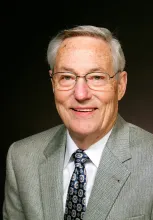
At the time of his retirement in 2016, Roy Holladay was serving the Operation Manager for Ministerial and Member Services of the United Church of God. Mr. and Mrs. Holladay have served in Pittsburgh, Akron, Toledo, Wheeling, Charleston, Uniontown, San Antonio, Austin, Corpus Christi, Uvalde, the Rio Grand Valley, Richmond, Norfolk, Arlington, Hinsdale, Chicago North, St. Petersburg, New Port Richey, Fort Myers, Miami, West Palm Beach, Big Sandy, Texarkana, Chattanooga and Rome congregations.
Roy Holladay was instrumental in the founding of the United Church of God, serving on the transitional board and later on the Council of Elders for nine years (acting as chairman for four-plus years). Mr. Holladay was the United Church of God president for three years (May 2002-July 2005). Over the years he was an instructor at Ambassador Bible College and was a festival coordinator for nine years.
