
Roy Holladay
This transcript was generated by AI and may contain errors. It is provided to assist those who may not be able to listen to the message.
The Bible is full of prayers from the book of Genesis through the book of Revelation.
I don't know how many of you have ever stopped to think about how much of the Bible actually is composed of prayers, of the servants of God praying to their Maker.
When you look at a number of the individuals in the Bible, like Abraham, to just name a few, Avijah, Asa, Centurion, Cornelius, Daniel, David, Elijah, Elisha, Ezra, Habakkuk, Hannah, Hezekiah, Isaac, Jabel, Jacob, Jehoshaphat, Jeremiah, Jesus Christ, himself, Joshua, Manasseh, Moses, Nehemiah, Paul, Peter, Samson, Samuel, Solomon, you know, you can go on and on and on. You have their prayers recorded in the Scriptures.
Now, why is it that so many of these prayers are recorded? Are they not there for us to learn from? We realize that every word of Scripture is written as an example for us, and that we can learn from those. In the book of Deuteronomy chapter 18 beginning in verse 15, Moses makes a comment here. Deuteronomy 18.15 The Lord your God will raise up from you a prophet like me from your midst and from your brethren, him shall you hear. So you're supposed to listen to this prophet according to all the desires of the Lord your God in Horeb in the day of the assembly saying, let me not hear again the voice of the Lord my God nor let me see this great fire anymore lest I die. And the Lord said to me, what they have spoken is good. I will raise up for them a prophet like you and from among their brethren it will put my words in his mouth and he shall speak to them all that I command them or command him. So the implication is very clear that prophet that was prophesied to come was Jesus Christ and that we are to listen we are to hear the words of Jesus Christ that he would speak and that God would put his words in his mouth. And so Christ did not come with his own message. He came with a message whatever the Father commanded him to say.
Moses said he would be a prophet like me. In many ways, Moses was a type of Jesus Christ.
He gave the old covenant. Christ came gave the new covenant. He led Israel out of Egypt. Christ is our Savior. He is in the process of leading us out of this world. We realize that there are many types and anatypes when you begin to compare the two. We have the example of prayer in Moses' life of his relationship with his maker and we'll find that a lot of what Moses said in his prayers is a type of what Jesus Christ did and vice versa. Also, in many ways, King David was a type of Jesus Christ. His prayer life is an example of the heart and the approach of the future Messiah.
You cannot read through the book of Sond without being struck at David's attitude and David's approach. David was human. David sinned. Jesus Christ obviously never did. From that perspective, there's a difference. Anyone who is a type of Christ as a human being had frailties and faults and sins. Not everything they did or said is an example, but again we have the types that are mentioned. Obviously, not every word that David uttered in a prayer is something that Jesus Christ prayed, but you cannot help. In fact, I was going through the last few days and reading through a book I have that analyzes every one of the Psalms from the point of view of there being a type of Christ and what Christ said. And it's amazing, there are literally dozens of these Psalms that many of those who have analyzed believe are a reference of Jesus Christ and what Christ may have prayed. David is called in the Scriptures a man after God's own heart. So a lot of his prayers give us an insight into the thinking of Jesus Christ, how he approached the Father, his literal Father, and our Heavenly Father, our God.
Actually, there are many notable prayers in the Bible, and there's no way that we can begin to cover all of those today. In fact, there are dozens and dozens of prayers, and I believe that as we go along in some future time, I'd like to be able to take a look at a number of these prayers and cover them. But today, I wanted to start a series on prayer by looking at Jesus Christ as the perfect example. Christ came, he's our example, and he's our Savior, our high priest, and see his prayer life and his connection with his Father. He's the supreme example on how to pray and what to pray about. We will also, in the sermon today, as time allows, focus on some of the prayers of David and some of the prayers of Moses, and especially as they may pertain to Jesus Christ. So, we want to take a look at Christ's example today, as I said. Begin a series of sermons on what could be called notable prayers of the Bible, significant prayers in the Scriptures.
We have many notable prayers listed. In fact, I think this would make a very interesting Bible study for all of you. If you're looking for something to study, sometimes we're reading through the Bible and we think, what is there to study? Well, how about just going through and looking up the prayers in the Bible and reading those one after another after another. You begin to see the men and women that God called, that God was working through, and you begin to see how they approached God, what their relationship was. And I think many of the prayers reveal the trials, the tests, the difficulties, the problems that people were going through, and how they express themselves to God, and how they poured out their hearts to God. And it shows the close relationship that many of them had. So, we want to take a look at Jesus Christ to start with, and he's our perfect example, so I think we can learn from him. Going back to Luke 2 and verse 39, Luke 2, and beginning in verse 39, it says, So when they had performed all things according to the law, and this is after Jesus Christ had been born, they had taken him up to Jerusalem to be circumcised, and so when they had performed all things according to the law of the Lord, they returned to Galilee to their own city of Nazareth. And the child grew, so this is talking about Christ as a child. He grew, became strong in spirit, filled with wisdom, and the grace of God was upon him.
So, he was strong in the spirit of the Spirit of God. Now, he had the Spirit of God from birth. That's one thing that was different about him than us. You and I, whenever God called you, opened your mind, you repented and were baptized, had hands laid on you, then you received God's Spirit. But Christ had the Spirit from birth. But he grew strong in the Spirit, filled with wisdom and grace. And as verse 51 talks about, they'd gone up to Jerusalem when he was 12 years of age to keep the feast. And when he went down with them, he came to Nazareth, and he was subject to them. But his mother kept these things in her heart. And Jesus increased in wisdom and in stature, in favor with God and man. How did that happen? How did Jesus grow in wisdom? How did he grow in favor with God and favor with man and become strong in the Spirit? He obviously had to stay close to his Father. He had to stay close to God, the source of strength, the source of power that God would give to him.
What we discover is that Jesus Christ was a praying man. And we have his example all through the Gospels. That's one reason why we have the four Gospels. Each one of them records something a little different, and they all show that Jesus Christ prayed. In Luke 11, we'll go over to Luke 11 to start with, because this is a Scripture that applies certainly to us. Luke 11, beginning in verse 1, says, Now it came to pass as he was praying in a certain place, so we find that Jesus Christ was praying.
When he ceased, that one of his disciples said to him, Lord, I want you to notice the disciples realized that Jesus Christ prayed.
He didn't hide it from them, but neither did he just pray in front of them all the time, either. He went off somewhere generally to pray. I may just mention something. This is a side note. Next Sabbath, we're going to have a tape from Mr. Luker, who will play. This is a sermon to be played in all the churches.
I've been in on a number of meetings with the home office staff, Mr. Luker, and a lot of times I'm on a Monday morning at 10 o'clock. They have a management team meeting to discuss events that we're going to be dealing with during the week.
Always in those meetings, they're starting with everybody getting down on his knees and praying. Mr. Luker will lead everyone, will go around the room, and even me and my office up in Cleveland.
I will pray, and you will ask God for his guidance and for his direction. That's something that I've noticed about Mr. Luker. Not only does he talk about, we need to pray fast and humble ourselves, he does it. He does it on a regular basis. It's not just something he talks about, it's something that he does.
The only reason I mentioned that, I thought it would be good for you to know what type of a man we have as president, someone that I believe truly does and is looking to God for guidance and direction. But you'll notice the disciples, after Christ had prayed, they got to thinking, well, I don't know how to pray. How do you pray? And they said, Lord, teach us to pray, as John also taught his disciples. And so he said to them, when you pray, say, how often have you ever asked God, teach me to pray? Help me to pray. I need your help.
There have been times that I've gotten down on my knees and said, look, I don't want to pray. I don't feel like praying, but I know I need to pray. Help me. I don't know if you've ever experienced that before or not, but I believe we're all human. We all go through the same thing. Prayer is our conversation or our contact with God. It's our link with Him. It's our relationship with Him. He reaches out to us through the Scriptures, through His Spirit, His Word. We pray to God to communicate with Him. And Jesus Christ is the perfect example of how to pray. And here we have His basic instructions on how to go about praying.
And notice what He says. This is the model prayer. A lot of times it's called the Lord's Prayer, but it's the model prayer. He gives us an outline. He shows us how we should pray.
And it's significant that you'll notice that there are three things that can be taken for the kingdom of God or for the future. They certainly apply to us today, but they can also apply futuristically. He says, Our Father in heaven, hallowed be Your name.
So we find that when we pray that we should start our prayers out by acknowledging God, exalting Him, praying to Him, thanking Him, that's to honor His name, that we hallow His name, that it's holy. And so we talk about Him. In fact, if you want a good example of how to do this, go back and read the Psalms. Quite often David will start a prayer, or somewhere during a Psalm, he will talk about how great God is, how wonderful He is, the depth of His understanding, the greatness of His wisdom, and he will constantly be talking about that. So this is something that we should do personally whenever we pray, but there's going to come a time in the future when a whole world will hallow God's name. All mankind will honor His name. Then it says, your kingdom come, and your will be done on earth as is in heaven. So we pray for God's kingdom. Now that's futuristic. We all understand that. We're asking that God would send His kingdom to this earth. He would set up His government on this earth. All you have to do is look around at the suffering, the warfare, the misery, all the problems and difficulties that human beings, nations, face, families face, and realize that we need God's kingdom here on this earth. And so that's something that we should desire, that we should want.
Many times when we're blessed and things are going well for us, it's easy to forget that. It's easy to forget that there are billions of people out there suffering and in need who need God's kingdom.
And then we ask that God's will be done in our life. We want God to guide us, direct us, show us the way to go. His will be done. We want to do His will. But also that's part of the futuristic, that God's will be done. His kingdom come, His will be done on this earth. And then there are three things that are mentioned that basically deal with our daily existence. Give us day by day our daily bread. So it's not wrong for us to pray for our own needs. And so that's what this is talking about. We pray for provision. We pray that God would provide our needs. Food, clothing, shelter, whatever those things might be. He mentions here our daily bread, but it's not good to eat bread if you're living out in the middle of a field. And when you're naked, you need clothes, you need a place to live, you need food to eat. So God is very conscious. Even before we pray, He knows what we have need of. A lot of times I've had people say, well, if God knows what we have need of, then why should I pray? Because God wants us to acknowledge that He is the source of everything. That He is the giver of every good and perfect gift. So even though He might know we need a job, He might know that we need food, He might know that we need whatever it might be, He is the one who can help us, and He wants us to look to Him and acknowledge Him. And then forgive us our sins.
So that's another thing that we ask for daily, that God would forgive us our sins, our mistakes, our faults, our short faults. And then part of that, you know, notice, is that we must be willing to forgive others, for we also forgive everyone who's indebted to us. Now, as we'll get into this a little later, but as you go to Matthew, Matthew talks about the fact that if we don't forgive others, then God will not forgive us. So we've got to be willing to forgive others, and God is willing to forgive us. So we ask for our daily needs. We ask daily for God's forgiveness, for our sins. And do not lead us into temptation, but deliver us from the evil one. So we need God's protection, we need His safety, we need His help, that God would deliver us from Satan and his demons. Now, in the model prayer back in Matthew 6 and verse 13, it adds also to this prayer, For yours is the kingdom and the power and the glory forever. Amen. It's not mentioned here in Luke, but it is back in Matthew's account. And then in verse 14, what I just mentioned to you, for if you forgive men their trespasses, your heavenly Father will also forgive you.
But if you do not forgive men their trespasses, neither will your Father forgive your trespasses.
So Jesus Christ gave us the model, and it doesn't mean every time you pray you've got to just A, B, C, D and cover it that way. Again, go back and read the Psalms, and there are many times when David was going through a trial, and his whole prayer was about what he was going through. I think there are many times that when we pray to God, we pray from the heart. We pray for what's on our mind, and God listens and God hears. But somewhere in our prayers during the day, we need to be mentioning these elements. Now in Matthew 11, beginning in verse 25, chapter 11, verse 25, we have another example of Christ praying. And many of these are not just great, lengthy prayers, but they give us an insight. At that time, Jesus answered and said, I thank you, Father. So here he gives thanks to God. And in our prayers, one of the things that we need to do, and too often we fall short of, we're good at the gimme. Give me this, give me that. I need a car. I need this. I need that. We're not good at the thanking God. So we need to thank God. He said, I thank you, Father, Lord of heaven and earth, that you've hidden these things from the wise and the prudent, and have revealed them the babes. Even so, Father, for so it seemed good in your sight. So we thank God for the wisdom that God had. That God is not revealing things to everybody. That God is revealing things to those whose heart are right before Him. So we should constantly be thanking God for the blessings that He gives us to get our minds off of ourselves. Too often, we can have the woe-mees also in prayers. We can have the ask-mees and the woe-mees. Woe is me. And woe is this, woe is that. And we all have woes. But we need to be grateful to God for everything that God gives to us. Turning it over to chapter 14, the book of Matthew, chapter 14 and verse 22.
Jesus Christ had just fed five thousand. He sent His disciples off on a boat, and they are out in the middle of the sea. There is a storm, as we understand. After the disciples left and the crowd dispersed, He says, immediately Jesus, verse 22, made His disciples get into the boat and go before Him to the other side while He sent the multitude away. And when He had sent the multitude away, He went up on the mountain, notice, by Himself to pray. Now when evening came, He was alone there.
So you find that Jesus Christ many times went into a solitude place, went off by Himself, and He prayed. Now why was Christ close to God? Why did He have power? Why did He grow in grace, knowledge, and all of these things? Well, it's simply because He did not depend upon Himself. Now look at the ironic thing. Christ was God in the flesh. He had existed for eternity, and yet He came to this earth, and He could have said, well, I don't need to pray. I'm God in the flesh. But He didn't do that. You will find His example over and over, and that's why we want His sighted here, is one where He constantly went to the Father and begged the Father, asked for help, asked for His power and strength. So where did Christ get His power and strength? Well, it came from the Father. Where did we get our power and strength? Where did we get our help? It comes from the Father. And the more we pray, the closer we establish a relationship with God, then the more we're going to have answers. And so Christ did this, and you'll find that He constantly did this. Let's go over into Luke, Luke chapter 3, and notice the example that Luke records of Jesus Christ praying. Luke 3, beginning in verse 21.
When all the people were baptized, it came to pass that Jesus also was baptized. And while He prayed, the heavens were open. So Christ was baptized. He prayed. The heavens were open. And the Holy Spirit descended upon Him. And you can read the rest of this. I just cite that because it's an example that showed, you know, in this particular case that He was baptized and He prayed. But go over to chapter 5, and chapter 5, beginning in verse 15. Jesus had just healed a leopard. And He had told him to go in and offer up the offerings because as a leopard, He had to prove that He had been cleansed of leprosy in order to be able to mingle with people again, be accepted back into the community. In verse 15 says, however, the report went around concerning Him all the more. And great multitudes came together to hear and to be healed by Him of their infirmities. And so He Himself often withdrew into the wilderness and prayed.
So you find this was something that Jesus did on a regular basis. He just got away and prayed. Now why did He need to do that? Well, when you're mingling with people, you're healing them, you're casting out demons, you're preaching to them. Guess what? You're using up your spiritual strength. God's Spirit dwells in us, but it's got to be renewed day by day. And our attitude has to be worked on day by day. And there's nothing constant about that. It's something that has got to be renewed. And so Jesus Christ many times would get away. And one of the things that happens when you get away and you pray outside, I don't know how often you ever pray outside, but when you're able to get outside, maybe you go off in a park somewhere and you're out and you pray, it's a completely different feeling than being in a bedroom or in a closet because you're out in God's creation. You can see the trees, you can see the plants, you can look up into the heavens, and it gives you a totally different feeling. You feel a connection with God in the creation.
Whereas when you're inside, well, it's different. You see the bed, you see the dresser, you see the curtains, and all of these things remind you of what man has done. Jesus Christ had to have his batteries recharged. He was constantly giving of himself, and the same thing is true of us. When we give of ourselves to others, when we give of ourselves in service, when we give to help others, then we spiritually need our batteries recharged. And Jesus Christ, after healing people and doing many mighty works, had to do this. And you'll find that this is his example. Luke 6 and next chapter, Luke 6 and verse 12. Here we find an example where Jesus Christ was faced with an extremely important decision. And let's notice what he did before he made that decision. Verse 12. Now it came to pass in those days when he went out to the mountain to pray that he continued all night in prayer to God. So he didn't just go out in five, ten minutes, pray, and that was over. He prayed all night to God. Now why? What was a major decision he was going to make? And when it was day, he called the disciples to himself. And from them, so notice there were more than twelve, there was a group of disciples. But out of that group, he chose twelve, whom he also named apostles. Simon, whom he also named Peter, Andrew, his brother, James and John, Philip, Bartholomew, Matthew, and Thomas, James, the son of Alphaeus, Simon called the zealot and Judas the son of James, and Judas the scarret, whom became a traitor. Now why was this such an important thing?
The apostles were going to be a part of the foundation on which the church was going to be built. These men were going to be the ones who, after Christ's death, would go out and spread the gospel, would preach the gospel to the world. They were the ones who had been handpicked by Christ, who were going to then be rulers over the twelve tribes in the world tomorrow. In fact, for all eternity in the New Jerusalem, you'll find there are twelve doors, twelve gates into the New Jerusalem. Each one of them has a name of a tribe. Is it possible that one of these apostles will be over that particular area and be responsible for it? So we know that they're going to have extremely important positions in the kingdom of God. So it was important that the right men be chosen. And Christ prayed about that. He could see the future. He knew what was coming, and he constantly did. In chapter 9, the book of Luke, chapter 9 and verse 18, and it happened as he was alone praying. So notice again, he's alone. That his disciples joined him and asked him, saying, who do the crowds, or joined him, and he asked them, saying, who do the crowds say that I am? So again, we have the example here in Luke, of him not making a public display, but going off and praying. This is his strength. This is where his power came from. He had God's Spirit, yes, and he had it from birth, but he had to have that renewed on a constant basis. Now, Mark adds something that's a little unusual. Mark, chapter 1 and verse 35. Mark's example, writing about Christ and what Christ did.
Mark, chapter 1 and beginning in verse 35. Now, in the morning, talking about Jesus Christ, having risen a long time before daybreak.
Does this ever happen to you? You can't sleep. You get up three, four, five.
Well, maybe some of you get up at five anyway. A lot of people get up with the chickens. But whatever time, it says it was a long while before daylight. He went out and departed to a solitary place, and there he prayed. Simon and those who were with him searched for him. Where is he? Where did he get off to this time? So, they went out looking for him. When they found him, they said to him, everyone's looking for you. Then he went on to teach them. So, here we have Christ, for whatever reason, getting up very early in the morning, and he goes and he prays.
He had the power of God with him because he was close to God. Our problem is too often there is a guff or gulf between us and God. There is this space, this chasm, this canyon. We're not as close to God as we should be. The problem is not with God. The Bible says, you draw close to God, he will draw close to you. So, there's no problem with God, but the key is we must draw close to God.
When we draw close to God, he draws close to us. So, the closer we get, compare it to a magnet. It's like a magnet. The closer we get, the more powerful it becomes, and after a while, boom! God is with us. He's there. He's guiding and directing us.
So, we have to have power. We have to have power to do the work of God today as a church, preaching the gospel. We have to have power to accomplish whatever God wants us to do in our own personal lives. Because God has given each one of us a responsibility, duties, charge.
And you might say, well, I don't have any great calling, but there could be no greater calling than us getting down on our knees and praying for one another, praying for the sick, praying for the church, praying for the leadership in the church, praying for God's blessing that God would call people, that God would open doors. You see, this is what opens doors. This is what moves people. This is why people are called, because we're doing our part, and it's not just one person, but it's something that God does.
You might remember, I'll just refer to it in Matthew 19, verses 13 through 15, the disciples thought that Jesus Christ was too busy to lay hands on children and bless them, and Christ rebuked the disciples. And so, they thought, well, He's too busy to worry about being involved with these little kids. Get away! Get out of here! And yet, that was not true of Jesus Christ at all. And He used that as an example to teach them about prayer, that many times, there are things that we think that are too small to pray about, or insignificant. We need to pray about them anyway. There's nothing too small to pray about, and obviously, the more important things are where the emphasis should be. But Jesus Christ took those kids up in His arm. He blessed them, laid His hands on them. He prayed for them. And so, Christ showed them that He wasn't that busy.
Now, I believe, and these are my own words, that the greatest prayer in the Bible is recorded in the Gospels. John 17. You'll find many prayers recorded in the Bible. But this is a literal prayer of Jesus Christ. It can be broken into three separate parts.
1-5, 6-19, 20-26. In this chapter, you'll see, generally, there are headings with this. Let's notice, beginning in verse 1, Jesus spoke these words and lifted up His eyes to heaven and said, so when you pray, it doesn't mean, especially if you're outdoors, that you always have to keep your eyes closed. I think there are times that people think when they pray, that if they open their eyes, somehow that's a sin. Well, there are times that I'll write down a list of things I want to pray for about. Obviously, you open your eyes and you look at that list. Especially if you're outdoors. What you see, the creation, is a reminder of God in His greatness. But notice, He says, Father, the hour has come. Glorify your Son, that your Son also may glorify you, as you have given Him authority over all flesh, that He should give eternal life to as many as you have given Him. So He acknowledged the Father. He acknowledged that He had glorified His Father, just like the Father had glorified Him, and that it was God who had done the work, it was God who had called, that God was the one who had given Him, disciples, those who would be given eternal life.
In verse 3, this is eternal life, that they may know you, the only true God in Jesus Christ, whom you've sent. I've glorified you on the earth. And we ought to be able to say the same thing, that we glorify God in our actions, in our thoughts, in our words, in our deeds, in our example, everything that we do, I've glorified you on the earth. I finish the work which you've given me to do. Now, God has given us a work to do today, and we must rely upon God for that. So He said, now, O Father, glorify me together with Yourself with the glory which I had with you before the world was. So He's asking God to give Him the glory that He had when He was a Spirit being. Now, why did Jesus Christ ask for this? Well, He wanted to be born again into the family of God, to take His rightful position with the Father in ruling the universe, be there as our High Priest to help us and to guide us. The same thing should be true of us, that we should desire just like Jesus Christ. Now, Jesus Christ had an inside track on this because one time He had been there. You and I are down here. We've never been there yet. He was in heaven. He knew what it was like to be a glorified Spirit being, to be with the Father, because that memory didn't just disappear from Him. But He wanted to have that glory again. And there's coming a time, brethren, when you and I will be glorified likewise. And we pray for that. We ask God to give us the strength that we need.
Now, beginning in verse 6, Jesus Christ looked into the future and knew what His disciples would be facing. He knew what they would need, and so therefore He prayed for them.
And you and I know what the future holds to a certain extent, and we should be praying for one another. Likewise, let's notice His example here. I have manifested Your name to them, to the men whom You have given me out of the world. They were Yours. You gave them to me, and they have kept Your Word. Now they have known that all things which You have given me are from You. For I have given to them the words which You have given me. And they have received them, and have known surely that I came forth from You, and they have believed that You sent me. Now, the key as we read through this prayer is to notice how Christ talked to the Father.
He was telling the Father things that the Father already knew, and it's not wrong to remind God of His blessings, to remind God of what He's done, to remind God of what He's promised, and this is what Christ was doing. That You've manifested Your name to them. You've called them. You revealed Your truth to them. They believe on You. So He said in verse 9, I pray for them. I do not pray for the world. See, it wasn't the time for the world to be called yet, to be converted, to have their minds open. But I pray for them, not for the world, for those whom You have given me, for they are Yours. They're the ones You're dealing with.
All mine are Yours, and Yours are mine, and I am glorified in them, and now I am no longer in the world. So He knew He was about to die, be resurrected. He had returned to the Father. But these are in the world.
You and I are in the world. And so He said, I come to You, Holy Father. Keep through Your name. Keep by Your power Your name, Your authority, those whom You have given me, that they may be one as we are. So He prayed and asked that God would bless these disciples, that they would be one as He and the Father were. While I was with them in the world, I kept them in Your name, in other words, by Your authority. You do something in the name of, it means by their authority.
We baptize people. We pray in the name of Jesus Christ, meaning by His authority. Those whom You gave me, I have kept, and none of them is lost except the Son of Perdition or Destruction, that the Scriptures might be fulfilled. But now I come to You, and these things I speak in the world, that they may have my joy fulfilled in themselves. I have given them Your word, and the world has hated them, because they're not of the world, just as I am not of the world. Now I do not pray that You should take them out of the world. Wouldn't that be great?
Receive God's Spirit, be baptized, and zap! You're gone! Doesn't happen that way. We have to stay in the world, but that You should keep them from the evil one. Well, see, that's what Christ said in the model prayer. Keep them from Satan. Keep them from His influence. Rather, there's a powerful Spirit being out there, and many times we underestimate His ability to influence us, to cloud our minds, to lead us off in our own direction.
So it says, keep them from the evil one. They are not of the world, just as I am not of this world. Sanctify them by Your truth, and Your Word is truth.
Set them apart with Your truth. And as You sent Me into the world, I also have sent them into the world, and for their sakes I sanctify Myself, or set Myself apart, that they also may be sanctified by the truth. And so, Christ prayed for His disciples here. He knew what they were going to face. He knew that not everybody was going to accept the truth, that they had the truth, the world hated them, the world hated Him, and it was going to hate His true disciples. So we find that not everybody, just thanks of what we're doing, what we believe, is great.
They're going to resist it. Christ even said, you might remember that your enemies would be those of your own household, that sometimes God would call people, and those of their own household would turn against them because of their obeying the truth. Now in verse 20, I do not pray for these alone.
So now we find Christ turning His direction a little differently. He'd prayed for His disciples. He prayed for Himself, that He'd be glorified. He prayed for His disciples, that they would be able to do the work and carry on. Now He's praying for us. He prays for everyone who would be called. I do not pray for these alone, but also for those who will believe in Me through their words. So we have His words right here, the Scriptures. And so that you and I believe, we believe the truth, we believe God's way of life.
And that they also may be one, as you, Father, are in Me, and I in you, that they also may be one in us, that the world may believe that you sent Me. So you and I are to be one, and the thing that you find that God talks about His true servants is that they would be one, and that there would be a unity there.
And the glory which you gave Me, I have given them, that they may be one just as we are one. I am them, you and Me, that you may, that they may be made perfect and one, and that the world may know that you have sent Me, and I have loved them, as you have loved Me. Father, I desire that they also whom I gave, or you gave Me, may be with Me where I am. So Christ prayed that we would make it, that we would be in the kingdom, that we will be with Him.
And He goes on to say, that they may behold My glory which you have given Me, for you love Me before the foundation of the world. O righteous Father, the world has not known you. And the world does not know God. They don't know His way of life. They don't know the true God. They've believed in a false God, false religions. But He says, the world has not known you, but I've known you, and these have known that you sent Me. And I have declared to them your name.
And we'll declare it, that the love with which you love Me may be in them, and I in them. And when Jesus had spoken these words, He went out with His disciples. It says over the brook, Kedron, where there was a garden. So here we have Christ's prayer. And there is no more intimate example in the Scriptures than this of what Christ prayed, His very words.
Now, in Matthew, let's go back to the book of Matthew, chapter 26. In Matthew 26 and verse 36, we find another prayer of Jesus Christ.
Christ prayed that prayer. He goes out. He goes to the Garden of Gethsemane.
And we find that the night before He was crucified, He got down on three occasions, prayed an hour each occasion, asking for strength, asking for special power, asking for God's help, but also making His own requests known to God. So Matthew 26, verse 36, Jesus came with them to a place called Gethsemane and said to His disciples, Sit here while I go and pray over there. And He took with Him Peter and the two sons of Zebedee, and He began to be sorrowful and deeply distressed. And He said to them, My soul is exceedingly sorrowful, even to death. Stay here and watch with Me. So notice His state of mind. He says, My soul, My very beating, is exceedingly sorrowful, even to death. He knew all of the Old Testament prophecies. He knew what He was going to have to go through. The beating, the scourging, the crucifixion, all of that. And so in verse 39, He went a little further, fell on His face, and prayed, saying, O my Father, if it's possible, let this cup pass from Me. Nevertheless, not as I will, but as You will.
Now, was He asking not to die? Well, I think He knew He was going to have to die. But did He have to die the horrible death He was going to have to go through? So He asked God, Let this cup pass. Is there some other way of doing this? Shoot Me, so to speak. But don't let Me go through this. Not what I want, what You want. Verse 40, He came to His disciples and found them weeping, and said to Peter, What? Could you not watch with Me one hour? Watch and pray, lest you enter into temptation. The Spirit indeed is willing, but the flesh is weak.
So the Spirit is willing, the flesh doesn't always have the strength. And the second time, He went and prayed, saying, O My Father, if this cup cannot pass away from Me, unless I drink it, Your will be done. Now, this is a little different. The first time He said, If it's possible, let this cup pass. This time, He says, If this cup cannot pass away from Me, unless I drink it, still Your will be done. And He came and found them asleep again, for their eyes were heavy. So He left them again, and prayed the third time, saying the same words. Then He came to His disciples and said, Are you still sleeping and resting? And He knew the hour had come in which He was going to be betrayed.
You and I must, when we pray, always pray, Thy will be done.
Now, is it wrong to express our will, or what we would like to see? Well, Christ here prayed, and He said, Well, let this cup pass. So He was expressing that humanly speaking, He would rather not go through what He knew He was going to be faced with, but if He were faced with it, God would remove it. But God didn't. But He knew what God's will was. But He asked anyway. And you and I can certainly express to God, I'm going through this trial, I'm going through this test, and it's been here for a long time. We can pray and ask God to remove it, but I don't know why. You haven't done it so far. Please help me. You can certainly tell God what you would like, and ask God to help you, and to guide you, and to lead you.
Now, in Luke chapter 23, in verse 32, we have another prayer of Christ recorded. Luke 23, verse 32.
This is when Christ was hanging on this stake, and we read here Luke chapter 23, in verse 32, There were two others also, or there were also two others, criminals, led with Him to be put to death.
And when they had come to the place called Calvary, there they crucified Him, and the criminals, one on the right hand and the other on the left. And Jesus said, notice what Christ cried out to the Father, Father, forgive them. They do not know what they do.
So here was Christ's prayer. They don't know what they're doing. Forgive them. So it shows the attitude that Jesus Christ had, even at that time, that He asked God to intervene, forgive them.
Now, you also find in, I think, Matthew's account and Mark's account, that something that is not recorded here in Luke, I'll just refer to it, that somewhere during the period of time when Christ was hanging on this stake, Christ yelled out, My God, My God, why have you forsaken Me?
And He prayed and He asked God, what have you forsaken Me? And notice verse 46. And when Jesus had cried out with a loud voice, He said, Father, into your hands I commit My Spirit. So Jesus Christ realized when He died that the Spirit returns to God who gave it. And so He committed His Spirit to the Father into His hands.
These are the major examples. Christ gave other instructions concerning how to pray, things of this nature. But we see the clear example, and that's what I wanted to establish for us today, of Christ, that Jesus Christ prayed. His source of strength was from the Father. Let's finish up by going back to an Old Testament Psalm, Psalm 22, Psalm 22. As I mentioned, there are Psalms that seem to be examples of Christ's prayer.
Many times what David prayed is a reflection of what the Messiah went through. His suffering, His death, His betrayal. There are Psalms when you find that David prayed because he was being betrayed by one of his best friends. Christ was betrayed, we know, by one of His disciples.
But here in Psalm 22, this is an obvious example of what Christ was thinking. And this gives you an example of the thoughts that Christ had as He was hanging there on the stake. Verse 1, 1, My God, My God, why have you forsaken Me? So this is quoted in the New Testament, and Christ said this, Why are you so far from helping Me? And from the words of My groaning, O My God, I cry in the daytime, but you do not hear in the night season, and am not silent, but you are holy and thrown in the praises of Israel. Our fathers trusted in you, they trusted, and you delivered them, and they cried to you and were delivered. They trusted in you, and were not ashamed. But he goes on to say, But I am a worm and no man, a reproach of men, despised by the people, all those who see Me ridicule Me. They shoot out the lip, they shake their heads, saying, Well, he trusted in the Lord. Let him rescue him, let him deliver him, since he delighted in him. And again, you find this quoted in the New Testament, But you are he who took Me out of the womb, you made Me trust, while on My mother's breast. I was cast upon you from birth, from My mother's womb, you have been My God. Be not far from Me. For trouble is near, for there is none to help, many bulls have surrounded Me. Strong bulls of bation have encircled Me. They gape at Me with their mouths, like a raging and roaring lion. I am poured out like water, My bones are all out of joint, My heart is like wax, it is melded within Me. My strength is dried up like a pot-shirt, and My tongue clings to My jaws, you have brought Me to the dust of death, for dogs have surrounded Me, the congregation of the wicked have encroached Me, they pierce My hands and My feet. I can count all of My bones, they look and stare at Me, and they divide My garments among them, and for My clothing they cast lots. But you, O Lord, do not be far from Me. Be My strength, hasten to help Me. See, Christ needed help. He needed strength to go through this supreme test and trial that He was going through. Deliver Me from the sword. My precious life, from the power of the dog, saved Me from the lion's mouth, and from the horns of the wild oxen, you have answered Me. And so Christ said, you have answered Me.
And I will declare your name to My brethren in the midst of the assembly. I will praise you. And you go on to the end of the chapter. You find that these are the thoughts and the prayers that Christ had at the very end of His life as a human being. There are some who will say that even Psalm 23 is a continuation of this. That Christ comes to the point where He says, God's My shepherd. He'll supply My needs, and so on. And that this likewise is a prayer that reflects His feelings. So, brethren, we have the example of Jesus Christ in the Scriptures. He stayed close to the Father. God was the source of His strength and of His power. Even though He was God in the flesh, He still prayed. He prayed constantly. He did not rely upon Himself.
The next time that I speak, I will go through a number of other prayers in the Bible. And again, I would like to encourage you that it would be a great study for all of us to just simply look up the word prayer or prayers. Go through and study, research, and read the prayers of the servants of God. And ask yourself this question, what can I learn from this prayer? How do this person approach God and learn how to have a proper relationship with God? We need to read these prayers to see how they walked and how their relationship with God was established. So, rather than that, there's no more important thing we can do in life than to establish a close, personal relationship with our Maker, with God, through Jesus Christ. So, there are many prayers in the Bible that we will look at in the future. And we'll look at them from the point of view of the lessons that we can learn from those prayers and what God wants us to be taught.
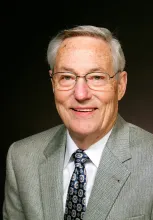
At the time of his retirement in 2016, Roy Holladay was serving the Operation Manager for Ministerial and Member Services of the United Church of God. Mr. and Mrs. Holladay have served in Pittsburgh, Akron, Toledo, Wheeling, Charleston, Uniontown, San Antonio, Austin, Corpus Christi, Uvalde, the Rio Grand Valley, Richmond, Norfolk, Arlington, Hinsdale, Chicago North, St. Petersburg, New Port Richey, Fort Myers, Miami, West Palm Beach, Big Sandy, Texarkana, Chattanooga and Rome congregations.
Roy Holladay was instrumental in the founding of the United Church of God, serving on the transitional board and later on the Council of Elders for nine years (acting as chairman for four-plus years). Mr. Holladay was the United Church of God president for three years (May 2002-July 2005). Over the years he was an instructor at Ambassador Bible College and was a festival coordinator for nine years.
