

Robin S Webber
This transcript was generated by AI and may contain errors. It is provided to assist those who may not be able to listen to the message.
Well, I certainly wanted to say thank you very much to Paul for that beautiful, beautiful, beautiful song. How many of you were here nearly 20 years ago when we started the Redlands congregation? Can I see a show of hands? I believe it was in June of 1995, and we were all together, not here, but about four miles east of here. We were starting a new congregation. We were starting a congregation, and we gathered as a people, moving into a future that we regarded as needful, regarded as positive, and regarded as stepping into new frontiers. This afternoon, I'm going to, in a sense, give the same message that I gave 20 years ago regarding new frontiers, and opening up a box, and opening up our hearts to following what God asked us to do. It's been said that the poem that is read by the man of 80 reads differently than when he's 20, by life, by time, by experience. Now, before we go any further, some of you may be looking at me. No, I'm not 80, so all analogies do break down, but I am getting closer day by day. Why is that? Why is that poem that is read by the man that is 80 years of age more impactful and or more understood than the younger man? It's because, simply this, friends, time does give perspective if we allow it, if we let it, if we allow our minds and our hearts to be open to what God's purpose is all about. Last week, I've already mentioned it a little bit during the announcements, Mr. Jeff Coleman gave a message, and it dealt with what we call one of Luke's heroes. He dealt with the gentleman named Stephen out of the book of Acts. And sometimes we go back to the book of Acts and we look at the life of Stephen and we say, Wow! Stephen wasn't even an apostle. He was a deacon and he was doing all of this on behalf of God. And look how powerfully God used him. And therein lies something that I kind of want to begin to share with you regarding Stephen and regarding about the book of Acts. So often we call it, and it might be in your Bible if you're daring enough to open up to the book of Acts, you might see that it says, The Book of Acts, the Acts of the Apostles. And that's normally how it's referred to. But that's not why Luke wrote the words to the book of Acts. Let's remember that the book of Luke and the book of Acts were originally one testament. They were one story. And they later on were separated. And the book of Luke showed how salvation came. How salvation came. That God bequeathed to us the word of Jesus Christ.
The book of Acts has a different purpose. The book of Acts then showed how salvation was spread. How salvation was spread. Because, you see, Jesus of Nazareth, before he departed, had promised something to his followers. He says, I'm going to send you a gift. I'm going to send you another comforter. And it's going to be there to assist you.
And it's going to be there to help you. It's going to be there to guide you into all truth. It's going to help you remember. It's going to convict you of sin. It's going to convict you of righteousness. And so when he said all of this, they were very anticipatory. They thought, wow! They couldn't quite get their handle around it, as it were. They couldn't get their arms around it. It was a really broad thing.
They did not fully understand it, but they knew that Jesus Christ had promised them something. And then, when it came, it made all the difference in the world. Whether you were an apostle, whether you were a deacon, and whether you were just simply a member of the church. And with that thought in my mind, I remember again what Greene wrote in his book on Acts for the 21st Century. He said that, basically, that the book of Acts could also be called the Acts of the Holy Spirit.
Because that's what Luke saw and understood. That this gift that Jesus Christ had promised, this indwelling of God the Father and Christ, that Holy Spirit, would make all of the difference. Now, last week, we saw that in the Life of Stephen.
Now, I'm going to build upon that fine foundation that was laid last week. And today, I'm going to give you another message. The first message that I gave in Redlands 20 years ago. Remember how time is supposed to give perspective?
Well, let's see where we are after 20 years. And maybe where we'll be 20 days from now, once you hear this message. The title of this message is simply this. It's very, very simple. I like simple messages. It's called, A Jew, A Gentile, and You. A Jew, A Gentile, and You. Susan and I like going to stage plays.
And sometimes, very intimate stage plays, where there's only several people on stage. That way, it doesn't get complicated. It stays simple. And you begin to understand the character of the people. Well, that's where we're setting this up, as it were in the Bible, out of the book of Acts, a stage play. So join me, if you would. My text for today will be Acts 10 and Acts 11. We're going to see and focus on, we might say, two of Luke's heroes.
In so doing, why am I bringing you this message called, A Jew, A Gentile, and You? I have some purposes in store. Number one, number one, its purpose is to challenge you. To challenge you as to how big is your God? How big is your God? Do we continue to make God over into our image? And are we allowing God to bring us forward and being molded into His image? Can I make a comment? There is no middle ground. It's either one or the other. And I do perceive from the Bible, it's supposed to be the second one.
Number two, it is to remind us this message that God has not called us to be comfortable. He's not called us to be comfortable, but to obey Him, to understand Him, and to glorify Him. Sometimes people come to church week in and week out to be comfortable, just like putting their foot into an old shoe or into an old slipper. Church was never designed to be comfortable. Christianity has never been comfortable when you look at the world around us.
Christianity can only be what it is when it is elastic, when it is expanding, when it is being molded by the will of the Father, by the example of Jesus Christ, and by the power of the gift of the Holy Spirit. So let's remember, as we move into this story, those two points. Now, remember how I mentioned the set-up Acts 10. Are you with me? Here we go. Remember how I set up that the poem that is read by the individual of 20 reads differently when they're 80.
Time and experience gives perspective. Let me show you how it works for a moment. Join me if you would in Isaiah 52 and verse 10. Now that I have you in Acts 10, we're going to go back to Isaiah 52. Sometimes you read things and it sounds good, but you don't really understand the whole story behind it.
In Isaiah, and sometimes Isaiah is called the prophet with the new mind. In Isaiah 52 and verse 10, let's take a look at what it says here. Isaiah 52 and verse 10. Again, it says, The Lord has made bare his holy arm. It's as if he had reached down from heaven above. And it says, In the eyes of all of the nations, and all the ends of the earth shall see. See what? They shall see the salvation of God.
Now, if you had been there in 700 BC, and you would have been in Israel of old, you would have had a very certain perspective on this, that it was just simply dealing with that covenant people alone. Let's take it a step further. Join me if you would in Acts 1 now. In Acts 1. And this is just as Jesus is about to ascend to heaven. Acts 1. And let's pick up the thought in verse 7. Remember, folks, he's about to... are you with me? He's about to go up.
He's going to ascend. And these are some of his last words. And he said to them in verse 7, It is not for you to know the times or the seasons which the Father has put in his own authority, but you shall receive power when the Holy Spirit has come upon you. And you shall be witnesses to me in Jerusalem and in all Judea and Samaria, and to all the ends of the earth. Now, one thing you might want to understand that this actually is a GPS statement as well, because the book of Acts is built upon this verse.
That is, God inspired Luke to write this book. It starts in Jerusalem. Then it goes to Judea. Then it goes to Samaria. And then it even deals with the ends of the earth, which at that time commonly was called Ethiopia. Remember the story of the Ethiopian eunuch. And so what is being laid out here, it gives you a GPS as to how to understand the expansion of God's purpose. I would suggest, are you with me?
And I'm not to fly on the wall back then. Some of the kids may think I'm in that hole. But anyway, I wasn't to fly on the wall, but to understand this. I would suggest that at that time in the disciples' minds, now the apostles, they were thinking that this message would just simply go out to the Jewish community, the covenant people of that day.
As they read it in that sense of the proverbial man of age 20, they read that, they heard that, but they did not understand the expansion of what that would be, that God had something different in mind than even people that are following him at the time. That God had a purpose that was expansive, inclusive, and was going to move beyond simply who was your daddy.
To ultimately where everybody could understand that they have a Father in heaven and come to him through Jesus Christ. Thus, with that thought in mind, knowing, are you with me? Where we leave them at the beginning of the book of Acts, now we're going to go years down the line, because probably about 10 years or so, now we're going to go to Acts 10.
We're going to open up the story of Acts 10. In Acts 10, let's take a look at what it says here. There was at that time a certain man in Caesarea. His name was Cornelius. He was a centurion of what was called the Italian regiment. Here is a man that was basically of Latin stock. He was in Caesarea, not in Jerusalem, but Caesarea, which was basically a Gentile city. You kind of understand that when you recognize that it's named after Caesar. Here's a man of Latin stock. He's in the army. He's a centurion.
He's a man over a hundred. He's basically in a Gentile city where the Romans feel comfortable away from the strictures of Jerusalem. But notice in verse 2, now we get more description. He's a devout man. And one who feared God with all of his household, who gave alms generously to the people, and he prayed to God always. Now, it's very interesting when you look at this terminology in verse 2.
It says that he is devout and it says that he feared God. This is a term that is often used, especially in the book of Acts, a devout person and or a God-fearr. Two terms you might want to jot down. When you do that, then you'll understand how the gospel was spread. Because then these were people that recognized that the religions of old were corrupted. They were dead. They were dying. And they were attracted to the tenants of the covenant of Israel, a God that was monotheistic, a God that was moral, a God that, yes, in that sense, as you believed in him, had ways to safeguard us and to hedge us in and being able to deplease them.
Here is a man that gave alms. He also gave prayers to the great tenants of Judaism, prayers, alms, and fasting. So here was a man that was acquainted with God, maybe even showed up outside the synagogue. But at that point, the thought of circumcision was not attractive to a lot of the Gentile community. We had not yet had the Jerusalem Conference. So here is a man of integrity. He was a man that was praying to God.
Notice what it says always. He lived a life of prayer and then went out and walked with expectations. In the ninth hour of the day, that would be three o'clock our time, he saw clearly in a vision an angel of God coming in and saying to him, Cornelius.
When he observed him, he was afraid, as you and I would be. Even though we believe in angels, it's one thing to believe in them. Then all of a sudden it's another thing to say, Oh, hello! That would be kind of a shocking experience. When he had observed him, he was afraid and said, What is it, Lord? So he said to them, Your prayers and your alms have come up for a memorial before God. You know, at times we wonder, okay, we're praying.
We're beseeching God. But we don't always have an angel, quote-unquote, appear in our life every day, in every way, in every moment. But never mistake that our prayers go up before God and he collects them. Just as much as in our mountains up above us, as particles come down from the mountains and come into the streams, there becomes that layering, doesn't there? There becomes that sediment buildup, that steady stream.
And when we are praying, when we are beseeching God, brethren, please don't mistake that there is a buildup before God's throne. There is a buildup. That memorial of prayer begins to develop before our God.
Then he says this, Now send men to Chapa and send for Simon, whose surname is Peter. He's lodging with Simon, a tanner, whose house is by the sea. And he will tell you what you must do. And when the angel who spoke to him had departed, Cornelius called two of his household servants, and a devout soldier.
Interesting, now that we know what the term devout means. This was a man who, to one degree or another, was a believer. A devout soldier from among those who had waited on him continually. And so when he had explained all these things to them, he sent them to Chapa.
And what we commonly call Chapa. Now a couple things that you want to understand here about this Roman man of Latin extraction, a centurion. A man that himself was under orders, much like the other centurion, that is mentioned in the Gospels with the servant that needed healing. He just said, say the word. Remember the first centurion? Just say the word, and it is done. Now here is another man. And let's understand, we're going to move ahead and come back a second.
Let's understand what's happening. We are going to begin to have the integration of Jew with Gentile within the new Israel of God. Galatians 6 and verse 16 says that he calls the church the spiritual Israel of God. And this was going to take some doing, and you just can't take a somebody. You have to take somebody that is somebody to break down these barriers. Let's understand something, maybe just say, wow, I wish I could be like that centurion.
You can be. When we remain open, available, and willing, and to have those same spiritual reflexes, when you hear something from the pulpit, you read something in the word in your own personal studies, you hear something from somebody in the congregation where you're sharing things spiritual. What is our spiritual reflex to put it into action immediately?
What happens sometimes is we get to pondering too long, and then we wind up doing nothing rather than hearing that. Now, how important was that that Cornelius be the man? I want to share something from a book. It's called The Book of Acts here.
It's one of my commentary. It talks about what a centurion was like. Hear this through a second. A centurion was nominally in command of a hundred men, although his status was that of a non-commissioned officer. His responsibilities more were like those of a modern army captain. Hear this. Centurions were the backbone of the Roman army. The historian Polybius sums up their necessary qualifications this way. Centurions are required not to be bold and or adventurous so much as good leaders. They are to be of steady and prudent mind, not prone to take the offensive or start fighting wantonly on a whim or on their own.
But this is what when I read this, I said, wow, this really sings home. But Abel, when overwhelmed and hard-pressed to stand fast and die at their post, they were like that oak tree. They were going to be there yesterday, today, and tomorrow. They were somebody that you could rally around and know that they were going to stand.
It's interesting, he said, and die at their post. I got to think, what is Christianity about? It's about dying to self, dying to self and allowing God to live in us and to do his will. I think of Cornelius, who's going to be called out to be the first Gentile in the church, that it had to be somebody special. Let me use an example in Americanum. I think of Jackie Robinson. Now, I'm from Pasadena. Guess who else is from Pasadena?
Jackie Robinson and his brother, who is also a good ballplayer. We were recognized 60 years ago that there was a separation in the leagues between the races. And to recognize that Branch Rickey, a white man, head of the Brooklyn Dodgers, was going to go out on a limb. But he had to go out on that limb with the right guy.
He could not just be, as Jackie Robinson was, an incredible ballplayer and rack up the statistics. He also had to be a man like an oak tree. Are you with me? He had to recognize that he was going to be a pace setter. He had to recognize that he was going to hear, unfortunately, at that time in America, the taunts of fellow ballplayers. He was going to hear the taunts of the crowd. And even with all of that talent that was in Jackie Robinson, he could have melted it if he was not the man that Branch Rickey knew that he was. And to stay the course, to hang in there, and to stay in there.
That's what Christians are to be about. It's not only what we know, but that we have that staying power through the help of God our Father, through the example of Jesus Christ, by reading the Word and allowing the Spirit to make us over into God's image, rather than being comfortable and static, and simply allowing things to always be as they have been in our lives.
I want more than where I am right now. I want to be elastic. I don't want to be static. I want to grow in grace and knowledge. I want to be more than what I read at age 20, because I'm still headed towards age 80, and to grab this experience. Now, let's notice what it says, the next day, because it takes two to tangle, for Cornelius, there's got to be a Peter.
The next day, as they went on their journey and drew near the city, Peter went up on the household to pray about the sixth hour. And then he became hungry and wanted to eat. Now, this Peter here, for those that are new to the Word, this is the Apostle Peter, one of the twelve disciples. And Peter went up to the housetop to pray about the sixth hour, and then he became very hungry and wanted to eat.
Yeah, it's noontime. But while they made ready, he fell into a trance and saw heaven opened, and an object like a great sheet bound at the four corners, descending to him, and lit down to the earth. It's like the picnic lunch came down and was spread out in vision. And he saw in heaven, and it opened up, and came right down. Verse 12, And in it were all kinds of four-footed animals of the earth.
And I'm reading this verse, and kind of things like Stephen Richardson would like. It had four-footed animals of the earth, wild beasts, and, notice Stephen, creeping things. For those of you that don't know, the Richardson family are into the reptile world. So that's a little in thing. So they saw these creeping things, and also birds of the air. And a voice came to him, Rise Peter, kill, and eat. Well, Peter for a moment thought, as any good Jew would at that time.
Jewish Christian as well. Are you kidding me? I've read the word. I know what Daniel did. Daniel said, no, to the king's chamberlain. No, I'm not going to eat that. So Peter put on his Daniel guise here for a moment. I thought, this is really, no, I'm not crossing this line at all. But Peter said, no, for I have never eaten anything common or unclean. Either that which is prescribed by the Bible not to eat, and or that which has been offered in animal sacrifice to pagan gods.
And a voice spoke to him again, saying, What God has cleansed you must not call common. And this was done three times, as a matter of finality, the number of three, like three days and three nights. And the object was taken up into heaven again. Now, let's sing this through a second. Are you with me? The Gentile? He gets it the first time. Yes, sir! Got to remember, sometimes the Israelite folk are a little stiff-necked and a little stubborn and a little comfortable. And so God had to come to Peter, how many times? Three times. But there is also even a purpose in that.
You know, let's think about this for a moment. Sometimes things are happening in our life and you say, why, why, why? Why do I have to keep on getting hit by this, you know, two by four in my head? Or why is this happening? Why is that happening? Have you thought that the vision, are you with me? The vision to Cornelius said that where's Simon going to be? Simon's going to be with the tanner. What do tanners do? Tanner's skin animals. That's what a tanner does. And what does it say in the book of Leviticus? That those that touch the dead things are to, in that sense, be ceremoniously unclean?
And so there is just a little... You have to understand the background of the story that God was preparing along the way. Simon's mind and Simon's heart to take this bold step across a threshold that was about to happen. Now, while Peter wondered within himself what this vision had meant, behold, the men who had been sent from Cornelius had made inquiry for Simon's house and stood before the gate. Now, how many men stood before the gate? There were three men that stood before the gate. Is there any wonder, then, that that vision came down three times?
Because there are going to be, what? Three men that stood at the door of Simon's house, the tanner. And we've already discussed what tanning was about. They called and asked whether Simon, whose surname was Peter, was lodging there. Well, Peter thought about the vision, the Spirit said to him, Behold, three men are seeking you. Arise therefore, and go down, and go with them, doubting nothing, for I have sent them. Then Peter went down to the men who had been sent to him from Cornelius and said, Yes, I am he whom you seek.
For what reason have you come? And they said, Cornelius the Centurion, a just man, one who fears God, has a good reputation. Among all the nations of the Jews was divinely instructed by a holy angel to summon you to his house, and to hear words from you. Then he invited them and lodged them. On the next day Peter went away with them, and some brethren from Jaffa accompanied him. You might want to jot down there and put in your notes, please. Acts 11 and verse 12. We will come to see that the brethren that accompanied Peter, there were six.
God says in the mouth of two or three witnesses, and sometimes two, that everything be established. Let's understand something. Peter was going where no man has dared to go before, especially a member of the Jewish community. Let's understand the world. The Egyptians had enslaved people. The Assyrians and the Babylonians had decimated people, and ethnically cleansed them from the land and put in their own. We even see in the sense of the early churches we heard last week that there were... I'll use the 21st century word...
they were having issues. Even the Jews were having issues amongst themselves. Some spoke Aramaic or Hebrew, and others spoke Greek. There was this dividing point, much less than when you understand the story of the Jews and the Gentiles. Or let's just say the Greek world. The Greek world used terms for everybody other themselves. They called them barbars, which is the word that we get barbarian.
You might want to jot this down. That just simply means others. People not like us. Thus, we then come into the challenge between the Jew and the Gentile, and recognize the space that was there. You're seeing now that Peter is beginning to step forward, and he actually lodges the Gentiles with him. Can I tell you something? Unheard of, unthought of in the mind of covenant people through that time. Remember Isaiah 52 and verse 10? That the world will see the salvation.
Remember Acts 1? Spread this gospel to everybody. But at that time, they didn't really understand the broadness of what God was doing. Let's understand something, and let's make it personal for us. We're talking about Peter. We all know about Peter. Peter at times had what we call that sinking feeling.
You know, the man that would walk on water, or at least try to for a few steps, and he sank. Number two, if he wasn't sinking, he was normally running away. Think of the Garden of Gethsemane. Here's the point I want to share with you. This is profound. I get so excited talking about this because I realize this is how God is working in my life, too. Let's understand, until we get the lessons in our life, God is always going to take us back to that familiar spot where we have not yet surrendered our life to Him and glorified Him.
Do you have some unfinished homework that either you sank in or fled from postponing it for another day? God hasn't forgotten that because God's molding us in His image. God is shaping and molding us, and He's going to take us back. What do you mean, Mr. Weber? Jaffa. Jaffa. I'm not talking about coffee. Jaffa. Who else was in Jaffa 800 years before this? Jonah. Remember Jonah? Jonah was supposed to sail from Jaffa. God said, Go east, young man.
Go east. He said, No, Horace Greeley is not born yet. I kind of like to go west, young man. Go west. God said, I want you to go to Mesopotamia.
Jonah said, I would really like to go visit the Suncoast of Spain. Sounds so much more comfortable. Tarshish. You see, He couldn't move beyond the others. He could not even be God's instrument and agent towards a message of repentance. Let's understand there's a difference now in this. This modern-day, first century Jonah, not Daniel, but Jonah, Peter, it was going to move forward now.
It was going to move forward. What Peter was going to have to go back to the Jewish Christians in Jerusalem with is this point, important. Not only that these people were going to repent. It's always easier for somebody else to do something, but that they, the Jews, were going to have to accept. The gospel is not simply a message of repentance, but it is also a message of acceptance, of recognizing that it is not our job to choose God's family but to accept them when they come in belief and repentance, and not to put up barriers, not to put up locks, but to respect what God is doing in other people's lives.
I gave this message 20 years ago to some of you that were in this room, but it means so much more to me today. I recognize that God is still taking me back to some familiar spots that he and I know about until I get it right before him. I want you to think about that for a moment.
What unfinished homework, what spot in your life did you retreat? Did you sink? Did you not stand up like that centurion willing to give your life away? I'm going to talk about a dead martyr, but sometimes martyrdom is also giving your life away every day in a certain way, need by need, person by person, word by word, thought by thought, that God might be glorified. Let's continue the story. The following day they entered Caesarea. Now Cornelius was waiting for them and had called together his relatives and close friends.
As Peter was coming in, Cornelius met him and fell down at his feet and worshipped him. But Peter lifted him up saying, Stand up! I myself also am a man. And as he talked with him, he went and found many who had come together. And then he said to them, You know how unlawful it is for a Jewish man to keep company with one of another nation.
But God has shown me that I should not call any man common or unclean. Theological point for a moment, sidebar, will bring it in. We often use this in understanding the biblical food laws. A lot of people will see the beginning of Acts 10 and say, Oh, we can now eat whatever we can.
This was not dealing with food. This was in a vision. There was an example that was being set. And here we find that what is being stated is that I should not call any man unclean. Amazing thought! Let's think about this for a moment. How often, even as the people of God, sometimes we would never think of putting in an Oscar Mayer pork wiener into our mouth. Because we would separate that from our life. But at times, we separate others.
Not a dead pig in a blanket. But people. If we do not understand the example of the food laws, of separating the clean from the unclean, and then we go out and live our life without separating things as God would separate them, and being inviting, and being accepting, and loving people that God is calling into his way of life. You might as well eat that hot dog. Because what the biblical food laws are about, it's about identity. It's about a covenant people that have given themselves to God, and therefore they separate the clean from the unclean, not only on their food, not only on their plate, but in their minds, constantly separating.
How often do you ladies go up and down Stater Brothers? Or Vons? Or if you're wealthy, Ralphs? Go Stater Brothers, Inland Empire. How often do we look at those ingredients and we don't put anything into our cart unless it is rightfully so? But do we check out life the same way?
Do we look at the ingredients in our life, in our hearts, in our minds, and especially towards those that are made in God's image, in God's likeness, in which in Isaiah 52, verse 10, says there is going to be a day when all are going to see the salvation of God. He then says, I came without objection as soon as I sent for, and I, for what reason have you sent me?
So Cornelius said four days ago, I was fasting until this hour, and at that ninth hour, I prayed in my house, and behold, a man stood before me in bright clothing, and Cornelius, your brother, has been heard, and said, Cornelius, your prayer has been heard, and your alms are remembered in the sight of God. God does look at our works. Yes, we are saved by grace, but God looks down and notices what we're doing in response to that grace and that faith that His Spirit has planted in us.
Send therefore to Joppa. Call Simon here. His name is Peter. He's lodging the house of Simon. Again, a tanner. Now that you know about tanning, a tanner by the sea, he will speak to you. So I sent you immediately, and you have come well. Now, therefore, we are all present before God to hear all the things God commanded you by God. Cornelius, he's open. He's willing. He's available. He's excited. He even brings in his friends and other family members. Then Peter opened in his mouth and said, in truth, I perceive that God shows no partiality.
Cornelius had followed God. Because he was open, he was willing, and he was available, he invited Peter to come to him. Peter, at that moment, pondered a little bit more than Cornelius, but he was open, he was willing, and he was available. He did not think this time. He was going to do something even more important than walking on water. He was going to walk across a threshold that had not been walked across before. History was changed for all times. You could begin to see the Mosaic of Isaiah 52 and verse 10 come alive in the book of Acts. He said, I've seen that in every nation whoever fears him and works righteousness. Notice, here's the word, accepted. Accepted by him. Not only that people will repent on the other side, but accept it by him, and if by him, then by us in turn. The word which God sent to the children of Israel preaching peace through Jesus Christ, he is Lord of all. Then he goes on to describe that and describes his experience again. I want to move forward a little bit here to verse 44. Sometimes when we are open, willing, and available, our hearts are firm, but our knees can be a little shaky. Remember, God said, if I've begun a good work in you, I will see it through to the end. I am that good shepherd in whom you shall not want. And just as Israel went up to the banks of the Red Sea, he said, stand still and see the salvation of God, because there are just some things that God just says, I'm going to do it myself. And this is one of these God-doing-himself moments. Notice this. This is really neat. And while Peter was still speaking these words, the Holy Spirit fell upon all of those who heard the word. And those of the circumcision who believed were astonished. As many as came with Peter because the gift of the Holy Spirit had been poured out on the Gentiles also. Remember, he took six witnesses with him. He recognized he was going to have to go back to Jerusalem and report, and he wasn't going to be alone. For they heard them speak with tongues and they magnified God. Notice then, Peter answered, can anyone forbid water that these should not be baptized, who have received the Holy Spirit just like us? And he commanded them to be baptized in the name of the Lord. And then they asked him to stay a few days. Stayed a few days? That means they stayed. Remember how Peter invited the Gentiles? Are you with me? Into the house of Simon the Tanner? Return his fair play. Now, the Jewish Christians stayed with Cornelius in his household. And they became one spiritual family before God. It's like when you see this, this is so neat, that Peter did not sink or run again. He couldn't do that. God just took the whole thing over himself and said, I'm going to pour my spirit out upon these Gentiles. I'm going to show that it's not even about Peter or what he's thinking, but that this is my action. And that there are going to be seven men of Jewish Christian background, Peter plus the six, that are going to see this, that can give that good report. Here's the thing I want to share with you in your life. God will show you the way if you surrender yourself like Cornelius and Peter. Even be it in your marriage, be it in your job, be it in your interpersonal relationships, be it in your health. Even when it gets a little wobbly, humanly speaking. And even when we think we've got the best idea, God's got perfection. But we've got to do what he says in faith and understand what it's all about. Notice the end of the story. We're going to go through Chapter 11. Yes, are you with me? He had to go back to Jerusalem. And he had to cross another threshold and deal with the Jewish Christians of that day.
Folks, it's just 10 years before it had the issue. You know, just about the language issue. The widows of the Hellenic background versus the widows of the... We heard that story last week. Well, God was now... are you with me? Stretching. Stretching. Getting out of what is comfortable for religious people. It's so hard sometimes to stretch religious people. Because they make a mistake. As much as they think they're serving God and loving God. There's something in that human nature that says, I want to make God over into my image. And we can be pals. Now, God's not wanting to be your pal. He's sovereign. And he says, I am going to make man and woman into my image. The way that I think. The way that I am. Have you ever thought about this? That God in the commandments... The second commandment says, You shall not make unto you any graven image. God refuses to be limited. God refuses to be put into a box. The words out of the Old Testament say, You are beyond understanding. You have thoughts that are higher than our thoughts. Your ways are higher than our ways. That's why we have to keep on reading the book. The poem that is read by the man of 80, reads differently than the man at 20. Because you've allowed God to begin to work with your heart, your mind, your soul. You remain open, available, and willing. With that, let's conclude here as we begin to conclude. Notice first, he's back giving the report. And he says, And God already, who is in the future, saw what would be happening. Here's the Jewish Christians and... They're listening, which is to their credit. They are listening. It could have been a lot worse. It could have been like Stephen's trial.
Because sometimes even Christians can put other Christians on trial, unfortunately. And so... And then this is the closer. This is God's closer for Peter. Peter, I got you into this. I'm going to see you through. I'm going to get you out of it. Notice what it says. And as I began to speak, the Holy Spirit fell upon them. Peter's talking about what happened. As upon us at the beginning. And then I remembered the word of the Lord, how he said, John, indeed baptized with water, but you should be baptized with the Holy Spirit. It's always good to quote the head of the church, Jesus Christ. If therefore... Now, here comes the logic. If therefore... Not the emotion, but the logic. If therefore, God gave the same gift as he gave us when we believed on the Lord Jesus Christ, who was I that I could withstand God?
And when they heard these things, speaking of the audience, probably with some of the apostles that were there listening, they became silent. And they glorified God, saying, then God has also granted to the Gentiles repentance to life. And as God granted the Gentiles repentance to life, it was up to the early church to come to accept the Gentiles within their community. Friends, was that comfortable? I don't think so. And sometimes when we follow God's ways, and we start down that path just like Peter did, even when our hearts are right and our thoughts are straight, our human nature will sometimes get between that.
Years later, we know the story, not of Jaffa, but of Antioch, where Paul had to call out Peter. He had to call out Peter. He said, when I was in Antioch, Peter would not eat with the Gentiles. And then he said, an even Barnabas, no, Mr. Good Guy, Mr. Man that you want to have by your side, Mr. Smiles, loves all people, puppies and cats. Barnabas was, it says, even Barnabas did not follow ship with the Gentiles. What does that mean? Is that where Peter stayed? No, I don't think so. That just reminds us that we have to keep on getting on our knees. We have to keep on reading the book. We have to keep on understanding the story. We have to understand that God is not limited. We also have to understand that as he has forgiven others and accepted others, that when we stumble even after baptism, when we stumble even after his revelation, when we understand that we are not to make God into our image, but to allow God to make us into his image, guess what, folks? We will stumble and we will fall. Not out of practice, but out of weakness. Not out of desire, but out of humanity. And just as much as God allowed the Gentiles to repent and to be accepted, he will, as he sees our hearts, allow us to do the same. Let's therefore conclude. What have we discussed this afternoon? Christianity, what you and I experience and practice, was never designed to be comfortable, and it is not to be static. It is to be growing in the grace and the knowledge of our Lord and our Savior, Jesus Christ. When we look at this story, brethren, I hope I've shared it and conveyed the emphasis of it correctly. This allows us to take down walls, to expand the lens of our mind and our heart, to be looking at what God would do rather than what we think ought to be done. To have a God view rather than a personal view. To be willing, to be open, to be available. I know sometimes that there are people that will get up here and speak very technical things and share Hebrew and share Greek, and I can do that as well as they. I can discuss many a thing, but all of that knowledge and all of that gnosis is of no value, unless we understand the basics of the book of Acts and act like those heroes that Luke wrote about. And of how not only salvation came for you and me today in 2015, but how salvation is to be spread to all humanity one day. And that's the great hope we have. Let's put our finger, let's put our hearts into Acts 10 and understand what an incredible God is guiding and leading us to New Horizons. 20 years ago and today.
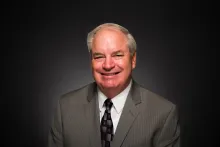
Robin Webber was born in Chicago, Illinois, in 1951, but has lived most of his life in California. He has been a part of the Church of God community since 1963. He attended Ambassador College in Pasadena from 1969-1973. He majored in theology and history.
Mr. Webber's interest remains in the study of history, socio-economics and literature. Over the years, he has offered his services to museums as a docent to share his enthusiasm and passions regarding these areas of expertise.
When time permits, he loves to go mountain biking on nearby ranch land and meet his wife as she hikes toward him.
