
Robin S Webber
This transcript was generated by AI and may contain errors. It is provided to assist those who may not be able to listen to the message.
Well, this afternoon, dear friends, I'd like us all to turn to Scripture. Let's open up our Bibles, because that's why we're here, and we are always best when we anchor in Scripture. So join me, if you would. Let's turn over to 2 Peter 3 and verse 18. 2 Peter 3, 18, which will be the anchor Scripture for where this message hopes to guide us, hopefully by God's guidance and by the Holy Spirit. 2 Peter 3, 18, again, is in the epistle of Peter. It's very interesting that we might say it's the last words of Peter, perhaps not verbally by him, but it's the last recorded words that we have of the Apostle Peter. And this was what was on his mind as he was appealing to the Spirit and God's people back in the 60s A.D. Here was a seasoned senior citizen of God's way of life, and he shares something of what he had had to grow in experientially through a lifetime.
And this is what his words were. This is where his mind and where his heart was and what he wanted to share with fellow disciples of Jesus Christ. Let's take a look at it here. It says, But grow in the grace and the knowledge of our Lord and our Savior Jesus Christ, to him be the glory both now and forever. The encouragement here, after having lived this way of life, Peter, speaking of him, had probably been a disciple of Christ, probably 35, maybe 37 years, whatever, don't hold me to any year, but he'd had decades of experience. And this is what he is saying now as a seasoned senior citizen in God's way of life. This is what I want to pass on to you, but there's a way of going about it, and there's a way of learning about it.
With this scripture in mind, and now the scripture in place, we're going to continue our series on being a kingdom bringer. Being a kingdom bringer. This is the third in this series. It's not going to be every time that I speak, probably every other time, so next time I'll be bringing you something else. But now we're in the third part, the third part of this series, and it's called Being a Kingdom Bringer – Growing in Grace and in Knowledge. Why are we going through this series of being a kingdom bringer? Allow me to rewind the tape just for a second, just be about a moment or two, because I want to get right into the message, but to recognize that oftentimes in the Church of God culture, we tend to look at the kingdom of God as being something yet way off in the future. Hopefully not too long, because we say, Thy kingdom come, but we tend to project it away from us and out in the future. And yes, it is going to come in its totality and in its fulfillment and in its total expansiveness in the future under Jesus Christ. Absolutely understood that. But we also have to understand that when Jesus Christ came to this earth, God sent him, God the Father sent him, to break in and to interrupt human history once and for all, and to inaugurate the kingdom of God.
That will now continue to grow until that point when the heavens and the earth ultimately all come together under God the Father and Jesus Christ. That means right now that you and I are not only kingdom projectors and kingdom hopers, but having our citizenship in heaven, we have an opportunity to be a kingdom bringer. We have an opportunity to be a kingdom bearer, not just a kingdom hopper, not just a kingdom talker, but to have that light of God, to have that light of Christ in us, and to be a light in some, perhaps small, sometimes a big way of impacting those that are around us.
Allow me to share a few thoughts to draw your interest into this message for a moment. Let's understand that God is the great interrupter. He is sovereign and he is loving. Let's understand four quick things here that I want to kind of lay out here. I'm going to give you some building blocks. You're going to stay with me during this message. Number one is simply this. God interrupts and intervenes human history. You know that, and I know that.
As an entity within the body of Christ, we preach and we teach that. God is sovereign—not only sovereign, but he's also loving. That makes all the difference. He is going to intervene in human history. If you don't believe me, just read Daniel 2, 44 through 45. Number two, he intervenes and interrupts our personal lives. That's why we're all online today.
We have this common spirit. We have this common understanding, this common belief in the scriptures of God that Bob shared in the opening message. He has interrupted our human lives, and we've turned our lives over to him through baptism and through receiving his spirit. But now we're going to go a couple steps further. Number three, I believe that he has called us as a light, as lights plural, to interrupt the lives of others, to interrupt the lives of others, to enter into the lives of others, in love, in wisdom, when the time is right, and when he is directing it.
It's not just simply a pastoral responsibility, it's not just simply a ministerial responsibility. It's a responsibility of every citizen of the kingdom of heaven. Now, one more, though, and this is where we're going to come into today about growing in grace and knowledge. Number four, sometimes we say, well, God has interrupted our life. I remember back in 1963, or I remember back in 1973, or we'll go real quick, or I remember just the beginning of this year when I began to, God began to reveal to me things.
So, God has interrupted my life. Okay, stop right there. Stop right there. Yes, he did. But here's the fourth point. A kingdom bringer, and being a kingdom bringer, and growing in grace and knowledge means we have to be prepared for God to continue, to continue to interrupt our life in his way, in his timing, that in one sense we're never prepared for, but we need to get prepared for.
I know that kind of sounds funny. We're never quite prepared for his timing and or his way, but as one Christian to another, one disciple to another of Jesus Christ, I'm imploring you to understand what I'm saying this afternoon. Be ready, because he will. How do we do that? Let's understand this. That the greatest on-ramp, like going on a freeway and being able to move forward, the greatest on-ramp to allowing God to interrupt our life, and then to follow that interruption to its full extent is simply this.
Two verses. Number one, Isaiah, Isaiah, where it says in Isaiah 55, 7-8, verse, verse, God's ways are not our ways. His thoughts are not our thoughts. And there's just simply some things that God has not yet revealed to us. If you don't believe that, just ask Mr. Joke. Very important. Point number two, then, Bobby, to share it with you. Point number two is this. We need to recognize that we love and we serve a God who says, Behold, I create a new thing. Behold, I create a new thing.
And we have to be ready for that. That's a whole another interruption. Just when we've gotten used to the Olds, which was new to us at one time, and will be new to all humanity one day, but just when we think we got it, we have God in our pocket, and we've got Him in this box.
God breaks out of that and says, Now I've got more of a story to tell you.
And as He tells us more of that story, I'm mindful of what it says in Isaiah 6 and verse 8, I say, Whom shall I sin before me? Whom shall I sin before me? That question went to Isaiah.
And Isaiah said, Here I am. Send me. Now we may not be a Peter. We may not be an Isaiah. Understand that. But we can use that principle and understand that this is something that we need to be prepared to be used of God in whatever way He opens up to us in our path of life.
Whom shall I sin before me? So we're going to go through a story this afternoon to deal with that. Join me if you would in Acts 10. In Acts 10. We're going to go over there. It's just going to be right out of there. It's going to be exegetical. We're not going to go through a whole lot of other scriptures. We're just going to read this story. And it's the story of Peter. It's the story of Peter, of growing in grace and knowledge, and God taking him places that no Jew had ever gone before.
And I think his story is our story, because I think Peter is so real, and I think there's a little Peter in each and every one of us as we're going to come to see. But this, this was the next step. Jesus came, inaugurated the kingdom of God through his preaching, teaching, life, his death, his resurrection, and his ascension. And then he said, okay, all of you, my disciples, you're going to go out and you are going to be my witnesses, my witnesses, to all the ends of the world. Remember that, because that's going to be important later on. To the ends of the earth. Did they understand that? They wanted to understand that. They thought they understood what that meant. They thought they knew the methodology of being able to go about to share the news that Messiah, as they would have said, has come, that Yeshua, the Messiah, has come. And they thought they were on the right track. They thought that they were talking to the right crowd. And then God said, uh-huh, behold, I do a new thing. And they had to learn how to come on board that God was in charge, not them. Let's go to Acts 10 and read the story together here. Stay with me, please.
Acts 10 is an incredible story. It's so encouraging. I just love being able to share that with you this afternoon. It says that, again, and remember Isaiah 6 and verse 8, whom shall I send before me?
That's the key to Acts 10. There was a certain man in Caesarea called Cornelius, a centurion of what is called the Italian regiment. Here's a man of Rome. Oh, the Italian regiment, not the Germanic regiment, not the regiment from Espinia, not the regiment from North—he was an Italian. He was a Roman. He was a Latin man. And it's a very interesting that says there his name was Cornelius. Cornelius comes from a long line of a very prestigious Latin family. Actually, cornu in Latin means, of all things, it means horn. God was sounding a horn. He was using an instrument, as it were, to create with this man, along with another man, what we might call a new song when it comes to the Gospel. And he says he called a certain man, a certain man, not just any man, but a man that was prepared for the assignment ahead of him. God doesn't call random people.
God does call special people. God calls people at times that people would look at. You're calling him? Yeah, I'm calling him. But it just doesn't call anybody at random. And the verses ahead are going to tell you why this Cornelius was called of God to do something. And it says in verse 2, he was a devout man, and one who feared God with all his household, who gave alms generously to the people, and prayed to God always. It's very interesting that this Roman centurion, assigned in Caesarea on the coast, was unique. In that number one, it says he was a devout man. That just doesn't mean he was a goody two-shoes. It doesn't mean that he's just really devout. It's what he was devout in. When the word devout is used in the New Testament, it can also mean a proselyte. It can also mean what was called a God-fearr. God-fearr. This was a man of Rome, a centurion in the military, of the conquering race—if we can put it that way in the first century AD—who was converted to Judaism. That's where God had taken him to so far, which in itself is incredible when you think about it. Why was he this certain man? Why was he called of God? Well, let's notice what he was doing. He was a man that, number one, he was devout. He feared. He respected. He revered.
He was in awe. He honored God. Also, let's notice what he did. He gave alms generously. He gave alms generously, perhaps. He was able to, but he gave what he had, and he gave to others—so opposite the Roman Empire, where the Roman Empire was taking in the pillage of the people that they had conquered. He was giving to those same people and giving out. And then notice what it said, and prayed. Every so often? No. And prayed always. His focus was upward, at that time, to the God of Israel. God doesn't make mistakes about who he has called and who he gives assignments to. Let's take it a little bit further. In about the ninth hour, which is about three o'clock in the afternoon, it says here of the day, he saw clearly in a vision an angel of God coming in and saying to him, Cornelius. Now, notice the timing. It's three o'clock, it's light, and it says there's a vision. Let's understand something. When God intervenes, he doesn't do it with a whisper. He doesn't do it with unrecognizable chanting. He doesn't do it in the dark. He doesn't do it in the fuzzy atmosphere. God was directly beginning to interrupt and intervene in the life of Cornelius, which was going to then affect others, which was going to affect the body of Christ that he had not yet in that sense entered. It says, and when he observed him, as you and I would be an angel, and when he observed him, he was afraid and said, well, what is it, Lord? So he said to him, your prayers and your alms have come up for a memorial before God. What you see here is you see a beautiful, beautiful, and yielded attitude. It's not like, what now, God? Go away. Not ready for you. He was receptive. He was yielding. He was amiable to this. Sometimes we wonder, are my prayers going anywhere?
Or is it just like a bat where I pray and it's like it bounces off the ceiling and comes back to me and knocks me on the head? Brother, our prayers are listened to. They come to God the Father through Jesus Christ when we say in Jesus' name, and it's not just going out the window or down a memory hole. God does hear our prayers. I'm saying this quite sincerely. He does listen.
We are so often used to, when you think of Matthew 7, 7, ask and seek and knock.
We can be knocking on God's heavenly door, as it were, in prayer.
But here's what I'm wanting to share with you in this story. We've got to be ready for God to knock back on the door of our heart and to see how open, to see how available, and how willing we are to open up that door. It's what I call the double knocking. We're very used to saying, you know, oh God says, you know, knock on His door. And so we do that, and we do that, and we do that. It begins to mount, it mounts, it mounts, it mounts with all that knocking.
But what I'm sharing with you, especially as the times are becoming more and more challenging, we could talk about that for an hour, but you already know that, and we see where things are going in this nation, in this world. I'm encouraging you to have that spiritual ear attuned to your heart, and we've got to be prepared for God to knock on our door, not in our way, not in our time, but in His way and in His timing, and to be ready then to behold understanding that He is willing and ready to do a new thing for you. So let's go a little bit further here, and it says, what is it? So He said, your prayers have come up. Now send men to Jaffa and send for Simon, whose surname is Peter. He's lodging with Simon at Tanner. That's going to be very important. You may want to circle the word Tanner. We're going to get back to that, whose house is by the sea. And I'll notice, and He will tell you what you must do.
This Jew, this man of a conquering race, He's going to tell you, the centurion, what to do.
Wait a minute. This doesn't complete what you got to be getting.
God called a certain man. We need to understand that a centurion was the very backbone, the very backbone, the very spine of the Roman army. He was over a hundred men. He was like your worst case of a drill sergeant in the Marine Corps at boot camp. He was loved, feared, respected, probably cussed out, if I can use that phrase. And yet, when He asked an order of you, you said, yes, sir. The centurion was not out there to be everybody's best friend, but to create a cohesive unit of 100 men that were going to be the spearhead of the Roman army to do whatever it took to take that which was ahead of them. He was used to being in charge. Remember the centurion that Jesus spoke to? And the centurion said, listen, I tell men to go, they go. I tell men to come, they come. He was the guy that was used to giving orders. But notice now, he is being given an order by none other than through this angel, which is interesting. So notice what it says here. And when the angel who spoke to him had departed, Cornelius called two of his household servants and a devout soldier from among those who waited on him continued. Here's a fellow believer who is a soldier, a devout soldier. So when he explained all these things to them, he sent them to Jaffa. Now, what's one thing that you and I might be able to glean out of this story?
Here's a man that was as a soldier under authority, but now the angel of the Lord comes to him, and he's given a direct heavenly commission and order to do something.
You want to look? Can I ask you a question? These are my notes here.
Let's take a look here. How many verses did that take? Let's see. I'm just checking out what's going on all the time. Develdt, man. One, two, three, four, five, six. I see six. You might see six verses.
Here's what I want to share with you. Here's a man that was yielding.
I've noticed in my reading of the Bible over the years that good attitudes, converted attitudes, attitudes that are submissive to the will and the power and the love of God Almighty and Jesus Christ—normally one verse to about five or six verses. Have you ever noticed examples in the Bible of people that are not resilient towards God that say, no, no, no, no, no? It goes on and on. It becomes chapters sometimes. Here's my encouragement to you. I'm intervening right here on the set to share something. How many verses are you on where God is knocking on the door of your heart, and you still have not opened up to do that which he is asking to do, other by the prompting of the Spirit? I don't know if you had an angel visit you, but by the prompting of the Spirit and or by the conviction of his word and or just down deep knowing that you're just, you know, like a stubborn mule and you're just going verse by verse by verse. Here's an example that you can draw upon.
This was a certain man, and Isaiah 6, 8 says, God said, whom shall I send before me?
This man is ready, is ready to send his servants and follow that Word. Now, let's go a little bit further. The next day, no, excuse me, and when the angel who spoke to him had departed, okay, I mentioned that. So when he explained all these things, okay, I got that. First night, the next day as they went on their journey and drew near the city, Peter went up to the housetop to pray about the sixth hour of the day. That's about noontime, okay? Noontime. Kind of getting warm, kind of getting hungry. Blood sugar is going down. He's up there. And then let's notice what happens here. Then he became very hungry and he wanted to eat while they made ready. He fell into a trance, and he saw heaven open, and an object like great sheet bound at the four corners, descending to him and let down to the earth. Now, in it were all kinds of four-footed animals of the earth, wild bees creeping things and birds of the air. And a voice came to him. Now, let's understand something. God never wastes a miracle and or a vision or a trance. Okay?
Notice it's descending from heaven. It's not going up from the earth. That's very, very important to understand. The vision is very direct. This is something that is coming down from God, because this is going to be utterly breathtaking as to the expansion of the kingdom of God and the citizens of that kingdom. And they hear in the now. Notice what it says here. So he saw that, and a voice came to him. It couldn't make any sense of this. There's orphaned animals, wild beasts. The creeping things can kind of get to all of us, especially the women, lizards, snakes, and birds of the air. And a voice came to him. Rise, Peter, kill, and eat.
Seems pretty direct. Doesn't take a lot of thinking. Vision says rise, kill, and eat. But Peter said, not so, Lord, for I have never eaten anything common or unclean. So Peter does his Peter thing. No, no, no. No, no, no. Here's the man of God, an apostle. No, no, no. He goes full Daniel. Remember Daniel 1-8 when Nebuchadnezzar and his staff were trying to get the young Jewish men to break their culture and to eat something unclean or common. And, you know, this is what Peter had grown up with. So it's right on, you know, it's in his mind. I'm going to go full Daniel.
Or remember when Peter at the Passover, Jesus said, I'm going to wash your feet. He said, no, no, no, no, no, no, no, no. No, like a gatling gun. No, no, no, no, no, no.
And Jesus said, if I don't wash your feet, you have no part of me.
So it's not, you know, some of us are slow on the draw to learn what God is doing.
Because sometimes we forget that his ways are not our ways. And we also recognize that we've got to be ready just when our human GPS thinks we've got God all figured out. He says, behold, I do a new thing. Not so much for him. God knows what he's doing, but he's now revealing to us what he's going to do. And a voice spoke to him again the second time, what God has cleansed, you must not call common. So God's explaining himself. This was done three times, and the object was taken up to heaven again. That's kind of interesting that this comes down three times. Three is the number of finality. Also, it's kind of coming down in this sheet. You know, you think of the stork, you know, with the shape, the proverbial stork, with the shape that brings the little baby. Well, there's something kind of interesting to this that, you know, there's going to be a birth. Acts 10 and Acts 11 is about a birth of people that God is going to give that new birth to, that nobody expected to be in God's hospital or allowed in. So just kind of interesting when you look at that. This happened three times, and then it goes back up to heaven just to make sure it came down from heaven, it went back to heaven, this is of God. Now, while Peter wondered within himself what this vision which he had seen meant, behold, the man who had been sent from Cornelius had made inquiry for Simon's house and stood before the gate. There's a gate, there's a courtyard, there would have been a house. Now, let's notice what this is, and to be fair with our human condition, and knowing how gracious that is, it says, now while Peter wondered. We don't always get God at first. Let's all be real. No matter how long we've been in this way of life, Susie and I, we've been in this way of life since we were kids, since we were 11, 12, just yesterday. No, we're still learning. See, growing in grace and knowledge is not just an event. Okay, are you with me? It's not an event. It's an adventure with God in charge, and it's experiential. It comes by experience. It comes by revelation. It comes by surrender.
Now, while Peter wondered, remember when Gabriel came to Mary and says, well, Mary pondered. And God allows for that. He knows that we're human. And maybe you're pondering out there right now about something that God's knocking on the door of your heart and saying, hey, come on, let's take the next step together. And so these men are out there, and they called and asked whether Simon, whose surname was Peter, was logging there. Now, while Peter thought about the vision, the Spirit said to them, behold, three men are seeking you. Now, what part of this don't we understand? Three, three times down from heaven, the vision, three men at the door, three plus three must, must equal God. God's telling you, it's kind of like, you know, in the old days when you know as kids we used to have the painting by dots connecting the dots. The dots are coming to the fore. And Peter is being welcomed into one of the great adventures of his lifetime. And wouldn't Peter thought about the vision, the Spirit said, behold, the three men are seeking you. This is that.
Arise therefore, go down and go with them, doubting nothing for I have sent them. And then Peter went down to the men who had been sent to him from Cornelius and said, yes, I am he whom you seek for what reason have you come?
And they said, Cornelius the Centurion, a just man, a just man who fears God, has a good reputation amongst the nation of the Jews, was divinely instructed. We're not just showing up to bind the instructor, buy a holy angel to summon you.
God's got a call on you, Peter. God's told you to appear to his house. That is the house of Cornelius, and to hear words from you.
You. It's not something you can shuffle off. It's not God. God has said that you're going to be the one. You've got to show up. Whom therefore shall I send before me? And Peter's about to do an Isaiah, not just a Daniel, not just a Peter, but he's about to do something incredible. Now stay with me, in the story. Speaking of Peter, then he invited them in and lodged them.
To this point, they were at the gate of the courtyard. They're in the courtyard. They still haven't come into the house. Peter does something so daring that sometimes we don't understand it in our culture. A Jew and a Gentile did not do this at all. There was nothing further apart than the Jews and the Greeks and the Romans in the first century AD. We think we have divisions today. We think society's kind of being, and I'll leave the rest to you. This was incredible. Let's understand something. I want to tell you about the power of his story. This Peter is the St. Peter that wherever Christ was, he wanted to be. Christ was on the lake. He said, Peter, come on over. Peter gets out of the boat. He begins walking on water. He is stepping out on faith, and yet he sinks. He peters out literally in that sense. This is even greater. Peter is about to take a step that no Jew and even a Jew within those Jesus followers at that time had taken. He's going to invite the Gentiles to come into the household with him. This was anathema, not to be even thought of.
The Gentiles, in that sense, in the Jewish mindset, were thought of being dogs.
You find that in the Gospels, mentioned the term dog dealing with those that were outside of Israel.
That is still an epithet in the Middle East. We have our own kind of words when we want to say something about somebody. Over in the Middle East, to be called a dog is still something you don't want to be called. That's how the Jews fell towards the Gentiles. Notice, then, with that stated, that Peter is about to take a step that no Jewish Christian at that point has ever taken before. Think of Star Trek, the big mission to go where no man has gone before. What he's about to do is, remember Neil Armstrong? The moon shot, one small step for a man, one great leap for humanity.
There's about to be a birth. There's about to be an expansion. This is an adventure. This is an exploration of the hype. Notice what it says here. So, as Peter was coming in, excuse me, and the following day they entered Caesarea. They went down to Caesarea. Cornelius was waiting for them, and he called together his relatives and close friends. As Peter was coming in, Cornelius met him and fell down at his feet and worshipped him. But Peter lifted him up, saying, Stand up, for I am a man as well. As he talked with them, he went in. He had not only invited the Gentiles to come into his house. Get ready, one step after another. He enters into the house of the Conqueror.
Of the Centurion. Of the Roman.
Incredible. And he found many who had come together. And then he said to them, You know how unlawful it is for a Jewish man to keep company or to go into the house of one of another nation. But God has shown me that I should not call any man common or unclean. Something's happening here.
It's exciting. This is not talking about the food laws. That's a whole other sermon when we deal with clean and unclean foods. He's saying, I have come to not call, I've come to understand not to call any man common and or unclean. Therefore, I came without objection as soon as I was sent for and I asked them, For what reason have you sent me? So Cornelius explains how he followed the instructions of the angel. Then let's jump down over here to verse 34.
As he witnessed these attitudes of these individuals. Notice verse 33. I'm going to go up there. So I send to you immediately, Cornelius speaking, and you have done well to come. Now therefore, we are all present before God to hear all the things commanded you by God.
Can I ask you a question? Are you sensing the understanding of this man's capability to understand the presence of God? It wasn't just about Peter. Peter was an instrument.
Cornelius understood that he was coming before that since the throne of God.
Peter was an instrument. He wasn't surrendering to Peter. He's going to learn more about God and Jesus Christ through Peter. Is that how we operate in our own lives? That what we do and who we come into contact with and who we invite into our homes is all before God. And then notice what it says here. Then Peter opened his mouth, one of the great lines of Scripture. In truth, I perceive that God shows no favoritism and or partiality, but in every nation, whoever fears him, whoever honors him, whoever reveres him, and works righteousness, notice, is—this is powerful—is accepted by him. Not by man, not even by men that are thinking they're doing God a favor. Our acceptance comes from God the Father to Christ, not just the acknowledgement of some man. And sometimes we can go about trying to be accepted by men rather than we are here as citizens of the kingdom to gain our acceptance from the King of that kingdom and his Father. Then he said this, the word which God sent to the children of Israel preaching peace through Jesus Christ, and he said he is Lord of all. A-L-L, one of the smallest words in language, that the Jewish community and the Jewish Christian community thought they understood, and God was about to give them a lesson in knowledge of what all really meant, and in grace, that God's grace, his favor, his love, his revelation about that return through the door of Jesus Christ.
That as we heard in the first message, it's not about what we're doing, but it's how we respond to what God is doing by our faithful obedience.
A-L-L, got a question for you. What does all mean to you when it comes to those that God is working with? Well, let's drop down here towards verse 43.
And we notice then here where it says, Peter speaking to him, all the prophets witnessed that through his name, speaking to Cornelius and his followers, who ever believes the name will receive remission of sins. Now, notice this, very important, not only on Peter's adventure, not only in Cornelius' adventure, but our adventure, as we grow in grace and knowledge, as we become that servant of God, sometimes going into places or realms that are scary that we never thought we might have been in. Notice what it says, while Peter was still speaking these words, the Holy Spirit fell upon those, or came upon those, who heard the word. And those of the circumcision who believed were astonished as many as came with Peter, because the gift of the Holy Spirit had been poured out to the Gentiles also. Now, notice there were witnesses in the mouth of two or three witnesses, and Peter was going to need that in the days to come, as he explained what he was doing to the hometown crowd in Jerusalem. And then notice what it says here. The Spirit was poured out on the Gentiles, verse 45, for they heard them speak with tongues and a magnified God. This is what you might call the, well, we have the Pentecost in Acts 2. You may call this in a sense a type of a Gentile Pentecost. The bottom line is this. The bottom line is this. Peter did what God asked him to do. Are you with me? And God will likewise ask us to do what we can do in faith towards him. As we do what we can do, God will do what only he can do. And he took this out of Peter's hands. He knew that Peter was going to have to go explain something that had been in the culture for 1500 years. Because God was doing something new.
Because our ways are not God's ways. So he, I would suggest, is so proud of Peter taking those steps.
But then it had to be all about God and what he was doing. Just like the Red Sea, Israel had to stand still. And then God said, get the people moving. God expected the people to do what they could do. And then that sea, that salvation of God to be held by Israel, that sea opened up. Are we stalling right now in our own lives as kingdom bringers, as lights, as witnesses? Are we on? Are we stalling? Are we doing all that we can do with God's Spirit and with the Word and with a little courage along the way? Because until we do that, then we're not going to have God do what he can do. See, God always likes this teamwork. He likes this relationship between you and me and him. What are we holding back on? See, God has a partnership going on down here.
We're co-workers with Christ. We're citizens of that heaven, heavenly kingdom.
Peter says, with that, can anybody forbid water? And so God did it. He just blasted open that door to the Gentiles.
Then Peter says, what am I supposed to do? I'm going to baptize him. So after the Spirit was given, they still went through that outward confession of an inward understanding of who is king now.
That's a great story other than it doesn't end. Notice chapter 11, verse 1. Now, the apostles and the brethren who were in Judea heard the Gentiles have received the Word of God.
News travels quickly. It goes before us, doesn't it? And when Peter came to Jerusalem, those of the circumcision contended with him, saying, you went to the uncircumcised men, and you ate with them. Who do you think you are? Who do you think you are?
How'd you like to have them for a welcoming committee?
See, God had done something new. God's ways are not our ways, or He hasn't shared all of His ways and all of His plans yet. He doesn't need our permission. And behold, I do a new thing, and He did it. And the toothpaste is out of the tube with the Gentiles. And then we have these men in Jerusalem trying to put the toothpaste back in the tube. It isn't going to work.
Not going to work. What they were saying was the same thing that the innkeeper would say to Joseph and Mary in Bethlehem at that time. There is no room at the inn.
God's way is for me, but not for thee. And if you are, then you're going to have to become a physical Jew in that sense of circumcision before you can take a step further. But Peter explained it to them in order from the beginning. He went back to the story. And this is what is so great about Peter. And to recognize that he shares the story, we're not going to go all through it, but he even shares his own... what? Are you kidding me? He's very honest. And one thing about Peter, he's very transparent. He said, I had my problems with this, but God kept on working with me. This is the Peter that was so totally transparent, as we all know. And I think he was transparent at Pentecost when why did so many people... why were so many people called of God at Pentecost? Because he spoke as one that had been in their place. He spoke as a dying man, the dying men. He knew that he had blown it. They knew that they had blown it. They said, oh no, we've crucified God. What are we going to do? And he was right there with them. So he's trying to explain this. He explains the vision. He explains his own wanderings of his mind and wanderings. But then he went forward doubting nothing. And then down here, notice what it says in verse 15, and I began to speak. The Holy Spirit fell upon them, rehearsing the story and upon us at the beginning. And then I remembered the word of the Lord. He said, John indeed baptized with water, but you should be baptized with the Holy Spirit. He remembered the word of the Lord. Scripture is powerful. And remember what Jesus had said, that when I leave, I'm going to send another comforter. And he's going to guide you. He's going to teach you. And he's going to bring my words back to remembrance to you. John 1426.
That's the same spirit, the same power that we can have as kingdom-bringers, as witnesses.
And therefore God—not me, but God—gave them the same gift, not a lesser gift, the same gift. Incredible, as he gave us when we believed in the Lord Jesus Christ.
So who am I to say no? I said no on the rooftop. That didn't work too well.
So who am I to say no as the Spirit is given to them? And when they heard these things, they became silent, and they glorified God, saying, Thank God, as also granted to the Gentiles repentance.
Let's wrap this up. We've told the story. What are we going to gain here?
Some real quick takeaways.
Couldn't give you five or six takeaways. They're all going to go about a minute or so, so don't worry about time. But this is what we need to think about. I hope that I've pricked your conscience, your heart, because again, remember, God is the God of new. In Ezekiel, he says he gives us a new mind. He does give us knowledge.
But then it says he gives us a new heart to love, to expand, to explore.
And then it says he gives us a new spirit.
We are to grow in grace and knowledge. Hmm. There is a knowledge that Israel and the Jews had from the time of Abram when God said that through you, all the people of the earth are going to be blessed. Genesis 12, 1-3. There's that word all again. But they're all, the covenant people of God of old, was not the same all as the God who called them and released them from Egypt, released them from slavery, that freedom-loving God, that expansive God that was now calling the Gentiles to become integrated and to become a part of the Israel of God. As Paul says in Galatians 6, 16, but the Jews of that time had God in a much smaller box because you can't box God in. So here's some points. Let's think this through. Number one, my simple question to you this afternoon says, how big is your box? How big is your box? How big is your God? How big is our Christ? Do we have Him in our pocket? Zip Him up and carry Him around with us and think we're bros, we're all together. How big is your God? Are you bigger than your God?
Do you have all the jigsaw puzzles, pieces all figured out and we hand them over to God and say, okay God, this is what you need to do because this is what I think you're going to do.
Or do we allow God to be God? Let God be God and to recognize that, behold, He's going to do new things. That we have to be awake, we have to be alert, we have to be ready, we have to be prompted. So often again, we can be knocking on God's door, but we're not ready for Him to knock on our door. Then when that door opens to understand the next step of growing in grace and knowledge. I'd like to share a plastic. It's just a saying that I'd like to share with you. Maybe just share it for a moment. There was a person completely wrapped up himself in a very, very, very small package, but the great day came when a man begins to get himself off his hands.
He has lived, let us say, like a, like in a mind like a room surrounded by mirrors, and everywhere he looks, all he does is he sees himself. But now, however, some of the mirrors change to windows. You can see out. There's a bigger world. There's God's world. There's God's story. That grace, that knowledge, begins to grow and goes on and on. He can see through them to do objective outlooks that challenge his interest. He begins to get out of himself, no longer the prisoner of self-reflections, but a free man in a world where persons cause, causes, truths, and values exist. Wonderful, worthful, for their own sake. Thus, to pass from a mirror mind to a mind with windows is an essential element in the development of a real personality. And might I say a true and a real and a growing and an expansive and knowledgeable Kingdom Bringer.
Number two, simply put, I mentioned earlier, are you, after hearing this message today, are you willing to be interrupted by God? Not in your timing. Not in your way. But will you be prepared as he knocks on your door?
In Revelation 3 and verse 20, you can jot it down. Jesus says, I'm at the door, and I knock. So it says that Jesus knocks. Okay? He's speaking to all the churches. I knock. Revelation 3, 20. And he who lets me in, I will dine with him.
Grace and knowledge is not an event. It's a spiritual adventure with a partner from above.
And it's going to take us places at times that we've never thought that we would dare to go on our own. Don't be afraid. God asks you to do your part. He loves you. He's not going to abandon you.
And what you can't do, as we've just seen here with Peter and Cornelius, he's going to take care of us. He's going to make a way. He's in charge. That's why he's God. Here's another thought I can share. How clay-like are you? How clay-like are you? How moldable. Isaiah 64 in verse 8 says that, I am the potter, and you are the clay.
There's a question that only you can answer this coming Sunday, Monday, Tuesday, and Wednesday.
As God says, there's something else I haven't told you. Next step, next story. Let's understand this, as I conclude. God and his love, and his wisdom, and his patience, will take us back to where we always need to grow. Two things. I think it's interesting. Stay with me. Remember I mentioned Joppa, and that would be important.
Joppa was a seacoast town. It's interesting how important Joppa is in the story of covenant people.
I'm going to make this very short. Jonah, when he got the word from God to go preach repentance to Nineveh, to the Gentiles, was in Joppa.
And God said, go east, young man, go east. Horace Greeley was not even born yet, but Joshua followed Horace Greeley's advice. And he was going to go west, young man, west. He was going to go to the sun coast of Spain and take a vacation away from God, as if God was only Joppa and not in Spain.
That's old sermon itself. There was that initial refusal until he was just thrust out on the shore up there by Nineveh, by the big fish, to go do the job that God had called him to. He was not a one-verse, the three-verse kind of individual at that point.
Not a good example.
Joppa then is where Cornelius's men went. And Peter had to make a decision, unlike Jonah.
God gave his people, Israel and the Jews, another opportunity to yield themselves and to understand what God was doing and not run away, but run towards the great opportunity of expanding that kingdom message, expanding the birth process of the Israel of God.
My question is simply this. I know that God has unfinished business with me, and I would suggest you being a human being, God has unfinished business with you.
We're at ground zero with Joppa today in our lives, and God will always take us back until we yield ourselves, till we surrender ourselves, till we have faith and confidence as we grow in that grace and knowledge, not just to do the right thing for us, because we go the other way, but to do the holy thing, the holy thing. Because God says, whom therefore shall I sin before me?
And you and I have that opportunity, and He'll keep on coming back to us. Until we say what Isaiah said, here I am, send me.
As I conclude, I say this with love and knowing, be ready for the knock of Jesus Christ on the door of your heart. Be prepared to open that door. Know that you're not alone. Know that you're not alone. You are a child of God. You are called to be, in a sense, in type, a kingdom-bringer. Let's do it together, along with our Father above, and Jesus Christ.
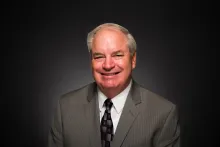
Robin Webber was born in Chicago, Illinois, in 1951, but has lived most of his life in California. He has been a part of the Church of God community since 1963. He attended Ambassador College in Pasadena from 1969-1973. He majored in theology and history.
Mr. Webber's interest remains in the study of history, socio-economics and literature. Over the years, he has offered his services to museums as a docent to share his enthusiasm and passions regarding these areas of expertise.
When time permits, he loves to go mountain biking on nearby ranch land and meet his wife as she hikes toward him.
