
Robin S Webber
This transcript was generated by AI and may contain errors. It is provided to assist those who may not be able to listen to the message.
Thank you, Mr. Carlson. I do want to bring to your attention a couple of items. You might look at the bulletin that's been passed out, and again, we continue to learn the lesson to not set dates. If you'll look at it, it does say 1 o'clock for atonement services. It is 11 a.m. for atonement services. 11 a.m. So let's please remember that. What time is it going to be, Walt? It's going to be late. Okay. What time is it going to be, Sandy? Over here, somebody glance. It's going to be 11 a.m. Everybody got that? 11 a.m. And thus, Doug, you and I continue to ever strive for a more perfect—not union, but bulletin. And that's the way it is. Also, I want to mention—just got a note for Mr. Covel, verbally, in my ear— it's like the old Beatles song. Four letters. Help.
Baby boomer time. Remember that one. And that is simply this. Many of our set-up personnel are going to be gone next Sabbath. Thus, we need every able-bodied man and lady to be here to help set up. You are all invited. You are all welcome to come early. You will be here. We need you. How's that, Jim? We really do need you, so that'll help. Because, again, let's please do remember, as many people are vacating, we are going to have a number of people that are going to be joining us just the Sabbath before. So I would imagine we'll probably have somewhere between 15 or 20 guests, and we do want chairs for them.
What time do you come to say that? Thank you, Mr. Braden. Good question. Well, let's try to be here about a quarter of one. We'll make it easy. A quarter of one. Bill's going to be here. Let's join him, okay? Thank you, Mr. Braden. We used to set up a few chairs on the Ambassador College campus, didn't we? Absolutely. Well, let's get into the message today. Are you ready? Here we go. Second message out of God's Word. Jesus spoke a parable in Matthew 25, and it deals with talents.
It speaks to those that would follow Him to understand the value of their calling. And because they would understand the value, they would prepare accordingly. And as they prepared accordingly, they would understand the certainty and know that there was going to be a future encounter with their Master in which He offers judgment, both in blessings and in punishment.
And twice within that parable, and my intent is not to go into the parable itself, I have just basically given you the outline, but twice He declares to those servants who are faithful, enter into the joy of the Lord. I have a question for you this afternoon. What does that mean?
And what does that entail to enter into the joy of the Lord? I thought I would give this message again because I think so many of our people are challenged these days. There was so much happening around us globally, nationally, locally, family-wise, and in our own personal lives. And the parable of Christ bids us, bids you, bids me, that we might enter and experience that joy that God wants to give us. Now, like any biblical topic, there are many facets to consider regarding any jewel of thought that scriptures share. I don't know if there's any just one given item regarding the joy of the Lord, but today I would like to enter through one particular facet of this blessing of entering into the joy of the Lord and explore its depth, its meaning, to encourage us about the preciousness of God's selection and election of you towards the ultimate future relationship that He envisions with you, for you, with Him, bound by holiness, that also needs to be our vision.
Here's what I want to share with you. Are you ready? God has a vision, and He shares that in scripture, and He likewise wants that to be our vision, His vision being our vision so that, in a sense, we can literally walk down the aisle together.
Now, when I say that, that leads me to my next thought. This thought of sharing what does it mean to enter into the joy of the Lord is spurred by what I'm involved in over this coming weekend. It's a wedding, and weddings are wonderful, and they're beautiful, but they take a lot of preparation. We were at a rehearsal last night, kind of fun, kind of different, in Arcadia, California, at the Arboretum, for anybody that knows the Arboretum, and the couple has elected to be married on the lawn right in front of the waterfall for those that know the Arboretum at all.
Very lovely, lovely setting, and you kind of come in, and you work it, and make sure everybody's coming in at the right time, and that the music's actually there, and that the bride and the groom are still wanting to go through it. That's always good, and you know, different things like that.
And thus, there's a rehearsal, but beyond that, there's been a lot of, a lot of preparation. Weddings are wonderful, and they're beautiful, but they do take that preparation. Normally, normally there's a certain beautiful solemnity, and might even dare say a stillness, and as you go through a wedding, and then there's that kind of a pause, as you come up to the I-do's, and then one man, the man says I do, the woman says I do, and they kiss, and we have a wedding that's happening. But beyond the wedding comes something else, and that is this. There's a wedding reception, and there's a dinner, and oh boy, now with the formalized ceremony, all over, and all the legal documents are signed, it's real. The couple is married. They've made it. And now folks can celebrate. They can gather. They can relax. They can have good food. They can have music, dancing, laughter, spills across the hallway, slapping people on the back, embracing one another, hugging. Everybody is joyous. People are meeting one another for the very first time. You're beginning to perhaps even meet family members that you have never known about before, but you're going to be living the rest of your life with. All the effort has paid off. All of those anxious moments of the frustration, and the prayers, and the joy, and the disappointment are eased and tucked aside in the wake of the reality that a new marriage, a special union, it's given birth, and this relationship has been given life.
There's nothing like a wedding. It's happy. It's joyous. It's wonderful. It's the booster rockets to help a couple move into life. We that are married know that there does need to be booster rockets. There needs to be that push. There needs to be that lift as we begin to tackle the challenges of life, to live through the opportunities of life and all that life brings.
In the truest sense, that's how God reveals our future with Him in the terms of a wedding. That's what I'd like to talk about today, in the terms of a wedding. Simply put, Christ is the groom. We are the bride. There is indeed a wedding supper.
Our Heavenly Father thinks about it constantly. Frankly, so must we beyond this message. I think the thought of the wedding supper, and the bride of Christ, and all of this fits into this time of year in discussing the meaning of God's plan through these festivals. But brethren, if I can make a comment, may I? We should be thinking about this every day. This should not just simply be chained to a given festival or a given season of festivals. This is something that God wants us to awaken to every day, that we are the bride of Christ, that we are going to become in union with God. And there is going to be a wedding supper that you and I are going to be a part of. And in all of this, this is in part, I believe, what Jesus was talking about in the parable of the Talents when he says, enter into the joy of the Lord. Let's understand and define what that joy is going to be like. Join me, if you would, in Revelation 21. In Revelation 21, this future ceremony begins with a great, triumphal declaration. We find it in Revelation 21. And let's pick up the thought in verse 1. Now I saw a new heaven and a new earth, for the first heaven and the first earth had passed away, and also there was no more sea. Then I, John, saw the holy city, new Jerusalem, coming down out of heaven from God, prepared as a bride, adorned for her husband. And I heard a loud voice from heaven, saying, Behold, the tabernacle of God is with men, and he will dwell with them, and they shall be his people. God himself will be with them, and be their God. Talk about entrance. Sometimes we talk about people that they always know how to make an entrance. Well, God does not waste this entrance at all, and he uses the typology of a wedding, of a cosmic procession toward spiritual consummation, a great, in a sense as it were, parade coming down from heaven to collect his bride. You know, it's very interesting that the British are often known to really know how to hold a party, how to celebrate a ceremony, all the different coronations, all the different weddings, all the celebration of this year or that year of a king or a queen. Well, we've got to recognize that is whatever we've ever seen coming out of London, this is going to pale into insignificance as this comes about in the future. When we know that we see this new Jerusalem coming down out of heaven from God, and it's prepared as a bride adorned for her husband. Now, you think about that for a moment. Just imagine the size of the wedding party. Let's think about that for a moment. Much less the audience that is watching and marveling. These citizens of this new Jerusalem, that's, I believe, synonymous with the first fruit saints of God. And they're going to enter into a deep and everlasting relationship within the family of God. This is a consummation of the purpose and the plan and the promises and the provisions of God that He's been working out for all of this time. And there's now going to be a consummation. And it's going to last forever.
Today, you and I know, unfortunately, relationships do not always last forever, for one reason or another. But to recognize that when God comes and Christ comes down and marries the bride, it is just shut the word down forever.
Susan and I have had the blessing in our family over the years that it seems as if both sets of our parents have been married forever. One side almost went, I think, 64, 65 years, almost. And the other side, my folk side, went about 66. That almost seems like forever. But that's just a dot in the beginning of eternity as to what life is going to be like. And you're going to be a part of that. And that's why I'm giving you this message today. You are going to be a part. You are going to be a part of that new Jerusalem that's coming down, adorned as a bride, and in this sense to go through the wedding. That's exciting, and that's wonderful. These individuals, whether past, present, or future, are individuals that have entered a compact with Jesus Christ. In that sense, an engagement towards this divine marital union. We need to understand that. Join me, if you would, in 2 Corinthians 11, verse 2.
2 Corinthians 11, verse 2. Paul speaks to this relationship.
In 2 Corinthians 11, verse 2.
Speaking, For I am jealous for you with godly jealousy. For I have betrothed you to one husband, that I may present you as a chaste virgin to Christ.
When we look at this, we come to understand that we have been set apart. Simply put, in modern-day terms, we are engaged to the very Lord of the universe.
Imagine that, to be engaged to the very Lord of the universe. Now, when people become engaged, the man asks the lady to marry him. She says, yes, that means that they have taken their eyes off of everybody else and that they are exclusively moving towards the marital relationship.
All of a sudden, everybody else is secondary. Primary focus is going towards this individual. You are engaged. You've set aside the other half of the world, the other genders, saying, I am going to be devoted to this individual. That is what an engagement is all about. Now, one thing that is very important for us to think about, and I want to share this with you, all of us, whether we're married or non-married, are a part of a very real engagement. Some of us in this lifetime, in this sense, may never be married, and or married again, for one reason or another. But all of us need to be preparing for marriage. Have you ever thought about that way? And, guys, you're going to be a bride. You're going to be the bride of Christ. So we have to kind of wrap our minds around that and get into that. I didn't say get into that wedding gown. Thank you. But I said we have to get into that thought. And that's very, very important to think about. No, I don't have my mic. I'm not going to go out there today. Thank you very much, Chris. I was just about to move. And that is simply this. Sometimes you think, well, I don't need to hear those marriage sermons. I don't need to hear those family sermons. Yes, we do, even if we're single. Because all of us are espoused. All of us are engaged. All of us are preparing for a wedding. And none other than Jesus Christ is the fiancé. And so all of us, even when we go to the Feast of Tabernacles, we'll hear different sermons on this or this. Well, that doesn't apply to me. Yes, it does. Yes, it does. We're all preparing to walk down that cosmic aisle as citizens of the New Jerusalem. Members of the body of Christ, called the Bride of Christ, preparing for the consummation as it speaks in one of our hymns to be in the family of God. Join me, if you would, again in Revelation 19.
In Revelation 19. Because the book of Revelation not only speaks of the Bride, but also describes the marriage itself and something very special that comes with it. A blessing! Now, when we go to a wedding ceremony, normally in the Church of God, at the very end, we'll have a prayer that is spoken over the couple. We'll have the laying on of hands. Well, in this sense, this is a blessing. This is one of the beatitudes that come out of the book of Revelation. Let's notice what it says here in Revelation 19 and verse 6. And I heard, as it were, the voice of a great multitude as the sound of many waters and as the sound of many thunderings, saying, Alleluia! For the Lord God omnipotent reigns. Let us be glad! And let's rejoice, and let's give Him glory, for the marriage of the Lamb has come. And His wife has made herself ready. We'll speak to that more later. And to her it was granted to be a raid and find linen, and clean and bright, for the clean linen is the righteous acts of the saints. And then He said unto me, Right! Blessed are those who are called to the marriage supper of the Lamb. And He said unto me, These are the true sayings, so says God. Now, why is this being written then? So often we think of the book of Revelation being a prophetic book, and indeed it is. We think that it speaks to our day and age, and yes, it does. But we also have to understand that that first reading as that scroll was opened up and read to the different churches there in Asia, churches that were going through challenges. They were going through incredible persecution at that time, most likely during the time of Domitian, or the Flavian house. He himself thought he was a God, and he didn't like company. And so he began to persecute these Christians that worship this other God, this other one that was called Savior, which was actually a title that was often used for the Roman Caesar. They seemed to be seditious. They seemed to be traitors and treasonous, and so he began to kill them. And they had to begin to even maybe move from city to city. Things had not quite worked out the way that they had originally thought. They thought that perhaps Christ was literally going to be coming in their time. They were concerned because many of the men that first spoken to them, whether it be a Paul or a Silvanus, or whether it be a Timothy or whether it be a Titus, they were no longer living. And they needed encouragement that everything that they had done up to this point, their life surrendered to this Christ. Their life surrendered to this way, which was so different than those around them that worshiped Jupiter or Mercury or Aphrodite. They had lost family and friends over this. This is the thrust of the book of Revelation, that indeed what we are going through, the end shall come and God has in store something very, very, very special. And if you come through it, you are going to be married to none other than Jesus Christ. That's the loud picture of the book of Revelation. We can doddle back and forth as to beasts and false prophets, and this year and that year. This is the loud story of Scripture that God wants us to be in his family. He calls us his children. Likewise, he calls us his bride. He wants this union, this consummation of holiness. God says, I am holy. He says, therefore you be holy. And thus, we're going to discuss that later on when it talks about the linen that the bride wears.
Now, when this was being written, weddings and the accompanying festivities were always very special.
They are today. Looking forward to tomorrow. It's going to be nice out there in the Arboretum. Marrying a couple. It's a very special, special kind of wedding, which I won't go into. But in olden times, weddings, when this was originally written, these activities took on incredible status. This was a time before people traveled. This was a time before people had this in their home or that in their home. They could bring the whole world into their home, and or they had the means to travel around the whole world. This made the entire village and or a part of the town stop. Stop. This was exciting. Everybody was going to be involved.
When this was being written, the world was a world of survival, basically. People didn't live to eat. They ate to live. And now there was going to be a wedding, and there was going to be a wedding feast. So everything came to a halt. I'd like to read a little bit, if you'll allow me, from a book entitled The New Manner and the Customs of Bible Times by a gentleman named Ralph Gower. It's under the heading of The Wedding and the Wedding Feast. I could go on and on in this. I'm going to edit it, but I think it'll give you a glimpse because when Jesus was talking in that sense about a wedding feast, he was trying to... it was not so much in detail as he was trying to incorporate literally an impression on those that would hear of what lay in store for them. A little bit about a wedding feast. And it'll tell us a little bit then about what the book of Revelation is telling us. The wedding involved dressing up.
The bride herself was adorned like a queen. I think all of us remember the old movie show, television show, Queen for a Day. Well, literally in this village, the bride did become a queen for a day. Just like we just read in Revelation about coming down to get her. She was bathed. We didn't say, well, you would hope so. Well, you've got to remember, this is long ago. That was unique. There wasn't running water everywhere. So this was very, very special. She was bathed, and she was dressed up, and her hair was braided with many precious stones, as many as the family possessed and or could borrow. The bridegroom, too, was dressed in finery, and he was dressed with jewelry. And there's many, many verses that I could turn to, and I don't have the time. I'm just trying to give you an impression of what's going on to substantiate this. The dressing up for the wedding was so important that it was designed to be unforgettable. I will turn to that verse for a moment. Jeremiah 2, verse 32. Jeremiah 2, verse 32. All of this was designed in a sense that people might not forget their marriage vows. Jeremiah 2, and let's take a look at verse 32. We're actually going to come back to this verse later, but I would like to highlight it for the moment in Jeremiah 2, verse 32.
Can a virgin forget her or naments? Or a bride? Her attire? And yet my people have forgotten me, days without numbers. All of this experience, which again was not just individual for the bride and the groom, but the entire village and all the families got together. The joy that they were going to have was to be a communal joy. It was not just simply for them, it was for everybody to join in. And the bride and the groom went through all of this so that they might not forget. Now, after they were all divvied up, another important part of the element was the procession of that day, as we just saw in Revelation. Remember in Revelation it says the new Jerusalem comes down and God comes down. There is a procession, you might call it in the old Anglo-Saxon term, there is a fetching. And that happened at the end of the day. The bridegroom set out from his home to fetch his bride from her parents' home, from his home to her home. So there's this transaction that's occurring that's very important. At this point, the bride was wearing a veil. At some point, that veil was taken off and it was laid on the shoulder of the bridegroom. And it was at that point that the bride said and made a declaration, the government shall be upon his shoulder. What's that sound like? Out of the book of Isaiah. It gives all of that all the weight in the world.
Now they take off together. A procession then set out from the bride's home, still quoting the gentleman's book, to the couple's new home and the dark roadway would be lit with oil lamps held by wedding guests. Think of the story of the virgins. In the story told by Jesus, the bride and the groom were later than expected, so the oil in the lamps ran low. Only those who brought a reserve flask of oil were able to refill their lamps and welcome the bride and the groom, as is given in that parable. But beyond that, in the normal Hellenistic town or the Judean village, there was singing and there was music along the way. Even so much that in the Song of Solomon, it shows how even the wife dances along the way. There was joy and there was jubilation. There was something to look forward to. The whole town came alive.
It was exciting. Then would come the wedding feast or the supper. The bride and the groom entered under a canopy when they arrived at the house. In very wealthy families, guests were actually provided wedding clothes. Certainly, they would have been insulting to the host not to wear what had been thoughtfully and freely given. We'll comment on that in a moment. The couple, along with their guests, spent a great deal of time eating and drinking. Here's one thing that you want to remember. A wedding supper back then would often go at times up to seven days. You can go to Judges 14 in verse 12 and check that out. Seven days.
Wow! I hope you like your friends and family because they're going to be with you for seven days rejoicing and celebrating. I told you before that back then, a wedding supper and a wedding was like Disneyland! Grattus! You were in! Even the clothing was provided to the wedding guest.
But beyond that, it's interesting, the guests were there to witness that the marriage had been consummated. The men would actually go along with the male and the female, wait outdoors, and make sure that had been consummated physically. And that, very important, that the bride was a virgin. During the festivities, God's blessing was asked upon the couple. And that might have been one of the reasons why Jesus was invited as a rabbi to come to Cana and be a part of that wedding festival.
What does that mean to you, and what does that mean to me today? Much like the villages of antiquity today, we too can live in a world of drudgery and simply survival. We just don't simply realize that at times because we get used to the status quo. Perhaps our drudgery or our survival is wrapped up in an illusion with a safety blanket of technology or materialism.
The reason why I'm sharing this with you today as a friend and as a fellow Christian, and that is my purpose, in the messages that I've been giving in Bakersfield and in Los Angeles and Redlands, I truly believe that the people of God, the dear ones of God, need encouragement, need a shot in the arm, need to realize that whatever we have experienced and are experiencing, it is indeed worth it. We need to look up instead of just simply around. We need to look out rather than simply in. We need to recognize that this one that has engaged us is the same one that says he's the same yesterday, today, and forever. He's the same one that says that he will never leave us nor forsake us. Wow! That's the kind of fiancé that you want. Now, what is very interesting in all of this is to recognize that this is given to lift our sights to a time when all of this preparations and all of God's longings all come together to those that want to cross over this threshold. Now, I do want to share something with you, and I want you to think about this for a moment. We often talk about picking up the bride and carrying her across the threshold. I remember doing that with my bride.
We made it. She carried me. No, just teasing.
Always a different story. I have to find out later.
What? Who?
This threshold is different than any threshold, though, friends, because we're not just going into a little cottage that we can barely afford. We all remember those. The threshold that we're, dear friends, the threshold that we're crossing over is into eternity. Immortality given to us that we might step into eternity. This is the threshold. It is Christ the suitor that we become married to at the wedding. That through His life and through His death and through His sacrifice and through His ascension and through His active work as our Savior and as our high priest, as we're talking about the temple today a little bit in the Bible chat, it is through Him that that carries us over and the Father says, Welcome. Enter into the joy of the Lord. Now, let's understand that God has been doing a lot of providing and preparing. A couple of verses I want to share with you that are important. This does not come without responsibility. This does not come without accountability. God is responsible. In fact, one thing I'd like you to turn to Exodus 34.14. Exodus 34.14, I want to share a thought with you here for a moment. In Exodus 34.14, it tells us something about our sutur. It reminds us of an attribute of a tendency of our fiancé. For you shall worship no other God. For the Lord, whose name is jealous, is a jealous God. Did you realize that one of the many, many names that God self-proclaimed about Himself is that He calls Himself jealous? Now, I think the jealousy that you and I have practiced down here below is not the same that He practices up above. And please allow me to offer the differentiation if I might. The jealousy that is spoken about here could be a zealousness. It's a positive sense for the advancement of His glory upon all. He knows what He wants to do. He knows that He's elected and selected you to be a part of that bride of Christ. He knows that He desires to come down. He desires to bring forth that new, heavenly Jerusalem and to consummate spiritually that which He proposed from the very beginning of eternity. And He's jealous about it. He doesn't want anything to rob us of that. He knows that there are false sutors. He knows that there are sirens that want to lure us onto the rocks of this world. And He's jealous. Yes, He can become fumed because He knows that He wants His glory to be spread over us, not the glory of another. He also is prepared. When we go to Hebrews 12 and verse 1. In Hebrews 12 and verse 1, let's notice this from Him. Speaking of our fiancé who goes ahead and prepares the way. Therefore, we also, since we are surrounded by such a great cloud of witness, let us lay aside every weight and the sin which so easily ensnares us, and let us run with endurance that which is set before us. Why? So that we might be able to enter into His joy, personified, identified in part through this facet of the wedding supper, of the wedding itself, the bride of Christ with Jesus Christ. Verse 2. Looking unto Jesus, the author and finisher of our faith, who for the joy that was set before Him endured the cross.
Dear friends, I have no other thought than to recognize when this joy is mentioned that as our Savior was hanging by a thread on that cross, the joy that was set before Him, this, our consummation spiritually with Him, this wedding face that last into eternity, is a part of that joy that was set before Him. He was not just looking at Golgotha. He was not just seeing the city of Jerusalem out yonder. He was indeed looking as only the Son of God could, God in the flesh, understanding what He and the Father had proposed from the very beginning of why they said, Let us make man in our image and after our likeness.
So God is preparing. He's jealous. He's zealous and looking over us. Jesus, the fiance Himself, has also done His part through this. We also know that John 14 and verse 1. John 14 and verse 1. Thus, let not your heart be troubled. We have a jealous God. We also have a Savior-Fiancee that has been our sacrifice and even Himself looking beyond that moment, giving us, if we are to follow Him when He says, Follow Me, that we too are to look beyond the moment and see the joy that is set before us, not only Him, for His joy is our joy, our joy is His joy. Let not your heart be troubled. You believe in God. You believe also in Me. In my Father's house are many mansions, many offices, as it were, many realms, as it were. And if it were not so, I would have told you, I go to prepare a place for you. And if I go and prepare a place for you, I will come again and receive you to Myself that where I am there you may be also. That's the whole background of Revelation as that New Jerusalem comes down and there becomes this consummation, there becomes this wedding, there is the bridegroom, there is the bride of Christ, and there is a union that now, do I dare say, steps into eternity. And as the good man and as men are men, a man goes out and prepares the way for his wife. He goes ahead, he goes over the rivers, he goes over the valleys, he goes over the desert, whatever it takes to prepare, to develop, so that then the wife can come in and create that nest as a family. This is what Jesus Christ said He is doing. Therefore, don't be troubled, don't be discouraged. You remember what I'm telling you. Now, with all of this stated, at this prophetic and yet personal event, as it moves our way, let's begin to conclude a little bit. Let's consider two verses. Again, do I dare take you back to Jeremiah 2 verse 32. Join me, though, there for a moment because we need to have a contrast. In Jeremiah 2 and verse 32, we've been there once, this is the second coming. Jeremiah 2 verse 32, notice what it says. Can a virgin forget her ornaments or a bride her attire? Yet my people have forgotten me days without number. Yes, brethren, it can happen.
We can diminish our calling. We can take our eyes off of what God has put out there for us to wet our spiritual appetite, to lift our hearts, to put oxygen into our system beyond the moment. Yes, we can. And we can be diminished, and we can walk away, and we, yes, can forget the ornaments of wedding and what God has proposed to us. And or we can go to Isaiah 61, a different verse with a different outcome. Isaiah 61. And let's pick up the thought in verse 10.
I will greatly rejoice in the Lord. My soul shall be joyful in God. Not what's going on around us right now. Not what necessarily lies in front of us right now. Not what's coming behind us like an alligator with its jaws open, and the alligator is winning the race. I'm not talking about that. It says here, notice this, I will greatly rejoice in the Lord. My soul shall be joyful in my God. Not in this world. Not in our human circumstances. And yes, this world needs to be dealt with. It's not going to go away with. God is not into transference, but transformation, and we need to deal with the issues of life. But He has clothed me with the garments of salvation, and He has covered me with the robe of righteousness. As a bridegroom decks himself with ornaments, and as a bride or dorns for their jewels. For as the earth brings forth its bud, as the garden causes the things that are sown in it to spring forth, so the Lord God will cause righteousness and praise to spring forth before all nations. Here's the point I want to share with you. God has not held back in spiritually equipping and dressing us with everything we need to shine before Him at this moment that is mentioned prophetically in the book of Revelation. I've got some homework for you.
You're ready to teach junior high and high school. How many of you students want homework? How many hands do you think shut up? Now, I know you're all converted, and I know you're really into this message right now, and you do want to be lifted up. So how many of you, except for those that are traveling in the next two days, how many would you like some homework? Or how many would you like this message to go another half hour beyond what I think it's going to go? Okay. Oh, you get an A.
But God does equip us, and it's up to us to put it on. Let's jot down Colossians 3, 12 through 17. This is the find-linens. We're familiar with that metaphor that is used in Colossians to put on. God supplies us the linen. God supplies us His righteousness.
God says, I am holy, therefore you be holy. Now, are we? God, absolutely not. But when there is a righteousness that we begin to develop because we are bent towards God. And in our human endeavor with His Spirit, we're striving to be holy like He's holy, and therefore we put on these spiritual garments that are mentioned in Colossians 3, 12 through 17. Big emphasis on put on. One thing I will share with you, it's a shorter verse. Let's go to 1 Peter 3. 1 Peter 3. It spoke a lot about the ornaments and the jewelry that was put on and to make that day memorable for the bride and the bridegroom. But notice what it says in 1 Peter. Again, the equipment and the adornment and all that we need that comes from God, it's right here in the Scripture. And it's different in a sense than a worldly wedding. In 1 Peter 3 and verse 1, wives likewise be submissive to your own husbands, that even if some do not obey the word, they without a word may be won by the conduct of their wives. When they observe notice your chaste conduct accompanied by fear. Do not let your adornment be merely outward. So this wedding is different. Don't let your adornment be outward. You know, the arranging of the hair, the wearing of the gold, or the putting on a fine apparel. Remember how they said how people would get decked out in these Judean or Hellenistic villages? And I'm not saying that we should not be decked. Please understand. I'm not asking you to come in a sack to a wedding. That's not what we're talking about. But we've got to go deeper here. This wedding that you and I are being called to in the future is different. We dress differently. This is not our outward person. This is the apparel that we're wearing on our heart, clothed with godliness. Rather, let it be the hidden person of the heart with the incorruptible beauty of a gentleman and a quiet spirit, which is very precious in the sight of God. For in this manner and former times, the holy women who trusted in God. And remember, gentlemen, we're also training to be brides in this regard. Trusted in God also adorned themselves being submissive to their own husbands, as Sarah obeyed Abraham, calling him Lord, whose daughters you are, if you do good, and are not afraid with any terror. So we have these spiritual garments that we're to put on. We have this inner adornment that we are to wear on our heart. Also beyond that, jot down Ephesians 6, verses 10 through 18. We are also provided the armor of God.
So wow. Imagine if I went to a wedding, the guy's walking down the hall and he's decked out in 15th century armor. Is that what we're talking about? No. But that armor that is provided in Ephesians 6 is also a part of the adornment that God gives us so that we will be there in that day.
We know all the different parts of the armor, whether it be the helmet, salvation, the breastplate of righteousness, the feet shod with the gospel, the sword, the shield, the communication of prayer that we need to have with God on the battlefield of life. Why do I mention this? Putting, you might want to jot this down and think about this. I'm going to be very serious here for a moment. Putting on this shield of armor, and that's a part of the wedding dress, protects our spiritual virginity. Remember how important it was in the wedding feast of old, of virginity? It speaks of the bride of Christ being chased. This spiritual armor protects our spiritual virginity in an increasingly sensual world that pulls us in every way. And also, and I'm going to say it the way that I'm going to say it, I hope it will not offend you, but it will also guard us from a spiritual pimp known as Satan the devil. For that is what he is, because he wants to use your all for his cause, just like a pimp does with the prostitute. That's bold, but that's what it is.
And when you look at what Scripture talks about, of what Christ is going to present to himself and to the Father above, that that bride of Christ is to be a virgin. That's figurative, but is to be chased, is to be pure, is to not be tainted or intruded by other lovers, other seekers after her, wandering eyes, but only eyes towards God, who is, remember, again, jealous.
When we do all of this and begin to incorporate this finding, and whether it's out of Colossians, Ephesians, or Peter, we will begin to match what God treasures and what he tells us to be. In conclusion, let's fully appreciate, as we move, I'm not going to have an opportunity to speak to you for a while, but if I would have anything to say to you, this is what I would declare. Let us fully appreciate that God wants us, you and me, yes you, yes me, to enter into the joy of his salvation. And he uses this analogy of a marriage and a wedding feast to give us a hint of what that moment of will be like when faith and sacrifice and relationship and longing and fulfillment come to the fore. I want to share something with you. He wants you to see yourself in that picture. Sometimes people take photos at a ceremony, and you know and I know that sometimes people are left out. They look at it, where am I? Well, maybe I was hatched, I'm not in the family anymore. Brethren, you weren't hatched, you were desired. God can't take his eyes off of you. He loves you so much that he gave a son for you and for me. He has a love affair with each and every one of us. He wants us to be a part of that bride which is called the Bride of Christ, and he does want you to see yourself in that picture. He wants you to see Christ the bride groom, not meandering down some dusty village in Asia or in a Judean plain, but coming down from heaven from his home to ours on earth and fetching his bride. He wants us to not only then but also now lower our spiritual veil and say, yes, the government is upon your shoulders. My life is yours. I've unconditionally surrendered myself to you. See, we just went through that at the Feast of Trumpets. Feast of Trumpets, in a sense, is for the world. The world's going to have to unconditionally surrender by the Christ coming down and conquering the nations. You and I, as the Bride of Christ at this moment, have the opportunity to voluntarily surrender. Voluntarily allow Christ, allow the Father to land on our hearts, allow our government to become their government and be a part of his kingdom. Beyond that, he wants us to picture a time of celebration and quality feasting that has no end. After all, how do you turn out the lights on eternity? You think about it, the very first miracle that Jesus ever performed, trivia question, was where in Cana, and what did he do? He turned the water in to wine. Do you know why? Because that festival was going a long time. Hadn't quite prepared, and they needed a little outside help. That's what we need to picture. When we understand the immensity of what God is calling us to, literally to be the Bride of Christ, everything changes. Everything will change. I guarantee you, with this spiritual conclusion, when you look beyond the moment and you look at what God promises and where he wants you to be in that wedding ceremony, everything else will change in your life. It will change how we prepare, how we anticipate and measure our movements towards him. It will change how we listen and take more earnest heed to every word that is in the Bible. It will change every manner and every way in which we address every human being that is in our life because of the ornamentation that is in our hearts that we might in that sense be pleasing to God and be holy as he is holy. Let's conclude by going to Revelation 22 and conclude.
I think a wonderful verse to send all of you off, but it's amazing that this is at the very, very end of the book of Revelation, which is the very, very end of the Bible, where it says, And he who testifies to these things says, Surely I come quickly, even so come, Lord Jesus, and the grace of our Lord Christ be with you.
As the bride of Christ, in looking forward to that time ahead, that's remembered no matter what happens between now and the time that I see you again as friend and fellow Christian, to remember what Jesus' words were to every follower down through the ages, to make a choice. Because what he gives us, there is accountability, and indeed there is judgment. There is judgment to blessing and there's judgment to condemnation. There's no third option. Are you with me? But he wants us. He implores us with this thought, enter into the joy. And that's where we want to meet him when he comes back to this earth.
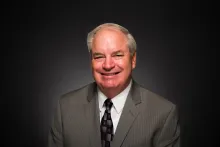
Robin Webber was born in Chicago, Illinois, in 1951, but has lived most of his life in California. He has been a part of the Church of God community since 1963. He attended Ambassador College in Pasadena from 1969-1973. He majored in theology and history.
Mr. Webber's interest remains in the study of history, socio-economics and literature. Over the years, he has offered his services to museums as a docent to share his enthusiasm and passions regarding these areas of expertise.
When time permits, he loves to go mountain biking on nearby ranch land and meet his wife as she hikes toward him.
