

Jorge de Campos
This transcript was generated by AI and may contain errors. It is provided to assist those who may not be able to listen to the message.
Well, good afternoon, brethren. Is anybody out there? Good afternoon, brethren!
Oh, that's a little bit better. Just checking if there was somebody out there. Now, of course there are. Well, it's a pleasure to be with you today, and I appreciate the first message we had about it. Indeed, it's a matter of the heart, and indeed we are here to be trained to fulfill an important job. And we are so grateful that at this time God does give us an opportunity to serve Him in His work. And so today I want to talk a little bit about God's work, and particularly God's work in the Portuguese language around the world. As we heard in some of the announcements, we do live in difficult times, in turmoil times. As I came down the aisle, I drove past, and we drove past some of the areas around this very hole where we meet, and we saw the devastation that has happened, if I remember correctly, on the last day of the feast. It just shows how God is in one way protecting us, because we were protected, but how God is removing the hands of the society. We are in turmoil. As we heard in the announcements, just to talk about South America, there are some serious situations in South America where they are brethren there, and really we are moving into an age where there is more discontent and more and more concern. So we are in difficult times.
But you and I need to be joyfully grateful, very grateful indeed, for us to be able to serve God, because He has given us a destiny, as we heard in the first message, to be His children, to be trained as His children. He has given us a calling, a calling for an important job in the wonderful world tomorrow, and therefore we've been trained today for that, and all because of Abraham's obedience and the blessings we are inheriting in this country, particularly in this country and in the nations of English-speaking descent. God has blessed us in many ways, and so we need to be joyfully grateful for what God has given us.
We read in scriptures, like in Matthew 24, 14, that we have to do a work, and it says, this gospel of the kingdom will be preached unto the whole world. And quite often when I go into areas like Brazil and others, it says, yeah, we've got to preach the gospel to save more souls.
I say, well, I think you need to read Matthew 24, 14 again, because we are preaching the gospel as a witness. Yes, indeed, we have to go out, therefore, and make disciples of those that God calls, so that we can take care of God's people and help to prepare a people. As our logo says, preach the gospel and prepare a people. We do have to do that, but the big job of saving the world, that is in Christ's portfolio, not mine and not yours. And when Christ comes back, we will help Him, as we heard in the first message, as the bride, ready, help Him in fulfilling that role of saving the world. And so we have a big responsibility. And we have a great hope at that time. So if you turn with me to Isaiah chapter 2, verse 2 and 3, Isaiah chapter 2, verse 2 and 3, and it says, and it shall come to pass in the latter days. Those are the days that you and I look forward, that we heard at the feast, that it says that the mountain of the Lord's house, in today's terminology, it means the kingdom of God. Mountain is a kingdom. The Lord's house is of God. That the kingdom of God shall be established on the top of all the other mountains. That means above all other nations and shall be exalted above all the hills, even the small nations. And all nations will flow to where the kingdom of God is headed to learn. That it says, and many people come and say, come, let us go up to where the kingdom of God is being ruled and governed, governing the mankind at that time in the millennium to the house of the God of Jacob, because he, God, the Son of God that will be ruling on earth, he will teach us his ways, and we shall walk in his paths. For out of Zion shall go forth the Lord and the word of the Eternal from Jerusalem. Brethren, we have a wonderful hope for the future. We have wonderful good news for the future, and it is incumbent upon us to be joyfully grateful for this calling that God has given us. Therefore, we need to give God thanks to be able to serve him today around the world as a training ground for the world tomorrow. It's not my work. It's not anybody's work. It's God's work, which is going out in various languages around the world.
The mission of the United Church of God is one to preach the gospel of Jesus Christ, which is the King of Kings and the Lord of Lords that will come, and he will rule in all the world, establishing the kingdom of God. Our responsibility is to make the subs of those that God calls and care for them. So how are we all doing that? Because we all have a job to do. We all, if you are at home as a mother raising children, you are raising and training and educating the future sons of God in the kingdom of God. What bigger responsibility can there be than that?
So don't ever underestimate your role that God has given us all.
And so to achieve that, we have to be together as a team. Each one plays a role. So turn with me to Daniel 12 verse 7, because you and I don't know when is the time of the end. We just have to be faithful all the way till the end. But there is a time, yeah, that he says, and I heard a man clothed in linen in Daniel 12, 7, and who was above the waters of the river when he held his right hand and his left hand to heaven and swore by him who lives forever and that it shall be for the time, times, and oftentimes, three and a half years, and when the power of the holy people has been completely shattered, these things shall be finished. So when the power of God's people has been completely shattered, that is the end. Now, you and I must make sure that it is not because of anything that you and I do that will shatter or weaken or divide the power of God's work. What a thing to stand in front of Christ, because it says in Luke 21, watch and pray, watch yourself, in other words, and pray, that you may be accounted worthy because you're watching yourself, that you're going to be counted worthy. It's not what I'm going to do or you're going to do, but that you may be counted worthy by God to escape and to stand. That means to be resurrected and stand before Christ when he comes back. And when you and I stand before Christ, will we be able to say, I've done everything so that God's work was never shattered or divided or split? Do you have a clean conscience?
And that's why it says, well, to the shepherds of my people that scatter my sheep.
Wow! So brethren, we have a God-given responsibility to do whatever you and I can to keep the steam together. Sure, the Church of God is a spiritual organism, but for you and I to do a work, we have to be together and organized together as a team to do a work. And I'll show you, it has to be a team. Because, for instance, in the Portuguese language, we go around in Portuguese language to many countries. And you may think, oh well, Portuguese language, so what? Well, let's look at some statistics. This is data generated this year, and this is native speakers. Now, yeah, you can look at how many people talk language, but I'm talking about native, in which that's the first native language.
And if you want to preach the gospel to the whole world, you have to reach those people. Now, these are not my numbers. It's their numbers from this website. You can write it down and go and verify it for yourself. And Portuguese stands amongst the fourth native-speaking greatest language in the world, in which Mandarin is the first one, Spanish is the second, close behind English, and then Portuguese.
So, for a gospel to be preached around the world, it has to go in some of the main languages, particularly in the Western world.
So, where does the Portuguese word go? It goes into places like Angola and Brazil.
And if you saw, the native speakers is 250 million. Now, these are the total speakers, so some of them might not be native speakers because they have other languages that they speak as well in those countries. For instance, in Angola, there are various native languages that they speak. But if you look at the populations, in those two countries alone, you have 240 million. And obviously, there's Portugal. Portugal itself has only got about 10 million people. And in other countries, like Mozambique, which has got another 20 million to nearly 30 million, and other countries that speak Portuguese. And they are fairly big. Brazil is about the same size as the US, except Alaska and Hawaii, but just the mainland US, USA. And that's Brazil. And Angola is about two and a half times the size of Texas. So, they are big geographical areas. And there are a lot of people there. And also, not the only countries, but those are the ones that the bulk of the work of God in the Portuguese language is being reached. And as you'll see, I'll show you some statistics about those.
So, one of our roles to work together as a team is to care for God's people. So, as we look in 2005, what did we have as far as the work of God in the Portuguese language? We had 15 brethren in Portugal, 65 in Brazil, some regular sermons I was doing with tapes, and we had one booklet printed, one booklet, the fundamental beliefs booklet. Then, as time moves along, as I gave an update two years later to the GCE, we then had sermons. We had recorded over 40 sermons sent. I'm doing now about in the region about 50 sermons a year, but in Portuguese and they're all on a website.
But we had about 40. Distribution list of the equivalent of Beyond Today, which is the born of it. And you can see these are the later issues of the born of and now. You recognize this was like two issues ago, and then you recognize this one was the previous issue. And yes, this one, which is the latest issue, which is already being printed and shipped in Brazil to brethren in Brazil. This is a 28-page magazine in English is 32, so there's very little that we left out of the English version. So it's basically got everything in there. And so we're keeping it up to date.
But at that time, distribution list was only 200. And we had two booklets, the fundamental beliefs, and the clean and unclean meats. We started getting at that time a website, and the magazine itself was only as a web edition, not a printed edition. 2010, a few years later, we had eight booklets. And after the end of 2010, beginning 2011 split that you are aware of, it basically caused in Brazil to go down from 65 brethren to just a handful. And just a couple of families, and that is it. And we had to start building again from scratch. Brethren, again, back to the point. Number one, this is a teamwork. It's not one person's work, it's a team, and I'll show you how come it's a team. And we need to be a teamwork, and you all have a part in it, and I thank you for it. We need to be gratefully thankful for it. And secondly, not only is a teamwork, is that when the day comes that we have to stand before Christ, are we going to be able to look at Christ in the face with a clean heart and conscience, say, I had no nothing that I've done to cause a split or a division in God's work.
Because there's only one person that is happy with that, and that's Satan. Because the moment you divide God's work, you hinder an impactive efficiency of God's work, and you can see it. Yeah, that's what happened. That's the end result of that. And so, 2013, as we move on, 25 booklets, we had three lessons of the correspondence course, and the website became mobile-ready. And our statistics show that 80% of the Portuguese website users are mobile users. It was not desktop, not laptops, they're actually mobile cell phone devices.
And so, we can see that as we move on to 2015, we got 32 booklets, a mobile-friendly website with searchable content. It was now, it's got a lot of meat in it, so it can be searched. And it's a team effort, because, number one, we got booklets that are sound, doctrinally and biblically speaking. It required a team of people to put together and to thoroughly review and search that the material is correct. Then, UCG was stable, a little bit of stability, and this allowed for that growth.
Brethren, they are committed and supporting the work. There are various skills that we needed, skills of translation, skills in putting things on the web, skills of design, and various sort of skills we needed to put all this together. And a lot of dedication of different people's personal time.
And then, this costs money, brethren. If the church is not doing well, how can the church provide a subsidy to other countries? Because 99.999% of the finances and of the work in other countries, except maybe one or two, that the percentage will not be as high as that, such as Canada and Australia and maybe one other, but most of others, and particularly in Portuguese, are completely subsidized by UCG USA, an international association, by you. And if the work is not stable, how can the work be done around the world? And that is part of one of the parts that you have and faithfully you serve. But also, we as ministers, we need encouragement. And I get a lot of encouragement from brethren, from you, from the local congregation, from people, and we're all backing one and up through encouragement and through prayers. And that's how this work is being done. That's how it's done. You all play a role. So, thank you for the help, because you are helping to preach the gospel. Not everybody's a mouth in the body. There's a liver, there's a stomach, there's a finger, there's a toe, there's a nail. But you all provide a function for the well-being of the body, because if your knee is sore, you can hardly walk. You can hardly, sometimes, it's so painful you can't speak. So, the body, the whole body, the team, you make part of the team. So, thank you and thank God for blessing this country so that we can do this work around the world. So, there is the website. This is a picture, a recent picture. You can see there we have access to the church at the top. Let's see if, I guess it's this red one. Yeah, there it is, the church. And then there's the the bonover, which is the Beyond Today, which is this Beyond Today Bonover means good news. Then you can actually look at the Beyond Today, the Bible Study Guides, the Bible Course, blogs, and Beyond Today TV. We don't translate to Beyond Today TV, but we do a close caption in Portuguese. Not all of them, but a few. So, if you go into this site, which is purely Portuguese without the E at the end, ucg.org. If you go in there and you'll see a number of programs, and you can go in your Roku or whatever it is, and you can get the enter close caption in Portuguese and you'll get it up. So anywhere around the world, you can see it. So, because this website started having greater content, it became easily reachable by others that were searching for people of like mind. And it is more reached. I'll show you some statistics a little later.
The Brethren in Angola found us in 2015 after the feast because of the website in Portuguese.
So, they wrote to us, October 30th, this was after the feast, I received an email from a member in a city of Uambo saying, and I'll just text a few words out of it, surprise and joy. Same beliefs, hope, and way. The church in Angola is in the revival phase after many conflicts, apostasy, and precious. What is new? We all have the same adversary wherever we are, and they also went through difficulties.
They wanted to know more about us. And so, I immediately spoke to, I mean, that letter was then signed by the, in November 7, I got a letter signed or an email signed by the president of their council, of the church in Angola's council, and also by one of the council members, which is, they also, both pastors, of course, ministers, pastor, and also a radio personality, because they do a radio program every Sunday in Portuguese in the local station. And so, the letter read, greetings in the name of the eternal, the worldwide church of God in Angola. And you may wonder why they called worldwide church of God in Angola. And I'll give you a little bit of background in a moment. As learned through one of our members, Missa Cantubella, resident in Wambo City. Wambo City is one of the city which completely devastated during the Civil War. If you go there today, you see buildings still as if it was after the Second World War. It was just destroyed. Anyway, after all, they are still celebrating America and around the world who continue to preserve in faith and doctrine, the doctrine of our Lord Jesus Christ. They thought they were the only ones because worldwide went there and told them, you can't have the name. You can't use this name. And so, they took them to court in Angola, and they won. So, they kept the name. Two, they said, you can't go each other. We've got the keys. So, they told those people from a while that came to this, the one that's got the keys is Christ. No man can open. No man can shut. He's got the keys. You go! And they left, and they stayed faithful to the commandments of God to what we've kept. And that's why they still called Worldwide Church of God. They came to me and said, must we change the name? I said, no. And you may wonder, why did I say that? Because for a number of reasons, they are doing well. They point they point into Christ, and the important thing is that they point into Christ.
Their chief pastor is Christ. Not me. I don't want to be in the middle.
They consider me as their coach, which is fine. Their senior pastor, their coach, their counselor. Perfect. That's fine. But I am not between Christ and them.
Furthermore, they started a registration process many years ago. If they were to change the name of their registration process many years ago, if they were to change the name now, they'll be treated as a new church. In fact, you may know from the prayer requests that the changing government there caused them to have certain challenges. And because of that, they have been remaining faithful. They didn't want to align themselves with other groups, because a number of other groups, like Methodist or this or that or the other, they aligned themselves together to have a higher number. But they said, we're not aligning ourselves with those groups because we're Sabbatarians. We keep the Sabbath. We keep God's early days, and we do not believe in the Trinity. So we can't join those groups. Well done for them. And God has blessed them because of recently, verbally, they got notification they can be grandfathered in.
That's English terminology, not Portuguese, but can be grandfathered in because they are a long-standing church that have already been registered, not registered, but it has a beginning with the government and they were aware of them. So changing the name now would have or would have been the wrong thing, would have worked against them. So now they're going to redo this whole process of becoming registered, but they are working together with us. And that's, they see us and them as brothers in Christ. And that's what we are. The Church of God is a spiritual organism. We are organized as an organization with the name United Church of God to do a work. They organized there as World Wide Church of God in Angola to do a work. And we're working together, we're partnering together. We send them the material for the printing the born office there, the good news, the beyond today, and then now printing them as I'll show you there in a moment. So the message was then. The World Wide Church of God was established in 1995, right at that time, which after the apostasy stood firm, refusing apostasy and still preserving the two doctrine of God, in this context we would like to maintain contact with the brethren of the United Church of God in the States to work together for the advancement of the great work as we follow the same beliefs. So that's what they wrote to us. And the next day, Mr. Dean, which is responsible for international areas, Mr. Kubik, which is a president, and Mr. Robin Weber, which was the council chairman at that time, they were informed and they suggested to welcome them and maintain informal relationship. So this was all agreed. And so later on, they contacted us the next day after an oddified emesis, we believe that God brought us together, and we thought for many years there was no other remnant of the Church of God and His doctrine, as taught by Mr. Armstrong. But this meeting proves to us that there are members that have not been contaminated with the world's doctrine. According to the fundamental beliefs of UCG, we believe there's nothing that endures us in walking together in expansion of the Gospel of the Kingdom of God because they believe in the same fundamental beliefs. That is encouraging, brethren, and it's nothing that you or I have done. It's what God through Christ has done. That's what it is. And you and I are just only too grateful, joyfully grateful to have a part in this work.
So, and then you continue. In Angola, the work has grown thanks to God. We have not swayed by the apostasy. We remain firm in the doctrine of beliefs of our Lord. This year, the Feast of Tabernacles and the Last Great Day in Luanda, we are 2,500 brethren. And currently, the Church in Angola is established in more than 10 provinces of the country. And we believe that the people of God in Angola need your assistance. As far as spiritual food, they have never asked us for one cent. And this coming from Africa is amazing. They want our help as far as spiritual food. Yes, we have helped them financially, but not because they've asked, because we of our heart wanted to give them, as we heard in the previous message, it's a matter of the heart. And we want to help them to continue growing. So we would like to know how literature could be sent to us by mail or post, because we understand there is no doctrinal difference to the one that was taught by the First Minister that came here from the States. And so that's how it started. And then in December, they had their own council meeting. And then they said the Council of Posters of Elders in Angola requests the UCG to consider the brethren of, they call it EDM, IDM, that's the abbreviation for the worldwide Church of God, as members of the same spiritual body in Christ and fellow citizens of the saints and members of the household of God. Brethren, that is God's work. And so the Council of Elders met in March 2016 and basically said, we value and we're working together. And then the letter said, accept George to go there and visit you to be your contact and things like that. So they were very encouraged with this note that the Council of Elders said. And now I want to show you a few pictures of visits to Angola for you to see the brethren, see a little bit of what is there. This is a visit that Mr. Mrs. Kubik and my wife Kathy and I went there. This is in the city of Luanda. This was on a Friday as we arrived there. They're giving us a reception. They're welcoming reception. There it is outside of their church hall. So they got a church hall. They built it themselves. We did help them. We did help them with a little bit of money just to paint it, to give it a finishing touch. But otherwise it was all previously built by them. That's their leadership. They're like the equivalent of their Council of Elders. So there's their leadership. There's some of the pictures of the leaders with their wives a little closer. This is the city of Uwambo. I mentioned to you that it was a member in the city of Uwambo that saw us on the web. So we went to visit as well the city of Uwambo. This is the hall in the city of Uwambo. As you can see, very nice, very clean.
This is inside the hall, all done with their own money, with their own efforts. They didn't ask for a cent from us. We got there and this was there already. This was July that year we went to visit them. That's also in Uwambo, visiting them. You can see they all dress very nicely. They're very respectful to God, very clean dressed, and really it's very encouraging to be with them. Really is. Yeah, some of them are off the church. We are talking and going out, and you can see some of the ladies. They are very nicely dressed, more of what's it called traditional type dresses, but very respectful, really lovely, lovely people. I tell you, brethren, you would feel more than at home with these people. They are really committed to God and close to God. They are an example to us. Their services are just like ours. Free hymns, a sermonette, announcements, sermon, and a total for about two hours with special music, and all that. It's just like us. It really is. This is some of one of the choirs, a youth choir, one of the youth choir. He has another youth choir as well. He has a few of the brethren and young children as well. He has another choir. So you can see that when they have a choir, they like to dress them up with different colors.
Maybe it's one congregation, because they have different congregations in Luanda alone. That's one of the big cities there. They've got about 20 odd congregations there in that city. Different congregations with different areas. So they're well spread out. They're about somewhere nearly 6,000 brethren in Angola. This is when I was there. I was being interviewed by the radio. I was also interviewed by the TV, having somebody coming from the States. It made headline news there. And therefore, the radio station came in to interview us and the TV station as well. And this is the TV station interviewing the equivalent of, let's call it, Ministerial Member Services Director. Equivalent of what Mr Welch is now. That is Rufino there, being interviewed. That's a kind of a wide view. When we were there, we could not fit, because they had combined services for different congregations from the city. And they could not fit all inside the hall. So outside the hall, we'll just meet there with all the brethren.
This, I'd like to play a little bit of music. Yeah. So we're singing, we thank Abraham for buying parts of the hall. And therefore, we keep the feast starting from Passover, ending on the eighth day. So you can see, they could shake the sacrifice of the hall. Abraham is a man of many peace commandments.
And keeping the leaders. Can we move to about two-thirds into the song?
It does say, h***ss y We can move on to the next slide. Thank you. So it's easy. You can get different things. Now, this is another song. This song is actually...they made the songs. Actually, two songs that they merged together. And the first one is saying, we thought we were alone. But then we found out, like Elijah thought he was alone. And then we found out we cried to God, and God said, Elijah, you're not alone, because there's 7,000 more brethren that have not bent their knees to Baal. And then they found out that UCG existed with about 7,000 brethren in the United States and Europe. Can we play them, please? That's Elijah praying to God. That really has been too much.
7,000. 7,000.
Elijah, keep doing. Keep proper song.
That is the word Elijah took out in the melon. We thought we were alone. We thought he kept the bread in another continent.
We thought we were alone. He said, he kept the bread in another continent.
We thought we were alone. The doctors each taught us. We thought we were alone.
We thought we were alone. We thought we were alone. We thought we were alone.
That's really good. He's nice. How beautiful it is.
Amen.
We'll be moving fast.
It's a large group. Can we move on? There are a few pictures of people. There are the children. They are happy and pleasant. Mr. Kubik was very happy. I always like to put a low expectation, a low bar, and when he saw this, it far exceeded his expectations. These people are just so committed to God and His way is so encouraging. He has a family, an extended family. This man on my right there, as you look for it on my left, but as I stand on my right, is Pauline Jean-Foy.
He is the one that started in his congregation area long before he even was united to actually keep the Sabbath. From there, it grew from one of the pioneers. This is inside the hall of some of the brethren there, some of the families.
This man on your left there is the man that does the radio broadcast every Sunday. He needs our prayers. He has diabetes. He is suffering quite badly with his feet. He can hardly walk, but he is still doing radio programs every Sunday on the air live in the local radio station. You can see the brethren there enjoying seeing some pictures. He is some of the brethren. The one on the left here has a very handmade wheelchair that he peddles with his hands and he goes around. You can see they are very creative in their own way. This is when they received the good news and they are now printing there locally.
They also have a community. This is two of the teachers. They serve the local community. They have schools, 90% of the students are from the local community. You wonder how come you get so many students? This is from grade K to grade 8. At the end of grade 8, they have an equivalent of SAT test or ACT test. They can continue in government schools. They follow the government curriculum. They are recognized by the teachers, the Department of Education.
They are recognized as a school. The reason they do this is because there are not enough government schools for all children to go to school. There are many, many children in a society that never have the blessing of going to school. You would not consider that as a viable option in this country. The Church shows how God has blessed this country. We need to be joyfully grateful for what God has given this country. A lot of their children cannot go to school because there are not enough schools.
The Church is doing a community service by providing these schools. 90% of the students are from the community. 10% are obviously church children. Some of the children are very well behaved. Some of the teachers are there. And some of the schools. You can see that they've got three schools in Luanda. They also have in Uwambo school. One of the things I saw was that in one of the schools, the restrooms, the toilets, were not up to scratch. So I initiated a project through Good Works and we sent them money.
And therefore, I allowed them to build a better toilet, a better restroom for the children. And YAI is the result of the toilets they built, with money from Good Works that we sent to them. They are busy with a couple of future projects. One is to finish the whole office. We did send them some money, as I mentioned to you, through Good Works. They released some of that money to build those restrooms. But as they were releasing the rest of the money to finish the whole, then, as you probably heard through the requests, the banks froze their bank accounts.
So they were not able to finish the whole and the office. But now that money has just been released and now they will be able to complete that. A second project that is on the go, and the picture is on the left there, which is they are taking one of the schools, which has seven classrooms, and they're going to build another seven classrooms on top of that, which involves building the foundations, etc. They have not asked us for help, but we want to help.
And so we're going to start some projects through LifeNets to provide a little bit of assistance to this. So if any of you want to help, there is opportunity out of LifeNets. I'm also starting another project through Good Works to see if we can help a little bit with that. The goal for them, the requirement to build those seven extra classrooms is $30,000.
That is the total amount. That includes re-strengthening the foundations, putting a plate for the second floor, and building classrooms on top, painting everything and finishing, which literally in our sort of costings is very little. But that's a project that we want to raise some funds to help them with that. And last but not least, another project is that the government gifted them a property. You may wonder how come the government gives them a property if the government is saying they're kind of in limbo. Well, this was before the new president came in.
The new president brought these new rules, but now they've been grandfathered in and they've been relieved of that. We're waiting for it in black and white, but at least it's been helped out. But that property is in a very nice area and he has a picture of the piece of land. They already fenced it out and they got five years, or which two years have gone by, they got three years to build a school there and that's kind of another project that maybe we can consider in the future.
But nothing has been done for that at this stage from costing or planning anything. But what we're working on is having the other school with seven more classrooms. So the highlights of the work in Portuguese, as of today, in November, is as follows. We've got all booklets in Portuguese. We're currently translating the Grace booklet. So we hope to have that maybe in another two or three months, have it in Portuguese.
Currently, we're printing 7,000 born office, that's beyond today's, in Brazil every two months. 7,000. We're printing another 3,000 in Angola. And we're printing another 450 in the USA to go to other countries. So the ones in Angola go to Angola, the ones in Brazil go to Brazil. And the ones in Brazil, by the way, have already been shipped. We send the labels from Yá and the brethren there, go to the post office, and they've already been shipped to the different households. That's the November-December issue.
We currently receive over 1,000 new requests per month. Over 1,000 new requests per month. But what do we do? We only send them one. We don't send them, like, a whole year. We just send them one with a letter. And then they're going to go with that letter and reconfirm that they want to get it. So that keeps the subscription down. So the subscription goes up by about 150 every two months. But our subscription currently is sitting at about 3,700, 3,800 in Brazil. The most popular booklet in Portuguese is the Ten Commandments. We've printed about 50,000 of those booklets already. It's the most popular booklet by miles. It's a good booklet to go out for people to have the Ten Commandments. We have all correspondence courses in Portuguese. And this is just some of the website statistics. The website statistics, currently we're averaging 3,000 new users. This is fairly recent, as you can see, November 28th. So this is this last week. And new users, we have, as you can see, 21,000 new users, which means about 3,000 a day on average. And this has been steady. There's been some weeks that went up to over 4,000 a week, but it's kind of leveling on about 3,000 a week. And to get an idea, where does it go in Portuguese? It's a lot of countries. It's a lot of countries around the world. It's just not to Brazil. Okay, Brazil goes more, but it goes to a lot of countries from Australia, New Zealand, Asia Pacific, Russia, China, Europe, Southern Africa, goes everywhere, just in Portuguese. This is not the English statistics. This is just the Portuguese. This is not the Spanish statistics. It's just the Portuguese brethren. So the work is being done. We've got a Facebook page. We've got a Bonover Facebook page as well. We've got weekly sermons that go out to the brethren. I do baptism counseling over WhatsApp, which is like Skype. I'm doing, at the moment, five baptism counseling. We've baptized three people already this year in Brazil. I'm doing currently five baptism counseling. I do about in the region somewhere between 15 and 21-hour sessions, which person before I baptize them, making sure they understand the basic doctrines. I do annual missionary trips to visit them. We're working on having a second feast site in Brazil this year, God willing. I'm going to go there, God willing, towards the latter part of January. We're going to look for a feast site in the state of Rio, near the city of Rio, but not in the city of Rio. I want to get it away. It's like maybe two hours away. I've got a few ideas where to look, but I want to go there and see where God opens the doors. So late January, so maybe I'll have some announcement in February, God willing, about that. We're looking for a second feast site in the southern area. And I'll get many questions online. Brethren, this requires a team to work. It's not just a one-man. And please do pray that I get extra help at a ministerial level, somebody that can help me at that level, because I do need help. I do need help, so I appreciate you praying for that. We need to be grateful. If we look at Scriptures like Psalm 103, we see David thank God for the blessings that we have. We have many blessings. We need to look at Philippians, where it says, whatever you do, we saw Philippians 2 a little earlier today. But in Philippians 4, it says, everything you do, don't be anxious for anything. But with thanksgiving, make your requests to God. And we need to be very grateful for what God has given us, and particularly the opportunity He has given us to serve in the United Church of God. And last but not least, I want to thank you for your support. Brethren, may God bless you and keep being loyal to God, because we need to be together as a team to do the work. Thank you.
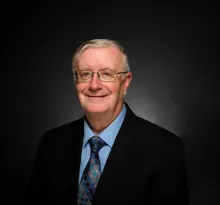
Jorge and his wife Kathy serve the Dallas (TX) and Lawton (OK) congregations. Jorge was born in Portuguese East Africa, now Mozambique, and also lived and served the Church in South Africa. He is also responsible for God’s Work in the Portuguese language, and has been visiting Portugal, Brazil and Angola at least once a year. Kathy was born in Pennsylvania and also served for a number of years in South Africa. They are the proud parents of five children, with 12 grandchildren and live in Allen, north of Dallas (TX).
