

Jorge de Campos
This transcript was generated by AI and may contain errors. It is provided to assist those who may not be able to listen to the message.
Good afternoon, brethren. Good afternoon. Good to see you all. It's a pleasure to be here with you and, obviously, with family during this lovely weekend and week of thanksgiving. Brethren, I was given the very humbling opportunity to serve at the Council, and it really is a humbling opportunity to serve God's people, to serve God, and to serve the Church. And it is a very responsible mantle to carry because I'm nobody.
You know, we all are nobody, but God has chosen to use us and has a plan for all of us. And there is one thing that, as I started serving and I saw other men speak, and particularly when we have executive sessions which are very, very profound from the point of the way that you're dealing with people issues and people that have concerns and difficulties, the thing that really impressed me, brethren, is that all the men there, even though they have different opinions, because we all have different opinions and in a multitude of Council, there is wisdom, they all are committed to put God first and put His Church first, the well-being of the Church, and the well-being of the brethren first before themselves.
And that is very humbling and to me was very encouraging. And that made me think about how important it is for all of us to put God's work first in our minds. I do have a series of slides. I don't know where that little control is. Thank you, sir. If we could then put them up, I'd appreciate.
Because I want to talk to you today, brethren, about our role in doing God's work. And so, I've entitled this sermon, My Food Is. And I took that, as you may have guessed, from John 4 verse 34. So if you kindly turn to John 4 verse 34, you will see Christ was talking to His disciples. And it starts in verse 33. He says His disciples said to one another, as anyone brought Him anything to eat, because He said, you know, I have food that you don't understand. And then He said, My food is to do the will of Him who sent me and to finish His work.
Brethren, this, in a sense, is the role of all the members of the Council. Even though, as I said, people have their different opinions about different things, but we're prepared to submit and to year to the Council of Others and wisdom for the good of the Church. But Yahweh's Christ is showing us an attitude that He has and an attitude that you and I need to have.
And that is an attitude of putting God's will first before everything else and to do God's work first. And so my question is, what is our specific role, our individual role, in doing God's work? Have you ever thought about it? I know some of us may be not talking about myself, but some of us are our wives. That's what I mean, not talking about myself. I'm not our wife. But we all may be individual members in our own lives and who may wonder, how can I do God's work?
I'm not a minister. I'm not out there preaching. How can I do God's work? And so today I want to illustrate our role, our individual role, in doing God's work by or through the means of giving an update about God's work in the Portuguese language. And so you may think, well, that's kind of a different way of putting it. Yes, it is. But I thought, let me show you what God is doing in the Portuguese language area of his work. And through that, I'll show you three important lessons or principles that you and I can put to practice in our individual lives to do God's work.
Now, a little over a year ago, we, in the Portuguese side of the work, we changed the website to our website that we had before the one we currently have, which is mobile first. We're going to be moving the Portuguese part of the work into the mobile first in the early part of next year, and so the Spanish as well. And then we'll be moving French and others. But when we moved it to this new website, we saw a big internet growth.
And that's what I'm going to be talking first about the internet growth that we've had. Then I will show you the work of the Church of God in Angola. And then I will also show you some of our visits to Angola, as well as a little bit about the work in Brazil. And so, as I was saying, the very first thing we saw was an increase in internet activity once we put this new internet website.
Now, obviously, ways of people starting to use the internet, it's not necessarily members in the Church being converted, but it is a beginning step. It's like how many people, for instance, get to Beyond Today magazine and start paging through it, albeit electronically. So we started seeing a big increase in activity after a year. So this is just a one year, and it's nearly now a year old. But I specifically did that because at the beginning of this year, in fact, towards the latter part of last year, I had a message from a member of the Church of God in Angola.
And in the message, in the email message that he gave, he said, you know, I'm this individual, and in fact he sent me a copy of his ID card and his photo. It was showing that he's a genuine person, not just a fake little somebody out on the internet.
He really opened up everything about his personal details, and he said, and that's his wife and one of his children. He's just had another little baby. But he said, I'm surprised. We're surprised and full of joy because we found you which have the same beliefs, hope, and way of life.
And we in the Church of Angola, we've been going through a revival after many conflicts and apostasy. So they've had challenges. We all know we have a Satan that attacks the Church, but they've remained faithful, and Enya is a group of people that saw us because of the internet, because they were searching for somebody else, and they found us. And then the leadership of that organization, called Worldwide Church of God in Angola, said, we believe, and they wrote to me, and I was in touch with them, and then they wrote, and it says, we believe that God has brought us... Okay, they wrote this in Portuguese. I translated it for you into English. So that's not exactly. That's my translation into English of the wording. But it says, and we thought for many years that there was no other remnant of the Church of God and His doctrine is taught by Mr Armstrong. And then a bit further down, he says, according to the fundamental beliefs of the United Church of God, we believe there is nothing that hindered us in walking together. They have the exact same beliefs as we do. And he said, in Angola, the work has grown this year, and this was 2015, feast. Feast of Tabernacles, we had 2,500 brethren meeting in Luanda, which is the capital city of Angola. And so we kept talking. And what I want to do is give you a very brief history of the Church of God in Angola. In 1982, a small church congregation came to realize they needed to keep the Sabbath by studying nothing else but this book, God's Word, the Bible. And they realized they had to keep the Sabbath, and they became a Sabbatarian group. Then, a few years later, through further study, they came to realize they had to keep God's Holy Days and observe the laws of clean and unclean foods. Then, towards the mid-early 90s, around about 1992-1993, so about 10 years later, they came in contact with a magazine, which at that time you well know, called The Plain Truth. And they decided to come from Angola to South Africa to actually start contact with what was then called the World Wide Church of God.
Then, they ran out of funds when they got into what was called in Southwest Africa, it's now called Namibia. So, in the northern area there, they ran out of funds, they could not get all the way through to South Africa.
But then, they got together with a member of the church in Southwest Africa, or Namibia now, and through his help, they sent a telegram to the office in Johannesburg. And the office then received this telegram in Portuguese, and they gave me that telegram in early 1992-1993. And then I called, found them in Portuguese, obviously, and I put them in touch with Pasadena. And after that, I did not hear much about them. I knew they existed, I knew a little bit about things were growing, but I did not have any further direct contact with them. When we got in touch, and they realized that I was the person that initially put them in contact with Pasadena, they rejoiced greatly. And it just shows how God works things out, forever. But what happened is then, in mid-1995, they got communication through an official ministerial letter, because at that time, they went through and they changed the name to the worldwide Church of God. But then they got a letter, which was a ministerial letter, which apparently went out. At that time, I was not a minister yet, I had not been ordained yet. And that letter said they did not have to keep the Sabbath, which they kind of threw it into the shredder or something like that. Maybe they didn't throw it away, but they considered it of that sort of category to reject it. And then in the early 2000, early 2000, two men from the worldwide Church of God went to visit them and told them not to keep the Sabbath. And that they could eat unclean foods. And they showed them the door, and showed them that the door swung both directions and they could go. Now, there were a few of them that left, but the bulk stayed firm.
The bulk stayed firm because they loved the truth. And this is the first point that I want to leave with you, brethren, as you and I look at our individual roles in the Church of God to do God's work. And that is a question that I want to ask us all, do we love THE truth? And I use the word THE very specifically because there's only one truth, and it's God's word. It's THE truth. I want to turn you to please turn with me to 2 Thessalonians, Chapter 3. 2 Thessalonians, Chapter 3. 2 Thessalonians, Chapter 3. Paul the Eye is writing to the Thessalonians. 2 Thessalonians, Chapter 3.
Starting in verse 1. Finally, brethren, 2 Thessalonians, Chapter 3. 2 Thessalonians, Chapter 3.
I beg pardon, Chapter 2. That's why I couldn't get it there. I was wondering what I got the wrong. It's 2 Thessalonians, Chapter 2, starting in verse 1. Now, brethren, concerning the coming of our Lord Jesus Christ and our gathering together to Him, we ask you not to be soon shaken in mind or troubled, either by spirit or by word or by letter as if from us, as though the day of Christ had come. Apparently, some people were writing to the church there, particularly Thessalonians, either through the saying, well, I had a vision or something, I had a dream or whatever it is, or they were talking or they were writing, as if it was a message from Paul, and saying that Christ had already come.
And it might not be specifically Christ had come, but it says the day of Christ had come. It was the day of the Lord. And we know the day of the Lord is that period of time just before Christ's coming. So it probably was there, speaking about that period, that end time period, because they were looking for Christ's coming to be soon. And so they thought the day of the Lord had come.
It was that we're on that lost milestone then. And they said, let no one deceive you by any means for that day. The day of the Lord will not come unless a falling away comes first and a man of sin is revealed. And so Yah is a falling away, which in a sense you and I could say. And that has already happened. Maybe it will happen even further. I do not know. But it does appear that in a way it has happened to some degree. And then it gives you a few other things.
And one of the things we've got to watch is the man of sin to be revealed. That's another important point, and I don't want to go through that section of Scripture now. But I wanted you to jump a little bit further to verse 9. And it says that the coming of that lawless one, that man of sin, is according to the working of Satan with all power, signs, and lying.
So there will be amazing miracles that this false prophet will do. And it says, with all unrighteous deception, I mean there will be great deception happening in society amongst those who perish because they did not receive the love of the truth. You know, brethren, if you and I have the love of the truth, that in a sense is like an insurance policy that you will not be deceived. There was something young that these people that got deceived did not have. And I think if you and I look back and we say, how come some people have fallen away, maybe the Scripture is applicable in that case. And I think that one of the important points of our individual role to do God's work is to really receive and hold on to the love of God's truth.
And so have we received the love of the truth? So brethren, these people received Inundala and held on to the truth. Even though they were told, oh, you don't have to do that. No, they loved the truth and they wanted to hold on to it. Many of you, I believe, understand what I'm talking about, that we're holding on to the truth because we love it. And with that, then they wrote to the United Church of God, Council of Elders, and they did that in December last year.
And they said, their Council of Elders, they call it the Council of Pastors and Elders, Inundala requests that the United Church of God to consider them, you know, it was the worldwide Church of God, Inundala, as members of the same body of Christ and fellow citizens with the saints and members of the household of God.
And they quoted Ephesians 2, 19-22. So let's turn to Ephesians 2, Ephesians, Philippians 2, 19-22. They said, now therefore, you are no longer strangers and foreigners. In other words, you're not no more aliens, as we call it in this country. You are fellow citizens with the saints and members of the household of God.
In other words, you're no more an alien. In other words, you're no more just somebody out with a green card, but you actually have the nationality of God's government, of the kingdom of God. With the saints and members of the household of God, of the family of God, of the royal family of God, having been built on the foundation of the apostles and prophets, Jesus Christ himself being the chief cornerstone in whom the whole building, being fiddly fitted together, grows into a holy temple in the Lord.
Brethren, we all form part of this spiritual family, and this is the truth. As we heard in the sermonette, we human beings are destined to be part of the family of God, as sons and daughters of God, a spiritual family. And that's God's goal and plan for us and for mankind. And I know, brethren, that events around us can frighten us.
Are we in for a civil war? I mean, just seeing the words and the way people have talked in the last few weeks, I would not be surprised in a few years' time we'll have such a drastic event as that in this country.
And that's not nice to look forward to. That's terrible.
But brethren, we've got to be careful. And therefore, the question is, what is it you and I must do as true Christians?
And that's why in God's church we have a vision. Do we understand what our vision is as members of God's church? Our vision, as it's phrased by the United Church of God, is that we are a church which is led by God's Holy Spirit.
In other words, we are a group of people that are led by God's Holy Spirit. God's Holy Spirit in us. We are joined and knit together by what every member supplies, every member.
Like this physical body of mine, every member supplies something into the body. If my thumb hurts because of a couple tunnel or whatever it is, it's going to be difficult for the body to do its work. Or if I have a terrible migraine headache because my neck is out, it will affect the effectiveness of the whole body. Or whatever it may be. Maybe your heart is giving trouble. Or maybe your knee, or you have a joint trouble, maybe on your hip. You know, and you can't work as effectively as you wish. And we are God's spiritual body. Every joint supplies, every member supplies because we're closely knit together, spiritually speaking, into this body, which is the body of Christ. With all doing their share. We're all doing our share of doing God's work. We're not all, I mean, some of us may be a finger, others may be a nail, others may be a liver or a gallbladder.
Maybe somebody else is a year. Maybe somebody else is a smiling chick. But we're not all a mouth or a tongue. But we all do the body, the work of that body. And so he says, we're all doing our share and growing in love, out of concern for one another, to fulfill God's great purpose for humanity, as we heard in the sermon, for humanity. Humanity has a purpose. What is that purpose? To bring many children to glory. In other words, for the whole of mankind, ultimately, those that in the end don't reject it, of course, to be in the kingdom of God.
And so, we get that from Ephesians chapter 4. So let's look at Ephesians chapter 4, verse 14 through 16. Ephesians chapter 4, verse 14 through 16 says that we should no longer be children, tossed to and fro and carried about with every wind of doctrine. In other words, we're not going to be moved around by apostasy, by the trickery of man in the cunning craftness of deceitful plotting, but speaking the truth in love. We love the truth, but even then, we've got to speak it in genuine, outgoing concern, because sometimes the truth hurts. And we've got to say it in a loving way that it's not hurtful. Speaking the truth in love. That we may grow up in all things unto him who is the head Christ. You and I are to grow to become like Christ. That is our goal, brethren. That is what we are to grow. And that is the good news of the kingdom of God. So do we love this truth? Do we really understand it and love it with our whole heart? Because, after all, we are ambassadors of the kingdom of God. We represent the kingdom of God to this world. Or are we being carried away by the unrighteous deceptions of this world? And they many. They many.
So, in answer to that letter I had a little earlier on, the council approved my trip to go to Brazil, Abigabara, to Angola, and to build bridges. And obviously they said, yes, we are spiritual brethren, but let's build bridges. The lesson is, let's have an engagement period before marriage.
And so I did go. And so let me show you some of the slides of my Passover trip. So I went first to Brazil, where I kept a Passover there. Then I visited a few other people in the southern part of Brazil. And then I went into Angola, which is a country in the southern part of Africa, but it's more a little bit north than South Africa.
You can see where the red arrow ends there. That's basically where Angola is. And it's due east of, let's call it, in fact, it's northeast, no, northwest, sorry, northwest of Zimbabwe and Zambia. So it's a big country. In geographical size, it's just short of twice the size of Texas. So it's a fairly big country. They got about 25 million people there. And so I went there for the last few days of Unleavened Bread. And then I came back to Brazil and completed the trip and then went back to Cincinnati just in time for the GC. So that was the trip.
Just to give you a little detail of that trip, just the part until I reached Angola. I first went down to Malacca in Brazil. Those were my five-star sleeping quarters in Brazil, in Malacca, it was called. So you can see how we kept there the Passover. They remodeled the kitchen area. Some of you that have seen maybe pictures, they've improved the kitchen area. So they were very joyful for that. We also presented some mosquito nets from LifeNets, a project from LifeNets to them.
And then I went into Angola. So as we got to Angola, one of the things we found in Angola is the brethren there have schools as community-type work. They use some of the brethren. There are teachers and they set up their own schools. And in this specific school, in that congregation, they have a thousand students. They run the schools from pre-K to eight. And they basically follow the Angolan curriculum. And therefore, once they finish grade eight, they pass an exam and then they can move on to the state schools. Let's put it this way, of the government schools. So the government accepts the credentials of the church teaching and they're very happy with it because they have a shortage of teachers.
And so they have this school. So these are some of the brethren and teachers that are waiting for me because when I arrived there, it was before the Sabbath, during the days of the 11th bread. And so that's the school they built themselves. And these are some of the young children at the school. So when I was there, they sang. They were very happy to see me. And these are not necessarily brethren, these children, but they were people that they teach them.
Now, this is the road going to church. So you can see the roads are not the same exactly as you have here in Dallas. They're a little bit less efficient. But we got there. We got there. And this is on the 7th day of the 11th bread. This is the leadership there. Now, the people are very poor. Most of them have nothing. But we met there with 700 brethren with five congregations around Luanda. And they had about four or five choirs singing there. A very happy singing group of people. Very faithful and loyal to God.
Yeah, some of the children in church, very nicely dressed. For people that have nothing, but they respect God and they make sure they come to church for the best they have. But one of the things that really impressed me was one of the choirs. So this is a choir group. They all nicely dressed as part of that choir group. And in that choir group, they started quoting 1 Kings 19, which is basically the story of Elijah.
And then when Elijah was running away from being killed, and then you know that there was this storm and the noise, etc. But then God was in none of that, but he was in the still small voice. You know that story. And then Elijah said, God, I'm alone. He said, I alone am left. You read that in 1 Kings 19, verse 14.
And then God told him, No, you're not alone. Now this was a choir singing a song that they made. And God said in the song, obviously in Portuguese, and God said, No, you're not alone, because there's 7,000 left in Israel.
And then they say, We, in the Church of God in Angola, we thought we were alone, but we found United Church of God. And you know, brethren, that brought tears to my eyes and still does, makes me quite emotional when I think of the song, which they made in honor of they meeting us. And so we had a very pleasant time being with them. We then followed that trip with another trip in July. But he has a picture of the leadership. We had the leadership training there as well during the days of 11 Bread. That was on the Sunday after 11 Bread. And then we had a trip in July. We went to a different city. It's actually the second biggest city. It's Wambo in the center of Angola. And we went into that city. That city was where the... When Angola gathered independence from Portugal, they had an internal civil war, you may or may not know. Because one group got the rulership, and the other group, which were originally called terrorists, and then afterwards they called them freedom fighters. But one group of freedom fighters became the ruling group, and the other group was not the ruling group. So the two fought amongst themselves for about a decade or so. And some of the brethren there, one of the deacons there, he does not have a leg. And because of a land mine and things like that. But that nation became very poor because of this. Although they've got oil, so the ruling government had the oil, and this other group had the diamonds, which is in the south. And this city, Uwambo, was where the leader of this group was in. His name was Jonas Savimbi. And then they showed us where his house was, which is just in ruins and little bits of it there, where there were shooting, etc. They showed us in the house. So this is where we went to. But in this area in Uwambo, this is one of the congregations in the area where we met. This is the hole they built. A very nice little hole. They built it with their own money. This is inside that hole. Very neat and clean, as you can see. Really very nicely done. And this is the brethren there, or some of the brethren, when we had a meeting. When we had services was outside, because we had, therefore, services about 400 people. So they had about six or five congregations that got together that came from outlining areas. So we actually had services outside of this hole. We had services there. So it gives you an idea of where we had. And this is some of the brethren there that we had when we met them. Again, you can see, very nicely dressed, very respectful, very loving. And really, you can see the ladies really have a very beautiful way of dressing, all very modest, very modest clothing, but very clean, very neat, and extremely respectful, because they come to church and they come to respect God, and therefore, in a very respectful way. Really, it was very humbling, brethren, very humbling to see the commitment and the dedication of these people, having all the fundamental beliefs that you and I adhere to. And so, as this is a picture that we took as we were leaving at the airport, and a number of their leaders came to say goodbye to us at the airport, the interesting thing is, this was six o'clock in the morning. This was six o'clock in the morning. And we were leaving, we got up early, etc. They came and fetched us from our hotel. In a convoy, they took us to the airport, and then they were there helping us, getting through all the security and things like that, until we said goodbye. A people that were very grateful, they were very thankful.
And you know what? When you give thanks, and when we give thanks, and particularly now as we're going through a thanksgiving period, giving thanks is a form of giving honor and glory to God. Giving thanks, an attitude of thankfulness and gratitude is an attitude of giving thanks, of course, but it's also one of honoring and giving glory to God.
Now, think about the offerings. When you read in Leviticus, there are basically five groups of offerings, but one of them is called a peace offering. And have you ever noticed the rules about the peace offering? The peace offering was basically done for two reasons. One was a thanksgiving offering, and the other was an offering for a vow. But the main reason was a thanksgiving offering. Look with me, please, in Leviticus 7, where it talks about the peace offering.
Leviticus 7, verses 11-17. And the point that I'm mentioning is that these offerings pictured either Christ or pictured what we should do spiritually, because God's only Spirit now guides us to remind us about God's law and gives us spiritual principles. And so, yeah, in Leviticus 7, verses 11, says, this is the law of the sacrifice of peace offerings, which He shall offer to the Lord. And it was the priesthood there.
And if He offers it for a thanksgiving, so there were two conditions of this peace offering. As I said, one was a thanksgiving, the other one was a vow. But if you do it for a thanksgiving, then He shall offer it with the sacrifice of thanksgiving, 11 cakes mixed with oil, 11 wafers anointed with oil, or cakes of blended flour mixed with oil, besides, verse 13, the cakes as He's offering, He shall offer. Now, look at what it says here. 11 bread with the sacrifice of thanksgiving of His peace offering.
It's interesting because throughout the offerings, most of the offerings were done with unleavened bread, except, you know, the wave sheaf, not the wave sheaf, the two breads in Pentecost, after counting 50 from the wave sheaf, the two breads were leavened, the two loves were leavened at Pentecost, but He also is leavened bread with the sacrifice of thanksgiving. And leavened bread quite often represents us because we have sinned symbolically, and that we, people with our own humanity, as we heard in the sermon, we are to offer a sacrifice of thanksgiving.
And that is the second point I wanted to highlight to you, brethren, that our role, our individual role, to do God's work is to give God honor and glory. And one way to give God honor and glory is to give thanks. Say, for instance, when your children come to you, which might be rare, but come to you, and I'm not saying it's rare in my case, but I don't want to imply anything, but when your children come to you and say to you, dad or mom, thank you, it actually is a crown of honor and glory to you.
Isn't it? And when we give God thanks, we are honoring God. We are giving thanks to God. We are honoring. And so, yeah, we're working with these people in Angola. Do you know what? They have not asked us for money. They've asked us for spiritual food. That's a lesson, because they don't want money. Now, we want to help them, and I've helped them in one way already with one specific thing, but when I helped them, they turned to me, and my wife was there.
She came out, and they were in tears, and they said, we deliberately do not want to come to you and ask for money, but I did give them from the church subsidy some money to help them in fixing up their, let's call, their home office, because they're now going through a certification or registration process with the Angolan government. And they were so grateful for that.
They literally were in tears. And all that we asked from them in answer to that letter they wrote to the Council, all we asked from them, and we gave them, let's call it, a partnership contract, let's call it that, in which we're giving them all the literature for free, all excess, all the spiritual material, all the sermons, everything. What else would we do? Of course! They can use without any copyright infringements, provided they acknowledge they got it from the United Church of God, and provided they believe in the same fundamental beliefs as we do, and provided the third condition is that they give it for free as well.
They freely receive, freely give it. And you know what? They were just so grateful to do that. And so now we want to help them with the beyond today, in which he's still called the good news. So we're going to be printing 2,000 good news in South Africa and send it to them, because the costs so far are prohibitive to print in Angola.
But because I don't have enough budget, I've blown, quote-unquote, the Portuguese budget already in media. The growth has been so high over this year that we've had to print over 10,000 booklets on the Ten Commandments, because the demand is so high. There's been weeks, not every week, but there's been weeks in which we had a demand for over 2,400, the Ten Commandments booklet in Portuguese. And that's not my work. It's God's work.
But the budget is blown for this year. You can have access to the budget. You know, we had a major budget of $100,000 to do the work in Portuguese, just printing and postage. I'm expecting to be well over $120,000. And that's not even printing for Angola. And so I had one pastor from another congregation in the United States that came to me and said, how can we help? And I said, look, this is what's happening in Angola. I want to send them more good news. I want to print good news to give it to them. They are hungry. And firstly, they don't have enough money to print the good news. And so he went to the congregation, and the congregation did some, I don't know if it was a fund raising, whatever it is, and for this coming quarter, they're funding the printing of 2,000 good news beyond today in Portuguese, Borneoza, good news, to be sent to Angola. Those brethren are only so grateful and so thankful. So brethren, one of the things that you and I in the States can be is thankful for what God has given us. These people have nothing, nothing. Now, you may think that they were off because of the way they dressed the church, but it's not because they were off. It's because they put a lot of time and effort, maybe to sell their own things, making their own dresses, but they come with their best to church. And church services there, they got church services early in the morning. Now they got hymns, and they got all our songs that we sent to them. We've got a complete hymnal now in Portuguese with every one of the songs, the same songs we have in English. And they come to church an hour earlier to practice the songs. So for one hour they're practicing the new songs that they've received. And then after that they have Bible studies, so the Sabbath is a whole day event for them. And they love it. And you know what? We had services like 400 people. There's a lot of children.
We do not hear a word from the children. You can ask my wife. It was just so moving, how well-behaved that group of people is. They're so grateful, and they want to honor and praise God. So how can we do God's work? We can do God's work by being grateful for what we have. I want to show you quickly a few other pictures of Brazil, of the work in Brazil as well, so that you have an idea of some of the things we've done. Because these people are also grateful in their own way. This is a Bible study I did with a group of people in kind of a new visit request. The man on the right here, for instance, an Olympian, he has been keeping the Holy Days for about seven years without knowing about us. He's keeping the Sabbath and the Holy Days. And now he's in contact with us, and he's only too happy to do that. This is a lady you can see her at the back there on the left with that reddish and white top dress. She came to know of us also through the Internet. I went to visit her. I did a counseling session. That session lost six hours. Just questions. For six hours, non-stop. And then I continued discussions with her over Skype, baptism and counseling. She now emigrated just before the feast to Colombia. And Mr. Scott Ofka baptized her at the feast in Colombia. So, you know, God's work is being done.
For these people, the lady on the left there and this young man was the first feast they attended. The lady at the back is a lady from Italy, also Brazilian, speaks Portuguese, came there and had the feast with us in Brazil. This is the young people there in that village in the northern part of Brazil singing during the Sabbath. This is a diesel generator we bought with good work funds for services. So that they have a lot of problems with electricity, particularly during the weekends. They get the electricity there in the northern part of Brazil from Venezuela. And it's very unreliable. So now they have that so they can actually have services and have DVDs that are sent there with Portuguese servers. This is where we had the feast. For them, this is paradise. This is where we had the feast and where we're going to have the youth camp in December, where my wife and I are going to go there in December this year. During the Holy Days and during the Sabbath, another church congregation in the United States gave us money and they asked me, how can I help? And I said, well, let's make the Holy Days special for them so they don't have to cook. And therefore we paid for the meals that congregation paid, and whatever was not covered, then the Portuguese subsidy paid for the rest. But they had meals paid by the church, and that was a great choice for them. People don't have a lot of money, but they tried their best to come to church.
They had jelly-coloring books in Portuguese at the feast day. You see, so the work is being done. Another thing, the year before, I took secondhand clothing, but it became a bit of a problem with weight, and then luggage being overweight, and then paying extra fees. And I said, no, that doesn't work, because then the secondhand clothing might not be necessarily what they need. And so I changed it this year to say another congregation came to me, actually, from somewhere in the West Coast, and said, how can we help? And I said, well, this is one of the ways you can help. And so what we did is they gave us a certain amount of money, which actually meant that each child at the feast had $30. And so I sent to the families, we wired the money before the feast, and to the families, they received $30 per child. They could buy what those families needed for those children. And that made a great, joyous occasion. So after the first holiday that evening, or the first day of the feast, that evening, then they opened, so they would have the children their little presents given by a congregation in the States. They had little clothes, instead of bringing secondhand clothes for them. It was something that they discussed with the parents, with the deaconesses and the elder's wife. They discussed with the parents, and they purchased all these things which the children needed for their families. And so there it is, laid out, and some of them receiving those gifts, and they just having a great occasion. So you can see, they were all very happy and very contented with that. Some of the children singing at the feast. And you can see the joy that those people had. It really was something very enjoyable.
I also mentioned that we've got new hymnals, all in Portuguese, every Sunday. This is an activity, they did a feast about Noah's ark, and then they went in tours into the ark and things like that. So it was very cute. They really trying to, and you can see the brethren there in one of the evening activities there with my wife.
We see some of the foods they had there, some of the activities. This is where we're going to have the youth camp in December, while at the same time as with the family weekend. The man on the right here is the man that we have ordained as an elder there. He's a lindo. The next time I'm going to go to Brazil, I hope to be able to get him to come with me traveling through Brazil, so that I don't do it by myself. We can use that as a coaching opportunity to teach him how to answer questions that people ask and things like that. So that's what we do. Other things we can see are all the brethren. They were at the feast there. We are 57 at the feast. We also have 30 years of cattle now, which were originally 10 through LifeNets. So we have that there. So you may ask the question, how can I do the work? Obviously, you may say, well, I can't do all these things, but how can you individually do the work? Well, you can see various facets of the work that you can pray for. And you may say, oh, well, is it all just pray and pay? I remember many years ago, people said, oh, well, it's just pray and pay. Brethren, it's not just pray and pay. Yes, those are important components. We need to be praying for God's work. As I go there, I need health, I need protection. And I know that your prayers are answered because God has blessed me with health and protection. There's all different types of things that you go in through those roads and situations. And I need discernment and wisdom of God's Holy Spirit of love to be with these people. But there's more that you and I can do. And what is it? What is our individual responsibility? Because I mentioned two points already to you. One, that we can do is keep that love for the truth. And two, I mentioned that we need to be grateful and give that peace offering, that spiritual peace offering of thankfulness. Because we have a lot to be thankful when you look at these people out there and they're committed to God. But there is a third element that I do want to mention to you that you can do. Very specific and extremely important.
As we see some of the things that we are planning to do, and therefore it's areas that you can pray about. And there are things there that we are thinking and investigating to do. So there are things that you can pray. But there is more that you and I can do besides praying.
Because we have a vision, brethren. Do we understand what is our vision? Our vision is what we see as the end result. It's what you and I want to be as God has given to us. And that is, and as I mentioned to you before, is that we all work together to fulfill God's great purpose for us to be His children in the kingdom of God. That's our mission. That's our vision, our big part. That's what we want to be. But to do, to be that, we have a job to do. And our mission is that we are to preach the gospel to the whole world as witnesses, of course, and to make disciples in all nations and care for those disciples. Do you realize that involves you and I? Because you and I are those disciples. You and I are those that we need to be knit together and to be trained and molded now to be the leaders in the world tomorrow. That is our responsibility. And yes, there is this component of preaching the gospel, but there is another component, which is preparing a people. And preparing a people is part of our job, too. Am I or you being prepared to be the bride of Christ when He comes? Will you and I be prepared? Will you and I be ready? And that is God's work in us. And it's a big responsibility because we can have all these other things. But if you and I are not there, how can Christ rule in the world tomorrow because He wants to marry a bride that is ready and clean and white?
And you know what? The bride is going to be ready. The question is whether you and I will be part of the bride. Oh, yeah, you can debate where the wedding will be and all these things. But if you're not there, so what? I think the important point is, are we part of the bride? Are we being prepared? Are we fully aligned, in other words, with the vision and mission of the church?
And if you and I are fully aligned with that, if we share that vision and if we share that mission, we're going to be one. And our food is one, just like Christ's, to do the will of the Father and to finish His work. And His work is not only that outside work, but His work is His work in us to change you and I to put on the new man and the new woman. That is the work of God that we have to do. And that is our individual role in the work of God, to be qualified to reign with Christ.
And you know what? The Church of God is a faculty to train future teachers, future leaders, future kings. And a great part of the work of God is to make us in the image of Christ.
And that's what Ephesians chapter 4 verse 13 says. Ephesians, if you turn with me to Ephesians chapter 4 verse 13. It says, "...till we all come to the unity of the faith and of the knowledge of the Son of God, which is Christ." To the knowledge of the Son of God, to the knowledge of Christ, it says, "...to a perfect man, to the measure of the stature of the fullness of Christ." Do you know when Peter says, "...to grow in grace and knowledge does not mean that you and I are to grow in the knowledge of IT, or in the knowledge of finances, or in the knowledge whatever." You and I are to grow in the knowledge of God's Son, our Savior, Jesus Christ.
In other words, do we know what Christ is like? And therefore, are we putting on that grace, that being in us? Are we becoming like Christ? Are we, therefore, becoming a perfect man like Christ is, like His measure, His stature is? That is our goal. That is our goal. Are we working in ourselves? Are we putting on the new man?
Brethren, here are three very specific points. They are our individual responsibilities to do the work of God. You can add others, but I chose to using the work of God in the Portuguese language as a stepping stone to ally these three key areas. Those people love the truth. Those people are grateful. We need to love the truth. We need to be grateful. Am I saying that every single one of those people we met are perfect? No. Are we saying that every single one of them will be in the kingdom? I don't know. God is judge. God knows the heart. But the question is, are we doing our part? Are you, am I, doing our part? Are we growing in the grace and knowledge of our Savior and Lord Jesus Christ? Are we putting that new man in us? Brethren, let's strive to have Christ's mind, which is the meat, the food that He said is His food, His meat. And the food that He said is to do the will of Him or send Him and to finish His work. That needs to be our food. So my question I want to leave with you today is, is that your food? What is your food? Till next time, brethren, it was nice to be with you today.
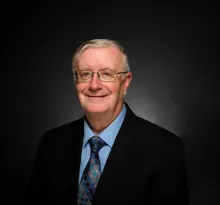
Jorge and his wife Kathy serve the Dallas (TX) and Lawton (OK) congregations. Jorge was born in Portuguese East Africa, now Mozambique, and also lived and served the Church in South Africa. He is also responsible for God’s Work in the Portuguese language, and has been visiting Portugal, Brazil and Angola at least once a year. Kathy was born in Pennsylvania and also served for a number of years in South Africa. They are the proud parents of five children, with 12 grandchildren and live in Allen, north of Dallas (TX).
