

Ken Loucks
This transcript was generated by AI and may contain errors. It is provided to assist those who may not be able to listen to the message.
Why are we here on a Monday of all things? We're here to keep God's feast of unleavened bread. In Leviticus chapter 23, we read about the festivals, all of the festivals of God. And for seven days, starting on the fifteenth day of the first month, we are to have a feast of unleavened bread. That's what we have been doing now.
And this is the seventh day of that feast. Should we be keeping this feast? Also, I might mention that we do read that this day is holy. No work is to be done. This is an annual Sabbath day. It is the second annual Sabbath day of the year. And the first one was the first day of the feast of unleavened bread last Tuesday. So this is the second of the seven annual holy days that come up during the year.
But should we be keeping this feast? Well, yes, we find that Jesus kept the Sabbath and also the annual holy days. And we also find the New Testament Church observing the Sabbath as well as the annual festivals. Perhaps the best verse in the Bible, showing the meaning of the festival, also shows the church of God observing the feast of unleavened bread.
Turn over to 1 Corinthians 5, and we'll read this just one more time. It's such a very important passage of Scripture relating to the keeping of the days of unleavened bread. 1 Corinthians 5 and 6. Paul wrote to the Corinthians, a Gentile church in Greece, Your glorying is not good. Rather than that's one of the big lessons of the feast of unleavened bread.
We know that leavened puffs up, like sin puffs up. And the feast of unleavened bread shows that we are to resist then glorying or being puffed up or boasting. Do you not know that a little leaven, leavens the whole lump, doesn't take very much.
Therefore purge out the old leaven that you may be a new lump, since you truly are unleavened. For indeed Christ our Passover was sacrificed for us. Because our sins of the past have been forgiven, we should go on to purge out sin and strive to live a different way of life, according to the laws of Almighty God. Verse 8, a powerful verse as far as the keeping of these seven days of unleavened bread. And I don't know exactly how you get away from the obligation, the command to keep these days.
Verse 8, therefore let us keep the feast. Obviously the feast of unleavened bread. Let us keep the feast, not with the old leaven, nor with the leaven of malice and wickedness. It shows the keeping of the physical and spiritual aspects of this feast. Not with the leaven of malice and wickedness, but with the unleavened bread of sincerity and truth. Yes, we should be observing these seven days of the feast of unleavened bread.
And as we do so each year, we learn some very valuable lessons. By the way, we read in early church history that the early Church of God continued to observe the Passover on the 14th day. There became a big controversy with Easter, and those who insisted upon the Passover came to be known as the Corto Decimani. Those who believed in the 14th day of the month, keeping the Passover, and Polycarp and Polycretes, after the death of the apostles and the last one, John, had to stand up for the Passover.
And also, there's reference to the Feast of Unleavened Bread. Eusebius writes in his ecclesiastical history, quoting from Polycretes, around the end of the second century, around 197 AD. He said in Rome before the Roman bishop in defending the Passover, he said all these, and he referred to Philip and John and Polycarp, all these observed the 14th day of the Passover according to the Gospel, deviating in no respect, but following the rule of faith.
Moreover, I, Polycretes, and my relatives, always observed the day when the people threw away the leaven, the Feast of Unleavened Bread. So we have support here in secular church history, that there was a continuation of God's people keeping the Passover on the 14th day, and also throwing away the leaven for the keeping of the seven days of Unleavened Bread.
Well, that's what we've been doing out of simple obedience to God. And we've learned some lessons this year. We've been obeying God, and we've added some new growth to the old growth, and we rejoice as we obey God's command to keep His Feast. We come now to the final day of the Feast of Unleavened Bread. You know, this is a special day in many ways, and it is very likely that some special events happened either on this day or right at this time of the year.
And I would like for us to go over these special events this morning. Three very special events involving spectacular miracles. And even though we cannot say for sure that these events happened on this very day, it is certainly possible. And if not, they happened at this very time of the year. Let's go over to the first one, Exodus 12 and verse 42. Exodus 12 and verse 42.
We know the Israelites were set free by the Passover in Exodus 12, but the Lord came by and destroyed the firstborn. All the firstborn died on the Passover night and around midnight. And the Israelites had killed the Lamb. They had put the blood up on their doorpost. And when the Lord came by that house with the blood, then there was not any death in that house. They were protected by the blood of that Lamb.
And so the Israelites were set free. They stayed in their houses all of that night. And the next day during the Passover day, they packed their bags quickly and they spoiled the Egyptians. And they began to leave out of Egypt on the first day of the Feast of Unleavened Bread at night. And verse 42 says it's a night of solemn observance to the Lord for bringing them out of the land of Egypt. So the Israelites began their journey on the first day of the Feast of Unleavened Bread by night, the night after the Passover.
Now let's skip on over to chapter 13 and verse 17. We're leading up to, you know, the Passover itself was a fantastic miracle. We're leading up now to another big miracle that may have happened at the end of the Feast of Unleavened Bread. Exodus 13 and verse 17. It came to pass when Pharaoh had let the people go that God did not lead them by the way of the land of the Philistines.
Brother, they had highways back at that day in time. They had major trade routes. One was the way of the Philistines that was more of a coastal route from Egypt going up toward Mesopotamia, more of the coastal route. God did not lead them that way. There was another highway, you might say, another interstate of that day in time that they took that came on toward the very northern tip of the Red Sea. It was more southerly and it was going more easterly out of Egypt. The other road went more north and northeasterly. So God led them by the verse 18 by the way, the highway of the wilderness of the Red Sea.
And it describes how the Israelites went out in order. They marched out in order. Verse 19, they took the bones of Joseph as they had been instructed to do. Verse 20, they took their journey from Sukkoth and camped in Ethem at the edge of the wilderness. They're on their way out.
Don't you imagine? Here they are during the Feast of Unleden Bread. How would you feel if you had been in slavery all of your life? You had been beaten for not working hard enough. You didn't have any free time. You did what you were told. And here, they are free. I tell you, it was a joyous time. I think the Israelites were probably singing all day long. Don't you? They were certainly laughing and smiling.
They were on their way then toward this land that was going to be a spectacular land. They had it described to them a land flowing with milk and honey. Oh boy, what a prized possession lay up ahead for them. Well, in verse 21 it says, God was guiding them. The Lord went before them by day in a pillar of cloud to lead the way. A pillar of cloud. Here was this cloud, like a pillar of cloud. You know, they had leadership.
It wasn't Moses. It was divine leadership. It was actually Jesus Christ in that cloud. He was the Lord and God of the Old Testament. And so Jesus Christ led them by a pillar of cloud by day. And notice at night, by night there was a pillar of fire. This cloud became a pillar of fire at night so that to give them light so they could go by day and night.
They did some night travel and they did some day travel. Now, where did they sleep? They did sleep some, obviously, but they could go by also some at night if they needed to. In verse 22, it was that leadership was there, that cloud and that fire, that leadership was there constantly. He did not take away the pillar of cloud by day or the pillar of fire by night from before the people. It was there. That was divine leadership. I want to have a little digression here. You know, the church of God has the leadership also of the same one, Jesus Christ.
We don't see the cloud. We don't see the fire, but in our hearts and minds we do see there's leadership, divine leadership from Jesus Christ. We have the same divine leadership that the Israelites had. And it's very important that we see that leadership or else we may go off to the right or to the left or we may just stop. It's very important that we see the leadership of this church. It's not any human being. And we should all have absolute faith in the leadership of the church of God. And it doesn't go away by day or by night. Are you convinced in your heart? Do you have any doubts? Well, you need to analyze that yourself and know that there is leadership in the church of God.
Jesus is the head. Revelation chapter 1 describes Him in the very thick of things, in the middle of the church. Brethren, Jesus Christ has been in the middle of the church for almost 2,000 years, and He's in the middle of things today. Don't ever doubt the leadership. Now, we have our problems and struggles and difficulties, but the leadership is constant. Jesus Christ is the head. He's guiding and directing day and night all the time. Well, let's go on with the story here. This great miracle that we're building up to in the Israelites coming out, chapter 14 in verse 1, the Lord said, Speak to the children of Israel that they turn. Brethren, this was not a logical turn.
They were going just fine. They were heading east. They were going to go right above the Red Sea, right on over toward the Sinai Peninsula. And God was going to lead them down to Mount Sinai, give them some laws and instructions, and then bring them right on up to the land of promise.
That was the plan. They were doing just fine. And then God told the Israelites, Turn, make a right-hand turn. They turned south. And guess what they ran into? They ran into a mountain range to the south.
They had the wide and a little bit to the west. The mountain range went sort of southeast to the northwest. And then the Red Sea was over to the east of them. They turned really an illogical turn.
Looking at it, you know, just from what they were doing, it didn't make any sense.
They turned and camped before Pihar-Hairoth between Migdall and the sea, opposite Beel-Zefon. You shall camp before it by the sea. God had something in mind. He wasn't done with Pharaoh. Pharaoh had done all these evils to Israel. And so God said, Pharaoh will say in his heart, they are bewildered by the land. The wilderness has closed them in.
And so Pharaoh's heart was hardened. And it was told then that Israel was gone. And they said, last part of verse 5, why have we done this? So they made ready, Pharaoh made ready his chariot. He took his people. Look at this. Verse 7, he took 600 choice chariots. Rather than this was one of the superpowers of that day and time. Egypt, powerful nation, a superpower. He took 600 choice chariots and all the chariots of Egypt with captains over every one of them. And the Lord hardened Pharaoh's heart and they pursued the Israelites. And they overtook them, the last part of verse 9, camping by the sea beside Pihar-Hairoth and before Beel-Zefon. Here they were. The mountains to the south, the sea to the east, and the Egyptian army to the north. They were trapped. No way out of this one it was seen. They drew near, verse 10, and the Israelites were afraid. And they said to Moses, because there weren't any graves done in Egypt, you brought us out here. You know, it was seen that after the Passover miracle and all the other miracles that the Israelites had seen, they had said, well, God is going to deliver us. Why did they lack faith? That's a lesson we learned from this as well. Why do we lack faith? God has been with us every step of the way. Why do we sometimes doubt? You know, we ourselves sometimes then lack faith. And sometimes even people grumble and complain like the Israelites did, but we should not do that. I think most of us don't do that, but maybe some do. If you do grumble or complain or lack faith, then repent of that.
Well, in verse 13, Moses said to the people, do not be afraid. Stand still and see the salvation of the Lord, which He will accomplish for you today. The Egyptians whom you see today, you shall see them again no more forever. The Lord will fight for you. And, brethren, He fights for us today as well. You shall hold your peace. And the Lord said to Moses, why do you cry to me? Tell the people of Israel to go forward. Lift up your rod, stretch it out over the sea and divide it. And the children of Israel shall go over on dry ground through the midst of the sea. I will harden Pharaoh's heart. They'll come in. You know, something else happened. There was miraculous protection that God provided. Here was the Egyptian army crowding in upon the Israelites. Remember, there were probably two or three million Israelites. That's a pretty large group of people. Here was the Egyptian army coming into the northern edge of the Israelites, very close. And guess what happened in verse 19? Divine protection happened. The angel of God, who went before the camp of Israel, moved and went behind them. And the pillar of cloud went from before them and stood behind them. So it came between the camp of the Egyptians and the camp of Israel. And thus it was a cloud and darkness to the one, and it gave light by night to the other, so that the one did not come near the other all that night. We wonder, we have wondered, could this be the night of this day when this happened? The last day of the feast of unleavened bread? Verse 21, it certainly was at this very time, or very near. Could have been this very day. We have felt that it very likely was this day, though we cannot prove it for sure. So Moses stretched out his hand, verse 21, and the east wind came all that night, and the waters were divided, and the Israelites went over across the Red Sea. What a fantastic miracle that was! Here the wind blew, it dried the bottom of the sea. We believe that where they were may have been about eight miles across. And here the water for two million people was probably held back for quite some distance, maybe even a few miles possibly, that they were able to come across with all those two or three million people, their animals and so forth. Maybe some horses and buggies, you might say, or wagons came on across, and it took some time for that to take place. We know that the Israelites all came through the Red Sea, and they were over on the eastern shore. Oh, boy, what a fantastic miracle that would make! Do you think you would ever forget an experience like that? Can you envision yourself being there? A slave people, coming out of Egypt, coming to the Red Sea, this fantastic miracle, and then coming across, looking up ahead, there's water on both sides, and you come on through maybe eight miles of sea on either side. That's what happened to the Israelites. We'll know the story that Pharaoh said, well, if they can do it, we can do it. Well, he came on through with the chariots and all the warriors, all the might of Egypt came through, and then they began to mire down. God began to send confusion in their ranks, and they began to say, well, God is fighting for the Israelites. We better get back out of here. We give up on this pursuit of Israel, but it was too late, and the waters came crashing in on them. And, you know, Egypt did not recover from the Red Sea miracle for hundreds of years. There was an eclipse in Egypt as a superpower. They were wiped out.
And the Israelites were saved. And it says in verse 29 that, The children of Israel had walked on dry land in the midst of the sea, and the waters were a wall to them on their right and on their left. And so the Lord saved Israel that day out of the hand of the Egyptians, and they saw the Egyptians dead on the seashore. They washed up on the seashore. Thus Israel saw the great work which the Lord had done in Egypt, so the people feared the Lord and believed the Lord and His servant Moses. Now, certainly after this miracle, and all they had seen in Egypt, they would never doubt again. They would never grumble and complain. They would always have faith. Now, they would have learned their lesson. Kind of sad that they had not at all. Did this event, the Red Sea miracle, happen on this very day? The last day of the Feast of Unleavened Bread.
It is possible. Turn to Numbers 33. Numbers 33. If it wasn't on this day, it was certainly very close to it.
Numbers 33. And we have here the journeying of the Israelites. Notice in verse 3. Numbers 33 and verse 3. They departed from Ramesses in the first month on the fifteenth day of the first month, on the night to be much observed. On the day after the Passover, the children of Israel went out with boldness in the sight of all the Egyptians. And the Egyptians were buried in their firstborn, and also their gods, the Lord, had executed judgment. Verse 5. Then the children of Israel moved from Ramesses and camped at Sukkoth. And they departed from Sukkoth and camped at Ethem, which is at the edge of the wilderness. They moved from Ethem and camped or turned back. They made a turn off of the main road to Piharoth, which is east of Beelziphon, and they camped near Migdal. They departed from before Hiharoth and passed through the midst of the sea into the wilderness.
The Red Sea miracle was it on this day? We certainly have felt that it is very possible, even perhaps likely, that it could have been on this very day. What a fantastic miracle was performed regardless of exactly which day it was on. What's the lesson for us? We have pointed out some lessons already. You know, God has called us out of the world. It is a miraculous release from this world, just as Israel's release was miraculous. The exodus of the Israelites out of Egypt pictures our calling and God leading us or bringing us out of the world. It shows that we take action. We have some marching to do as well, coming to repentance and baptism. Does it include the children? You know, did the Israelites leave their children behind? No. They brought their children with them. And the calling today, our children here, the calling out of this world is to you as well. The children are holy, Paul says. And so the children are included in the calling out of this world. And many of our children are thinking very and understanding that they must live a different way of life. They must go on to keep the Passover and accept the sacrifice of Christ and keep the feast of unleavened bread in their life and what it means. They must repent. They must be baptized and then they must grow and overcome and be separate from this world. Be led by God's Spirit and prepare to reign with Christ. The children have an opportunity to go on to the land, just like the Israelites of old. The children were not left behind. They would also go to inherit this wonderful land up ahead. And so today, the children also have that opportunity to repent and be baptized. You know, we'll read this just a bit later on, but in 1 Corinthians chapter 10, the Red Sea miracle is referred to as a type of baptism. That those who came through the Red Sea, and they had this water on the left and on the right. Those who came through the Red Sea were baptized unto Moses. Of course, we're baptized unto Jesus Christ and His sacrifice forgives our sins. But the Red Sea miracle, one thing for sure, the Red Sea miracle made the separation permanent. Israel was completely out of Egyptian control now, at last. The separation was complete. And baptism, our baptism, makes our separation from the world complete. Tell you, when you're baptized, you're no longer of this world. You are of the kingdom of God. You have God's Spirit. You have a greater sovereignty and nation that you are a part of. And it is God's family that you are become a part of. The family of God. You have His Spirit. And once a person is baptized, then you have made that separation. Now, you've not officially made that separation until you're baptized, just like the Israelites. They were not fully out of Egyptian territory and control until the Red Sea miracle. Then they were totally separate from it at last. Baptism separates us in the same way.
What a fantastic miracle this was! As I mentioned earlier, could the Israelites ever then doubt again? Could they not then in the future always be full of faith? Well, any obstacle, God is going to lead us and deliver us. And they would go right on to conquer the land, to take the land that was given to them that lay just up ahead. You know, we know that they came to Mount Sinai. They received the laws of God. We know the story of the 12 spies that went in. Ten of those 12 spies came back and said, the people are too big. The cities are walled too high. We can't stand... We're like grasshoppers before those people. We looked at them and walked among them. We were like a bunch of grasshoppers. Only two of the spies, Joshua and Caleb, said we are well able to go in and take the land. And God then said, because of your grumbling, and it wasn't just there and doubting God, but before that as well, every step of the way just about, then all those who are 20 years of age and older shall not enter the land. You're going to wander around this wilderness for 38-39 years until your bodies die and are buried in this desert. And that happened.
And all of those who were then above the age of 20, 20 and above, died during that time period.
Well, we come to the time when this came to an end, and the Israelites, all those who had doubted God and rebelled against God, were dead. And only the children who were below the age of 20, 38-39 years later, only they remained and their children. And now it's time for the Israelites to come into the land. Let's turn to Joshua. Moses also was not allowed to come into the land because he had also sinned in a way that God then forbade him from coming in. Let's come to Joshua, chapter 1. We come to a second fantastic miracle, possibly on this very day. Joshua, chapter 1, in verse 10, Joshua commanded the officers of the people saying, passed through the camp and commanded the people saying, Prepare provisions for yourselves, for within three days you will cross over this Jordan to go in to possess the land which the Lord your guide is giving you to possess. It's time to go in and take the land that Israel had been promised, the land that flows with milk and honey. Now, coming over to Joshua, chapter 3, we see the first of the fantastic miracles that occurred as they started to enter the land. Joshua, chapter 3, and verse 14, the Israelites started to cross the Jordan River. Now, the Jordan was not as wide as the Red Sea, but you're not going to picture it being like a quarter mile, maybe half a mile, because it was flooding at this time of the year. So it's a pretty good wide river of water, but God had given instructions in verse 14 when the people set out from their journey to cross over the Jordan with the priests bearing the Ark of the Covenant before the people, as those who bore the Ark came to the Jordan and the feet of the priest who bore the Ark dipped in the edge of the water, for the Jordan overflows all of its banks during the whole time of the harvest. This would be the early spring harvest. That the waters which came down from upstream stood still. Another fantastic miracle took place. The water upstream stood still and rose in a heap very far away. At Adam, a city that is beside Zeratan, about maybe 10 miles upstream, actually, from where the Israelites were. So the waters that went down to the sea of the Araba, the salt sea, failed. It wasn't flowing anymore. It was cut off. And the people crossed over the Jordan River opposite Jericho. And then the priest who bore the Ark of the Covenant stood firm on the dry ground in the midst of the Jordan. They didn't cross all the way over. They stayed in the riverbed until all the people that come across. And all Israel crossed over on dry ground until all the people had crossed completely over the Jordan. A fantastic miracle! What do you think may have been in the minds of the children? Remember, only the children, 20 years of age and younger, would have been among those who also crossed through the Red Sea. They would have remembered 40 years earlier that they had come through the Red Sea. And here they also crossed over the Jordan on this dry riverbed. How many here are 20 years of age? Let's say under 20 years of age. Raise your hand. Okay. You would have been among those. Of course, at this time, you would have been 40 years older. If you had crossed the Red Sea when you were 15, you would now be 55 years of age. Of course, you would have children, maybe grandchildren by this time, born in the wilderness. You know, they must have thought about that. How many here are above 20 years of age and above? Raise your hand. Okay. You know, you would not have made it.
Your body would be buried back in the desert unless you were Joshua and Caleb. The only ones that were 20 years of age and above, Joshua and Caleb. See, most of the Israelites who came through the Red Sea then were dead. Only the children, 20 years and younger, younger than 20, were here to cross the Jordan River and see this fantastic miracle. Let's read chapter 4 and verse 18.
It came to pass when the priests who bore the ark of the covenant of the Lord had come from the midst of the Jordan, and the souls of the priest's feet touched the dry ground, that the waters of the Jordan returned to their place and flowed over its banks as before. So the Israelites were now on the west side of the Jordan. They crossed over from the east, and the waters returned again. Now the people came up from the Jordan on the tenth day of the first month. What day is that? That's the day the lambs are chosen for the Passover, the tenth day of the first month. And they camped in Gilgal on the east border of Jericho. So we know then that this was at the Passover time of the year. chapter 5 and verse 2. At that time the Lord said to Joshua, Make flat knives for yourself and circumcise the sons of Israel again the second time. What do you mean the second time? Well, you know before the Israelites had kept the first Passover in Egypt, they were circumcised. They were instructed. All the Israelites were circumcised in Egypt. So here they are going to have another circumcision. Verse 5 says, All the people who came out had been circumcised. Of course, that included the children as well. But all the people who were born in the wilderness on the way as they came out of Egypt had not been circumcised. They had not been circumcised during that time that they died and wandered around in the wilderness. So verse 7, Joshua circumcised their sons. Think about this. All of those who had come through the Red Sea, all those had been circumcised already in Egypt. They didn't need to be circumcised. So those who were older than 40 up to age 60, and then only two were older than that, that would be Joshua and Caleb. Those who were 40 and older did not need to be circumcised here. Those that were younger than 40 born in the wilderness were the ones that had to be circumcised. That would be a vast majority, then, of the people had to be circumcised. And notice in verse 10, So the children of Israel camped in Gilgal and kept the Passover on the fourteenth day of the month at twilight in the plains of Jericho, and they ate of the produce of the land on the day after the Passover, unleavened to bread and parched to grain on the very same day, and the manna, verse 12, ceased on the day after they had eaten the produce of the land. So here the Israelites have come through the Jordan River, another great miracle. Here they are very near Jericho, and another great miracle is about to take place. And you notice at the time of the year, it's Passover. They just have kept the Passover, verse 1 of chapter 6. Now Jericho was securely shut up because of the children of Israel. None went out and none came in. The Lord said that Joshua said, See, I have given Jericho to your hand, its king and the mighty men of Valor. You shall march around the city, all you men of war. You shall go around the city once.
This you shall do six days, and the seven priests shall bear seven trumpets of ram's horns before the ark. But the seventh day you shall march around the city seven times, and the priests shall blow the trumpets. Now we don't know if these seven days they marched around Jericho did correspond to the seven days of unleavened bread or not. But it was at this very season that it did take place. There's no doubt about that. And it's possible that it was during the Feast of Unleavened Bread that they did marching around Jericho. That certainly is possible. But notice in verse 14, in chapter 6 and verse 14, the second day they marched around the city once and returned to the camp. So they did for six days. So they were just carrying out what God had instructed them to do. And then in verse 15, last part, on that day, the seventh day, they marched around the city seven times like they had been instructed. In verse 20, the people shouted when the priests blew the trumpets, and it happened when the people heard the sound of the trumpet, they shouted with a great shout that the wall fell down flat. And the people went in, and they took over the city of Jericho. So you know, again, this is something that happened right at the time of the Feast of Unleavened Bread and possibly all or part of it during the Feast of Unleavened Bread. Did Jericho's walls fall flat on the last day of Unleavened Bread? We just cannot know for sure. There certainly is at this very time of the year that much we do know. What's the lesson of Jericho? And that, you know, one lesson, again, is that, again, fantastic miracles were performed by God. But Jericho's fall, when these walls fell down and Israel took Jericho, this word spread to other of the Canaanites, the Philistines, and they all trembled when they heard the news. When they heard the news that Jericho had fallen, these high walls had just come tunneling down flat. You know, it was symbolic. What happened at Jericho was symbolic of what was about to happen for the whole land. It took a few years, but Joshua and the Israelites went on to conquer and to possess the land that God had promised to Abraham. And Jericho's conquest was simply symbolic of the whole land of being given to the Israelites. You know, Jericho's conquest is also symbolic for us. It shows that there's no stronghold, brethren. There's nothing. There's no stronghold of this world. There's no stronghold of Satan or of our own human nature, our fleshly nature, that is going to hold us back. We instead are going to have complete victory and conquest through God's power and spirit. So we have the Red Sea miracle that took place possibly on this very day. We have the miracle at Jericho. Before that, they came across the Jordan River, a prelude to Jericho. The Jericho miracle taking place at this very time of the year, possibly this day. But there's one more miracle also at this same time of the year. Let's go to Acts 12. Acts 12, beginning in verse 1. Acts 12, verse 1.
We're going to tie these miracles together in just a few minutes, but there are lessons we've already pointed out for us, and there are more lessons that we can draw from these types that are written down for our learning, our spiritual learning. In Acts 12, verse 1, about that time, Herod the king stretched out his hand to harass some from the church. It's a persecution upon the church by Herod the governor. Then he killed James, the brother of John with the sword.
This is the first martyrdom. So James was put to death, martyred. In verse 3, because he saw that it pleased the Jews, he proceeded further to seize Peter also. So Peter, one of the chief apostles, was arrested. And when was it? Now, it was during the days of unleavened bread, this very time of the year. That's the time setting. Verse 4, when he had apprehended Peter, he put him in prison and delivered him to four squads of soldiers. Each squad had four, four times four, 16 soldiers.
You think Herod wanted to make sure Peter didn't escape? He assigned 16 soldiers to keep him in prison, intending to bring him before the people after Passover. Now here, the King James has Easter, incorrect translation, but here Passover is used for the whole eight-day period, Passover and the seven days of unleavened bread. So Herod was going to bring him out after the Feast of Unleavened Bread was over.
Well, what happened? Verse 5, Peter was kept in prison, but constant prayer was offered to God by the Church. When Herod was about to bring him out, maybe, would that be maybe the day after this day, Herod was going to bring him out after Passover season? Could have been the very next day after Unleavened Bread. When Herod was about to bring him out that night, Peter was sleeping bound with two chains between two soldiers.
I mean, Herod really had him secure. He was bound with chains between two soldiers and guards before the door were keeping the prison. The angel of the Lord stood by in a light shown in the prison, and he struck Peter on the side and raised him up, saying, Rise up, and his chains fell off his hands. The angel said, Gird yourself and tie your sandals and put on your garments and follow me.
So he went out and followed him and did not know what was done by the angel was real, but thought he was seeing a vision. This didn't even seem real to Peter. He thought it was like a vision. When they were past the first and second guard posts, they came to the iron gate that leads to the city which opened to them of his own accord, and they went out and went down one street. Immediately the angel departed from him.
What a fantastic miracle this was! It wasn't Peter's time. God had some more work for Peter to do, but decades more work ahead for the apostle Peter. Well, when Peter came to himself, he said, Now I know for sure that the Lord has sent his angel and delivered me from the hand of Herod and expectation of the Jewish people. So when he had considered this, he came to the house of Mary where they had been gathered praying.
He knocked on the door. This girl named Rhoda came. She recognized Peter's voice and didn't open the gate. She ran inside to announce that Peter was there. And you know what they said about this for faith. How about you if you had been praying in a similar situation? Somebody said, Peter set the gate.
Well, they said, You are beside yourself. They really doubted. They were praying, but they didn't believe the good news that Peter was free. You are beside yourself. Yet she kept insisting. They said, Well, it's his angel. Peter continued knocking. Meanwhile, when they had opened the door and saw him, they were astonished. But motioning to them with his hand to keep silent, he declared what God had done in delivering him. He said, Go tell James and the brethren. And Peter, you know, played it smart.
He said, I'm just going to disappear for a little while. And when Herod went searching for him and didn't find him, he examined the guards. And they didn't have any answer for what had gone on.
And so Herod commanded that these soldiers, these guards, should be put to death. I would assume all 16 then of the soldiers that were to guard Peter were put to death by Herod. And then Peter went down from Judea to Caesarea and stayed there. You know, this is a fantastic miracle. It shows that Peter then just realized he should get away from that volatile situation.
He went to a different area for a while. But you know, this shows God's great deliverance. What is the message of Acts 12? It shows God's miraculous deliverance for us. The lesson we learn is that we will face persecution. We will face opposition in this world. We will face situations where we cannot deliver ourselves. And only God can. And God will deal then and make it possible. He will deliver us. Again, with this deliverance on the last day of unleavened bread, we cannot be sure that it's awfully close to it.
Very close to this day. Now, you know, this is not quite the end of the story. Let's read the rest of the next two or three verses. Verse 20, Herod had been very angry with the people of Tyre and Sidon. They came to him with one accord.
Then they made this harmony toward Herod once again. They asked for peace because their country was supplied with food by the king's country. So on a set day, Herod arrayed in royal apparel, sat on his throne, and gave an adoration to them. And the people kept shouting the voice of a God and not of a man. Then immediately an angel of the Lord struck him because he did not give glory to God, and he was eaten by worms and died. He had persecuted God's church, and then he had not accepted the glory that was given to him by men instead of giving glory to God.
Josephus says that Herod felt a stab of pain in his heart. He also gripped his stomach with an ache that he felt everywhere at once and was intense from the start. He was overcome by more intense pain. Exhausted after five straight days by the pain in his abdomen, he departed this life in the 54th year of his life. He was only 53 years of age when he died.
We learn here, then, we look to God's deliverance. Again, this miracle took place either on this day or very close to this day, the last day of unleavened bread. Let's then put these miracles together. The Red Sea miracle, the Jericho miracle, and the miracle of Acts 12.
What are the lessons for us today? When we look back at the Red Sea miracle, this reminds us of our calling and our conversion. Our calling is a miracle from God, just like God's calling to Israel when they were in slavery. It was a miracle. And then, beginning to perform miracles to deliver the Israelites, it took a series of miracles, and finally it took the great miracle on Passover night, the killing of the firstborn, but protection to the Israelites by the blood of the Lamb.
It took the Passover miracle to actually free the Israelites from being slaves in Egypt. And it takes a miracle for us to be brought to repentance. It is the goodness of God that leads us to the Passover. It is a miracle that we're able to come to that sacrifice of Jesus Christ and have our sins forgiven. And then we begin to make the separation from this world.
We bring fruits worthy of repentance. We begin to make a separation from the ways of this world. And we come to our own Red Sea. We come to baptism, and it is through baptism that we are separated from this world. Turn to Psalm 78. Psalm 78 refers back to the Red Sea miracle, and it shows that we need to have faith and to have a heart that is right before God as we experience this miracle and go forward. The Israelites did not go forward with faith and with a right heart.
In Psalm 78 in verse 10, talking about the Israelites, they did not keep the covenant of God. They refused to walk in His law. They forgot His works and His wonders that He had shown them. Marvelous things He did in the sight of their fathers in the land of Egypt, in the field of Zoan. He divided the sea, the Red Sea miracle, and caused them to pass through. He made the water stand up like a heap.
In the daytime also He led them with the cloud. And all the night with a light of fire, He split the rocks in the wilderness and gave them drink in abundance like the depths. He also brought streams out of the rock and caused waters to run down the rivers. But they sinned even more against Him by rebelling against the Most High in the wilderness.
And they tested God in their heart. They tested God in their heart. Brethren, let us never test God. He has performed such miracles in our life to open up our hearts and minds and bring us to repentance and baptism. Let us never doubt.
Let's come back to verse 2 of this chapter, Psalm 78 and verse 2. I will open my mouth in a parable. I will utter dark sayings of old. Well, it's about things we just read and more, which we have heard and known and our fathers have told us. We will not hide them from their children, telling to the generation to come the praises of the Lord and His strength in His wonderful works that He has done. For He established a testimony in Jacob and appointed the law in Israel, which He commanded our fathers, that they should not make or that we should make them known to their children, that the generation to come may know them, the children who would be born, that they may arise and declare them to their children, for seven, that they may set their hope in God.
That is our hope. God in His protection is calling His plan, that they may set their hope in God and not forget the works of God, but keep His commandments, which this feast pictures, and may not be like their fathers, a stubborn and rebellious generation, a generation that did not set its heart aright, and whose spirit was not faithful to God. You know, verse 8 then is something to really take to heart here on this last day of unleavened bread. We not follow the evil example of the Israelites. It's there. It's a matter of history. It's written in the Bible. It's so that we will not go that same way and not be in a generation that did not set its heart aright.
The margin says, did not prepare its heart. It's always keep our heart prepared to grow, keep it teachable, keep it humble. Let's have a heart that is set aright. Let's go to 1 Corinthians chapter 10. The Red Sea Miracle then helps us. You know, it's there. It's a type. We're just physical enough that we need these types. They help us to grow.
They help us to understand things more deeply, the types that God has put in the Bible. 1 Corinthians chapter 4, the first four verses, verse 2 says that they were baptized to Moses in the cloud and in the sea. They ate the same spiritual drink and they drank of that spiritual rock. Verse 4, but look what happened. Verse 5, but with most of them God was not well pleased for their bodies were scattered in the wilderness.
Now these things became our examples to the intent that we should not lust after evil things as they also lusted and do not become idolaters as some of them. The people sat down to eat and drank. They got involved in idolatry. Do not commit sexual immorality. Verse 8, verse 9, nor tempt Christ as some of them, or murmur as some of them also murmured and were destroyed by the destroyer.
Notice in verse 11, why are these things in the Bible? These things we've referred to today. All these things happened to them as examples and they were written for our admonition on whom the ends of the ages have come. God intended us to read the things we've read today and to learn from them. There are examples that we should learn from what happened. Therefore, verse 12, let him who thinks he stands take heed lest he fall. None of us wants to think that we have it made. We don't want to think that we just stand and can never fall. The apostle Paul said, I beat my body lest I become a castaway. So must we. You know, we must have something the Israelites of old did not have. We must have faith. Of course, we do have God's Spirit guiding us and giving us that faith, which also they did not have. What about the Jericho miracle? Let's join this in with the Red Sea miracle. Jericho miracle happened 40 years later after the Israelites had come through the Red Sea. Well, after baptism and learning God's laws, we must grow and overcome. We have to overcome Satan, the God of this world. We have to overcome his world, which is all around us. We have to overcome also our own fleshly nature, our weak fleshly nature. And we need miracles from God in order to do this, to win the battle. We have strongholds that we have to pull down, but God's power and spirit is there. Got a problem, got a hot temper. God's spirit is up to the job.
Have some fleshly filthiness of the flesh or mind, some habit that has to be overcome. God's spirit is powerful. It will pull down that stronghold. Got some pride and vanity. God will pull that down as well. Any lust or greed. Turn to 2 Corinthians chapter 10. There's no stronghold that we face. The God's spirit cannot bring the walls flat just like he did Jericho.
There's a lesson we learned from Jericho. God can help us to overcome strongholds that we face. Every stronghold, every attitude, every thought God can help us to overcome. 2 Corinthians 10 and verse 4, the weapons of our warfare are not carnal, but mighty in God through pulling down strongholds. God's power then is with us to pull down any obstacle, anything that is contrary to God's will no matter what it might be.
Verse 5, casting down arguments and every high fame that exalts itself against the knowledge of God. I tell you what, all of us continually feel old sin, pride. If you're not careful, we all face that it will tend to rise up. We have to continually strive for the unleavened bread and the lowliness of heart and mind and humility that comes from God's spirit.
Casting down then every argument or high fame that exalts itself and bringing every thought into captivity. Every thought. I think we all have some homework to do on that one. Have you got every thought in captivity? No. Sometimes our thoughts, our attitudes go astray, but we are to keep working at it, bringing every thought and every attitude into captivity to the obedience of Christ. Now we have strongholds to work on.
Look at Galatians chapter 5. It's the flesh against the spirit, as Paul says here, and God's spirit is well able to help us to win this battle. In Galatians chapter 5 and verse 16, I say then, walk in the spirit and you shall not fulfill the lust of the flesh. We're fighting against the lust of the flesh, each of us, because we are fleshly. We have the carnal mind, as it's called, or the fleshly mind that is there, pulling at us.
For the flesh lusts against the spirit and the spirit against the flesh. These are contrary to one another so that you do not do the things that you wish. But if you're led by the spirit, you're not under the law. That is under the penalty of breaking the law. The works of the flesh are evidence.
It's all around us. Adultery, fornication, uncleanness, licentiousness, idolatry, sorcery, hatred, contentions, jealousies, outbursts of wrath, selfish ambitions, dissensions, heresies, envy, murders, drunkenness, reveries, and such alike. Of which I tell you beforehand, such just as I also told you in time past, that those who practice such things will not inherit the kingdom of God.
Now we all have to read these verses and with God's spirit then recognize the strong holes that we may yet have to pull down. But God is able to, you know, through the miracle at Jericho, it shows that God is there to help us pull down each and every one. What about the miracle in Acts 12? It shows that there will be problems. There will be persecution. There will be difficulties along the way. We may find ourselves, like Peter, helpless to deliver ourselves, but realize that God is on the job and He is in control. And there's no challenge or problem we will ever face that God is not going to help us to endure and deliver us from.
You know, the common denominator of the miracle at the Red Sea, the miracle at Jericho, and the miracle with Peter is, um, the common denominator is that God is on the job and He is there to deliver us, to help us every step of the way. Our calling from this world, our repentance, our baptism, our journey to God's kingdom, is really a series of miracles that is taking place, just like the Israelites.
Just one miracle after another, the whole journey that they were on, and the taking over of the land that God had promised to Abraham. Our journey is no different. Miracles accompany us every step of the way. And we must never fail to see God's hand, and that God is a miracle working God. God has given us these three physical examples and types to help us understand spiritual things. So let's spiritually benefit from them, just understanding they are there, and possibly they happen on this day, or very close to this day, the last day of the Feast of Unleavened Bread.
Well, it's time for lunch, our lunch break, so let's enjoy our lunch and our fellowship. Be sure to come back for the service at 2.30. We need to hit the road for Salisbury, and we'll see the rest of the Asheville congregation with Charlotte. We're actually running just a little bit late here, so I may need to ask my wife to do some of the driving as we head on over. But you just go ahead and have a good lunch and a good afternoon service in conclusion to the Feast.
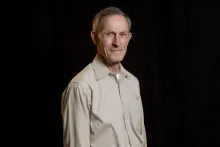
David Mills was born near Wallace, North Carolina, in 1939, where he grew up on a family farm. After high school he attended Ambassador College in Pasadena, California, and he graduated in 1962.
Since that time he has served as a minister of the Church in Washington, Florida, North Carolina, South Carolina, Oregon, West Virginia, and Virginia. He and his wife, Sandy, have been married since 1965 and they now live in Georgia.
David retired from the full-time ministry in 2015.
