

Robin S Webber
The Feast of Pentecost is always a rousing and meaningful festival that denotes the birth of the Spiritual Body of Christ with the giving of the Holy Spirit. The Spirit given from on High in which Jesus said "it would speak to us" (John 16:13). How do the ears of our heart respond to the guidance of God's Spirit not only when it says "yes" -- but "no"! -- and confuses that "no" with "not yet" as God in time reveals His perfection?
This transcript was generated by AI and may contain errors. It is provided to assist those who may not be able to listen to the message.
Well, good afternoon, everyone, and let's move right into the second message on God's holy Sabbath day. The Sabbath, which does precede the day of Pentecost, the day actually starting this evening as we know how God counts time. In a very, very special time. Just imagine 48 hours of holy time, back to back. And that's just the start of what eternity is going to be like, because there's all going to be holy in eternity with God the Father and Jesus Christ. Today I'm going to bring a message I gave last week in Redlands.
I hope it will be helpful to each and every one of us that are here. Those that are on the stream and those later on. Because it's going to be addressing one of the important considerations that we have as we follow Jesus Christ's admonition to follow me. And sometimes, not only to follow Him, but because He's about His Father's business, is to understand God's business with us.
And I'm going to set this up so that you'll understand that perhaps you've been where I'm going to be talking about. We're going to meet there because so have I, but we're going to look at some examples of the Bible. We're going to be leaning into Pentecost, even though that starts this evening. There's going to be services tomorrow, but I think you'll find that this is apropos. Pentecost has always been and is a day of two things. Great anticipation, like a countdown. 10, 9, 8, except this is 50, 49, 39, 20, etc. It's a day of great anticipation and expectations because Jesus Christ had told His disciples to wait, to wait in Jerusalem of all places.
And so they waited those 12 and those that were gathered with Him in that upper loft in Jerusalem. And things began to happen that morning in Pentecost. There was the roaring wind that came and just was moving through Jerusalem. And if we were there, we might have said, yes, this is it and ready to go. And then we saw that the fire began to appear on the top of our comrades there. A tongue of fire on each and every one of their heads. And we would say, wow, go in yes. And then there was the gift of the speaking of languages, meaning not speaking in tongues as people perceive it today, but in speaking in different linguistic groups, different languages.
Because you've got to remember that all of the diaspora, as we heard from Mr. Miller, had come into Jerusalem. There were people from Parthia, which is today Persian. You could put the other name on that right now with the world events. There were the strangers from Rome that were there and everything in between. Many of these were Greek speaking in nature, come the areas that they had come from in the Mediterranean.
And so there was a need and an immediacy to get the gospel and the good news out that something very special was coming. You might, if you had been there, you would have said, yes, I'm on board and I'm ready to go. And then we find out that there were 3,000 people, as we just heard, 3,000 people gathered together that seemingly had the Holy Spirit and come to baptism later in that time, later in that day.
It was just amazing the numbers that were there. And then if we bring it into our time, we have received the Spirit of God. We have been baptized. We have joined that family around the world called the Body of Christ.
We, repented of our sins. We accepted Jesus Christ as our Lord and Savior. And we say, when the minister, and I did baptize some of you that are here, each time he would pause.
It's almost like the I do in a wedding. He paused. Have you repented of your sins? Yes, I have. And have you accepted Jesus Christ as your personal Lord and Savior? Yes, I have. Therefore, and the rest of the story, and you say, yes, this is great. And you are, as an individual, on a happy roll, you and God like this. But now comes one of those famous little words I love to bring up that I read in the Bible and share with you.
It's spelled B-U-T. But what happens when God says no? Not even before baptism, but after baptism. We happily and readily accept the yeses that we agree to. But what happens when God says no? That's no to you, and yes, that's no to me. And he has from time to time. Please, I didn't say what happens to God, but what happens to us. Pivotal. Not what happens in God's mind and his heart towards us, but how we handle what seemingly is a no. Rather than not yet. And those are two sets of phraseology that I'd like you to kind of mix.
We often think that God's no in the moment is his final no. And it may be on certain circumstances, but also God will oftentimes hold. Like he did with Israel at the Red Sea. Stand still and see the salvation of the Lord on this day. So we got to stand still. And we've got to wait. And then he told Moses what? Get the people moving. And something opened up that was unimaginable till that time. We read about it. We're familiar with it. But an ocean opened up and there was a dry path ahead of those people. The title of my message is simply this. I think it's one of the most important messages I had the pleasure and the opportunity to give to people.
To understand not what happens before Pentecost, but what happens after Pentecost at times when we accept the invitation of Jesus Christ to follow me. And he says, this is the way. And sometimes this is the way. Walk you in it.
It means it's not time to walk, but to sit still and wait for God to inform you about the rest of the story. So the title and the thrust of my message is, and here's the title, learning how to listen, learning how to listen to and to trust God's Spirit. Learning to listen. And not only to listen, as Mr. Miller brought out, there were people that were listening on that first Pentecost in the New Testament era. But somewhere down the line, they stopped listening and they informed their own opinions.
As one of God's chosen firstfruits, we are of incredible value to God that must be sustained, even in moments of seeming reversal, to our even well intentional plans. But God, I thought, this is what you wanted. I thought this is what you needed. I thought this is where you wanted me to go. I thought, I thought, I thought, I wanted, I wanted. It seemed good. It seemed good. And after all, I'm your, I'm your servant down here below.
I'm, I'm your, I'm a member of the body of Christ and I really want to do this for you. But then God says no. So there's three, it's going to make very simple if you're taking notes. We're going to cover three things today to understand how to listen to God. Sometimes they'll say yes. Sometimes they'll say no. But that no does not always remain a permanent no. Sometimes what God is telling us, and this is where we grow as firstfruits of God, is to understand that not yet.
Not in His timing, not in His way, that He might receive the glory. And that's when we talk about firstfruits, as Mr. Miller brought in the first message. Let's understand. I'll be repeating this later on. It's just coming to my mind right now as I share some thoughts with you, simply this. Mr. Miller said that we are to be firstfruits. But the Holy Spirit, the very essence of God the Father and Jesus Christ, is planted in us. It's not fruits upon arrival. You ever planted a seed in the next...
There it is. You got the tomato or you've got the spinach. No, no, no. Let's understand so that we know where we're all going to be going in this. God plants His Holy Spirit in the soil of our heart. And then it is through the climates of life, the moisture of God's Word, the guidance of the Spirit, that fruit develops. We don't get all of the fruit once we're baptized. We have the seed of God, and it's from that seed that the fruits of God the Father and the walk that Jesus Christ had on this earth.
But it doesn't come overnight. And practice doesn't necessarily make perfect, but it does indicate that God sees that we are trying to, as much as possible, emulate Him. And so this time, as Pentecost begins, and now that we are baptized, many of us have been in this way of life for years, that this is the growing season of that spring harvest.
That they might bring spiritual fruit before God, that He might receive the glory. For a moment, let's see how this works in real time. What do you mean? What are we going to find to work? Yes, no, or not yet. We are offered such an indication of that in Acts 16. Would you join me, please? Now, as we turn to Acts 16 together as a congregation, and you're welcome to join us at home, something I want you to realize here.
And that is, I'm only sharing a part of the story. I'm going to share the end of it. You know, Paul Harvey, for those of you that are older, always said, and now for the rest of the story.
So let's go to Acts 16. Then he came to Derby and Lystra. This is speaking of Paul. And behold, a certain disciple was there named Timothy, the son of a certain Jewish woman who believed, but his father was Greek. So he was well spoken of by the brethren who were at Lystra and Iconium. And Paul wanted to have him go on with him.
And he took him and circumcised him because the Jews were in that region, for they all knew that his father was Greek. And so as they went through the cities, they delivered to them the decrees to keep, which were determined by the apostles and the elders at Jerusalem. So the churches were strengthened in the faith and increased in numbers daily.
Now, I'm going to share a thought with you for those of you that have never done a full study of the book of Acts and how it is written. It is written by Luke, Luke whom we call the doctor. And as a doctor, in his writings, he will often give what is called a Lucan commentary.
Lucan commentary. L-U-K-A-N. In other words, he's giving a diagnosis as far as how are things going now? And so we see Paul beginning this second missionary journey. And, boy, everything is—I'll use a word. It's a Hebrew word. Everything's popping. Everything's just going great and fantastic.
This is going down. This is going down. This is going all right. Oh, this is wonderful. He gets a young man—and Paul is probably middle age at that point, upper middle age. I didn't want to make you old, those that are middle age, okay?
And so he's got this young man, and it's a tufur. You know what a tufur is? A tufur is, well, wow. He comes out of a Jewish background, but he's got a Greek father. And not only that, you know, not every man as a young man in 18 or 20 wants to necessarily be circumcised. But—and not because he even has to do it, because he just came out of the Jerusalem Conference. And that became, in a sense, for those who aren't—but this young man was willingly going to do that so that he would not create offense to the Jewish communities that they would be preaching to and ministering to.
So everything is going and going. I mean, you know, just rolling, you know, rolling. A little bit like Creedence Clearwater. Rolling, you know, Proud Mary. Remember that? Everything's just rolling, rolling along. But now let's drop down a moment here. With all of this good stuff happening, the Lucan commentary, churches for strengthening the faith, they are increasing in members daily.
This is—is this not going well? Can we talk? I mean, this is fantastic. But now let's drop down. Now, when they had, verse 6, gone through Phrygia and the region of Galatia, they noticed were forbidden by the Holy Spirit to preach the word in Asia. They were forbidden. Now, what is that all about? Now, they were in Derby and in that area. And it seemed natural to go to some of the great Hellenistic cities of Asia Minor, which you would know are mentioned in Revelation 2 and Revelation 3. This would be a natural. This is, you know, this is where Ephesus is. One of the five great cities of the Roman Empire. This is where the— But it says, forbidden.
So what do you do? If you can't go southwest, what are you going to do? And after they had come to Micea, they tried to go into Bithynia. Now, Bithynia is further up. Now, that's north. Follow me. This is the PowerPoint. So they're moving towards the western part of what is today, Turkey.
And Paul is saying, I think I'm going to scoot southwest and move into this part of Asia. But there's big crossbones. I don't think God deals in crossbones. But there's a big no. Forbidden. No trespassing. Don't enter. Well, okay, I can take that. But I know God wants me now to—he wants me to go up to Bithynia. That's where the great—some of the great Hellenistic cities of the Empire, the Roman Empire, but they're Hellenistic.
There's Nicomedia. There's Nicaea. You'll hear about that sometimes in early church literature, not our church, but the other church about the early church fathers and what happened in Nicomedia, etc., etc. And then it is forbidden. Now, I want you to do something. We're going to have some fun. This is teaching days. If you have pencil and pen, just try—this is going to be real simple. You don't need to go to cursive. Roman numeral—no, just do one with the parentheses. And then—no, you've got to do this. This is interactive. Okay, got to do it. Write down one, and then write forbidden.
We'll make this literal. Wow! What is it with God? This is just a natural—this is going to be a good fit with everything that's just happened. And picking up this kid named Timothy, and more members in the church right here in the central part of Asia. It's time. Forbidden. Do me a favor. Underline forbidden now.
So, what do you do? What do you do? Then he wants to go north. So, let's point number two. Number two. How would you like to have this list in your life? Maybe you have—maybe you're going through it right now. Two, parentheses around it. Please write down again, forbidden. Let's make it real. And perhaps that has actually happened in our life sometimes when we think that we're doing God a favor, and we've literally given God our all. And yet, there seems to be a spiritual roadblock, and we can't go any further. That's what we want to talk about, and that's what we want to discuss. But I've got some news for you. Don't read the next verse or two. We're going to come back to that at the end of this message, and that'll be the rest of the story. How did the Holy Spirit communicate this? Because it says the Holy Spirit is the one that communicated this. I don't know. No one does. None of us are that old. We weren't to fly on the wall. It may have been a vision, perhaps through a prophet. Could have been an inner conviction. It could have even been, early on, partially due to the thorn in his flesh, whatever that thorn in the flesh might be. And there's books written about it with different chapters. I simply don't know. But I do know this. Even Paul could have become deeply discouraged. And yet here he isn't working against God, but working for God, and through the Spirit told no. For now, we'll stop then at this story, as I mentioned. Now let's ask another question, like a reporter. Why? Why? We know what he was forbidden, but why do I bring this episode up on our current countdown for Pentecost, which is coming this evening? Because to be able to develop—now, hear me, please, and I say this quite sincerely to all of you, and those of you that will be listening in the future. Because to be able to develop and ripen as first fruits of God, we must be pruned. We must be pruned with God's nose as much as we are nurtured with God's yeses. And that's the deal we made when we surrendered ourselves to God the Father through Jesus Christ at baptism.
And yet, saying this, I realize as Christians our chief occupational hazard as disciples of Christ are depression and discouragement when we don't grasp God's nose. Learning to listen to the Holy Spirit is essential. I'm going to share with you three keys right now, beginning now. On the evening before he died, Christ offered his followers a promise with a three-fold guarantee.
And you won't believe it? It's all wrapped up in one verse. Incredible. Join me if you would. And let's turn over to John 16, 13 and read it. In John 16, the Gospel thereof. In John 16, in verse 13, it tells us this. He's speaking to his disciples. This is the last night of his human existence. And he's going to try to communicate with him. It says here in verse 13, however, when he, the Spirit of truth, has come, he will guide you into all truth. For he will not speak on his own authority, but whatever he bears, he will speak. And he will tell you things to come.
Things to come. Yeses. Noes. And not yet. And perhaps in all of this, speaking to myself, because I go through this as well, those three. And so get ready for them. Don't allow it to be a surprise. It'll probably still be a surprise when it's not yet. But you'll know that there are those before you that rose to that occasion and waited on God and saw what he wanted. The first guarantee, number one, the Holy Spirit will guide us. He will guide you into all truth. The emphasis on the word guide.
The word guide comes from the Greek word hauduchen, which is a verb. And it means to lead the way. Very important. These terms are incredibly important for us to understand how the Spirit operates that God has given us as a gift that started on that first day of Pentecost. God's Spirit will guide. You might want to jot this down. It's going to guide, but it's not going to control you. It's going to guide. It's not going to control. It's not going to force you.
Skip, you spoke to this somewhat in the latter part of your first message. God does not want spiritual robots. We are not made. We're not AI. How's that? We're real. We're authentic. If you don't think you're authentic, do the old human test, right? Ready to pinch? I don't see anybody taking me up on this to see if you're real and we're human. But that's not God's way. In Romans 8, verse 14, if you'd like to jot that down, it says, It says, And He loves us.
And He recognizes sometimes we have to work through this. Like they say today, Yeah, really? Yeah, really. And if you have not had a night yet, yet, put on your seat belt, airbags deployed, it will be coming. Because this is a part of the grooming and the harvesting of a first fruit.
To have utter reliance in God, even when you don't see Him in the moment. To recognize that He is working, not only for what you want, but He's looking for what He desires. And just like for us, baby boomers that grow up in the 50s and early 60s, you remember the television series, right? Father, what? Father knows best. And that's really what the Christian experience is about, isn't it? Our Father knows best, and we need to be about His business, and a part of that is understanding this. Let's take note that Christ did not say His Spirit would drive, force, or control us.
Even if we wanted it to, just give me a push. Come on. I just need that spiritual skateboard. I'm done walking. You ever see these kids coming down the hill, you know, kind of like this, and they're going down and, you know, just gliding? No. Entering the kingdom of God is not about gliding. Our Savior did not glide through His years of human experience. Everything that He did was for His walk in His Father's ways, and we'll be discussing that later. Even when it would be easier to be a spiritual robot, with all character and patience and obedience, put on spiritual cruise control, wouldn't that be nice?
But no. So we don't have to touch the pedal of overcoming. Talking to somebody out here right now, we're talking about baptism. And what you do is to recognize there comes a point. It's not like the old Greyhound bus ad. You know, sit back, and what's the rest of that ad? And leave the driving to us. That's not Christianity 101.
Each and every one of us, from my right over to my left, from the front to the rear, we all have to press down on the pedal of overcoming. Each and every one of us. We have to press down and make a choice. We will not be controlled to do so. There will be that moment that comes in our life where there's that pause between cause and effect.
And it is in that middle that the Spirit will talk to us, speak to us in our hearts. And it'll be laid out. I'll be getting into that in a moment. And it is in that moment that we have freedom. Freedom to either obey, ignore, or disobey. And when the Spirit is guiding us and speaking to us through Scripture, through that inner voice that's in our heart—I'll be discussing that a little bit later—we make a choice.
And it is that moment that—and sometimes it can be hours, sometimes it can be just minutes—but it is there that we have the freedom to choose. And God is watching what our choices will be. And He will not leave us alone. He will give us a vision of what He would hope for.
But just because He reaches out His hand, figuratively speaking, doesn't mean we're always going to grab it. And that's why we have to continue to grow as firstfruits.
Second guarantee. Second guarantee. The Holy Spirit is a trustworthy guide. It says, when the Spirit of truth has come. Think of this in relationship to John 14 and verse 6. Would you please? What did Jesus—how did He describe Himself? Remember when Jesus said, well, and you know where I'm going and you know where I'm headed, and you know, God will love Thomas, right? I've mentioned this to you before. Thomas says, no, we really don't. I would love to see that. His honesty allowed all of us to grow spiritually. And that's when Jesus comes back and says, I am the way. He can be translated, I am the path. I am the truth. And I am the life. And so He is the way. He is the path. A path that has a guide that practiced what He preached, leaned on His Father and talked to His Father when things got maybe a little cloudy. This incredible gift of God guides us towards discerning what true versus what is false, what is false. That which peels away the illusions and the infatuation of momentary happiness for long-term gain. I'm going to repeat that again. God's Holy Spirit, as it speaks to us, and there is a consciousness of an inward voice, I'll use that terminology for lack of a better word, that speaks to us, that peels away the illusions and the infatuation of momentary happiness for long-term gain. Just think of Adam, think of Eve, think of Mother Eve as the serpent comes in. Oh, you know, it's so wonderful! No, it wasn't wonderful. It was a trap. It was a deception. Did it look wonderful? You betcha, as they say in Minnesota. You betcha. It did look wonderful. And, oh, if I just take a bite of this, I'm going to be like Einstein. And I'm going to be like God. Forget Einstein. I'm going to be like God. But the only problem is, I'm going to make myself God. That doesn't really work in our way of life, does it? There's only one God. And yet we're faced with that conundrum every day of our lives. The Spirit guides us to what is wise versus what is foolish, what is good versus what is God's best for us and serves His will. There is a difference even as sincere Christians that so often we settle for what is humanly best. And not even really hurting other human beings right now, rather than waiting for God's perfection. Now, just a simple question I like to ask you as this comes upon all of us at times, it's a simple question. One, two. Would you rather desire to settle for your human best?
Or would you like to experience God's perfection?
With an answer from above and through the example of Jesus Christ that will never bite you in the rear. Did I say that? And that you can walk because the Holy Spirit is a trustworthy guide.
Third guarantee. The Holy Spirit speaks. The Holy Spirit speaks. And He will speak. In that sense, the Holy Spirit speaks. When I say He, that's a pronoun that the early people put in. And I'm going to talk to you a little bit about what the Holy Spirit is. We're not talking about a third person of the Trinity. But that's the language that is used. A question often arises, does God speak to humanity today? Yeah, God. Do you speak to us today like yester-age? The answer is yes. The answer is yes, He does. But He's chosen the means and the vehicle through the agency of the Holy Spirit. And we either believe that or we don't. If we don't believe that, we might as well just sit on the bench and ride out the rest of life. The Holy Spirit speaks to the ears of our heart and convicts us. Brings into remembrance. What we've read in this book brings the light. You talk about a PowerPoint, you know, to make things like, I'm sorry, I'm not like Mr. King. I'm not good at PowerPoint. Sorry. That's why I often say I am the PowerPoint. I feel more comfortable that way. I had a lady, I talked about the lady that came up in Temecula. I turned around, this lady was there, and she said, I am the PowerPoint. I think she was mocking me. No, she was good. She's listening. But that, He's going to illustrate that. He's going to illustrate that and share that with us. Have I heard the Holy Spirit audibly inside of me? Yeah, no, not audibly, but inside me? I'd say yes. Because God no longer needs my ears, but He does have a listen, He's given me a listening heart and a renewed mind. That's very interesting. Let's remember, when we are baptized, going back to Ezekiel, where it talks that I will give my people a new mind. I'll give them a new heart. And I do believe in that sense that if we want to use it graphically, that God gives us a heart now that has an ear towards Him, that has the hearing aid up at baptism. And sometimes we have to turn it back on again to make sure who we're listening to, ourselves and our God. You might say, well, Mr. Weber, you've raised a good question, but you haven't offered anything new. And if that's what you think, you're entitled to that. But allow me to ask you a question, because then I've got you right where I want you to be. Why are some of us still stuck between the Asia and Bithynia of our lives? And spinning our wheels like a hamster in a cage going nowhere, know-how with nobody?
Now, think about it. You think about the issue that I've been talking about. Maybe you've besieged God. Maybe you have not even begun to beseech God on this. Then I hope this will wake you up even more. Much of our challenge lies in the reality that we have asked God to accept our agenda, go along with our plans. Even a good plan, just like Paul's. But the reality is, God has something different in mind. We see dimly into the future. There's that wonderful saying of George VI when he copied an English writer where it says, We look into the future dimly. And then at the very end it says, In time God hath full provision. Now, that's a statement of faith that you and I have got to make. This is why God gives us the wonderful, beautiful holy days, seven times a year, to bring us into remembrance, to call us to action, to rise above ourselves, and to recognize that there's somebody bigger and greater than us than that loves us and is molding us now as a kingdom of priests. In Revelation 5 verse 10 it says that you're going to be kings and priests. Other translations say, A kingdom of priests. And you know what the bottom line is? You can't teach real well what you've never experienced.
You can't teach what you haven't experienced. You can sympathize, starting with an S, Greek word, sympathize. You can be outside the goldfish bowl and looking in through the glass and going, Oh, the little fishy's not feeling well.
Or you can understand you haven't swum in those waters yet. So be careful how you approach that goldfish bowl. Be careful what you say to the little goldfish that you feel sorry because you don't even begin to know. I've learned over the years more as a pastor that I have to be very careful sometimes when I deal with people that are in incredible life situations. And I can say, I know that would be cheap. Cheap on them and stupid of me. Because I can look through the goldfish bowl of life. I can see sometimes what others are doing. There's times when I've been in the goldfish bowl. I've swum some waters to it by my age. But that it allows you a better bridge for that person. It allows you to be one that comes alongside of them, to hear them, to listen, to seek to understand before you seek to be understood. And that's what the Holy Spirit that God gives us will allow us to do if we will move out.
You know, early on in Jesus' ministry, he had to come to accept that God's Spirit does not guide us to what is humanly comfortable. I want to share that for a moment. I want to let it sink in. God's Spirit does not always move us towards that which is going to be humanly comfortable, but to grow in the grace and the knowledge. Not only of our Lord and Savior, but what it means to be about our Father's business. Would you do me a favor? Let's go to Matthew 4, verse 1.
We're going to have a reading. This is going to be very short. Mr. Howe, are you there yet? Matthew 4, just verse 1. Nice and loud and distinctive, please. Then Jesus was led up by the Spirit into the wilderness to be tempted by the devil. Okay. I have a question. What's the key word in all of that? Who led Jesus into the wilderness to meet you know who? Did you hear the answer on this side at all? You didn't hear it? He read it. Tim? He was led by the Spirit. Can you say that nice and loud for the audience listening? He was led by the Spirit. Oh, a little spokesman's club. One more time. You and me together, okay? One, two, three. By the Spirit. Oh, I thought the Spirit was supposed to be like a heavenly resort on earth and kind of the tour guide. Over here you've got this, and over here you've got that. And you know, this is the Son of Man, the Son of God. Came and dwelt down here below in this tent and tabernacled with us that was like us, that He might lead us. And to recognize that there are times that we are going to go through wilderness experiences that we do not understand. When you think of the Old Testament prophets of old, they would be sent out in the wilderness, whether it was Moses, whether it was an Elijah, whether it was a John the Baptist, because it's in the wilderness. When it's quiet and when you're alone, and you really have to have need of God that you draw closer to God. You become useful to God. You're now a resource, a commodity, and once we learn the lessons of the wilderness, then He sends us back into others. Why? Because it's about community. But we cannot be effective in community unless we too have at times had those wilderness experiences. So you may want to jot down two words, by the way. I'm going to send you my notes anyway. But jot down two words. Wilderness and community.
Both are going to be a part of our walk with Christ towards the Kingdom of God.
As Mr. Miller brought out, he didn't realize how well this was all going to fit. He talked about these 3,000 people and more, and that was community. But as they went back and as Jews of the Diaspora, now born of the Spirit, they were going to be in that wilderness. They were going to be in those crowded cities where everybody knew one another's business. And why isn't so-and-so going to Temple? Why isn't so-and-so, if they're Greek, why is so-and-so not going to assembly with the Jew? What's happened to Joshua? What's happened to Apollos over here? What's going on with these people? But that's where you grow. The Spirit grows by the heart and the hands of God and pressure. If you want to grow, if you want to develop and keep a spiritual body healthy, you're going to have to exercise. And not always just the same exercises. Sometimes you have to do different exercises to spread, to grow, to stimulate your mind, to develop your body, but this being a spiritual body. Point number three. Oh, no, I said that one already. What I want to share, we're going to wrap it up real quickly here, is that God not only wants us to count down by 50 to benefit cost. I'm going to share something with you. Stay open with me for about five more minutes, okay? Maybe ten. We love the countdown to Pentecost. 50, 49, 48. The American education system is fantastic, Skip. You were in it. 46, 45. Takes a little time, doesn't it, to prepare ourselves? I've often said, and I've thought about this, I've often told people, and sometimes dealing with ministry, because you go into situations that are unique, oftentimes going into hospitals where somebody may be dying or bedside, you know, into somebody's bedroom, to be with them at the end. I've always said, what you do is you take a deep breath, okay? Take a deep breath before you go in. Say a brief prayer. Nehemiah did it in one sentence, didn't he there? A good one.
Help. And then three, count to three. Very simple formula.
And then walk in. But I've got a question for you. Because oftentimes something will come to us, and we have a question whether or not we should do it or not. And in doing this, I'm just sharing with you where Robin's coming from. I thought, you know, sometimes maybe when I'm able, I shouldn't just do one, two, three countdowns. Maybe I should go a little bit longer to 50. Think about it a little bit more. Rather than saying, as a pastor, I'm God's man to go do this, counting to 50 might actually help me to ask myself, what kind of a servant am I to God? What kind of a man am I? What am I to learn? Perhaps that person is in the hospital bed and they are injured, but maybe I haven't noticed that I've been spiritually maimed. Next time you're making a big decision, maybe that's a lesson at Pentecost, count to 50. And see, there may be actually a different result. But not everybody has done that in Scripture. Not everybody has done that in Scripture. You know, even as Scripture says in Psalms 27-14, wait for the Lord, be strong, and let your heart take courage, wait for the Lord. This is a double wait for the Lord in one verse. That means waiting is important. Take a breath, count to 50, and then move. In James 1, 4-8, it says, let patience have its perfect work. There are people to where the Spirit of God came and informed them, and or an angel. Abram and Sarah, they were told at an age where I'm at next month that they were going to have a baby. Oh, yeah, sure. But they didn't count to 50. Isaac would not come until Abram was 100 years of age. But they took a shortcut. About 25 years in, no excuse me, 25 years in, but about 12 and a half, 13 years in. Guess what? They had an idea. This isn't really working out so far. And by the way, here they are co-conspirators. It's like, oh, by the way, here's my handmaid. Okay, sure. If you want it, honey. You know, I mean, and how has that affected human history between the descendants of Isaac and the descendants of his half-brother? Mary and Martha appealed to Jesus. Please, please come, come. Your friend, my brother, he's dying. And it seemed as if it just made common sense that if he's God's servant, if he is Messiah that is prophesied, and he loved my brother, double, why would you not come? His answer was not no. His answer was not yet. Because the time he would arrive on the fourth day, according to Jewish tradition, the Spirit had left the body. And the person that was in the sepulchre was dead, dead like Rover, dead all over. This was not going to be mistaken like in Robio and Juliet, where one of them wakes up and the other's still alive. God never wastes a miracle. Christ never wastes a miracle. It's for a purpose. And his timing is always, always perfect. You say, no, it's not. But you don't know yet. I will say here that our God is a Father who knows best. And there's some things that we can't make sense of every moment of our lives. Two plus two is not equaling four. Life is becoming zero. But if we believe in our Father above, there is something beyond that math. Something that's preparing us to develop and grow and expand that one day. You wish it would perhaps happen to this person next to you, but it's happened to you that you are going to be a resource of depth and understanding and what it means to wait on the Lord. With that stated, let's go back to where we began in the book of Acts 16.
Acts 16.
And let's pick up the thought here. We left off where the Apostle Paul and party were teeter-tottering between going southwest or going north. And notice what it says here.
Verse 8, so passing to Missia, what happened? They came down to Troy.
And a vision appeared to Paul in the night. A man of Macedonia stood and pleaded with him, saying, Come over to Macedonia and help us. Now, after he had seen the vision, immediately we sought to go to Macedonia, concluding that the Lord had called us to preach the gospel to them.
The conclusion, and coming to sink with God's will and what he had stated before, took a little time. Stay with me.
Paul wanted to go southwest.
All those cities down there, Ephesus and Smyrna, big city, a lot of big cities down there, just ready for Harvard. No. Holy Spirit forbade. Okay. I see God's telling me, better go up to Nicea and Nicomedia. That's up by what is now today, Istanbul. God's spirit says he forbade it. What he did, God was putting pressure—stay with me—he was putting pressure. Forbid and forbid. He was putting pressure. And forbid sounds so mean, doesn't it? But it was really out of love, not only for Paul, but what was coming. He put pressure and pressure so that rather than going southwest, rather than going north, he had to move towards the coast, the western coast of what now today is Turkey. And there was the ancient city of Troy, of Iliad fame, of Hector and Achilles and Priam, etc. And that was going to be the springboard. God came to him in a vision—that's wonderful—came to him a vision and gave him the Macedonian call. Just like the Red Sea in typology, there was an opening. The Gospel to that point, for some years now, for some years, maybe 10 to 15 years, had been basically in Asia. And now Europe was going to open up at Troy of all places. Homer never wrote about it, though. He died 700 years before. But anyway, in Troy, it became a springboard of the Gospel.
Paul wanted to go here. Paul wanted to go there. And God said, thinking ahead. Especially coming after the Jerusalem conference, where it was like it's no longer just Israel out of Abraham. We're now going to be dealing with the Israel of God, both Jew and Gentile. The Gentile is going to be grafted into the house of Israel. It's not going to be about blood. It's not necessarily just going to be about descendants. It's going to be about surrendering ourselves to God the Father through Jesus Christ. And good news! It's not coming from Caesar. It's not coming from Rome. It's not coming from the son of Julius Caesar or the adopted son of Augustus. It's coming from the Son of God above. Gospel. Good news.
Going to Europe. Up to that point, it had only been in two-fifths of the Roman Empire. The rest is history. I'm going to share one more. See, what God had provided was a third option. A third option. This looks pretty good. This is pretty good. I think that's all there is. And God says, third option, Joseph, Mary. Mary comes to Joseph. You won't believe this, Joe. Just had a visit by an angel. And I'm going to have a—I'm going to conceive. I'm going to have a baby from God. What do you think?
Am I talking to the right audience? That doesn't necessarily make sense in the human framework. Now, Joseph was a good man. As the Scriptures say in Matthew, he's a good man. There were two options before him. A little bit like Paul later on. That's why we need the Bible. He says he could stone her and or he could put her away. Just, you know, we'll do this silently.
You go your way, I'll go my—he loved her enough that he was going to put her away. Then Gabriel comes to him. It was not in Joseph's yeses' nose. It was just simply in the realm of not yet. And God gave him a third option with that, not yet. Marry her. Marry her. Think about that. If you're taking notes, anything you'd like to write down, just write down, third option. Third option. Sometimes it won't take three. Sometimes it'll be yes. And you'll respond back, yes, sir. Thank you. But look for the not-yet's. And with the Spirit of God in us, be patient and wait on the Lord. He has not called us to fail. He's called—he is stretching our minds. He's stretching our hearts. Not to look around and not to look down, but to look up. From whence all the source of blessings comes, and especially the blessing that occurred on this day, so many years ago, on the day of Pentecost in Jerusalem, when the Spirit came. And everybody in that upper loft said, yes! And let's say yes to the third point of not yet. Put on your seatbelts. Don't talk to yourself about it. Talk to God about it. And be prepared to understand the rest of the story.
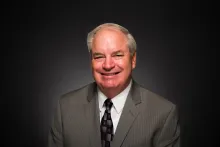
Robin Webber was born in Chicago, Illinois, in 1951, but has lived most of his life in California. He has been a part of the Church of God community since 1963. He attended Ambassador College in Pasadena from 1969-1973. He majored in theology and history.
Mr. Webber's interest remains in the study of history, socio-economics and literature. Over the years, he has offered his services to museums as a docent to share his enthusiasm and passions regarding these areas of expertise.
When time permits, he loves to go mountain biking on nearby ranch land and meet his wife as she hikes toward him.
