
Robin S Webber
How do we respond to the biblical instruction to "Wait on the Lord" in a world that is speeding up and wants everything right now--this minute, this second! We know that God promises not to be late, but what happens when He elects not to answer our prayers, our ways, here and now? Waiting on God is not an elective in discipleship to Christ, but perhaps the main course. There is nothing passive about "waiting on the Lord", but demands spiritual muscle that doesn't lose its expectant grip on God's ultimate promises. It is perhaps our greatest witness of discipleship to others including God.
This transcript was generated by AI and may contain errors. It is provided to assist those who may not be able to listen to the message.
We want to welcome everybody this afternoon, and I hope that this message will be a blessing to all of us here today, plus those that will be watching in the weeks, the months, and sometimes the years that are ahead. This may be one of the most important messages that I'm going to be able to share with you, and I'm looking forward to bringing it to you as one that has been in this way of life for over 60 years and as an adult over 50 years, and still learning a lot about God and the expectations that He places upon us and wants us to grow in. It's been said if you are going to stand and watch a teapot boil, it's going to be a while. I'm sure all of us at one time or another had that exercise in our times of, we've got to get up, got to go, and you're maybe I'm the only one, maybe it's my inner German, I'm not sure, you know, like this, you know, but I'll be by the teapot and it goes and goes, and all of a sudden you start hearing the water, you know, be getting to rumble there a little bit in the teapot, and you're hoping that the steam is going to come up, but it's not coming up, and you kind of wait and you wait, and you kind of keep on looking at that teapot, and it seems like forever. Maybe you're all looking at me like you've never done this, okay, so somehow that expression came about nonetheless. It's going to take a while, and sometimes it does seem forever. Perhaps we've never been in the kitchen, have experienced that, waiting for that steam to come out, but there are bigger things than teapots.
That take a while. That take a length of time. That's beyond the time that we want to offer and give to it. Things that are bigger things in life, that are synonymous with teapots, that sometimes we ask God, when and when and when I've been praying about this, I've beseeched you, but where are the answers? Where is the movement of your will in my life? I've given you my all to this point, and yet somehow you're not blessing me.
And so at times we can come to a danger zone. I do suggest it's a danger zone, that instead of being frustrated with a teapot and walking way out of the kitchen, because it's just not going to boil, we can also walk out on something greater than a teapot in the kitchen, and we can turn our backs on God. And that's why I want to share this message with you, about how God operates, what His expectations of us are, and how we can grow in this. We live in a world, as Mr.
Butler brought out, that is rapidly, rapidly changing this, changing that, changing this, changing that. Americans by nature have always been somewhat of an impulsive people, and now in this technological age, we want everything just now. You know, if we don't get everything right now, we want to change product. We want to change this. We want to change that. We want to get faster, faster, faster. We want everything at our fingertips, and you know, when you think of our grandparents or our great-grandparents, what they experienced and the stillness of life, and to recognize the demands that we put upon ourselves to keep up with the Joneses, the Smiths, the Juarezes these days, etc., that we want everything lickety-split right here and now.
But I've got to share something with you. That's not how God operates, and that's not our God, the same God who loves us, the same God that gave his Son for us. But we've got to learn to be on his time, his time, and where he's at as he looks beyond the moment. Again, we want everything now. I've told you this story before, but I think it's a good intro to what we're going to be discussing today. There was a young lad that had two or three questions in his mind. This lad had the opportunity actually to talk to God.
That's quite an opportunity, isn't it? And he said, God, I have a question for you, which would be one of two other questions that would follow. God, he said, what is a thousand years like to you? God thought about it, and he said, my son, a thousand years is like a second. The boy said, oh, I'm going to continue.
He says, well, may I ask you another question, sir? It's fine. And the little boy said, and God, what is a penny like? He said, what is like a thousand dollars like? And God thought about it, and he says, well, it's like a penny to me. So now the boy was fully loaded, and he said, God, can I ask you a favor? Could you give me a penny? He said, yes, my son, but it's going to take a second that he would have to wait for it.
That's the God that we worship. And that's the God that I want to introduce you all to, because we've all sometimes had that scenario of time and pennies and wanting everything right now. Such a story brings to mind and hopefully our hearts, not only our minds, because we want to be heart disciples of Jesus Christ. Join me, if you would, in Isaiah 55. In Isaiah 55, in picking up the thought in verse 7. Powerful scripture. It tells us simply this. In Isaiah 55, and actually picking up the thought in verse 8, for my thoughts are not your thoughts, nor are your ways my way, says the Lord. For as the heavens are higher than the earth, so are my ways higher than your ways, and my thoughts than your thoughts.
What is this telling you and me on this Sabbath day? It's telling us that we worship an eternal, uncreated, transcendent Lord of life, who operates in a totally different sphere than we as human beings operate in, but He is welcoming us to join into that sphere and understand where He is coming from. And even with that, when it says that my thoughts are not your thoughts, my ways are not your ways, yes, God is uncreated, yes, God is eternal, yes, He is transcendent, yes, He is beyond time and space, and yet the power of the Scriptures tell us simply one great truth.
If something that you can hang on today during this coming week, and that same God, through His Son Jesus Christ, said, I know the sparrow that falls and lights to the ground.
God is not blind to where you're at today, and some of us have some heavy loads that are on our shoulders, that weigh on our heart, and we might be saying, God, I have waited long enough.
I want the goodies from above right now, and it is to you, and it is to me that I speak, because we all go through this continuum one time or another in our spiritual journey before God. The bottom line that I want to share with you, because we need to have a reality check just starting right out, is simply this. Waiting on God is not an elective in the course of discipleship. Waiting on God, waiting on the Lord, it is a main course in being a disciple of Jesus Christ. I think all of us are familiar with what we call the Big Ten, and I'm not talking about football in the Midwest. I'm talking about the Big Ten, the Ten Commandments, Exodus 20, the Ten Commandments, thou shalt, thou shalt, thou shalt, thou shalt not, thou shalt not, and all of us are familiar with that, but that's not the total test of a disciple of Jesus Christ.
It's not the total test of a child of the Father. It's an opportunity.
It's a course that God gives each and every one of us, because the Big Ten are actually underlined with by what I might call the 11th Commandment. I used to teasingly say that I think the 11th Commandment in the Church of God community is, thou shalt fellowship, because our brethren love to fellowship, but I have replaced that now. That's now number 12.
Number 11 is simply this, and that is simply this, thou shalt wait on the Lord.
Thou shalt wait on the Lord underlines those 10 commandments, because when we break those 10 commandments, usually it's where our human nature has gotten ahead of God's purpose for us, and we're not waiting. We've walked out of the room, or we've been paralyzed, and we've done our own thing rather than waiting on God leading us. This exercise of waiting God again is in a world where we want everything now, but it is given to us in faith-filled obedience to do His will that we might be His witnesses to others. I'm going to share something to be very frank. So often we think in the Church of God culture, if we do this, if we do this, and by the way we do this, because this is the right day to do this, this is the right way to do this, and that can all be well and good, but that's not the fullness of fellowship in the aspect of just lining up the bowling balls and saying, right, right, right, right. Because you can be doing this. We can be showing up on the Seventh-Day Sabbath. We can be planning for the Feast of Tabernacles. Ooh, we can be doing this. But the really biggie, the big one, underlining all of these, because the First Command says, you shall, what, you shall have no other gods before Me. And sometimes when push comes to shove and we're tired of waiting on God, we go to the God of self. And when we go to the God of self, not somebody else's self, but our self, then we can falter and break the commandments, because we're just tired of waiting. That's why understanding what it means to wait on the Lord is so very important. My SPS to share with all of you is simply this, spiritually growing, spiritually growing by waiting on the Lord. We're going to look at some of the wise, we're going to look at some of the hows, and we're going to look at some of the fruit that is developed. Waiting on the Lord is very important. I'm going to share something with you just to break it down for all of us. Sometimes we think, you know, we read Galatians 5 and we say that the fruit of the Spirit, one of those fruits is what? It's patience.
It's patience. But let's understand something. When God gives us His Spirit, the Spirit is a seed. It is the Spirit of the Father. It is the Spirit of the Son. You can just go to Romans 8, 10 through 12, 13, and you can read about that. But what God does at baptism, He plants a seed of Himself in us, but it's designed to grow. It's like when you plant a seed in the ground. You don't expect it just to remain the same. That seed is going to have to sprout above the soil. It's going to have to begin to grow, and it's going to have to begin to develop fruit to be profitable. So let's understand the fruits of the Spirit. Yes, ultimately, they come from that seed that is planted in us, but that seed needs to be what? Mold it. Just like the seeds that we planted in the soil, it has to take the soil. It has to be in the right soil. It's got to experience the cold, the heat, the birds, the bugs, the pressures that are going to allow that to come forward. And that is exactly what waiting on the Lord is to produce, ultimately, is that patience, that fruit of the Spirit, which could be our greatest witness to people.
Not what you know, but what you are. And just, can we talk, just how we handle life. Perhaps how we handle disappointment. Perhaps how we handle frustration, that things aren't quite going according to oil. And that there's a peace that surpasses all understanding that is better than the facts that are on the ground. No, there's nothing passive about waiting. It does demand spiritual muscle that doesn't loosen its expectant grip on God's ultimate promises. We're waiting on the Lord right now in the sense of what Mr. Butler brought to us.
We don't set dates. We see the movement of world history. And when we see these things that are happening, whether it's in nations, whether it's in the wars between nations, what we're seeing, whether the Ukraine and Russia, whether Iran and Israel, whether this or whether that. Yeah, we wait on the Lord because we in faith know, we know in faith that Jesus Christ is going to return to this earth as King of kings and Lord of lords. So we look beyond the moment, we hold on, we put on our spiritual seat belts, and we live our lives before God. What I'd like to do here is to, let's lay down a two-fold sure promise of Christ to build upon when it comes to wait. Join me if you would in John 14, 18. In John 14, in verse 18, this is on the last evening of his human experience with us. It says in verse 18, as he's talking to his disciples then, as he is talking to us now. Notice the promise that he gives. Number one, I will not leave you orphans. You're not going to be left alone. You're not going to be left without relationship. Then notice as a crescendo, I will come to you. That's a promise that you can take to the bank.
That's a promise that you can bet your life on. And you did it baptism.
As you turned your life over to God the Father through Jesus Christ, and you said, I believe that he is Messiah. He is the one. And I am bought and paid for by his sacrifice. So now I'm in for the ride, wherever you take me, however you take me, knowing that at the end that I am in your hands. The early disciples said, I will come to you. Well, when you say that, you think, well, what's that tomorrow? Is that the next day? What is going to happen? And these are the same gentleman that had walked with him for three and a half years. And yet how much they had experienced, you know, when you go camping with somebody, you kind of get to know them. That's always true that well, we really like to go camping with people because that's when you really get to know people, you know, you wake up in the morning, you have coffee around the tree stump, you know, boom, and you're hiking and you're doing this and you're cooking and blah, blah, blah. These gentlemen lived with Jesus on the trail for three and a half years.
And they still didn't get it. They still didn't fully understand that was yet to come.
In the days to come. And he said, I will come to you. Oh, that's oh, thank you. That's nice. Little did they know he was going to be taken that night. Little did they know he was going to be crucified the next day. Little did they know that he was going to be buried before sunset. And to recognize what was coming upon them. They had no idea what it would mean. They didn't know the aspect that there really was going to be a resurrection, even though he talked about it. They did not know that he was only going to come to them walking through a wall. They didn't realize all the different things that were going to come because it was unfathomable to them at that time. Luke, Luke, let's turn over to the book of Luke and no, let's go to the book of Acts. Pardon me, not Luke, but Luke, the writer of more of the New Testament than any other person. Did you know that? We often think of the Apostle Paul with all the books that he wrote, but Luke covers more ground. He inhabits more space in his writings than any other author in the New Testament. And we go to the book of Acts. Let's go to the book of Acts. We're going to go right to chapter one, okay? In Acts one, let's notice what it says here. Because Luke was the essential observer of the early church. He's known for his two writings. Number one, Luke. And in that Luke, in his way as a doctor giving a diagnosis, expresses how salvation came. Now in the book of Acts, what Dr. Luke is doing is how was salvation spread? See? It came, but now how was it going to be spread? And that's important. And he offers that diagnosis right in the beginning of chapter one. Let's notice what it's saying. Jesus returns, and then verse four, and being assembled together with him, he, that's Jesus, commanded them not to depart from Jerusalem. Not to depart from Jerusalem. But now notice this four-letter word that gets in the way of disciples of Jesus Christ sometimes. Notice what he says. He says, but to wait for the promise of the Father, which he said, you have heard from me.
For John truly baptized with water, but you shall be baptized with the Holy Spirit not many days.
Therefore, when they had come together, they asked him, saying, Lord, will you at this time restore the kingdom to Israel? And then notice again what he said. And he said unto them, as we heard in the first message, it is not for you to know the times or the seasons which the Father has put in his own authority. But you shall receive power when the Holy Spirit has come upon you, and you shall be witnesses to me in Jerusalem and in all Judea and Samaria and to the ends of the earth. Notice what he says. You are to wait. I'm going to go slow. And also in that wait, what is going to happen then, fruit is going to develop out of that, and you are going to be my witnesses. Waiting is a part of the growing process in the new birth of developing like Jesus Christ to honor and to praise God, even when we say what in the world is going on. Umba, we recognize in faith that God has an answer, and his answer and his promises are always going to be better than our human best, because he's perfect. And he knows the wins, the whares, and the whys of doing that. We notice what happens. I want to share something with you. Let's go to verse 12.
Then they return to Judea, being the disciples, then they return to Jerusalem from the mount called all of that, which is near Jerusalem, a Sabbath day journey. And when they had entered, they went into the upper room where they were staying, mentions the disciples, mentions the family of Jesus, probably some of the women were there, etc., etc. And they all continued with one accord in prayer and supplication with the women, with the family of Jesus. What do we recognize here? We find the disciples, number one, following Jesus' command. Number two, waiting on the promises, even when they did not understand the totality of what those promises were going to be about. But they're waiting. I want to share something with you. It was not only to receive the Holy Spirit, but on this day, on this day, June 14, 2025, is to set you and me an example of what it means to be a disciple of Jesus Christ and to wait on the Lord even when we do not have all of the details, because they will come in time and the reasons will ultimately be there for each and every one of us. He's saying, your witness will start here in Jerusalem, and a part of that witness is you will wait. Now, we recognize this was on what we now call Pentecost. We recognize that Pentecost, where the Holy Spirit came, Pentecost means to count 50. The birth of the church and the new birth in you as a disciple of Jesus Christ, as a child of the Father, is not just simply about being able to count to 50, but that God might be able to count on you. Let's get the counting correct here. It's not just counting seven days to the Sabbath. It's not just counting 50 days from the Sabbath between the Holy Days and the days of the 11 bread, and then you have the Feast of Weeks, the Feast of First Fruits, what we call Pentecost. The question about that is, can God count on you not to walk away from Him?
Because I'm going to tell you something. That's almost futile, because He's going to come after you in love, because we know that Jesus Christ is that good shepherd. Luke clearly displays here that these early disciples were faithful, they were expectant, they were patient, they were obedient.
These same disciples and those that would come to Christ through their ministry, as it says in Acts 17, would turn the world upside down.
But before they could be used by the Father through Christ to turn the world upside down, they had to turn their way of thinking upside down. It had to be a new way of understanding deity, of understanding that God's ways are not our ways, His thoughts are not our thoughts, but that God will answer at the right time and in the right way, and He'll never be late. Never be late. Sometimes people as human beings, we like to spell late as D-E-A-T-H. Can somebody help me with what I just spelled? Are you sure? Let's do it together. One, two, three. What is it? Death. You better know that. You had better know that. Death is only a yield, not a stop sign, to what God wants to do with His first fruit people in this day and this age. God will never be late. He will always answer at the right time and in the right way. And when we think of Jesus and being resurrected, that is the great opening to understand what has occurred to Him is going to occur to us. But there's going to be some mud puddles along the way in life that we have to understand. Why is this so important to do what Jesus said? Join me if you would in Acts 5.32, because it's all laid right out here in Acts 5.32 when it comes to the importance of waiting.
In Acts 5 and verse 32, it says simply this, And we are His witnesses, Peter and John speaking, of these things, and also the Holy Spirit, whom God has given to those who obey Him. God's Holy Spirit is given to those who obey Him. That's why it is so important to understand the lesson, the major course. It's not an elective. This is not an elective. This is not something some of us that have been in this way of life for years and getting older. It doesn't just simply happen to somebody else. It happens to all of us in some manner, in our personal lives, in our families, even in the loss of a loved one, a spouse, a child, a good friend.
And we ask ourselves sometimes, why does God allow suffering?
But we've got to understand that God is beyond the moment and has a plan for everybody.
Luke recognized, and we need to recognize, being patient for God's promises to manifest is not passive. I'm going to share, if you like to jot this down in your notes, and I'll probably pass out my notes later. Waiting takes spiritual muscle. Spiritual muscle. Patience is the product. By getting there is waiting on the Lord, and that takes spiritual muscle. It's so important. It's not passive. It's an activity. So important.
A question, why is this opening account in the book of Acts so important for you and I to understand for a moment? Well, when you read the Bible, the proof is in the pudding of why it's important that we're talking about this today. Have you ever noticed that a lot of people in Scripture were not patient? And if there's a living Scripture in the living book of Acts, I is one to use bad English to make a point. We've all sometimes become impatient with our Lord. Absolutely. Come on. Let's get the teabag going. Let's steam up. I'm ready to go.
Let's consider people who weren't patient and consider their outcomes. Adam and Eve.
They didn't wait to ask God to confirm Satan's lie.
Surely you will not die. And they fell for that hook, line, and sinker. How about a Brahma and Sarai, who God had promised a wonderful miracle that was going to come upon them, that they might have a child. But they took matters into their own hands. And for a Brahma, literally, with Sarah's permission, and a baby was born. But it wasn't at that time the baby of promise. It wasn't the son of promise. And look at the discord down to this day and this age in the Middle East. Because of what happened and the rivalry between kin. What about Esau? He was impatient for food. Yeah, sure. He'd been out. He'd been hunting. He came in. And I don't know if I'd like to actually meet Jacob in a dark alley myself and him make a deal with me. But what he did, rather than holding on to what was to be his, he gave it away for fast food. Think of fast food. Instead of dining at God's table, he settled for McDonald's, circa 1800 BC. He wanted it then. He wanted it there. And he did not keep the big picture in mind of what God was offering to him through being the firstborn. What about the children of Israel? Were they patient underneath Mount Sinai?
Where is Moses? Where is that guy? He went up the mountain and dumped us here. This God that he tells us that we're supposed to worship. They were not patient. They were not patient.
And you know the rest of the story.
Moses himself, later on, grew impatient. Grew impatient with people. People can drive you. Do I dare say it? Batty, sometimes. Come on, come on, come on. We've been through this before. Get it? No, they didn't get it. He got upset with the people. Remember, he banged his rod against the rock for the water. Not a good move on his part. You know what happened? Out of that, he was not allowed to go into the promised land.
Impatience. The teapot was not boiling. Time to do something different.
He didn't do what later on the disciples would do was to hear and obey and wait. And they didn't even fully understand what was coming.
The boss, you know, the rabbi keeps on, the heavenly rabbi, now he keeps on talking about, okay, but they obeyed. That was a step. That was the step.
Human nature got in front of us. What about, here's another one. What about, what about the story of Saul? Remember when Saul was told to knock off the Amalekites? He wasn't supposed to save anything. Samuel said, wait till I get there.
What happens? Samuel comes and has a talk with Saul.
They're talking and all of a sudden Samuel says, what is that I hear?
Those are my animal sounds if you didn't recognize them.
He heard animals in the background. What was Saul supposed to have done with the animals?
Kill them! Did you say that, Vicki? Very good. Like this, kill them! Don't save anything.
I'm sure all of us have had that sometimes. Remember when we used to come home to our this just kind of happened and you know, the kingdom was taken away from him.
Let's understand something. Impatience is central to human nature. It's not on the edges.
Human nature is there for people that are not baptized, and we are still challenged with human nature as Paul tells us in Romans 7. Remember, how many of you remember Mr. Hell Jackson? Anybody remember Mr. Hell Jackson? You have to go way back, old timers. Mr. Jackson was just a wonderful, wonderful gentleman, just a kind gentle soul. He said one of those snapshots that I have out of past in the days in the auditorium, he was doing a Bible study and he said, he said, what is it about human nature?
What is it about human nature that we like? Otherwise, we would have gotten rid of it a long time ago. That has always stuck with me, and I think I heard him say that about 45 years ago.
Human nature is always around the corner, and we need to understand what is going on there.
Now, one thing, it's always easier just as we went through this, it's always easier to focus on others and what they've done, and view life in the rearview mirror of others' casualties. I want us all to take this to heart. It may be a challenge that you're going through health-wise, and the answers haven't fully come. It might be a scenario that is in your marriage, and the answers have not fully come. It may be something on the job, and the answers haven't fully come. Your issue, as with many people, is your issue may be with God Himself. You're doing a Jacob right now, and you're wrestling with Him. Why now? Why me? What's happening? God, it seems like you're so far off. I'm out of here.
Our calling is to wait on the Lord. Let me just give you some steps here. I'm going to go quickly. I'm going to ask you to send my notes out because I could go about two more hours on this. But what are we to do? Let me just give you and unpack some specific steps. Number one, waiting involves committing yourself to the sovereignty of God.
Waiting involves committing yourself to the sovereignty of God. Join me, if you would, in Proverbs 16. In Proverbs 16, and picking up the thought, if we could, in verse 1.
The preparations of the heart belong to man, but the answer of the tongue is from the Lord. All the ways of a man are pure in his own eyes, but the Lord weighs the spirits. Now, notice this, verse 3. Commit your works to the Lord, and your thoughts will be established. That is 1 plus 1 equals 2. That's God's kind of math. Commit your works to the Lord, and he will establish your thoughts. Say, well, how does that work? Give me a story. What about the the priest of Israel, that they committed to follow God, and God said, you're going to go across the Jordan, and that river is still going to be running, and you're going to stick your Israelite tutsi into those waters, and it's only then that the waters are going to stop, and then you're going to march over that river in spring, during the Passover season, as we know we have rivers that run even in Southern California in the spring, and that's when you're going to go across. You're not going to go in late summer. You're going when they're... See, God never wastes a miracle, does he? He knows he is the master of timing, and so they had to commit, and that's what we have to do. Commit your works to God, and your thoughts will be established. The Lord has made all for himself, and yes, even the wicked for the day of doom. Every one proud and hard is an abomination to the Lord, though they join forces, none will go unpunished. In mercy and truth, atonement is provided for iniquity, and by the fear, that means the respect, the reverence, the homage given to the Lord, one departs from evil. When a man's way pleases the Lord, he makes even his enemies to be at peace with him. Better is a little with righteousness than vast revenues without justice. A man's heart... Now, listen to verse 9. A man's heart plans his way, but the Lord directs his steps. Don't leave the kitchen of life, just because you don't see steam coming out of the teapot yet. You don't hear the water rumbling, getting hotter and hotter. What's the scripture say? Stand still. Stand still and see the salvation of God. Let's go to Psalm 130 for a second on this one. Psalm 130 verse 5.
Here we go. Notice what it says. I wait for the Lord, and my soul waits, and in his word I do hope. My soul... No, God says something once. Now, notice this. My soul waits for the Lord more than those who watch for the morning. More than the watchmen that were on the gates of ancient cities. My eyes are open. My heart is ready. Yes, more than those who watch for the morning. Oh, Israel, hope in the Lord. For with the Lord there is mercy, and with him is abundant redemption, and Israel shall be redeemed. Notice how important this is when we look at Psalms 130 and verse 5. What is this telling us? It's not simply enough to...
it's not simply enough to wait. Bottom line, very important. Number one is to wait. This is number two. Then you have to seek after the Lord. You wait on the Lord, but this is telling us we not only wait and we look over the walls of our life, but we move towards him. We seek him. That is so very, very important. Let's go to Lamentations 325. That's a book that we don't often get into. Lamentations 3. Lamentations is right behind Jeremiah because he wrote Lamentations.
Lamentations 3 and verse 25. Notice this, the Lord is good to those who wait for him.
Oh, that's good! It says that the Lord is good for those who wait for him, but then notice what it says here. To the soul who seeks him, seeks him, it is good that one should hope and wait quietly for the salvation of the Lord. So we wait and number two, we seek. We begin to flex the muscle of living faith. There's another promise that Jesus Christ gives. Allow me to share it with you, please. The first one he gives is in John 14 verse 18. I will not leave you orphans. He builds upon that and says, I will come. But there's a magnificent one at the end of the gospel of Matthew. Matthew 28 verse 20 says, low, I shall be with you always, even to the end. Have you ever been in a room where the lights go out and all of a sudden it starts? Esther's been there. She's nodding. Okay. And the lights go out and all of a sudden what do you do? Where is everybody? You know, you can't, you know, you can't look like a jiggly octopus. All of a sudden you have a nowhere. What happened?
Well, that's what happens. The light, the lights are at times going to go out in the Christian walk.
And that can be spooky, obviously wasn't planned for. But then you have to start reaching. You have to start seeking. You have to start knowing that God is there and have a union with him, which is so important. So very important. In that seeking, that's when we read the Word of God. We get this nourishment. That's when we begin to pray. And God says, I'm down here, Father. I'm not quite getting it. This isn't how I had planned out my life, had not planned out my marriage, had not planned out my employment, had not planned out how when I came into this congregation, it was going to be so easy. I thought I was moving into a perfect church, not realizing that once any one of us steps in between that door, it's no longer perfect, isn't? And we're dealing with people. We're in the zoo. We're in the zoo of activity, of human activity, praying. But what about time about meditating? That's a part of seeking. Stop.
Stop. You know, when Susie and I, we were up in the, we were actually, we're up in the central coast with a couple of our granddaughters. And I got to tell you something.
Being an Angelino and being a Southern Californian, having grown up here, it's home.
And yes, I love it. But you know what? It is so nice that the fastest thing that you see in your vision is a cattle, our cattle, just moving through a hill up in the central valley.
The soothing ocean below, the hills coming down. You're not stopping and going and stopping and going and stopping and going and stopping and going. And you can actually reach out and begin to feel calm again. That's what we need to do in this world. Sometimes we just have to pull the plug on the world. Pull the plug on the world. Are there good things in this world? Absolutely.
I don't want this to be a doom or a gloom or a gloom. But that we have to be able to think. We don't want to be trapped to our smartphones. Our smartphones, to degree, are dumbing down our society. So interesting that the society that has more information than any time on earth with volumes of material that are beyond the great libraries of Pergamum and Alexandria and Throw-In in Washington, D.C., the congressional library, and you have this little box. But you know, and I know, that so much of our society has become prisoner to that little robot that consumes their time rather than figuring out, oh, am I liked or not liked? Did they like this? Did they like that? We're looking for text from all the wrong people. When God is texting us by His Holy Spirit continually, this is the way. Walk you in it. Jesus is saying, follow me.
We've got to meditate. We've got to think. Because if we're not meditating, we're not thinking, what happens is that Victor Frankl, in his book, searched for meaning. Victor Frankl, Austrian psychologist, Jew, that was in Auschwitz during World War II, looked at what allowed those to survive through that experience, those that did survive out of that time. And those concentration camps did exist. I have been in one. I've seen the ovens. I've walked in the gas chambers.
I know what they're like. It's real. He's there analyzing what separated people. And one thing that he said I want to share with you is simply this. When we wait on the Lord, and it gets long and long and long, and we're not waiting on Him, we're not seeking Him, we're not praying, we're not studying, we're not meditating, we can get tripped up. Let's understand something very simple. There is stimulus. Stay with me. There is stimulus, and there is response. I'm going to come back to Dr. Frank calling a moment. It is between the stimulus, what pokes you, what pokes your brain, what pokes your ears, what pokes your heart. Stimulus and response. There is a moment in between that. There is a moment.
They do not necessarily connect. There is stimulus, and the stimulus is waiting for an reaction or action. It is in that moment in between stimulus and response that you have the opportunity. That God has built within us the opportunity to reason, and much less with the Holy Spirit as a guide to direct us to make a choice. And the choice is yours. Let me ask you a question. Okay, Rob, that sounds great, but what's it mean? Right now, some of you are being stimulated. Boom, boom. Something's really, you know, just keeps on punching at you. Punch and punch. And it's waiting for an action or a reaction. It is in that moment between the stimulus and the response that you make that decision. Whether or not you're a disciple of Jesus Christ, or you're walking out of the kitchen because the teapot is not boiling. It's taken too long, and you're going to take matters into your own hands. Be careful. Understand that.
God has given you an opportunity to make a choice, and it's a choice because he doesn't want robots. He wants living beings that have surrendered himself to them.
One thing when we're meditating and listening to God is simply this.
There's a classic example. I want to share this with you. It's one of my favorite stories in the Bible. There's a story of Paul, and Paul's on one of his missionary journeys, and he wants to preach the Word of God. He wants to go, first of all, up to Bithynia, which is kind of in the central part of what we now know as Turkey. In fact, there's a great group of the diaspora of Jews up there, and of course, you know, he'd always go to the synagogues. But God says in Acts 16, the Holy Spirit said, don't go. Now, what do you do? I don't know. I don't speak Hebrew or Aramaic like Paul, and of course, he could speak Greek and Latin, whatever language he wanted to use. He was a Renaissance man, but he could have said, huh? Don't you understand? Don't you understand?
I'm trying to do your work. This is part of what he told me on the road to Damascus, and now he said, I can't go. God said, don't go. Then he said, okay. Then he said, I'll go down to Asia. I'll go down to Ephrass area. No, big city, a lot of people. And again, it said that the Holy Spirit forbade him. Wow, what a controller. You know, what's going on? But in all of that time, God was saying, no, wait. He was saying, no, wait. And little did Paul realize, but like the disciples, he obeyed. He kept on being moved towards the coast of what is now Turkey today, to a city that you're familiar with, Troy, out of the Homerian legends. And it is there that the Macedonian call came, and he was being called over to that landmass, which we know now today as Europe.
This was going to be, remember like the moonshot, you know, one small step for mankind, one large leap for humanity? This was going to be big. God knew what he was doing. Paul didn't say, I'm out of this kitchen.
I've been waiting to do this, and I've been waiting to do that. Wait, wait, wait, wait. I'm going back to Jerusalem. I need a vacation. I'm unappreciated. God's given up on me. God doesn't know what I'm going through.
Recognize that God's ultimate purpose for you and for me will always oversee our human best.
He knows exactly what the future holds for you and for me.
Waiting is a part of being a pilgrim. I just want you to think about this for a moment.
God let Israel wander for 40 years. 40 years, but could have taken just three months. It was 40 years, rather than a direct walk into the Promised Land. God allowed 400 years to go by from the time of Malachi's writings to the time of Jesus Christ. When Paul said, when the time was fulfilled, who's time? Who was fulfilling the time? The man or God? God allowed a stretch of 400 years because even the Jews, then, they didn't feel like they, after Malachi, that they were not receiving the voice of God. They called it, they were receiving the voice of the angel.
They had to wait. Think about this for a moment. In waiting on the Lord, David was anointed as a very young man, but it was years before he was appointed. There's a difference between being anointed and a difference between being appointed. And it is in that time and in that patience and running to and fro through the hillsides of Judea, running away from Saul and his soldiers, that that patience built in him. And it became even more valuable to God. So very important. Allow me to share one last story, and we'll conclude with this message on waiting on the Lord.
One of my favorite stories. So glad that God put it in the Bible.
Story of Lazarus. You know the story of Lazarus. I've given it to you a couple times over the years, these last 22 years. And you know the story that Martha and Mary sent a message. Come, your friend is sick. And of course, we know the response of Jesus. Disciples say, well, well, well, well, Jesus said, he's okay. Let him rest. Let him rest. Wow. What kind of a friend is that? Just when you really need somebody.
Because he believed in Christ and Mary and Martha believed in Christ. They were disciples of Jesus Christ like you and me. And then he left.
He told the disciples, don't worry, he's asleep. He goes there.
He comes into Bethany. You know the story. But why did God in the flesh, Emmanuel, God with us, wait and arrive on the fourth day?
Why did he come on the fourth day and not the third?
Because the Jewish community believed that the spirit of man hovered over a body until the third day.
Jesus came on the fourth day.
And as Paul Harvey used to say, for those that are older out there, and now for the rest of the story, it was on that fourth day that he said, Lazarus, come forth. It was on the fourth day. You see, when God's working with families and with his disciples, I want to just share something with you. God is not only the creator of time, but he is the master of timing. And God never wastes a miracle.
People had to know that Lazarus was dead all over, just like the dog Rover. Dead, as in dead, because that miracle 30 days out was pointing to what would happen three miles away in Jerusalem.
Jesus was using that as knocking on the door of Jerusalem. Get ready. I am coming. And he used one of his most beloved, loving, diligent disciples to make that happen and allowed his disciples to die.
And sometimes God allows his disciples in the 21st century to die. And we may not always understand the moment for the reason, or the reason for the moment, or the moment for the reason, but he does, because he's transcendent. He's not trapped in time and space.
With God, a second is like a thousand years. His thoughts are not our thoughts.
Let's go forth this week.
For you that are waiting on the Lord, wait on him, but also seek after his wisdom. Share your time with him. For you that right now, life is going like a straight line and it's great.
Be ready.
Be ready to know that that moment is going to come for you.
And remember this message. This is a part of the training ground.
Yes, we know this, we know that, we know this, we know that. We know that right, right, right, right.
But we can be so right and yet so wrong when we lose our trust and our confidence in God.
My encouragement to you is one disciple to another, and as your friend, is simply this.
Let's wait on the Lord. He knows where you are, he knows where you will be, he knows also where ultimately he wants you to be in his kingdom, as we heard in the first message. So wait, seek, and know that, as Jesus said, lo, I am always with you, even to the end.
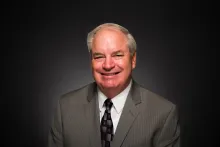
Robin Webber was born in Chicago, Illinois, in 1951, but has lived most of his life in California. He has been a part of the Church of God community since 1963. He attended Ambassador College in Pasadena from 1969-1973. He majored in theology and history.
Mr. Webber's interest remains in the study of history, socio-economics and literature. Over the years, he has offered his services to museums as a docent to share his enthusiasm and passions regarding these areas of expertise.
When time permits, he loves to go mountain biking on nearby ranch land and meet his wife as she hikes toward him.
