
Robin S Webber
This transcript was generated by AI and may contain errors. It is provided to assist those who may not be able to listen to the message.
Well, good afternoon, everybody, and I want to welcome those that are joining us on the stream service this afternoon, and those that may be hearing this message in the days and the weeks ahead of us. I'd like to speak to the times and speak to the season that we're in right now. Here we find ourselves figuratively speaking within a unique timeframe between the original Passover and the giving of the law at Mount Sinai, which we feel corresponds with what the Old Testament calls the Feast of Weeks.
Laid on top of that is another overlay of a time of uniqueness between the New Testament Passover and what we now call the Day of Pentecost, and similarities purposefully abound in this time that we find ourselves within this 50-day period. Both speak of divine intervention. Both now and then speak of a people who were enslaved, whether physically or spiritually.
Both speak to a time when people were liberated by a divine one, not just an earthly savior or another conqueror. They were both granted miraculous intervention to be guaranteed the divine promises of being set free and remaining free. There were also divine promises that granted a new existence offering full and total relationship, offering the hope of a promised land liberated by a deliverer.
And yet also, all of those promises that were there by the divine one, to a people who had not been a people, but were in that sense going to be given a new birth and become a new creation, as it were, there was a wilderness of the unknown before them. And there is also, in a sense, a wilderness of the unknown before you and me as we go through these 50 days between the Passover and the Feast of Pentecost.
Most importantly, if you'll join me for just a second, let's poke our hearts and our noses into Exodus. In Exodus 6 and verse 7, and notice what God was offering first and foremost, totally unique in the world of antiquity, totally unique when it came to what was perceived as a deity and the people that worshipped Him. In Exodus 6 and verse 7, it says, I am the Lord your God. Between when He said that and between the time that they literally entered what was called that land of promise, the children of Israel faced sand, scorpions, bitter waters, and most importantly, they had to face themselves again and again.
Today is the Israel of God, using the phraseology of Paul, the Apostle. We are the Israel of God today, the elect, the called-out ones, the children of the Father, disciples of Jesus Christ. Likewise, like ancient Israel, the spiritual Israel of God today, likewise are a pilgrim people. We're on the move. We too face the obstacle course of existing in this wilderness world of ungodliness and also with constant irritance. You know, when you read Exodus and Numbers and all of those early books, you find that there are a lot of irritating circumstances.
If you don't think so, just think of what is now today Palm Springs and Palm Desert 125 years ago before people start building out there. Sometimes you can be very, very hard on the Israelites saying, well, they shouldn't have complained, they shouldn't have grumbled. But I do have a hint for you, even those of you that might not be good with history, those were in the pre-air conditioning days back then. It was very, very warm. But the greatest irritant began with themselves unchecked. And what they did is they tied themselves up in human nature. And we all do that. We still do. Even with the gift of the Spirit in us, we more than ought to tie ourselves up in the knots of human nature.
And normally, those knots of human nature are lined with worry. So let's go back for a moment and understand something. The one that revealed himself to Moses, the one that Moses had this conversation with, saying, okay, if I'm going back to Egypt, okay, that's what you want me to do.
Who am I going to say, sent me? And the voice came back. You tell Pharaoh that I am sent you. I am that I am has sent you. Interesting. And to recognize that this I am intervened in human history, interrupted human history. But as he did that, and he tried to guide the people to the Promised Land, it's noteworthy that God raised the specter that 10 times, 10 times in that wilderness experience, with all of those promises that God laid upon them that I will do this and I will do that.
And I'm going all the way back to Abram and moving it forward and that my word is true and I will uphold it 10 times as you'll try his patience. You can shot that down in Numbers 14, 20 through 23. I'm not going to go there. I'm just going to paraphrase it.
Think of some of those disappointments that God had experienced with this people of covenant. From the banks of the Red Sea, to the waters of Marah, to the giving of the manna, to looking at the men of Canaan, bigger than God's promises.
And because they did all of that, plus four or five other items, they spent 40 years in the wilderness. You know, when they went up, they were kind of cruising. They were moving up that way. But then they sent the spies over, as it says, over into the land. And they began to think that men were bigger than this deliverer, this I AM. And then, henceforth, for 40 years, they wandered into the wilderness. Interesting. What was to take months became decades due to two things.
Number one, we're going to be talking a lot about the remainder of this message. Faith, and number two, obedience. Faith and obedience. Faith and obedience. Faith cannot stand alone. We are saved by faith. Paul's writings mention that. But it doesn't stand alone. Wherever there is faith, true faith, real, living, loving, dynamic, spiritual faith, wherever there is faith, obedience always accompanies it. If faith is the body of what motivates us towards God, obedience is the shadow of faith.
You cannot separate them. I've done this before on this stage. If the sun is high and I'm walking this way, my shadow is not going to stand still. I don't move and my shadow doesn't follow me. And when we move in faith, the shadow of obedience is going to follow. So here's a question I have for all of you as we've stated this. How long is our march through the wilderness that lies before us? Because God has elected by his wisdom to keep us down here below rather than elsewhere.
And Jesus said, protect them. Be with them. Allow them to be sanctified by your truth. And so how long are we here? How long do I, as Robin Weber and or Susan Weber, or any one of you, just put your name there, how long am I to be here? How long do I get to continue on this pilgrimage? Our days are numbered. Oh yes, they are.
Our days are numbered, but only God knows that number. Only God knows that number. Both required then and now is this faith and obedience. So let's talk about this for a moment. We've talked about ancient Israel for a moment, and you go, oh boy, those Israelites. And all those promises that God gave them, to unshackle them, to open oceans for them, to march them through the wilderness, and to be the giant that goes before them against any giant that might have been in Canaan.
And they turned their back on them. Let's consider for a moment, join me if you would please, in John 14. John 14. In John 14, and let's pick up the thought if we could in verse 1.
Let me just read this for a moment. And it's allowed to sink, not just in your ears, but down in your heart, about the promises that Jesus gave on that last night of his humanity. Let not your heart be troubled. You believe in God, believe also in me. And in my father's house are many mansions. If it were not so, I would have told you. I go to prepare a place for you.
And if I go and prepare a place for you, I will come again and receive you to myself, that where I am there you may also be. And where I go you know, and the way you know. Now, Thomas said, Lord, we do not know where you're going, and how can we know the way? And it is there, then, that Jesus replied, I am, I am, sound familiar? I am the way, the truth, and the life.
No one comes to the Father except through me. It is here that, again, there's a revelatory statement here that links Jesus with that one, capital O, that led Israel through the wilderness. The one that, through Moses, mentioned all the promises that would have been to ancient Israel. And now here's the one that, again, says, I am the way. As much as that pillar of the cloud by day and that fire at night led, Jesus is saying, I am the way. Let's just think of a few of the promises that he gave, just in the short verse, if you've never had a chance to break it down.
He said, I am the way, the truth, and the life. I will be ahead of you. He said, he knows the journey will be rough ahead for these disciples, for you and me as disciples. But he says, don't let your heart be troubled. Don't let your heart be troubled. Don't get locked up. Don't stop on your own, because where the heart is, the feet usually travel. He said, don't be troubled. He said, I will go ahead of you.
I'm even going to prepare a place for you. He promised, I will come to you. He said, not only that, I will come to you, but I'm actually going to receive you. This, the I Am in the New Testament, since says, I'll be the welcoming committee. When it all happens. John 14 and verse 16. In John 14 and verse 16, more promises. And I will pray the Father, and He will give you another helper, that He may abide with you forever, the Spirit of truth, whom the world cannot receive, because it neither sees Him nor knows Him, but you know Him, for He dwells with you and will be in you.
Promise time, I will not leave you orphans. You're not going to be alone. Whether in 31 A.D. or in 2022, I will not leave you orphans. I will come to you. One more promise, verse 27. Peace I leave with you, my peace I give to you, not as the world gives to you, I give to you.
Let not your heart be troubled, neither let it be afraid. On that night when He should have had the shakes Himself in trembling all over, and being troubled, of which is the Son of Man, He did tremble in that garden of Gethsemane and said, Please, Father, by any means take this off of me. But nonetheless, not my will, but Your will be done. When I look at all of this, I don't remember some of you that might be a tad older, like myself, might remember back in the 60s, there was that Broadway play, Promises, Promises, Promises.
I love that. Promises, Promises, Promises. You can almost get into it. Promises, Promises, Promises. There are so many promises that the God of the universe has given both the people of old and you and me today. And I'd like to kind of bring those together now in this message.
I'm not going to focus on what Israel did wrong in the wilderness. We've had messages like that. We will continue to have messages. And they are valuable to know their missteps. But I would rather with you this afternoon for a few minutes, step forward and lean forward and understand a few things. So for the remainder of this message, rather than focus on ancient Israel, we're going to focus on the positive steps that God desires for the Israel of God today in this unique time.
In this unique time, whether it's worldwide, whether it's in America, whether it's in our home, whether it's in our heart, we perhaps have an unsettled wilderness of where we are troubled. Where it seems scary. Where we're backed up against a wall as much as ancient Israel was and or the people that we're about to talk about here. So here's the message that I'd like to give you today.
Four key steps towards meeting the promises of God. Wouldn't you just love to meet? You know, people do a lot of promising, don't they? They'll promise everything plus the moon thrown in. And you don't have to pay for it. But how often do what people promise actually comes about? Just a general question. Are you looking forward to meeting the promises of God that we read about, we study in the morning, or we hear in services, or we consider as we look at the grand scope of God's plan as far as the overlay of the festivals of where God is taking us to, to a promised land, to having that relationship with Him, not only for a minute, not only for a physical lifetime, but forever?
Well, that's what we want to talk about. Those are four key steps. And here we are in this time of in between Passover and Pentecost, just as Israel was in between Egypt and Sinai and the Feast of Weeks that would come about. So four key steps towards meeting the promises. Join me if you would over in Acts 1. We're going to kind of move here a little bit quickly now. That was the introduction. So today what we're going to do, we're going to go to Acts 1 and we're going to invite ourselves.
Are you with me? We're going to take a home tour. We're going to peek into the window of that upper room in Jerusalem. And we're going to see what God saw as He looked through not only that window, but through the hearts of the men and the women that were in that room. And to understand then why He was able to bless them with the bringing of the Holy Spirit that might be able to end well with them. Now you and I sometimes come up to Acts 1 and we are in awe of our spiritual forefathers. We say, why can't we be like them?
Why can't we be like that? And we stand in awe. Because after all, they did so very, very much. But the biblical truth is simply this. And this is what I'd like to encourage you with this afternoon. Hopefully messages are encouraging. Those forces still remain in play today as much as they did 2,000 years ago. The recipe is there. It is no mystery. The recipe is there. It's just that we have to apply it. And if we don't apply it, and you ladies, I know you, you know, other than reading Scripture, you read recipes, right?
To make things whole. And you know, if you're not using all of the recipe, what's going to happen? It's not going to quite taste the same. So we're going to look at this whole recipe in Acts 1 as to what allowed them to praise God, to worship God, and to be there for God in a scary time.
This was a scary time for them. And we're going to find out for a moment. And again, that recipe is not lacking. And here's one thing I want to encourage you this afternoon. That no matter who you are, man or woman, young or old, baptized, not baptized. There's three things that we kind of want to use as a guide as we move into these four steps. Number one, I just want to simply ask you right now today, and not please don't answer verbally, but you can ask it to you can answer to God quietly.
Father, I am available to hear your word. I am available. I am on call for you. I want to be available. I have not always been available. I want to be available. I want to be as available as I was 40, 50 years ago, or 40 or 50 months ago when you first started working with me. Number two, allow me to be open. Allow me to be open to your will. Not what I think your will is. Not what others have told me about your will, but what the Holy Scriptures tell me as I read them for myself. Number three, that you are willing, then, to follow through. If you say that you're going to be available, if you say that you're going to be open, then you also have to be willing to allow God to perform his work on us.
So these four key steps towards meeting God's promises are here in Acts 1. Now, Acts 1 seemingly is that quiet chapter before Acts 2. Acts 2 is like, you know, boom! Fireworks! Wind! Fire! Speaking in languages! 3,000 people converted! So our eyes oftentimes get glued on Acts 2. But it's in Acts 1 in those quiet moments, in those wilderness moments, in those what is going on and why are we here moments? What is God doing? He's kind of said this. He's given promises. But we don't totally understand them.
So what did they do? Very simple. Point number one. As we look at our spiritual forefathers, and we have an opportunity to stand on their example, and their example stands on the example of their Messiah and their Rabbi, Jesus Christ, because he modeled all these himself. Number one is that they were an obedient people. They were obedient. Remember how I talked about faith and obedience?
No, no, no, no. Faith, we are saved by faith, but our faith is also witnessed by our obedience. Hear, O Israel! Hear, O Israel! Spoken in the books of old and by Jesus himself. Hearing is obeying. In the Jewish mind, it is synonymous. It is seamless.
To hear is to obey. The Shema. They were an obedient people. That's the next one. That's what it says here. And being assembled together with them, speaking of Jesus, he commanded them not to depart from Jerusalem, but to wait for the promise of the Father, which he said, you have heard from me. Again, in verse 12, chapter 1, after that experience, then they returned to Jerusalem from the Mount called Olivet, which is near Jerusalem, a Sabbath day journey.
And when they had entered, they went up into the upper room and were now there with them in this message, where they were staying. So they did exactly what Jesus Christ asked them and in that sense commanded them to do, to stay in Jerusalem.
As we look at this, we just have to understand of all the places to stay. Knowing that most likely the Roman soldiers and the temple guard along with the Sanhedrin had an all-points bulletin out for the 12th, and looking for them, going down the alleys, sometimes going into houses. They wanted to stamp out this Messiah movement and were the latest variation of it. There are always variations, but they were really worried about this one.
So he said, you stay in Jerusalem. You stay right where you think there are no answers. You stay right where there is no escape. How similar is that to ancient Israel, that God had come amongst them through Moses and then said, follow. And so they followed Jesus for three and a half years, these Jewish disciples. And then now their back is up against the wall as much as Israel's back was up against the Red Sea. Are you kidding me? That's Hebrew. For are you kidding me? Are you joking? We have to stay here.
But they obeyed for a very important purpose.
They stood still. They were to wait. And they were to listen for God. As we look into that room, we see a company of people that were obeying Jesus Christ by staying in Jerusalem. Let's understand that as we look at this, that just the twelve themselves, that this is a group that you never would have selected to start a movement. And they had lived up to everybody's expectations about them for three and a half years. When they were needed the most, they fled. When they were needed the most, one of them denied the Messiah three different times.
All of them, in a sense, when you think about it, and you remember what they said about Jesus, what good thing comes out of Galilee? And most of these were Galileans.
So we take a look at this.
They had bet their lives that Yeshua of Nazareth, as he would have been known, was the Messiah, that he was the real deal.
And then to recognize what happened was, he died. They weren't expecting that. But then he was resurrected. And he told them that you are to stay in Jerusalem.
Join me if you would in Psalms 46, verse 10. Psalms 46, verse 10.
Be still, and know that I am God, and I will be exalted among the nations, and I will be exalted in the earth. The Lord of hosts is with us. The God of Jacob is our refuge.
Easy to read, difficult to do as a human being.
When Israel was still at the Red Sea, God opened a door, as a continuation of his promise of deliverance. When the disciples obeyed Jesus and stayed in the one spot that most likely they did not want to stay in, God opened up a whole new chapter of human history through them. And we have Acts 2 and the giving of the gifts and the promises that are mentioned there.
Where we are right now, perhaps in our spiritual journey and on this pilgrimage, perhaps there's something that's happening in your life right now, that you don't completely understand. Number one, why God allowed it. Why you got into it. Why you can't get out of it right now without his help. But the answers haven't quite come yet.
There is such a power in Scripture when you go through different examples of simply being still and just simply doing what God asked you to do without questioning. I didn't say what I asked you to do. I can be a guy or any pastor. I can guide. But it's always guidance based upon God's Word, not our words.
And it says here, be still and know that I am God.
Sometimes God allows us these things to come into our life. And we have these wilderness experiences and we feel all alone and it gets quiet. And there is a reason and purpose for this because so often God would call his servants to go into the wilderness. And it's there that they would meet God. It is there where they had no answers and that they relied on God. Sometimes it was for days, sometimes it was for months, sometimes it was for years, like Moses. And yet the wilderness experience is so important. And God doesn't want us to, though, stay in the wilderness. He wants us also to come out because you can't effectively be used in society or community until you've gone through that wilderness. And stood still and know that God is God.
Number two.
They devoted themselves to prayer. They devoted themselves to prayer. Notice again back in Acts 1 verse 14. Acts 1, 14.
What Luke records here. Acts 1 verse 14. It mentions all of the individuals that were here. I'm actually going to go... Yeah, it mentions in verse 13 all of the disciples that were there. Notice verse 14.
This is powerful. This is the second step. The first step is obedience. God doesn't want us just to stand still like a mummy. He also wants us to be praying while we're in that conditioned position. Now, when you look at this, you recognize and you see the the cast of characters here. These were not individuals that had really liked one another a whole lot.
We know the rivalry between the different disciples, even upon that last evening of the the Passover. When they were vying as to who was going to be in charge.
They knew, you know, you kind of know one another if you've been traveling on the road for three and a half. You know, camping always brings people together. They've been camping out for three and a half years. They knew one another and some of them just didn't like one another. And then there are the women because there were also women that were disciples. Somewhat unique at that time, the amount of openness that Jesus had in bringing the women in with the men in teaching and being there for them. Then you have the family. Now, some of us have all worked in organizations that are owned by what we call the family. And most of the time, you have to put up with the family. Here is the family that we're now Johnny-come-late-lays or Janie-come-late-lays. All of a sudden, oh, now they're there. So they are all in this goldfish bowl together. With people that you're basically, everybody's, they're kind of going like this. They're going, What's he doing here? What's he doing here? What's he doing here? What's she doing here? And all kind of, you know, you could almost see the fingers just kind of going around. Why are they here? But the one thing that drew them together was prayer. This literally fascinated Luke, fascinated him as a doctor trying to explore what is making this body of believers, doctor and body. Body's the believers working. They were, number one, obedient. Number two, they were given to prayer. Prayer is mentioned again and again and again in the book of Acts. Just look at Acts 2 and verse 1. When the day of Pentecost had fully come, they were all with one accord in one place. And up above in Acts 1, 24, and they prayed when it came to choosing who would replace Judas. They were praying. They were instant in prayer. They had a belief. Are you with me? They had a belief that prayer doesn't change God, but it certainly does change you as you remain still and you go before that throne of grace and mercy. And in an imploring way, ask God to help. I will say this and those that are listening, and as this goes out, we need to be a more praying people and praying together. We had a situation the other night, a couple of nights ago, somebody called me, somebody that you might know, and we got to talking. There were some challenges, and we were on the phone. I said, we need to pray about this here and now, because he was kind of trebleous about the worries. I'm not worried. God's in charge. God's will is going to be done, if not in this moment, another time, in another way, and perhaps in a better way. And we just came literally before the throne of God and said, Father, we just need you.
I am encouraging all of us not to be giddy and not to be on show. That's not our manner. That's not our culture. But we need to be praying together and praying for one another rather than praying on one another. There's a difference more than just an alphabet ladder. We need to be a praying body of people. That is so very important. If you were in 1 Thessalonians 5, let's notice what it says here. It doesn't say, Be happy always. There's a difference between joy and happiness. Happiness is dependent upon external good things coming your way. Happiness for the disciples would have been, Oh, I just heard that the Roman legions are going over to Caesarea. They're vacating Jerusalem. That would be happy. It didn't happen. Joy is something so much deeper. Joy is not made on your lips with a smile. It's molded in your heart that smiles even when things are not going as you thought they might have been. You didn't anticipate and knowing that God will answer at the right time and in the right way and never be late for establishing His purpose in you and that you might glorify Him. It says, Rejoice then. Joy on steroids is what rejoicing is. We had that song today, didn't we, Dennis, about rejoicing. Pray without ceasing. In everything give thanks for this is the will of God in Christ Jesus. Praying without ceasing means constantly reoccurring again and again like a steady drumbeat with confidence and with faith. The bottom line in being in the human condition myself is simply this. If it's big enough to care about, it's big enough to pray about. And yet, how often do we hear that and just do it? Just go pray about it. And some of us are gifted in prayer. God's given us that gift. I see Susie down here. Her mother, great lady, was a prayer warrior. And that's not to, you know, I'll be in trouble after mentioning Susan probably today. But anyway, Shirley was just knowing that very simple, dedicated life. But when we had her funeral about 10 years ago, what was mentioned, she was a prayer warrior. She just simply took it to God. Perhaps you're in the room of your own making right now, not the upper room, but a room of your own making, and you're waiting on God. But you haven't invited Him to be a part of the process. The second step is to pray and to know that God's answers are on the way. So very, very important. Point number three, they were united. They were united. Unity is a beautiful thing. When you think of Psalms 133, verse 1, which many of us know in our Church of God culture, how good and how pleasant it is for brethren. I want to share something I hope you'll listen to for just a couple of minutes to get through. You can be united for all the wrong reasons. Did you know that? Maybe you've been there, done that. How'd that work? Again, let's consider the parallels that both the Israel of old and the Israel of God are going through today between this wilderness experience between deliverance and Sinai. What united ancient Israel and what ought to unite us today? The Israelites were united in their grievance over slavery.
But they were not united in God's freedom when it was visited upon them.
Israel of old never moved from being against something. If it wasn't against Pharaoh, it became being against Moses and Aaron.
They were what you might call against people. They didn't move from being against to being proactive for something. Number three, they were running away from Egypt, but not running towards God. Thus, we see why it is important not only to repent of dead works, but to have faith towards God. It's not enough to be against something.
Over my many years in ministry, and years going back into the 1980s and 1990s as things were beginning to change in the fellowship at that time, I remember at that time of people that I had a relationship with, but it wasn't really for something. It seemed to be, but it was against something.
And you can't just simply be against something. You've got to be for something. Just think about that when you are getting chummy with somebody. What is creating that closeness? Is it only being against something, or are you for something that's going to replace that?
And not just simply be against something where you're talking about other people, but you're for something because you're listening rather than talking, and you're listening to God. That's been one of the most profound lessons of my life. That's why the Proverbs say, choose good company. Choose righteous people.
So very important.
They were united, and it was a beautiful thing.
How important is unity? God cannot bless disunity, and he will not. For then, the body of Christ would be proclaiming a lie, saying that we are one with Christ, and one with the Father through Christ, but not one with one another. That's a formula that just does not work in heaven above. Neither does it work down below. On that last night of Jesus' life, he said, Father, I pray that you remember that you are with me, and I am with you, and we are with them, and they are with us. That prayer of our master, our Savior, was so tight. That was one tightened word job. He just tied it so tight of what our Father above desires for each and every one of us to be like, to be tied together in unity. That doesn't mean that any of us are perfect. That doesn't mean that we all have to be bosom buddies. We are all attracted to different people for different reasons. But to recognize that to be disunited is not to understand the pilgrimage that you and I are on. And that takes a lot of work to sometimes love unlovable people. That's what that room was crowded with up in Jerusalem on that period right before Pentecost. A lot of people that didn't like one another, didn't love one another, and formerly had not loved Christ enough to die with him in Gethsemane, or to die with him in the courtyard outside of the judicial proceedings. But living for Christ is dying a little bit every day at a time as you give yourself away and allow God's Spirit of unity. If we are going to be a lamp and a light to the world, either individually as brothers and sisters in Christ as we meet people, or as a church family as people come in and visit us, or as a spreading net around the world with the evangelistic efforts that are a part of the United Church of God, these are the things that people will be looking at. They're not just going to be looking at the Sabbath day, the feast days, they got this right, they got kind of a check-off list, got this right, got this right. That's right. What is going to attract them, and it is attractive to understand as God opens up a mind of the revelations that we've been given. But what is the sinew? What are the cords that bring this all together? What allows this people that were not a people like you and me to come together to glorify God? It's going to be obedience, it's going to be prayer, it's going to be unity, it's going to be the ability to be available, it's going to be the ability that people are going to see your openness to hear the Word of God, to apply the messages, to face those still moments in life, to deal with people that are problematic and bug you.
It's going to be to be able to be united.
That is where we are desiring, and that's where God desires for us to be. I'm going to give the fourth point very quickly. The fourth point is simply this. This is so cool. That's Hebrew for cool. This is so neat. What made them so very special, and God the Father and Jesus Christ looking down upon them about to give them their spirit, to fulfill that promise, was simply this. They were expectant. They were expectant.
If you're not expectant, you're not living.
Love, faith, hope.
Love, faith, and hope. Expectancy is a beautiful thing. And since they were on the edge of their seats and they were leaning forward, they had heard of the hope that God said was on the way. They remembered deeply in their minds that Jesus said, I will come to you. They remembered, I will send you a comforter. And in all of that, as I come to you, as that comforter comes to you, you will have a peace that the world does not have.
That peace lives today through the Spirit of God. They remained in vigilant expectancy that God had promised something and was going to deliver. And you know what? They didn't exactly know what it was. It'd be a big surprise. This spirit that I've been talking about in the Old Testament was seemingly, all they knew, it was kind of came, when you read the stories, it kind of came and it went. It was the power of God. It was, but it wasn't, it was transitory. Like a yo-yo, it'd go up and go down, kind of like, and the Spirit of the Lord came upon Samson.
Well, how'd he do? Then go back up. God is saying, this is going to stay. This is going to have sticking power, because it's not going to be on the outside of you. It's going to be the indwelling of the Spirit in us. How exciting and how wonderful.
They were so excited about this. They were open, they were receptive, and they didn't know what was actually going to happen, but they were ready. They were so ready. Remember that message I gave a recent date? Remember Israel at that Passover evening, when God said, you gird yourself up with your belt. You have those shoes on your feet, and you have that staff on your hand. God did that for a purpose, brother, and speaking to each and every other.
I'm talking to myself up here today. We need to be that expectant. We need to, as the people of God, be able to have that staff on our hand, that belt tightened around our waist, and we've got to have His shoes, His traveling shoes, the way Jesus walked on this earth. We need to be that ready, that available, that open, that willing, because God said He's a God that's going to deliver. He's on the money. He's on the mark. And I'm going to do what I'm going to do.
So you be ready. Is that how we live? That's how the early disciples lived. The recipe is there from the very beginning. It's no mystery. But one thing I just want to share with you in conclusion, as we are as expectant as that centurion was in the times of Jesus about the servant, and he said, you've already said the word. I know my servant is healed. It was that expectant. You don't need to come.
You stay put. You go help somebody else. I'm going to go to my servant. Can we have the heart of that Roman centurion, which is the heart of God, underneath that armor, and be that expectant as a people? Or have we just gotten bored with life, bored with God?
Because, you see, God says there's a time to stand still. There's a time to be calm, and there's a time to move. I hope, as we conclude this message, that you're ready to move towards Pentecost. But don't wait until Pentecost. Start now. Please. Be obedient. Be a person of prayer. Be united. But we can't be united with one another. I can't be united with Susie, who's my closest neighbor.
We cannot be united unless we're first united with God the Father and Jesus Christ. Humanly, so often, we try to settle it down here, and it just ain't working. You know why? Because it's not going to work.
Relationships are not healed down here below. It starts by approaching that throne of the one that's called our Father, and to be nurtured from above, knowing that He makes a promise. Last thought, period. As we continue our pilgrimage, as we do all of this, as we're obedient, as we pray, as we're expectant, etc.
One thing I'd like to just share with you, and I say this as a fellow traveler with some of you. I've been traveling this route since I was a tween, since I was 11. One thing I've learned more and more as I get older, when God answers, be surprised. Be surprised. How many surprises came upon ancient Israel and came upon the Israel of God back then and now?
God's ways are not our ways. So when the answer comes, and it's not your answer, it's not the jigsaw puzzle piece that you've been trying to...we like to work on jigsaw puzzles at night. I'm getting more involved with that. And, you know, you ever tried to squeeze one in that was never designed to squeeze?
And you break it in the process because you wanted so much, and you're getting tired. I just want one piece in the night, just one. Like this and this and this. And practically destroy it. Isn't that what we do with our lives sometimes? We're squeezing where God never intended and then blame Him. Be ready as we stay on the journey to be surprised.
And as there's a very unique line right now out on a series on television regarding Jesus and the disciples, one thought I'd like to share with you. Get used to different. Get used to different. Because God's going to work in a way that we can't even begin to imagine. That His perfection will always be better than our human best.
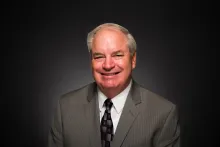
Robin Webber was born in Chicago, Illinois, in 1951, but has lived most of his life in California. He has been a part of the Church of God community since 1963. He attended Ambassador College in Pasadena from 1969-1973. He majored in theology and history.
Mr. Webber's interest remains in the study of history, socio-economics and literature. Over the years, he has offered his services to museums as a docent to share his enthusiasm and passions regarding these areas of expertise.
When time permits, he loves to go mountain biking on nearby ranch land and meet his wife as she hikes toward him.
