

Randy Urwiller
This transcript was generated by AI and may contain errors. It is provided to assist those who may not be able to listen to the message.
The one thing that I want to share with all of you as we go through this road to Jerusalem towards Passover is that Jesus was not dragged into the city. Every step that he took, every event that he became a part of, was for an incredible purpose.
Again, I want to share a very profound concept with you. We do not worship an accidental Savior. We worship a God that is all-powerful, all-knowing, all-loving, ever-present, and knows the end from the beginning and declares it that he might feel his pleasure and that his purpose might stand. Last week, we found out that as Jesus came and it was a part of that famous story about Lazarus and raising Lazarus from the dead, that basically what he was doing for those that were not heroes, he was basically doing this.
He was knocking on the door of Jerusalem. Bethany, where Lazarus and Mary and Martha lived, was only about two miles away from Jerusalem. It was just on the shady side of the Mount of Olives in what today would be called the West Bank.
And what occurred then was that a man was raised from the dead, resurrected to stand. And giving life to that man was basically the death warrant for our Savior. And he knew exactly what he was doing. He knew when he was doing it. He knew where he was doing it. And he knew that the news of that event and what had transpired would go into Jerusalem.
And even as the high priest then said, should it be the nation and or should it be that one man should die? And Jesus Christ was a marked man. And he did that not only to raise Lazarus from the dead, but for us to understand that he raises us from the dead, from spiritual death, and gives us life. I'd like to share a thought with you. Join me if you would in John 10. John, the Gospel thereof, in John 10, let's all join there together as a congregation and open up the Word of God. In John 10 and verse 14, here's the point that I want to instill in you as we move towards the New Testament Passover. And that is simply in John 10.14. Let's notice, I am the good Shepherd, and I know my sheep, and I am known by my own.
The Lord is my Shepherd. I shall not want.
He is the good Shepherd. And that's what we say as we come to that table of the New Testament Passover. And we say, I'm going to give my life to the Father. I'm giving my life to the Son. It's the very best place that I can put my life, I can put my heart and entrust it, because the Lord is my Shepherd. I shall not want. But then notice what it says here in verse 15. As the Father knows me, even so I know the Father, and I lay down my life for the sheep. And other sheep I have which are not of this fold, also I must bring, and they will bring here my, excuse me, they will hear my voice, and there will be one flock and one Shepherd.
The key word that I want to put here is in verse 15. I lay down my life for the sheep.
Jesus' life was not taken from him.
He wasn't kidnapped. He didn't go screaming or dragging. He knew exactly what he was doing. And he wanted to give that sacrifice for you and for me, that we might have that way and that return to Eden, to that which was broken at Eden by Adam and Eve. There had to be a plan that was put into motion. He is that plan. He is that door that moves us past those carobs of old, that guarded and forbade entrance back into the garden, back into the presence, back into the relationship of God Almighty.
Now, Jesus not only laid down his life, but each of us has asked that same question. Maybe you've never thought about that. We may be familiar with the words of John that I lay down my life, but to recognize that there is a question that was posed to the disciple Peter in John 13.38. And here's the question. Will you lay your life down for me?
It goes back and forth. We know that Jesus laid down his life for us. The big question, the most important question then, once we know that, is will we lay down our lives for Jesus?
That's the question. Partaking of the bread, partaking of the wine, not only symbolizes Christ's commitment to us, but our commitment to follow him wherever he leads.
Now, let's follow that path. Let's move into that road a little bit more. And I'm going to give you three stories.
Three stories that happened after Lazarus, between the time of Lazarus and the time of that Passover evening. I could share more stories, but I only had time for three today because so often we read the stories that are in the Scriptures, and we see others. And it's my hope that you will also see yourself in these stories. So join me if you would in Mark 11. Mark 11 occurs just shortly after the time of the resurrection of Lazarus.
The days draw closer, and we pick up the story in Mark 11. It's a fascinating story.
Mark 11 and verse 1. Now, when they drew near Jerusalem, because what Jesus was doing at this point, stay with me, okay? He'd come to Bethany, knock down the door as it were, perform this mighty miracle, and then he withdrew. Because the time was not ready. It was not now. So there was kind of this back and forth, this seesawing. He kind of two steps forward, one step back. One step forward, two steps back. Because, after all, God not only created time, but He's also the master of timing. And that's what we're going to start finding here. Now, when they drew near to Jerusalem, to Bethage, and Bethany, at the Mount of Olives, He sent two of His disciples. And He said to them, Go into the village opposite you, and as you have entered it, you will find a cult, tied, on which no one has sat.
Loose it, and bring it to Me.
And if anyone says to you, now, follow in the story, don't lose anything here. And if anyone says to you, Why are you doing this?
Just say, The Lord has need of it, and immediately He will send it here. So they went their way, and they found the cult tied by the door, outside on the street, and they loosed it.
But some of those who stood there said to them, What are you doing? Loosing the cult. In other words, Where are you going with that, guys? Hey, you're taking my Chevy.
If we brought it into modern day terms, What are you doing with my caddy? Hey, you're taking my Mustang. Where do you think you're going with that?
And they brought the cult to Jesus, and threw their clothes on it, and he sat on it.
What did we gain from this story, as we moved down that road to that ultimate Passover?
Did you notice that Jesus was speaking far away from the scene?
And yet Jesus knew exactly where that cult was, and its mother was, and that there would be men there, and he declared it as if it had already occurred, because he'd already seen it.
This is telling us that this was not just the Son of Man. This was the Son of God. This is, in a sense, showing that Jesus was fully God and fully man. That he's omnipotent. That he's omnipresent. That he works with all creation, whether it be a man or whether it be a beast. I'm only sharing this story with you, because it always strikes me, because sometimes we... Well, just like what I mentioned about the young man that was lost in the wilderness. Sometimes we think that God is either... Does not have eyes towards us. Does not have ears towards us. Doesn't know what's going on down here. Doesn't maybe know what's going on about with somebody else, somewhere else, that maybe we can't reach, or maybe we can't see. The encouragement here, brethren, is simply this. God is everywhere.
Here was God in human flesh encapsulated. And he knew what was going on at the next village. And he called it as it was. Just as much as you remember the famous story of Babe Ruth, the Bambino, back in the 20s or the 30s, when he went to the plate and he said, you know, he made that famous gesture with his finger, it's going to go out right over there. Of course, as legend has it, I think it's true.
I'm watching some eyes. I do think it's true. He stepped up and he...
And the babe, that's why they call him the Babe, the Babe hit it right over. He called it right where it was going over and it happened. Now, if a human ball player can do that... Wow!
And yet sometimes we wonder about our own God as to what he's doing for us and the doors that he's opening up. I hope that just that one point alone will encourage you to recognize that we have a God that knows exactly where we are and exactly what lies ahead of us, maybe not a donkey or a foal, but knows exactly what we're going to need to fulfill his purpose in us. The next thing that's very interesting is, if you look at verse 7, then they brought the colt to Jesus and threw their clothes on it and he sat on it. But let me go up here just a bit here where... Let me just find the line here.
One second.
Okay, yeah. And verse 2, pardon me. And it says, And you will find a colt tied on which no one no one has sat.
No one has sat.
Now, let's think this through for a moment.
It's enough to say, you're going to find a coal... you know, you're going to find a foal up there, but imagine you're going to say, and by the way, nobody has ever even ridden on it.
And it came to pass.
The reason why this is so important for each and every one of us is to recognize that when Jesus did sit on that young foal and did go into Jerusalem, he was indeed taking a ride on something that had never occurred before.
He was taking a ride on something that had never occurred before.
And he was willing to do that for you and for me. And he was going to, in that sense, as he got on it, he was going to break that foal.
Break it. And bring it under subjection. When you think about it, Jesus Christ did something that he was commissioned to do from the very beginning of time. As it says in Revelation 13, verse 8, from the foundation of the world that the Lamb was to be there. And he rode on that. And that foal was broken.
And when you think about it, what Jesus Christ did for each and every one of us, he rode a ride that none of us of ourselves could do. Join me if you would in Romans 7. In Romans 7, verse 23, let's take a look here. In Romans 7, 23, no man could do this what Jesus did.
But I see another law in my members, the Apostle Paul speaking, warring against the law of my mind and bringing me into captivity to the law of sin, which is in my members.
None of us of and by ourselves, with our human nature, can break sin.
Only God can.
O wretched man that I am, who will deliver me from this body of death? I thank God through Jesus Christ our Lord, so then with the mind I myself serve the law of God, but with the flesh sin.
Now, join me if you would in 1 Corinthians 15. In 1 Corinthians 15, notice again, words of Paul, the sting of death is sin, and the strength of sin is the law.
But thanks be to God who gives us the victory through our Lord Jesus Christ.
Christ conquered sin. Sin. He did that which you and I could never do, of and by and for ourselves. Conquered. And as it says in the book of Ephesians, He took captivity captive, that which holds us captive, that which holds us at bay, that which separates us from God.
Jesus Christ broke through His death and through His perfect atonement.
What do we learn from all of this?
As we move towards the New Testament Passover, which first and foremost is a festival of faith.
It's not just simply a festival of doing, it is a festival of faith.
And it's a statement of God's almighty love to us. God knows what's in place. He simply asks us to carry out His will and go the distance in faithful obedience. We just heard about that through Stephen, in the message of Noah. And you know, that was a lot of obedience. Have you ever read Genesis 6 and Genesis 7? You talk about a micromanager. God says it will be this long, it will be this wide, it will be this high. You will have this, you will have that, you will have this, you will have that. And by the way, it will be made out of go-for-wood.
You say, wow, God's really into the details, isn't He? I believe He is.
I believe God is into the details. We can't do all of those details by ourselves. And we have to recognize that God will do what we can't do as we have faith in Him. God's given us a lot to do.
God's given us a lot to do as Christians. We cannot do it by ourselves. God does that which God can do alone. He can open the Red Sea. Israel has to march through. He can bring Lazarus from death out of the grave. And then He asks the disciples to unwrap him. He asks these disciples to go and find the fall in the village nearby. And isn't it amazing that they did it? Question as we come up to Passover, what has God asked us to do that we are not yet doing in faithful obedience? Just think about it for a moment. What are we doing?
God tells us how to follow Him, the steps to take. And so it's just interesting to kind of look at that as we come up to the Passover and to recognize we have a responsibility. Now the story thickens here as we go back to Mark. Let's go back to Mark 11. And the second story I'd like to share with you.
Notice what happens here.
So they went their way. Okay. And then in verse 7, And then they brought the colt to Jesus, and threw their clothes on it. And he sat on it.
And many spread their clothes on the road, and others cut down leafy branches from the trees, and spread them on the road. And then those who went before, and those who followed Him, cried out, saying, Hosanna, blessed is he who comes in the name of the Lord. Blessed is the kingdom of our Father David that comes in the name of the Lord. Hosanna in the highest. Let's talk about this for a moment. Let's understand that Jesus was now beginning to enter Jerusalem, and He was on this fall.
And to recognize that there were people that were there. There's a twofold crowd. Some of them had been in Bethany, and some of them had witnessed Lazarus, seen Lazarus, and they knew what was going on from that event. There were many Galileans that would come down to Jerusalem. This was a pilgrimage. Two of the great pilgrimage was the Passover pilgrimage, and the pilgrimage had tabernacles. And so there were people that were acquainted with what Jesus had done in the Galilee. They now had heard about Him raising this man from the dead, and now they saw Him entering Jerusalem on this young donkey. And that brought to mind what it says over in Zechariah 9 and verse 9. Let's take a look at that for a moment. In Zechariah 9, every good Jew would know this, and perhaps we ought to also, especially in this time of the year. In Zechariah 9, let's notice it. It's a messianic prophecy, speaking of the Messiah to come. And it says, He rejoiced greatly, O daughter of Zion. Shout, O daughter of Jerusalem! Behold, your King is coming to you!
And He is just! And having salvation, lowly, and riding on a donkey. A cult, the full of a donkey.
And so they were aware of this, and they were beginning, oh, you know, have you ever, perhaps not known what's going on, then everything kind of begins to become clear. This comes into play, this comes into play, and a little bit like Archimedes in the bathtub, Eureka, I have found it. All of the facts, all of a sudden, come together. And you've got to recognize, let's all look up here for a second, okay? This will be the PowerPoint. You have people pouring through the streets of Jerusalem. You have people coming down from the hills. You have people coming from all over, and they're streaming into the city. And all of a sudden, they're smack dab with this young man, riding on this fool. He's being followed by these people. And there's all of a sudden, an energy. They begin to say, this is it! This is Messiah!
They had been singing about this for years, as they on the pilgrimage festival would go up to Jerusalem. And they would sing from the Psalms. They would sing the songs of what is called Ascent. The songs of Ascent, remember the term, going up to Jerusalem? Because you have to go up to Jerusalem because of the elevation. And the people would be going up to Jerusalem, and they would be singing the Messianic Psalms. And they would be praising God. This would be on their lips. They would be singing it. They did this year in and year out, and I'm sure that Jesus himself, early in his life, when he'd go to Passover in Jerusalem, would also be singing the songs of Ascent.
And there's enthusiasm. There's a gigantic feel in the audience.
And they're singing songs out of Psalms 111. Join me if there for a moment. Psalm 111.
Right in the middle of the Bible. Book of Psalms. Psalms 111. Notice what it says here.
Verse 25.
Psalms 118. Pardon me. Psalms 118, verse 25.
Save now, I pray, O Lord. O Lord, I pray, sit now in prosperity. Blessed is he who comes in the name of the Lord. We have blessed you from the house of the Lord.
God is the Lord, and he has given us light.
This is a part of the songs of Ascent.
I'd like you to turn to page 151 in your hymnal.
I want you to think of yourself as a pilgrim, going up to Jerusalem.
I want you to think that all of a sudden there's excitement, and everybody kind of comes to this narrow road and this alley. And here's this young man. He's on a donkey. And the people are already singing the songs of Ascent out of the Psalms. And maybe you've never noticed page 151. All glory, laud, and honor.
This is a messianic prophecy. This is what the Jewish community was singing, most likely, as Jesus King.
Not any longer knocking on the door, but now in Jerusalem, ready to go the next step.
All glory, laud, and honor. To thee, Redeemer King. To whom the lips of children Make loud hoes and us ring Thou art the King of Israel Thou dave His loyal Son Who in the Lord's name comest The King and Blessed One The company of angels Are praising thee on fire And mortal men and all things Created, they provide The people of the Hebrews With songs before thee went Our praise and prayer and anthems Before thee we present To thee before thy fashion They sang their hymns of praise To thee now high exalted Our melody we raise Thou dost accept their praises Except the praise we bring Who in all good delight us Thou good and gracious King. Imagine being in that audience. Imagine the jubilation as the King was recognized and welcomed and people putting down palm fronds and people putting all that they had in front of him, putting down their clothing, just the majesty, just the excitement, and just the enthusiasm and to recognize what that must have been like. It's interesting, over in John 12 and verse 13, which is a parallel count. Let me take you over there for a second. John 12 and verse 13, as all of this was happening, they took branches of palm trees and they went out to meet him. They were so excited. They went out to meet him. They didn't even wait for him to come to him. They went out. They were anxious. They wanted to see his arrival. And they said, Hosanna! And then they gave a blessing. Blessing is he who comes in the name of the Lord, the King of Israel.
Isn't that interesting? So much further.
Seemingly, it was the moment for Messiah to ascend his throne, to bring to pass the words of Messiah in the Song of the Scent.
Yet those who recognize those scriptures, and involved in all of that enthusiasm and joy and jubilation, just days later, some of them were a part of calling for him to be crucified.
It's a very interesting scenario that would occur over those days. Very interesting indeed. I have a question for you, and maybe something you've never heard before or not. The word hosanna, we normally think of hosanna today as just a blessing, or just a word. It's a word of praise. The word hosanna, though, means save now. It means to save now. Salvation now. And we know by history and by the books and by what others have said that the Jews were underneath the boot of Rome. And they were not looking for someone to wander through a bunch of lepers. They were not looking for someone to wander through the hills of Galilee and feed the thousands. They were not looking for someone to heal the sick. They were not looking at someone who would be a friend of sinners and publicans and would talk to harlots.
They weren't looking for that. They were looking for Julius Caesar with a Jewish name.
They were looking for Alexander the Great with a Jewish name. They were looking for something. They were wanting to make God's prophecies over into their image. They wanted salvation then and there. They needed physical deliverance from the boot of Rome. And I think that's a big lesson for all of us, brethren, as we consider coming up to the Passover, is what will be our staying power with the revelation of God. As we partake of that bread and we partake of that wine, is to recognize that first and foremost the blessings and the symbolism of that bread and wine is spiritual. It is spiritual. It is towards spiritual salvation. Spiritual salvation that is only made possible through spiritual atonement and thus deliverance.
It is not to chase away every bad thing every day. It is towards spiritual deliverance. That audience then and there did not understand that completely. They wanted Hosanna. They wanted salvation then and there. The point that I want to share with you, especially with what many of us are going through in our life, is I'd like you to jot this down. If you'd like to, it's simply this. Spiritual deliverance and physical deliverance are not the same thing.
Spiritual deliverance and physical deliverance are not the same thing. We found that this weekend. I mentioned two wonderful elderly gentlemen. God took one, the other lives. That's always been the case in the Bible. You can go to Acts 12. You see the story of Peter. Peter has an angelic jailbreak. He's delivered. Within that same chapter, another apostle is martyred. Was one man worse than the other? I don't think so. God had his time. God had his plan. God had his purpose. Both of those men served their purpose. We need to learn that today as we consider this story. Here's what I'd like to share with you, some takeaway.
I would hope that all of us, more than ever, go out to meet him every day. Just as much as those zealous Jews went out to meet Messiah as he came through the gate of the city, that you and I, every day, meet him. Meet him. Don't wait for him to come to us, but meet him and greet him, and be thankful and to recognize that we have an opportunity to honor God.
And that the way that we do that today is we don't put clothes on a donkey. We do not put down our clothes in a pathway, and please don't go out and denude the palm trees right now. That's not what we're talking about. Take all the branches. We honor God as we bear fruit, as we continue in a transformed life, and that we stay with him, and that we do not deny him, and that when the big choices in life come up, you know, it's very interesting, you know, the story which I probably won't get to is very interesting. Within a day, those same individuals had to make a choice, and sometimes those choices are very, very tough, and you know what? They look very, very similar, and you don't know which way to go. Have you ever thought about the two men that appeared on stage with Pontius Pilate? One was called the son of the father, and the other was claimed to be the son of God, right? Barabbas means what?
In Aramaic and Hebrew, what does Barabbas mean? Son of the father. Abba, it's not a hard test. Barabbas means son of the father, and then there was Jesus of Nazareth, the son of God.
Question, which one did mankind take? Which one did mankind pick? Those who are the choices that will be before us. Sometimes they will look very, very, very close, and we have to appeal to God and meet God as He comes and enters into our life and say, God, I need your help. I want to be in covenant with you. As I said I would on the night of the Passover, I want to stay in covenant with you.
I want to be your child. I want to be like my older brother, Jesus Christ. Help me with your spirit. Help me to learn from the lessons of the past. Help me to recognize that I need to be as close to you as possible and to be in the Word, to understand it, to practice it, to live it, to share it, and to encourage it with others. Let me quickly take you then to the third point here.
Third point. The third point comes right down the line. Mark 11. Let's go there real quickly. In Mark 11, verse 11. Jesus went into Jerusalem and into the temple and so when he had looked around at all things that the hour was already laid, he went out to Bethany with the twelve. And now the next day when they had come out from Bethany, he was hungry.
And it goes through the lesson of the victory. Let's go down to verse 15 where it says, So they came to Jerusalem, and then Jesus went into the temple and began to drive out those who bought and sold in the temple, and overturned the tables of the money changers, and the seat of those who sold doves. And he would not allow anyone to carry wares through the temple. And then he taught, saying to them, Is it not written, my house shall be called a house of prayer for all nations, but you have made it a den of the thieves.
And the scribes and the chief priest heard it, and they were just so happy with everything the way it turned out. Is that what your Bible says? No. They heard it and thought how they might destroy him, for they feared him because all the people were astonished by his teaching. Now let's understand what happened here. What is very interesting, one very important thing, is up here. In verse 11, And went into Jerusalem and into the temple, and so he looked around at all things.
The hours that he left. One thing you've got to recognize, the God that we worship, he is always watching. He's always watching. It doesn't mean that you always see all of his actions. God is observant. He looked around. And what we need to recognize is that Godly silence is not always synonymous with what God is thinking or what God is going to do.
Nothing goes unnoticed. You know, it's mentioned oftentimes between the time of Malachi and the time of Jesus' incarnation. It's called a time of silence. It's called a time amongst the Jewish community where all the heard was the voice of the angel. They recognized that the last voice of God came through the prophet Malachi. And in that 400-year period, they called it the time of the voice of the angel. It does not mean that God did not know what was going on. He was bringing everything into play that Jesus might be born at the right time and in the right way.
The point that I want to make for all of us is that if it seems like it's silent in your life right now, my encouragement to you is to recognize that God is observing. God is watching. God will be involved at the right time and in the right way. And through all of this story, we're going to understand another important lesson in a moment.
Jesus went in there, and basically what had happened was that the merchants were set up in the temple. We need to remember, if you look up here a second, the temple was on a gigantic temple mound. It was one of the wonders of the world. It's just that it came 400 years after Herodotus, so it didn't get named.
One of the seven. It was like on a plateau, and the temple grounds were about 900 feet long. And there were different sections of that court, and in the court of the Gentiles is where all the wares were sold for the temple sacrifices. But as so many of the Jews from the diaspora, the dispersed ones, came in that were either Roman or Greek, they had to trade their Roman and Greek coins into a Judean coin so that they could pay the temple tax. And because they would be buying lambs, they'd be buying salt, they'd be buying oil, they'd be buying this, they'd be buying that. And you know, there was just a big gouge in the prices.
They were taking advantage of people trying to worship God and to serve God.
And they were taking advantage of them. And can you imagine when Jesus came in and saw that when he finally was ready to act? You know, this thing was just not done in a corner. And all of a sudden, you know, he's turning over tables. You can see doves going up in the air. You can see sheep being scattered throughout. Oh, here comes another one. You're in the crowd. Oh, whoa, what's going on here? And you hear tables, and you hear commotion, and you hear emotion, and you hear noise, and there's shouts, and something's going on. Yeah, Jesus wanted to make a point that my father's house is going to be a house of prayer, and you are not going to take advantage of those that worship me. You are not.
He made a point. He went into the temple. Now, the one thing that we want to remember about this, might want to jot it down. This is the second time that he'd gone into the temple. He'd gone at the beginning of his ministry, did the very same thing, did the very same thing. And two to three years later, he came back again and overturned the tables. What does this tell you and tell me?
I realize that even as we partake of the New Testament Passover and the symbols thereof, I think you and I recognize how easily sin can worm its way back into our life.
Even when we've gone through something traumatic, or we're going to say, well, we're going to do that this year, this day, this week. We're going to make this goal. We're going to do this. I'm going to do that. We're going to do this. Maybe I'm the only one to Susan that does this every so often. There are all sorts of big goals. And I think you do, too.
And you recognize how easily it is to go back and play the same thing, just like they did in the Temple courtyard.
Here's the point I want to make with you in conclusion. It's simply this.
When we partake of the bread and the wine on the night of the Passover and recognize what God has done for us through His Son, and we surrender our lives to Him and covenant, renew our vow under the terms of the new covenant, we're saying that we are no longer our own person.
We're saying that we recognize the words of the Apostle Paul in 1 Corinthians 3, 16-17, that we are the Temple of God. And that's where he wants to set up shop.
Therefore, be ready to meet your Maker and be prepared.
And what we are saying as Christians when we partake of that bread and that wine is that we are ready, willing, open, and available for God the Father and His Spirit to continue to overturn the tables of our heart until they're right with God.
We give Him privilege to come into our life, to come in that Temple which He says is His, and that He has the privilege, He has the right, He has the honor, and Father knows best that He is going to, this coming year, overturn my life.
Overturn the tables of my heart.
Do some scattering in my mind so that I can honor Him.
So these are some thoughts. I just want to share some of the stories of the Bible as we move down that road to Passover. They're meaningful to me. I hope they're meaningful to you, these small stories that we have a part in because the story moves on.
And a lot of us, I know right now, are preparing and responsibly evaluating our relationship and what God has done for us through His Son and removing towards Passover. The question is not only so much what are we going to do as we move to Passover, but what are we going to do after Passover? That is the question. Your actions will tell the answer.
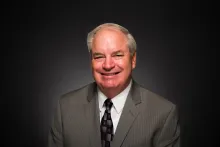
Robin Webber was born in Chicago, Illinois, in 1951, but has lived most of his life in California. He has been a part of the Church of God community since 1963. He attended Ambassador College in Pasadena from 1969-1973. He majored in theology and history.
Mr. Webber's interest remains in the study of history, socio-economics and literature. Over the years, he has offered his services to museums as a docent to share his enthusiasm and passions regarding these areas of expertise.
When time permits, he loves to go mountain biking on nearby ranch land and meet his wife as she hikes toward him.
