
Robin S Webber
This transcript was generated by AI and may contain errors. It is provided to assist those who may not be able to listen to the message.
Thank you very much, Charlie, especially for leading that song. That's just such an appropriate song for the Holy Days. It covers them pass over all the way through trumpets and even up to the eighth day. So that's a very, very appropriate song for the Holy Days. It's such an inspiring song, isn't it? It really is. So I really appreciate you choosing that particular song here for the last day of 11 bread. So appropriate for this time of the year. It sure is great to see all of you here and to be here with all of you on this special, special day, concluding another piece of 11 bread, just being the last day of 11 bread. It sure seems like, I know, the two weeks ago, the fastest, seemed to be 11 bread and tabernacle, then. Those weeks seemed to always go so very fast. It's just like we just started. Dad passed over just yesterday, and now here he is already the last day of 11 bread. Now, on the first day of 11 bread in Gladwood, we wrote on Gladwood for that, the second hour was, I talked on some of the events leading up to the Passover, in Days of 11 Bread, from the point of view of the Old Testament, when God delivered Israel out of Egypt. I'm actually going to cover that here tomorrow for those of you who will be here in Gailard. That's a little bit reverse order from the right order, but that's okay. Today, then, on this last day of 11 bread, I want to cover some of the events surrounding the Passover and the Days of 11 Bread that occurred in the New Testament in the year Christ died. And the events led up to that and occurred during that time. Because, as we saw, as you will see tomorrow up here, and we saw last week down there, miraculous events occurred in the Old Testament, where God delivered Israel out of Egypt. Tremendous events occurred. Very miraculous. But those events, as you can read, in the Old Testament, that occurred leading up to the Passover in the Old Testament, pale and insignificant. These events leading up to the Passover in the year Christ died, the Old Testament events pale and significant, compared to the events that occurred in the New Testament leading up to the Passover and Days of 11 Bread. And these events in the New Testament that portray our future for mankind, that is so fantastic that, you know, as we start to think about it, we can't even hardly begin to imagine what that future is going to be like. If the events portray leading up to the Passover of the New Testament, we can hardly comprehend the future reality that God has in store for us.
And the events that attend that future reality occurred on the Passover, of these events leading up to the Passover, and occurred on the Passover and during the days of 11 Bread in the New Testament. So, day then, on this last day of 11 Bread, I want to look at the events that led up to the Passover of 31 A.D. and at the events that occurred on that Passover and during those days of 11 Bread. And I want to look at also, very briefly, what those events pretend for us and for all mankind. We want a title from a message here this afternoon. My title is, The Greatest of All Deliverances. And a couple of people might say, well, God's deliverance of Israel out of Egypt was a great deliverance, but I want to show you the deliverance we have in the New Testament, which is the greatest of all deliverances. So, let's first look at events leading up to the Passover, leading up to it. Not, we'll look at the events of the Passover a little bit later, but first let's look at events leading up to the Passover on which Christ died, which we have figured to be the Passover of 31 AD.
In the weeks and months leading up to that, the Old Testament Passover, just to review quickly, as we saw, there were 10 plagues that God poured out. Reckless events.
God poured out 10 plagues in the month, weeks and months leading up to that Old Testament Passover, when the Lamb was slain.
Most things were poured out, of course, on Egypt. But what events occurred in the weeks and months leading up to the New Testament Passover, which, when Christ became Lamb of God, slain from the foundation of the world? What events led up to that? Let's begin in the book of John, and I'll just paraphrase some of this, but John 7, verse 2 through John 10, verse 21, cover the events that occurred during the Feast of Tabernacles in 8th day and 30 AD, the year prior to that Passover on which Christ died.
In John 8-1 through John 10-21, if you look at that carefully, as I have and as others have, it's interesting to look at that very carefully, because the events of John 8-1 through John 10-21, they all occurred on the same day. All those events occurred on the eighth day, or on the last great day, as we want some, still call it some of those days. But what happens next? I want to pick it up what happened next after John 10-21, after that occurrence of that eighth day, or last great day, and the year prior to when Christ died. Let's pick it up then in John 10, verse 22.
What time was this? Because now it was the Feast of Dedication in Jerusalem, and it was winter.
The Feast of Dedication was a feast initiated by the Jews back in about 165 BC, after they rededicated the temple in Jerusalem to God. The temple had been desecrated by Antiochus the fourth, or Antiochus Epiphanes, as he's known, and had been dedicated by Antiochus to the Greek god Zeus. So after he was driven out, and the Jews took over the Jerusalem of the temple again, they had to rededicate, they had to rededicate the temple to God. Jews today, as most of you know, still celebrate the Feast of Dedication. Today it is celebrated in Hanukkah, or the Festival of Life.
It is celebrated in December, or in the winter, as indicated here in John 10-22.
Why not in verse 23? And Jesus walked in the temple this day of the Feast of Dedication, because he walked in the temple in Solomon's porch. Then the Jews surrounded him and said to him, How long do you keep us in doubt, if you are the Christ, if you are the Messiah, as you claim? Tell us plainly. Well, this is now about three months or so before the Passover, in which Christ would die. And Tumut was already beginning to arise in earnest among the Jews, as to whether Christ was what he claimed to be, whether or not he was the promised Messiah.
If you are the Christ, if you are the Messiah, tell us plainly. Tell us plainly. Don't beat around the bush. Let us know. They have plainly. Verse 30, John 10. Christ said here, Christ then emphasized himself, or I should say, Christ then equated himself with God the Father in verse 30. That I and my Father are one. What happened after Jesus said that? Verse 31, here's what happened. Then the Jews took up stones again to stone him. And Jesus answered them, say, Many good works I have shown you from my Father, many miracles I performed. For which of those good works? Which of those works do you stone me? And the Jews answered him, verse 33, saying, For good work we do not stone you, but for blasphemy. Because you, being a man, make yourself out to be God.
Verse 39, Therefore they sought again to seize him, but he escaped out of their hands. Now, look at something very interesting here.
Did he escape out of their hands? Where did he escape to?
Is there any significance to where he went, where he escaped to? Did he escape to other hand, but where did he go? And why did he go there? Verse 40, it tells us, He went again beyond the Jordan, and he went to the place where John was baptizing at first, and there he stayed.
Very interesting. Why did he go there? Why did he go to the place where John was baptizing at first?
And why did he stay there? See, Jesus knew his time was running out, didn't he? He knew his hour had almost come. It was now only about three months or so before the Passover in which he would die of his life for mankind, as the Lamb's playing from the foundation of the world.
He knew he had only about three more months before he'd be crucified. Now, what if you were in that position? Where would you go? What would you do? Was he trying to escape? Not on your life.
He would not avoid danger to preserve his life, because he had come to the earth in the flesh to die for all of mankind. So our lives can be saved.
So he was not running away. He was preparing himself for his final struggle, his final confrontation with Satan and against the world to die for mankind. He had to prepare for that.
To do that, he went back to the place where he had been baptized by John the Baptist. Think of that. He was baptized. That's where his ministry began. He went back to that place to think about, here's why I came. Here's my whole purpose. Here's where I was baptized to make that final dedication to God to fulfill my Father's will. Why would he go there? What had happened there that could help him, that could strengthen him? Let's go to Matthew's account and read it for ourselves. Let's go to Matthew chapter 3. This goes back to that time when he was reflecting on here that John the Baptist baptized him. He talks about verse 1, about John the Baptist came preaching in the wilderness. Let's drop down to verse 13. Then Jesus came from Galilee to John, to John the Baptist at the Jordan River. He was baptized of him. Christ came to be baptized John the Baptist. And John tried to prevent him, saying, I need to be baptized by you. Why are you coming to me?
Verse 15, but Jesus answered and said to him, permit it to be so for now, for lest it is fitting for us to fulfill all righteousness. And then he allowed him. And when he, when Jesus had been baptized, he came up immediately from the water, and behold the heavens were open to him. And he saw the Spirit of God descending like a dove, and lighting upon him. Verse 17, And suddenly a voice came from heaven, saying, This is my beloved Son, in whom I am well pleased. Why did Jesus go there to prepare for what was about to happen to him? Because it was there that the voice of God, the voice of his Father, had come to him and ensured him that he had made the right decision to become the Son of Man. And assured him of how pleasing that was to God the Father. He was going to come down and transform himself to become flesh, and to go through everything the flesh had to go through, so he could suffer and die for mankind to be a part of God's family. God the Father was free assured him when he started that tract, and when he was baptized, I am well pleased that you've made that choice. I'm going to be behind you all the way.
This was the supreme experience of his life, in a sense, starting from his ministry, physically speaking, to be assured by his Father how pleased he was to have his Son come into flesh to die for all mankind. Because Christ was about to meet a mob of men who hated him and who condemned him to die by being crucified. And Jesus armed himself to meet these men by going back to where he first met God as a human being. Think about it. We must always prepare. If we know someone's coming against us to persecute us, if we know the remedy's there and he's after us, we must always prepare to meet those who may be against us by first meeting with God who is always with us and always for us. That's how you prepare. You meet with God first. And he was going back to that place where his Father met with him to reassure him. It's always good to return to the place where we first met God, the place where God first spoke to us, quote-unquote, by opening our minds. He had done that. He would face something and thought, you know, I want to go back to that time where God opened my mind. And I first realized God is there. He's sovereign over all the heavens. He's sovereign over all things. God is real. And if God is real, then there's got to be a reason he created mankind. There isn't a purpose that I have for being born a human being.
And the first time God opened my mind to that realization, it was something special, wasn't it? And sometimes it's good to go back there. Remember that this call we got from God was very special. God did something special for us. He opened our minds. He said, I'm going to call you. I want you to be a part of my family now. I'm going to give you a head start.
This was the supreme experience of Christ's life, physically speaking, to be assured by his father how pleased he was to have a son come to die for all mankind.
Because of what Christ was going to face, he wanted to be reassured. He wanted to have that, go back to that point in his life so he could get that reassurance. He could be prepared to face what he had to face in the future just ahead of him. When he knew he'd be hated, all mankind would be against him. Thus Christ here went away again beyond the Jordan to the place where he was baptized. Virgama was baptizing at first, and there he stayed. He said, look at Esamphai at time, reflect on the purpose for which he came into place.
He strengthened spiritually for his final conflict with Satan and with the world. He's preparing for that.
What happened during this period of time? Let's go back now to John 11.
John 11 verse 1, we're in John 10 a moment ago, let's go to John 11 now, the very first verse. Now a certain man was sick, Lazarus of Bethany, the town of Mary, and her sister Martha. Now if you look it up, Bethany was a village near Jerusalem, in fact it was less than two miles from Jerusalem, about a mile and a half, a mile and a half from Jerusalem, near the base of the Mount of Olives. Verse 2, it was that Mary who anointed the Lord with fragrant oil and watches feet with her hair, whose brother Lazarus was sick. Therefore the sister sent to him, saying, Lord, behold, he whom you love is sick. Now obviously, Jesus must have stayed often in their home because he was well acquainted with them and they were well acquainted with him.
But it's very interesting to look at what Bethany means.
It's a village named Bethany. In Hebrew, Beth is the second letter of the Hebrew alphabet. It has 22 letters. In ancient, every letter of the Hebrew alphabet was drawn to picture something.
Beth was drawn to picture a house.
And Beth is also the Hebrew word for house. You ever see any word in the Old Testament that says Beth something, it means house of something. So Bethany means something, it means house of something. Bethany, house of something. What does it mean? What does Bethany mean?
Bethany means house of affliction.
House of affliction.
It was a place where the sick and afflicted went to be cared for, at least to some degree. It was where the house of Simon the leper was located, Matthew 26. It was kind of a place where those who needed to recover from affliction, where they could be isolated, not spread that affliction, some lepers even lived there. It was a place where they afflicted went. It was called the house of affliction. People get there to get healing or recover.
It's also where Christ stayed the week leading up to his final Passover, to his affliction, and death, before he wrote into Jerusalem on a donkey, which we'll look at in a moment.
It was also from Bethany, from the house of affliction, that Christ ascended back to heaven about 40 days after his resurrection. He can read that in Luke 24, verses 15-51. He said when he ascended back to his father from heaven, he ascended to his heaven from Bethany.
He entered Jerusalem for the final time from the house of affliction, from Bethany, and he ascended to his father for the final time from the house of affliction, from Bethany. I think there's a purpose in that. To forever remind us that Christ is associated with Bethany, with the house of affliction, because he is our house of affliction, because he took upon himself all of our affliction. There's a connection there.
John 11, verse 3, Therefore the sister sent to him, saying, Lord, behold, heal me, love is sick, referring to their brother Lazarus. And when Jesus heard that, he said, this sickness is not unto death, but for the glory of God.
The Son of Man may be glorified to it.
Now Jesus loved Martha and her sisters and Lazarus. So when he heard that he was sick, he stayed two more days in the place where he was.
Pop and think about that for a minute. Just says there that he's just loved Mary and Martha and Lazarus. He loved them, a deep love for them. He stayed with them often. He's well acquainted with them. They were well acquainted with him. He now gets word that Lazarus is sick, and he's not only sick, he's sick unto death. He's very near death.
But what does it say? It says, he stayed where he was for two more days.
Does that seem strange?
I mean, when God delivered Israel out of Egypt, wasn't it strange that God was delivering Israel out of Egypt, but yet time after time after each plague was poured out to get Pharaoh to release Israel from Egypt? What did God do? He hardened Pharaoh's heart so he wouldn't let them go. Does that seem strange? Why is this strange here in John 11?
Because Jesus loved Lazarus and knew he was extremely sick, but even near death. And yet, instead of rushing back to Bethany, he stayed two more days in the place where he was.
Think about that. In fact, he purposely waited before leaving for Bethany until Lazarus died before returning to Bethany.
And by the time he arrived, Lazarus had been dead and buried for four days. Verse 39 of the same chapter.
So, Christ purposely waited until it was too late. Does that make any sense?
Why would Christ do that? What lesson can we learn from that? When Jesus finally arrived in Bethany, what did Martha say to him as he approached their home?
Chapter 11, verse 20. John 11, beginning verse 20. Then Martha, as soon as she heard that Jesus was coming, she went out to meet him. She went out and met him, but Mary was sitting in the house. Now, Martha said to Jesus, Lord, if you'd just been here, you'd only have gotten here a little earlier. If you'd just been here a few days ago, my brother would not have died.
But even now, I know that whatever you ask of God, God will give you.
And Jesus said, your brother will rise again.
And Martha said to him, I know that he will rise again in the resurrection at the last day. And Jesus said to her, verse 25, he said, Martha, I am the resurrection in the water.
He who believes in me, though he may die, he shall live.
And whoever lives and believes in me shall never die.
Do you believe it? Then what did Jesus do? Verse 38.
Then Jesus again groaning in himself, he came to the tomb where Lazarus was, where he was entombed in a cave. Back then, they entombed him in a cave and put a rock over the cave.
He came to the tomb and it was a cave and a stone lay against it.
So nobody could go in there. The stone would have to be removed first.
And Jesus said, verse 39, take away the stone, remove the stone.
Why? You've been dead for four days. Why would you remove the stone? That's because you've been dead for four days. We'll do what that does. It's caused more agony, wouldn't it? You see your brother rotting away there and deteriorating and the flesh deteriorating? So Martha, the sifter of him who was dead, said to him, well, Lord, by this time there'd be a stench.
He's been dead for four days. Why would you want us to remove the stone? What does that going to do? That's just going to cause more pain and agony.
But Jesus said to you, verse 40, did I not say to you that if you would believe, you would see the glory of God? So then they took away the stone from the place where the dead man was lying.
And Jesus looked up his eyes and said, Father, I thank you that you have heard me.
I know that you always hear me because of the people who are standing by. I said this, that they may believe that you sent me. You know that I believe you, but I've said this just for the sake of the people. Now, when he had said these things, he cried out with a loud voice, Lazarus, come forth.
And he who had died came out bound hand and foot with grave claws, and his face was wrapped with a cloth. And Jesus said to him, Loose him and let him go.
Can you imagine what that would be like for Marian Martha?
See that, brother? He brought back the line.
I mean, think about it. It's one thing to believe in the resurrection.
One thing to believe in the resurrection of the dead.
But it's quite another thing altogether to witness it.
To witness seeing a loved one who'd been dead for four days where you'd lost all hope, and all of a sudden seeing him brought back to life right before your very eyes. See, Christ here was demonstrating the reality of what he had just proclaimed.
That whoever lives and believes in me shall never die.
Many who were there at Mary's home and witnessed this. After this, they did believe.
They did believe that Jesus must have been the promised Messiah. Verse 45, John 11, verse 45. Then many of the Jews who had come to Mary, they gathered there at the house because they were having a funeral proceeding at the house there morning period.
And they had seen the things that Jesus did. They all of a sudden, they believed in Him.
But what did some others do? Even after this, this is absolutely dumb founding.
It's hard to even imagine. That's what we're going to read here now.
But some of them who saw this, they saw that Lazarus had been dead for four days. They saw him brought back to life before their very eyes as he came back and met with him.
But some of them went away to the Pharisees and told them the things that Jesus did. Now, you talked about hardening of heart.
What happened? You know, in the Old Testament before Israel's deliverance from Egypt, Pharaoh's heart became hardened over and over again.
But there is no greater example in the Bible of the hardening of someone's heart, his heart worse than this example here of the chief priests and Pharisees. You talk about hardening of the heart.
John 11, verse 47. Then the chief priests and the Pharisees, they gathered a consul and said, they'd just been told, we witnessed a man who'd been dead for four days and we resurrected Jesus, bringing him back to life. So what did the Pharisees and what did they do?
They said, what should we do?
This man works many times. He can even bring people back to life. What are we going to do now? We might lose our following.
If we let him alone like this, everyone's going to believe him.
And the Romans will come and take away both our place and our nation. We're going to lose our standing with the people.
They were worried about themselves.
Can you believe that?
Can we even begin to fathom their response to the miracle of someone's life having been restored?
Life had just been restored and all they cared about was how that might affect their following.
We must get rid of this man who performs these miracles because everyone's going to begin to believe him.
And the Romans are going to come and they're going to take both take away both our place and our standing and our nation.
We're not going to have a following anymore. We've got to get rid of this guy.
Verse 53.
And from that day on, they plotted to put him to death.
Can you imagine that?
He just raised somebody from the death and gave him life and now they want to put him to death because they're afraid he's going to have more of a following than they were.
Talk about the hardening of the heart.
Verse 54. Therefore, Jesus no longer walked openly among the Jews, but he went from there into the country near the wilderness to a city called Ephraim, and there remained with his disciples. Ephraim was near Bethel in the mountainous region north of Jerusalem.
Was it now getting close to the time of the Passover and the days of unleavened bread?
Verse 55. And the Passover of the Jews was near, and many went from the country up to Jerusalem before the Passover to purify themselves.
And then they sought Jesus and they spoke among themselves as they stood in the temple. What do you think? Do you think that he will not come to the feast? You see, what do you think? He always comes up to the Passover for the feast. He's always there, but he knows right now if he comes here, he knows we're going to try to kill him. We want to get him. We want to put him to death. Knowing that we're going to put him to death, he's knowing that he's a condemned man. You think he'll have the nerve to come up to the feast this year, the Passover?
Verse 57. Then, both the chief priests and the Pharisees had given a command that if anyone knew where he was, he says he's not going to come up. He's going to keep in hiding. He wouldn't dare come up to the feast because he knows he's a condemned man, and then we all got to seize him and kill him if he comes up here.
So they said, well, he's going to keep in hiding. He won't come to the feast this year.
So in verse 57, they had given a command that if anyone knew where he was, Find out where he's hiding. And report it that we can find him and then seize him. We'll get him here. We'll go find where he's hiding and we'll seize him. Because that's what they thought. They thought he was hiding somewhere. But they had no need to worry whether or not he was going to show up in the past over that year. Little did they realize that it was his destiny to show up in that past over. That's why he'd been born. That's why he'd come to the earth in the place to be there at that past over. You know, here in this book of stories is, I would say, the greatest contrast of all contrasts. We have the love of Christ contrasted with the hatred of the Pharisees. And there can be no greater contrast in the Bible. Little did these Pharisees realize that this man who they hated had such tremendous love for them and for all of mankind that he would openly and willfully ride into Jerusalem in a way that thousands would see him. He was going to be right in there so thousands of people were going to see him coming into Jerusalem on that past over. Just the opposite of what the Pharisees thought.
He was going to ride in a way that couldn't possibly be missed by anyone. Not only that, but also on a very significant day, he was going to ride in a very significant day that had been predetermined in advance. It was one particular day he was going to ride into Jerusalem for that past over. How many days was it before the past over? John 12, verse 1. Then six days before the past over, Jesus came to Bethany, to the house of Ephesians, where Lazarus was, who had been dead, whom he had raised from the dead.
And there they made him a supper meal and marthased, served, but Lazarus was one of those who sat at the table with him. And then Mary took a pound of very costly oil of spikenard, anointed the feet of Jesus, and wiped his feet with her hair. And the house was filled with the fragrance of the essential oil, Mary Magdalene. Why did Mary do this?
Because she now believed that Jesus was the Christ, the Son of God, who was coming to the world, John 11, verse 27. She now realized that he would give his life to save the world, as acknowledged by Christ himself. Verse 4. But one of his disciples, Jesus Cariot, Simon's son, who betrayed him, said, Why was this fragrant oil not sold for 300 denarii and given to the poor? Verse 6. He said this not that he cared for the poor, but because he was a thief, and he had the money bar, and he used it to take what was put in it for himself. He stole from it.
But Jesus said, Let her alone. He has skipped this for the day of my burial. For the poor you have with you always, but me you do not have always.
Now, I want you to notice what happened next. Verse 12. The next day a great multitude that had come to the feast, when they heard that Jesus was coming to Jerusalem, they took branches of palm trees, they went out to meet him and cried out, Hosanna, blessed is he who comes in the name of the Lord, the King of Israel.
Now, counting in inclusively as the Jews did, this day he comes riding into Jerusalem, and all this happened, you read about right here, this is now the tenth day of the first month of Hebrew Calvary, the tenth of Nisan, or the tenth of Vad.
Why is that significant? Hold your place here, let's go to Exodus 12.
Exodus 12.
Begin in verse 1. The Lord spoke to Moses in the land of Egypt, saying, This month shall be your beginning of month, first month of the Hebrew calendar. It shall be the first month of the year to you. Verse 3. Speak to all the congregation of Israel, saying, On the tenth day of this month, Passover is the 14th day, On the tenth day of this month, every man shall take for himself a lamb.
According to the house of his father, a lamb for a household.
Verse 5. Your lamb shall be without blemish, a male of the first year.
You will take it from the sheep or from the goat. And you shall keep it until the 14th day of the same month, Then the whole assembly of the congregation of Israel shall kill it in twilight.
Here's the point. The Passover lamb was selected out on the tenth day of the first month.
And once that lamb was selected, it was condemned to die as the Passover lamb.
It was condemned to be the Passover lamb for that year, for that household.
It was on this very day in 31 A.D. that Jesus wrote in Jerusalem before great molds to the people, witnesses, to become the real Passover lamb of God. It was on that tenth day, the very day that the Old Testament Passover lamb was selected, Jesus voluntarily wrote in Jerusalem because He has selected Himself. I'm going to be that Passover lamb this year.
I'm going to be the Passover lamb, flying from the foundation of the world.
Now, let me ask another question as we go into the story. I'm going back now to John, Book of John. Let's go back to John 12.
What did Jesus write into Jerusalem on? This is quite significant.
John 12, verse 14. Then Jesus, when He had found a young donkey, He said on it, as it is written, verse 15, quoting from the Old Testament, Fear not, daughter of Zion, behold, your king is coming, sitting on a donkey's court.
That fulfilled the prophecy of Zechariah 9-9, which is very shortened here, just quoting off his head, off his head rather than quoting it verbatim. But in Zechariah 9-9, this is a prophecy that Jesus fulfilled here by writing in Jerusalem on a donkey.
Zechariah 9-9, I'll just quote it. Rejoice greatly, O daughter of Zion, shout, O daughter of Jerusalem, behold, your king is coming to you. He is just and having salvation. He is lowly in riding on a donkey, a colt, the foal of a donkey. As Jesus wrote in Jerusalem on a donkey, he gave the crowd a clear visual message. He couldn't speak to him because there were thousands there. They were cheering. He could not raise his voice above the crowd, but he gave them a visual message that they all unspookily understood. Anyone who remembered this prophecy is Zechariah 9-9. He gave them a clear visual message, but also one they failed to fully appreciate or understand. But those who associate this with Zechariah 9-9 would immediately see Christ as being the prophesied Messiah. Because it was prophesied, the Messiah is going to come riding in Jerusalem in the view of everybody, on this day, riding on a donkey.
Realize this is the prophesied Savior.
They're even echoing that by what they said in verse 13. As we just read, Hosanna, blessed is he who comes in the name of the Lord, the King of Israel. Hosanna is the Greek equivalent of two Hebrew words, Yahshua and Nah. Yahshua and Nah in Hebrew. Hosanna in Greek. Yahshua.
And Yahshua means in Hebrew, Save now. Save us now. That's what they were crying. He wrote in, he says, Save us now! We're under the yoke of the Romans. We're subject to the Roman yoke. Deliver us from the Romans. Save us now. That's what they were saying. That's what they were thinking.
And they were lined up by the thousands, as Jesus rode into Jerusalem on a donkey, on the 10th of Bad, on the 10th of Nisam, killing him as the conquering king, as the conquering savior, who they thought would immediately deliver them from the Romans to restore the former glory to Israel. But they failed to realize the other aspect of what it meant for a king or a judge to rise in on a donkey. Ezekiel 9, 9 indicates it can be associated with being lowly, or being humble, which it certainly was.
But it means much more than that. He riding in Jerusalem on a donkey was a noble act. We don't think of a donkey being a very noble animal, but it was a noble animal back then. Why was it considered to be a noble animal back then? Because of some Old Testament examples, I'm just going to quote these and refer to them. Jair, J-A-I-R, was a judge of Israel. He had 30 sons who rode 30 donkeys, and they also had 30 towns over which they ruled. You can read that in Judges 10, verse 4.
You know who Mephibosheth is? Mephibosheth was the lame son of Saul, King Saul, and he rode in Jerusalem on a donkey to meet King David, who he read in 2 Samuel 19, 26. So the donkey was a noble animal, a lowly animal, but it was even more than that. When Christ rode in Jerusalem on a donkey, he was indicating what kind of a Messiah and what kind of a king he would be. See, if a king or a king came riding into town on a horse, which you might expect a king coming in on a horse, he came riding into town on a horse, and indicated he was coming to make war, because the horse is an amount for someone who was making war.
He was an animal of war, or amount of war. And you think about this example of that. When Christ returns, what's he going to come riding on? He's going to come riding on a white horse. Why a white horse? Because the horse was the mount of a rider coming to make war, and white is symbolic of righteousness. That's why Revelation 19.11 says what it says. Revelation 19.11, Now I saw heaven open to behold, a white horse, and he who stood on him was called Faithful and True, and in righteousness he judges and makes war.
He's riding on a horse, because the horse is the mount of someone who's coming to make war, which Christ will have to do initially at his coming. So the horse's the mount of war of someone coming to conquer, and opposing an army by making war, which Christ will do at his return. But two thousand years ago, Christ did not ride in Jerusalem to be a conquering king to conquer the Romans, or to conquer the Roman armies.
He didn't come riding in on a horse. He came riding in on a donkey, which was the mount of a king, or king to be, or of a judge, who was not coming to make war. But he was coming to make peace. The donkey was the mount of someone who came to make peace, not war.
Christ rode in Jerusalem on a donkey, because he was riding as the Prince of Peace, Isaiah 9-6. Isaiah 9-6, his name will be called the Prince of Peace. By riding in Jerusalem on a donkey, on the very day the old system of Passover lamb was selected out, by riding a farm, openly, for a multitude of thousands of people would see him, that was a tremendous example of love and courage.
You can't have more love and more courage than that. He was selecting himself to be that Passover lamb to suffer and die for all mankind, and he did it openly with courage so everybody could see him. There'd be no doubt that's what he was doing. And what that meant, on that day, on that tenth day of that first month when he rode in to Jerusalem on a donkey, it now meant there was no turning back.
William Barclay, Barclay's New Testament study Bible in his commentary, pushed it this way, near forever into this act. Seldom in the world history has there been such a display of magnificently deliberate courage as a triumphal entry. Jesus was an outlaw, advised by the Pharisees and scribes, and the authorities were determined to kill him, and yet he came in such a way as to focus every eye upon himself. He was an act of the most repuritative courage, and he was an act of the most repuritative love, for it was love's last appeal before the end, William Barclay said.
And he came to bring the greatest of all deliverances, not to deliver Israel from the Romans, but to deliver mankind from sin and death. That then covers some of the events leading up to the Passover on which Christ died, leading up to the Passover of 31 AD. Now let's briefly look at events that occurred on the Passover and during the days of Unleavened Bread in that year. As we have recently observed on the night of the Passover, Christ instituted the New Testament Passover with his disciples.
Around midnight, he was arrested by Roman soldiers on the Mount of Olives after being betrayed by Jesus Carat. He was then falsely accused and condemned to be crucified. He was then violently scourged and forced to try to carry his own stake across to where he was crucified around 9 AM that morning, that Passover morning around the third hour after sunrise, Mark 15, verse 25. What happened three hours later, beginning on the sixth hour after sunrise, or around noon, that Passover day? Let's go to Matthew 27. Matthew 27, verse 45. Now from the sixth hour, which had been around noon, until the ninth hour, the day that was the time, three in the afternoon, when he died, there was darkness over all the land.
It's interesting because, think back to when God delivered Israel out of Egypt, and there was a ten plague. The ninth plague, or the last plague prior to Israel's deliverance out of Egypt, was a plague of darkness.
A darkness which may even be felt, so no one could even see to go out of their homes for three days. Exodus 10, verse 21 to 23. This darkness was for three hours. Within three days, it was three hours. But there's a parallel. Now, it doesn't say how dark this darkness was. I want to think about something now. Well, one thing we do know, this was not a natural darkness.
It doesn't have to become dark at noon, does it? This was not a natural darkness from noon to three, until Christ died. It was a supernatural, miraculous darkness, brought on by God.
So, we have to ask the question, why did God bring on this darkness? It doesn't tell us. I can think of several possible reasons. One, to show this was a very dark time in man's history, in a dark episode, when the very Son of God would be condemned to death, to be crucified. Two, to show that Christ's death would deliver mankind out of darkness into his marvelous wine.
But I think there's a third possible reason. At around noon, priests at the temple back then began playing the Passover land, because back then in Jerusalem, thousands would come into Jerusalem, or hundreds, at least maybe thousands, and they would bring a lamb to the temple, to be sacrificed at the temple. And there were so many that it took hours to do it, and they started sacrificing the lamb around noon. So, they tried to be finished by three.
Well, the third reason for this darkness may have been to nullify that tradition, to make it extremely difficult, if not impossible, to be any lamb slain at the temple on this Passover. That was to just see what they did. They took the Passover lamb and slain them at the temple around three in the afternoon, and we got to see more and more. They started around noon, just getting them all done by three. Why would this darkness try to dive in this darkness to nullify us? They couldn't see what they were doing. Because on this Passover day, Christ would die on the ninth hour of three in the afternoon to become the Passover lamb, to nullify all those Passover lambs. He would become the only Passover lamb. The people of God's claim from the foundation of the world. So, the darkness from noon to three may have been for the purpose of ensuring that the only lamb sacrificed on that Passover day was Jesus Christ, the Lamb of God. What happened to three that afternoon? Verse 46, about the ninth hour, about three in the afternoon, ninth hour after sunrise, Jesus cried out with a loud voice saying, Eli, Eli, lama, la bakini, that is, my God, my God, why have you forsaken me?
Verse 50, and Jesus cried out again with a loud voice and yielded up His Spirit.
Then what happened next? Verse 51. Then, behold, the veil of the temple was torn in two from top to bottom, and the earthquake and the rocks were split. And this word for rocks here is Petra.
Petra, I should say it's Petra. Petra is indicating large boulders or large rocks.
In verse 52, what happened next?
But stop and think about it right there for a moment. Veil of the temple was torn in two. Great earthquake, rocks split. Again, like I said, this had to be a violent earthquake, for these were giant rocks or boulders. They were Petra, boulders were giant rocks. Petra, I should say. Petra is the Greek word. So these events would have ensured there would be no ordinary lamb sacrificed to the temple on the 5th of Passover Day. In fact, all the priests who did that probably would have been running for their lives.
What happened next? Verse 52. And the graves were opened and many bodies of saints who had fallen asleep were raised. Wow! And coming out of their graves after His resurrection, they went into the Holy City and appeared to many to prove beyond any shadow of a doubt that Christ's death assured there would be a resurrection back to life. Not just back to physical life as occurred here, but a resurrection to eternal life.
I want to show you one more thing here. As I showed you, ancient Hebrew was a word-picture language. The Hebrew word for resurrection is tachia.
Do you know what tachia, pictures in ancient Hebrew? Hebrew word for resurrection? It pictures what we will have in store for us when we are resurrected to eternal life.
Tachia, T-E-C-H-I-Y-A-H, and Y-A-H, Yah, is God's name in Hebrew.
It pictures the life of Yah, the life of God. It pictures eternal life we will have with God through Christ's sacrifice, through Christ's death and resurrection.
Resurrection pictures in Hebrew, the life, having the life with God for all eternity, living with God. Control that happened on that ninth hour, what did those who experienced that say? Verse 54, So when the centurion and those with him who were guarding the house saw these men coming out of their graves after resurrection, and went to the Holy Spirit, appeared to many, and the centurion and those with him were guarding Jesus, followed the earthquake, and the things that happened, they feared greatly, saying, this truly was the Son of God. Then three days and three nights, after Christ was entombed, he was resurrected, as he himself had prophesied in Matthew 12-40. That would have been on a Saturday evening around sunset, when he was resurrected, which would also be the very beginning of the fourth day of 11 bread. What happened the next morning? Matthew 28, verse 1. Now after the Sabbath, as the first day of the week began to dawn, Mary Magdalene the other Mary came to see the tomb. And behold, there was a great earthquake again. For an angel of the Lord descended from heaven and came and rolled back the stone from the door and set on it. His cotton is like lightning, his clothing as white as snow. And the guards took for fear of him and became like dead men. But the angel answered and said to the women, Do not be afraid, for I know that you seek Jesus who was crucified. He is not here, for he has risen. As he said, come and see the place where the Lord lies. And then go quickly and tell his disciples he has risen from the dead. Indeed, he is going before you into Galilee, and there you will see him, behold, I have told you.
Christ then first appeared to Mary Magdalene, John 20, verses 11-16. Then to an individual named Cleopas, another individual. A couple of his disciples apparently who were with him as they were traveling to a village near Jerusalem, Luke 24, verse 13.
Christ then spent the rest of the day with these two individuals and stayed to have some dinner with them before returning to Jerusalem, Luke 24, verses 14-33. Then he appeared that evening to his 11 remaining disciples just before sunset, while it was still the first day of the week, John 20, verses 19-29.
So this then takes us to the beginning of the fifth day of the Feast of Tabernacles, which would have begun sunset on that Sunday evening.
The question I ask is what happened on the last day of our living bread? This takes us right up to about the fifth day of the day of our living bread, but what happened on the last day of our living bread? Which had been on the following Wednesday of this particular week? Well, we don't know. There's no reference to that day. No reference to the specifically given. One thing I want to talk about, I asked you in Evelyn, talking about it a little bit today on the way up. And one thing that's very interesting, if you notice something, if you read all these stories on your own, after he was resurrected, he first appeared to marry Magdalene, right? Did she recognize him? No, she didn't recognize him at first. He's talking to her, and he's stopping and crying and looking at the tomb, and there he is. A man came up to talk to him and thought he was the gardener. And finally she looked at him and said, Mary, don't you know who I am? I am Jesus. Then all of a sudden she realized it, and she wanted to hug him. He appeared to these two men walking down the road. He was with them for several hours, had dinner with them. And they asked him, do you know what happened? Where have you been? Jesus asked these two men, what's happened? You don't know what's happened? And they tried reiterating what happened to Jesus. They obviously knew him, knew who he was, and seen him do miracles. But they didn't recognize him. And he had to go through and tell him about all the miracles he did and everything, and sit down with him, and so on. When he first appeared to his disciples in the upper room after his resurrection, they didn't all recognize him. Thomas didn't recognize him. There he was. Thomas had been with him for all his time and didn't recognize him.
And finally he said, well, Thomas looked at the holes in my hand, looked at my slide where I was pierced. And then Thomas felt that he realized who it was. And the interesting thing here that Evelyn and I were talking about, why didn't they recognize him? They'd been with him for years. Wouldn't you think they'd recognize him? Was he a peer different or something? What's the lesson? And I asked Evelyn, what do you think the lesson is? Evelyn told me what the lesson was. You want to learn something, go to Evelyn. Don't come to me. Don't come to me. And I think she's right. You know, after his resurrection, people today think they know Christ, don't they? They don't really know him, do they? Probably the only way you can really know Jesus Christ. God has to open your mind. It's not a physical thing, it's a spiritual thing. People think they know Christ, they're very sincere, and I want to give them credit for that sincerity, and sometimes the devotion they have. I don't want to put that down any way whatsoever. But to really know who Jesus is, the Christ, to understand the truth, understand what it means. God has to open your mind's spirit. It's a spiritual thing, not a physical thing. I think that's why we have the example there in the Gospels, why all these people didn't recognize him after his resurrection, because that has to be a spiritual thing, it has to be something that God does, that God has to open our mind to really know and understand who the real Jesus Christ really was and who he is. I think it's an important point. What do all these events we just covered, what do all these events pretend for all of us and for all of mankind, very quickly? Even though we're not told what may have happened on that last day of Unleavened Bread, and maybe that's because after his resurrection, he didn't appear publicly to people because he only appeared to those who he opened their minds to understand who he was.
We're not told what may have happened on that last day of Unleavened Bread, we are told this in John 20, verses 30 and 31. John 20, and truly Jesus had many signs in the presence of his disciples which are not written in this book. But these are written that you may believe that Jesus is the Christ, the Son of God, and that believing you may have life, eternal life, in his name. And that is what all these events pretend for us and for all of mankind, that believing you may have life in his name, you may have eternal life, by being resurrected.
By being resurrected to have life with God, to live with God, and know what it's like to live with God on God's plane.
In conclusion, we have now looked at events leading up to the Passover in Days of Unleavened Bread in 31 A.D. and what happened on that Passover during those Days of Unleavened Bread. Events that pale into insignificance when compared to God's deliverance of Israel out of Egypt. Because events of 31 A.D. reveal the greatest of all deliverances. They reveal our deliverance from sin and death so we can be resurrected to eternal life, to eternal life with God. And that is the greatest of all deliverances to be delivered from death and to have eternal life with God.
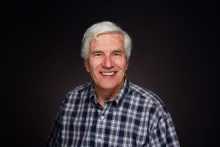
Steve Shafer was born and raised in Seattle. He graduated from Queen Anne High School in 1959 and later graduated from Ambassador College, Big Sandy, Texas in 1967, receiving a degree in Theology. He has been an ordained Elder of the Church of God for 34 years and has pastored congregations in Michigan and Washington State. He and his wife Evelyn have been married for over 48 years and have three children and ten grandchildren.
