

Don Ward
This transcript was generated by AI and may contain errors. It is provided to assist those who may not be able to listen to the message.
The sermon title is Palm Sabbath. Of course, the churches of the world celebrate what they call Palm Sunday. That handout will show you that Jesus rode in on the Sabbath day. And the events that took place from his arrival at Bethany up to the time the wave sheaf was offered on Sunday after his resurrection on Sabbath evening late. Let's look at this for just a moment. As I said, I might refer to it once, but you'll see here, of course, the first day of the sacred, the first month of the sacred calendar is Nice and Jesus arrives in Bethany, exclusive reckoning, John 12.
Jesus arrives in Bethany, inclusive reckoning, that's when his feet were anointed. Then the next day, Palm Sabbath, Jesus triumphantly rides into Jerusalem, the Lamb set aside. The next day, Sunday, Jesus teaches at the temple. The next day, Jesus teaches at the temple. The next day, the apostles prepare for Passover. Of course, on that evening, they partook of the symbols, because, as you know, the day begins after sunset. New Covenant Passover instituted after sunset on Tuesday. Jesus crucified and placed in the tomb on Wednesday. He was in the tomb on Thursday. He was in the tomb on Friday. The world calls Good Friday. The way the world has it is in the tomb part of three days. Jesus resurrected sunset, completing three days and three nights in the tomb on Sabbath. Then the wave-sheaf offering and the scriptures there. So, just for your reference, you might be looking at that because we will be talking about him writing in and so on in the sermon. But the sermon is titled, When the Cheering Stops.
Some years ago, a noted American historian, Gene Smith, wrote a book titled, When the Cheering Stops. It is the story of President Woodrow Wilson and the events leading up to and following World War I. When the war was over, Wilson was an international hero. There was a great spirit of optimism abroad. And in the U.S., people actually believed that the last war had been fought and the world had been made safe for democracy. On his first visit to Paris after the war, Wilson was greeted by cheering mobs. He was actually more popular than their own heroes. The same thing was true in England and in Italy. In Vienna, at a Red Cross hospital, a worker had told the children that there would be no Christmas presents because of the war and the hard times. The children didn't believe her. They said that President Wilson was coming and they knew that everything would be all right. The cheering lasted about a year. Then gradually it began to stop. It turned out that the political leaders in Europe were more concerned with their own agendas than they were concerned about lasting peace in the world. At home, Woodrow Wilson ran into great opposition in the U.S. Senate, and his League of Nations was not ratified by the U.S. Senate. Under the strain of it, all the President's health issues came to fore, and his health began to wither away. He was not a strong man to begin with in the physical sense. In the next election, his party was defeated. So was Woodrow Wilson, defeated as a man. A man barely a year or two earlier had been heralded as the New World Messiah, came to the end of his days a broken and defeated man. It's a sad story, but one that is not altogether unfamiliar. The ultimate reward for someone who tries to translate ideals into reality is apt to be frustration and defeat, because most of the people in the world are based their agenda on what's good for them and pragmatic. What works for me is what I'm interested in. Of course, there are a few exceptions where ideals have been translated into reality, but it is quite rare, and usually it comes with a very high price. So the above story is largely a summary of the history of humankind. It reminds me of the poem, famous of myth, popularity and accident, those who cheer today will curse tomorrow. Only one thing endures character. Or the poem, to win or lose, it matters not but how you played the game. For those who played and gave their all are heroes true beyond reproach, and fame to them will ereby fall, but first, let's fire the coach. I mean, you can win the national championship or a professional championship. A year or two later, you may be gone. So in this world, the most accurate definition of leadership, I believe, is the ability to help people achieve their goals. I believe the best definition of leadership from a spiritually oriented perspective is the dedication and desire to help people achieve their God-ordained potential, to be a child of God, to live forever in the family of God. One of the greatest truisms of all time regarding leadership is that people will follow you as long as they perceive that you're helping them to achieve their goals.
And no matter how converted and how sincere you may be, if you're not perceived as helping people to achieve their goals, they may toss you aside like a used teabag.
After the Gulf War, approval ratings for George Bush Sr. soared to 90 percent.
And a year later, he was on the ropes and lost the presidency to Bill Clinton.
There was a great deal of shouting heard around the world when the coalition forces ended the brutal, dictatorial regime of Saddam Hussein. President Bush, too, was hailed as a hero in the short run, but his presidency ended with perhaps the lowest ratings of all time.
President Obama was hailed as a hero for a short time. Now his approval ratings have been drastically reduced. Remember that people will support your leadership as long as they believe you're helping them to reach their goals.
When they perceive that you're not helping them to reach their goals, they will ditch you like a flat tire, toss you aside like a used dish rag or a used teabag. There have been very few heroes in the annals of human history who were able to sustain their hero status for very long. It happened that way with Jesus. It happened that way with Jesus. When he emerged on the public scene, he was an overnight sensation, you might say, especially on this Palm Sabbath. He would try to escape to be alone from time to time, but the people would still follow him. Let's look at John, chapter 20, when Jesus began to perform all the mighty miracles, even feeding the multitudes, even to the point feeding the multitudes with food, healing the sick, even raising a person from the dead. In John, chapter 6, verse 24, When the people therefore saw that Jesus was not there, neither his disciples, they also took shipping. I mean, they actually got on a ship to try to get to where Jesus was after he had fed the multitudes. They got on a ship and wanted to go where he was. They came to Capernaum seeking for Jesus, and when they had found him on the other side of the sea, they said unto him, Rabbi, when did you come here? Jesus answered and said, Verily, verily, I say unto you, you seek me not because you saw the miracles, but because you did eat the loaves and were filled. You were getting something physical out of it. That's why you followed me. And then Jesus admonishes in verse 27, Labor not for the meat which perishes, but for that meat which endures unto everlasting life, which the Son of Man shall give unto you. For him hath God the Father sealed. Now, for example, today, if we had put out posters all over Big Sandy, and we'd said, if you will come here today, you'll get a free lunch, or you'll get a side of beef, or whatever gift you might want to say. Of course, people want the free lunch. You know the story about there ain't no free lunch. But sometimes we give free lunches here at Potlucks. But, OK, labor not for the meat which perishes, but that meat which endures unto everlasting life, which the Son of Man shall give unto you. For him hath God the Father sealed. Then said they unto him, What shall we do, that we might work the works of God? OK, we're interested. What do we have to do? And Jesus answered and said unto them, This is the work of God, that you believe on him whom he hath sent. You have to change your way of thinking. You have to seek the spiritual first. They said therefore unto him, What sign do you show then, that we may see and believe you? What do you work? Of course, it says in 1 Corinthians 1 that the Jews look for a sign, and the Greeks seek after wisdom.
They said therefore unto him, What sign, that we may see and believe you? What do you work? Our Father's deep manna in the desert. As it is written, He gave them bread from heaven to eat. Then Jesus said unto them, Verily I say unto you, Moses gave you not that bread from heaven, but my Father gives you the true bread from heaven. For the bread of God is he which comes down from heaven and gives life unto the world.
Then said they unto him, Lord, evermore give us this bread. They were still looking at it from a physical point of view, and then there's this long discourse, much of which we covered last week in the sermon on preparation for the Passover. As long as He was meeting their physical needs, they followed Him. But when it came down to the nitty-gritty, as they say, of fulfilling the Spirit and intent of the law of God, they forsook Him, including the apostles when the chips were really down, as we shall see.
Now let's notice a sequence of events leading up to His crucifixion. In John 12 and verse 1, from this point on, and basically this handout that I gave you, covers this period of time from John 12 until the time of the offering of the wave-sheaf. And of course, John, in the last chapter of John, Jesus appears to the apostles after they went fishing. Did you ever stop and note that one-half to one-fourth of each of the four Gospels, one-half to one-fourth of each of the four Gospels are devoted to Christ's last six days here on the earth?
From Matthew 21 verse 17 through chapter 28. Of course, some of it is even after His resurrection, His appearances. In Mark from chapter 10 verse 32 to the end of the book. In Luke from chapter 18 to the end of the book, verse 21 through 24. And then in John from chapter 12 to the end of the book, the last days of Christ on the earth.
Most of it, though, the six days leading up to His crucifixion. So last week I urged you to read the book of John in preparation for the Passover. So in John 12.1, and of course this handout has a handout I gave you has this in it. Then Jesus, six days before the Passover, came to Bethany, where Lazarus was when he had been dead, whom he raised from the dead.
There they made him a supper, and Martha served, but Lazarus was one of them that sat at the table with him. Then took Mary a pound of ointment of spikenard, very costly, and anointed the feet of Jesus, and wiped his feet with her hair, and the house was filled with the odor of the ointment. Thus, then said one of his disciples, Judas, his chariot, Simon's son, who should betray him, why was not this ointment sold for three hundred pence and given to the poor?
This he said, not that he cared for the poor, but because he was a thief, and had the bag, and bear what was put therein. Then Jesus said, let her alone, against the day of my burying, has she kept this. For the poor always you have with you, but me you have not always.
Much people of the Jews therefore knew that he was there, and they came not for Jesus' sake only, but they might see Lazarus, whom he had raised from the dead. Sort of like a freak show, come and see the person who was raised from the dead. We've never heard of such. A person raised from the dead? Well, we want to go see this. And of course, once again, if you would announce, come here today and all of your illnesses will be healed.
All your physical illnesses will be healed. Oh yes, we'd have a long line. Come here today and hear the words of life. You think I'm doing that? I've got other things to do today. But the chief priests consulted that they might put Lazarus also to death, because that by reason of him many of the Jews went away and believed on Jesus. On the next day, much people that were come to the feast when they heard that Jesus was coming to Jerusalem, see, the next day, took branches of palm trees and went forth to meet him and cried, Hosanna!
Hosanna means save now. Save now, or it can mean save we beseech. But basically save now. Hosanna. Hosanna. They were looking for a political, geopolitical messiah to come and to restore to them the fortunes that they enjoyed during the reign of David and Solomon as one of the greatest nations on the face of the earth. Who would free them from the oppression of the Romans? But what did they get? They got the suffering messiah. Who would die for the sins of the world so that you could live forever, not just for your three score and ten.
And they cried, Hosanna, blessed is the king of Israel that comes in the name of the Lord.
In verse 14, Jesus, when he had found a young ass, sat thereupon as it is written, Fear not, daughter of Zion. Behold, your king comes, riding on a donkey's coat. These things understood not his disciples at first, but when Jesus was glorified, then remembered they that these things were written of him and that they had done these things unto him. Now, let's look at Matthew's account of this event, Matthew 21. In Matthew 21, we see here the crowds are assembling. They are cheering. We saw earlier in John that they followed him because of the miracles. In Matthew 21, in verse 1, And when they drew nigh unto Jerusalem, and were come to Bethaphage, or Bethany, unto the Mount of Olives, Then sent Jesus to disciples, saying, Go into the village over against you, and straightway you shall find a colt tied and a colt with her. Loose them and bring them unto me. And if any man say, Ought unto you, you shall say, The Lord hath need of them, and straightway he will send them. All this was done that it might be fulfilled, which was spoken by the prophet, saying, and this is a quote from Zechariah chapter 9 and verse 9, And tell you, the daughter of Zion, Behold, your king comes unto you, meek, and writing upon a donkey and a colt the foal of a donkey. And the disciples went and did as Jesus commanded them, and brought the donkey and the colt, and put on them their clothes, and they sat there upon. And a very great multitude spread their garments in the way. Others cut down branches from the trees and showed them or shrewd them in the way. And the multitudes that went before and that followed cried, saying, Hosanna, save now, save we beseech you to the Son of David. Blessed is he that comes in the name of the Lord. Hosanna in the highest. And when he was come into Jerusalem, all the city was moved, saying, Who is this? And the multitudes said, This is Jesus, the prophet of Nazareth of Galilee. And Jesus went into the temple of God and cast out all that sold and bought in the temple and overthrew the tables of the money changers and the seats of them that sold doves. And he said unto them, It is written, My house shall be called a house of prayer, but you have made it a den of thieves. And the blind and the lame came to him in the temple, and he healed them. And when the chief priests and scribes saw these wonderful things that he did and the children crying in the temple, saying, Hosanna to the son of David, they were sword as please. And they said unto him, Hear you what they say. And Jesus said unto them, Yes, have you never read out of the mouths of babes and sucklings? You have perfected praise. And he left them and went out of the city into Bethany, and he lodged there. Now in the morning, he returned unto the city. And so that chart that I gave you will show you the sequence of events to a large degree during that time. So during the next four days, great crowds came to hear him preach. A wave of joyful expectation swept across Jerusalem. But the cheering did not last for long. Soon the tide began to turn. Earlier they had been afraid to speak out for fear of the masses, but now crowds gathered and cheered. And so they voiced their praise. However, very soon they began to perceive that the religious leaders were against him, and then the masses turned against him. When the religious leaders discovered that they could not discredit his moral character, they began to take more desperate measures. Before it was all over, he was the victim of a tidal wave of negative public opinion that led to his death on the stake. Why did the masses so radically turn against him? How did the shouts of Hosanna on Palm Sabbath transform into the shouts of Crucify Him on Wednesday?
See, in three or four days, depending on reckoning. So I'm not talking about just the immediate events that may have brought it about, but the deeper root causes. What were the underlying issues? In four days, it all fell apart. Why? Why did the cheering stop? Well, one reason is that those who were there on Palm Sabbath were there for the wrong reason. So we go back to John 12, where we read down to verse 16 or through 16. So back to John 12, they were there for the wrong reason. They were there to see one who had been raised from the dead. We can always ask ourselves, are we here for the right reason? Are we here for the right reason? Have we developed that relationship with God that I speak about so often? That relationship that you know God, and you know Jesus Christ, and you know the reason why you're here, and you know the great answers to the questions of life that God exists. You know who God is, what God is, what is His purpose. You know who man is, what man is, and what is His purpose. But they were there, so many of them, for the wrong reason. In John 12, 19, the Pharisees therefore said among themselves, "...perceive you how you prevail nothing? Behold, the world has gone after him." And there were certain Greeks among them that came up to worship at the feast. The same came therefore to Philip, which was of Bethsaida of Galilee, and desired him, saying, "...Sir, we would see Jesus." I mean, here's the one that raised someone from the dead. We want to look at him. Where is he? Philip came and told Andrew, and again Andrew and Philip told Jesus, "...and Jesus answered them, saying, The hour has come that the Son of Man should be glorified." Here's a very interesting exchange that takes place here in this.
"...Verily, verily, I say unto you, except a kernel of wheat fall into the ground and die, it abides alone. But if it die, it brings forth much fruit." So when you plant a seed, of course, the seed itself dies. You have a new plant that comes up and bears much fruit or seed, and the cycle repeats itself.
Jesus Christ went in the grave to pay for the sins of the world. He was resurrected, and through his death, burial, and resurrection, much fruit can be produced. Fruit that you heard about in the sermonette. Love, joy, peace. "...He that loves his life shall lose it. He that hates his life in this world shall keep it unto life eternal. If a man served me, let him follow me, and where I am there shall also my servant be. If any man served me, him will my father honor. Now is my soul, my life essence, troubled. And what shall I say? Father, save me from this hour?" No, I'm not going to say that, because for this hour I came. I came into the world for this hour that I would be crucified for the sins of the world. Father, glorify your name. Then note this. Then came there a voice from heaven saying, I have both glorified it and will glorify it again.
The people therefore that stood by and heard it said that it thundered. Others said an angel spoke to him. And Jesus answered and said, This voice came not because of me, but for your sakes. Now is the judgment of this world. Now shall the prince of this world, Satan the devil, be cast out. And if I be lifted up from the earth, will draw men unto me. And of course, that means his crucifixion that he would die for the sins of the world. This he said, signifying what death he should die. The people answered him, We have heard out of the law that Christ abides forever. And how say you, the Son of Man, must be lifted up? Who is the Son of Man? And of course, Jesus then gives them this question from Psalm 110, verses 1 through 2 or 3 there. So we'll read this.
Who is the Son of Man? Verse 35. Then Jesus said unto them, Yet a little while is the light with you. Walk you while the light, while you have the light, lest darkness come upon you. For he that walks in darkness knows not where he goes. While you have the light, believe in the light, that you may be the children of light. These things spoke Jesus and departed, and did hide himself from them.
So another reason that the cheering stop was because he began to challenge their thinking and the way that they were living their lives. This reason mounts as he challenges their shallow thinking of the truth. Basically, they gave intellectual assent to the truth, but their hearts and practices were far from the Word of God. Let's go back now to Matthew 22. In Matthew 22, you'll see that the four main Jewish sects, S-E-C-T-S, came and challenged Jesus. They tried to trip him up on politics. They tried to trip him up on religion. First of all came the Herodians. The Herodians believed that Herodians, the Herod and his descendants, who were really Edomites but had been converted to Judaism, would be the ones that would free the Jews from Roman oppression. So, in Matthew 22, we pick it up.
Verse 20. Well, Noah earlier in that verse 17. Tell us therefore what think you. Is it lawful to give tribute unto Caesar or not? Actually, I should have read 16 that has Herodians in it. And they sent out unto him their disciples with a Herodian, saying, Master, we know that you are true and teach the way of God in truth, which was a lie, a deception, and teach the way of God in truth. Neither care you for any man, for you regard not the person of men. Tell us therefore what think you. Is it lawful to give tribute unto Caesar or not? So, this has to do with many things. Are you going to keep the first commandment? You shall have no other gods before you. Are you going to support the political leader of the land? You could be put to death for not supporting Caesar. But Jesus perceived their wickedness, their duplicity. What did he say? Oh, no. Why tempt you, me, you hypocrites? Show me the tribute money. And they brought unto him a penny, and he said unto them, Whose is this image and superscription? They said unto him, Caesar's. Then said he unto them, Render therefore unto Caesar the things which are Caesar's, and to God the things which are God's. And when they heard these words, they marveled and left him and went their way. Then the same day came to him the Sadducees, which say there is no resurrection from the dead.
So the Sadducees did not believe in the resurrection of the dead. They challenged Jesus on the resurrection of a woman who was married to seven men during her lifetime. Whose wife would she be in the resurrection? Verse 24, saying, Master, Moses said, If a man marry his wife and raise up seed unto his brother, now there were with seven brethren and the first, when he had married a wife, deceased, having no issue, left his wife and his brother, the second, the third, unto the seventh.
And last of all, the woman died. Therefore, in the resurrection, which they did not believe in, whose wife shall she be of the seven? For they had all were married to her. Jesus said unto them, You do err, not knowing the Scriptures nor the power of God, for in the resurrection they neither marry nor are given in marriage, but are as the angels of God in heaven.
They do not reproduce in that sense. But as touching the resurrection of the dead, have you not read, that which was spoken unto you by God, saying, You claim to believe in God? But look, what is God? Is he the God of the living or the dead? Is he the God of Abraham, Isaac, and Jacob? Well, Abraham, Isaac, and Jacob are dead. Are they going to be resurrected?
You claim to really know and believe in the Scriptures. So, he said, I am the God of Abraham, the God of Isaac, the God of Jacob. God is not the God of the dead, but of the living. And when the multitude heard this, they were astonished at his doctrine. But when the Pharisees had heard that he had put the Sadducees to silence, they were gathered together.
Then one of them that was a lawyer, really, now we're going to get him, asked him a question tempting him and saying, Master, which is the greatest commandment in the law? And Jesus said unto him, You shall love the Lord your God with all your heart, mind, and soul.
This is the first and great commandment, and the second is like unto it, You shall love your neighbor as yourself. On these two commandments hang all the law and the prophets. And while the Pharisees were gathered together, Jesus asked them, saying, What think you of Christ, whose Son is he? This is the one from Psalm 110. Not what I spoke earlier. I misspoke there. This is the one from Psalm 110 verses 1, 2, and 3.
They say unto him, The Son of David. He said unto them, How then does David in spirit call him Lord, saying, The Lord said unto my Lord, Sit you on my right hand, until I make your enemies your footstool. So, of course, Jesus was the Son of David after the flesh, but the Son of God by the resurrection from the dead. Hold your place right here. Look at Romans chapter 1 verse 4. At the present time, I'm teaching this online course to about 24 ministers.
And if you really want an exercise, then you summarize, write down, summarize each chapter of Romans. I gave you a handout about two years ago on mastering the book of Romans, but what we're doing in these classes is far more in depth and far more detailed. But concerning what we've just read here, verse 3, Concerning his Son Jesus Christ our Lord, which was made of the seed of David according to the flesh, and declared to be the Son of God with power according to the Spirit of holiness by the resurrection from the dead.
Now, hold your place in Matthew 22. Look at Psalm 110. Psalm 110. Because Jesus says here, See, the Jews always were saying the Messiah is the Son of David, limiting the Messiah to a physical person. That's what the Jews are still looking for.
Now, Jesus was fully human, but he was fully God. People have difficulty wrapping their minds around that. But when Jesus died in the flesh, when he was crucified, there was no consciousness in the grave. As we'll read a little later, just before he died, he said, Father, into your hands, commend I you my Spirit, my breath, my life, essence, is in your hands. Who resurrected Jesus from the dead? God the Father. There's many places in the New Testament. In Psalm 101, verse 1, I will sing of mercy and judgment unto you, Lord. I'm 101. I'm 110. In Psalm 110, The Lord said unto my Lord, The Yaveh, this is one of the cases in which Yaveh refers to God the Father.
Now, in a recent Good News article, it talked about who was the God of the Old Testament. I wish I had reviewed that article. I had an opportunity, but I didn't. That is, it was sent my way. But God the Father is always God the Father. Now, Israel interfaced with the One who became Jesus Christ the Word. But the Yaveh said unto my Adonai, capital L, lowercase o-r-d, Sit you at my right hand, Until I make your enemies your footstool. The Lord shall send the rod of your strength out of Zion, Rule you in the midst of your enemies.
So David said, The Yaveh said unto my Adonai. And so Jesus Christ asked them, Well, if David called him Lord, then whose Son is he? Well, he's the Son of God. But he was made flesh and dwelt among us. In Matthew, continuing, They said unto him, The Son of David. Christ had asked, What think you of Christ? Whose Son is he? They say unto him, The Son of David. Well, we read Romans 1.3. He was the Son of David after the flesh. But he was begotten Son of God, and then the born Son of God by the resurrection.
He said unto them, How then does David in spirit call him Lord, saying, The Yave said unto my Adonai, in the Old Testament, this is written in Greek, Sit you on my right hand, till I make your enemies your footstool. If David then called him Lord, how is he his Son? Well, in the spiritual sense, he is the Son of God.
And no man was able to answer him a word, neither dared any man from that day forth ask him any more questions. So he challenged their shallow understanding of the truth. And brethren, I think at times, do we have a shallow understanding of the truth, or do we have the truth in depth? Have we really poured over the Scriptures, or are we just merely sort of going along our way, and on the Sabbath day we assemble, we hear, a sermonette and a sermon, as if that would sustain us.
It will not sustain you, and you will not really grow in grace and knowledge if that's all you have. And one of the main purposes of sermonette, sermon's Bible studies, is to present to you some material that you can follow up on, and that you can come to the point that you are able to answer, and to rightly divide the Word of Truth. So the Herodians came and asked about Caesar. The Sadducees asked about the resurrection. The Lawyer asked about the greatest commandment. The Pharisees then had their opportunity.
Of course, the Lawyer was a Pharisee himself. And then Jesus presented his question to them that they could not answer. Then in Matthew 23, the famous discourse to the scribes and Pharisees then spoke Jesus to the multitude and to the disciples, saying, The scribes and the Pharisees sit in Moses' seat, and they began to take them to task for all the things that they had done.
They had the outward form of religion, but they were not really converted in their hearts and in their minds. In verse 23, sort of a summary statement, it is the reason failure to do this is the reason why Israel went into captivity. Failure to do this is why some people take the Passover irreverently. Failure to do this is why we have had the problems we have had in the Church of God through the ages.
It was the problem of the disciples on the night that Jesus instituted the symbols of the New Covenant Passover. It is an historic problem. Woe, and he describes Pharisees' hypocrites, for you pay tithe of mint anise and coming, and have omitted the weightier matters of the law, judgment, mercy, and faith. These ought you to have done, and not leave the other undone.
Then in verse 29, Woe, and he describes Pharisees' hypocrites, you blind, build the tombs of the prophets, garnish the sepulchers that are righteous, and say, If we had been in the days of our fathers, we would not have been partakers with them in the blood of the prophets. Wherefore you be witnesses unto yourselves that you are the children of them which kill the prophets. Fill up, then, the measure of your fathers. Did Jesus Christ soft-pedal the gospel? Did Jesus Christ soft-pedal the detractors of his day? You serpents, you generation of vipers, how can you escape the judgment of hellfire? Wherefore, behold, I send unto you prophets, and wise men, and scribes, and some of them you shall kill and crucify, some of them shall you scourge in your synagogues and persecute them from city to city. Then upon you may come all the righteous blood on the earth that was shed on the earth from the blood of righteous Abel and the blood of Zacharias, son of Bar-Chias, whom you slew between the temple and the altar. Barely I say unto you, all these things shall come upon this generation. O Jerusalem, Jerusalem, you that kill the prophets and stone them which are sent unto you, how often would I have gathered your children together even as a hen gathers their chickens under her wings, and you would not? Behold, your house is left unto you desolate. After the Romans came in 70 AD and destroyed the temple, the cry of the Jews, historically has been for 2,000 years almost, next year in Jerusalem. We're going to rebuild the temple. And maybe they will. Apparently they will, if we understand prophecy correctly. But it won't be for the purpose of Christianity. It will be for the purpose of Judaism. And they'll still be looking for a Messiah, which will make them right for the one who sits in the temple of God claiming that he is God, as in 2 Thessalonians 2. For I say unto you, you shall not see me henceforth, till you shall say, blessed is he that comes in the name of the Lord. And of course, when the great tribulation in the day of the Lord comes about and Jerusalem is surrounded by enemies, God is going to save them. Look at Zechariah 12. Zechariah 12. All nations gathered against Jerusalem. And of course, they would have their way if God had not intervened or will intervene. In Zechariah 12, verse 9, It shall come to pass in that day, that I will seek to destroy all the nations that come against Jerusalem. And I will pour upon the house of David, and upon the inhabitants of Jerusalem, the spirit of grace and supplications. And they shall look upon me whom they have pierced, and they shall mourn for him as one mourned for his only son, and shall be in bitterness for him as one that is in bitterness for his firstborn. The Jews are hard-pressed to explain this scripture, this scripture, because this clearly shows that one would come and be killed, and side would be pierced. And when they do that, then things will really turn around for them. The main reasons why the shouting stops is the fact that people do not want to face up to their sins, and they perceive that Jesus would not help them to immediately achieve their goals. He wasn't going to continually, forever, just heal the sick. He wasn't going to always raise the dead. He was not always going to feed the multitudes. He was not a great geopolitical leader that would free them from the oppressions of the Romans In the Olivet prophecy, he tells them the signs that are going to occur, Matthew 24 and 25.
Even the talk about Jesus Christ dying on the stake was foreign to the apostles. They didn't want to hear it. Peter said, this will never happen to you, Lord. This is not going to happen. And Jesus said, get behind me, Satan. So the talk of commitment and crucifixion disturbed even the disciples. They wanted an immediate Savior.
There are three main responses to sin by the carnal mind, as exemplified by Adam and Eve when they sinned, their grievous sin. First of all, let's hide it. Try to hide it. Adam and Eve sewed fig leaves together, and they tried to hide. Then, when God appeared, he said, what have you done, Adam? Well, we were naked, and we heard your voice, and we tried to hide from you. And God said, well, who told you what you were naked? Have you taken the wrong tree?
He said, well, Eve gave it to me, and I did it. Eve said the devil deceived me, so to blame and try to justify it. But the desired response is to repent. As in Acts 2 and verse 37, we'll contrast here two very different responses to a sermon. In Acts 2, you know a lot of people are turned off by the preacher, the messenger.
Oh, the preacher is not what I'm looking for. He just doesn't have the kind of personality that I really identify with. He knows he does this and he does that. But the bottom line for all of us better be whether or not we are hearing the Word of God. And if we're not, we need to do something about that.
In today's world, all of us have the Scripture right before us and many, many tools to study. On the day of Pentecost, in Acts 2, Peter preached his inspired sermon as the Holy Spirit was sent unto them there, those gathered. The day of Pentecost. He preached this sermon. Now look at verse 37. Now when they heard this, they were pricked in their heart and said unto Peter and the rest of the apostles, men and brethren, what shall we do?
And Peter said unto them, Repent and be baptized, every one of you, in the name of Jesus Christ, for their mission of sins, and you shall receive the gift of the Holy Spirit. For the promise is unto you and to your children, and to all that are afar off, that means the Gentiles, even as many as the Lord our God shall call.
So on that day, when the Word of God was preached, they were pricked in their hearts and they said, men and brethren, what shall we do? Now you contrast that to Acts 7 and the sermon that Stephen preached. Stephen was a deacon in the church who began to do great signs and wonders, and because of that, they brought him up before the council. He was accused and said, give us an account. Why are you doing this? So Stephen's sermon was very much like the one that Peter preached on the day of Pentecost.
But note the difference in the response in verse 49. Heaven is my throne and earth is my footstool. This is Acts 7, 49. What house will you build me, says the eternal? Or what is the place of my rest? Has not my hand made all these things? You stiff-necked, uncircumcised in heart and ears, you do always resist the Holy Spirit as your fathers did, so do you. Which of the prophets have not your fathers persecuted? And they have slain them, which showed you of the coming of the just one, of whom you have been now the betrayers and murderers, who have received the law by the dispensation of angels and have not kept it.
Now, when they heard these things, were they pricked in their heart and said, What must we do? No. When they heard these things, they were cut to the heart, and they gnashed on him with their teeth. And he, being full of the Holy Spirit, looked steadfastly into heaven and saw the glory of God. And Jesus, standing on the right hand of God, said, Behold, I see the heavens open, and the Son of Man standing on the right hand of God.
Then they cried out with a loud voice, and stopped their ears, and ran upon him with one accord, and cast him out of the city, and stoned him. And the witnesses laid down their clothes at a young man's feet, whose name was Saul. And they stoned Stephen, calling upon God, and saying, Lord Jesus, receive my spirit. And he kneeled down and cried with a loud voice, Lord, lay not this sin to their charge. And when he had said this, he died.
So after four days of preaching to the multitudes in Jerusalem, the time of the Passover was at hand. Jesus knew his hour was at hand. The time had come for him to fulfill the very purpose that he came into the world. That is, to pay the penalty for sin so we could be reconciled to God, no longer counted as enemies, but viewed as sinless so that we could receive the Holy Spirit. In Matthew 26, go back to Matthew, please, verse 24. In Matthew 26, 26, 24. In Matthew 26, 24. The Son of man goes as it is written of him, woe unto him by whom the Son of man is betrayed. It had been good for him that he had never been born. The Judas which betrayed him answered and said, Master, is it I?
I mean, he said unto him, You have said. And as they were eating, Jesus took bread, blessed it, broke it, and gave it to the disciples and said, Take eat. This is my body. And he took the cup and gave thanks and gave it to them, saying, Drink you all of it. For this is the blood of the new covenant, which is shed for many for the remission of sins. But I say unto you, I will not drink it henceforth of the fruit of the vine until the day when I drink it new with you and my Father's kingdom. And when they had sung in him, they went into the Mount of Olives.
Then Jesus said unto them, And you shall be offended, because of me this night. For it is written, I will smite the shepherd, and the sheep of the flock shall be scattered. Peter answered and said unto him, Though all men shall be offended because of you, I will never be offended. And Jesus said unto him, Verily I say unto you, That this night before the rooster crows, you shall not deny me three times. Peter said unto him, Though I should die with you, yet will I not deny you. Likewise also said all the disciples. Then came Jesus with them into a place called Gethsemane, and said unto the disciples, Sit here while I go and pray.
So he went and prayed, and he came back. They were all asleep. He went and prayed, and he came back, and they were asleep. He went and prayed the third time, and came back, and they were asleep.
And he said, verse 46, Rise, let us be going. Behold, he is at hand that doth betray me. And while he yet spoke to Judas, one of the twelve came, and with him a great multitude with swords and staves from the chief priests and elders of the people. Now he that betrayed him gave him a sign, saying, Whomever I shall kiss, the same as he, hold him fast. And forthwith there came to Jesus, and said to him, Hail, master, and kissed him. And Jesus said unto him, Friend, wherefore you come? Then came they, and laid hands on Jesus, and took him. And behold, one of them which were with Jesus stretched out his hand, and drew his sword, and struck a servant of the high priest, and cut off his ear. Then said Jesus unto them, Put up the sword into its place, for all they that take up the sword shall perish with the sword. Think not that I cannot now pray to my Father, and he shall presently give me more than twelve legions of angels. But how then shall the Scriptures be fulfilled, that thus it must be?
And the same hour said Jesus to the multitudes, Are you come out against me as a thief with swords and staves? To take me I sat daily with you, teaching in the temple, and you laid no hold on me. But all of this was done, that the Scriptures might be fulfilled. Then all that it cycles forsook him, and fled. And they led him away to the mock trial to appear before Caiaphas. Now let's look at what happened to Jesus. After Gethsemane, the mock trial, and then he was sentenced to death, they had a choice whether or not they were going to... I don't know what on earth is doing this. Driving me nuts. I guess you two... Let's switch over to this mic. Must be a loose wire somewhere.
As Jesus made his treacherous, torturous trek toward Gogotha, that's healed, the shape of a skull, a lot of people went with him. Let's notice the dramatic account of what happened in Luke 23 and verse 22. Of course, all of the Gospel writers have an account of this, but we are focusing on Luke's account in chapter 23 and verse 22. Luke 23, 22.
He said unto them the third time, What evil has he done? I have found no cause of death in him. I will therefore chastise him and let him go. This is Pilate speaking. They were instant with loud voices, requiring that he might be crucified. The voices of them and of the chief priests prevailed. Pilate gave sentence that it should be as they required. He released unto him that for sedition and murder was cast into prison, whom they had desired, but he delivered Jesus to their will.
As they led him away, they led hold on one Simon A. Sarnirian, coming out of the country, and on him they laid the cross, the stadrus, that he might bear it after Jesus. And there followed him a great company of people and of women, which also bewailed, they wept, they lamented. But Jesus, turning unto them, said, Daughters of Jerusalem, weep not for me, but weep for yourselves and for your children. For behold, the days are coming, and the which they shall save, blessed are the barren, and the wounds that never bear, and the paps which never gave suck.
Similar to Matthew 24, when you flee, pray not that you are with child. Then shall they begin to say to the mountains, Fall on us, and to the hills, Cover us. For if they do these things in a green tree, what shall be done in the dry? And there were also two other male factors led with him to be put to death. And when they were come to the place which is called Calvary, where they crucified him, and the male factors, one on the right hand and one on the left, Jesus said, Father, forgive them, for they know not what they do.
And the people stood beholding, and the rulers also with them, derided him, saying, He saved others, let him now save himself. Then, in verse 45, And the sun was darkened, and the veil of the temple was rent in the midst. And when Jesus had cried with a loud voice, He said, Father, into your hands, I commend my spirit, and having said this, He gave up the spirit.
And those women looked on His bloodied and disfigured body, caused by the beatings and abuse He had received. They pitied Him, and they wept. And Jesus turns to them and says, Don't weep for me. Weep for yourselves and for your children. Then He speaks of those sobering words of days coming, in which a woman would be blessed not to have children to worry about. He foretells days in which the suffering upon earth would be so great that people would be crying out for the hills and the mountains to fall on them. Jesus, in summary, was saying, I don't need your tears. I know what awaits me.
Death, yes. Excruciating pain and suffering, yes. Undeserved and unjust, yes. But after three days, I will rise again. I will ascend to my Father. I will again take my place at His right hand and rule and reign with Him forever. As it says in Hebrews 12, and once again, as you heard in the sermonette, of the big picture burning brightly in your mind where Jesus says, And for the joy that was set before Him, He endured the sufferings of the stake.
But if you only knew what awaits you, you would weep and wail for yourselves. Today is the day of the green tree. In other words, today you have the living Son of God with you. And new life has been budding all around you. The sick have been healed. The lame have been restored. The dead have been raised. And sinners have been forgiven. But if you can do this to me at the time of the green tree, what will you do when the tree is dead?
The dead representing the dead would of sinful humanity when it is consumed by the fires of God's wrath. So are we pricked by these words? Of course, we should all be. This is why Jesus spoke to them to help us see what was taking place. It was not about Him, but about us. It was about our need to understand how precious life is and how precious our calling is.
But even in the most tragic hour of His death, Jesus is still focused on others. When every nerve center in His body was streaking with pain and surely demanding relief, Jesus turned to speak to a group of women who were weeping and bewailing because of what He was going through. Upon the stake, as the agony of His suffering also intensified, He prayed for those who put Him on the stake and then stood by to stare and mock and jeer and celebrate His death.
He honored the request of one of those crucified with Him and forgave Him His sins. He committed Himself to the Father, into your hands, commend I you, my Spirit. Now look at John 19, verse 24. John 19, 24. One so precious and dear to Him, as it is with all of you and your mother. At least it should be, if things have gone the way that God says they should go.
In John 19, verse 24, they said therefore among themselves, Let us not rend it, but cast watch for it, speaking of His garments. Verse 25. Now there stood by the stake, or the cross of Jesus, His mother, and His mother, Sis, to marry the wife of Cleoaphus, and marry Magdalene. When Jesus therefore saw His mother and the disciples standing by whom He loved, He said unto His mother, that is, John, Woman, behold your Son.
Then said He to the disciple, Behold your mother. And from that hour, that disciple, John, took her into his own home. After this, Jesus, knowing that all things were now accomplished, that the Scriptures might be fulfilled, said, I thirst. And of course, they gave Him vinegar to drink. So on the stake He honored His mother. So what will you and I learn from the last testimony of Jesus on the stake? Hopefully we will learn to be less self-centered, more humble, more service-minded, giving and serving and praying and living to each other with this message of hope, the only hope the world has.
Just as Jesus did as He writhed in pain on the stake. Can we pray as Jesus prayed, Father, forgive them, for they know not what they do? If they don't know what they do, then why do they need forgiveness? Have you ever thought about that? Why do they need forgiveness if they didn't know what they were doing? Wouldn't it seem logical that if they don't know what they're doing, then they can't be guilty? And yet the word forgive them tells us that even though they didn't know what they were doing, they were guilty.
You don't forgive innocent folks. So clearly Jesus said they were ignorant but not innocent. They didn't fully comprehend the magnitude of their sin. I guess they just said, here's another person who feigned to be the Messiah. They didn't understand what it meant to reject, mock, and despise, and kill the Son of God. And yet, can there be any question about their guilt? What was the crime of Jesus of Nazareth? Who did he harm, or whom did he harm? Who suffered because of his miracles? Who was victimized by his words and his deeds?
Why did they hate him? Why did they stare at him and mock him while he hung on the stake? Why did they kill the Son of God? What could possibly have compelled them to commit an awful sin such as this? This awful crime against one who had only come to help and to heal and was guilty of nothing, nothing at all. So let us bring it down to you and I today. Why do so many reject, mock, and despise Jesus Christ today? Why do we have despisers of those who are good? Why do we find fault with his words?
What is wrong with his character or his teaching? What objection do people have to the Lord Jesus Christ? Why do they hate him? Why do they ignore him? What compels them to commit the awful crime of rejecting the one who died in their place? You see, the sin of unbelief is perhaps the greatest sin of all sins. Can it only be that they don't know what they're doing? They're ignorant but not innocent, therefore in need of God's forgiveness.
In just four days, the masses turned on him. As the shouts of Hosanna faded into the shouts of, Crucify him! Then the shouting stopped, and Jesus died for the sins of the world. So what about you? What about me? What are we going to do when the shouting stops? Today, if you would hear his voice, harden not your heart.
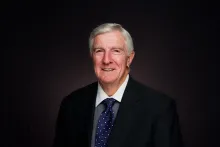
Before his retirement in 2021, Dr. Donald Ward pastored churches in Texas and Louisiana, and taught at Ambassador Bible College in Cincinnati, Ohio. He has also served as chairman of the Council of Elders of the United Church of God. He holds a BS degree; a BA in theology; a MS degree; a doctor’s degree in education from East Texas State University; and has completed 18 hours of graduate theology from SMU.
