
Robin S Webber
This transcript was generated by AI and may contain errors. It is provided to assist those who may not be able to listen to the message.
Well, good afternoon, everybody. It's so good to see each and every one of you out there.
It's hard to believe that seven years have gone by since we've been able to share time together on the Sabbath day right here in Eagle Rock. On behalf of my wife, Susan, and myself, it's really a delight to be with each and every one of you. I appreciate the warm greeting that Mr. Grider was able to share with all of you. I'm not sure what Mr. Helgi told you all during the Bible study, but just remember he is a lawyer by training. Looking around this room brings back a lot of memories. You and I and Susie have shared a lot of time together in our life.
I think you all realize that I still consider this area my hometown church. I grew up just across the Arroyo. Some of you that are, shall we say, older in this room. Remember me playing basketball in high school, basketball in college, chasing a good-looking young blonde woman around the Ambassador College campus, raising three children in the area, pastoring two of the headquarters congregations, and of course coming back to Pastor Yoo in 1998. By the way, I'm still married to that good-looking blonde-headed woman, Susie. We've been now married up to 37 years. Our girls are doing just fine. All three girls live right here in the San Gabriel Valley, and of course if it's Weber's, it's girls, and our five granddaughters are just doing well. Well, you know I like women.
It's all right, so it's okay, but it's so good to be back with each and every one of you.
But we are not here to talk about me today. We are here to talk about the one that brings us together.
The title of my message today for all of us gathered together on the Sabbath day is simply this.
He who glories, let him glory in the Lord. My text for today will be 1 Corinthians chapter 1.
But before we open up to 1 Corinthians chapter 1, I'd like to open up the sermon a little bit differently. I'd like to share a little bit of my story, but I believe as we go forward, my story, your story, God's story, and each and every one of us will intertwine for the next hour as I speak to you. Forty years ago, I was baptized just across the Royal in a building in the Ambassador College campus. It was an incredible intersection in my life, and it was the most important strategic decision that I have ever made. Everything, henceforth, from that moment, going down into that water and coming up out of that water anew, has affected every aspect of my life. Every word, every deed, every need has been affected by that strategic decision. Think back, if you will, for a moment with me, as you come with me in your own experience, to remember what it was like when you were baptized, whether it was in one of those tubs that the deacons used to have in the Midwest, they hold in their basement, the old galvanized steel tub, or maybe you were baptized in a river or a stream, or for some of you that are dashing and daring and romantic, maybe you were baptized in the ocean.
But wherever you were baptized, whatever the framework, there were things that did occur. Let's talk about it for a moment. You remember, and I remember, when the preacher was opposite us there in the water, and he asked us very specific questions. He asked you and me, he said, have you repented of your sins? And he said, yes, sir, I have repented of my sins. And have you accepted Jesus Christ as your Lord and as your personal Savior? And he said, yes, sir, I have accepted Jesus Christ as my Lord and as my personal Savior. He then said, because you have accepted Jesus Christ as your personal Savior and because you have repented of all of your sins, not only of what you have done, but what you are, apart from God, I am going to baptize you, not into any church, not into any sect, not into any creed or denomination of this earth, but I'm going to baptize you in the name of the Father and the Son, and you shall receive the Holy Spirit.
Was your experience like mine? I think the words are probably pretty much just about the same.
Maybe the accent was different, maybe your water was a little bit colder or a little bit hotter than mine as we took the plunge. But it was then at that moment, at that time, that we gave our exclusive allegiance to Jesus Christ as our Lord and as our Savior. God the Father would have it no other way, for it is indeed He who placed the Christ into our life, made Him the example, made Him the head, not only of the body but of our life, of everything that we say and everything that we do, that His example and that His Spirit might rule over us. Being in that baptismal pool was probably not the most difficult thing. It was really nice being down there with the preacher, the water was fine, and I felt cleansed when I came up out of that water and I knew that all of my sins had been forgiven. But that was the easy part. The hard part was coming back, coming up out of that water and not just simply dealing with God but dealing with people. People that are people. Have you ever met people like that? People that are people? Am I talking to the right crowd? People that have issues, not only outside of the church but at times also inside of the church.
I realized that I had some homework. I realized that I had some heart work to do, to deal with people. People that were not God. People that were not a part of that perfect family yet but were on the way. And I recognized that as I came into contact with other members of the body of Christ and or people that are on the outside that I had a responsibility.
For now, I was a child of God. I was now one that had been called. I was one that was a saint.
I had been one that had been given an incredible opportunity, given a new start, just as if the whole chalkboard of my life had been erased. And now I had an opportunity to do it all over again, but no longer just by myself, but with the example of Jesus Christ and with the Spirit that the Father gives, that they could partner with me. Thus, I could guard my heart. Thus, I could guard my thoughts. Thus, I could guard my words. And I could learn to love not only God but my fellow person. At baptism, I gave my exclusive allegiance to Jesus Christ. God the Father would have it no other way. I have a question for you this afternoon. Where does your exclusive allegiance lie? To Jesus Christ? To some man? And or to yourself? Sometimes on the journey, and it is a journey for none of us have reached that ultimate destination, we lose our way. I know at times that I have lost my way as a person. Many of you know that, for you have seen Suzy and I over the last 40 years. You know that we are very much human beings. We're very much a human couple. We are you and you are us. And sometimes we lose our way after we come out of the baptismal pool. We forget our moorings. We lose our anchor. We lose our way. And I'd like to share a story with you that an elderly gentleman taught us many years ago over at the College gymnasium over in Pasadena. Friday night Bible study. Were any of you ever there? Friday night Bible study in Pasadena. And there was an elderly gentleman. And what he would share with us, he would take us back and he'd say, I remember the great days of sports back in the 20s and the 30s.
And he would always go back and he would talk about Bill Tilden, for those of you that are tennis fans. Mr. Armstrong was a big fan of Bill Tilden. And Bill Tilden's motto was simply this, keep your eye on the ball. How many of you remember that? How often did that gentleman remind us to keep our eye on the ball? That's what we're going to be talking about today, friends. We're going to be talking about keeping our eye on the ball. And to recognize where our exclusive allegiance needs to be directed and whom it needs to go towards. And that if we have taken our eye off the ball at any given time, whether it be a day, hour, week, month, maybe through an episode or an event that's occurring in our life right now, to recognize that there is a sure cure for getting your eye back on the ball. And that is 1 Corinthians 1, the chapter thereof.
Allow me to unfold the story, give you a little backdrop to the story of the Corinthians.
Paul was sharing a letter with them to the Corinthians to help establish us to this very day and to allow you and I to gain a focus. Corinth was quite a city of antiquity. It was one of the great cities of antiquity in the Roman Empire of the first century AD. Corinth was located at a very strategic location. All of the maritime traffic that came from the eastern tier of the Mediterranean basin basically passed through the city of Corinth because that's where the isthmus was that they took the ships over land to then proceed to the rest of their journey.
Corinth basically had a chokehold on commerce and on the maritime traffic. Well, if that was the strategic point, you can also appreciate that everything in the world came through Corinth. It was a very cosmopolitan city. It was a polyglot city. It had many things going on.
And just like any port town, whether it be in the 21st century and or in the 1st century AD, shall we say it was a little crude around the edges because the sailor boys were there.
And not only that, but because Corinth also had at the very top behind the city up on the hill way up there at the Acropolis, there was a temple to Aphrodite, the goddess of love. And every night, every night, descending down from the temple of Aphrodite came 1,000 prostitutes from the temple to ply their trade, to perform their spiritual ritualistic practices revolving around sex to the goddess of love, to Aphrodite. Thus, with all of this going on, Corinth had a reputation.
In fact, in the ancient world, there was a term called to Corinthianize.
To Corinthianize was basically an epitaph of those that chose a life of debauchery, of immorality. And so you can already see that these people were already behind the apal, as it were. They already had a flat tire before God began to deal with them, as God began to call people out of Corinth. But that is the point. That is the point.
That Corinth was not only strategically located, as far as on a map, but it was strategically located for you and for me to understand how to keep our eye on the ball and how to give our exclusive allegiance to none other than Jesus Christ. The Corinthian church, they are our folk. They are our family. They are our brethren.
And we can learn a tremendous strategic lesson from them. Join me if you would. Let's open up our Bibles on this, the Sabbath day. And come with me, if you would, to 1 Corinthians 1.
That will be my only text for today as we go through it.
1 Corinthians 1 and verse 1 begins with Paul called to be an apostle of Jesus Christ through the will of God and sesasanese, our brother, to the church of God, which is at Corinth, and to those who are sanctified in Christ Jesus, called to be saints with all who are in every place call on the name of Jesus Christ our Lord, both theirs and ours.
Grace to you and peace from God our Father and the Lord Jesus Christ.
There's a mouthful in there, and there's a heartful to understand. Let's go back for a moment and understand the introduction to 1 Corinthians chapter 1. Paul says that he's called to be an apostle of Jesus Christ, not on his own but through the will of God. It's very interesting that if you look in your Bible, maybe it's a little bit like mine, you might notice that the words there to be are italicized. That means actually that they have been added. They were added in a sense.
The editors thought to help us, but maybe it really takes away from the true meaning of what God intended through Paul. Really, it would be better rendered Paul called an apostle. He was not in training. It was not a destination. It was by the will of God. It was what he was. And he says, I'm an apostle. He did not pout being an apostle because of it being some extra special position.
He spoke of it as in a condition of divine privilege. Paul, who had been what he had been, had been a persecutor of the church and now being able to share the gospel of Jesus Christ and the kingdom of God. It overwhelmed him, brethren. He never got over that fact that God had blessed him with the divine privilege of being a part of a mission, of being able to share something that's beyond this world that God wants to bring to this earth, the kingdom of God. He also spoke of it not in a position but of a condition of tremendous humility, tremendous humility, to even be able to have the privilege of being able to share what God had planned to perform for humanity. And right up front, he says, he's called to be an apostle of Jesus Christ. In the very first verse of 1 Corinthians 1, he focuses on his exclusive allegiance to the head of his life, to the head of the body that the Father has willed, none other than Jesus Christ.
It will be central to his argument. It will be foremost in his conversation. And it will be redundant again and again and again as we go through 1 Corinthians 1. Let's now pick apart verse 2. Now that he's established his credentials, which are not his but by its the will of God, he says to the church of God, which is at Corinth, to those who are sanctified in Christ Jesus, called to be saints with all who in every place call in the name of the Lord Jesus Christ our Lord both theirs and ours. There's two things, friends, that we come to understand as we more closely examine this verse. There's two things that I want to share with you. You might want to jot it down if you're taking notes. The first thing that we're going to talk about here that's revealed here is that Paul tells us something about the church. He tells us something about the church.
Very important. Point number two. He tells us about us individually and qualities that God has blessed us with. First of all, let's go back to how he introduces the church to the church of God, which is at Corinth. He does not address it as the Corinthian church.
He says the church of God at Corinth. He does not give these people, even though he addresses them, he does not give them a post office box. He does not give them a street address. He does not allow them to localize themselves down because, indeed, are you with me? They are part of a bigger picture.
They are a part of a greater continuum that moves beyond walls and doors and windows that surround us today. They are a part of a greater whole that only God knows in his divinity of what it consists of. He does not want the church at Corinth just to simply think of themselves as a bunch of Greeks or Jews or Thracians or Bethanyans or Cretans. He wants to have them think outside of the box and to be flexible and to realize that there is something so much bigger than even their local issues, their local problems, or the people that faced them that day.
They are a part of a bigger family. May I ask you a question, friends? Do you sense from the front row to the back of the row that you are indeed a part of a bigger family? That you are the church of God. You are the ecclesia. You are the called-out ones. You are the saints of God.
You are a part of a body that is so great that we can't even begin to imagine that God alone knows that are His, whether in this day or in future years, as He adds to it, and that that body is a spiritual organism that God alone knows.
God says, I don't want you to be trapped by brick and by roofs and by windows that might break if you try to get through. There's something greater going on. In other words, I want you to have a mind like a window that you can look out, and not just a mind of a mirror. You know, are you with me? That sometimes individuals, congregations, and even organizations can sometimes suffer from what we call the mirror mind, rather than the mind of a window, of openings, of light, of horizons, of seeing where God is leading us and what God wants us to do, rather than just simply to see our own reflections in it.
This is how Paul opens up 1 Corinthians. He says then, he says, to those that are sanctified in Christ Jesus, called to be saints. Amazing terminology. Two thoughts that I want to share with you out of this, because now Paul tells us about some individual qualities that God has blessed us with. First of all, he says that we are set apart, but we're not set apart because we're in the Eagle Rock Church of God. We're not set apart because simply Mr. Grider or Mr. Garnett or Mr. Helge are talking to you and therefore you are set apart in an organization or set apart by a pastor.
It says that you are sanctified in Christ Jesus. That is who the Father above has placed each and every one of us in, within the spectrum of Christ Jesus in, in the life, in the death, and in the resurrection, and in the hope of his coming. We are sanctified. It's interesting. The word there is sanctified means to set apart.
Let me show you how it works. If you want to look up here, here's the PowerPoint going on right in front of you. Okay. I lay a hold of these DVDs. I have set them apart. That's what Mr. Grider does when he anoints you. He sets you apart when you're being anointed or being ordained. You're being set apart. You are being specialized. You are being concentrated. You are being set apart for something very, very special because God is involved. And that's how Paul begins to deal with the Corinthian church.
You have been sanctified. You have been set apart. The Greek, the root of the word there, if you take it back, is actually, in a sense, the thought of being set apart as if in a marriage, when a man and a woman are set apart from the rest of humanity, that you're no longer looking at all of the girls out here or all the guys there.
You now have exclusive allegiance in all that you do to none than the Father has set before us in Jesus Christ. We notice that also when it talks about being sanctified, it says that we are to be saints. There is this aspect of holiness. What Paul is reminding these people that have come out of the back alleys of Corinth is simply this. I know what you were like, and I know who you were. So did God. But now you are set apart.
You have been sanctified. You are now no longer your own person. You are now designed by the Godhead for sacred use. Sacred use. You are a vessel of the Lord. You are in Christ. You are no longer your own person. Thus, how you think, how you feel, how you speak, how you act, how you respond to every man and woman and child, be they in the body of Christ or whether they be out in the world at this time. Every action is no longer ruled by your own impulse, but by the spiritual design, the model of none other than Jesus Christ. Called to be saints. Again, just like the first verse, you might want to scratch out. If you want to use your Bible as a tool, you might just scratch out the to be because that's been added. You are called saints. You're not. It's not a destination.
Being a saint is a way of traveling. I see Saint Bill out here. I see Saint David. I see Saint George without his dragon. I see Saint George. I see Saint Rean. I see Saint Larry. I see Saint Everett. I see Saint Miguel. Should we make Ralph a saint? No, we see. I see something, Ralph. God looks at us as if it already is. It's a way of traveling. It's not a destination.
Again, I remember so many years ago, Bible study after Bible study, sermon after sermon, especially about 1981, 1982, as this was so much in Mr. Armstrong's mind at that time, he said, brethren, he says, now is the time to learn to be teachers. You're a holy people.
You are in training to be kings and to be priests.
It's not something that we put off to next quarter or next semester. We're thinking that maybe it's something that we're going to get to one day, somehow, somewhere, some word, when this all settles down, whatever that settling down is at any given time or decade. He says, you are sacred.
Your life is not your own. That's what you said at baptism. Thus, everything that you are, your heart, your mind, your word, your being is owned by God. It says here, then, with all in every place call on the name of Jesus Christ, our Lord, both theirs and ours. Paul says something incredible here that we do not want to miss. First of all, he writes something, and then he adds to it. He sometimes finds that with Paul's writings. He'll start somewhere, and then he'll add something.
He says that Jesus Christ our Lord. But then he adds something very powerful, both theirs and ours.
He's telling us something, friends, here in Los Angeles. He's telling us that Jesus Christ belongs to no man. While he deserves our exclusive allegiance, he is nobody's exclusive property.
Jesus Christ belongs to all, to whom he chooses to visit and to whom the Father sends him.
Then notice what it says in verse 3, grace to you and peace from God our Father and the Lord Jesus Christ. God the Father, Jesus Christ, right there in tandem. And it's very important that we look at, you know, we're just in the introduction right now. We haven't gone out of verse 3.
Grace and peace. How often do we find that when we read through the epistles? It always says, grace and peace in the beginning. And then what does it usually say at the end of the epistles?
Grace and peace begin to you. So we kind of think, well, they're like almost like a salt shaker in a pepper, you know, they're just kind of, you know, right there on the table setting. Grace and peace and grace and peace. But Paul's saying something much greater. And God is trying to direct a message through Paul to these Corinthians, who by the way did have problems.
It's called division. He says, grace and peace. Right up front, he reminds them that you have been touched and you have been offered God's grace. He takes them back to where they were before God the Father made his calling and visited them and began to guide and to lead them by their spirit to a place of repentance and faith. He says, grace. And when you understand what grace is, and when we understand what God the Father has done, God the Father did not send his son to this earth to make good men simply better. God the Father sent his son to this earth to each of us that were dead in our sins to allow us to live. Just as Paul would say, I remember later on in the chat, I remember where you were. But I don't look at that anymore. I know what God is doing with you today. But remember where you were. Remember what God's grace is. Because here's something you might want to jot down if you're taking notes. You can only have peace as an individual. You can only have peace as a congregation. We can only have peace as an organization. We can only have peace as an instrument of the body of Christ. If we understand what grace is, of where our starting point or our non-starting point was with God, and he reached down in his mercy and in his love and by his direction and called you and me to a life that we could never dream of. Because it's not human.
It's divine. And he's welcomed us into his family. I find sometimes when families are fighting and people are quarreling, even Christian folk, and they're pointing the finger at one another, they forget where they were before God began to deal with them.
And they forget that each and every one of us deserves nothing at all but death.
And yet God in his grace and his mercy has called you and me. You want peace? We all want peace?
Understand grace. Accept God's grace. Live by God's grace. Understand God's grace.
We can begin to have peace. He says, I thank my God always concerning you for the grace of God which was given to you by Christ Jesus.
In all things give thanks. And you know Paul carries the kind of the pastor of Corinth, and humanly speaking it might have been the last congregation that you want to have in your circuit.
But he is the first to say, I thank my God always concerning you for the grace given to you that you were enriched in everything by him in all utterance and in all knowledge, even as the testimony of Christ was confirmed in you.
What is that testimony? It's like a pie. You can divide it up. The testimony of Christ is to understand, to absorb, and to live by his life, by his death, and by his resurrection. And you live and you breathe and you think, can you speak, can you write, and you share as if you believe it, and that you would give your life for it because of baptism you said you already had, and that it's confirmed in you.
You know you can't. Have you ever tried to argue somebody into this way of life?
I'm sure looking at this audience, I'm talking to the right group, all of us at one time or another have tried to quote-unquote share the truth and or to argue somebody where when you found Eureka, I have found it, and you go out to Aunt Tilly or Uncle Horace or even grab your fourth cousin, and you try to convince them of this revelation that's come to you.
You can't argue people into Christianity.
They've got to live it. They've got to experience it. Their own life has got to be a testimony, not by what they know, but by what they do and by what they share and how they share with others, that they believe that there is one above that sent his son who was perfect, who died a life, who died a death of ignominy, and was raised gloriously, and now sits at the right hand of the Father. Is this where our thoughts and our hopes and our dreams linger and long on this Sabbath day?
Is this in our discussion? Is this what we are sharing with one another? The hope of the gospel, the gospel of Jesus Christ, the gospel of the kingdom of God, the understanding that we have experienced God's grace and therefore we are no longer our own person, but each and every one of us that are baptized before the Father through Christ, receiving the Holy Spirit, and now inheritors of the promise, are no longer our own person, but are reserved for sacred use before God Almighty. Is that where we are today? In 2010.
That's why the book of Corinthians is given to us. Even as the testimony of Christ was confirmed to you so that you come short and no gift eagerly wait for the revelation of our Lord Jesus Christ, who will confirm you to the end, that you may be blameless in the day of our Lord Jesus Christ.
The day of the Lord, back in the Old Testament, was always synonymous with judgment. Now Paul transforms and translates that now that that Messiah has come, and he calls it now, he calls it in that sense of Jesus Christ. It depicts judgment. There is a day ahead in which God Almighty is going to use his Son to judge the quick and the dead. As to how serious we were about that vow that we took down in that water, that we not only accepted Jesus Christ as our Savior and acknowledged him as our Savior, but that he would rule our life. He would rule our life in every action, in every word, and in every deed. For it is only then that the world around us can have an example of what the gospel is. Then it comes to verse 9, which is actually the most important verse in all of Corinthians. God is faithful, by whom you were called into the fellowship of his Son, Jesus Christ our Lord. They know that Paul knows how challenging it was getting in the Church of God at Corinth. They knew that Paul knew all of their backgrounds, and he'd even heard some of the recent news concerning division. Even so, notice what he says, God is faithful, by whom you were called—we'll touch on that later—into the fellowship of his Son, Jesus Christ our Lord. The word fellowship there is extremely important, friends. I'd like to build upon that for a moment. The Greek word is koneia. It can be translated into English communion. It is a fellowship. It is an intimate bond, one with another. You know, we have this phraseology today, up close and personal.
And that is what Paul is conveying through the word fellowship, that we have been called into activity and into relationship with none other than the Son of God and a relationship, that he is in our midst, that he partners with us in every activity as we allow him to rule our life. When we look and we find that we have problems in our own personal life, perhaps in the life of our family, perhaps even in, at times, the life of our church family.
Paul gives the church a Corinth hope, reminds us that Jesus Christ, the head of the body, is in our midst. We focus on him. We look for his activity. We look for his Spirit. We look for his example. We recognize then that we are not alone. And if we then understand that, then notice what he says, now I plead with you, brethren, by the name of our Lord Jesus Christ, that you all speak the same thing and that there be no divisions among you, but that you be perfectly joined together in the same mind and in the same judgment. When we see how this is developing and unfolding, let's go back to verse 9 for a second. God is faithful. We have been called. We just didn't show up. We just didn't join. And he says there is this incredible fellowship with Jesus Christ in our midst. If you understand all of that, here's what I'm giving you from God to you, O Corinth, and to O you, Los Angeles.
Now, with all of that said, I implore you. You might even say I beg for you to listen, brethren, by the name of our Lord Jesus Christ. You and I, in our Occidental mind, the mind of the West, we tend to think of a name as just being a signature, like a John Hancock. How often do we just write a signature? But what is being spoken here is the name of Jesus Christ.
The completeness and the allness of everything that he is, that the Father wants us to understand.
The embodiment of God in human flesh that walked in our midst. You be like him, that you speak the same thing, that there be no divisions, no schemata. The word there schemata is like, I'm going to come over here a second, just for a second, be like me just taking this and ripping it.
But it costs me too much. Ripping it, asunder, into shreds. That's the term of schemata.
He says, don't rip yourselves apart, don't have divisions, but that you be perfectly joined together. The Greek implies to, I want you to be knit. I want you to be knit as in medical surgery, to where a wound is open and the surgeon carefully does the suture, carefully does the stitches, and then it heals together as if nothing had ever occurred.
Ten verses, 21 to go, we'll make it.
One thing I want you to recognize, though, in all of this, is simply this. In the first ten verses, the name of Jesus Christ has been mentioned ten times.
Why is that? Because God the Father sent His Son to this earth to be the sure cure for what ails us. If we simply focus on what is happening down here below, if we simply focus on Amen, any man, and we talk more about men than our Savior above, if the name of Jesus Christ and God the Father do not dominate our conversation in our speeches as sacred vessels, in our organizational publications, in our talk at the coffee bar on God's holy Sabbath day, we are of all people, most miserable. For then we only speak the accent without a trace of the language of the kingdom of God visited upon us as God has called us to be sacred vessels.
For it has been declared to me concerning you, my brethren, by those of Chloe's household, that there are contentions among you. There is division. Sometimes people say, well, what kind of a grade would you have given the Corinthian church? Probably a D. It's simple. Divisions.
Here was a church that had been given tremendous gifts. They had been offered the gift of salvation. They'd been given so many other special gifts to serve God and to serve one another, but they were only using it to serve their own purposes. And there was division.
D for division. Now I say this, that each of you says, I am of Paul, or I am of Apollos, or I am of Cephas, Peter, or I am of Christ.
The church had broken down not over God the Father, not over Jesus Christ, but over men, over the cult of personality.
The church of God at Corinth, not the Corinthian church, but the church of God at Corinth, had been divided up like a piece of pie four ways. It's hard for us to go back 2,000 years through the fog of time, but maybe it was a little bit like this. There are those that said that they were of Paul. Maybe those were a part of the Greeks and the Gentile community that had come into the church, and perhaps they had misunderstood the grace of God for licentiousness and thought, now the greater the grace, the more I can send, the greater the grace will be visited upon me. It's hard to quite understand that, but they perhaps misunderstood Paul, but looked at him as a champion. There were others that took after Apollos and said, well now, there's a man of God.
I know none of you have ever said that out there, have you? Now there's the model. There's the man of God, and he looks like a Greek statue. His name is Apollos.
Maybe he had the academia, maybe he had the intelligentsia of Alexandria.
Maybe he was smooth, and maybe he was just a great guy as well, and I trust he was because the Bible speaks well of Apollos. The issue was not Apollos. The issue were his followers that were thinking more about him than God the Father and Jesus Christ. There were others that said, well, I'm of Peter. Maybe that was the Jewish diaspora that was within the city of Corinth that was now a part of the Church of God, and they had this obliging allegiance to the law. And there's nothing indeed at all wrong with the law. That's not the issue, but maybe they were focusing on that to the absence of the neglect of God's grace. Maybe they thought that we could work or earn our way up to salvation by what we do rather than what the Father has given to us as a gift. Paul also brings in this last section here. He says, or I am of Christ. There's two ways that the commentaries look at this.
Some say that maybe Paul is saying at the end of it, but I belong to Christ.
Hmm, that's perhaps one read on it. Others say that maybe there were those that kind of just said, but I belong to Christ. Maybe the aspect of the esotericism of just a few, those that were, well, you know, those that were righteous, those that had the inside, those that perhaps, unfortunately, in their vaunted opinion, had an integrity or a righteousness that was above everybody else and, unfortunately, were looking down on their fellow Corinthians.
And they were looking at the baggage of the Corinthian church of where it started, rather than the ticket of where God wanted them to head. So there's perhaps this group that was, shall we dare say, self-righteous.
God, Christ, and me. And if you agree with me, then you belong to Christ.
If you don't, well, you're a second-class Christian.
I know you've never met anybody that feels that way, in any congregation that you've ever visited.
Then comes the question that every generation hear me, please. Every generation in the body of Christ has got to answer. It is Paul's question.
And the Jewish thought of a question was always to beg an answer from the hearer. Is Christ divided? Is Christ divided? Is Christ divided? Was Paul crucified for you, or were you baptized in the name of Paul?
I thank God that I baptized none of you except Crispus and Gaius, lest anyone should say that I had baptized in my own name.
To say that you were here because of on my account, or that your allegiance is to me because, well, I baptized you. Yes, I also baptized the house of Stephanus. Besides, I do not know anybody else that I baptized before. For Christ did not send me to baptize, but to preach the gospel, not with wisdom or words, lest the cross of Christ should be made of no effect.
For the message of the cross is foolishness to those who are perishing.
But to us who are being saved, it is the power of God.
For it is written, I will destroy the wisdom of the wise, and bring to nothing the understanding of the prudent. Where is the wise? Where is the scribe? Where is the disputor of this age? Has God not made foolish the wisdom of this world? A wisdom that surrounds the positioning of words and the mincing of words and the jigsawing of words to get across an argument.
For since in the wisdom of God the world through the wisdom did not know God, it pleased God through the foolishness of the message preached to save those who believe.
How simple, friends, is that message?
What is the message that God wants us to remember? A message that is so simplistically profound that the wise of the world stumble over it and don't look at it as they stumble over it.
It is simple and yet it is profound. It's a simple message that there was one man, the God-man, Jesus Christ sent to this earth. There was one life lived perfectly, that we adulate, that we adore, that we model ourselves after. There was one hill, one altar of sacrifice to redeem all of humanity. There is one cross that is special, that is sacred as to how and who was on it. There is only one man whose hands have the holes of sacrifice through them that redeem you and me. There is only one resurrection at this time with he who was amongst us, now with he who sent him, he that we pray to. This was foolish to the Greeks. It was misunderstood by the Jews. For the Jews, verse 22, request a sign.
And Greeks, well they seek after wisdom, but we preach Christ crucified to the Jews a stumbling block and to the Greeks foolishness. Recently, I've been reading a lot. As a minister, I received letters. As a council person for the United Church of God, I received letters. I also, at times, even though I am technologically disadvantaged, I can't get on a computer, as some of you well know. And what I have seen amongst those that are in the body of Christ, I have not seen much discussion about the one man, the great man, the God man, and or the one hill, or the one cross, or the one life that makes our ugliness beautiful before God, because it is in Christ that we can even appear and hope to pray and come into the divine presence with our petitions. Sacred people. Sacred people. Sacred hearts. Sacred minds. Sacred tongues. Sacred words.
Not be like the Greeks to argue over arguments that take us nowhere, that do not allow us to preach the gospel of Jesus Christ and the kingdom of God. The Greeks were good at arguing. They enjoyed the argument as a way of travel without ever getting to the destination.
Kind of reminds me of the story of the people that were trying to figure out Christ, and Jesus said to the theologians, who do you say that I am? And they replied, you are the eschatological manifestation of the ground of our being. You are the actualization of the potential God-man relationship which is divine. You are intended truth about and upon every man. You are the kirigma, manifest in conflict at the cutting edge of the humanizing process. You are the paradigm of all human perfection. And Jesus Christ said, what? What? Words, philosophies, thoughts that don't take us anywhere.
The Greeks just liked to argue for argument's sake.
And God condemned it as foolishness, as a waste of time. It's a waste of human time, but he says, because they do that, when I do begin to work with them, the miracle will even be greater, because they will have gone down in the quicksand of their own wisdom, their own intellectual world, that I will pop as a bubble and then to recognize the oneness of what I have given them.
But to those who are called both Jews and Greeks, verse 24, Christ the power of God and the wisdom of God, because the foolishness of God is wiser than men, and the weakness of God is stronger than men. It's interesting, the double-on-pont that's about to occur here, it talks about the foolishness of God. And we realize in a sense that's just a play on words, because there's nothing really foolish about God. But then he says, for you see your calling, brethren. And that's why I wanted to bring you this message, and I'm very indebted to Mr. Greider to allow me to come before you today to bring a message to say, brethren of Los Angeles, friends that I have known over the years, keep your eye on the ball. Keep your eye on the ball. Don't look down. Look up.
Look to the fellowship that the Father has given us that is unique in our partnership with Christ in Konea, of a communion that we are never alone in anything that we do, any place that we're at, any trial that we are going through. Because the foolishness of God is wiser than men, and the weakness of God is stronger than men. For you see your calling, brethren. Not many wise, according to the flesh, not many mighty, not many noble, are called. Now, when you go back and read the book of Acts, you do recognize that there were some people of wealth and means and intelligentsia, like in the Apollo's, that were called into the church. Absolutely.
But by and large, most of the folk, well, were, may I say this, common. Like me, can I include you? Just common folk.
Just people that the rest of the world had looked over.
It kind of reminds me of what Abraham Lincoln once said, you know, God must love the common man because he made so many of them. It was our commonality that God looked down and had mercy on. Oh, he called a few rich people, probably a few Nobel Peace Prize kind of folk that had the schmarts. But by and large, our friends in Corinth, just like us today, were pretty common. And not only that, but when you recognize how the Roman Empire was developed, it was developed on the back of slaves. Back in the time of Rome, one out of four individuals was a slave in the Roman Empire. One out of four.
That's something else. One out of four. And they were in the church. A slave back in the time of Rome was basically looked upon as a living tool. They were just a shovel. They were just a hoe. They were just a hammer that had to be encapsulated with flesh.
They were given no respect. Oftentimes, they were given no name. They had no hope.
And what we find that God is doing, he talks about the foolishness of God visited upon the wise, and then he talks about how not many knowable, and he talks about how he took the foolish things of the world. He's going to describe how he takes fools of this world and makes them tools for God.
Because we have accepted Jesus Christ as our personal Savior and the ruler of our life.
And because we have surrendered our life now to the kingdom of God. The kingdom of God within the body of Christ is not just a destination. It's a way of traveling. Herbert W. Armstrong, 30 years ago, said, brethren, hear me. I don't have much longer to live. You have now been called to be in training, to be teachers and kings. Now is the time. Not some class that you're going to take next decade or the decade after, but now. Those were not the words of just Herbert W. Armstrong. He was borrowing from Paul that we are saints, that we are called apart, that our life is to register and to manifest the very sacredness, the very divinity, the very holiness of the head of the body, Jesus Christ. These people that were in Corinth, those that had been slaves, because they were in Christ now through baptism and being ushered into the body of Christ. They were made people. They had been nothing. They were made real people. They that had seen their sons and daughters stripped from them, taken away, and sold in the slave market with no inheritance.
As members of the body of Christ, now they were given an inheritance in this world in which they had been given no respect. Through Jesus Christ, God the Father now gave them proper self-respect.
Those that had been given no life were now offered eternal life. Those who did not matter to men, am I talking to any of you out there today who wonder if you matter to anybody on this the Sabbath day? Those that did not matter to men matter to God.
And those who had been deemed worthless were given worth because God the Father had sent His Son that they might live. He chose the foolish of the world and turned those fools of which I was and am without Him to be a tool to display His grace, His mercy, and to live like His Son, Jesus Christ, in everything that I do. That is my role as a teacher amongst the body of Christ wherever I go, as is Mr. Griders, as is every elder's, is to remind people to not simply acknowledge Jesus Christ as their Savior, but to acknowledge Him as the ruler of their life. It's easy to say that Jesus Christ is coming to be the Savior of the world and to cure all the ills of 21st century society. That's an intellectual exercise, but to allow Him to be the ruler of my life now, to reign over my heart, to bridle my tongue, to guard my words, to love my brother who might have ought against me be at my wife momentarily, or my children, or you my brethren, or my peers within the ministry. If I don't allow the rule of Christ in my life, I am nothing, and His sacrifice has meant nothing to me. I have a question for you that only you can answer. You don't have to raise your hand. I'm not looking for that. Because the answer will come by what you do as you leave this room today and how you live. What does that perfect life, that ignominious death, and that glorious resurrection mean to you? And do you walk through this life, and do you share yourself with others, be it in the body or out in the world, in a way that dismisses the aspect that one day you will be judged, judged by what you do because of the grace of God that has been given to you?
Verse 29, that no flesh should glory in His presence. That's why God took fools of this world and made them tools of His grace. That no man, no pastor, no minister, no elder, no deacon, no member, no President of the United States, no dogcatcher, no hairdresser will glory in His presence.
There was a man who published a list of those he considered the 10 greatest thinkers of the world, and there was the usual Rolodex figures that was on there. There was Plato, Socrates, Aristotle, and Einstein. Well, a pastor saw the list and wrote to the man that had made up the list and asked why he didn't include Jesus Christ on his list.
The man that wrote the list wrote back, Christ is in a class above all others.
He didn't have to think. That is, he never faced a problem of morals and ethics.
He had to stop and think out. He didn't have to think he was.
He was the embodiment of all that the Father is in human flesh. We might have an example today, brethren, here in the Church of God, Los Angeles, that Jesus was sent amongst us so that we might be able to touch God and understand Him of how to live and how to be in this kingdom experience that He's giving you and me right now as sacred vessels in His use. But of Him, you are in Christ. But of Him, God the Father, you are in Christ Jesus who became for us wisdom from God and righteousness and sanctification that we might even be able to be placed within the very presence of God and have relationship with God because of Christ.
And we have redemption. We have deliverance. You know, in this world, friends, people are chewed up and spat out when they fail. And I know some of us in this room at one time or another have been chewed up and spat out. But you know what our Father above, He does not chew us up and spits us out. But because we are in Christ, He gives us opportunity. He grants us repentance.
He can grant people repentance. He can grant congregations repentance.
He can grant instruments within the body of Christ. Repentance.
He does not want to chew us up. He does not want to spit us out. For you and I have been called to a sacred purpose. We are holy vessels before God Almighty through and by and in His Christ. Thus, I leave you with how I started. I share with you the end of the sermon by simply giving you the title of the message that, as it is written, He who glories, let Him glory in the Lord.
Many, many years ago, you may have forgotten it. I have not. In a time of challenge and a time of crisis, I was asked to come and be your pastor. I had grown up amongst you. Many of you have known me since I was a kid. I was half the man I am now, and I had a whole lot more hair, and it was a lot darker. But they asked Robin to come back to the United Church of God in Los Angeles, and I sat right here in a chair, and I rolled up my sleeves, and I loosened my tie, and I took off my coat.
And I said, I have something I want to tell you, because I'm going to be your pastor.
And here's what I'm going to tell you. And you know what? After 12 years, it's always the same.
You know what? When you know what you're about, you don't have to remember. It just is, isn't it?
I said, I'm a Christian. That's all I am. I'm just like you. And when I talk to you, and when I come amongst you, I come to you not just as some big pastor type or some minister or some orator.
I'm just Robin, and I'm a Christian, and I've experienced the same grace and the same redemption as each and every one of you. And I'm going to talk to you as a Christian, first and foremost.
And number two, you've got to understand that I'm going to come to you as a member of the body of Christ. The body of Christ is not confined in walls or boxes.
It belongs to nobody other than God the Father and Jesus Christ. It is a spiritual organism that knows no bounds, and God has blessed me and put you and put me in that. So I always said that I will always come to you as a Christian. I will always come to you secondarily as a member of the body of Christ. And I said that I would hope that in all of my years that I had with you, which were five wonderful years the last time around, that I would hope that I would always talk more about Jesus Christ than I would talk about myself. Why is that, friends? Because that's why God the Father sent his Son to this earth and gave that incredible life, went through that incredible death, and is now raised in that glorious resurrection, that no flesh might glory other than to glory in the Lord.
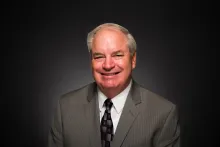
Robin Webber was born in Chicago, Illinois, in 1951, but has lived most of his life in California. He has been a part of the Church of God community since 1963. He attended Ambassador College in Pasadena from 1969-1973. He majored in theology and history.
Mr. Webber's interest remains in the study of history, socio-economics and literature. Over the years, he has offered his services to museums as a docent to share his enthusiasm and passions regarding these areas of expertise.
When time permits, he loves to go mountain biking on nearby ranch land and meet his wife as she hikes toward him.
