
Robin S Webber
This transcript was generated by AI and may contain errors. It is provided to assist those who may not be able to listen to the message.
I'd like to begin the message this afternoon by having you turn with me over to the Gospel of Luke. Join me, if you would, in Luke 14. Let's begin the story at the beginning of the story in verse 16. Luke 14 verse 16. And then he said to him, A certain man gave a great supper, and invited many. And sinners servited at supper time to say to those who were invited, Come, for all things are now ready. But they all with one accord began to make excuses. The first said to him, A wife bought a piece of ground, and I must go and see it. I asked you to have me excused. And another said, I've bought five yoke of auction, and I'm going to test them. And I asked to have me excused. Still, another said, I've married a wife, and therefore I cannot come. So that servant came and reported these things to his master. And then the master of the house, being angry, said to his servant, We'll go out quickly into the streets and the lanes of the city, and bring in here the poor and the maimed and the blind. And the servant said, Master, it is done as you command it, and there is still room. Then the master said to the servant, Go out into the highway and hedges and compel them to come in, that my house may be filled. For I say to you that none of those men who were invited shall taste my supper. Jesus was speaking to those that were around him, that an invitation had indeed gone out. But for one reason or another, reasons that were humanly plausible, reasons that seemed good, reasons that seemed to stack up, and certainly God would understand, made these people not accept the invitation of God. Verse 25, Now great multitudes went with him, and he turned and said to them, because there were many, many people that were circulating around Jesus Christ, this man of wonders and man of miracles and man of healings and a man that fed the crowd, that came out and sought him and listened to him. So there was a great attraction. There was this magnetic individual that was drawing people, and people weren't really understanding what he was all about. And then verse 26, He said, If anyone comes to me, and does not love less his father and his mother and his wife and his children, brothers and sisters, and his own life also, he simply cannot be my disciple. But I'm now going to center on verse 27, because maybe we've never focused on it long enough. And whoever does not bear his cross and come after me cannot be my disciple. Interesting. When Jesus mentioned that those that would accept that invitation would bear a cross, that was not lost on that audience. People in Judea knew what it meant to watch others of their fellow countrymen bear the cross-beam of a cross, of a staros, of the stake, of whatever you want to call it. It was the final indignity, the final humbling factor of just setting somebody apart, accrual to it, unimagined, of a person most likely beaten for a while. And then they have this heavy cross-beam put on as they walk out of their village or their city and even Jerusalem. In the course in the history of Judea, even probably up in the Galilee, there were times when the Romans would actually crucify hundreds, if not thousands, of individuals. To set an example, Pax Romana came at a cost, the Roman peace.
And they tried to maintain it and to hold it, but when you went against Rome, there was a brutality and there was a suddenness. And there was this example of crucifixion that was laid out before the entire population. This was not lost on the audience when Jesus said in verse 27, And whoever does not bear his cross, and come after me and follow me, simply cannot be my disciple.
It's very interesting. Let's focus on this for a moment. Jesus makes it very clear to you and me this afternoon, friends, if you and I do not bear a cross, we cannot be his disciple. Let's just read it what it says. We cannot be his disciple if we do not bear a cross.
He does not even mention his cross. That's another factor in this, but it says that we too are to bear a cross. In other words, let's understand what he's saying here. You can be in the know. You can be titulated by phraseology and or certain concepts, but you will not really learn from me as my disciple from me if you don't bear a cross. Because I'm not just offering brain food.
I'm not just offering heart stimulator, but I am offering experience. And what I have experienced and what I am going towards and what is coming into my life must also come into your life. Again, allow me to make it very clear. Let's just look at it, center on it. It says here, Whosoever, that's you, that's me, as the invitation goes out to us, does not bear his cross, not my cross, but his cross and come after me.
Now there's the encouragement. We have somebody in front of us to follow, but it's our cross following him. If we do not do that, we cannot be a disciple. We will not learn the lessons that he wants us to learn. Very interesting. Now, why is this so important for you and me? Let's prepare some of the pathway of our journey in front of us and understand what a cross-like existence and a cross-like experience is about. And to understand that a cross-like existence and experience was fundamental and was foundational to the preaching and the teaching and the expectation of the early church.
Where do we look? Join me, if you would, in 1 Corinthians. 1 Corinthians, and let's pick up the thought, if we could, in chapter 1. As you're turning to chapter 1, allow me to lay down some framework for all of us. Paul is addressing a church that had lost its way, lost its way, totally divided, really at one another. Kind of reminds me a little bit of what's happening in Washington right now. That's some theater going on back there, isn't it? And there's no middle bridge.
I'm right, you're wrong, you're wrong, I'm right. My way or the highway, why can't you see it my way? Well, this was the Corinthian church, times 12. Everybody had a thought on everything, very Greek, very Greek in background, if you've ever studied the Greek community and how they approach things. But everybody had an idea, and it was unraveling. They had lost their way. They didn't have a touchstone. They didn't have a bridge to cross over to bring them together.
And that's why then Paul addresses this in 1 Corinthians 1 and verse 17. For Christ did not send me to baptize, but to preach the gospel. Not with wisdom of words, notice, lest the cross of Christ should be made of no effect. This is not just simply about gnosis. This is not just simply about knowledge. This is not just simply about taking facts that you can banter back and forth and get puffed up about and I'm right and you're wrong.
Because if we do that, then it's going to make the what Christ went through on the cross for naught. For the message of the cross is foolishness to those who are perishing. But to us who are being saved, it is the power of God. I will destroy the wisdom of the wise and bring to nothing the understanding of the prudent.
Then Paul asks this question as is so often the way of his writings. He asks a question. Where is the wise? Where is the scribe? Where is the disputing of this age? Has not God made foolish the wisdom of this world? For since in the wisdom of God, the world through wisdom did not know God, it pleased God through the foolishness of the message preached to save those who believe. For Jews request a sign and Greeks seek after wisdom. But we preach Christ crucified to the Jews a stumbling block and to the Greeks foolishness. The whole message in itself, I'm not going to linger there.
But to those who are called both Jews and Greeks, Christ the power of God and the wisdom of God, because the foolishness of God is wiser than men, and the weakness of God is stronger.
Than men. What we find here is some language that's coming out. Paul is concerned that the cross of Christ might be of none effect. He talks about the message of the cross in verse 18. In verse 23 he says, but we preach Christ crucified. Now where am I taking you with this? Good question. Allow me to answer this. While we do not worship before a man-made cross or worship a cross, nonetheless, our daily worship of God is molded by this powerful, biblical metaphor, speaking of the cross. Speaking of a cross-like existence, it is one of the key centering elements of number one, not being conformed to this world. Number two, of renewing our mind, and three, being transformed of the Spirit. It is what the Apostle Paul centered an entire congregation on, is to get your mind off of yourself and what Christ did on the cross. And not only that, then to think of Christ's words, he said, if you're going to follow me, if you're going to accept the invitation, if you're going to be my disciple, you too must bear a cross.
Now, when I say that, please understand something. If I asked you, how many of you want to bear a cross today? You'd say, I've already given it at the office. I've got one. But we've got to understand what it means to bear a cross. And that's what I want to talk about today with all of you, to bring us all together here. Here's the question. How do we bear our cross like Christ? Not His cross. There is only one cross that He died on, the one that is precious. The cross isn't precious. The cross was a piece of wood. It was an instrument, but the one that died on it was precious, and He carried His cross. But He says, then, we have to carry our cross. The goal in this is that we carry our cross like He carried His cross. And that's where I want to take you today. How do we bear our cross? The one that Jesus said that we had to carry if we're going to be a disciple and learn the big lessons that He wants us to teach. Let's start with this first step. First point.
To understand how we bear our cross like Christ, we must understand how He bore His cross. Point number one, His purpose was always before Him. His purpose, His calling, His reason for coming down from the third heaven that we just heard about, was always before Him. He did not wind up His life at the end of His life on a cross. He knew the cross was a waiting for Him there on Golgotha. It was always before Him. It was on His mind. It was on His heart. He was mission-calling, invitation-oriented. He was focused. What do I mean by that? Why is this going to be important? If you're taking notes, here's something to write down. Jesus was not an accidental Savior. That's why I love coming up to the Passover. And to recognize that He that we worship, that the Father gave us, is not an accident. He was not at the last moments of His life wondering if He could make it. I'm wondering what this is all about. Look at everything that I've done. The last thing is that I'm nailed to this piece of wood. Jesus knew what His calling was. And He lived it out every day of His life. Just like you and I can see a target and we can shoot for it or we can aim for it, the target in His eyes was to meet that cross on Golgotha. It allowed Him to stay focused. It allowed Him to stay on mission. Join me if you would to show you the point in John 3. This is not something that He had an evolving position on. I've heard that recently where there is a politician that has an evolving position on a subject. That means he's flip-flopped. But anyway, you know how that goes. I have this evolving position on this subject. That means He's going to try to keep everybody happy. Jesus came not to make everybody happy, but to serve at the pleasure and the purpose of His Father above. John 3, join me. You're there, I'm not. Pardon me. John 3, in verse 13. This is early on in His ministry. You might say He's just out of the chute. It says, No one has a sinner to heaven, verse 13, but he who came down from heaven, that is the Son of Man, who is in heaven. Doug, this is a follow-up of your message.
As Moses lifted up the serpent in the wilderness, when all of Israel was plagued, and Moses went out between life and death, and raised that standard with the serpent on it, and lifted it up, notice, so must the Son of Man be lifted up. Jesus knew exactly what He meant and where He was going and what that was going to do to Him when He used that term, lifted up, He was going to be lifted up on a stake, on a staros, on a cross.
On whatever that implementation of wood was, He was going to be nailed. He was not going to slide down. He was going to be lifted up for all to look upon, to understand. That is where He was. Christ was called to be the Lamb from the very foundation of the world, Revelation 13 and verse 8. And the altar would be Golgotha, and being crucified would be the sacrificial instrument, the passion lambs of old that came from Bethany or Bethlehem. The sacrificial instrument was just a quick slit of the throat, and they were gone. The sacrificial instrument on that altar that is known as Golgotha, where the ultimate Lamb of God was raised up and sacrificed, that instrument was crucifixion. And Jesus knew from the beginning and was sharing from the beginning to those that might know where He was headed, where He was going, and what He was going to do. His arriving at Golgotha was not an accident. It was purposeful. It was mission-oriented. How does that relate to you and me as we too have this calling to carry across? Turn to me in John 15 and verse 16. In John 15 and verse 16, let's notice something.
You see, from the very beginning of time, the one that is God, now revealed as the Father, the one that is the Word, later became also known as the Christ, they came in whatever fashion, whatever manner, because you and I were not there.
But it was determined that one would go down. One would go down so that humanity might be redeemed back to that which is the Godhead. There was that calling. There was that choosing amongst them. And Jesus Christ came to this earth. He had a calling. Did you know, brethren, I'm here to awaken you today, awaken you on the Sabbath, to remind us that we have not just simply joined up. We're not just in a hitch with the church, but that we have been called. John 15 and verse 16, You did not choose me, but I chose you and appointed you, that you should go and bear fruit, and that your fruit shall remain, that whatever you ask, the Father in my name, He may give you.
Did you realize that a part of that fruit comes by bearing across? And we have been chosen, and we have been called. Join me if you would in 1 Corinthians 1. 1 Corinthians 1, let's take a look at verse 2. And I hope some of this is challenging. I also hope some of it is very positive, and enlightening, and comforting, and encouraging to remind us of what we have been invited to. 1 Corinthians 1 Verse 2 To the church of God, which is at Corinth, not just the Corinthian church, but the Ecclesia, those that are set apart ones, which is at Corinth, to those who are sanctified in Christ Jesus, called to be saints, with all who, in every place, call on the name of Jesus Christ our Lord, both theirs and ours.
Grace to you and peace from God our Father and our Lord Jesus Christ. Let's take this apart for a moment. It helps us to understand something. That we have, notice, a calling. We are set apart. Notice the word in verse 2, sanctified.
We have been sanctified in Christ Jesus. We are called saints. To be very blunt, if you want to put it this way, maybe we didn't think about it when we wheeled up to the parking lot today and walked in here, or maybe when we wake up on a Monday or a Tuesday or Wednesday morning in our apartment or our condo or our house or our fifth wheeler.
It's rather startling if I can put it this way, but you and I have been called to sacred service. You and I are sanctified. We're not just called to be corporate church members. We're not just called to put our John Henry on the line here. We're not just called to show up at church on a Saturday afternoon. You and I are called to sacred service.
Sacred service as much as the house of Aaron of old or the Levites. You and I have been called to be a part of the temple of God. You and I have a calling. A part of that calling is to remind us that we must always maintain that. When you and I realize that we have accepted that invitation, that you and I have been called, then we are going to match the Christ-likeness of the one that went to Golgotha. You and I have not been called to be accidental Christians.
I want you to think about that for a moment. You and I have not been called to be accidental Christians. We will have incidents. Absolutely. We will have episodes. Absolutely. But we will not live our life accidentally. We will recognize that it is in this time that we have been visited, that the invitation has come to us, and that we have accepted that when Jesus said, Follow me and bear your cross in this world that is apart from me. That we recognize that we will not walk alone, that God will give us everything that we need, that the will of God will never take us to where the Spirit of God cannot take care of us and supply our needs.
I want to repeat that. The will of God will never take us or lead us to where the Spirit of God cannot supply our needs. In bearing that cross that God is allowing you to bear, so that we might learn and emulate the love and the devotion of Jesus Christ. Allow me to take you to point number two. The first point was His purpose was always before Him, and the cross that He would bear.
Likewise, our purpose and our calling, our rendezvous with destiny, that God has set before us, must always be before us. Point number two. He carried His cross with humility, and so must we. Philippians 2. Join me if you will there for a moment. Philippians 2.
And let's pick up the thought if we could in verse 5. It says, let this mind be in you, which was also in Christ Jesus. That's easy to say. It gets more challenging when you start bearing a cross, your cross, to match the way that He carried His cross. Because what God does is, as the Master Teacher, He's not just involved in lecture. He provides the workshop, the laboratory of this life. To see if we really take His invitation that He has given you and me seriously. It says, let this mind be in you, which was also in Christ Jesus. We've already discussed that that was not an accidental mind. It was a purpose-filled mind, who, being in the form of God, did not consider it robbery to be equal with God, or something to clutch onto, or to hold onto, but made Himself of no reputation. Taking the form of a slave, and coming in the likeness of men, and being found in appearance as a man, He humbled Himself, becoming obedient to the point of death, even the death of the cross.
When we read this, it's astonishing, not only thinking of what it meant by the death of the cross, but to recognize that Jesus simply practiced what He preached. How often do we have the honor of bumping into somebody who actually practices what they preach? He said He was the one, He is the one, and He did exactly what He said. Join me, let's go back, let's rewind, let's go to Luke 14. Let's pick up the thought in verse 7. Luke 14, verse 7.
So He told a parable to those who were invited, when He noticed how they chose the best places, saying to them, When you are invited by anyone to a wedding feast, do not sit down in the best place, lest one more honorable than you be invited by Him. And He who invited you and Him come and say to you, give place to this man, and then you begin with shame to take the lowest place. But when you are invited, go and sit down in the low, low, lowest place, so that when He who invited you comes, He may say to you, Friend, go up higher, then you will have glory in the presence of those who sit at the table with you. And then comes a profound principle, a biblical jewel, for whoever exalts himself will be humbled. And He who humbles himself will be exalted.
Humility is the pathway to the kingdom of God. When we think about what Jesus the Christ did, He could sit no lower than where He sat, in that sense, on the cross. He was stuck there. By the way, if you've forgotten, He was nailed on a piece of wood. That's where He was. He humbled Himself. The very same one that was the Word had created all in Him and through Him, all things were created. It says that again and again through the Scriptures. And He came and He put on this fleshly tent and died so that we might have relationship with His Father and now our Father. He humbled Himself. Join me if you would in Acts 2 for a moment. Acts 2.
When we humble ourselves, when we learn the lesson that the pathway to greatness is not how high you are, but where you start. As Christ did, things happen. Acts 2. Peter came to notice this. Peter, who was not necessarily a humble individual, as we remember to begin with. In Acts 2 and verse 23, Him being delivered by the determined purpose and foreknowledge of God, you have taken by lawless hands, you've crucified, and you've put Him to death. Yeah, He took His cross and bore it humbly to Golgotha, whom God raised up and having loosened the pains of death because it was not possible that He should be held by it. Amazing! Verse 31.
Jesus humbled Himself. In the way that He carried His cross, the mission that He was given, He did it without self, without thinking of any return, of wondering how big His audience was. He was serving only one audience, one audience, and that was His Father. And now, our Father, because of what He did. See, the bottom line is this, and I'm not sure what your cross is, and you may not have any idea of what my cross is. But here's the point I want to share with you. It's not simply that we see a cross in our life and or are even willing to bear it. It's how we bear it. It's how, how we bear it. Selflessly giving it to God and giving ourselves to God and recognizing every path and every day that we might bear a cross is for a purpose and for a reason. That it's not really about us. That it's all about God. We are owned by God. Jesus Christ redeemed us. We are paid and we are bought for. And now we are slaves of righteousness. We are owned by God. Thus, we put ourselves out of the equation. We put God into the equation. Join me, if you would, in Isaiah 66 and verse 1. Isaiah 66. You know, God has made a lot of neat things. He's made all the heavens. He's made all the stars, all those solar systems that are up there. But notice what God says turns His fancy. What really grabs His... Do I dare say this? What really grabs His eyeballs? It's mentioned right here in Isaiah 66. It's almost as it were. He can't help but stare. Thus says the Lord, Heaven is my throne. Earth is my footstool. Where is the house that you will build me? Where is the place of my rest? You might say, where is the individual that has accepted the invitation to the wedding? For all these things my hand has made, and all those things exist, says the Lord. But on this one will I look on Him who is poor, and of a contrite spirit, and one who trembles at my word. I mentioned something today, which we could go for hours on, improving in the Bible and improving by Scripture. But just to tell you today, you that are in this room, and we are not alone, there are all of those that God is dealing with around the world. But you're here, so I need to remind you. You are called for sacred service. That should just make us tremble at God's word. And that should begin to allow you and me not to simply live by accident, but by design, towards a purpose, towards a better outcome, not because of who we are, but because of what God is doing in our life. We need to be humble, just as Jesus was indeed humble. Join me, if you would, in James 4, verse 6. One last thought on this particular point of how Jesus carried His cross and how we are to bear our cross. James 4, verse 6. But He gives more grace. Therefore, He says, God resists the proud, but gives grace to the humble. Gives grace to the humble. Therefore, submit to God. Resist the devil. He'll flee from you. Draw near to God, and He will draw near to you. Cleanse your hands. Use sinners and purify your hearts. You that are double-minded. Verse 10, humble yourselves in the sight of the Lord. Notice what it says. And He will lift you up.
Isn't that what the Proverbs said? Isn't that what Jesus said? That if you were abased, He will exalt you. Is that not what occurred to Jesus? He was put in the grave, and now He is at the right hand of the Father in heaven. Now, let's just think about something here for a moment. All of us would like to bear a crown. And a crown is promised to each and every one of us. There is a crown that is reserved in the kingdom of God, just awaiting us. But I want you to remember something. Very basic equation of the Bible. Are you ready? Before we bear a crown, we have to bear a cross. Oh, Mr. Weber, why did you keep on going with that sentence? I like just the first part. Before we bear a crown, we've got to bear a cross. Jesus now is at the right hand of the Father. Christ omnipotent at the right hand of the heavenly Father. Lord of Lord, King of kings has a crown. But before He had that crown, He had to bear a cross. Point number three that I want to share with you is this. Sacrifice. Sacrifice. So very important. Join me if you would in Matthew 10, verse 38. Matthew 10. And let's take a peek at verse 38.
And He who does not take His cross, not my cross, but take His cross and follow after me is not worthy of me. And then notice these astonishing words. He who finds His life will lose it. And He who loses His life for my sake will find it.
This is a challenging part of the cross-like existence that you and I have been called to. Because to be very frank, friends, we as human beings, we do think just merely in the moment. We really do just sometimes think step by step and moment by moment rather than keeping that big picture, the big picture in our mind of where all of this is going. We just live in the moment and therefore we forget the calling that God has given us. I'd like to read a story to you. It's called, He who Loses His Life Finds It. On one occasion, Sathu Sondur Singh and a companion were traveling through a pass high in the Himalayan mountains. And at one point, they came across a body lying in the snow. Sondur Singh wished to stop and help the unfortunate man, but his companion refused, saying, we shall lose our lives if we burden ourselves with him. But Sondur Singh would not think of leaving the man to die in the ice and snow. As his companion bade him farewell, Sondur Singh lifted the poor traveler onto his back. With great exertion on his part, he bore the man onward. But gradually, the heat from Sondur Singh's body began to warm up the poor, frozen fallow. And he revived. And soon, both were walking side by side along the path. Catching up with his former companion, they found him dead, frozen by the cold. You see, in the case of Sondur Singh, he was willing to lose his life on behalf of another. And in the process, found it. In the case of his callous companion, he sought to save his life, but lost it. You see, Sondur Singh was thinking beyond the moment, and had a life of sacrifice. And he put himself out of the way and performed an act of love. His life was for a purpose, and so is ours. Join me, if you would, in 1 Corinthians 15. 1 Corinthians 15. And again, let's pick up the thought, if we could, in 1 Corinthians 15 and verse 31. Paul speaking, I affirm by the boasting in you which I have in Jesus Christ our Lord, I die daily. I die daily. Paul's life of purpose, a life of design, a life of meaning. And he bore a cross that we do not know. He asked God to eliminate that burden that was out of his life. He actually prayed about it for three different times, saying, there is something so big, Lord, please take it out of my life. That God did not take it out of his life. And Paul had to come to the conclusion that, God, I got it. Got it? This is a part of the learning that you wanted me to learn and why I bear a cross. You chose not to remove the cross. You asked me to sacrifice myself and to remember that your grace is sufficient. Just receiving the invitation and the calling and being chosen, if nothing else occurs in my life, yet it's enough to have an intimate relationship with you, to be visited by you in this lifetime as a first fruit, as one's ahead of season, that I now am going to sacrifice my life for you. And I'm no longer going to carry my crosses the way I would, but I'm going to carry the cross the way Jesus would. Join me if you would in Galatians 2 and verse 20. Notice what it said here.
Jesus Christ bore a cross that was about a sacrifice, and so must we. Point number four. And this is going to be very encouraging. And may I say something? It's an action item. Often times when I write memos, e-mail memos, I'll put in all caps. Action item. Something's being asked of us. The fourth point is this. God gives others to share the load. God brings other people into our life to share the load. Join me if you would in Mark 15, 21. Mark 15, verse 21. Here is Jesus Christ, having been beaten through the night, challenged every hour, His humanity being stripped away from Him, and then He has to carry that cross beam through the streets of Jerusalem on His way to Golgotha. And while He was indeed the Son of God, He was also the Son of Man, and His human body could only take so much. And we come to this point, then, to where He couldn't go any further. And in verse 20, it says, Then they compelled a certain man, Simon, a Cyrenean, a man from North Africa, the father of Alexander and Rufus, as he was coming out of the country and passing by, to bear his cross. The point that I want to bring to you, friends, and I hope this will be encouraging, and I don't know exactly what you're going through. As your pastor, I know what a lot of you are going through. There are other things that I don't know what you're going through. And it is challenging. Crosses are weighty. And perhaps the weight of, oh my, it just seems so much on you. But I want to share something with you. Jesus Christ Himself was supplied a helper to help Him get to Golcotha, for you and for me. Do you not think that as God has given us, in that sense, a cross to bear, that He does not also supply helpers for you and for me? Join me if you would for a moment to 2 Corinthians 1. 2 Corinthians 1.
Now, 1 Corinthians, but 2 Corinthians 1. And let's pick up the thought in verse 3. Well, let's actually start in verse 3, because that's where it begins. Blessed be the God and the Father of our Lord Jesus Christ, the Father of mercies, and God of all comfort, who comforts us in all our tribulation, that we may be able to comfort those who are in any trouble with the comfort with which ourselves are comforted by God.
For as the sufferings of Christ abound in us, so our consolation also abounds through Christ. Do you think about it in your life when God has planted a person in your life at a specific moment, when you were in deepest need, when you just didn't think that you could go any further, and God planted into your life a Simon of Cyrene to help you bear that cross? Now, there's two things I want you to get out of this point for a moment as we move away from church services today and go back into what I call homework and heartwork time.
And that is simply this. This works two ways. Are you ready? Number one, God will supply another Simon of Cyrene in your life. And you likewise are to be a Simon of Cyrene in somebody else's life. It's just not about you. See what I'm saying? If God comforts us by the Spirit, of which indeed He does, sometimes it can be by the divine, sometimes it can be by the spiritual, but you know something, friends? We are God's eyes. We are God's arms. We are God's hands. We are God's legs. And at times He reaches and touches people through you and me.
We have the opportunity to work for the divine. What an awesome privilege that you and I have. This is very important of understanding the cross-like existence. That it's just not simply being nailed to a cross, but it's sacrificing ourselves and our life for others and letting people know the love of God that is in us that is towards them. We have to be cognizant. We have to know the people that are in need. You know, we can think that we are in God's service because we know this or we know that or we have so much knowledge.
But knowledge is of no avail unless we put it to practice. Remember when I said earlier that you and I have been called the sacred service? Sacred. Sacred service. This is about serving God. You know that there were two other individuals that were called the sacred service back in a story that Jesus told. One was a high priest and the other was a Levite. You know the story. The story of the Good Samaritan. And they had all of this knowledge. They had all of this calling.
They had all of this function. And they did not understand the individual with the cross that was in front of them. They were looking for something grander and greater for God to work with, to deal with. Something big, big, big. Not the guy that was knocked over on the road on the way to Jericho.
They didn't recognize that at that time they were called to be a Simon of Cyrene. They thought it was to be on a bigger mountain or on a greater highway or somebody that had a three-piece suit on. They lost opportunity. They lost the ability to have treasure in heaven.
I want to encourage you today in enabling yourself to bear your cross, to recognize there's a time to put your cross down and help somebody else with theirs. Interesting story. I'll just take you for a moment. It just popped in. It wasn't even in mine. Do you remember when I talked to you about Desmond Dauchner a couple of years ago, the Seventh-day Adventist conscientious objector during World War II? I wrote an article about it. The guy that went up onto the plateau brought everybody down. He was a conscientious objector. Then he went back up there and he got shot. As they were carrying him, he is shot.
He's wounded. They're carrying him. You just think this through for a moment. This is an incredible story. They're carrying him off the battlefield, which is still live with the live ammo and action going. They're carrying him off the battlefield on a gurney. Remember, he was a medic. He saw somebody else wounded. He rolled off the gurney to help the other individual.
Think that through. Are you with me? Got the story? Is that planted in your mind? You're up on a high plateau in the South Pacific. You're undertaking enemy fire. Here's the guy that had been abused and misused and sullied because he was a Sabbath keeper and because he was a conscientious objector, but he had volunteered to be a medic in the Army during World War II. He finally gets wounded after dragging off about 100 men individually, single-handedly off the plateau. Lord, have I done enough? No. He goes back up. He gets wounded.
And he's on the gurney and he sees somebody else hurt. And he rolls off the gurney to go help the other individual. Would you not suggest that he was already bearing a cross? But he was willing to bear somebody else's cross as well. Simon of Cyrenes are alive and well in today's world.
And you and I have been called to be one. Let's go to point number five. Point number five, joy. Jesus the Christ carried his cross with joy and so should we. Hebrews 12. Come with me there. Hebrews 12.
This is who we look to. Jesus said, if you're going to follow me, you're going to have to bear a cross. But you do get to follow me. So that's why this is so important. Looking unto Jesus, the author and the finisher of our faith, who for the joy that was set before him, endured the cross, despising the shame and has sat down at the right hand of the throne of God. How was he able to do that? How was he able to go through those last incredible moments of incredible agony and the jeers and the jaunting that were coming down from the crowd below him, the abandonment of those that he had given his life to, the disciples. Where are you, boys? When I need you. It says, for the joy that was set before him, he endured. It was not taken away. The cross was not taken away from him. And your cross and my cross are not going to be taken away from us. But when we go through these points, our steps and our journey and our march and the weight of that cross that we are bearing is transformed. It is not by accident. It is by design that we might learn as Jesus learned as he bore his cross. Christ always kept the big picture in front of him, recognizing the long-term worth of his sacrifice. Eternity in union with his Father and with you and with me mattered more than the moment.
I always remember a lady that I visited up in Delano, California. Her name was Olita Graham.
Come out in the 1930s as a young teenager from Oklahoma. She was one of those cotton pickers that came out during the time of the grapes of wrath. Lovely lady. She'd always been very encouraging to Susan and I. At times when we needed encouragement, we just knew that she was behind us. We knew that she was a godly woman and she was just so very kind to us.
Always spoke a nice word. Not a lot of words, but a word. But I remember visiting the last time I saw her. I was coming down from camp. I was going down the 99 and had an opportunity to go through Delano. I went into that room. It was not a very nice room.
It was not a very nice hospital. But I was there with she and her daughter, Woneva Cotter. This was her mother, Aletha. Aletha had congestive heart failure. She was bearing a cross at that point because the doctors had basically told her that there was going to come a time when she wasn't going to be able to breathe. Are you with me? You weren't going to be able to breathe. She was basically, sometime in the near future, was basically going to just simply strangle in bed on her own. Because she wasn't going to be able to take a breath.
You know and I know how difficult it is, how challenging that is when you can't capture your breath. That is, they dare say, extremely frightening, isn't it? Because I'm sure all of us have done that at one time or another or had children that way. And I talked to her and I said, you know, Mrs.
Graham, I'm going to anoint you. I'm going to ask for God's perfection. I do not know completely His will, but I do know His purpose and I want to talk to you about His kingdom. So that's what I often do at this stage when I'm talking to people. I don't talk about myself. I don't talk about a lot of things that seemingly mattered at one time or another. But I talk about the promises of God and being with God and Jesus Christ forever in the kingdom of God.
So we just talked about it. I did most of the talking because she couldn't talk that much because of her breath. Some things don't change. And I talked to her and I described to her what the kingdom was going to be like. And I said, but here's the difficulty, Mrs. Graham. You are still going to have to go through that minute. And I can't say that it's not going to be tough.
It's going to be frightening. But all I can tell you is that on the other side of that panic that you feel right now and that you're expressing to me is joy that cannot be measured. It is a world that cannot be measured and an experience that God wants in store for you. It is so beautiful that you want to be there. And what I said to her is that you've got to have that joy and you've got to, for that moment when that's occurring, you've got to think about eternity.
You've got to think about eternity. And thinking about eternity and being with God, it will drown out that moment of pain and that moment of sorrow. And it will take away that fear that you have. Which takes me to Philippians 4. Let's conclude there. For each and every one of us, brethren, carry across just like Olitha Graham. I don't know what yours is. I don't know what you don't know what mine is. But we know that's a part of the assignment as a Christian. Philippians 4. Let's wind up with this. Always a very encouraging phrase as we have considered what it means to be a part of a cross-like existence.
Philippians 4. You say, I don't know, Mr. Weber, if I can do that. This crosstalk is getting me a little worried. Well, humanly, it can create worry. But for the joy that was set before him, Jesus Christ endured the cross. And so must we. Notice what it says here. I can't think of any finer words that I, as your pastor, might be able to share with you.
I won't see you for a while. I'll see some of you tomorrow or during the course of the month. But what better words to part as Christians than to consider what is mentioned here in Philippians 4 and in verse 6. Be anxious for nothing but in everything by prayer and supplication, and with thanksgiving, let your request be made known to God. Let him know what is happening with that cross that you're bearing. Let him know how heavy it is.
Let him know that you need to understand more fully what his son went through for you and me as he bore his cross. And that when you get sidetracked, when you get distracted, when it seems too much, ask God to help you get back on course with prayer and supplication. And thank him. Thank him for the cross that you are bearing. Oh, no, Mr. Ware. I knew you were going to go there.
Now we've got to be thankful for the cross. Yes, we do. Yes, we do. In all things, give thanks. And thanks that if it is not lifted from you, that he will give you the strength and the bearing and the will to be able to carry on.
Let your request be made known to God so often we talk to ourselves rather than talk to God who has all answers. And notice in the peace of God, which surpasses all understanding better than the facts that are on the ground, will guard your hearts and minds through Jesus Christ. When you look at that word, guard, the word there is actually used for a Roman guard, a sentinel that was posted at a door or a gate, so that when you are bearing that cross, which is your assignment and my assignment, and matching our walk with the walk of Christ before us, God says that if you will pray for me, I in that sense will put sentinels.
I will put a guard on your walk.
What I have begun, I will finish, and you will meet me in eternity. Let's continue with a cross existence, a Christlike walk, that's encouraged one another. I'm not going to be seeing you, brethren, by and large because of where we are today, pastoring what I do. If I can just make a comment, it is so important more than ever that we are communicating with one another, looking after one another. If we don't see somebody in church, give them a call. If you see somebody that's down, go over and talk to them. Share your experience. Share what you're going through. Let's build one another up. We're a family. We're joined not just simply at the hip, but at the heart with a calling. I'm asking all of you in this coming month, while I'm away, to help your fine elders and your fine deacons, to keep the family here in San Diego together, to join one another, pray for one another, encourage one another, call one another, write one another. Know that you've been called to help one another bear the cross that has been assigned to you.
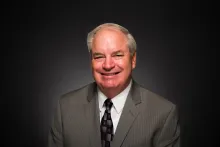
Robin Webber was born in Chicago, Illinois, in 1951, but has lived most of his life in California. He has been a part of the Church of God community since 1963. He attended Ambassador College in Pasadena from 1969-1973. He majored in theology and history.
Mr. Webber's interest remains in the study of history, socio-economics and literature. Over the years, he has offered his services to museums as a docent to share his enthusiasm and passions regarding these areas of expertise.
When time permits, he loves to go mountain biking on nearby ranch land and meet his wife as she hikes toward him.
