

Robin S Webber
This transcript was generated by AI and may contain errors. It is provided to assist those who may not be able to listen to the message.
I have a message for all of us this afternoon. Allow me to get right into it. I have brought up my cell phone. I know it's like the 11th commandment in our church services to turn off your cell phone. But, if I do not turn off my cell phone, I will not know what time it is. And I do not want to press your conversion. You always know when it's a good message. A good message is when they don't walk out on you, and especially when they don't walk towards you during a message.
So, we don't want that to happen. So, I'm going to... Susan, will you remind me that it's up here so we don't leave home without it a little bit later on? Well, I've got a message for you that are here this afternoon and those that are going to be watching on the Zoomcast. And it is simply this. I'd like to begin by saying, there's an old expression. It's been said that home...home is where the heart is. And there's nothing truer than that, and that's what community is about.
Community is not just a place on the map. It's about people that know one another, live together, work together, love together, know one another. That's what community is, and that's what a home is.
Let's consider that statement for a moment. The statement being, home is where the heart is for a moment, versus a house. All of us at one time or another have lived in a house and or we have bought a house. We thought we bought it. It's still maybe the banks, but we have bought a house. What is the difference between a home and a house? We oftentimes talk about the house of the Lord. But there's a difference between a house and a home. And all of us that are gathered here already as pioneers of those that are going to come tomorrow night, we put up the house yesterday and the days before with the tent going up.
But what we're going to be experiencing here for the next seven days plus one is not just coming to the house of the Lord, but we're going to be a part of the home of the Lord. And that is going to take the hearts of each and every one of us to make that happen. What is the difference between a home and a house? Well, a house can be built with hammers and nails, wood, and like what's underneath your feet, concrete.
But ultimately, a home isn't about where, but who is there. It's about relationships. It's about hearts that are ultimately and intimately bonded by experience. How often have we said in our life, we can't wait to go home. We're not going home to rooms. We're going home to people. We're going home to hearts that have gone through life together, through the mountaintop experiences, to the plateaus, to the valleys, and yet come up again to the plateau level and still continue anew to experience mountaintop experiences.
And whether you do or not, you're still family. You're a community and you're home. Allow me to share a thought to focus in your mind for a second, if I might, please, and that's simply this. Ultimately, Scripture reveals to us where home and who waits for us. Because the most important thing, being a disciple of Jesus Christ, is not only speaking about home, but who is in that home waiting for you and for me.
Scripture, and that's what's on our lap or on the tables here especially, is the ongoing story of God's desire for humanity to dwell in his specially prepared home. Let's step back for just a second. We're going to move forward. Let's unpack that for a second. Be it Eden of old, whether it be the promised land of Canaan, whether it be that return coming back from Babylon, after in a sense being rooted out of home.
And yet God is always the God of return that he promised after those 70 years that the Jews would come back to Jerusalem. Or, when you think about the coming of Emmanuel, God with us, to become that ultimate door back to that ultimate garden of Eden that God has always wanted those that are made in his image, made in his likeness, to experience eternity with him. We have the joy and the ability and the spirit to guide us during these next seven days plus one to understand that ultimate home that God wants for all that are apart and made after his image.
Again, eternity is, you think about it, on the eighth day, last day, whatever you want to call it, that eternity is defined in Scripture, not as a destination. I want to explain that and unpack that with you for a moment. Eternity is not just simply a destination.
It's a way of traveling. It says, seek you first the kingdom of God and his righteousness, and then these things shall be added to you. So often we just wind up. That's what happens when you cut off the rest of the Scripture and just take a bumper sticker out of it. Seek ye first the kingdom. That's good. But then, only through God's help can we obtain his righteousness. And then it's only then that all those things shall be added to you. But I want to draw your attention to maybe something you've never seen before. Join me if you would in John 17. It's interesting how Jesus himself defined eternity. These are the words of the Master on that last night of his human life. And in John 17 in verse 1, notice what it says. The only reason I share this, and I may bring it up on the last or the eighth day about eternity, because I'll be speaking about that on the final festival about eternity and what awaits us. I remember as a younger pastor, I used to define eternity, and I kind of stretched people's minds. You ever had a rubber band stretch so much that finally it snaps? And sometimes I used to try to talk about eternity in the matter of physics or mathematics or distance or different little word props. I kind of like this pretty soon, because when you start thinking about eternity, your eyes cross, your brain crosses, and I don't know about your ears, but you just kind of go, what's eternity? I stopped doing that about 10 to 15 years ago because I came to recognize that eternity is not about quantum physics. It's about something much more important. John 17. Jesus spoke these words, and he lifted up his eyes to heaven and said, Father, the hour has come. Glorify your Son, that your Son also may glorify you, as you have given him authority over all flesh, that he may notice that he should give eternal life to as many as you have given him. Now, let's look at verse 3. And this is eternal life, not quantum physics, not trying to blow people's brains out about how smart you are about being smarter than Einstein. It's this. And this is eternal life, that they may know you, the only true God and Jesus Christ whom you have sinned.
Friends here in Walnut Creek, I submit to you that eternity is about a relationship. It's not about a house. It's not about concrete, nails, 2x4s, comm shingle roofs. It's about a home. It's not a phrase we often use in the Church of God terminology. I suggest that we use it more. After all, it says that the patriarchs of old, having given up everything behind them, sought what? A homeland.
Home is where the heart is. Interesting. The journey of home building through scriptures, and any of us, and we all have families, and we recognize families can be interesting. Sometimes they say families can be rich. There's a lot going on in the story of any family.
And it's been the same with the family that God has selected down through the ages. The journey of home building through scriptures, with chapters of sometimes ruinous choices, sometimes displacement, sometimes repentance, at times reconciliation of dwelling, not merely before God, but with God. And there is a very profound difference that we need to be thinking about as we open up our part in this festival experience, that we're not only appearing before God, but we are praying that God will be dwelling in us, that there will be a that withing factor of where there is that unity and there is that uniting.
And a lot of this is discovered in 15 Psalms known, this journey, this putting the home together over the eons. It comes from a group of 15 Psalms known as the Psalms of Ascent, the Psalms of Ascent.
And that's what we're going to be centering on for the remainder of this message. These Psalms, and you might want to jot this down because I'm going to give you a hint. I'm an old teacher, so I'm going to be giving some homework.
You can tell John's not going to be giving you any rest during the feast with all the activities. I'm also going to be giving you some homework, but it's called some heart work. And so I want you to jot this down now. And I love, John, by the way, I love the note section in the back of the book, and not just two pages. Sometimes they give you a little page, so you're going to write it.
No, I love it. These Psalms, Psalms 120 through 134, are all about getting back home. Psalms 120 through 134 are all about getting back home. The ongoing story of return. And I realize, talking to fellow disciples of Christ, those that are in the family of God, some of you that have been in this pilgrimage for 50 years, 55 years, 35, 30, do I hear 25? I feel like I'm up in Kidron at the auction this afternoon. Is to recognize that all of us at one time, and some of us may even be on that moment of return as we're coming up to this festival, because things just aren't going at all well.
It's always about the return. It's always about our Father above being on that porch, waiting for us to come back to Him. So these Psalms that we're going to be going through speak to that, because remember, the great echo that comes down through the ages, that comes down from the book of Exodus 4, it is simply this, I will be your God, and you shall be my people.
Let's talk about the Psalms of Ascent for a moment. The Psalms of Ascent have been called various titles down through the ages. And there's always a little bit like Scripture, and sometimes events, there's different handles that you can put on this. The Psalms of Ascent have at times been known as the Songs of Degree, which comes out of the New Living Translation.
They're also known as the Pilgrim's Songs. They're also known as, and I'll go a little bit slower, they're also known as the, excuse me, they're also known as the Grad, I'm looking for my notes, pardon me, skipped out here a second, they're also known as the Graduation Psalms. It's very interesting that when we look at this, is to recognize the Hebrew term. When you think of Ascent, the Hebrew term is mehala, which means going up, going up, going up, that there's elevation. With that thought, the title of my message then today, you've been waiting for it, thank you for being patient, is simply this.
Let us go up to the feast. Let us go up to the feast. And also, a little bit more title, my wife really likes titles about three or four words, so I'm going to stretch this a little bit. I gave you my first title, Let Us Go Up to the Feast, but then, let's put this down, because we are all, this is our definition, the songs of the pilgrims, the songs of the pilgrims.
For we are going up to the feast. Isn't that exciting? Wow! But we're going up as pilgrims. We are on, so often people talk about journeys. What has your journey been like? Where did your journey begin? We were moving through Amish country today with John. He was showing us a few of his, where he was born. I noticed where John was born, there's no sign up. There's no historical marker. Just, hello? Anybody out there?
It's like where our daughter is born, where I was talking about Mark and Taya. They knocked down the building, they put up a three-story condo. Hello? Is there any respect out there? What's going on? But to recognize, that's where his journey began, somewhere down there over a few buggies, horses, hills, farms, etc. Over there. We all started somewhere. We're all on this journey. We're all following the example of that great pilgrim, a brahm, the father of the faithful. That God said, follow me.
Sound familiar? Especially with Jesus' words? And he took off. So with that thought, let's join you, if you would, in Isaiah 2. In Isaiah 2, for just a second, let's notice again why we are here. In Isaiah 2, I'm picking up the thought right there in verse 1. Isaiah 2, verse 1, the word that Isaiah the son of Amos saw concerning Judah and Jerusalem.
Now it shall come to pass in the latter days. And we're a forerunner of that, as the first fruits of God, as the Israel of God, as Paul defines it in Galatians 6, 16. Now it shall come to pass in the latter days that the mountain of the Lord's house shall be established on the top of the mountains, and shall be exalted above the hills.
This is Bible talk. We're talking about kingdoms. And we recognize that during the Feast of Trumpets, we talked about the kingdom of God coming down through Jesus Christ. There's going to be a new boy in town. There's going to be a new kingdom in town. And all kingdoms will be under that. But, notice the difference. And all nations shall flow to it. Now, if this is talking again about Jerusalem, we realize that's not today.
Not all nations are flowing to Jerusalem. Very few nations have an embassy in Jerusalem. Most nations' embassies are in Tel Aviv. So this isn't happening today. This is a future event. Even so, people will flow up to it. Notice what it says in verse 3.
And many people shall come and say, come and let us go up to the mountain of the Lord, to the house of the God of Jacob. And now notice, He will teach us His ways, and we shall walk in His paths. There's three things happening here. Let's unpack it and put it all back together again. Number one, we go up to the mountain, to the house of the Lord. We are called to a destination.
We're called to a spot. And we need to still do that today as much as possible. But God does not reach us to one spot. He is all present. He is all knowing. He is like everywhere. And so God's blessings beyond each of you, that you have in that sense, in type, come up to the mountain of the Lord.
But not only to come before God, because if you do that, you might as well stay home. But you've come to be with God. You've come to be a...I'm going to use some urban talk for you out of L.A. You've come to be a homie, to be at home, to have a relationship. And perhaps whatever has occurred over this past year, you're here. Your father above is on the front porch spiritually. Welcome, Jew. Welcome home. Welcome to the family. Know my love. Know my grace. Know my mercy. I know I'm going to be telling you a few things and pushing you a little bit during this festival to grow.
Number three, then, with that compact made, and we shall walk in his path. See, God is the God of covenant. God does what only God can do. But then he expects us to follow and to do what we can do. He sets the terms.
We elect to surrender and then to follow him where he wants us to go. With that said, for a moment, let's ask ourselves, when we talk about the Psalms of Ascent, what does Ascent mean? What's it refer to? What is the depth and the breadth of this term? Because there's always, again, more than one handle on any word or topic. Sometimes Scripture, so we have to be broad. We have to widen out. I'm going to give you a few thoughts here, and then we're going to make it holistic and bring it all together and move forward in about two minutes.
This has led many scholars to believe that the 15 Psalms are representatives of the 15 steps leading up to the temple in Jerusalem, and that these Psalms would have been sung by Levitical choirs during the feast days, during the pilgrimage. That's one thought that's out there. Others also see this as an Ascent back to Jerusalem from exile.
It was the Ascent of the return, especially in the post-exile community, going back to Jerusalem. Most scholars, though, believe that the Ascent, and I would suggest this as said, most scholars believe the Ascent refers to the Israelites or later on the post-exile Jews' pilgrimage during the three annual festivals. Mr. Miller just spoke to this a few minutes ago, as they did come before God out of Deuteronomy 16.16.
Why would that be? Jerusalem was positioned on a Mount. Jerusalem is in what, in Abraham's time, would have been called the hills of Moriah. It's positioned on a hill. It means that the pilgrims would have been going up, because Jerusalem itself is at about 2,500 foot elevation. So, if you're coming from one part that I'm more familiar with, it's simply this.
You'd be over by Bethany, then you'd come over the Mount of Olives. You would ascend, but then you would drop down because you have that Valley of Kidron. Then again, you would have to go up.
So, going up to Jerusalem is not just a matter of motion. It's a matter of geography, too, when you think about going up to Jerusalem to worship at that temple complex. Who are the authors? Allow me to share with you some of the authors. So often you grow up and you say, well, who wrote the Psalms? And normally the classic case, well, you know, everybody knows that. It was David. But there were many other people that wrote the Psalms besides David. There's David, there's Solomon, there are other anonymous authors of the Psalms coming after the post-exile period. When I say post-exile, that would have been after about 430 BC. So, let's talk about this one.
Again, like I said, rather than being dogmatic about the final definition, we're going to put these all together for a moment to gain entrance into the heart of what it meant to be a pilgrim. The Psalms of Ascend, if you want to jot this down, the Psalms of Ascend are going to put a stethoscope up against the heart of the pilgrim. So, you know what the heart of the pilgrim beats with during this time of the pilgrimage festivals. Let's consider the post-exile ascent, what it would mean. Imagine that you have been years in exile, as they were in Babylon, later on as Persia took over. You had been booted out of your land because of your disobedience. And you think of Daniel's incredible prayer in Daniel 9, which is just awesome. When Daniel, and he's the man of God, he's the prophet of God, but have you ever noticed, in reading through Daniel 9, and he's praying about what got his people there in the first place over in Babylon, he says, He doesn't say, He says, He includes Himself into what Judah had done. He didn't say, You know, like that. You know, over here. He fully owns what his people did. He fully owns why God is having to do what He does, but He's still asking God to remember His promises. I think that's where we need to be so much today.
And recognize what's going on in this world around us. And it is going to come. The world's going one direction away from God. But do not gloat. Do not point fingers, because that's the world that God called us out of. And if He had not, we would be right there with them. The temple had been destroyed. The walls of your capital city had come to nothing. This is in the post-exile mind. The rebuilding process had begun, but questions might linger in that post-exile pilgrim's mind. Will God still be angry at us forever? Have we blown it once and for all? Is God's covenant with David still in force? Has the Davidic covenant failed because of my sin, because of our sin? These questions and many more would have permeated the post-exile communities, as they would come up to pilgrimage. How do you encourage people to go up when the temple is no longer present? That glorious building, now in ruins. Simply put, are they called to a pilgrimage of emptiness? Empty hearts, emptiness, doubt, worry, lingering.
Those are thoughts that might be in some of the minds that are listening here on Zoom. Some of the thoughts of our fellow disciples of Christ that are going to different feast sites. That's why these psalms of ascent that we're going to be getting to are so important. But here's the point I'd like to share with you. It's simply this. The temple was never to be an end. The glorious, quote-unquote, the glorious temple of Solomon was never, ever meant to be an end in itself, was it? Remember, Solomon himself had the dedication of the temple that no house can house God. God cannot be squeezed into four walls.
The temple was simply a temple in space. It was a temple in space, as we know space. But it was not the temple. It alone did not house God. He would visit it. If heaven was going to touch earth, Jerusalem is the spot. The Holy of Holies would be the spot. If heaven touches earth, he wanted the people to know that he had a touch on his people. It was always to be about the presence of God. Because the presence of God is like that house I talked about. Without your father, without your mother, without your brothers and sisters, you that are blessed, without your children, without your grandchildren coming over. It's just a living center. A home is about the heart. A home is about relationships. And the temple exists so that the dwelling place of God could, at least in some fashion, be with humanity again. In this sense, the festivals we are about to observe, I want to share a thought with you.
This comes actually from the writings of N. T. Wright, with a W, N. T. Wright. In his book, which is very interesting, I would highly recommend it. I'll talk about that later.
He speaks about the temple as being...
Excuse me. He talks about the temple of old being a temple in space. He speaks of the Sabbath. He speaks of the Holy Days being a temple in time. What we're going to be experiencing starting tomorrow night at sunset with our services, and for those seven days that follow, plus the eighth day that follows, this is holy. This is presence. As the temple of old was a temple in space on top of Jerusalem, thus what you and I are observing. That's why the Sabbath is called, what? A Holy Day, because God says, I am holy, therefore you be holy. And as we observe these festivals coming up, we are in holy time. We are in that temple of time, that space in time that God himself has ordained and elected to share his plan with you and with me.
We're going to go through the Ascent Psalms in a moment. The Ascent Psalms of Ascent are about restoration of the presence of God, not about visiting a tourist attraction. One thing I always try to share a little bit during a phase to simply this. We need to be very careful, dear friends here that are in Walnut Creek today, plus our dear friends that are visiting on the Zoom today, and thank you for joining us. Because no matter where we are, we're in this temple of time, and learning more about God. It's simply this. What are we doing here? John mentioned it in his opening message. Jesus was about his Father's business.
We need to always be very careful in the Church of God community and fellowship, that we recognize that first and foremost what we're about is our Father's business. I've come to, and my wife has come to Walnut Creek to be about the vocation that God has given us. We are about a vocation. I'm not here on vacation, and we want to make sure that we never, ever secularize the Feast days, especially the Feast of Tabernacles, where God wants us to enjoy so much, and yes, be with our family, and to do things that we might not be able to do the rest of the year. But again, seek ye first the kingdom and his righteousness, and he will add. We do want to add to some very nice and enjoyable things, but first and foremost, we are here to learn to be holy, as God is holy, to become further the disciples of Jesus Christ that he wants us to be. To remember that it is God that is our God, and that we are to be his people. Join me if you would in Psalms 127. In Psalms 127 and verse 1. And this is a psalm by Solomon, which may be the centerpiece of the Psalms of Ascent. That's why I wanted to go to it first. In Psalms 127, and picking up the thought in verse 1, Unless the Lord builds the house, first things first, first fruits always put first things first. Unless the Lord builds the house, they labor in vain who build it.
Interesting, with all the vigor and time, this whole pasture, that the millers sprung this, then all of us came along, and some of you put up the tent, some of you yesterday with the tables, and with all this beautiful, lovely decor, and all the things that did that. But if we're not doing it for the right reason, or for the right cause, and give it to God, and now that this is all up, and by the way, John, I'm glad that the heaters are working, especially being a Southern Californian, if we did all of that, and we do not go away during these days up, a changed and further transformed man and woman, a newer than new, new creation, a new way of being a human being, a new way of developing community, it's all for naught. Unless the Lord shall build the house, the labors build in vain. Unless the Lord guards the city, the watchmen stay awake in vain. It is vain for you to rise up early, to sit up late, to eat the bread of sorrows, for so he gives his beloved sleep.
So it's always about the foundation. It's always about what we are building upon.
You know, when you think of the Bible being one book, and as it flushes out, literally, as Jesus Christ comes, and he lives, and he dies, and he's resurrected, and later on, the Apostle Paul says in 1 Corinthians 3, 10-16, I build no other foundation than Jesus Christ, who was, when you think about it, the greatest...we're in a pilgrim festival, he was the ultimate pilgrim. He said, well, I've left everything. Hello. I left my family in my Midwest traditions 30, 40, 50 years ago, three months ago. I left this, and I left that, and I gave this up, and I gave that up. It says that Jesus Christ humbled himself. He didn't think it was robbery to be equal with God, but let loose his grip of eternity. Let loose the glory that he had. And it says in John 1, 14, it says, and he came, and what did he do? It says that he dwelt. That's a Greek word there. It's schnew. Not scooby-doo. It's schnew with a K. That means he tabernacled.
See, that's all the difference between being a Christian and other religions. Other religions have a divinity, or they have some spirit that they're looking at. The difference between what Christianity is to be and what others think is, is that God literally came and dwelt as a pilgrim, temporarily amongst us, that we might live with his Father and with him forever. So we look at this. That's the foundation that we build upon. The encouragement of God through Solomon centuries later was to an exile community that still resonates with us today as the Israel of God. To all of us that have been separated and yet now reconciled to God, the Psalms of Ascent are a call to once again pursue that dwelling with God. As the pilgrims would come up to Jerusalem, they would receive the priestly blessed thing. First, give them to Aaron. Remember the story. Join me if you would in number six. In number six, and this would happen, think of yourself going up the throng of pilgrims, and now you're near that temple, you're in the area where the temple had been, at least. But there's the Aaronic priesthood still there, and this would be the blessing that would be blessed. Allow me to read these words and allow this to be God's blessing upon we that are here in Walnut Creek, as well as our brothers and sisters around the world. This is the blessing. It says, Speak to Aaron and say to his sons, This is being spoken to Moses, This is the way that ye shall bless the children of Israel. Say to them, The Lord bless you, and the Lord keep you. The Lord make his face to shine upon you. Oh, isn't it nice that we have the mask off now? Most of us, and if you have a mask on, don't worry about that. Don't keep your mask on.
But in general, to be able to see people's smiles, I'm from California, remember, it was all shut down, is that, is to, you know, if the eyes are the mirror of the soul, then the smile is the expression of the soul. And to be able to see people full face again, not only to see their, you want to look up, this is the PowerPoint, but to see them, see the radiance, the warmth, eyes are beautiful, but you got to have that smile. And God say, He will smile upon us and be gracious to us. The Lord lift up His countenance upon you and give you peace, and so they shall put My name on the children of Israel, and notice the best part, and I will bless them, the God who does. How incredible. This would be rad. Perhaps Jeremiah 29 would be rad. Join me if you would in Jeremiah 29.
In Jeremiah 29, let's pick up the thought in verse 11.
Perhaps a blessing. And this is after when you think this would, this was written, what would occur after they came back from their punishment for rebelling against God. Verse 10, For thus says the Lord, after seventy years are completed at Babylon, I will visit you and perform my good work toward you, and cause you to return to this place to come back home. For I know the thoughts that I think toward you. God does not have doubts. He doesn't second-guess himself like you and I do. He says, for I know my thoughts that I have toward you, says the Lord, thoughts of peace and not of evil, to give you a future and a hope. And then you will call upon me, go and pray to me, and I will listen to you, and you will seek me and find me. And when you search for me with all of your heart.
I will be found by you, says the Lord, and I will bring you back from captivity.
Some of you may be here today, some of you may be listening. There be waiting to be refound. Well, I have news for you. God never lost track of you. He's just been waiting for us not to come back to a house, but to come to a home.
And beginning this day, beginning this moment, as you hear these words that come out of Scripture, some of us might say, I never thought I could start up again. I've done this so often. I've been at the starting line, and I've just frozen. I'm paralyzed. I'm just remembering everything that's occurred before, and I can't let go. During this Feast of Tabernacles, and I'm speaking as one that's been in this way of life for nearly 60 years, I'm looking forward to letting go, and letting God, during this Feast, work with this clay. Some of us, at times in the Church of God Fellowship, have gotten a little cement-oriented.
God can't work with cement, but He can work with clay. He cannot work with pride, no matter how great it is. But He can work with humility, as small as it is, and bring it out to His greatness. Will you join me? Will you join the Millers? Will you join my wife, Susan, during this festival? Will you join your God? It's not about me. It's not about a man. It's not about an organization. You have been called individually. You're individually wrapped in the sacrifice of our Lord Jesus Christ. And you belong to the Father. And He may be speaking to you right now. Not that this might be the best Feast ever, but it will be the best Feast yet, if you recognize that we are here, based upon relationships. I know John, Mr. Miller, who works with the Council, has been working so diligently with his plan about truth and love. And to go truth-ing in love. Truth-ing in love. We so often in the Church of God Fellowship, in a sense, do I dare say, having been a part of this for 60 years, we need to be careful that we simply pride ourselves on the truth. We all know you meet somebody in church for the first time, and you say, what's that famous phrase? When did you come into the truth?
You can come into the truth, and God be praised that we do, that He's given us a revelation. But remember what Jesus said to the woman of Samaria at the well. He says, there is going to come a time when my people are neither going to worship on this mountain or that mountain, but they're going to worship in spirit and truth, to have, quote-unquote, the truth, to simply have a doctrine that the world has not yet known, but do not have the spirit guiding and leading us underneath that, and the love of God, and the grace of God, and the patience of God, and the kindness of God. Then we are, of all people, most miserable. That's what this feast is about. We're not worshipping God on this mountain or that mountain. There is no temple at this point other than what is in your heart, as the Apostle Paul said that, no you not, that you are the temple of God. The word there is naos, n-a-o-s, which refers to the Holy of Holies. God has decided to put His presence. That's what the Holy Spirit is. It's the spirit of the Father. It's the spirit of the Son. You say, well, Weber, where did you get that? You might want to jot down Romans 8, 10 through 13. Look it up yourself. It is their spirit, just as the Spirit of God would touch down in the Holy of Holies, that we are that temple of God today. That's why it is so important that we do not take this gift for granted. How then do we move forward? How then do we move forward? Join me, if you would, for a moment in Psalm 98. In Psalm 98. You'll be glad. I just skipped a page of my notes just as I made that decision.
In Psalm 98, let's take a look at here. And let this be our thought during this time. Psalm 98, sing to the Lord a new song. A new song.
You and me, men and women, young and old, as we're here in Walnut Creek, let's not send out SOS signals. You know what SOS signals are? Same old stuff. Same old stuff. If you expect nothing during this feast, you will gain nothing. God is the God of creation. And He calls to us, Come, behold, I do a new thing with you.
I thought that was with the earth. I thought that was with this. No, you. And a little old me, if only we'll allow Him to.
You know, when you think about it, I'll share a thought with you, John, kind of alluded to it, those pilgrimage festivals. I want you to think about your Savior as a young boy, Yeshua of Nazareth. It was fun. What we're about to go through some of the verse, and I'm not going to go through all 15 Psalms, I'm just going to touch down real quickly, because this is going to be your homework. But to recognize, think of a young Yeshua of Nazareth. He's going up with Joseph and Mary, and He's going up with his cousins, probably James and John, the apostles, were most likely his cousins. And as John said, what's really neat is that whole village, whole John, whole communities, they would pilgrimage up to a feast site together. And so they didn't worry, you know, if their 12-year-old son wasn't with them, probably with an aunt, probably with an uncle, or boys being boys, they're probably in the back, goofing around a little bit. You ever think Jesus had a little fun? Just wasn't sinful fun. But, you know, boys. And the pilgrims, as you're beginning to hear the noise go up to Jerusalem, the pilgrims are either chanting or they are singing these very Psalms, the Psalms of the sin. These are the words that are on the lips of our Master, that ultimate pilgrim.
So we're here to sing a new song, just like Jesus did. He would never ask us to do something that he went to himself. I'm just going to take you through a thumbnail sketch real quickly, Psalms 120.
In Psalms 120 in verse 1. Let's take a look here. Psalms 20, verse 1. I'm just going to hit a verse of each one.
In Psalms 20, verse 1. In my distress, I cried to the Lord, and he heard me.
Have you ever wondered whether or not your voice is even going above the ceiling when you're praying? You ever wonder if there's a God? Maybe God does go to sleep. It seems like he hasn't heard anything I've been saying recently.
Daniel 9, that famous prayer of Daniel. I really encourage you all to read it. It is just life-changing when you read that. Daniel had that kind of same feeling. Remember, the angel Gabriel came down and said, Damn? Because he knew damn. Daniel, he said, you know, the moment your heart began to murmur, and the moment those lips began to form those words, God heard, the answer was on the way. I took my troubles to the Lord, and he cried out, and he answered me. Psalm 121 in verse 5. The Lord is your keeper. The Lord is your shade at your right hand.
The sun shall not strike you by day nor the moon by night. You may not appreciate shade quite as much as we do in Southern California, especially when you live in a town like Susie and I do. It's named Sun City. And where we get it can get up to 110 to 114 degrees.
Stay there a while. Just on the other side of the mountain is Palm Springs, and that goes up to 120 to 122. Shade is a beautiful thing, isn't it? We sometimes used to go up the Central Valley, which means from Bakersfield up to Sacramento, which is all agricultural. There are not a lot of trees, but we have these California oak trees. They are just absolutely gigantic. They can stretch across 60-70 feet.
And all the cows that are in 200 acres of pasture, they're all underneath that tree.
Enjoying the shade.
God throws us shade, as the expression is today, when we need it. In Psalms 122 and verse 1, I was glad when they said to me, Let us go into the house of the Lord. Our feet have been standing within your gates, O Jerusalem.
Jerusalem is built as a city that is compact together, where the tribes go up, the ascent, the tribes of the Lord, God's chosen people, to the testimony of Israel, the Scriptures, the relationship. I will be your God. You will be my people to give thanks to the name of the Lord, for the thrones are set there for judgment, the thrones of the house of David.
Psalms 130 and verse 6.
Psalms 130 and verse 6.
My soul waits for the Lord, more than those who watch for the morning. He has more than those who watch for the morning.
You know, if you have a nighttime shift, and maybe some of you have had that before, maybe even the military passed, talked to a former Marine Semper Fi. We had good talk. My dad was a Marine, so we know that amount of Latin right there, Semper Fi.
And if you're on nighttime duty, you can't wait for getting off duty. You're waiting for that daylight to come. You're waiting to rest. And so we look at this. My soul waits for the Lord, waits for that relief, waits for His strength. When we have no strength, when we have no vision, to have His Spirit work from the inside out and lift us up and remind us we have a home.
You know, all of us that approach our adults, there's a time when our parents raise us, and some of you out here have children. But there's a time when you leave your father, and you leave your mother. You don't see them all the time. But you know that there is that umbilical cord that is not physical, but there is an umbilical cord to your mom and to your dad. As we say out in California, to your padre and your madre. You may not see them all the time, but you know that there is something just so incredibly deep, that you may not pick up the phone every day, you may not pick up the phone every month, even though you should as children, just check in with your folks, but you know that they're going to be there for you. That is our Father. You say sometimes, when times are tough, well, how do I know that? How do I know that God loves me? And that's what Paul says in Romans 5 through God's words. Tell them, I gave my own Son, and that is my love personified. Let's remember that. Let's keep that before us during the feast. Psalm 131 in verse 3, just down the page, O Israel, hope in the Lord from this time forth and forever. The festivals are not only about faith, but there's a hope. There's a beyond, especially as we get to that last day, that eighth day, that great day, if you want to call it that. There can be many handles to this. That we have the hope that we're going to see all of those that have not yet been called by the name of Jesus Christ and accepted Him as Savior. Psalm 139, verse 1, O Lord, you have searched me and known me, you know my sitting down, you know my rising up, you understand my thoughts. I didn't want to go to Psalm 139, verse 4 right now. No, I want to go to Psalm 133. Pardon me. We'll finish up with that. Psalm 133. In Psalm 133, verse 1, Lord, my heart is not haughty, nor my eyes lofty, neither do I concern myself with great matters, nor with things too profound for me. Surely I have calmed and quieted my soul, and like a weaned child with his mother, like a weaned child is my soul within me, O Israel, hope in the Lord, from this time forth and evermore.
As we come before our God to conclude, let's look at Psalm 133, verse 1. And I think this is going to be very important with what Mr. Miller just mentioned. I'm going to go about two or three minutes here, but I'd like to bring this out. In Psalm 133, verse 1, Behold how good and how pleasant it is. Did you know that was in the Psalms of Ascent? We sing that, don't we?
Going way back, way back, for those that remember Herbert Armstrong, he'd always talk about that this was his mother's favorite psalm. Behold how good and how pleasant it is for brethren to dwell together in unity. I talked to a few people out here before services, talking about years gone by, and sometimes how people that we were once with in our family are no longer here. This is the biggest thing for us as people of God. We all love God, but sometimes we don't all get along together. Am I the only one that's noticed over the last 60 years?
What brings us together as a diverse people?
I'll share a thought with you as a pilgrim that's been in this way of life, been a pastor, been in administrations both in Pasadena and also with the United Church of God. I'd like to just share a little thought if you ever wonder, I know some of you might read some of the columns that I write. What might be taking into my mind? I'm going to leave this with you. Join me if you would in Psalms, Ephesians. I know John's been going through the book of Ephesians on the strategic plan that he's been working on, but Ephesians is about the body of Christ and how it's supposed to work.
I'll just share a little thought with you from me. What I've learned is stay high and stay wide. Stay high and wide with God's love. In being able to do that, we're going to be able to work it out here below.
Paul was dealing with a very unique cosmopolitan community. He was dealing with Jews who'd had the way for 1500 years. He was dealing with Greeks. He was dealing with Romans. He was dealing with slaves. He was dealing with slave owners. He was dealing with men. Women seem to have more of a part of this integral community that is called the body of Christ. He had people that had been in this way for years. He had people that were showing up as some will show up during this time. And he said, this is what you need to do in Ephesians. Let's allow this to somewhat be our motto during this coming week. I therefore, the prisoner of the Lord, beseech you to walk worthy of the calling which you were called with all lowliness and gentleness, with long suffering, bearing with one another, endeavoring to keep the unity of the Spirit. This is coming off of Psalm 133, verse 1. Now notice, there is one body, one Spirit, just as you were called in one hope of your calling, one Lord, one faith, one baptism, one God, and Father of all who is above all and through all and in you all.
Paul recognized to move forward in unity. It was to be lowly of heart, lowly of spirit, edifying God, thanking God for the revelation that He has given us, but it was at a much upper level. People over the years that have laughed is basically not over these issues. This is what's to draw the body of Christ together. This is majoring in the majors. What has happened so often to the people is they major in the minors. They get excited about things that, frankly, God has not been loud on, but quiet on. But somehow it's no truth. No, it's not no truth. It's old error, just given a new title. And it's about who's in charge, pride, rather than humbling ourselves. Brethren, during this feast, and I'm just a fellow pilgrim with you, and I'm looking so forward to hearing so many men that I haven't heard before, but I know God's words are going to come before them. Let us go forward. Let us go forward with these thoughts from the Songs of Ascent. And here's my homework for you. Heartwork, homework, heartwork. I'm going to encourage you, and Susan's going to make sure that I do it. I'm going to practice what I preach every morning. Oh, no, Weber, you've got to be every morning. I'm not going to ask you to do 100 push-ups, okay? Here's your homework. Read two of the Psalms of Ascent.
Two times seven, last time I noticed, is 14. Allow them to be your guide. Allow them to be your rock. As we come up to the mountain of the Lord, as we come up and pray and yearn and seek, that He might teach us His ways, and that you and me as pilgrims, right here in Walnut Creek of all places, that we can start here and go out wherever we live and be able to walk in His ways. Look forward to seeing you after services.
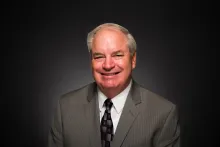
Robin Webber was born in Chicago, Illinois, in 1951, but has lived most of his life in California. He has been a part of the Church of God community since 1963. He attended Ambassador College in Pasadena from 1969-1973. He majored in theology and history.
Mr. Webber's interest remains in the study of history, socio-economics and literature. Over the years, he has offered his services to museums as a docent to share his enthusiasm and passions regarding these areas of expertise.
When time permits, he loves to go mountain biking on nearby ranch land and meet his wife as she hikes toward him.
