

Robin S Webber
This transcript was generated by AI and may contain errors. It is provided to assist those who may not be able to listen to the message.
I want to build upon today what has already been spoken on by Mr. Brown, and a message that I heard last week. And as we do, I'd like to welcome in those who are going to be watching this on video and those that are live right now on the webcam. We want to welcome you to the United Church of God Los Angeles. But it is a time to pause and to think and to consider the time period that we're going to enter here in just a few days.
And perhaps there is no better verse than if you'll join me in Psalms 122. In Psalms 122, of which the title of this message will be taken out of, and allow me to give that to you right now. Let us go up to the house of the Lord.
And it's taken from Psalm 122. Last week, when we were up in the mountains, we were being spiritually fed, nicely so as we also were being acoustically fed by the beautiful sounds of a brook and a stream next to us. Mr. Randy McKeigan, a very fine gentleman from Bakersfield, many of you know him, gave the sermonette, and he focused on Psalms 122. And immediately when he began speaking, I said, I've got to build upon that the next time I speak. So that's the title of this message, Let Us Go Up to the House of the Lord.
In Psalms 122, let's notice what it says, then I'm going to give you the background to it. I was glad when they said to me, Let us go into the house of the Lord, and our feet have been standing within your gates, O Jerusalem. Psalm 122 is one of the Psalms that is called the Psalms of Ascent. They can also be entitled the songs of pilgrimage.
They can also be entitled the songs of steps. And all of these will actually fit in with what I'm about to share with you in the course of this message. You can read many commentaries, and that's why there are many books, because everybody has a thought or an idea as to this Psalm and the accompanying other 14 Psalms. There are 15 Psalms or Psalms of Ascent, and there are many thoughts on it.
Some believe that they were sung on the pilgrimages as the people came towards Jerusalem. Perhaps first of all through Israel, but later on when you think of the people that came from Achaia, came from Asia Minor, strangers from Rome, people that came up from Egypt, the Jews of the Diaspora, wherever they came and whatever accent they used, they would come up to Jerusalem, literally, because the phrase, going up to Jerusalem, is not just prose.
It's actually talking about the elevation and the geography as you ascend up to Mount Zion, up to Mount Moriah, up to the different mountains that we know of. So there is a thought that the crowds, the families, we have a family here today, extended family, and that's how it was.
Families just went up together to the feast, and families would come together and they might join the family from another village, and it would just be one stream moving into another stream, and they would begin singing this, I was glad when they said to me, let us go up to the house of the Lord. There are other thoughts that perhaps it was first done at the dedication of the Solomonic Temple by the Levites, as they ascended the fifteen steps up to the temple.
There are other thoughts that they're not quite sure where to place this. Some ascribe it as a Psalm of David, but there's a thought that somewhere between David and the time of Ezra and Nehemiah, that this came to full fruition.
It's very interesting, the Psalms of Ascent of going up. The Psalms of Ascent are by their very nature. Allow me to share with you. They are cheerful. Some of the words are almost like joy on steroids, that as a people, as a person, they are going up to where God has placed His name, where the presence of God, that Shekinah, had come down and hovered or filled the temple at one time or another.
Now allow me to read it one more time, and you can read in your Bible. I'm using the New King James Version, but let me read it slowly. Then let's go back and break it up for a moment, then continue. I was glad. I becomes very personal. Me! Me! Personal. I was glad when they said to me, when there was the invitation that was offered, let us go into the house of the Lord. And our feet have been standing within your gates.
Oh, Jerusalem! This verse offers three areas of personal focus. Allow me to share them in brief. Build a foundation. We'll continue. Number one, for us to ask ourselves in 2016 as the fall festivals are now directly in front of us. Number one, how happy and how anxious are we to go to the festivals of God? I'm not just going to say the feast, which in our culture ascribes the Feast of Tabernacles, but all of the festivals, as I'll explain in a few minutes, how happy and how anxious are we to go to the feast? Number two, are we prepared to go where God has placed His name?
Now, in Trumpets, it's going to be at Garden Grove. On Atonement, it's going to be just down the hill over here in Eagle Rock. The Feast of Tabernacles and the Eighth Day Festival.
It may be around the world where God has placed His name. Are we prepared, not only physically, but spiritually and emotionally, prepared to go where He has placed His name? Do we hear the call? Do we understand the assignment?
Do we embrace the summons to appear where God appears? Number three, and what do we do once we get there? Once we are within those walls of Jerusalem, to use that analogy, once we are in the household of God, that spiritual household called the body of Christ assembled, what do we do once we get there? Because that's where the real assignments begin. Let's take you to another scripture in the Psalms for a moment to continue to build the foundation. Psalms 119. Just a few over in Psalms 119, and let's notice verse 54. And verse 54. Words of David, but I think words that fed us. Yes, your statutes have been my songs.
Your ways, your laws, your statutes, your judgments, we can build upon this and stretch it out. The Word of God, the expression of God, the revelation of God, your statutes have been my songs in the house of my pilgrimage.
I mentioned that the Psalms of the center are oftentimes called the Psalms of the Pilgrims.
All of us here today in this household, where God has placed His name on the weekly Sabbath, we're pilgrims. Oh no, we don't look like the people in 1620. We don't have the buckled shoes and the black and the gray outfits and the broad-brim hats. But you and I are pilgrims, and even more so, because those pilgrims, in their journey and in their desire, they landed.
And once a pilgrim lands, once it has come to its destination and settled, it's no longer a pilgrim. Being a pilgrim is one who does not set down roots. They're not settled. They keep on traveling, and they're moving towards a specific site. But what is important is that, in being a pilgrim, it's not just simply having arrived and made it there. And here's what I want to share with you today, especially as we come up to the fall festivals. Being a pilgrim is not just simply meeting a destination. It is a way of traveling.
And that's why God brings us to the festivals year in and year out, not just simply to make it to an event, but to be a part of an experience of this pilgrimage, of this journey, the same journey that Abram and Isaac and Jacob and Joseph and David and the twelve apostles and all of those from that time forth, not looking at this world as being their home, but looking to a better city and to a better world and a better outcome by a great God coming to this earth. They were pilgrims, not having received the promises, but embraced them and confessed them and knew that they worshiped a God that would bring it about. So today, let's discuss how we approach the fall festivals. And I do pray that this will build upon Dr. Ward's letter that he sent out yesterday. But how do we approach the fall festivals? All four of them yet ahead of us, not just quote unquote, the feast. We know what we mean when you say you have to say it like this, the feast. When you say the feast, you're not talking about one of the spring festivals. We say I'm looking forward to the feast. But, dear friends, we ought to be looking forward to each and every festival, every holy day. They are all individually wrapped to give us an understanding of God's saving work through Jesus Christ. So here we are about to experience the culmination of these holy days. Let's understand something. They are going to come in, and none of you are strangers to this necessarily. They are going to come in rapid order, rapid order. Basically, about the next 20 days, we're going to have four sets of festivals and four holy days within those festivals. They are all inextricably linked. One leads to another, but one must, do I dare say, are you with me? Must be kept in time before getting to the other one. One thing we dare not do is to hopscotch, jump over. I know many of us have been busy planning our physical part of the Feast of Tabernacles, wherever you might be going, from Oceanside to Timbukh 3. I don't think we have a feast site in Timbukh 3, or even in Timbukh 2. But we have been spending a lot of time.
But here is my encouragement, my deepest encouragement. Take each of these, this is very simple, one by one. Don't move towards the next festival until you have fully imbibed. That's very hard for me as a festival speaker, because so often it's all going to get crowded, so I have to start thinking about what am I going to speak about at the Feast of Tabernacles, or what am I going to speak about on the eighth day, or special Bible study, etc., etc., during the feast. My difficulty is this. Can I share it with you? As I go through the festivals, I am not going to be the same person once I come out of a specific festival. It's hard for me to move beyond trumpets until I've experienced it. It's hard for me to move beyond the Day of Atonement until I have once again personally experienced it, because I know once I have gone through that, my viewpoint then, and my expression and my expansion of the next holy days is going to expand. So please take that as something to think about. Perhaps there is nothing in the course of the year that defines who and what we are as individuals, as to how we observe and partake of the holy festivals of God. I want to share a thought with you before we go any further. Join me, if you would, in Colossians 2. In Colossians 2, and let's pick up the thought in verse 17.
In Colossians 2, and this was a challenge that was happening in the church at Colossae as far as days and what they were eating. And then notice what it says in verse 16, so let no one judge you in food or in drink or regarding a festival or a new moon or Sabbath, which tells us that the church at Colossae was indeed keeping the biblical festivals. This is not an anti-festival set of scriptures as some dare to use. This is telling you that the festivals were being observed at Colossae, but with this, which are a shadow of things to come. But notice, but the substance is Christ. Every one of the festivals shows us the panorama of God the Father's saving work and the instrument that He uses, that bridge between Him and us, none other than Jesus Christ.
For a moment, let's discuss anticipating the substance of the fall festivals.
You know what I want to do for a moment, friends? We can just kind of relax if you're all looking at me like this. Just relax for a moment because I'm going to share something that you already know and verses that you've already read, especially if you read the third page is Marta out there?
Where's Marta? Of the bulletin. And I did that for a purpose in the verses that I shared. We can read those verses so often. We can breeze over them so often. They are the utter core of our belief. They are the utter reality of what we have surrendered our life to, to God Almighty. Many of us will remember when our children were small. We used to make the paper chains leading to the feast because they didn't quite know when the feast was coming, so we'd make those paper chains.
And each day, they would, maybe some of you that are just recycled children are still doing that in your household. But anyway, that maybe you're doing it for your kids. But we would have them tear one off each day. Each day as the anticipation and the excitement mounted that we were coming closer and closer to the feast.
That's why I put those verses in our monthly bulletin. In a sense, as a paper chain to develop excitement, the festivals are coming. The exploration of God's saving work through Jesus Christ. Now, what I'm about to share with you for a moment, let's remember something. And I think Dr. Ward actually spelled this out in his letter, that there is a tension.
There is a tension. There is a pull. There is a traction. There is a bridge between that which is in the future and that which is now. So with that thought in mind, allow me to share a few thoughts for a moment. In just a few days, we're going to have the Feast of Trumpets. And I pulled out one verse. Just listen to this verse. You think about how this world is today. You think about how our nation is today. The turmoil that it is in. The challenges that are before us.
The crisis in leadership. Nobody agreeing with one another. But that's going to be changed in the future, when that great trumpet sounds. Out of Revelation 11 and verse 15, Then the seventh angel sounded. And there were loud voices in heaven, saying, The kingdoms of this world have become the kingdoms of our Lord and of His Christ, and shall reign forever and ever. When we see what's happening over in Syria, the devastation of cities that have been there for 4,000 years, like Aleppo, people of all backgrounds, ethnic groups, religious groups, just human beings fleeing for their life.
Because of the atrocities that are being perpetrated on them, left and right, by the different powers vying for the sand dunes and the valleys. And the valleys in the mountains of Syria.
What we're seeing today over in Syria is very reminiscent of what happened over in Belgium, 1915, 1916. There's just become a no man's land. There's been a clash. And they just keep on fighting one another. And we have all these refugees. We think of the challenges in Asia. We think of the challenges in Africa. We think of the moral and emotional and spiritual challenges that are facing Western civilization. This verse, what you and I are going to commemorate on the Feast of Trumpets, is the solution to this world's problems.
Sometimes we can, for some of us that have perhaps kept the festival for 10, 20, 30 years, growing up, keeping the festivals. Susan and I have both kept the festivals for about 53 to 54 years. It's real! It's wonderful! And I was glad when they said, come up to the house of the Lord to hear this. What about the Day of Atonement that follows the Feast of Trumpets?
A verse out of Hebrews 9 and verse 24. Allow me just to read it. For Christ has not entered the holy place made with hands, which are copies of the true, but into heaven itself now to appear in the presence of God for us. Hebrews 9 and verse 24. While you and I await the ultimate fulfillment of this verse for all humanity, it's our reality now. Christ actively serves us now, not only as Savior, but as High Priest. His presence is made known continually to God, our needs, our desires, our hopes, our desire to get rid of the anger that Mr.
Brown talked about and repent of that and ask for the wisdom that comes through the Spirit to help us. Jesus Christ is up there continually, never stops. What we read about in Leviticus 16, all the comings and goings and all the action, the ups and the downs, the ins and the outs, only describes the activity that never stops by Jesus Christ, our Apostle, our High Priest, our Savior. And therefore, we are allowed to boldly come before the throne of God. We are able to come through that veil which has been torn down. All humanity at this point does not know that.
And the Day of Atonement pictures a time when that veil is going to come down. What does that mean to us? Is this old hat? Well, I'm going to miss a meal for 24 hours. When you recognize what God is calling us to, we could probably go seven days. It is so immense and it's so powerful. One day when we're going to be there and be able to see, once we're Spirit beings, the activity of Jesus Christ as our Savior and as our High Priest, we're just going to stop in our spiritual footprints.
It will just be utterly unbelievable and He doesn't miss one name. He does not miss one heart. He does not miss one need. And that's what makes Him the Great Shepherd of all. What about the Feast of Tabernacles that's coming up? I wrote a verse in the bulletin, a simple one, two of them on the Feast, where it says, And I will shake all nations, and the desire of all nations, and that is a name of Jesus Christ, a desire of all nations shall come.
And I will fill this house with glory, says the Eternal of Hosts, from Haggai 2 and verse 7. And again, a very familiar verse to all of us, Many people shall come and say, Come, let us go up to the mountain of the Lord, to the house of the God of Jacob, and He will teach us His ways, and we shall walk in His paths, for out of Zion shall go forth the law, and the word of the Lord from Jerusalem.
While we long for the entire world to have this, you and I have this, as we go up and we keep the Feast of Tabernacles now. We're going to learn about God's ways. He's going to teach us His paths. And the Spirit in us is going to make us desire to want to be able to do that. What about the eighth day out of Revelation 22, 3-5? And there shall be no more curse, but the throne of God and of the Lamb shall be in it, and His servants shall serve Him.
That's you! That's me that are now in training to be His servants. And they're going to see His face. And we're going to be able to see His face then, because we're going to be the immortal children of God. First made of dust, and now made of spirit, and then made immortal. That we're going to be able to see God as He is, and see His face and live.
And His name shall be on their foreheads, and there shall be no night there. They need no candle, nor light of the sun. For the Lord gives them light, and they shall reign forever and ever. This kingdom of God, this family of God, there's going to be no stop.
There's going to be no end. You and I live in a society in a world of 6,000 years to where empires come and empires go. They basically have a historical life of about 200 years from the time they develop to the time they rise to the time they plateau, to the time that they decline. One exception being Rome. But beyond that, kingdoms come, kingdoms go, and you and I are going to be a part of that.
When I read this, brethren, and when you hear this, what is our expression? Does it come out of the psalm of a sense? Let us go to the house of the Lord.
I was glad. I was excited. I was thrilled that in this lifetime, that I've been put on notice.
That I've had a revelation.
That I realize that humanity is not headed for disaster, but for destiny. To be an immortal child of God in His family forever.
And when we think of the eighth day, we think of possibilities.
Time and space no longer, but the possibilities, numbers fade, and our thoughts fade.
To understand that a great and a loving God wants every human being that has ever been created. Made in His image.
An opportunity to know Him.
An opportunity that every knee might bow to Jesus Christ.
Oh, I was glad when they said, that us go up to the mountain of the Lord.
How can you and I, as we go through these days then, how can we develop in the spirit of going up to the house of the Lord?
I'm not talking about waiting for the feast. I'm talking about trumpets. I'm talking about atonement. I'm talking about all of them. Let me just give you some very brief pointers. I'm not going to tell you how many, just in case I don't get to them.
Here we go. Number one.
Do you want to go up to the house of the Lord?
Are you ready for the feast of trumpets? Are you getting excited about the day of atonement? Actually, no. Over 40 years of speaking on atonement, and some of you have heard me speak on atonement.
I tend to run excited to begin with. I get excited about what I talk about. I get excited about the revelation of God. I get excited about the truth of God. But come the day of atonement, when my tummy is going down, my spirit goes up. I just get so excited about what God is doing on our behalf and how He's going to intervene.
And this plan that we've been blessed with, Susie and I have been blessed to know it since we were 11 or 12. It never gets old.
Because the older we get, the more that we see it's needed in our life, and then the life of our friends, the life of our family, the life of our children, and all of our neighbors, and all of our friends that, by God's grace, you and I have been called now to learn this, and to be able to express these truths. Number one, starting trumpets. Number one, first point, prepare to learn.
Prepare to learn.
So much of life is in the preparation. Prepare to learn and be ready.
You say, well, but I know how many trumpets there are. There's seven trumpet sounds, and there's this, and I know this, and I know this Greek word, and I know this Hebrew word, and Mr. Weber said the Sabbath before that, so far as blown a hundred times. So what am I going to learn? We go to the Feast of Trumpets to learn what God wants us to learn about ourselves.
Not others, but ourselves.
W-I-I-F-M.
What's in it for me? That I might become more Christ-like.
That I can draw upon the gift of God in me and be his light in this world.
It starts with Matthew 7-7. Just join me there for a moment. Matthew 7-7.
Simple words of Jesus Christ, of the Sermon on the Mount.
Matthew 7 and verse 7. Notice what it says.
Ask and it will be given to you.
Seek and you will find and knock and it will be open to you.
A lot of people in life, and maybe you've met some of them before, aim directly for nothing every day of their life. And you know what? They hit it every time.
Think about it.
If you aim for nothing, you will receive nothing.
But I do know this.
That people that are looking for God are going to find them. Find him.
And he'll be waiting for them.
Maybe not where they think they're going to find him.
Maybe not through whom they think he's going to speak to them through. But they will find them. I'll share something very personal with you for a moment.
You don't have to do this. It's not that personal.
Susan's off the hook. It's not about Susie.
Now I've got all of you listening.
When I come to church, I always ask for God's blessing.
See, that's it? That's it.
I always ask for God's blessing.
Susan is off and they're praying with me.
I ask that blessing.
I'm knocking on his door. Ask, seek, and knock.
When I ask, I expect to find.
But I have to have my eyes open. I need to have my ears open. Most importantly, I need to have my heart open to understand the lesson that he wants me to take away from that service.
The Feast of Trumpets and or the Day of Atonement.
When you're not looking forward to anything, why would God give you anything?
But when he sees that, oh, I was glad when they said, go up to the house of the Lord.
When you have that approach, when you have that attitude, when you have that connection with God and you know that you worship a good God that wants to bless you and pour out that blessing, you're going to find it.
Susie and I are going to be in Temecula this week.
I will pray that prayer.
I am expecting a blessing.
I don't know in what size it will show up.
It may be a child that comes up to me. It may be an emergency where I'm needed. Maybe it's where something happens to me for a change and somebody has to take care and shepherd me.
I don't know what it will be.
Maybe it will be a nuance out of a sermon that I say, wow, how did God know that I needed that today?
Ask, seek, knock.
I remember a line from many years ago that a man used to use, and he used to ask it in a blessing, and it was simply this, Grant me fertile ears.
Grant me fertile ears. You know there's an old expression about a fertile myrtle. She's the one with the 12 kids.
Well, ask God to grant you fertile ears during these four festivals that are coming.
Seed has got to fall on good ground.
Have your ears ready.
And the greatest auditory nerve in our body is not up here in our head. It's in our chest. It's called our heart.
The greatest auditory nerve that we have is our heart.
Will our heart be receptive to the words of God?
The first point is simply this.
Prepare to learn. It's not just going to happen.
God does not call us just to bump into the festivals. That's why when they used to blow the horn and light the fires on the new moons of old to let the people know the time and that the festivals were coming.
The last thing God wants us to do is to bump into the festival.
Wonder about where we're going to eat on the Feast of Trumpets, or wonder how our condo is going to be at the Feast of Tabernacles, or wonder about how hungry we're going to be on the Day of Atonement. Are you with me? Have you all been there before? Am I talking to the right audience?
Look at me like I'm the most carnal person here, and you've never had any of those thoughts.
Thank you.
Brethren, those verses that I just read to you, we cannot afford to bump into the Holy Days. Point number two.
Prepare to change.
Prepare to change. It's not simply going up to the house of the Lord. It's not just simply ascending to the mountain of God. It's not just getting to Steamboat Springs, Oceanside, Panama City. About to go into a rap number here. How's that?
No.
It's what happens once we're there. Join me if you would in John 4 now. John 4.19. In John 4.19.
The words of Jesus as he's speaking to the Samaritan woman. Let's notice what it says here in John 4 verse 19.
The woman said, Sir, I perceive that you are a prophet. Our fathers worshipped on this mountain, and you Jews say that in Jerusalem is the place where one ought to worship. And then Jesus spoke to the time that, and the experience that you and I are now in.
And He told her, Woman, believe me, the hour is coming when you will neither on this mountain, nor in Jerusalem, worship the Father.
You worship what you do not know. We know what we worship. For salvation is of the Jews. But the hour is coming, which has arrived in our life, brethren.
This is not future. This is now. But the hour is coming, and now is.
Wherever Christ is, and wherever He has intervened in the life, the Kingdom of God is near. It is present. Oh, is it in its fulfillment? Totality? No.
But it is here. It is near. It is present.
The hour is coming, and now is. And the true worshipers will worship the Father in spirit and truth. For the Father is seeking such to worship Him. God is spirit. And those who worship Him must worship in spirit and in truth.
We're not just simply to go up there and hear that the truth, that a thousand years is going to be established. That is truth. That is true. We call it the millennium.
But we also worship in spirit, recognizing that the world tomorrow has been given to us today to live during those seven days plus one.
It is to be different.
We are to be different. As different as the world is to be in the future when Christ reigns from Jerusalem, there is a change.
There is a breeze in the air. There is more light. There is a dynamism. There is an activity.
It is no longer about resistance but cooperation.
It is no longer about envy and covenants.
But it's about love and giving and sharing and faith and kindness.
That's where we need to think about. Join me if you would in Psalm 25 and verse 4.
Again, back to the Psalms.
Let this be our prayer.
Beginning with the Feast of Trumpets.
Show me your ways, O Lord.
This is direct. Show me your ways, O Lord.
Teach me your paths.
Lead me in your truth and teach me. For you are the God of my salvation, and on you I wait all the day.
When I go to the Feast of Trumpets in Temecula along with Susie on Monday, what God is going to show me as I ask for His blessing and direction may not come from the minister, may not come from the special music, may not even be between those bookends of the two prayers, the one of blessing and the one of closure.
What God may be working with me during that holy time as a holy person before a holy God for a holy reason.
It may be in the parking lot. It may be at the restaurant. It may be in any theater of activity during that time.
I think so often, I think what we look at is that we come to church and we think of it as a lecture rather than a laboratory, rather than an interactive laboratory of different moving parts of which the surface is just one part and recognize that maybe running into some... in front... well, don't run into them, at least in the car. But I mean, it may be running into somebody that you've never met. You connect and there's a talk, there's a sharing that needs to be. Maybe there's something that comes up that, as Bob said, that he's not real patient.
Well, I can join Bob in that. You can ask my wife, probably one of my greater vices, that I can get impa... Yeah, I can get impatient.
When everything is not going Germanic in my life with a name like Weber, I can get impatient.
And it's not a nice thing. And I've had to learn and work on that all of my life. And that is probably... How many have ever been to the feast that I've been a coordinator? Okay, going to the right church. And how often do I get up on that first night and tell you, don't allow every accident to become an incident. And how often do you know that most famous of Beatitudes?
Blessed are the flexible, for they are the only ones for they shall not be bent out of shape. Who do you think I'm talking to? All of you? No, I'm talking to myself as I set myself up to recognize I'm going to be interacting with five or six hundred people. And it's not all going to go planned according to Hoyle. And I'm just going to have to kind of be like that. Oh, really? Just, you know, and start...
We've planned this for three or four months. It wasn't supposed to happen.
Oh, really? Okay, well, we...
No problem.
Ready for... Here to serve.
Now you know what really goes on in my mind.
So we learn.
I learn.
Probably not telling you any secret, but many have known me for 40 some longer years.
We all have challenges.
Ask God. Be ready. Be ready to learn. Let's go to point number three. Prepare to grow.
Pre... And this kind of sounds like the other one, but prepare to grow. The feast is a process.
And that's why we do it again and again, whether it be trumpets, whether it be atonement, whether it be tabernacles, whether it be the eighth day.
And that's why also, God is so generous during the feast of tabernacles that it's seven days.
You know, there's just some days you wake up and something happens, and then God lets you have another day and another day and another day.
Because we're on a pilgrimage, and none of us have arrived.
I know sometimes what can happen is something happens on the first day and you say, oh wow, I was just really looking forward to the... Are you ready for this cultural Church of God phrase? I was looking ready for the best feast ever.
And this is the first day. Is this going to be multiplied times seven? But that's why God gives us seven days.
To allow Him to work with us to come back.
That's why He gives us Sabbath to Sabbath.
Holy day to holy day.
He allows us to pick ourselves up through Christ and to be able to do it differently the next day.
That's why the millennium is going to be a thousand years.
I remember years ago, forty-five years ago, once heard Mr. Herbert Armstrong say, you know why the millennium is going to be so long? Because it's going to take at least three human generations just to get the engine going.
After the world has been going one way for six thousand years, you know, you don't just stop the train. It's going to take time to get it back.
So when we go through the holy day process, when we go through the Feast of Tabernacles, understand that it's a matter of time and that God gives us an opportunity to come back again and again.
As we come to the Feast of Trumpets, a day of atonement, Feast of Tabernacles, eighth day, there are times when we're going to feel like we're running on a spiritual flat tire or that somehow some event, some circumstance has thrown a monkey wrench into the works.
That's okay.
And that's all right.
The Feast at this point are not designed to be perfect. They come from Him who is perfect.
They're here for us to learn from.
When we go to the Feast of Tabernacles, I'm going to use that term for a moment, the Feast of Tabernacles, I know a lot of us are looking forward to getting away.
I know a lot of us are looking forward to, in a quote, having a spiritual vacation. But I'm here to remind you, I'm here to prick your heart a little bit. The Feast of Tabernacles is not a vacation.
It's not even a spiritual vacation.
It's a spiritual vocation.
One letter makes all the difference as to how and what you will receive out of the feast days that are coming up. Oh, yes, there are good things. There are blessings, as we know from Deuteronomy 14. To be able to have things that we're not normally able to have during the year, and to share those blessings with others.
But the Feast of Tabernacles is about a vocation.
Let's remember that God Himself in 1 Corinthians says that, Know you not that you are the temple of God.
God dwells in us.
And we are also, in this lifetime, training to be a priest and a kingdom of priests to serve God forever. Let's understand that.
And what do priests do?
Allow me to put three things down here for you. Okay? Ready to write? Here we go. Number one, we have been called as priests in training to worship.
Priests lead in worship. Number two, they lead in praise.
And number three, they offer sacrifice. And number four, they offer sacrifice. Have you considered, as we go through the Feast of Trumpets, the Day of Atonement, the Feast of Tabernacles, and the Eighth Day, if you could just use these three words as a foundation, and you can build upon it in your own study, and in your own prayer, and your own thoughts, are you prepared on Monday to worship?
To give God His due, to give God His worth.
That's where the term worship comes from. It's an old Anglo-Saxon word, worth-ship. To give something its worth. Especially after the verse that we read about that the kingdom of God is coming to this earth through Jesus Christ.
Are we ready to worship?
Are we ready to praise Him?
And what does that mean to praise Him? Is that just simply mean in music? Does that mean while we're singing three hymns at the beginning? Or do we praise Him by our life's actions?
Do we praise Him by our words, our thoughts, our deeds on that Holy Day?
Also, sacrifice.
Holy days require sacrifice. We're not talking about a lamb. We're not talking about a turtle dove.
But we've been called to sacrifice ourselves. Romans 12 and verse 1 says, We are to be a living sacrifice.
Blameless. Holy.
Acceptable. Romans 12 and verse 1.
As we come up to these Holy Days, then, are you with me? Starting with trumpets. Doing it together as a congregation.
Will we come and worship?
Thinking of what God is going to ultimately do on this day?
Are we going to praise Him?
Not with glory, hallelujah.
But are we going to praise Him?
By what we share of ourselves.
And recognizing that it may take sacrifice.
As we continue to put the old man away.
Even as New Covenant Christians observe these days that speak of the future.
Let's go to another point here for a moment.
Prepare to commit to the feast site you attend. Only got two more points. You thought we were going to be 100. Prepare to commit to the feast site you attend.
I'm going to speak about the Feast of Tabernacles at this point specifically.
And all the Fall Festivals speak to involvement.
Are you prepared to commit to the feast site that you attend? And Susie and I have been basically involved in festival work and being behind the scenes.
Actually, being behind the scenes. I'm going to share a story. It's going to be a little personal here for a moment.
Being behind the scenes is the greatest growing ground of opportunity in the body of Christ.
Being behind the scenes makes everything happen and makes the world go around. I'd like to just talk for a moment about my own experience. I don't talk about myself often. I'll try not to go too long.
But a lot of you might remember that I did not go into pastoral ministry immediately.
That sometimes surprises people.
But I did not.
I volunteered my time.
And when I first volunteered and I went to the minister and I volunteered my services, I remember my services were in a room that was so far back in a building that probably the security office didn't even know it existed.
And it probably didn't even have a key because they didn't always own the books. I was given a job.
Now I was working in insurance at the time.
But I have plenty of time on my hand as a young man back in those days to support Suzy and me and to give of my time.
And having had the opportunity of going to Imperial schools and Ambassador College, I wanted to give back. I loved to give.
And so I thought, well, I'll go and devote my time.
And I did.
But it was kind of funny. I remember the first assignment was—and I'm sure we all have offices like this, the office file that we haven't gotten to in about 10 or 15 years.
And that was my assignment. Make order of this.
So I'd work insurance throughout Los Angeles all day long. Then I'd come and volunteer my time. And I was kind of back in this room. I kind of remembered. I had one light and one mouse in it.
And I was there.
But it was the best training in the world.
I later on remembered—and some of you will remember for many years—I ministered to the auditorium PM. But I didn't speak that often. Did a lot of song-leading. Some of you will remember that. But I didn't speak.
I was always behind the curtain.
I was always trying to make things happen for everybody else that went out on stage.
I didn't have to be on stage. That was not my calling time to be on stage. My role, my assignment, was to give myself to make everything happen for everybody else.
If you never saw me, Susan and I were always—I think we spent about 10 or 12 years behind the curtain. It's a book that I'm going to write—no, I'm not going to write—behind the curtain.
Ralph will remember some of those days.
And I remember one thing that I used to do, because after I song-lead and, you know, somebody would be there. I remember Ingrid sometimes—I'm going to share a story on you, Ingrid, for a moment—who is an absolutely fantastic singer, as you know, and always has been, or we'd have people come from around the world and evangelists that rank at that time, and different speakers, bombastic, dynamic, scriptural, spiritual giants.
And they knew that they were going to have to go out and speak to 1,400 people and all the people that were down there on the front row. And, you know, men that had no compunction about speaking, all of a sudden they were behind the curtain. And all they could think about is, am I going to blow it? Am I going to do it? Am I going to do this? Am I going to do that? And just before I—And Ingrid will remember this as a singer—there will be times when I'm just simply saying this is where the phrase comes from.
Feel the joy.
Just feel the joy. Seize the opportunity. Seize the day. For this moment, you are able to share God's truth. You are able to sing God's praises like Ingrid did.
Don't think about yourself. Don't think about your notes.
God will fill you. You will be God's man. God's woman for that moment.
All of those years behind the curtain were preparing me for what I do today, for you and for the many that I've served over the years.
Kind of reminds me of a story—maybe I've shared it here before—it's about the story of a back in the Middle Ages when a great cathedral was being built and a man went in there and he looked over and here was a master mason and he was pounding on the stone and the stone shards were coming down and the man said, What are you doing, sir?
And he says, I am building a cathedral to the glory of God.
Well, thank you. Then he went over to the other corner because there was some pounding. There was a man working with iron, creating this ornamentation.
And the man once again, well, sir, what are you doing?
And he said, I am creating this ornamentation for this atifice, for the glory of God.
And then he looked up and like these stained glass windows over there, somebody was working the shards and the fibers of the glass were kind of coming down to the floor.
And he said, well, what are you doing? He said, I am building stained glasses to allow the light of heaven to come down and beam into this cathedral for the glory of God.
Well, he is about to go and then all of a sudden he heard this noise and it was coming from kind of in this dark spot, dark spot. You know, there was no candle, there was no light, there was nothing, but just heard all of this noise. And well, it sounded like sweeping and, you know, curiosity got the cat and it got the man. So he kind of went down this dark aisle and then he went around this dark and kind of in the dark. And here was a little lady and she was sweeping and she was sweeping up the shards of iron, the shards of stone and ornamentation and the glass.
And the man asked her, and what are you doing, ma'am? And she says, I am building a cathedral for the glory of God.
What does this tell you and me, dear friends? It's simply this.
The size of the job is not near as important as the size of the heart.
God will provide each and every one of us an opportunity to serve at a feast site.
A feast site which portrays a time in which the world will have fair employment, full employment, equal employment, everybody off the bench, everybody in the game, everybody working. Remember, the feast is not just simply lecture, it is laboratory. It points to a time in the future when all of us will be serving, all of us will be working, all of us will be rolling up our spiritual sleeves, all of us will be teaching people sometimes to work for the very first time. And we've got to have that vision during the feast of tabernacles, whether we're helping with parking, whether we're helping with ushering, whether we're helping with security, whether we're behind the curtain, whether you're getting a fan for Mr. Weber, thank you, is that whatever you are doing, it is all to the glory of God. I want to tell you another story, great story. When we went to Ambassador College as students, we went not only to take classes of literature and classical literature and first-year Bible, second-year Bible, third-year Bible, but some of our greatest teachers were our employers, were our bosses, were men that had given up their homes wherever they were in the United States and came to be a part of the Radio Church of God, the Worldwide Church of God, Ambassador College.
My first two years at Ambassador College, I had an opportunity to spend a lot of time in a spiritual atmosphere. It was called kneeling before the great white throne. It was called the bathroom crew.
So now you know what the great white throne is, but it did help pay my bills.
I want to share a name out of the past, and his name was Willie Edwards. How many of you remember Willie from the Ambassador College days? I remember, you know, Willie was a little bit custodian and a little bit of a world philosopher. But I remember specifically I was in the basement in the bay—not in the Hall of Administration, but in the basement of Manner Del Mar. That's where Willie's little office was. And Willie, I remember, one time sat me down all of probably 19 years of age at the time, and Willie told me, I'm not always going to be here. I'm learning lessons right now.
I'm learning lessons right now, one day, about cleanliness and about hygiene and about keeping things up. And I know that all of this is in preparation. All of this is in training, and I'm going to be able to share this with different people and different continents around the world one day. Brother Willie, who is now, I believe, blind, had vision, inspired me as a young man to move beyond the moment, to move beyond this assignment, just like that woman in the cathedral.
That's a story. Willie is real. Willie is fact. You are real. You are fact. And when we are at these different feast sites, take a plunge in. Oh, no, I was just going to sit out in my patio on the condo and count the ripples and the waves coming in on the shores of Hawaii. Yeah, do that. That's fine. That's a part of the feast. Got it. Understood. But get involved. Don't sit back.
Can you imagine in the wonderful world tomorrow, when everybody else is at work, everybody is moving up and down Jerusalem, and you're just kind of sitting down here? Really glad Christ is getting things together. Look at everybody else.
Yeah, it's probably good for them. But, you know, I worked all that time in the other world, so I'm just going to kind of relax here. I'm going to watch everybody else develop utopia on earth.
Do you think that's going to happen?
Do you think we're just going to kind of sit back? See, what I'm sharing with you, this is not a matter of saying, as the feast is coming up, not to enjoy it, not to have experiences and family experience. Absolutely. But get involved. Get involved. Get your hands, get your hearts a little dirty with the work of the kingdom that you and I are going to experience during the feast. I remember a couple years ago, and some family members share, I remember Jesse Oppie and Gary Liu. I think it was the first year that we were at Oceanside. And Jesse was right at the helm of the curve, like old Rose Parade parking days. You know how that went? I mean, Jesse was just total action, and Gary was there with his Hawaiian shirt on. Just those pictures that I kind of take over the years. And they were so excited. They had been given the job to make things happen for everybody else to get them into the house of the Lord. And Jesse, most of us know, Jesse's like this, and Gary's beaming in his Hawaiian shirt. And it created joy. It created enthusiasm.
It made you excited to realize that there are people that still share the vision of what the Feast of Tabernacles is all about. It's a feast to the Eternal. It's not just simply a festival of condos. It's getting involved. It's getting your hands dirty with the work of the church, which represents the work of the kingdom of making things better than when we first arrived and then when we leave, to make sure they're put back right and proper, which is the standard of the church of God. I want to ask you right now to commit yourself to get involved in your local feast site, wherever you're going. That doesn't mean to take six days up of an eight-day adventure, spiritually, but get involved somewhere. Get involved in grading. Get involved in the choir. Get involved in babysitting. Get involved in parking. Get involved in helping with the offering.
But we're also now going to move to the fifth point, which will need all of our involvement. Point number five, and I'll conclude. Prepare to expand your family.
Prepare to expand your family. God always speaks of the festival experience as in a family mode.
You and your household. Deuteronomy 16, 13 through 14.
But we also have responsibility. I'll just share. I'll be very blunt with you. That's the best way of talking about it. Sometimes what happens is at a feast site, we hear a lot about families. We see families. And like today, if I can just use this, what a wonderful testimony of having this lovely fourfold family that are all here today. And that's wonderful, and that's beautiful. But also to recognize that there are people that are here by themselves.
And they can hear about family and family, and God is a family, and it's a family time, and now tonight is today is family day. We need to reach out and to make those people feel a part of our family. The fatherless, the widows, the stranger. We need to stretch our boundaries. We need to stretch our borders. We need to make sure that everybody is involved. We need to be modern-day Boas that look down into a field and see somebody that is a stranger and ask them to dinner with us, ask them to sit with us, ask them maybe to go out. I remember a couple about four years ago, Susan and I had one of the most delightful experiences ever. We took out several people, and they were all alone at the feast. You know one of them. They're dead now.
But we had the most delightful time. We went to La Jolla above the cove for you that know the jewel and the cove. We'd gone to lunch, and then we went to the cove. Basically, the five of us, we'd sit on a bench. If you've ever been down by the park on the cove, we'd sit on a bench, and then we'd move about 300 feet, and we'd sit on another bench, and then we'd move another 300 feet. Because the ocean is all beautiful, but it looks different from 300 feet away down left and right. We just sat. We did bench hopping with these four people. Then we took them up to the La Valencia Hotel, the Pink Dame, five stories, 1925, Ooh-la-lodge. It's very, very nice. We walked into the lobby with the view over the park, with the view over the cove, with the Pacific Ocean. Like today, they had a man and his wife on violin and on a piano like the old-time hotels did with the potted palms. We didn't realize it, but what this one individual, it was just his greatest joy to hear. We didn't know that. It was his greatest joy, and he just loved that kind of music. So there's the Pacific out there, and this beautiful music. We had these very special hors d'oeuvres and little things that they served. That individual died about a year and a half later.
But I am so glad that God's Spirit worked through Susan and me, be able to make him a part of our family during the Feast of Tabernacles. You can talk about God being a God of love, but if you never experienced love in an individual that says they're godly, one plus one then doesn't equal two. You and I, with these upcoming festivals of trumpets, Day of Atoman, Feast of Tabernacles, an eighth day, I'm going to ask that you all ask God specifically to direct your heart steps to an individual that needs you during the Feast days, and that you need in turn. Susan and I always pray this prayer, God help us to meet people's needs as we come into Los Angeles today, and guide those people to us to help us with our needs. It's a two-way street. It's a two-way street.
Now, brethren, if you do this, you will perchance have the best feast ever, spiritually speaking.
You may not have the best feast yet, because I always look at that being in the future. Here's what I'd like you to turn to. Join me as we conclude Isaiah 6 and verse 8. Isaiah 6 and verse 8.
God, through his word and through myself as one of his servants today, has given you challenges.
I've given you good news.
I've encouraged you to be glad, because we have been invited to go up to the house of the Lord. I've given you challenges of how to anticipate, how to grow, and how to develop during this feast. So then the big question comes in, what will you do? Let's look at Isaiah 6 and verse 8, and then only you then can answer. And also, I heard the voice of the Lord saying, The Lord saying, Whom shall I send? And who will go for us? Then I said, Here am I. Send me. I pray that that be your prayer. I pray that that be your response. As we move in our bid to come up to the house of the Lord.
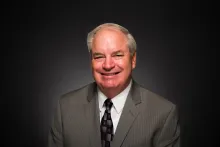
Robin Webber was born in Chicago, Illinois, in 1951, but has lived most of his life in California. He has been a part of the Church of God community since 1963. He attended Ambassador College in Pasadena from 1969-1973. He majored in theology and history.
Mr. Webber's interest remains in the study of history, socio-economics and literature. Over the years, he has offered his services to museums as a docent to share his enthusiasm and passions regarding these areas of expertise.
When time permits, he loves to go mountain biking on nearby ranch land and meet his wife as she hikes toward him.
