

Don Ward
This transcript was generated by AI and may contain errors. It is provided to assist those who may not be able to listen to the message.
The title of the sermon today is Living the Unleavened Life. It fits very well with the hymns that we have heard and also with the sermonette. Over and over we hear that the days of unleavened bread picture putting sin out of our lives. But I believe we shall see that the days of unleavened bread are more about preventing sin from entering our lives on a daily basis than on putting sin out of our lives. It would be better not to have sin in your life to begin with. You wouldn't have to put it out. The days of unleavened bread are about preparing us to live the unleavened life. We have been called to live holy and sinless lives. Jim, will you go get my Bible and bring it up here? It's in my briefcase back there. If you would be turning to 1 John 1 and verse 5. In 1 John 1 and verse 5, we see here, and I'm going to paraphrase these verses until I get my Bible, that the essence of that is that we are to confess our sins and to walk in the light. Of course, John wrote this epistle mainly to combat Gnosticism, in which many said that Jesus only seemed to be, whereas he was a very real person. And John says we have touched him and we have held him, and he did come in the flesh. He wasn't just seeming to be. So in 1 John chapter 1, we'll begin in verse 5.
This then is the message which we have heard of him and declare unto you that God is light, and in him is no darkness at all. The Gnostics taught that as you went away from God, there was less and less light, and finally you came to a place in which there was no light. And that was the Demiurge, and that the Demiurge was one that created the physical universe, but God, Jesus Christ, was pure light. And they taught a dualistic view of humankind, which still persists to this day, that humans possess an immortal soul, and that the flesh is evil, but the soul is good, and the goal is to save the soul. Verse 6, if we say that we have fellowship with him and walk in darkness, we lie and do not the truth, but we walk in light as he is in the light. We have fellowship with one another, and the blood of Jesus Christ, his Son, cleanses us from all sin. Now, note, if we say that we have no sin, we deceive ourselves, and the truth is not in us. If we confess our sins, he is faithful and just, forgive us our sins, and cleanse us from all unrighteousness. We know from Psalm 103 that God removes our sins upon repentance and faith in the sacrifice of Christ, as far as the east is from the west, which is infinity. If we say that we have not sinned, we make him a liar, and the word is not in us. In chapter 2, my little children, these things are right unto you that you sin not. Now, the goal in our lives is to sin not. The goal is not to sin in the first place, but if we do sin, we have an advocate here. We see with Jesus Christ the righteous, and he is faithful and just, to forgive us of all unrighteousness. Continuing, and if any man sin, we have an advocate. One alongside the Greek word there is patriclitos. It is also translated comforter, and the comforter is the Holy Spirit, John 14, 26. We have an advocate with the Father, Jesus Christ, the righteous, and he is the propituation for our sins, and not ours only, but also for the sins of the whole world. And hereby we know that we know him if we keep his commandments. And then the great test verse of all test verses, it seems, if we say that we know him and keeps not his commandments, we are a liar, and the truth is not in us.
So we have reciprocals here. First of all, the blood of Christ cleanses us from all sin, and if anyone says he's without sin, he's a liar. But if he confesses sin and looks to Christ for forgiveness, along with the repentance, his sins can be forgiven. Secondly, we see that if we say that we know God and we don't keep his commandments, we are liars, and the truth is not in us. The two viewpoints are reconciled by the fact that if we do sin, we can still be forgiven through the sacrifice of Christ upon repentance. But it's not some kind of game that we can play and say, oh well, if I sin, I know Christ will forgive me. Because as we heard in the sermonette, there's the element of sincerity of whether or not you really mean it, whether or not you are really faithful to the Word of God. So in view of that, we should ask ourselves, did you or I take the Passover in our sins? If we did take the Passover in our sins, then we can expect God's judgment.
But it's never too late to repent of our sins unless we have committed the unpardonable sin. And it says in Hebrews 6, there is a point in which it is not capable.
It's not allowed for us to be renewed after we go so far, after we cross a certain line. I'm not getting into that right now. I want to go now to 1 Corinthians chapter 11 and verse 27. In 1 Corinthians 11 and verse 27, with regard to examining ourselves, putting sin out of our lives, we have read this verse three or four times during Unleavened Bread, but let's look at it again.
In 1 Corinthians 11 and verse 27, Wherefore whosoever shall eat this bread and drink this cup of the Lord irreverently in Axios, we have talked about that, shall be guilty of the body and blood of the Lord, but let a man examine himself and let him eat of that bread and drink of that cup, for he that eats and drinks irreverently and unworthily is a rather unfortunate translation in view of how people be worthy today because none of us are worthy in and of ourselves, but we can take the Passover reverently and we can take it in a cleansed position, having confessed our sins and exercised faith in the sacrifice of Christ, not discerning the Lord's body.
The Lord's body also consists not only of the physical body that he gave for our sins, but also for the members of the body of Christ, so we must forgive one another. I think that sometimes we tend to forget that we're dealing with the living God, and even though he is loving, kind, merciful, long-suffering, he will not forgive our sins unless we repent of our sins. It is not a game that we're playing. God is not playing games with us.
We're dealing with the Eternal God and His Son, Jesus Christ, who is sitting at His right hands. We know that leavening represents sin, and a little leaven leavens the whole lump, as we have read so often in 1 Corinthians 5, a little leaven leavens the whole lump. So we see that we are to keep the feast in 1 Corinthians 5, 8, but as keep the feast not with the old leaven, but with the unleavened bread of sincerity and truth, the unleavened bread of sincerity and truth, of course, is the Word of God.
So look at John 17 and verse 17. John 17 and verse 17. In John 17 and verse 17, this age-old question of what is truth is answered quite a few times in the Bible, but this is one of the most direct answers to that question. John 17 and verse 17 says, Sanctify them through your word. Your word is truth. Now, a particular interest in this verse is the word sanctify, and the Greek is hagiadzo. Hagiadzo. And it means to set apart.
To set apart. We give very little attention to sanctify, to set apart, to make holy, to make pure, to make clean. How many sermons have you heard on sanctification? As I recall, I've never heard a single sermon on sanctification. And sadly, I don't remember ever giving one on sanctification.
Sanctification and going on to perfection are handmaidens. They go hand in love. Hagiadzo is used 29 times in the New Testament. It is translated sanctify 26 times, hallow two times, and be holy one times. So once again, it means to make holy, to concentrate, to sanctify, to dedicate, to separate, set apart for God's service. So Jesus asked the Father in his prayer here in John 17, to set us apart, to sanctify us through His Word, which is truth.
Do we really focus on that? Do we really understand what it says? Sanctify them through Your Word. Set them apart. Make them clean. Make them pure. Clean them up through Your Word. Jesus, when He was tempted by Satan the Devil in Matthew 4, remember Matthew 4, and after Christ was baptized, He was led up into the wilderness to be tempted as Satan for 40 days and 40 nights. And the great question before Christ, if you'll read carefully the first part of Matthew 4, it says that Satan came to Him and saying, If you be the Son of God, if you be the Son of God, then turn these stones into bread.
And then one of the most often quoted scriptures in the whole Bible in Matthew 4 and verse 4, Man shall not live by bread alone, but by every word that proceeds out of the mouth of God. That is, now Jesus prefaced that quote by saying, For it is written. For it is written. It was not the first time that God inspired those words to be said. So let's look at Deuteronomy chapter 8, and we'll see that Jesus was quoting from Deuteronomy chapter 8.
We'll start with verse 1 in Deuteronomy chapter 8. Deuteronomy chapter 8 means the rule. It is basically a summary of and a restatement of all the experiences that Israel had, and especially with regard to the law. All the commandments which I commend you this day shall you observe to do, that you may multiply and go in and possess the land which the Lord swore unto your fathers. On the first holy day we talked about Joshua leading them into the land, and how they were circumcised, and how they kept that first passover, the first passover in the Promised Land.
And thus shall remember all the ways which the Lord your God led you these forty years in the wilderness to humble you, to prove you, to test you, to try you, to know what way is in your heart, whether you would keep His commandments. And He humbled you, but of course they still would cling to the reproach of Egypt, and suffered you to hunger, and fed you with manna, which you knew not.
Neither did your fathers know that He might make you know what man does live, but man does not live by bread alone, but by every word that proceeds out of the mouth of God, out of the mouth of your Lord, does man live. So Matthew 4.4 is my con-bobulation. I forgot my glasses as well. Now let's look in the Old Testament to see whether the emphasis is on eating unleavened bread or not eating unleavened bread. Remember we said it is better not to sin in the first place, and the title is, Living the Unleavened Life and Living that Unleavened Life All the Time.
There are at least 10 verses that command us to eat unleavened bread for seven days. And of course we have had people who would say, Oh well, you don't have to eat unleavened bread every day during the Feast of Unleavened Bread, but if you eat unleavened bread, you have to eat unleavened bread.
I don't want to get into that argument right now, but in verse 15 of Leviticus 12, Seven days shall you eat unleavened bread. Even the first day you shall put away eleven out of your houses, for whosoever eats leavened bread from that first day until the seventh day, that so shall be cut off from Israel.
So what did the leavened bread represent? It represented sin. So eating leavened bread would be, in the symbolic sense, eating sin. I remember when certain sermons were given back in 1994, 1995, people rushed out during unleavened bread to get rolls and that kind of thing all puffed up. They wanted to eat a little sin, or to eat a lot of sin. Now we look at Leviticus 23 in verse 6.
It is so amazing how people will cast aside the Word of God and follow the dictates of some leader, and they're just looking for an excuse to do what they want to do. Leviticus 23 in verse 6, And on the fifteenth day of the same month is a feast of unleavened bread unto the Lord. Seven days you must eat unleavened bread. I didn't write it. This is what it says, that you must eat unleavened bread.
Now let's note some of the verses that specifically command us not to eat leavened bread. So we go back to Exodus chapter 12, and Exodus chapter 12, verse 20. You shall eat nothing leavened, and all your habitation shall you eat unleavened bread. So obviously if leavening represents sin, then you would not want to eat sin. And then back in Leviticus 16 and verse 3, here we're reading verses that command us to eat, to not eat anything leavened in Leviticus 16 verse 3.
Thus shall Aaron come into the holy place with a young bullet for sin offering and a ram for a burn offering. He shall put on the holy linen coat, and I'm reading from the wrong place. I want Deuteronomy chapter 16, not Leviticus. In Deuteronomy 16 verse 3, verse Leviticus 16 is talking about the day of atonement and what the priest has to do on the day of atonement. In Deuteronomy 16 verse 3, you shall eat no leavened bread with it. Seven days shall you eat unleavened bread, therewith even the bread of affliction. For you came forth out of the land of Egypt in haste, that you may remember the day when you came forth out of the land of Egypt all the days of your life.
And there shall be no leavened bread seen with you in all of these seven days. Neither shall there anything of the flesh which you sacrifice the first day, and even remain all night until the morning. So time after time, don't eat sin, don't eat leavened bread. So what can we learn from that? So we saw in Exodus 12.15 that if anyone eats unleavened bread, he shall be cut off from the congregation. We see that during the days of unleavened bread, we're commanded to eat unleavened bread and not to eat bread that contains leavening. It would be like eating sin.
It seems to me that the emphasis is on preventing sin more than it is on putting out sin. Because as we read from 1 John chapter 2 and verse 1, I write to you that you sin not. But if you do sin, of course, then we have the Advocate, what alongside Jesus Christ the Righteous. So when we take the Passover, we're saying we've discerned the Body of Christ, we're reconciled to God Christ, each member of the Body of Christ.
There is no sin in our lives. So when the Holy Day arrives, we have, through repentance and faith in the sacrifice of Christ, had our sins forgiven. We have put the physical leavening out of our homes. Thus, we should begin the first Holy Day of unleavened bread in a sinless state. And hopefully we have basically remained that way because the focus has been more on this.
And you have the physical reminder of eating unleavened bread so that we're about as sinless as we can be at this time. And are we going to remain as sinless as we can be the rest of the year? Israel left Egypt, which was symbolic of sin and death, on the first day of unleavened bread. And so are we completing these days of unleavened bread with the assurance that our sins have been forgiven?
These days of unleavened bread should have taught us how to prevent sin from getting into our lives and how to gain the total victory over sin by living by faith. This is a victory that overcomes the world, even our faith. That's what John writes in 1 John 5 verse 4. So the symbolism, it seems to me, is one of refraining from eating anything that contains leavening, that represents sin. In other words, keeping sin out of our lives and living the unleavened life. Just as the title is, living the unleavened life. As we shall see, eating unleavened bread is equated with putting on Christ.
We'll read a verse later that says to put on Christ. How do you put on Christ? The Word of God is our spiritual mirror that draws us and shows us our sins. And we remember what it says, Hebrews 4.12, the Word of God is sharper than any two-edged sword, biting us under the thoughts and intents of the heart of men.
It lays everything bare before us. So it is our spiritual mirror. And on the other hand, it is analogous to a giant bathtub, that is the Word of God, that can cleanse us if we bathe in it. So have we had a spiritual bath today? Have we taken a spiritual bath all through the days of unleavened bread? However, the water, even the water of the Word, does not axiomatically, by matter of fact, cleanse us from our sins.
So we must follow the Word of God, obey the Word of God, to be cleaned up. In Ephesians 5, Jesus Christ here, the Living Word of God, and through the Apostle Paul, is writing in Ephesians 5, in verse 27.
I'm going to get to Ephesians 5. Ephesians 5, verse 27.
That he might present it, that is the church to himself, a glorious church, not having spot or wrinkle or any such thing. How is this accomplished? Verse 26. That he might sanctify, set it apart, make it pure, make it clean, make it holy. How? That he might sanctify and cleanse it with the washing of water. And here, water is tantamount to the Word, the washing of water, the washing of water by the Word. So we're cleaned up by the washing of water by the Word. But the Word, in and of itself, does not clean us up. We have to respond. The Holy Spirit in the Word of God convicts us, but we must respond to the conviction. Time after time, we've talked about this conviction. I wonder if we get it. There are two convicting agents. We look at John 16 and verse 7. We might start in 6. I'll have to get there. Verse 16. Verse 7. Nevertheless, I tell you the truth. It is expedient for you that I go away. For if I go not away, the Comforter, the Pericletos, and as I mentioned earlier in John 14.26, the Comforter is defined as the Holy Spirit, the Comforter, which is the Holy Spirit. That's what it says in John 14.26. Will I come unto you, but if I depart, I will send it unto you. And when it has come, it will reprove. That Greek word is elemcho. It means to convict, to lay a weight upon your mind, to convict the world of sin, of righteousness, and of judgment. So it is the Word of God, coupled with the Spirit of God, that convicts us of sin. Now look at Romans 10 and verse 14. One of the reasons why Christ raised up the church was to take the Word of God to the world. And the church has to have a certain structure, a certain organization, in order for the gospel message, for the Great Commission to be carried out. Go ye therefore into all the world, disciple all nations, teach them to observe all things whatsoever I have commanded you. You cannot do that through just hit-and-miss kind of teaching and living. We have so many people today who have that idea in their minds, apparently in their hearts. If everybody did that, how would the Great Commission be carried out? In Romans 10 and verse 14.
So the more that the Word of God is stored into our lives, the more we are able to observe the Word of God, the more we are able to observe the Word of God, and the more we are able to observe the Word of God, so the more that the Word of God is stored into our lives, the more able we are to live continually the unleavened life. Now look at Romans 13. One of the principle ways whereby we can put on Christ is through eating and drinking of the Word of God.
So in Romans 13, begin in verse 12, The night is far spent, and the day is at hand. Let us therefore cast off the works of darkness, and let us put on the armor of light.
Let us walk honestly as in the day, not in rioting and drunkenness, nor in chambering and wantonness, nor in strife and in being, but put you on the Lord Jesus Christ. How do you put on the Lord Jesus Christ? Faith comes by hearing, hearing by the Word of God, by the washing of the water of the Word.
He might present it to himself, a glorious church, not having a spot, wrinkle, or any such thing, and make not provision for the flesh to fulfill the lust thereof. To repeatedly not respond to the conviction results in quenching the Spirit. Having your conscience seared, we do not want our conscience to be seared, so you can quench the Spirit. This once saved, always saved, is a damnable doctrine of demons, whether you believe it or not, because you can quench the Spirit. Your lamp can be void of oil.
So you look at 1 Thessalonians 5, verse 19. Quench not the Spirit, one of the shortest verses in the Bible, but one of the most important. The Holy Spirit, it's like the old saying, use it or lose it. By neglect, the oil in the lamp can slowly go out, as we shall see.
In 1 Timothy 4, verse 1. What we're talking about now, if we don't respond to the conviction that is within us, eventually that lamp goes out, that oil is burned up, and there's nothing left but your own human devising. Is that where you want to be? I don't want to be there. In 1 Timothy 4, verse 1. Now the Spirit speaks expressly that in the latter times, some shall depart from the faith-giving heed to seducing spirits and doctrines of devils.
Speaking lies in hypocrisy, having their conscience seared with a hot iron. So once the conscience is seared with a hot iron, and you have tasted a good gift, and you quench it to the point that it's no longer there, then in Hebrews 6 says there's no way back. So let's look at James. What is the remedy?
What is the remedy? This could be like a remedy for just about everything that ails you in the spiritual sense. In James 4. Therefore, this is verse 17. James 4.17. Therefore, to him that knows to do good, he's convicted, he knows that it's the right thing, his conscience has not been seared, but he can sear his conscience, he can quench the Spirit. Therefore, to him that knows to do good and does not, to him it is sin. And I believe that this is one of the principal ways whereby people leave the faith.
So reading and studying the Word of God requires action on our part. Reading and studying the Word of God is analogous to feeding in the physical sense, but it's feeding in the spiritual sense that strengthens the inner man. And God does not force us, like the Old saying, you can lead a horse to water, but you can't make him drink.
And we can lead you. God can convict you with his word and spirit, but he can't make you drink. He doesn't make you drink. You have to decide yourself. So God does not force you into the water of his word, and he does not force you to obey. We have to decide to bathe in the Word of God figuratively. Every day we have to determine that we're going to obey. Physical water cleanses the outside. The Word of God cleanses the inside, the heart and the mind.
Even just reading, as we'll read a verse later, just reading and studying the Word of God in and of itself has a positive effect. The Pharisees could never get past cleaning the outside. We heard that in the sermonette. They were diligent to do the physical things, but they were miserable failures when it came to cleaning the inside. How Phariseeical are we?
And we're reminded of the Matthew 23, 23. You pay tithe the men, and it's incoming, and have neglected the weightier matters of the law, judgment, mercy, and faith. These ought you to have done, that is, judgment, mercy, and faith, and not to leave the other undone, but what is most important.
Note what Paul writes in 2 Corinthians 4, 16. And the failure to do this, as we've already, by implication, noted several times, 2 Corinthians 4, 16, Paul talks about all of the various things that he has gone through in 2 Corinthians. And here in this passage of Scripture, 2 Corinthians 4, 16, For which cause? We faint not, but though our outward men perish, yet the inward man is renewed day by day. And if we don't feed on the Word of God, that is the unleavened bread of sincerity and truth, then we are subject to having our conscience seared and quenching the Spirit. So we can ask ourselves, have we bathed in the Word of God throughout the feast? Have we had our bath today? We're trying to get a bath right now.
Put on Christ, as we noted, eating, drinking of the Word of God, bathing in it, obeying it, and hiding the unleavened bread of sincerity and truth in our hearts. Now we go to Psalm 119. This is one of the greatest passages of Scripture, these three verses here, I believe, in the whole Bible. I know when counseling with people that have compulsive addictive behavior, alcoholism, pornography, that kind of thing, of course, one of the main things is to get away from that. If you are an alcoholic, pour out all the alcohol. Get away from it. Don't go to where it's served.
If you have trouble with it, don't go to the beer joints. Don't go to the honky-tonks, as they call it here in East Texas. They may call it nightclubs and a fancier name somewhere else. But generally, the alcohol flows freely.
If you're bothered by cigarettes, throw them away. If you're bothered by pornography, get rid of all the pornographic material. Don't subject your mind to it. You have to get away from it. If it flashes in your mind, once certain things come across your level of awareness, they're apt to be admitted into the level of consciousness. And you have to cast those out, as it says in 2 Corinthians 10, casting out vain imaginations and every thought that exalts itself against the knowledge of God. So in Psalm 119, beginning verse 9, Wherewithal shall a young man cleanse his way? By taking heed thereto according to your word. With my whole heart have I sought you, and let me not wander from your commandments.
Now how do you not wander from the commandments? How do you not quench the spirit? Faith comes by hearing, hearing by the word of God. How do you increase faith?
Your word have I hid in mine heart, that I might not sin against you. Thus through eating the unleavened bread of sincerity and truth, and living by faith, we can be sanctified, we can be cleaned up, sin can be defeated. Focus on Christ in you, the hope of glory. Christ in you, the hope of glory. Be turning to 1 Corinthians 1 and verse 23 while we're talking here. Focus on Christ. Focus on the fact that you have the very essence of God abiding in you. Focus on the fact that now we are the children of God. Say to yourself, I am a child of God. I have the essence of God abiding in me. In Colossians 1 and verse 23, we shall begin.
If we continue in the faith grounded and settled, and be not moved away from the hope of the gospel which we have heard, and which was preached to every creature which is under heaven, whereof I, Paul, am made a minister who now rejoices in my suffering for you, and fill up that which is behind of the affliction of Christ in my flesh, for his body's sake which is the church. His body's sake which is the church. So he had that physical body, he has the spiritual body, the church. Even the mystery which has been hidden from ages and from generations, but now is made manifest unto you to whom God would make known what is the riches of the glory of this mystery among you, which is Christ in you, the hope of glory. You know, it says in John 14.23, Jesus was speaking that night after he had washed their feet and instituted the symbols of the New Covenant Passover. In John 14.23, he says, We, God the Father and I, both of us, we will come and make our abode in you, Christ in you, the hope of glory, whom we preach, warning every man, teaching every man in all wisdom, that we may present every man perfect, fully mature, in Christ Jesus, whereunto I also labor striving according to his working, which works in me mightily. So, do we use those positive affirmations that I am a child of God. I have God's essence abiding in me. We are fellowshiping with the living God. He is never double-minded. Should I do this? Should I do that? Should I go there? Should I go here? Should I do this? Should I do that? He's not double-minded.
The challenge for Israel after setting out on foot to leave Egypt was to leave sin and death behind and to live by faith. But they brought along the baggage of Egypt with them. They could not let go of Egypt and live by faith. They just somehow had to let old human nature take hold and keep dragging them down. By the time of the fall when they sent out the spies, the spy out the Promised Land, they had tempted God, tried God ten times. The challenge historically for all of God's people is to believe God and do what he says. In short, that means to live by faith. What is faith in the simplest terms? I've said it over and over again. Believe God as Abraham did and do what he says as Abraham did. He's the Father of the faithful.
The Scriptures tell us clearly that we shall live by faith. This means to believe God, know that God always has our best interest at heart. That no matter what the circumstance or situation is, he will deliver us in due time. This means internalizing another verse I mention so often, that is Hebrews 11 and verse 6. If you would turn there, if you want to read it, I'll quote it. Hebrews 11 and verse 6. He who would come to God must first of all believe that he is, that he exists. See, that is one of the greatest things that's under attack now, this whole liberal progressive movement that we see extant that is swallowing up our country. That is, it's unbelievable what is happening. Now the major league, what do you call them, executives have moved the All-Star game out of Atlanta, Georgia because they passed the law that you should have certain credentials to vote.
So we're going to have the All-Star game somewhere where you don't have to have any credentials to do anything. Well, I guarantee you that God requires certain credentials. And those credentials we have covered over and over again. That is, you have to believe that God exists and he means what he says. And we're to live by faith. It continues there. For he who would come to God must first of all believe that he is and that he is a rewarder of those who diligently seek him. So it means that God always has your best interest at heart, the providence of God. He's always looking out for your best interest way down the line. It means trusting God with your whole being. It means casting all your care on him for he cares for you. Jesus Christ admonished the disciples in Matthew 11, verses 21 through 30. He said, Come unto me all you that are labor and are heavy laden, and cast all your burdens on me. For my yoke is easy and my burden is light.
Do we really believe that? If we would let go, if we would really trust God for what he says. Now, let's also look in conjunction with Christ saying what he did there in Matthew 11. Let's look at 1 Peter chapter 5 and verse 6. 1 Peter chapter 5 verse 6. Once again, as we turn there, I'll rehearse. Christ says, Come unto me, and come unto me all you that labor and are heavy laden. Cast all your burdens on me, because my yoke is easy and my burden is light. In 1 Peter chapter 5 and verse 6. Humble yourselves therefore under the mighty hand of God, that he may exalt you in due season, casting all your cares on him, for he cares for you. After that, Israelites took that first passover. Their first big test came on the last day of the Feast of Unleavened Bread when they came to the Red Sea. They were pinned in. They had the forces of Pharaoh behind them. They had the mountains on either side. They had the Red Sea in front of them. There was no way out physically. And they began to murmur, complain, and blame Moses for their condition. Moses went to God and pleaded with him. And God said, Look, have some faith. I'm paraphrasing, obviously. So God, in his mercy, led them through the Red Sea. And we already mentioned by the time that the spies went out, they had tried and tested God ten times. And God sentenced them to 40 years of wandering in the wilderness. But God has delivered you from the wilderness. And you have the Word of God. Your Word is a light under my feet and a lamp under my path. I can see the way clearly now. Paul draws from the Israelized experience in warning us. Let's go to Hebrews, back a few pages now. Chapter 3 and verse 7. Remember that what Israel did, murmuring, complaining, God basically had to drag them to the Promised Land. He's not going to drag us into the Kingdom.
In Hebrews chapter 3 and verse 7.
Wherefore, as the Holy Spirit said, Today, if you will hear his voice, harden not your hearts, as in the provocation, in the day of temptation in the wilderness. When your fathers tempted me, proved me, and saw my works forty years. Wherefore, I was grieved with that generation and said, They do always err in their hearts, and they have not known my ways. So I swore in my wrath, they shall not enter into my rests. Take heed, brethren, lest there be any of you of an evil heart of unbelief in departing from the living God. See, unbelief is one of the greatest sins of all sins. Instead of being led to the Promised Land, God dragged them to the Promised Land against their will for his namesake, and that his great plan and purpose for humankind would not be thwarted by stiff-necked and stubborn people. God is not going to drag you or me into the kingdom.
God is not going to accept half-hearted commitment. We know the what. We know the when. We know the why and how. We know the way. Therefore, what are we? We are without excuse. That's where we are. We are without excuse. Sanctification means becoming holy and pure before God. We have spent so much time in the Church of God making sure that everyone knows that the law has not been done away with, and that we have to obey the law, that we have fallen into some kind of trap of legalism that is hard to define. You have to have obedience. The law is not done away with. But the element of faith is not done away with because that is what the Gospel that Paul brought is all about. That's why some talk about, as you heard in the sermon, about the Apostle we love to hate.
The law is spiritual. We must obey it. But it is not just a mechanical process where one obedience equals one righteousness. I see at times of people who are not at all happy, not happy with themselves, and they surely are not happy with others. It's like a cloud of some kind rest on their minds. It's a cloud of suspicion, fear, and defeat, all of which are enemies of faith. Remember the four great enemies of faith, anxious care, fear, doubt, and human reasoning?
We must not let the devil back us into a corner.
At times of fear, we don't quite have it right when it comes to really understanding what Christianity is all about. It's not about our righteousness. That's the trap that the Jews fell into. And they're still there.
We look at Romans chapter 10, and no amount of trying to lay a layer of Christ over Judaism is going to help, because we have Romans 10 clearly in the Bible. In Romans 10 verse 1, The result, the outcome, of the law for righteousness to everyone that believes. For Moses describes the righteousness which is of the law, that the man which does those things shall live by them. But the righteousness which is of faith speaks on this wise, say not in your heart, who shall ascend into heaven? That is to bring Christ down from above. Or who shall descend in the deep? That is to bring up Christ again from the deep. But what does it say? The word is nigh you, even in your mouth, in your heart. And that is the word of faith which we preach. That if you confess with your mouth the Lord Jesus, who raised him, if you confess with your mouth the Lord Jesus, and shall believe in your heart that God raised him from the dead, you shall be saved. And of course, we have those who then try to twist that, that all you do is make a confession. I think we've made it clear that you have to live by every word that proceeds out of the mouth of God. But at the same time, you have to exercise this faith. And brethren, we are in a time in which a lot of people are experiencing a lot of trials, a lot of sickness, a lot of heartache, a lot of this and a lot of that. There has to be a faith element, a belief element in all of that. We have to live by faith.
So, in verse 16, here in Romans 10, it says, But they have not all obeyed the gospel, for Isaiah said, Lord, who has believed our report. The report is the report of man shall not live by bread alone, by every word that proceeds out of the mouth of God. They shall live by faith. The just shall live by faith. Now look at Hebrews 10. Hebrews 10.
Verse 35, Cast not away therefore your confidence, which has great recompense of reward. For you have need of patience, that after you have done the will of God, you might receive the promise. For yet a little while, and he that shall come will come, and will not tarry, will not wait. Now the just shall live by faith. They will live the unleavened life. But if any man draw back, my souls will have no pleasure in him. But you are not of them who draw back unto perdition, but of them that believe to the saving of the soul. So brethren, here we are on the last day of the Feast of Unleavened Bread. And Jesus said unto them, I am the bread of life. He that comes to me shall never hunger, and he that believes on me shall never thirst. I am that bread of life. Your fathers that eat manna in the wilderness and are dead. This is the bread of life which comes down from heaven, that a man may eat thereof and not die. So let's live the unleavened life.
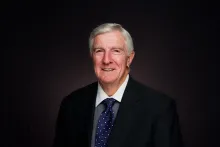
Before his retirement in 2021, Dr. Donald Ward pastored churches in Texas and Louisiana, and taught at Ambassador Bible College in Cincinnati, Ohio. He has also served as chairman of the Council of Elders of the United Church of God. He holds a BS degree; a BA in theology; a MS degree; a doctor’s degree in education from East Texas State University; and has completed 18 hours of graduate theology from SMU.
