
Don Ward
This transcript was generated by AI and may contain errors. It is provided to assist those who may not be able to listen to the message.
Preventing and keeping sin out of our lives. Over and over, we hear on the days of Unleavened Bread that the days of Unleavened Bread pictures putting sin out of our lives. But I believe we shall see that the days of Unleavened Bread are more about preventing and keeping sin out of our lives than it is anything else. We have been called to live holy and sinless lives.
So many people are quick to say, Oh, but nobody's perfect. We can't do that. Jesus Christ came and proved that you could live in the flesh and live sinlessly. It's not to say that we do not sin. Of course, we do sin. We are quick to say that as well. In fact, we should note what John writes in 1 John 1, beginning in verse 5. 1 John 1 and verse 5.
Preventing and keeping sin out of our lives. I think we will explore some very interesting things about the history of Israel and what we should be doing in conjunction with preventing and keeping sin out of our lives as we engage our study here today. 1 John 1.5. This is the message, which we have heard of him and desire unto you, declare unto you that God is light, and him is no darkness at all.
Of course, to some degree, this epistle was written to combat Gnosticism, in which the Gnostics taught that there were bands of light that went away from God. Eventually, you came to complete darkness and darkness. The Prince of Darkness created the universe. They had the teaching that God, who is holy, would not even dain to touch physical things. Quite a contradiction, but anyhow, to some degree, that's why that's there.
If we say that we have fellowship with him and walk in darkness, we lie and do not the truth. But if we walk in the light, as he is in the light, we have fellowship one with another, and the blood of Jesus Christ, his Son, cleanses us from all sin. Now, cleanses, what does that mean? It means that our sins are forgiven. They are not held against us anymore. They ransom the redemption, the debt, whichever word you want to use to describe it.
If we say that we have no sin, we deceive ourselves, the truth is not in us. If we confess our sins, he is faithful and just, forgive us our sins, and to cleanse us from all unrighteousness. If we say that we have not sinned, we make him a liar, and his word is not in us.
My little children, these things are right unto you that you sin not. Now, that's the big message that you sin not, preventing sin and keeping sin out of our lives. And if any man sin, we have an advocate with the Father, Jesus Christ, the righteous.
He is our propituation, he is our Redeemer, he is the one who went in our stead. And after baptism, if we sin, it is still through that sacrifice that the sins that we commit after baptism are forgiven in the same way that the sins were forgiven before we were baptized, that is, through repentance and faith in the sacrifice of Christ.
And he is a propituation, he went in our stead for our sins, and not for ours only, but also for the sins of the whole world. Everyone who has lived, everyone who ever will live. And hereby we know that we know him if we keep his commandments, and his commandments are not grievous. So we have reciprocals here. First of all, the blood of Christ cleanses us from all sin, and if anyone says he is without sin, he is a liar. But if he confesses his sins and looks to Christ for forgiveness, his sins can be forgiven.
We see that we know God, and we see that we do not know God if we do not keep his commandments. And there are all kinds of people who say that they know God and do not keep the commandments. Now, the viewpoints are reconciled by the fact that if we do sin, we can still be forgiven through the blood of Christ upon repentance, as we've already said.
And we look at, once again, this verse here that says, if we do sin, then we have an advocate with the Father, verse 1 of chapter 2. That word advocate is patriclitos, the same one that's translated comforter in other places.
Jesus Christ is our advocate, and he sent us the Holy Spirit to be alongside with us as well.
So, in view of that, we should ask ourselves, did you or I take the Passover in our sins? Or did we examine ourselves, repent, exercise faith in the sacrifice of Christ for the remission of sin?
We know that leavening represents sin, and a little leaven leavens the whole lump.
So Paul writes in 1 Corinthians chapter 5. We'll read this probably two or three times if you would turn to 1 Corinthians chapter 5. Verse 7, even this would show you that the emphasis should be on preventing and keeping sin out of our lives. When we come to the Passover, we are affirming that we have already examined ourselves, and that we have repented, and we have looked to Christ and the blood of Christ for forgiveness. In 1 Corinthians 5.7, purge out therefore the old leaven, that you may be a new lump. And this is talking about the old leaven, that is the leaven of sin, cast it out, purge it out, as you are unleavened. They were unleavened, apparently, in the physical sense.
For even Christ, our Passover, is sacrificed for us.
Therefore, let us keep the feast, not with the old leaven, neither with the leaven of malice and wickedness, but with the unleavened bread. And the word of God represents the unleavened bread, as it says here, the unleavened bread of sincerity and truth. What is truth? Your word is truth. Sanctify them through your word, Jesus said. Whose word? Your word. The word of God. Sanctify them through your word. Your word is truth. So we see clearly here that we're to keep the feast with the unleavened bread of sincerity and truth. In John chapter 6, and we covered this two weeks ago, and also in the Passover service on Thursday evening, Jesus states that he is the true bread. Several times in John chapter 6, the Gospel of John, the true bread that came down from heaven and that man shall not live by bread alone, but by every word that proceeds out of the mouth of God. So in the New Testament, and we'll come back to this later on, over and over again we see that we are to look to God and Christ for forgiveness of sin and to live the life of the unleavened bread that is a life free of sin. And if we do sin, we do have an advocate with the Father, Jesus Christ the righteous, and one of the principal ways for keeping sin out of our lives is through ingesting, eating of the Word of God. Your Word is truth.
Now let's look in the Old Testament to see whether the emphasis is on eating unleavened bread or on not eating unleavened bread. There are 10 places that command us to eat unleavened bread for seven days. 10 places in the Old Testament. We will read three of these verses. We'll read all 10. If you look at Exodus chapter 12 and verse 15, of course, there's been controversy through the years. This was discussed back in 2 in the Doctrine Committee for quite a long time before another letter was sent out. I think that was two or three years ago that it was sent out with regard to something. It said, well, you don't have to eat unleavened bread every day during the Feast of Unleavened Bread, but if you do eat unleavened bread, now the Scripture seems to be very clear on this. You look at Exodus 12 and verse 15, 7 days shall you eat unleavened bread, even the first days you shall put away leaven out of your houses.
For whosoever eats leavened bread from the day until the first day until the seventh day, that soul shall be cut off from the people. In Exodus 23 and verse 16. Exodus 23 verse 16. As I said, at least 10 places where it says to eat, not to eat unleavened bread. Exodus 23 and verse 16.
And the Feast of the Harvest, the firstfruits of your labors, which you have sown in the field, and the Feast of End-Gathering, which is in the end of the years, you have gathered in your labors.
Three times in the year shall you appear, your mayo shall not appear unto you empty. I've got the wrong verse here. But in hell we're going on. Now let's go to Leviticus 23 and verse 6. In Leviticus 23 and verse 6, Leviticus 23 and verse 6, once again we'll see that you shall eat unleavened bread, if I have the right notation here, for seven days. In Leviticus 23 and verse 6, and on the fifteenth day of the same month is the Feast of Unleavened Bread unto the Lord, seven days you must, this says seven days you must, eat unleavened bread. Now what does the unleavened bread represent? Let us keep the Feast with the unleavened bread of sincerity and truth. Man shall not live by bread alone, but by every word that proceeds out of the mouth of God's. And we saw in Exodus 12 and verse 15 that if anyone eats leavened bread, he shall be cut off from the congregation. So let's note some of the verses that specifically command us not to eat leavened bread. Look at Exodus 13 and verse 7. Back to Exodus chapter 13 and verse 7. Exodus 13 verse 7, unleavened bread shall be eaten seven days. There shall no leavened bread be seen with you, neither shall there be leavened seen with you in your quarters. And Deuteronomy 16. Let's go back to Deuteronomy chapter 16 verse 3. Deuteronomy 16 verse 3.
Deuteronomy 16 verse 3, you shall eat no unleavened bread with it seven days shall you eat unleavened bread therewith even the bread of affliction. For then came forth you out of the land of Egypt in haste that you may remember the day when you came forth out of the land of Egypt all the days of your life. And there shall be no leavened bread seen with you in your coasts seven days. Neither shall there be anything of the flesh which you sanctifies the first day of even remain all night until the morning. So we see that during the days of unleavened bread we're commanded to eat unleavened bread and not to eat leavened bread, anything that contains leavening. The emphasis is on preventing sin, eating unleavened bread. Let us keep the feast with the unleavened bread of sincerity and truth. Why is it that people drift away from the Church of God? I have been directly associated with the Church of God for 49 years. I started reading and studying seven years before then. So eight times seven is 56, so I've been studying this material for 56 years and I've seen how many people come and go. And some of the saddest things that you can possibly imagine is to think about all of those students that you stood before and all of those church members that you have stood before and all of the people that confess that they are of the body of Christ and to see them drift away. And I believe one of the main ways that they do it and the reason why so many become lackadaisical, lukewarm, and not caring really is they stop reading and studying. They stop taking of the words of life. Jesus says, or John 6, 63, the words I speak, they are spirit and they are life. And if you want to have the spirit and they have it, want to have the life, you read and study the Word of God. You ask for it. He gives his spirit to those who ask him and he gives his spirit to those who obey him. Those three things, ask, read and study, and obey. So during the days of unleavened bread, we're commanded to eat unleavened bread and not to eat anything that contains leavening. When we take the Passover, we're saying that we have discerned the body of Christ and that we are reconciled to God and to our fellow man.
Know you not that the bread that you eat is the communion of the body of Christ. We read that scripture from 1 Corinthians 10 verses 16, 17, and 39. So when the Holy Day arrives, and here we are on the first day of the first Holy Day of unleavened bread, we have through repentance and faith and the sacrifice of Christ, have had our sins forgiven and we have put the physical leavening out of our homes.
Thus, as we sit here on the first day of unleavened bread, we should be sitting here in a sinless state. Well, since Thursday night, maybe you've had bad thoughts. Maybe you've done this, that, or the other and have sinned during that period of time. But when you realize that you have sinned, the way to have the slate white clean is always to go before God in Christ, confess your sins, repent of your sins, and in faith believe that the sacrifice of Christ pays for your sins.
So we begin the first Holy Day of Unleavened Bread in a sinless state. Israel left Egypt, symbolic of sin and death, with a high hand. On the first day of unleavened bread, look at numbers, 33 verse 3. This tells you specifically when they left. Numbers 33 and verse 3.
Numbers 33 verse 1. These are the journeys of the children of Israel, which went forth out of the land of Egypt with their armies under the hand of Moses and Aaron. And Moses wrote their goings according to their journeys by the commandment of the Lord. And these are the journeys according their goings out. And they departed from Rameses in the first month, on the fifteenth day of the first month, on the morrow, after the Passover. The children of Israel went out with a high hand in the sight of all the Egyptians. You can only imagine the joy and the delight that they experienced as they left, but yet they left in a physical sense, as we shall see, and they carried much of the baggage of Egypt with them. So have you entered into these days of unleavened bread with the assurance that your sins have been forgiven? If not, you took the Passover in your sins, and you need to cry out, as the publican did, not so much as lifting up his eyes, Lord, have mercy on me, a sinner. The days of Unleavened Bread should teach us how to avoid sin, how to prevent sin from ever coming into our lives, and what to do if we do sin. The symbolism is this, to refrain from eating anything that contains leavening. So anything that is sinful, obviously, you want to get away from it. You want to flee from it. If you would turn to 1 Corinthians 6, many times, this would especially during the days of the college, students would come with compulsive, addictive behaviors, and it could be a wide range of things, compulsive, addictive behaviors, how do you overcome compulsive, addictive behaviors. One of the things that you must do if you are a victim of compulsive, addictive behavior, whether it be an eating disorder or something else, is that you have to change the environment. You have to change the setting. You have to get away from what's causing it. If you're a smoker, you get away from smoke.
Some people say, well, I want to test whether or not I've really been able to overcome smoking, so I went and bought a pack of cigarettes.
You know, before long, I kept looking at that cigarette, or it might be alcohol, and I just finally one night said, ah, one little drink, one little smoke won't hurt. And here we go again. So to flee the environment, to get away from it.
This is 1 Corinthians 6, 15, Know you not that your bodies are the members of Christ. See, we are the body of Christ. How can you say that you're the body of Christ? Because God and Christ lives in us. Therefore, we are the temple, the dwelling place, the body of God and Christ. They both live in us. We will both come and make our abode in you. That's John 14, 23. Know you not that your bodies are the members of Christ. Shall I then take the members of Christ and make them the members of an harlot? God forbid. What? Know you not that he which is joined to an harlot is one body or one flesh. For two says he shall be one flesh. But he that is joined unto the Lord is one spirit. Flee fornication. Flee sin. Flee anything that has to do with what led you to that behavior in the first place. Every sin that a man does is without the body, but he that commits fornication sins against his own body. Know you not that your body is the temple of the Holy Spirit which is in you which you have of God and you are not your own. See, if you're sitting here and you are free of sin, there's someone that has redeemed you, has purchased you, has paid the price, and you are to be his bond servant. And you'll notice that several times in the writing of the ones who wrote the New Testament, they will use the term a bond slave, a bond servant of Jesus Christ. For you are bought with a price, therefore glorify God in your body and in your spirit which are God's.
So we are to leave sin and death completely behind us, fleeing evil, and to eat the unleavened bread of sincerity and of truth.
The challenge for Israel after sitting out on foot to leave Egypt was to leave sin and death and live by faith. To leave sin and death and live by faith. The challenge for us is to flee spiritual Egypt and to live by faith. The challenge historically for all of God's people is to live by faith. The Scriptures tell us clearly that the just shall live by faith. Now, if you would turn to Hebrews 10, as I have said so often, and you can check it over and over again, you can try to make it into something mystical and way beyond, and you could write books on it. But the simplest definition of faith is, believe God and do what He says. That's what Abraham did when he was asked to go sacrifice Isaac. He believed God, did what He said, and things worked out over and over again. Abraham, the Father, the faithful, believed God and did what He said. In Hebrews 10, verse 35, cast not away therefore your confidence, which hath great recompense of reward. So over and over, if you have faith, you know that regardless of what the circumstance is that comes upon you, that God will deliver you. He will work it out for you. For we have need of patience that after you have done the will of God, you might receive the promise. For a little while, and he that shall come will come and will not tarry. Well, back in the first century when the Holy Spirit was sent, even the apostles thought that the coming of the kingdom of God was imminent. We are 2,000 years down the road. It still has not come in its fullness the kingdom of God. We oftentimes forget a day with God is a thousand years, and a thousand years is a day. We'll see a little bit more later in the sermon about time.
For yet a little while, and he that shall come will come will not tarry. Now the just shall live by faith, but if any man draw back, my soul shall have no pleasure in him. Believe God, do what he says. This means to believe and know that God always has your best. at heart, no matter what the circumstance or situation is, he will deliver in due time.
This means casting all your cares on him, for he cares for you. Come and learn of me. I am humble. Come and learn of me. Cast your burden upon me. I will carry your burden, paraphrasing what Jesus said. After the Israelites passed over, their first big test came on the last day of the Feast of Unleavened Bread, which we briefly addressed there in the announcement session with the Scripture of the day, when they came to the Red Sea and were pinned in by the mountains on one side, the host of Pharaoh behind them, the Red Sea in front of them. And actually, the Israelites there failed the test because they said, woe is me, began to blame, as did Job, began eventually to blame God and to blame Moses. They immediately looked on the situation in the physical sense and did not look to God in faith. They wanted to draw back. We just read from Hebrews 10, verse 38, If any soul draw back, my soul shall have no pleasure in him. But God in his mercy opened the Red Sea, and Israel walked through on dry ground. In the late summer, when they sent the spies out, the spy off the Promised Land, the Israelites had tested God 10 times. That's Numbers 14, verse 22. It says, 10 times. 10 times you have trusted God. God then sentenced them to 40 years of wandering in the wilderness, and only those younger, 20 and under, and along with Joshua and Caleb, went into the Promised Land.
Now let's go back to 1 Corinthians 5. When Joshua and Caleb came back, their report talking about the giants in the land and their armies, how they seemed to be a foe that you could not possibly defeat, they began to merman and complain about the situation, and it was like they would have killed Moses and Aaron and the two that were sent out, Caleb and Joshua. But Moses interceded for them, and time after time, on their journey to the Promised Land, they would test God, whereas God in essence was testing them. Would they live by faith? They had seen tremendous miracles performed in Egypt.
The ten plagues that came upon Egypt, supernatural, they had crossed the Red Sea. No one ever heard of anything like that. If you want to talk about great miracles, to part the sea, to walk across on dry ground, unheard of. So we see here in 1 Corinthians chapter 5, Paul is addressing a situation, apparently, that came to a head during the days of Unleavened Bread, because the terminology, the language, indicates that they had an incestuous fornicator among them, and they were doing nothing about it.
And in today's world, that's more and more the way it is. You don't confront anybody or anything, because they will get mad at you. They may sue you. They may do this. They may do that. So that's no skin off my back. Let him do what he's doing. Verse 6 says, Your glorying is not good. Know you not that a little leaven leavens the whole lump. Purge out therefore the old leaven, that you may be a new lump as you are unleavened, for even Christ our Passover sacrifice for us.
Therefore let us keep the feast not with old leaven, neither with the leaven of malice and wickedness, but with the unleavened bread of sincerity and truth. Jesus sheds more light on what leavening represents in the spiritual sense in Matthew 16. Let's look at that. Leavening, sin, can come in many different ways, in many different packages. One of the things that it says in Hebrews chapter 3 is, sin is deceitful. And one of the things that we must always keep in mind is that no matter what I say or anybody else says, each one of us is individually accountable before God, and each one is standing before the judgment seat of Christ, and each one must give an account of himself.
No one else can do that for you. As we said on Passover evening, no one can eat this bread or drink this cup for you. Only you. In Matthew 16 verse 11, How is it that you do not understand that I spoke not to you concerning bread? He had asked them about bread, and they thought he was talking about physical bread. I spoke to you not of bread, that is physical bread, that you should beware of the leaven of the Pharisees and of the Sadducees.
You look at verse 8, which when Jesus perceived, he said unto them, O ye of little faith, why reason you among yourselves, because you have brought no bread? The four great enemies of faith are identified in Matthew. Matthew chapter 6, Anchors care, seek ye first the kingdom of God. Say not on tomorrow ye will do such and such. Seek ye first the kingdom of God, and all his righteousness, and all these things will be added unto you. Then there is fear, there is doubt, and then there is human reasoning apart from the Word of God.
You have to reason according to the Word of God. Like in Acts 17, verse 2 or 3 scriptures there, verse 2 or 3 verses. Acts 18, verse 2 or 3, 4 verses, says Paul reasoned with them out of the scriptures. But you have to reason based on the facts. If they speak not according to the law and testimony, it is because there is no truth in them. O ye of little faith, why reason you among yourselves, because you have brought no bread? Do you not yet understand, neither remember how the five loaves of the five thousand, and how many baskets you took up?
Neither the seven loaves of the four thousand, and how many baskets you took up? How is it that you do not understand that I spoke not to you concerning bread, that you should beware of the leaven of the Pharisees and the Sadducees? Then understood they how that he was telling them not beware of the leaven of bread, but of the doctrine, the teaching of the Pharisees and of the Sadducees. So Jesus equates false teaching of the Pharisees and the Sadducees with leavening.
False teaching leads to sin, as we have seen very clearly in recent decades. I mean, we have been through a lot, and going through a lot, we should have learned many lessons. Look at Revelation 2. Under the angel of the Church of Ephesus, Paul writes letters to a spirit being. He is writing to the overseer, to the pastor. This word, angel, we've explained it many times. It's Angelos who can refer to a human messenger or a divine messenger. Paul received the message from a divine being, an angel.
So right unto the angel of the Church of Ephesus, these things says he that has the seven stars in his right hand. That's Christ, who walks in the midst of the seven golden candlesticks. That's Christ. I know your works and your labor and your patience, and how you cannot bear them that are evil, and you have tried them which say they are apostles and are not, and have found them liars, and have borne and have patience for my name's sake, you have labored and have not fainted.
Nevertheless, I have somewhat against you because you have left your first love. Now, a lot of people look at first love and say, well, first love is that first flush of the excitement that you have when you first learn the truth. But first love, I believe, has to do with loving God with all your heart, mind, and soul, loving your neighbor as yourself. And as we shall see later, God is committed unto us the ministry of reconciliation, and the failure to be reconciled to your brothers and to your sisters is a grievous thing in the sight of God.
Nevertheless, I have somewhat against you because you have left your first love. Remember therefore from whence you have fallen, and repent, and do the first works. What are the weightier matters of the law? Matthew 23, 23 says, You pay tithe of men, anise, and coming, these ought you have done. But you have neglected the weightier matters of the law, judgment, mercy, and faith. These ought you to have done, that is, paying tithes of men, anise, and coming, and not to have left the other undone.
The first works be reconciled to God, be reconciled one to another, or else I will come unto you quickly, and will remove your candlestick out of your place, except you repent. But this you have, that you hate the deeds of the Nicolae Iotans, which I also hate. We recently talked about that, that Nicolae Iotans apparently were teaching the more sin, the greater the glory of God, the more he could forgive, the greater his glory. So sin, that God can be glorified. It's stupid reasoning. He that hath an ear, let him hear what the Spirit says unto the churches, to him that overcomes, will I give to eat of the tree of life which is in the midst of the paradise of God.
So we know that, as we have seen, that false teaching leads to sin. When people were told back in the 90s, Oh, you don't have to put leavening out of your house. Oh, you can eat leavening during unleavened bread. Some couldn't wait to get to the restaurant to get a big hot fluffy roll. Pleasure in unrighteousness. According to the Scriptures, the principal false teachings at the end of the age reside in these principal areas. Leciviousness. Look at Jude.
Jude, the servant of Jesus Christ. Jude was a half-brother of Christ, causing service as servant. The Greek word for servant here is doulos, a slave of Jesus Christ and brother of James. To them that are sanctified by God the Father and preserved in Jesus Christ and call mercy unto you in peace and love be multiplied. Because when I gave all diligence to write unto you of the common salvation, it was needful for me to write unto you and exhort you that you should earnestly contend for the faith which was once delivered unto the saints. For there certain men crept in unawares who were before of old ordained to this condemnation, ungodly men, turning the grace of our God into leciviousness, which means lawlessness, and denying the only Lord God and our Lord Jesus Christ. Denying both, it says, denying the only Lord God and our Lord Jesus Christ. I will therefore put you in remembrance, though you once knew this, how the Lord, having saved the people out of the land of Egypt, afterward destroyed them that believed not. And once again, what is the great criterion? The Isaiah 820. If they speak not according to the law and the testimony, it is because there is no truth in them. The 1 John 2.4, which we've already read, which says, if any man says that he knows God and keeps not his commandment, he is a liar and the truth is not in him. The second one, this has to do with what some will be doing at the end of the age. You look at 1 Timothy 4, and of course 2,000 years have passed since Jude gave this warning. In 1 Timothy 4, we see here, giving heed to doctrine of the demons. Notice the time setting in which this is written. Now the Spirit speaks expressly that in the latter times, some shall depart from the faith, some shall depart from the faith, giving heed to seducing spirits and doctrines of devils, speaking lies and hypocrisy, having their conscience seared with a hot iron, forbidding to marry and commanding to abstain from meats. And of course, we see that more and more in society, in which people are living together, not married, and it's just like accepted now in quiz shows, game shows, interviews, my girlfriend, my boyfriend, we just moved in, we're doing this, we're doing that. Then, of course, you have the whole aberrant sexual thing that is going on from the LGBT agenda, forbidding to marry and commanding to abstain from meats.
And more and more, there is like a campaign against eating meat, which God has created to be received with thanksgiving of them that believe and know the truth. Now look at verse 2 again. Speaking lies and hypocrisy, having their conscience seared with a hot iron.
You see, when a person who knows to do good and does it not, over and over again, eventually their conscience is seared.
For example, if you stop keeping the Sabbath, well, the first time or two, maybe you just go to the store. You don't really need this, but you buy such and such.
And nothing happens. You go again, and it's like the license gets broader.
And eventually, it's like, I wonder why we have this commandment in the first place.
And so, by degrees, oftentimes people drift away.
Another one. I want to hear smooth things instead of the truth of the Gospel.
Don't preach to me about sin. Don't preach to me about reasons why people fall away.
Don't warn me that you are accountable yourself. I don't want to hear any of that.
I don't want to hear anything about world news. I'm here to worship God on the Sabbath.
Whereas God says, watch and pray always, you may be accounted worthy to escape all these things that come upon the Son of Man.
Isaiah 30, verse 8. Here's a warning by the prophet Isaiah.
Now go write it in a book before in a tablet, and note it in a book that it may be for the time to come forever and ever.
That this is rebellious people, lying children, children that will not hear the law of the Lord, which say to the seer, see not, to the prophets, prophesy not unto us, write things, speak unto us, smooth things, prophesy, deceit.
Get you out of the way. Turn aside out of the path, because the Holy One of Israel caused the Holy One of Israel to cease from before us.
We don't want to hear anything about God.
We have heard this for years. Nothing. Look, we're still here. All things continue as from the beginning.
As we have said so many times, if God does not exist, and all we have is our feeble human minds, we are in terrible condition. And those who deny God, that's exactly where they are.
I read in the past day or two where Hawking said, you know, he was an atheist and had all of this great knowledge about the universe, and said, our universe will just eventually fade away.
Go into darkness, sort of like the Pope saying about hell. Just sort of fade away.
Verse 12, Wherefore, thus says the Holy One of Israel, because you despise this word, and trust in oppression and perverseness, and stay thereupon. Therefore, this iniquity shall come to you as a breach ready to fall, swelling out in a high wall, whose breaking comes suddenly at an instant. Oh, yeah, the day is coming.
The other one is unbelief. One of the things that you heard in the sermon at Offertory, look at Hebrews chapter 3.
Why did they enter into the rest? Because of disobedience and unbelief.
In Hebrews 3.
So Paul draws from the Israelites' experience in mourning us. In Hebrews chapter 3 and verse 4, For every house is built by some man, but he that built all things is God. And Moses verily was faithful in his house as a servant for a testimony of those things which were to be spoken after. But Christ as a son over his own house, whose house you are if you hold fast the confidence and the rejoicing of the hope firm unto the end, wherefore, as the Holy Spirit said, Today, if you will hear his voice, harden not your hearts as in the provocation in the day of the temptation in the wilderness, where your fathers tempted me, proved me, and saw my works forty years.
Why did they do it? Because of unbelief.
Verse 19. So we see that they could not enter in because of unbelief.
They had a type of intellectual knowledge, apparently, but when it really came down where the rubber meets the road, they did not pass the test. Let us therefore fear, lest a promise being left to us of entering into his rest, any of you should come short of it.
For unto us was the gospel preached as well as unto them, but the word preached did not profit them, not being mixed with faith in them that heard it.
Faith comes by hearing and hearing by the Word of God. Faith comes by hearing and hearing by the worth of God. That's Romans 10 and 17. And as we've already said, let us keep the feast with the unleavened bread of sincerity and truth.
Another area, return to fables.
In 2 Timothy 4, hence the great commandment here that an urgency that Paul impresses upon Timothy, that is, to preach the gospel. 2 Timothy 4, 1, I charge you therefore before God and the Lord Jesus Christ, who shall judge the living and the dead at his appearing in his kingdom, preach the Word. Preach the Word. What is the Word? It is that which God has revealed through Jesus Christ and the Scriptures.
Preach the Word. Be instant in season, out of season, reprove. That word reprove is elancho. Convict, rebuke, exhort with all long-suffering and doctrine. For the time will come when they will not endure sound doctrine, but after their own lust shall they heap to themselves itching years. Having itching years, I want to hear some new thing. Well, I wonder about this. I wonder about this. Do you hear what they said? I don't know what they said, but you need to go listen to what they said. And they shall turn away their years from the truth, and shall be turned unto fables. So we see how we have to believe God and to do what He says to live by faith. The hearing of the gospel by them was not mixed with faith. They heard the words. They saw the miracles, but they did not really believe. So let's notice an example from the history of Israel with regard to placing more emphasis on the symbol or the physical than upon the spiritual reality. Let's look at Numbers 21. Numbers 21 chronicles the journeyings of Israel in the wilderness. As you recall, when they left Egypt, I'm sort of paraphrasing now Exodus 13 verses 17 and the next two or three verses, that God did not lead them through the nearest path to the Promised Land. They went by the Red Sea and into the wilderness. And it says less that they should see war and turn back. It's tough sledding out in the wilderness. It's tough sledding out in the world today.
And even though the sledding was tough, he was with them, and they had seen what he had done. Here we see an example, another one of them testing, trying God, in Numbers 21 and verse 1.
And when the king, Arad the Canaanite, which dwelt in the south, heard tell that Israel came by the way of the spies, that he fought against Israel and took some of them prisoners, and Israel vowed a vow into the eternal and said, If you will indeed deliver this people into my hand, then I will utterly destroy their cities. And Lord Harken to the voice of Israel and delivered up the Canaanites. And they utterly destroyed them and their cities, and he called the name of the place Hormah. And they journeyed from Mount Hor. See, Mount Hor is another name for Mount Sinai, where they had received the Ten Commandments.
Where they had received the Ten Commandments, God spoke to them, no less.
And they journeyed from Mount Hor by the way of the Red Sea to compass the land of Edom.
And the soul of the people was much discouraged because of the way it was tough sledding out in the wilderness.
It was rocky, hot, dry.
And the people spoke against God and against Moses.
Wherefore have you brought us up out of Egypt to die in the wilderness?
It's not the first time they've said this.
For as there is no bread, neither is there any water.
And our soul loathes. We hate this light bread, this manna. Don't give us any more manna.
And the Lord sent fiery serpents.
You ought to look up fiery serpents in the Hebrew word that is translated fiery serpents and make a study. It will be interesting.
Don't have time now.
And the Lord sent fiery serpents among the people, and they bit the people, and much people of Israel died because they were murmuring and complaining.
Therefore the people came to Moses and said, We have sinned, for we have spoken against the Lord, and against you you pray unto the Lord, that he may take away the serpents from us.
And Moses prayed for the people.
And the eternal sent unto Moses make you a fiery serpent and set it upon a pole.
And it shall come to pass that every one that is bitten, when he looks upon it, he shall live.
And of course, in John 12 and verse 14, Jesus Christ says, And if I be lifted up from the earth, I will draw all men unto me. But what did Israel do?
Of course, they couldn't get the symbolism of that at the present, at that time.
And it turned out, as we shall see, that they worshiped the brazen serpent for 800 years.
We'll see it in just a minute.
Now, that doesn't mean they didn't worship God at all at any of that time, and so on, but it's a very interesting study.
And Moses made a serpent of brass and put it upon a pole and came to pass, that if a serpent had bitten any man, when he beheld a serpent of brass, he lived.
And of course, it is through Jesus Christ being lifted up, being crucified, paying a price for our sins, that we can live, as it were, be reconciled to God and Christ and each member of the body of Christ.
Now look at 2 Kings 18.
2 Kings 18, we are about 800 years down the road.
Moses, circa 1420 B.C.
So now we are circa 600 B.C.
Quite a ways down the road. 6 from 14, 8.
In 1 Kings 18 and verse 1, Now it came to pass in the third year of Hoshiah, son of Elai king of Israel, that Hezekiah, the son of Ahaz king of Judah, began to reign. He was 25 years old when he began to reign, and he reigned 29 years in Jerusalem.
His mother's name also was Abai, the daughter of Zechariah.
And he did that which was right in the sight of the Lord, according to all that David and his father did.
He removed the high places, broke the images, cut down the groves, broke the pieces in pieces, and broke in pieces the brazen serpent that Moses had made 800 years later.
For unto those days the children of Israel did burn incense to it and call it Nehustad.
He trusted in the Lord God of Israel so that after him was none like him among all the kings of Judah, nor any that were before him.
For he claved to the Lord and departed not from following him. He kept his commandments, which the Lord commanded Moses.
The Lord was with him, and he prospered. Wheresoever he went forth, he rebelled against the king of Assyria and served him not.
He begins to talk about the other exploits of Hezekiah. Hezekiah re-instituted true worship in Israel.
You can read about, especially in the chronicles, the great Passover that they held. In fact, they held Passover seven days.
They said, let's do seven more days. So they did seven more days. We might call Hezekiah the king of the Passover.
Now, this word, Nahuistan, means a mere piece of bronze. So Hezekiah contemptuously unmasked the relic for what it was.
It had, in effect, become an idol, apparently. To destroy it was the only course of action that was wise, so he destroyed it.
They never got over worshiping snakes in Egypt, just as they never got over worshiping calves.
When Moses went up on the mountain to get his Ten Commandments the second time, they built a calf.
They kept pulling those things along with them about 800 years later.
Now, another aspect that I think about with regard to this is that they had preserved this thing for 800 years.
800 years in their journeyings in the wilderness, conquering the promised land through the period of the Judges, the division of the kingdoms into the north and southern kingdoms, the priests and the prophets and the kings, and it still existed until the days of Hezekiah.
I find that astounding on one hand.
So no wonder the apostle Paul exhorted Timothy, where the words that we read preached the word, for the time will come when they shall not adhere to sound doctrine.
So, the being lifted up, Jesus Christ was lifted up on the stake, and through Him we can live.
Turn to John 12, verse 32.
John 12, verse 32, where Jesus Christ is speaking, He makes this statement about being lifted up and drawing all men unto Him. But we also know that John 6 44 says that no man can come to Me, except the Father draw Him.
So there is a reciprocal relationship between the two, working hand and glove, in bringing forth and accomplishing the plan of salvation.
John 12, verse 32, There were many things that God had Israel to do which were shadows of the spiritual reality it represented.
Look at Hebrews 8.
They did a lot of things that were shadows of the greater reality.
They offered sacrifices.
A shadow of the greater reality, Jesus Christ, is our Passover.
They built a temple which was a shadow of the greater reality.
The Church of God, each one of us individual, we are the temple of God.
They were given promises. They were physical promises.
Today we are given spiritual promises.
They had a priesthood. It was a shadow of that which was to come.
Jesus Christ is now our High Priest, and He ever lives to make intercession for us.
So many shadows.
In verse 1 of Hebrews 8, Now the things which we have spoken, this is the sum, we have such a high priest, who has set on the right hand of the throne of the majesty in the heavens, a minister of the sanctuary, and of the true tabernacle, which the Lord pitched, and not man.
For every priest is ordained to offer sacrifices, whereof it is of necessity that this man has somewhat to offer, since he is a priest.
For if he were on earth, he should not be a priest, seeing that there are priests that offer gifts according to the law, who serve according to the example, and shadow, the shadow of heavenly things. The shadow of heavenly things, who serve as unto an example, and shadow of heavenly things, Moses was admonished of God when he was about to make the tabernacle for him.
See, he said that you make all things according to the pattern, show to you in the mouth.
So those physical things were made as replicas of the spiritual, which was to come.
Even after Israel went into idolatry and adopted many of the practices of the pagans around them, they still were diligent to offer sacrifice. God says that the sacrifice of the wicked is an abomination to him.
We should see clearly from all of this that if we do put out the physical leavening, which we should do, we've not accomplished anything if the spiritual is not taken care of.
You can look for every crumb you can possibly find and put it out.
But if you do not follow through with a spiritual application, it profits you nothing.
You are yet in your sins. Yes, we should put out the physical leavening and we should wash feet, but these are shadows of the greater spiritual reality that we need to understand and to do.
Most people do not get past the shadows. Israel didn't get past the shadows.
The Jews of Christ's day didn't get past the shadows.
They worshipped the bronze serpent on the pole and not the reality.
So here we are today, the first day of the Feast of Unleavened Bread.
Some 2,000 years down the road since Jesus Christ was lifted up, crucified, paid the price for our sins.
And also, we have in our hands the precious words of life. Jesus said, The words I speak, they are spirit and they are life.
We are told to keep the Feast of Unleavened Bread with the Unleavened Bread of sincerity and truth.
The Word of God is our spiritual mirror that shows us our sins.
On the other hand, it is analogous to a giant bathtub that will cleanse us if we bathe in it.
It says in Ephesians 5, verses 25-27, that we are cleansed by the washing of the water of the Word.
Jesus said in John 15, that you are cleaned by the words that I have spoken.
So, once again, the Word of God can be likened unto a bath.
But God does not throw us into the water. You've heard the tales about how I learned how to swim when they threw me in the water and they would swim and drown.
Well, God doesn't throw us into the water, but we can drown on our own.
The Word of God cleanses the inside. The physical water cleanses the outside.
The Pharisees never got past the shadow cleaning the outside. They were diligent to do the physical things, but they were failures when it came to cleaning the inside.
So we ask ourselves, how Pharisaical am I?
Paul writes in 2 Corinthians 4, 16, that the inward man is renewed daily.
The inward man is renewed daily.
Man should not live by bread alone, but by every word that proceeds out of the mouth of God.
So, if you want to be renewed in strength and energy in the spiritual sense, you have to keep your mind and focus in God's Word, study it, meditate on it, obey it, and do the things there.
So, we ask as we close, have you had your spiritual bath today?
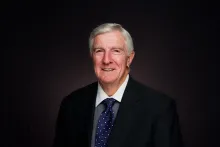
Before his retirement in 2021, Dr. Donald Ward pastored churches in Texas and Louisiana, and taught at Ambassador Bible College in Cincinnati, Ohio. He has also served as chairman of the Council of Elders of the United Church of God. He holds a BS degree; a BA in theology; a MS degree; a doctor’s degree in education from East Texas State University; and has completed 18 hours of graduate theology from SMU.
