

Don Ward
This transcript was generated by AI and may contain errors. It is provided to assist those who may not be able to listen to the message.
In the sermon this afternoon, I'm going to reinforce some of the themes leading up to Passover. That'll be woven within, hopefully, and I hope you will recognize reinforcement and review one of the greatest ways that we can come to learn and internalize the information that we have been given. And the average person forgets 80% within 24 hours of what they hear, and the less than average don't remember anything.
So, I mean... But as we look at the days of Unleavened Bread, I think sometimes we look at them very narrowly, and they are very much more encompassing in every aspect than perhaps we might think. Over and over, we hear that the days of Unleavened Bread picture putting sin out of our lives. But I believe we shall see that the days of Unleavened Bread are more about preventing sin from entering our lives on a daily basis than on putting sin out. We have been called to live holy and sinless lives.
That is not to say that we are commanded not to sin, but at the same time we know that we do sin. And we'll notice in 1 John, Mr. Moody read one of these Scriptures here. Let's read 1 John. We've been called to live holy and sinless lives. And that's what our goal is. And we have been commanded to live sinless lives, but we know that from time to time, and so does God, and so does Jesus Christ, that from time to time we will sin.
And we notice in 1 John, verse 5, This is the message that we have heard of him in declaring to you that God is light, and him is no darkness at all. 1 John, to a large degree, was written to combat Gnosticism, which the Gnostics taught that God was like a pure band of light. And then as you went away from God, you had lesser bands of light, angels of various degrees. 2 Finally you came to the demiurge, that being that was full of darkness, the Prince of darkness, the creator of the physical.
And the Gnostics taught dualism, that is, there is a good, immortal soul abiding within us, and at the same time the flesh is evil in other, and that which is material in other flesh. So Paul is saying that in God there is no darkness at all.
If we say that we have fellowship with him and walk in darkness, we lie and do not the truth. But if we walk in the light, as he is in the light, we have fellowship with one another, and the blood of Jesus Christ, his Son, cleanses us from all sin. If we say that we have no sin, we deceive ourselves, and the truth is not in us.
So we know that we do sin. Sin is deceitful. Sin, as they say, can creep up on you before you know it. And you will look back in retrospect and say, Oh my, I should not have done that, or I wish I had not have said that, or whatever it is.
But when it comes to our attention, verse 9, if we confess our sins, he is faithful and just to forgive us our sins. Now, in confession, obviously, the import also includes repentance. You just can't go and say, well, I've sinned and not change. You have to repent and to cleanse us from all unrighteousness. If we say that we've not sinned, we make him a liar, and his word is not in us. In chapter 2, my little children, these things I write unto you that you sin not. And if any man sin, we have an advocate. That word advocate in the Greek is the same word that is translated comforter, many places in the Gospels.
It is parakletos, the comforter, or one alongside. And the one alongside, John 14, verse 26, clearly says, the comforter is the Holy Spirit. So we have an advocate, one alongside, with the Father, Jesus Christ, the righteous. He is a propituation for our sins, and not ours only, but also for the sins of the whole world.
And hereby we know that we know him if we keep his commandments. And he that says, I know him, and keeps not his commandments is a liar, and the truth is not in him. So we see here that the blood of Christ cleanses us from all sin, and if anyone says he's without sin, he is a liar.
But if we confess our sins and we look to Christ for forgiveness, sins can be forgiven. Secondly, we see that if we say we know God and we don't keep his commandments, we're liars. The two viewpoints are reconciled by the fact that if we do sin, we can still be forgiven through the blood of Christ upon repentance. So in view of that, we should ask ourselves, did you or I take the Passover in our sins?
Well, you heard sermons and sermonettes, and you also did an examination to look into the Word of God and repent of your sins, to exercise faith in the sacrifice of Christ, to have your sins remitted, and to come to Passover reconciled to God, reconciled to Jesus Christ, each member of the body of Christ. More specifically, did you or I take the Passover while knowing that we had not repented of all the sins that we knew about in our lives at that time?
Well, if we had thoroughly examined ourselves using God's great spiritual mirror, the Bible, it would have revealed to us our sins. David prayed in Psalm 19 that to keep him from secret sins and secret faults that he might have. If we take or have taken the Passover in our sins, then we can expect God's judgment to fall upon us unless, of course, as soon as you know about it, as you heard in the sermonette, that you repent of those sins. So notice this in 1 Corinthians 11, 27. 1 Corinthians 11, 27. In 1 Corinthians 11, 27, Paul says that he received instructions from God himself as to how the Passover should be observed.
We read these verses here, some of these, on Passover evening. Look at verse 27, It's as if you ignore the fact that in order to have your sins forgiven and to be able to take the Passover reverently, you just ignore the fact that Jesus Christ died for your sins and go ahead and take it anyhow. For this cause many are weak and sickly among you. In other words, this is a life and death matter.
In my saying, as I've said many times, God would rather see us dead than miss out on his kingdom. So oftentimes he does chasten, he does judge us, he does chasten us. For this cause many are weak and sickly among you, and many sleep for if we would judge ourselves, we should not be judged. So the examination, the judgment that everyone was encouraged to do before Passover, and hopefully we all carried that out as we should have carried it out. If we didn't, then God says he will step in. But when we are judged, we are chasten of the Lord that we should not be judged with the world. So you have that judgment.
Judgment is now upon the house of God, and if the righteous scarcely be saved, where shall the sinner and the ungodly appear? Well, they'll appear in the judgment.
But we are being judged now. Wherefore, my brother, when you come together to eat, wait for one another. We know that leavening represents sin. Let's turn back to 1 Corinthians 5 now. 1 Corinthians 5 and verse 5. We know that leavening represents sin, and a little leaven leavens the whole lump. So this is what Paul writes about here in 1 Corinthians 5.
To deliver such a one unto Satan for the destruction of the flesh. So there was in Corinth a person who was committing incest. He was having illicit relationships with his father's wife. His stepmother. That the spirit may be saved in the day of the Lord. Your glorying is not good. See, they had sin among them, and they did nothing about it. And the message of the Bible from Genesis to Revelation is, you are your brother's keeper. We have to judge righteous judgment when we judge. As it says in Leviticus 19 and various other places, you must judge righteous judgment. But you cannot allow sin or leavening, leavening a type of sin, because it will grow, it will expand, and it will puff things up. Your glorying is not good. No, you're not. Little leavened leavens the whole lung. Well, what was their glorying? It's like, oh well, we know that's going on, but it doesn't affect us. We're so spiritual that it doesn't matter what he does. That's his business.
But it does matter, because we are our brother's keeper. Purge out therefore the old leaven, that you may be a new lump as you are unleavened.
Apparently, Purge out the old leaven is the spiritual leaven, as you are unleavened. Apparently, they were physically unleavened. For even Christ, our Passover, is sacrificed for us. And when we repent of our sins and exercise faith in the sacrifice of Christ, our sins are forgiven. We witness a baptism here this past Sabbath, the congregation did. Baptism is a ceremony to show that to act out in great symbolism the fact of what has the reality of what has taken place. That a person has repented of their sins. Their sins have been covered by, or have been covered by, the blood of Jesus Christ. Those sins have been removed as far as the east is from the west. And you're showing that that old man is going to remain under the water. Therefore, let us keep the feast not with old leaven, neither with the leaven of malice and wickedness, but with the unleavened bread of sincerity and truth. And John 17, 17 says, Sanctify them through your word, your word, his truth. So the emphasis in keeping the feast, according to this, is keeping the feast with the unleavened bread of sincerity and truth.
Now let's go to John 6, the Bread of Life chapter. In John 6, speaking of the unleavened bread of sincerity and truth, Jesus Christ says that he is this living bread. In John 6, verse 31, Our fathers did eat manna in the desert, as it is written, He gave them bread from heaven to eat. That's what the people were saying. Here's Jesus' response to that. Then Jesus said unto them, Verily I say unto you, Moses gave you not that bread from heaven, but my Father gives you the true bread from heaven, for the bread of God is He who comes down from heaven and gives life unto the world. So Jesus Christ is the true bread of life. Then said they unto him, Lord, evermore give us this bread. And Jesus said, I AM the bread of life. He that comes to me shall never hunger, and he that believes on me shall never thirst. So now let's look back in the Old Testament to see whether the emphasis is on eating unleavened bread or not on eating leavened bread. There's at least 10 verses that command us to eat unleavened bread for 7 days in the Old Testament. At least 10 verses command us not to eat unleavened bread. 10 verses commanding us to eat unleavened bread for 7 days. Let's go to Exodus 12.15. We're going to note 3 of these examples where it says that you shall eat or must eat. The word sometimes is translated shall, sometimes translated must. It's the same Hebrew word. Sometimes it's translated shall, sometimes translated must. In Exodus 12.15, and I hope you have read the new statement that the Council approved and was put on the members' website, I think about 10 days or so ago, that old statement was withdrawn, and the new statement was put forth with regard to eating unleavened bread and the symbolism of it. Also, you'll find this in the Fundamentals of Belief. One of the Fundamentals of Belief has a paragraph or so about unleavened bread. This is Exodus 12.15. Seven days shall you eat unleavened bread. Even the first day you shall put away leaven out of your houses, for whosoever eats leavened bread from the first day until the seventh day, that soul shall be cut off. So you have both here. You must eat or shall eat unleavened bread, and you must not eat leavened bread during this period of time. The Feast of Unleavened Bread. Now you look at Exodus 23. Exodus 23 and verse 16. Exodus 23 and verse 16. And the Feast of Harvest, the first roots of the labors, which you have sown of the field, and the Feast of In-Gathering, which is in the end of the year, which you have gathered the labors out of your field.
Three times in the year, all may all shall appear before me.
This is not exactly the verse I want, but anyhow, I'm going on. Let's go now to Leviticus 23 and verse 6. In Leviticus 23 and verse 6. And to me, this is perhaps the most important one. They're all, I guess you would say, equally important. But here in Leviticus 23, the Holy Days are listed. And if you count the weekly Sabbath, you have the weekly Sabbath, which is also called a feast day. And you have Passover, which is the Feast of the Passover. Sometimes in the Gospels, it refers to the Feast of Passover to include unleavened bread. And sometimes it uses unleavened bread, which also includes Passover. But the main thing that you see here, and the thing that I will cling to, let's read verse 5. In the fourteenth day of the first month, it even is the Lord's Passover. So it's on the fourteenth. Now, the Jews have now merged Passover with unleavened bread. So the Jews last evening kept Passover. And there's been a splinter group within the church, some who attend services in United. We had one down in Houston who was battling this thing because of some literature that somebody had put out with regard to this, saying that, yes, Passover was on the fifteenth, and it's a holy day, and all of that. I don't see how you can get that if you take the Bible for what it says. On the fourteenth is the Lord's Passover. The fourteenth of the first month, it even is the Lord's Passover. And on the fifteenth day of the same month is the Feast of Unleavened Bread unto the Eternal. Seven days you must eat unleavened bread. So now let's notice some of the verses that specifically command us not to eat leavened bread. We go back now to Exodus 13. Exodus 13 and verse 17. Exodus 13 verse 17.
In Exodus 13 verse 17, I don't know how these scriptures get transposed the way they are, but because some of these things are... It's verse 7 I want, not 17. Let's read Exodus 13 verse 6. Seven days shall you eat unleavened bread, and in the seventh month, and in the seventh day, shall be a feast to the Eternal.
Unleavened bread shall be eaten seven days. There shall be no leavened bread seen with you, neither shall there be leavened seen with you in all your quarters. So throughout the Pentateuch, the first five books of the Bible, you'll see you must eat unleavened bread seven days, and you must not eat leavened bread. So we see during the days of unleavened bread, that you are commanded to eat unleavened bread, and not to eat bread that contains leavening.
So it seems to me that the emphasis is on preventing sin, keeping it out, because supposedly you came to pass over, having been reconciled to God, having been reconciled to Christ, having been reconciled to the members of the body of Christ, you ate of that bread which says we are one body with Christ. So when we take the passover, we're saying that we've discerned the body of Christ, that we're reconciled to God and our fellow man. And when the Holy Day arrives, we have gone through repentance and faith in the sacrifice of Christ.
We have had our sins forgiven. We have put the physical leavening out of our homes. Thus we should begin the Holy Day, this day, of unleavened bread in a sinless state. We had to pass over an even emphasis on leaving Egypt last evening. Turn now to Numbers 33. Numbers 33. Numbers 33, verse 2, And Moses wrote their goings out according to their journeys by the commandment of the Eternal, and these are their journeys according to their goings out.
So Numbers is basically a chronology of chronicling the journeys of Israel from the time they left Egypt, they get to the Promised Land. In Numbers 33, verse 3, And they departed from Rameses on the first month, on the fifteenth day of the first month, on the morrow after the Passover, so you couldn't have both going on at the same time. How would you ever reconcile that with keeping the Passover on the fifteenth? On the morrow after the Passover, the children of Israel went out with a high hand in the sight of all the Egyptians on the fifteenth day of the first month.
So have you entered into these days of unleavened bread with the assurance that your sins had been forgiven? Well, if we didn't, we took the Passover in our sins. And time after time, we were admonished to examine ourselves to see if there's any leavening there, if there is to repent of it and come and renew our covenant before God in Christ. The days of unleavened bread should teach us how to avoid sin, how to keep it out, how to prevent sin from ever entering our lives, and how to gain the total victory over sin by living by faith.
Israel had seen those miracles, the plagues that came upon Egypt, and even though they had seen all of this great witness and the power of God, somehow they did not internalize the truth. They sat there and they listened and they watched and they did whatever they did, but somehow it just did not reach to the depth of their being, and they did not internalize it in the way that they needed to so that they could live by faith.
And when they left Egypt, God did not leave them by the way that was the shortest way. He led them by a more difficult way out into the wilderness, and knowing that they would come to the Red Sea, and no way they could cross that Red Sea with a host of Pharaoh behind them unless he intervened. And so after we entered that covenant of sacrifice, in the symbolic sense, we are cast out into the wilderness to live by faith. And there will be many Red Seas and there will be many Jericho's along the way. And there will be many spiritual battles that cannot be possibly one except through faith in Jesus Christ.
The symbolism of this living by faith is to refrain from eating anything that contains leavening. And then at the same time, as Paul says, let us keep the feast with the unleavened bread of sincerity and truth.
The Word of God in Jesus Christ declares, I have sounded it out at least probably 50 times, maybe a little less, the words I speak, they are spirit and they are life. John 6, 63. Focus on Christ, Christ in you, the hope of glory. Say to yourself several times a day, and I gave this sermon here and in Texarkana about God in you, the power of God in you. I have the very essence of God dwelling in me, the very eternal spirit of God through which I can overcome the world. Jesus Christ said, Be of good cheer!
I have overcome the world. And do we remind ourselves and we have that positive affirmation? I've got the eternal spirit of God dwelling in me, the very power and essence of God. Put on Christ through bathing in and obeying the Word of God. Let's look at Romans 13. In Romans 13, Unleavened bread should prepare us to gain the total victory. In Romans 13, verse 11, In that knowing the time that now is high time to awake out of sleep, for now it's your salvation nearer than when we believed.
The night is far spent, the day is at hand, let us therefore cast off. The works of darkness let us put on the armor of light. Let us walk honestly as in the day, not in rioting and drunkenness, not in chambering and wantedness, not in strife and envy. Of course, that's been the downfall of so many through the ages from the days of Cain and Abel to the present day. But in contrast to that, as opposed to that, put you on the Lord Jesus Christ and make not provision for the flesh to fulfill the lust thereof. The challenge for Israel after getting out of Egypt was to leave sin and death behind and to live by faith.
To leave sin and death behind, to live by faith. But they brought along the baggage of Egypt. They could not let go of Egypt and live by faith. They wanted to bring it up. That is Egypt. And what a great life they had there as slaves. The challenge historically for all of God's people is to believe God and do what He says. In short, to live by faith. The Scriptures tell us clearly that the just shall live by faith. This means to believe God and know that God always has our best interest at heart, no matter what the situation or circumstance, He will deliver us in due time. That means internalizing Hebrews 11.6, as you have heard me say so many times, for He who would come to God must first believe that He is and that He is a rewarder of those who diligently seek Him.
In plain language, He always has our best interest at heart. We believe that, we act on that, we live as if that's a reality in our lives. We believe it to the very depth of our being. This means casting all your care on Him, for He cares for you. This means trusting God with your whole being. Nothing left back. After the Israelites took that first pass over their first big test on the last day of Unleavened Bread was when they came to the Red Sea and were pinned in by the mountains on both sides and Pharaoh's army behind them.
Actually, the Israelites, as they began to murmur and complain against Moses, they weren't really complaining against Moses. They were complaining against God. And so much of the complaining that is done against human beings and human leadership and the church through the ages is really against God. That all things be done without murmuring and complaining is what's clearly written in the Scriptures. The Israelites immediately looked on the situation in the physical sense, did not look to God in faith.
And they began to be cry-babies immediately. Look at Exodus 14, verse 10. Exodus 14, verse 10. In Exodus 14, verse 10, And when Pharaoh drew nigh, the children of Israel lifted up their eyes, And behold, the Egyptians marched after them, And they were very afraid, And the children of Israel cried out, Under the Eternal. And after you are baptized, and you receive the laying on of hands, you see, after Jesus Christ was baptized, what happened to him? He went out into the wilderness. See, he was baptized, and a voice from heaven came, Saying, This is my beloved Son, in whom I am well pleased.
He was cast out in the wilderness. He went out in the wilderness where he was tested and tried of the devil for forty days. And what the great trial was about, Satan was saying, He was challenging this statement, That this is my beloved Son, in whom I am well pleased. Because when he came to the stones to turn them into bread, What did Satan say? If you be the Son of God, then turn these stones into bread. If you are really converted, let's see. So Satan is going to always be there, Trying and testing, and like the blue healer nipping at the heels. Continuing here, Exodus 14, verse 11, They said unto Moses, Because there were no graves in Egypt, Have you taken us away to die in the wilderness?
Wherefore have you dealt with us in such a way to carry us forth out of Egypt? Is not this the word that we did tell you in Egypt, Saying, Let us alone, that we may serve the Egyptians? Whereas they lifted up their voices and they were crying for deliverance.
It had been better for us to serve the Egyptians, Than we should die in the wilderness. And Moses said unto the people, Fear you not, stand still, And see the salvation, the deliverance of the Eternal, Which He will show to you today, For the Egyptians whom you have seen today, You shall see them no more for ever. They are gone.
The Eternal shall fight for you, And you shall hold your peace. And so, as Paul Harvey says, you know the rest of the story. The seed departed, Israel walked through on dry land, The waters came back and drowned the host of Pharaoh in the sea. By late summer, when the spies were sent out, Spy out the Promised Land, Israel had tested God ten times.
Ten times in about five months, something like that. God then sentenced them to 40 years of wandering in the wilderness. The Apostle Paul draws from the experience of the Israelites in the wilderness In some of his writings. Let's go to Hebrews 3, verse 7, To try to let us know and to try to warn us Not to fall into the same trap that Israel fell into On their trek to the Promised Land.
In Hebrews 3, verse 7, They have not known my ways. I swore in my wrath, They shall not enter into my rest.
Take heed, brethren, lest there be in any of you an evil heart of unbelief And departing from the living God. But exhort one another daily, while it is called today, Lest any of you be hardened through the deceitfulness of sin. Sin, as I said up front, is very deceitful. Now continuing in chapter 4, verse 1, Let us therefore fear, lest they promise, being left us of entering into the rest, Any of you should seem to come short of it. For unto us was the gospel preached as well as unto them. But the word preached did not profit them, Not being mixed with faith in them that hurteth. Time after time, this element of faith, of trust, of belief, Of having internalized to the depth of the very being, He who would come to God must first of all believe that he is, And he is rewarder of those who diligently seek him. For we which have believed do enter into rest, As he said, as I have sworn in my wrath, If they shall enter into my rest, Although the works were finished from the foundation of the world. And of course, God has ordained this great plan of salvation, Where we can enter into eternity and rest with him.
Note here, one of the great notes here, Their hearing was not mixed with faith. They heard the words, they saw the works, They saw the works of God, but they did not really believe. Their hearing was not mixed with faith. Instead of being led to the Promised Land, God dragged them to the Promised Land against their will, For his namesake, that his great plan and purpose for humankind Would not be thwarted by stiff-necked and stubborn people. You had to get Israel into the Promised Land. You had to save Israel because of all the promises that dated from Genesis on up.
God will not drag you or I into the kingdom of God against our will. He did drag Israel to the Promised Land In order that his purpose and plan might be fulfilled. They went clawing and scratching and trying to hold on to Egypt. But here we are. We know the what. We know basically the when. We know the why. And we know the how of the way.
Therefore, we are without excuse. We have no excuse. We know that leavening definitely represents sin. We've read a little leavening. Leavens the old lump. Jesus sheds more light on what leavening represents in the spiritual sense in Matthew 16. Let's go there. In the book of Matthew, Jesus Christ identifies four great enemies of faith, anxious care, fear, doubt, and human reasoning apart from the Word of God. We're looking here at human reasoning apart from the Word of God, and we're going to look in particular at the word leavening.
We'll see that Jesus equates false teaching with leavening. Matthew 16 and verse 11. How is it that you do not understand that I spoke it not to you concerning bread, that you should beware of the leaven of the Pharisees and the Sadducees? Then understood they how that he bathed them not beware of the leaven of bread, but of the doctrine of the Pharisees and of the Sadducees. The false teaching is called leavening. We back up there to see what introduced this.
Verse 5, And when the disciples were coming to the other side, they had forgotten to take bread. Then Jesus said unto them, Take heed, beware of the leaven of the Pharisees and of the Sadducees. And they reasoned among themselves, saying, It is because we've taken no bread. The human tendency is to look at it first of all from a physical point of view. And so they thought he was talking about physical bread. Verse 8, Which when Jesus perceived, he said unto them, O ye of little faith, Why reason you among yourselves, because you have brought no bread?
Don't you remember? Understand either the five loaves and the five thousand, how many baskets you took up? Or the seven loaves and the four thousand, how many baskets you took up? Beware of the leaven, the false teaching of the Pharisees. False teaching leads to sin, as we have seen in recent times. The Church of God scattered to the four corners of the earth in the past couple of decades.
The principal false teaching of our times resides in at least five principal areas. Let's look at the first one here in Jude. Jude, half-brother of Jesus Christ, was going to write apparently an epistle of encouragement. He winds up, after examining the situation, realizing that he needed to write an epistle, warning them of the trend that was enveloping, swallowing up, the Church.
This trend that Jude talks about here will be one of the great trends that will plague the Church of God to the end of this age. Because you have in Matthew 24, which says, Because wickedness shall abound, the love of many shall grow cold. The principal basis of this, to a large degree, has to do with the spirit of the times. The spirit of the times will say, everybody else is doing it, why can't I?
Use that human reasoning. And we see people who, and I've seen it and know very well, I've had people who, quote, leave the fellowship of the Church, they go back into the world, and they say that they have not given up on God, and they believe that God will not give up on them until they've given up on God, but at the same time, they are drifting farther and farther away. They do not keep the Sabbath. They do not keep the Holy Days. I would imagine that some of the people who spent years in the Church, who are out on some job today, are not even aware that this is a Holy Day, and God's sake of calendar.
And they go about doing their own thing. And they have forgotten, and they drift, and they drift. And you can come to that point that you heard in the sermonette, where you commit the unpardonable sin, and that connection, that life band, the umbilical cord in the spiritual sense, is cut off. There's no way back.
Jude 3, Beloved, when I gave all diligence to write unto you of the common salvation, it was needful for me to write unto you and exhort you that you should earnestly contend for the faith which was once delivered to the saints. I remember back when we first went to Pasadena—well, not first went to Pasadena, it was the second time or the third time, this was 1987-88, the first Bible study that I gave there on a Friday evening was titled, The Last Battleground. And the thrust of it was, the last battleground is the truth of God. Who will hold to the truth of God? Who will obey it? Who will defend it? Who will live by it? And be willing to give their life for it. Verse 4, For there are certain men crept in unawares who were before of old ordained to this judgment, ungodly men, turning the grace of our God unto lasciviousness. The word lasciviousness in short form means license to sin. And denying the only Lord God and our Lord Jesus Christ, I will therefore put you in remembrance, though you once knew this, how that the Lord, having saved the people out of the land of Egypt afterward, destroyed them that believed not. So only Joshua and Caleb, of those of a certain age, went into the Promised Land. Then he catalogs even the angels who left their first estate were not spared.
So beware of those who come with the Spirit of the times and say, you've got to get in step with the Spirit of the times. This is the 21st century. Are you going to be stuck back in the 1st century? Well, when it comes to the truth of God, it is eternal. It is not changed from time immemorial to the present time. Neither will it change. The word of God is true and it stands forever.
The second area that should be noted is that people will be turned to fables. Look at 2 Timothy 4.
2 Timothy 4.
I charge you therefore before God and the Lord Jesus Christ, who shall judge the living and the dead at his appearing in his kingdom, preach the word, be instant, end season, out of season, reprove, rebuke, exhort, with all long-suffering and doctrine. For the time will come when they will not endure sound doctrine, but after their own lust shall they heap to themselves teachers having itching ears. Oh, did you hear the latest thing? Did you hear this? Well, they're saying it. Well, I think it just goes on. And people get excited about things that they think are true and do not really prove them. And they turn away their ears from the truth and shall be turned to fables. Never forget the admonition about the Bereans. Bereans were more noble than they in Thessalonica. They searched the Scriptures daily whether these things be true. The third area that should be noted is the desire to hear smooth things instead of the truth of the Gospel. Look at Isaiah chapter 30. Isaiah chapter 30.
Where somehow some people came to the point that they believed that you really could not have any kind of correction or discipline within the Church because you've got all these different organizations now. And if you don't like what they're saying here, just move on over there. And in some cases, maybe that is wise if they're not preaching the truth.
But if you're going because you want to hear smooth things, I doubt that's what the Bible is about. In Isaiah 30 verse 8, Now go write it before them in a table or a tablet noted in a book that it may be for the time to come forever and ever that this is a rebellious people, lying children, children that will not hear the law of the Lord, which say to the seer, See not, to the prophets, prophesy not unto us, write things, speak unto us, smooth things, prophesy deceits. Get you out of the way, turn a side out of the path, cause the Holy One of Israel to cease from before us.
See, speak unto us, smooth things.
Verse 12, Wherefore, thus says the Holy One of Israel, because you despise this word, and trust in oppression and perverseness, and stay there upon. Oh, they think they're trusting in liberty and freedom.
But that's not the case. The Word of God is a perfect law of liberty. Therefore this iniquity shall be to you as a breach, ready to fall, swelling out in a high wall, whose breaking comes suddenly at an instant.
The next one, the fourth area, of course, this is not all inclusive. Then 1 Timothy 4 and verse 1. 1 Timothy 4 and verse 1.
Now the Spirit speaks expressly that in the latter times, some shall depart from the faith, giving heed to seducing spirits and doctrines of devils.
I think of the Mother Earth movement, where the environment and the earth is viewed as a living organism, and that Mother Nature has much to teach us. We have to get in harmony with Mother Nature, and loving the earth, and on and on it goes. And God did set Adam and Eve in the garden to dress it and keep it. And man has polluted nearly everything he's touched. But at the same time, we're not to worship the earth. We're not to worship the creation more than the Creator.
They had a thing this past week with regard to what really angers people and gets them upset to support a cause. And they talked about how that people became more upset, Michael Vick, and his dogfighting shenanigans, than they did about children being aborted. Speaking lies in hypocrisy, having their conscience seared with a hot iron. So your conscience becomes seared when I've already talked about you leave the fellowship of the church, you begin to not keep the Sabbath, you begin to do this or that or the other, you lose touch of when the Holy Days are, much less observe them, and finally it just doesn't matter.
Forbidding to marry. Of course, more and more now, people are living together and forming so-called unions that are illicit, that are forbidden of God. Forbidding to marry, abstaining from meats, which God has commanded to be received with thanksgiving of them which believe and know the truth.
So that's one of the spirits of the times, this doctrine of devils with regard to who are you going to worship? Are you going to worship the creation or the creator? And then the other great one is unbelief that we've already talked about in Hebrews chapter 3. The attack on God. Does God exist? The attack on the Bible and the veracity of it. Satan's recipe of deception often contains 95% of unleavened truths and 5% is leavening. And that leavening, of course, is false teaching. The leaven of the scribes and the Pharisees.
In our examination of leavening, we see that avoiding leavening is an active effort to prevent leavening from entering into your mind and taking hold because a little leavening is all lump. Once a certain concept, leavening of false teaching enters your mind and takes hold, it's almost impossible to root it out.
Be careful what you take into your mind that you embrace as the truth of God. Once again, a certain concept, leavening of false teaching, once it enters your mind and takes hold, it's almost impossible to root it out. But through the convicting power of the Spirit of God and the unleavened bread of sincerity and truth, it can be cast out. But you've got to really believe it, and you've really got to dig. And since sin is a spiritual matter, it can only be remedied through spiritual means. That brings us to the command to keep the feast with the unleavened bread of sincerity and truth and the commands in the Old Testament to eat unleavened bread for seven days during the feast of unleavened bread. On the evening, we read this, John 1717. Everybody here has already quoted it at least once or twice in the sermon today. We read it, Passover. On the evening that Jesus instituted the New Covenant, the New Covenant symbols, He made a very specific request in His prayer to the Father. Sanctify them through your truth. Set them apart through the truth. Your word is truth. See, that is how you are set apart to a great degree by the Spirit of God and the Word of God. The world in wickedness lies. The world is entrapped in fear, ignorance, superstition, and the dogmas of man.
A particular interest is this word sanctify. This word is sanctify in John 1717, which seems we pay scant attention to the word sanctify. The Greek word is hagiadzo. It means to dedicate, to separate, to set apart, to purify. Jesus asked the Father to set apart and sanctify us through His word, which is truth. Thus eating the unleavened bread of sincerity and truth and living by faith, through doing that we can be sanctified and sin can be defeated. So if you have these positive affirmations going in which you understand, I have the power of God abiding in me. I have the very Spirit and essence of God. I have the mind of God in me. I've hidden the Word of God in my heart that I might not sin against God. I'm going to keep the Feast of Unleavened Bread 24-7, 365 and a fourth each year, every year.
Notice Ephesians 5, chapter 5 and verse 25.
To be cleaned up, to be made whole, to be washed in the water of the Word.
To a large degree, unleavened bread has to do with being washed in the water of the Word. You must keep the Feast with the Unleavened Bread of Sincerity and Truth. Sanctify them through your truth, through your Word. Your Word is truth. In Ephesians 5, verse 25, Husbands love your wives, even as Christ also loved the Church and gave Himself for it. sacrificial love, laying down His life for it, that He may sanctify and cleanse it with the washing of the water of the Word.
Washing of the water with the Word. See, the Word of God is like living water, and it can bathe and make clean the very conscience of a being. It is a spiritual mirror that shows us our sin, and on the other hand, it is analogous to a giant bathtub that will cleanse us as we bathe in it. But God does not throw us into the water.
We have to decide to bathe in the Word of God every day. Physical water cleanses the outside. The Word of God cleanses the inside, the heart, and the mind. The Pharisees could never get past the outside. They were diligent to do the physical things. Let's notice Matthew 23, 23. Matthew 23, 23 is one of the greatest chastisements of a people that you'll find in any piece of literature spoken by Jesus Christ. The Pharisees focus on the outside, on the outward appearance. Matthew 23, 23, 1, to you scribes, Pharisees, hypocrites, you pay tithe of men, anise, and coming, and have omitted the way your matters of the law, judgment, mercy, and faith. These ought you to have done, and not to leave the other undone. We have talked about judgment, mercy, and faith many times for many years. Judge yourself. I have sinned. Ask God for forgiveness. Repent. He's faithful in just forgive you to extend mercy. And he says, go walk in faith. You blind guides which strain at a gnat and swallow a camel. One of you scribes and Pharisees, hypocrites, for you may clean the outside of the cup and the platter, but within they are full of extortion and excess. You blind Pharisees, cleanse first that which is within the cup and platter, that the outside of them may be clean also. So the emphasis is cleaning the inside. And the Word of God, the spiritual mirror of God, will clean us up. The Spirit of God will write the law of God on our inward parts, that we have a new conscience, that we can be led by the Spirit of God. And we can try up over anything. We can have our conscience purged of dead works to serve the living God. The Spirit of God will write on our inward parts. Notice Hebrews 10.
They who are led by the Spirit of God, they are the sons of God. That's Romans 8-14, as we're turning here to Hebrews 10-14.
Hebrews 10-14.
The Israelites had the tables of stone, 10 commandments written on those tables of stone.
And you remember the story that when Moses was up in the mount communing with God, that during that time that he was gone, the children of Israel made a golden calf and set it up and began to dance around it and worship the golden calf.
And Moses comes down and sees it, and he drops the tables of stone. They're broken. But now we have those commandments written on our inward parts. In Hebrews 10.14.
For by one offering he hath perfected for ever them that are sanctified. For of the Holy Spirit also is a witness to us. For after that he said before, This is the covenant that I will make with them. In those days, says the Lord, I will put my laws into their hearts, and in their minds will I write them.
So that is the new conscience, the new knowing within.
That new knowing within, that conscience, if that rules over the flesh. If we mortify the deeds of the flesh, we shall live. Look back at Romans 8.
Romans 8 and verse 1. This is one of the most encouraging scriptures in the whole Bible, because the old man never dies. I used to get far more discouraged than I do now with regard to the old man. The old man never dies, the old man never gives up, the old man never stops struggling to try to get back up out of the baptismal waters. You have to keep putting him down, putting him down, blocking him, keeping him down, putting him down, and it can be done. In fact, there was one who lived in the flesh, subject to all the pulls of the flesh, as we are, and yet without sin.
In Romans 8.1, There is therefore now no judgment to them which are in Christ Jesus, who walk not after the flesh, but after the Spirit. The law of God written on the inward parts, the knowing within. For the law of the Spirit of life in Jesus Christ has made me free from the law of sin and death. How so? Because past sins have been forgiven, and you can rule over the flesh. For what the law could not do in that it was weak through the flesh, the law could not give life, and the law could not make you perfect, but it was given to sustain life. God sending his own Son in the likeness of sinful flesh and for sin, condemned sin in the flesh. How did he condemn sin in the flesh? He triumphed over it. He lived perfectly, and he was in the flesh.
That the righteousness of the law might be fulfilled in us, who walk not after the flesh, but after the Spirit.
See, the flesh will always be there, but it can be triumphed over. Now we've read 1 John chapter 1, it says, if any man says that he's without sin, he's a liar. And it says, if we do sin, we have an advocate with Jesus Christ, the righteous.
So if we follow that which is in the Word of God, in belief and in faith, we will live. Verse 12, So, brethren, we are here on this first Holy Day, Feast of Unleavened Bread, 2013. In a world that is far from God, a time in which who knows where the next she will drop, who knows where the next bomb will drop, the next shot shall be fired, and who knows when this world will go up in flames.
But see, we know the what. We know basically the when. We surely know the why, and we surely and should know the how.
We know that if we hide the Word of God in our hearts, if we live by every word that proceeds out of the mouth of God, if we keep the Feast with the Unleavened Bread of Sincerity and Truth, we can keep sin out of our lives. We can live the Unleavened Life. And if, of course, any of us did not mean to imply, with regard to taking the Passover, there could be a sin that I was not aware of, and I took the Passover, and maybe a sin you were not aware of. But if and when sin is made manifest, if we will follow the steps of confession, of repentance, of faith in Jesus Christ, hiding the Word of God in our hearts, living by faith, we can overcome every obstacle. And once again, I encourage you to remind yourself, I have the Spirit of God dwelling within me. I have the very power of God in me. And when Jesus Christ was led into that wilderness, after He was baptized and those temptations came from Satan, how did He defeat Satan? He quoted the words of God.
Man shall not live by bread alone. It is written, You shall not tempt the Lord your God. It is written, You shall worship the Lord your God. Only Him shall you serve. The devil will depart from Him. And so if we resist the devil, He will depart from us. So brethren, let us keep the feast with the unleavened bread of sincerity and truth.
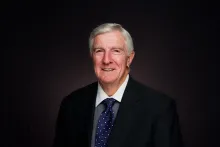
Before his retirement in 2021, Dr. Donald Ward pastored churches in Texas and Louisiana, and taught at Ambassador Bible College in Cincinnati, Ohio. He has also served as chairman of the Council of Elders of the United Church of God. He holds a BS degree; a BA in theology; a MS degree; a doctor’s degree in education from East Texas State University; and has completed 18 hours of graduate theology from SMU.
