
Make This Feast
Your Member Refresher Program!
Given on
Given in
Downloads
Downloads
To download a file, right-click (or long press) a link above and choose Save As.
Just as the ministry has had "Minister Refresher Programs" so God gives each member a "Member Refresher Program" at the Feast. How can each member make the most of this "refresher?"
Transcript
This transcript was generated by AI and may contain errors. It is provided to assist those who may not be able to listen to the message.
The United Church of God is starting a new program beginning in 2022 and 2023 called the Ministerial Refresher Program, which is something we had years and years ago. I think we're now going to call it the Pastor's Refresher Program. But years ago, we had one that was called the Ministerial Refresher Program. And every so often, as a minister, if you were a full-time man, you were able to go into Pasadena, California and spend, I think it was like 18 days or something like that. I think toward the end, they started making shorter sessions. But at the beginning, I think it was at least 18 days or so. And I really enjoyed that, you know, flying out to California. Now, in my case, even though I was born and bred and raised in Detroit, Michigan, I viewed the Pasadena congregation as my home church. Because I went to church in Detroit one time, and then went out to Ambassador College. You know, my parents wouldn't let me go to church, so I wasn't able to go to church until after I left to home. So, and when I was accepted for Ambassador College, the men who came to talk to me said, well, we think you should go to church at least one time before you go to Ambassador College. And so it was the third Sabbath in August in 1970. I went to my first Sabbath service, although I've been keeping the Sabbath at home for a number of years. So I flew out to Pasadena, California, and that's, you know, I was there four years, and that was my home church. And I really enjoyed being there in the buildings and grounds. For the four years I was there at Ambassador, I was on the landscape crew, and knew every inch of that campus, literally from the ground up, saw the auditorium. So Mr. Armstrong takes the first shovel of dirt out of the ground, which at that point was my landscape area. So I'm taking that first shovel of dirt, watched the whole time as the auditorium was being built.
And then the very first concert at the House for God, as we called it, I was able to go to that very first concert. So that was something. So I had a tremendous connection with Pasadena, California, and just really enjoyed those refreshers. Now at the refresher, one of the things that we were wanting to accomplish was have even a more close walk with God.
You know, that's the greatest tool any minister has. It's not his speaking ability, it's not his counseling ability, it's not how good a joke he can tell, it's how close to God the minister is. Because if you're close to God, then your prayers will be answered. And as a minister of God, you'll be praying for God's people.
You'll be in their homes, you'll be counseling them, you'll be conversing with them, you'll be phoning them, you'll be doing all those things for them. But to do that successfully, you've got to be close to God. So that was one of the things that we were wanting to accomplish with the Ministerial Refresher Program back in years gone by. It was also an opportunity for us to get together with our peers. In many cases, ministers were so separated by distance, you didn't get a chance much to talk with your peers. You were kind of out there by yourself. And it's always nice to get together.
I mean, you have folks you go to work with, you see them five days a week, or you may be, you know, maybe not quite that much for some, in some cases, but you have a relationship with your fellow laborers. Well, many of us in the ministry didn't have that. You know, we were just simply by ourselves out in the middle of wherever. So it was nice to be there in a company of your peers, and to talk about things, and to let your hair down, and just enjoy one another's company.
Of course, we were also instructed in how we can better serve the brethren in our area, which is something that we always took. You know, we wanted to know very, very deeply how we can do that, and do a better job of that. So why am I telling you all this? What has this got to do with anything today? Well, we are about ready to go to the Feast of Tabernacles.
I don't know when you're leaving. I know in the Chicago church, a number of people already have left. A number of people in Chicago are going to go, are going to be in, or already are in, Montana for the Feast. Mary and I will be leaving Monday afternoon. You know, P. Waukee is only a couple hour drive away, so it's close. It's a very nice feast site. We're looking forward to being there. But I wanted to make the analogy today that just as we have had a ministerial refresher program in the past, as we're about to start another pastor's refresher program, the Feast of Tabernacles is your member refreshing program.
And that's my thought. That's my theme for today. Make this feast your membership refreshing program. So if you'd like to take notes, take that down. If you're listening online, you can take that down. Make this feast your membership refreshing program. Of course, it starts before you even go to the Feast. It starts by you getting your heart and mind into a frame of mind to go to the Feast of Tabernacles and really have a good spiritual feast. But once there, and I guess I'm an old softie, but once there I always find myself choking up on that very first song.
I'm listening to everybody singing, you know, here in Beloit, we've got, what, 19 people here today. It's a lot different when you go to the Feast, especially back in the old days. You know, those of you around back in the old days where we would have 10,000 people or 12,000 people in Wisconsin Dells, you'd have 15,000 people in Pocono's and Ozark's and places like that. And when you hear those kinds of congregations lifting up their voices, it sends chills through you.
I still get that even if we're going to be walking, there's 180 people. I always kind of choke up. I look around and see all the God's people singing. We're singing in unison. We're happy together and so forth. That, again, is something that I really prize. The same thing is true, frankly, on the last great day.
That PM service, that very last song, I also get a little emotional. Sometimes I'm not able to sing all the verses to the last song because I realize this is it until the spring and more holy days come. And I guess I'm just an old saucy along those lines.
But, you know, this year at the Feast, somebody, and I forget who's leading songs that first evening. Somebody's going to say, good evening, brethren. Welcome to the 2021 Feast of Tabernacles. It's time to begin the song service. Would you please take up your hymnals and rise?
That's about the time I started getting choked up. But we need to be vigilant, brethren. We want to make sure that we are packing along with us, not just our toothbrush, not just our undies, not just, you know, things we want for Sabbath wear and holy day wear and everyday wear at the Feast for services and for things after services.
But we want to pack some other essentials. And I call these essentials four feast beatitudes. We want to make sure we're packing these four feast beatitudes, these four feast beautiful attitudes. So we're going to look at that today, those four feast beatitudes.
And then we're also going to look, we're all finished there, we're also going to look at a feast action list. Very short one, but I think an important one.
So, beautiful attitude number one. Again, we want to make sure we put our hearts and minds into this. Beautiful attitude number one. Put God first at the feast. There's nothing wrong, as I said in the past, there's nothing wrong with us going to a feast site where there's palm trees and ocean and beautiful weather and all those sorts of things. I enjoy that. I think the best feast I've ever had. We're in Hawaii, but I'd also say, brethren, that some of the best feasts have also had were in Squaw Valley, California, where you would have snow and ice. I've known of both ends of the spectrum there, and in both cases, I found myself being tremendously inspired by being there in services. Now, I've never been to one of these big feast sites where you've got 15,000 people. The largest feast site I was ever in was at Squaw Valley, and we only had 9,500 people.
9,500 people! That's more than we have in the United Church of God right now in the United States. 9,500 people! That's more than we have in the United Church of God right now in the United States. All together in one room, praising God, listening to services. I remember listening to, as an 18-year-old young man, listening to the sermonettes and thinking, wow, those guys are giving sermonettes in front of 9,500 people. I could never do something like that.
Well, the truth of the matter is, I never did anything like that. The best I ever did was give a sermon in front of 5,000 people in St. Pete.
Number one. Beautiful attitude, number one. Put God first at the feast. Let's go to Leviticus chapter 23 and keep something very important in mind. Leviticus chapter 23. And verse 41. Leviticus 23 verse 41. You shall keep it as a feast to the Lord, a feast to the Lord. Not a feast to some organization or some individual or to some ethnic group or whatever. You shall keep it as a feast to the Lord for seven days in the year. That shall be a statute forever in your generations. You shall celebrate it in the seventh month.
So we want to always remember that what we're doing is we're keeping God's feast.
It's nice to have the warm weather or wherever we're going to be going or, you know, if you want to go skiing or something like that. Nice to have the accommodations, the restaurants, but we are going not on a vacation.
God wants us to enjoy ourselves. God tells us to rejoice. But we want to have the frame of mind. We are going before our great God to worship Him, our very special God.
Let's go to Ezra, chapter 7.
Ezra, chapter 7.
After the book of 2 Chronicles, you've got Ezra here in Ezra, chapter 7.
The scripture that we know also well, but is worth very much repeating. Ezra, chapter 7, verse 10.
For Ezra had prepared his heart to seek the law of the Lord. He had prepared his heart.
And that's one of the things we want to be doing as we start driving to the feast. Right now, and we should have been doing this all along, to prepare our heart. We should be doing this every day of our lives. But certainly as we're heading to the feast, we want to get in the feast frame of mind. For Ezra had prepared his heart to seek the law of the Lord and to do it.
He wasn't just there to hear good things and say, wow, wasn't that a great message? He was there. He wanted to make sure he went to services to learn and to do.
To learn and to do. And then learn them so well, we see at the end of verse 10, and to teach statutes and ordinances in Israel.
Brethren, we want to make sure we are learning so well we can teach, because that is our future job. We are going to be kings and priests. We will be teachers.
Just in the last few weeks, I've had a number of phone calls from people who are interested in the truth of God. I was making mention about the one person who called here. I don't think I may have mentioned to you. I don't think I've been here since that point, but a lady called.
Got five kids and a number of grandkids. She said, I just want to start keeping the Sabbath. I'm just learning about the Sabbath. I'm just learning about these annual holy days. She began asking questions. I began answering the questions. She told me that her dad had died two days before.
He wasn't a church person. She was concerned about that. I got to talking about the last great day and what takes place over in the book of Ezekiel there. She started crying. She was really into what we were going through. We've been so lucky for what God has given to us. We want to make sure we're preparing our hearts. We're preparing our minds. We want to do what God is teaching us. You and I may hear messages, this feast of tabernacles, that really kind of cut to the quick. Really kind of get to where we live.
We all need to change. There are things in our lives that need to be amended. Let's not go to the feast just to hear interesting things, but let's go to the feast of the idea we are going to make real changes and amend our life. Some of you are going by yourself. Others of you are going with your mate. Some of you are going to maybe share a hotel room or share a ride and a hotel room. That can be difficult when you're with somebody else that you're not normally with.
You may not have your normal prayer spot when you're with somebody else.
Studies have been done. I remember reading a study, this was a number of years ago, where they were noticing rats. If you got too many rats in a room, they started tearing each other up.
You got to a place where you can have so many rats in a room, but one extra rat and everything breaks loose. I think sometimes the same thing is true with human beings. You can have so many human beings in a room, but you add that extra human being and all of a sudden things get a little dicey, a little dodgy there for a while. That's something we need to work on. To have a beautiful attitude of no circumstance. A mate has a beautiful attitude whether you're wearing a mask or not at services. Now in P. Waukee, as I understand it, I heard just recently from Devin Schultz that in the main room it's mask optional. They've got an overflow room where it's mask only, so you can have your choice of what you want there. Maybe that will change during the course of the feast. So again, we need to make sure we've got a proper attitude. We're not going there to like or dislike masks or like or dislike vaccinations. We're going there to make sure we're worshiping the Great God and not letting anything get in our way of doing that.
Let's take a look at Luke chapter 24.
Luke chapter 24. I've talked about this on a number of occasions with you.
These two men who are on the road to Emmaus and Jesus Christ have been crucified at this point. He joins them as they're walking, and they're talking about how sad they are, about how Jesus Christ had been crucified. In their minds, they may have thought that was the end of things. Jesus Christ is walking with them and talking with them. Then he begins to open up the Scriptures to them. As they get to the end of their journey, he wants Christ to continue with them. Then Christ all of a sudden disappears. Take a look at Luke chapter 24, verse 32. Luke 24, verse 32. And they said to one another, Did not our hearts burn within us, while he talked with us on the road, while he opened the Scriptures to us?
That's what we want at this year's feast. And you have a say in that. As you prepare to have a beautiful attitude to put God first at the feast, you want to go there, and you want to be positive.
If you want to talk about some of your trials and how God has been there to help you through your trials, how God has not deserted you, how God has answered prayers and delivered you in a number of ways, we want to go there and be able to talk with one another about what's in our hearts. So, other people listening are just full of zeal after talking with you. We don't want people to come to the feast, talk with us, and after they're done with us, they want to go back home.
We want people to be full of zeal. So, we want to discuss the sermons, the sermonettes. We want to discuss the Bible studies. We want to discuss how we can put God first at the feast.
Memory experts tell us that much of what we learn is gone after 24 hours.
Much of what we learn is gone after 24 hours. So, review is very helpful for us. So, beautiful attitude number one. Put God first at the feast. Beautiful attitude number two.
Beautiful attitude number two. Learn to fear God even more. Learn to fear God even more.
You know, we learn to fear God, but it's not a one-shot deal. It's not like, okay, I got baptized, I received God's Holy Spirit, I fear God. That's the end of it. No. As in all things, just as we grow in love, as we grow in to be more patient, as we grow to be more long suffering, we need to grow to be even more fearful, properly so, of the great God. Let's look at Jeremiah chapter 9.
Jeremiah chapter 9.
Verses 23 and 24.
Jeremiah 9 verse 23.
Thus says the Lord, letting at the wise man glory in his wisdom. Let the mighty man glory in his might.
Letting at the rich man glory in his riches. So, we are not the glory in anything of ours, because we're just human flesh. We're just so much dirt. I remember an article that one of our ministers wrote a year ago. He asked them, the article he wrote, I think it was for the Good News magazine, very catchy phrase, what kind of dirt are you? What kind of dirt are you? I thought it was kind of kind of catchy. Well, there's truth in that. What kind of dirt are we? Verse 24.
So, there we go. We want to put God first in our minds. We don't want to be first in our minds. We don't want to be all hung up on ourselves and who we are, but we think we are, how long our shadows are. We're nothing. We're but a vapor. We're here today and we're gone tomorrow. We are nothing compared to the great God. Now, there's an interesting scripture over here in Deuteronomy chapter 14. You know, the Bible talks a lot of places about learning to fear God, but there's one scripture that talks about a special time of the year when we are to fear God, learn to fear God. We're to fear God all the time, but one place in particular, one time of year when we are to learn this. And that's over here in Deuteronomy chapter 14 verse 23.
Deuteronomy 14 verse 23.
In our case, that's Piwaki, Wisconsin.
The tithe of your grain, your new wine, your oil, the firstborn of your herds and your flocks, that you may learn to fear the Lord your God always. So this is talking about a special time of the year at the Feast of Tabernacles, where we especially want to learn to fear the great God, to fear Him even more than we ever have before in our lives.
Fear of God is a deep awe of God, a deep respect of the great God, a reverence for the great God. It includes an unwillingness to want to disobey Him.
He's our dad. We don't want to disappoint our Father.
Now, why this time of year? Why this time of year? Again, we do it all the year, but the Bible talks about this time of the year, Feast time in particular. I think one of the reasons for this is, at the Feast of Tabernacles, we live in relative peace, we live in relative harmony, we are there together as many people obeying the great God. We hear two and a half months, we hear ten sermons and many sermonettes, and we've got Bible studies prepared. You're going to have two and a half to three months worth of messages in an eight-day period. You're going to see the work of God being put together as a group, the beautiful plan of God, God's people together in great numbers. No other time of the year pictures this work being done on such a scale.
So take advantage of being there at the Feast of Tabernacles.
You know, if you're there in Piwaukee, there at the hotel, come down early, meet some people, talk about how God has blessed you, let your light shine. We'll talk more about that later on when I get to the action list I want to cover with you. But take every opportunity you have to be a light to those who are there at the Feast. Beautiful attitude number three of the four. Beautiful attitude number three. Appreciate that you know the meaning of the Feast. Appreciate the fact that God has opened up your heart and mind to know the beauty of what He is doing. How many billions of people on this planet right now have no clue as to what's going on? Our fellow Americans, they wonder where is this country going? What is happening to us? Where is all this going to end?
We know. We study prophecy, and prophecy is basically not negative. Prophecy is positive, because prophecy talks about the return of Jesus Christ. Prophecy talks about the establishment of the kingdom of God. I think too many times people want to focus in on all the beat and bust them stuff that comes before the kingdom. But God wants to be in that. There's a point. There's a proper time for that. Prophecy should lead us to repentance, should lead us to have a closer walk with God. But we should always remember that prophecy is primarily positive in nature. And so we want to be positive in nature. Appreciate we know the meaning of the thesis. Go to Hebrews 6.
Hebrews 6.
Verse 17. Hebrews 6, verse 17-19. Thus God, determining to show more abundantly to the heirs of promise the immutability of his counsel, confirmed it by an oath, that by two immutable things, which is impossible for God to lie, we might have strong consolation who have fled for refuge to lay hold of the hope set before us. This hope we have as an anchor of the soul. Read that again. Verse 19. This hope we have as an anchor of the soul, both sure and steadfast, in which enters the presence behind the veil.
We know the meaning of the feast. We have a hope about what the future holds. We know that God doesn't—you know, what are these two things? Two immutable things which is impossible for God to lie. Number one, God's verbal word, his oath. And number two, his written word, the scripture.
Those are two things we can rely upon. God's written word and God's verbal word.
God doesn't lie. And he talks about the wonderful world tomorrow. This understanding is an anchor for our souls. Understanding the plan of God is an anchor for our souls. Let's look at Matthew 7.
Matthew 7.
Verse 6. Matthew 7. Matthew 7. Verse 6.
Do not give what is holy to the dogs, nor cast your pearls before swine, lest they trample them under their feet, and turn and tear you in pieces.
Now, why do I quote that scripture?
God does the same thing. God didn't give you what is holy to trample under your feet. God gave you what is holy because you appreciate the value of this knowledge. God opened your heart and mind because he knew you would appreciate understanding this beautiful truth, that you would do something with it. And you have. You were you repented. You were baptized. You received God's Holy Spirit. You've been living your life in accordance with what the Word of God says. You're not what it says there in verse 6. You're not a dog or a pig. You're somebody who loves the truth of God and values the truth of God. And we appreciate that. Now, there were those in history who didn't appreciate it. Let's go to 1 Kings 12. 1 Kings 12.
And here you see very clearly the thinking of man.
Here you've got Jeroboam, the leading the nation, the northern tribes of the nation, into a new feast, new truth. Well, let's take a look at what he was doing here. 1 Kings 12. Starting here in verse 26. And Jeroboam said in his heart, Now the kingdom may return to the house of David. You know, if they go up to Jerusalem to keep the feast. He wasn't for that. If these people go up to offer sacrifices in the house of the Lord of Jerusalem, then the heart of those people will return back to their Lord.
Wow! That's a powerful statement. There's a rebellious heart there.
Turn to the Lord Rehoboam, king of Judah, and they will all kill me and go back to Rehoboam, king of Judah. So here he's fearful for his own life, his own neck. Therefore, the king asked advice, made two calves of gold, and said to the people, It is too much for you to go up to Jerusalem. Here are your gods, O Israel, who has brought you up in the land of Egypt.
So basically what he's saying, and this would work well in marketing in America, he's saying, we can make things more convenient for you.
We'll set up, as we're going to see in just a moment, we'll set up an idol in Dan, and we'll set up an idol in Bethel. We'll set up one in the north, and we'll set up one in the south. We'll make things really convenient for you. And when he says here, here are your gods, O Israel.
Now, there's some interesting thought behind that idea.
I think I've made mention of this in the past.
Sometimes we feel that all this is talking about is how the northern tribes were going to worship a golden calf, and maybe that's what they did. But brethren, understand something.
They had come out of Egypt, and in Egypt, a bull or a calf was only something a god would rest on.
And so if you had a frog on that bull, you worship the frog. If you had something else on that bull, you worship what was sitting on the bull. In this case, there was nothing on the bull. And so people would say, oh, we're worshiping the invisible god. They had all sorts of things in their minds in which they can use to justify their behavior. We're worshiping the invisible god. There's nothing on that bull. We're not worshiping the bull. That's what they did in Egypt.
The bull was nothing more than a platform. Verse 29, he set one up in Bethel, and the other he put in Dan. Dan in the north, Bethel in the south. Now this thing became a sin for the people who went to worship before the one as far as Dan. They made shrines in the high places and made priests from every class of people who were not of the sons of Levi. You know, false ministers. Talking about, well, we can have Christmas. That's a New Covenant thing. We can have Easter. That's a New Covenant thing. Jeroboam, verse 32, ordained a feast on the 15th day of what month? The 15th day of the eighth month. Not the seventh month. A month later. So without the proper understanding of the great God, Israel lost sight of who that great God was. They lost their identity. They went into national captivity. All because they didn't appreciate the meaning of these days.
Beautiful attitude number four. Beautiful attitude number four. I've kind of alluded to this in previous comments, but beautiful attitude number four is spread joy at the feast. You want to be a sail for people. You don't want to be an anchor.
As people hold on to you, they're going to kind of move forward. They're going places because you are encouraging them and you're inspiring them and you're uplifting them. As opposed to if they hold on to you, they feel they're drowning. They feel there's a weight by being around us. And you've known people like that and I've known people like that. Sometimes I've been people like that. You know, as you go through a trial, sometimes you want to just discuss your trials to everybody. I've been there. I've done that. You've probably been there and done that too.
Let's set that aside at the feast. Let's make it a point at the feast that we're coming together to discuss where God has been there for us. And I've done that too. I've really enjoyed being able to talk to people about the special times that I've had in my life where God has intervened. You know, I think I mentioned a number of times here. Back in July of 2015, I was at a Planet Fitness. I was doing my exercises and felt a little bit of a something in my chest. And it was no big deal. It wasn't like something was pounding there. And I thought, man, I better go see a doctor right away. Just a minor thing. But with my family history, I thought, well, I better go get that checked out. So I went to the University of Michigan, checked it out. And sure enough, I had four blockages. And I needed to see a doctor. There I was at one of the great hospitals in the country, University of Michigan Medical Center. And I got to see my cardiologist in four days. I remember the his nurse saying, you know, people wait four months to see this guy. You're getting into four days. Well, as it turned out, he looked at all of my charts and looked at everything that there was there to look at. So you need to talk to a surgeon. So I met with he and the surgeon two days later. And I think they felt that they had to talk me into open heart. I said, No, I don't want I don't want stents. I want the open heart. Let's get this done and done right.
Because they were telling me that, well, if I have stents, I'll have I need five right now. And a year and a half down the road, I'll need more stents. I said, Well, what would it take to get it all done once? He said, Well, four bypasses. You're all done. It's gonna take you two months to recover stents. We will be back at work in five days. I said, Let's get it all done right now. You say, you know, wait for another year and a half. What if you're wrong? What if a year from now I have a problem? You don't want to be late with something like that. So they scheduled me for surgery. The nurses were telling me, you know, getting a surgery with your doctor, the surgeon, normally you got to wait in line five months for him, too. All this was done in about a week.
My cardiologist was the head of the department of the University of Michigan Medical Center there for for cardiac. And the surgeon was head of his department. Had been on TV talking about the various things he had done in his life. He was the head of his department. Now, who is Randy D'Alessandro? It's not like I'm Mickey Mantle, you know, and I could get in real quick. You know, I wasn't Walter Payton or somebody. I was nobody. But that was God who did that. And brethren, you've been in those same shoes, too, where God has done those things in your life. And you know he's done it. And those things are so inspiring. Just as I was inspired by the people there in Michigan who were there supporting me. I remember getting a phone call from some of the brethren in...
Where was that? Bahamas or...
You know, the beautiful island accent saying, Mr. D'Alessandro, we know you, we listen to your sermons, we're praying for you. And that means an awful lot. So we want to spread the joy at the Feast of Tabernacles. Let's look at John chapter 15. Be a light. Don't be an anchor. John chapter 15 verse 11.
These things I have spoken to you that my joy may remain in you and that your joy may be full. You know, we've got much to be concerned about in this day and age, but brethren, let's be positive at the Feast. Just as Jesus Christ, as it says here in verse 11, he spoke to these people. He helped them receive his joy. Let your joy spread to others. The way God has answered your prayers, the way God has been there for you, the way God has done so many things in your life, you can't enumerate them all. Let's pray that we can be that. Allow God's Spirit within you to spread the joy you were experiencing to the restaurant employees, to the motel employees, to the people if you go shopping, to those people. Any way you can. You know, there's an interesting poem here I want to read to you, and you've heard this, but I think it makes a good deal of sense to read it here. Author is unknown, and it's kind of interesting that this author is unknown here because of what this author wrote. I quote, If I can throw a single ray of light across the darkened pathway of another, if I can aid some soul to a clearer sight of life and duty, and thus bless my brother, if I can wipe from any human cheek a tear, I shall not have lived my life in vain while here. If I can guide some erring one to truth, inspire within his heart a sense of duty, if I can plant within my soul of rosy youth a sense of right, a love of truth and beauty, if I can teach one man that God is near, I shall not have lived my life in vain while here. If from my mind I banish doubt and fear, and keep my life attuned to love and kindness, if I can scatter light and hope and cheer, and help remove the curse of mental blindness, if I can make more joy, more hope, less pain, I shall have lived and loved properly. If by life's roadside I can plant a tree beneath whose shade some wearied head may rest, though I may never share its beauty, I shall yet be truly blessed, though no one knows my name, nor drops a flower upon my grave, I shall not have lived in vain while here. That's a beautiful sediment. Beautiful. We can do that. There's no reason why we can't do that.
You know, brethren, God has not called us to do necessarily great things, but God has called us to do little things in a great way. God has called us to do little things in a great way, and we can do that. We can ask God to give us the opportunities to do little things in a great way. Let's look at Matthew chapter 7.
Matthew chapter 7 and verse 12.
The golden rule. Matthew chapter 7 verse 12. Therefore, whatever you want meant to do to you, do also to them, for this is the law and the prophets. You know, I don't care what kind of personality you think you have, whether you're gregarious, whether you're outgoing, or whether you're very quiet. No matter what kind of personality, God can use you. God can use you to greet somebody warmly, to smile at them, to shake their hand, to be there, to let them talk with you. Sometimes all people need is someone to talk to.
How many of you wives have wanted your husband just simply to listen?
Not to fix something, just to listen. I hear that. You know, the men, we've got our our tool belt on, you know, our wives come to us and they've got an issue, or there's an issue in the home or something, an issue at work, and as men we want to grab our tools. We're going to fix it. Well, we can't fix everything, and many times our wives don't want us to try and fix it. They just want to listen us to listen. We can do that. We've got ears to listen.
So, brethren, we've taken a look at four feast beatitudes. We're not done. Don't start putting stuff away. Four feast beatitudes. Number one, put God first at the feast. Number two, learn to fear God more. Number three, appreciate that you may know that you know the meaning of the feast. And number four, spread joy at the feast. Now, that leads us to our action list, and it's a short one. I've got three things here for you. It's not too terribly long.
Action list item number A. What are these? Feast action list number A. Fellowship all you can.
Fellowship all you can. Now, here we've got a small church. We've got a beautiful church here in Beloit. It's a small congregation. There's beautiful things about a small congregation. You know, I've seen large congregations where people come in. There may be, you know, 100 plus people there, but you've got five people talking to the same five people week after week. It's not like we're talking to 100 people. Here in a place like Beloit, where we've got, you know, maybe on a good day 25 people, we get to know 25 people. And that's really something beautiful. John chapter 13. You know, there's a small group dynamic here in Beloit that was wonderful. We're gonna have it today. We're gonna have, you know, our brown bag social, where we sit down and have munch on our munchies and enjoy talking to one another. John chapter 13 verse 34. John 13 verse 34, A new commandment I give to you that you love one another as I have loved you, that you love one another. But this all will know that you are my disciples if you have love for one another. So this feast is a superb opportunity to show our love for the brethren, to grow in love.
Set a goal. Meet somebody new this feast. Just walk up to somebody, put out your hand, and say, hello, my name is thus and such. How you doing? And, you know, there have been times when brethren have come back to me after I've given a sermon like this and I say this sort of thing where people do just that. They go up to somebody, they put their hand out, they shake the person's hand. And the person, I've had a number of times where people say, you know, Mr. Del Centro, the person I did that, they began to almost tear up because they really, they had asked God for somebody to talk to them at the feast. On the other hand, I've seen and heard letters of people who wrote and say, I went to the feast and no one talked to me. It's like as though I was an invisible person. I was there among thousands of people and no one came up to me and said hello. Brethren, we don't want, if that's the case, we don't want to be because of us. We can put that paw out there and shake somebody's hands and say hello. And, you know, how you doing? And how's life? See where it goes. Maybe it doesn't go much of anywhere. Maybe the people you're talking to are very private, very quiet. You move on to the next person. Got a whole room full of people there you can go to.
We've got a member in the Chicago church who became kind of famous. He's still attending in Chicago. I won't use his name, but he became kind of famous. If you went to a feast site with him, by the end of the feast, especially these smaller European feast sites, he knew everybody's name. He'd gone to everybody at the feast site and say hello, my name is so-and-so. I'm from Chicago and blah blah blah blah blah. Now that tended to be his personality, but we can develop that kind of personality. We can ask God to give us the strength. God can give us the wisdom. God give us the courage. You know, maybe we're a quiet person, but it doesn't mean, you know, quiet. What's the saying?
Deep waters. How's that go? Deep waters run. Still waters run deep. Still waters run deep. Maybe that's you. Maybe that's you. Hebrews chapter 13.
Hebrews chapter 13 verses 1 and 2.
Let brotherly love continue. Do not forget to entertain strangers for by doing so some of unwittingly entertained angels. So reach out to the elderly, people like me.
Reach out to the handicap of people like me. Reach out to the singles. Reach out to new people.
This is our opportunity to be a part of refreshing others in God's church.
This is what God has called us to do in the millennium. God is giving us an opportunity to practice our skills of being a king, of being a priest, of being a help. We can do this. God will bless you for doing this.
Brethren, this world is full of barriers that divide, and unfortunately in our nation today, it seems that we are a nation intent on dividing ourselves among each other. We are divided by economics. We're divided by race. We're divided by vaccination versus unvaccination. We're divided by blue and red states. It's getting worse and worse as days go by.
And of course, I think the media to some degree is wanting this to take place as the day goes by. I think the media in many ways is the front line of the battle trying to get Americans to be against other Americans. Because when we love one another, what good is that for their newscasts? But when we're at each other's throats, oh, we can have a headline there.
So, action list letter A, fellowship all you can. Feast action list letter B.
Feast action list letter B, serve where you can. Serve where you can. There's a ton of jobs that have to be done at the Feast of Tabernacles. A ton of jobs. There's probably going to be an announcement made at the Feast this year that normally every year there is, where we have need of more ushers or more of this or more of that, special services, go signing cards.
I've got a trunk full of cards for Peawake. I'll be meeting tomorrow with Andy Duran. Andy and Amber will be coming through the area. I'm going to get to Peawake early and I'm going to meet them. I've got a bunch of stuff in my car. Electronic equipment. Andy's running the electronics this year in Peawake, but also a whole box full of cards for people to sign. And, Brennan, if you do nothing else, find out where those cards are. Put your name on it. Maybe put just a sentence or something to encourage somebody. It means a lot. That year, 2015, where I stayed home at the Feast because of the open-heart surgery, I remember getting that big card from Wisconsin Dells. I remember reading every one of the citations in that card. Even just people who just put their name on it. Because, in many cases, I recognized some of those names having gone to Dells year in and year out. That means a lot. That's something we can serve in that sort of capacity. We don't have to be on any organizational chart to do that. You know, all sorts of things can be done at the Feast to be of help. Galatians chapter 6.
Galatians chapter 6 verses 9 and 10.
Galatians chapter 6 verses 9 and 10. God's Spirit can help us with that.
If you have the opportunity, brethren, every day that you and I breathe, God is giving us opportunity.
If you've got the opportunity to be at the Feast of Tabernacles, God is opening a door for you to meet people, to greet people, to say hello, to sing with whatever it is you have to sing with.
You know, some people do that better than other people.
But make a joyful noise. God loves to hear that joyful noise. You may not sing with a hoot. I had a pastor in my two churches, there was one guy that when he started to sing, he just would belt it out. But I mean, everybody around him would be off key because of the way he sang. In the other church, it was a woman. Now, bless their hearts. After a while, they stopped singing. And I kind of had mixed feelings about it. You know, I want people to sing. I don't want everybody to be off key. But you know, you look at their heart and they wanted to sing. So go ahead and sing. Just sit a little further away.
Galatians chapter 5. Let's go back to chapter 5.
Galatians 5 verse 13 and 14. For you, brethren, have been called to liberty, only do not use liberty as an opportunity for the flesh, but through love serve one another. For all the laws fulfilled in one word, even this, you shall love your neighbor as yourself. Serve your neighbor where you can, how you can.
If the announcement is made that people need help to usher in or whatever, feel free to sign that list if you can. If not, make it a point. There'll be, you know, we typically don't make a lot of announcements prayer requests at the feast because if we did, that's all we can do at the feast. We just make prayer requests all day. But we normally have some sort of a bulletin board or something like that or maybe on the announcements table where we've got prayer requests. If nothing else, we can go to that table or that bulletin board and write people's names down on what their need is. We've got, brethren, you know, we've got a national database of all the various people who are asking for prayers around the country. I feel we've got enough on our hands just to announce the local ones. But you can go online and read all you want to page after page after page after page of people who've got significant health issues. Now that's something you can do behind the scenes.
And believe you me, the people who are asking for prayers really want it, really want it. And you can be an answer to their prayer because you are there supporting them. You may never meet the people. You may never see them. You may never know what they look like, but you're there supporting them in your prayers. And your prayers get answers, don't they?
How encouraging would it be for you when you're going through a trial to know their people, many people praying for you whose prayers get answered? Boy, that would be encouraging. It was encouraging to me when I've gone through some of the things I've gone through.
Lastly, feast action list number C.
And this kind of this is a kind of what I've been talking about the whole time today. But put it in words here, action list letter C. Picture the kingdom through your personal example.
Picture the kingdom through your personal example. Let's go to the book of Titus. Titus chapter 2 and verse 7.
Titus chapter 2 and verse 7.
In all things, showing yourself to be a pattern of good works, in doctrine showing integrity, reverence, and corruptibility, sound speech that cannot be condemned, the one who is an opponent may be ashamed, having nothing evil to say of you. Verse 7. All things, showing yourself to be a pattern of good works. When they think of your name, they think of a decent person who is a good Christian example.
And finally, last scripture of the day, 2nd Corinthians chapter 5.
2nd Corinthians chapter 5. Starting here in verse 18.
2nd Corinthians 5 verse 18 through 21.
Now all things are of God who has reconciled us to himself through Jesus Christ and has given us the ministry of reconciliation.
For the net ministry is not just for those of us who are ministers. We all have our part to play in that. That is, that God was in Christ reconciling himself to the world, not imputing their trespasses to them, and has committed to us the word of reconciliation. Now then, we are ambassadors for Christ. As though God were pleading with us, we implore you on Christ's behalf, be reconciled to God, and work toward helping others be reconciled by being a light, by being an example, by picturing the kingdom through your personal life.
So, brethren, let's strike while the iron is hot. We're about ready to go to the Feast of Tabernacle. Some of you may be leaving later tonight, some of you might be leaving tomorrow or early on Monday.
Let's not just hear a sermon like today's and do nothing with it. God expects us to be true disciples. A disciple is one who not only listened, but put into practice what he heard.
We looked at four Feast Beatitudes. We looked at three Feast Action List items. We've got our work cut out for us. Let's have a great Feast and come back energized.
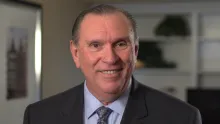
Randy D’Alessandro served as pastor for the United Church of God congregations in Chicago, Illinois, and Beloit, Wisconsin, from 2016-2021. Randy previously served in Raleigh, North Carolina (1984-1989); Cookeville, Tennessee (1989-1993); Parkersburg, West Virginia (1993-1997); Ann Arbor and Detroit, Michigan (1997-2016).
Randy first heard of the church when he was 15 years old and wanted to attend services immediately but was not allowed to by his parents. He quit the high school football and basketball teams in order to properly keep the Sabbath. From the time that Randy first learned of the Holy Days, he kept them at home until he was accepted to Ambassador College in Pasadena, California in 1970.
Randy and his wife, Mary, graduated from Ambassador College with BA degrees in Theology. Randy was ordained an elder in September 1979.
playlist
