
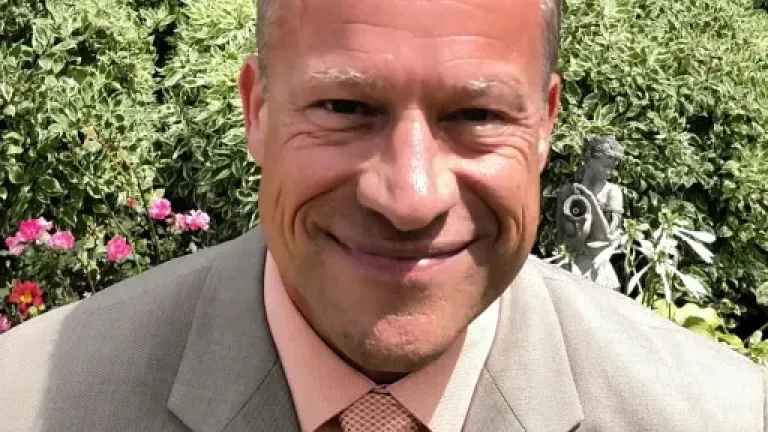

Jay Ledbetter
This transcript was generated by AI and may contain errors. It is provided to assist those who may not be able to listen to the message.
Well, the title of our sermon study today is Many Members, One Body. Many members, one body.
And we're going to begin our study today in the sermon by turning our focus onto the passage of Scripture found in 1 Corinthians 12 verses 12 through 26. So if you have your Bibles, you can turn there with me, or if you'd like to just listen along. This will be our passage of study that's going to be our focus today, 1 Corinthians 12 verses 12 through 26. We're going to turn our hearts and minds onto this passage as we more broadly turn our hearts and minds onto the great upcoming day of Pentecost in just a few weeks. This passage, very familiar passage of Scripture, Paul here, we will see is very effectively going to employ imagery to make his point to us today. I don't know if any of you have ever taken creative writing, whether in high school or perhaps in college. If you have taken any kind of creative writing, what they the teacher will propose is that you do exactly what Paul is doing here, and that is to, in your writings, use pictures, use imagery, use metaphors so as to create in the reader's mind's eye that imagery so as to help solidify whatever point that you're looking to put forth.
And so with that, we know it can be very effective, we see in the New Testament all these examples.
The New Testament is absolutely littered with imagery, pictures, illustrations to help us understand what is contained in the instruction. And again, in coming to 1 Corinthians 12 here, we see Paul is going to use the metaphor of the body in describing the church, and particularly the makeup of the church. So let's read this together. 1 Corinthians 12 beginning in verse 12.
Paul writes to the church then, he says, For as the body is one, and has many members, but all the members of that one body, being many, are one body, so also is Christ. Verse 13, For by one spirit we are all baptized into one body, whether Jews or Greeks, whether slaves or free, we have all been made to drink into one spirit. For in fact, the body is not one member, but many. Now verse 15, if the foot should say, because I am not the hand, I am not of the body, is it therefore not of the body? And if the ear should say, because I am not the eye, I am not of the body, is it therefore not of the body? If the whole body were an eye, where would be the hearing? So here's the imagery just littered here for us. If the whole were hearing, where would be the smelling? Paul asks. But now God has a hearing.
He has set the members, each one of them, in the body just as He pleased.
And if they were all one member, where would the body be? But now indeed, verse 20, there are many members yet one body. And here's some more imagery for us.
And the eye cannot say to the hand, I have no need of you, nor again the head to the feet, I have no need of you. No, much rather, those members of the body which seem to be weaker, are necessary. And those members of the body which we think to be less honorable, on these we bestow greater honor. And our unpresentable parts have greater modesty, but our presentable parts have no need. But God composed the body, having given greater honor to that part which lacks it, and there should be no schism in the body, but that the members should have the same care for one another. And if one member suffers, all the members suffer with it. Or if one member is honored, all the members rejoice with it.
Let's stop there. Well, again, perhaps one of the first things we notice in this passage of Scripture is this straightforward illustration here. It is clear, verse 12, the body, this is the imagery, is one and has many members, but all the members of that one body being many are one body. So straightforward metaphor here. In other words, it takes many different parts here to make up one body. And if you continue in the metaphor here, of course, there in verse 15 we read, he describes several of the body parts here. And yes, many members inevitably differ from one another. But the fact is that while they are different from one another, it in no way diminishes from the body's one basic unity. It's oneness. That's the truth. And that's essentially the thesis of this passage. While many, we are yet one.
And if you get that, you're going to understand what Paul is going to expound here in the remaining section. You know, I love imagery. It can help our youth understand it. There's so many beautiful things to attach pictures to and understanding a concept. It can certainly understand us. And this is easy for a child to understand. Any child by means of observation in the mirror can observe while they have one body. There's all different kinds of parts to that body.
Now, though, it's clearly obvious Paul is not merely giving us a class on human analogy, is he? Rather, his explanation here of this illustration is made clear to us in the second part of verse 12. Those final four words there. So also is Christ, he says. So also is Christ. And then he goes in to start mentioning Jews and Greeks and slaves and frees there. So again, this is the explanation of the illustration.
What he has just said concerning the nature of the body and its distinguishing parts, its oneness, its unity in the midst of diversity. So also is Christ, he says. Now, I don't know if those four words strike you as a little bit unusual or perhaps surprising here. If we didn't know anything about the body, excuse me, if we didn't know anything about the Bible and we know that Paul's using this imagery to describe the members of the church, we inevitably, if we were tasked to finish this sentence, we would have said what?
We would have said, so also is the church, wouldn't we? We, I don't know if we would have actually said, so also is Christ, because we know he's talking about the members of the church, right? Why would he say Christ with this? Well, perhaps the obvious answer, he substitutes Christ for the word church just to, in order to punctuate, in order to impress upon the readers then and now, the fact that it's impossible to speak about the church apart from Christ, okay? And if you think this out, you know, how does Christ make himself known to the world today?
The answer is through the members of the church, right? So it is that in order to accomplish Christ's work then, he had a flesh and blood body, right? That he moved around, accomplished his work. However, he's returned to the Father, and so Jesus today has a body that consists of living human beings, and that is the means. Us, his body today, is the means by which he's accomplishing his Father's work today, you see. And so when a person is brought to repentance and faith in Christ, they are not only placed in Christ, but they are absolutely also placed as members of his body, the church.
It's impossible to experience being brought into Christ without also being made a part of Christ's body, his church, okay? They're inseparable. If you are in Christ, you are in the body of the church, it's as simple as that, all right? And Paul is going to amplify that truth as he continues here in verse 13. Here it is, four by one Spirit, verse 13, we are all baptized into one body. Whether Jews, Greeks, slaves free, we have all baptized we have all been made to drink into one Spirit. So irrespective of background, irrespective of racial distinctions, whether there's any social distinctions, the unifying factor is this, is this, that we're all brought into by one Spirit, brought together and made to drink of that one Spirit, you see?
So therefore, we are one in this way. So as one body, we should never allow any schisms, any divisions, as we are carrying out the Father's work. So background, racial distinctions, social factors, there should be no division in this way because we are all baptized into one body. Here it says, the gift of the Holy Spirit, it unifies us, it binds us to Christ, but it also places us in his body, the Church. We are made to drink of that one Spirit with the purpose of being added to the body of Jesus Christ.
That's why we're here. That's why those who are able to be here physically are here.
Of course, our prayers and our we're bound by Spirit to those who cannot attend with us, either more on a permanent basis or those who aren't here today because of sickness, we understand that. But we are here when able because of this fact. The Spirit has not only joined us to Christ, it's placed us as part of the body, the Church. So at risk of belaboring the point, verse 12 and 13, it's just to say it's impossible to be placed in Christ without also being placed into his spiritual body, the Church. We are placed by the Spirit's power, made members of the body of the Church, and we're united in this way with each other.
All right. And just as a side note, this is most evident if you've ever traveled around to other Church of God or United Church of God congregations. Inevitably, you walk into that fellowship, and I know this happens to me. I'll meet someone. I'll say, oh, have we met before? And they'll say, no, I don't think so. But there's just something there that's so familiar to that person of that person. And what I'm experiencing in that way, I believe, is just two of God's children, and God's Spirit is linking us together in that way. Okay. So, all the differences—skin color, background, heritage, first generation, second generation—all those are not barriers to the fact that we are unified by God's Spirit in God's Church. This is the truth of Pentecost. Pentecost, God made his Spirit available to those whom he would call. He began his Church then. He established the New Testament Church. Pentecost represents God using his Church to operate as Christ's new body in this current age. And so, that is the explanation of the illustration here. Very important to set that foundation.
And that might be the easy part to intellectually understand that and understand the imagery here.
Perhaps the more difficult part is then to apply this understanding. Right? What is the application of this illustration? Once you begin to get into the application of this illustration, you begin to then see perhaps what we could call some of the challenges. How do I make this work? Okay, I understand we're all bound by one Spirit. Once we are brought, it's brought to Christ. We're also brought with these members. Yes, while I know that, there are inevitably, though, absolute challenges to bringing about unity in the diversity.
I can say there perhaps is no other circumstance, humanly speaking, that this group here would be brought together under one roof, except for the fact we were brought to Christ. I don't know with all of our diversity if we'd actually just naturally been brought together, perhaps, but we can look around and we can see there's many differences, much diversity in being brought together in Christ. Inevitably, there are challenges to this diversity, and that's what we see Paul giving himself to from verse 15 and following here, because there no doubt would have been some discouragement in the church at that time, discouragement within the body as they tried to bring forth unity amongst the diversity.
It all is in the application of this. Paul here, what we read in verse 15 forward, he's going to put forth and propose, while there might be more, there's innately two challenges that we will have in bringing forth unity amongst the diversity. Perhaps you might think of more. Paul here puts forth two challenges to being one body, yet many. Challenge number one that Paul brings forth, challenge number one is the challenge of feeling inferior, or we could say inferiority. That's the challenge number one in having unity, one body amongst many is the challenge of feeling inferiority. They don't need me. That's what he says in verse 15 and 16. Verse 15 again, if the foot should say, because I am not the hand, I am not of the body, is it therefore not of the body? Or the ear, if it should say, because I'm not the eye, I am not of the body, is it therefore not of the body? We've all heard this sentiment amongst each other, amongst our brethren, haven't we? Oh, I'm just the foot. I'm not the hand. Being the foot, I don't even know if I'm really part of the body. Being the foot, I don't even know if I'm really part of the body.
Just a lowly old foot. We've heard this. I feel unneeded.
It's expressed in different ways. If I didn't show up, I don't even know if anybody would notice.
We've heard that.
I don't even know if anybody would call if it were one or two weeks or three weeks.
And no doubt, this is nothing new. The Corinthian church felt this way. That's why Paul is addressing it. Some felt they weren't needed, they weren't important, and ultimately felt unsatisfied with the part of the body that God has given them. So let's think about this challenge of inferiority in the body.
Perhaps we could say that ultimately those feelings with those feelings might come the risk of being unhappy with the place or the gifts God has given us to exercise in the body. That's the risk, this challenge of inferiority. Perhaps feeling unhappy with where you are in the body, where God has placed you. I saw a little video played. It's one of the funniest moments that we can find ourselves in.
Especially it happens with a young child. They're opening up a gift. Have you seen this? Perhaps you've experienced this in your own family. And I don't know what they're expecting, but they're not expecting something else except for what they unwrapped, you know? And the disappointment in looking at this horrible gift, you know, it's not the right gift. It just begins to flow through them and they're fighting any kind of notions for it to show on your face. It's a little bit like this. You know, we've opened up the gifts, perhaps, that God has given us. And the risk is we're unhappy with what we've been given. And especially if we start looking around, oh, what did they give? What gift are they opening over there? You know, what gifts do they have?
And as we can acknowledge, it's very dangerous spiritual territory.
Inferiority can bring this about. Inferiority feeling. This is a challenge that Paul's putting forward as you think about your place in the body. And ironically, inferiority can actually be a source, an expression of pride. Those don't seem to go together very naturally. And because it sounds very humble to say, you know, my gifts are pretty insignificant. I really don't have much to offer.
It may, but, you know, at its core, intentionally or unintentionally, it might be more self-focused, right? And we know self-focus is where pride lives, right? Those inferior thoughts, expressions, intentionally or unintentionally, what we're doing is we're calling into question God's wisdom in what He's given to us. Because where did your place in the body come from? You know, our gifts, our place in the body ultimately comes from God. And if we're displeased with where we are in the body, if I'm displeased to be a foot, I'd rather be a hand. Well, who are we actually questioning in that circumstance? You see. And so if I say my gifts are irrelevant or unimportant, I have nothing to offer. While it may sound humble, we need to be careful that it isn't actually an expression of pride. And we won't turn there, but for your notes, Romans 920, for your notes, Romans 920, what does the clay say to the potter? You see, why did you make me like this? I'm just an old chunk of coal. Yeah, it's an old clay pot. I wanted to be a singer, but I can't sing a note. I wanted to be a leader, but my anxiety, it just won't even let me get up to to speak.
So there's some eyes there. I wanted to be.
So until, though, we accept who we are, what we are, and who we're not, perhaps, and what we're not, perhaps we're not going to fully be able to engage with God's purposes in our life, because we can spend an immense amount of time and futility thinking about those things that we're not, instead of understanding we're part of one glorious body. You see? And so the best response, if you're feeling inferior, is to go to God and say, first of all, thank you for allowing me to be in the body. Even if I'm that toenail, you know, I pray that you don't clip me off. Thank you for being in the body, Father, but I do want to be a contributing factor to the body. So would you reveal to me the gift or the gifts that you've given me?
Help me to acknowledge and see it, and then give me the the wisdom to know how to to be the best part of this body I can be. Help me to see areas that I can help you as I've been given to you through your son Jesus Christ and placed into this body, this wonderful part of God's Church. And just know if you make that prayer, and I want you to make that prayer this year, and I want us to be a well-chiseled body this year, more so than ever, if you make that prayer, just understand your part may look different than everyone else's, and that's okay. You might be in place to fill in these gaps, and I'm in this place to fill in these gaps, but we need it all. We need everyone. And God did this purposely so that no individual member would be able to be the totality of the body. You see, no individual member would be able to be the totality of the body without the rest of the body. And verse 15, 16, 17, speak to these things. The foot may well be discouraged in its inability to exercise complicated functions of the hand. There, verse 15, yes, because I'm not the hand, though, can he then say, am I not part of the body? It's a silly thought here, but this is what people were saying. I don't think I'm an important part of the church, this fellowship. I'm not the hand. Yeah, you're not the hand, but you're the foot, right? Let's take a moment here. We each have feet, right? I can assume that here. We're all part of the body. We have our feet are part of the body. Is the foot, let's just ask the question, is the foot inferior to the hand? Well, let's say, let's challenge this. Let's explore this theory. If you have something in your pocket right now, or if you have something in your purse, I want you to try to get it with your foot, if you would. Well, never mind. Don't do it. Do it later. Do it at home. Neil was about to take off his shoes there. That's going to be difficult. Yes, the foot is going to be limited in being able to take the car keys out of the front pocket, right? So are the feet worthless then?
Okay, well, let's explore that. You may be able to get the keys out of your pocket with your hand, but now without your feet, go and try to get out to the car, you know, to drive the car.
And you know, you may be able to drag yourself out there. I don't know without your feet, but you're going to find very quickly that you're going to have great difficulty getting down the road any measure without your feet, you see. It's ridiculous. So why do we feel inferior? Don't feel inferior. Never feel inferior with whatever part of the body you are. Never.
In the same way, he goes on, verse 16, he compares the ear and the eye. If the ears should say, because I'm not the eye, am I not part of the body? Is it therefore not part of the body?
What's interesting here is to see this relation. So he's asking these questions with the foot and the hand and the eye and the ear. And we could actually say that these body parts are actually, they work closely with each other, we could say. And I found this quote, this is from a commentator with regards to this passage, quote, in thinking about getting along with each other, quote, we're prone to envy those things. No, excuse me. We're prone to envy those who surpass us a little rather than those who are patently in a different class, unquote.
And I think that's true. We're prone to envy or compare ourselves, our worth, to those who are maybe in like areas of the body and surpassing us in that way. So inevitably, just in bringing it personal, you will have pastors not comparing themselves, per se, to members, but they're at risk of comparing themselves to other pastors, you see.
And you have this in different areas, speakers and speakers. The flower makers, you know, all those as often envy comes in those areas where you're just not, you're just not, you're closer to in that part of the body of the church. So that's something to really, it's a call out to be careful of. Ears and eyes, to be careful of.
Typically have a problem with each other because they're in close proximity with each other, you see. But there should be no schisms, no divisions in the body of the church. God ordained this diversity. And so Paul goes on. Let's just say God decided to do it a different way. What if there was no diversity? Paul asked. Verse 17. What if, verse 17, if the whole body were the eye? Well, then logically, where would be the hearing, he asked. If the whole were hearing, where would be the smelling, he says. So if we had just a bunch of, if I was looking out here and each of you were just these big gloops of eyes staring back at me, you know, with big irises, and some of you might be blue or brown and green, perhaps, how would we as a congregation sing, we could say, just a bunch of eyes, right? It's ridiculous. It really is. When you have, when you begin to think about when those feelings of inferiority creep up in you, I just want you to chuckle to yourself and say, Father, this is ridiculous. Banish this from me. I'm part of your body. I'm valuable. Christ makes me valuable.
Don't let me compare myself to others.
And so the great conclusion of this first challenge is there in verse 18 and 19. Verse 18 and 19. But now God has set the members, God has done this, each one of them in the body, as God pleased. God did this. And if they were all one member, where would the body be? If they were all the same, he says, these are good reminders. These are good reminders. So inferiority, that's the first challenge. Perhaps that connects with some of you today. They don't need me there. Well, Paul is about to bring up the second challenge in this passage. And of course, some of you are ahead of me. It's the opposite of inferiority. It's superiority. That's the second challenge in bringing unity amongst diversity. So rather than they don't need me, it's, I don't need them. That's the phrase that comes with superior thoughts.
I don't need them here. And so Paul pivots in verse 21 and says it this way, verse 21. And so the eye cannot say to the hand, I have no need of you, nor again the head to the feet, I have no need of you. So very significant parts we could say, very important parts of the body, very evident we could say, the eye and the head, just naturally those are very evident, significant parts of the body, well, they can't speak to the hand in this way, and they can't speak to the feet in this way. Right?
It's clear that those in the Corinthian context, some felt with certain gifts, they were so important that they were beginning to feel like they didn't have any need of the other body parts. But Paul is saying not so. Again, try to get the keys out of your pocket with your eyes. Right? And we could be a bunch of heads, okay, and maybe we could roll out to the parking lot, but we're not going to be able to get in our cars. Right? So it's just a ridiculous picture here.
Again, why is Paul using this illustration? Well, he's using the most simplistic, extreme illustration to drive home the fact that the distinctions amongst those whom God has called into the body, they are distinctions in function, not value. These are distinctions in function, not value. Always remember that. So there can be no superior feeling, and there can be no inferior feeling. And Paul is going to drive home the point here. Um, verses 22 and 23, verses 22 and 23, no, much rather. Those members of the body which seem to be weaker are necessary. So he's speaking to the head, he's speaking to the eyes, you know, those who seem to be weaker are necessary. And those members of the body which we think to be less honorable, on these we bestow greater honor, and our unpresentable parts have greater modesty. You see, so let's think about this.
Very interesting, if you think about this by this whole, this whole imagery that Paul is putting forth. Some of the parts that get noticed the most in the body, we could say perhaps are not even most crucial to the function of the body. If an athlete is performing some athletic maneuver, you're going to notice maybe some bulging muscles in the arms, right, and you're going to notice some bulging muscles in the legs. But in fact, we can actually live without legs.
We can live without arms. We can't live without, let's say, lungs, right? But so much attention is put in on these outward parts, and really you don't think about the lungs until they're not performing as they should or could. But most of the time, you don't even give a second thought to these things which are not visible, not as visible, right? But again, you can actually live without your legs. You can't live without your lungs. The quote seemingly weaker parts are actually the most necessary, the internal organs, if you will.
Inevitably, those parts which don't get the most notoriety or attention. Again, this is not a class in human anatomy. This is a lesson in the body of Christ.
The parts of the body which seem to be weaker are necessary.
You know, if you think about the things that were able to replace or reproduce in terms of prosthetics and surgery, most of those things are external and may be replaced. But as soon as you start getting into the heart of the matter, we discover how much more indispensable those things are. The less notable parts of the body of Christ, I propose, and Paul proposes, are absolutely necessary. What would the body be without them? So, we can't neglect them. And, you know, if you are ahead, if you're an eye, how dare you? You know, you not give honor and respect to those parts that aren't seen. You'd be nothing without them, you see. And they need you, too. You don't need to feel ashamed with the gift God's given you. No, you're that part of the body. But recognize that God has built it as such where it takes all members, those even less noticeable, to have a successful operating, powerful body. So, though, it does stand then for the outward parts to make sure those inward parts are protected and taken care of. And this is what Paul is saying here, the things which we attach the most value to sometimes. Maybe just unintentionally, we perhaps are not the most valuable. They're just a part. But ultimately, they can be replaced, perhaps even easier. The speakers, the singers, the members up front, you know. But there is some very indispensable parts of the body unseen and unnoticed, and they're holding our fellowships together.
One example, faithful prayer warriors, you know, man, faithful prayer warriors, holding our body together. You know, and in the end, you know, it really gives credence to that phrase, the last shall be first, you know, and those who perhaps think they're first will be last, you know. Again, don't be ashamed of the position you're in. Do it to the best of your ability, but just to understand you're one part of many members. And in most of those exterior parts, sometimes come and go, right? It's the indispensable parts, those inward parts which keeps the body functioning. So honor them, and we'll protect them.
Again, that's verse 23 again. Those members of the body, which we think to be less honorable, on these we bestow greater honor. And that's why when you see a good, when you see someone that's an exterior part of the body, they're constantly diverting attention to those who help them.
You know, I may stand at a feast of tabernacles, you know, and on the microphone, it's so ridiculous to even, for me to even accept gratitude. Like, oh man, boy, this feast was great.
I say I received that thank you, but I just know, man, there's just no way, all these different parts. And if you've been in any kind of exterior position of where you get more recognition or more eyeballs on you, you know that to be the fact. It's the absolute fact. And so we want to honor those parts and always always honor them every chance we get to those parts that aren't seen.
They deserve our honor that we give them. And then verse 25 and 26, with all of this that we've said, then it goes without saying, but I'm glad Paul wrote it here, verse 25, therefore there should be no schism in the body.
But that the members should have the same care for one another.
I fill in your gaps, you fill in mine. And if one member suffers, of course all the members suffer.
Or if one member is honored, all the members rejoice with it, you see. See how just beautiful that is when we have the proper perspective of these things, harmony in the body. Yes, we are uniquely individual and doing our part, but we are one. We are one in Christ.
Well, as we begin to conclude here, you'll see that Paul finishes this chapter with a list of gifts. Perhaps we'll go into these sometime in the future, verses 27 through 31.
Now you are the body of Christ members individually, verse 28, and God has appointed these in the church. So God appoints these, and you have the list there. And then the rhetorical questions are beginning in verse 29. Are all apostles? No. Are all prophets? No. Are all teachers? No. Are all workers of miracles? No. Do all have the gifts of healing? No. Do you all speak with tongues, interpret in that way? No. But earnestly desire the best gifts. And here at the conclusion of these things, Paul writes, and yet I show you a more excellent way. So this is the more excellent way, the perspective in which Paul has given us here. Unity is not found in displaying the same gifts, no, but unity is understanding that you and I are part of one body with whatever gifts God's given us. And just know that there is a work for Jesus Christ and God the Father that no one but you can do. So important. You're so unique, beautifully unique, and God's given you beautiful, unique gifts to His glory. So pray that God give you that understanding and help you be a wonderful contributing part to the body. Let's discover and fulfill our God-given part of the body. Let's look out for one another. Let's care for one another. And may the power of the Holy Spirit baptize you and I into Christ as many members, yet one glorious body.

Jay Ledbetter is a pastor serving the United Church of God congregations in Houston, Tx and Waco, TX.
