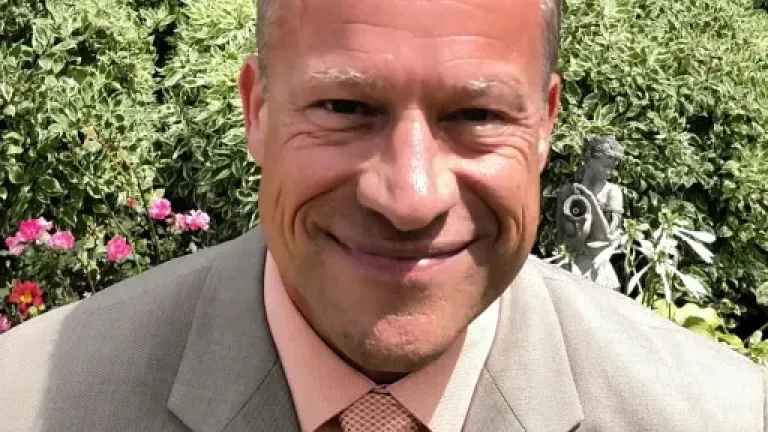

David Metzel
This transcript was generated by AI and may contain errors. It is provided to assist those who may not be able to listen to the message.
When Ethan wasn't able to fulfill the sermon, I thought what I would do is pick up on 1 Corinthians 12. I had started that in the end of November when Mr. Delisandro wasn't able to be here. So this is our absent sermon. And I thought it would be helpful to finish that one up or come close to finishing it up. And so we'll pick up again in 1 Corinthians 12 on spiritual gifts.
One of the reasons I felt this is necessary is there's a lot of talk about spiritual gifts. And I'm not always sure how much of it is beneficial or understanding. So I thought what we'd do is read what the Apostle Paul, who's the one that wrote about this, and he wrote about it in a few places, to gain understanding about this important subject. Because it's something we all need to know and we all need to understand.
Last time we went to... we got through... we just finished reading verse 11, but let me pick it up again just to start again. In verse 4, just to give our context, to get ourselves moving, he said, There are diversities of gifts but the same spirit. And please notice the words that are used here. There are differences of ministries, different gifts, different ministries, but the same Lord. And there are diversities of activities, but it's the same God who works all in all. So he's talking about gifts, ministries, and activities. And that's how the chapter is organized. Notice another thing, too. There are some that... There was a discussion among some about whether the phrase in Matthew baptizes the name of the Father, the Son, the Holy Spirit, whether those three are mentioned in many other places. Well, they're mentioned in many other places, and here's one. Notice he said, but there's a difference of gifts, same spirit, differences of ministries, same Lord, differences of activities, same God. Here's the Spirit, Lord, and God who works all in all. But the manifestation of the Spirit is given to each one for the Prophet of all. And that's the important thing to see in the spiritual gifts here, or one important thing. That God gives the Spirit to members of his body to benefit the whole body. And that's how he's going to emphasize it. And then we went through... For one is given the word of wisdom through the Spirit. We went through that in detail. Another, the word of knowledge by the same Spirit. To another, the same... To another, faith by the same Spirit. To another, gifts of healing by the same Spirit. To another, working of miracles. And by the way, that word miracle in Greek is dunamis, power. Power to do things and accomplish things. To another, prophecy. To another, discerning of spirits. To another, different kinds of languages or tongues. To another, the interpretation of languages or tongues. And we got to verse 11. But the one and same Spirit works all these things, distributing to each one individually as he wills. Everybody who's got the Spirit is also given gifts to be able to serve the congregation. Or serve others. And the gifts are given individually. Let's notice that. And also, as he wills. It's according to God's will. Which we'll emphasize and Paul will emphasize as he goes through this chapter very often. In 1 Peter, chapter 4, verses 10 and 11. Two verses that I have in mind just about every day, I would say. I'll read it to you from the NIV, 1 Peter, chapter 4, verses 10 and 11. Just to give a little different wording that will help us maybe comprehend things a little bit more. 1 Peter, chapter 4, verses 10 and 11. I'll quote it from the NIV.
Each one should use whatever gift he has received to serve others. Now that's as plain as can be. Each one, because each one, Paul said, the gifts are given individually. So each one has a way to serve. Each one should use whatever gift he has received to serve others. Faithfully administering God's grace in all its various forms.
It's God's grace, and we're administering God's grace by serving in all the different forms. I was noting to Debbie Czepicek, just beforehand, that so many people make this congregation work. And they all have different things that they contribute. And they help each other out, and they back each other up, and they work together absolutely beautifully. It's so inspiring. So faithfully administering God's grace in its various forms. If anyone speaks, he should do it as one speaking, the very words of God. That's our goal. That our words are just the same as the very words of God. That's a pretty high goal, isn't it?
If anyone serves, he should do it with the strength God provides. And that's one of the important keys. It's got to be God's strength that enables us to serve. And God's strength that we look to.
And so oftentimes, before I'm writing something or speaking, I'll go over this. If anyone's, I'll go over God. I'll say, if anyone speaks, I don't speak with the, it says in the King James, the New King James was the oracles of God. That'd be the same words God would have, of course, individual personalities and all. And if anyone serves, he should do it with the strength God provides. God provides the strength to serve.
So that, in all things, God may be praised through Jesus Christ. To Him be the glory and the power forever and ever. Amen. That's what Peter wrote. Paul wrote to Timothy, I'll just read it to you. It's 1 Timothy 1, 6 to 7. And I thought the New American Standard Bible would help us understand that. 1 Timothy, sorry, 2 Timothy 1, 6 to 7. For this reason I remind you to keep afresh the gift of God which is in you through the laying on of my hands. Now that could be baptism, it could be ordination, or maybe it's both. For God has not given us a spirit of timidity, but of power, dunamis again, and of love and discipline.
Love is benefiting others, not a spirit of timidity, but of power, and love, and discipline, of course controlling ourselves. Those led by the Holy Spirit will not be competing with others, but they'll be using their God-given gifts to serve cooperatively. Whatever that might be. And God's gifts are given individually, as we noted, as He wills. Okay, let's go on a little bit more here, verse 12. For as the body is one and has many members, but all the members of that one body being many are one body, so also is Christ. So Paul uses the analogy of a body, and it all works together to accomplish. And those led by God's Spirit will be one body.
The Spirit's in there. They'll be that affinity. They'll be that closeness. He said in verse 13, For by one Spirit we were all baptized into one body, whether Jews or Greeks, whether slaves or free, and they have all been made to drink into one Spirit. God's people are to drink of one Spirit, and that unites them in one body.
And it's the Spirit that puts us in there, being baptized by the Holy Spirit. Of course, you have water first. But you're baptized but you have water. But it's the baptism of the Holy Spirit that makes somebody a member of the body of Christ.
For by one Spirit we were all baptized into one body, whether Jews or Greeks, whether slaves or free, and they had been made to drink into one Spirit. In fact, the body is not one member but many. This is what it is to be. A body is not one member but many. Paul makes this point in Romans 8, I think it's worth noting that. Romans 8 and 9. Romans 8 and 9. He says, Romans 8 and 9, But so then those who are in the flesh cannot please God.
That's verse 8. Verse 9. But you are not in the flesh, but in the Spirit, if indeed, the Spirit of God dwells in you. Now if anyone does not have the Spirit of Christ, he is not his. A Christian is one who has the Spirit of Christ. Somebody who doesn't have the Spirit of Christ is not his. And therefore, can't be technically call himself a Christian. But if Christ, and notice it's the Spirit in there, and then it's Christ also, because the Spirit represents Christ and reflects Christ, it enables Christ to dwell in us through the Spirit.
And if Christ is in you, the body is dead because of sin, but the Spirit is life because of righteousness. So the old man's dead, and we're trying to keep him in the water, under water. And he pops out from time to time. But we're working, and if Christ is in you, the body is dead because of sin, but the Spirit is life because of righteousness.
Skipping down to verse 14, For as many as are led by the Spirit of God. It's the Spirit of God that leads them. It doesn't drive them. The Spirit's in front, and we go toward it. We strive to follow it. For as many as are led by the Spirit of God. It leads them into all the right paths. These are the sons of God. Look also where Paul wrote of this in Ephesians.
Ephesians. This is an important part of Paul's teaching, and we want to understand it. Ephesians 4. There is one body and one Spirit. Just as you were called in one hope of your calling. Notice all those ones. There's one body, and there's one Spirit, and there's one hope of your calling, the hope of eternal life. There's one Lord, there's one faith, there's one baptism. That's the one with the Holy Spirit that I mentioned.
One God and Father of all, who is above all, and through all, and in you all. Verse 7, But to each one of us, grace was given according to the measure of Christ's gifts. Each one of us! Grace was given according to the measure of Christ's gift. The gift is from Christ, and it's for our benefit. Okay, let's go back to 1 Corinthians 12 and verse 15. If the foot shall say, because I'm not a hand, I'm not of the body, is it therefore not of the body?
Now, the Corinthian brethren, one of the sub-themes of this book is fighting division. They were divided within the congregation there. And he asks at the beginning of the book, is Christ divided? And I hear their divisions among you. So he's trying to point out that they should be working together. But if the foot shall say, because I'm not the hand, I'm not the body, in other words, this is envying a different position. Is it therefore not of the body? And if the ears should say, because I'm not an eye, I'm not of the body, is it therefore not of the body?
If the whole body were an eye, wouldn't that be scary? Where would be the hearing? If the whole were hearing, where would be the smelling? But now God has set the members, each one of them, in the body just as he pleased. This means we should look to God as to where we are.
And if he wants to move us, he can do so. And if they were all one member, where would the body be? But now, indeed, there are many members but one body. You know, the human body was built by God.
He was the creator of it. And today, the Church is being built by Him, too. When Christ wants something done on earth today, He does it through His spiritual body. And I distinguish that from the corporate body. The spiritual body, the one that's linked through the Spirit. We aren't linked through a computer. We're linked through the Spirit. And it's important to keep that in mind. Every part of Christ's spiritual body is subject to the head. It's striving to follow the head, to go toward what He wants.
And anything, speaking technically, anything that's not subject to the head, you have to wonder, is it part of the body?
If it's not subject to the head, then it's not going to be part of the body. The human body is one of the most... I could take it to be marvel... I'm sure I'm not the only one... at how the body is put together to accomplish things. It's just absolutely astonishing. And the more you think about it, the more you recognize there's a great creator up there who put it all together. And he's working on the spiritual body now. He got the physical body going, now he's going to get the spiritual body going. Okay, verse 21. And the eye cannot say to the hand, I have no need of you. The eye doesn't look down on the hand. Nor again can the head to the feet, I have no need of you. Imagine without your feet.
You'd be defeated.
No, much rather, those members of the body which seem weaker are necessary. Feet are necessary. Now, it's interesting.
Most of us, we let our head and our hands appear as they are, but our unpresentable parts usually are covered. Feet are not necessarily beautiful, but absolutely necessary. And we honor them by buying lots of shoes for different occasions to be able to wear them. We don't do that for a hell of a making a pair of gloves or two. But the feet, we were to protect. I was going to tell you about the computer yesterday. The HP guy, I asked the HP guy to come over because one company couldn't fix it. So he came over and he was wearing steel-sewed shoes. He says, sorry, I got these big boots on. He said, but there's a certain place he has to go where he worked in there, and in there you have to wear steel-toe boots. It's a requirement. So he comes in with steel-toe boots when he was on the same day coming to my house. He said, the motherboard was the problem. That's pretty fundamental, but they're going to fix it. It should be fixed fairly quickly. Much quicker than what I've had so far. So I'm grateful for the help. But we buy all these different shoes, some for work, some for dress, some for things. We try to have a nice-looking pair of shoes, and we spend money on our feet. Not like we do our face. Well, not most people. And I remember Darlie Parton says, it takes a lot of money to look this cheap.
Stuck into mind somehow.
And as I say, we honor it with good shoes and good socks and take care of it. And that he said, in those members of the body which we think to be less honorable, on those we restore greater honor, and our presentable parts have greater modesty. But our presentable parts have no need, but God can pose the body, having given greater honor to the part which lacks it. That there should be no schism or division in the body. But that the members should have the same care for one another. That's the way the human body is. We have the same care.
In our body, our mind tells us we've got to be careful of our foot because it's hurting, or whatever is hurting, or aching. It's a unit. And that's what the spiritual body is to be as well. And if one member suffers, all the members suffer with it. When you're sick, the whole body's down. You don't leave your nose and throat at home. The whole body's down. And if one member's honored, all the members rejoice with it. And he said, now you are the body of Christ and members individually. The body of Christ is made up of individual members, worked by God to accomplish His purpose. And He's not finished with that job yet, either. He's still got some work to do on us, and to get us where we need to be. Now, verse 28. And God has appointed these in the church. Now, if you take a look back, it says, there are diversities of gifts. Verse 4. But the same spirit. Verse 5 says there are differences of ministry. Now He's going to talk about differences of ministry. And halfway through this section, He's going to say, after that, He's going to talk about activities. Differences of ministry, and there are different diversities of activities, but it's the same God. So He says, And God has appointed these in the church. God's appointed. First, apostles. Second, prophets. Third, teachers. After that, miracles, dunamis, people whom God gives power to accomplish things. That can be many things. Then gifts of healing, helps, administrations, varieties of languages or tongues. He's put it in there that way to accomplish it in that way. So He says, first, apostles. Now we don't see anybody operating in that role today, that function today. That is, an apostle is the personal representative of Christ, which I mentioned in Matthew 10, going over that, that He had chosen these and He called them apostles, people He specifically sent. Others who help out do things, but the apostles, as I said, we don't see anyone fulfilling that function today. And He says, second, prophets. Those are the prophets of the Old Testament. He says the church is built on the foundation of the apostles and prophets. And so the prophets were part of the Old Testament, mostly, not completely. And then also today we use the term prophet in terms of speak or proclaim God's words and teach it. And then He said, third, teachers, not preachers, teachers, to be able to teach, to have the gift to be able to teach, the gift to be an apostle, the gift to be a prophet, the gift to be a teacher is a wonderful thing to explain God's word and to amplify it and make it understandable. After that, He said these are the ministerial responsibilities He put in there. Let me just, while I'm on that, I should go over to Ephesians 4 once again, and another part of that same book, the same chapter, actually. Ephesians 4 and verse 7. After going over this, but to each one of us, grace was given according to the measure of faith. And He says, therefore, He says, when He ascended on high, He led captivity captive and gave gifts to men.
Now, this is a parenthetical thought, verses 9 and 10. Now this, He ascended, what does it mean that He also first ascended into the lower parts of the earth, He who descended is also the one who ascended above all the heavens, that He might fill all things. So He's talking about the prophecy back there, which we went over and went through Ephesians, but He says He gave gifts to men. Skip verses 9 and 10 and verse 11. And He Himself, Jesus Christ Himself, gave, these are the gifts He gave, some to be apostles, some prophets, some evangelists, some pastors and teachers. The pastors and teachers are one person. For the equipping of the saints for the work of ministry. They were to work together to equip the people God calls out to be able to serve.
That's what the works of ministry is. For the edified, the building up of the body of Christ, till we all come to the unity of the faith and the knowledge of the Son of God to a perfect man, to the measure of the stature of the fullness of Christ. You know, it's interesting, He gave those gifts and it says, till. You mean it'll be over?
We have to have a ministry now while we're in the flesh. When we're all changed, Christ is a ministry to all of us, and we'll all be brethren. We'll all work together beautifully. That's the church! Now, how He's going to structure that? I don't know. But He said, He gave these gifts to equip the saints for the work of ministry, to build the body of Christ, till we all come to the unity of the faith. The unity of the faith is something that's still in front of us.
And to the knowledge of the Son of God, to have the full knowledge to know how to live, as we heard in the first message, how to live God's way of life in all circumstances. That's a big job, isn't it? To the knowledge of the Son of Man, to a perfect or a mature man, to the measure of the stature of the fullness of Christ. That's what we're to be about. And going on from there. Okay, back to 1 Corinthians 12. He said, those are the ministerial offices. Then He said, and after that, miracles, power to do things, power to accomplish. That can be many different things. And then administrations. I like the word for administrations in Greek. It's kubernesis. And the reason I like it is I had a classmate in college named Kubernot. And I wonder if that was the name, because it's the origin of the name. And it means a ship's pilot. Somebody is a ship's pilot. And you know, a ship's pilot, he's guiding you through waters that you don't know, but he does.
And he can get you through it. Watch out for there. There's a rock under there. Watch out for this. And he can get you through a ship pilot. God gives people who have these abilities to say, here's how you steer these waters. A ship's pilot guides through rocky waters. He knows well. That's invaluable. And then helpers. How many people in the congregation help? I'm very encouraged, and I'm not the only one. Many members have told me how they are encouraged, how people help. They work in and make things run smoothly. So it says after that, miracles and gifts of healing, helps, administration, varieties of tongues. Now, let me show you a Jewish New Testament commentary on this. But there's a little problem in it. It's not accurate. So please notice it. Jewish Testament New Commentary on this section. God has determined several distinct ministries. First, the most important group are emissaries, those sent by God to proclaim the gospel and to form new congregations of believers. Second are prophets who speak for God. Third are teachers who deepen believers' knowledge of God's truth. Then, after them in importance, are those who work miracles and those with gifts of healing. If you find something uncomfortable in there, he's talking about the most important of the apostles, and then less important. Is that how God looks at it? Less important? No way. Paul's focus in this chapter is on function, not importance. Apostles have one function. Prophets have another function. Teachers have another. Helps have another. Administrators have another. They're all different functions. Important is not the issue. The issue is how Christ has placed members in his body. I'd like to ask, you know, automobiles have one steering wheel and four tires. Which is more important? It's a foolish question. They're all necessary for the car to run. You can't say one's more important than the other. The whole thing has to be together there to work. And it's the same with the human body. Eyes or feet? Which are more important? Well, you know, if your feet don't work, your eyes aren't going to see much. Which is more important? Your brain or your reproductive organs? Which is more important? Your lungs or your heart? I mean, they're all important. Every single part. And that's his point here. And that's how it's framed to be together. For the car to operate successfully, both functions, though quite different, are equally important. And the same for the body. If we get something wrong in any part of our body, it affects the whole thing. So this is Paul's point, overall point, in 1 Corinthians 12. All the parts of the body are necessary. Paul listing first, second, and third suggests a hierarchy.
But they're servants who God chose to lead for the benefit of the whole body. And it seems that the Corinthians saw status or importance in spiritual gifts. They said, well, I'm this, therefore I'm great. Or I'm that. But the body needs all these different parts. And Paul's trying to get him down to function and service rather than self-importance. That's what Jesus taught, and that's what Paul taught. God arranged the body to be a smoothly working spiritual unit to benefit everyone it touches. And then he says in verse 29, are all apostles? Imagine a church full of apostles. Who'd preach? Is it my turn yet? Are all prophets? Are all teachers? Are all workers of miracles? Do you know this? Do all have gifts of healing? Do all speak with languages or tongues? Do all interpret? Imagine having a church full of interpreters. It just wouldn't work. Then he says in verse 31, but earnestly desire the best gifts. Not wrong with desiring the best gifts. And yet, I show you a more excellent way. He's going to show a more excellent way that's above even what he's already talked about.
Let me switch over my notes. I'm covering chapters here, so I'm switching notes.
It's amazing to me that when I had trouble with my computer, I already had notes. Already together. Then we come to Jesus, but earnestly desire the best gifts. Okay, not wrong to desire gifts. And yet, I show you a more excellent way. There's a higher point to all these things of spiritual gifts. We're still talking spiritual gifts, but we're talking about it in a more excellent way. And this is called, 1 Corinthians 13, it has been called the love chapter.
Of course, you could call a lot of sections of the scripture the love chapter, but this one specifically mentions it, so it kind of sticks out. Chapter 13, verse 1. Though I speak with the tongues of men and angels. What languages do angels communicate in? I have no idea. Though I speak with the tongues of men and angels, but have not love, I become a sounding brass or a clanging cymbal. Do you ever notice the characteristics of a lot of really heathen worship, his classing cymbals and blaring trumpets?
Noise. If you go back to their thinking behind it, they say it's to drive away the demons. Oh yeah, noise is going to drive away demons. It's too bad. Then I wonder if your service is noise, or your approach is noise, how will they ever hear what's called God's still, small voice? God told Elijah. Look around you and listen. Look at the world out here. Satan's world loves noise. It loves noise. You go into a restaurant, the older we get, the more we ask him to turn the music down. They get it banging away, thinking you'll buy more, maybe you will, or maybe you'll eat quicker and go.
I don't know. God's people are known for peace. And peace, by definition, would be a lack of noise, wouldn't it? Peace. Back in Folkston's Club, before I went to Ambassador College, they used to say, if you're not speaking to benefit other people, it's just noise. And that's very true. Of course, I was built on this scripture. He says in verse 2, And though I have the gift of prophecy, now that's quite a gift, and understand all mysteries. The Bible has many mysteries there in it that not everybody understands.
The world doesn't understand any of them, I don't think. And understand all mysteries. This is head knowledge. And all knowledge. You know, the Greeks loved to seek knowledge. That was important for them. So he says, if I had all knowledge, and though I had all faith, faith even, so that I could remove mountains, but have not love, selfless love, I am nothing. Languages, prophecy, mystery, knowledge, faith, are useless if it's used to exalt oneself. Understanding knowledge is not conversion. I've seen many people in the Church, they understand the Sabbath, they understand holy days, they understand tithing, unclean mates, identity of the US and Bay, the gates of their enemies.
And this knowledge, having some of that knowledge, I've known people who focus on totally saving their own skin because they thought the prophecies are coming, the gates are going to be in trouble, therefore I better make certain steps. It's really amazing. That's not godly love. Even knowledge of Christ's second coming come, arriving. And even technical knowledge of the Kingdom of God. Look what he wrote to them in chapter 8, 1 Corinthians chapter 8. 1 Corinthians chapter 8. Now he's going to approach these Corinthians who love knowledge and think they're more knowledgeable than other people, and he's going to bring them down to size a little bit before it teaches them.
He said, 1 Corinthians chapter 8 verse 1, Now concerning things offered to idols. They had a debate there. Should you eat meat offered to idols or should you not? One side said yes, the other side said no. Now concerning things offered to idols, we know that we all have knowledge. All right? Now that's putting himself on an equal footing with everybody. You have knowledge? I have knowledge. Okay? That's a nice way to start. We all have knowledge.
Knowledge puffs up. But love edifies. The margins say knowledge makes you arrogant, and love makes you want to help serve others. So knowledge does puff up. You find people who have a lot of knowledge, they tend to be very proud of it. Knowledge puffs up. Love, that motivation, edifies, tries to serve others. If anyone thinks he knows anything, he knows nothing yet as he ought to know. What a statement from the Apostle Paul who thought he knew everything before he was converted.
If anyone thinks he knows anything, is there anything you know that God couldn't add to or help you to see at a different level? Or see it from a different perspective? If anyone thinks he knows anything, he knows nothing as he ought to know. He wanted to say this before he got into the teaching. But if anyone loves God, verse 3, this one is known by him. Okay. Then he started teaching there, and he could do that, begin to accomplish it. Look at Matthew 7, if you would, please.
Matthew 7. We know these verses pretty well, I believe. I think it's helpful to review them in this context. Matthew 7, beginning in verse 21. Here are people who may have knowledge, and they think they know the Lord. He said in Matthew 7, verse 21, Not everyone who says to me, Lord, Lord, shall enter the kingdom of heaven, but he who does the will of my Father in heaven. They call him Lord, which is a certain knowledge. He is the Lord. But they don't do the will of my Father in heaven.
Many will say to me in that day, Lord, Lord, have we not prophesied in your name? We preached, we had knowledge. You don't preach if you don't have any knowledge. Cast out demons in your name. You have to have certain knowledge to do that. And done many wonders in your name. Done all kinds of things. And then I will tell them, I never knew you, depart from me, you who practice lawlessness. They call him Lord, but he's not their Lord. They're lawless.
They aren't following God's way. Okay, back to 1 Corinthians 12. And though I have the gift of prophecy, and understand all mysteries and all knowledge, and though I have all faith, even trust in God, if based on selfish motives, is useless. Some folks are very eager to tell you how much they trust God. Others tried to hold God to a promise that he never promised what they think he did. We know he says, asking it will be given to you. He said to the apostles, you did not choose me, but I chose you, and appointed you that you should go and bear fruit, and that your fruit should remain, and that whatever you ask the Father in my name, consistent with my will, he may give it you.
John wrote in 1 John 3, 22, 23, and whatever we ask we receive of him, because we keep his commandments.
And do those things that are pleasing in his sight. I see those two things as separate. Distinct, not separate, but distinct. Even the commandments, the instructions, and then do those things that are pleasing in his sight, is going a little further still. And this is the commandment that we should believe in the name of his Son, Jesus Christ, and love one another as he gave his commandment.
James wrote, you ask and you do not receive, because you ask with wrong motives that you may spend it on your pleasures. So even faith, he said, so that I could remove mountains, but I have not love, I am nothing. And though I bestow all my goods to feed the poor, and though I give my body to be burned, but have not love, it profits me nothing. It profits me nothing.
You know, goods to the poor is a human idea of service, and it can be done for completely selfish reasons. If you look at Matthew 6, and it's amazing how when we go through Paul, you flesh it out in the Sermon on the Mount. It's kind of amazing. Matthew 6, verse 1, he said, Matthew 6, verse 1, Take heed that you do not do your charitable deeds before men to be seen by them. Otherwise, you have no reward from your Father. What do we do today? We do charitable deeds to build our resume. And we encourage our youth to do that. Now, it's a good thing to do charitable deeds, but it has to be with the motive of God. Therefore, when you do a charitable deed, do not sound a trumpet before you, as the hypocrites do in the synagogues and in the streets, that they may have glory from men. Assuredly, I say to you, they have their reward. But when you do a charitable deed, do not let your left hand know what your right hand is doing, that your charitable deed may be done in secret. And your Father who sees in secret will Himself reward you openly. Reward you openly. So, if we give our goods to the poor, that's good, but if it's the wrong motivation, it's not going to work. And you give your body to be burned, martyrdom. You know, that seems like a pretty big sacrifice to make. Have you read many times that various protesters in Arab countries and other Oriental places burned themselves to death in protest or something? They give their body to be burned, literally. Hindu widows were expected to do this, that when their husband died and he was in the funeral pyre, and they were to throw themselves in on the pyre as well. That was expected. It's called Sooty. And now, in India, it's officially banned, but I believe it still happens. Suicide bombers. Give their bodies to be burned or blown up. But they're filled with hate. No love in it at all. Totally selfish. And he said, And though I bestow all my goods to feed the poor, and though I give my body to be burned, but have not love, it profits me nothing. Profits nothing. Well, it's three o'clock. I think what we'll do is we'll finish up, and we'll take a little time then on the rest of this, some of the mightiest words in Scripture in this section, but how he explains what love is. Love suffers long at its kind. Love does not envy. Love does not parade itself. It's not puffed up. And it goes on with there. We'll pick it up, and I'll cover that as a separate section. And we'll just finish up for today on what's supposed to be a split sermon anyway.
Thank you.

Robert E. Fahey (1940-2015) served in the ministry of Jesus Christ with his wife, Evelyn, for 50 years.
After finishing high school in Cleveland, Ohio, Bob entered General Electric’s Management Apprenticeship Program. He worked for G.E. for three years and then, in 1961, enrolled in Ambassador College, Pasadena, California.
In 1963, he was transferred to Ambassador’s British campus in Bricket Wood, England. He graduated in 1965, was ordained into the ministry and married Evelyn Thomas from Kalamazoo, Michigan.
The couple’s first pastorate was Glasgow, Scotland. Then in 1966 the Faheys were transferred to Melbourne, Australia to pastor the congregations in the states of Victoria, South Australia and Tasmania. Their children Joanna Marie and Jonathan Thomas were born in Melbourne.
In 1969 they were transferred to Johannesburg, South Africa where Bob became Regional Director of Southern Africa. Their third child, Robert Benjamin, was born in Johannesburg. From 1976 to 1978, Bob served as Regional Director for all of Africa.
Other assignments included Regional Director of Canada in 1980 and of Australia & Asia in 1986. While serving in Australia, he also enjoyed caring for our small congregation in Hong Kong. Bob has also served as an executive assistant to Mr. Herbert W. Armstrong and as pastor of four congregations in and around New York City.
In 1990, Bob and Evelyn returned to their Midwest roots to pastor the Chicago congregation, a post he held for 25 years until his death in 2015.
