
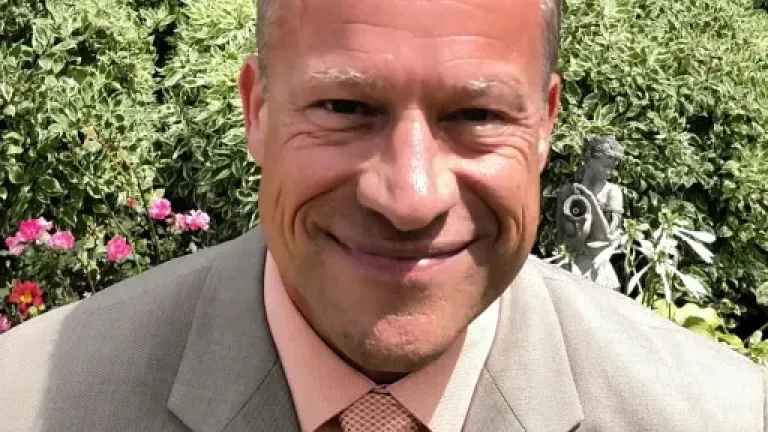

Jay Ledbetter
This transcript was generated by AI and may contain errors. It is provided to assist those who may not be able to listen to the message.
Well, the title of our study today, One Body, Many Members. One Body, Many Members. I invite you to open your Bibles once again. Let's turn to 1 Corinthians 12, verses 12-31. This will be the passage of Scripture that we'll turn our hearts and minds to today on this great Sabbath day.
And in more of a broad sense, we turn our hearts and minds here in preparation for our observance of Pentecost. Again, Pentecost that will be next Sunday, marking the beginning of God's Church. His people come to us. Sunday, marking the beginning of God's Church. His people coming together, being called at that time. Now this is a very familiar passage of Scripture in which Paul very effectively uses imagery to make his point.
How many of you have taken creative writing in any sense or fashion? Anyone? Okay, a few. Well, if you've taken creative writing, you will know that it's often taught that if you can possibly use pictures, imagery, metaphors, illustrations, it can help in your communication, it can help in the reader's understanding.
And so it's not surprising at all to discover. When you turn to the pages of Scripture, you find just that. Imagery, pictures, illustrations to help us understand that which is contained in it. And in coming to 1 Corinthians 12, you will note that we come to what is arguably one of the best known biblical pictures or metaphors in terms of describing the Church and the makings of the Church.
And the Church here, we're going to note, is given the picture of the body. So let's read this together. First Corinthians 12, let's begin in verse 12. Paul writes, For as the body is one and has many members, but all members of that one body being many are one body, so also is Christ. For by one spirit you were all baptized into one body, whether Jews or Greeks, whether slaves or free, we have all been made to drink into one spirit. For in fact, the body is not one member, but many.
If the foot should say, Because I am not the hand, I am not of the body, is it therefore not of the body? And if the ears should say, Because I am not the eye, am I not part of the body? Is it therefore not of the body? If the whole body were an eye, where would the hearing be?
If the whole were hearing, where would be the smelling? But now God has set the members, each one of them, in the body just as He's pleased. And if they were all one member, where would the body be? But now, indeed, there are many members, yet one body. And the eye cannot say to the hand, I have no need of you. Nor again the head to the feet, I have no need of you.
No, much rather, those members of the body which seem to be weaker are necessary. And those members of the body which we think to be less honorable, on these we bestow greater honor. And our unpresentable parts have greater modesty, but our presentable parts have no need. But God composed the body, having given greater honor to that part which lacks it, that there should be no schism in the body, that the members should have the same care for one another.
And if one member suffers, all the members suffer with it. And if one member is honored, all the members rejoice with it. Verse 27, Now you are the body of Christ and members individually. And God has appointed these in the church. First apostles, second prophets, third teachers, after that miracles, then gifts of healings, helps, administrations, varieties of tongues. Are all apostles? Are all prophets?
Are all teachers? Are all workers of miracles? Do all have gifts of healing? Do all speak with tongues? Do all interpret, but earnestly desire the best gifts? And yet I show you a more excellent way. Let's stop there. A more excellent way. This is what we're going to delve into what Paul is presenting to us. And I think perhaps the first thing to notice is this straightforward illustration here. And of course, it's the illustration given to us in verse 12.
Verse 12 again, For as the body is one and has many members, but all the members of that one body being many are one body, so also is Christ. So straightforward. It is that it takes many different parts of the body to make up one body. One body but many members. All the parts inevitably differ from one another. They are very different from one another, but the difference in no way diminishes the body's unity.
There's still one body. So that is the truth. That is the thesis of verse 12, we could say. Pretty straightforward illustration here. And though it's obvious that Paul is not simply giving a lesson on human anatomy here, but rather the explanation of the illustration is given in the second half of verse 12. Did you notice that?
This very end of verse 12, those last four words, here's the explanation. So also is Christ. So this is the explanation of the illustration there. So what he just said about the nature of the body and the distinguishing parts, its unity, its oneness, in the midst of diversity, so also is Christ. Now, if you're like me, that might strike you as a little bit surprising here.
If you were asked, and I was asked to actually finish verse 12, you know, if we were asked to finish those last four words, perhaps most of us would have written, so also is the church. I think that would have been the case. But you'll notice Paul says, so also is Christ. Why does he use Christ? Rather than use the church, we know he's actually, in fact, talking about the nature of the church. I think it's fairly obvious he substitutes the word Christ for church in order to impress on his readers the fact that it's impossible to speak about Christ without speaking about the church.
Okay, I think that's the point. Because when we think this out, how does Christ make himself known in the world today? Well, it's through his church, you and I, the members of his church. It is that he did, when he came and walked on the earth, he did come in the flesh.
He had a flesh and blood body, and Christ was able to accomplish his work with that. He has now returned to the Father. Therefore, in order to accomplish his work today, he has a body. Except now, his body consists of called men and women. That's his body today, to accomplish his work. So, when a person is brought to repentance and faith in Jesus Christ, and they receive the Holy Spirit, it's not only that Christ and God the Father come to make their home with them and us in Christ. It's not only that, but it's also that we are made members of his body, the church.
So, it's impossible to experience Christ in us, and being brought into Christ, without also being brought into his body, the church. If you are in Christ, you are in his church, his body. It's as simple as that. And verse 3 goes on to really explain that, to amplify that truth. Verse 13 again, Irrespective of racial distinction, irrespective of social constructs, social status, the unifying factor is that we've been baptized in one spirit, made to drink of that one spirit. That's the unifying factor. So, there can be no schisms amongst us.
You know, all those things that mark the world, all those things that mark those outside of God's church, can't come into his body. We can't be marked by any division, discrimination that marks much of society, and never allow that division to come to his body here.
Why? Because we have been unified into one spirit. We have been made to drink into that one spirit. The Holy Spirit, God's power, the great unifier. That's what we're speaking about here. So, the gift not only binds us together and makes us Christ, but it also places us into his body. And so, at risk of belaboring the point, verse 12 and 13 are explaining to us that it's not possible to be brought into Christ without also being brought into his body, the Church.
It's by means of baptism. We're given the power of the Holy Spirit and brought into a relationship with one another. Side note, that's why if you attend one of God's true churches, you can go around the country. I know you've experienced this. You walk into that fellowship. There's a bond. You just can't put your finger on it.
It's just there. You meet people, and this happens all the time. I'm like, where have we met before? And I've never met them. What is that feeling that I have? Well, we're bound by something that's even greater than blood. It's God's power, and it's a great unifier, the Spirit. So again, irrespective of color, of skin, background, heritage, how long you've been in the family of faith, whether you're first generation, all those things are subservient to the amazing truth that we've been brought into this body of Jesus Christ.
And we all drink of that same Spirit. So it's an amazing illustration. This is what Paul is putting forth here. So that's the explanation. Pretty straightforward. It's a great analogy. Each of us who have bodies can understand this illustration. That's not too difficult. What is a little bit more difficult is the application. The application of this illustration. And this is what we want to turn our focus onto for the rest of the message here, is the application.
We may get it that we have been brought together. We're all different parts. We're brought together by God's Spirit. I understand that. I need to be unified. How do I do that? We're all different. Some of us would never be in this context with one another in any means outside of God calling us together. Because we are that different. So what about the application?
I know I'm with you. You can say this to yourself. I'm with other members, but they are very different than me. How do I make that work? How do I make verse 14 become truth? The fact that the body is not one member, but many. We are to be one, even though we're many differing members here. There's inherent challenges in this. This is what Paul was facing. This is what Paul would bring this illustration and then start to apply it here in verse 15 and following. There were those in the Corinthian context that were struggling with this unity.
That's what makes the Bible so cool. Those things that they were struggling with at the early churches were struggling with today sometimes. We can take a look at this and learn from this. There was a time then where the members of God's church found difficulty. They were discouraged to find unity within the diversity.
They were expressing it to Paul. It seems like Paul really nailed it down into two challenges. This is what he's going to tackle here. There are two innate challenges to finding unity amongst the diversity. He's going to address these two challenges.
The first challenge in finding unity in the midst of diversity is inferiority. The first challenge in finding unity in this context is inferiority or the feeling that I don't belong or I'm not needed or they don't need me. This was a challenge to the Corinthians, this feeling of inferiority within the body. Paul is going to address that first issue. He addresses it first in verse 15 and 16. Paul writes, Again, if the foot should say, because I'm not the hand, I am not part of the body, is that true? Is it therefore not part of the body? Or if the ear should say, because I'm not the eye, I am not part of the body?
Is that true? Is it therefore not part of the body? We hear this in the church. I know I hear this inferiority sentiment expressed. I can hear it quite a bit. This is very relevant to today. Again, I am not needed. Have you heard this? If I didn't show up on the weekly Sabbath, I don't even know if anybody would notice.
If I didn't show up, I don't even know if anybody would care, honestly.
If I didn't make a fuss, I don't even know if anybody would call me.
This is what the early Corinthian church was feeling. I'm not important. I'm unneeded. And perhaps they felt unsatisfied with the part of the body that they were given to play. Think about that a little bit. Perhaps ultimately they were unsatisfied with the part of the body they were given to play. Or another way to say it, unsatisfied or unhappy with their particular gifts or particular lack of gifts.
I know you've probably seen this on YouTube or maybe you've experienced it in a real person, where it's the context where they have someone propped up in their receiving gifts and having to open it. And you're just waiting for that gift to come that they don't really like. Have you seen this? And the struggle's real when they try to keep that same enthusiasm while opening the gift that they don't really like, that they're not particularly satisfied with. Well, likewise, there were some, if you like, here that expressed that sentiment, that notion, that when they opened the gifts that God had given them in the body of Jesus Christ, they were unhappy. With what they'd been given. And even worse, they look around at the other gifts, perhaps, that others had been given, and they were envious. Envious with the part that someone else had been given.
And I got to tell you, this first challenge enters into real spiritual danger. It's real dangerous spiritual territory here. This inferiority complex. And the reason it's dangerous is because it sometimes can lead to an expression of pride. It can sometimes lead to an expression of pride. Initially, it might sound humble. You know, my gifts aren't very significant. I don't have much to offer. It sounds humble. Ultimately, it might not be. And it may be unintentional. Unintentionally self-focused, actually. This is where we need to be careful. Because, again, maybe unintentionally, it calls into question God's wisdom. Because where did you get your particular and peculiar gifts? Where did they come from? They came from God. And so, if you and I say, my gifts are irrelevant or important, or my part of the body is insignificant, as humble as that might sound, we have to be careful because it can lead to an expression of pride. And it actually, again, unintentionally may speak a word against God who gives these gifts. You see? We won't turn there. But for your notes, if you like, it's found in Romans 9.20, where the clay says to the potter, why did you make me like this? That's Romans 9.20.
Fill in your heart's desire. I wanted to be a singer. I wanted to stand up and give praise to God at church. I can't sing a note in tune, you know? Or I would truly desire to be behind a pulpit and lead in that way. But I can't even... the anxiety. I couldn't even stand up there for two seconds. Why? Why, God?
I desire a different part. So inferiority, it can be disguised as a form of pride. And it may be until we accept who we are and what we are as far as God's purpose, and maybe who we're not and what we're not as far as His purpose for us, until we accept that we may spend a lot of time and futility wanting, pushing against God's divine purpose for us. I don't like the part that I've been given. I don't like the gifts I've been given. I want someone else's gifts. I want to try what they have. So if you've had those thoughts, it may be a moment in which you should pray, especially here as we focus on the body and God's church before Pentecost, pray that God reveal your unique and precious gifts and reveal His purposes for that in terms of your part in the body. Ask Him to reveal that which is His perfections that He gave you. Reveal maybe where there's some imperfections. Reveal the unique abilities, absence of abilities and certain things. And as you come to terms with this, then, one of the most remarkable revelations that will come to you is when you look around, you'll discover the reason why God has done this. And He's done this in order that others may fill in your gaps and so that you may fill in the gaps of others. That's the beauty of it. That's the beautiful body working together. This is what you'll discover. Others will fill in your gaps. You'll fill in others' gaps. So why did He purposely do this and structure this in the church in this way? It is so that no individual member would ever be the totality of the body. You see, no individual member can ever be the totality of the body.
Now, these statements here in verses 15, 16, and into 17, they do speak to this inferiority feeling. The foot may very well be discouraged at its inability to exercise the complicated functions of the hand. That's verse 15. Because I'm not the hand, am I not part of the body? Is it therefore not part of the body? Paul asked. It's a silly thought. These are the very things that he was addressing, though. So there may be a little facetious in this, but I think it's getting the point across. You know, I don't think my part is very important. I don't even think I belong to the body because I'm not the hand. Yeah, you're not the hand. But you're the foot. You're the foot. So take a moment. Look down at your feet, if you will. Are they still attached to your body? Yes. Right. So your foot is attached. Perhaps Paul had him go through that exercise. Is the foot inferior to the hand? Well, let's work through this. If you have something in your pockets, let's say you have your keys in your pockets. I want you to try something right now. I want you to try to get your keys out of your pocket with your feet. So go ahead and try that, if you will. We'll take a moment.
Getting your feet out of your pocket... getting your keys... Well, that might be difficult, too. If you get your foot in your pocket, well, good luck getting it out. So getting your keys out of your pocket with your feet... not going to happen. You're not going to pull that off. So are your feet worthless? Are your feet worthless? Okay, let's work this out. With your hands, you can get your keys out of your pockets, for sure. Now, go out to your car without your feet. I was thinking about that. You might actually be able to drag yourself out there with your hands, but once you get out there, try to start the car and make it down to the coffee shop without your feet. You see the complications here. In the same way, the ear with the eye... because I'm not the eye, am I not part of the body? The ear is sane? What's interesting with these illustrations is you have the foot in relation to the hand. You have the eye in relation to the ear. One commentary said, we're prone to envy those who surpass us a little rather than envy those who just are patently in a different class. Isn't that the case? We're prone to envy those who are just a little bit better than us in these areas. Also, with the body of the church, hands typically have an issue with feet. Ears typically have an issue with eyes.
You will find divisions amongst pastors. Pastors have issues with pastors. This is the point in that relation. Think about how you've had issues with others in the body of the church. More than likely, they're in your area of the body. Not in a totally different location. Something to think about and how that would apply. These are the pitfalls, if you will. But there shouldn't be any schisms, any issues in the body of the church. Why? God has ordained the diversity. God has ordained the process by which members fill the gaps for one another. It's the way it has to work. We're all different. It's ordained that way. What if there was no diversity? That seems like more of a fair approach, perhaps. Paul actually addresses that. Verse 17. If the whole body were an eye, where would be the hearing? If the whole body were hearing, where would be the smelling? It's almost a facetious statement, so it's a ridiculous statement. But this is the imagery. We're all just out here as big globs of retinas. Some of us blue, some of us brown, whatever it may be, green. It's ridiculous. What could we accomplish? What could we truly accomplish if that was the case?
Therefore, verse 18 and 19. Therefore, here it is. Verse 18 and 19. God has set the members, each one of them, in the body just as He pleased. If they were all one member, where would the body be? He just punctuates it there. We ought not need these reminders, but we certainly do. This is a good reminder as we think about the Church and its beginning and where we are today, together working with one another. We're very different from one another. We all have different roles in the body.
We need to be fulfilling our part to the best of our ability, contributing to the body. Inferiority is one issue. There are really two issues. If one issue is inferiority, I know you may be ahead of me here. The second issue within the body is superiority. That's the other issue. One group in the Corinthian context is saying, they don't need me. The other group is going around saying, I don't need them. Incidentally, these are the two issues that all schisms in the body originate from. You can think back to all the schisms in our Church's body. It comes from these two origins. Absolutely. Inferiority, superiority. These are the two challenges here to unity. In verse 21, he does switch to the latter now, the second superiority issue. Verse 21, In the eye cannot say to the hand, I have no need of you. Nor again the head to the feet, I have no need of you. In the Corinthian context, just like today, there were those who felt in their giftedness they could do fine without anyone else. I don't need the seemingly insignificant contributions of any other part of the body. That's what was being said here. I can get along fine. Well, no, Paul says, the eye cannot say that to the hand. Why? Again, I try to get your keys out of your pocket. It's not going to happen. Nor the head, you'll notice. The head cannot say to the feet, I don't need you. How far are you going to get anywhere without your feet?
You know, I suppose a head could roll around a little bit. That's kind of a ridiculous picture there.
So why is he using this again? You know, here. Well, it's because we need to have this reminder. We cannot say, I don't need you.
And in order to drive this fact home, he uses this very simplistic illustration. And he's making the applications here. So if you don't get anything else today, let me give you this. The distinctions of which God has called us to in the body of Jesus Christ, they are distinctions in function, not value. They're distinctions in function, not value. So there can be no superiority feeling ever in the body of Jesus Christ. And Paul's just really going to hand it to the superiority feeling here, those who are feeling this. In verses 22 and 23, here it is. He says, verse 22, No, much rather you who are feeling superior, those members of the body which seem to be weaker are necessary. And those members of the body which we think to be less honorable, well, on these we bestow greater honor. And our unpresentable parts have greater modesty. Let's stop that again. Let's stop there for a minute. You know, those who seem to be weaker. I love these words. They are necessary. Those of the body which we think to be less honorable. Well, it's those we bestow greater honor, he says. So think about this. Let's bring it to the context of this illustration here. We actually today could live without our legs. We could survive without our legs.
Can't live without our lungs, right? So think about this. Our lungs are hidden. Typically get less attention. Unless you have something, some medical condition on your lungs, I know some of us do, but unless that is the case, how much time did you spend in paying attention to your lungs this week? You know? Or even give it a thought. Probably not much. I'm sure you gave much more attention to your legs. You know, was it leg day at the gym? Whatever it might be. I skipped that day.
But, you know, we do give more attention to your legs, but the fact is we can't live without our lungs. What's the point? The seemingly weaker parts are necessary, and those parts which get less attention innately are, in fact, indispensable. These things which are not seen, the internal heart of the matter, that of the body, those things which don't get the exposure, indispensable. This is not, I'll remind you, a lesson in human anatomy. This is a lesson in the body of Jesus Christ, the Church. And what he's saying is the parts of the body which seem weaker, the parts of the body which get less attention, they are necessary. Those parts which are most exposed are the parts which are easiest to replace and reproduce. Prosthetics, you name it, it's those things which are external, in general, which we can do without. But as soon as you go to the lesser exposed areas, we realize how indispensable they are. Think this out. So those less noticeable parts of the body of Jesus Christ, those who are fulfilling the less noticeable activities, they are the parts of the body which are often neglected, they are vulnerable to neglect. They are the parts of the body which are often misappreciated. Incidentally, they are the parts which fall into the first risk of feeling inferior. Absolutely. So it stands to reason, then, that the more visible parts, the more visible parts of the role of the body of Jesus Christ, it stands to reason that they should protect the indispensable unseen believers. In the same way, an external shell protects the indispensable organs. Why? Why should there be a particular focus on those? Because they are not on public display, and so they're not always given a lot of thought. But I'll tell you, every leader, everyone who's been given the role, it's just a role. It's not any better than anyone else's role. But that individual who's been given the role to lead, if they're like me, you stay up at night, and you think about those individuals who are actually making, accomplishing the activity that is absolutely indispensable. Indispensable for the function of the body. That's what Paul is saying here. But ironically, the things we attach the most value to often in the body of Jesus Christ are the talkers, are the singers, are the upfront members. But in fact, Paul says, the indispensable parts are the parts of the body which are unseen, unnoticed. They are actually the ones holding the fellowship together. This is the part. This is the point. This is the application here. We don't necessarily know who they are.
Faithful prayer warriors. Faithful prayer warriors. Holding the church together. Holding on to God's promises for the church. At the return of Jesus Christ, I think this will be made clear when some who were last will be first. Some who thought they were first will end up last. You know, it really, this really hits home. Pastors come and go. You know? So who's actually holding this fellowship together? Who's actually indispensable parts of this body? Well, it's those who aren't with the light, you know, in the mic. Indispensable parts. Absolutely. So if you're feeling inferior, I want this to really speak to you and God's view of you in the body. And if you happen to have the part of the gift that's more seen, let this hit your heart as well. Therefore, it's the responsibility of those who are external, who are out front, who are prominent. Innately, it's just how it happens. Those get the attention. Well, it's the responsibility of those to honor and protect those who are actually holding the fellowship together. Verse 23 and 24 again. Verse 23 and 24. And those members of the body, which we think to be less honorable, on these we bestow greater honor. And our unprecedented parts have greater modesty. That's great quality. But our presentable parts have no need. But God composed the body having given greater honor to that part which lacks it. So we can never...we don't take the less honorable parts and ever act as if they're dispensable.
No, we clothe them, we honor them, and give them that honor which is deserved. Every part of the body is important. And if we can have application of this understanding, we will be a unified body. Absolutely. This is what will bring us together. So, verse 25 again. With this understanding, there should be no schism in the body. Rather, the members should have the same care for one another. Verse 26, if one member suffers, guess what? All members suffer. If one member is honored, we're all honored. Because this is a work together. Not one part of the body can be the totality of the body. Harmony within the body of Jesus Christ. It is about individuality, it is about diversity, but it's about, ultimately, about the unity that were brought together, appointed by God in this way. Now, you'll notice Paul concludes the chapter here, and we'll conclude as well with this. It's a series of rhetorical questions about giving an idea of the different parts of the body here, beginning in verse 27. We sometimes see certain parts of these gifts more prominent at certain times in the church era than other times. Perhaps some of these parts of the body that we don't see emphasized today, perhaps there'll be a greater exposure as we get closer to the return of Jesus Christ. It's possible. Verse 27 through 31, Now you are the body of Christ and members individually. And God has appointed these in the church. First apostles, second prophets, third teachers, after that miracles, gifts of healings, helps, administrations, varieties of tongues. So are all apostles? No. Are all prophets? No. Are all teachers? No. Are all workers of miracles? No. Do all have gifts of healing? No. Do all speak in tongues? No. Do all interpret? No. But earnestly desire the best gifts. And Paul says, and yet I show you a more excellent way. Stop there. So this is the point. Paul is looking to teach us a more excellent way to view you and I as we're operating in this body, the body of Jesus Christ. Various differing gifts. Unity is not to be found in displaying the same gifts, but unity is to be found as we work together with the gifts that God has given us. So you don't ever have to desire a more excellent gift. You don't have to ever desire a better gift. You have the best gift from God. You have the best gift. The best gift is the one God has given you specifically and individually. That's the best gift. You have the best gift because it's from God and He wanted you to have that particular gift. There is a work for Jesus Christ and God the Father that none but you can do in the body. So our prayer today is that we will make ourselves even more useful to God and discover afresh and fulfill your God-given part of the body. And then commit yourself to that spiritual body of Jesus Christ. Understand that the very power of the Holy Spirit brings you and I together. Affirm this truth. The unifying factor in our lives is that we have not been all given the same gifts, but we've all been given the same spirit to drink from. And that's awesome. It's awesome. We're in this together. May we be helped to lay a hold of this illustration and application as we prepare for the great day of Pentecost. And may we commit ourselves as many members, but to be truly one body in Christ.

Jay Ledbetter is a pastor serving the United Church of God congregations in Houston, Tx and Waco, TX.
