
Jorge de Campos
This transcript was generated by AI and may contain errors. It is provided to assist those who may not be able to listen to the message.
Brethren, we are fast in here today. For some of us, it might be the first time. But some of us may count with more than just two hands. The number of atones you're keeping. Kathy and I were just talking about it. This year is the 40th atonement and it's my 43rd. So, as we look back, we say to ourselves, is it just another atonement? Of course it is not. And so the question I have is, why are we fasting today?
I mean, we're fasting today and why are we fasting? And we know that fasting humbles us and we know it's not a way to demand anything from God. And we know that when we fast and when we get closer to God and we humble, we can then plead for different things.
We can make certain petitions because we humbly, humbly following Him and doing the things that are pleasing in His sight. But the question is, that's for a normal fast. Why for a fast like today on the day of atonement? One effect was the call for the sermonette of authority because it was a beautiful introduction to the sermon I have today. In fact, some of the points are just briefly highlighted which is exactly the points that I'm going to go through and draw down into more depth.
So I do appreciate that sermonette of authority that fit in very nicely. And so my purpose today is to look at why we're fast today by drawing down to the three points that Mr. Cobb mentioned in his sermonette in which Jesus Christ atones us and mankind. And the question you may ask following that is, so what? My wife always asks me, so what? Why must I listen to you? So what? So what is the other reason?
So that we may be perfect in all good, all that is good, to fulfill his wish in us, doing what is pleasing to God through Jesus Christ to whom is the glory forever. That is, so what? So, brethren, you all know, and I'm not going to turn there, but in Colossians 2, 16, and 17, tells us that holy days foreshadow things to come. Some things have already happened, some things are still to happen. And so we know the possible represents Christ dying for us. And therefore, before Christ dying, the possible foreshadowed instead for us now to reminder of what has happened.
Then after that, Israel was freed from Egypt, like we are freed from our sins through Christ's sacrifice. And therefore, we keep the next set of holy days, which are obviously made possible by Christ's sacrifice, which is the days of unleavened bread, which represent putting sin away out of our lives completely. And then we get on to the next holy day period, which is the day of Pentecost, which represents us receiving the first fruits of God's Holy Spirit, so that we have the help to help us of account. The first fruits of the Holy Spirit being because the Holy Spirit will be poured onto the whole world later, but at this time, it's just the first fruits of the Holy Spirit.
And so we ought to become the first fruits of the children of God. And then, as we looked, a couple of days ago, during trumpets, we saw in Revelation 11 and 18, that says Christ comes, and when he comes, he will be the time of the judgment of the dead. So that's the day of trumpets, judgment of the dead. The dead are judged. In other words, some are judged to be resurrected first, and some are judged not to be resurrected until the second resurrection.
And the time of rewarding the saints, obviously the marriage supper and rewarding of the saints, and the time that Christ is to destroy those that destroy the earth. And so a number of events, prophetic events, have happened by the time of Christ's return. And therefore, we're now in prophecy, all the way towards the end of the book of Revelation. In fact, if you turn with me, we are now in Revelation 19, verse 19 through 21.
We are now in Revelation 19, verse 19 through 21, which says, that saints were killed with a sword which proceeded from the map of the insect on the horse. And so we at this state, where mankind's, those that are destroying the earth, are going to be destroyed. And so that is the end of that holy day, the Day of Trumpets. Now, we need to, let's look at it into another chapter, as it says, another chapter, or turn the page to the next holy day, which is the Day of Atonement.
And the Day of Atonement foreshadows a number of events. For one, we have an enemy which is sacred. And so, let's start with the very first prophecy in the Bible. Do you know where the very first prophecy in the Bible is? Well, if you don't turn there, because that's what I'm going to ask you to turn. But if you guess it, it's actually in Genesis. Genesis chapter 3 verse 14 and 15.
Genesis 3 verse 14 and 15. So the Lord said to the serpent, to the serpent, says, Because you've done this, you are cursed more than all cattle, and more than every beast of the field, on your belly you shall go, and shall eat dust all the days of your life. And obviously, we think that of the serpent, but it actually is Satan. He is not able to do his God, his power, let's put it, constraint. What he can do is limit it, and he drags himself around the earth. Imagine he can have all the power. God is not allowing him to have all the power. And he says, And I'll put enmity between you, that's Satan, and the woman, that is the church of God, and between your seed, that is the seed of Satan, the people, the children of Satan, quote unquote, those that are following their ways, his ways. That basically, technically, he will save some of his children, and her seed, which are the children of God, but more specifically, Christ himself. And he, Christ, will bruise your head. Christ will bruise Satan's head. And you, Satan, will bruise his heel, Jesus Christ's heel. So that's a prophecy. Now, turn with me to Romans 16, verse 20, because it there, it tells us a little bit more about this, about Jesus Christ bruising the head of Satan. In Romans 16, verse 20, it tells us a little bit more. And this says, and then the God of peace will crush Satan under your feet shortly. So this bruising of Satan's head will be a crushing of Satan's head, a crushing of his government, of his power, of his control over the earth. And yes, Satan is nipping at the heel of God's church, at the call, in a sense, and nipping there. But look at what's going to happen to Satan. His power is going to be crushed. And it's going to be crushed because his spiritual empire is going to be demolished. His spiritual empire is going to be completely demolished, symbolically, on an anniversary of the Day of Tund. And look at the power he has today. Today, what he's doing, this little napping at the heel of the church, look at the effect that he has at in 2 Corinthians 4. 2 Corinthians 4, we can see the effect that he has at 2 Corinthians 4, and we're going to read verse 3 and 4. 2 Corinthians 4, verse 3 and 4. But even if our gospel is vile, our good news, the good news of the kingdom of God is vile. It is vile to those who are perishing. How come he's the good news of the kingdom of God vile? It's vile because of the power of Satan. He's blinding the people's eyes. Those people are perishing. Yes, they're perishing. Why? Because they don't know the truth. Man-time is perishing because they don't know the truth. Thanks to Christ, to come back and we'll take that veil away and we'll bring the people back to life so they'll be able to live. But that is the power of Satan, even though his power is limited, as we saw in the prophecy of Genesis 3. And then he continues in verse 4. And this is what he's done. Whose minds, that's those that are perishing, the God of this age, which is Satan, has blinded.
That's those who do not believe. They don't believe because the mind is blinded. They do not believe. And why don't they believe? Why is their mind light? List the light of the good news of the glory of Christ. What is the good news of the glory of Christ? The good news of the glory of Christ is that the glory of Christ, Christ, can live in you and I. And we can be, through the power of his Spirit, his brothers and sisters to Christ, sons and daughters of God. That is the good news of the glory of Christ living in us, who is the image of God, so that that good news should not shine on us, on those people of the world. And that's what Satan has done. Satan has done that to the world. But when his head is crushed by Jesus Christ, like it says, you will bruise his head. When Satan's head, Satan's government is crushed, then the world will have that veil released and gone. And therefore, mankind will be able to see the truth and will be able to understand the plan of God. So, brethren, as I mentioned today, what I want to spend time is to see how the ceremony of the Day of Atonement beautifully illustrates this Atonement for mankind. And so, as we heard in the sermon, there are basically three ways that Jesus Christ atones us and mankind. And so we're going to look at that. But let's start with the end. And the end is in Leviticus 16, or the end of the purpose of the Day of Atonement, is on Leviticus 16. Leviticus 16, verse 29 through 31. And it says, And it says, So whether you are a citizen or whether you're a stranger or a foreigner, in a country you will afflict your souls and do no work. And verse 30, he has a reason. Why? He has a reason why we're fasting today, why we're keeping the Day of Atonement, why we're not at work today. And it says, It is a day of cleansing of Atonement for us and for all mankind. It's symbolic of that cleansing process. And so, let's look at that cleansing process. And as we heard in the sermon, there are three areas where it is. And I'm highlighting them in three simple ways for you to remember. Past, present and future. That's three. That's easy to remember. The first one, let's look at the past. The past means, what has Jesus Christ done for us to make this possible? And let's start with Leviticus 16, where we are. And start in verse 3. And let's look at the ceremony of Atonement and some of the things that had to be done on the Day of Atonement. Start on verse 3. This Aaron shall come into the Holy Place with the blood of a young bull as a sin offering. So he's got a bull, a young bull, in other words, a bullock, a small young bull, as a sin offering. Now, this is important. It's a sin offering. And a ram as a burnt offering. And he shall put off the holy linen tunic and the linen trousers on his body, and he shall be girded with the linen sash, and with the linen turban he shall be attired. These are the holy garments. Therefore he shall wash his body in water and put them on. And then he shall take on, from the congregation of Israel, two kids of goats as a sin offering. So, on many animals as he got as a sin offering, he's on three. He's got a bullock and two goats as a sin offering.
And then he says, Aaron shall offer the bull as a sin offering, which is for himself to make a tarmen for himself and for his house. So, here we have a sin offering. Now, when you have time, instead of the beginning of the litigas, there are, in the first five chapters of the litigas, there's basically five types of offerings. There's a burnt offering first, which basically represents a perfect man, a sinless man, giving an offering, which represents Christ. The burnt offering, therefore, is Christ as the perfect man. Then there's a grain offering, and then there's a peace offering. Not going into those now. Those three offerings are a sweet aroma to God. They sweet smell into God. They're pleasant to God, pleasant offerings. And then the last two other offerings, the fourth and fifth, in chapter four and chapter five of the litigas, it's easy to remember. One is chapter one, two is chapter two, and so on. So, they are a sin offering and a trespass offering. A sin offering is for the sins of what we are, and a trespass offering is for the sins of what we do. So, think about what we are when we go through baptism counseling and we say what people repent. We repent of what you are and what you do. And the sin offering represents what we are, our nature of what we are. Now, there are two types of sin offerings. Describing the litigas four. It can be a bull, a young bull, a bullock, or it can be a goat. Now, the bull is offered for the children of Israel.
The goat is offered for the leaders when they go wrong and for the people of the land. In other words, non-Israelites.
Now, this is very interesting because we have a bull as a sin offering, we saw that in verse 3. And in verse 5, we have two kids of goats as a sin offering.
Now, understand it's not Christ's sacrifice. Because Christ's sacrifice, per se, is a burnt offering because He's a perfect man. And a burnt offering is a lamb.
So, therefore, we know Christ is the lamb of God. He's not the goat of God.
We never heard Christ being the goat of God. But Christ's taken upon Him the sins of mankind. So, He's offering encompasses all the other offerings, of course, because He's taken upon Him the sins of mankind, the sins of the world. So, yes, those other offerings represent Christ as well. But Christ's offering for Himself is a burnt offering. The sin offering is He's taking the sins of the world upon His shoulder and His offering Himself as a sin offering. But He's not a goat. He's just taking that because He's bearing the sins of the world. Or He's not a bull. So, He's taking that the sins of the world. Now, look at in verse 7, and it says, And He shall take two goats, and present them before the Lord at the door of the tabernacle of the evening, And then Aaron shall cast lots on the two goats, one lot for the Lord, and yet a lot for Azazel, as it is in Hebrew, which basically means for an evil demon, which represents all his excitement. So, one lot for the Lord, and one for Satan. In other words, the two goats, one would be the goat that would represent the sins of the world, and that Christ would take that on His back and would offer as a sin offering, representing the sins of the world. The other one is Satan, and He would not take on His back the sins of Satan.
So, now we get back to a little bit more of the title here, because what we see is the following. I asked Mr. Adams, because he's a farmer, what is the difference between a lamb and a goat? And he said, well, a lamb just kind of falls and dies, you know, but a goat has got an independent spirit. Those are the words he uses. He's an independent. He is going to do his own thing. He's an independent spirit. And I think it's very significant that God is using the symbol of a goat to represent people with an independent spirit, with the own mind, which is basically the world, with its own independent spirit. And therefore, because they have that independent, they all act leaders, and it represents them. So it's very interesting. So let's read, start in verse 11 of Matthew 16, and it says, And Aaron shall take the bull of the sonoran. Now, remember there are, therefore, three sonorans, two goats and a bull. One of the goats is kept aside, and God selected that by lots. Why? Because you and I cannot distinguish between the nature of the world and when it's the nature of Satan. Only God can distinguish that. So we separate those two natures of the world and Satan. God's distinguished that. Because to us, it's, in a sense, some things we say, well, it's Satan, some things we say it's the world, but we don't know when it's Satan, when it's the world. But God can distinguish who's causing it. But now, look at it. There's three sonorans, but two of them, one goat and one bullock, will be given as an offering, and for which, in other words, Christ is taking their sins and atone their sins. The other goat, Christ is not going to do that because we're going to see it later. So we've got two sonorans, one a bullock and one a goat, that Jesus Christ is going to take upon His souls. But first, young Bessie, let me start with the bullock. So He's handling the bullock first, as you can see. Now, this is an important point, handling the bullock first. Bullock of the sonor, which is for Himself, that's the priest, and make an atonement for Himself and His house. That is the family, the priestly family.
Now, brethren, spiritually speaking, when you read in 1 Peter 2, we don't have to turn there in verse 5 and 9, it says, you are, what, a chosen generation. Remember those words? You are a chosen generation, a royal, what, priestly. A holy nation. These are special people. So as we saw, the bullock in Leviticus chapter 4 was used for the Israelites.
The foreigners were the goats, or the leaders that went wrong with the goats, but the bullock was for Israelites, and now He's taking up the atonement of the bullock is for the priestly family. Spiritually speaking, God's people, spiritually speaking, those that have the Holy Spirit today are the royal priests. And so the symbol, the eyes of Christ, He's taking first, atonement first, the sins of the royal priestly family, which you and I represent with God's Holy Spirit. And so it says, and He shall kill the bull as the sin offering, which is for Himself, and He shall take a sancen full of burning coals of fire from the altar before the Lord with His hands full of sweet incense beaten fine. What is incense? You can read that in the book of Revelation chapter 5, verse 8. You don't have to turn there. But it says the incense is the praying of the saints. And it says, sweet incense beaten fine is our prayers in great specific detail for people with needs. God hears the prayers of the saints. The other people that rebel, they might be praying, but God says, I will not hear your prayers because you don't know by me. But the sweet incense beaten fine, which is the prayer of the saints, is taken together with the offering of the bullock, which represents the royal priesthood of the saints.
And take it, bring it inside the veil. Here it was, into the Holy of Holies, into the very throne of God. And you'll put the incense on the fire before the Lord that the cloud of incense may cover the mercy seat. That is the testimony, lest he die. And so that cover of incense will cover that. The prayers of the saints God hears, and therefore with that, he forgives us and he listens to our prayers. I think it's beautiful. And then in verse 14 it says, and he shall take some of the blood of the bullock and sprinkle it with his finger on the mercy seat. And the prayers, remember, it represents you and I, represents us being sprinkled there, the mercy seat, on the east side, and before the mercy seat, which sprinkled some of the blood with his finger seven times. Completely, completely forgives us, completely forgives us. So, brethren, we can see now that it's very interesting that God's people, through this age between the first coming and the second coming, symbolically, are being forgiven first, representing the bullock for the sin offering, being forgiven first. And then he says in verse 15, they, are we they after that? Shall they kill the goat? Certainly he comes out and he goes and kills the goat of the synagogue, which is for the people. Not for the priests, but for the people, for the rest of the world, for the rest of mankind that have not been called at this time. Bring its blood then inside the vial, and know of the blood as he did with the blood of the bull, and sprinkle it on the mercy seat. There was a gang who sprinkled it seven times before the mercy seat. And then verse 16, and he shall make the tournament for the holy place, because of the uncleanliness of the children of Israel, and because of their transformations for all their sins, and so he shall do for the tabernacle of meeting, which reminds among them in the midst of their uncleanliness. So we see, brethren, this is the first way that Christ attends us. In a sense, it's past, because his standard offering is already died, and he opened the vial for us to get through to the throne. And that is, in a sense, is one of the ways that he's done through his death, and opening the vial for this ceremony to be fulfilled.
Now, let's look at the second way that he's done. Because the second way that he's done, as I said, is the present. Think about it as the present continuous tense, you know? He's doing his present now and being done. And there, we start reading in verses 17-26. He says, There shall be no man in the tabernacle of meeting when he goes in to make a tournament in the holy place, until he comes out. That he'll make a tournament for himself and for us all, and for the assembly of Israel.
And now he's going in there and making a tournament for himself, for his household. That's the priest family, that's the royal priesthood, and for the whole assembly of Israel. And he shall go out to the altar that is before the Lord and make a tournament for it. And he shall take some of the blood of the bull and some of the blood of the goat, so he's not doing both at the same time, and put it on the horns of the altar and all around.
And then he shall sprinkle some of the blood on it with his finger, again, seven times, cleanse it and cross it, created from all the uncleanliness of the children of Israel. And when he's made the end of that, that means now we get on to the third place. So let's stop Yachar-Amont. What is he doing? He's at Talonim Ash, UNI, on a present continuous tense. He is continuously interceding for us, as we heard in the sermonette.
That's the second part, his intercession for us day in and day out, as you and I, on our prayers, come to him with our, quote-unquote, sweet incense, broken, beaten, small, and with our prayers. And he is atoning us and spreaking the blood, the high priest, that's Jesus Christ, atoning us in front of God the Father. And he's doing that as it happens every day. Today, obviously, is a memorial of that event that is happening every day now throughout our lives. But it's a memorial of what he's doing for us as a high priest.
And it says, as we saw there at the beginning of verse 20, he won't come out until he's finished doing it. And that means, when he's finished doing it, what happens? The church is ready. And therefore, he comes out, is the Second Coming, is the resurrection, and the saints are rewarded. That's what he's doing, ready, the church. And that is his role, which he's doing today.
I want to look a little bit more about his role that he's doing today by looking at parallel scriptures in Hebrews. So we're going to read about the role of Christ as our intercessor in Hebrews. So we're going to start in Hebrews chapter 8. We will be coming back to Leviticus later on, but let's read a little bit more about the role of Christ intercession in Hebrews chapter 8.
First, we're going to read in verse 1 and 2. Hebrews 8, 1 and 2. I want to thank you, Mr. Adams, for not giving me water, because now I've just finished. Subconsciously reaching towards the water, and it wasn't there. So I thank you for that, because it's subconsciously. Yeah, you feel like you're drinking a little bit of water, and I went like this, and...
So thank you, I'll share with you. Anyway, Hebrews chapter 8 verse 1. Now is the main point of the things we are saying. We have such a high priest who is seated at the right hand of the throne of majesty in heaven. In other words, he's in the holy of holies. He's right there in the mercy seat. And minister of the sanctuary, in the literal there, is of the holies, and of the true tabernacle, which the Lord erected and not made.
And that is God's tabernacle, God's high court in heaven, the one on earth, was a simple copy. Didn't think about this, a simple shadow copy. So we have a high priest at the throne of God already. It's Christ, it's there, and this is why I say it's present, continuous things. That's what he's doing. Let's jump to chapter 9, verse 6 through 12. Now, when these things have been thus prepared, the priests always went into the first part of the tabernacle performing their services.
But into the second part, the high priest went alone once a year. Gives way, and they were told, of course, once a year. Not without blood, which he offered for himself and for the people sinned, committed in England.
Not without blood, in other words, he went with blood, and he saw it's the bullock and the goat from Sanach. Versailles, the Holy Spirit indicating this, that the way into the holiest of all was not yet manifest.
Yes, it was not yet manifest to them, so they had to do it physically. But today that temple is not there, is not being done, because Christ is now sitting at the Holy of Holies, at the true Holy of Holies. The Holy Spirit indicating this, that the way to the holiest of all was not yet manifest while the first tabernacle was still standing. This was symbolic. It was symbolic. For the present time, in which both gifts and sacrifices are offered, which cannot make him who perform the service perfect in regard to the conscious. In other words, these offerings that they were doing, could not make the people perfect according to that conscious.
The conscious plays you a very important part. The conscious is what, in the end, God is cleansing our conscious. It's our conscious that's being cleansed, that's being cleaned. Concerning only with food and drinks, various washings, and fleshy ordinance, impose until the time of reformation. It was imposed until, which means it's what they were in. And when was the time of reformation?
Verse 11. That's when Christ came as a high priest, that was the time of reformation of that system. That was the time of reformation of that system. When Christ came as a high priest of the good things to come, with the great and more perfect tabernacle not made with hands, which is not of this creation. Not of the blood of goats and calves, but of his own blood.
He entered the most holy place once for all. When did he enter? When did Christ enter into the most holy place of his blood once and for all? Do you remember? On the day of the wake sheep. That's when he did it. He died, and the wake sheep represented Christ entering there for the first time and did it once and for all, and he's now there. And they were paying eternal redemption. For weeks the blood of bulls and goats and of the ashes of a high priest, speaking the unclean, sanctified for the purifying of the fresh.
How much more shall the blood of Christ, who through the Spirit offered himself without spot to God, plans what? Your conscience. Plans your conscience. From dead works. Works that we had in the past, which are now dead. You don't do those things anymore. You're prepared that they're dead. But plans that conscience from dead works to serve the living God. And for this reason, he's the mediator of the new covenant. By means of death, for the redemption of the transgressions and the first covenant, and that those who are called may receive the promise of eternal inheritance.
For where there is a covenant, as it should read, there must also of necessity be the death of the covenant maker. And as it should read. So there it is. There's the example. He has compassion for us. Jesus Christ. He's making a time for us. Why? Because he suffered. And therefore, he's making this covenant, and he's atoning us today. He's our hour eye priest today. And today is a memorial of his atoning job that he's doing day in and day out every day. That is, to me, a key part of the day of atoning.
The intercessory action of Christ. Because if it was not for that, obviously combined with the other, but that is key for us to have a clean conscience. So when we do things wrong, when we have the wrong thoughts, we come to God, and we on our knees, we don't have to wait for our selfhood. We don't have to wait for today's autonomous. We can do it every day. We can go at any moment into the Holy of all these true Christ. That intercessory prayer today represents that door is open, and we can go there at any moment when it happens.
When we say we can go, at that moment we can confess to God, and at that moment our sins can be forgiven. Therefore, brethren, we can boldly claim mercy and find grace because of Christ. We can boldly claim mercy and find grace. Look at Hebrews 2. Hebrews 2. Let's just look at two quick sections here. Hebrews 2, verse 17 and 18. Hebrews 2, 17 and 18. Therefore, in all things, he has to be made like his brethren. In all things, Christ has to be made like his brethren. Then he might be a merciful and faithful high priest in things pertaining to God to make propitiation for the sins of the people.
For in that himself has suffered, been tempted, he is able to aid those who are tempted. He has compassion for us. He knows what it is like. And not only that, not only was he tempted, but he did not succumb, which means he even went beyond the temptation and never succumbed to it. Because when he succumbed, the pressure goes off. But now he kept on all the way to the end. So he has compassion for us. And also, look in Hebrews chapter 4, verse 14 through 16, Hebrews 4, 14 through 16.
Seeing there that we are a great high priest who has passed through the heavens, Jesus, the Son of God, let us all fast our confession. For we do not have a high priest who cannot sympathize with our weaknesses, but who was in all points tempted as we are, yet without sin, let us therefore come boldly to the throne of grace. Then we might obtain mercy and find grace to help in time of need. We don't have to wait for ourselves. We don't have to wait for the day of the sermon. In time of need, at that moment, we can get on our knees and get the help that we need. And he says, come boldly. Come boldly.
That reminds me of somebody, Hill Briner. I don't know if you remember Hill Briner, the full master, you know, and they asked him how come your head's like that. He said, well, people told me, we used to succeed in the full weakness, we've got to be bold! So...
I just thought, poor Joe. But anyway, we've got to be bold. That's not what it means. We've got to be bold when they come to the mercy seat. Please don't remember being bold. Read in chapter 5, verse 9 through verse 11. He says, although we have much to say and hard to explain since we have become dull of hearing. So Paul is talking to the people and says, we're talking about the high priest, as you can see in verse 11, talking about the high priest, which is Jesus Christ. And he says, in verse 11 of chapter 5, of whom we have much to say and it's hard to explain, of his role as a high priest. Why? Because you become dull of hearing. Why? Because you're not practicing and doing what you need to do. You're not doing what you know needs to be done. And because of that, you become dull of hearing. Verse 12. For though, by this time you ought to be teachers, you need someone to teach you again the first principles of the orifice of God. And you have come to need milk and not solid food. Why? Because you're not progressing, you're really progressing. You're going backwards. You're becoming dull of hearing and now we're going to get back to the beginning and give you the basics. And it says, for solid food, we know to those who are full of age. That is those by reason of use that they sense as exercise to discern about food in evil. That's how we get solid food, is by reason of use. Solid food, the solid Christian food is Christian living, true Christian living. That's the hard part. That's the solid food. That's what's going to help us to mature. That's what can help us to grow.
So, we have to be training our conscious. We have to be training our conscious by living and doing things the right way. We've got to be practicing and overcoming and by doing this, we are training or retraining our conscious. And whenever it goes wrong, we come to infocessory prayer with that sweet-smelling, big and small incense to God's throne through Christ.
And we get that atoning blood that Christ will apply for us at that moment at the time of need. And we forgive it. And our conscious is cleansed. Our conscious is cleansed. We are retraining our conscious. And it is a battle of the mind, Reverend. It's a battle of the mind. It's all along, it's a battle of the mind. I'm not going to go into there, but just make enough and do some study on 2 Corinthians 10, verses 4-6.
We're talking about that our war is against fortresses. And these fortresses are against arguments. It's against every high thing. And it's against every thought. These are fortresses, these are bastions in our mind, deep in our mind, little thoughts dug in, in a little fortress. Then we have to go in there and get them out and pull them out. And this requires daily interaction and fight. Because these fortresses, these well-defended places in our brains, in our minds, have to be beaten down.
And that is part of the overcoming of destroying these spiritual fortresses that are in our mind. And so we have to overcome that. So continue in Hebrews, chapter 9, verse 13, and 14, says, For if the blood of bulls and goats and the ashes of a hiker, sprinkling them unclean, sanctifies for the purifying of the flesh, how much more shall the blood of Christ, who through the eternal Spirit, offering self-transport to God, cleanse your conscience from dead works to serve the living God?
It is to cleanse our conscience through these things we need the blood of Christ to cleanse our consciousness. So brethren, that is the role that Christ is now fulfilling. That is the role that he is doing every day. And look in verse 28 of chapter 9. Verse 28, chapter 9, Hebrews 9, 28. So Christ was offered once to be the sins of many, to those who eagerly wait for Him, that's us, who eagerly wait for Him to come for His second coming. He will appear a second time, apart from sin, for salvation. When will He come?
When has completed the work of reading you and I, of cleansing our cultures, of reading the church? The church will be ready! The question is whether you and I will be part of it. The church will be ready. It's up to you and I to make sure that we are awake and that we ready ourselves, too. And we work through and we work across the door, He said, the facility is there.
We can come to the throne of Christ every day to intercessory prayer. We can do that. And that is the second role that He has. The first one was in the past. He offered, He died once for all. And therefore He can carry upon Him the sin offerings of bulls and goats, of us, and of goats which the rest of the world later.
The goats will be later, will come later, which is the rest of the world. We say, got their own mind, their own independent mind. They will be later. That's why first was the offering of the bull and then second was of the goat in that sequence. But for those who are eagerly waiting for Him, you'll appear a second time, a part comes then, for salvation. And now we can go back to the Leviticus. Leviticus 16. Leviticus 16 verse 20. And where is made an end of atoning for the Holy Place?
When is finished atoning for the Holy Place? For what is going to be the bride? And let's finish atoning. That is atoning. The tabernacle meeting and the altar, each shall bring the live goat. Now we get to the third part. The third component of Christ's time, what I call the future. Past, present, and future, the third part. That is now the time to crush Satan's head. It's the time to be thrown, Satan, from his position of rulership on earth. Time to bring the live goat, which is representing Satan, the Azazel, the spirit of Satan, and send it to the bottom of the spirit. And let's read that in verse 20, the rest of verse 20 and 21.
It shall bring the live goat, and Aaron shall lay both his hands on the head of the live goat, confess over it all the iniquities of the children of Israel, and all their considerations concerning all their sins, putting them on the head of the goat.
The accountability of all mankind's sins will be put on the head of the live goat on Satan. He is responsible, he is the instigator, and he's going to take that upon his head. And he shall send it away into the wilderness by the hand of a suitable man. In verse 22, the goat shall bear on itself all iniquities to an uninhabited land, and he shall release the goat in the wilderness. Let's read about that in Revelation chapter 20. I deliberately, early on, brought you to Revelation 19, because I said we finished our trumpets, and we finished basically the end of Revelation 19.
And I said, we're going to turn now a new chapter, a new page, onto the Day of Autonomous. I'll explain a minute of Day of Autonomous. And now that third part, the future part of Day of Autonomous, is now explaining under Revelation 20, verse 1 and 3. Then I saw an angel, that's that man, that angel that we take, the live goat, coming down from heaven, having the key of the bottom of the split, to take this live goat into the wilderness.
And a great Chinese hand, and he's got a Chinese mouth, there. And he led all of the dragon, that's the occasion of the dragon, as a self, that's the live goat. That serpent of old was a devil and sighted, and bounding for a thousand years. And he costed him into the bottom of the split, and shot him up and set the seal on him, so that he should deceive the nations no more. So what I explained in 2 Corinthians 4, earlier on, that he puts that veil on mankind, that the glory of Christ should not be seen, that will be gone, so that we can preach the gospel, that the people's minds will be able to understand, because that veil will be put away.
So, should we see the nations no more, till the thousand years we're finished? But after those things, he must be released for a little while. And that's another story to cover. But the point is, after that, we have the millennium. After that, we can have the millennium. So in verse 4, it talks about thrones and judgment was given to the people of God, the ones that were resurrected.
And at the end of verse 4 it says, And they lived and reigned with Christ for a thousand years. We've got the millennium. And what happens in the millennium? What is the first thing that is going to happen on that day of atonement, that Christ comes, on that year that Christ comes, will very probably be the day of, as we read earlier on in the sermon, Leviticus 25.
Just as a reminder, Leviticus 25. Leviticus 25, the day of Jubilee. Leviticus 25. And we read verse 9 and 10. So I want to go there exactly the same place as we had in the sermon. Then shall cause a trumpet of the Jubilee. And the proper word, the word Jubilee means jubilation, means of happiness. There'll be happiness. There'll be joy. Why? Because the wolves, empires are destroyed, and the evil empire of the waves of the air, of Satan, spiritual empire, is also destroyed.
And therefore, it can be liberty in the land. And that's a time to rejoice. Should we afflict ourselves, understanding the meaning of this day, but at the same time, you and I can rejoice. That's the only reading, yeah. Because the trumpet of Jubilee to sound on the tenth day of the ten month, on the day of retirement, you shall make the trumpet to sound throughout all the land. And you shall consecrate the fiftieth year and proclaim liberty throughout all the land to all its inhabitants.
That's probably why we don't know many of the Jubilee's. People have different speculations, but really, we do not know. Because no man knows the day or the hour of his coming.
We don't know in the fiftieth year. There are speculations, and in the previous speculations, they might be right, might be wrong, so what? But the point is, no man knows the day or the hour. When he comes, then we'll know. Then is the day, and then it's the hour. But he says, and proclaim liberty throughout all the land to all its inhabitants. Can you imagine? Man-kind. Free from Satan. Free from all the governments that are wicked. And Christ's ruling on earth with spread beams that have been properly trained, not through voting, because he has been the best speaker and been able to deceive people to vote for him, but they've been properly trained through a way of love and of concern for people, a way of service and a way of love.
And those people will be ruling the world. The world will become a paradise. The world will be a paradise. Over years, not in five minutes, it'll take time to, again, to wash the people's consciousness of that world, of generations, of sins. It'll take time, but it says it'll be a time to proclaim liberty. Throughout all the land, to all its inhabitants, it shall be a jubilee for you. For sure, it'll be a great jubilation. And briefly, you and I will then have a part in that if you and I make it.
If you and I are reading ourselves or using this opportunity of being saved, quote-unquote, of being cleansed, of consciousness being cleansed, throughout day by day, approaching that throne to which we can approach, boldly. So the world needs a covenant, brethren. We need a covenant. And Jesus Christ atones the world in three ways. By offering his life as an offering and taking upon himself the sins of mankind, with its human nature, and with its own independence. He atones the world by his role as the Howard High Priest, interceding through our intercession, individual with us, for our sins and cleansing our conscience.
And by removing the course, the hidden plotter, the instigator of sin, which is Satan. So the world needs a covenant, so that we can declare liberty in the land. And that's indeed a great joy. But I have one final question. So what? So what? So let's look at in Hebrews chapter 10. What is it that you and I must do? Hebrews chapter 10. So what must we do now? Hebrews chapter 10 verse 25.
Verse 19 through 25. Hebrews chapter 10, 19 through verse 25. Therefore, brethren, having boldness to enter into the Holy, to enter the holiest part of the life of Jesus, by a new and living way. It is a new and living way, a new way that didn't exist before, which He consecrated for us through the veil, that means through the veil, into the holy of all years, there is through His flesh, through His body. And having a high priest over the house of God, let us draw near.
Let us draw near with the true heart in full assurance of faith. So what is it that we must do? We must have boldness and we must draw near with full assurance of faith. Not doubting, not with any doubt, but having our hearts sprinkled from an evil conscience. Having our hearts sprinkled from an evil conscience. Our conscience must be cleansed. That's why there are warnings elsewhere to be careful that you don't have your conscience seared with all iron.
Because in the end, we've got to cleanse our conscience, it's got to be clean. And it says our hearts, says, yeah, our hearts sprinkled from an evil conscience and our bodies washed with pure water. Therefore, let us all pass the confession of our hope. That is our hope without wavering. Let's not have any doubt, for he who promised his faithful, he's promised he's going to do it. He will do it. There's no doubt about it.
And therefore, let us consider one another in order to stood up loudly and would work. Therefore, as we heard in the sermon, let's consider one another to build our relationships. It's our relationships. In the end, that is the cell wall. That's what we're going to be working on. Let's consider one another in order to stood up loudly and would work. And how do we stand up loudly and would work if we all don't gather together on the Sabbath, for instance, to assemble? Therefore, not forsaking the assembling of ourselves together, as is the manner of some, but exhorting one another and so much more as we see the day approaching. How do we know about people that need prayers, that have needs? For us, it's when we assemble together, we get together. For those that have the possibility. I know some are in isolated areas and that's different. For some, I know that is different. But those that have the possibility, we should not forsake the assembling of ourselves together. So that we can put to practice the consideration of one another, the relationship, the practice of stirring up love and good works for one another. That's so what. There is more about so what in chapter 12. Turn with me, please, to chapter 12. Let's look, verse 1 to 3. Chapter 12, verse 1 to 3. Therefore also, since we are surrounded by such so great a cloud of witnesses, let us lay aside every weight in the sun which so easily ensnares us. Let us completely repent and get our conscience clean. Completely clean. Let us lay aside all the other things that ensnares so easily. Let us run with endurance. Let us stick to it till the end. Enjoy the race that is set before us. Looking unto Jesus often finish of our faith, for the joy was set before Him, endured the cross, despising the shame. And I sat down at the right hand of the form of God. For considering Him Christ, who endured such hostility from sinners against Himself, lest you become weary and discouraged in your souls. Look at the example of Christ, because He doesn't till He dies. So don't be discouraged when it happens to you. Things and trials and afflictions say, well, so it happens to Christ too. And so let's not be discouraged. And look how verse 12 and 13 complement that of chapter 12. Hebrews 12-12.
And the washing of our conscious wound will heal that over time. Let's say so that that is lame. May not be dislocated, but rather be healed. So may God help us to better understand this great meaning of the work of our High Priest, Jesus Christ. The world is waiting for us to be ready. The world is waiting for you and I to be ready. To conclude, I want to read chapter 13 verse 20 and 21 as another statement of, so what? Hebrews 13-20 and 21.
In every good word, in every good thing, make it complete, to do God's will. Working in here what is well pleasing in His sight. Brethren, it's not just doing God's laws. We've got to do what's pleasing in God's sight. That's to open it beyond how to heal Jesus Christ to heal the glory forever and ever. Amen. May you all have a lovely Easter.
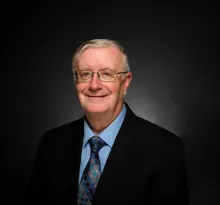
Jorge and his wife Kathy serve the Dallas (TX) and Lawton (OK) congregations. Jorge was born in Portuguese East Africa, now Mozambique, and also lived and served the Church in South Africa. He is also responsible for God’s Work in the Portuguese language, and has been visiting Portugal, Brazil and Angola at least once a year. Kathy was born in Pennsylvania and also served for a number of years in South Africa. They are the proud parents of five children, with 12 grandchildren and live in Allen, north of Dallas (TX).
