

Jorge de Campos
This transcript was generated by AI and may contain errors. It is provided to assist those who may not be able to listen to the message.
I told Evelyn I didn't think there was any water here. It just looked real good. There it is.
Today I want to give part two of a series of two sermons that I started three weeks ago, back on the 21st of last month. Last time in part one I gave the big picture of forgiveness. I talked about forgiveness, and I gave the big picture in part one, showing what God really wants. That God wants to make us into His spiritual image and likeness so we can become permanent members of His family, and so He can dwell with us forever. I explained in that first part that He thus delays judgment for our sins, which separated us from God, until we can obtain ultimate forgiveness through that perfect human sacrifice, through the Son of God, through Jesus Christ. We'll pick it up from that point today, and I complete this two-part series. Today in part two I want to look at the New Testament side of forgiveness. Go more into the New Testament. Most of them I was primarily in the Old Testament.
By asking a few questions and addressing a few questions from the New Testament perspective, why must we become like Christ by developing a spirit of forgiveness? That's a very plain we have to do that in the New Testament. Why must we learn to forgive others as Christ has forgiven us? Why is that so important? Why is that crucial to our calling?
What happens when we don't have a forgiving spirit? Who does that really hurt?
How can that greatly hinder us from becoming like Christ and becoming a part of God's family?
The one thing I want to mention here, too, is a verse that's much misunderstood by many Christians in the world, especially.
What did Christ really nail to the cross? What is the real meaning of Colossians 2.14, which is often misunderstood and misapplied?
And what does Colossians 2.14 have to do with forgiveness? It has a great deal to do with forgiveness, as we'll see.
Again, we'll address all those questions today here in Part 2. The title for my sermon here this afternoon is Forgiveness Part 2. What did Christ nail to the cross?
Forgiveness Part 2. What did Christ nail to the cross?
But I want to begin by just addressing a very, very basic question that I think lays the groundwork for this whole subject of forgiveness, and that is, what is forgiveness?
What is it really? When God forgives us, what is God actually doing? What is actually taking place?
Also, when we forgive others, what are we actually doing when we forgive someone?
See, what is forgiveness? What does it actually entail? What elements are involved in forgiveness?
But before addressing those questions, I want to ask another question real briefly, because we know we have an adversary who seeks to destroy us, seeks to devour us, as Paul said. Does Satan want to take us captive to do his will? Let me ask that question.
Let's look and see what Paul wrote to Timothy in his final letter that he wrote just prior to Paul's death.
That final letter he wrote is 2 Timothy, that was the last letter Paul wrote before he died, from all indications.
Let's take a look at a couple of scriptures here in 2 Timothy 2. See what Paul wrote.
2 Timothy 2, and let's begin in verse 22.
He said, 3. Free, useful loss, by pursuit, righteousness, faith, love, peace, with those who call on the Lord out of a pure heart, but avoid foolish and ignorant disputes, knowing that they just generate strife.
4. And a servant of the Lord must be not quarreled, but be gentle to all, able to teach, patient, in humility, correcting those who are in opposition, if God perhaps will grant them repentance so that they may know the truth, so that they may come to their senses and escape the snare of the devil, having been taken captive by him to do his will.
I'm bringing this up because it ties in with forgiveness.
See, Satan wants to take us captive to do his will. That's what Paul's implying here.
Now, there are many ways that Satan can do that, but what is one sure way Satan can take us captive to do his will?
Does that involve an unforgiving spirit or attitude?
Let's read on in the next chapter to find out. Let's go to 2 Timothy 3. We'll begin in verse 1.
But know this, in the last days perilous times will come, and certainly seems we're living in those days now, we're all living in very dangerous and very perilous times.
And why are perilous times? Because men will be lovers of themselves, lovers of money, boasters, proud, blasphemers, disobedient to parents, unthankful, unholy, unloving, unforgiving.
Unforgiving.
I'll just stop there because that's the subject of recovery and forgiveness.
So do we realize what Paul is really telling us here in this short section of Scripture?
He is telling us various ways by which and through which Satan can take us captives to do his will.
And one way he can do that is by us becoming unforgiving.
When we refuse to forgive, we are actually putting ourselves in a position to be taken captive by Satan to do his will.
Because an unforgiving spirit is a spirit of Satan.
That's one of the main means by which he can take us captive.
If you might put this other way, it is Satan's will that we not forgive anyone, that we have an unforgiving spirit.
That is Satan's will.
Because he knows that can do great damage to anyone that God is calling and working with, which we'll cover a little bit later.
But how does the spirit of being unforgiving take us captive to do Satan's will?
Let's explain that. Again, that gets back to what forgiveness is. What is forgiveness?
Let me give you a definition.
Forgiveness is the act of setting someone free from an obligation to you that is a result of a wrong done against you.
I'll repeat that.
Forgiveness is the act of setting someone free from an obligation to you that is a result of a wrong done against you.
What then does forgiveness involve? I'm going to bring out three things.
Three elements involved in the act of forgiveness.
Number one, forgiveness involves injury. It involves some kind of an injury.
It involves being injured or hurt by someone or in some way.
Or, on the other side of the coin, it involves injuring or hurting someone else.
Now, most often that injury is emotional. It's an emotional injury. Emotional hurt.
It is most often an emotional injury, but forgiveness always involves some form of injury.
Number two, the second element, forgiveness involves a debt resulting from that injury.
It involves an injury and it involves a debt resulting from that injury.
In other words, the result of being injured, the person who injured us becomes indebted to us to make restitution for the injury.
Or, if we injure or hurt someone, we become indebted to that person to make restitution to them.
So, first of all, forgiveness involves the elements of injury and a debt resulting from that injury.
There is also a third element involved in forgiveness.
The third element is that forgiveness involves the cancellation of that debt.
It involves the cancellation of that debt.
So, when you forgive someone, we are canceling the debt that they owe us. We are telling them, your debt to me is canceled.
You are no longer obligated to pay me back what you owe me.
You don't have to pay back what you took away from me.
You are no longer obligated to make restitution for your injury that you caused me.
I am freeing you of your debt.
So, we send it against someone, that's what we are doing.
We forgive someone, I should say, that's what we are basically doing.
Now, think about that in the relationship to God.
When we send it against God, we injure God.
We injure His plan that He has for mankind, His dream that He has for mankind.
And we incur that debt to God as a result of that injury that we make to God when we sin.
We then become obligated to God to pay God back, if you will, to make restitution to God for our sins against God.
Now, you think about it that way, then. What are we obligated to pay back to God in order to cancel our debt to God as a result of our sins?
Well, what is the wages of sin?
What debt does sin bring?
Well, we all know the answer. Rule of Romans 6, 23, the wages of sin is death.
When we sin against God, we incur the debt penalty, and we become obligated then to give our life in order to make restitution to God.
Unless that debt is paid in full by someone else, we are obligated to pay God back by for our life, unless that we're free to that debt, that obligation by someone else paying that debt for us.
So when we sin, we are like prisoners on death row, in other words, waiting for our sins to be carried out, unless we can somehow get a stay of execution, unless we can somehow be delivered from the captivity of that death sentence.
That ties into one of the very important reasons why Christ came to this earth 2,000 years ago.
Why did Christ come 2,000 years ago? One of the main reasons.
Well, let's read it in Scripture. Let's go to Luke 4.
Luke 4, and begin in verse 16.
Luke 4, verse 16 says, He, Jesus, came to Nazareth where He had been brought up, and as His custom was, He went into the synagogue on the Sabbath day and stood up to read.
And He was handed the book of the prophet Isaiah. And when He opened the book, He found the place where it is written, The Spirit of the Lord has come upon Me, because He has anointed Me to preach the gospel to the poor, He has sent Me to heal the brokenhearted, and to proclaim liberty to the captives. To proclaim liberty to the captives. I will stop there. Or, as the new, the old King James, I think, has it, to preach deliverance to the captives, to liberty or deliverance. So Christ came to deliver us, or liberate us, from our captivity, from our captivity to our obligation to pay God back what we owe Him, because of our sins.
Christ came to cancel the debt of our sins, so we could then be delivered from our captivity to having to die and pay back with our life.
See, Christ came so we could be forgiven of that debt.
His very coming ties into forgiveness.
He came so our debt to God could be paid in full and thus canceled.
Because, again, what is forgiveness? Forgiveness is the act of setting someone free from an obligation that is the result of a wrong done against someone.
So when God forgives us through Christ's sacrifice, He is basically freeing us of our captivity to death, because Christ died in our place and paid that indebtedness in full by His own death, His own sacrifice.
So it's very important to understand forgiveness, as we look forward to and think about taking the Passover here in a couple of weeks.
Now, since Christ was the Son of God, His life was worth more than all human lives combined.
But that's what He came to do. He came to cancel that debt of having to pay God back with our life because of our sins.
Let me ask this question. What happens when we are unforgiving towards others? Well, you don't have that same forgiving spirit that Christ had towards us.
What happens when we are unforgiving toward others?
When we don't forgive others, we are holding that other person that we refuse to forgive. We're holding them hostage to pay us back while we feel they owe us.
You need to pay me back what you took away from me. You need to pay me back for the hurt you caused me.
If God refused to forgive us, He would be holding us hostage to the death penalty.
Also, we don't forgive someone. We are withholding something from them.
Now, when you refuse to give someone, and we've all been through this, we've all had the things we had to really struggle with.
I don't think anybody's gone through life where they haven't had some situation where they've had to really struggle with trying to figure out how to forgive this person from an injury that they caused us from hurt, emotional hurt oftentimes. Sometimes they're very deep.
But when we don't forgive someone, what are we intending to withhold from them?
From those we don't forgive.
We'll tend to withhold... Now, stop and think about this. We will tend to withhold the fruits of God's Holy Spirit.
We will tend to withhold love, joy, peace, long suffering, kindness, goodness, faithfulness, gentleness, and oftentimes, I have a hard time with self-control as well.
Instead, what we've got to tend to harbor in our minds, and we don't forgive someone, we'll tend to harbor bitterness, resentment, and it can even lead to hatred.
Those negative emotions, negative feelings, they will lead to things that are very destructive. And what are those things? What are those things tied into? Bitterness, resentment, and hatred. They are aspects of the work of the flesh, which will then murder or kill relationships, unless the one injured can find a way to forgive the other party.
I'll just mention this as a qualifier, because I know we have situations sometimes where people have relationships, maybe even marriages, where things happen, and the marriage ends up breaking up, whatever.
But still, parties need to find a way to forgive. It does not necessarily mean, I just want to point this out, forgiveness does not necessarily mean that there will be reconciliation. Sometimes there has been so much hurt and so much damage in a marriage or relationship that there is no way to put the pieces back together again. You know, Humpty Dumpty had a great fall.
And all the king's horses and all the king's men couldn't put Humpty Dumpty back together again. Sometimes you can't put the pieces back together. So forgiveness does not necessarily mean reconciliation. It would be great if it could, but sometimes it's just too much damage, too much hurt.
But the parties still need to find forgiveness for their own sake, as we'll see.
Because if we can't find a way to forgive, if we can't find a way to forgive in our heart, for the hurt that's been caused by someone else, who is the big loser going to be and why? See, the big loser is going to be the person who can't find it in his or her heart to forgive. They're going to be the big loser. Why?
Well, there are many reasons. But when we can't find it in our hearts to forgive someone, it will cause us mentally and emotional anguish. When we're going to be having mentally and emotional anguish, and things we're going to be wrestling with, negative feelings, negative emotions are going to be going on in our mind that are going to be causing us a great deal of damage ourselves spiritually. It can cause a great deal of emotional stress, which can affect our whole physical well-being, if we can't find it to forgive. We're going to be holding all that inside of us. We're not letting it go. We're not giving it to God.
So, if we can't forgive someone, it's going to affect our mental, emotional, and spiritual well-being.
It will cause us to harbor animosity and resentment, which can then, even in some cases, lead to hatred. Very contrary to the fruits of God's Holy Spirit, that God wants to produce in us, in our minds, in our hearts.
So, in a very real way, unforgiving can, in a very real way, affect our own personal health and well-being. But it goes beyond that.
And this is from God's Word. And this is the most important fact of all when it comes to being unwilling to forgive someone. It can keep us out of God's Kingdom. Let's read that for ourselves. Christ Himself tells us that. Let's go to Matthew 6, a section often referred to as the Beatitudes.
Matthew 6, verses 14 and 15, where Christ said, Matthew 6, verse 14, For if you forgive men, their trespasses, if you forgive others, your heavenly Father is going to forgive you. He's going to release you of your debt, your debt of having to pay with your life for your sins against God. But, verse 15, If you do not forgive men, their trespasses, neither will your Father forgive you your trespasses.
Wow, that's a pretty strong statement. Why not? Why not? In what way might we be putting our eternal life at risk, or putting it on the line, by refusing to forgive someone?
You know, you don't think about it, but when we refuse to forgive someone, we're automatically falling into one of Satan's traps. Satan has many, many traps. This is a big one. When we refuse to forgive someone, we're automatically going to fall into one of Satan's traps.
What is that trap and how are we ensnared in it?
I've already touched on it, but when we refuse to forgive, we become hostage to the works of the flesh, basically.
Would the Apostle Paul write just prior? We all know about Galatians 5. Galatians 5 is what you read about the works of the flesh, in contrast to the fruits of the Spirit. Would the Apostle Paul write just prior to elaborating on the works of the flesh, in contrast to the fruits of the Spirit in Galatians 5? Would he write just prior to that? Let's go there. Let's go to Galatians 5.
Let's just read one verse here to start with. It's prior to when he elaborates on the works of the flesh and the fruits of the Spirit. And that's Galatians 5 verse 9. Very important verse. Oftentimes, we rehearse and think about the upcoming Passover and Days of Unleavened Bread. Galatians 5, 9, Paul wrote a little leaven. Leaven's the whole lump.
See, refusing to forgive harbors bitterness and resentment and animosity. And it says here, just a little of that leaven, leaven's a whole lump. A little bit of resentment. If you hold on to it and harbor it, it can just fill your whole mind, your whole being. It can leaven your whole outlook on life towards that person. It will grow and spread in our hearts. It could take us hostage to those kind of negative feelings. It was then, in turn, war against the fruits of God's Holy Spirit, as it tells us right here. Galatians 5, going dropping down to verse 13. For you, brethren, have been called to liberty, only do not use liberty as an opportunity for the flesh, but through love serve one another. For all the laws fulfilled in one word, even in this, you shall love your neighbor as yourself, regardless of who they are, regardless of what they may have done to you, regardless of what your feelings might be. You shall love your neighbor as yourself. But if you don't do that, and this will tend to happen if you have an unforgiving spirit towards someone because they've hurt you, but if you bite and devour one another, beware lest you be consumed. That consumes your mind, consumes your feelings, your emotions, and takes you in the wrong direction, the opposite direction God wants you to go. Beware lest you be consumed by one another. I say then, walk in the Spirit, and you shall not fulfill the lust of the flesh. For the flesh lusts against the Spirit, and the Spirit against the flesh, and these are contrary to one another, so that you will end up doing the things that you don't wish to do. You'll have feelings you really know you don't want. You want to let go of those feelings. You'll have feelings towards someone, or you'll do something, or say something you really know you shouldn't say or do. That will happen if we don't forgive. We do it for our sake, for our well-being, because resentment, bitterness, and animosity towards someone that we can't forgive can cause us to act in ways that we know we really don't want to act and have us have feelings and thoughts that we really know we don't want to have. It can be very negative and very, very, it can cause a lot of damage spiritually. It can cause us to act in ways that we know are wrong, to act and think in ways that we know are contrary to the mind of Christ, and the attitude he had towards us, wanting to forgive us, being willing to forgive us. And they are contrary to producing the God's Holy Spirit, if we have an unforgiving Spirit. So that is Satan's strength that we can fall into if we are unwilling to forgive others when they hurt us. Now let's get to one of those main scriptures that's misunderstood and misused. What did Christ nail to the cross?
Let's go to Colossians 2.
Colossians 2, verses 13 and 14. Colossians 2, beginning in verse 13, and he says, And you, being dead in your trespasses and the uncircumcision of your flesh, He has made alive together with him, have forgiven you all trespasses.
Verse 14, Having wiped out the handwriting of requirements that was against us, which was contrary to us, And he has taken it out of the way, having nailed it to the cross.
So Paul tells us here that Christ wiped out and nailed to the cross the handwriting of requirements that was against us, that was contrary to us. Or as the old King James has it, blotting out the handwriting of ordinances that was against us, Nailing it to the cross. So the question is then, what was Paul referring to by the term handwriting of requirements or handwriting of ordinances that was against us? What was Paul referring to by that statement?
Now here we are, we're reading this 2,000 years after Paul wrote it. Let's go back 2,000 years. Would the members who received this letter, and it was addressed to the saints and faithful brethren in Christ who were in Colossae, Would the saints and faithful brethren in Christ who were in Colossae who received this letter 2,000 years ago, Would they have understood what Paul was referring to? Would it have been confusing in their minds? No, it wouldn't.
They would have understood what it meant. It would have been perfectly clear to them, those who originally read this letter. It's only has become difficult for some of us who would now read it 2,000 years later, Because we don't understand what this terminology, how it worked and how it was applied, How it had been understood 2,000 years ago. We're trying to figure it out 2,000 years later, or at least some aren't. Now today, and this is amazing to me, but today some theologians and others think Paul was referring to God's laws. They apply this to God's laws, to God's Ten Commandments, Which is originally written by the hand of God, so that's handwriting. It was written by God's hand. God's taken maps written by His own hand, by His own fingers.
Is that what Paul was referring to here? Well first, let's just say, what was nailed to the cross? What was nailed to the cross? The only two things were literally nailed to the cross. Jesus was nailed to the cross, and then there was a sign that was nailed to the cross above Jesus. He said, this is Jesus of Nazareth, the King of the Jews. The only two things that were literally nailed to the cross were Jesus and this sign that was nailed above Him.
Let's just read that. Let's go to Luke 23.
Christ was nailed to the cross, and Pilate had a sign nailed to the cross above Him. Luke 23, beginning in verse 1, Then the whole multitude of them arose, and led him to Pilate. And they began to accuse him, saying, We found this fellow perverting the nation, and forbidding to pay taxes to Caesar, saying that he himself is Christ a king.
Then Pilate asked him, saying, Are you the king of the Jews?
And he answered him, and said, It is as you say.
See, what was the main accusation against Christ that caused Him to die? What accusation was Christ put to death?
What was He accused of? He was accused of saying that He was the king of the Jews. That was the accusation.
Now, He never forbid anyone to pay taxes to Caesar. That was a total false accusation. When asked if it was lawful to pay taxes to Caesar, Christ replied, Render to Caesar the things that are Caesar's, and to God the things that are God's. Luke 20, verses 22-25.
So what then did Pilate do when Christ admitted that He was king of the Jews? What did He do?
Let's go to John 19.
John 19, and let's pick up the story there in verse 15.
Again, saying, what then did Pilate do when Christ admitted He was the king of the Jews? John 19, verse 15. But they cried out, Away with Him, away with Him, Crucify Him. And Pilate said to them, Shall I crucify your king?
And the chief priest answered, We have no king but Caesar.
Then he delivered to them to be crucified. He delivered Him, excuse me. Then Pilate delivered Jesus to them to be crucified. So he took Jesus and led Him away. And he, bearing his cross, went out to a place called the place of a skull, which is called in Hebrew Golgotha, where they crucified Him, and two others with Him, one on either side, and Jesus in the center.
Now Pilate wrote a title, and put it on the cross. And the writing was, Jesus of Nazareth, the king of the Jews. Then many of the Jews read this title for the place where Jesus was crucified, was near the city, near the city of Jerusalem. And it was written in Hebrew and Greek and Latin, so no matter what language they were, they could, everyone could understand it, what it was said. This was Jesus of Nazareth, the king of the Jews. Now why did Pilate write that, and then nail it to the cross on which Christ was crucified, or to the stake on which Christ was crucified? Because when someone was condemned and sentenced to die by crucifixion, the reason the individual had been condemned, or the accusation against that individual for which he was put to death, the accusation that led to his death, was then nailed to the stake above him, so all could read it and see it, see what the accusation was for which this person was dying this horrible death. Someone would know that that individual had been condemned and then crucified. That was the accusation.
So Christ was condemned and crucified for proclaiming that he was the king of the Jews. That was the accusation. That was the accusation for which Jesus of Nazareth was crucified. As noted by Matthew in his account, Matthew actually tells us that specifically. Let's go to Matthew, chapter 27, just one verse here, Matthew 27, verse 37. And they put up over his head the accusation written against him. This is Jesus, the king of the Jews. So the sign, the nail to the stake, was the accusation for which Jesus had been condemned to be crucified. That was the accusation. That's the reason he died, because he proclaimed that he was the king of the Jews.
The reason I'm going through this, it all ties into the correct understanding of Colossians 2.14. See, the offense for which a person was condemned was handwritten on a tablet or sign that was then displayed on the stake on which he was crucified. So everyone would know the accusation against him that led to his death.
So two things were nearly nailed to the cross, or the stake, Christ, and the accusation against him. Of course, Christ himself did not literally nail anything to the cross. Back to Colossians 2.14. It's a street that once again, Colossians 2.14. Having wiped out the handwriting and requirements that was against us, which was contrary to us, and he has taken it out of the way, having nailed it to the cross, or having wiped out or blotted out. So Paul here is not speaking literally then, he's speaking figuratively. So what did Christ figuratively nail to the cross? And what did Christ's death, what did Christ shed blood, blot out? What did it literally blot out? Did it blot out God's laws? That's what some people say. Did it blot out God's laws, or did it blot out our trespasses against God's laws? Go back to verse 13 again, Colossians 2.13. And you being dead in your trespasses, and the uncircumcision of your heart, he has made alive together with him, having forgiven you all trespasses. See, it's our trespasses of God's laws that are the problem that Paul's addressing here. Paul's not addressing God's laws, he's addressing our trespasses of God's laws. How did Christ blot out our trespasses? By and through forgiveness. Even as he tells us right here in this very verse, having forgiven you all trespasses, that's how they're blotted out, through forgiveness. You know, people ought to stop and think it doesn't make any sense whatsoever for Christ to have blotted out or wiped out God's laws.
Say you're driving down the freeway and the speed limit is 70, and you're going 80. I don't know how the speed limit gets above 70, but we have the GPS on it, and it goes in red, telling you you're going too fast. They have a look at it, and he says, hey, you're going too fast. Slow down. I was going 70 to 60 coming up here, so I got bald off for that. But say you're going 80, and so the police would stop saying, he handwrites out an ordinance as a ticket against you, saying you're going too, I'm giving you a fine, I'm writing out a handwritten ordinance against you for going 80 and a 70. I say, well, why don't you just wipe out the law, remove the speed limit, then I can go as fast as I want, and we'll have to worry about getting the ticket. Wouldn't that be a simple solution? Well, that's what would be happening here if God's laws were being wiped out.
You know, Christ had blotted out God's laws. There'd be no reason to repent. Why? Because there'd be no trespassers to have to repent of. You can't break or violate a trespass, or against a law that doesn't exist, that's been wiped off the books. If the law's been wiped off the books, how can you break it and trespass it against it until you don't have to repent? See, nothing that makes any sense at all. So what then did Christ figuratively nail to the cross? What was the handwriting of ordinance that was against us and that was blotted out and nailed to the cross?
We'll have two Greek words here that Paul used here in Colossians 2.14. One is the Greek word exolepo, exaleipo is translated wiped out in the New King James, is translated blotting out in the Old King James. Now, according to Vines, expository dictionary of Old and New Testament words, it means to smear completely or to obliterate. Blotted out or wiped out means to smear completely or to obliterate. It's the same word used in a couple other places in Scripture. Let's see how it's used in Acts 3, verse 19.
Acts 3, verse 19. Let's turn there quickly. Acts 3, 19, the same word, explepo. Repent, therefore, be converted, that your sins may be blotted out, that your sins may be blotted out. Same word Paul used in Colossians 2.14. Repent that your sins may be blotted out. God hates our sins, but He wants us to become members of His divine family, so God provided a means by which our sins may be blotted out, not a means by which God's law could be blotted out.
That makes no sense. Paul was not introducing new terminology in Colossians 2.14. The Old Testament also has a Hebrew word for wiped out or blotted out as well. It's the equivalent of the Greek word we just mentioned. It's a Hebrew word makai, M-A-C-H-A-H. It's M-A-C-H-A-H. It's also associated with the blotting out of our trespasses.
Let's look at two examples of how that word is used in the Old Testament. One is in Isaiah 43 verse 25. Isaiah 43 verse 25, Ah, excuse me, I, even I, am He who blots out your transgressions for my own sake, prophecy of Christ, and I will not remember your sins. So God says He will even blot out our sins from His memory. But David also used this Hebrew word in his repentance towards God that is given in Psalm 51. So I'll turn back to Psalm 51 for a moment, which begins with this heading, To the chief musicians, a psalm of David, when Nathan the prophet went to him after he had gone into Bathsheba, his sin committed to sin against Bathsheba.
So you see here twice, the same word, maka, is equivalent of the Greek word translated, blotted out by Paul in Colossians 2.14. This is a Hebrew equivalent to using Psalm 51 verse 1. Have mercy upon me, O God, according to your loving kindness, according to the multitude of your tender mercies, blot out my transgressions. Same word, blot out. Same word, equivalent of Hebrew word to what Paul used in Colossians 2.14. Blot out my transgressions. Also used in verse 9 here in Psalm 51. Hide your face from my sins and blot out all my iniquities. He didn't say, Have mercy on me and blot out your law.
Blot out your law gets adultery, so I can not have to worry about sinning again in that area. He said, Blot out my transgressions, blot out all my iniquities. So the Old and New Testaments are consistent in that blotting out is always associated with blotting out of our sins, blotting out of our transgressions, not the blotting out of God's laws, if someone would like to use that. Now, the Greek word translated handwriting in Colossians 2.14. That Greek word is an amateur I can pronounce it right, shared graphon, and is spelled C-H-E-I-R-G-R-A-P-H-O-N. I want to read what William Barclay says in his New Testament study Bible under Colossians 2 verses 13 to 14, in regards to that particular word.
Barclay's New Testament study Bible, under the subject of triumphal forgiveness, in Colossians 2 verses 13 to 15, Barclay says this, As the King James Version has it, Jesus blotted out the handwriting of ordinances that was against us. He wiped out the charge list, which set out all of our self-admitted debts, a charge that's based on the ordinances of God's law. And there are two Greek words here on which the whole picture depends. And that's the Greek word for blotted out and the Greek word for handwriting.
And he says the Greek word for handwriting, or charge list, is chiragraphon, number 5498 in Strong's Concordance. He says it literally means an autograph, but aesthetical meaning, a meaning which everyone would understand, it was a note that was hand-signed by a debtor, acknowledging his indebtedness. It was almost exactly what we would call an IOU. Men's sins had piled up a vast list of debts to God. And it could be said that men, they really understood that they owed that debt to God, that they wanted to be honest with themselves.
Men were debt to God because of their sins. There was a self-confessed indictment against them, a charge list, which, as it were, they themselves had signed and admitted was accurate.
So what Paul called chiragraphon was literally a certificate of debt, like an IOU, as Barkley described it. It was a handwritten legal document used 2,000 years ago as a promissory note or an IOU. It was a handwritten and signed promise to pay back a debt that was signed and handwritten by the debtor's own handwriting. It was a certificate of debt which would then include all that was owed along with the terms of repayment of that debt. That was just as it was used 2,000 years ago. Everybody would have understood that when they heard that term. And the debtor, a lender and a witness would then sign the document.
And then when the debt had been paid in full, the debtor would nail his cancelled debt certificate to a public place. Everyone would know the debt had been paid in full. It was nailed in public place. Everybody would know that debt has been paid. Each of us has a certificate of debt against us because of our sins against God and which owe God our very life in order to clear that debt. That is unless that debt is cleared for us. Because when Christ died, then He paid our debt for us in full, clearing us of that indebtedness. In essence, Christ nailed our debt to the cross, signifying He paid our debt in full by means of dying in our place.
And that is what Paul meant when he wrote, blotting out the handwriting of ordinances that was against us. See, by dying in our place and by forgiving us, Christ blotted out and cancelled our debt to God, which we had incurred because of our sins. He wiped out and blotted out all of our trespasses that we committed against God.
Now, we've already looked at the Greek word Paul used for blotted out or wiped out, but I want to also read what William Barkley adds in relation to that particular Greek word that's translated, blotted out or wiped out. Again, this is Barkley's New Testament Study Bible under triumphal forgiveness clauses 2-13-15.
See, the word for wiped out is the weak word exulfophio, E-X-A-L-P-H-E-I-O. It's number 1813 in Strong's Concordance. Very interesting what he writes in regard to that word. Barkley does. To understand that word is to understand the amazing mercy of God. The substance on which ancient documents were written was either papyrus, a kind of paper made of the pith of a bulrush, or vellum, a substance made of the skins of animals.
Both were fairly expensive and certainly could not be wasted. Ancient ink had no acid in it. It lay on the surface of the paper and did not, as modern ink does, bite into the paper. Sometimes a scribe, to save paper, used papyrus or vellum that had already been written upon. When he did that, he took a sponge and wiped the writing out, because it was only on the surface of the paper. The ink could be wiped out as if it had never been at all. God, in His amazing mercy, banished the record of our sin so completely that it was as if it had never been, not a trace remained, as if it had never been committed.
A very interesting statement by William Barkley. Or as we could also state a couple of scriptures to tie into that, having our sins totally removed, as if they had never been. Psalm 103.12 says, As far as the easiest from the West, so far as He removed our transgressions from us. But what did Christ blot out on the hill to the cross?
He blotted out our transgressions, and He in essence nailed our certificate of indebtedness, theness we had to God because of our sins, He nailed that, figuratively, to the cross, as displayed by His crucified body, signifying He suffered and died in our place. He paid that debt for us by dying in our place, so we wouldn't have to, to signify that the debt of sin we each incurred to God because of our sins had been paid in full by His death.
And that, through Christ's forgiveness, our debt had been canceled, wiped off the books completely, as if it had never existed. In conclusion, God could have demanded justice and retribution. God could have demanded that we pay Him back by having to die for our own sins. But that wouldn't serve God's purpose, would it? Because He wants us to dwell with Him forever. He wants to become a member of His family. God didn't want retribution. He wants to be our God. And He wants us to be His people so we can dwell with Him and dwell with Him forever, as a part of His family. One final scripture that I think takes on real meaning when you think about all the subject of forgiveness, that's John 3, verses 16 and 17.
John 3, 16, For God so loved the world that He gave us His only Be out in the sun, He didn't want retribution, He didn't want us to pay with our lives. God Christ wanted us to instead pay for our indebtedness for His own life.
For God so loved the world that He gave His only Be out in the sun, that whoever believes in Him should not have to perish, and should not have to pay that indebtedness with his own life. But instead could have everlasting life. For God did not send His Son into the world to condemn the world or demand retribution, but that the world through Him might be saved. Saved by Christ's death and by Christ blotting out the hand-running of ordinance that was against us, by blotting out our certificate of debt, and by paying that debt in full on our behalf, by completely forgiving us of that debt so we can have the opportunity to become like Him and be made into His spiritual and regional likeness. And so also, through that process, we understand that we can then learn to forgive others their trespasses as God has forgiven us of our trespasses and our sins. So we can learn to forgive others as God has forgiven us. Because then and only then can we truly become like God and fulfill God's dream of dwelling with us forever as members of His divine family.
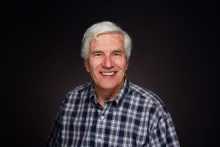
Steve Shafer was born and raised in Seattle. He graduated from Queen Anne High School in 1959 and later graduated from Ambassador College, Big Sandy, Texas in 1967, receiving a degree in Theology. He has been an ordained Elder of the Church of God for 34 years and has pastored congregations in Michigan and Washington State. He and his wife Evelyn have been married for over 48 years and have three children and ten grandchildren.
